
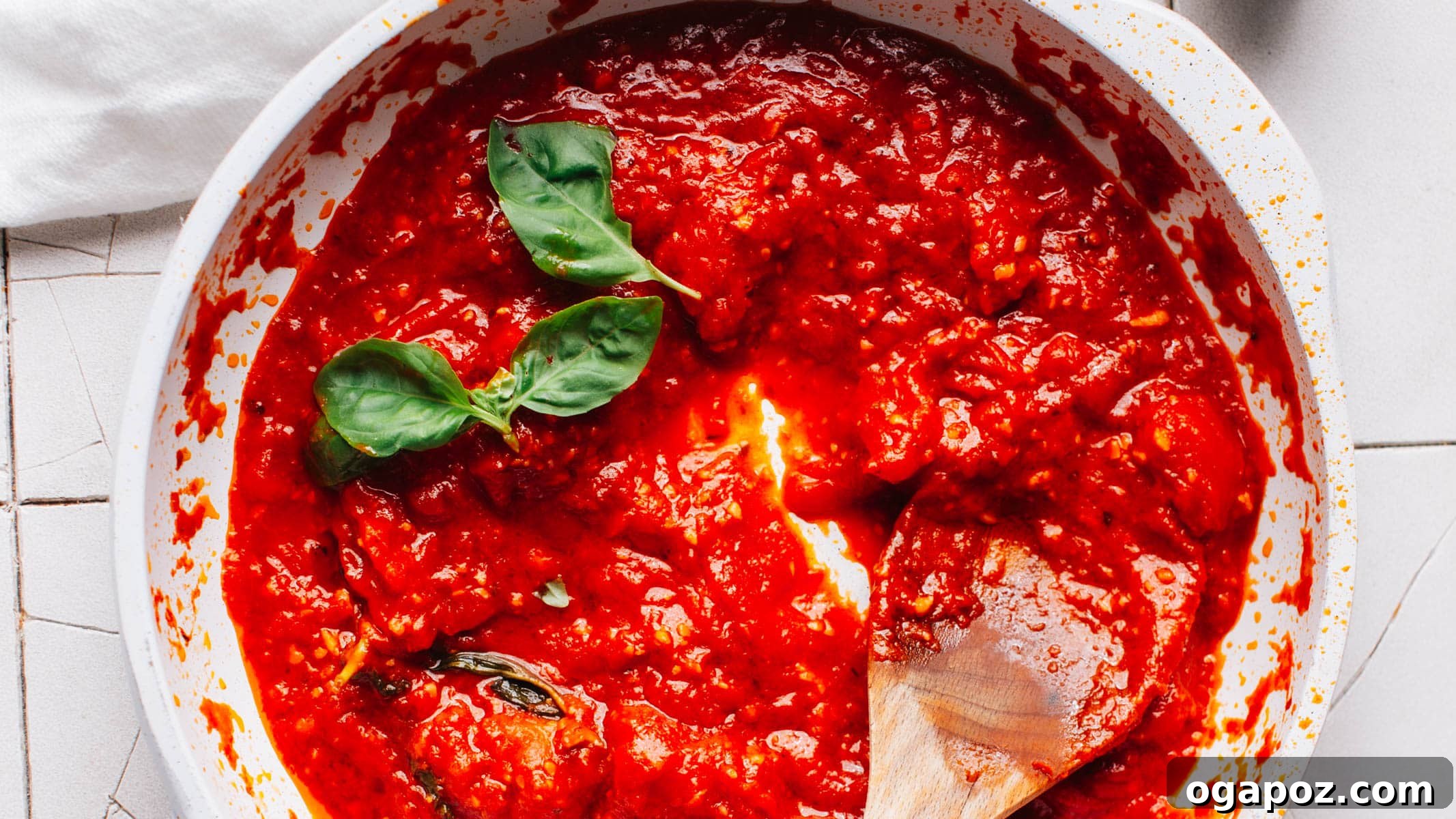
Elevate your pizza night with the very best Homemade Pizza Sauce. This quick and easy recipe transforms simple, fresh ingredients into a rich, thick, and deeply flavorful sauce that will rival your favorite pizzeria. Forget bland, jarred sauces; crafting your own from scratch is a game-changer, promising an authentic taste that will impress everyone.
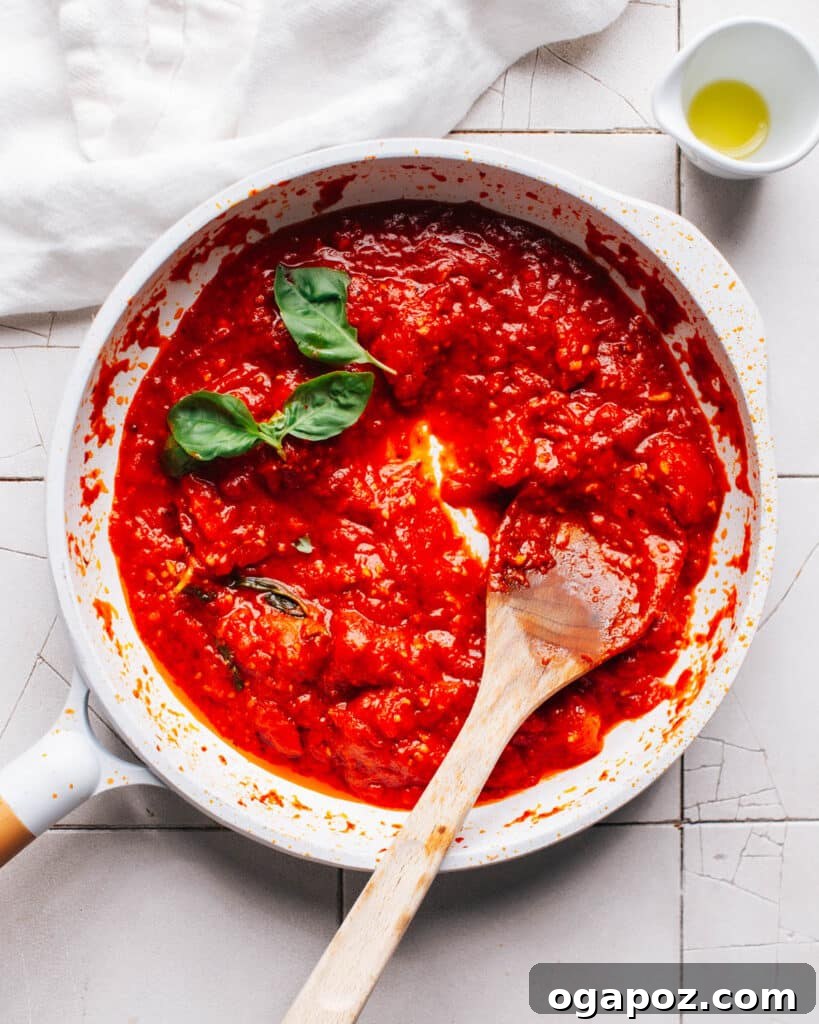
It’s a bold claim, but anyone who tries this easy Homemade Pizza Sauce recipe is instantly hooked. The vibrant flavors and perfect texture make it an indispensable part of any homemade pizza. If you’ve ever wondered how to achieve that authentic Italian restaurant-quality pizza sauce, this recipe is your answer.
The beauty of this recipe lies in its simplicity. You don’t need any complex techniques or rare ingredients to create an extraordinary pizza sauce at home. With just a few pantry staples – high-quality tomatoes, aromatic garlic, and fresh herbs – you can whip up a versatile red sauce that’s perfect for topping any homemade pie. This foolproof method ensures a delicious outcome every single time, making it a staple in your kitchen.
Why You’ll Absolutely Love This Homemade Pizza Sauce Recipe
Prepare to revolutionize your pizza night! This recipe delivers a rich, tangy, and perfectly balanced sauce that easily outperforms any store-bought alternative and stands shoulder to shoulder with sauces from the finest Italian eateries. Here’s what sets this recipe apart, making it the ultimate pizza sauce:
- Uncomplicated, High-Quality Ingredients: The magic starts with a few basic ingredients that are likely already in your pantry. When combined with our expert technique, these simple components unleash an incredible depth of flavor. We focus on quality over quantity, ensuring every element contributes to a superior sauce.
- A Robust Flavor Foundation: Building profound flavor into your sauce begins with a generous amount of quality extra virgin olive oil. Fat acts as a carrier for flavor, allowing the vibrant notes of the tomatoes and herbs to truly shine. A substantial amount of freshly minced garlic adds an irresistible aromatic punch, creating a savory base that is both complex and comforting.
- “Pro” Technique That’s Incredibly Easy: Don’t let the word “pro” intimidate you! Our technique is straightforward and accessible for home cooks of all skill levels. It involves letting the tomatoes gently caramelize in hot oil, which intensifies their natural sweetness and depth. This is followed by a slow simmer, allowing the sauce to reduce and concentrate its flavors, creating that rich, thick consistency everyone craves.
- Exceptional Freshness and Customization: Unlike jarred sauces packed with preservatives and added sugars, our homemade version is all natural. You control every ingredient, allowing you to adjust seasonings, herbs, and even the spice level to perfectly match your preferences.

What You Need for this Homemade Pizza Sauce Recipe
Crafting an outstanding homemade pizza sauce begins with selecting the right ingredients and having the proper tools on hand. Below, we’ve broken down everything you’ll need into clear, easy-to-follow sections.
Essential Homemade Pizza Sauce Ingredients
For a truly delicious and foolproof pizza sauce, the quality and type of ingredients make all the difference. Here’s a closer look at what you’ll need:
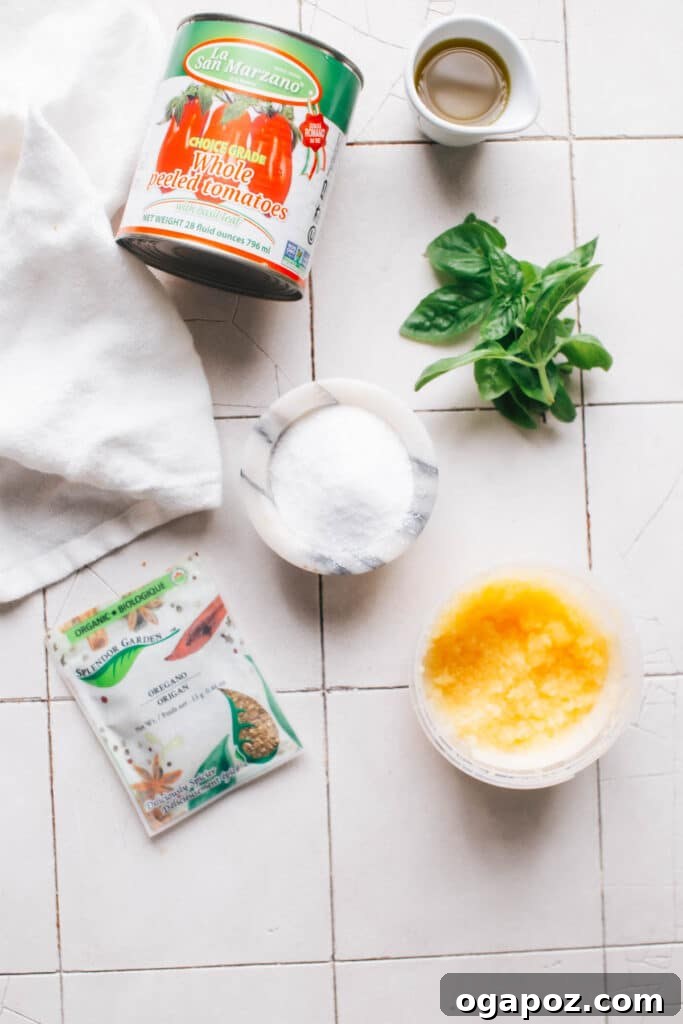
- Tomatoes: The Soul of the Sauce: The base of any great pizza sauce. For the best results, use high-quality canned or fresh tomatoes. Our top recommendation for canned options are San Marzano tomatoes, renowned for their sweet flavor and low acidity. You can use whole, diced, or crushed tomatoes. Whole peeled tomatoes are often preferred as they contain fewer additives and you can crush them yourself to control texture. If you prefer a smoother sauce, you’ll have the option to purée it later.
- Extra-Virgin Olive Oil: The Flavor Conductor: Don’t skimp on the oil! A good quality extra-virgin olive oil adds immense flavor, richness, and depth to your sauce. It also helps to sauté the aromatics and build that foundational savory taste.
- Garlic: The Aromatic Core: Fresh garlic provides that essential pungent kick and aromatic edge that defines a classic Italian red sauce. Minced fresh garlic is crucial here; garlic powder is not a recommended substitute as it lacks the vibrant, fresh flavor.
- Fresh or Dried Herbs: The Fragrant Finish:
- Oregano: Gives the sauce its characteristic herby, slightly peppery note that beautifully complements the tomatoes.
- Basil: Adds a touch of sweetness and an incomparable depth of fresh, aromatic flavor. Fresh basil is always best, but good quality dried basil will also work well.
- Optional Additions: For an extra layer of complexity, consider adding a pinch of fennel seed (for a subtle anise flavor often found in Italian sausage) and/or marjoram, which is similar to oregano but milder and sweeter.
- Red Pepper Flakes (Optional): The Spicy Kick: If you appreciate a hint of warmth and a gentle kick in your sauce, a pinch of crushed red pepper flakes will do the trick. Adjust the amount to your personal heat preference, or omit them entirely for a milder sauce.
- Salt: The Essential Enhancer: A pinch of kosher salt brings all the flavors together and brightens the taste of the tomatoes and herbs. Always taste and adjust as you go!
Variations and Substitutions to Customize Your Sauce
One of the joys of cooking at home is the freedom to get creative and adapt recipes to your liking or what you have available. This pizza sauce recipe is incredibly versatile:
- Alternative Tomato Types: While San Marzano are ideal, don’t hesitate to experiment. You can use sweet cherry tomatoes for a naturally sweeter sauce, or even good quality canned diced tomatoes if that’s what you have. Just be aware that some varieties may require a longer simmer to reduce water content.
- Exploring Other Spices:
- Thyme or Rosemary: These herbs can be used in place of, or alongside, oregano and basil for a different aromatic profile.
- Onion Powder: A small amount of onion powder can add another layer of savory depth without the texture of fresh onions, which some prefer to avoid in pizza sauce.
- Italian Seasoning Blend: If you’re short on individual herbs, a good quality Italian seasoning blend can be a convenient substitute. However, quality varies, so choose a brand you trust for robust flavor.
- A Pinch of Sugar: If your tomatoes taste a bit acidic, a small pinch of sugar (about ¼ to ½ teaspoon) can help balance the flavors without making the sauce sweet.
- Adjusting the Heat Level: The amount of red pepper flakes is entirely up to your preference. Start with a small pinch and add more to achieve your desired level of warmth. For a completely mild sauce, simply omit them.
Essential Kitchen Tools for Sauce Making
Having the right tools can make the cooking process smoother and more enjoyable, ensuring your pizza sauce comes out perfectly every time:
- Large Saucepan or Dutch Oven: Essential for sautéing ingredients and providing ample space for the sauce to simmer and reduce without overflowing. A heavy-bottomed pan ensures even heat distribution.
- Wooden Spoon: Perfect for stirring, scraping the bottom of the pan, and breaking down tomatoes.
- Potato Masher: An invaluable tool for easily breaking down whole peeled tomatoes into smaller, chunkier pieces, creating a rustic texture without over-processing.
- Measuring Spoons and Cups: For accurate measurement of ingredients, ensuring consistent flavor.
- Immersion Blender or Regular Blender/Food Processor (Optional): If you prefer a silky-smooth sauce, an immersion blender allows you to purée the sauce directly in the pot. Alternatively, let the sauce cool slightly and blend in a regular blender or food processor.
With your ingredients prepped and tools at the ready, you’re now perfectly set to begin cooking and enjoy the incredible aroma of homemade pizza sauce filling your kitchen!
How to Make Homemade Pizza Sauce: A Step-by-Step Easy Guide
Making your own rich, red pizza sauce at home is surprisingly simple and incredibly rewarding. With just a handful of ingredients and the right tools, you’ll be spreading this delectable sauce over your pizza dough in no time. Follow these easy steps for a perfect sauce every time:
Step 1: Prep Your Ingredients
- Before you start cooking, get all your ingredients in order. If you’re using fresh tomatoes, give them a good chop. If using canned tomatoes, simply open the can and have it ready.
- Mince your garlic cloves finely. Measure out your extra virgin olive oil, dried oregano, basil (fresh or dried), kosher salt, and the optional crushed red pepper flakes. Having everything prepped will make the cooking process seamless.
Step 2: Cook the Aromatic Sauce Base
- Place a large saucepan or Dutch oven on your stove and set the heat to medium. Add the olive oil to the pan and allow it to heat up gently.
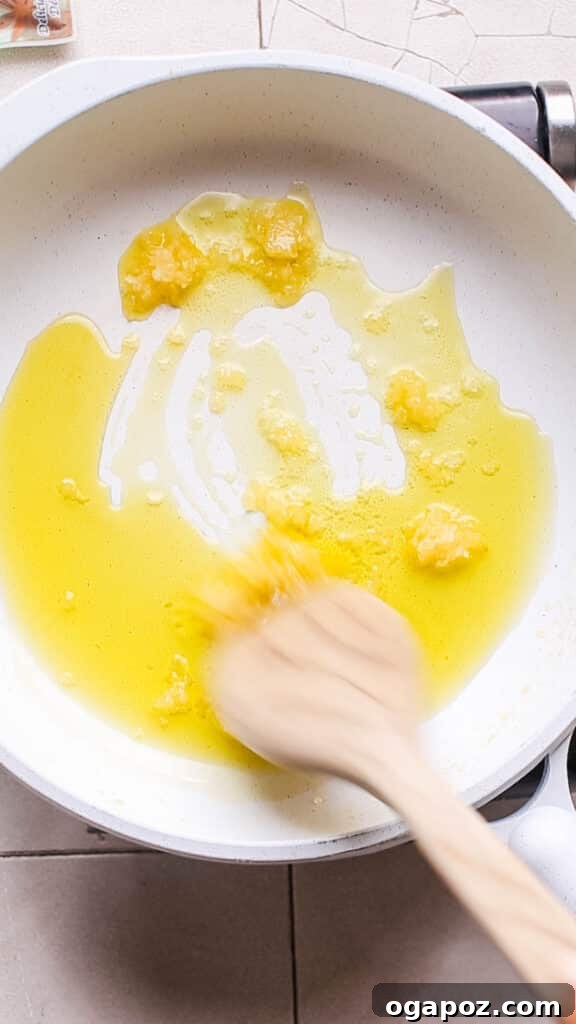
- Once the oil is shimmering, stir in the minced garlic, dried oregano, and basil (if using dried). Cook these aromatics for about one minute, stirring constantly. The goal is to make the garlic fragrant and lightly golden, not brown or burnt, which can make it bitter.
Step 3: Add Tomatoes and Season
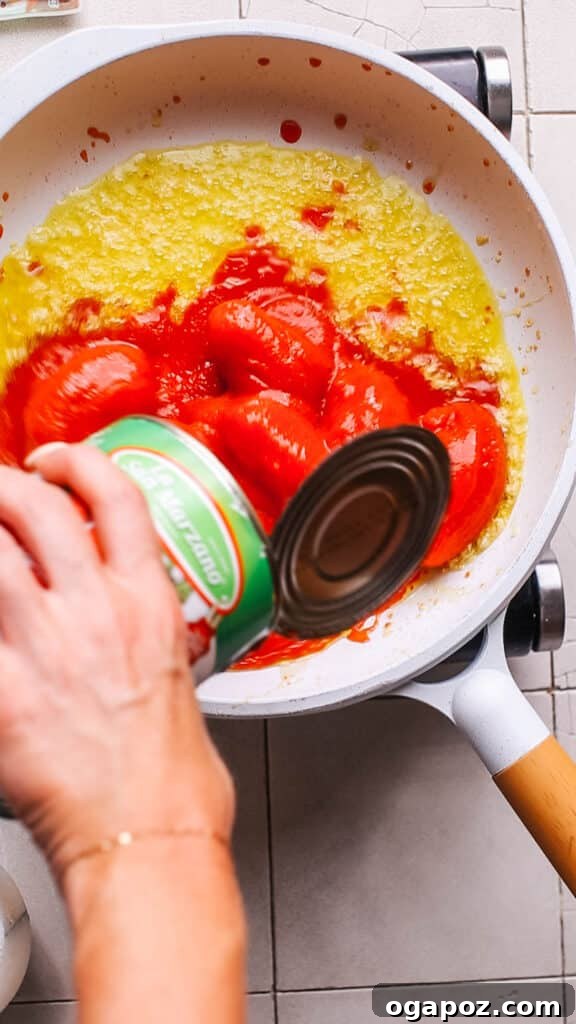
- Carefully pour the chopped or canned tomatoes into the pan with the aromatic base.
- If you’re using whole canned tomatoes, use a potato masher or the back of your wooden spoon to crush them into smaller pieces directly in the pan. This helps create a desirable texture for pizza sauce.
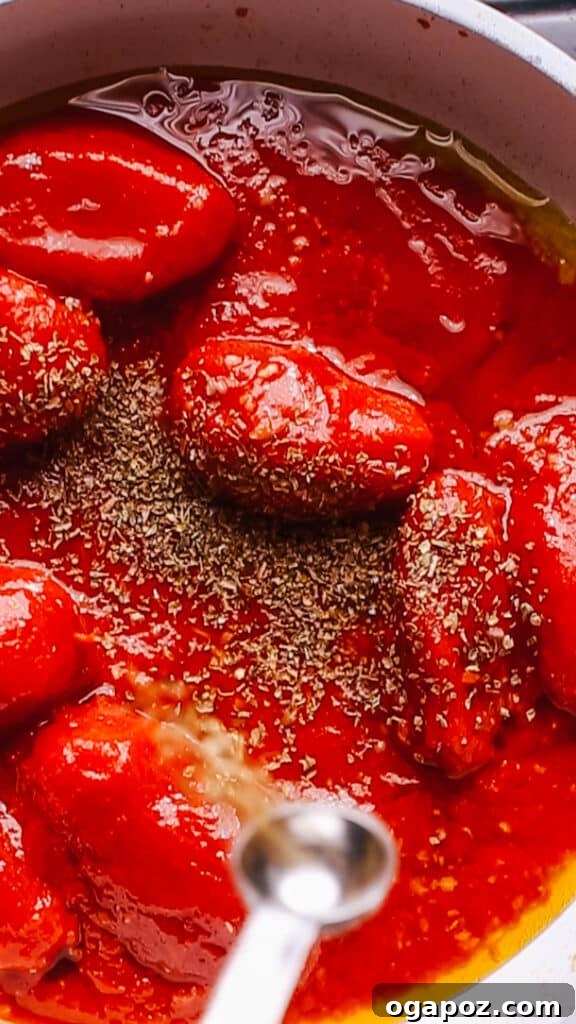
- Stir in the kosher salt and the optional red pepper flakes. Give everything a good stir to ensure all the ingredients are well combined and the flavors start to meld.
Step 4: Simmer for Deep Flavor
- Lower the heat to low, ensuring the sauce is at a gentle simmer. This is a crucial step for flavor development.
- Allow the sauce to simmer for at least 30 minutes, or for up to an hour for an even richer, more concentrated flavor. The longer it simmers, the more the water evaporates, thickening the sauce and intensifying the tomato goodness. Stir occasionally to prevent sticking.
- Toward the end of the simmering time, taste the sauce. Adjust the seasoning as needed, adding more salt if necessary, or a tiny pinch of sugar if the tomatoes are too acidic. If you used fresh basil sprigs, remove them before the next step.
Step 5: Achieve Your Desired Texture (Blend if Preferred)
- Once the sauce has simmered and achieved a rich flavor, you can decide on its final texture. If you prefer a rustic, chunkier sauce, simply leave it as is, or give it a few more mashes with your potato masher.
- If you like your sauce silky smooth, use an immersion blender directly in the pot to purée the tomatoes until smooth. Alternatively, you can let the sauce cool a bit and then carefully transfer it to a regular blender or food processor to blend until it reaches your desired consistency.
How to Make Pizza Sauce with Fresh Tomatoes
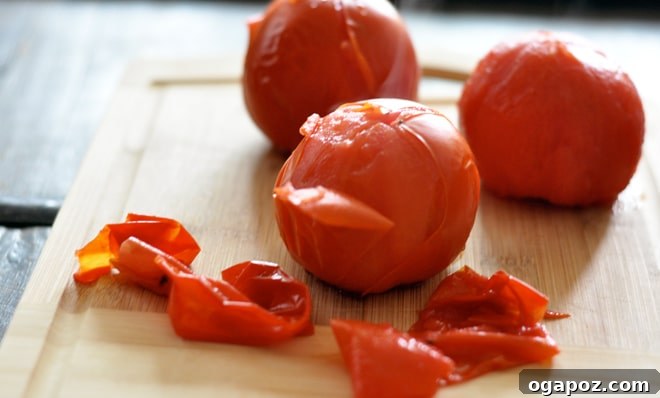
While high-quality canned tomatoes are often preferred for their consistent flavor and ripeness, using fresh tomatoes can yield a wonderfully vibrant sauce, especially when tomatoes are in season. If you choose to use fresh tomatoes, you should ideally remove their skins first for the best texture. Skins can become tough and chewy in the sauce, getting stuck in your teeth.
You can skip the skin removal step if you possess a professional-grade high-speed blender, like a Vitamix, which can pulverize the skins completely. Otherwise, here are two simple methods to easily remove tomato skins:
Method 1: How to Remove Tomato Skins by Blanching
- Score the Skin: Gently cut a small “x” at the bottom of each tomato using a sharp knife. This helps the skin peel away easily.
- Boil Briefly: Carefully immerse the scored tomatoes in a pot of vigorously boiling water for just 30 to 60 seconds. Watch closely; the skins will start to shrivel and peel back at the “x” mark.
- Cool and Peel: Immediately remove the tomatoes from the boiling water with a slotted spoon and plunge them into an ice bath (a bowl of cold water with ice cubes). This stops the cooking process. Once cool enough to handle, the loosened skins can be easily peeled off with your fingers or a small paring knife. Remove the cores and chop the tomatoes, then proceed with the recipe as described above.
Method 2: How to Remove Tomato Skins by Freezing
This method is excellent for processing a large batch of fresh tomatoes, especially if you plan to make sauce later.
- Freeze Tomatoes: Wash and thoroughly dry the fresh tomatoes. Arrange them in a single layer on a baking sheet and place them in the freezer until they are solid.
- Partial Thaw: Once frozen, remove the tomatoes from the freezer. Let them sit at room temperature for a few minutes, or run them under cool water briefly. You’ll notice the skin will begin to loosen and separate from the flesh.
- Peel and Use: The loosened skin can now be easily peeled off with your hands or a small knife. Your skinned tomatoes are ready to be chopped and used immediately in your pizza sauce recipe, or you can store them in freezer bags for future use.
Make Ahead and Storage for Your Homemade Pizza Sauce
One of the many advantages of making your own pizza sauce is its excellent make-ahead and storage capabilities. This Red Sauce for Pizza is perfect for batch cooking, ensuring you always have a delicious base ready for spontaneous pizza nights.
- Make Ahead: Refrigeration: You can prepare this incredible sauce up to 5 days in advance. Once cooled, transfer it to an airtight container and store it in the refrigerator. This allows the flavors to deepen even further, making it taste even better on day two or three!
- Freezing for Long-Term Storage: If you wish to keep your homemade pizza sauce for an extended period, it freezes beautifully. Portion the cooled sauce into freezer-safe airtight containers or heavy-duty freezer bags. Lay freezer bags flat to save space. It can be stored in the freezer for up to 3 months without losing its quality or flavor. Make sure to leave some headspace in containers, as the sauce will expand when frozen.
- Reheating Instructions:
- From the Refrigerator: To use refrigerated sauce, simply warm it gently on the stove over low heat, stirring occasionally, until it reaches your desired temperature. Alternatively, microwave it on medium power in a microwave-safe container, stirring every minute, until heated through.
- From the Freezer: For frozen sauce, the best method is to thaw it overnight in the refrigerator. Once thawed, reheat it on the stovetop over low heat until warm. If you’re in a hurry, you can gently reheat it from frozen on the stove, stirring frequently, or use the defrost setting on your microwave.
- Shelf Life and Quality: While refrigerated, aim to use the sauce within a week for the absolute best taste and texture. Frozen sauce maintains its peak quality for about 3 months, though it’s generally safe to eat beyond that timeframe if properly stored, it may start to lose some flavor intensity.

How to Use This Easy Homemade Pizza Sauce Recipe
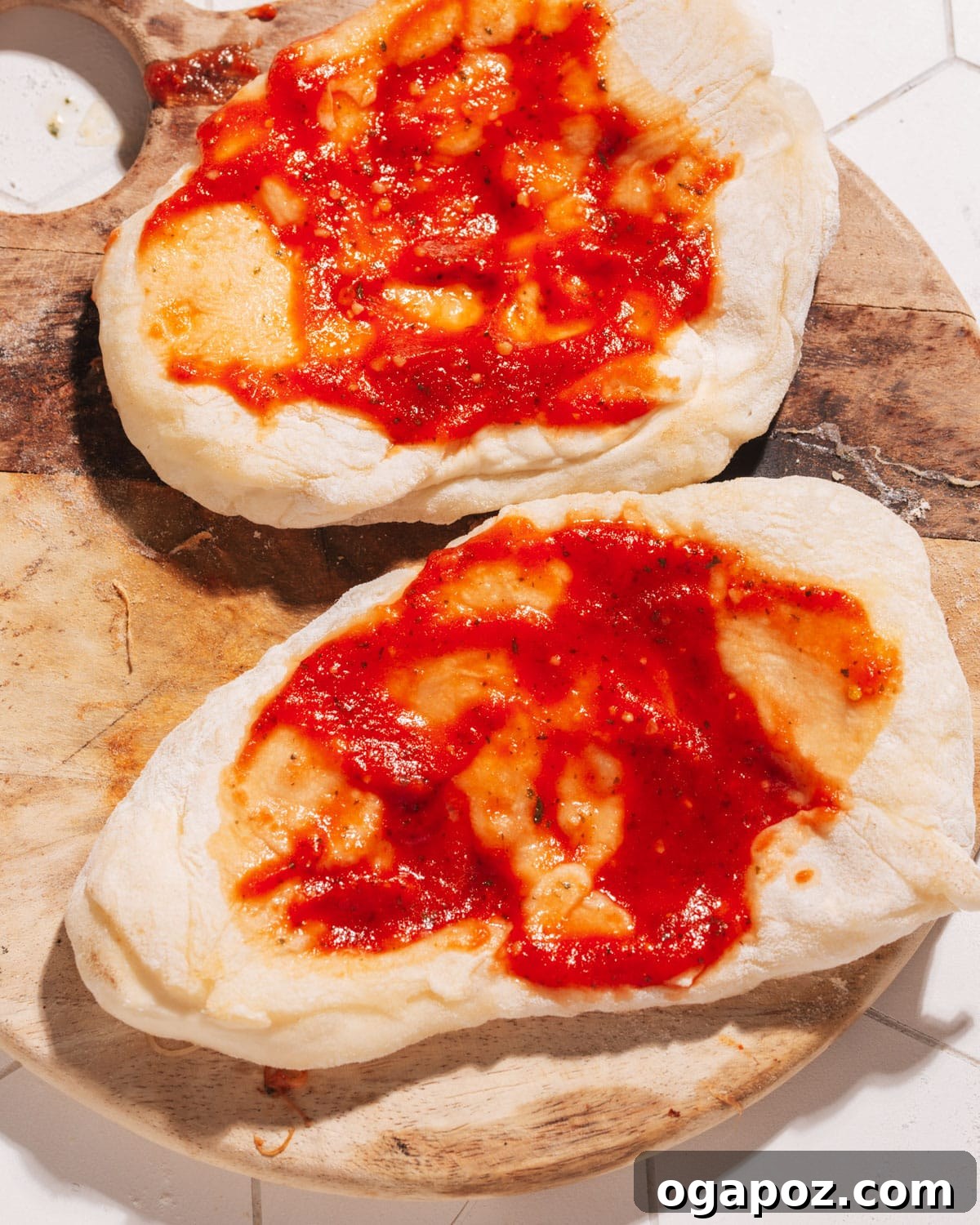
This versatile homemade pizza sauce is the perfect foundation for any pizza creation, making every pizza night extraordinary. Simply spread a generous amount of this vibrant sauce evenly over your prepared pizza dough, add your favorite toppings, a sprinkle of mozzarella cheese, and then bake to golden perfection. The possibilities are endless!
Looking for more creative ways to enjoy this incredible sauce? Try these delicious methods for making pizza:
- Cast Iron Pizza: For a perfectly crispy crust with a tender interior, utilize my ultimate easy homemade pizza dough recipe and guide to bake your pizza in a cast iron pan. The even heat distribution of cast iron creates a restaurant-quality crust that truly shines with this homemade sauce.
- Air Fryer Pizza: If you haven’t discovered the magic of Air Fryer Pizza yet, you are missing out! The high, circulating heat in an air fryer not only cooks pizza incredibly fast but also concentrates the flavors of the sauce and all the toppings, achieving a taste remarkably similar to a wood-fired pizza.
- Naan Pizza: This method is, arguably, one of my absolute favorites for a quick and delicious pizza. Use my viral naan recipe as your pizza base. It bakes up soft and airy with a wonderfully crisp bottom, especially when paired with either the air fryer or cast iron methods mentioned above.
- Biscuit Dough Pizza: For a homemade pizza from scratch in under 30 minutes, you simply must try Biscuit Dough Pizza. Using an easy drop biscuit batter as the crust results in a pizza that is delightfully crisp, buttery, and utterly delicious. It’s a quick weeknight marvel that you’ll want to make again and again.
Perfect Pizza Toppings
- Go classic with a simple blend of fresh mozzarella and savory pepperoni, or unleash your creativity with a medley of toppings like vibrant bell peppers, thinly sliced onions, earthy mushrooms, olives, or even cooked sausage and bacon. This versatile sauce pairs well with virtually anything!
Complementary Side Dishes for Pizza Night
- For a complete and satisfying meal, consider serving your delicious homemade pizza with a fresh, crisp green salad dressed with a light vinaigrette. Alternatively, a basket of warm, crusty garlic bread is always a crowd-pleaser and perfect for soaking up any extra sauce.
Common Mistakes to Avoid When Making Homemade Pizza Sauce
Even though this recipe is foolproof, being aware of common pitfalls can help ensure your Red Sauce for Pizza turns out perfectly every time. Here are the most frequent mix-ups to steer clear of:
- Overheating or Burning Garlic: Garlic is delicate. Cooking it for too long or at too high a heat can quickly make it bitter, which will negatively impact the entire sauce. Sauté just until it’s fragrant and lightly golden, typically about one minute, rather than allowing it to brown or burn.
- Rushing the Simmer: Patience is a virtue when it comes to developing deep flavors. Not allowing the sauce to simmer long enough will result in a watery, less concentrated, and ultimately less flavorful sauce. The slow simmer is crucial for reducing excess liquid and allowing the flavors to meld beautifully. Aim for at least 30 minutes, or longer if you have the time.
- Skipping Seasoning Adjustments: Taste, taste, taste! Forgetting to sample the sauce throughout the cooking process and adjust the seasoning (especially salt and potentially a pinch of sugar) can lead to a bland or unbalanced sauce. Tomatoes can vary in sweetness and acidity, so always trust your palate.
- Using Low-Quality Tomatoes: The quality of your tomatoes directly dictates the flavor of your sauce. Using cheap, watery, or unripe canned tomatoes will yield a subpar sauce, no matter how carefully you follow the steps. Invest in good quality whole peeled tomatoes, ideally San Marzano, for the best results.
Pizza Sauce Frequently Asked Questions (FAQ)
Just skimming through? Here are some quick answers to the most commonly asked questions about making and using pizza sauce, ensuring all your culinary queries are addressed.
What is the red sauce on pizza?
The red sauce on pizza is traditionally a rich, tomato-based sauce, typically seasoned with classic Italian herbs like oregano and basil, and often enhanced with garlic and sometimes a touch of red pepper flakes for subtle heat. Its primary function is to provide a flavorful, moist base for the cheese and toppings.
What is the difference between red sauce vs white sauce pizza?
The key distinction lies in their base: red sauce pizza uses a robust tomato-based sauce for its foundation, offering a tangy and savory profile. In contrast, white sauce pizza typically features a creamy, dairy-based sauce, such as Alfredo, béchamel, or a garlic-infused olive oil and cheese blend, providing a richer, often milder alternative to tomato-based sauces.
Is pizza sauce the same as marinara?
Pizza sauce and marinara sauce are quite similar as both are tomato-based, but they are not identical. Pizza sauce is generally thicker, designed to cling to the dough and toppings without making the crust soggy, and often less seasoned or simpler in flavor to allow the toppings to shine. Marinara, while also tomato-based, is typically thinner and often more heavily seasoned with a wider array of herbs and spices, making it ideal as a pasta sauce or dipping sauce.
Can you use pizza sauce for spaghetti sauce?
Yes, you absolutely can use homemade pizza sauce as a spaghetti sauce! Its rich tomato and herb base makes it perfectly suitable. However, for a traditional spaghetti sauce, you may want to enhance it by adding more seasonings, a touch of red wine, or simmering it with meat (like ground beef or Italian sausage) and vegetables (onions, bell peppers) to create a heartier, more complex pasta sauce.
How long can I store homemade pizza sauce?
Homemade pizza sauce can be safely stored in an airtight container in the refrigerator for up to one week. For longer preservation, it freezes exceptionally well and can be kept in a freezer-safe container for up to three months without compromising its flavor or texture. Always allow it to cool completely before refrigerating or freezing.
Can I use tomato paste for pizza sauce?
While tomato paste is highly concentrated and flavorful, it’s generally too thick and intense to be used solely as pizza sauce. However, a small amount of tomato paste can be added to this recipe (sautéed with the garlic) to deepen the tomato flavor and color of the sauce. You would still need a base of crushed or whole tomatoes for proper consistency.
How do I prevent my pizza sauce from being watery?
To prevent watery pizza sauce, ensure you use high-quality tomatoes that aren’t overly watery. The most crucial step is to simmer the sauce for a sufficient amount of time (at least 30 minutes, up to an hour) over low heat. This allows the excess liquid to evaporate, concentrating the flavors and thickening the sauce naturally. If it’s still too thin, you can continue simmering it uncovered for a bit longer.
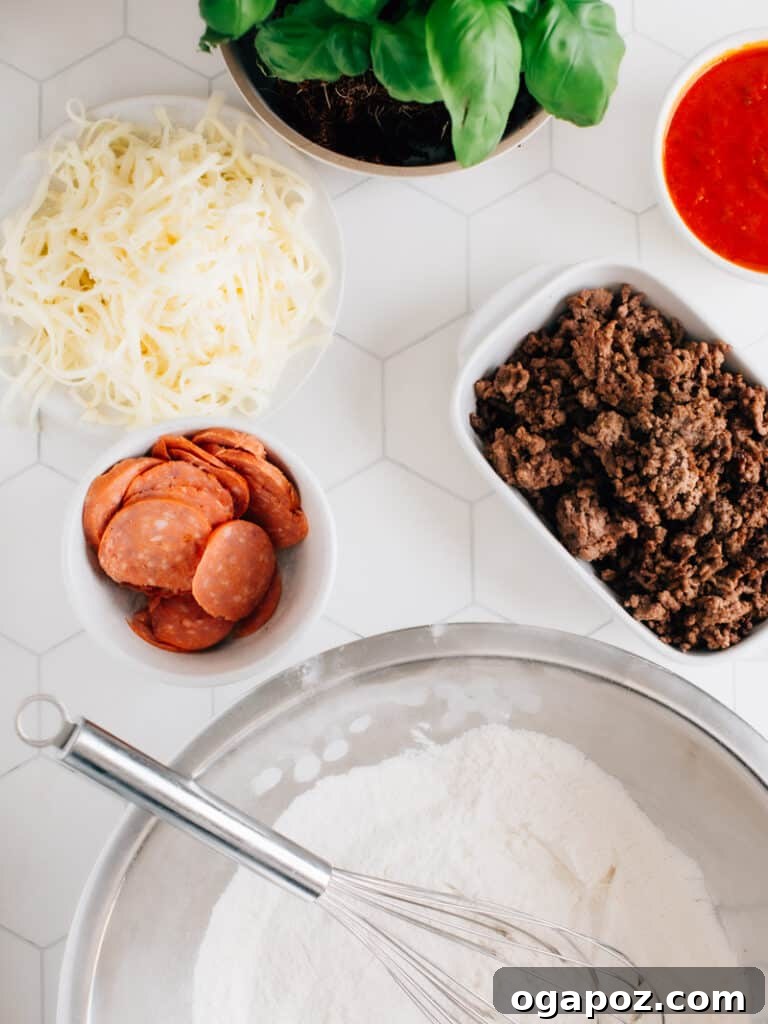
How to Make the Best Pizza Sauce: Final Notes + Science-Based Secrets
To truly unlock the full potential of your Red Sauce for Pizza and ensure it’s the best you’ve ever tasted, keep these key takeaways and scientific insights in mind:
- Masterful Herb Infusion: Don’t just toss in your herbs; understand their role. Letting the sauce simmer gently with fresh basil, for example, allows its volatile oils to infuse deeply into the sauce, creating a complex, aromatic profile that dried herbs can’t fully replicate. Add fresh delicate herbs (like basil) towards the end of cooking for maximum impact, or use dried herbs early to rehydrate and release their flavor.
- The Nuance of Heat: The optional red pepper flakes do more than just add heat. Capsaicin, the compound responsible for the spice, interacts with other flavor molecules, enhancing perception and adding a subtle layer of complexity beyond just a fiery sensation. It can brighten and enliven the entire sauce.
- Balancing Acidity Matters: Tomatoes vary significantly in their natural acidity. If your sauce tastes too sharp or tart, it can throw off the entire balance. A tiny pinch of baking soda (yes, baking soda!) can neutralize excess acidity without impacting flavor, similar to how I balance my super popular tomato soup recipe. Add just a ¼ teaspoon at a time until the sauce tastes perfectly balanced.
- Fresh vs. Canned: Understanding the Impact:
- Canned Tomatoes: Often picked at peak ripeness and processed immediately, making them a consistent and reliable choice year-round. Roma or San Marzano varieties are prized for their meaty flesh, few seeds, and ideal balance of sweetness and acidity, yielding a richer sauce.
- Fresh Tomatoes: Best used when in season, offering a bright, vibrant flavor. Choose varieties like Roma, San Marzano, or other paste tomatoes that are less watery and more flavorful, ensuring your sauce isn’t thin.
- The Power of Slow Simmering: From a culinary science perspective, the long, slow simmer isn’t just about reducing liquid; it’s about flavor development through the Maillard reaction (browning) and caramelization of sugars. This process creates hundreds of new flavor compounds, giving the sauce its coveted depth and richness.
The sauce is far more than just a base; it truly is the soul of your pizza. Once you experience the vibrant flavor and incredible texture of this homemade red sauce, you’ll undoubtedly find it impossible to go back to the convenience of store-bought alternatives. Prepare to fall in love with homemade pizza all over again!
More Delicious Recipes to Pair with Your Homemade Pizza Sauce
- Ultimate Easy Homemade Pizza Dough
- Quick and Easy Air Fryer Pizza
- Homemade Naan Pizza
- 30-Minute Biscuit Dough Pizza
- Versatile Garlic Butter Sauce
- The Best Spaghetti Meat Sauce
Other Delicious Italian-Inspired Recipes to Try:
- Creamy Tuscan Chicken
- Easy Alfredo Penne Pasta
- Decadent Lobster Pasta
- Flavorful Shrimp Pasta
- Easy Seafood Pasta with Cream Sauce
- Effortless Slow Cooker Lasagna
- Asiago Tortelloni Alfredo with Grilled Chicken
- Rich Lobster Ravioli Sauce
- Lazy Lasagna with Just 3 Ingredients
Homemade Pizza Sauce (Ultimate Easy Recipe You’ll Swear By!)
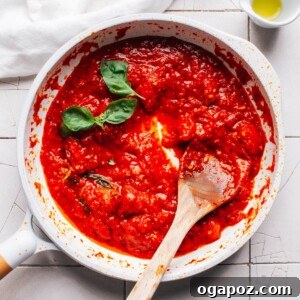
By: Jennifer Pallian BSc, RD
Learn how to make the BEST homemade pizza sauce with this quick, easy recipe that turns out rich, thick and deeply flavorful. Foolproof!
Prep Time: 10 minutes
Cook Time: 30 minutes
Yields: 10 servings
Ingredients:
- 1 (28 oz) can whole peeled tomatoes (preferably Roma or San Marzano variety, or 1.75 lbs ripe fresh tomatoes – see notes below)
- ¼ cup extra virgin olive oil
- 3 large cloves garlic, minced
- 1 teaspoon dried oregano
- 2 sprigs fresh basil (or 1 teaspoon dried basil)
- 1 teaspoon kosher salt
- ¼ teaspoon crushed red pepper flakes (optional, for a little heat)
Instructions:
- Heat the olive oil in a large saucepan or Dutch oven over medium heat.
- Add the minced garlic, dried oregano, and fresh or dried basil to the pan. Stir and cook for about 1 minute, until the garlic is fragrant and lightly golden (be careful not to burn it).
- Add the whole tomatoes to the pan. Use a potato masher or the back of a wooden spoon to crush the tomatoes until they are in small pieces.
- Stir in the salt, and optional crushed red pepper flakes. Mix everything well to combine.
- Lower the heat to low and let the sauce simmer gently. Continue to cook, stirring occasionally, for at least 30 minutes. For an even richer, more concentrated flavor, simmer for up to 1 hour. The longer it cooks, the more the flavors will meld together and the sauce will thicken.
- Taste the sauce and adjust the seasoning if necessary (add more salt, or a tiny pinch of sugar if too acidic). Remove fresh basil sprigs, if used.
- For a smoother sauce, use an immersion blender to blend it directly in the pot, or let it cool slightly and blend in a regular blender or food processor until desired consistency is reached.
Notes:
- If using fresh tomatoes, you can optionally blanch them to remove their skins first. Cut a small “x” in the bottom of each tomato. Immerse in boiling water for about 30-60 seconds, or until the skins begin to peel back. Cool them under cold water and peel off the skins. Remove the cores and chop the tomatoes before adding to the pan.
- For a deeper umami flavor, you can add 1 tablespoon of tomato paste along with the fresh tomatoes. Sauté it with the garlic and herbs for a minute before adding the canned tomatoes.
- This sauce can be stored in an airtight container in the refrigerator for up to 5-7 days or frozen for up to 3 months.
Nutrition Information:
Nutrition information is automatically calculated and should only be used as an approximation.
- Calories: 50 kcal
- Carbohydrates: 0.5g
- Protein: 0.1g
- Fat: 5g
- Saturated Fat: 1g
- Polyunsaturated Fat: 1g
- Monounsaturated Fat: 4g
- Sodium: 234mg
- Potassium: 8mg
- Fiber: 0.1g
- Sugar: 0.03g
- Vitamin A: 19 IU
- Vitamin C: 0.3mg
- Calcium: 5mg
- Iron: 0.1mg