
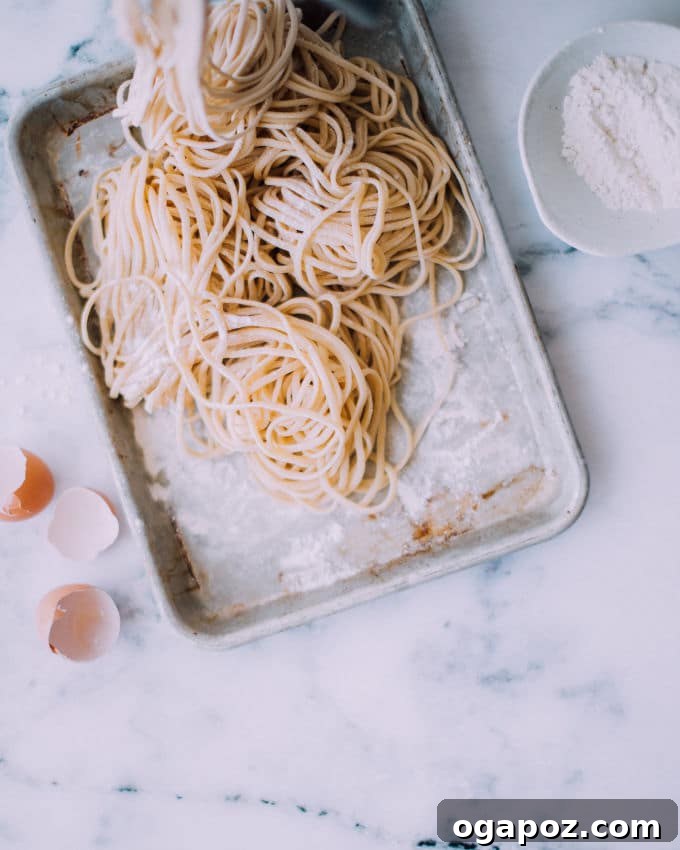
There’s nothing quite like the experience of making your own fresh pasta. This comprehensive guide will show you how to make pasta from scratch, transforming simple ingredients into a culinary masterpiece. Our homemade pasta recipe is incredibly easy and yields a taste and texture far superior to anything you’ll find in a box. It’s truly perfect for all your favorite sauces and an experience that will delight your senses.
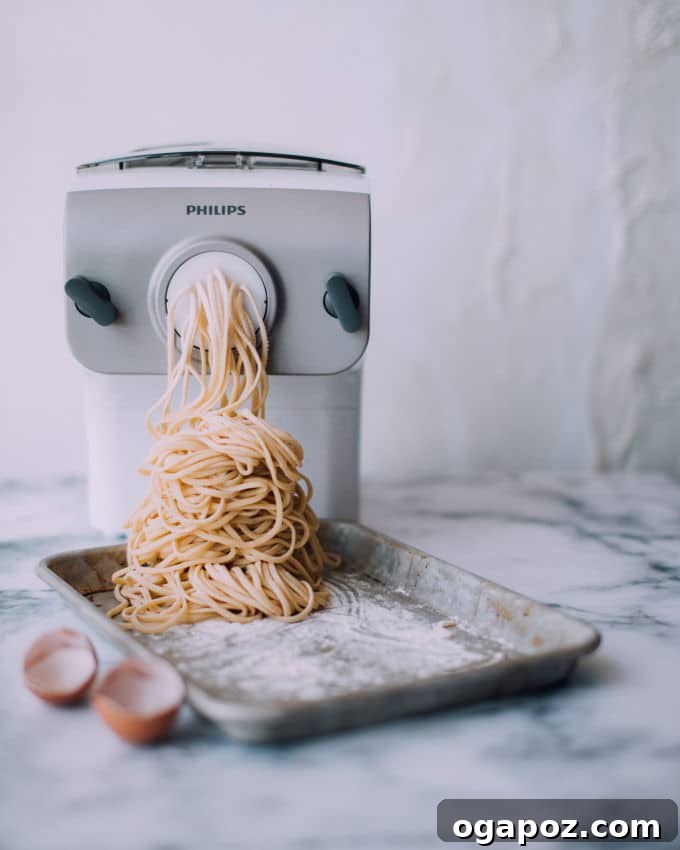
The satisfaction derived from crafting fresh pasta is immense. Beyond the sheer joy of creating something delicious with your own hands, the taste and texture are simply incomparable to dried varieties. Fresh pasta possesses a delicate chewiness and a porous surface that eagerly absorbs sauces, elevating every bite. What’s more, it’s surprisingly easy to do and an incredibly fun activity, whether you’re a seasoned chef or a kitchen novice.
This simple yet elegant process makes for a fantastic social event. Imagine hosting a dinner party where guests gather around, kneading dough and rolling out their preferred shapes. It’s an interactive and memorable way to share good food and company. You could even prepare an array of delectable fillings – perhaps sweet onion with creamy ricotta, rich wild mushroom with mozzarella, or a vibrant squash with mascarpone – and offer a delightful ravioli-making demonstration. Keep a pot of salted water simmering on the stove and a simple, aromatic marinara sauce bubbling nearby, allowing everyone to create and enjoy their personalized pasta creations as they mingle.
How to Make Pasta From Scratch: A Step-by-Step Guide
For those who have never ventured into the world of homemade pasta, it might seem daunting, but I assure you it’s incredibly straightforward and quicker than you might expect. The fundamental recipe requires just two ingredients: a mound of all-purpose flour on a clean counter and a few eggs cracked into its center. That’s truly the whole recipe, a testament to Italian culinary simplicity.
The Art of Kneading Pasta Dough
While the ingredient list is minimal, the kneading process is arguably the most physically demanding part. Fresh pasta dough is purposefully stiff, requiring a good amount of effort and energy. Don’t be surprised if you break a sweat – consider it a mini-workout! For about ten minutes, you’ll be pushing, pulling, and folding the dough, developing its gluten structure. This vigorous kneading is crucial for achieving that desirable elastic and smooth texture, ensuring your pasta holds its shape beautifully when cooked.
The Essential Resting Period
After your robust kneading session, the dough needs a vital rest. Covering the dough and allowing it to rest for at least 30 minutes (or even longer) is essential. This period allows the gluten to relax, which has been tightened during kneading. A relaxed dough is far easier to roll out thinly without constantly springing back, making the next step much more manageable. Plus, it gives you a well-deserved break to recover those kneading muscles!
Rolling Out Your Homemade Pasta: Tools and Techniques
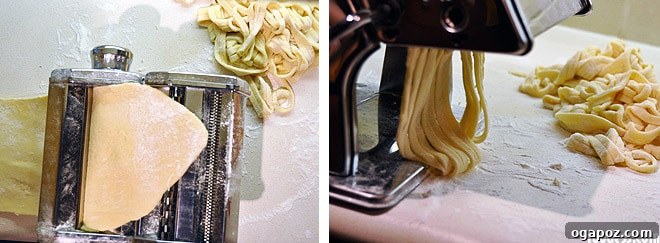
While some purists swear by a trusty rolling pin, I highly recommend using a pasta machine for consistent results and ease, especially if you’re aiming for very thin sheets. A clamp-on, hand-cranked roller is an excellent and affordable starting point. These manual machines allow you to gradually thin out the dough with precision and control.
Using a Manual Pasta Roller:
- Start by flattening a lump of your rested pasta dough slightly by hand.
- Pass this flattened piece through the rollers set to their widest setting. This initial pass helps to shape the dough into a more uniform sheet.
- Fold the dough sheet over on itself (usually into thirds) and pass it through the widest setting again. Repeat this several times, lightly dusting with flour if it starts to stick. This step is critical for further developing gluten and achieving a smooth, pliable sheet.
- Once the dough is smooth and rectangular, change the machine setting to make the rollers slightly closer together. Pass the dough through again.
- Continue to gradually reduce the space between the rollers with each pass, always going one setting at a time, until you reach your desired pasta thickness. For most ribbon pastas like fettuccine or linguine, aim for a thickness of about 1/32 inch (often the second or third to last setting). For filled pastas like ravioli or delicate lasagna sheets, you’ll want it paper-thin, using the narrowest setting.
- At this point, you can either attach the pasta-cutting attachment to make uniform strands of fettuccine or linguine, or you can cut the sheets by hand into various shapes like pappardelle, lasagna sheets, or squares for ravioli.
While a manual machine is an investment, a good quality pasta machine is a totally worthwhile addition to your kitchen arsenal, especially if you have the storage space. Electric pasta attachments for stand mixers (like a KitchenAid) offer even more convenience, freeing up your hands during the rolling process.
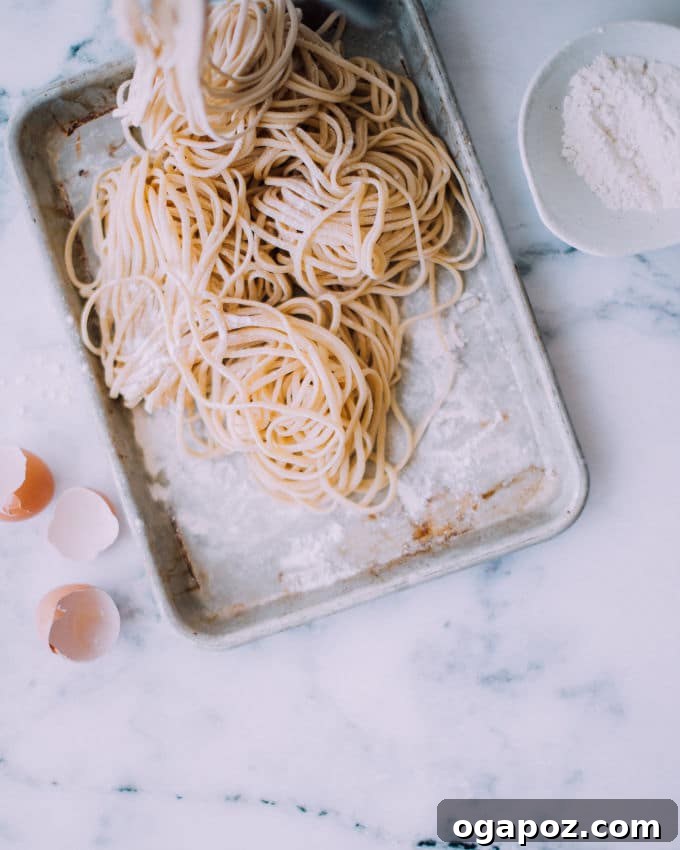
Hand-Rolling Pasta Dough
It is indeed possible to roll out pasta by hand using a long rolling pin. However, given the stiffness of this dough, achieving the truly thin, even sheets required for delicate pasta can be quite challenging and requires considerable strength and practice. You’d certainly need to bulk up those rolling muscles first! For beginners, a machine significantly simplifies the process and guarantees better results.
Shaping Your Homemade Pasta
Once your pasta sheets are rolled to the desired thickness, the real fun begins – shaping! For classic ribbon pastas like fettuccine, tagliatelle, or linguine, simply feed your thin sheets through the appropriate cutting attachment of your pasta machine. For wider noodles like pappardelle or lasagna sheets, you can cut them manually with a knife. For filled pasta such as ravioli or tortellini, cut your thin sheets into squares or circles and add your chosen fillings before sealing. Dusting your freshly cut pasta with semolina flour or all-purpose flour is crucial to prevent it from sticking together before cooking.
Cooking and Storing Fresh Pasta
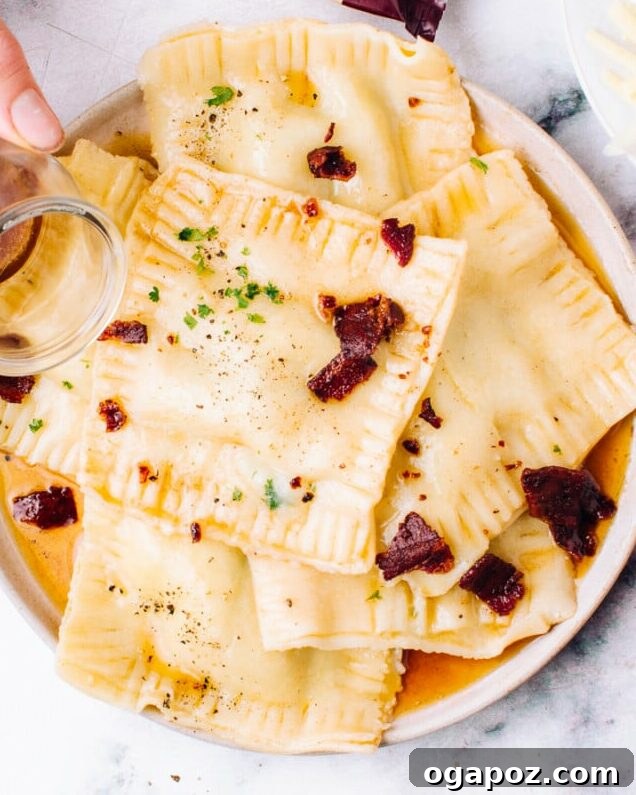
Fresh pasta cooks significantly faster than dried pasta, usually in just 2-4 minutes. Bring a large pot of water to a rolling boil and season it generously with salt, just like the sea. Drop your fresh pasta in, stir gently to prevent sticking, and cook until al dente – tender but with a slight bite. Drain immediately and toss with your favorite sauce. The delicate nature of fresh pasta truly shines with lighter, fresher sauces, but it also stands up beautifully to heartier options, as exemplified by a rich browned butter sauce over homemade ravioli.
If you’ve made more pasta than you need, you can store it. For short-term storage, lightly dust the pasta with flour, form it into small nests, and refrigerate in an airtight container for 1-2 days. For longer storage, you can either dry it completely (on a drying rack or floured surface for 12-24 hours until brittle) or freeze it. To freeze, arrange floured pasta nests on a baking sheet and freeze until solid, then transfer to a freezer-safe bag for up to a month.
Really – once you’ve succeeded in making your own fresh pasta, you’ll be scratching your noodle (pun intended!) wondering why you never tried it sooner. It’s an incredibly rewarding culinary adventure that brings authentic Italian flavors right to your kitchen.
Next reading: Pasta vs Noodles (Substitution Tips + Crucial Differences)
Favorite Pasta Recipes & Perfect Pairings
Now that you’ve mastered the art of making fresh pasta, explore these delicious recipes designed to showcase its incredible flavor and texture:
- How Long to Cook Fresh Ravioli: Essential timing for tender, perfectly cooked filled pasta.
- Lobster Ravioli Sauce: A decadent sauce that complements homemade ravioli beautifully.
- Seafood Pasta with Cream Sauce: Light yet luxurious, ideal for delicate fresh pasta.
- Beet Pasta Sauce: A vibrant and earthy sauce that adds a pop of color and flavor.
- The Best Meat Sauce: A robust, slow-simmered sauce perfect for hearty pasta shapes.
- Asiago Tortelloni Alfredo with Grilled Chicken: A creamy, cheesy classic that works wonderfully with fresh tortelloni.
- Mushroom Pappardelle: Earthy mushrooms tossed with wide, luscious pappardelle ribbons.
Homemade Fresh Pasta: The 2-Ingredient Easy Recipe
By: Jennifer Pallian BSc, RD
A basic, incredibly easy recipe for how to make pasta from scratch. Homemade pasta is so simple, delicious, and versatile!
Prep Time: 30 minutes
Cook Time: 4 minutes
Servings: 6
Print Recipe
Ingredients
- 3 ½ cups all-purpose flour
- 5 large eggs
Instructions
- Pour the flour onto a clean counter, shaping it into a mound, and create a well in the center.
- Crack the eggs into the well. Using a fork, lightly beat the eggs, gradually drawing in small amounts of flour from the sides of the well until the eggs are fully mixed and slightly thickened. Use your hands to thoroughly blend the mixture into a smooth, cohesive dough. If the dough feels too crumbly, add water, one tablespoon at a time, until it comes together.
- Knead the dough vigorously until it becomes satiny smooth and very elastic. This process should take approximately ten minutes. Once kneaded, cover the dough with plastic wrap and let it rest at room temperature for at least 30 minutes. This resting period is crucial for the gluten to relax, making the dough easier to roll.
- Prepare your pasta machine by setting its rollers to the widest setting. Pinch off a manageable piece of dough, lightly dust it with flour, and pass it through the rollers several times. After each pass, fold the dough over on itself (into thirds) and dust with flour as needed to prevent sticking, until the dough piece becomes smooth and rectangular.
- Once the dough piece is smooth, adjust the rollers to the next narrower setting. Pass the dough through again. Repeat this process, gradually decreasing the roller setting (making the sheets thinner) with each pass, two to three times, until the dough sheet is consistently smooth and free of lumps or holes.
- Continue to notch the rollers closer together, one setting at a time, and roll the pasta to your desired thickness. For most ribbon pastas such as fettuccine or tagliatelle, a thickness of approximately 1/32 inch (often the second or third to last setting on most machines) is ideal. For delicate filled shapes like ravioli or tortellini, aim for paper-thin sheets, usually the narrowest setting.
Notes
Cooking time for fresh pasta can vary significantly depending on its shape and thickness, but typically, homemade fresh pasta cooks very quickly in well-salted boiling water within 2-4 minutes. Always taste test to achieve your preferred al dente texture.
Nutrition
Calories: 289kcal | Carbohydrates: 52g | Protein: 12g | Fat: 6g | Saturated Fat: 1g | Polyunsaturated Fat: 1g | Monounsaturated Fat: 2g | Trans Fat: 0.01g | Cholesterol: 136mg | Sodium: 52mg | Potassium: 51mg | Fiber: 7g | Sugar: 3g | Vitamin A: 198IU | Calcium: 68mg | Iron: 3mg
Nutrition information is automatically calculated and should only be used as an approximation.
Tried this recipe? We’d love to hear your thoughts! Leave a comment below.