
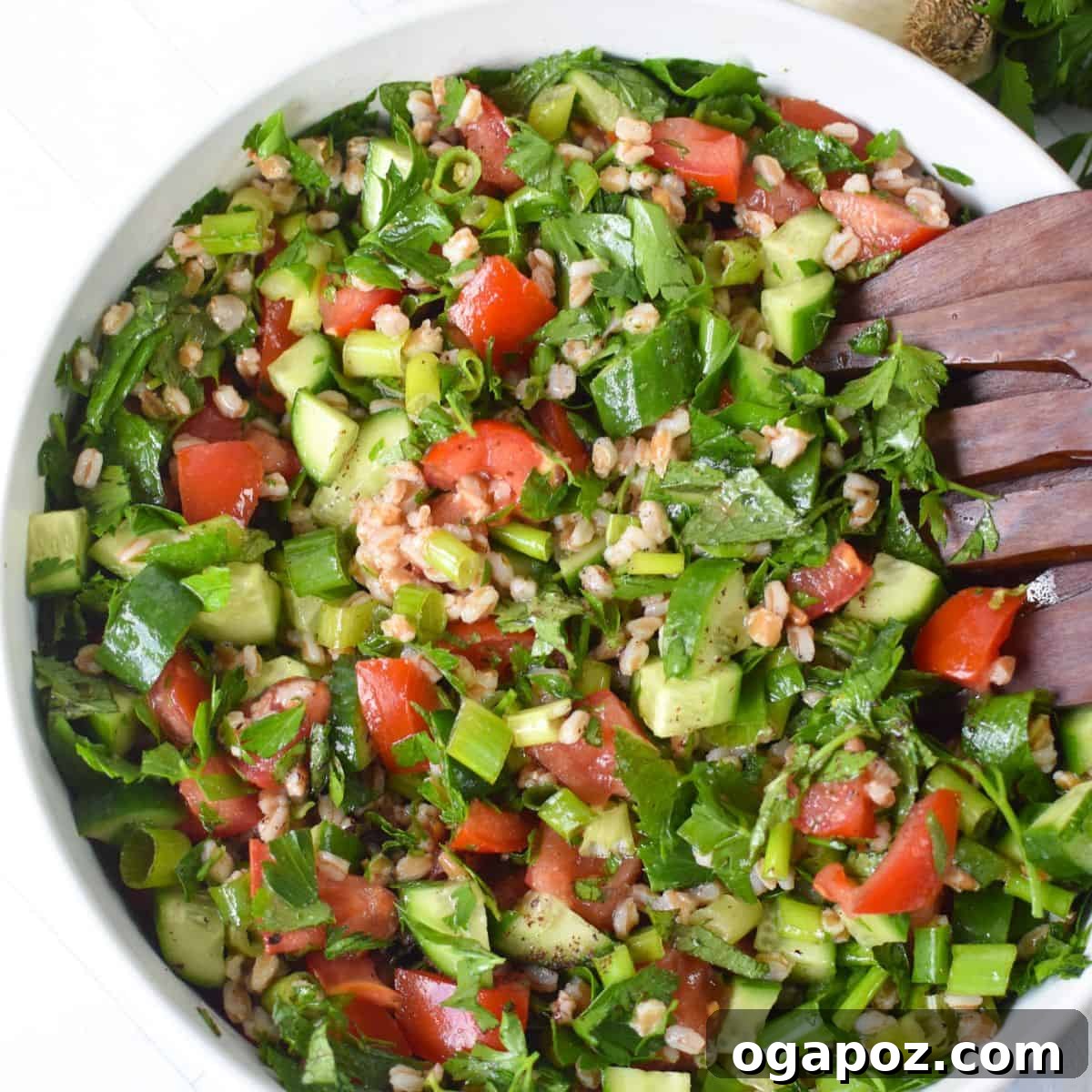
Discover the ultimate **Farro Tabbouleh Salad**, a hearty and satisfying twist on the beloved classic Lebanese tabbouleh. This vibrant grain salad masterfully blends the nutty, chewy texture of farro with an abundance of fresh parsley, cool mint, ripe tomatoes, and crisp cucumbers. All these delightful ingredients are harmonized by a bright, zesty lemon-garlic vinaigrette that remarkably improves in flavor as it sits. Perfect for a refreshing side, a light lunch, or a wholesome meal prep staple, this recipe elevates traditional flavors into a more substantial and deeply satisfying dish.
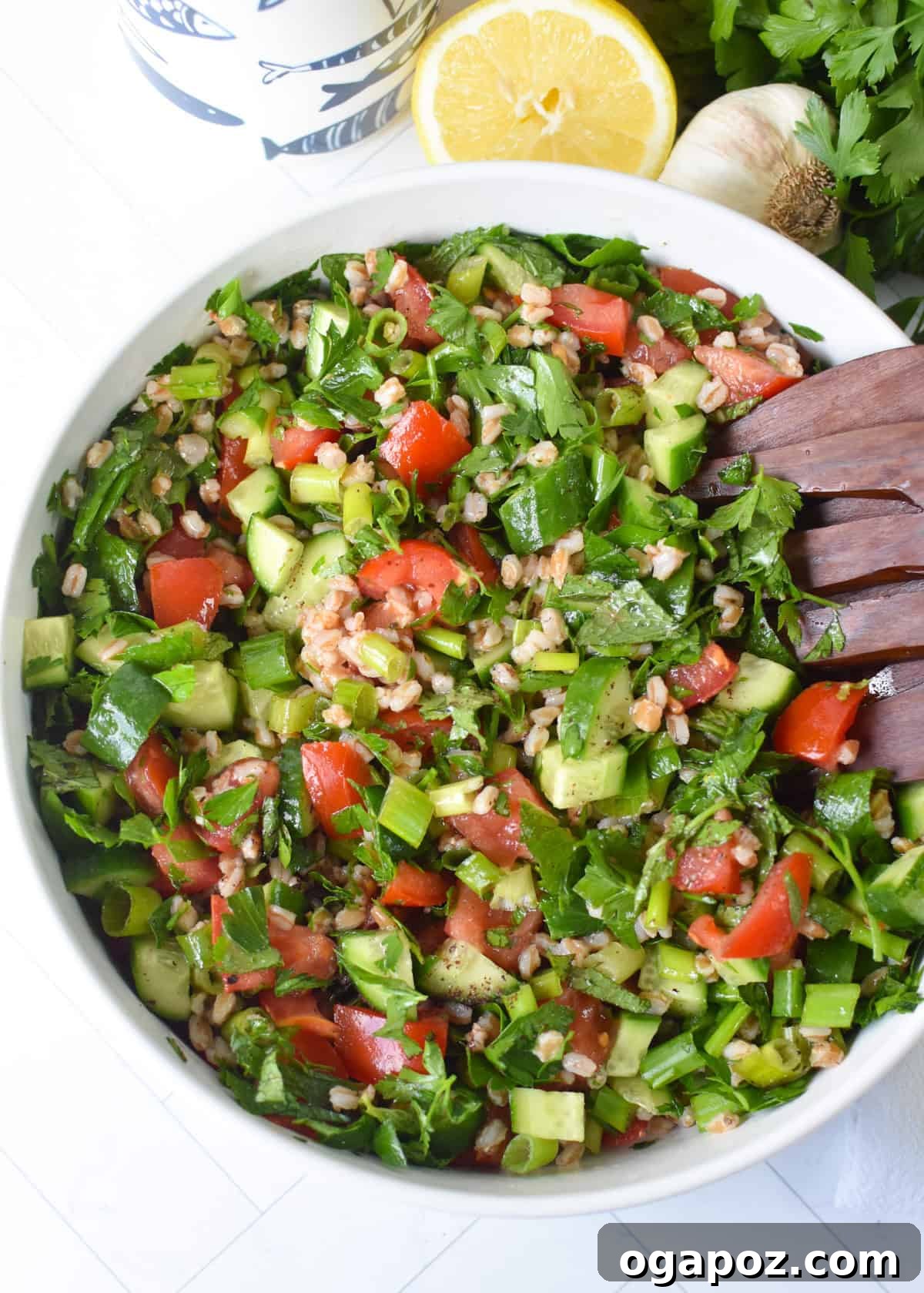
Growing up in a Lebanese household, tabbouleh wasn’t just a recipe; it was a constant presence, a cherished part of our family’s culinary heritage. Passed down from my great-grandma directly from Lebanon, her authentic recipe never left our table. We enjoyed it in the warmth of summer, the chill of winter, for festive holidays, and even on spontaneous Tuesday nights when dinner simply needed a burst of fresh, bright flavor. My connection to this salad runs deep, which is why when I began experimenting with farro as a base instead of the traditional bulgur wheat, I held one unwavering rule: it *must* still taste unmistakably like tabbouleh. Not a deconstructed grain bowl, nor a Mediterranean salad merely echoing tabbouleh vibes. I aimed for the true essence of the dish, simply made heartier and more robust.
This Farro Tabbouleh Salad perfectly encapsulates that vision. The herb-forward ratio, crucial for authentic tabbouleh, remains intact, delivering that signature freshness. The lemon vinaigrette provides its essential bright, tangy lift, while the inclusion of farro introduces a wonderfully satisfying, chewy bite that transforms the salad into a truly complete meal. What makes this recipe particularly exceptional is that it’s one of those rare salads that genuinely tastes better the longer it sits, allowing the flavors to meld and deepen. This characteristic makes it an ideal candidate for meal prep, saving you time and delivering deliciousness throughout the week. If you appreciate the intricate flavors of a classic Lebanese tabbouleh recipe, then this farro-infused rendition is the natural and delicious next step in your culinary journey.
Why Farro Works So Well in Tabbouleh: A Culinary Revelation

When it comes to adapting classic recipes, choosing the right substitute is paramount. Many grain swaps in tabbouleh tend to dilute its distinct character. Quinoa, while healthy, often becomes mushy and loses its structural integrity when dressed. Rice, too, can be overly soft, failing to provide the desired chew. Even cauliflower, a popular low-carb alternative, offers a different textural and flavor profile entirely. Farro, however, stands apart as a truly exceptional choice for tabbouleh, offering a unique blend of attributes that not only complement but enhance the salad.
Semi-pearled farro boasts a wonderfully nutty, subtly earthy flavor profile that adds depth to the salad. More importantly, its distinctive chewy texture is incredibly resilient, allowing it to perfectly stand up to the bright acidity of the lemon dressing without becoming soggy. Unlike many other grains, farro has an incredible ability to absorb the rich flavors of the vinaigrette and fresh herbs, rather than losing its structure. This means your farro tabbouleh salad will taste just as vibrant and delicious on day three as it does when freshly prepared, making it an excellent option for meal prep. While bulgur wheat remains a wonderful and traditional choice for tabbouleh, if you’re seeking a more substantial, satisfying, and enduring base, farro is undoubtedly the ingredient to reach for. Its inherent wheaty, hearty quality transforms this salad from a mere side dish into a truly fulfilling meal, capable of satisfying even the heartiest appetites.
It’s important to note that both farro and bulgur are wheat-based grains, meaning this particular swap does not make the salad gluten-free. If you require a gluten-free option, quinoa is indeed your best bet. For those seeking such an alternative, I wholeheartedly recommend exploring my Greek quinoa tabbouleh recipe, which offers a similar fresh and vibrant experience tailored to dietary needs.

Essential Ingredients for Your Farro Tabbouleh Salad
Crafting this exquisite farro tabbouleh salad relies on a straightforward list of ingredients, emphasizing quality over quantity. Because each component plays a starring role, selecting the freshest and best-quality produce will significantly impact the final flavor and texture of your salad. Here’s a closer look at what you’ll need to bring this delightful dish to life:
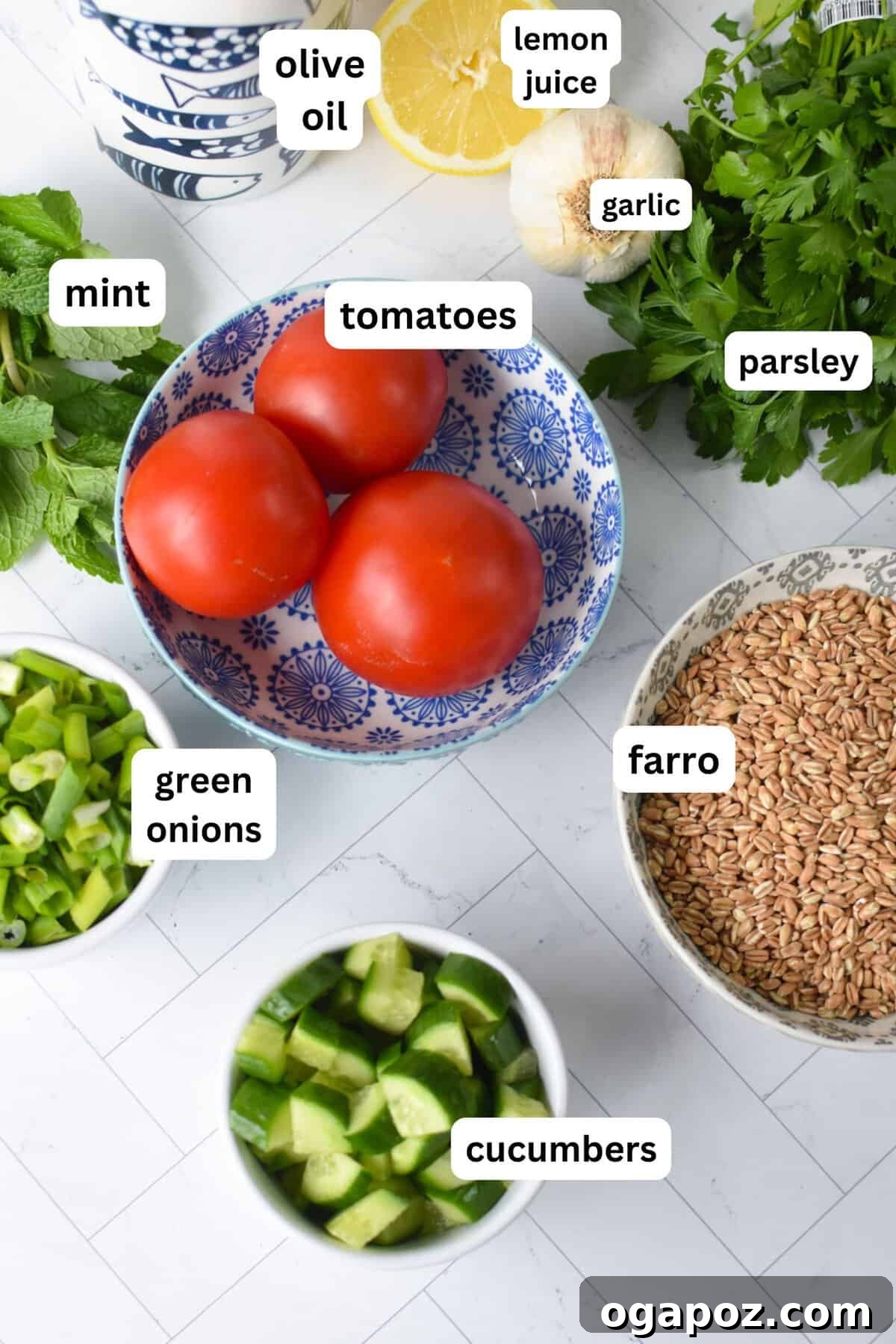
- Farro: Opt for semi-pearled farro for this recipe. This variety strikes the perfect balance, cooking faster than whole farro while retaining that desirable chewy, yet tender texture that’s ideal for salads. You’ll typically find it in most major grocery stores alongside rice and other grains, sometimes in the natural or organic foods section. Its inherent nuttiness is key to the salad’s character.
- Fresh Parsley: This is a non-negotiable ingredient and the backbone of any authentic tabbouleh. You’ll need two substantial bunches of either curly or flat-leaf Italian parsley. Do not be tempted to skimp here; the generous quantity of fresh herbs is precisely what imparts the signature, vibrant taste of tabbouleh. The fresher the parsley, the better your salad will be.
- Fresh Mint Leaves: Even a small amount of finely chopped fresh mint makes a significant difference, adding a bright, cooling, and aromatic counterpoint that perfectly complements the lemon dressing and earthy parsley. It’s an essential component for that authentic Mediterranean flavor profile.
- Green Onions: Utilize both the white and green parts of the green onions, finely chopped. They provide a mild, slightly pungent onion flavor without overpowering the delicate herbs, contributing a subtle depth that enhances the overall freshness of the salad.
- Roma Tomatoes: These tomatoes are excellent for tabbouleh due to their firm flesh and lower water content, which gives you greater control over the dicing process. Crucially, seeding the Roma tomatoes before dicing is vital to prevent the salad from becoming watery, ensuring a fresh and crisp texture that lasts.
- English Cucumber: Seeded and diced into small, uniform pieces. English cucumbers are preferred because of their thinner skin, which means you can conveniently skip the peeling step, saving time and retaining some of the cucumber’s subtle flavor and texture. Their refreshing crunch is indispensable.
- The Lemon Vinaigrette: The dressing is the soul of this salad. It’s a simple yet powerful blend of freshly squeezed lemon juice (absolutely essential for brightness), high-quality extra virgin olive oil (which provides richness and healthy fats), minced garlic (for aromatic depth), salt, and freshly ground black pepper. For an authentic touch, a small pinch of sumac can be added, lending a subtle, tangy, citrusy note that enhances the Mediterranean essence of the dish.
Unlock Endless Possibilities: Customizing Your Farro Tabbouleh
One of the most appealing aspects of this farro tabbouleh salad is its incredible versatility. It serves as a fantastic foundation, easily adaptable to suit various dietary preferences, available ingredients, or simply your culinary whims. Here are some of the most popular and delicious ways to modify and vary your tabbouleh, ensuring it always hits the spot:
- Make it Gluten-Free: Since farro is a wheat grain, it contains gluten. To transform this recipe into a gluten-free delight without sacrificing flavor, simply swap out the farro for quinoa. Cook the quinoa according to package directions, allow it to cool completely, and then use it in a 1:1 ratio with the amount of farro specified. Quinoa offers a similar satisfying texture and readily absorbs the vibrant dressing.
- Boost the Protein Content: For a more substantial meal, incorporating additional protein is effortless. Stir in a can of rinsed and drained chickpeas for a plant-based protein boost that naturally complements the Mediterranean flavors. Alternatively, grilled chicken, succulent shrimp, or flaky salmon are excellent choices that turn this salad into a complete and balanced main course. You could also consider adding crumbled feta cheese for a salty, tangy kick and extra protein.
- Explore New Vegetable Combinations: The base of this salad is incredibly flexible, inviting you to experiment with other fresh vegetables. Consider adding Kalamata olives for a briny, salty punch that enhances the Mediterranean theme. Sun-dried tomatoes can introduce a deeper, more concentrated tomato flavor, while roasted red peppers add a lovely sweetness and smoky depth. Marinated artichoke hearts provide a heartier bite and tangy zest, or for a milder onion flavor, finely sliced red onion can replace a portion of the green onions.
- Add Creamy Avocado: Just before serving, gently fold in diced ripe avocado. Its creamy richness provides a delightful contrast to the bright lemon dressing and crunchy vegetables, adding a luxurious texture and healthy fats. Remember to add avocado last and serve immediately, as it doesn’t hold its color or texture well overnight.
- Transform it into a Nourishing Bowl: Elevate your farro tabbouleh by serving it as a component of a larger, more elaborate bowl. It pairs beautifully served over a bed of fresh arugula or baby spinach, or as a vibrant accompaniment to a Mediterranean Salmon Bowl or an Easy Mediterranean Hummus Bowl. These combinations create a wholesome, flavorful, and visually appealing meal.
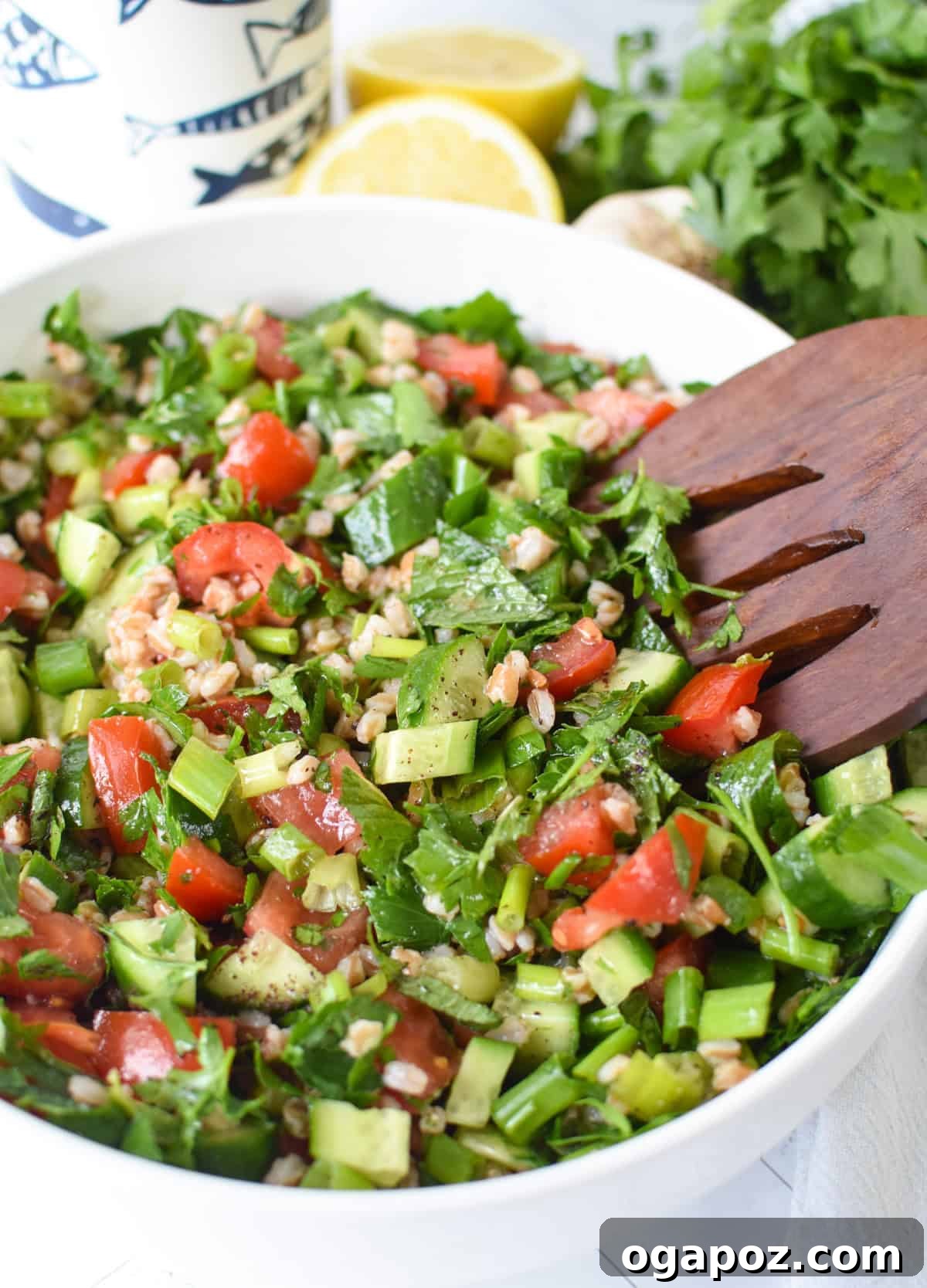
Crafting Your Perfect Farro Tabbouleh: A Step-by-Step Guide
Creating this vibrant farro tabbouleh is a straightforward and rewarding process. Paying attention to these key steps will ensure your salad is bursting with flavor and boasts the perfect texture every time. Let’s walk through it:
Step 1: Perfectly Cook Your Farro. Begin by adding your semi-pearled farro to a pot with plenty of salted water or a low-sodium vegetable broth for added flavor. Bring the mixture to a rolling boil, then reduce the heat to a gentle simmer. Cook the farro until it’s al dente, which typically takes about 25-30 minutes. You’re looking for a delightful chewiness, not a mushy texture. Once cooked, drain the farro thoroughly and immediately spread it out in a single layer on a large sheet pan. This crucial step allows it to cool completely and quickly. Incorporating warm farro into your salad will steam and wilt the delicate fresh herbs, leading to a soggy and less appealing result.
Step 2: Prepare and Salt the Tomatoes and Cucumber. While your farro is cooling, take this time to dice your Roma tomatoes and English cucumber into small, uniform pieces. After dicing, place them in a colander and sprinkle them with a generous pinch of salt. Allow them to sit for about 10 minutes. This simple yet effective technique draws out excess moisture from the vegetables, preventing your salad from becoming watery and ensuring it stays fresh and crisp longer. Before adding them to the mixing bowl, gently pat the diced vegetables dry with a clean paper towel to remove any remaining surface moisture.
Step 3: Master the Herb Chop. This step is more significant than many realize in the creation of a truly authentic tabbouleh. The parsley and mint should be finely chopped, almost to a fluffy consistency, ensuring that every single bite of your salad is infused with their bright, herbaceous flavor. Avoid large, coarse pieces. Run your knife through the herbs multiple times until they are uniformly minced. This meticulous chopping is what truly distinguishes a rich, herb-forward tabbouleh from a mere grain salad with some herbs scattered on top.
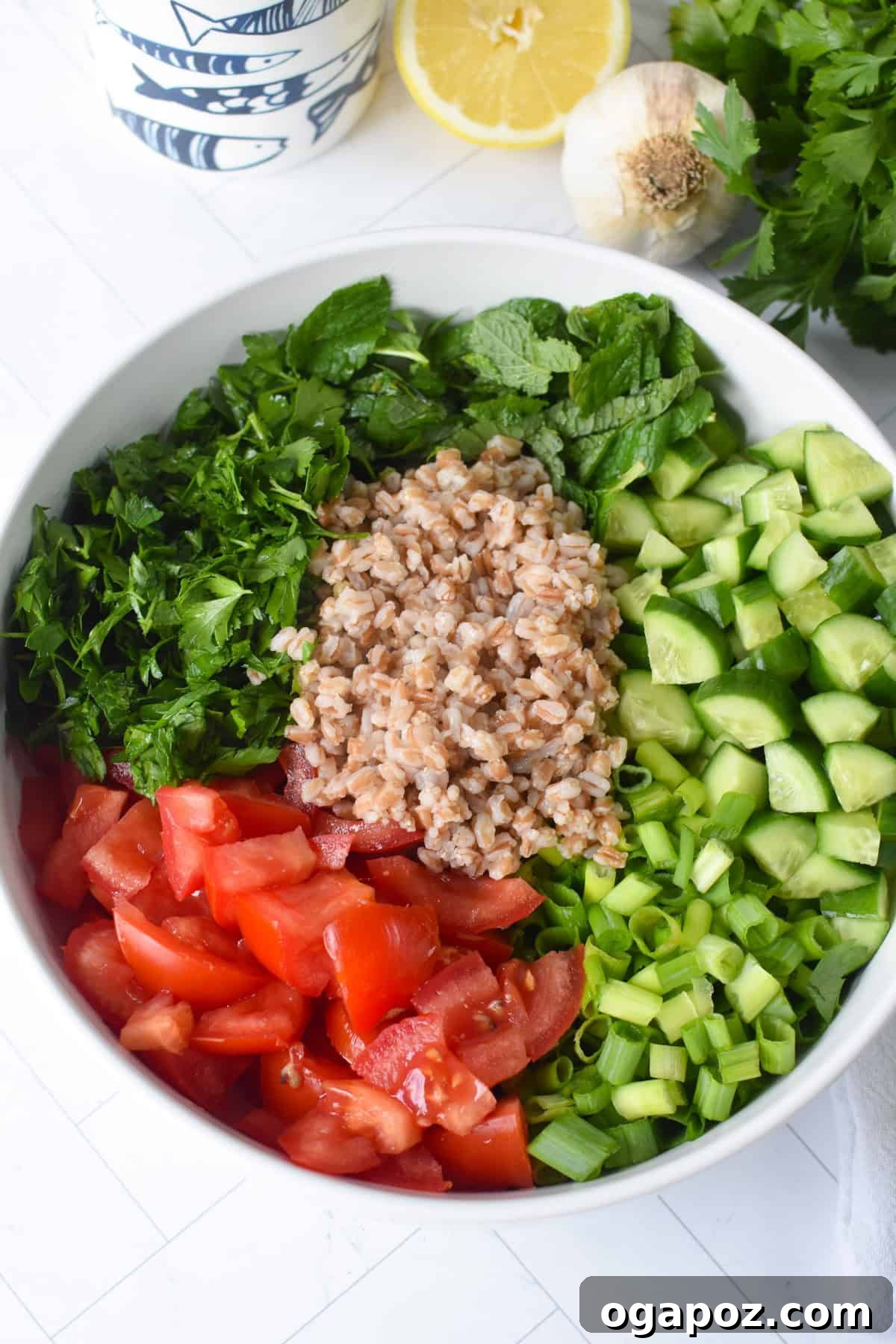
Step 4: Whisk Together the Zesty Dressing. In a small bowl, combine the freshly squeezed lemon juice, high-quality extra virgin olive oil, minced garlic, salt, freshly ground black pepper, and the optional pinch of sumac. Whisk vigorously until all the ingredients are well emulsified, or simply shake them together in a lidded jar. Before combining with the salad, taste the dressing on a small piece of cucumber. It should be wonderfully bright and lemony, with a pleasant richness from the olive oil and a hint of garlic. Adjust seasonings as necessary.
Step 5: Assemble and Toss with Care. Transfer the completely cooled farro to a large mixing bowl. Add the finely chopped parsley, mint, green onions, and the patted-dry tomatoes and diced cucumber. Pour the prepared lemon vinaigrette evenly over all the ingredients. Using a large spoon or your clean hands, gently but thoroughly toss everything together until all components are well coated with the dressing. Take a small taste and adjust the salt, pepper, or additional lemon juice as needed to achieve your desired flavor balance.
Step 6: Allow it to Rest and Mellow (Optional but Recommended). While you can certainly serve your farro tabbouleh immediately, giving the salad at least 20-30 minutes to rest before serving is highly recommended. This allows the farro to fully soak up the dressing, and all the individual flavors to meld and deepen beautifully. This resting period truly transforms the salad from good to truly exceptional, making it a worthwhile extra step for the best possible taste experience.
Expert Tips for Crafting the Best Farro Tabbouleh
Achieving a truly exceptional farro tabbouleh salad lies in a few key techniques and thoughtful considerations. These tips will help you avoid common pitfalls and ensure your salad is vibrant, perfectly textured, and bursting with fresh flavor every single time:
- Ensure Farro is Completely Cool Before Mixing: This is arguably the most crucial tip. Introducing warm farro to your fresh herbs and vegetables will cause the herbs to steam and wilt, resulting in a limp, unappetizing, and potentially soggy salad. After cooking, always spread the farro out on a sheet pan to allow it to cool down to room temperature, which typically takes 15-20 minutes. Patience in this step is truly a virtue; rushing it will compromise the entire salad’s quality.
- Salt and Drain Your Tomatoes and Cucumber: To prevent a watery salad that deteriorates quickly, take the extra step of salting your diced tomatoes and cucumber. Place the diced vegetables in a colander, sprinkle with a pinch of salt, and let them sit for about 10 minutes. The salt will draw out excess moisture. Before adding them to your mixing bowl, make sure to thoroughly pat them dry with paper towels. This single step is incredibly effective in maintaining the crispness and freshness of your tabbouleh.
- Taste and Adjust After Resting: The flavors in this salad, particularly the salt and lemon, will continue to develop and absorb into the grains and vegetables during the resting period. After your salad has had a chance to sit for 20-30 minutes (or longer), give it a final taste. You will almost always find that it benefits from a little extra squeeze of fresh lemon juice or a sprinkle more salt. Adjust according to your preference right before serving to ensure optimal flavor.
- Always Use Freshly Squeezed Lemon Juice: The bright, zesty character of this tabbouleh salad is primarily derived from its dressing. Bottled lemon juice, while convenient, simply cannot replicate the vibrant, complex tang of fresh lemons. You will undoubtedly notice a significant difference in flavor and freshness if you opt for bottled alternatives. Invest in fresh lemons; it’s a small effort that yields immense flavor rewards.
- Don’t Overdress Initially: While the farro will absorb a good amount of dressing, it’s wise to start with about three-quarters of the vinaigrette. Toss well, allow it to rest, and then add more if needed after tasting. This prevents the salad from becoming overly saturated and allows you to fine-tune the flavor balance.
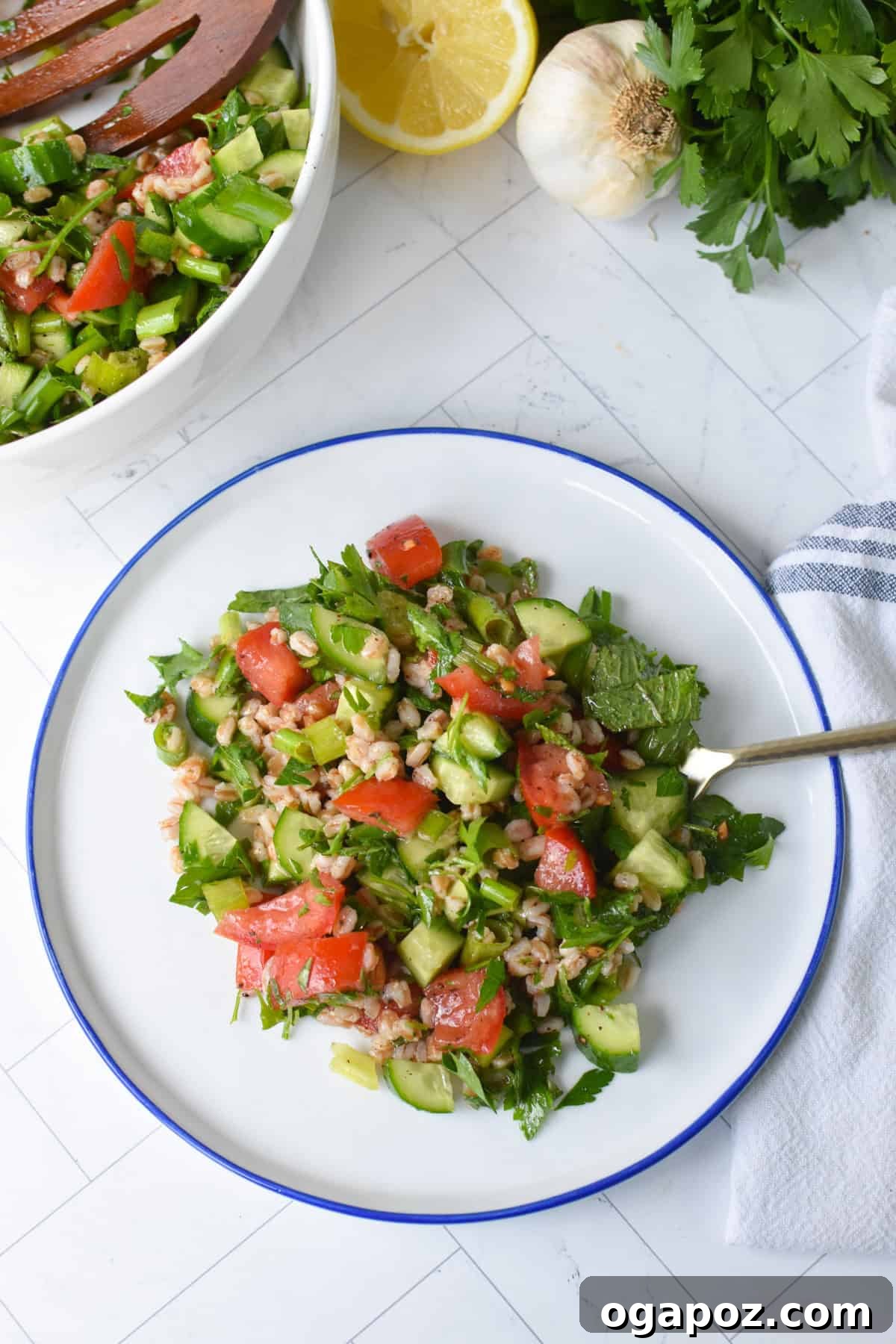
Versatile Ways to Serve Your Farro Tabbouleh Salad
This incredibly versatile farro tabbouleh salad is a culinary chameleon, perfectly suited to a myriad of dining occasions. Whether you envision it as a vibrant accompaniment or the star of your meal, its fresh flavors and satisfying texture make it a delightful choice. Here are some inspired ideas on how to serve your delicious tabbouleh:
- As a refreshingly light yet fulfilling side dish, this farro tabbouleh pairs exquisitely with a variety of Mediterranean and grilled entrées. Consider serving it alongside succulent Lebanese Chicken Kebabs, tender Greek Chicken Thighs, or a simple, perfectly cooked piece of Mediterranean salmon. It also finds a natural home within a traditional mezze spread, nestled harmoniously next to creamy Lebanese hummus, warm pita bread, and a comforting bowl of Lebanese lentil soup, creating a feast for the senses.
- To transform it into a robust and satisfying main course, simply enhance its protein content. A quick addition of a can of rinsed and drained chickpeas instantly bulks it up with plant-based protein. For an extra dose of greens and texture, serve a generous portion of the farro tabbouleh over a bed of fresh arugula, baby spinach, or mixed salad greens. You can also top it with grilled halloumi cheese or a hard-boiled egg for added substance.
- This salad is an absolute champion for entertaining and potlucks. Its robust nature means it travels exceptionally well and can hold its own at room temperature for several hours without losing its charm or freshness. It’s a guaranteed crowd-plepleaser at any cookout, picnic, or gathering, offering a healthy and flavorful alternative to heavier dishes. Its vibrant colors and fresh aroma are always an inviting sight.
Storage Solutions & Meal Prep Strategies for Farro Tabbouleh
One of the many advantages of this farro tabbouleh salad is its excellent keeping quality, making it a dream come true for meal preppers and anyone looking for convenient, healthy options throughout the week. With a few simple storage and make-ahead tips, you can enjoy this vibrant salad for days.
- Storage Best Practices: For optimal freshness and flavor, store any leftover farro tabbouleh in an airtight container in the refrigerator. When properly stored, it will maintain its delicious taste and texture for up to 4 days. The farro’s inherent heartiness ensures it holds up exceptionally well, absorbing the dressing and allowing the flavors to deepen over time, which is a major reason why this salad is perfect for weekly meal preparation.
- Making Ahead for Enhanced Flavor: This salad is a fantastic candidate for making ahead, as its flavors genuinely improve and meld overnight. You can fully assemble the farro tabbouleh a full day in advance of serving. This allows the farro to thoroughly absorb the dressing and the herbs and vegetables to truly infuse their essence into the dish, resulting in an even more complex and satisfying flavor profile. If your plan is to prepare the salad more than a day ahead, consider keeping any delicate additions like crumbled feta or extra fresh herbs separate. Mix these in just before serving to ensure they retain their pristine appearance and texture.
- Dressing on the Side for Ultimate Freshness: If you’re preparing this farro tabbouleh to bring to a potluck, picnic, or any gathering where it might sit for a while, a smart strategy is to pack the lemon vinaigrette separately. Transport the dry salad ingredients and the dressing in separate containers. Then, simply toss the salad with the dressing right before serving. This ensures the herbs remain crisp and vibrant, and the vegetables retain their firm texture, guaranteeing the freshest possible presentation.
Frequently Asked Questions About Farro Tabbouleh Salad
Absolutely! While farro offers a unique and hearty texture, you can certainly experiment with other grains. Quinoa is the most common and popular swap, working exceptionally well for a gluten-free option. Pearl couscous also makes a good substitute, providing a lighter texture. And, of course, you can always revert to traditional bulgur wheat for a classic tabbouleh experience. Just ensure whichever grain you choose is cooked al dente and fully cooled before mixing.
No, this particular farro tabbouleh recipe is not gluten-free. Farro is a form of wheat grain and, therefore, contains gluten. If you need a gluten-free version of this vibrant salad, simply substitute the farro with an equal amount of cooked and cooled quinoa. The texture and flavor profile will still be wonderfully satisfying and delicious.
The most effective technique to keep your farro tabbouleh from getting watery is to properly prepare your tomatoes and cucumber. After dicing them, lightly sprinkle them with salt and let them drain in a colander for at least 10 minutes. The salt will draw out excess moisture. Before adding them to the salad bowl, make sure to pat them thoroughly dry with a paper towel. This crucial step significantly reduces the chances of a soggy salad, ensuring it stays fresh and crisp.
Sumac is a spice derived from the dried and ground berries of the sumac plant, commonly used in Middle Eastern cuisine. It has a distinctive tangy, lemony, and slightly fruity flavor that adds a wonderful authentic depth to the dressing. While it’s listed as optional in this recipe, it is highly recommended if you can find it, as it significantly enhances the Mediterranean essence of the salad. It layers beautifully with the fresh lemon juice.
Absolutely! This recipe is incredibly adaptable. Feel free to incorporate other finely diced vegetables that you enjoy. Bell peppers (red, yellow, or orange) add sweetness and crunch, while finely chopped radish can contribute a peppery bite. You could also include finely chopped red onion for a more pungent flavor than green onions, or even some finely shredded romaine lettuce for added volume and crispness. Just remember to dice all vegetables finely for the best texture and to maintain the traditional tabbouleh feel.
Explore More Authentic Lebanese Salad Recipes
Mediterranean
Easy Lebanese Salad (Salata)
Vegetarian
Classic Fattoush Salad
Mediterranean
Simple Arabic Salad
Mediterranean
Malfouf Salad (Lebanese Cabbage Salad)
Tried this recipe? Share your thoughts below! Subscribe to my newsletter or follow me on
Facebook,
Instagram, or
Pinterest for the latest recipes and culinary inspiration.
Hearty Farro Tabbouleh Salad
Print Recipe
Ingredients
For the Salad:
- 2 bunches of Italian parsley, leaves finely chopped
- 1/2 English cucumber, seeded and diced small
- 1 cup diced Roma tomatoes, about 3 large, seeded
- 6 green onions, white and green parts finely chopped
- 1/4 cup fresh mint, finely chopped
- 1/2 cup semi-pearled farro, cooked according to package directions and cooled
For the Lemon Vinaigrette:
- 1 lemon, freshly juiced
- 1/4 cup extra virgin olive oil
- 2 garlic cloves, minced
- 1/2 teaspoon salt
- 1/8 teaspoon black pepper
- 1 teaspoon sumac, optional, for an authentic tangy note
Instructions
-
Cook the farro in generously salted water or broth according to package directions until it reaches an al dente, chewy consistency (approximately 25-30 minutes). Drain the farro thoroughly, then spread it onto a large sheet pan in a thin layer to cool completely to room temperature. This step is critical to prevent the herbs from wilting.
-
While the farro is cooling, prepare your vegetables. Lightly salt the diced tomatoes and cucumber, then let them sit in a colander for about 10 minutes. This draws out excess moisture. Pat them thoroughly dry with paper towels before proceeding.
-
Finely chop the fresh parsley and mint. Aim for a very fine, almost fluffy consistency to ensure the herbs are evenly distributed throughout every bite of the salad.
-
Prepare the lemon vinaigrette: In a small bowl or jar, whisk together (or shake vigorously) the extra virgin olive oil, minced garlic, fresh lemon juice, salt, pepper, and optional sumac until well combined.
-
In a large mixing bowl, combine the cooled farro with the finely chopped parsley, cucumber, tomatoes, green onions, and mint. Toss gently to ensure all the ingredients are well mixed.
-
Pour the prepared dressing over the salad mixture and toss thoroughly. Taste the salad and adjust the salt and lemon juice as needed to achieve your preferred balance of flavors.
-
For the best possible flavor, allow the salad to rest at room temperature for at least 20-30 minutes before serving. This resting period allows the flavors to meld and deepen beautifully. An hour is even better if time permits.
Notes
- Resting Time is Key: Do not underestimate the power of the 20-30 minute rest before serving. During this time, the farro fully absorbs the flavorful dressing, allowing all the ingredients to meld and develop a richer, more harmonious taste. This step is crucial for elevating the salad from simply good to truly exceptional. If you have the luxury of time, an hour of resting can make it even better.
- Choosing and Preparing Farro: For the ideal texture in this salad, always use semi-pearled farro. It offers a quicker cooking time compared to whole farro and retains a delightful chewiness without becoming overly tough. After cooking, it is imperative to spread the farro on a sheet pan to cool completely before mixing it with the other ingredients. Adding warm farro will cause the delicate fresh herbs to wilt prematurely.
- Optimal Storage: Store any leftover farro tabbouleh in an airtight container in the refrigerator. It will remain fresh and delicious for up to 4 days. The robust nature of farro ensures it holds its texture remarkably well, making this an ideal dish for meal prep throughout your week.
- Dressing on the Side for Gatherings: If you’re bringing this vibrant salad to a potluck, picnic, or any social gathering, consider packing the dressing separately. Toss the salad with the vinaigrette just before serving to ensure the freshest possible taste, crispest vegetables, and most vibrant herbs.
- Meal Prep Ahead: This salad is an excellent candidate for advance preparation. You can fully assemble the entire salad a day ahead of time, and you’ll find that the flavors actually deepen and improve overnight. If you plan to make it more than a day in advance, it’s a good idea to keep any delicate additions like crumbled feta cheese and extra fresh herbs (if using as a garnish) separate, and mix them in right before serving to maintain a fresh and appealing presentation.
- The Sumac Touch: The addition of sumac in the dressing is entirely optional but highly recommended for those seeking an authentic Lebanese flavor profile. This Middle Eastern spice contributes a subtle, tangy, citrusy note that beautifully complements the lemon juice and adds a layer of complexity to the vinaigrette. It’s a classic pantry staple in Lebanese cuisine and well worth exploring.
Nutrition
Nutrition information is automatically calculated, so should only be used as an approximation.