

I’ve been making my reliable French crepe recipe for weekend breakfasts for over a decade. I use a blender for the batter (with a bowl option below), and I don’t fuss with lengthy resting times or bringing ingredients to room temperature. The method is simple, fast, and produces thin, flexible crepes every time.

With only five pantry ingredients, this easy French crepe recipe has been refined through years of practice. My kids’ friends ask for them when they stay over, and I suspect my French-Canadian grandmother would approve.
French Crepe Ingredients
This basic crepe batter works for breakfast crepes or a simple dessert.
- All-purpose flour
- Kosher salt
- Whole milk: hydrates the flour and adds enough fat for a soft, supple crepe.
- Large eggs: bind the batter and provide structure so crepes fold and roll without cracking.
- Unsalted butter: adds richness and helps the edges crisp to a pale golden color.
Full recipe quantities are listed in the recipe card below.
Variations and Substitutions
This recipe is forgiving once you understand the proportions:
- Sweet crepes: add 1 tablespoon sugar to the dry ingredients and a splash of vanilla to the wet.
- Savory crepes: omit sugar and stir in 1 tablespoon finely chopped fresh herbs such as chives or thyme.
- Dairy-free crepes: substitute full-fat oat milk for whole milk and refined coconut oil for butter.
- Buckwheat blend: replace 1/2 cup of the flour with buckwheat for traditional galettes, or use 1/2 cup whole wheat for a nutty flavor.
Essential Tools
A few simple tools make the process easier:
- Nonstick skillet or crepe pan: a 10–12″ pan is ideal for thin, even crepes.
- Blender or whisk and large bowl: either works—blender makes the batter in one vessel.
- Small ladle: ensures a consistent pour for each crepe.
- Thin offset spatula: helps flip crepes without tearing them.
- Plate and clean kitchen towel: stacking crepes under a towel traps steam and keeps them soft.
How to Make French Crepes: An Easy Guide
This method yields a batter consistency that’s perfect for thin, tender crepes every time.
Blender Method
I often make the batter in the blender for convenience. Place the blender jar on a kitchen scale and weigh the ingredients if you prefer—no measuring cups required. Blend until smooth and pour the batter directly from the spout into your pan. For cleanup, run the blender with warm water and a drop of dish soap.
Traditional Bowl Method
Whisk the flour and salt together in a large bowl. Add the eggs and about half the milk, whisking until smooth and free of dry pockets. Whisk in the remaining milk and the melted butter. The batter should be the consistency of heavy cream—smooth and fluid. If you see lumps, whisk another minute.
Heat and Butter the Pan
Let the batter rest briefly while you heat the pan. Warm a nonstick skillet or crepe pan over medium heat for 2–3 minutes. Wipe a thin layer of melted butter across the surface with a folded paper towel—pooled butter prevents the batter from spreading evenly. The pan is ready when a drop of water sizzles immediately without violently popping. If butter browns on contact, lower the heat slightly.
Pour, Swirl, and Cook
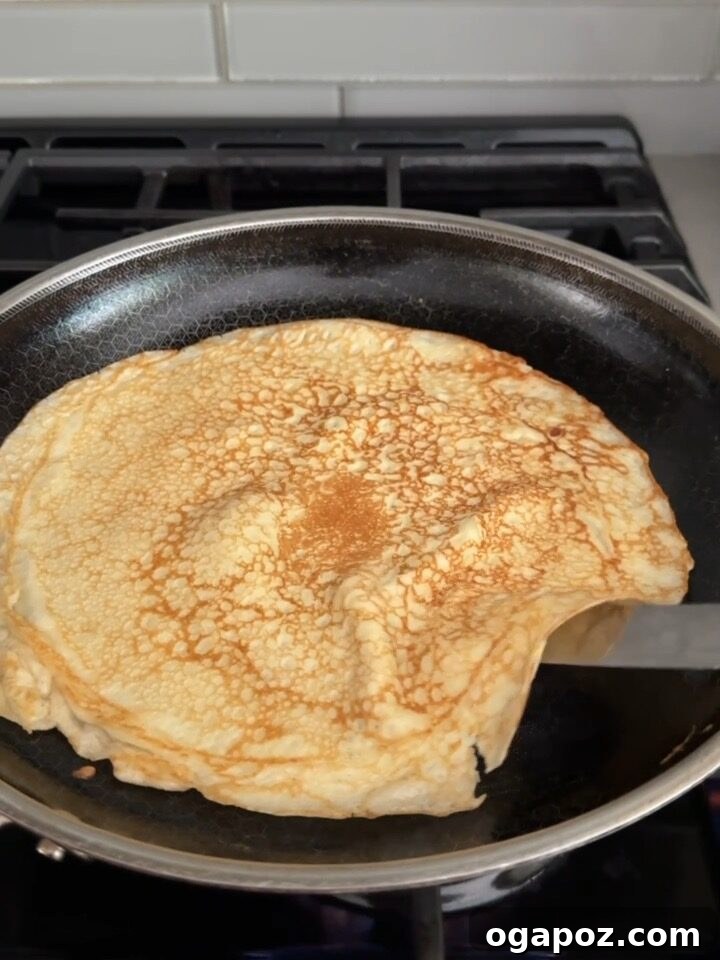
Pour about 1/4 cup of batter into the center of the pan in one motion, then lift and tilt the pan in a slow circle so the batter coats the bottom evenly. Cook until the edges look dry and the underside is lightly golden, roughly 45–60 seconds. The surface will change from glossy to matte when it’s ready to flip.
Flip and Stack
Slip a thin offset spatula under one edge and flip the crepe in a smooth motion. Cook the second side for 20–30 seconds, then transfer to a plate. Repeat, lightly buttering the pan as needed. Stack crepes and cover with a clean kitchen towel so the steam keeps them soft and pliable.
4 Common Mistakes When Making French Crepes
Avoid these common pitfalls to get consistent results:
- Pan too hot: If the pan is too hot the batter sets too quickly and creates thick, uneven patches. Use medium heat so you can swirl the batter.
- Too much batter: Over-pouring makes cakey, rubbery crepes. Use 1/4 cup as a starting point and adjust for pan size.
- Skipping the swirl: The swirl is what forms a thin crepe. Tilt the pan immediately after pouring.
- Stacking uncovered: Crepes dry out quickly if left exposed. Cover the stack with a towel or inverted bowl to keep them flexible.
Make Ahead and Storage
Crepes store well in the refrigerator or freezer, making them a convenient make-ahead option.
Storing Leftovers
- Refrigerate: layer with parchment between crepes and wrap tightly for up to 3 days.
- Bring to room temperature: cold crepes can crack when folded; warm them a few minutes before handling.
- Use within 3 days: beyond that they can become dense and brittle at the edges.
Freezing
- Cool fully: let crepes cool flat before stacking to avoid steam and sticking.
- Layer with parchment: place parchment between each crepe so they separate easily later.
- Bag and freeze: seal the parchment-lined stack in a freezer bag for up to 2 months.
Reheating
- Skillet: warm each crepe over low heat about 30 seconds per side until pliable.
- Oven: place the stack between damp paper towels and heat at 300°F for 5–10 minutes.
- Microwave: 10–15 seconds per crepe is usually enough—longer makes them rubbery.
How to Serve These French Crepes
Crepes are a versatile base for sweet or savory fillings. We often enjoy them with maple syrup or chocolate-hazelnut spread and fruit.
Sweet Fillings
- Lemon and sugar: a squeeze of lemon and a dusting of granulated sugar is a classic, simple option.
- Berries and curd: fresh berries with lemon curd or jam make a bright, fruity filling.
- Strawberries and chocolate: spread chocolate-hazelnut spread and top with sliced strawberries or bananas, then fold into quarters.
Savory Fillings
- Ham and cheese: slice of ham and grated gruyère folded into a hot crepe.
- Eggs and herbs: scrambled eggs with chives and avocado for a tidy brunch wrap.
- Mushroom and cheese: sautéed mushrooms with a soft cheese like brie for a savory galette-style filling.
- Smoked salmon: smoked salmon with crème fraîche, dill, and lemon for an elegant option.
FAQs About French Crepes
Quick answers to common questions:
No. Crepes are paper-thin and made without leavening, so they roll and fold around fillings. Pancakes use baking powder and are thick and fluffy.
No. A 10–12 inch nonstick skillet works well; heat control and the swirl technique matter more than the pan type.
The first crepe often acts as a test: the pan temperature and butter coating need a moment to stabilize. Use it to adjust heat and technique.
The batter should be the consistency of heavy cream or unbeaten egg whites—thin enough to spread when swirled but not watery. Thin with milk if needed.
Slide a thin offset spatula under one edge, lift gently to release, and flip in one smooth motion. Avoid poking the center to prevent tears.
This batch yields about 12–16 large crepes, depending on thickness. A 10″ pan typically produces around 14 crepes—plan 2–3 per person for brunch.
Other Breakfast Recipes You’ll Love
- My Best French Toast Recipe
- French Toast Bake
- 3-Ingredient Banana Pancakes
- French Toast Casserole
- Tater Tot Breakfast Casserole

French Crepe Recipe
Ingredients
- 2 ⅔ cups all-purpose flour
- ¾ tsp kosher salt
- 2 ¾ cups whole milk
- 6 large eggs
- 7 ½ tbsp unsalted butter, melted, plus more for the pan
Instructions
- Whisk the flour and salt in a large bowl until evenly combined. (Or use the blender method described below.)
- Add the eggs and about half the milk. Whisk until thick and smooth with no dry pockets.
- Whisk in the remaining milk and the melted butter. The batter should be smooth and the consistency of heavy cream.
- Let the batter rest at room temperature briefly while you preheat a large nonstick skillet or crepe pan over medium heat.
- Lightly butter the pan. Pour a generous 1/4 cup of batter into the pan, then immediately swirl to coat the bottom in a thin, even layer. Use slightly more batter for a larger pan if needed.
- Cook until the edges look dry and the underside is lightly golden, about 45–60 seconds. Flip and cook another 20–30 seconds.
- Transfer crepes to a plate, stacking as you go and covering with a clean towel to keep them soft. Repeat with the remaining batter.
Notes
Batter consistency: Should pour easily but not be watery. If crepes tear, the batter may be too thin; if they’re thick and cakey, thin with a bit more milk.
Keep them soft: Cover finished crepes with a clean towel or inverted bowl to retain steam and flexibility.
Make ahead: Refrigerate up to 3 days with parchment between each crepe; freeze up to 2 months in a sealed bag.
Reheat: Warm in a skillet over low heat for 30 seconds per side or in a 300°F oven between damp paper towels for 5–10 minutes.
First crepe: Use the first crepe as a test to check pan temperature and batter thickness.
Nutrition
Nutrition information is an approximation.
Tried this recipe? Leave a comment!