
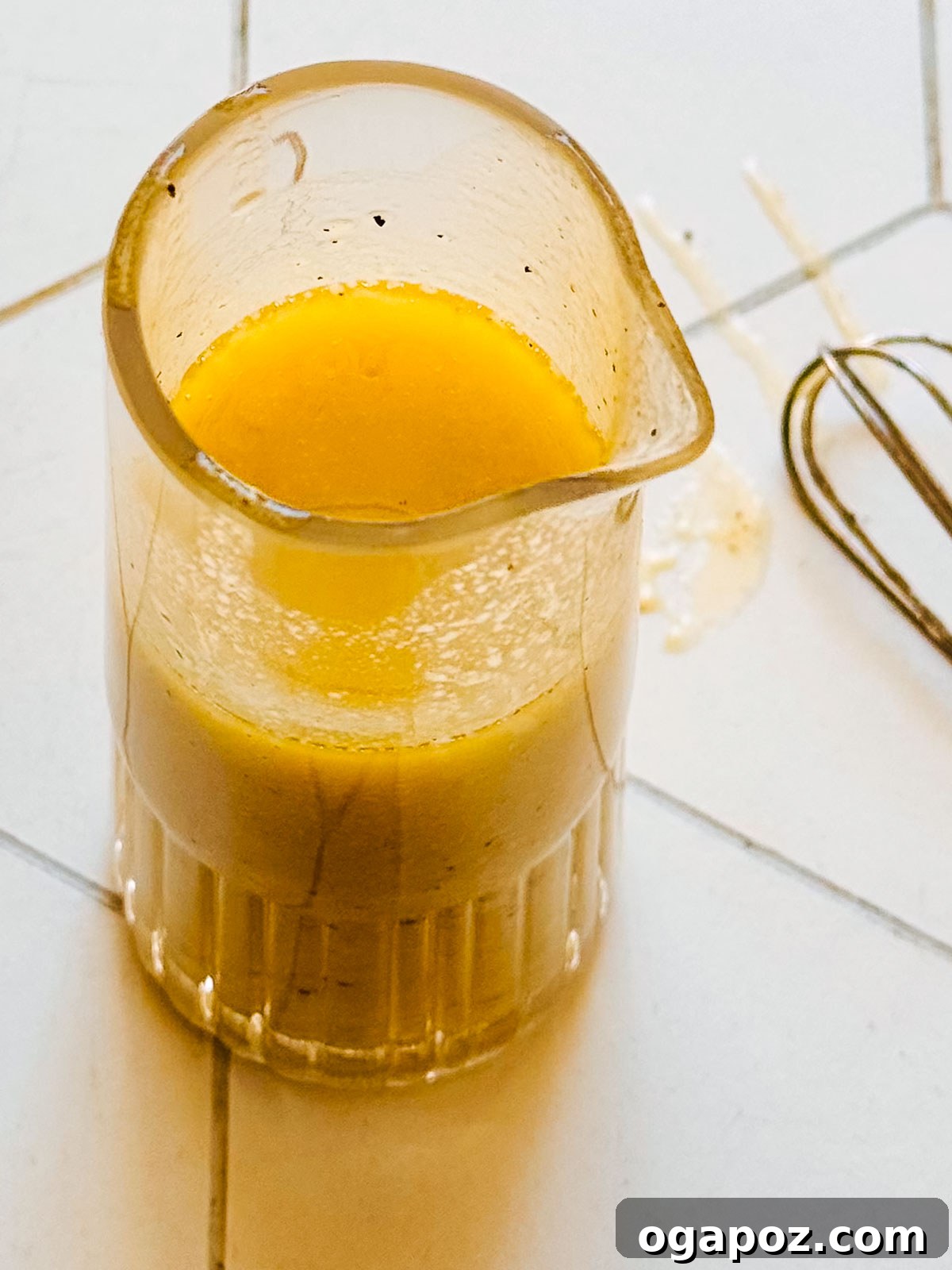
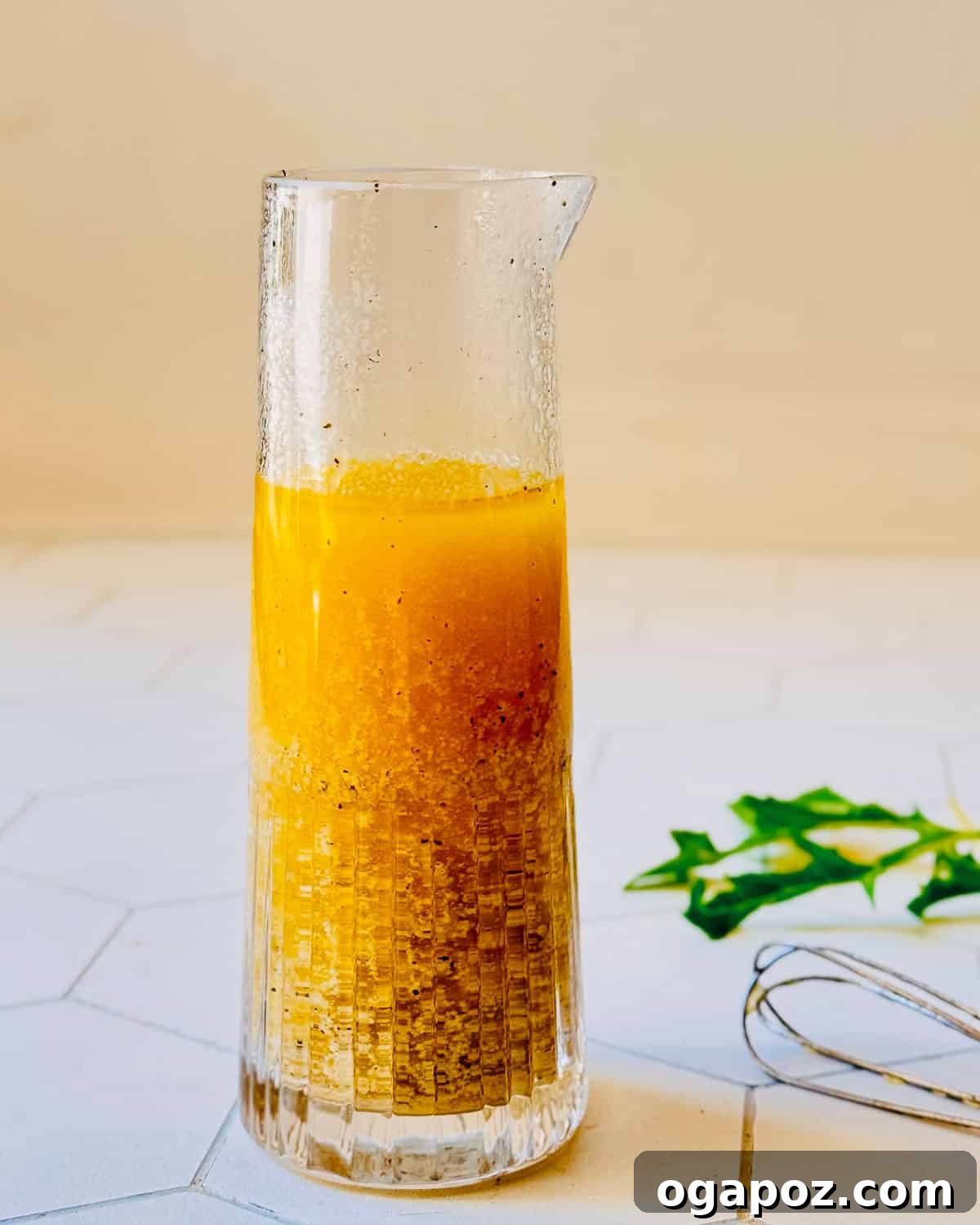
This classic Dijon vinaigrette is bright, tangy, and versatile—ideal for everyday salads and many other uses. It takes only two minutes to make, stores well in the refrigerator, and one jar will usually last up to two weeks when kept sealed. The Dijon mustard does more than add flavor: it acts as a natural emulsifier, helping the oil and vinegar bind together into a smooth, creamy dressing instead of separating.
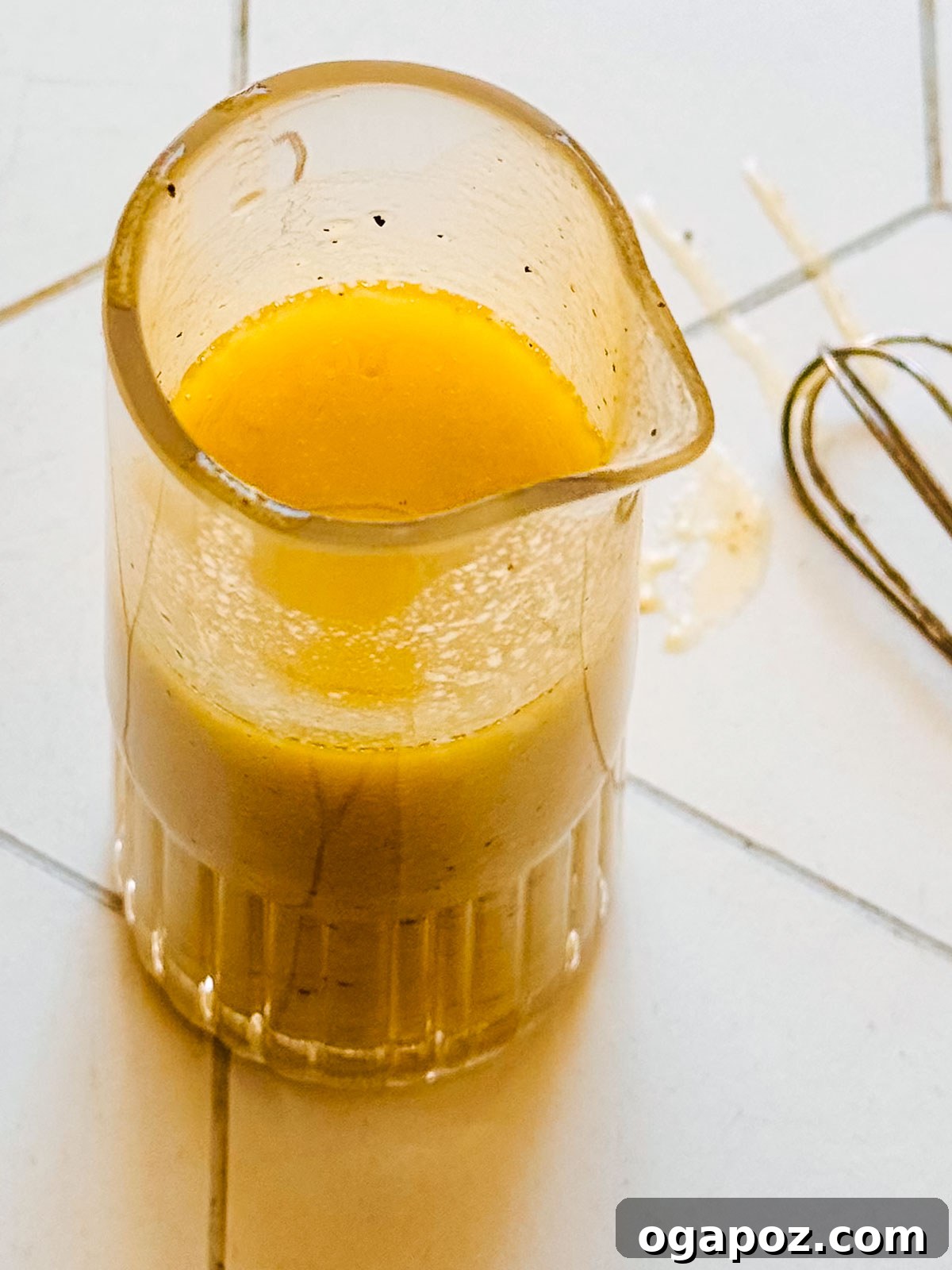
I use this vinaigrette on everything—from simple green salads to grain bowls and roasted vegetables. It’s a basic recipe that you can tweak easily to suit your taste or the ingredients you have on hand.
Dijon Vinaigrette Ingredients
You need only six common ingredients for a balanced Dijon vinaigrette.
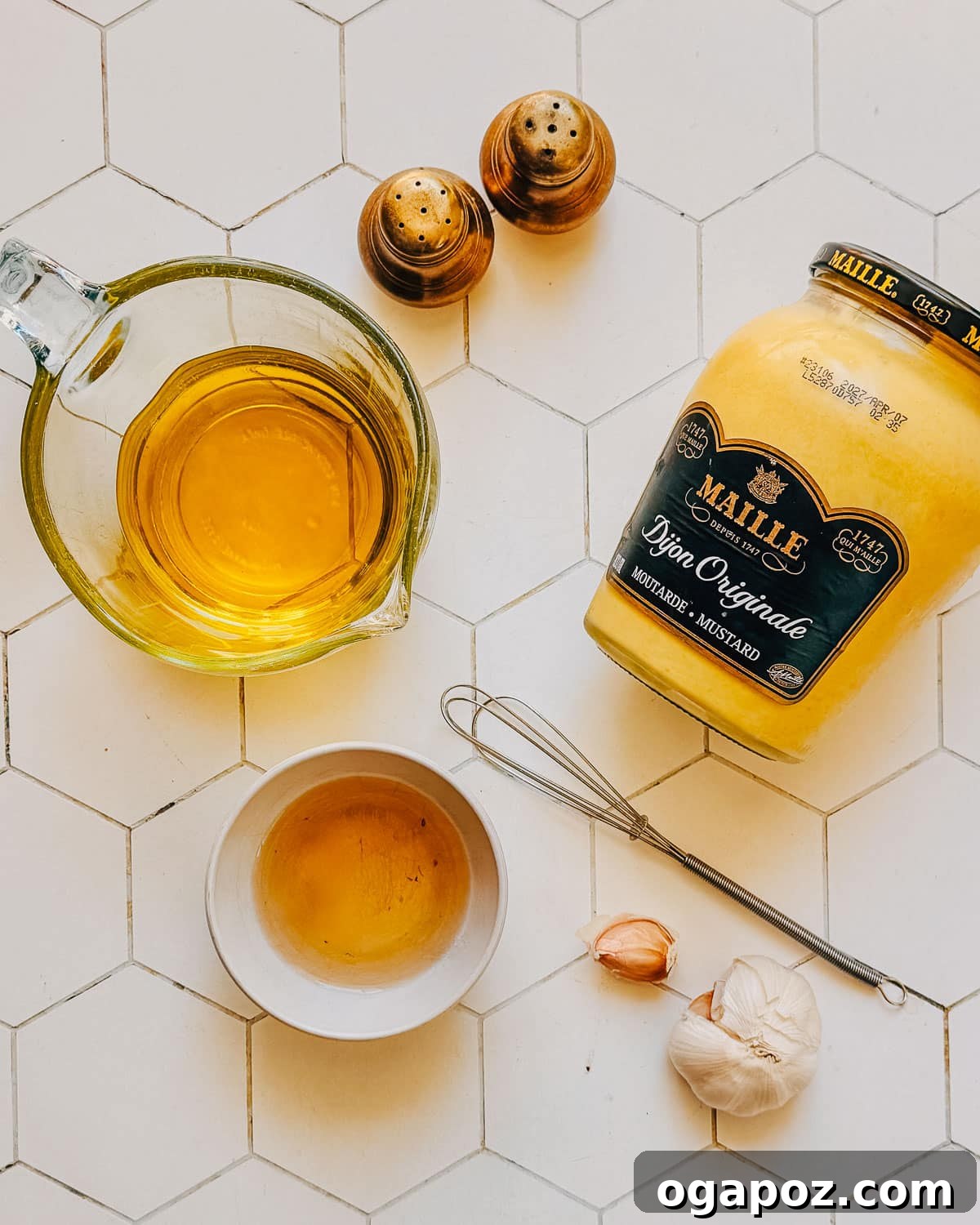
- White wine or champagne vinegar: bright and mild, so it won’t overpower the dressing.
- Dijon mustard: the emulsifier that helps keep the vinaigrette creamy and well combined.
- Extra-virgin olive oil: use a good-quality oil because its flavor is prominent.
- Garlic: minced finely for a subtle savory note.
- Kosher salt
- Freshly ground black pepper
Exact quantities appear in the recipe card further down.
Variations and Substitutions
This vinaigrette is a great base for experimentation. Simple swaps and additions let you tailor it to different dishes.
- Swap the vinegar: red wine vinegar, apple cider vinegar, sherry vinegar, or fresh lemon juice all work well.
- Sweeten it: add 1 teaspoon honey or a little maple syrup for a honey-Dijon version.
- Add herbs: stir in chopped parsley, chives, tarragon, or dill for extra freshness.
- Use shallot: replace garlic with minced shallot for a milder, sweeter flavor.
- Make it tangier: increase the Dijon mustard for more bite and structure.
Essential Tools
A few simple tools will make the dressing easy to prepare and store.
- Bowl and whisk: for the smoothest, creamiest emulsion.
- Mason jar with lid: an easy way to mix (by shaking) and to store the vinaigrette.
- Garlic press or microplane: to mince garlic finely so it blends into the dressing.
How to Make Dijon Vinaigrette: An Easy Guide
This dressing takes about two minutes to make. The order of steps helps the mixture emulsify and become creamy.
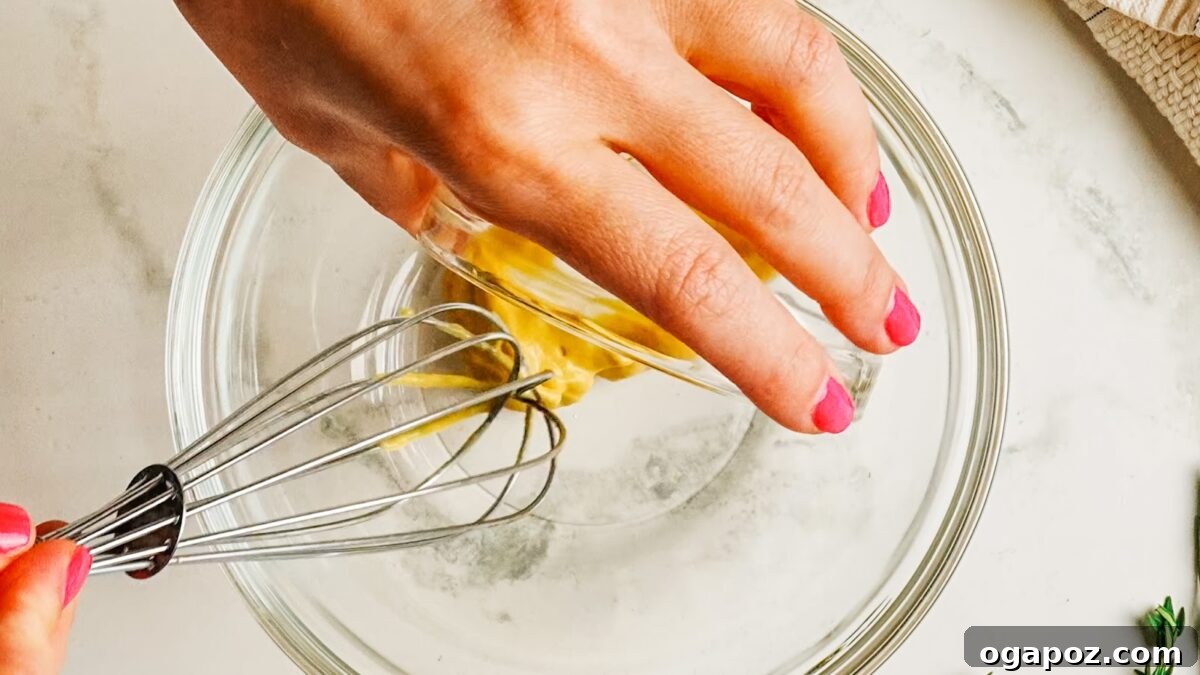
Whisk the Base
Combine the vinegar, salt, pepper, Dijon mustard, and minced garlic in a bowl. Whisk until the salt is dissolved and the mustard is smooth. This concentrated mixture is the flavor backbone of the dressing.
Stream in the Oil
With the whisk moving continuously, slowly drizzle in the olive oil. Begin very slowly so the oil forms tiny droplets and the mixture emulsifies. As you continue, the vinaigrette will thicken, lighten in color, and turn creamy.
Taste and Use
Taste the dressing by dipping a lettuce leaf or a small spoonful. Adjust salt, pepper, or vinegar to your preference. Toss the vinaigrette with greens right before serving so the leaves stay crisp. If you don’t have a whisk, add all ingredients to a jar, seal tightly, and shake vigorously for 20 seconds.
5 Common Mistakes When Making Homemade Vinaigrette
Avoid these common pitfalls to get a smooth, well-seasoned dressing every time:
- Adding the oil too quickly: pour slowly so the dressing emulsifies and becomes creamy.
- Under-seasoning: the dressing should taste slightly bold on its own since it seasons the whole salad.
- Using a bland oil: a good-quality olive oil matters because it contributes much of the flavor.
- Dressing too far ahead: toss greens right before serving to prevent sogginess.
Make Ahead and Storage
This vinaigrette stores well and is convenient to keep on hand.
Storing Dijon Mustard Salad Dressing
- Refrigerator: keep in a sealed jar for up to 2 weeks.
- It firms up when cold: olive oil solidifies slightly in the fridge; this is normal.
Before Serving
- Bring to room temperature: allow a few minutes on the counter to loosen the oil.
- Shake or whisk: re-emulsify if any separation has occurred.
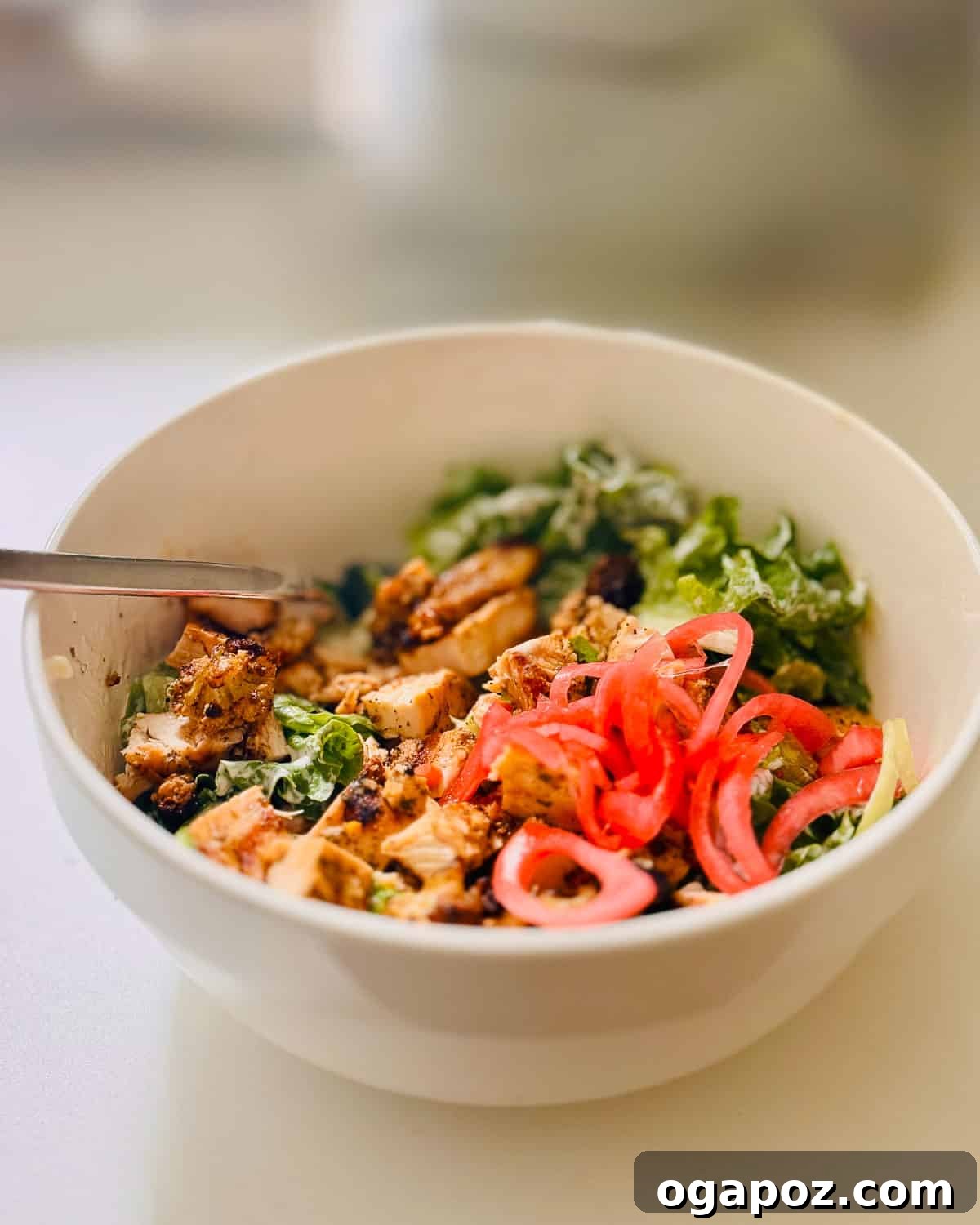
How to Serve This Dijon Dressing Recipe
This dressing is versatile: use it as a salad dressing, a marinade, or a finishing drizzle.
Salads to Toss in Dijon Vinaigrette
- Simple leafy salads: butter or green leaf lettuce with cherry tomatoes, shredded carrot, and seeds makes a fresh house salad.
- Hearty salads: it complements grain and protein salads such as chicken-and-couscous bowls or Mediterranean-style salads.
- Pasta and potato salads: the vinaigrette brightens starchy salads and pairs well with bacon or feta.
Other Uses
- Marinade: it tenderizes and flavors chicken, pork, or vegetables—marinate briefly in the refrigerator before cooking.
- Roasted vegetables: spoon lightly over warm roasted or grilled vegetables just before serving.
- Grain bowls: toss with couscous, quinoa, or farro for a flavorful finish.
Tips for the Best Dijon Mustard Vinaigrette
- Follow the 3:1 oil-to-vinegar ratio: three parts oil to one part vinegar keeps the dressing balanced and not overly sharp.
- Use Dijon mustard: it both flavors and emulsifies the vinaigrette, giving it body.
- Dissolve the salt first: whisk salt into the vinegar before adding oil so it integrates evenly.
- Taste on a leaf: a dressing tastes different when applied to greens; adjust seasoning after testing it on a leaf.
- Choose quality olive oil: with so few ingredients, the oil’s flavor really matters.
FAQs About Dijon Vinaigrette
Common questions and concise answers to help you make the vinaigrette confidently.
Dijon vinaigrette combines Dijon mustard, vinegar, olive oil, garlic, salt, and pepper. The mustard helps blend the oil and vinegar into a creamy dressing. It comes together in about two minutes using a whisk or by shaking in a jar.
Dijon mustard acts as a natural emulsifier. It coats oil droplets and keeps them suspended in the vinegar so the dressing stays thick and blended instead of separating.
A classic ratio is three parts oil to one part vinegar. Use slightly more vinegar if you prefer a tangier dressing.
Stored in a sealed jar in the refrigerator, the vinaigrette will keep up to two weeks. If the oil solidifies when cold, bring it to room temperature and shake or whisk before using.
Yes. Omit the garlic for a milder dressing or substitute minced shallot for a gentler, slightly sweet flavor.
Other Salad Recipes You’ll Love
- Kale Caesar Salad
- Strawberry Spinach Salad with Almonds and Goat Cheese
- Grilled Chicken Couscous Salad with Peaches
- Israeli Salad
- Healthy Greek Pasta Salad with Creamy Feta Dressing
Best Tangy Dijon Vinaigrette
A bright, classic Dijon vinaigrette that takes two minutes to make.
Prep Time: 2 minutes | Total Time: 5 minutes | Servings: 8
Ingredients
- 1/4 cup white wine or champagne vinegar
- 1 tablespoon Dijon mustard
- 1 teaspoon minced garlic
- 1 teaspoon kosher salt
- 1/2 teaspoon ground black pepper
- 3/4 cup extra-virgin olive oil
Instructions
- In a bowl, combine the vinegar, salt, pepper, Dijon mustard, and minced garlic. Whisk until the salt dissolves and the mustard is smooth.
- While whisking constantly, slowly pour in the olive oil. Start very slowly so the oil emulsifies; the dressing will thicken and turn creamy.
- Taste by dipping a lettuce leaf and adjust salt or vinegar as needed. Toss with salad just before serving. If you prefer, combine all ingredients in a jar, seal tightly, and shake vigorously for 20 seconds.
Notes
Yield: Makes about 1 cup; serving size is approximately 2 tablespoons. Storage: keep in a sealed jar in the refrigerator for up to 2 weeks. Bring to room temperature and shake or whisk before using if the oil firms up.
Nutrition (per serving, approximate)
Calories: 190 kcal | Carbohydrates: 1 g | Fat: 21 g | Sodium: 300 mg
Tried this recipe? Leave a comment to share your variations or how you used the vinaigrette.