
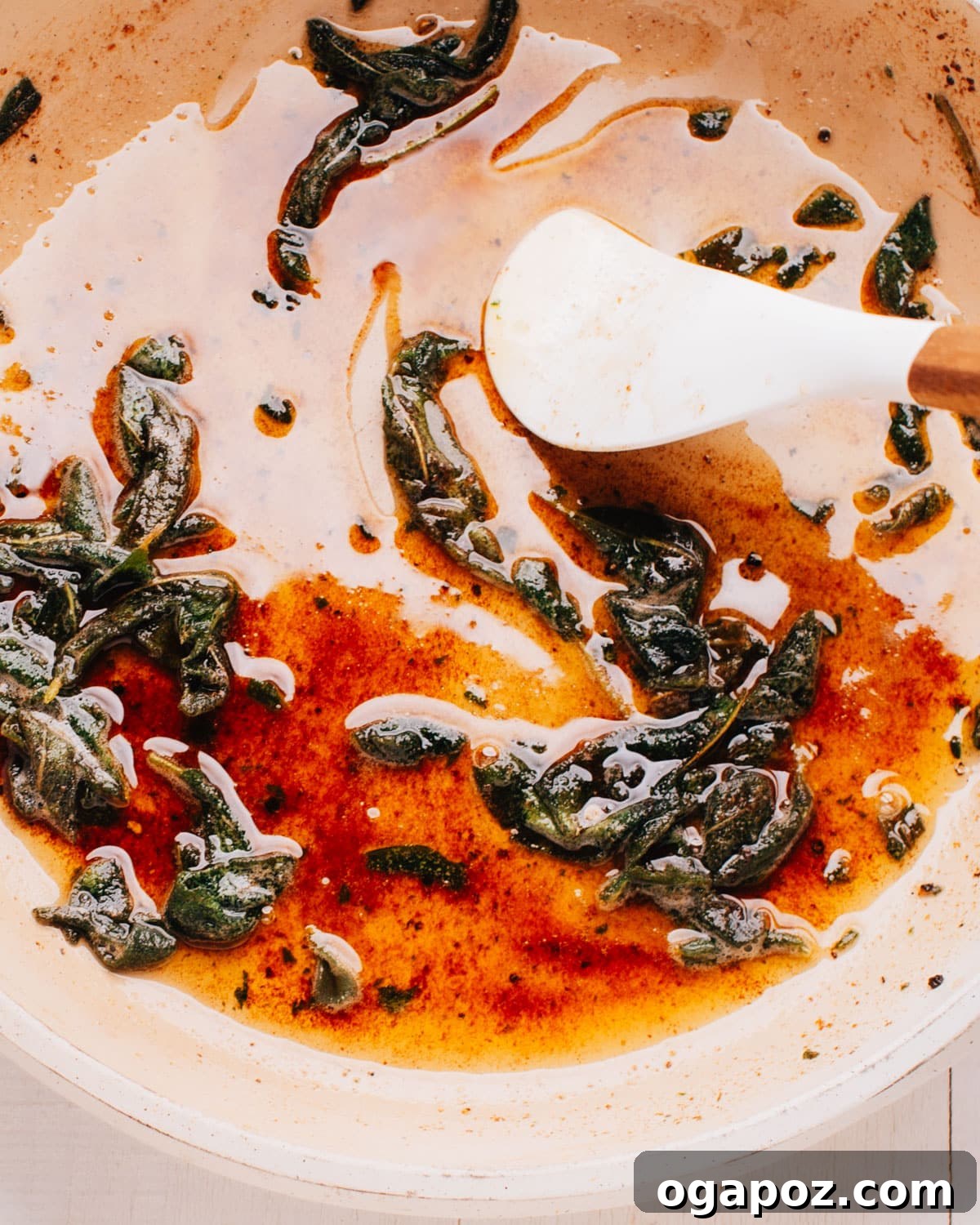
Mastering a truly exceptional sauce doesn’t have to be complicated. Our easy brown butter sage sauce is a testament to this, offering a beautiful, deeply flavorful experience ready in mere minutes. With its signature crispy sage leaves and rich, nutty aroma, this sauce transforms everyday meals into something extraordinary. Crafted from just three simple ingredients, it’s pure culinary magic waiting to happen in your kitchen.
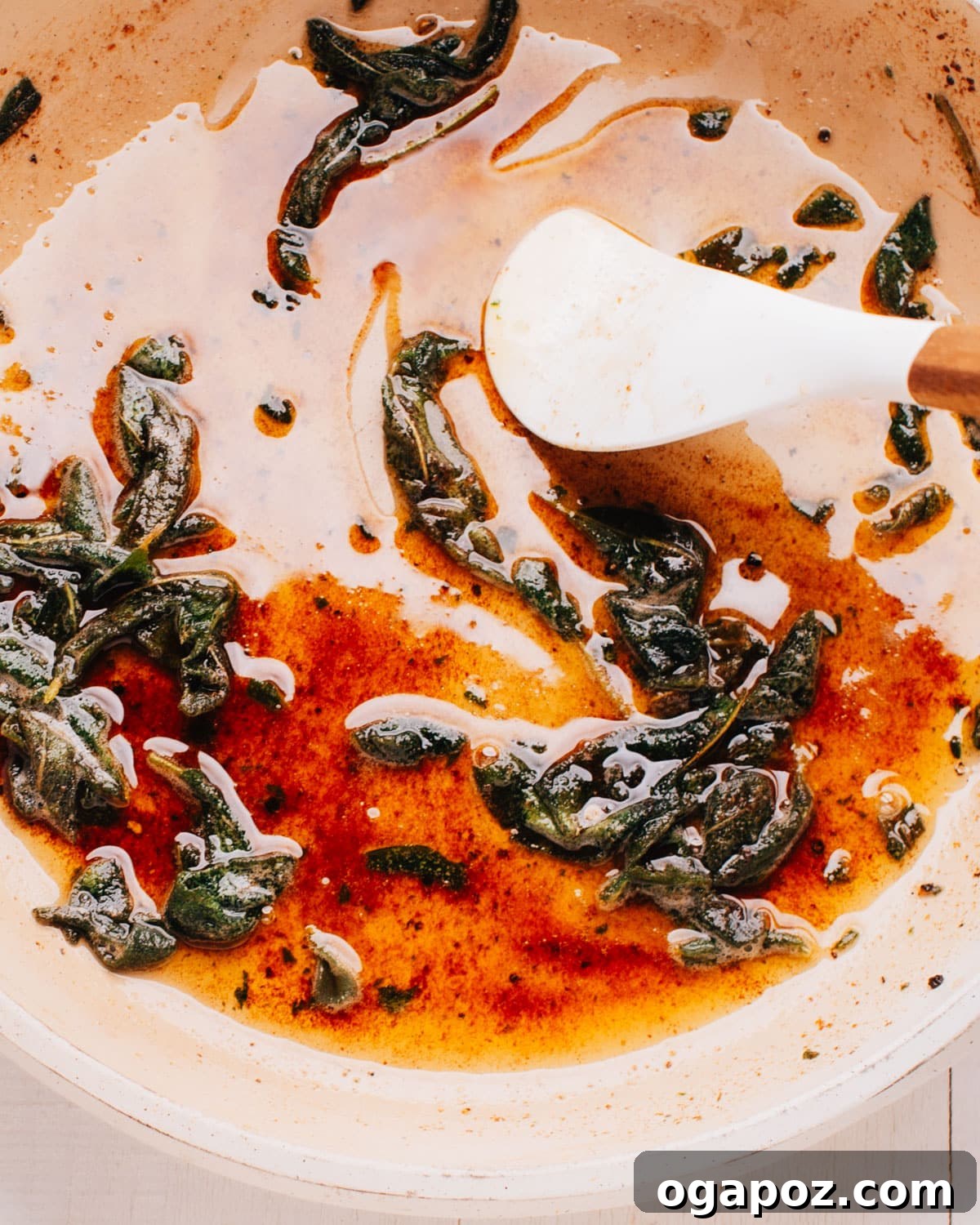
Why This Brown Butter Sage Sauce Will Become Your Go-To Recipe
Prepare to fall absolutely in love with this versatile and incredibly delicious brown butter sage sauce. Here’s why it’s destined to become a staple in your culinary repertoire:
- Unforgettable Rich and Nutty Flavor Profile: The true essence of this sauce lies in the transformation of butter into a golden, aromatic liquid. The browning process coaxes out deep, nutty undertones reminiscent of toasted hazelnuts, adding unparalleled depth and complexity that will leave your taste buds wanting more. This sophisticated flavor elevates even the simplest ingredients.
- Incredibly Versatile for Any Meal: One of the greatest attributes of brown butter sage sauce is its remarkable adaptability. It’s not just for pasta! This sauce pairs exquisitely with a wide array of dishes, enhancing everything from delicate seafood to hearty meats and vibrant vegetables. Imagine it drizzled over freshly cooked pasta, pillowy gnocchi, succulent steak or pork chops, delicate ravioli, fluffy roasted potatoes, tender chicken, flaky fish, or wholesome root vegetables. Its ability to complement so many different foods makes it an indispensable sauce for any home cook.
- Mind-Blowingly Simple and Quick to Prepare: Don’t let its gourmet taste fool you; this sauce is astonishingly easy to make. Crafted with minimal ingredients and requiring very little hands-on time, it’s perfect for busy weeknights or when you need a quick yet impressive dish. The core technique involves simply cooking butter until it achieves that beautiful golden-brown hue and irresistible nutty aroma. From start to finish, you can have this exquisite sauce ready in under 5 minutes.
- Achieve Restaurant-Quality Results at Home: Forget dining out for elevated flavors. This brown butter sage sauce delivers a sophisticated, restaurant-quality experience right in your own kitchen. The depth of flavor, combined with the crispy sage leaves, provides a gourmet touch that will impress family and guests alike, making you feel like a professional chef.
- Only 3 Core Ingredients: Yes, you read that right! With just high-quality butter, fresh sage, and a touch of lemon juice, you can create a sauce that tastes far more complex than its simple ingredient list suggests. This minimalist approach allows the natural flavors to shine through beautifully.
The Fascinating Science Behind Brown Butter (Beurre Noisette)
Also elegantly known as beurre noisette, brown butter is more than just melted butter; it’s a captivating culinary transformation. It takes ordinary butter and, through the magic of controlled heat, elevates it into something truly extraordinary. For those curious about the “why” behind the deliciousness, let’s delve into the science. If you’re eager to get cooking, feel free to skip ahead!
The secret to brown butter’s distinctive flavor lies primarily in the Maillard reaction, a complex chemical process responsible for the browning and flavor development in many cooked foods. Think of it as caramelization, but involving proteins and sugars rather than just sugars alone. Here’s what happens in your pan:
- Initial Separation: When butter is gently melted over heat, it begins to separate into its primary components: milk solids (which contain proteins and sugars), butterfat, and a small percentage of water.
- Water Evaporation: As the butter continues to heat, the water content gradually evaporates, causing the milk solids to become more concentrated and settle at the bottom of the pan.
The Flavor Revelation – What Happens Next:
- Milk Solids Undergo Maillard Reaction: With the water gone and the heat rising, the milk solids become exposed to higher temperatures. This is where the Maillard reaction kicks in. The amino acids and reducing sugars within these milk solids react, creating hundreds of new flavor compounds. These compounds are responsible for brown butter’s characteristic nutty, toasted, and slightly sweet notes, along with its beautiful golden-brown color.
- Butterfat Clarifies: Simultaneously, as the milk solids separate and brown, the butterfat becomes clearer, turning into a pure golden oil. This clarified fat acts as an excellent vehicle for carrying and distributing the rich flavors developed by the Maillard reaction.
- Complex Flavor Development: The harmonious combination of these browned milk solids and the clarified, flavor-infused butterfat results in an incredibly complex sauce. You’ll detect notes of hazelnut, toasted bread, caramel, and a subtle sweetness – a truly irresistible flavor profile that is utterly to die for. Understanding this process makes appreciating the simplicity and depth of brown butter all the more rewarding.
Essential Ingredients for Your Perfect Brown Butter Sage Sauce
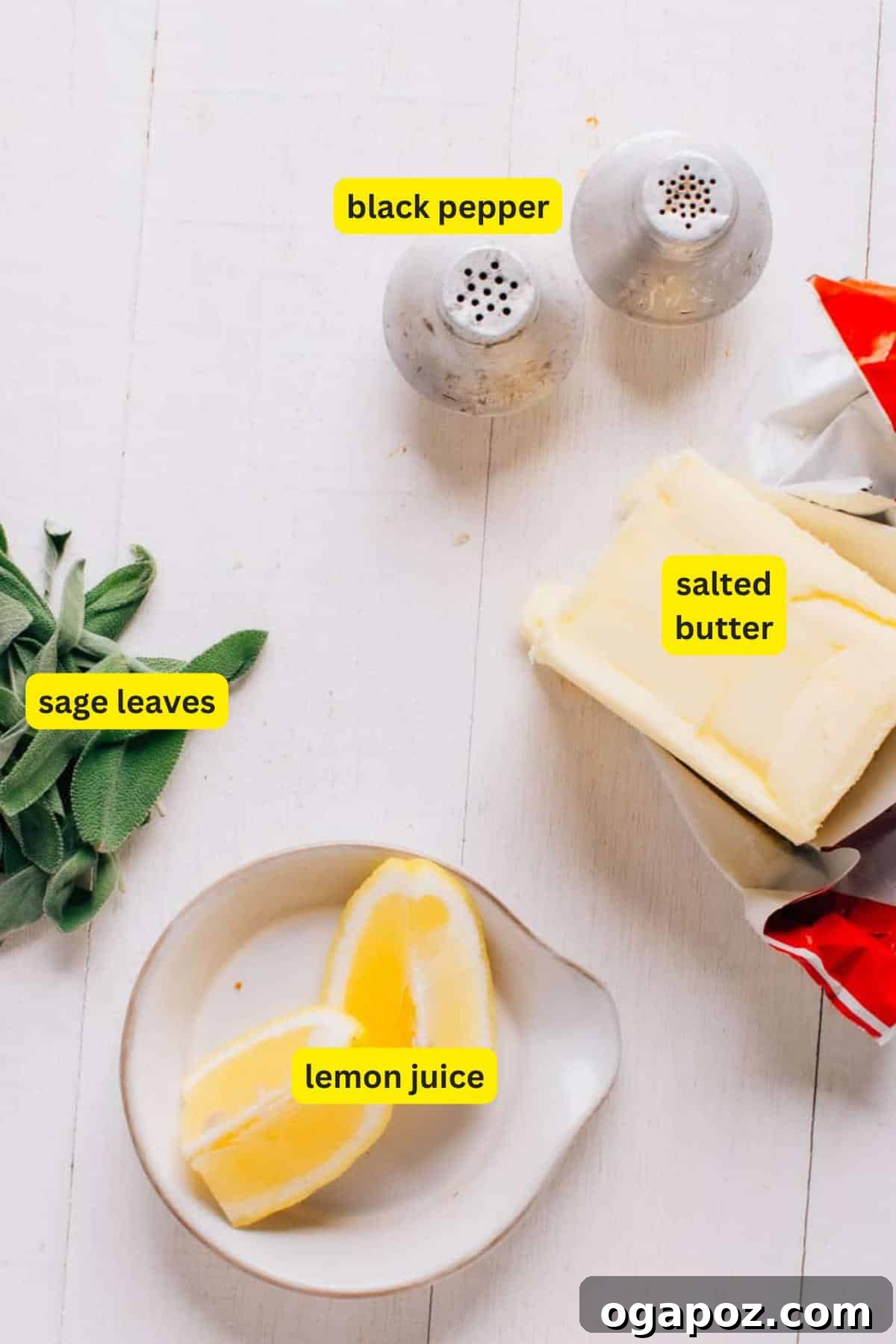
Key Ingredients for Brown Butter Sage Sauce
You’ll be amazed at the depth of flavor you can achieve with just a handful of easily accessible pantry staples:
- High-Quality Salted Butter: This is the star of our show, so choose wisely! A good quality salted butter will not only provide the rich fat needed for browning but also contribute a foundational layer of seasoning. The salt helps to enhance all the other flavors in the sauce. If you prefer to have absolute control over the sodium content, unsalted butter is a perfectly acceptable alternative. In that case, we recommend adding about ¼ teaspoon of kosher salt initially and then adjusting to your personal preference after tasting the finished sauce. European-style butters with a higher fat content can yield an even richer, nuttier brown butter.
- Fresh Sage Leaves: For that vibrant, earthy, and aromatic signature flavor, fresh sage is non-negotiable. Look for bright green leaves that are free from wilting or blemishes. The sage will crisp up beautifully in the hot butter, releasing its potent oils and contributing both texture and intense flavor. You can easily adjust the quantity of sage based on how pronounced you want its flavor to be in your final sauce.
- Fresh Lemon Juice: A splash of freshly squeezed lemon juice is crucial for balancing the richness of the brown butter. It provides a bright, acidic counterpoint that cuts through the savory fat, preventing the sauce from tasting too heavy and adding a zesty finish that elevates the overall profile. Always opt for fresh lemon juice over bottled for the best flavor.
- Freshly Ground Black Pepper: For optimal flavor and aroma, a pepper grinder with whole peppercorns is highly recommended. Freshly ground pepper offers a pungent warmth that complements the sage and butter beautifully. Pre-ground pepper tends to lose its potency quickly.
- Grated Parmesan Cheese (Optional, for Serving): While technically a garnish, good quality grated Parmesan cheese is the perfect finishing touch for many dishes served with this sauce, particularly pasta. Its salty, umami-rich flavor adds another layer of complexity and richness, tying the entire dish together beautifully. Consider using freshly grated Parmigiano-Reggiano for the best results.
Substitutions and Creative Variations for Your Sauce
While the classic brown butter sage sauce is perfect as is, it’s also wonderfully adaptable! Here are some useful swaps and exciting variations to inspire your culinary creativity:
- Unsalted Butter: As mentioned, if you’re watching your sodium intake or prefer to season precisely, unsalted butter works perfectly. Just remember to add salt progressively throughout the cooking process, tasting as you go until it reaches your desired level of seasoning.
- Herb Substitutions for a Different Flavor Profile: While fresh sage is traditional, feel free to experiment with other fresh herbs. Using fresh thyme will give the sauce a more woodsy and peppery note. Rosemary offers a strong, piney aroma, while parsley provides a fresher, greener lift. Keep in mind that substituting sage will create a distinctly different (though equally delicious) sauce experience. Dried herbs can also be used, but in half the quantity due to their concentrated flavor.
- Citrus Variations for Brightness: Lemon juice is fantastic for its sharp, clean acidity. However, for a unique twist, try a squeeze of fresh lime juice for a slightly more exotic zest, or even orange juice for a hint of sweetness and floral aroma, particularly lovely with poultry or root vegetables.
- Adding a Spicy Kick or Aromatic Depth: For those who enjoy a bit of heat or more profound aromatic layers, consider infusing your sauce. Sauté thinly sliced garlic or minced shallots in the butter just before it begins to brown. A pinch of red pepper flakes added at the same time will introduce a pleasant zing.
- Exploring Different Cheese Options: Beyond Parmesan, a variety of hard Italian cheeses can elevate your finished dish. Pecorino Romano offers a sharper, saltier bite, while Grana Padano is slightly milder and fruitier. Asiago provides a wonderfully nutty and pungent flavor that complements brown butter beautifully.
- Incorporating Toasted Nuts for Extra Crunch and Flavor: To amplify the inherent nuttiness of brown butter, try stirring in some toasted, finely chopped nuts at the end. Hazelnuts are a natural match, emphasizing the “noisette” aspect. Almonds or walnuts also add a delightful crunch and extra layer of earthy flavor, particularly excellent with vegetable-based dishes.
Essential Tools to Grab
Making this sauce is incredibly straightforward, requiring only a couple of basic kitchen items:
- Saucepan or Large Skillet: A light-colored bottomed pan is ideal, as it allows you to clearly monitor the color changes of the butter as it browns, helping prevent burning. Choose a size that gives the butter enough surface area to brown evenly.
- Spatula or Wooden Spoon: Essential for stirring the butter, ensuring even heating, and scraping down the sides of the pan.
Mastering Brown Butter Sage Sauce: A Simple Step-by-Step Guide
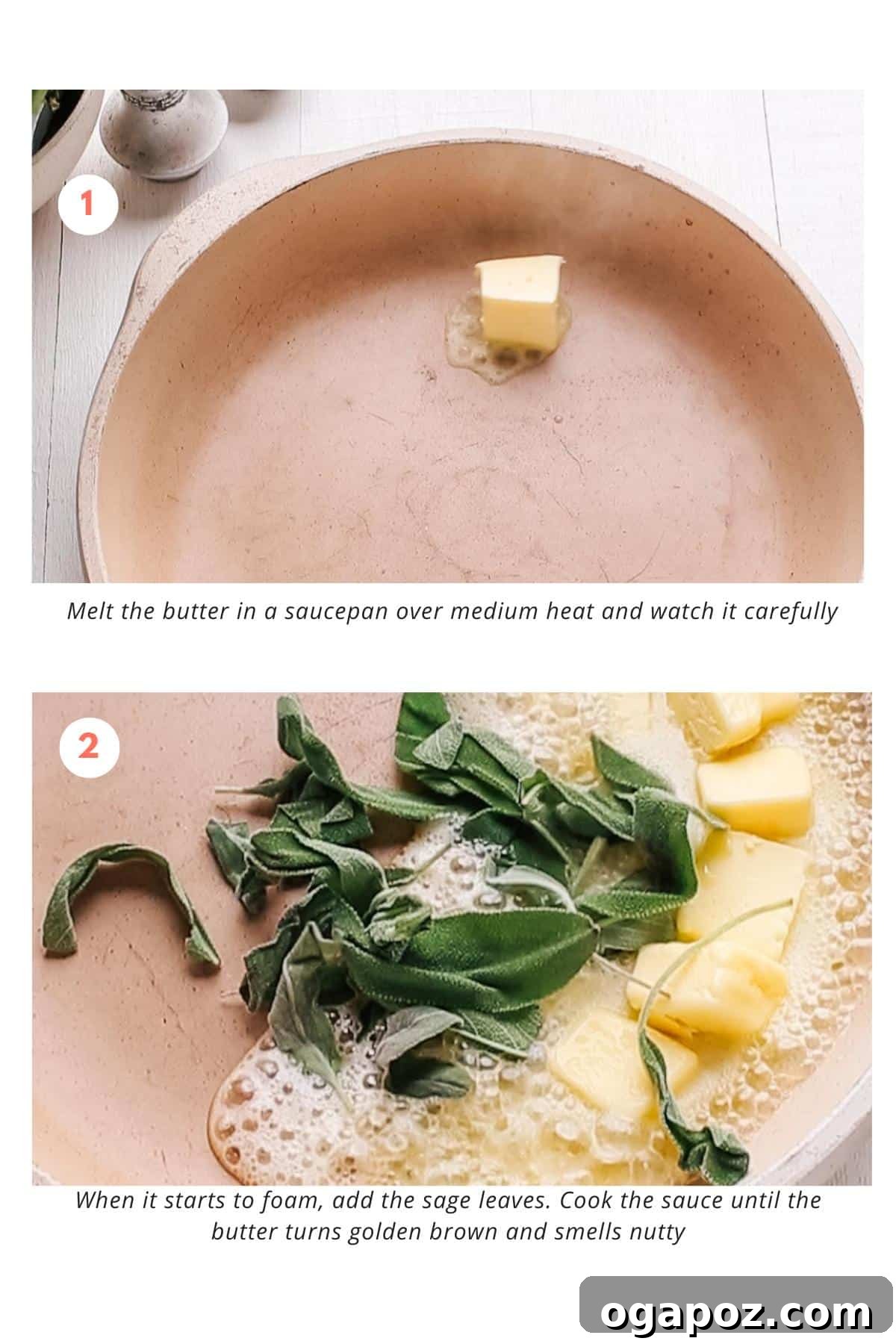
Creating this spectacular sauce is a simple, two-part process that truly couldn’t be easier. Even beginner cooks will achieve perfect results!
1. Gently Brown the Butter with Sage
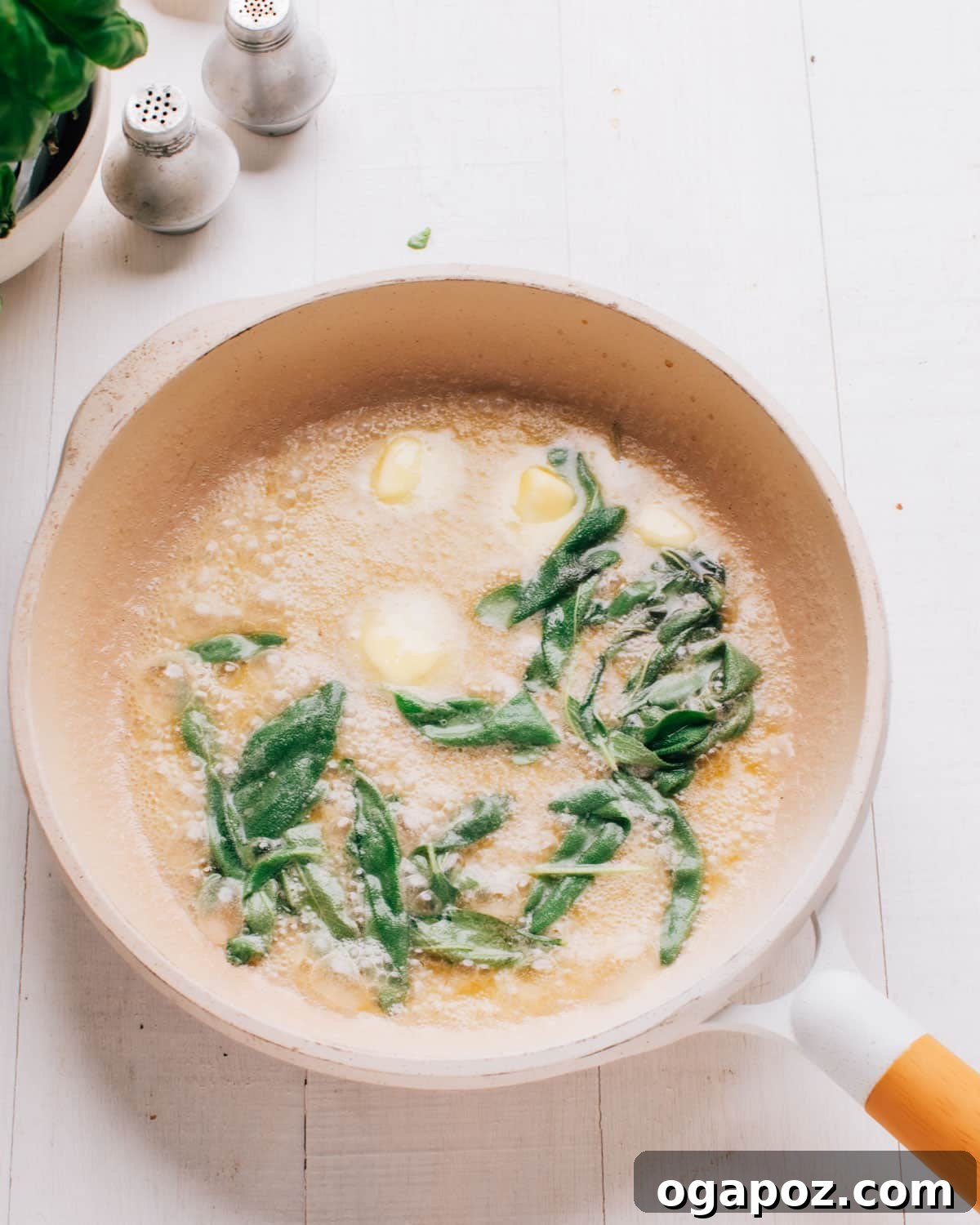
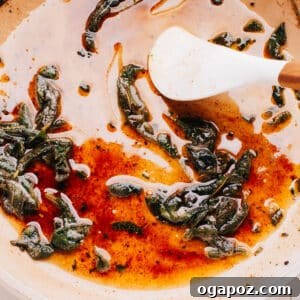
Begin by placing your chosen butter (salted or unsalted) into a saucepan or skillet over medium heat. Allow the butter to melt completely, and then start paying close attention. As it melts, it will begin to foam. This foam is the water evaporating and the milk solids starting to become visible. Once the butter has completely melted and the initial foaming subsides slightly, add your fresh sage leaves to the pan. Continue to cook, swirling the pan occasionally to ensure even browning. You’ll notice the butter will turn a beautiful golden-brown color, and the milk solids at the bottom of the pan will appear toasted. Crucially, your kitchen will fill with an irresistible nutty aroma, reminiscent of toasted hazelnuts. This browning process typically takes about 3-5 minutes, but timing can vary, so trust your senses!
2. Season and Halt the Browning Process
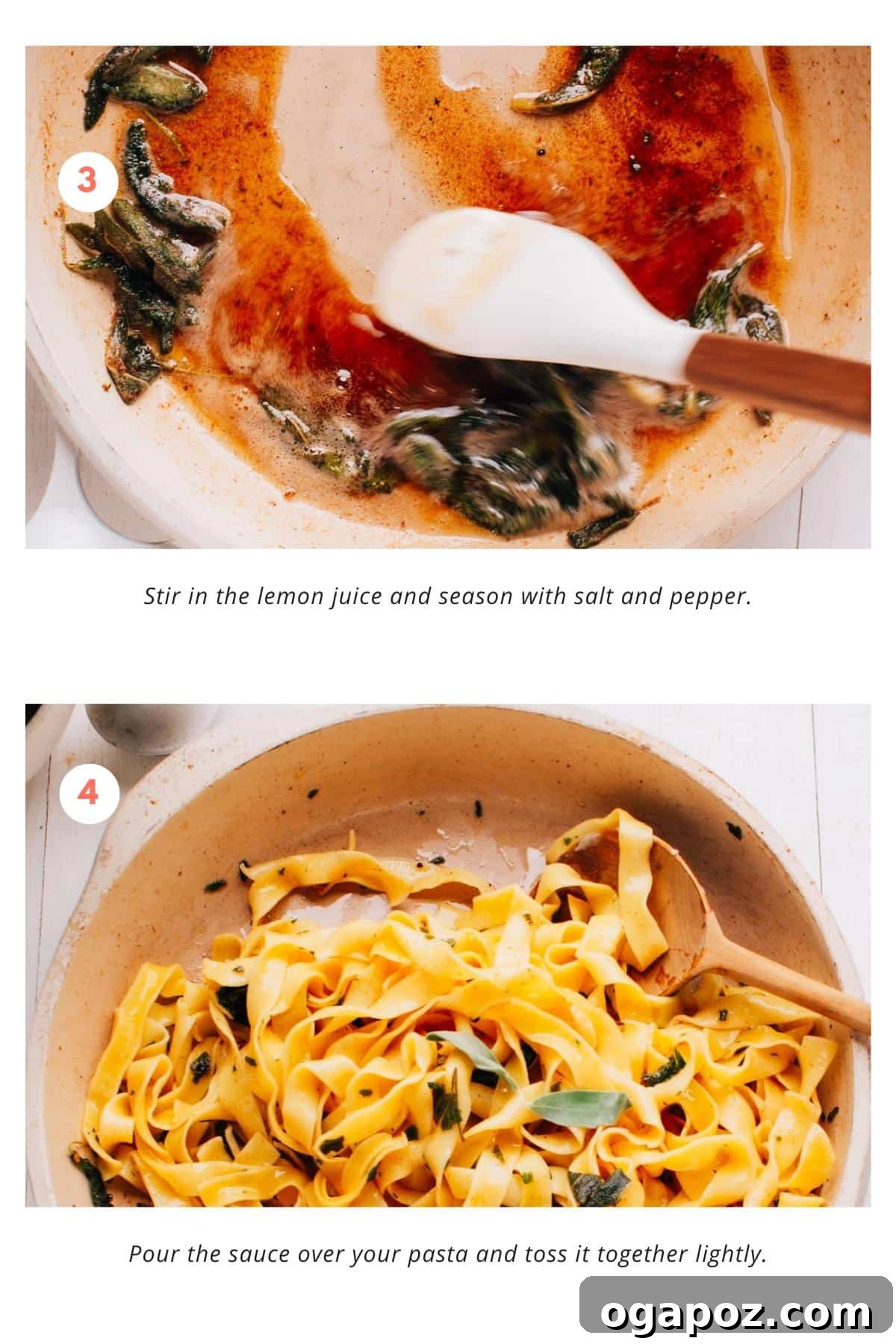
As soon as the butter achieves that perfect golden-brown color and nutty fragrance, immediately remove the pan from the heat. The residual heat in the pan can cause the butter to continue browning, and quickly turn burnt if left unattended. Stir in the fresh lemon juice right away; its acidity helps to effectively stop the browning process, ensuring your sauce remains perfectly nutty and not bitter. Finally, season your exquisite sauce with freshly ground black pepper. Taste the sauce, and if you used unsalted butter or simply prefer more seasoning, add salt to taste, stirring until fully incorporated.
3. Serve and Finish with Flair
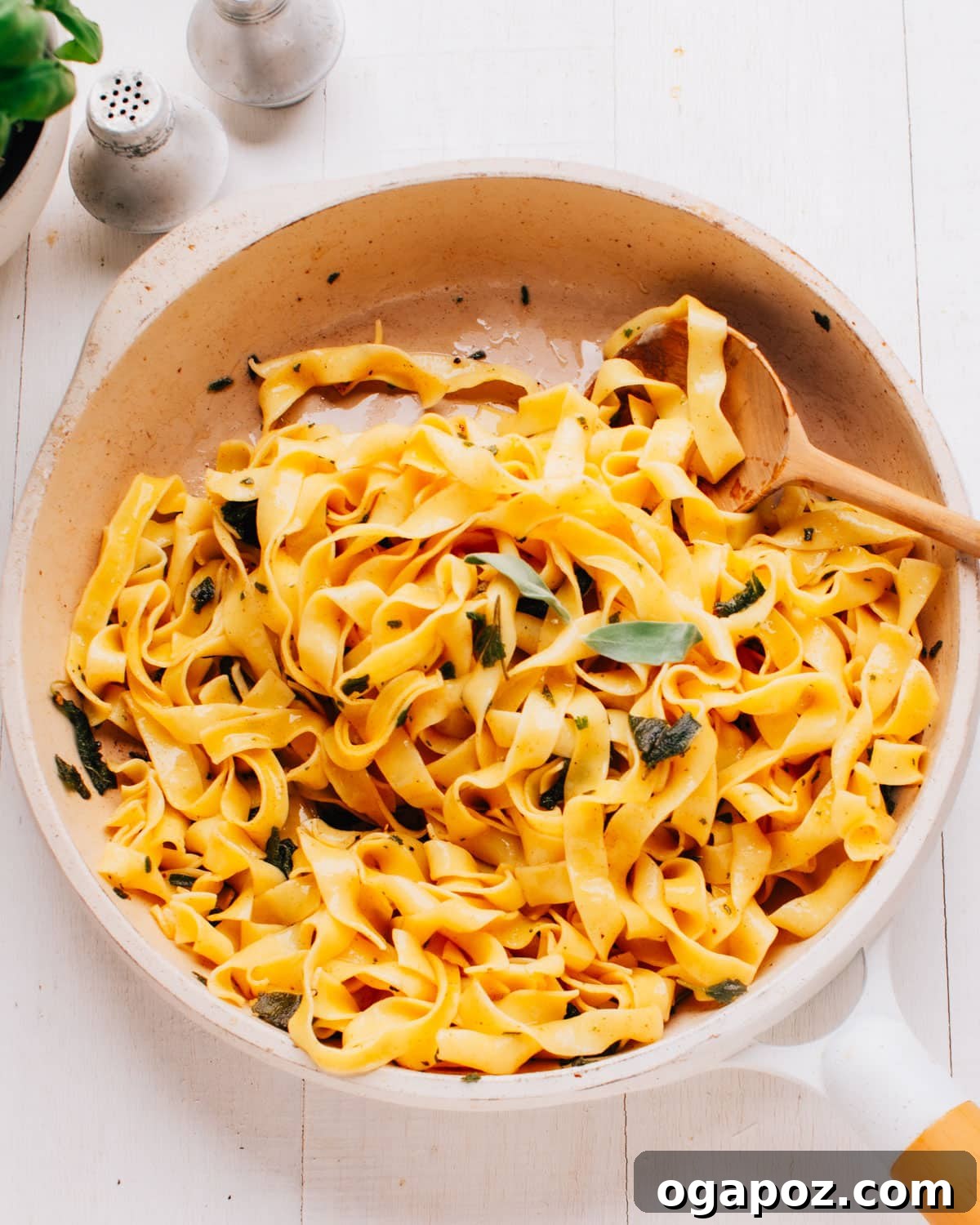
Your aromatic and deeply flavorful brown butter sage sauce is now ready to enjoy! Pour it generously over your chosen dish – be it al dente pasta, flaky fish, tender chicken, or roasted vegetables. For an extra touch of gourmet elegance and flavor, finish your serving with a sprinkle of freshly grated Parmesan cheese. The combination of the nutty butter, earthy sage, bright lemon, and salty cheese is simply divine.
Make Ahead, Storage, and Reheating Tips for Convenience
This brown butter sage sauce is wonderfully convenient, as it can be prepared in advance, stored, and reheated without compromising its delightful flavor. Here’s how to manage it:
Advance Preparation
- You can easily prepare the brown butter sage sauce entirely in advance, making it perfect for entertaining or meal prep.
- Follow the recipe instructions for browning and seasoning the sauce. Once completed, allow the sauce to cool completely to room temperature. This is crucial before transferring it to storage, as warm sauce can create condensation, leading to spoilage.
- Once cooled, transfer the sauce to an airtight container. A glass jar or a sealed plastic container works well.
Storing Leftovers
- Properly stored, leftover sage brown butter sauce will keep beautifully in the refrigerator for approximately 3 to 4 days.
- Ensure the container is tightly sealed to prevent any absorption of refrigerator odors, which could alter the delicate flavor of the sauce.
Reheating Tips to Preserve Flavor and Texture
- When you’re ready to enjoy your stored sauce, gently reheat it in a small saucepan over low heat. Stir occasionally to ensure even warming and prevent the sauce from sticking or burning.
- It’s vital not to overheat or boil the sauce rapidly, as this can cause the butterfat and milk solids to separate, resulting in an oily or greasy texture. Low and slow is the key. If the sauce seems too thick after reheating, you can stir in a tiny splash of water or vegetable broth to achieve your desired consistency.
- For longer-term storage, this versatile sauce can also be stored in the freezer for up to 2 to 3 months. Freeze in small, individual portions for easy thawing and use. Thaw overnight in the refrigerator before gently reheating.
Elevating Your Dish: Creative Serving Suggestions
This sage brown butter sauce is not just a flavor enhancer; it’s a centerpiece. While simply drizzling it over your favorite dish is always delicious, here are some ways to truly elevate your presentation, especially if you love those visually appealing crispy sage leaves:
- Preserving Crispy Sage Leaves for Garnish: If you want to showcase the beautiful, crisp sage leaves as a garnish, carefully remove them from the sauce using tongs or a slotted spoon as soon as the sauce is complete. Transfer them to a paper towel-lined plate to drain any excess butter and maintain their crispiness.
- Tossing the Sauce with Your Main Component: Once the sage leaves are set aside, toss the luscious brown butter sauce directly with your pasta, gnocchi, roasted vegetables, or whatever dish you’re coating. This ensures every bite is infused with the rich, nutty flavor.
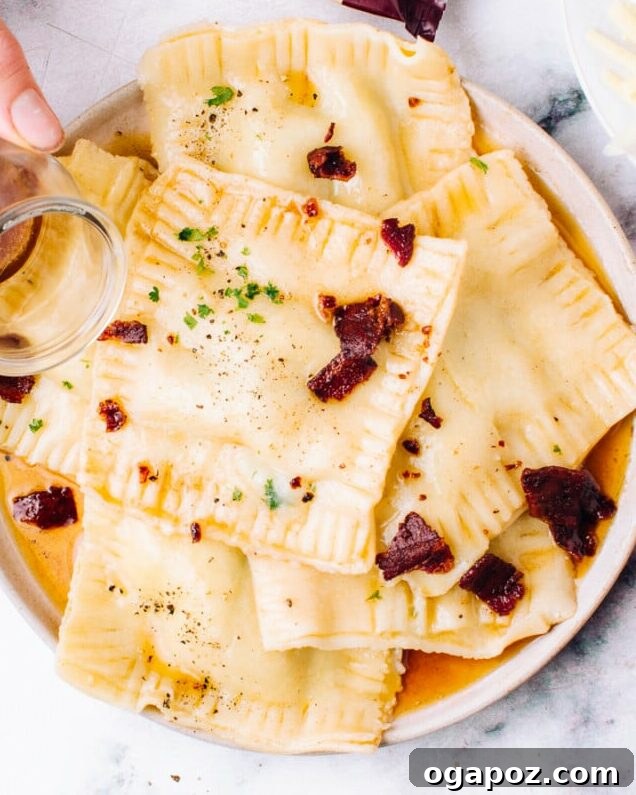
- The Grand Finale: Topping and Additional Garnishes: Now, artfully arrange the crispy sage leaves on top of your sauced dish. This adds both a textural contrast and a stunning visual appeal. For an extra touch of decadence and flavor, consider adding delicate petals of freshly shaved Parmesan cheese, or even a sprinkle of crumbled, crispy bacon bits. These additional garnishes provide layers of savory goodness that perfectly complement the sauce.
Alternatively, you can skip the step of removing the sage leaves and simply toss everything together. The fried sage leaves are quite delicate once cooked and will crumble beautifully into the sauce, infusing it with their flavor. This method is equally delicious but offers a less dramatic, though still appetizing, presentation.
The Best Pasta Pairings for Brown Butter Sage Sauce
The key to a truly satisfying pasta dish with brown butter sage sauce is choosing a pasta shape that adeptly captures and holds onto that glorious, nutty elixir. Here are some of the top picks that truly shine with this flavorful sauce:
- Fettuccine, Tagliatelle, or Pappardelle: These wide, flat ribbon-like pasta shapes are absolutely perfect. Their broad surface area provides ample space for the rich sauce to cling to, ensuring a flavorful coating with every forkful. The texture of these pastas also stands up beautifully to the richness of the butter.
- Gnocchi: These delightful, pillowy potato (or pumpkin!) dumplings are an iconic pairing with brown butter and sage. Their soft, tender texture and porous surface are excellent for soaking up every drop of the savory sauce. Whether you opt for classic potato gnocchi or a seasonal pumpkin gnocchi, this combination is a match made in culinary heaven.
- Ravioli: Stuffed pasta like ravioli, especially those filled with creamy cheeses, earthy mushrooms, or sweet butternut squash, creates an incredible symphony of flavors when coated in brown butter sage sauce. The sauce beautifully complements the richness of the filling without overpowering it. It’s particularly luscious over butternut squash and mascarpone ravioli with hazelnut brown butter, or any mushroom-stuffed variety.
- Tortellini: Similar to ravioli, cheese or chicken tortellini, whether store-bought or homemade, becomes an instant gourmet meal with this nutty brown butter sauce. It’s an ideal choice for a quick and delicious weeknight dinner that feels far more elaborate than it is.
- Other Shapes to Consider: Shorter, wider shapes like orecchiette (little ears) or cavatelli also work well due to their ability to scoop up the sauce.
Beyond pasta, remember that this versatile sauce is fantastic drizzled over roast turkey, chicken, or a vibrant array of seasonal fall vegetables like roasted Brussels sprouts, butternut squash, or green beans for a comforting and elegant side dish.
Avoiding Common Pitfalls: Tips for Flawless Brown Butter Sage Sauce
Making brown butter is simple, but it requires a little attention to detail. Here’s how to prevent common mishaps and ensure your sauce turns out perfectly every time:
- Using Too High Heat: This is perhaps the most common mistake. When your pan is excessively hot, the butter heats up too rapidly, making the browning process very difficult to control. The milk solids can transition from a beautiful golden brown to burnt in a matter of seconds. High heat means less reaction time to pull the pan off the stove at the optimal moment. Cooking over medium to medium-low heat allows for a slower, more controlled browning, giving you ample opportunity to observe the color and aroma changes and intervene before it’s too late.
- Not Watching Closely Enough: Brown butter is a magic trick that happens quickly! Once the butter melts and the water evaporates, the Maillard reaction kicks into high gear. The window between perfectly nutty brown and bitter, acrid burnt can be incredibly short – literally a matter of seconds. Walking away from the stove, even for a moment, can result in a spoiled batch. Stay vigilant, swirl the pan frequently, and pay close attention to the visual cues (color change to golden brown) and the aromatic cues (nutty fragrance, not a harsh, burnt smell). As soon as it reaches that ideal stage, remove it from the heat immediately.
- Forgetting the Lemon Juice (or Acid): While not always considered a “mistake” in the browning process itself, omitting the lemon juice can lead to a sauce that tastes overly rich and lacks brightness. The acid is crucial for cutting through the fat and balancing the deep, nutty flavors, preventing the sauce from feeling heavy or one-dimensional. It also helps to “stop” the cooking process.
- Using Cold Sage Leaves: While minor, sometimes very cold or wet sage leaves can cause the butter to splutter excessively and cool down the pan, prolonging the browning time. Patting fresh sage leaves dry before adding them to the butter is a good practice for smoother cooking and crispier results.
Frequently Asked Questions About Brown Butter Sage Sauce
Skimming through the recipe? Here are some key takeaways and common questions answered to ensure your brown butter sage sauce is a success:
Brown butter sauce boasts a complex and deeply satisfying flavor. It’s rich and nutty, reminiscent of toasted hazelnuts, with delightful hints of caramelization. The addition of fresh sage introduces an earthy, herbaceous note that adds warmth and depth, while a final touch of lemon juice provides essential brightness and acidity, perfectly balancing the richness.
Yes, you absolutely can substitute dried sage if fresh sage is not readily available. However, dried herbs have a much more concentrated flavor than fresh ones. As a general rule, use about half the amount of dried sage compared to what the recipe calls for in fresh sage. For example, if the recipe calls for ⅓ cup of fresh sage, use about 1-2 tablespoons of dried sage, adjusting to your preference.
Yes, brown butter sage sauce is an excellent make-ahead option, offering great convenience. You can prepare it completely in advance and store it. It will keep well in an airtight container in the refrigerator for up to 3-4 days, or even in the freezer for up to 2-3 months. Simply reheat it gently on the stovetop over low heat when you’re ready to serve.
To prevent the butter from burning, the key is vigilance and controlled heat. Always use low to medium heat, never high, and maintain a close watch as the butter melts and begins to foam. Swirl the pan frequently to encourage even browning of the milk solids. As soon as the butter turns a golden-brown color and emits that distinct nutty aroma (before it smells bitter), remove it from the heat immediately. The residual heat will continue the browning process slightly, so acting quickly is crucial.
Yes, brown butter sauce is inherently gluten-free. The core ingredients – butter, fresh sage, lemon juice, salt, and pepper – contain no wheat or gluten. However, if you are adding any additional ingredients or serving the sauce with other components, always double-check their labels to ensure they are certified gluten-free, especially for those with celiac disease or gluten sensitivities.
Absolutely! The recipe often calls for salted butter, as its salt content contributes to the sauce’s overall flavor balance. If you opt for salted butter, simply be mindful of the inherent saltiness. Taste the sauce before adding any extra salt, and adjust the amount of added salt accordingly to prevent your sauce from becoming overly salty.
To reheat leftover brown butter sage sauce, transfer it to a small saucepan and warm it gently over very low heat. Stir continuously until it is warmed through. Avoid boiling the sauce, as this can cause the butterfat to separate and give it an undesirable greasy texture. If the sauce appears too thick after reheating, you can stir in a small splash of water, vegetable broth, or even a tiny bit of milk or cream to restore its ideal consistency.
Indeed, brown butter sage sauce freezes exceptionally well, making it perfect for long-term storage and future use. Allow the sauce to cool completely to room temperature before freezing. Transfer it to a freezer-safe container or a resealable freezer bag, ensuring you remove as much air as possible to prevent freezer burn. When you’re ready to use it, thaw the sauce overnight in the refrigerator, then reheat gently as described above before serving.
More Delectable Sauce Recipes to Explore
If you’ve fallen in love with the versatility and flavor of this brown butter sage sauce, you’ll surely enjoy exploring these other fantastic sauce recipes:
- Irresistible Gnocchi Sauce Recipe: Perfect for pairing with those tender potato dumplings.
- Creamy Lobster Ravioli Sauce: A luxurious and decadent sauce for special occasions.
- Flavorful Baja Sauce: The ideal creamy and tangy companion for your fish tacos.
- Vibrant Beet Pasta Sauce: A stunningly beautiful and healthy pink pasta sauce that’s as delicious as it is eye-catching.
- The Ultimate Cheese Sauce for Mac and Cheese: Learn how to make a silky, perfectly cheesy sauce that’s a crowd-pleaser every time.
Pin Recipe
Print Recipe
Brown Butter Sage Sauce
Jennifer Pallian BSc, RD
0 minutes
5 minutes
5 minutes
4
Ingredients
- ½ cup salted butter
- ⅓ cup fresh sage leaves packed
- 2 tsp lemon juice
- salt and pepper to taste
Instructions
- Start by melting the butter in a saucepan over medium heat. Keep an eye on it.
- When it starts foaming, add the sage leaves. Cook until the butter turns a golden brown color and smells nutty. This should take about 3-5 minutes.
- Then, remove it from the heat. Stir in the lemon juice and season with black pepper. Taste and add salt if needed (but usually the salted butter provides enough.)
Notes
Serving: Serve your finished dish with grated parmesan cheese to take it to the next level.
Butter: If you prefer to use unsalted butter, add ¼ tsp kosher salt and then add more to taste.
Nutrition
Carbohydrates: 0.5g |
Protein: 0.3g |
Fat: 23g |
Saturated Fat: 15g |
Polyunsaturated Fat: 1g |
Monounsaturated Fat: 6g |
Trans Fat: 1g |
Cholesterol: 62mg |
Sodium: 185mg |
Potassium: 16mg |
Fiber: 0.1g |
Sugar: 0.1g |
Vitamin A: 720IU |
Vitamin C: 1mg |
Calcium: 15mg |
Iron: 0.1mg
Nutrition information is automatically calculated, so should only be used as an approximation.
Tried this recipe? Leave a comment!