
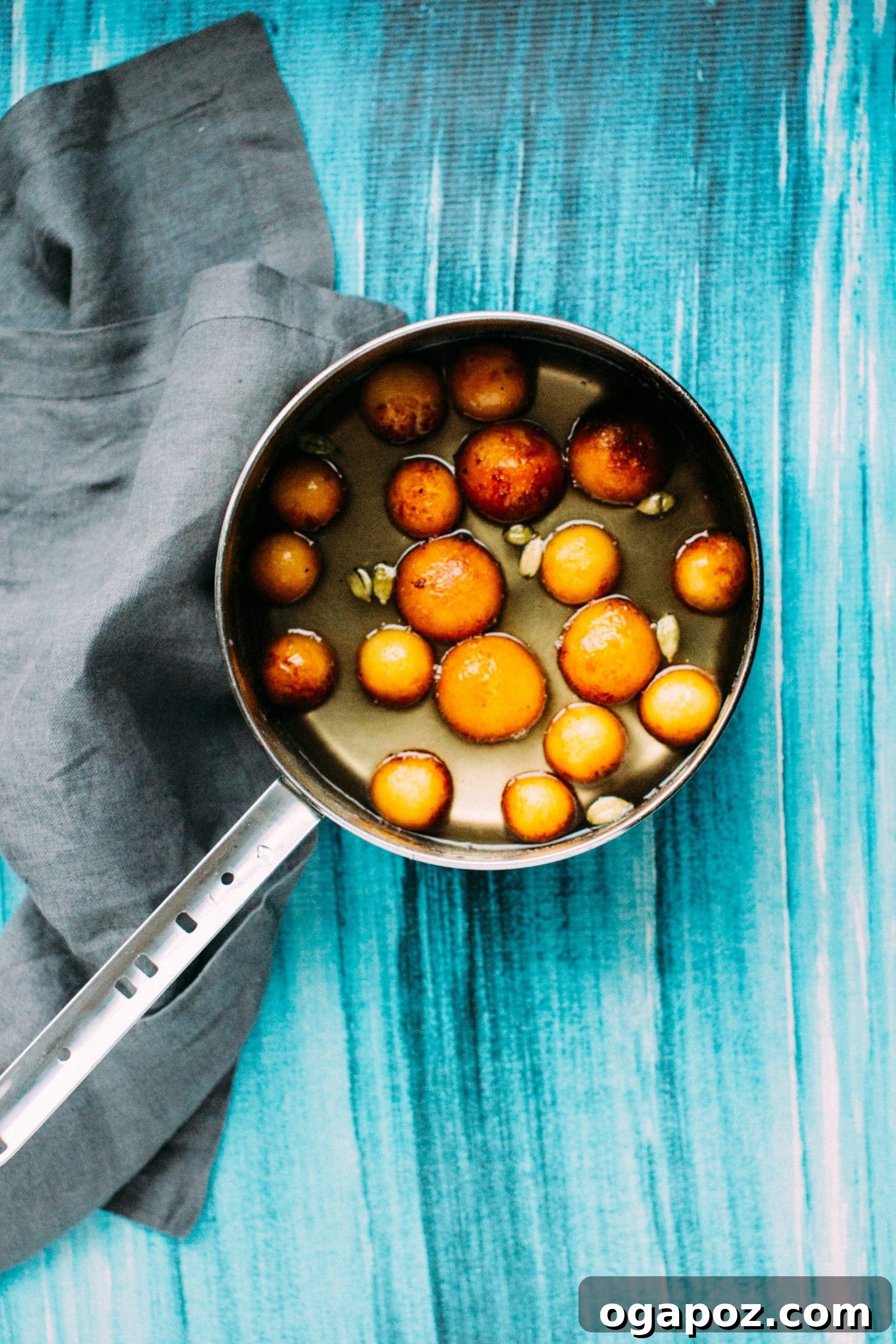
Embark on a culinary journey to create the most exquisite homemade Gulab Jamun. This meticulously crafted recipe promises soft, spongy, and irresistibly sweet fried dough balls, infused with aromatic cardamom syrup, that will captivate your taste buds with every bite. If you’ve ever dreamt of perfecting this beloved Indian sweet, your search ends here. My Indian husband’s adoration for them is a testament to their authentic flavor and delightful texture.
The Irresistible Charm of Gulab Jamun: A Beloved Indian Sweet
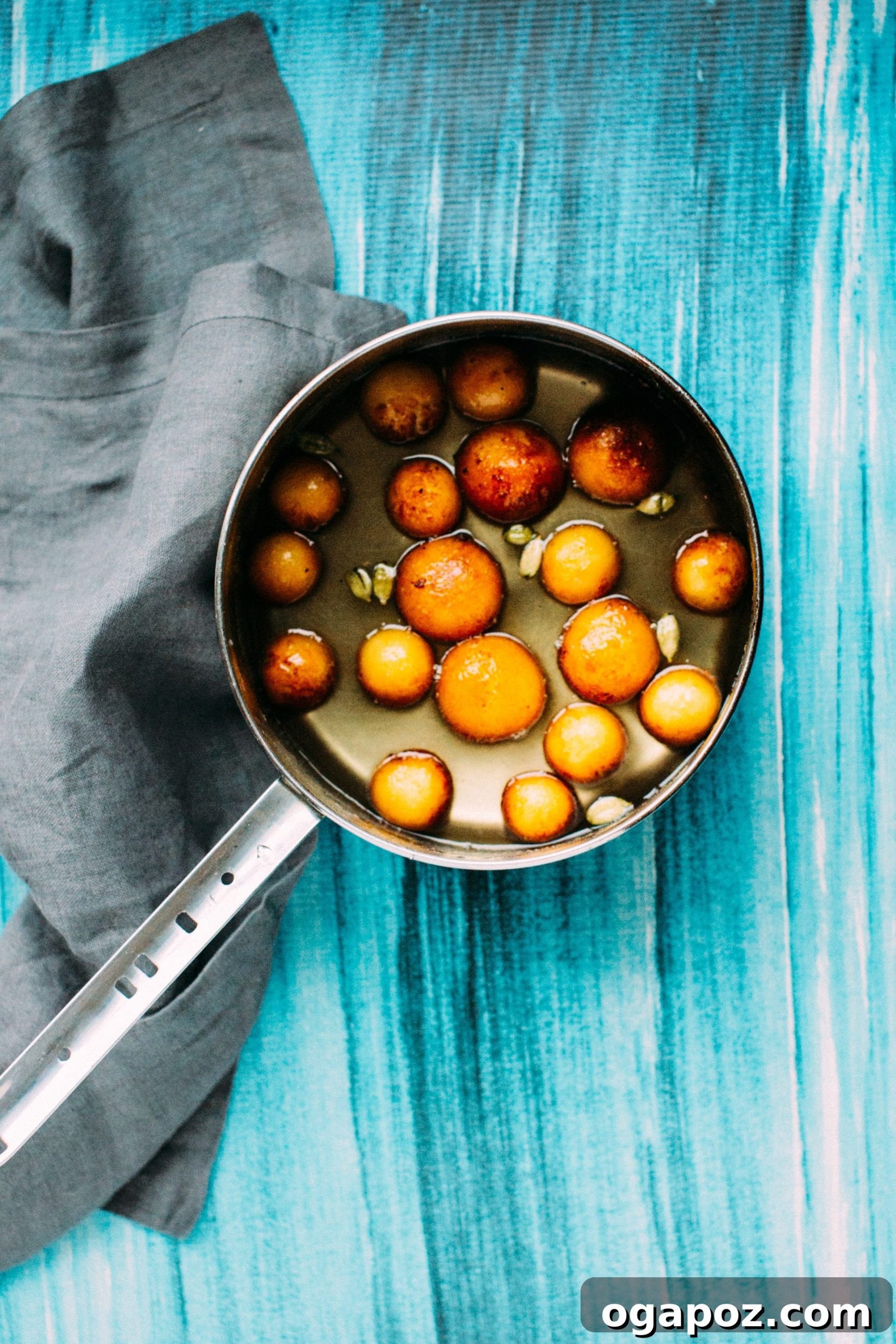
Gulab Jamun stands as one of the most cherished and widely recognized Indian dessert recipes. These delectable treats are essentially fried dough balls, masterfully crafted to be light and airy, then generously soaked in a warm, fragrant sugar syrup. The name itself, “Gulab Jamun,” hints at its essence: “Gulab” meaning rose (often referring to the rose water flavoring in the syrup) and “Jamun” referring to a dark purple berry, whose shape and color the fried balls often resemble.
The magic of Gulab Jamun lies in its contrasting textures and harmonious flavors. The syrup, a vital component, is traditionally infused with crushed green cardamom pods, lending a warm, spicy undertone. Often, a dash of rose water is added for its delicate floral notes, or a few strands of saffron for a touch of luxurious aroma and a beautiful golden hue. The dough, the heart of these sweet dumplings, is typically prepared from milk solids, known as khoya, or more commonly for home cooks, from full-cream milk powder. A small amount of all-purpose flour and leavening agents are usually mixed in to achieve the desired structure and softness. These dough balls are then carefully fried in ghee or oil until they achieve a beautiful golden-brown exterior.
Once fried to perfection, the hot gulab jamun are immediately transferred into the warm sugar syrup. This critical step allows them to absorb the sweet liquid deeply, transforming their interior into a melt-in-your-mouth, incredibly soft, and spongy texture. It’s a dessert that truly epitomizes comfort and celebration, making frequent appearances during Indian festivals like Diwali, weddings, and other special occasions. Its universal appeal makes it a go-to sweet across diverse communities.
For me, the ultimate indulgence is serving these warm Gulab Jamun alongside a steaming cup of authentic masala chai, creating a delightful pairing of sweet and spiced. A generous scoop of creamy vanilla ice cream is another fantastic accompaniment, providing a cooling contrast to the warm, syrupy goodness.
Unlocking the Secrets to Perfect Homemade Gulab Jamun
Today, I am thrilled to share my thoroughly tested and perfected Gulab Jamun Recipe. For anyone who considers themselves a “Gulab Jamun aficionado,” these promise to be the best you’ll make at home. The journey to perfecting this recipe was a labor of love, a dedicated pursuit that involved numerous trials and countless variations. I meticulously experimented with no fewer than five different approaches, driven by a determination to achieve that elusive, restaurant-quality softness and deep syrup absorption that characterizes truly exceptional Gulab Jamun. This quest for perfection even kept me awake at night, pondering the subtle nuances of dough consistency and frying temperatures.
The inspiration for this rigorous testing often comes during significant cultural moments. During a recent Diwali celebration, a joyous Indian holiday synonymous with traditional Indian sweets recipes, my in-laws were visiting. We spent the day together, embracing the crisp, bright November sunshine, bundled in cozy wool scarves and chunky, hand-knit hats. With such a food-centric holiday at hand, I dedicated two days to obsessively refining this gulab jamun recipe, ensuring it would meet the high standards of an authentic Indian celebration. The result is a recipe that not only tastes incredible but is also achievable in any home kitchen, with careful attention to detail.
Mastering the Art of Gulab Jamun: Step-by-Step Guide
While the process of making Gulab Jamun might seem straightforward at first glance, achieving true perfection presents a unique challenge. It’s not about complexity but rather precision and attention to subtle cues. The fundamental components are simple: a dough crafted from milk powder and a touch of flour, fried until golden, and then plunged into a warm, cardamom-infused sugar syrup. The allure of this combination is undeniable!
The most common question home cooks grapple with is how to replicate the exquisite texture found in the best Indian restaurants. That highly sought-after quality is a super soft, incredibly spongy interior that eagerly soaks up the sweet syrup, making each bite a burst of flavor. This perfect texture ensures the Gulab Jamun are not just sweet, but deeply infused and tender throughout.
Top Tips for Flawless Gulab Jamun Every Time
After countless experiments and exhaustive testing, I’ve distilled the critical factors for achieving perfect homemade Gulab Jamun. These aren’t just tips; they are the fundamental secrets that will transform your sweet-making experience:
- A Light Hand While Mixing: This is paramount. Overworking the dough develops gluten, leading to tough, dense Gulab Jamun. You want a tender, delicate texture, so mix just until the ingredients are combined, no more. Treat the dough gently, like a delicate cake batter.
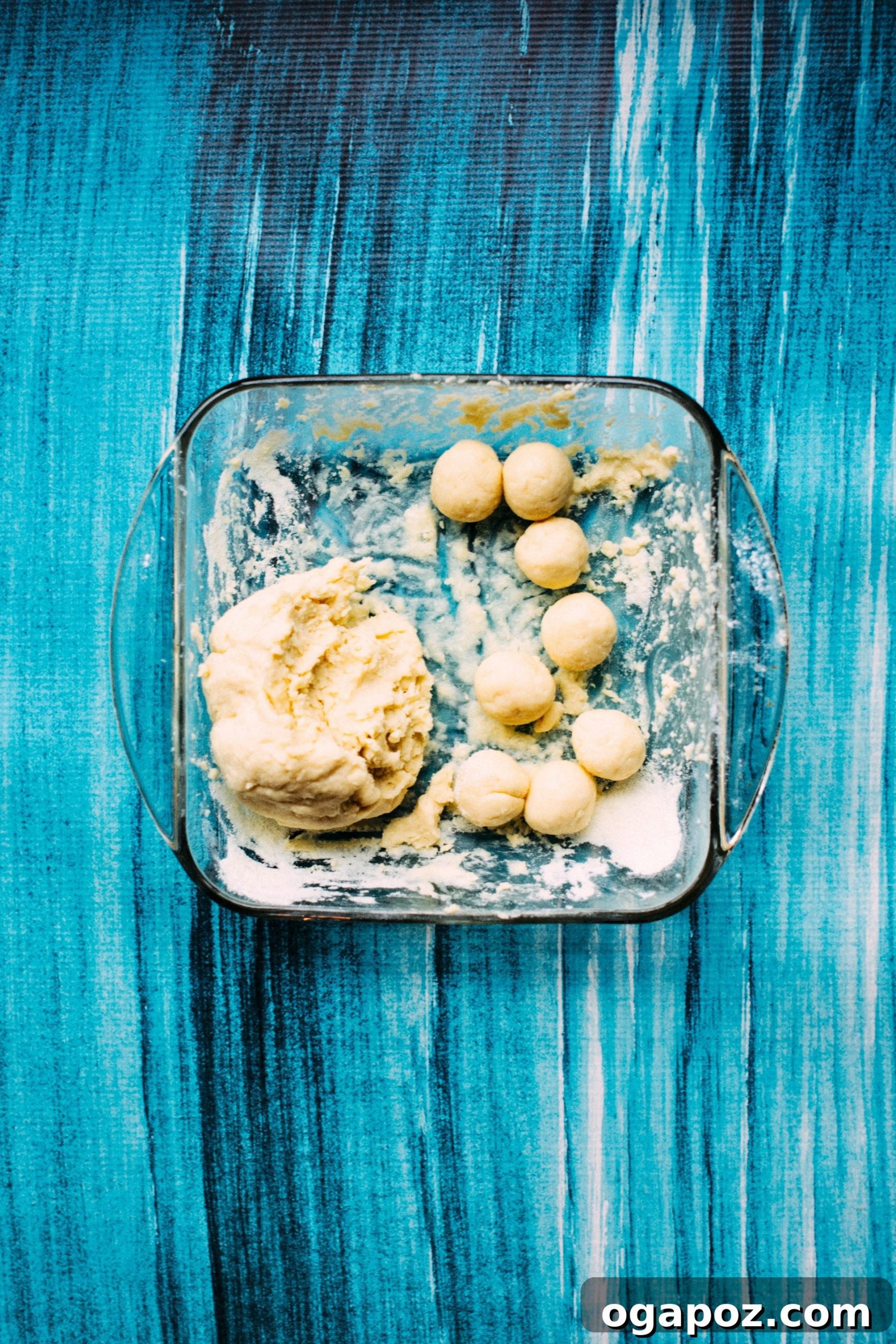
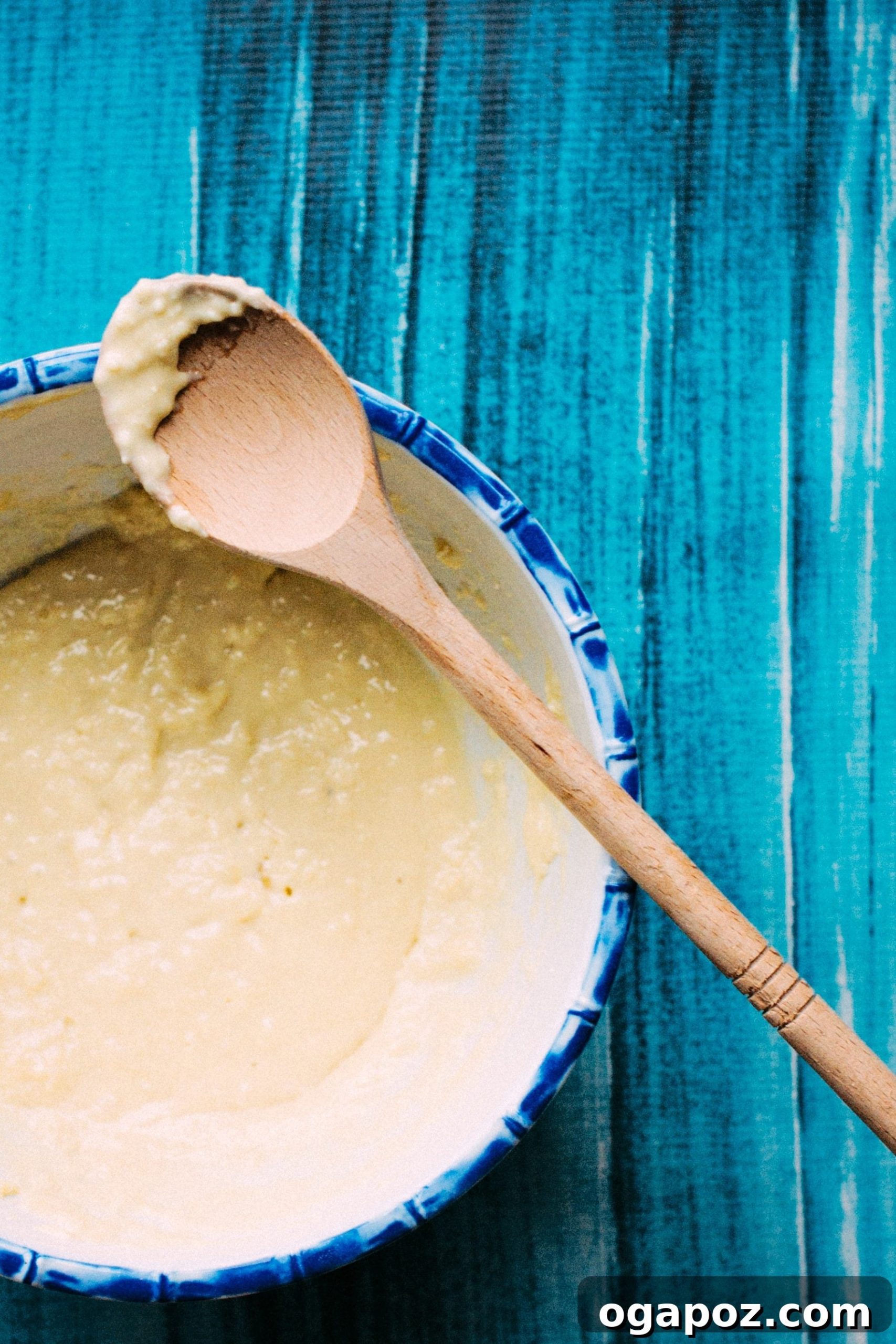
- A Really Loose, Sticky Dough: Counterintuitive perhaps, but a very soft, sticky dough is key to a spongy interior. This dough won’t be firm enough to roll into perfectly smooth spheres by hand. Instead, it will be dropped by spoonfuls into the hot oil, which allows it to puff up beautifully and absorb the syrup efficiently. The initial dough picture you might have seen in earlier recipe trials, which made perfect, plump little balls, was ultimately too heavy, resulting in a less tender final product. The consistency you’re aiming for is closer to a thick waffle batter.
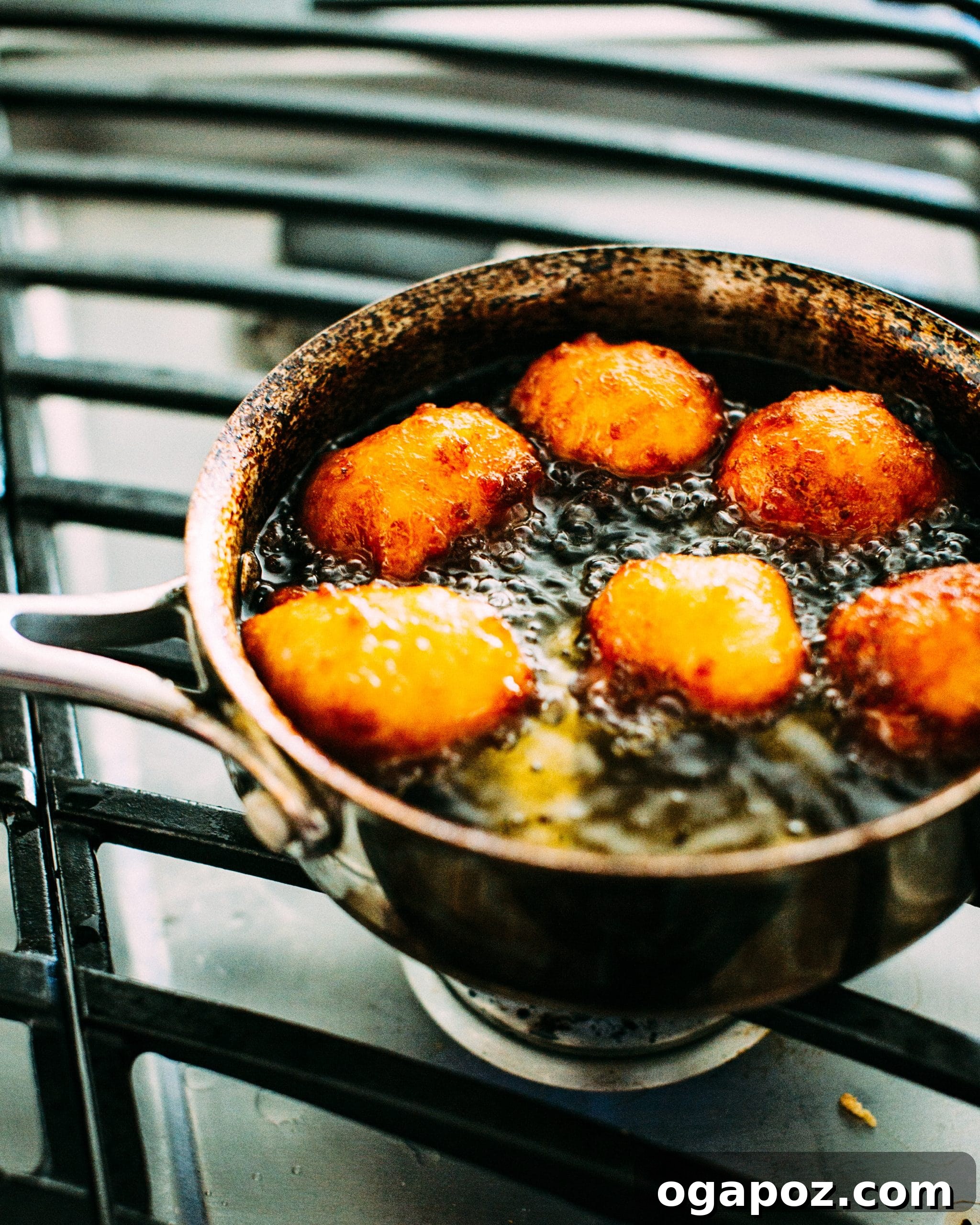
- A Not-Too-Hot Oil Temperature: This is a crucial element often overlooked. The oil must be at a moderate temperature, allowing the Gulab Jamun to cook slowly and evenly all the way to the center without rapidly browning and hardening on the outside. If the oil is too hot, the exterior will cook too quickly, creating a crust that prevents proper internal cooking and syrup absorption.
As you can observe from the image depicting the dough below, which has a consistency akin to waffle batter, it’s deliberately too loose to be shaped by hand. However, when gently dropped into the warm oil, this specific texture yields the lightest, spongiest, and softest Gulab Jamun you can possibly achieve in a home kitchen. While they might not form perfectly smooth spheres due to their delicate nature (as evident in the saucepan picture above), their slightly imperfect, puffed appearance only adds to their homemade charm and promise of deliciousness.
More Insights for Your Gulab Jamun Recipe
- Shaping Variations: If you strongly prefer the traditional perfectly round Gulab Jamun, you can use slightly less milk in the dough mixture. Start with about 5 tablespoons of milk and lightly oil your palms before shaping small portions of dough into smooth balls. Just remember, a slightly firmer dough will yield a less spongy texture.
- Dough Dynamics: Be aware that the dough tends to get drier and heavier as it rests. It’s crucial that your dough feels light and soft before cooking, as a heavy dough will inevitably result in tough Gulab Jamun after frying.
- Storage Perfection: To keep your leftover Gulab Jamun deliciously moist and infused with flavor, always store them submerged in their rosewater-infused syrup in an airtight container.
- Gentle is Key: Just like with delicate baked goods such as pancakes or muffins, the secret to tender Gulab Jamun is gentle mixing. Stir the dough only until the ingredients are just combined. Overworking the dough will develop too much gluten, making the finished product tough and chewy instead of soft and spongy.
- Milk Powder Matters: If you have access to it, using whole milk powder is highly recommended as it contributes to a richer flavor and a smoother texture. However, if whole milk powder isn’t available, the skim milk powder commonly found in North American grocery stores will work perfectly well.
- Frying in Batches: To ensure even cooking and optimal oil temperature, fry your Gulab Jamun in small batches. Overcrowding the pan can significantly drop the oil temperature and lead to unevenly cooked or greasy results. Always use a slotted spoon to remove the fried Gulab Jamun, allowing any excess oil to drain back into the saucepan before transferring them immediately to the warm syrup.
- Elegant Garnishes: For a beautiful presentation and an extra layer of flavor, consider a delicate sprinkling of fresh rose petals or thinly sliced almonds before serving. These garnishes add visual appeal and complement the sweet flavors.
Serving Suggestions and Culinary Pairings
Gulab Jamun is wonderfully versatile. While traditionally served warm, they are equally delightful at room temperature. As mentioned, a scoop of vanilla ice cream or a side of hot masala chai are classic pairings, but don’t limit yourself! Try them with a dollop of sweetened Greek yogurt for a tangy contrast, or alongside fresh fruit like berries. For an extra touch of luxury, a sprinkle of finely chopped pistachios or a few strands of saffron can elevate the presentation and flavor profile. Some even enjoy them chilled, a refreshing treat on a hot day.
Storing Your Delicious Gulab Jamun
Proper storage ensures your homemade Gulab Jamun remain fresh and delightful. Always store them submerged in their sugar syrup in an airtight container in the refrigerator. They will keep well for up to 5-7 days, continuously absorbing the syrup and becoming even more flavorful over time. When ready to serve, gently rewarm them on low heat in the syrup on the stovetop, or in the microwave for a few seconds, for that melt-in-your-mouth warmth.
Frequently Asked Questions (FAQ) About Gulab Jamun
Q: Why are my Gulab Jamun hard or dense?
A: This is a common issue, usually due to overworking the dough, which develops gluten and makes it tough. Also, frying at too high a temperature can cause the exterior to harden quickly, preventing the inside from cooking properly and absorbing syrup. Ensure you mix gently and maintain a moderate oil temperature.
Q: Can I use store-bought khoya instead of milk powder?
A: Absolutely! If you have access to good quality khoya (reduced milk solids), it can be used as the base for an even richer Gulab Jamun. The ratios will differ slightly, often requiring less flour and milk, so look for a specific recipe tailored for khoya.
Q: How long do Gulab Jamun need to soak in the syrup?
A: Gulab Jamun should soak for at least 30 minutes to an hour to absorb the syrup thoroughly. For the best, most deeply infused flavor and spongy texture, letting them soak for several hours or even overnight is ideal.
Q: Can I make Gulab Jamun ahead of time?
A: Yes, Gulab Jamun are an excellent make-ahead dessert! In fact, they often taste better the next day as the flavors meld and the syrup penetrates more deeply. Store them in the syrup in the refrigerator.
Q: My Gulab Jamun cracked during frying. What went wrong?
A: Cracks usually indicate that the dough was too dry or not mixed enough. Ensure your dough is soft, sticky, and well-hydrated. If shaping by hand, make sure there are no visible cracks on the surface of the balls before frying.
More Indian Recipes to Explore
If you’ve enjoyed making these delightful Gulab Jamun, you’re sure to love exploring more authentic Indian flavors. Here are some of my other tried-and-true recipes:
Best-Ever Butter Chicken
Easy “Shortcut” Samosas
Creamy Coconut Curried Lentils
Rich Butter Paneer Masala
Homemade Malai Kofta
Next Reading: Dive deeper into Indian cuisine with my Top Indian Dinner Ideas and a curated list of the Most Beloved Indian Curry Recipes.

Best Gulab Jamun Recipe (Soft and Easy to Make!)
Jennifer Pallian BSc, RD
15
15
30
10
gulab jamun
Ingredients
For cardamom syrup:
-
2
cups
granulated sugar -
1
cup
water -
10
cardamom pods
For gulab jamun
-
1
cup
skim or full-cream milk powder -
¼
cup
all purpose flour -
1
tsp
baking powder -
2
tbsp
butter
softened -
½
cup
whole milk -
oil
for frying
Instructions
-
To prepare the cardamom syrup, combine granulated sugar and water in a medium saucepan. Place over medium-high heat. Gently crush the cardamom pods by pressing them with the flat side of a chef’s knife, then add them to the saucepan. Cook, stirring occasionally, until all the sugar has completely dissolved. Once dissolved, bring the mixture to a boil for exactly one minute, then remove from heat.
-
In a separate medium bowl, gently whisk together the milk powder, all-purpose flour, and baking powder until well combined. Add the softened butter and use your fingertips to carefully work it into the dry mixture until it is fully incorporated and crumbly. Gradually add the whole milk, stirring with a very light hand, just until the ingredients come together to form a soft, sticky dough. Avoid overmixing. Let the mixture stand for 10-15 minutes; it will thicken slightly.
-
Meanwhile, pour oil into a shallow saucepan to a depth of about 1 inch. Heat the oil over medium heat for approximately 5 minutes. Test the oil temperature by dropping a tiny amount of batter into it. If it sizzles gently but does not immediately change color, the oil is ready. If it floats and begins to brown instantly, the oil is too hot (remove the pan from the burner for a minute, reduce the heat, and test again). If the batter sinks and doesn’t sizzle, the oil is not hot enough.
-
Once the oil is at the correct temperature, drop the dough by tablespoonfuls into the hot oil, frying about 5 Gulab Jamun at a time to avoid overcrowding the pan. Using a slotted spoon, gently and frequently turn the Gulab Jamun until they are beautifully golden brown on all sides and have doubled in size, which typically takes 4-6 minutes. As they finish cooking, remove each Gulab Jamun with the slotted spoon, allowing any excess oil to drain back into the saucepan. Immediately transfer the hot Gulab Jamun into the warm sugar syrup. Let them stand and soak in the syrup until you are ready to serve. Repeat this process with the remaining dough.
-
Gulab Jamun are best served warm. You can gently rewarm them over low heat directly in their syrup on the stovetop, or briefly in the microwave.