
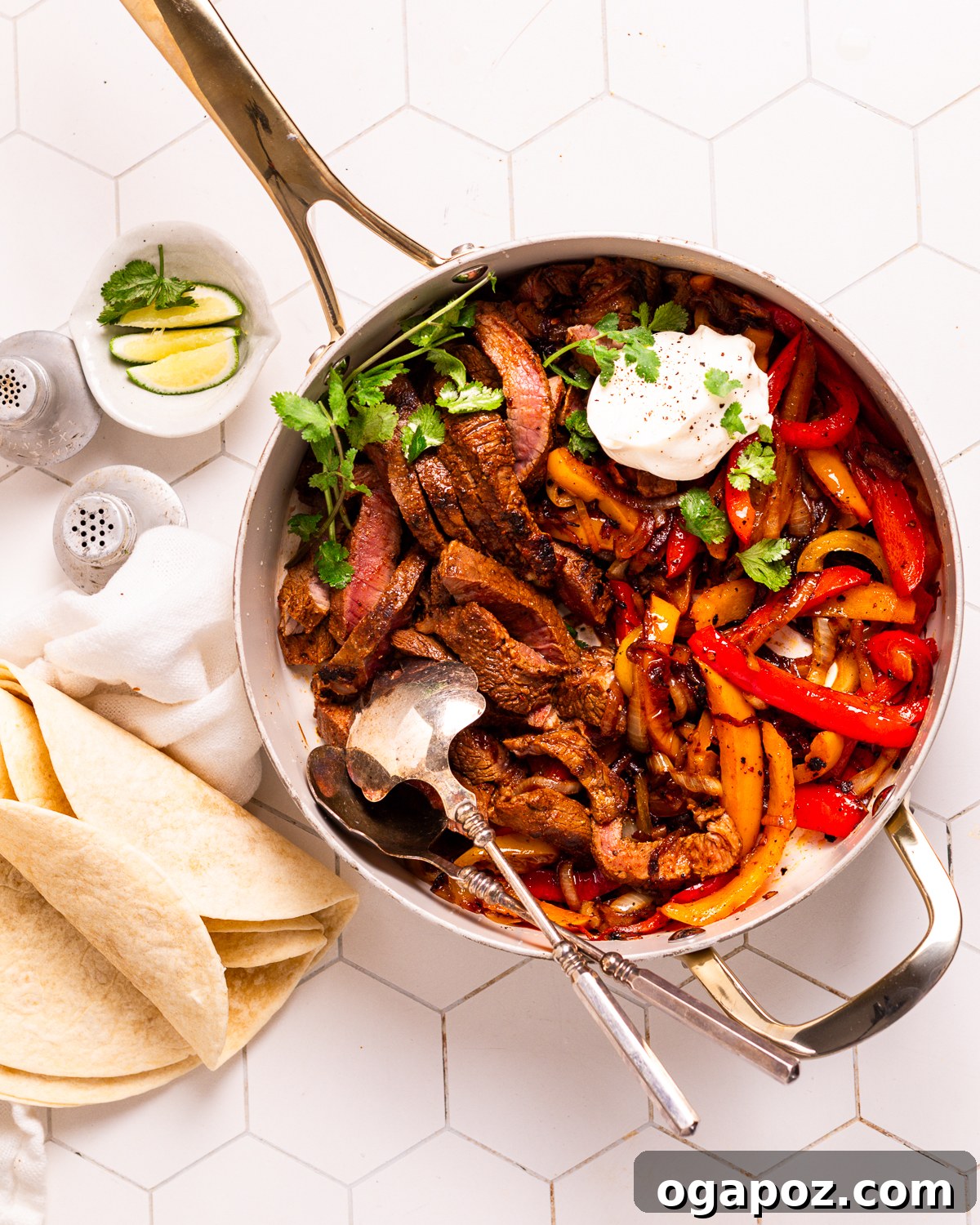
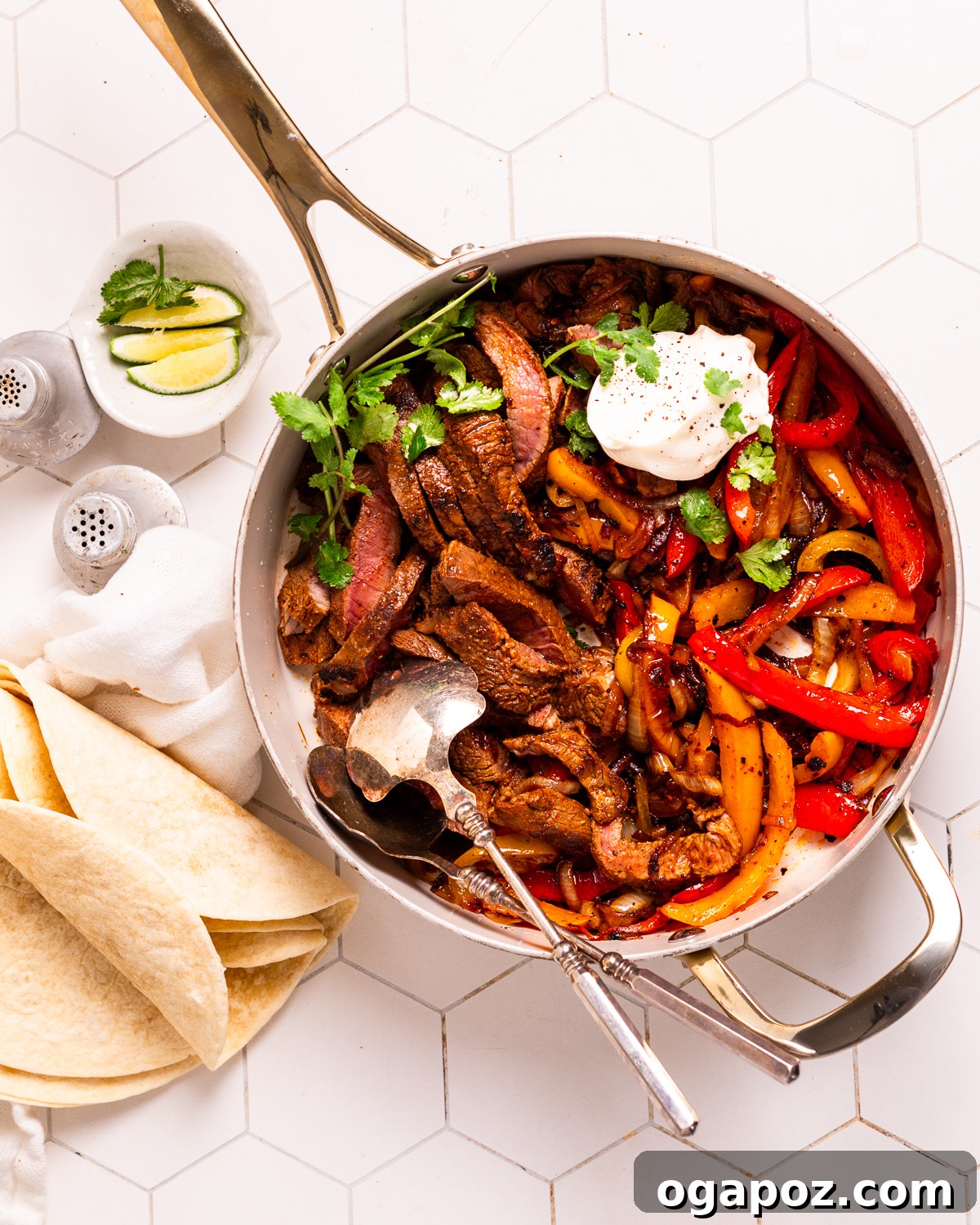
Unleash Flavor: The Ultimate Juicy & Tender Beef Fajita Recipe
Transform your dinner table with this incredible **beef fajita recipe**, renowned for its incredibly juicy steak and perfectly tender texture. This isn’t just a meal; it’s a vibrant culinary experience that brings the bold, authentic flavors of Mexico right into your kitchen. So simple yet profoundly satisfying, these **steak fajitas** are a weekly favorite in countless homes, offering a delicious escape from routine dinners.
Essential Ingredients for Perfect Beef Fajitas
Crafting the perfect **beef fajitas** begins with assembling a selection of fresh, high-quality ingredients. Each component plays a vital role in building the layered flavors and achieving that signature tender steak. Prepare to elevate your weeknight meals with these readily available staples.
If you’re a fan of rich, flavor-packed Mexican beef dishes, you absolutely must try our Shredded Beef recipe next! It’s another fantastic way to enjoy robust Mexican flavors.
Beef Fajita Recipe Ingredients: Your Flavor Foundation
You’ll likely find most of these pantry heroes already waiting in your kitchen. This comprehensive list ensures you’re prepared to create an unforgettable fajita feast:
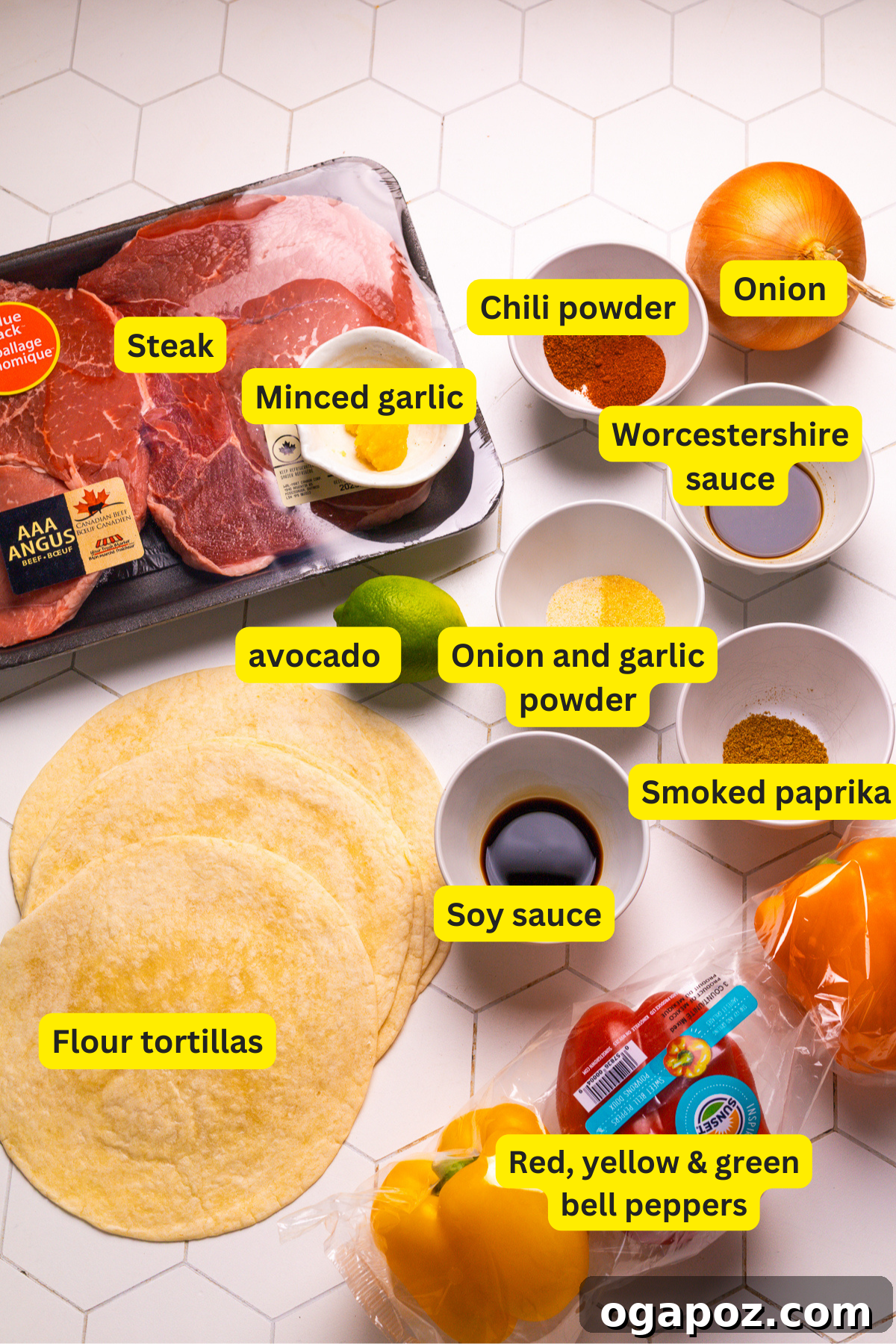
For the Steak and Marinade: The Secret to Tender, Flavorful Beef
- Olive Oil: Essential for a high-heat sear, olive oil helps to create a beautiful crust on your steak while ensuring even cooking. It also forms the base of our luscious marinade.
- Lime Juice: This zesty citrus acts as a natural tenderizer, thanks to its acidity, breaking down tough meat fibers. It also infuses the steak with a bright, fresh flavor that is characteristic of authentic Mexican cuisine.
- Soy Sauce: A surprising yet critical ingredient, soy sauce delivers a powerful umami punch, adding depth and richness to the marinade. It also aids in keeping the steak incredibly juicy during cooking.
- Worcestershire Sauce: Boasting a complex profile of savory, sweet, and tangy notes, Worcestershire sauce is a marinade superstar, enhancing the beef’s natural flavor and contributing to its deep color.
- Kosher Salt and Black Pepper: These fundamental seasonings are crucial for drawing out and amplifying the steak’s inherent deliciousness, creating a well-balanced flavor profile.
- Onion Powder and Garlic Powder: These provide concentrated savory flavors of onion and garlic without adding any excess moisture, which is important for a good sear. They integrate seamlessly into the marinade.
- Smoked Paprika: For an irresistible smoky aroma and a rich, vibrant reddish hue, smoked paprika is a must-have. It adds a subtle warmth that complements the other spices beautifully.
- Chili Powder: This blend offers a mild, earthy spice and a touch of sweetness, forming the backbone of the fajita seasoning. Adjust to your preferred level of heat.
- Ground Cumin: Indispensable for any authentic fajita recipe, cumin provides a warm, earthy, and slightly pungent flavor that is utterly distinctive and delicious.
- Steak: The star of the show! Choose from flank steak, flat iron steak, skirt steak, sirloin tip, or any other boneless steak cut you prefer. Skirt steak is often lauded for its robust flavor and tenderness when prepared correctly. Ensure your chosen cut is about 1 to 1.5 inches thick for optimal cooking.
For the Fajitas: Freshness and Texture
- Red, Yellow & Green Bell Peppers: This colorful trio not only adds visual appeal but also contributes a lovely sweetness, satisfying crunch, and refreshing lightness to the fajitas. Slice them into uniform strips for even cooking.
- Onion: When sautéed, onions transform into a sweet, caramelized delicacy, providing a rich, savory depth that perfectly complements the steak and peppers. Yellow or white onions work best.
- Olive Oil: Used for sautéing the vegetables, this helps them soften, develop a slight char, and absorb the wonderful flavors in the pan.
- Minced Garlic: Freshly minced garlic infuses the entire dish with its pungent, aromatic goodness, adding another layer of classic Mexican flavor.
- Flour Tortillas: Soft, warm, and wonderfully pliable, these are the ideal vessel for wrapping your juicy steak, sizzling vegetables, and favorite toppings. Look for small to medium-sized tortillas.
Optional Toppings: Customize Your Fajita Experience
Fajitas are all about personalization! Pile on your favorite toppings to create a unique and delightful experience with every bite. Here are some popular choices to inspire you:
- Sour Cream or Mexican Crema: Adds a cool, creamy contrast to the spicy and savory flavors.
- Cotija or Feta Cheese: Crumbly, salty cheeses that offer a delicious tang.
- Pickled Onions: Provide a sharp, vinegary kick that cuts through the richness.
- Avocado or Guacamole: Creamy, rich, and essential for a truly indulgent fajita.
- Salsa: Whether mild or fiery, a good salsa adds a burst of fresh flavor and heat.
- Hot Sauce: For those who crave an extra fiery kick.
- Shredded Cheese: A classic choice, melting slightly from the warmth of the fajitas.
- Chopped Cilantro: Offers a fresh, herbaceous note that brightens the entire dish.
- A Wedge of Fresh Lime: A final squeeze of lime juice right before eating enhances all the flavors. 🔥
Exact ingredient quantities can be found in the detailed recipe section below.
Flavor Explorations: Substitutions and Variations
This **beef fajita recipe** is wonderfully versatile, allowing you to experiment and tailor it to your dietary preferences or what you have on hand. Feel free to play around with these creative variations:
- Protein Power-Ups: While beef is king here, you can easily swap it for other delicious proteins. Consider shrimp for a lighter option, tofu or tempeh for a plant-based twist, or hearty portobello mushrooms for a savory vegetarian alternative. You might also love our chicken fajita recipe for another classic choice.
- Chipotle Powder: For a deeper, smokier heat that truly stands out, replace the standard chili powder with chipotle powder. It brings an unparalleled complexity to the marinade.
- Poblano Peppers: If you enjoy a milder heat with a distinctive smoky undertone, poblano peppers are a fantastic substitute for some or all of the bell peppers. They add an authentic Mexican flair.
- Seasonal Vegetable Additions: Don’t limit yourself to just peppers and onions! Sliced zucchini or yellow squash can add extra texture and a subtle sweetness, while cherry tomatoes, roasted or sautéed, burst with flavor. Feel free to include other quick-cooking vegetables like corn or asparagus.
Tortilla Options: Wraps for Every Preference
The choice of tortilla can significantly impact your fajita experience. Explore these options:
- Corn Tortillas: For a traditional Mexican flavor and a naturally gluten-free option, warm corn tortillas are excellent. Their slightly earthy taste pairs beautifully with the rich steak.
- Lettuce Wraps: Looking for a low-carb, refreshingly crisp alternative? Large lettuce leaves (like butter lettuce or romaine) make fantastic wraps, adding a fresh crunch to every bite.
- Keto Tortillas: A recent discovery for many, keto-friendly tortillas have come a long way. They often mimic the texture and flexibility of regular flour tortillas remarkably well while being packed with fiber. They’re an unexpectedly good option for those managing carb intake.
Mastering Beef Fajitas: A Step-by-Step Guide to Sizzling Perfection
Creating unbelievably juicy and tender **steak fajitas** is far simpler than you might imagine. With just a few straightforward steps and some key techniques, you’ll be enjoying restaurant-quality fajitas in no time. Follow this easy guide for sizzling success!
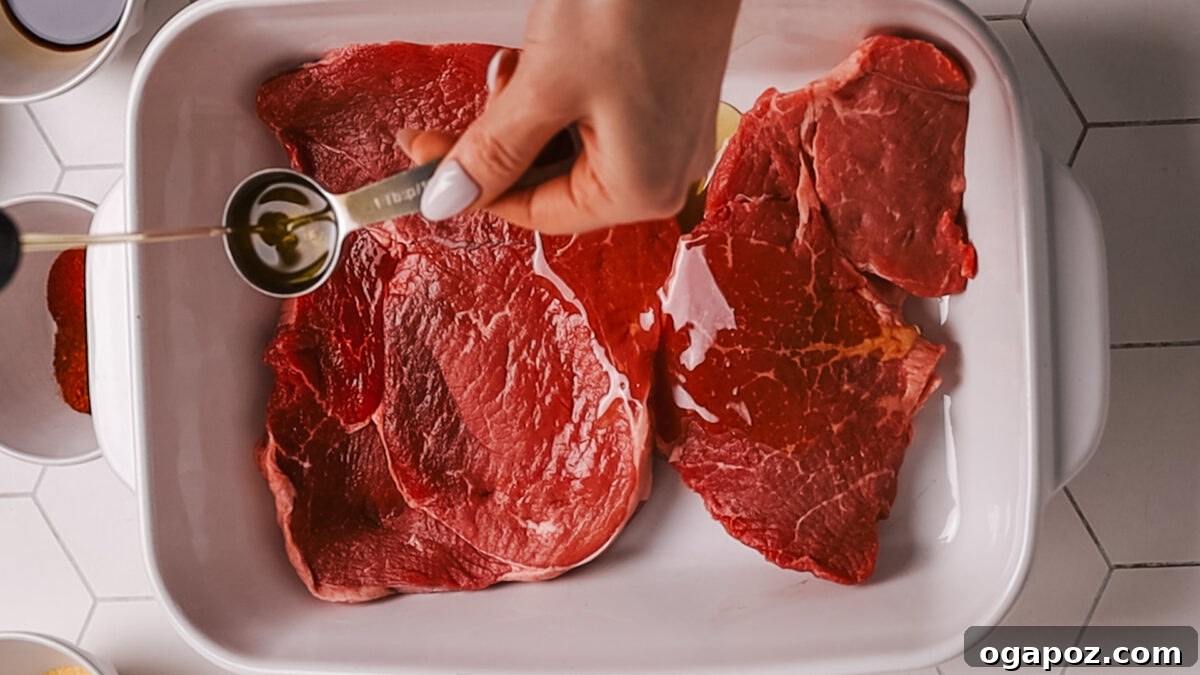
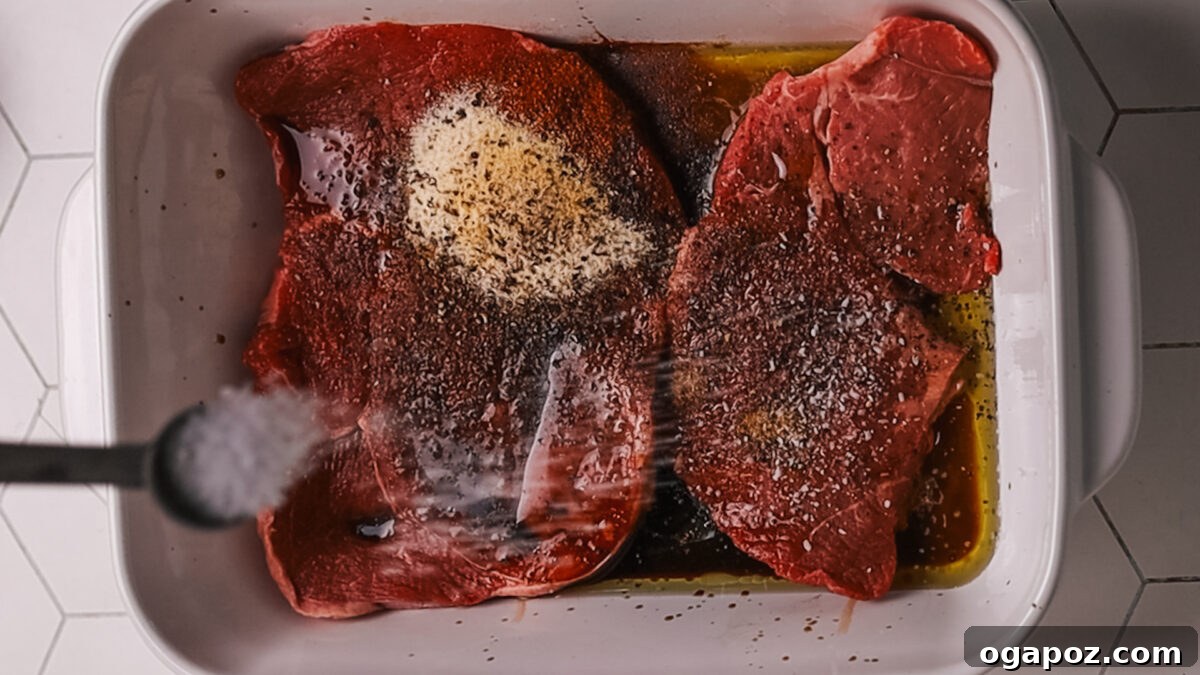
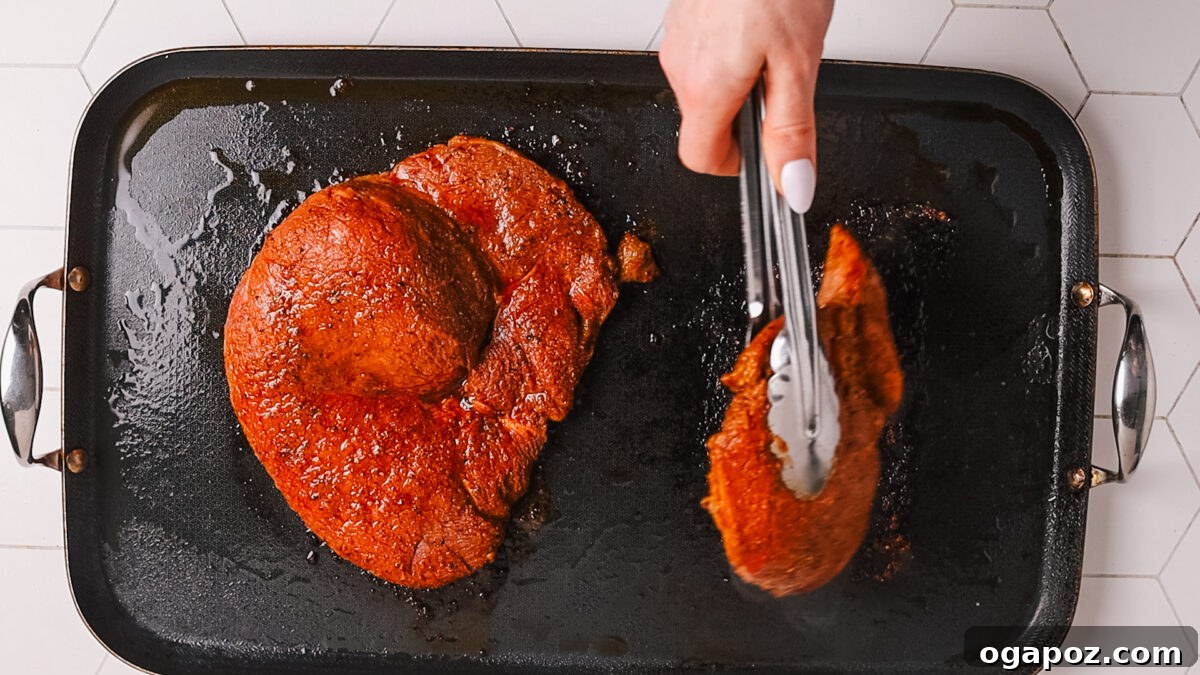
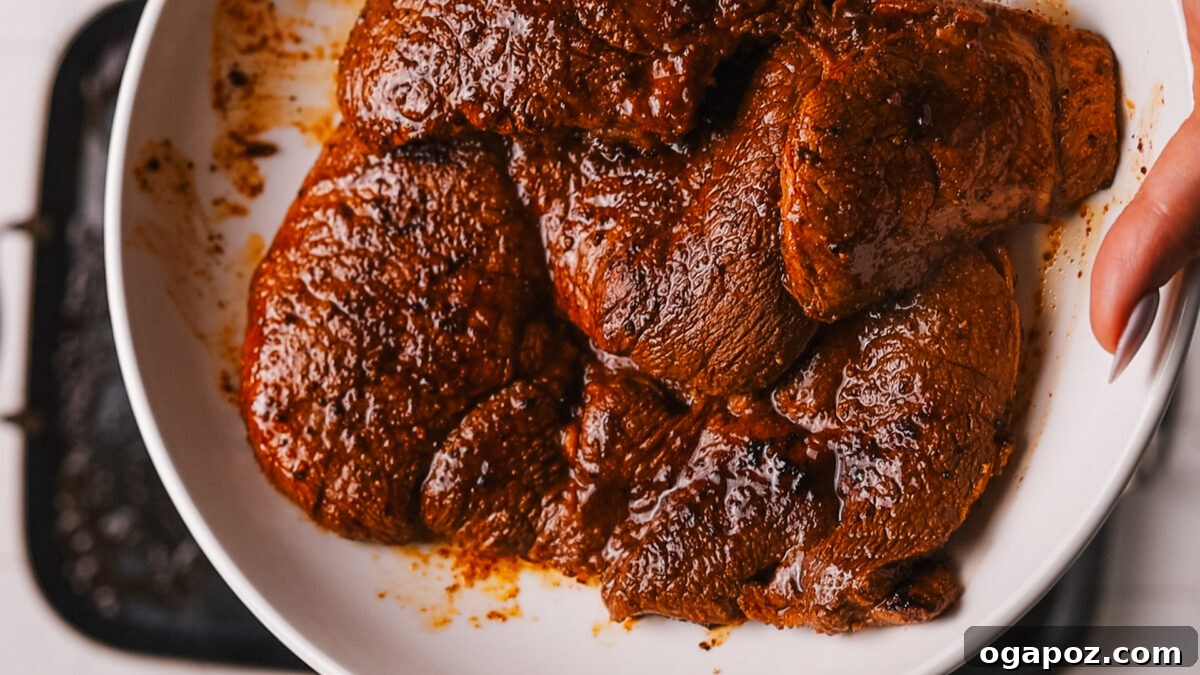
Step 1: Marinate the Steak for Maximum Flavor and Tenderness
Begin by preparing your marinade. In a large bowl or a sturdy zip-top bag, combine the olive oil, tangy lime juice, umami-rich soy sauce, savory Worcestershire sauce, kosher salt, black pepper, aromatic garlic powder, sweet onion powder, smoky smoked paprika, chili powder, and earthy ground cumin. Whisk everything together until thoroughly combined. Add your chosen steak, ensuring it is fully coated in the marinade. Gently massage the marinade into the meat. For the best results and to achieve truly tender beef, allow the steak to marinate for at least 30 minutes at room temperature, or for an even deeper flavor penetration, refrigerate it for up to 8 hours. Before cooking, remember to let the steak come to room temperature for about 20 minutes to ensure even cooking.
Step 2: Achieve the Perfect Sear on Your Steak
Heat a large cast-iron skillet (or a heavy-bottomed pan) over medium-high heat until it’s shimmering hot. A hot pan is crucial for developing a beautiful, flavorful crust on your steak. Carefully place the marinated steak into the hot skillet, ensuring not to overcrowd the pan. Cook the steak for 4-5 minutes per side for a perfect medium-rare doneness. If you prefer your steak more well-done, you can extend the cooking time slightly, but be mindful not to overcook, which can lead to toughness. Once cooked to your liking, transfer the steak to a cutting board. It’s vital to let the steak rest undisturbed for at least 5 minutes. This resting period allows the juices to redistribute throughout the meat, guaranteeing a supremely juicy and tender bite. Do not wash the skillet; you’ll use it for the vegetables, allowing them to absorb the delicious leftover steak flavors.
Step 3: Sauté the Veggies to Crisp-Tender Perfection
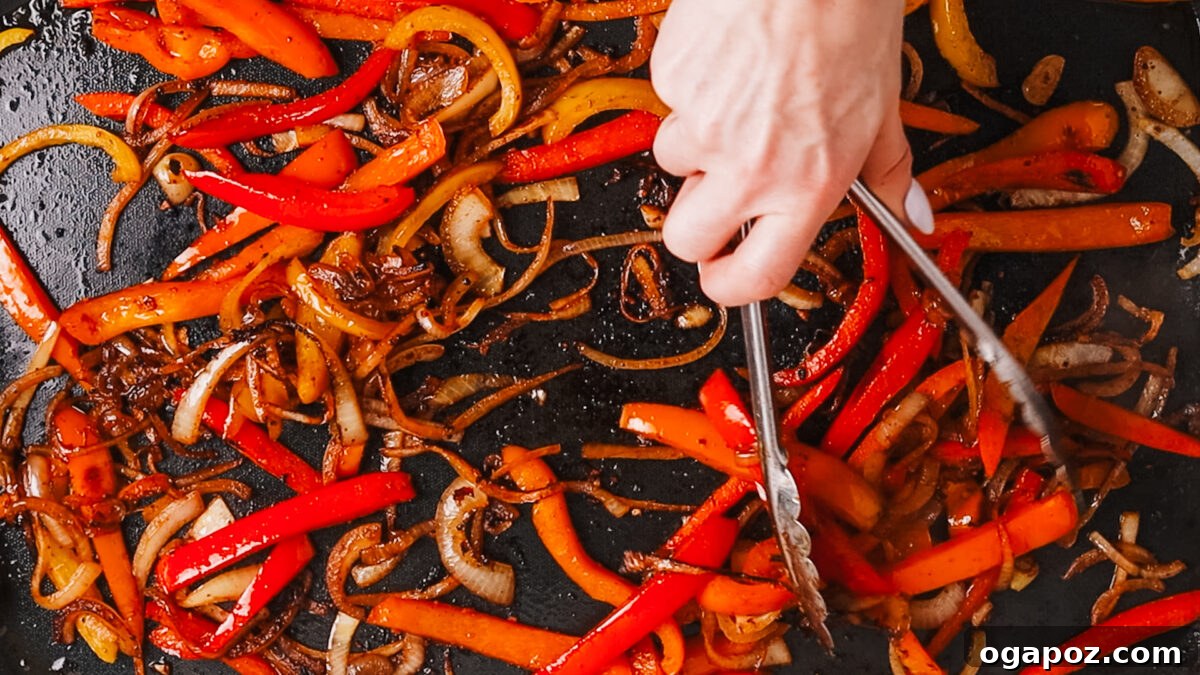
Return the same skillet to medium-high heat. Add a tablespoon of olive oil. Once the oil is shimmering, add your sliced bell peppers, onions, and half a teaspoon of kosher salt. Arrange the vegetables in a single layer if possible. Let them cook undisturbed for several minutes until they develop a slight char on the underside. This charring is key to that authentic fajita flavor. Then, stir the vegetables and continue cooking for approximately 7 minutes, or until they are perfectly softened yet still retain a pleasant crisp-tender bite. Incorporating the minced garlic towards the end of the cooking process will infuse the vegetables with its pungent aroma without risking burning it.
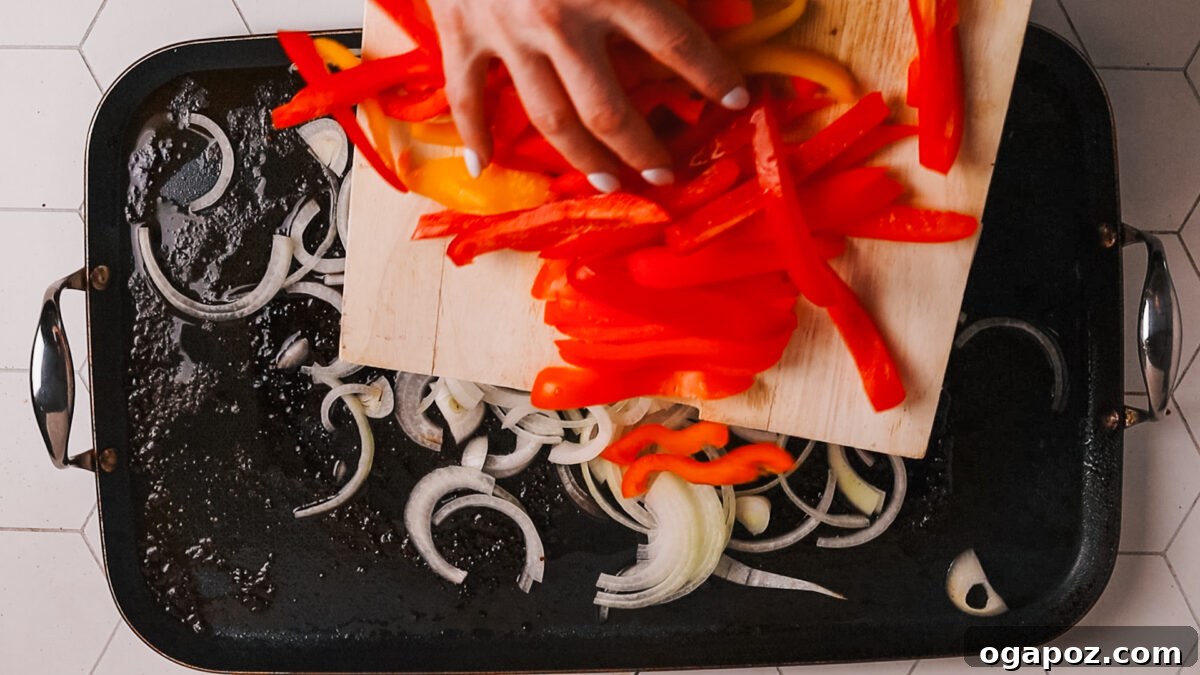
Step 4: Assemble and Serve Your Sizzling Fajitas
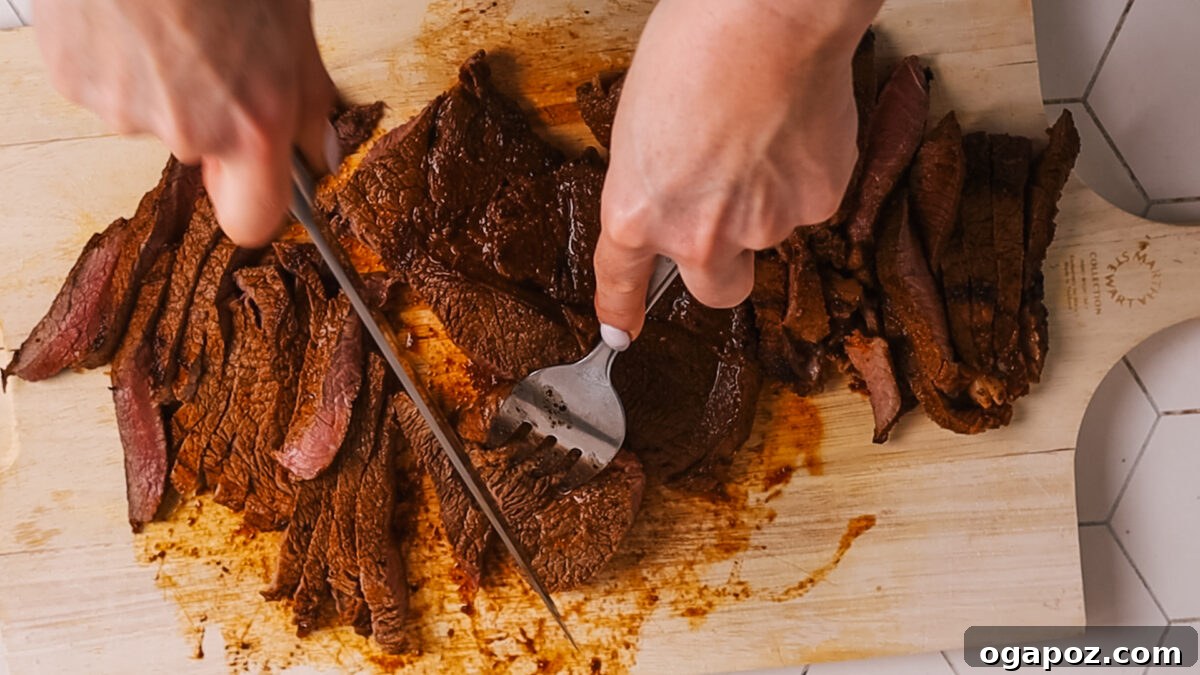
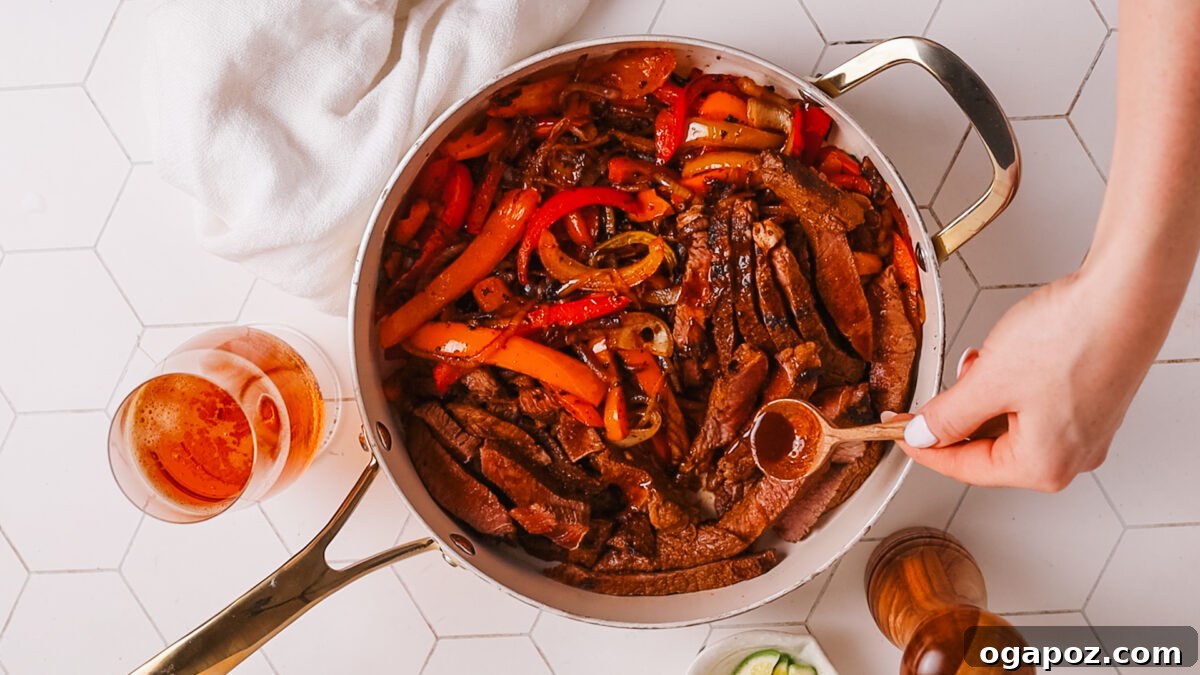
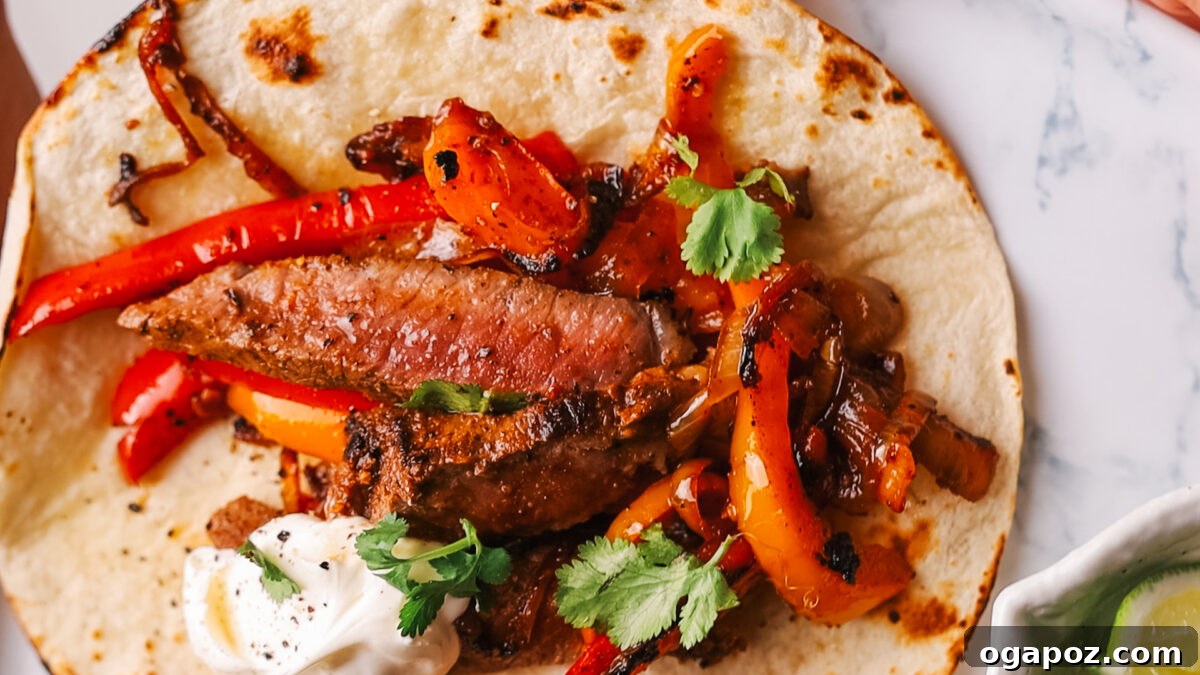
Once your steak has rested, slice it thinly against the grain. This crucial step shortens the muscle fibers, making even tougher cuts wonderfully tender and easy to chew. Slice the beef into strips that are ideal for wrapping in tortillas. Warm your flour tortillas in a dry skillet, microwave, or oven until soft and pliable. Arrange the sliced steak and sautéed vegetables on a platter. Serve immediately with the warm tortillas and your favorite array of optional toppings. Encourage everyone to build their own fajitas, creating a fun and interactive dining experience that highlights the incredible flavors of your homemade **beef fajita recipe**.
Avoid These 5 Common Mistakes for Flawless Beef Fajitas
While making **tender steak fajitas** might seem straightforward, there are a few common pitfalls that can prevent you from achieving that perfect, juicy result. Being aware of these typical trip-ups will help you guarantee success every time you prepare this delicious **beef fajita recipe**:
- Skipping or Shortening the Marination Time: The marinade isn’t just for flavor; it’s absolutely key for tenderizing the beef. The acids in the lime juice and the enzymes from ingredients like Worcestershire sauce work magic to break down tough muscle fibers. Rushing this process means your steak will likely be tougher and lack the deep, complex flavors that define great fajitas. Always aim for at least 30 minutes, but remember, longer marination (up to 8 hours in the fridge) yields even more tender and flavorful results.
- Overcooking the Steak: This is perhaps the most common mistake. Fajita steak should be succulent and tender, not dry and chewy. Cooking beef at too high a temperature for too long will inevitably lead to tough meat. Stick to cooking for medium-rare or medium doneness. Using a meat thermometer can help ensure accuracy. Pull the steak off the heat a few degrees before your desired final temperature, as it will continue to cook slightly while resting.
- Slicing the Steak Incorrectly (With the Grain): This is a fundamental error that can turn even perfectly cooked steak into a chew challenge. Cutting along the grain of the meat leaves long, intact muscle fibers, making each bite stringy and tough. Always, always slice your steak thinly against the grain. This severs those muscle fibers, creating short, tender pieces that melt in your mouth, especially important for cuts like flank or skirt steak.
- Overcrowding the Pan: When cooking the steak or vegetables, it’s tempting to cram everything into the pan at once, especially if you’re eager to finish. However, overcrowding significantly drops the pan’s temperature, leading to steaming instead of searing. This prevents the steak from developing a flavorful crust and the vegetables from getting that appealing char. If necessary, cook your steak and veggies in batches to ensure there’s enough space for proper searing and caramelization, achieving that irresistible “sizzle.”
- Cooking Steak Straight from the Fridge: Placing cold steak directly into a hot pan can lead to uneven cooking. The outside might char quickly while the inside remains undercooked, or it might cook through but end up tough because the muscle fibers seize up from the sudden temperature change. For a more even doneness and better texture, let your steak sit at room temperature for about 20 minutes before cooking. This helps the meat relax and cook more consistently.
Perfect Pairings: How to Serve Your Beef Fajitas
Once your sizzling **steak fajitas** are ready, the possibilities for serving are endless! Elevate your meal with these delightful accompaniments that complement the rich flavors and textures of the dish:
- Authentic Mexican Rice: A fluffy, flavorful side that perfectly absorbs all the delicious juices. Pair it with creamy refried beans or wholesome black beans for a complete and satisfying meal. Cilantro lime rice also makes for a refreshing and zesty addition.
- Zesty Corn Off the Cob: A fantastic and crowd-pleasing side, often prepared as a vibrant Mexican street corn salad. Its sweet and tangy profile provides a wonderful contrast to the savory fajitas.
- Creamy Drizzles: A drizzle of refreshing avocado crema or our tangy cilantro lime crema makes for the perfect finishing touch. These cool, zesty sauces add an extra layer of flavor and moisture that truly completes the fajita experience.
- Fresh Salad: A simple green salad with a light vinaigrette can provide a crisp, refreshing counterpoint to the richness of the fajitas.
Make Ahead and Storage Solutions for Your Fajitas
Planning ahead can make dinner even easier! This **beef fajita recipe** is excellent for meal prep and offers convenient storage options, ensuring you can enjoy these delicious flavors even on busy days.
Prepping Ahead:
The steak can be marinated in the fridge for up to **8 hours** before cooking. This extended marination time not only deepens the flavor but also further tenderizes the meat, making it even more succulent when cooked. You can also slice your bell peppers and onions in advance and store them in an airtight container in the fridge, ready for quick sautéing.
Storing Leftovers:
- Store any leftover cooked steak and vegetables in a separate airtight container in the fridge. Properly stored, they will remain delicious for **up to 3 days**. This makes them perfect for quick lunches or another easy dinner later in the week.
Reheating Leftovers:
Reheating fajita components properly ensures they retain their texture and flavor. Here are a few methods:
- Stovetop: For the best results, warm the steak and veggies in a skillet over medium heat. A splash of water or broth can help rehydrate the dish and prevent drying. Stir occasionally until heated through.
- Microwave: While convenient, the microwave can sometimes dry out the steak. Heat in short, 30-second intervals, stirring in between, until warmed through. This method is best for small portions.
- Oven: If reheating a larger batch, wrap the steak and veggies loosely in foil and bake at 300°F (150°C) until thoroughly warmed. This gentle heat helps maintain moisture.
Unlock the Best Flavor: Expert Tips for Perfect Beef Fajitas
As a food scientist, I’m thrilled to share some insider tips and culinary secrets to ensure your **beef fajita recipe** reaches its full potential. These small adjustments can make a big difference in achieving truly exceptional flavor and texture:
- Embrace Longer Marination for Maximum Flavor and Tenderness: The magic of marination is rooted in chemistry. The acid from lime juice, combined with the umami powerhouses like soy sauce and Worcestershire, works to gently break down the tough muscle fibers in the steak. This process not only infuses the meat with a kaleidoscope of flavors but also significantly enhances its tenderness. Don’t rush it—the longer you marinate (within safe limits), the more profound the impact.
- The Essential Steak Rest: Patience is a virtue, especially after cooking steak. Cutting into the meat too soon allows all the precious juices, which have gathered at the center during cooking, to escape onto your cutting board. Resting allows these juices to redistribute evenly throughout the entire piece of meat. The result? Every single bite is incredibly juicy, tender, and flavorful. Always rest your steak for at least 5-10 minutes before slicing.
- High Heat for Vegetables: The Secret to Crisp-Tender Char: When cooking your bell peppers and onions, the goal is not merely to soften them, but to achieve a beautiful char while maintaining their crisp-tender texture. This requires high heat and avoiding overcrowding the pan. High heat quickly caramelizes the natural sugars in the vegetables, creating those desirable smoky, sweet notes without turning them into a mushy consistency. Resist the urge to constantly stir; allow them to sit undisturbed for a few minutes to develop that perfect browned surface.
- Master the Art of Slicing Against the Grain: This technique is paramount, especially for cuts like flank and skirt steak which have long, prominent muscle fibers. Slicing against the grain means cutting perpendicular to these fibers. This action effectively shortens them, making the meat far easier to chew and giving it a more tender mouthfeel. If you slice with the grain, you’ll end up with tough, stringy pieces, no matter how perfectly cooked the steak is. Always identify the grain and slice accordingly.
Frequently Asked Questions About Beef Fajitas
Got questions about making the best **steak fajitas**? Here are answers to some common queries to help you perfect your culinary skills:
How do I cook fajitas so they aren’t tough?
To ensure your fajitas are wonderfully tender and not tough, several key steps are crucial. First, marinate the meat for at least 30 minutes, allowing the acidic and enzymatic components to break down muscle fibers. Second, cook the steak quickly over high heat to achieve a good sear without overcooking the interior – aim for medium-rare to medium. Third, and critically, let the steak rest for 5-10 minutes after cooking to allow juices to redistribute. Finally, always slice the steak thinly against the grain to shorten the muscle fibers, making each bite tender and easy to chew.
What cuts of beef do Mexican restaurants use for fajitas?
Traditional Mexican restaurants commonly favor specific cuts of beef for fajitas due to their balance of flavor, texture, and ability to absorb marinades well. The most popular choices include skirt steak (known for its rich beefy flavor and tenderness when sliced correctly), flank steak (a leaner cut that becomes tender when marinated and cooked properly), and flat iron steak (a tender and flavorful option from the shoulder). Sirloin tip is also a good versatile choice that holds up well to high-heat cooking.
What is the most tender steak for steak fajitas?
When it comes to tenderness and flavor for fajitas, many chefs and home cooks agree that skirt steak reigns supreme. While it has longer muscle fibers, when marinated extensively and, most importantly, sliced thinly against the grain, it becomes incredibly tender and delivers a deeply satisfying beefy flavor that is synonymous with authentic fajitas. Flank steak and flat iron steak are close contenders, offering excellent tenderness when prepared with care.
Can I grill beef fajitas instead of using a skillet?
Absolutely! Grilling beef fajitas is a fantastic alternative that imparts an even deeper smoky flavor and beautiful char marks. After marinating, simply grill the whole steak over medium-high heat for 4-6 minutes per side, depending on thickness and desired doneness. Cook the sliced vegetables in a grill basket or directly on the grates, turning frequently until tender and slightly charred. Grilling is perfect for summer gatherings and adds an extra layer of deliciousness to your fajitas.
What is the best way to warm tortillas for fajitas?
Properly warmed tortillas are essential for soft, pliable wraps that don’t crack. There are several effective methods: For stovetop warming, heat a dry skillet over medium-high heat and warm each tortilla for 15-20 seconds per side until soft and slightly puffed. For microwave warming, stack 5-6 tortillas, wrap them in a damp paper towel, and microwave for 30-60 seconds until warm. In the oven, wrap a stack of tortillas in foil and bake at 350°F (175°C) for 10-15 minutes. Regardless of the method, keep the warmed tortillas covered in a towel or a tortilla warmer to maintain their heat and softness.
More Mexican-Inspired Recipes You’ll Adore
If you’ve enjoyed mastering this **beef fajita recipe**, we’re confident you’ll fall in love with these other vibrant Mexican dishes from our kitchen:
- Homemade Chicken Taco Seasoning – A flavorful blend that makes everything taste amazing and authentic.
- Crispy Baked Chicken Tacos – A healthier yet equally delicious take on a taco night favorite.
- The ULTIMATE Fried Tacos (Quick & Crispy Recipe) – Experience tacos like never before with this incredibly crispy and satisfying recipe.
- 5-Minute Taco Salsa (Easy Recipe) – Fresh, zesty, and ready in minutes, perfect for any Mexican meal.
- Juicy Tacos Al Pastor – A classic street food favorite, featuring incredibly juicy, marinated pork.
- Authentic Chicken Street Tacos – Simple, flavorful, and perfect for a casual, delicious meal.
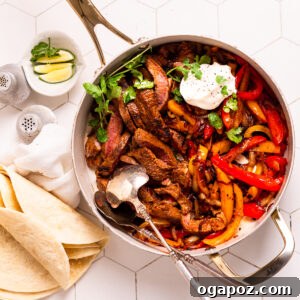
Beef Fajita Recipe (My BEST Juicy Steak Fajitas!)
Ingredients
For the steak & marinade:
- 3 tbsp olive oil
- 2 tbsp lime juice (about 1 lime)
- 1 tbsp soy sauce
- 1 tbsp Worcestershire sauce
- 1 tsp kosher salt
- ½ tsp black pepper
- 1 tsp garlic powder
- 1 tsp onion powder
- 1 tsp smoked paprika
- 1 tsp chili powder
- 1 tsp cumin
- 1 ½ lbs steak (flank steak, flat iron, skirt steak, sirloin tip, or any boneless steak)
For the fajitas:
- 1 red bell pepper (sliced)
- 1 yellow bell pepper (sliced)
- 1 green bell pepper (sliced)
- 1 large onion (sliced)
- 1 tbsp olive oil
- 2 tsp minced garlic
- ½ tsp kosher salt
- 8 small flour tortillas
- Optional toppings: sour cream (avocado, salsa, hot sauce, shredded cheese, chopped cilantro)
Instructions
-
Marinate the steak: In a large bowl or zip-top bag, combine olive oil, lime juice, soy sauce, Worcestershire sauce, salt, pepper, garlic powder, smoked paprika, chili powder, cumin, and onion powder. Add the steak and coat well. Marinate for at least 30 minutes (or up to 8 hours for deeper flavor). Let the steak come to room temperature for about 20 minutes before cooking.
-
Cook the steak: Heat a large cast-iron skillet over medium-high heat until it’s shimmering hot. Cook the steak for 4-5 minutes per side for medium-rare doneness (adjust time for preferred doneness). Transfer the cooked steak to a cutting board and let it rest for 5 minutes before slicing. Do not wash the skillet, as the remaining fond will flavor the vegetables.
-
Cook the veggies: In the same skillet over medium-high heat, add 1 tbsp olive oil. Once hot, add the sliced bell peppers, onions, and ½ tsp kosher salt. Cook for several minutes undisturbed to allow a slight char on the underside, then stir and continue cooking until softened and crisp-tender, about 7 minutes total.
-
Assemble fajitas: Slice the rested steak thinly against the grain into strips. Serve the steak and vegetables with warm flour tortillas and your favorite selection of optional toppings. Enjoy your delicious homemade beef fajitas!
Notes
Want extra spice? Add 1 sliced jalapeno with the bell peppers, or stir ½ tsp cayenne pepper into the marinade.
Short on time? Even a 10-minute marinade will enhance the flavor and tenderness of your steak.
These **beef fajitas** are truly exceptional—featuring tender steak, perfectly charred veggies, and a harmonious blend of seasonings. We’d love to hear from you in the comments if you try them! 😊
Nutrition
Nutrition information is automatically calculated and should be used as an approximation.
Tried this recipe? Leave a comment!