
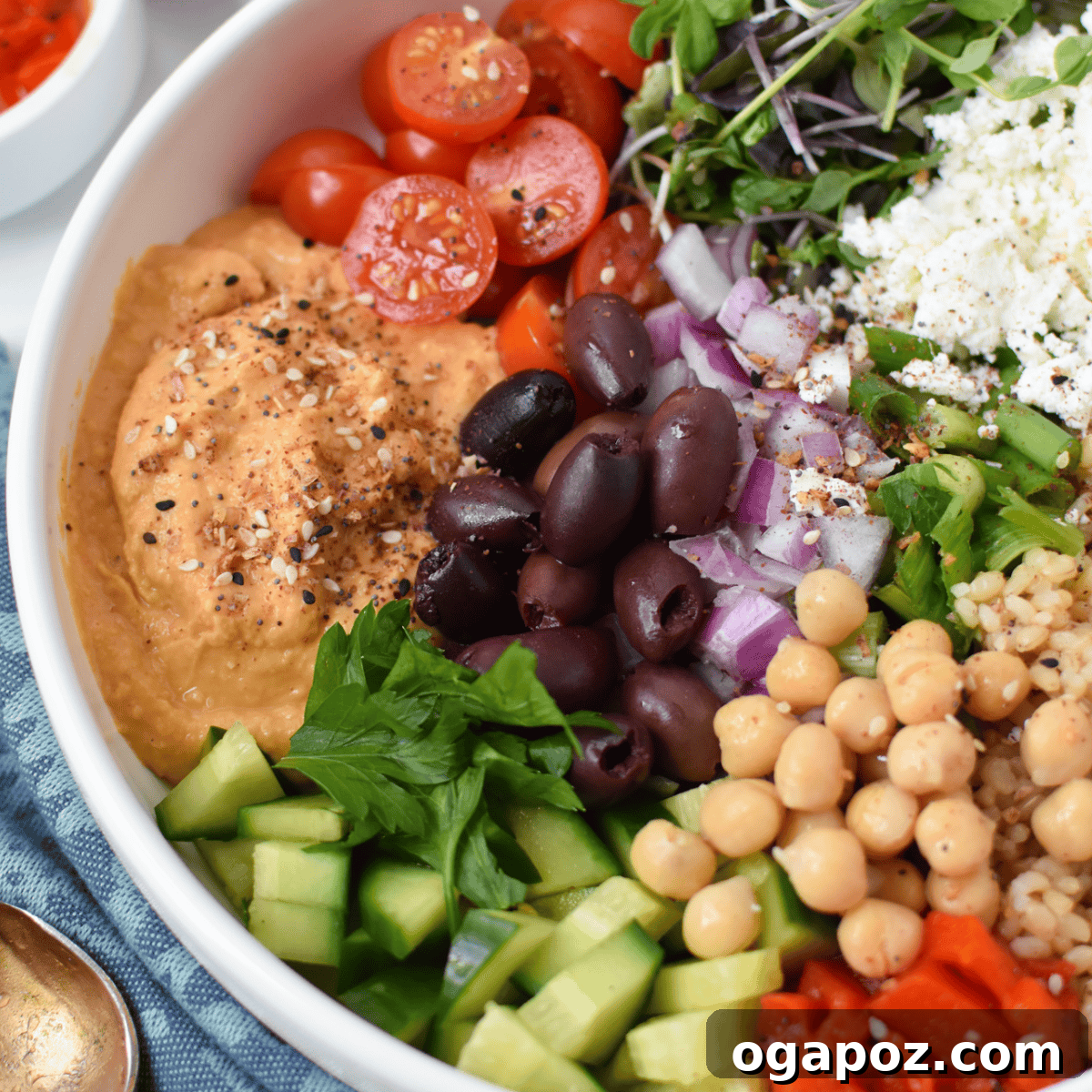
This Easy Mediterranean Hummus Bowl is more than just a meal; it’s a vibrant journey through flavors and nutrients! Bursting with wholesome ingredients like hearty brown rice, creamy hummus, tangy feta cheese, protein-rich chickpeas, sweet roasted red peppers, crisp tomatoes and cucumber, fresh greens, and aromatic herbs, these bowls are a testament to healthy eating. Highly customizable and incredibly satisfying, they are perfect for delightful lunches or wholesome dinners for your entire family, offering a simple way to “eat the rainbow” every day.
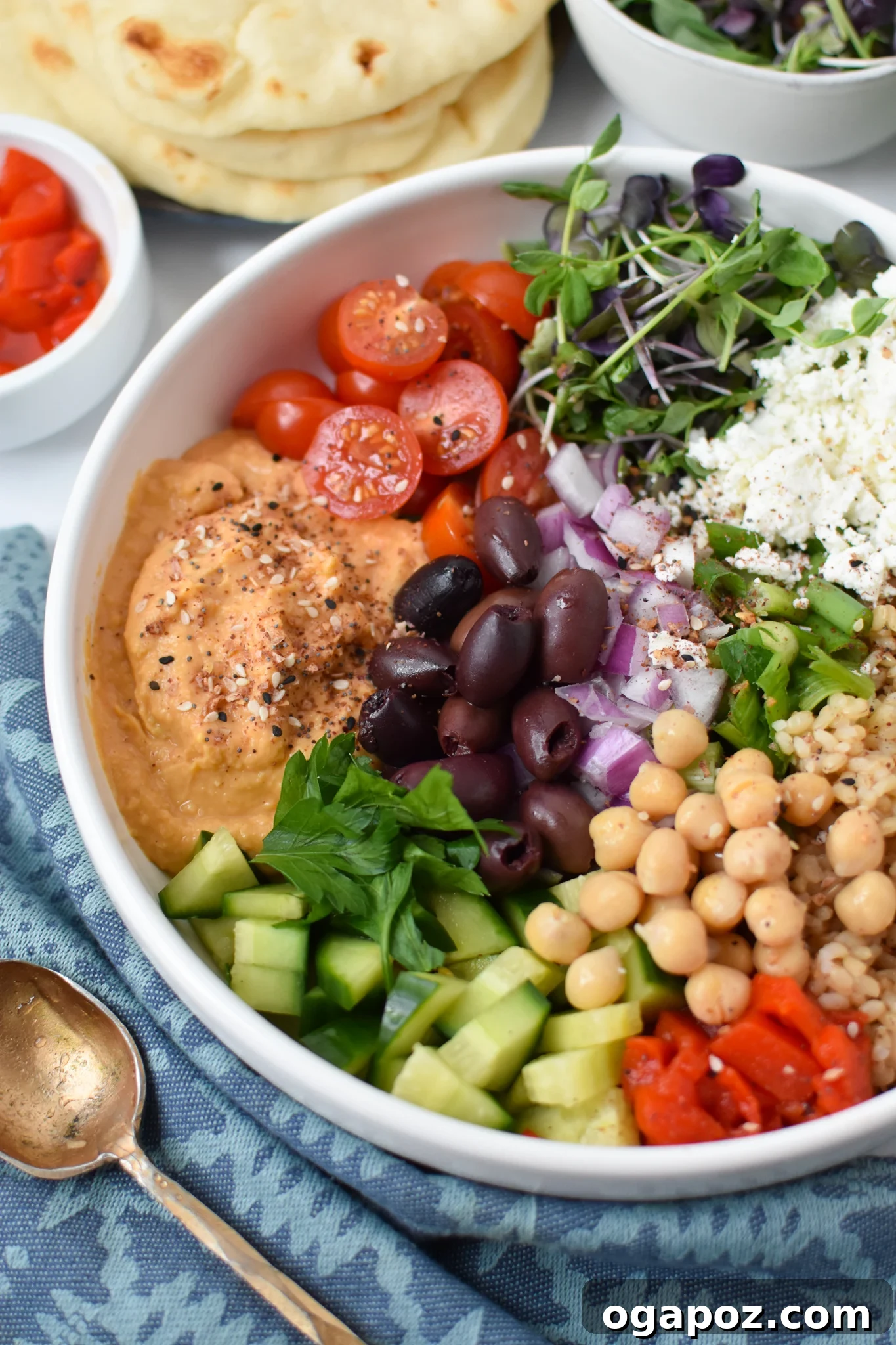
Every year, as resolutions are made and new health goals are set, the Mediterranean diet consistently shines as one of the healthiest and most sustainable eating patterns globally. For many, including myself, it’s not merely a “diet” in the restrictive sense, but a cherished lifestyle – a harmonious approach to eating and living that prioritizes fresh, whole foods. Today’s incredible Easy Mediterranean Hummus Bowl fits seamlessly into this philosophy, embodying everything that makes Mediterranean cuisine so beloved.
If you’re new to the wonders of the Mediterranean diet, prepare to be inspired. This eating style celebrates a rich tapestry of plant-based foods: think an abundance of whole grains, legumes, fresh vegetables, succulent fruits, nutrient-dense seeds, and crunchy nuts. The primary source of healthy fats, a cornerstone of this diet, comes from extra virgin olive oil, renowned for its heart-healthy properties. The focus is on balance, enjoyment, and nourishing your body with real food.
What makes these Mediterranean Hummus Bowls particularly fantastic is their incredible versatility. Whether you’re whipping up a quick lunch or preparing a fulfilling dinner, you can easily adapt them to whatever fresh ingredients you have on hand. This makes them not only economical but also an ideal candidate for efficient weekly meal preparation. Imagine having a week’s worth of healthy, vibrant meals ready to go, saving you time and stress during busy days.
Our kitchen often becomes a bowl assembly line, creating delicious variations like our Mediterranean Salmon Bowl, the nourishing Mediterranean Buddha Bowl, or even hearty options like the Slow Cooker Shredded Beef Hummus Bowls for those who enjoy a bit of meat. Each one offers a unique twist on the Mediterranean theme, proving just how adaptable this culinary approach can be.
As we navigate through the year, I truly hope you’ll find joy and health in incorporating more Mediterranean-inspired recipes into your routine. This Easy Mediterranean Hummus Bowl is just the beginning. Explore other favorites like the aforementioned Slow Cooker Shredded Beef Hummus Bowl, the refreshing Mediterranean Buddha Bowl, the flavorful Mediterranean Salmon Bowl, or the ever-popular Greek Quinoa Bowl. Each offers a step towards a healthier, more flavorful lifestyle.
Why Embrace the Mediterranean Diet? A Lifestyle, Not Just a Diet
Before diving into the specifics of this delightful hummus bowl, let’s take a moment to appreciate the broader benefits of the Mediterranean diet. It’s consistently ranked among the healthiest eating patterns globally, and for good reason. This diet emphasizes whole, unprocessed foods and limits refined sugars, unhealthy fats, and processed ingredients. Its core principles align perfectly with long-term health and well-being:
- Heart Health: Rich in monounsaturated fats from olive oil, nuts, and seeds, and omega-3s from fish, the Mediterranean diet is renowned for its positive impact on cardiovascular health, helping to lower cholesterol and blood pressure.
- Weight Management: By focusing on fiber-rich plant foods and lean proteins, it promotes satiety and helps in maintaining a healthy weight without strict calorie counting.
- Blood Sugar Control: The emphasis on whole grains and legumes, which have a lower glycemic index, helps regulate blood sugar levels, making it beneficial for preventing and managing type 2 diabetes.
- Brain Health: Antioxidants and healthy fats found in the diet support cognitive function and may reduce the risk of neurodegenerative diseases.
- Longevity and Overall Well-being: Studies consistently link adherence to a Mediterranean eating pattern with increased longevity and a reduced risk of chronic diseases.
Creating dishes like our Mediterranean Hummus Bowl is a delicious and accessible way to weave these powerful principles into your daily life. It proves that healthy eating can be incredibly flavorful, satisfying, and far from restrictive.
Essential Ingredients for Your Easy Mediterranean Hummus Bowl
Crafting the perfect Mediterranean Hummus Bowl is all about combining fresh, high-quality ingredients that offer a spectrum of flavors and textures. Below are the key components, along with some exciting variations to inspire your culinary creativity. For precise measurements and step-by-step instructions, please refer to the detailed recipe card at the end of this article.
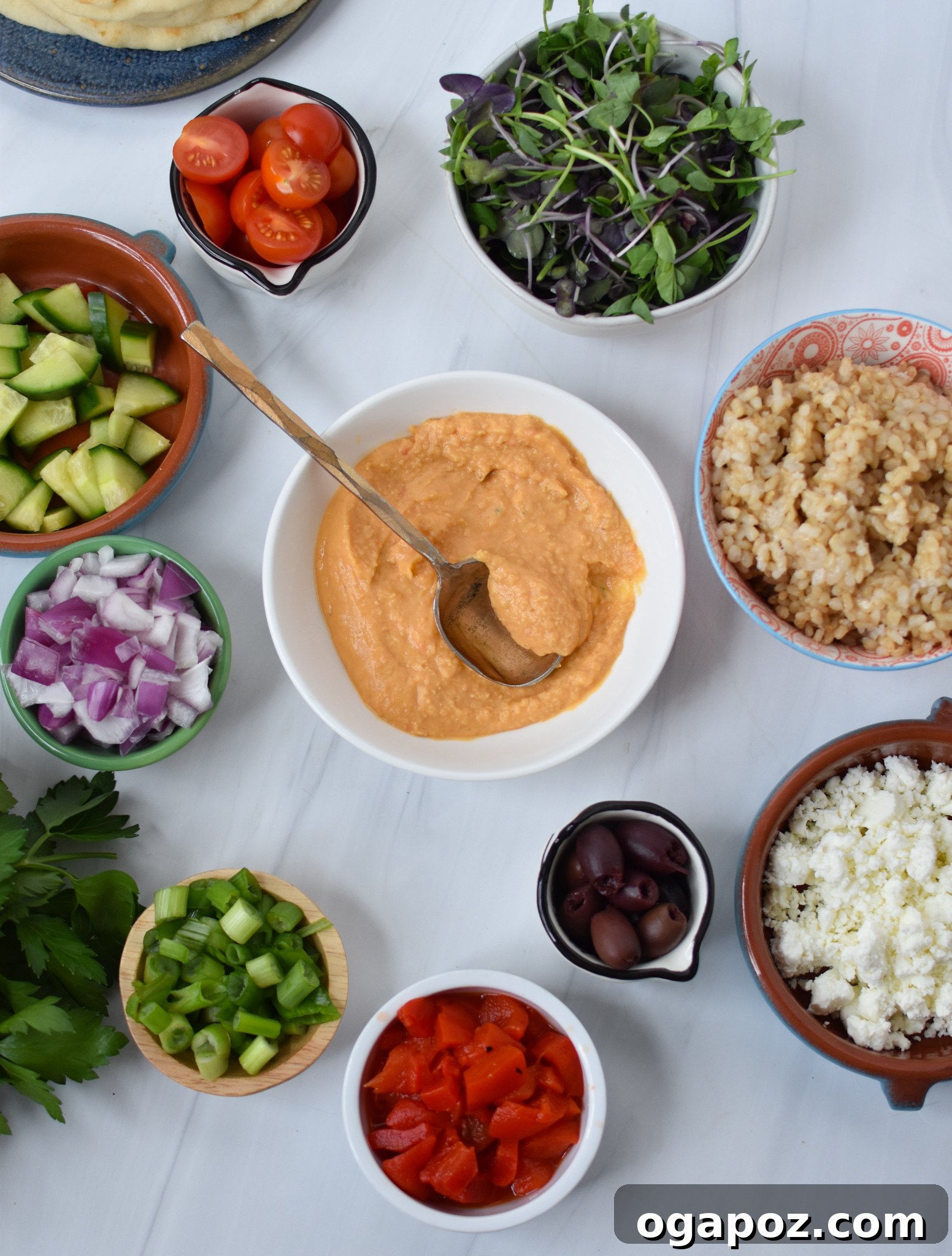
- Hummus: The Creamy Foundation: This humble dip is undoubtedly the star of our bowl! Its creamy texture and rich, nutty flavor, usually derived from chickpeas, tahini, lemon juice, and garlic, provide the perfect base. While store-bought hummus is convenient, making your own elevates the experience. Try our recipes for Easy Lebanese Hummus, refreshing Lemon Hummus, or vibrant Roasted Red Pepper Hummus. For an alternative creamy dressing, a Yogurt Tahini Dressing also works beautifully.
- Grains: The Hearty Base: We opt for fiber-rich brown rice as the foundation of this bowl, providing sustained energy and a satisfying texture. However, the Mediterranean diet embraces a variety of whole grains. Feel free to swap it out for other nutritious options like nutty bulgur, chewy farro, protein-packed quinoa, or even barley for a different twist.
- Legumes: Powerhouse Protein: Chickpeas (garbanzo beans) are a Mediterranean staple and a fantastic source of plant-based protein and fiber, making them a crucial component of this bowl. If you’re looking to diversify, black beans or cannellini beans are excellent alternatives. Lentils also make a superb addition for an extra protein boost.
- Spices: Aromatic Touches: To truly capture the essence of Mediterranean cuisine, a sprinkle of traditional spices makes all the difference. Za’atar, a blend of dried herbs like oregano, thyme, and marjoram with toasted sesame seeds and sumac, offers a unique tangy and savory flavor. Sumac itself provides a lovely bright, lemony zest. While these are highly recommended for an authentic taste, you can certainly omit them or experiment with other favorite spices like dried oregano or a pinch of red pepper flakes for a subtle kick.
- Cheese: Salty & Tangy Accent: Crumbled feta cheese introduces a delightful salty and tangy note that perfectly complements the other ingredients. You can use pre-crumbled feta or a block cut into small chunks for a more substantial bite. For those seeking different flavors, creamy goat cheese or even a hint of robust blue cheese can offer intriguing variations.
- Olives: Briny Delights: A true Mediterranean bowl wouldn’t be complete without olives! Kalamata olives, with their distinct fruity and briny taste, are a classic choice. Green olives also work wonderfully, or simply choose any of your favorite varieties to add that essential salty depth.
- Fresh Vegetables: The “Rainbow” Factor: This is where the bowl truly comes alive with color and nutrients. Our go-to selection includes crisp cucumbers, juicy grape tomatoes (halved for bite-sized bursts of flavor), and tender roasted red peppers. These vegetables not only add freshness and crunch but also a wealth of vitamins and antioxidants.
- Fresh Herbs & Aromatics: Brightness & Fragrance: Fresh parsley and green onions are key to adding a burst of fresh, herbaceous flavor and a pleasant aromatic kick. Don’t underestimate the power of fresh herbs; they can truly elevate a dish from good to exceptional.
- Red Onion: A Punch of Flavor: Finely chopped red onion adds a sharp, piquant flavor and a satisfying crunch that beautifully cuts through the richness of the hummus and feta.
How to Assemble Your Easy Mediterranean Hummus Bowl
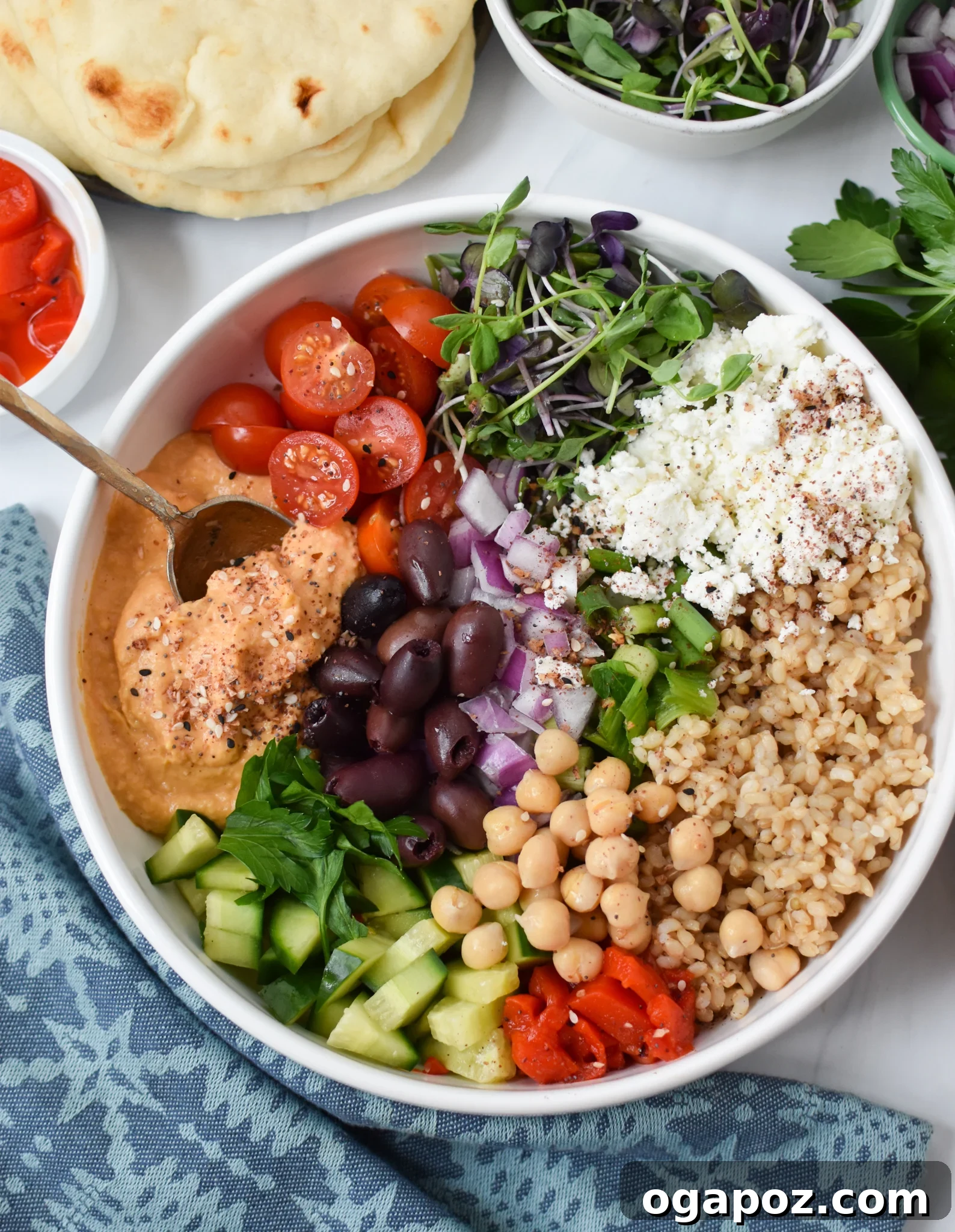
Creating a beautiful and flavorful Mediterranean Hummus Bowl is wonderfully simple and mostly about artful layering. The process is quick, making it ideal for busy weeknights or a fast, healthy lunch.
- Start with the Base: Begin by dividing your cooked brown rice (or chosen grain) evenly among four serving bowls. This forms the wholesome foundation of your meal.
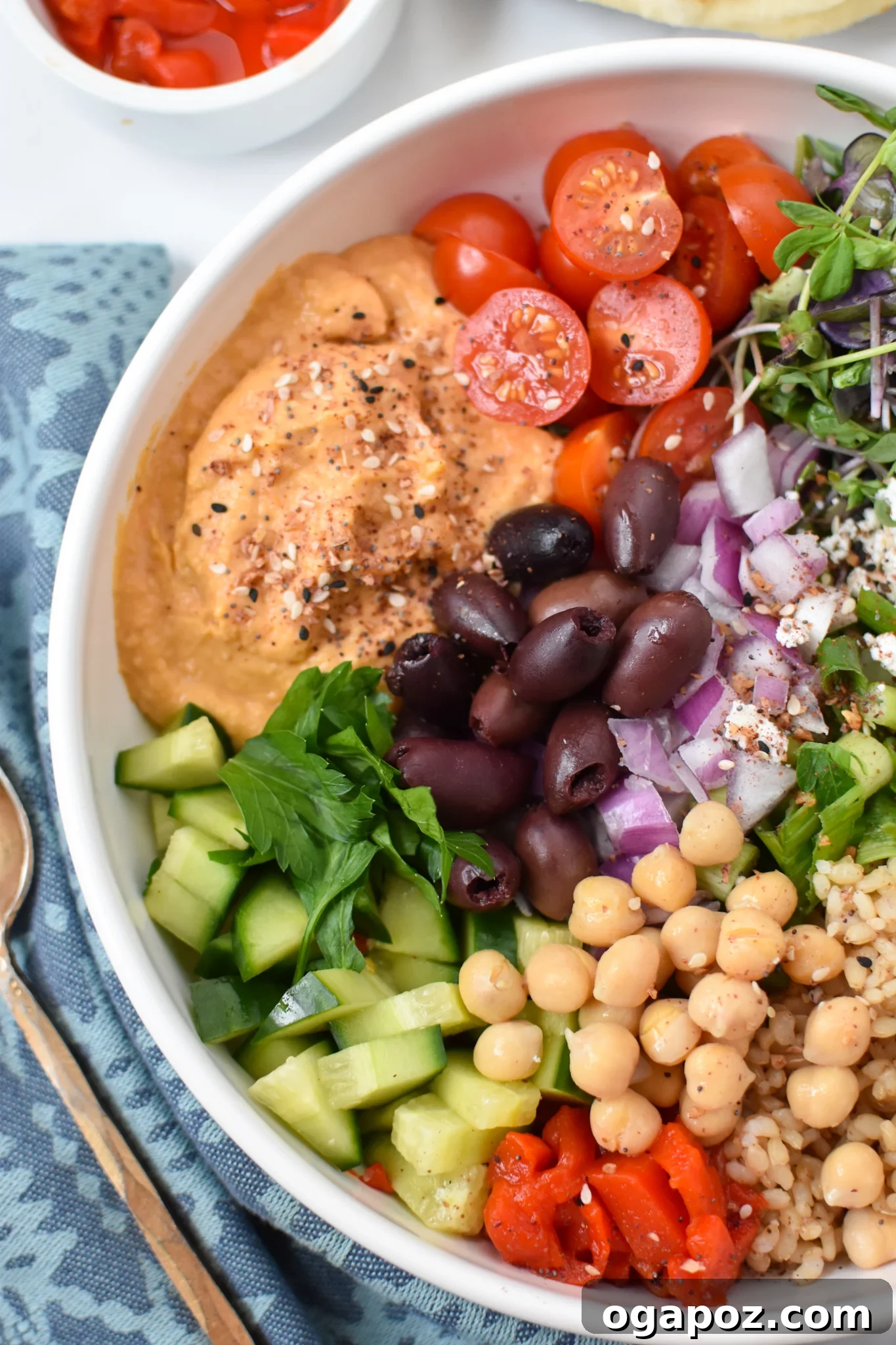
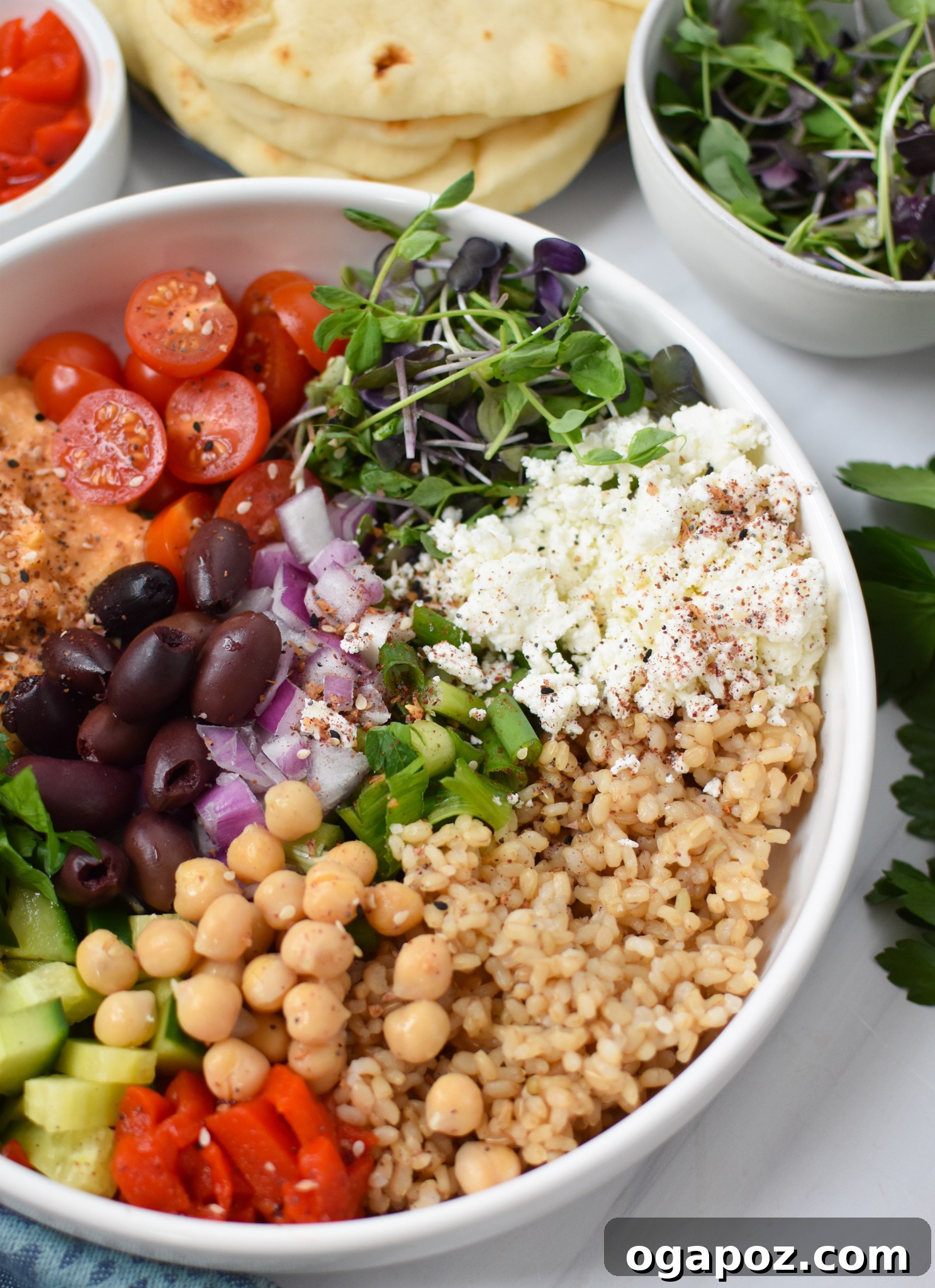
- Layer the Goodness: Next, thoughtfully arrange the remaining ingredients over the rice. Distribute the chickpeas, a generous dollop of roasted red pepper hummus, crumbled feta cheese, succulent roasted red peppers, briny olives, finely chopped red onion, crisp cucumbers, juicy cherry tomatoes, fresh greens, vibrant green onions, and fragrant fresh parsley. Aim for a visually appealing arrangement, creating distinct sections of color and texture.
- Finishing Touch: Complete your masterpiece by sprinkling a pinch of Za’atar or sumac over the top of each bowl. These spices add an authentic Mediterranean aroma and a final flourish of flavor.
- Serve and Enjoy: Your Easy Mediterranean Hummus Bowl is now ready to be savored! Take a moment to appreciate the vibrant colors and fresh aromas before diving in.
The beauty of this assembly method is that each ingredient maintains its distinct flavor and texture until mixed, offering a delightful combination in every bite.
Unleash Your Creativity: Ways to Modify Your Mediterranean Hummus Bowls
One of the greatest joys of making these Mediterranean Hummus Bowls is their endless adaptability. Consider this recipe a blueprint, and feel free to experiment with ingredients based on your personal preferences, what’s seasonal, or what you have available in your pantry. Here are even more ideas to inspire your culinary adventures:
- Bean Bonanza: Beyond chickpeas, explore the vast world of legumes! Black beans bring an earthy depth, while cannellini beans offer a softer, creamy texture. You could also try kidney beans for a more robust flavor profile.
- Green Power Boost: Elevate your greens beyond standard lettuce. Incorporate nutrient-dense microgreens for a delicate crunch, peppery arugula, robust spinach, slightly bitter Swiss chard, or even crunchy romaine lettuce for extra volume and texture.
- Crunchy & Nutty Additions: Boost both the nutrition and textural appeal of your bowl with nuts and seeds. Toasted pine nuts add a buttery richness, sliced almonds offer a subtle crunch, while walnuts, cashews, or sesame seeds provide unique flavors and healthy fats. Sunflower seeds are another great option.
- Expand Your Veggie Palette: The possibilities are truly boundless when it comes to vegetables. Consider adding thinly sliced radishes for a peppery bite, shredded carrots for sweetness and crunch, vibrant bell peppers (any color!), steamed broccoli florets, roasted cauliflower, or intense sun-dried tomatoes (oil-packed are excellent for flavor). Grilled zucchini or eggplant also make wonderful additions.
- Diverse Dips & Dressings: While hummus is central, you can certainly switch up the main dip. Explore other Mediterranean favorites like smoky Baba Ghanoush, a rich roasted eggplant dip, or creamy White Bean Artichoke Dip. A simple dollop of plain Greek Yogurt can also add a refreshing, tangy creaminess.
- Grain Alternatives: If brown rice isn’t calling your name, experiment with other wholesome grains. Think fluffy couscous, ancient farro, toothsome barley, or even nutrient-dense buckwheat. Each offers a different texture and nutritional profile to keep things interesting.
- Exciting “Other” Additions: Don’t be afraid to think outside the box! Capers provide a salty tang, sliced banana peppers or pepperoncinis add a zesty kick, marinated artichoke hearts offer a delightful chewiness, or a fresh bruschetta topping can infuse a burst of Italian-inspired flavor. A drizzle of high-quality extra virgin olive oil and a squeeze of fresh lemon juice are always welcome.
- Add Protein (Optional): While the chickpeas provide ample plant-based protein, feel free to add grilled chicken, salmon, shrimp, hard-boiled eggs, or even marinated tofu for an extra protein punch.
Meal Prep Made Easy: Storage Tips for Your Hummus Bowls
One of the most appealing aspects of the Mediterranean Hummus Bowl is how perfectly it lends itself to meal preparation. Preparing these bowls ahead of time can save you valuable time during busy weekdays and ensure you always have a healthy, delicious meal within reach. The key to successful meal prepping is to store the components separately until you’re ready to assemble and eat.
Here’s how to best store the various elements of your hummus bowl to maintain freshness and texture:
- Grains (Brown Rice, Quinoa, etc.): Cook your preferred grain in advance and let it cool completely. Store it in an airtight container in the refrigerator for up to 4-5 days.
- Legumes (Chickpeas, Lentils): Drain and rinse canned chickpeas thoroughly. Store them in an airtight container in the fridge for up to 4-5 days. If cooking from dry, ensure they are also cooled before storage.
- Hummus and Dips: Store homemade or store-bought hummus in a sealed container in the refrigerator. A thin layer of olive oil on top can help prevent it from drying out. It usually lasts 5-7 days. Other dips like baba ghanoush or yogurt dressing should also be stored in airtight containers.
- Hardy Vegetables (Roasted Red Peppers, Olives, Red Onion, Cucumber): Chop and prepare these vegetables and store them in separate airtight containers in the fridge. Roasted red peppers and olives will keep well for up to a week. Cucumber and red onion are best consumed within 3-4 days to maintain their crispness.
- Soft Vegetables & Greens (Tomatoes, Lettuce, Herbs): These are best stored separately and added just before serving. Halved cherry tomatoes can be stored in an airtight container for 3-4 days. Wash and thoroughly dry your greens (spinach, arugula, mixed greens) and store them with a paper towel in a sealed bag or container to absorb moisture, lasting 3-5 days. Fresh herbs should be stored according to type (e.g., parsley stems in water, covered loosely with plastic).
- Feta Cheese: Store crumbled or block feta in an airtight container in the refrigerator, either in its original brine or a little olive oil if you’ve opened a block. It will keep for several days.
When you’re ready to enjoy, simply grab your prepped components from the fridge, assemble your bowl following our easy instructions, and you’ll have a fresh, healthy meal in minutes!
Explore More Mediterranean Recipes
Beef
Mediterranean Zucchini Boats
Mediterranean
Mediterranean Flatbread
Vegetarian
Mediterranean Hummus Toast with Za’atar
Mediterranean
Mediterranean Eggplant Chickpea Salad
Easy Mediterranean Hummus Bowl: The Full Recipe
Get ready to create this incredibly simple yet flavorful Mediterranean Hummus Bowl. This recipe serves four and is perfect for a quick, healthy meal.
Easy Mediterranean Hummus Bowl
By Julia Jolliff
This Easy Mediterranean Hummus Bowl is a fantastic way to enjoy a wholesome, vibrant meal. Featuring brown rice, creamy hummus, savory feta, hearty chickpeas, and an array of fresh vegetables and herbs, it’s a customizable delight for any lunch or dinner.
Prep Time: 15 minutes
Total Time: 15 minutes
Servings: 4
Ingredients
- 2 cups brown rice, cooked
- 1 – 15 ounce can of chickpeas, drained and rinsed
- 1 – 10 ounce container of Roasted Red Pepper Hummus (or your favorite flavor)
- 2 cups of feta cheese, crumbled
- 1/2 cup roasted red peppers, chopped
- 1 cup of Kalamata olives, pitted
- 1/2 cup of chopped red onion
- 1/2 of a large English cucumber, diced
- 1 cup of cherry tomatoes, halved
- 3 cups of fresh greens of your choice (e.g., spinach, mixed greens, arugula)
- 4-5 green onions, white and green parts chopped
- 1/4 cup fresh parsley, chopped
- Za’atar or sumac to sprinkle over your hummus bowl (optional, but recommended)
Instructions
- To assemble your hummus bowls, begin by evenly dividing the cooked brown rice among four individual serving bowls.
- Thoughtfully arrange the remaining fresh ingredients over the rice in each bowl. Distribute the chickpeas, a generous serving of roasted red pepper hummus, crumbled feta cheese, chopped roasted red peppers, pitted Kalamata olives, chopped red onion, diced cucumbers, halved cherry tomatoes, your chosen fresh greens, chopped green onions, and fresh parsley.
- For an authentic touch, lightly sprinkle Za’atar or sumac over the top of each hummus bowl just before serving.
- Serve immediately and enjoy your vibrant, healthy Mediterranean Hummus Bowl!
Notes
- This recipe is highly adaptable. Feel free to switch out the hummus flavor, experiment with different vegetables, or choose another grain like bulgur, farro, or quinoa.
- For extra protein, consider adding grilled chicken, salmon, or hard-boiled eggs.
- Prepare components ahead of time for easy meal prepping throughout the week. Store ingredients separately in airtight containers in the refrigerator.
Nutrition Information (Approximate per serving)
Nutrition information is an approximation calculated automatically and should be used as a general guide.
- Calories:
- 649 kcal
- Carbohydrates:
- 87g
- Protein:
- 21g
- Fat:
- 25g
- Saturated Fat:
- 11g
- Polyunsaturated Fat:
- 2g
- Monounsaturated Fat:
- 9g
- Cholesterol:
- 67mg
- Sodium:
- 1680mg
- Potassium:
- 723mg
- Fiber:
- 7g
- Sugar:
- 3g
- Vitamin A:
- 3311 IU
- Vitamin C:
- 33 mg
- Calcium:
- 483 mg
- Iron:
- 4 mg
Tried this recipe? Share your creation on social media! Mention @acedarspoon or tag #acedarspoon!
Don’t forget to subscribe to our newsletter or follow us on Facebook, Instagram, or Pinterest for the latest recipes and tips.