

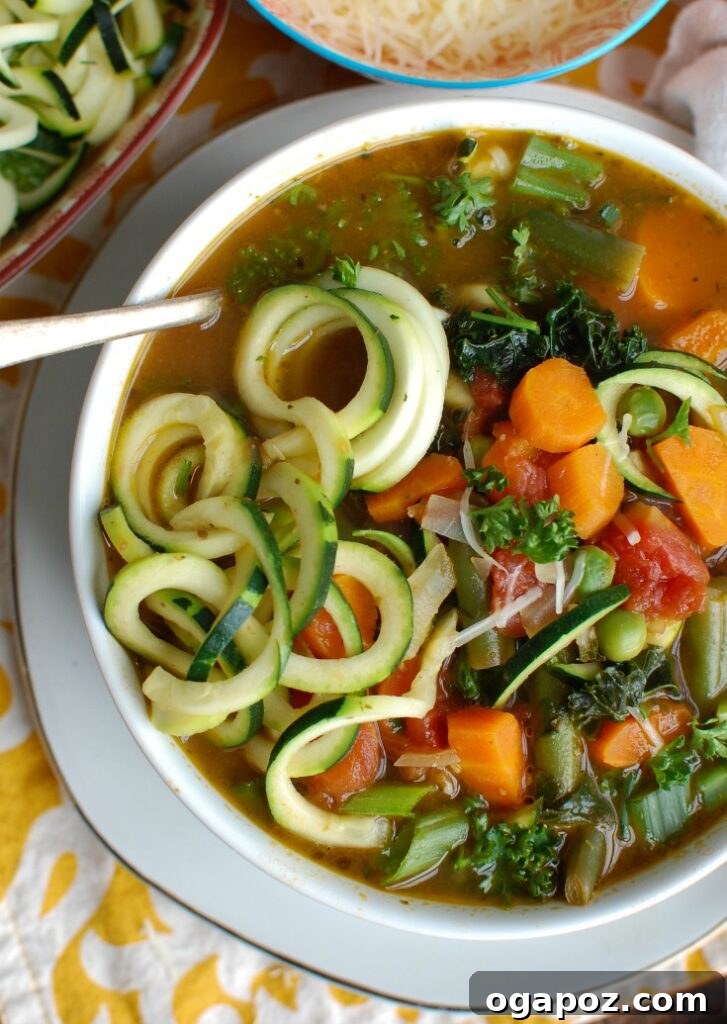
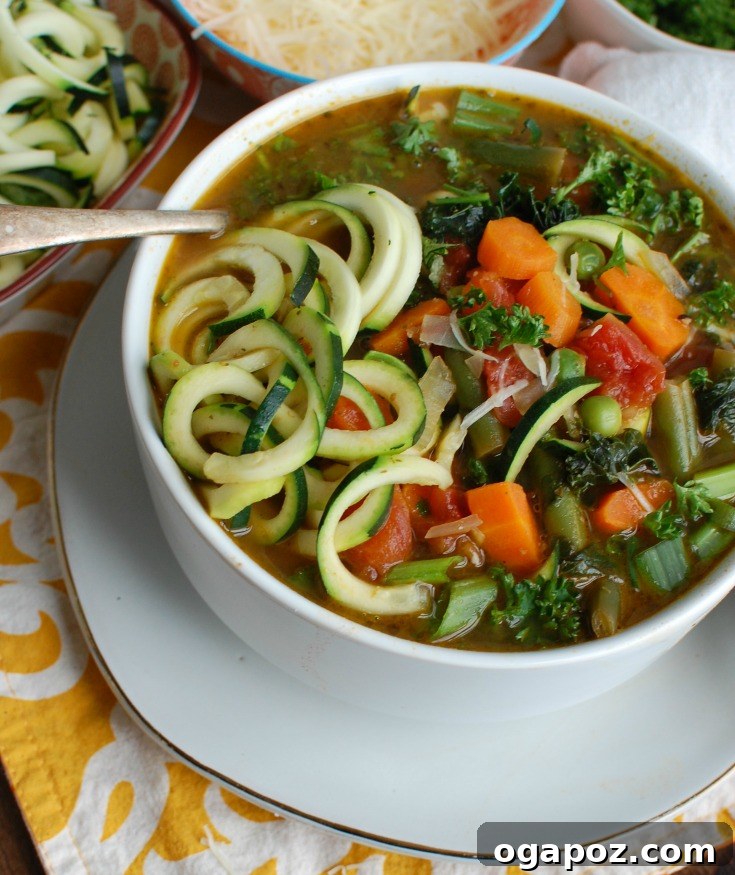
Spring Vegetable Minestrone is a truly delightful and wholesome soup, brimming with the fresh flavors of spring. This vibrant, vegan-friendly dish is packed with an array of colorful vegetables, bright diced tomatoes, savory pesto, and fragrant fresh herbs. It’s a fantastic choice for a light yet satisfying vegetarian meal that can easily be customized to your liking. For an extra boost of protein and heartiness, feel free to add chickpeas or white beans, transforming it into an even more substantial main course. If you appreciate the classic comfort of minestrone, you absolutely must experience this unique and flavorful version elevated by the aromatic richness of pesto!
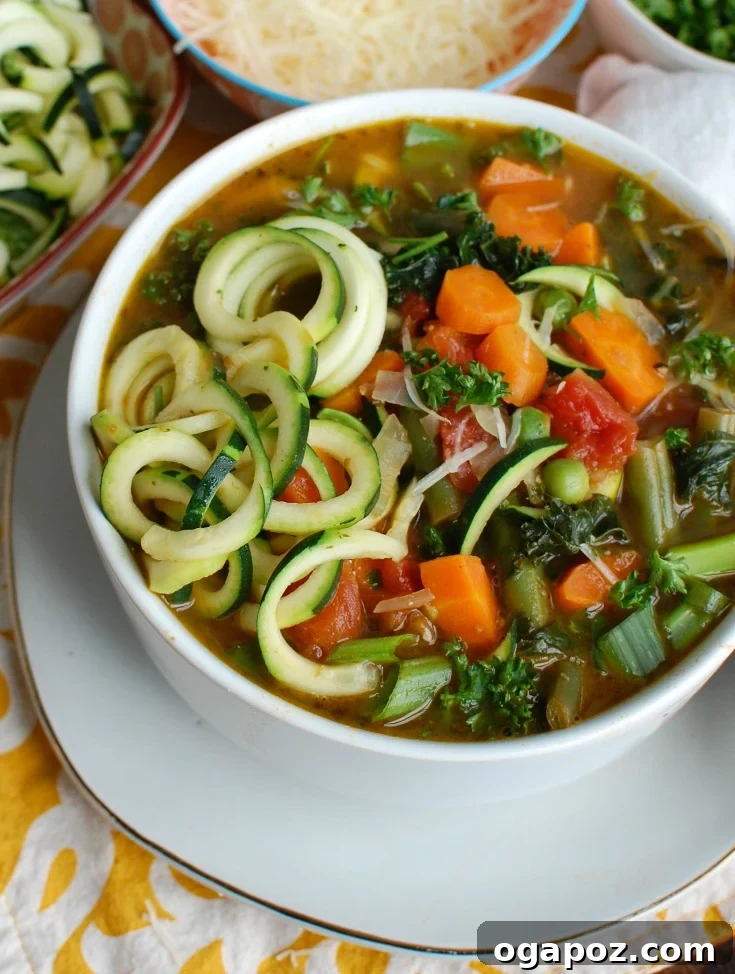
As the days lengthen and the vibrant colors of spring begin to emerge, our palates naturally shift towards lighter, fresher, and more invigorating dishes. After enduring the last vestiges of winter’s chill, there’s a collective yearning for warmth that doesn’t weigh us down, and for meals that burst with the promise of the season. Even if spring still feels a little distant where you are, with lingering snow and crisp temperatures, allow this recipe to transport you. My mind has already embraced the warmer days, and I’m convinced that creating this Spring Vegetable Minestrone will help us all channel that glorious spring energy. This soup is not only vegan but also wonderfully light, yet incredibly satisfying, loaded with an abundance of wholesome vegetables.
At its heart, this minestrone utilizes a robust vegetable broth as its foundational base, perfectly complemented by the tangy sweetness of diced tomatoes. The true magic, however, comes from the generous addition of aromatic pesto, which infuses the entire soup with a delicious, herby depth that sets this recipe apart. You have the flexibility to use your favorite store-bought pesto for convenience, or if you prefer a truly fresh experience, homemade pesto works beautifully to enhance the flavors even further. For those who are already fans of traditional minestrone, I highly recommend trying my Homemade Minestrone, a classic that never disappoints. Incorporating more vegetarian and plant-based meals into my family’s diet has been a goal, and this Spring Vegetable Minestrone fits perfectly into that healthy eating philosophy. You can truly feel good about serving such a nutritious and delicious meal to your loved ones.
If you’re looking to explore more plant-based culinary adventures and expand your family’s repertoire of healthy, vibrant dishes, consider trying some of these other fantastic recipes: my Mediterranean Hummus Bowl, a refreshing and customizable option; the hearty and nutritious Mediterranean Buddha Bowl; a comforting and flavor-packed Vegetarian Chili; easy and delicious Vegetarian Quesadillas; or even a savory start to your day with my Vegetarian Breakfast Egg Burritos. Each offers a unique way to enjoy wholesome ingredients.
Why We Love This Vegetable Minestrone

This vegetarian soup is not just light and flavorful; it’s a culinary gem for many reasons. Here’s why this Spring Vegetable Minestrone quickly became a beloved staple in our kitchen:
- Versatile Recipe: One of the greatest attributes of this soup is its incredible adaptability. It’s a true “clean out the fridge” champion! You can effortlessly tailor it to whatever fresh vegetables or pantry staples you have on hand. For instance, I almost always have a bag of fresh carrots and a selection of leafy greens in my refrigerator, making them a natural and consistent base for my minestrone soup. Beyond these essentials, I simply incorporate other vegetables that are in season or need to be used up. Think bell peppers, mushrooms, celery, or even some leftover cooked grains. This flexibility makes meal planning a breeze and reduces food waste.
- Full of Veggies for Optimal Health: This soup is a nutritional powerhouse, absolutely bursting with delicious, vitamin-rich vegetables. It’s an ideal way to boost your daily intake of essential nutrients and fiber. What makes this recipe particularly special is the strategic swap of traditional pasta for tender zucchini noodles (zoodles). This simple change significantly reduces the carb count while increasing the vegetable content, helping you effortlessly get well on your way towards your recommended five-a-day servings of vegetables. Every spoonful is a testament to wholesome eating, without compromising on flavor or satisfaction.
- Easily Doubled for Any Occasion: Planning a larger gathering? Or perhaps you simply want to ensure you have delicious, healthy meals ready for the week? This recipe is incredibly easy to double, or even triple, making it perfect for feeding a crowd, preparing for meal prep, or simply ensuring you have comforting leftovers. It’s a fantastic freezer-friendly option too, allowing you to enjoy the taste of spring anytime you crave it. Its simplicity and scalability make it a go-to choice for busy weeknights and special occasions alike.

Recipe Ingredients and Substitutions for Spring Minestrone
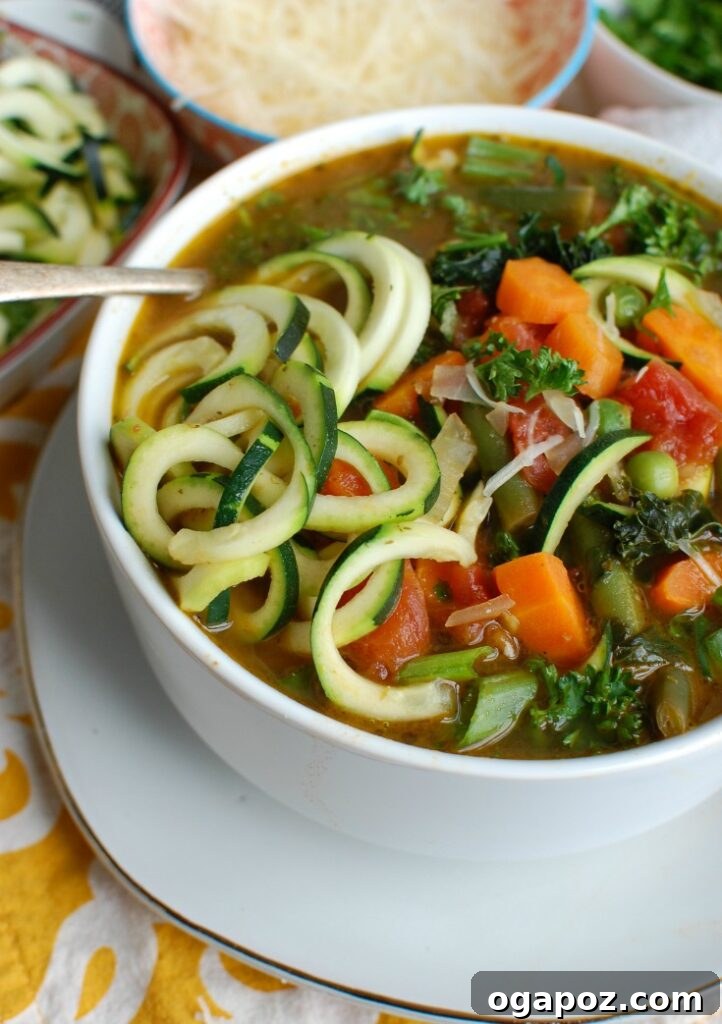
Crafting this Spring Vegetable Minestrone requires a thoughtful selection of fresh, high-quality ingredients. Each component plays a vital role in building the soup’s incredible depth of flavor. Below is a detailed look at the ingredients and how you can creatively substitute them to suit your preferences or what you have available:
- Base Flavors: The foundation of any great soup begins with a strong aromatic base. In this recipe, we gently sauté sweet onion, infusing the pot with its subtle sweetness, alongside pungent garlic and earthy carrots. This trio creates a deeply flavorful starting point that complements all the subsequent ingredients beautifully.
- Broth: The choice of broth is crucial. I always opt for a good quality vegetable broth to ensure this soup remains truly vegan and offers a rich, plant-based flavor profile. However, if you are not serving the soup to vegetarian or vegan diners, a good quality chicken broth can also be used, offering a slightly different, but equally delicious, savory depth.
- Tomatoes: To add a burst of bright acidity and a pleasant texture, a can of diced tomatoes is incorporated. These tomatoes not only enhance the overall flavor of the soup but also contribute to its vibrant color and hearty feel.
- Vegetables: This minestrone is a celebration of fresh produce. I typically include tender fresh green beans for a crisp bite, sweet frozen peas for their delicate flavor, and hearty greens like kale or spinach, which wilt down beautifully and add a wealth of nutrients. However, don’t limit yourself! This recipe is incredibly versatile. Feel free to add any other seasonal vegetables you might have on hand, such as chopped celery, bell peppers, zucchini, or even small florets of broccoli or cauliflower.
- Herbs: Fresh or dried herbs are essential for elevating the soup’s aromatic complexity. I rely on dried oregano and thyme, known for their warm, earthy notes, to season the soup. If you have fresh herbs available, such as rosemary or a bay leaf, feel free to incorporate them for an even brighter, more fragrant result.
- Noodles: In a refreshing twist on traditional minestrone, this recipe utilizes “zoodles,” or zucchini noodles, which are made by spiralizing a large zucchini. This keeps the soup light, gluten-free, and boosts its vegetable content. If you prefer traditional pasta, see our modification section for tips on how to incorporate it.
- Pesto: The secret ingredient that truly makes this minestrone unique and irresistible is pesto. Stirring in a couple of spoonfuls of pesto at the end infuses the soup with a fresh, garlicky, and herbaceous flavor that is simply divine. Whether you use a vibrant homemade pesto or a high-quality store-bought variety, its inclusion is non-negotiable for this recipe’s signature taste.
How To Make This Spring Vegetable Minestrone Recipe: A Step-by-Step Guide
Creating this flavorful Spring Vegetable Minestrone is a straightforward process, perfect for cooks of all skill levels. Follow these simple steps to bring a taste of spring to your table:
Step 1: Sauté the Onion and Garlic to Build Your Flavor Base: Begin by heating the olive oil in a large, heavy-bottomed pot or Dutch oven over medium heat. Once the oil shimmers, add the diced sweet onion and sauté gently for about 2 minutes, stirring occasionally, until it becomes soft and translucent, filling your kitchen with a wonderful aroma. Next, add the minced garlic and continue to sauté for another 2 minutes, being careful not to let it brown, as burnt garlic can taste bitter. This step is crucial for developing the foundational flavors of your soup.
Step 2: Incorporate Carrots, Tomatoes, and Herbs for Depth: Add the chopped carrots to the pot and continue to sauté for an additional 3 minutes, stirring frequently to ensure they soften slightly and absorb the aromatic flavors. Pour in the rich vegetable broth, followed by the diced tomatoes (undrained, to maximize flavor and liquid). Stir in the fresh green beans, earthy oregano, and fragrant thyme. Bring the mixture to a gentle boil.
Step 3: Simmer the Soup to Allow Flavors to Meld: Reduce the heat to medium-low, allowing the soup to settle into a gentle simmer. Cover the pot and let it cook for at least 20 minutes, stirring occasionally. This simmering time is essential as it allows all the vegetables to tenderize beautifully and the flavors to fully meld together, creating a harmonious and delicious broth.
Step 4: Add the Delicate Greens, Peas, and Zucchini Noodles: Once the soup has simmered, it’s time to add the more delicate ingredients. Stir in the frozen peas, your chosen greens (such as kale or spinach), and the spiralized zucchini noodles (zoodles). Continue to simmer for just another 2-3 minutes, or until the greens have wilted, and the zoodles are tender-crisp, but not mushy. Be mindful not to overcook the zucchini noodles to maintain their pleasant texture.
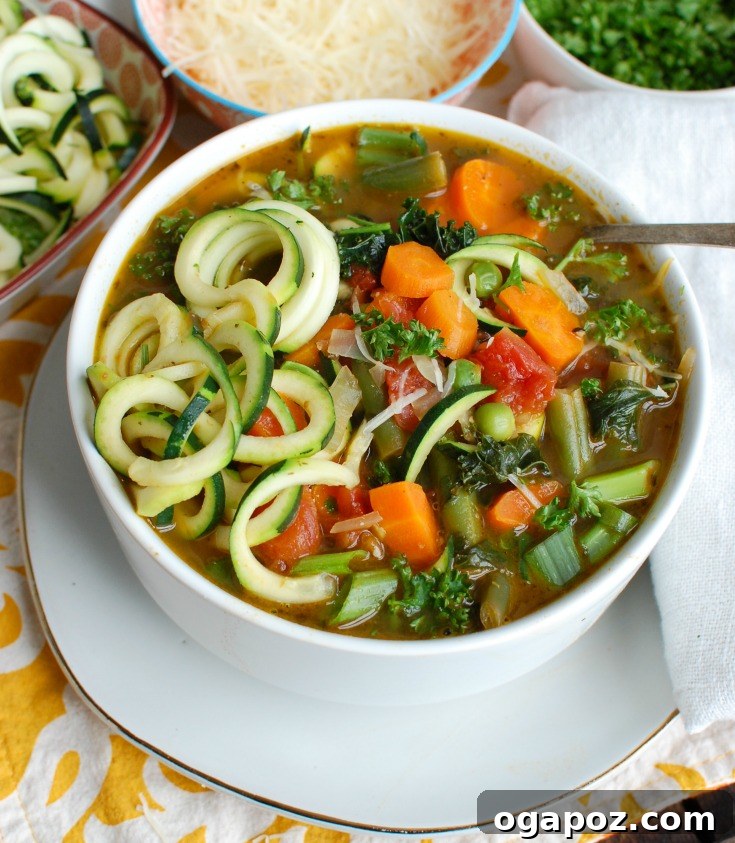
Step 5: Finish with Pesto and Serve Warm: Finally, remove the pot from the heat and stir in the two tablespoons of pesto until it is thoroughly combined and distributed throughout the soup. The pesto will add a fresh, herbaceous, and savory finish. Serve the Spring Vegetable Minestrone warm, garnished generously with fresh chopped parsley, basil, and a sprinkle of Parmesan or a dairy-free alternative if keeping it strictly vegan. Enjoy this light, flavorful, and incredibly satisfying bowl!
Make Ahead Tip: If you’re planning to prepare this soup in advance, I recommend making the base up to the end of Step 2 in the recipe card. Store this base in the refrigerator. When you’re ready to enjoy, simply heat the soup base, then add the peas, greens, and zucchini noodles fresh, allowing them to cook for a few minutes. Finish with pesto and garnishes as directed. This method ensures that the delicate vegetables and noodles retain their optimal texture and vibrant color.
Creative Recipe Modifications & Serving Suggestions
One of the beauties of a minestrone is its inherent flexibility. This Spring Vegetable Minestrone is incredibly adaptable, allowing you to customize it to your taste, dietary needs, or what’s seasonally available. Here are some fantastic ways to modify your soup:
- Exploring Vegetable Additions: This soup serves as an excellent canvas for nearly any vegetable you fancy. Beyond the recommended greens and beans, consider adding diced bell peppers for sweetness and crunch, sliced mushrooms for an umami boost, small cubes of eggplant, or even finely chopped celery for an additional layer of aromatic flavor. Roasting some root vegetables like parsnips or sweet potatoes separately and adding them at the end can also offer a wonderful depth.
- Noodle Choices: While this spring vegetable minestrone proudly features tender zoodles (zucchini noodles) as a light, gluten-free, and nutrient-dense alternative to traditional pasta, you can certainly incorporate other options. If you prefer a more classic minestrone, feel free to switch back to pasta.
- Adding Pasta: If you choose to include traditional pasta, the timing is key. Add your preferred pasta shape to the simmering soup with about 10 minutes left in the cooking process, or according to package directions, ensuring it cooks to al dente. Smaller to medium-sized pasta shapes like ditalini, small shells, elbow macaroni, or orzo work exceptionally well in minestrone, absorbing the flavors of the broth beautifully.
- Beans & Pulses for Protein Power: To significantly boost the protein and fiber content of your soup, making it even more filling and satisfying, consider adding a can of drained and rinsed chickpeas, white beans (like cannellini or navy beans), or kidney beans. Legumes are an excellent plant-based protein source and integrate seamlessly into the soup, making it a more robust meal that keeps you fuller for longer.
- Meat Enhancements: For those who are not adhering to a vegan or vegetarian diet, this soup can easily accommodate meat-based proteins. Shredded grilled chicken, diced leftover roast chicken, or even some lean turkey sausage (cooked and crumbled) can be stirred in during the last few minutes of cooking to add a savory depth and extra protein.
Recipe Tip: When making and storing this soup, especially if freezing, be aware that the freezing and defrosting process can slightly alter the texture of some vegetables, making them a little softer. To revitalize your reheated soup, I always recommend freshening it up with a handful of fresh herbs or a splash of new greens right before serving. This simple trick brings back vibrant flavors and textures.
Storage Tips for Your Spring Vegetable Minestrone
Proper storage ensures you can enjoy your delicious Spring Vegetable Minestrone for days to come, making it an excellent option for meal prep. Here’s how to best store your leftovers:
- Leftovers: Once the soup has cooled completely to room temperature, transfer any leftovers to an airtight container. Store it in the refrigerator for up to 2-3 days. The flavors often deepen and become even more pronounced on the second day!
- Reheating: To reheat your minestrone, simply pour the desired portion into a pot and warm it gently over medium heat on the stove until it is piping hot. If the soup appears too thick after refrigeration, add a splash of water or vegetable broth to achieve your preferred consistency. For an extra touch of freshness, stir in some new greens or fresh herbs during reheating.
- Freezing: This soup freezes wonderfully, making it perfect for future quick meals. Once cooked and thoroughly cooled, ladle the Spring Vegetable Minestrone into freezer-safe airtight containers or heavy-duty freezer bags. Ensure you leave a little headspace for expansion if using containers. It can be stored in the freezer for up to 3 months. When ready to enjoy, defrost the soup thoroughly in the refrigerator overnight, then reheat on the stove as described above. Remember the tip about adding fresh herbs or greens upon reheating to brighten up the flavors!
More Delightful Soup Recipes
Soups
Homemade Minestrone Soup
Soups
Moroccan Red Lentil Soup
Vegetarian
Moroccan Carrot Red Lentil Soup
Pork
White Bean Soup and Ham
Tried this recipe? Leave a star rating and comment below! Subscribe to my newsletter or follow me on
Facebook,
Instagram, or
Pinterest for the latest recipes.
Average rating: 5 from 1 vote
Spring Vegetable Minestrone

Print Recipe
Ingredients
- 2 Tablespoons olive oil
- 1/2 sweet onion, diced
- 3 cloves garlic, minced
- 2 large carrots, peeled and chopped
- 32 ounces vegetable broth
- 16 ounce diced tomatoes
- 6 ounces green beans, chopped in half
- 1 teaspoon oregano
- 1/2 teaspoon thyme
- 1/2 cup frozen peas
- 2 cups greens of your choice, {I like kale or spinach}
- 1 large zucchini, spiralized into zoodles
- 2 Tablespoons pesto, {homemade or store-bought}
- Fresh parsley, chopped, for garnish
- Fresh basil, chopped, for garnish
- Feta cheese, for garnish (optional, omit for vegan)
- Parmesan cheese, for garnish (optional, omit for vegan)
Instructions
-
Heat the 2 Tablespoons olive oil in a large pot over medium heat. Add the onion and sauté for 2 minutes, until soft and fragrant. Add the garlic and continue to sauté for 2 more minutes.
-
Add the carrots and sauté for 3 minutes, stirring occasionally. Pour in the vegetable broth, diced tomatoes and add in the green beans, oregano and thyme.
-
Turn the heat to medium high and bring the soup to a boil and then turn the heat down and simmer for 20 minutes, stirring occasionally.
-
Add the peas, greens and zucchini noodles and let simmer for another 2-3 minutes, or until the greens are wilted and the zoodles are soft.
-
Stir in the pesto until well combined. Serve warm with fresh chopped parsley, basil, and a sprinkle of Parmesan cheese (or dairy-free alternative).
Notes
- This soup is great with beans added in. I like chickpeas or white beans for extra protein and fiber.
- If you would like to add traditional pasta, you can do that with about 10 minutes left in the cooking process. Smaller to medium-sized pastas like ditalini or orzo work best.
- Feel free to add whatever seasonal vegetables you have on hand, such as bell peppers, mushrooms, or celery.
- To make this soup even heartier, consider adding 1/2 cup of small pasta (like ditalini or orzo) along with the carrots in Step 2, adjusting broth as needed.
- For a richer flavor profile, a splash of red wine can be added after sautéing the garlic in Step 1, letting it reduce slightly before adding the carrots.
Nutrition
Carbohydrates: 15g,
Protein: 3g,
Fat: 7g,
Saturated Fat: 1g,
Polyunsaturated Fat: 1g,
Monounsaturated Fat: 3g,
Cholesterol: 0.4mg,
Sodium: 687mg,
Potassium: 498mg,
Fiber: 4g,
Sugar: 8g,
Vitamin A: 5630IU,
Vitamin C: 34mg,
Calcium: 90mg,
Iron: 2mg
Nutrition information is automatically calculated, so should only be used as an approximation.
Tried this recipe?Mention @acedarspoon or tag #acedarspoon!