
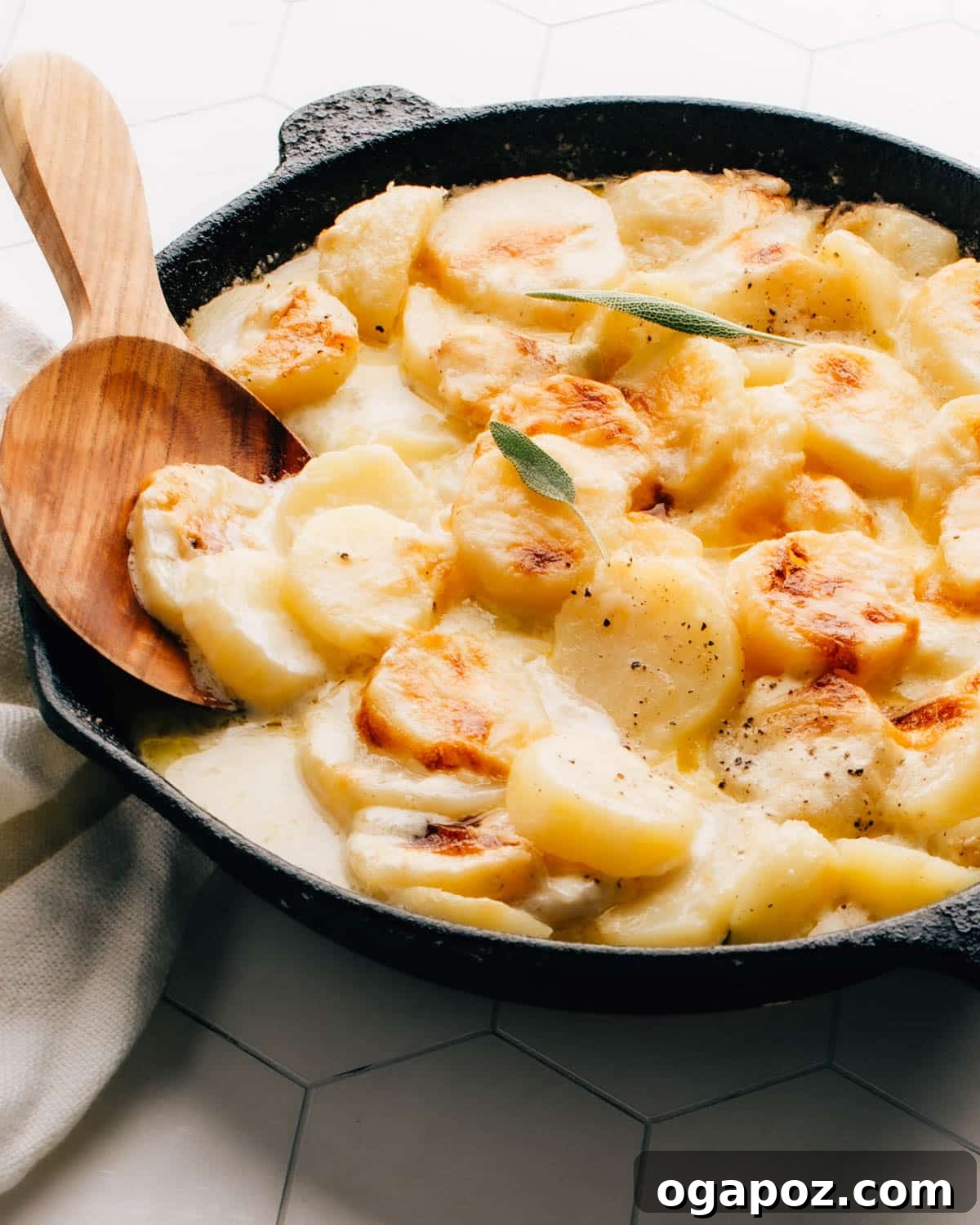
Experience the ultimate comfort food with these exquisite Gluten-Free Au Gratin Potatoes. This recipe redefines classic creamy potato dishes by achieving its luxurious, velvety sauce WITHOUT a single trace of flour or starch. It’s a truly comforting and undeniably delicious one-pan masterpiece that promises to become a staple in your kitchen. Prepare to fall in love with its rich flavor and effortless preparation!
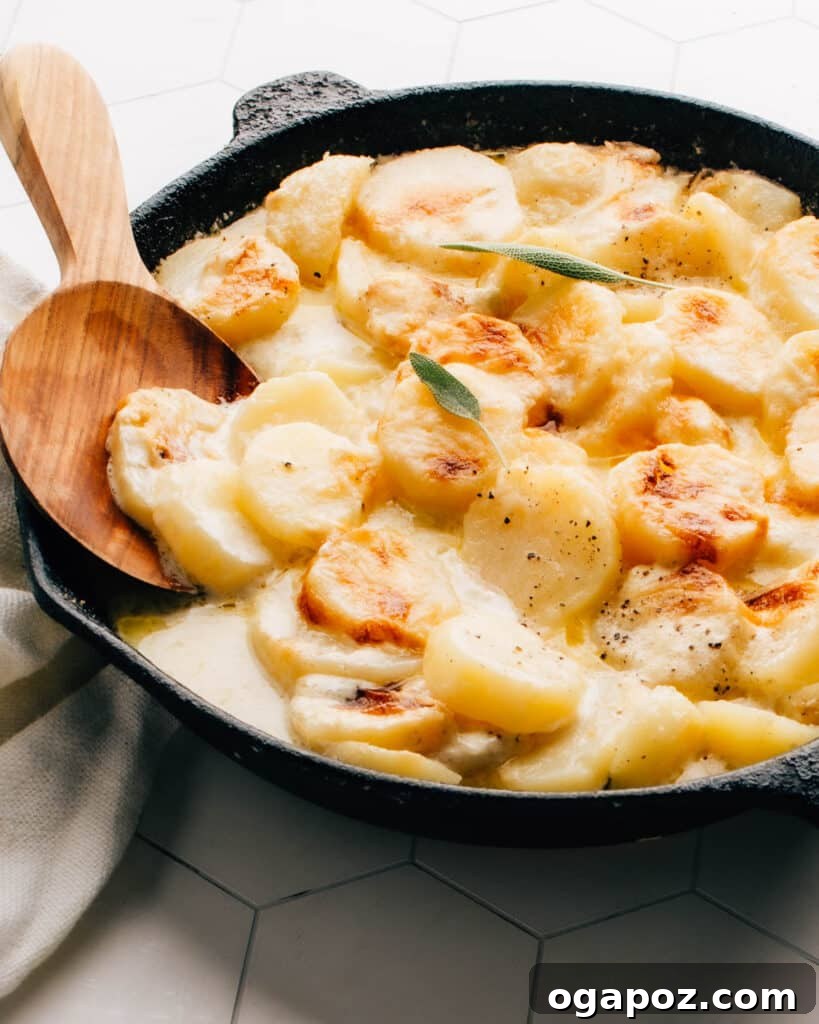
For those seeking a truly exceptional and naturally gluten-free rendition of the beloved classic potatoes au gratin, your search ends here. This carefully crafted recipe delivers all the indulgent creaminess and cheesy goodness you adore, completely free from gluten-containing thickeners.
I’ve meticulously refined my favorite hearty scalloped potato method to ensure it’s quicker, simpler, and utterly fuss-free. By ingeniously bypassing the traditional flour-based roux, we create a rich, profoundly velvety sauce that’s not only naturally gluten-free but also boasts an even purer, more intense flavor profile. This means you get all the comforting, cheesy delight expected from a classic au gratin, without any compromise on taste or texture.
Why You’ll Absolutely Adore These Gluten-Free Au Gratin Potatoes
This recipe isn’t just a delicious side; it’s a culinary triumph designed for ease and maximum flavor. Here’s why these gluten-free au gratin potatoes will earn a permanent spot in your recipe collection:
- Effortless One-Pan Simplicity: You’ll be amazed by how straightforward this one-pan scalloped potato recipe is to prepare. While it tastes like the quintessential Sunday dinner comfort food, it’s remarkably quick and easy enough to whip up on a busy weeknight. Minimal cleanup means more time to savor your meal.
- Naturally Gluten-Free Perfection: Say goodbye to flour-based thickeners! This recipe for potatoes au gratin achieves its incredible creaminess through a clever combination of a simple cream sauce reduced to perfection, then enriched and thickened by the magic of melting Parmesan cheese. No gluten, no complicated techniques, just pure, unadulterated flavor and a luxuriously smooth texture.
- Rich, Velvety, and Irresistible: The absence of flour allows the natural flavors of the cream, cheese, and potatoes to truly shine. Each bite is a symphony of tender potatoes swimming in a savory, cheesy, and deeply satisfying sauce that will have everyone asking for seconds.
- A Versatile Crowd-Pleaser: Whether you’re hosting a holiday feast, enjoying a cozy family dinner, or looking for an impressive potluck dish, these potatoes are guaranteed to be a hit. They pair beautifully with a wide array of main courses and cater perfectly to guests with gluten sensitivities.
If you’re a devoted fan of cozy, hearty potato dishes, you’ll also adore this popular recipe for the Best Mashed Potatoes Recipe you’ll ever try – another fantastic gluten-free option for your table!
Essential Ingredients for Your Gluten-Free Scalloped Potatoes
Crafting this incredible dish begins with selecting quality ingredients. Here are some notes and insights on what you’ll need to create this naturally gluten-free delight:
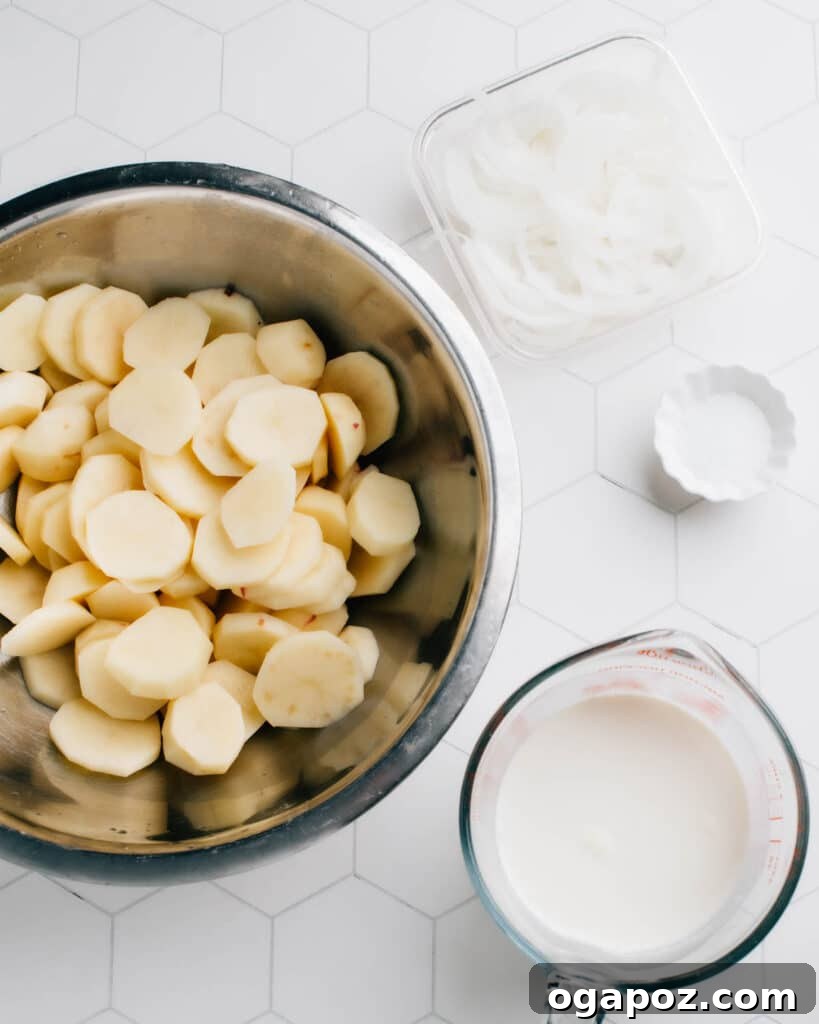
- Potatoes: The star of the show! Yukon Gold or Red Russet potatoes are highly recommended for this recipe. Yukon Golds offer a delightful natural butteriness and creamy texture while still holding their shape beautifully during cooking. Red Russets are also excellent, providing a similar desirable texture. Avoid overly starchy potatoes like Idaho Russets, which can sometimes become too mushy, or waxy potatoes that may not absorb the creamy sauce as well. Slicing them thinly and uniformly is key for even cooking.
- Heavy Cream: This is where the magic happens for our luscious, flour-free sauce. Heavy cream, with its higher fat content, reduces beautifully, concentrating its flavors and thickening naturally. For a slightly lighter version without sacrificing too much richness, you can absolutely substitute half of the heavy cream with whole milk. Be mindful that using all regular milk might result in a thinner sauce, as milk has less fat to reduce.
- Onion: Thinly sliced onion provides an aromatic base and subtle sweetness that complements the potatoes and cream perfectly. It melts into the dish, adding depth without overpowering the other flavors.
- Kosher Salt & Black Pepper: Essential seasonings. Kosher salt provides a clean, balanced salinity. Freshly ground black pepper adds a gentle warmth and aromatic kick.
- Nutmeg: A small hint of freshly ground nutmeg truly elevates the richness of this dish, adding a warm, sophisticated undertone that pairs wonderfully with dairy. It’s optional, so feel free to omit it if you’re not a fan of the flavor or don’t have it on hand.
- Unsalted Butter: A small amount of butter dotted on top before baking adds another layer of richness and helps achieve that beautiful golden-brown crust.
- Parmigiano Reggiano (or Parmesan Cheese): Crucial for both flavor and thickening. As the cream reduces and the Parmigiano Reggiano melts, its natural properties help create that perfectly smooth, cohesive sauce. Ensure it’s finely grated for optimal melting. If authentic Parmigiano Reggiano isn’t available, other hard, salty cheeses like Asiago or Pecorino Romano will also work wonderfully, each lending its own unique character to the dish.
- Fresh Sage Leaves: These are entirely optional but highly recommended for an earthy, aromatic touch. Sage pairs exceptionally well with potatoes and cream. Alternatively, fresh thyme or rosemary sprigs would also be fantastic herbs to infuse into this dish, adding a different fragrant dimension.
Creative Variations and Smart Substitutions
This gluten-free au gratin recipe is incredibly versatile, allowing for numerous adjustments to suit your taste, dietary needs, or what you have available. Don’t be afraid to experiment!
- Explore Different Cheeses: While Parmesan is classic, feel free to experiment with other cheeses for a super-rich and complex flavor profile. Consider adding sharp cheddar for tang, Gruyère for nutty undertones and excellent melting, or even a touch of creamy Gorgonzola for a bolder, more pungent flavor. A blend of cheeses can add wonderful depth.
- Lightened Up Creamy Sauce: For a lighter take on the creamy sauce, replace some or all of the heavy cream with evaporated milk or half-and-half. If using regular or plant-based milk (like almond or oat milk), you’ll need an additional thickening agent. A cornstarch slurry (3 tablespoons of cornstarch mixed with an equal amount of cold water or milk, stirred into the simmering sauce) can create a smooth, lightened sauce. Be sure to cook until thickened.
- Boost the Flavor Profile: Elevate the taste with additional aromatics. Sauté a couple of minced garlic cloves with the onions to infuse a robust garlic flavor. A teaspoon of Dijon mustard added to the cream sauce can also provide a subtle tang and deepen the overall savory notes. Crispy crumbled bacon bits stirred in before baking or sprinkled on top would also add a delightful smoky, salty crunch.
- Add More Vegetables: For a more complete meal, consider layering in other thinly sliced vegetables such as leeks, spinach (wilted and squeezed dry), or thinly sliced mushrooms with the potatoes and onions. This adds nutrients and expands the flavor palette.
- Spicy Kick: A pinch of cayenne pepper or a dash of hot sauce in the cream mixture can introduce a subtle heat that beautifully complements the richness of the potatoes and cheese.
Mastering the Art of Gluten-Free Au Gratin Potatoes: A Step-by-Step Guide
Get ready for an incredibly satisfying culinary journey! Here are the super simple steps to making this unctuous and irresistible scalloped potato dish, ensuring perfect results every time.
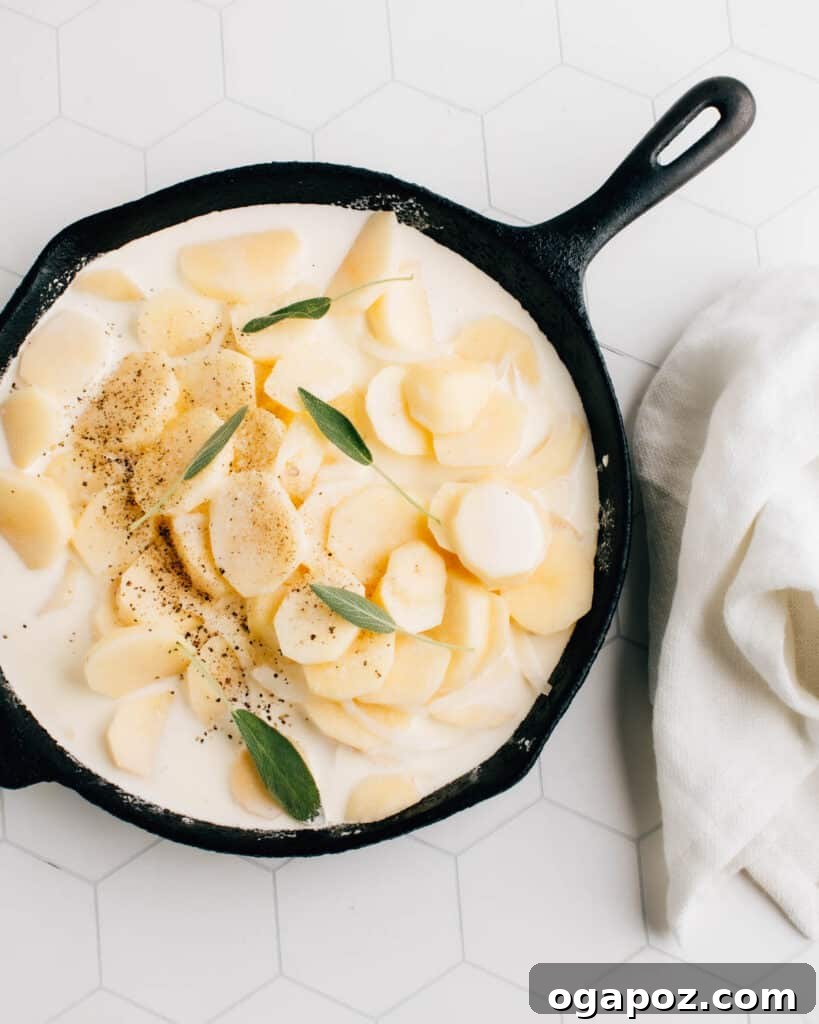
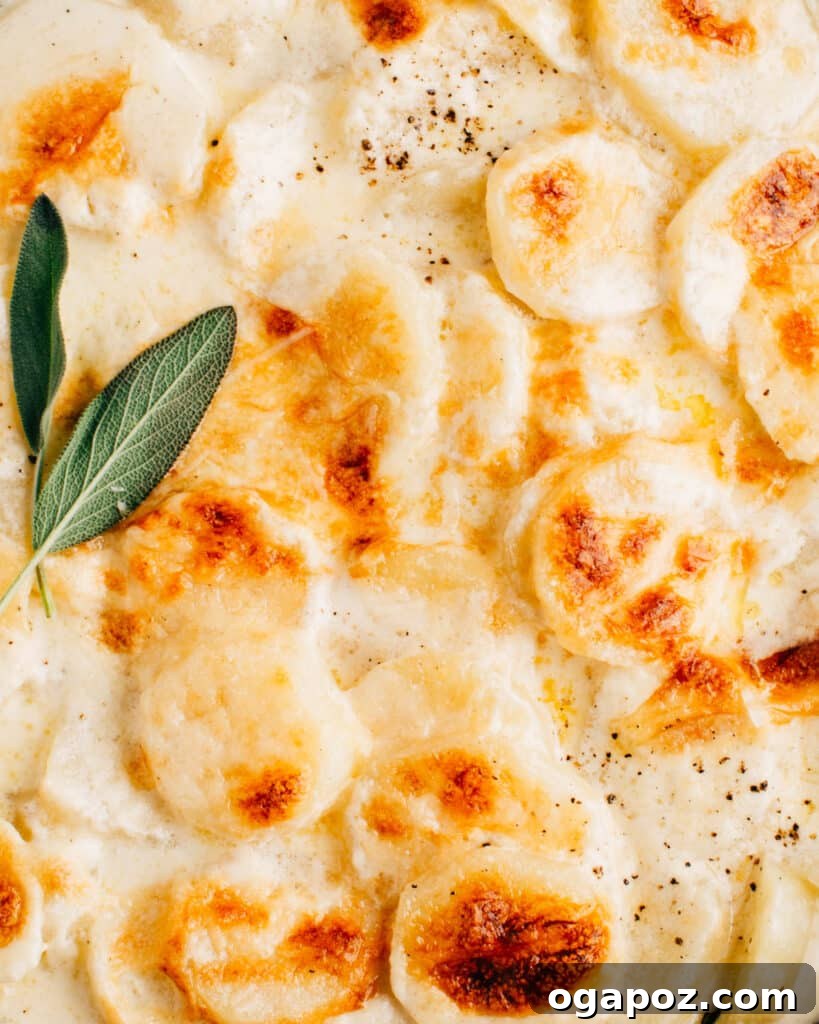
- First things first, you’ll want to preheat your oven to a steady 350ºF (175ºC). This ensures it’s ready for baking once the stovetop work is done.
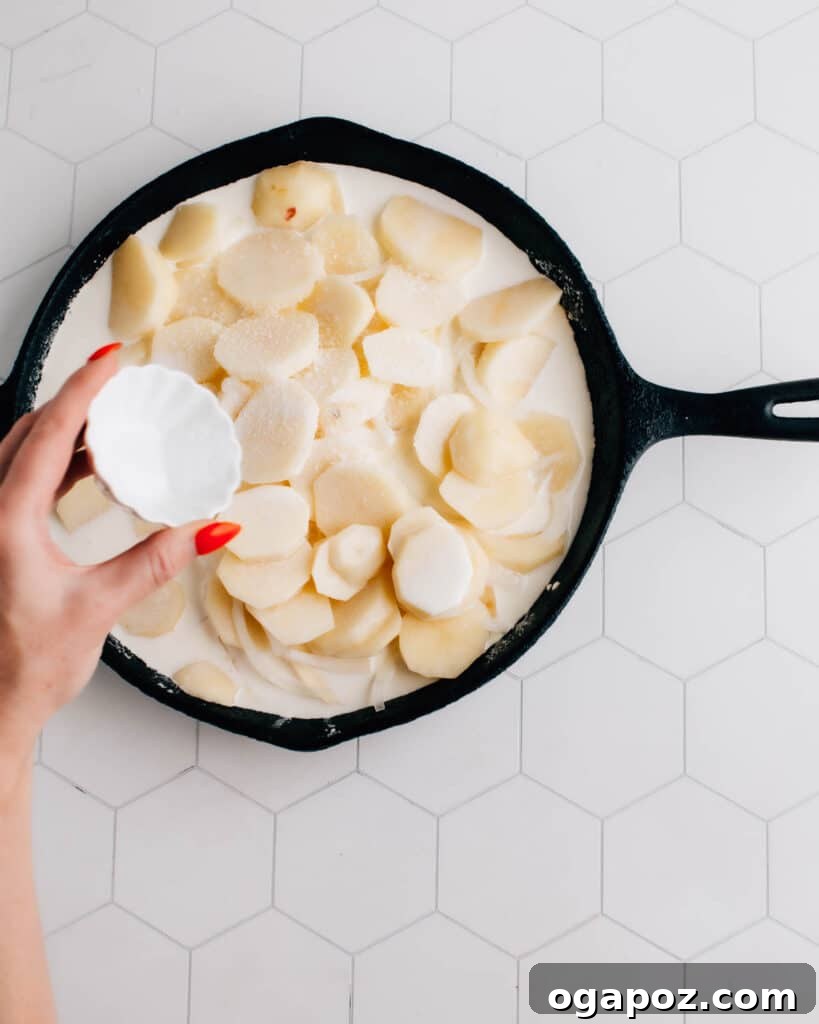
- Next, prepare your potatoes and onions. Using a well-greased 12-inch oven-proof skillet (a cast iron pan works beautifully here), meticulously layer the thinly sliced potatoes alternately with the equally thin slices of onion. As you build your layers, make sure to generously sprinkle salt between each potato layer. This is crucial for seasoning the potatoes evenly from within.
- Once your layers are complete, gently pour the heavy cream overtop, ensuring it reaches all the potatoes. At this point, carefully season the cream with the freshly ground black pepper and the subtle hint of ground nutmeg, if you’re using it.
- If incorporating fresh herbs, add the sage leaves (or thyme/rosemary) into the cream mixture. Then, give everything a gentle stir to ensure the seasonings are well distributed and the potatoes are well coated. Be careful not to disturb your neat layers too much!
- Now, transfer your skillet from the countertop to the stove top. Bring the ingredients to a rapid simmer over medium-high heat. Watch it closely, ensuring it doesn’t boil over.
- As soon as it reaches a rapid simmer, reduce the heat to low. Continue to cook, uncovered, for about 15 minutes. During this time, stir everything gently and occasionally. The goal here is for the cream to visibly reduce and thicken slightly, and for the potatoes to become about half-cooked. Don’t worry if the cream tastes quite salty at this stage; as it simmers, the salt will permeate and perfectly season the potatoes, balancing out in the final dish.
- Once the stovetop simmering is complete, carefully dot the top of the potatoes with small pieces of unsalted butter. Then, generously sprinkle on the finely-grated Parmigiano Reggiano (or your chosen Parmesan cheese).
- Finally, transfer the skillet to your preheated oven. Bake uncovered until the cheese on top is beautifully golden brown, bubbly, and the potatoes are fork-tender all the way through. This typically takes around 15 minutes, but keep an eye on it as oven temperatures can vary. To check for doneness, insert a sharp knife or fork into the center of the dish – it should meet no resistance.
Make-Ahead Tips and Storage Solutions
These gluten-free au gratin potatoes are wonderful fresh from the oven, but they also offer fantastic make-ahead and storage options, making meal planning a breeze.
Making Ahead
For convenience, you can prepare the dish up to the point of baking a day in advance. Assemble the potatoes, onions, cream, and seasonings in your oven-safe dish. Cover it tightly with plastic wrap or foil and refrigerate. When ready to bake, allow the dish to come closer to room temperature for about 30-60 minutes before proceeding with dotting with butter, sprinkling cheese, and baking as per the instructions. This helps ensure even cooking.
Storage for Leftovers
Any leftover gluten-free au gratin potatoes can be stored safely in the refrigerator for 3-4 days. To do so:
- Allow the entire dish to cool completely to room temperature. This is crucial to prevent condensation and maintain food safety.
- Once cooled, you can either cover the original baking dish or casserole dish tightly with foil or plastic wrap and place it in the fridge.
- Alternatively, transfer the contents of the dish into an airtight container for more compact storage.
Freezing Instructions
Your cooked scalloped potato dish freezes remarkably well, preserving its comforting flavors for future enjoyment. It can be stored in the freezer for approximately 2 to 3 months.
- For best results, wrap the dish tightly in several layers of foil and then an additional layer of plastic wrap, or transfer it to a freezer-safe, airtight container. This helps prevent freezer burn.
- When you’re ready to enjoy it, thaw the frozen dish in the refrigerator overnight. Bring it to room temperature for about an hour before reheating it in the oven (covered with foil to prevent drying out, then uncovered for the last few minutes to crisp the top).
- Be aware that upon thawing and reheating, the creamy sauce might separate or “split” slightly due to the dairy fat content. While the texture may not be as perfectly smooth as when freshly made, rest assured, it will still taste absolutely delicious and comforting.
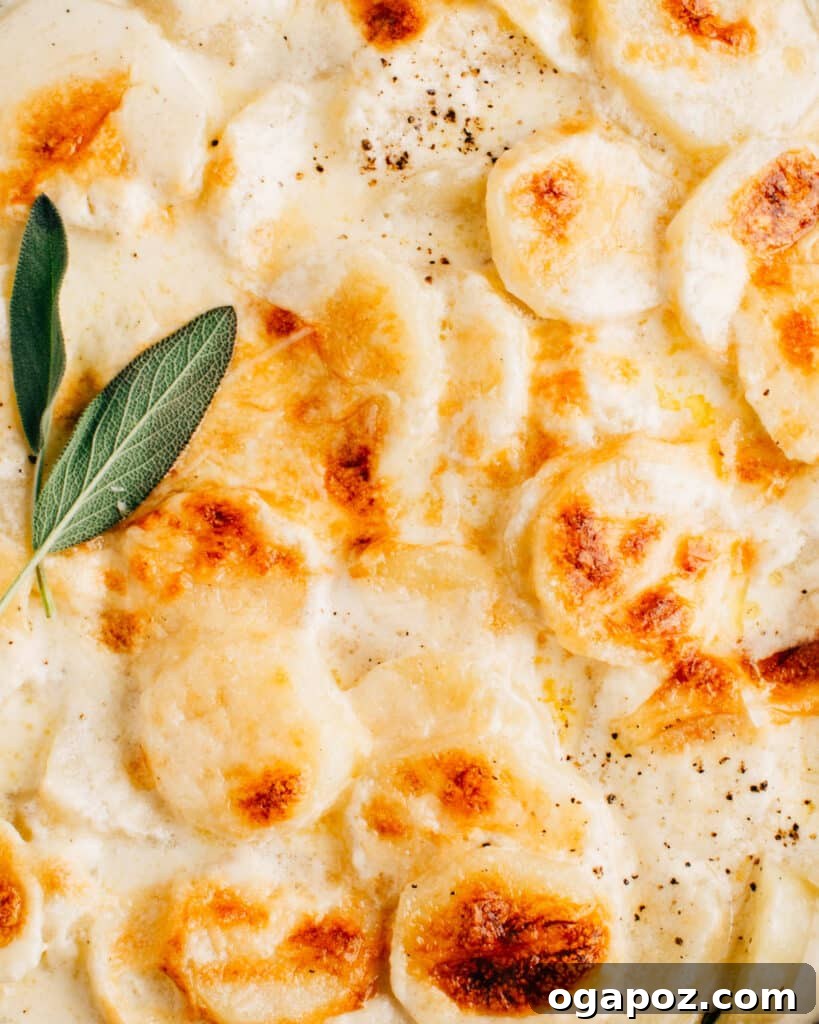
Perfect Pairings: What to Serve with Scalloped Potatoes
These creamy, cheesy gluten-free au gratin potatoes are a versatile side dish that complements a wide array of main courses. They’re hearty enough to stand alongside robust proteins and delicate enough not to overpower lighter fare. Here are a few ideas for cozy, gluten-free main dishes that pair wonderfully:
- Moist and Juicy Pressure Cooker Ham: A classic combination, especially for holidays. The savory ham beautifully contrasts with the rich potatoes.
- The Meatloaf Recipe That’ll Turn You Into a Meatloaf Lover: A comforting meatloaf and creamy potatoes make for an ultimate family meal.
- Eye of Round Roast (Extra Tender + Juicy!): This elegant roast is perfectly complemented by the rustic richness of au gratin potatoes.
- Melt-in-Your-Mouth Instant Pot Steak (with gluten-free gravy!): Steak and potatoes are an iconic duo, and this gluten-free version makes it even better.
- Impossibly Juicy Air Fryer Pork Tenderloin (Melt in Your Mouth!): The tender, flavorful pork is a superb partner for these creamy potatoes.
- Roasted Chicken or Turkey: Simple roasted poultry allows the potatoes to shine as a star side.
- Grilled Salmon or White Fish: For a lighter meal, these potatoes add a decadent touch to grilled fish without being too heavy.
- Hearty Vegetarian Mains: Pair with lentil loaf, mushroom wellington, or a robust vegetable tart for a satisfying vegetarian feast.
Frequently Asked Questions About Au Gratin Potatoes
Historically, the names “au gratin potatoes” and “scalloped potatoes” have been used quite interchangeably, often referring to similar creamy, sliced potato bakes. However, a key distinction traditionally lies in the cheese content: au gratin potatoes are always characterized by a generous cheesy topping, often browned and bubbly, whereas scalloped potatoes may or may not include cheese. Both styles frequently involve starting with a flour-based roux to thicken a mixture of cream and/or milk. In this specific recipe, we’ve created a simpler and naturally gluten-free version that skips the roux, relying on cream reduction and Parmesan cheese for its velvety texture and rich flavor.
All fresh, unprocessed potatoes are naturally gluten-free. This includes popular varieties like Yukon Gold, Russet, Red Bliss, new potatoes, and sweet potatoes. The concern for gluten typically arises when potatoes are processed or combined with other ingredients. For example, if you’re purchasing a premixed mashed potato product, boxed au gratin potatoes, or flavored potato chips, you must carefully check the ingredient label for gluten-containing additives or cross-contamination warnings. For this recipe, using whole, fresh potatoes ensures it remains entirely gluten-free.
The charming name “scalloped potatoes” has historical roots in the old English language. It is derived from the word “collop,” which was an archaic term meaning “to slice thinly.” Thus, “scalloped” refers directly to the method of preparing the potatoes in thin, even slices, which is a hallmark of this classic dish.
Absolutely! If you follow a gluten-free diet, you can certainly enjoy au gratin potatoes, provided they are prepared without any flour or other gluten-containing ingredients. Many traditional recipes use a flour-based roux to thicken the cream sauce, which makes them unsuitable for a gluten-free diet. However, this particular version is specifically designed to be gluten-free, using a rich cream reduction and the natural thickening power of Parmesan cheese instead of a roux. Always double-check recipes and ingredient lists to ensure they align with your dietary needs.
Expert Tips and Tricks for Perfect Au Gratin Potatoes
Achieving the perfect gluten-free au gratin is simple with a few insider secrets. Here are some pointers to help you get the absolute best out of this scalloped potato recipe:
- Uniform Slicing is Key: For perfectly cooked potatoes that are tender throughout, consistency is paramount. Using a mandoline slicer is highly recommended to achieve thin, uniform slices (about ¼-inch thick) of your Yukon Golds or Red Russets. This ensures that every potato slice cooks evenly at the same rate, preventing some from being undercooked while others are mushy. If using a knife, take your time to make your slices as consistent as possible.
- The Right Pan Matters: A 12-inch oven-safe skillet, particularly a cast iron one, is ideal for this recipe. Cast iron retains and distributes heat beautifully, ensuring even cooking on the stovetop and in the oven, and it provides a lovely rustic presentation. Ensure your pan is adequately greased to prevent sticking.
- Don’t Overcrowd the Pan: While you want a good amount of potatoes, avoid packing them too densely. Overcrowding can prevent the cream from circulating properly and inhibit even cooking and reduction.
- Taste the Cream Sauce: As the cream simmers on the stovetop, don’t be shy about tasting it (carefully!). Adjust salt and pepper as needed, remembering that the salt will infuse into the potatoes as they cook.
- Check for Doneness: To confirm the potatoes are perfectly tender, insert a sharp knife all the way to the bottom of the dish. It should slide through easily with minimal resistance. If you feel resistance, give it a few more minutes in the oven.
- Rest Before Serving: Once removed from the oven, allow the au gratin to rest for 5-10 minutes. This allows the sauce to set slightly and prevents it from being too runny when served, making for cleaner slices and a more enjoyable texture.
- Temperature of Ingredients: While not strictly necessary, using cream and potatoes that are closer to room temperature can help them heat more evenly and quickly, but it’s not a dealbreaker for this forgiving recipe.
Gluten-Free Au Gratin Potatoes Recipe
Jennifer Pallian BSc, RD
5 minutes
30 minutes
8
Ingredients
- 3 lbs Yukon Gold or red potatoes peeled and sliced ¼” thick
- ½ cup thinly-sliced onion (approx. ¼ of a large onion)
- 3 tsp kosher salt
- 3 cups heavy cream (see notes for substitutions)
- ¼ tsp black pepper
- ⅛ tsp ground nutmeg (optional)
- 1 tbsp unsalted butter
- 6 fresh sage leaves (optional)
- ⅓ cup finely-grated Parmigiano Reggiano (or other quality Parmesan cheese)
Instructions
-
Preheat your oven to 350ºF (175ºC).
-
Lightly grease a 12-inch oven-proof skillet (such as a cast iron pan). Layer the thinly sliced potatoes alternately with the thinly sliced onions, sprinkling kosher salt evenly between each potato layer as you go. Pour the heavy cream over the layers, then sprinkle with black pepper and ground nutmeg (if using). Add the fresh sage leaves (if desired) and give the mixture a gentle stir to distribute seasonings.
-
Transfer the skillet to the stovetop and bring the ingredients to a rapid simmer over medium-high heat. Once simmering, reduce the heat to low and cook, uncovered, for about 15 minutes, stirring gently and occasionally. Continue until the cream has visibly reduced and the potatoes are about half-cooked. Don’t be concerned if the cream tastes quite salty during simmering; this salt will absorb into the potatoes to season them perfectly.
-
Dot the top of the partially cooked potatoes with small pieces of unsalted butter, then generously sprinkle with the finely-grated Parmigiano Reggiano. Transfer the skillet to the preheated oven and bake, uncovered, for approximately 15 minutes, or until the cheese is golden brown and bubbly, and the potatoes are tender when pierced with a knife or fork.
Notes
- Use a sharp knife or fork to check if the dish is cooked all the way through; it should slide easily into the potatoes.
- For a lightened-up version of the cream sauce, you can use half milk and half heavy cream. Alternatively, you can substitute all of the heavy cream with two 12-oz cans of evaporated milk for a rich, lighter sauce. Using all regular milk will result in a much thinner sauce.
- The cream may taste quite salty as it simmers on the stovetop. This is normal, as the salt will gradually move into the potatoes to perfectly season them, and the flavors will balance out beautifully in the final dish.
- You can store leftovers in the refrigerator for 3-4 days. Allow the dish to cool completely to room temperature, then cover the baking dish or transfer the contents to an airtight container before refrigerating.
- Your cooked potato dish will freeze beautifully for about 2 to 3 months. To reheat, thaw in the refrigerator, bring to room temperature, and then bake in the oven until heated through. The sauce might split slightly upon freezing and thawing, but the flavor will remain delicious.
Nutrition
Carbohydrates: 33 g |
Protein: 8 g |
Fat: 35 g |
Saturated Fat: 22 g |
Polyunsaturated Fat: 2 g |
Monounsaturated Fat: 9 g |
Trans Fat: 0.1 g |
Cholesterol: 109 mg |
Sodium: 975 mg |
Potassium: 822 mg |
Fiber: 4 g |
Sugar: 4 g |
Vitamin A: 1412 IU |
Vitamin C: 35 mg |
Calcium: 134 mg |
Iron: 1 mg
Nutrition information is automatically calculated and should only be used as an approximation.
Tried this recipe? Share your thoughts!
Leave a comment below and let us know how your gluten-free au gratin potatoes turned out. We love hearing from you!