
Embracing the Journey: Navigating a New Home and Discovering Culinary Joys
Life has a funny way of throwing us into new chapters, often requiring a monumental effort to transition. For my fiancé and me, the past few weeks have been a whirlwind, marking our highly anticipated move into a new apartment. To label it merely a “huge task” would be a significant understatement; it was an odyssey of organization, a deep dive into years of accumulated possessions that had been patiently (or perhaps, impishly) awaiting their moment of truth.
Imagine shelves groaning under the weight of academic tomes and yellowed university notes, each one a relic of past intellectual pursuits. Picture boxes overflowing with a colorful array of art supplies, alongside half-finished craft projects that whispered tales of forgotten inspiration. Drawers and closets, once a chaotic repository, revealed clothes seldom worn, clinging to the hope of a future occasion. My makeup case, a time capsule of beauty trends, housed eyeshadow specimens nearing a half-decade milestone. Kitchen cupboards, a jumbled collection of mismatched glasses and lovingly inherited hand-me-down dishes, presented their own challenge. And then, the pièce de résistance: a massive storage unit, a cavernous space dedicated to camping gear, an inexplicable abundance of Christmas decorations, and sports equipment — despite neither of us actively participating in any sports. It was, without a doubt, a vibrant tableau of our lives, albeit one in dire need of curation.
After what felt like an endless procession of packing, sorting, and decision-making – fueled, I must admit, by several dozen bottles of wine and a good deal of shared laughter – we managed to thin out six years of accumulated possessions. Our guiding principle was simple yet profound: retain only those items that were either unequivocally useful or deeply sentimental, ideally both. This rigorous decluttering process wasn’t just about physical space; it was a mental cleansing, a preparatory ritual for the fresh start awaiting us.
Stepping into our new abode after such an undertaking, all I craved was peace, quiet, and a generous dose of recovery. The vision was a swift transformation, a picture-perfect sanctuary ready for immediate enjoyment. Yet, a month later, the reality is a charmingly unfinished canvas. Our cherished photos still await their frames on the walls, and the bedroom windows, much to the amusement of our new neighbors (or perhaps their mild concern), remain curtain-free. If you’re reading this, dear new neighbors: I apologize for the impromptu peep show… or, perhaps, you’re welcome? *Awkwardly winks.*
Unveiling Hidden Gems: The Serendipity of Local Exploration
The never-ending “to-do” list that inevitably accompanies a move, further compounded by travel commitments, house guests, and demanding work schedules, has meant that exploring our new neighborhood has been a delightfully slow and meandering process. Rather than a rushed conquest, it has become an unfolding narrative, each step revealing a new facet of our surroundings.
Amidst our sparse wanderings, one discovery stands out as an absolute highlight, a true culinary revelation: the vibrant, bustling produce market nestled deep within the heart of Chinatown. For those in Vancouver, this gem is known as Sunrise Market. From the moment you step foot inside, you’re greeted by an intoxicating symphony of sights, sounds, and aromas. Mountains of exotic fruits piled high, crisp green vegetables glistening under the market lights, and the excited chatter of shoppers bargaining for the best deals create an atmosphere unlike any other. It’s a sensory feast that transports you, even if just for a moment, to another world.
The best part? It. is. so. incredibly. cheap. The prices are almost unbelievably low, making it a haven for budget-conscious foodies and anyone who appreciates the value of fresh, high-quality produce. My latest conquest, a testament to the market’s incredible affordability, was a prime example.
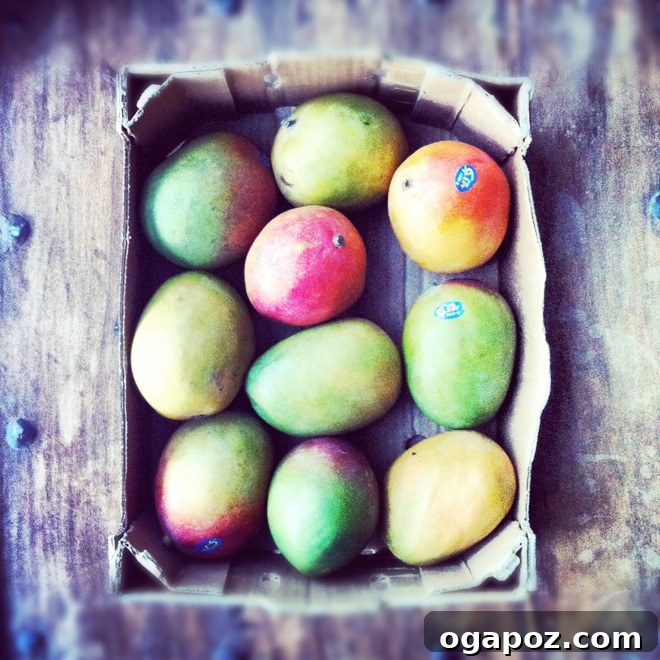
Take, for instance, this magnificent box of mangoes (and if you find yourself with an abundance of mangoes, I highly recommend exploring this fantastic mango kulfi recipe!). How much do you imagine such a glorious haul would cost at a conventional grocery store? Perhaps $15? Or even a conservative $10? NOPE. This splendid collection of perfectly ripe, juicy mangoes was mine for an astonishingly modest sum of not a penny more than THREE piddly little dollars! I lugged them home, a wide grin plastered across my face, imbued with an air of smug triumph over the major grocery store down the street. The bounty immediately sparked an exciting culinary endeavor: a chutney adventure.
The Art of Chutney: A Culinary Journey from Market to Jar
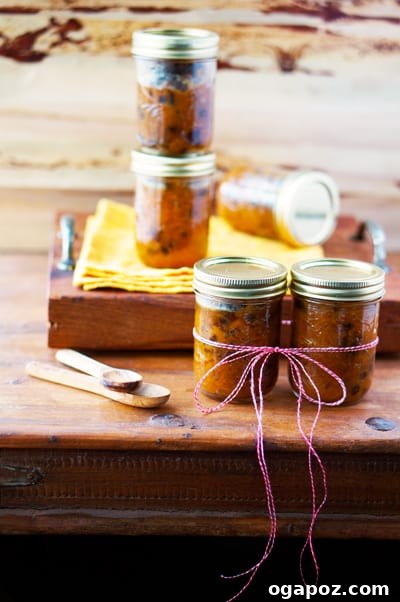
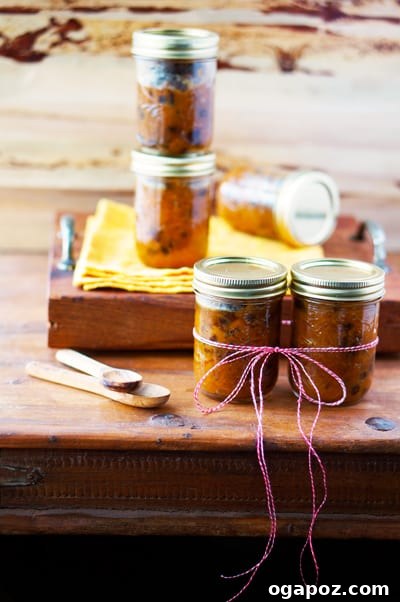
My journey to crafting the perfect mango chutney involved two delightful batches. The first was a smaller, experimental batch, a test run that didn’t go into preservation. I served it immediately with adorable little potato-and-pea samosas, ingeniously crafted using flaky puff pastry, and it was met with rave reviews. Buoyed by this success, I embarked on a larger, more ambitious second batch, destined for canning to extend its life and savor its flavors for months to come. Should you wish to embark on a smaller-scale chutney adventure, this versatile recipe can easily be halved, yielding a more modest portion.
Chutney, at its heart, is a symphony of flavors – sweet, tangy, and subtly spiced – that elevates any meal. While it is an undeniably delicious addition to any Indian themed dinner, it possesses an incredible versatility that allows it to shine in a plethora of non-Indian applications. In my rendition, I intentionally kept the spices warm and inviting, yet not overtly “ethnic.” A harmonious blend of aromatic cloves and invigorating ginger forms the core, creating a flavor profile that is both simple and profoundly delicious. This thoughtful choice ensures that the chutney complements a wide range of dishes without overpowering them.

Beyond the Plate: Creative Ways to Enjoy Homemade Mango Chutney
My personal, tremendous affinity for this mango chutney truly comes alive in a classic turkey sandwich, paired with crisp red onion and peppery arugula. It’s a sophisticated and flavorful twist on the traditional turkey and cranberry sauce combination, offering a vibrant burst of flavor that perfectly complements the rich turkey. But the magic of this chutney extends far beyond sandwiches. It is an equally exquisite accompaniment to roasted pork, grilled chicken, or pan-seared salmon, adding a layer of complexity and a touch of gourmet flair to simple proteins.
For an extra burst of flavor and a beautiful glaze, you can gently warm the chutney to loosen its consistency, then brush it generously onto any of the above meats during the final stages of cooking. This creates a caramelized, tangy coating that is simply irresistible. Alternatively, it serves beautifully as a vibrant side condiment, allowing each diner to add as much or as little as they desire.
I must confess, its sweet and tangy allure is so potent that I constantly have to remind myself of its savory undertones, particularly the presence of onions! This is a crucial mental note, as it most certainly would not be a delightful pairing with ice cream – a culinary experiment I’ve wisely chosen to avoid. Its versatility, however, truly knows few bounds.
Consider incorporating this delightful chutney into your breakfast routine: a dollop swirled into plain yogurt or oatmeal provides a fantastic fruity zing. It makes an excellent spread for toast or muffins, offering a unique alternative to jams and preserves. For entertaining, homemade mango chutney is a star player on any cheese board, its sweet and tangy notes beautifully complementing a variety of cheeses, from sharp cheddars to creamy brie. You can even whisk it into a vinaigrette for a tropical salad dressing, or blend it with cream cheese for a flavorful dip. The possibilities are genuinely endless, transforming everyday meals into culinary experiences.
If you decide to preserve this culinary treasure for long-term enjoyment, following proper canning guidelines is paramount for safety and longevity. Process the filled jars in a boiling water bath for 15 minutes, ensuring a secure seal and optimal preservation. The reward is a pantry stocked with homemade goodness, ready to elevate any meal at a moment’s notice.
Related Culinary Delights: Raita Recipe (Indian Yogurt Sauce) – a perfect cooling counterpoint to richly spiced dishes.
Homemade Mango Chutney Recipe
This recipe yields approximately five 8-ounce jars of delicious chutney, perfect for preserving or gifting. For a smaller batch, the recipe can easily be halved (using 2 mangoes) to produce about 2 cups of chutney.
- 2 large onions, finely chopped
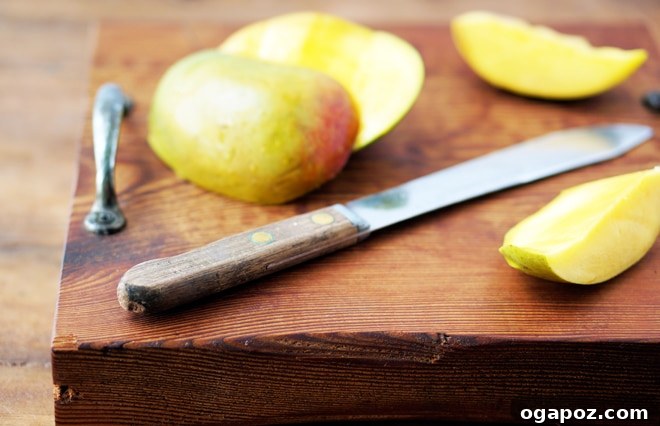
- 5 ripe mangoes, peeled and chopped into 1-inch chunks
- 3 tablespoons fresh ginger, grated
- 3/4 cup white vinegar
- 1 cup packed brown sugar
- 1/2 teaspoon ground cloves
- 1 cup raisins
- In a large, heavy-bottomed saucepan, combine all the ingredients. Add about an inch or so of water to the bottom of the pan; this helps prevent the mixture from scorching, especially in the initial stages of cooking.
- Place the saucepan over medium heat and bring the mixture to a gentle boil, stirring occasionally.
- Once boiling, reduce the heat to low-medium as the mango chunks begin to soften and the mixture starts to bubble.
- Continue to stir often, using a wooden spoon to gently break up the mango chunks as they cook down. The goal is a thick and fairly homogenous chutney, with just a few intact mango chunks remaining for texture. This process typically takes about 40 minutes.
- Once the chutney has reached the desired consistency, carefully ladle it into clean, sterilized jars.
- At this point, you have several options for storage:
- Refrigerate: For immediate use, store the chutney in the refrigerator for up to 2 weeks.
- Freeze: For longer storage without canning, the chutney can be frozen in freezer-safe containers for several months.
- Process in a Boiling Water Bath: For shelf-stable preservation, follow standard canning guidelines. Process the sealed jars in a boiling water bath for 15 minutes. This method allows for storage in a cool, dark place for up to a year.
Enjoy the rich, sweet, and tangy flavors of your homemade mango chutney!