
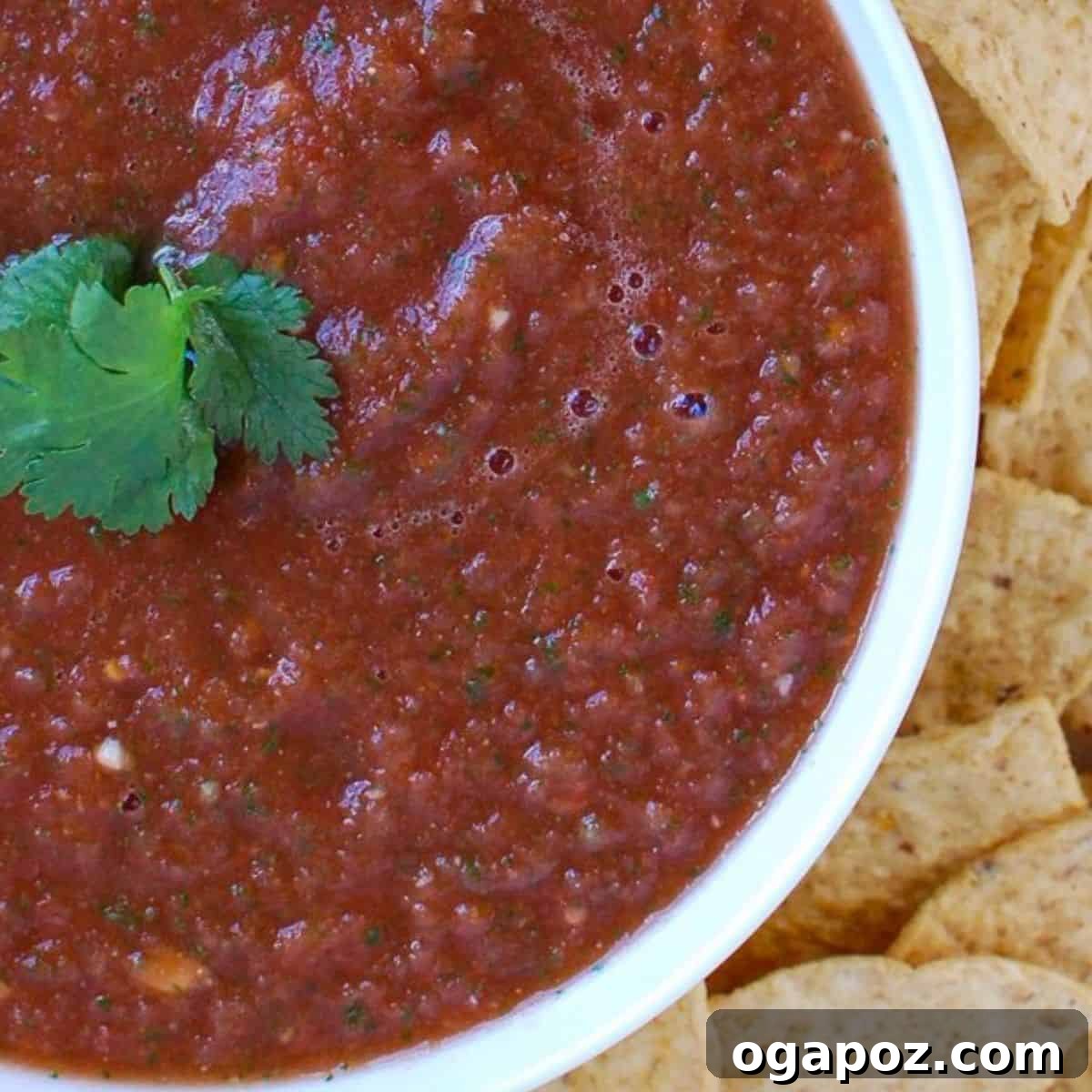
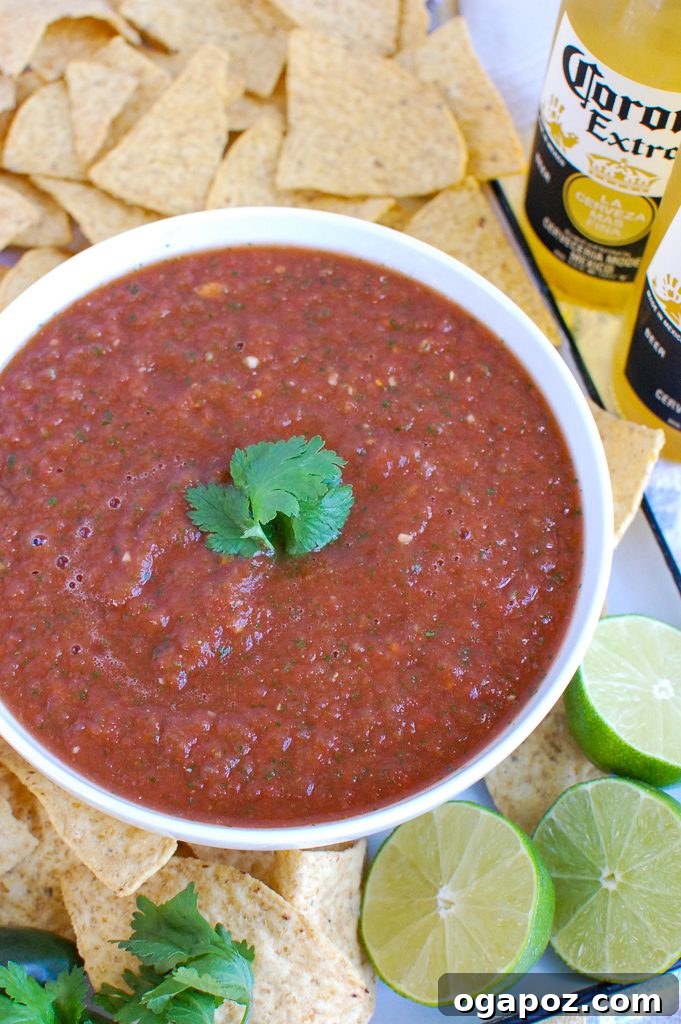
There’s nothing quite like a bowl of fresh, vibrant salsa to elevate any meal or gathering. This Homemade Salsa recipe is incredibly easy to make, coming together in under 10 minutes, and rivals the best restaurant-style dips you’ve ever tasted. Whether you’re hosting a lively tailgate, a cozy football party, or simply craving a delicious snack alongside your favorite taco meal, this quick and flavorful salsa is guaranteed to be a crowd-pleaser.
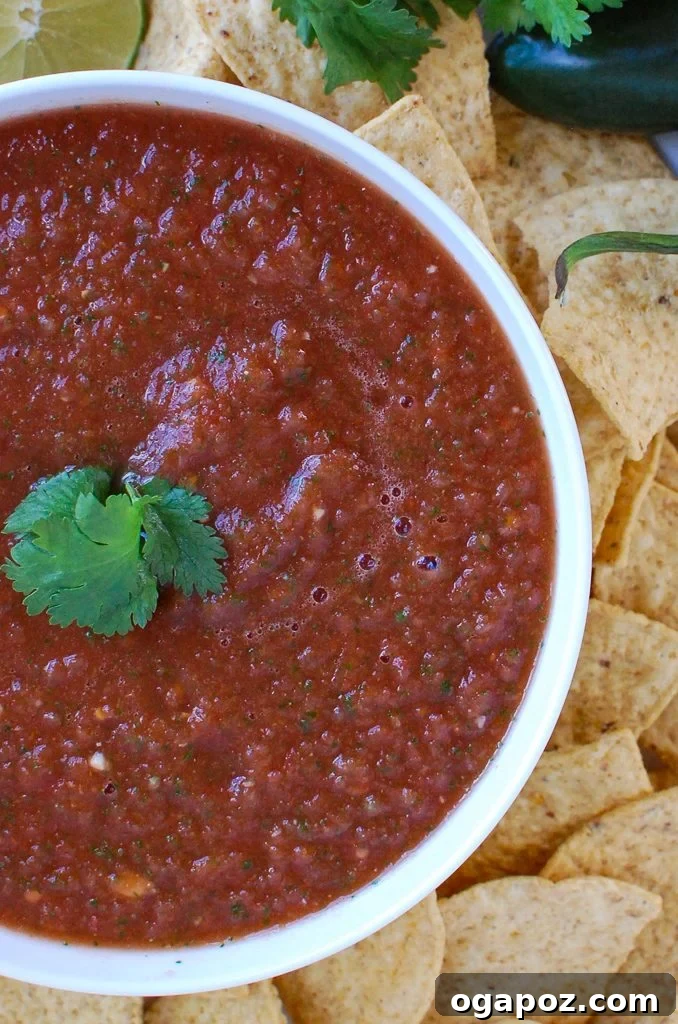
That irresistible allure of a good bowl of salsa and crispy chips from your favorite Mexican restaurant is truly addictive, isn’t it? You sit down, and before you know it, the entire bowl of crunchy tortilla chips has vanished, prompting an immediate request for more. While there are countless varieties of salsa to explore, from refreshing Cucumber Salsa and sweet Watermelon Salsa to creamy Avocado Tomatillo Salsa, my heart always returns to the classic appeal of homemade restaurant-style salsa.
This particular recipe brings the authentic taste of traditional Mexican restaurant salsa right into your kitchen. The beauty of crafting your own salsa lies in the complete control you have over every single ingredient. This allows you to tailor the flavors precisely to your palate, making homemade recipes truly the best. Love a spicy kick? Feel free to double the jalapeños or add an extra pinch of cayenne red pepper. Prefer more aromatic cilantro or a robust garlic flavor? Simply throw it in! This level of customization is what makes this homemade salsa recipe truly shine.
Why Homemade Salsa is Always the Best Choice
While store-bought salsas offer convenience, they often fall short in flavor and freshness compared to a batch made from scratch. Here’s why making your own salsa is a game-changer:
- Unmatched Freshness: You control the quality of ingredients, ensuring every bite is bursting with garden-fresh flavor.
- Customizable to Perfection: Tailor the spice level, acidity, sweetness, and herb content to suit your personal preferences. No more settling for salsa that’s too mild or too hot!
- No Unwanted Additives: Avoid artificial preservatives, excessive sodium, and hidden sugars often found in commercial brands.
- Cost-Effective: Making salsa at home is often more economical than repeatedly purchasing gourmet store versions, especially when buying ingredients in season.
- Nutritional Benefits: Packed with fresh vegetables like tomatoes, onions, and jalapeños, homemade salsa is a healthy, low-calorie condiment rich in vitamins, minerals, and antioxidants.
Essential Ingredients for Your Perfect Salsa
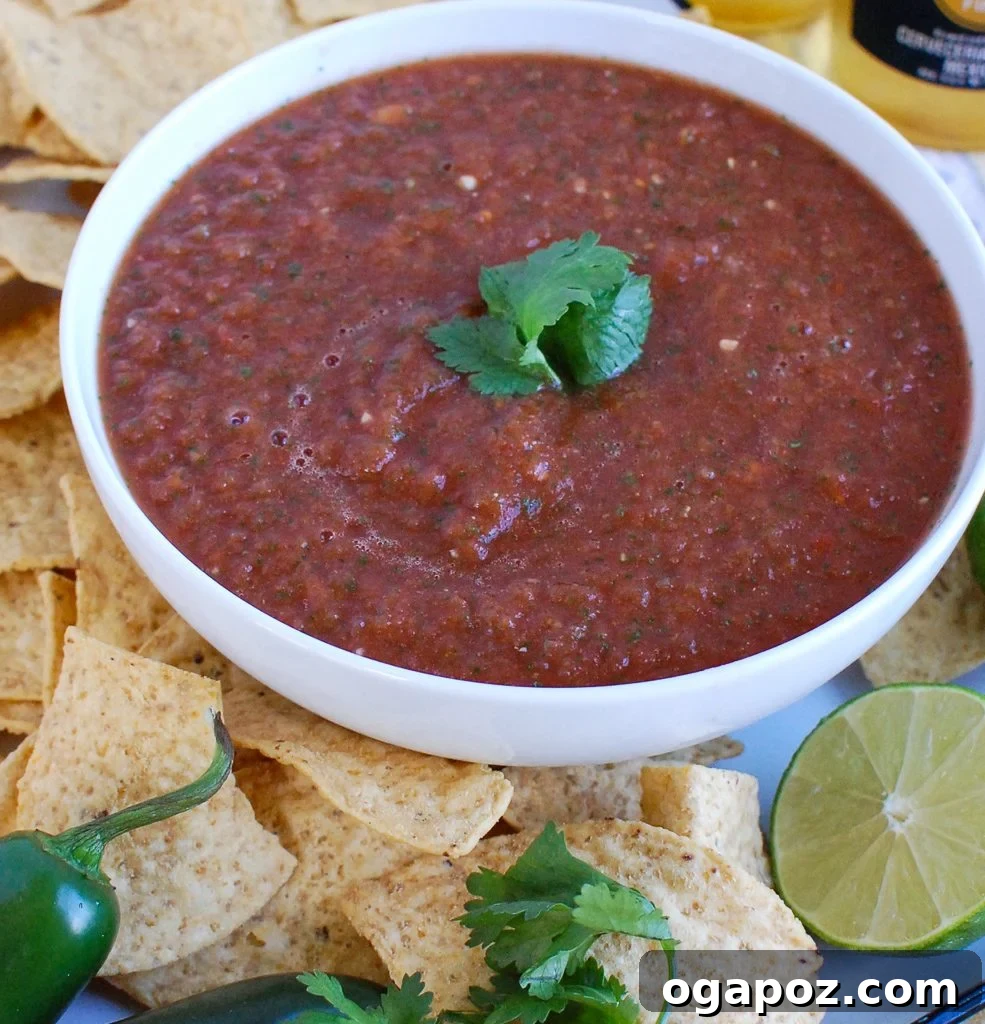
The magic of this easy homemade salsa lies in a few key ingredients. Below is a detailed look at what you’ll need, along with tips for customization and substitutions:
- Tomatoes: Our recipe uses a can of Rotel, which combines diced tomatoes with green chiles, providing a foundational flavor with a subtle kick. We also include an additional can of diced tomatoes for body. If Rotel isn’t available, simply use two cans of regular diced tomatoes and one small can of diced green chiles. For a truly fresh experience, you can experiment with fresh Roma tomatoes, blanching and peeling them first, though this will extend the prep time.
- Cilantro: Fresh cilantro is crucial for that authentic, vibrant Mexican flavor. Its bright, citrusy notes are a hallmark of great salsa. We understand cilantro isn’t for everyone – if you’re one of those who perceive it as soapy, feel free to omit it entirely. Otherwise, add as much or as little as you like to achieve your desired flavor profile.
- Spices: Cumin is a must-have spice in salsa, lending an earthy, warm depth that complements the tomatoes beautifully. For those who love heat, cayenne red pepper adds a fantastic fiery element; it can be left out if you prefer a milder salsa. You can also introduce chili powder for an extra layer of savory spice.
- Lime Juice: Freshly squeezed lime juice is paramount. Its bright acidity cuts through the richness of the tomatoes and balances all the flavors, bringing a refreshing zing to the salsa. We recommend starting with half a lime’s juice and then tasting, adding more if you desire a tangier profile.
- Jalapeño: For a spicy salsa lover like myself, adding at least one jalapeño is essential. The heat level of jalapeños can vary, so taste a small piece first. To reduce the spice, remove the seeds and white membranes (pith) before dicing. For an even spicier kick, leave some seeds in or add an extra jalapeño, or even a serrano pepper.
- Sweet Onion: A quarter cup of sweet onion adds a subtle pungency and sweetness that rounds out the salsa. White or yellow onion can also be used, depending on your preference for a sharper or milder onion flavor.
- Garlic: One clove of fresh garlic provides an aromatic backbone. Minced garlic, or even garlic powder (used sparingly), can work in a pinch, but fresh is always best for the most robust flavor.
- Sugar (Optional): A quarter teaspoon of sugar can help balance the acidity of the tomatoes and lime, especially if your canned tomatoes are particularly tart. It’s optional and not always necessary, so taste your salsa before adding.
- Salt and Pepper: A dash of salt and pepper to taste is critical for enhancing all the other flavors. Always adjust these seasonings at the end, after blending, to ensure perfect balance.
How to Make the Easiest Homemade Salsa: A Step-by-Step Guide
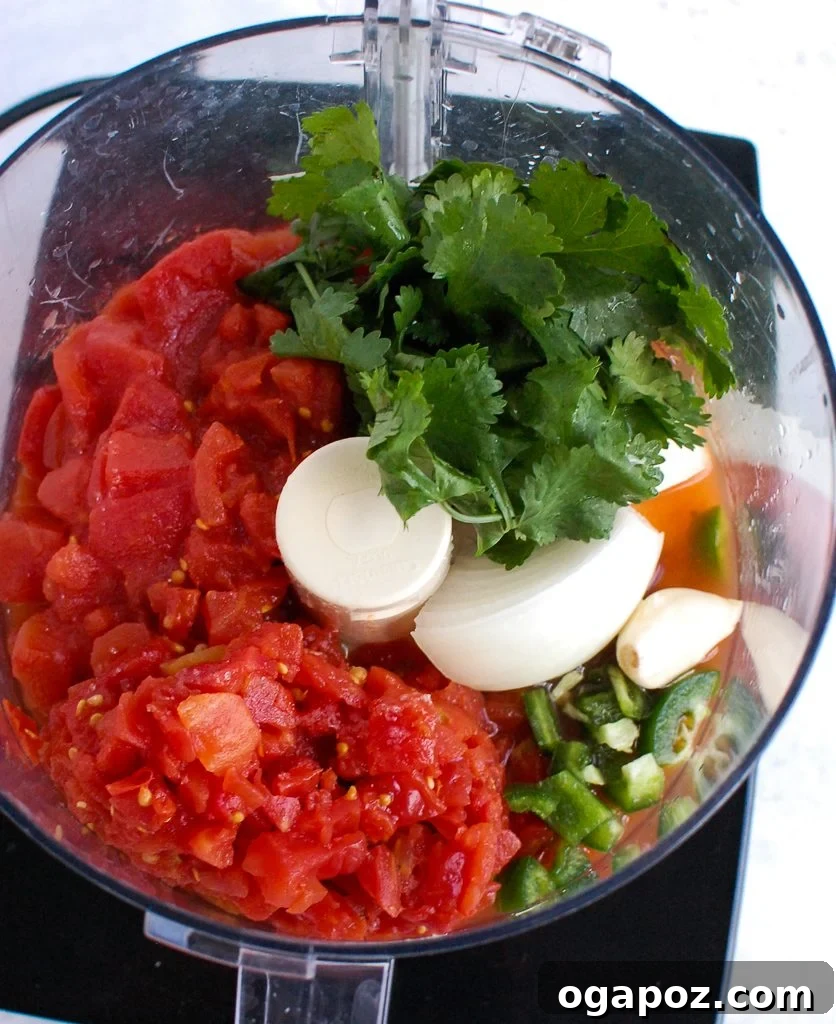
If you appreciate truly easy recipes, then this homemade salsa will become a staple in your kitchen. The process is incredibly straightforward, relying heavily on the efficiency of your food processor or blender to do all the heavy lifting.
- Step 1: Blend All Ingredients: Gather all your ingredients – canned tomatoes, jalapeños, garlic, sweet onion, cilantro, lime juice, sugar (if using), cumin, cayenne red pepper (if using), and a dash of salt and pepper. Place them all into your food processor or high-speed blender. Begin to blend, pulsing initially to break down the larger pieces, then processing continuously to achieve your desired consistency.
- Step 2: Achieve Your Preferred Consistency: This is where personal preference comes into play. If you love a chunky salsa with distinct bits of vegetables, blend for a shorter duration, using quick pulses. For a thinner, smoother restaurant-style salsa, similar to what you might find at your favorite Mexican spot, let the food processor or blender run for approximately 1 minute, or until the salsa reaches a uniform, pourable texture. Avoid over-blending, which can make the salsa watery and compromise its fresh taste.
- Step 3: Taste and Adjust Seasoning: Once blended, transfer a small amount of salsa to a spoon and taste it. This is a crucial step for perfecting your salsa. Consider what flavors might need enhancing:
- For more spice: Add another finely diced jalapeño (with or without seeds) or more cayenne red pepper.
- For more acidity/tang: Squeeze in additional fresh lime juice.
- For more depth: A pinch more cumin can deepen the savory notes.
- For sweetness balance: If the tomatoes seem a bit acidic, add a tiny bit more sugar.
- For overall flavor enhancement: Don’t underestimate the power of salt and pepper. Add small pinches until the flavors truly pop.
Continue to taste and adjust until your salsa is perfectly balanced and utterly delicious.
Versatile Ways to Enjoy Your Homemade Salsa
This vibrant homemade salsa is incredibly versatile and can be enjoyed in countless ways beyond just a simple chip dip. Here are some fantastic ideas to make the most of your fresh batch:
- Classic Dipping: Serve it generously with your favorite tortilla chips, fresh cut vegetables like cucumber sticks, bell pepper strips, or carrot sticks.
- Taco Topping Perfection: Elevate any taco night! This salsa is an essential topping for anything from classic Grilled Fish Tacos to hearty Slow Cooker 4-Ingredient Shredded Beef Tacos, or even chicken and vegetarian options.
- Enchilada Enhancement: Spoon it over cheesy, savory enchiladas for an extra burst of fresh flavor. It pairs wonderfully with Three Cheese Beef Enchiladas, Green Chile Chicken Enchiladas, and even rich Roasted Poblano Enchiladas with Chicken.
- Beyond Mexican Cuisine: Use it as a zesty condiment for grilled chicken, fish, steak, or pork. It adds a bright, fresh contrast to rich meats.
- Breakfast & Brunch Boost: A dollop of salsa is fantastic on scrambled eggs, omelets, huevos rancheros, or breakfast burritos.
- Party Platter Star: Serve this salsa alongside other delectable appetizers like creamy Buffalo Queso Cheese Dip, crispy Jalapeño Poppers, and savory Guacamole Stuffed Potato Skins.
- Salad Dressing Alternative: Thin it out slightly with a little olive oil or water for a vibrant, low-calorie salad dressing.
- Marinade Base: Use it as a flavorful base for marinades for chicken or fish before grilling or baking.
Storage and Make-Ahead Tips for Homemade Salsa
Making a larger batch of salsa is always a good idea, as it’s sure to disappear quickly! Here’s how to store it properly to maintain its freshness:
- Refrigeration: This homemade salsa will keep beautifully in the refrigerator for up to 7 days. Ensure it’s stored in an airtight container to prevent oxidation and absorb unwanted odors from other foods. The flavors often deepen and meld even better after a day or two in the fridge.
- Freezing: Yes, you can freeze salsa! For longer storage, transfer the salsa into freezer-safe, airtight containers or heavy-duty freezer bags. Leave a little headspace if using containers, as liquids expand when frozen. It can be frozen for up to 2-3 months. Thaw frozen salsa in the refrigerator overnight before serving. You might notice a slight change in texture after thawing, as the vegetables can become a bit softer, but the flavor will still be excellent. Stir well before serving.
Salsa Variations and Customizations to Explore
The beauty of homemade salsa is its adaptability. Once you master this basic recipe, the possibilities for customization are endless:
- Smoky Salsa: For a richer, deeper flavor, consider roasting your fresh tomatoes, onions, and jalapeños before blending. You can also add a canned chipotle pepper in adobo sauce for a smoky, spicy kick.
- Fruity Salsa: Introduce diced fresh mango, pineapple, or corn for a sweeter, more tropical twist. These are fantastic with grilled fish or chicken.
- Salsa Verde: Swap out the red tomatoes for roasted tomatillos and add more cilantro and perhaps a touch of poblano pepper for a bright, tangy salsa verde.
- Ultra-Spicy Salsa: For heat seekers, substitute jalapeños with serrano peppers or even a habanero (use sparingly!). Remember to handle hotter peppers with gloves.
- Mild Salsa: To reduce the heat, ensure all seeds and membranes are removed from the jalapeño, or omit it entirely. You can also use milder green chiles instead of jalapeños.
- Herb Variations: While cilantro is traditional, you can experiment with other fresh herbs like parsley or a tiny bit of oregano for different flavor profiles.
- Adding Vegetables: Finely diced bell peppers (red, green, or yellow), corn kernels, or black beans can be added for extra texture and nutritional value.
Essential Equipment for Easy Salsa Making
Making homemade salsa is incredibly simple and requires minimal special equipment:
- Food Processor or Blender: This is the most crucial tool. A food processor allows for more control over texture, making it easier to achieve a chunky salsa. A high-speed blender can yield a very smooth, restaurant-style consistency. Either will work effectively.
- Cutting Board and Knife: For prepping fresh ingredients like onions, jalapeños, and cilantro.
- Measuring Cups and Spoons: For accurate ingredient proportions, especially for spices.
- Airtight Container: For storing your delicious homemade salsa in the refrigerator.
Explore More Delicious Salsa Recipes
Vegetarian
Mango and Black Bean Salsa
Appetizers
Avocado Tomatillo Salsa
Appetizers
Easy Watermelon Salsa
Appetizers
Tomatillo Salsa Verde
Tried this recipe? Leave a star rating and comment below! Subscribe to my newsletter or follow me on
Facebook,
Instagram, or
Pinterest for the latest.
Rated 5 out of 5 stars from 1 vote
Homemade Salsa
Julia Jolliff
Print Recipe
10 mins
10 mins
6
Ingredients
- 1 can Rotel
- 1 can diced tomatoes
- 2 jalapeños, seeds removed, diced (optional for spice)
- 1 clove garlic
- 1/4 cup sweet onion
- 1/4 cup cilantro, rinsed and stems removed
- 1/2 lime, juiced
- 1/4 teaspoon sugar, (optional for a touch of sweetness but not necessary)
- 1/4 teaspoon cumin
- 1/4 teaspoon cayenne red pepper, (optional)
- Dash of salt and pepper, (to taste)
Instructions
-
Put all ingredients in blender or food processor and blend until mixed well. Add more spices to taste.
-
Serve with chips or cover and refrigerate for up to 7 days in an airtight container.
Notes
- Feel free to adjust the amount of ingredients to your liking.
Nutrition
Carbohydrates: 7g,
Protein: 1g,
Fat: 0.3g,
Saturated Fat: 0.04g,
Polyunsaturated Fat: 0.1g,
Monounsaturated Fat: 0.1g,
Sodium: 98mg,
Potassium: 291mg,
Fiber: 2g,
Sugar: 4g,
Vitamin A: 329IU,
Vitamin C: 16mg,
Calcium: 49mg,
Iron: 2mg
Nutrition information is automatically calculated, so should only be used as an approximation.
Tried this recipe?
Mention @acedarspoon or tag #acedarspoon!
Whip Up Your Own Restaurant-Style Salsa Today!
There you have it – a foolproof recipe for the best homemade salsa that’s quick, easy, and incredibly versatile. Say goodbye to mediocre store-bought versions and hello to vibrant, fresh flavors that you can customize to your heart’s content. Whether you’re enhancing your next taco night, preparing for a lively party, or simply enjoying a snack, this restaurant-style salsa is sure to impress. Don’t hesitate to experiment with the ingredients to truly make it your own. Get blending, get tasting, and get ready to enjoy the most delicious salsa you’ve ever made!