

Easy & Creamy Potato Soup: Your New Go-To Comfort Meal
Prepare to fall in love with this incredibly easy potato soup recipe – a true embodiment of comfort food, reimagined for modern simplicity. This isn’t just another potato soup; it’s a luxuriously creamy, deeply flavorful experience, astonishingly simple to prepare. Crafted entirely in a single pot, it streamlines your cooking with effortless simmer-and-blend steps. And here’s the best part: there’s no need for flour, making it a naturally gluten-free delight, and you don’t even have to peel the potatoes! This saves precious time without sacrificing one iota of the rich taste or velvety texture you crave.

Experience the sheer delight of a velvety, irresistibly creamy texture in this Easy Potato Soup – achieved beautifully without relying on heavy cream! Its flavor profile is exceptionally full-bodied and satisfying, yet the recipe remains remarkably quick and simple. It’s the ideal meal solution for even the busiest weeknights when you yearn for something wholesome, delicious, and deeply comforting without the usual fuss. If your schedule is exceptionally tight and you’re looking to cut down cooking time even further, we highly recommend exploring our lightning-fast Instant Pot Potato Soup recipe for an even quicker preparation method that delivers equally impressive results.
Essential Ingredients for Your Heavenly Potato Soup
Crafting this deeply flavorful and wonderfully creamy potato soup requires just a handful of straightforward, wholesome ingredients. Each component plays a vital role in building the soup’s comforting taste and silky texture, creating a symphony of flavors that will delight your palate. What makes this recipe even better? It proudly omits flour, relying instead on the natural starches released by the potatoes for thickening. This innovative approach makes it a perfectly wholesome and naturally gluten-free option, ensuring everyone at your table can savor its deliciousness.
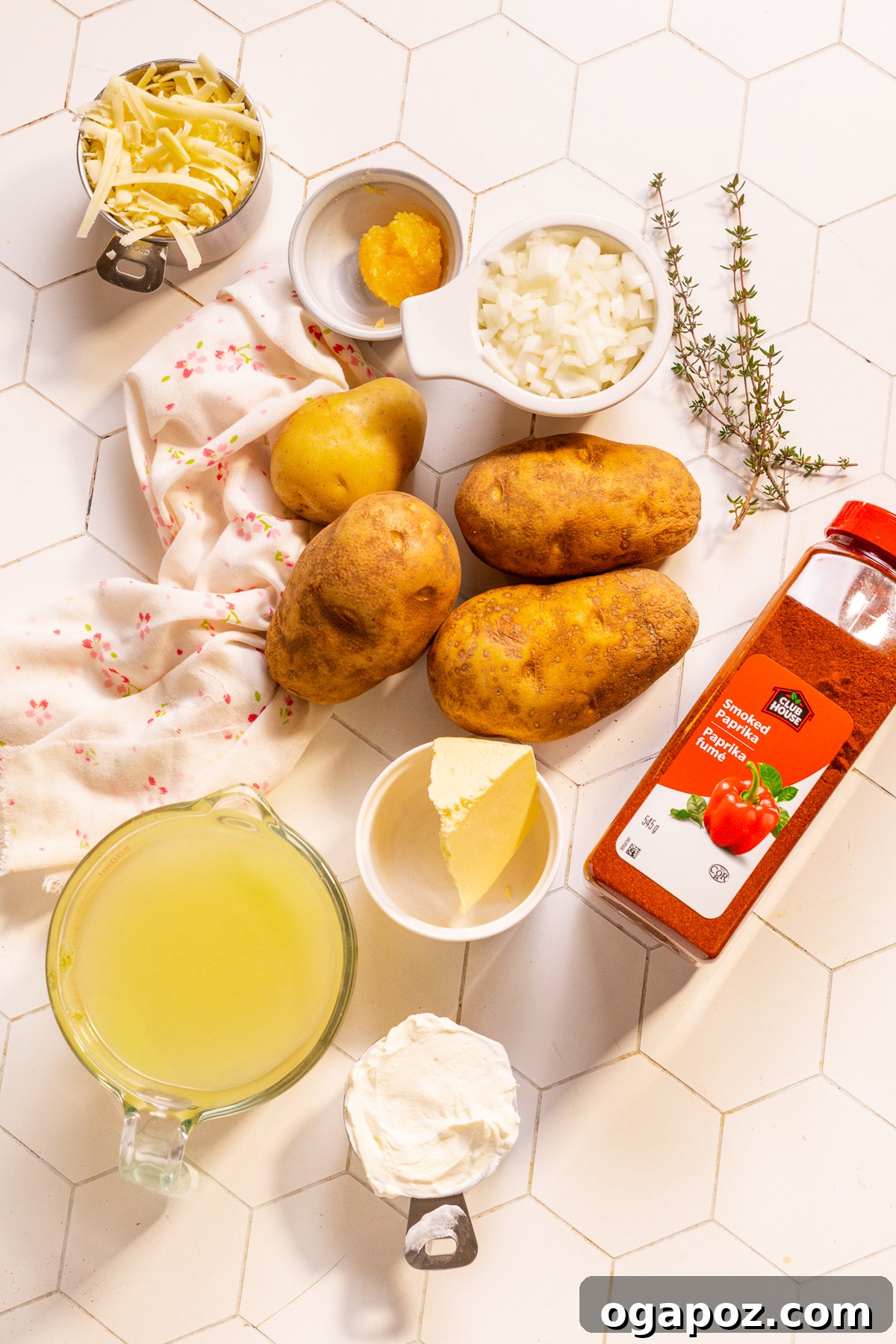
- Butter (2 tbsp): The starting point for our flavor base. Butter not only helps to sauté our aromatics beautifully but also infuses the soup with a rich, inviting depth right from the start.
- Onion (¾ cup coarsely chopped, about 1 large): A foundational aromatic that sweetens and deepens the soup’s overall flavor profile. When properly cooked, onions contribute an essential savory backbone.
- Celery (2 stalks, coarsely chopped): Adds a subtle, earthy, and slightly peppery note, contributing aromatic complexity that perfectly balances the richness of the potatoes.
- Garlic (1 clove, minced): An indispensable ingredient for its pungent, warming undertone. Garlic elevates all other flavors, providing a crucial layer of savory goodness.
- Potatoes (2 large russet, cut into 1-inch chunks, skins left on): The unequivocal star of our soup! Russet potatoes are highly recommended for their high starch content, which breaks down beautifully to create a wonderfully fluffy, soft texture ideal for blending into a smooth, thick soup. Leaving the skins on not only saves time but also adds fiber and nutrients.
- Chicken Broth (2 cups): Provides a savory, liquid base essential for cooking the potatoes and building flavor. For ultimate convenience and concentrated taste, a high-quality bouillon concentrate mixed with water works exceptionally well. For a vegetarian version, simply swap for vegetable broth.
- Milk (1 –2 cups): The secret to achieving profound creaminess without the heaviness of traditional cream. Any type of milk (whole, 2%, 1%, or even unsweetened oat milk for a dairy-free option) works wonderfully here. For an extra indulgent soup, a half-and-half blend of milk and heavy cream can be used.
- Salt and Pepper (to taste): Absolutely crucial for proper seasoning. Potatoes are notoriously bland without adequate salt, so don’t be shy. Freshly ground black pepper adds a subtle warmth and delightful spice.
- Sour Cream (½ cup, plus more for serving): Stirred in at the very end, sour cream provides an irresistible tang and contributes significantly to the luscious, final creaminess and mouthfeel of the soup.
- Green Onions (for garnish): A fresh, sharp garnish that adds a vibrant pop of color and a mild, oniony bite, providing a perfect counterpoint to the rich soup.
As emphasized, this recipe uniquely achieves its delightful thickness and creamy texture by harnessing the natural starches present in the potatoes themselves. This ingenious method means we can entirely eliminate the need for flour, resulting in a wonderfully wholesome and naturally gluten-free soup. It’s an excellent choice for individuals with dietary restrictions, or simply anyone seeking a lighter yet equally satisfying and flavorful meal.
Unlock Endless Possibilities: Creative Swaps and Variations for Your Potato Soup
One of the most appealing aspects of this easy potato soup recipe is its incredible versatility. It serves as a fantastic culinary canvas, offering ample room for you to experiment and customize it based on your personal preferences, dietary needs, or simply whatever ingredients you happen to have on hand. Don’t hesitate to get creative and transform this base recipe into something uniquely yours!
- Potato Type: The choice of potato significantly influences the soup’s final texture.
- Russet Potatoes: These are ideal for a smooth, thick soup. Their high starch content means they break down beautifully when cooked, yielding a wonderfully fluffy, soft texture reminiscent of perfectly whipped mashed potatoes.
- Yukon Gold Potatoes: If you’re looking for a naturally buttery flavor and a slightly firmer, creamier texture than Russets, Yukon Golds are an excellent option. They blend well but tend to maintain a bit more body and a golden hue.
- Red Potatoes: For those who prefer a soup with distinct, tender potato chunks rather than a completely smooth purée, red potatoes are the way to go. Their waxy texture helps them hold their shape better during simmering and even after a light blend.
- Broth Options: The liquid base can be easily adapted to suit various dietary needs or to introduce new layers of flavor.
- Vegetable Broth: An easy and effective swap to make this a fully vegetarian or vegan potato soup. Always choose a high-quality vegetable broth for optimal flavor depth.
- Bone Broth: For an added nutritional boost, particularly collagen, and a richer, more profound umami depth, bone broth is a fantastic alternative. It contributes a heartier body and a deeper savory profile to the soup.
- Mushroom Broth: Offers a unique, earthy, and savory twist, particularly complementary in a vegetarian rendition of this soup.
- Milk Varieties: This recipe is remarkably forgiving when it comes to your choice of dairy or non-dairy milk.
- Whole Milk: Provides a classic, robust creaminess that many enjoy.
- 2% or 1% Milk: A slightly lighter option that still delivers a great creamy consistency without excess richness.
- Oat Milk (or other plant-based milk): For a dairy-free or vegan version, unsweetened oat milk (or almond milk, soy milk, cashew milk) works surprisingly well, maintaining a desirable creamy texture. We’ve personally tested and loved the results with various plant-based milks!
- Half-and-Half or Heavy Cream: For an exceptionally decadent, ultra-creamy, and luxurious soup, consider substituting half or all of the specified milk with half-and-half or heavy cream.
- Sour Cream Alternatives: This ingredient is key for its tangy finish and contributes significantly to the soup’s final creaminess.
- Greek Yogurt: A healthier and equally delicious stand-in for sour cream. Opt for full-fat, plain Greek yogurt to achieve a similar luxurious creamy finish and satisfying tang.
- Cream Cheese: A small dollop of cream cheese, stirred in and melted, can add an incredibly rich texture and a subtle, delightful sweetness to the soup.
- Cheese Additions: Who can resist the allure of cheese in a comforting potato soup?
- Grated Cheddar: Stir it directly into the hot soup after blending until it’s perfectly melted for a cheesy base, or generously sprinkle it on top just before serving for that iconic “loaded baked potato” aesthetic and flavor.
- Monterey Jack: This cheese melts beautifully and imparts a mild, creamy, and slightly buttery cheese flavor that pairs wonderfully with potatoes.
- Smoked Gouda: For a sophisticated, smoky depth that complements the earthiness of potatoes exceptionally well, try stirring in or sprinkling smoked Gouda.
- Crumbled Blue Cheese: A bold and exciting addition for those who appreciate its sharp, piquant, and distinctly tangy flavor profile.
- Add-ins for Extra Heartiness and Nutrition: Elevate your soup from a side dish to a more substantial meal with these versatile additions.
- Fresh Greens: For a nutritional boost and vibrant color, stir in a handful of finely chopped spinach or kale right at the end of cooking. The residual heat will wilt them perfectly.
- Sweet Corn: Frozen or fresh corn kernels add a delightful burst of sweetness and a pleasant textural contrast to the creamy soup.
- Leftover Roasted Vegetables: A brilliant and resourceful way to use up any leftover roasted carrots, broccoli florets, or diced bell peppers. Chop them and add them along with the potatoes during the simmering stage.
- Cooked Protein: Transform the soup into a hearty, complete dinner by tossing in cooked, shredded chicken, diced ham, or crispy crumbled bacon. These additions not only boost flavor but also provide satisfying protein.
- Spicy Kick: If you enjoy a bit of heat, a pinch of red pepper flakes or a dash of your favorite hot sauce can add a pleasant warmth and zing to each spoonful.
Mastering the Art: How to Make This Creamy Easy Potato Soup
Crafting this deliciously creamy and irresistibly cozy stovetop potato soup from scratch is a surprisingly simple and rewarding process. While the steps are straightforward, each one is thoughtfully designed to build layers of profound flavor, ensuring you achieve a truly satisfying and memorable bowl every time. Follow these detailed instructions to create potato soup perfection in your own kitchen.
1. Sauté the Aromatics: Building the Flavor Foundation
Begin by melting 2 tablespoons of butter in a large, heavy-bottomed pot or Dutch oven over medium heat. Once the butter is shimmering, add your finely chopped onion and celery. Cook these essential aromatics gently, stirring occasionally, for approximately 5 to 7 minutes. The goal here is for them to become beautifully soft, translucent, and slightly tender – almost melting into the butter. This crucial step is not to be rushed, as it extracts their natural sweetness and creates a rich, aromatic foundation that will underpin the entire soup’s flavor. Next, stir in the minced garlic and continue to sauté for just 30 seconds more, or until you detect its fragrant aroma. Be vigilant and careful not to burn the garlic, as burnt garlic can impart an unpleasant bitter taste to your soup.
2. Simmer the Potatoes to Fork-Tender Perfection
After your aromatics are fragrant, add the 1-inch chunks of potatoes to the pot. Pour in the 2 cups of chicken or vegetable broth, ensuring that the potato chunks are mostly submerged in the liquid. Place the lid securely on the pot, bring the mixture to a rolling boil over medium-high heat, and then immediately reduce the heat to a gentle, steady simmer. Continue to simmer the potatoes gently for approximately 25 to 30 minutes, or until they are incredibly fork-tender and easily mashable against the side of the pot. This thorough cooking is absolutely essential for achieving a luxuriously smooth and creamy texture when the soup is later blended.
3. Achieve Dreamy Creaminess: The Blending Process
Once the potatoes are perfectly tender, remove the pot from the heat and stir in the first 1 cup of milk. Now, it’s time to transform your soup! Using an immersion blender, carefully purée the soup directly in the pot until it reaches your desired consistency. For an ultra-smooth and velvety soup, blend thoroughly until no chunks remain. If you prefer a heartier texture with some delightful soft potato chunks, simply blend only half of the soup or use a sturdy potato masher to mash some of the potatoes, leaving delightful bits throughout. If you don’t possess an immersion blender, you can carefully transfer batches of the soup to a regular blender (filling the blender pitcher only halfway, securing the lid, and venting it to allow steam to escape) and blend until smooth, then return the blended soup to the pot.
4. Final Creaminess and Expert Seasoning Adjustments
With the soup blended to your liking, return the pot to low heat. Stir in the ½ cup of sour cream. This addition introduces a lovely tangy note and further enhances the soup’s creamy mouthfeel, making it even more irresistible. Now, assess the soup’s thickness: if you prefer a thinner consistency, gradually add the remaining cup of milk, a little at a time, until it’s just right for your preference. Gently warm the soup through over low heat, being extremely careful not to let it come to a boil once the dairy has been added, as this can cause it to separate or curdle. Finally, taste the soup and season generously with salt and freshly ground black pepper. Remember, potatoes tend to absorb a lot of seasoning, so don’t be shy with your adjustments to bring out all the vibrant flavors!
5. Serve Hot and Garnish with Your Favorite Toppings
Ladle the steaming, lusciously creamy potato soup into individual bowls. This is where you can truly personalize your culinary creation! Garnish each serving with a dollop of extra sour cream, a generous sprinkle of freshly sliced green onions or chives, and any other delicious extras you love. Crispy crumbled bacon and shredded sharp cheddar cheese are always crowd-pleasing additions that effortlessly transform this simple soup into a luxurious, “loaded baked potato” experience. Serve immediately and savor every spoonful of this warming and comforting masterpiece!
Mastering Potato Soup: Avoid These 5 Common Mistakes for Perfection
Even seemingly simple recipes, like a comforting bowl of potato soup, can sometimes present unexpected challenges. As someone with a background in food science, I’ve observed a few common pitfalls that can prevent your homemade potato soup from reaching its full potential. By being aware of and actively avoiding these missteps, you’ll consistently achieve a perfectly creamy, intensely flavorful, and utterly satisfying bowl every single time.
- Not Cooking the Aromatics Long Enough:
The Mistake: Rushing the initial sautéing of your onions and celery. If these foundational aromatics aren’t given enough time to fully soften and develop their sweetness, you’ll end up with a noticeable raw onion flavor that clashes with the soup’s desired harmony.
The Fix: Patience is key here. Allow the chopped onions and celery to cook gently over medium heat for at least 5-7 minutes, stirring occasionally, until they become beautifully translucent, tender, and almost melting. This slow cooking process is crucial for coaxing out their natural sugars and creating a sweet, deep, and truly flavorful base that will permeate every spoonful of your soup.
- Boiling Instead of Gently Simmering the Potatoes:
The Mistake: Allowing the broth and potatoes to maintain a vigorous, rolling boil during the cooking phase. While it might seem faster, this approach has drawbacks.
The Fix: A hard boil can cause potatoes to break apart unevenly, leading to an inconsistent texture, making it harder to achieve a smooth purée. More importantly, aggressive boiling can stress the delicate proteins in milk or sour cream, potentially causing them to split or curdle when added later. Always reduce the heat to a gentle simmer once the liquid comes to a boil. The potatoes will cook just as thoroughly, but with a much more controlled, tender, and even result, preserving the integrity of your creamy soup.
- Adding Dairy (Milk or Sour Cream) Too Early:
The Mistake: Incorporating milk, sour cream, or any other dairy product into the soup before the potatoes are fully cooked and blended.
The Fix: Dairy, especially milk, is sensitive to high heat and prolonged cooking. Adding it too early can lead to unpleasant curdling, separation, or a “broken” texture in your finished soup. The best practice is to always add your milk and sour cream at the very end of the cooking process, after the potatoes are cooked and the soup has been blended. Then, gently warm the soup through over low heat, ensuring it never returns to a boil, to guarantee a perfectly smooth, stable, and creamy finish.
- Under-Salting the Soup:
The Mistake: Potatoes are renowned for being bland on their own and act like sponges, absorbing a significant amount of seasoning. A common error many home cooks make is under-salting, which results in a flat, uninspired, and frankly, boring soup.
The Fix: Don’t be afraid to season generously and strategically! Add salt in stages: a pinch with the aromatics, a bit more when the broth goes in, and then a final, crucial adjustment after the soup is blended and the dairy is incorporated. Always taste and adjust the seasoning just before serving. A good quality broth also contributes sodium, so taste carefully and confidently add salt and pepper until the flavors truly pop and sing.
- Over-Blending the Potatoes:
The Mistake: Continuing to blend the soup for too long, beyond what’s necessary to achieve your desired consistency, in an attempt to make it extra smooth.
The Fix: Potatoes contain a substantial amount of starch. Excessive blending, particularly with a high-speed blender, can release too much of this starch, which can unfortunately transform your soup from wonderfully creamy and smooth to a thick, gluey, or gummy consistency. For the best texture, stop blending as soon as the soup looks creamy enough, or when you’ve reached your preferred level of chunkiness. For most immersion blenders, a minute or two of careful blending is usually more than sufficient to achieve perfection.
Perfect Pairings: How to Serve Your Easy Potato Soup
While this homemade potato soup is undeniably comforting and delicious on its own, it truly transforms into a culinary masterpiece when paired with the right accompaniments and adorned with flavorful toppings. Think of this creamy soup as a versatile canvas for your culinary creativity! Here’s how you can elevate your potato soup experience, turning a simple meal into an unforgettable feast.
Transform Your Soup: Loaded Baked Potato Soup Topping Ideas
These toppings are more than just for visual appeal; they add crucial layers of texture, complementary flavors, and satisfying richness that make each spoonful an adventure. Embrace the classic “loaded baked potato” concept for the ultimate comfort food experience:
- Extra Sour Cream or Greek Yogurt: A generous, cooling dollop swirled into the hot soup provides a delightful tangy contrast and an extra layer of luxurious creaminess.
- Fresh Green Onions or Chives: Finely sliced, these vibrant greens offer a crisp, mild oniony bite and a beautiful pop of color, cutting through the richness beautifully.
- Crispy Bacon Bits: Just a few slices of bacon, cooked until perfectly golden and shatteringly crisp, then crumbled generously over the bowl. The salty, smoky crunch is a game-changer that adds immense flavor and texture.
- Grated Sharp Cheddar Cheese: Sprinkled generously over the top, the residual heat from the steaming soup will gently melt the cheese, creating gooey, irresistible cheesy comfort. Monterey Jack, a sharp white cheddar, or even a smoky Gouda would also be excellent choices.
- Garlicky Croutons: Whether homemade or store-bought, crunchy, garlicky croutons add a wonderful textural contrast and an extra layer of savory flavor to the soft soup.
- Fresh Herbs: A delicate sprinkle of fresh, finely chopped parsley, dill, or even a hint of thyme can brighten the flavors and add a fresh aromatic touch.
- A Dash of Hot Sauce: For those who appreciate a bit of heat, a few drops of your favorite hot sauce can introduce a subtle, exciting kick that awakens the palate.
- Crispy Fried Onions: Adds a delightful crunch and extra savory, sweet onion depth, mimicking the flavors of an onion dip.
Complementary Sides: What to Serve Alongside Your Soup
Round out your meal with these simple yet incredibly satisfying side dishes that pair perfectly with a rich potato soup:
- Crusty Bread or Warm Dinner Rolls: Absolutely essential for soaking up every last drop of the creamy, flavorful soup. A warm baguette, a slice of artisan sourdough, or homemade dinner rolls are all ideal companions.
- Fresh Green Salad: A light, crisp, and vibrant side salad, perhaps dressed with a zesty vinaigrette, offers a refreshing counterpoint to the richness and warmth of the soup, balancing the meal beautifully.
- Classic Grilled Cheese Sandwich: The quintessential comfort food pairing! A perfectly toasted, gooey grilled cheese sandwich makes for the ultimate, nostalgic, and deeply satisfying comfort food duo.
- Simple Roasted Vegetables: Lightly seasoned and roasted asparagus, green beans, or broccoli can add a healthy, vibrant, and texturally interesting element to your meal, providing a nutritious balance.

Make Ahead & Storage Tips for Your Easy Potato Soup
This easy potato soup is not only wonderfully simple to prepare but also excels as a make-ahead meal, making it an ideal choice for meal prepping or preparing for future busy evenings. In fact, many believe its flavors deepen and meld even more beautifully after a day or two in the refrigerator, allowing the aromatics and potatoes to fully integrate. It reheats exceptionally well, ensuring you can enjoy comforting bowls of deliciousness throughout the week with minimal effort.
- Refrigeration: Store any leftover potato soup in a clean, airtight container in the refrigerator for up to 3 days. This ensures maximum freshness and prevents spoilage. Always allow the soup to cool completely before transferring it to the container and placing it in the fridge.
- Reheating: For the best results, gently reheat the soup on the stovetop over medium-low heat, stirring frequently, until it is warmed through evenly. It’s crucial to avoid high heat or a rapid boil when reheating, especially if your soup contains dairy, as this can cause it to curdle or separate. Alternatively, you can reheat individual portions in the microwave, stirring halfway through, until thoroughly hot.
- Freezing: Yes, you can absolutely freeze this potato soup! Once the soup has cooled completely, transfer it to a freezer-safe container or heavy-duty freezer bags. Be sure to leave about an inch of headspace at the top of the container to allow for expansion during freezing. You can freeze the soup for up to 3 months. While the flavor will remain excellent, it’s important to note that the texture might shift slightly after thawing due to the dairy components and potato starches separating or becoming slightly grainy.
- Thawing and Reheating Frozen Soup: To reheat from frozen, the safest method is to thaw the soup overnight in the refrigerator. Once thawed, reheat gently on the stovetop as described above. Stir vigorously and consistently while reheating to help reintegrate any separated elements and to restore its creamy consistency. If it seems a little thinner than desired after reheating, a splash of extra milk or broth, along with continued stirring, can help bring it back to perfect consistency.
Pro Tip for Freezing: For the absolute best texture post-freezing, consider blending the soup thoroughly until completely smooth before freezing. Another advanced tip is to only add the sour cream upon reheating; this can significantly help minimize textural changes often associated with freezing dairy-based soups.
Frequently Asked Questions About Easy Potato Soup
How do I add more flavor to a bland potato soup?
If your potato soup tastes a little flat or lacks depth, there are several effective ways to enhance its flavor profile. First, revisit the seasoning: potatoes are notorious flavor sponges, so taste and adjust the salt and freshly ground black pepper generously. Consider adding a splash of high-quality chicken or vegetable broth (or bouillon concentrate) for an extra savory punch. Umami-rich ingredients like a dash of Worcestershire sauce (if not vegetarian), a spoonful of nutritional yeast (for a cheesy, savory note), or even a bit of smoked paprika can work wonders. Don’t underestimate fresh herbs like thyme, rosemary, or bay leaves added during the simmer, and a small squeeze of lemon juice at the very end can surprisingly brighten the entire dish.
What is the best thickener for potato soup if it’s too runny?
Our recipe naturally thickens with the starches from the potatoes themselves, but if your soup turns out thinner than desired, a simple cornstarch slurry is your best friend. To prepare, whisk together 1-2 tablespoons of cornstarch with an equal amount of cold water, broth, or milk until it forms a smooth paste. Slowly whisk this slurry into your gently simmering soup and continue to cook, stirring, for 1-2 minutes until it thickens to your preferred consistency. Another excellent method is to remove a ladleful of the cooked potato solids, mash them thoroughly with a fork or masher, and then return them to the pot. Alternatively, if you purposefully left some chunks, you can simply blend a little more of the soup with an immersion blender.
Should you soak potatoes before putting them into the soup?
For this particular easy potato soup recipe, soaking the potatoes before adding them to the soup is generally not necessary. The primary reasons for soaking potatoes are either to remove excess surface starch (which helps achieve maximum crispiness for dishes like fries or roasted potatoes) or to prevent cut potatoes from oxidizing and turning brown when exposed to air. Since we actually want the starch for natural thickening in this soup, and the potatoes will be cooked relatively quickly in liquid, pre-soaking is an optional step that won’t significantly impact the final outcome or flavor profile. However, if you happen to cut your potatoes in advance and need to store them for an extended period before cooking, submerging them in cold water will effectively prevent them from oxidizing and changing color.
Can I make this easy potato soup vegetarian or vegan?
Absolutely! This easy potato soup recipe is incredibly adaptable and can be tailored to suit vegetarian or vegan diets with just a few simple swaps. To make it vegetarian, simply substitute the chicken broth with a good quality vegetable broth. To transform it into a fully vegan soup, you’ll need to use vegetable broth, opt for a plant-based milk (such as unsweetened oat milk, almond milk, or soy milk), and replace the butter with olive oil or a suitable vegan butter alternative. For the sour cream, a full-fat plain vegan sour cream substitute or a rich, plain vegan Greek yogurt alternative will provide that essential creamy texture and satisfying tang. Remember to also ensure any optional toppings like cheese or bacon are vegan-friendly.
How can I make this soup even healthier?
To boost the health factor of this already delicious and wholesome potato soup, consider a few thoughtful modifications without sacrificing flavor. Begin by using a low-sodium chicken or vegetable broth to control your sodium intake. Opt for 1% or skim milk, or choose a lighter plant-based milk. For the creamy tang, swap the sour cream for plain, low-fat Greek yogurt. You can significantly increase the vegetable content by adding finely diced carrots, bell peppers, or extra celery to the aromatic base. Stir in a generous handful of fresh, chopped spinach or kale at the very end of cooking for extra greens and nutrients. Finally, you can reduce the amount of butter and sauté your aromatics in a minimal amount of heart-healthy olive oil. These small, strategic changes can make a big difference in the nutritional profile while still delivering a satisfying and flavorful meal.

5
(1 rating)
Easy Potato Soup (10-Minute Prep!)
This easy potato soup is rich, wonderfully creamy, and tastes just like a loaded baked potato—skins and all. The texture is velvety, the flavor is full-bodied, and it’s quick and simple enough to throw together on even the busiest weeknights, making it an instant family favorite.
Ingredients
- 2 tbsp butter
- ¾ cup coarsely chopped onion (about 1 large)
- 2 stalks celery (coarsely chopped)
- 1 clove garlic (minced)
- 2 large russet potatoes (cut into 1-inch chunks, skins left on)
- 2 cups chicken or vegetable broth
- 1 –2 cups milk
- Salt and pepper (to taste)
- ½ cup sour cream (plus more for serving)
Optional Toppings:
- sliced green onions
- cooked bacon (crumbled)
- grated cheddar cheese
Instructions
-
Sauté the aromatics:
Melt butter in a large pot over medium heat. Add onion and celery. Cook until softened, about 5-7 minutes. Stir in garlic and cook for 30 seconds until fragrant.
-
Simmer the potatoes:
Add potatoes and broth. Cover and bring to a boil. Reduce heat to a gentle simmer and cook for 25-30 minutes, or until potatoes are very soft and easily pierced with a fork.
-
Blend:
Stir in 1 cup of milk. Use an immersion blender to purée the soup until smooth, or blend in batches in a regular blender (be cautious with hot liquids, filling only halfway). For a chunky soup, blend only half or mash with a potato masher, leaving some texture.
-
Cream and season:
Stir in the ½ cup of sour cream. Add more milk, as needed, a little at a time, to thin the soup to your desired consistency. Gently warm through on low heat, ensuring it does not boil. Season generously with salt and pepper to taste.
-
Garnish and serve:
Ladle the hot soup into bowls. Top with a dollop of extra sour cream, a sprinkle of fresh green onions, and any desired optional toppings like crispy bacon or grated cheddar cheese. Serve immediately.
Notes
Recipe Notes & Tips for Success:
- Sauté the onion and celery properly: Don’t rush this initial step. Allow them to soften fully (5-7 minutes) to build a robust flavor foundation for your soup.
- Simmer gently, not at a rolling boil: An aggressive boil can cause potatoes to break unevenly and may lead to dairy curdling later. A gentle simmer is key for tender potatoes.
- Wait to add the milk and sour cream: Incorporate dairy *after* the potatoes are cooked and blended. Adding them too early or boiling them can cause separation or a grainy texture.
- Taste and adjust seasoning before serving: Potatoes absorb a lot of salt. Always do a final taste test at the end and adjust salt and pepper generously until the flavor pops.
- Don’t over-blend: Too much blending can release excess starch, making the soup gluey or gummy. Blend just until creamy, leaving a few soft chunks if preferred, then stop.
Nutrition Facts (Approximate per serving)
- Calories: 212 kcal
- Carbohydrates: 25g
- Protein: 3g
- Fat: 11g
- Saturated Fat: 7g
- Polyunsaturated Fat: 1g
- Monounsaturated Fat: 3g
- Trans Fat: 0.2g
- Cholesterol: 32mg
- Sodium: 539mg
- Potassium: 535mg
- Fiber: 2g
- Sugar: 4g
- Vitamin A: 621 IU
- Vitamin C: 9mg
- Calcium: 54mg
- Iron: 1mg
Nutrition information is automatically calculated and should only be used as an approximation. Actual values may vary based on ingredients and preparation methods.
Enjoyed this recipe? Share your experience!
We’d love to hear how your Easy & Creamy Potato Soup turned out! Your feedback helps us grow. Leave a comment and rating below to share your thoughts, tips, and any delicious variations you tried.