
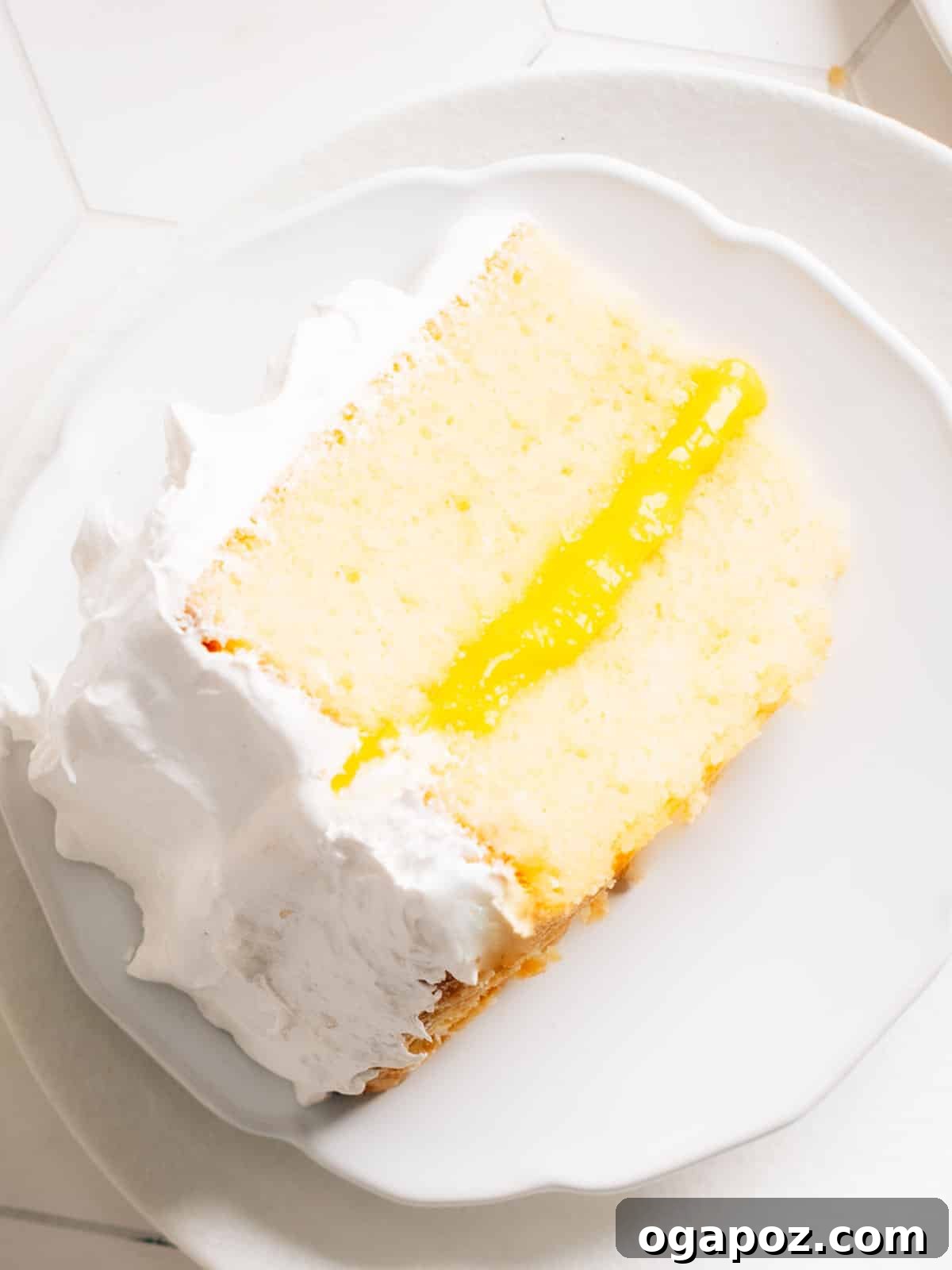
Lemon Curd Cake: The Ultimate Recipe for a Zesty & Refreshing Dessert
Prepare to fall in love with this exquisite Lemon Curd Cake, a dessert that masterfully combines soft, fluffy layers of bright lemon cake with a luscious, tangy lemon curd filling. Each slice offers a harmonious blend of sweet and refreshing flavors, creating an unforgettable culinary experience that’s perfect for any occasion.
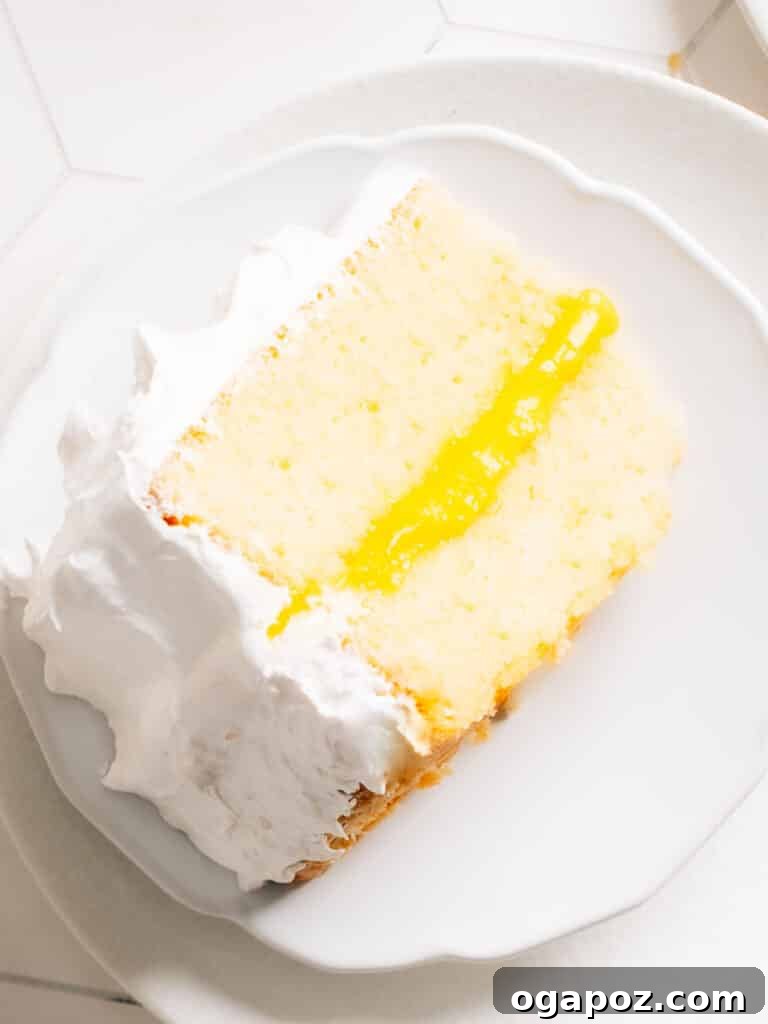
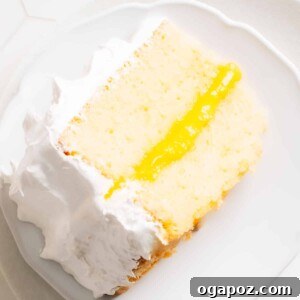
This spectacular cake isn’t just a dessert; it’s a celebration of citrus. With its vibrant lemon curd nestled between tender cake layers and crowned with a delicate, meringue-like 7-minute frosting, it evokes the nostalgic charm of a classic lemon meringue pie. Yet, it delivers the comforting embrace of a truly delicious, moist layer cake. It’s a dessert that promises to delight your senses and leave a lasting impression.
If you’re already a fan of bright, citrusy treats and comforting baked goods, you’ll find this recipe utterly irresistible. It perfectly complements other beloved recipes like Lemon Curd Cookies, our perfectly Moist Vanilla Cake, the effortlessly delicious Easy Lemon Tart, the charming Portuguese Orange Cake, or the rich, dark chocolate indulgence of our Chocolate Orange Cake. Get ready to add this easy-to-follow, moist lemon layer cake to your list of all-time favorites!
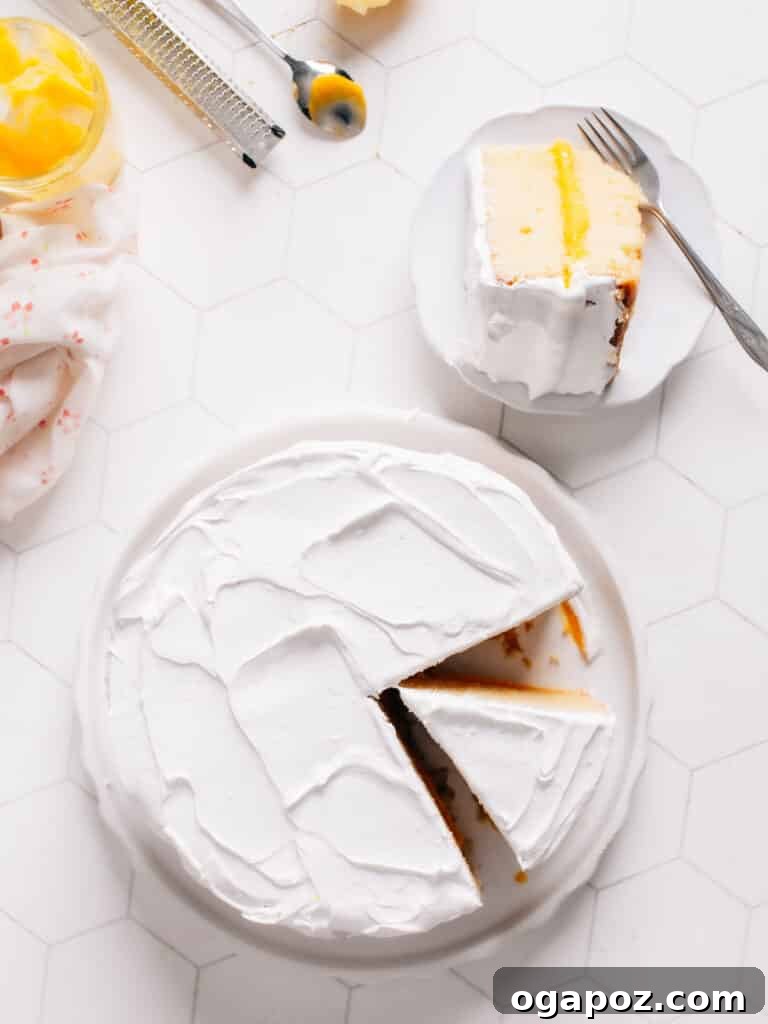
Why This is the Ultimate Lemon Curd Cake Recipe
This isn’t just another lemon cake recipe; it’s a meticulously crafted masterpiece designed for maximum enjoyment and impressive results. Here’s why this lemon curd cake stands out from the rest:
- Exquisite Light, Refreshing Lemon-Vanilla Harmony: You’ll be captivated by the delicate yet vibrant lemon flavor in every bite of the fluffy cake layers, subtly enhanced by a whisper of pure vanilla. This combination creates a delightful “creamsicle” effect, where the bright tartness of lemon beautifully complements the creamy sweetness of vanilla. It’s a sophisticated twist on a classic pairing that ensures a refreshing and utterly satisfying dessert experience, making it much more than just a simple lemon cake.
- Perfect for Any Special Occasion: This cake is truly special occasion-worthy, guaranteed to impress at any gathering. Its elegant appearance and sensational flavor make it ideal for birthdays, baby showers, bridal brunches, or a sophisticated dinner party. It also shines as a festive centerpiece for spring celebrations like Easter or Mother’s Day, bringing a burst of sunshine to your table.
- Unrivaled Soft and Moist Crumb, Thanks to Three Fats: Achieving a super-tender, soft, and moist crumb is paramount for an exceptional cake, and this recipe delivers effortlessly. By thoughtfully incorporating a unique combination of three fats—softened butter, cream cheese, and a neutral oil—we create a richness and moisture that is simply unparalleled. This trifecta works synergistically: butter provides flavor and tenderness, cream cheese adds a slight tang and incredible moistness, while oil ensures a plush, velvety texture that remains soft for days, all without requiring a fussy traditional cake method.
- Convenience with a Shortcut Option: We understand that sometimes time is of the essence. While making homemade lemon curd is a delightful process, this recipe offers a fantastic shortcut: you can easily use high-quality store-bought lemon curd. This simple swap transforms it into a truly easy lemon curd cake, allowing you to enjoy all the layers of flavor with significantly less effort, making it accessible for busy bakers without compromising on taste.
- Generous Yield for Sharing: This delightful lemony cake with its rich curd filling is designed for sharing. It generously yields 16 smaller slices, perfect for a larger crowd or individual portions, or 12 more substantial slices, ideal for those who truly want to savor every Forkful. It’s the perfect size for entertaining, ensuring everyone gets a taste of this magnificent dessert.
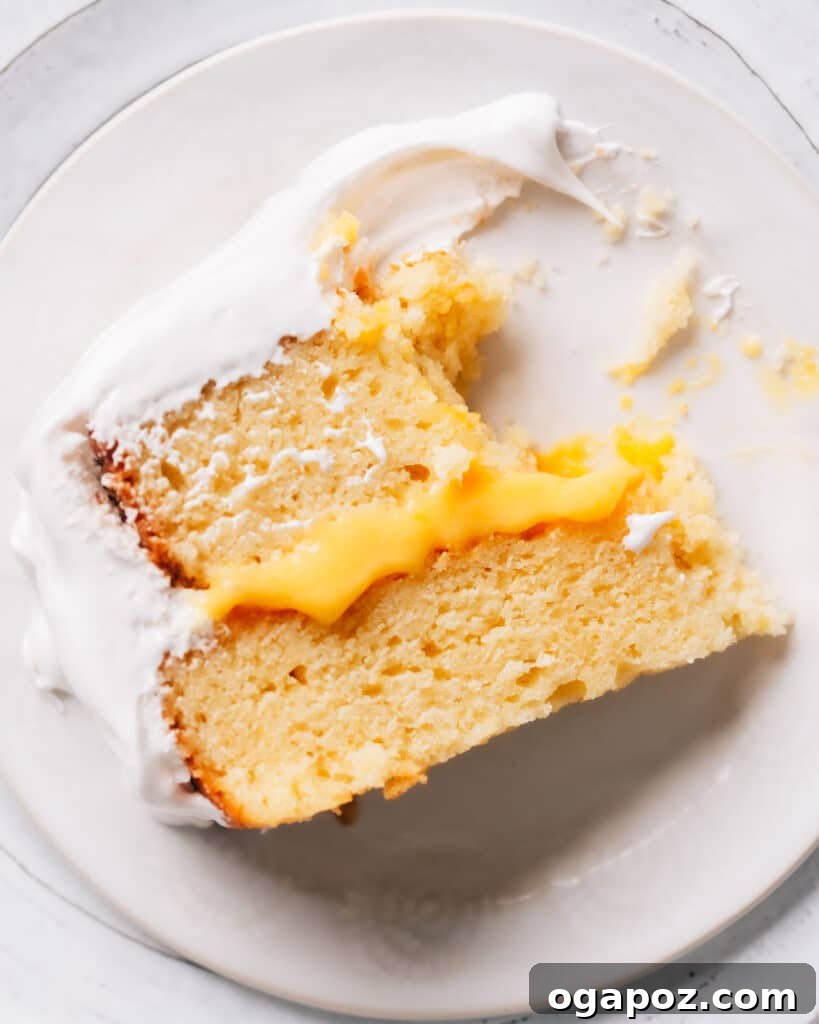
Essential Ingredients for Your Lemon Curd Cake
Crafting the perfect Lemon Curd Cake begins with selecting the right ingredients and ensuring they are prepared correctly. Here’s a detailed look at what you’ll need and why each component is crucial:
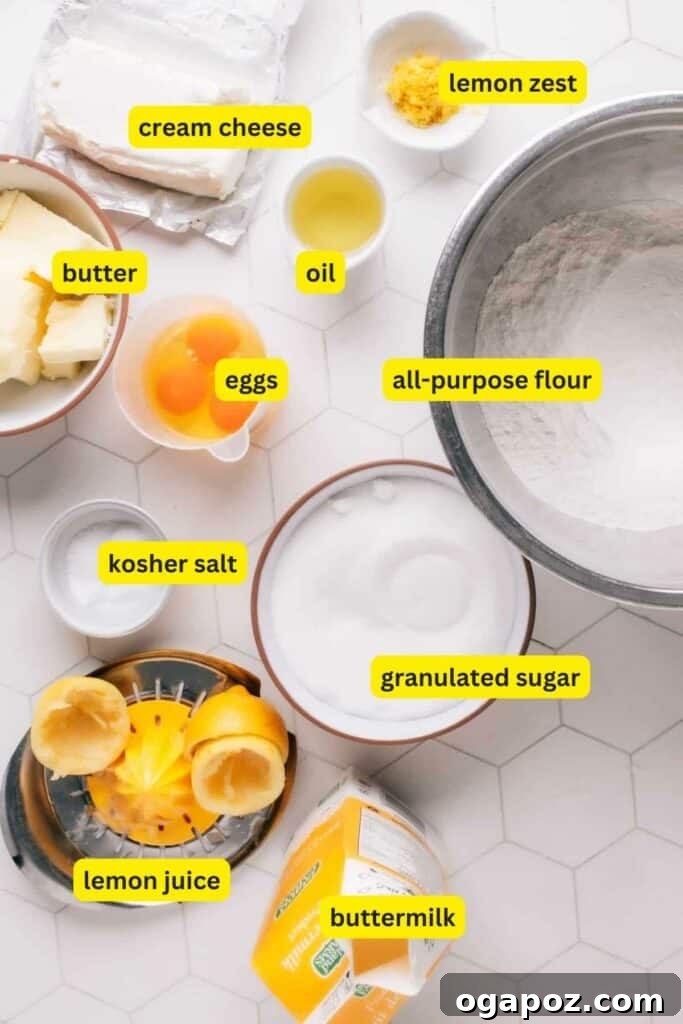
For the Luscious Lemon Cake:
- Salted Butter: Ensure your butter is completely softened to room temperature before you start. This is vital for proper creaming, which incorporates air into the batter, resulting in a lighter, fluffier cake texture.
- Cream Cheese: Like the butter, the cream cheese must be soft and at room temperature. This allows it to blend seamlessly and evenly with the butter during the creaming process, contributing to the cake’s exceptional moisture and subtle tang.
- Avocado Oil or Canola Oil: Any neutral-tasting vegetable oil works perfectly here. Oil contributes to a truly moist cake, ensuring it stays tender for longer, complementing the richness of butter and cream cheese.
- Lemon Zest: Do not underestimate or skip this ingredient! Lemon zest is where the brightest, most aromatic lemon flavor resides. It provides a concentrated burst of citrus that infuses the entire cake with its signature freshness.
- Granulated Sugar: Regular white sugar is the perfect sweetener for this cake, contributing to its tender crumb and balancing the tartness of the lemon.
- Eggs: Use large eggs and make sure they are at room temperature. Room temperature eggs emulsify better with the other ingredients, creating a smoother, more cohesive batter and a finer crumb.
- Buttermilk: True buttermilk is a secret weapon for a truly tender cake. It’s rich in phospholipids, which naturally enhance the fluffiness of the batter and contribute to an incredibly soft, smooth crumb. If you don’t have it on hand, you can create a substitute by adding a tablespoon of lemon juice or white vinegar to regular milk and letting it sit for 5-10 minutes until it curdles. (For more details, refer to our comprehensive buttermilk substitute guide).
- Pure Vanilla Extract: A touch of pure vanilla extract adds a lovely depth and dessert-like warmth, harmonizing beautifully with the bright lemon notes.
- All-Purpose Flour: Use a fresh bag of good quality all-purpose flour. Proper measuring (by weight if possible, or spooned and leveled) is essential for the right cake consistency.
- Baking Soda and Baking Powder: These two leavening agents work in tandem to give the cake its glorious rise and airy texture. Ensure they are fresh and active for the best results.
- Kosher Salt: A small amount of kosher salt is crucial for balancing the sweetness and richness of the cake, enhancing all the flavors without making it taste salty.
For the Zesty Lemon Curd Cake Filling:
The star of the show, this creamy, vibrant lemon curd elevates the cake to extraordinary heights.
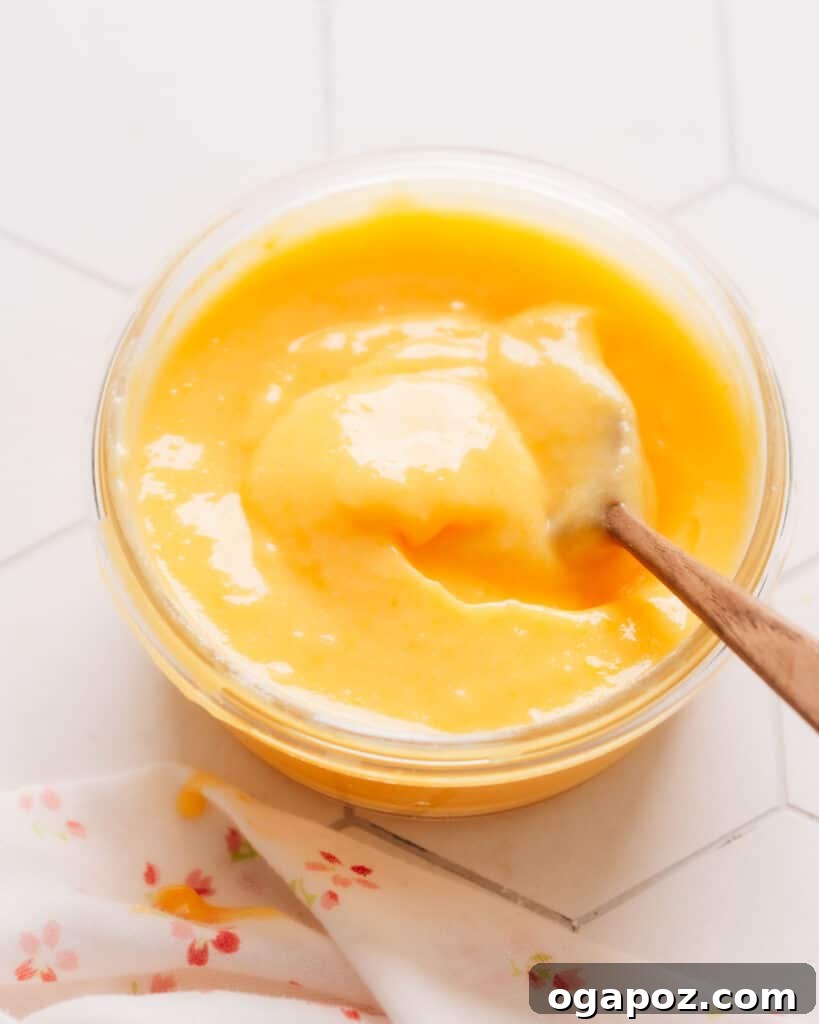
- Lemon Zest: The zest from a large, well-washed lemon is paramount. It infuses the curd with intense, natural lemon oil, providing depth and a vibrant aroma that pure juice alone cannot achieve.
- Fresh Lemon Juice: This will likely come from the same lemons you zested. Choose glossy, unblemished lemons for the brightest, most vibrant lemon flavor, essential for a truly outstanding curd.
- Granulated Sugar: Standard white sugar sweetens the curd and balances the tart lemon juice, contributing to its smooth consistency.
- Large Egg Yolks: Using only egg yolks creates a rich, creamy, and wonderfully thick curd. Ensure your eggs are super fresh for the best texture and flavor. This recipe cleverly utilizes the yolks for the curd and the whites for the frosting, ensuring no waste!
- Unsalted Butter: Cut into small, cold pieces, butter is whisked in at the end to give the lemon curd its luxurious, silky smooth finish and rich mouthfeel. It’s important to weigh the butter for accuracy (approximately 11 oz).
For the Fluffy 7-Minute Meringue Frosting:
This light and airy frosting provides a perfect contrast to the rich cake and tangy curd, reminiscent of a cloud.
- Granulated Sugar: As with the cake, regular white granulated sugar is used here to sweeten and stabilize the meringue.
- Large Egg Whites: Ensure they are at room temperature. This allows them to whip up to their maximum volume, creating a light and airy meringue.
- Fresh Lemon Juice: A touch of lemon juice adds a subtle brightness to the frosting and also helps to stabilize the egg whites, ensuring sturdy peaks.
- Pure Vanilla Extract: Use a pure extract for the best flavor, which enhances the sweetness and balances the lemon notes in the frosting.
Crafting Your Perfect Lemon Curd Cake: A Step-by-Step Guide
Creating this show-stopping Lemon Curd Cake is a rewarding process. Follow these detailed instructions to achieve perfection in every layer.
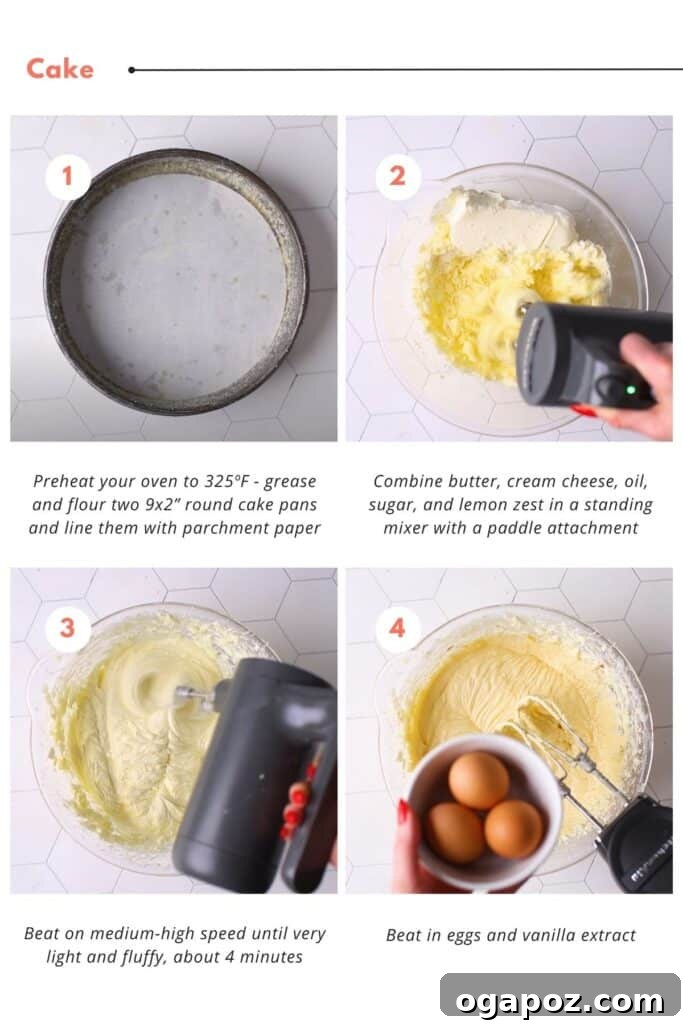
Baking the Moist Lemon Cake Layers:
- First, preheat your oven to a steady 325ºF (160ºC). This slightly lower temperature helps the cake bake more evenly and develop a tender crumb. Prepare two 9×2-inch round cake pans by greasing them thoroughly, dusting with flour, and lining the bottoms with parchment paper circles. This ensures your cakes release perfectly.
- In the bowl of a stand mixer fitted with the paddle attachment, combine the softened butter, cream cheese, neutral oil, granulated sugar, and fresh lemon zest. Beat on medium-high speed for about 4 minutes, or until the mixture is very light, pale, and fluffy. Pause a couple of times during this process to scrape down the sides and bottom of the mixing bowl with a rubber spatula, ensuring everything is fully incorporated.
- Reduce the mixer speed to medium-low, then beat in the room temperature eggs one at a time, allowing each to fully incorporate before adding the next. Stir in the pure vanilla extract. Continue to beat until just combined, being careful not to overmix.
- Pour the buttermilk into the mixture and beat on the lowest speed until it is just combined. The mixture may look slightly curdled at this point, which is completely normal.
- In a separate medium-sized bowl, whisk together the all-purpose flour, baking soda, baking powder, and kosher salt until well combined. This ensures the leavening agents are evenly distributed throughout the dry ingredients.
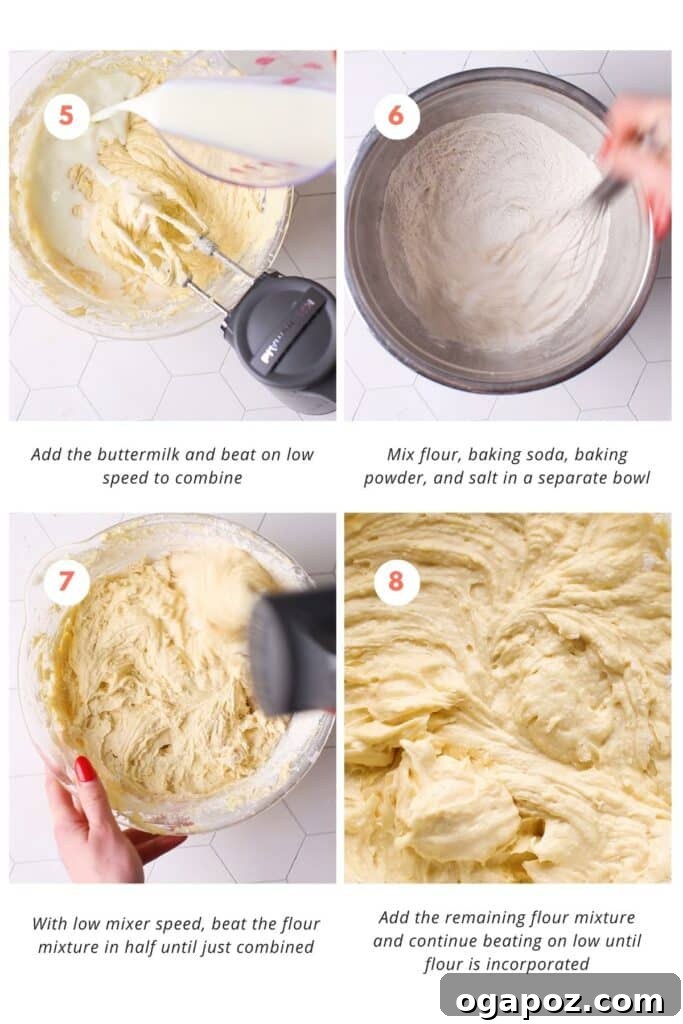
- With the mixer speed still on low, gradually add half of the flour mixture to the wet ingredients. Beat until just combined, stopping as soon as no dry streaks remain.
- Add the remaining flour mixture and continue beating on low speed only until the flour is fully incorporated. It’s crucial not to overmix the batter at this stage, as overmixing can develop the gluten, leading to a tough, dense cake. Pause once to scrape down the mixer bowl and paddle, ensuring an even consistency.
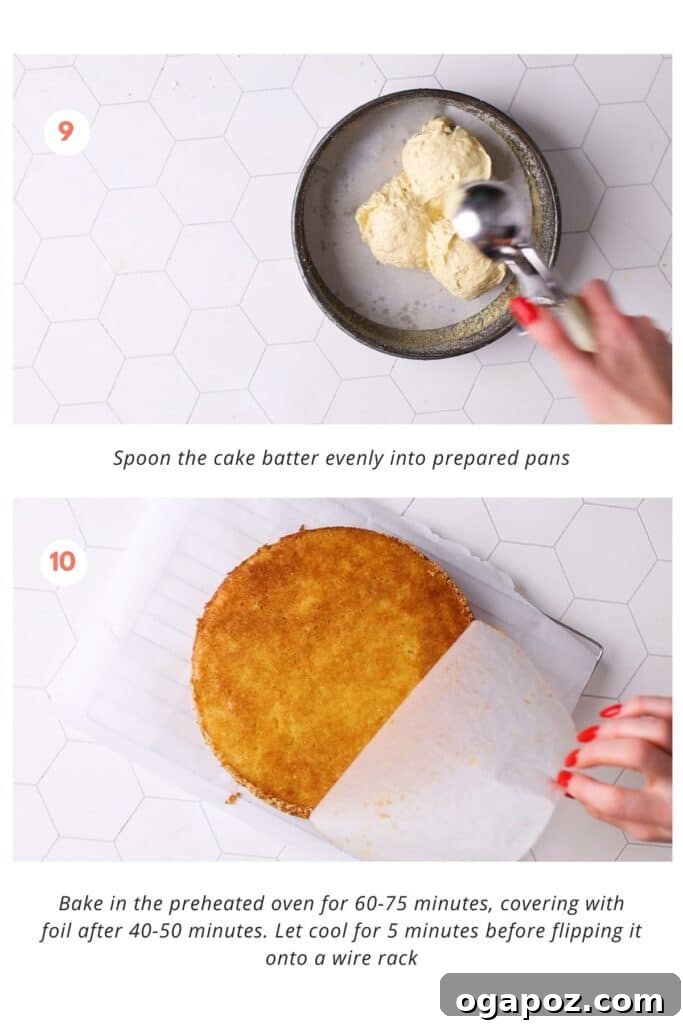
- Divide the cake batter evenly between the two prepared pans. An ice cream scoop works wonderfully for this, ensuring equal portions for even baking. Smooth out the tops of the batter with an offset spatula. Place the pans carefully in the center of your preheated oven.
- Bake for approximately 40-50 minutes. The cake is done when a wooden skewer or toothpick inserted into the center comes out clean, or when an internal temperature of 190ºF (88ºC) is reached with a meat thermometer. If the tops start to brown too quickly, you can loosely cover them with aluminum foil for the remaining baking time. Total baking time can range from 60-75 minutes depending on your oven.
- Allow the cakes to cool in their pans for a full 5 minutes on a wire rack. This helps them firm up slightly before handling. Then, run a thin knife around the edges of each pan to loosen the cake. Place a wire rack over the top of each pan and, using oven mitts, carefully flip the entire setup over to invert the cake onto the rack. If a cake doesn’t release easily, place a hot, damp towel on the bottom of the pan for a few minutes to create steam and help it release. Let the cake layers cool completely on the wire rack before frosting and assembling.
Preparing the Silky Lemon Curd Filling:
This homemade lemon curd is bright, tangy, and incredibly smooth – the perfect complement to the cake.
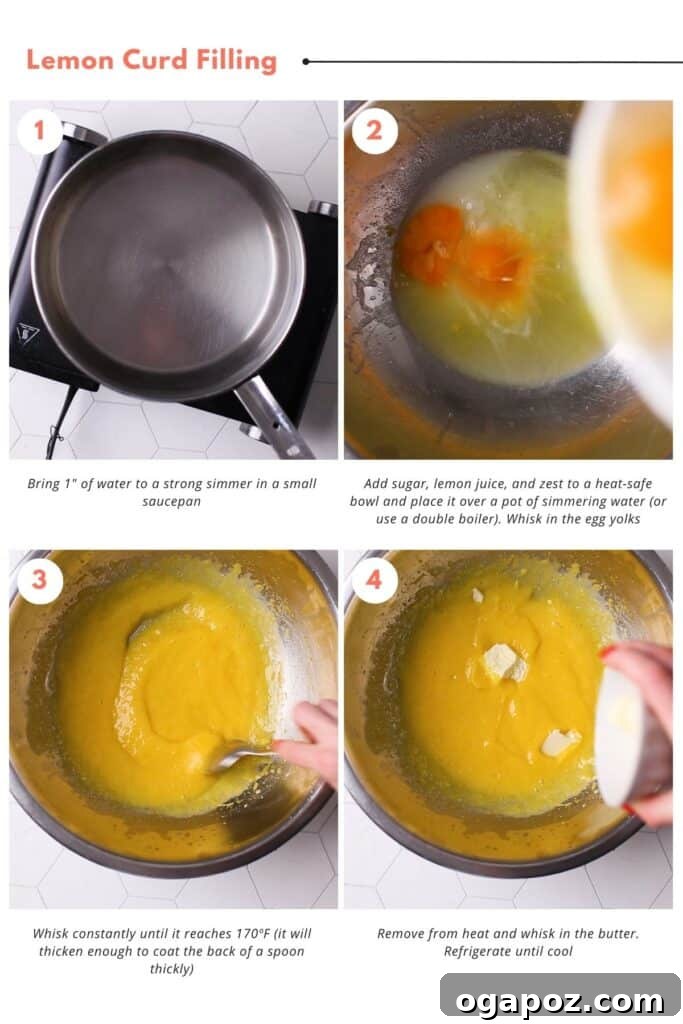
- Pour about 1 inch of water into a small saucepan and bring it to a strong simmer over medium-low heat. You will be using this to create a double boiler.
- In a heat-safe bowl (preferably a non-reactive metal bowl, avoid glass as it can shatter over direct heat), whisk together the granulated sugar, fresh lemon juice, and vibrant lemon zest. Then, whisk in the egg yolks until thoroughly combined. Place this bowl over the simmering water, ensuring the bottom of the bowl does not touch the water.
- Whisk the mixture constantly over the simmering water. This constant motion is crucial to prevent the eggs from scrambling and ensures a smooth, creamy curd. Continue whisking until the curd thickens significantly, enough to coat the back of a spoon in a thick layer without running off immediately. This process typically takes about 6-10 minutes.
- Remove the bowl from the heat. Immediately whisk in the small pieces of cold butter, one at a time, until they are fully melted and incorporated, creating a glossy, smooth curd. If you notice any small lumps, you can strain the curd through a fine-mesh sieve for an extra-silky texture. Transfer the lemon curd to a clean jar or container, cover it with plastic wrap pressed directly onto the surface to prevent a skin from forming, and refrigerate until thoroughly chilled and set. This will take at least 2-3 hours, but ideally overnight.
Whipping Up the Light 7-Minute Frosting:
This fluffy meringue-style frosting is the crowning glory of your lemon curd cake.
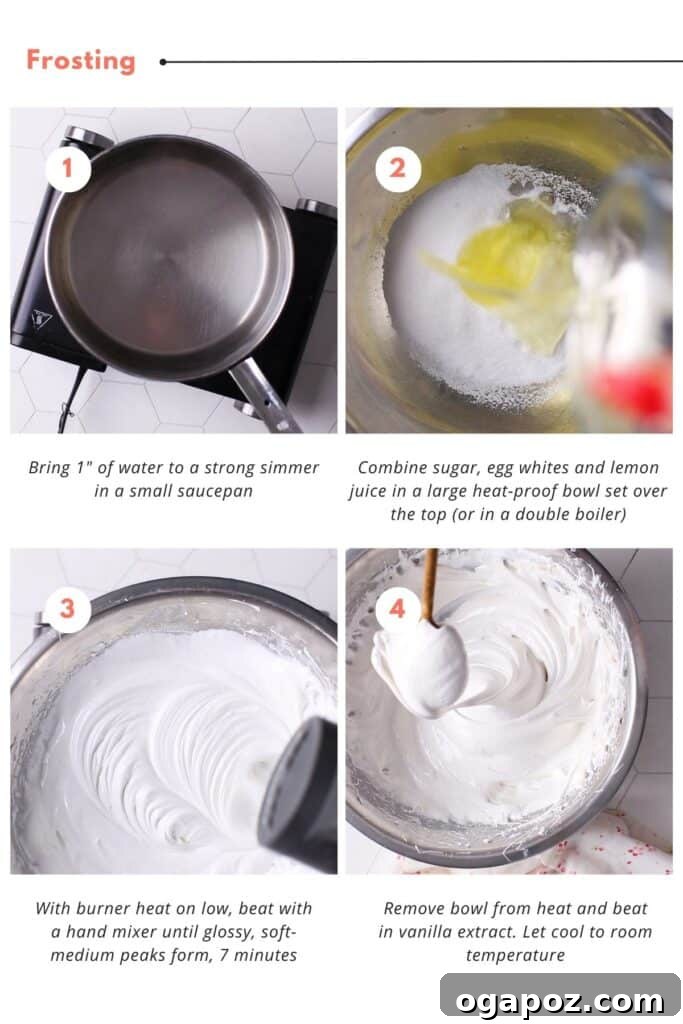
- Prepare your double boiler again: bring about 1 inch of water to a strong simmer in a small saucepan. In a large, heat-proof bowl (again, a non-reactive metal bowl is best), combine the granulated sugar, room temperature egg whites, and lemon juice. Place this bowl over the simmering water, ensuring the bottom does not touch the water.
- With the burner heat on low, immediately begin beating the mixture with a hand mixer on medium-high speed. Continue to beat for precisely 7 minutes, or until the frosting becomes glossy, thick, and forms soft-medium peaks. The texture should be fluffy and spreadable. Remove the bowl from the heat and beat in the pure vanilla extract until just combined. Let the frosting cool completely to room temperature before using it to assemble the cake.
Assembling Your Masterpiece:
The moment of truth – bringing all the delicious components together!
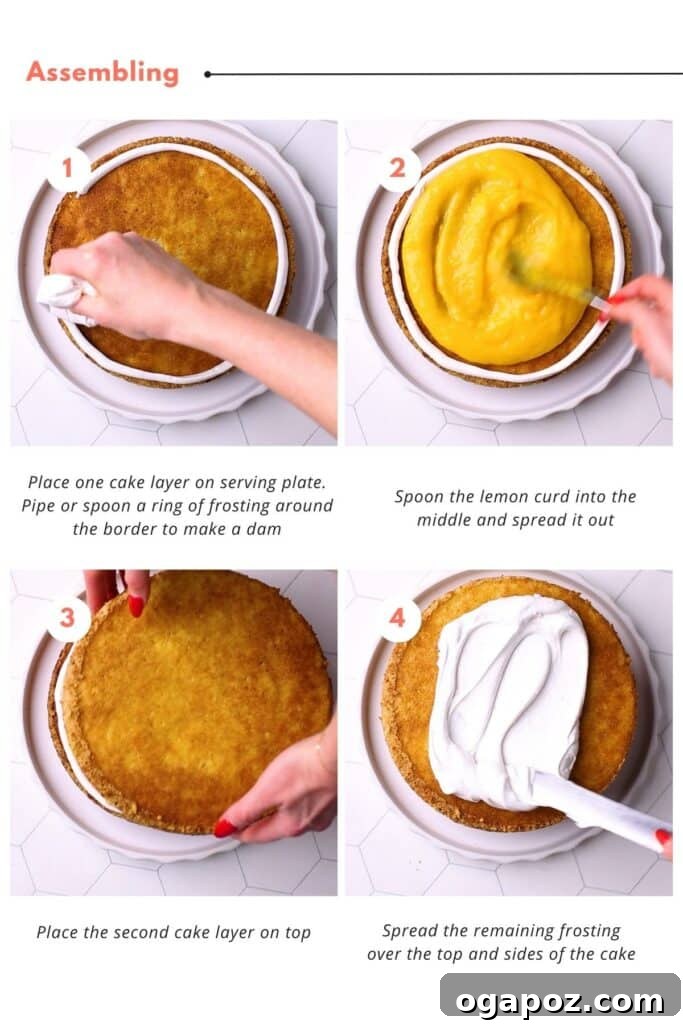
- Carefully place one cooled cake layer onto your desired serving plate or cake stand. Using a piping bag fitted with a round tip (or simply a spoon), pipe or spoon a sturdy ring of the prepared 7-minute frosting around the outer edge of the cake layer. This creates a “dam” that will prevent the luscious lemon curd filling from spilling out.
- Spoon the chilled lemon curd into the center of the frosting dam and gently spread it out evenly with an offset spatula, ensuring it fills the entire space within the dam.
- Gently place the second cooled cake layer on top of the lemon curd filling. Now, spread the remaining fluffy 7-minute frosting over the top and sides of the entire cake, creating a beautiful, airy coating. You can achieve a smooth finish or create delightful swirls with your spatula. Your magnificent Lemon Curd Cake is now ready to be admired and enjoyed!
Make-Ahead & Storage Solutions
Planning ahead can make baking this Lemon Curd Cake a breeze. Here’s how you can prepare components in advance for convenience and optimal freshness:
You can make the lemon curd ahead of time. Once prepared and cooled, store it in an airtight container in the fridge for up to a week. This allows the flavors to meld beautifully and gives you one less step on baking day.
The 7-minute frosting can also be made a few hours before assembly. Once whipped, let it cool completely to room temperature. While it holds its fluffiness relatively well, for the absolute best texture, it’s ideal to use it on the day it’s made. If you must store it longer than a few hours, keep it in an airtight container at room temperature, but be aware it may lose some of its airy volume. Avoid refrigerating the frosting before assembly, as it can stiffen and lose its meringue-like quality.
The cake layers can be baked a day in advance. Once completely cooled, wrap each layer tightly in several layers of plastic wrap to prevent them from drying out. Store them at room temperature on your counter. For longer storage, you can freeze the wrapped cake layers for up to 2-3 weeks. Thaw them at room temperature before unwrapping and assembling. It’s important to note that cakes tend to stale quicker in the refrigerator than on the counter (before frosting), so never make ahead and store plain cake layers in the fridge.
Storage
Proper storage is key to maintaining the deliciousness and safety of your Lemon Curd Cake, especially since it contains perishable ingredients.
Once assembled, if you are not serving your cake within 4 hours, it’s essential to store it in the refrigerator. Homemade lemon curd contains eggs and butter and requires refrigeration for food safety to prevent bacterial growth. An airtight cake dome or container will help keep the cake from absorbing fridge odors and drying out.
For the best texture and flavor, bring the cake back to room temperature by letting it sit out on the counter for at least 30 minutes before serving. This allows the cake layers to soften slightly and the flavors to truly shine. Leftover slices can be stored in the refrigerator for up to 3-4 days.
If you have any leftover lemon curd on its own, it can be refrigerated for about a week in an airtight container or stored in the freezer for up to 3 months. Thaw frozen curd in the refrigerator overnight.
Expert Tips & Tricks for Lemon Curd Cake Success
Baking can be an art and a science, and these pro tips will help ensure your Lemon Curd Cake turns out perfectly every time:
- Achieving Even Cake Layers: One of the secrets to a professional-looking layer cake is even layers. I highly recommend using an ice cream scoop to measure out your cake batter between pans. Scoop one portion into the first pan, then one into the second, and continue alternating until all the batter is evenly distributed. This method ensures your cake layers are roughly the same thickness, leading to uniform baking times and a balanced finished cake.
- Mastering the 7-Minute Frosting:
- When preparing the frosting over the double boiler, always add the sugar and lemon juice first, whisk them briefly, and then incorporate the egg whites. If you add the egg whites to the double boiler directly without the sugar, they are more likely to start cooking and curdle prematurely.
- Keep a close eye on sugar crystals! It’s crucial to ensure no sugar crystals cling to the sides of the bowl above the mixture, as these undissolved crystals can cause your entire frosting to become grainy. If you spot any after a couple of minutes of beating, use a clean pastry brush dipped in a little warm water to gently wash them down into the main mixture.
- Beat for the full 7 minutes on high speed with a handheld mixer. At this point, you should achieve soft-medium peaks that are glossy and spreadable.
- Avoid over-beating the meringue. Do not try to push it further to achieve stiff peaks. Over-beating can dry out the meringue as steam escapes, which will cause the frosting to form a crust and become brittle as it dries. It also reduces the overall volume of the frosting by whipping out too much moisture.
- For an extra touch of elegance and a visual nod to lemon meringue pie, you can use a handheld kitchen torch to lightly toast the peaks of your assembled frosting. This adds a beautiful golden-brown color and a subtle caramelized flavor.
- This recipe typically yields about 5 1/2 cups of frosting, which is ample to generously frost and fill a 2-layer 9-inch cake.
- While this frosting generally stays soft and fluffy for a couple of days at room temperature, it’s truly at its best when enjoyed on the day it’s made.
- Perfecting Your Lemon Curd:
- The recipe yields approximately 1 ½ cups of vibrant lemon curd.
- Always use a non-reactive metal bowl (such as stainless steel) for making lemon curd over a double boiler. Avoid copper, cast iron, or aluminum, as these can react with the lemon juice and impart an off-flavor or color. Absolutely do not use a glass bowl directly over simmering water, as there’s a risk it might shatter due to thermal shock.
- For the lemon zest, use a microplane grater. This ensures the zest is incredibly fine and delicate, allowing it to seamlessly blend into the curd without needing to be strained out later, providing maximum flavor without texture.
- Whisk constantly while the curd is cooking over the simmering water. This continuous motion is critical to prevent the egg yolks from curdling and ensures a consistently smooth and creamy texture. Maintain the water at a gentle simmer, never a rolling boil, and ensure the bottom of your mixing bowl never touches the water.
- Remember that the lemon curd will continue to thicken significantly as it chills and sets in the refrigerator. Don’t expect it to be as thick as pudding straight off the heat.
- When combining ingredients for the curd, always add the sugar, lemon juice, and zest first, whisk them together, and then add the egg yolks. As with the frosting, adding the yolks to the double boiler first makes them prone to cooking and curdling before other ingredients are properly mixed in.
- Room Temperature Ingredients are Key: For both the cake and frosting, ensure all cold ingredients (butter, cream cheese, eggs, buttermilk, egg whites) are at room temperature. This allows them to emulsify properly, creating a smooth batter and a light, airy meringue.
- Don’t Overmix: Once you add the dry ingredients to the wet ingredients for the cake, mix only until just combined. Overmixing develops gluten, resulting in a tough cake.
- Trust Your Oven Thermometer: Oven temperatures can vary greatly. Using an independent oven thermometer helps ensure your oven is truly at the temperature you set, leading to more consistent baking results.
More Delicious Cake Recipes You’ll Adore
- Indulge in the decadent Best-Ever Moist Chocolate Cake for a true chocolate lover’s dream.
- For a timeless classic, try our Moist Vanilla Cake paired with an Easy Vanilla Frosting.
- Experience Southern comfort with this delightful Peach Cobbler Pound Cake.
- Enjoy the fresh burst of berries in our tender Blueberry Pound Cake.
- For cheesecake enthusiasts, our Easy Philadelphia Cheesecake is a creamy, dreamy treat.
Indulge in More Zesty Citrus Delights
If you have a passion for bright and tangy flavors, you’ll love exploring this collection of drool-worthy orange dessert recipes and beyond:
- This Portuguese Orange Cake recipe is incredibly moist, fluffy, and a long-standing fan favorite for good reason.
- Master the art of a perfectly tart and sweet Easy Lemon Tart.
- For a delightful bite-sized treat, whip up a batch of these irresistible Lemon Curd Cookies.
- Love the classic combination of citrus and chocolate? This rich Chocolate Orange Cake is definitely for you.
- This vibrant Cranberry Lemon Cake with its zesty lemon icing is a long-standing favorite for any season.
- And of course, don’t forget this elegant Orange Pound Cake with a delectable orange glaze, beautifully baked in a bundt pan.
Next Reading: Learn How to Make a Cake from Scratch and get essential tips on How Long Does Cake Last in the Fridge?
Frequently Asked Questions (FAQs) about Lemon Curd Cake
Does lemon curd in a cake need to be refrigerated?
Yes, a cake with lemon curd between its layers absolutely needs to be refrigerated. This is crucial for food safety, as lemon curd contains perishable ingredients like eggs and butter that can promote bacterial growth if left at room temperature for too long.
How to know when lemon curd is done?
You’ll know your lemon curd is done when it has thickened to a consistency similar to that of yogurt or light pudding. It should coat the back of a spoon thickly, and when you run your finger across the back of the spoon, the line should hold without the curd running back together.
How to make lemon curd cake filling?
To make lemon curd cake filling, combine sugar, fresh lemon juice, and lemon zest in a heat-safe bowl set over a pot of simmering water (a double boiler). Whisk in egg yolks and continue whisking constantly until the mixture thickens significantly. Remove from heat, whisk in cold butter until smooth and glossy, then chill the lemon curd thoroughly in the refrigerator until it’s cool and set before assembling your cake.
How do you know when lemon curd is thick enough?
Lemon curd is thick enough when it coats the back of a spoon without easily dripping off. If you draw a line with your finger across the coated spoon, the line should hold and the curd should not run back into the gap.
What temperature does lemon curd thicken?
Lemon curd typically thickens as the egg proteins coagulate, which usually occurs when the mixture reaches a minimum temperature of 170ºF (77ºC) and ideally up to 180ºF (82ºC). However, relying on visual cues like coating the back of a spoon and holding a line is often a more practical indicator than just temperature.
Lemon Curd Cake
By: Jennifer Pallian BSc, RD
This Lemon Curd Cake recipe features layers of incredibly moist, soft lemon cake with a tangy lemon curd filling, all crowned with a light and fluffy 7-minute meringue frosting. It’s an absolutely delicious and refreshing dessert!
Cook Time: 40 minutes
Total Time: 1 hour 20 minutes
Servings: 12
Ingredients
For Cake:
- 1 ⅓ cup + 1 tbsp unsalted butter, softened
- 1 cup cream cheese, softened
- 4 tbsp oil (like avocado or any neutral-tasting vegetable oil)
- 2 tsp lemon zest (from 1 lemon)
- 2 ⅛ cups granulated sugar
- 3 large eggs, room temperature
- ¾ cup buttermilk
- 2 tsp pure vanilla extract
- 3 cups + 1 tbsp all-purpose flour
- 1 tsp baking soda
- 1 tsp baking powder
- ¾ tsp salt
For Lemon Curd Filling:
- 1 tbsp lemon zest (from 1 large lemon)
- ½ cup lemon juice (from 3 large lemons)
- ½ cup sugar
- 4 large egg yolks
- ¼ cup unsalted butter, cut into small pieces
For 7-minute Frosting:
- 2 cups granulated sugar
- 6 large egg whites, room temperature
- 1 ½ tsp lemon juice
- 1 ½ tsp pure vanilla extract
Instructions
To make cake:
- Preheat oven to 325ºF (160ºC). Grease and flour two 9×2” round cake pans and line with parchment circles.
- Add butter, cream cheese, oil, sugar, and lemon zest to the bowl of a standing mixer fitted with the paddle attachment. Beat on medium-high speed until very light and fluffy, about 4 minutes. Pause a couple of times to scrape down mixing bowl.
- Beat in eggs and vanilla extract.
- Add the buttermilk and beat on low speed to just combine.
- In a separate bowl, whisk together flour, baking soda, baking powder, and salt. With mixer speed on low, beat in half the flour mixture until just combined.
- Add remaining flour mixture and continue beating on low only until flour is incorporated, pausing once to scrape down mixer bowl and paddle. Watch closely and do not overmix (this keeps the cake soft).
- Spoon the cake batter evenly into prepared pans. I find it easily done with an ice cream scoop. Smooth out the top of the batter and place in the center of the preheated oven.
- Bake about 35-40 minutes, until it reaches 190ºF (88ºC) with a meat thermometer or a tester comes out clean.
- Let the cake cool in pan for 5 minutes, then run a knife around the edges, place a wire rack on top, and use oven mitts to flip the whole thing over. If it doesn’t release easily, place a hot towel on top to steam the bottom out. Let cake cool completely.
To make lemon curd filling:
- Bring 1″ of water to a strong simmer in a small saucepan.
- Whisk together sugar, lemon juice and zest in a heat-safe bowl and place it over a pot of simmering water (or use a double boiler). Whisk in the egg yolks.
- Whisk constantly until it thickens to the consistency of yogurt. It’ll take 6-10 minutes.
- Remove from heat and whisk in the butter. Strain through a fine-mesh sieve if there are any lumps. Refrigerate until cool.
To make frosting:
- Bring 1″ of water to a strong simmer in a small saucepan. Combine sugar, egg whites, and lemon juice in a large heat-proof bowl set over top (or in a double boiler). Make sure your bowl does not touch the water.
- With burner heat on low, beat with hand mixer until glossy, soft-medium peaks form, 7 minutes. Remove bowl from heat and beat in vanilla extract. Let cool to room temperature.
To assemble:
- Place one cake layer on your serving plate. Pipe or spoon a ring of frosting around the border to make a dam that prevents the filling from spilling out. Spoon the lemon curd to the middle and spread it out.
- Place the second cake layer on top. Spread remaining frosting over the top and sides of the cake.
Notes
7-minute Frosting:
- You may substitute ¾ tsp cream of tartar for the lemon juice if preferred.
- This soft, meringue-like frosting is incredibly fluffy and bright white. I’ve been testing this recipe for years to make it foolproof for you. It won’t go hard if you don’t over-beat it.
- Beat for 7 minutes on high speed of a handheld mixer. You’ll have soft-medium peaks at this point.
- Don’t try to push it further to stiff peaks. You’ll dry out the meringue as steam escapes and the frosting will form a crust as it dries. It also produces less frosting as you whip the moisture out.
- You can toast the frosting using a handheld kitchen torch for a beautiful lemon meringue pie look.
- This yields about 5 ½ cups of frosting, enough frosting to frost and fill a 2-layer 9” cake generously.
- It stays soft and fluffy for a couple of days at room temperature, but I recommend this one for enjoying on the day you make it for the best texture.
Lemon Curd:
- YIELDS 1 ½ cups lemon curd.
- Use a non-reactive metal bowl (not copper). Do not use glass, as the glass may shatter over direct heat.
- Use a microplane to grate the lemon zest. This ensures that the zest is fine enough to disappear into the curd without needing to strain it out later, providing maximum flavor.
- Whisk constantly while cooking to avoid curdling the eggs. The water should only be maintained at a simmer, not a boil, and the water should never touch the bottom of the bowl.
- The lemon curd will continue to thicken as it chills and sets in the refrigerator.
- Add the sugar, lemon juice, and zest first, whisk it, then add the egg yolks. If you add the yolks to the double boiler first, they will likely start cooking (curdling) before adding the other ingredients.
Nutrition
Carbohydrates: 107g |
Protein: 9g |
Fat: 40g |
Saturated Fat: 21g |
Polyunsaturated Fat: 3g |
Monounsaturated Fat: 12g |
Trans Fat: 1g |
Cholesterol: 192mg |
Sodium: 637mg |
Potassium: 149mg |
Fiber: 1g |
Sugar: 83g |
Vitamin A: 1189IU |
Vitamin C: 1mg |
Calcium: 86mg |
Iron: 2mg
Nutrition information is automatically calculated, so should only be used as an approximation.