
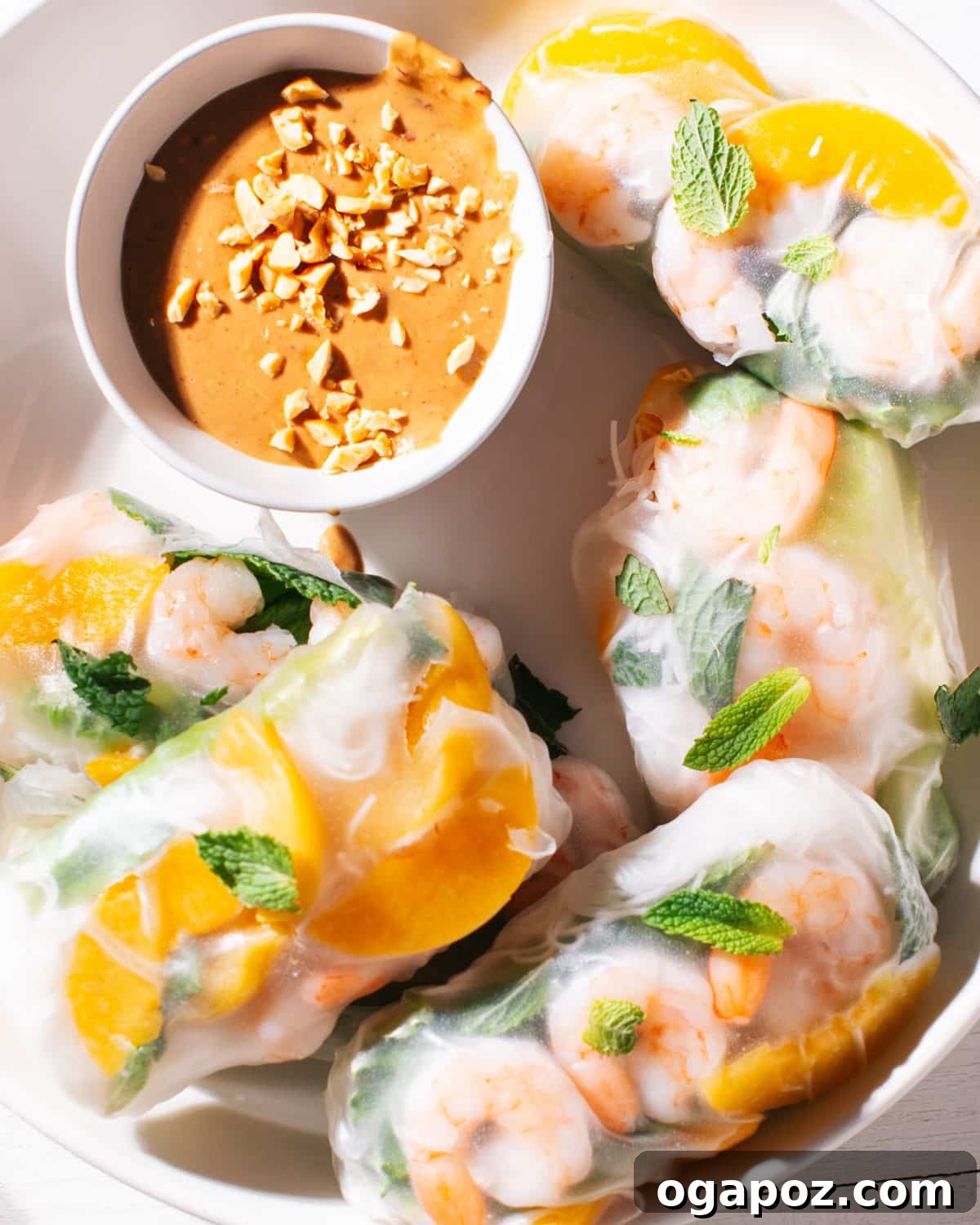
Discover the ultimate guide to crafting perfect Fresh Spring Rolls at home! These delightful Vietnamese-style “summer rolls” are bursting with vibrant, crunchy vegetables and succulent shrimp, offering a light, healthy, and incredibly flavorful meal. Forget the deep-fried versions – these rolls are served fresh, uncooked once assembled, making them an ideal appetizer, a refreshing lunch, or a light dinner option. Dive into our comprehensive recipe, complete with expert, no-fail tips for working with delicate rice paper wrappers and common mistakes to effortlessly avoid, ensuring your spring rolls are a masterpiece every time. 🔥
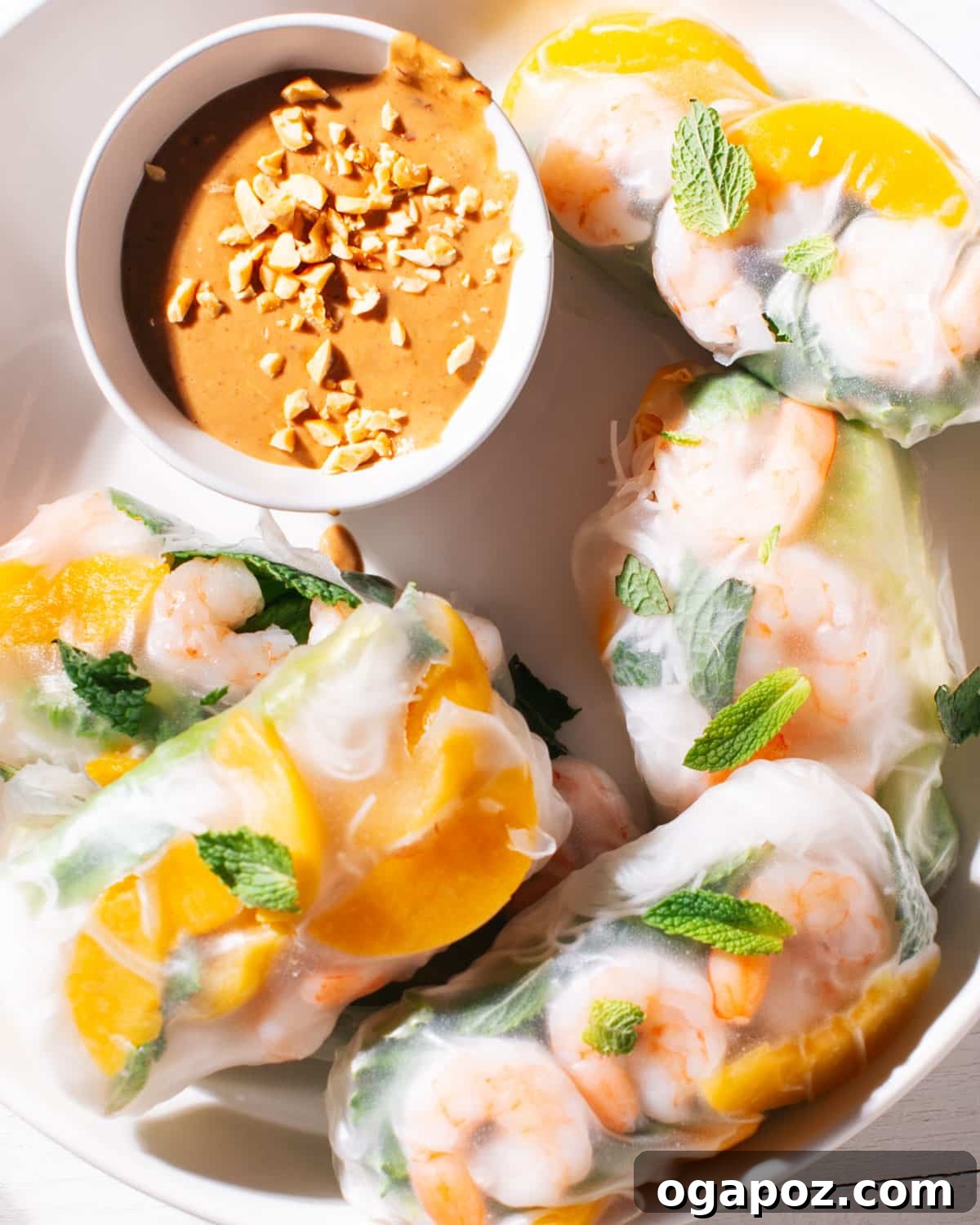
Often referred to as summer rolls, these fresh spring rolls originate from Vietnamese culinary traditions. They are characterized by their refreshing, uncooked preparation, where an array of fresh ingredients is encased in translucent rice paper wrappers. Unlike their fried counterparts, these rolls celebrate raw textures and vibrant flavors, making them a popular choice for those seeking a wholesome and delicious dish.
The perfect companion to these fresh rolls is a rich, savory, and slightly sweet peanut sauce. Dunking each bite into this creamy dip elevates the flavors, creating a harmonious balance that is truly irresistible. Serve them as a stunning appetizer for gatherings, a light and satisfying lunch, or a healthy dinner that’s both easy to prepare and incredibly rewarding.
Related Recipe: If you adore the magic of peanut sauce, you’ll also love our Cold Peanut Noodles – where the sauce truly shines!
Why You’ll Fall in Love with This Fresh Spring Rolls Recipe
Prepare to make these fresh spring rolls a staple in your kitchen, especially during warmer months. Here’s an expanded look at why this recipe is a must-try:
- Effortlessly Delicious & Quick: Once you master the simple technique, assembling fresh spring rolls is incredibly quick and satisfying. Beyond preparing the fillings, no cooking is required, making them a fantastic option for a speedy, healthy meal or snack. They’re perfect for busy weeknights or when you crave something fresh without spending hours in the kitchen.
- Fun & Engaging Activity: Rolling spring rolls offers a delightful, hands-on experience that’s perfect for friends and family. A “build-your-own” spring roll bar allows everyone to customize their rolls with their favorite ingredients, making it an interactive and memorable culinary adventure. Kids especially enjoy choosing their fillings and participating in the assembly.
- Naturally Gluten-Free & Healthy: For those with gluten sensitivities or anyone looking for lighter alternatives, rice paper wrappers are an excellent choice over traditional wheat-based wraps. They provide a satisfying chewiness without the gluten, aligning perfectly with a healthy and balanced diet. These rolls are packed with fresh vegetables and lean protein, making them a nutritious powerhouse.
- Highly Customizable & Versatile: The beauty of fresh spring rolls lies in their adaptability. You can easily swap ingredients to suit dietary needs, seasonal availability, or personal preferences. Whether you’re a seafood lover, a vegetarian, or simply experimenting with flavors, these rolls are a blank canvas for your culinary creativity.
- Perfect for Any Occasion: From elegant appetizers at dinner parties to casual picnic lunches and wholesome family meals, fresh spring rolls fit seamlessly into various settings. Their vibrant colors and refreshing taste make them a crowd-pleaser that’s always in season.
Essential Ingredients and Equipment for Your Spring Rolls
Gathering your ingredients and tools is the first step towards creating these delectable fresh spring rolls. Here’s a detailed breakdown of what you’ll need:
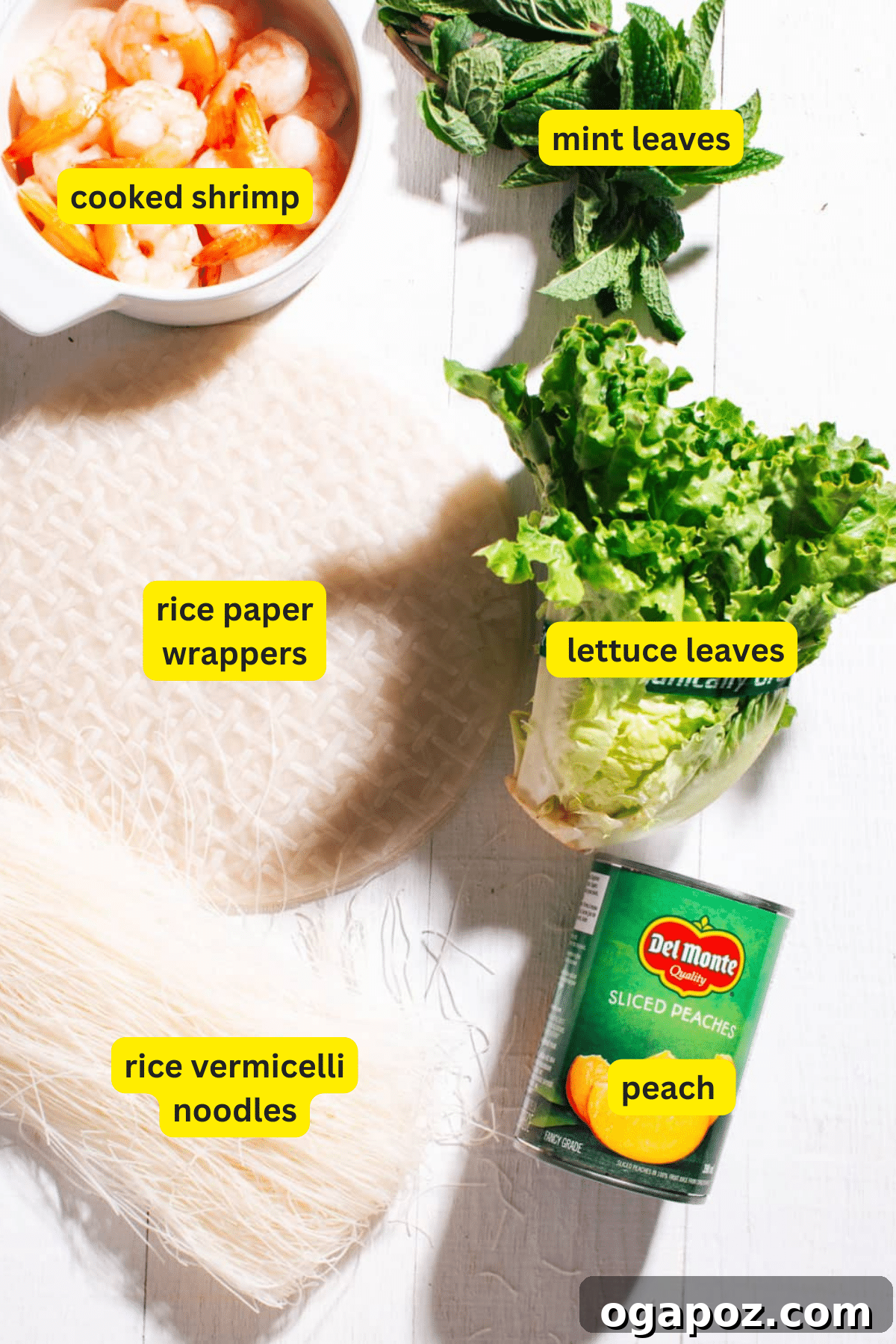
Key Ingredients for Fresh Spring Rolls
The magic of fresh spring rolls comes from the harmonious blend of textures and flavors. Here’s a closer look at the core components:
For the Spring Rolls
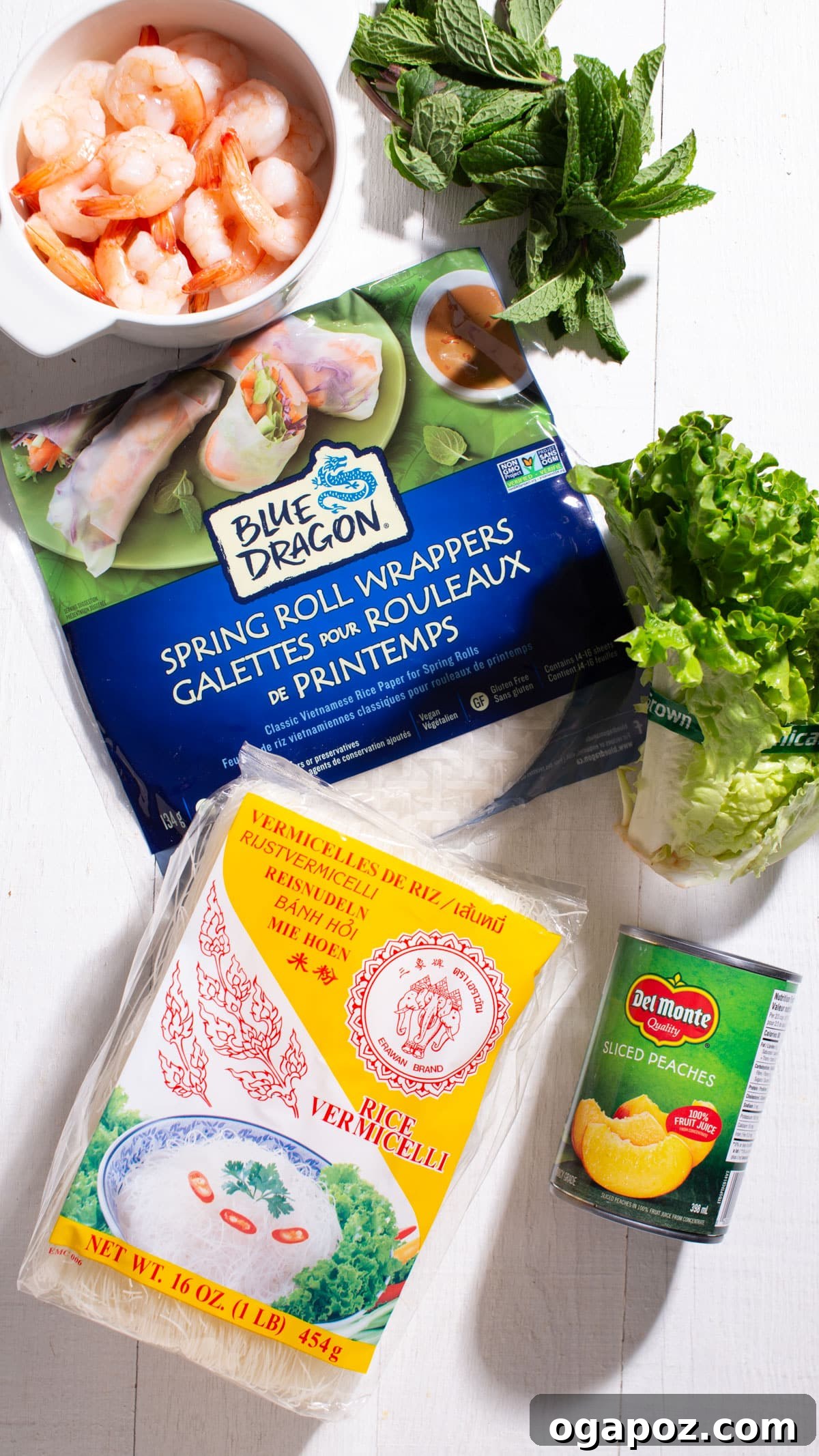
- Rice Vermicelli Noodles: These delicate, thin rice noodles form the essential base of the spring roll filling. When cooked and chilled, they offer a wonderfully light, slightly chewy texture that contrasts beautifully with the crisp vegetables. Look for thin, translucent strands.
- Rice Paper Wrappers: The star of fresh spring rolls, these translucent rounds become pliable and slightly sticky when hydrated, perfectly encasing all the vibrant fillings. Opt for high-quality rice paper that is thin yet sturdy enough to handle.
- Cooked Shrimp: Providing a lean protein source, cooked shrimp adds a mild, sweet flavor and a firm, satisfying texture to the rolls. Choose plump, pre-cooked shrimp for convenience, or quickly blanch fresh shrimp yourself.
- Fresh Peach or Mango Slices: These fruits introduce a delightful sweet and juicy contrast to the savory elements and fresh herbs. Their vibrant flavor profiles complement both the shrimp and the mint exceptionally well, adding a touch of tropical brightness. Ensure the fruit is ripe but firm enough to slice easily.
- Crisp Lettuce Leaves: Essential for freshness and crunch, lettuce leaves like butter lettuce provide a clean base and help keep the other fillings neatly bundled. They also add vital nutrients and a refreshing bite.
- Fresh Mint Leaves: Mint is crucial for that distinctive, bright, and cooling flavor that defines Vietnamese spring rolls. Its aromatic quality lifts all the other ingredients, creating a truly refreshing experience. Don’t skip this!
For the Irresistible Peanut Sauce
- A Batch of Homemade Peanut Sauce: A creamy, savory, and slightly sweet peanut sauce is non-negotiable for serving with fresh spring rolls. It provides a rich depth of flavor that perfectly complements the fresh ingredients. You can find my favorite easy peanut sauce recipe here.
Optional Enhancements
- Crushed Peanuts for Garnish: Sprinkling lightly toasted, crushed peanuts over your peanut sauce or directly into the rolls adds an extra layer of crunchy texture and a deeper, nutty flavor. It’s a simple addition that makes a big impact.
Creative Substitutions and Flavorful Variations
One of the greatest joys of making fresh spring rolls is the endless possibilities for customization. Feel free to adapt this recipe to your taste, dietary needs, or what’s readily available:
- Nut-Free Dipping Sauce: If you’re avoiding nuts, easily substitute the peanut butter in your dipping sauce with tahini or sunflower seed butter. Ensure to adjust seasonings to taste, as these alternatives have different flavor profiles.
- Vegetarian/Vegan Spring Rolls: Transform these into delightful plant-based rolls by swapping the shrimp for firm or extra-firm tofu. Marinate and pan-fry or bake the tofu until golden brown for added flavor and texture. You can also add more vegetables or even mushrooms.
- Fruit Swaps for Unique Sweetness: While peach and mango offer a fantastic sweet contrast, creamy avocado can provide a rich, savory counterpoint if sweet fruit isn’t your preference. For other sweet fruit options, pineapple or papaya are excellent tropical substitutes that pair well with shrimp and herbs.
- Boost the Texture with More Veggies: Elevate the crunch and color of your spring rolls by incorporating a variety of additional vegetables. Consider julienned carrots, cucumber, finely shredded purple cabbage, thinly sliced red bell peppers, crisp snap peas, or even baby corn. Think of anything you’d find in a stir-fry pack – they all add fantastic texture and visual appeal.
- Chicken Spring Rolls: For an alternative lean protein, poached chicken breast, shredded or thinly sliced, works wonderfully instead of shrimp. Marinate the chicken lightly for extra flavor.
- Herb Swaps for Aromatic Diversity: Fresh mint is classic, but you can experiment with other aromatic herbs. Cilantro offers a bright, citrusy note, while fresh basil (especially Thai basil) provides a more anise-like, peppery flavor that complements Asian dishes beautifully.
- Noodle Alternatives: If rice vermicelli isn’t your preference or simply unavailable, glass noodles (mung bean noodles) are a great substitute, offering a similar light texture. For a lower-carb option, thinly spiralized zucchini noodles or simply packing the wrappers with more lettuce, julienned cabbage, and carrots are excellent choices.
- Wrapper Innovations: While rice paper is traditional, adventurous cooks can experiment with large collard green leaves or blanched cabbage leaves for a hearty, leafy wrap. Nori sheets (seaweed wrappers) also offer a distinct umami flavor for a fusion take.
Essential Tools for Assembly
Having the right tools ready will streamline your spring roll-making process, ensuring a smooth and enjoyable experience:
- Large Pot: For efficiently cooking your rice vermicelli noodles to the perfect al dente texture.
- Colander: Indispensable for draining the cooked noodles and rinsing them with cold water to halt the cooking process and prevent sticking.
- Shallow Dish or Pie Plate: Crucial for hydrating the rice paper wrappers. It needs to be wide enough to fully submerge one wrapper at a time.
- Damp Kitchen Towel or Paper Towels: A clean, damp surface is key for working with rice paper wrappers. It prevents them from sticking to your countertop and helps maintain their moisture as you assemble your spring rolls.
- Sharp Knife and Cutting Board: For precise slicing and dicing of all your fresh ingredients.
How to Make Perfect Fresh Spring Rolls: A Step-by-Step Guide
Embark on your journey to create a batch of beautifully rolled, flavorful fresh spring rolls. Follow these detailed steps for a smooth and successful preparation:
Step 1: Prepare the Vermicelli Noodles
Begin by bringing a medium pot of water to a rolling boil. Once boiling, add the rice vermicelli noodles and immediately turn off the heat. Let the noodles soak for just 2-3 minutes, or until they are tender yet still have a slight bite. Be careful not to overcook them, as they can become mushy. Promptly drain the noodles in a colander and rinse them thoroughly with cold water. This crucial step stops the cooking process and prevents the noodles from sticking together. Set them aside to cool completely.
Step 2: Hydrate the Rice Paper Wrappers
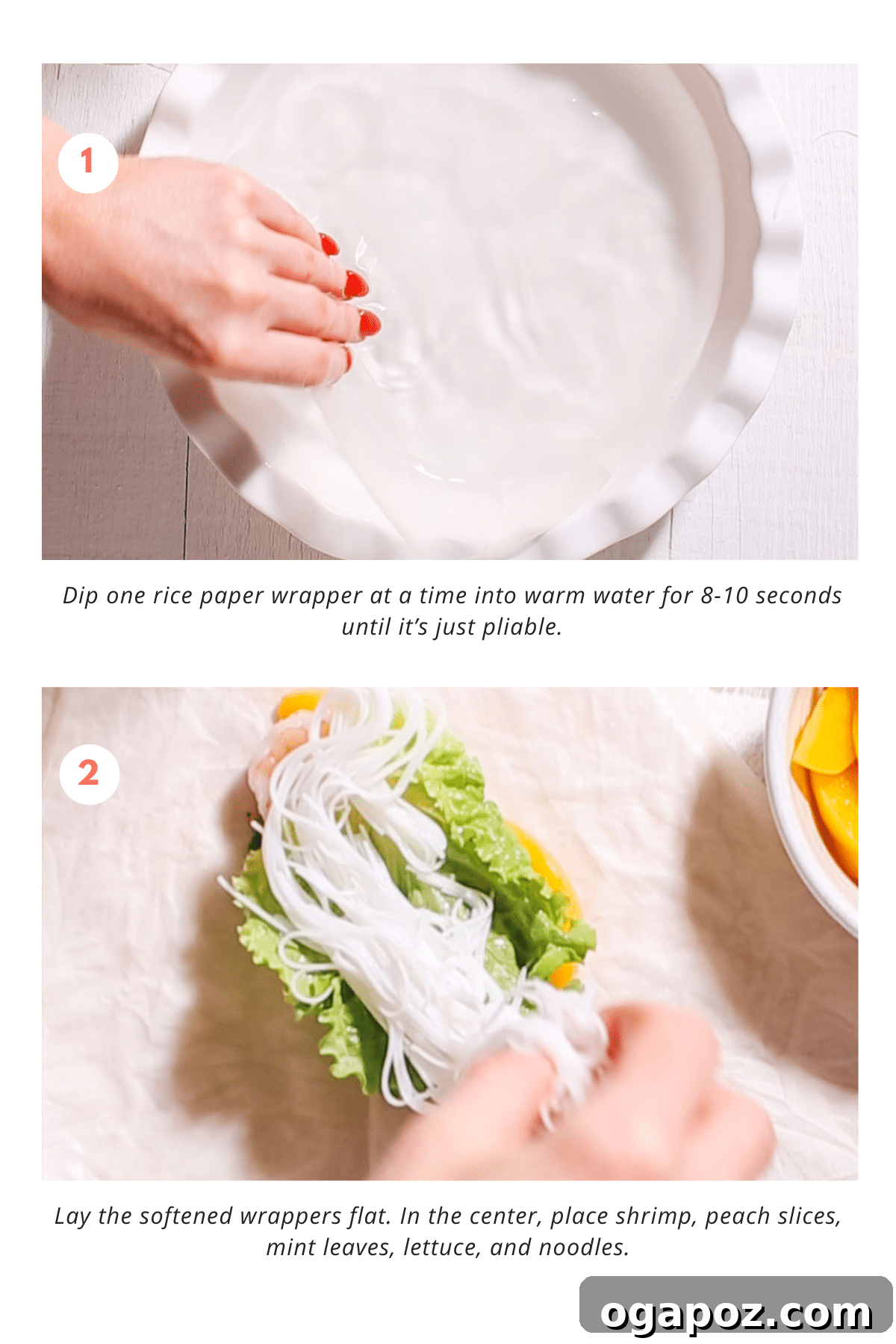
Working with one rice paper wrapper at a time is key to success. Fill a shallow dish or pie plate with warm water (not hot). Gently dip one rice paper wrapper into the warm water for approximately 8-10 seconds. You want it to become pliable and flexible, but still slightly firm to the touch. Remember, the wrapper will continue to soften as you work with it. Over-soaking will make it too delicate and prone to tearing. Remove the wrapper and lay it flat on a clean, damp surface, such as a cutting board covered with a damp kitchen towel. This prevents sticking and helps maintain moisture.
Step 3: Fill and Master the Roll
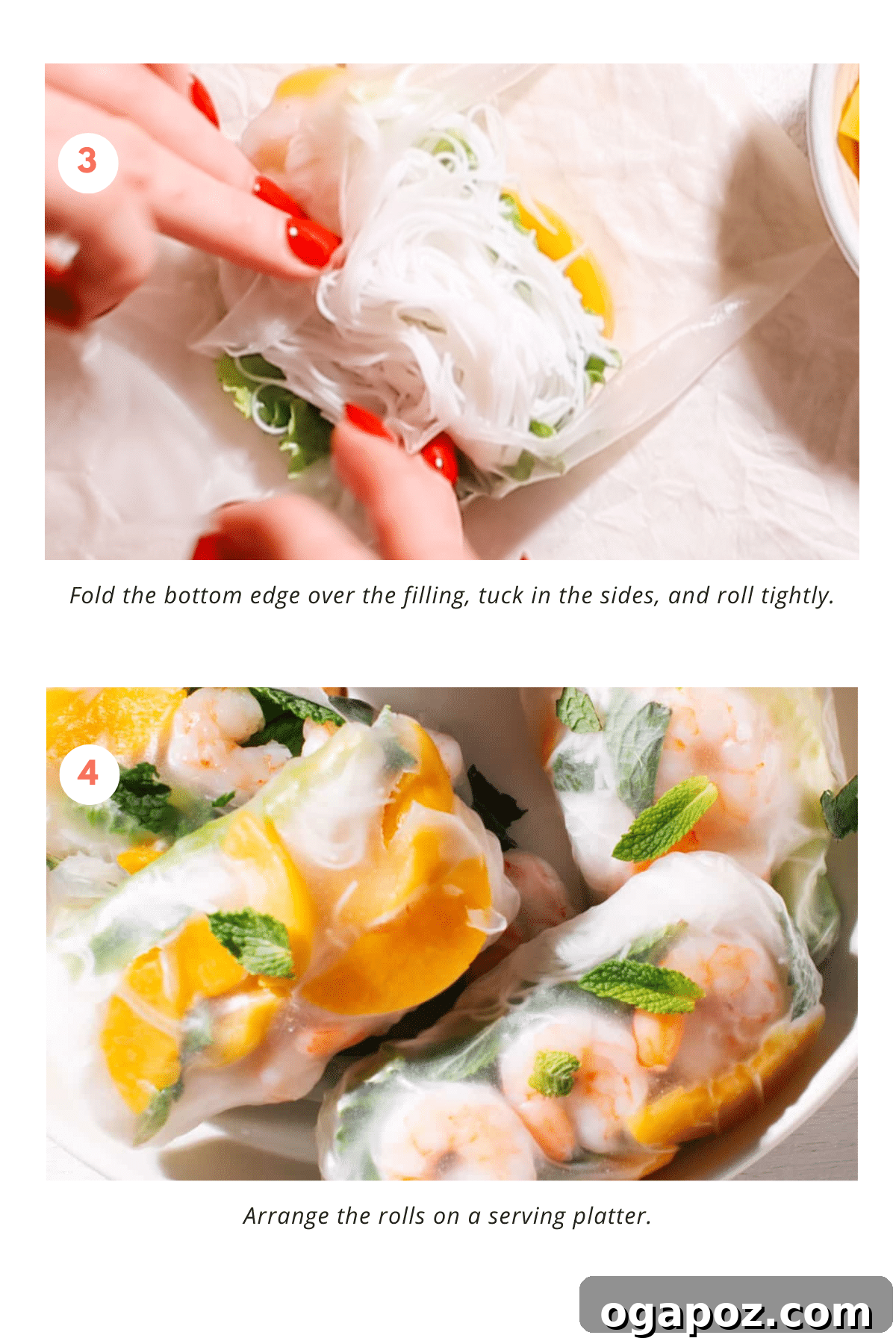
Arrange your prepared fillings within the lower third of the softened rice paper wrapper, leaving ample space on the sides for folding. Start by placing 2-3 cooked shrimp slices (or tofu/chicken) followed by a few peach or mango slices, 1-2 fresh mint leaves, a piece of crisp lettuce, and a small handful of cooled vermicelli noodles. Be mindful not to overfill, as this is a common cause of tearing.
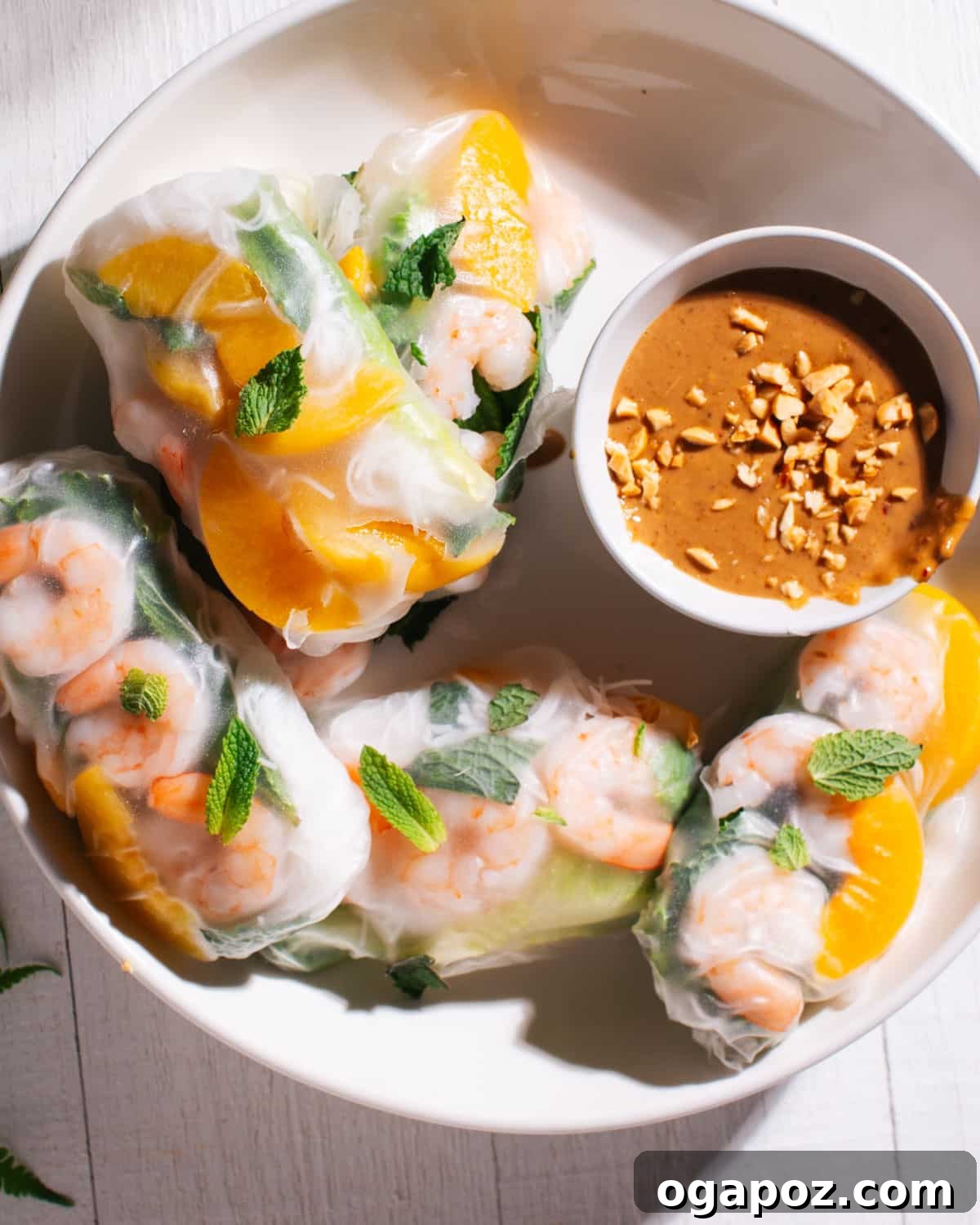
To roll, first fold the bottom edge of the wrapper up and tightly over the filling. Next, fold in the left and right sides of the wrapper towards the center, creating a snug packet. Finally, roll the entire assembly tightly from the bottom upwards. Aim for a firm, compact roll that holds its shape. For an aesthetically pleasing look, position the shrimp and mint leaves closer to the edge where they will be visible through the translucent wrapper.
Step 4: Arrange and Serve
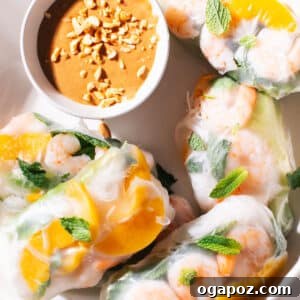
Once rolled, carefully transfer each fresh spring roll to a serving platter. It is crucial to space them out to prevent them from sticking to each other, which can happen as the wrappers continue to soften and become sticky. Repeat the filling and rolling process with the remaining ingredients until all your delicious fresh spring rolls are complete. Serve them immediately with a generous side of your favorite homemade peanut sauce for dipping.
Make Ahead and Storage Tips for Fresh Spring Rolls
While fresh spring rolls are truly at their best when enjoyed immediately, a little planning allows for some preparation in advance. These tips will help you maximize freshness and convenience:
Make Ahead Components: To save time, all your vegetables can be pre-sliced, shrimp cooked, and noodles prepared and chilled a few hours or even a day in advance. Store each component separately in airtight containers in the refrigerator. This setup allows for quick assembly just before serving.
Short-Term Storage (Up to 24 Hours): For the best taste and texture, aim to consume these rolls within 24 hours of assembly. If you need to prepare them a few hours before serving, proper storage is essential to prevent the delicate rice paper wrappers from drying out or sticking together.
Here’s how to store them:
- Damp Towel Method: Lay a clean, damp paper towel or a thin cloth at the bottom of an airtight container. Arrange the finished spring rolls in a single layer, ensuring they do not touch each other.
- Moisture Layer: Place another damp paper towel or cloth gently over the top of the rolls. This helps maintain the soft texture of the wrappers.
- Seal and Chill: Close the airtight container tightly and store it in the refrigerator. The damp towels create a humid environment that prevents the wrappers from becoming brittle and cracking.
Important Note: Spacing the rolls apart is critical. If they touch, the sticky rice paper wrappers will fuse together, making it impossible to separate them without tearing. You may need multiple containers or layers separated by damp towels.
Freezing Fresh Spring Rolls
These fresh spring rolls are generally not suitable for freezing. The delicate rice paper wrappers and fresh vegetable fillings do not hold up well to thawing, often becoming soggy, watery, and losing their desirable texture and vibrant crunch. It’s always best to enjoy them fresh.
Creative Ways to Serve Your Fresh Spring Rolls
These versatile fresh spring rolls are a fantastic addition to almost any meal or gathering. Their light and refreshing nature makes them suitable for a variety of occasions:
- The Essential Dipping Sauce: Always serve your spring rolls with a batch of rich and creamy peanut dipping sauce. It’s the classic pairing that truly completes the experience. Offer individual small bowls of sauce for each guest for a sanitary and elegant presentation.
- Perfect Appetizer or Party Food: Arrange a colorful platter of spring rolls as an appetizer for dinner parties, potlucks, or picnics. Their appealing presentation and bite-sized nature make them an instant hit.
- Light & Healthy Meal: Enjoy them as a refreshing and nutritious light lunch or dinner. You can increase the portion size or serve them alongside a simple green salad for a complete meal.
- Asian-Inspired Feast: Create an impressive spread by pairing these fresh spring rolls with other beloved Asian-inspired dishes. Consider serving them as a starter alongside the trending viral Tiktok sushi bake for a modern fusion meal.
- Summer BBQ Companion: Fresh spring rolls are excellent complements to grilled dishes, adding a light, cool element to your barbecue. Serve them as an appetizer before main courses like grilled coconut salmon satay skewers or spiced grilled pork tenderloin with peanut sauce and cucumber salad.
- Ultimate Appetizer Platter: For a diverse spread, combine these fresh spring rolls with other favorites such as crispy egg rolls, a vibrant sushi platter, and savory pot stickers. This combination offers a delightful variety of textures and flavors that will impress any guest.
For an extra touch, garnish your serving platter with fresh herb sprigs (like mint or cilantro) and a sprinkle of crushed peanuts or a drizzle of chili oil for a beautiful and inviting presentation.
Mastering the Art: 6 Common Mistakes to Avoid When Making Fresh Spring Rolls
Working with delicate rice paper wrappers can be a bit challenging at first, but understanding common pitfalls will help you achieve perfectly rolled spring rolls every time. Here are the frequent mistakes and how to avoid them:
- Overfilling Your Wrappers: This is perhaps the most common mistake. Adding too much filling makes it incredibly difficult to roll the wrapper tightly and uniformly, often leading to tears or rolls that burst open.
Solution: Use a moderate amount of filling. It’s better to make more smaller rolls than fewer oversized, unwieldy ones. Aim for a manageable mound in the center of the wrapper. - Not Prepping Ingredients Ahead of Time: Attempting to chop vegetables or cook shrimp while also hydrating and rolling wrappers creates a chaotic and inefficient process. It can also cause your hydrated wrappers to dry out.
Solution: Ensure all your fillings (noodles, proteins, veggies, herbs, fruit) are prepped, cooked, cooled, and neatly arranged on a platter before you even begin to wet your first wrapper. This creates a smooth assembly line. - Inconsistent or Loose Rolling: Rolls that are not tightly packed will fall apart when picked up or dipped, leading to a messy experience. Loose rolls also don’t look as appetizing.
Solution: Place your fillings strategically on the lower third of the wrapper. First, fold the bottom edge up and tightly over the filling. Then, tuck in the sides firmly before rolling upwards from the bottom. This method helps create a secure, compact roll. - Improper Storage Leading to Drying or Sticking: Leaving finished rolls exposed to air will quickly dry out and harden the wrappers, making them unpleasant to eat. Conversely, letting them touch each other causes them to stick and tear.
Solution: As soon as rolls are made, cover them immediately with a damp paper towel or a thin, damp cloth. For storage, place them in an airtight container, layered with damp paper towels and ensuring each roll is spaced apart or separated by damp paper towel sheets. - Over-Soaking Rice Paper Wrappers: Dipping the wrappers in water for too long makes them overly soft, flimsy, and extremely prone to tearing during handling and rolling.
Solution: Dip each wrapper in warm water for only a few seconds (typically 8-10 seconds), just until it becomes pliable but still feels slightly firm. Remember, it will continue to soften as you add fillings and roll. - Working on a Dry or Sticky Surface: A dry countertop can make rice paper wrappers stick immediately, making them impossible to lift without tearing.
Solution: Always work on a clean, slightly damp surface. A cutting board covered with a damp kitchen towel is ideal. The dampness provides just enough friction to prevent slipping while allowing you to manipulate the wrapper easily without sticking.
Frequently Asked Questions About Fresh Spring Rolls
For quick answers to your most common questions about making and enjoying fresh spring rolls, refer to this handy FAQ section:
To soften rice paper wrappers, fill a shallow dish or a pie plate with warm (not hot) water. Briefly submerge one wrapper at a time for about 8-10 seconds, or until it becomes pliable but still slightly firm. It will continue to soften as you work. Always check the package instructions for specific recommendations from the manufacturer, as hydration times can vary slightly by brand.
Yes, traditional rice paper wrappers are made from rice flour and water, making them naturally gluten-free. However, the overall gluten-free status of your spring rolls depends on all your filling ingredients and especially the dipping sauce. Always check ingredient labels for soy sauce or other components in pre-made sauces, or ensure your homemade sauce uses gluten-free alternatives.
Absolutely! Fresh spring rolls are incredibly versatile and are meant to be customized. Beyond cooked shrimp, common fillings include various sliced vegetables like carrots, cucumber, bell peppers, and cabbage. Fresh herbs like mint, cilantro, and basil are key. Cooked vermicelli noodles provide bulk. You can also add fruits like mango or avocado, or even other proteins like thinly sliced grilled pork or chicken, or marinated tofu.
Preventing tears requires gentle handling and adherence to a few key rules: do not over-soak the wrappers (they should still be slightly firm when you start rolling), avoid overfilling, and roll them on a clean, slightly damp surface (like a damp kitchen towel) to prevent sticking. Practice makes perfect!
While fresh spring rolls are best enjoyed immediately for optimal texture, you can prepare them a few hours in advance. To keep them fresh and prevent drying out or sticking, cover them with a damp paper towel and store them in an airtight container in the refrigerator. Ensure they are spaced apart and not touching.
Yes, it’s very easy to make vegetarian or vegan spring rolls. Simply swap the shrimp for a plant-based protein like pan-fried or baked firm tofu, tempeh, or even a mix of sautéed mushrooms. Increase the amount of vegetables and ensure your dipping sauce is also vegan (e.g., using maple syrup or agave instead of honey if applicable, and checking for fish sauce).
The main difference lies in their preparation and wrappers. Fresh spring rolls (or summer rolls) are typically uncooked, using thin, translucent rice paper wrappers that are softened in water. They are light and refreshing. Egg rolls, on the other hand, are deep-fried, using thicker, wheat-flour based wrappers, and are known for their crispy, savory texture. They often contain cooked fillings like pork, cabbage, and carrots.
Other Irresistible Asian-Inspired Takeout Recipes You’ll Love
If you’re a fan of quick, easy, and flavorful Asian takeout-inspired recipes, be sure to explore these other delicious dishes:
- Easy Homemade Chow Mein Noodles
- Classic Chicken and Broccoli Stir-Fry
- Flavorful Pad Woon Sen (Thai Glass Noodle Stir-Fry)
- Spicy Gochujang Chicken
- Authentic Hunan Shrimp
- Quick Thai Basil Pork with Green Beans
- Simple Chili Oil Ramen
- Sweet & Tangy Orange Chicken
- Healthier Honey Garlic Chicken
- My Favorite Ultimate Spicy Ramen Recipe
Save this recipe for later! Get this recipe link sent straight to your inbox to make it later.
Pin
Rated 5 out of 5 stars by 4 votes
Spring Rolls (Fresh, Easy Recipe!)
Video
A video showing how to make these fresh spring rolls would typically appear here. It demonstrates the assembly process, from preparing ingredients to rolling the finished product, making it easier to follow along.
Ingredients
- 3 oz rice vermicelli noodles
- 6 rice paper wrappers
- 12 medium cooked shrimp
- ½ cup peeled sliced peach or mango
- 12 mint leaves
- 6 lettuce leaves such as butter lettuce
For Peanut Sauce
- Peanut Sauce (one batch)
Optional
- Crushed peanuts for garnish
Instructions
Cook the Vermicelli Noodles:
-
Boil water in a large pot, add the noodles, and turn off the heat. Let them soak for 2-3 minutes or just until soft.
-
Drain and rinse with cold water to stop the cooking process and prevent sticking. Set aside to cool.
Soften Rice Paper Wrappers (One at a Time):
-
Dip one rice paper wrapper at a time into warm water for 8-10 seconds until it’s just pliable. (It will continue to soften as you work, it should still be quite firm).
-
Place the softened wrapper on a clean, damp towel or cutting board.
Assemble the Rolls:
-
Lay down 3 shrimp in the center of the wrapper, in the lower third. Over these, add fruit slices, a couple of mint leaves, a lettuce leaf, and a small handful of vermicelli noodles.
-
Fold the bottom edge up over the filling, tuck in the sides tightly, and then roll tightly from the bottom upwards to secure the contents.
-
Arrange the finished rolls on a serving platter, ensuring they are spaced apart to prevent sticking.
-
Repeat with the remaining wrappers and fillings. Serve immediately with peanut sauce.
Notes
Serving Tips: These rolls look best when freshly made. If preparing in advance, cover them with a damp paper towel and plastic wrap to keep them from drying out.
Storage Tips: These rolls should be consumed within 24 hours for best taste and texture. Make sure they don’t touch each other on the platter or in the storage container, or the rice wrappers will stick together and tear.
Nutrition Facts (Per Roll)
Carbohydrates: 25g |
Protein: 6g |
Fat: 1g |
Saturated Fat: 0.1g |
Polyunsaturated Fat: 0.2g |
Monounsaturated Fat: 0.1g |
Trans Fat: 0.002g |
Cholesterol: 27mg |
Sodium: 286mg |
Potassium: 139mg |
Fiber: 1g |
Sugar: 1g |
Vitamin A: 1924IU |
Vitamin C: 7mg |
Calcium: 42mg |
Iron: 1mg
Nutrition information is automatically calculated and should only be used as an approximation. It does not include the optional peanut sauce.