
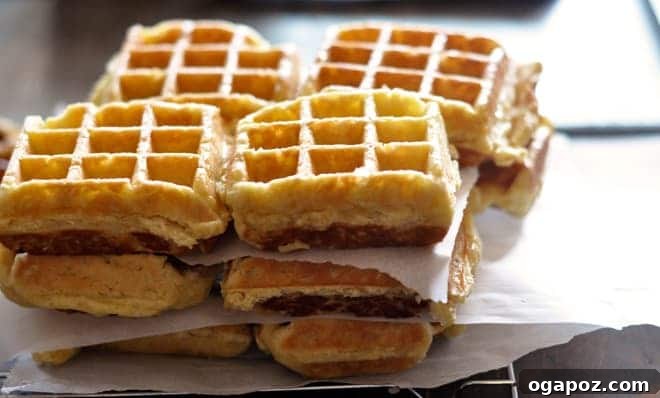
Authentic Liege Waffles: The Ultimate Belgian Delight
Prepare to fall in love with the irresistible charm of authentic Liege waffles, a true culinary gem straight from Belgium. As someone who once called Belgium home, I can confidently say that these aren’t just waffles; they’re an experience. The moment you catch that glorious aroma of hot, yeasty dough caramelizing on a heavy iron grill, you’ll understand. It’s a scent that leads you by the nose, much like a truffle hunter’s pig, to an unforgettable treat. I still vividly recall my very first Liege waffle – served piping hot in a simple waxed paper square – and from that day forward, I was a changed person, forever captivated by their magic.
More Than Just a Waffle: The Liege Difference
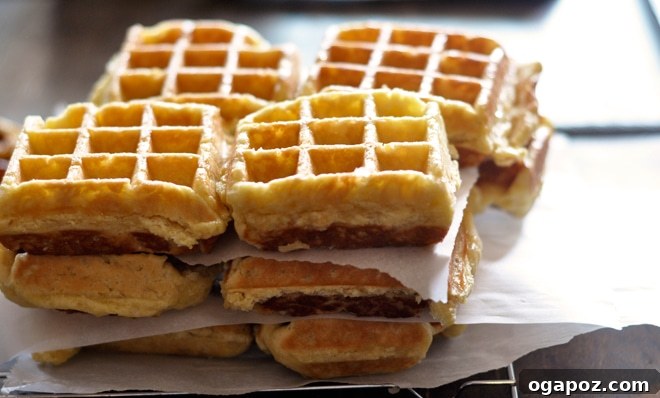
Forget everything you think you know about waffles, especially if your experience is limited to the lighter, crispier varieties often found in North America. Those are delicious in their own right, but they are fundamentally different – often more akin to pancakes cooked in a waffle iron. Liege waffles, however, are in a league of their own. They boast a unique character that sets them apart as a truly magical confection.
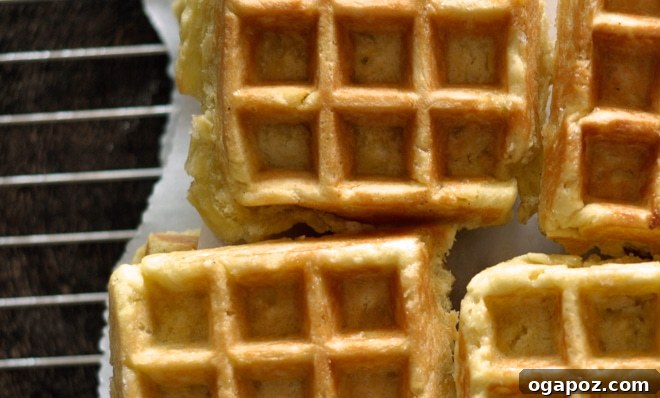
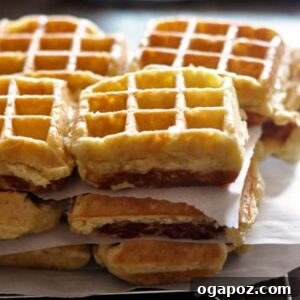
What makes them so special? It’s all in their remarkable texture and flavor profile. Liege waffles are incredibly dense and wonderfully bread-y, offering a thick, chewy bite that’s utterly satisfying. But the true secret lies in the generous scattering of pearl sugar. These small, irregular chunks of sugar are pressed into the deep pockets of the dough by a blazing hot, heavy iron waffle press. As they cook, the pearl sugar doesn’t just melt; it caramelizes into shimmering pockets of pure, sweet magic, creating a delightful crunch and an unparalleled depth of flavor with every mouthful.
The Richness Behind the Flavor: Key Ingredients
This recipe is not for the faint of heart, nor for those shy about rich ingredients. The dough is heavily yeasted, using a generous 50 grams of yeast – that’s a little over four tablespoons. While it might sound like a lot, this high yeast content is crucial for developing the distinctive deep, complex flavor and airy-yet-dense texture that defines an authentic Liege waffle. This is a brioche-style dough, enriched with eggs and a substantial 14 tablespoons (just under a cup) of butter. These waffles are, without a doubt, serious business – seriously delicious business.
The quality of your ingredients truly shines through in a recipe like this. Fresh, active yeast is paramount to achieving the perfect rise and flavor. Opt for high-quality butter, as its richness is a cornerstone of the waffle’s incredible taste and texture. And, of course, the pearl sugar cannot be overstated. It’s not just for sweetness; it’s fundamental to the unique caramelization and textural contrast that defines a Liege waffle. Don’t skip these crucial elements if you’re aiming for true authenticity!
Liege vs. Brussels: Understanding Belgian Waffle Varieties
For those unfamiliar, Liege is not just a type of waffle; it’s also a vibrant city in Belgium, famous for its culinary contributions. Belgium, a country celebrated for its diverse and exquisite food culture, actually boasts two primary types of waffles, each with its own distinct charm. While the Liege waffle reigns supreme with its rich, dense, and chewy character, its counterpart, the Brussels waffle, offers a delightfully different experience.
Unlike the hearty Liege, Brussels waffles are renowned for being light as a cloud – wonderfully crispy on the outside, yet incredibly airy and delicate on the inside. They are often larger, rectangular, and served with a dusting of powdered sugar or a dollop of whipped cream and fresh fruit. You could easily eat ten Brussels waffles without feeling overwhelmed, a feat that would certainly not be comfortably accomplished with their more substantial Liege cousins! Each waffle offers a unique taste of Belgian tradition, catering to different preferences but equally delightful.
Your Guide to Authentic Belgian Waffle Making
This recipe is a labor of love, translated directly from Dutch by my dear friend and fellow waffle enthusiast, Kristiana. It comes straight from the heart of Belgium, carrying with it the authentic flavors and techniques passed down through generations. When you follow this recipe, you’re not just making waffles; you’re embarking on a culinary journey to the streets of Liege.
Essential Tools & Ingredients for Success
For precision, all ingredients are listed in grams. If you don’t already own a kitchen scale, now is the perfect moment to invest in one. It will significantly improve the consistency and accuracy of your baking, especially for a delicate dough like this one.
The pearl sugar is truly key to achieving the authentic texture and caramelization of Liege waffles. It’s a specialty sugar that resists melting completely, retaining its shape and creating those signature crunchy pockets. You can often find it in European specialty stores, online, or at well-stocked baking supply shops. If, however, you absolutely cannot find pearl sugar, your best substitute would be the coarsest sugar you can find – something like Swedish pearl sugar (which is smaller) or even demerara sugar, though the results won’t be identical. If you use a substitute, reduce the amount by about a third, as regular sugar is sweeter and melts more readily.
Choosing the Right Waffle Iron
A heavy-duty waffle iron is crucial for Liege waffles. Cast iron models are ideal as they retain and distribute heat exceptionally well, which is vital for caramelizing the pearl sugar properly. While a standard non-stick waffle maker can work, one with deeper pockets and better heat retention will yield superior results, achieving that perfect crisp exterior and chewy interior.
Authentic Liege Waffles Recipe
Print Recipe
By: Jennifer Pallian BSc, RD
A truly authentic Liege waffle recipe translated from Dutch, shared by Kristiana’s Belgian friend.
Servings:
16
Ingredients
Instructions
- Combine the warm water and yeast in a medium bowl. Let it sit for 10 minutes, or until the mixture is visibly doubled in volume and frothy, indicating the yeast is active.
- Place the large bowl of a standing mixer onto a kitchen scale and tare off the weight. Carefully weigh in 300 grams of flour, the granulated sugar, eggs, and the initial 15 grams of melted butter.
- Using the dough hook attachment, mix on low speed until a smooth and cohesive dough is formed. This may take a few minutes.
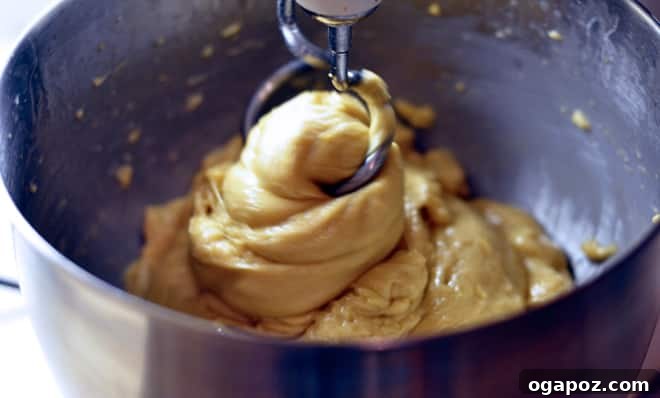
- While the mixer is still on low speed, slowly pour in the remaining 200 grams of melted butter. Continue mixing until the butter is fully incorporated and a thick, somewhat sticky paste forms. This step might take 5-10 minutes, be patient as the dough absorbs the butter. Once combined, let the dough rest for 15 minutes.
- Return the bowl to the kitchen scale and tare off the weight once again. Sift the remaining 200 grams of flour over the dough, then sprinkle with the generous pinch of salt.
- Knead with the mixer until all the newly added flour and salt are thoroughly combined into the dough.
- Slowly add the pearl sugar to the dough. Continue kneading with the mixer for about 3 minutes, ensuring the pearl sugar is evenly distributed throughout the dough without crushing it.
- Transfer the dough to a clean bowl, cover it tightly with plastic wrap, and let it rise in a warm place until it has doubled in volume. This typically takes about 1 hour, depending on the warmth of your environment.
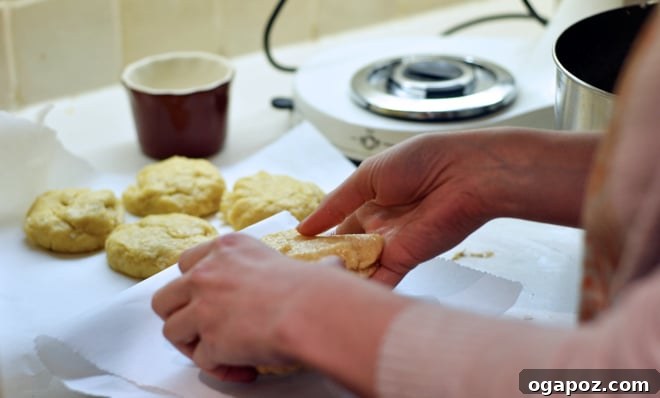
- Preheat your waffle iron to medium heat. Divide the risen dough into individual balls, each weighing approximately 100 grams.
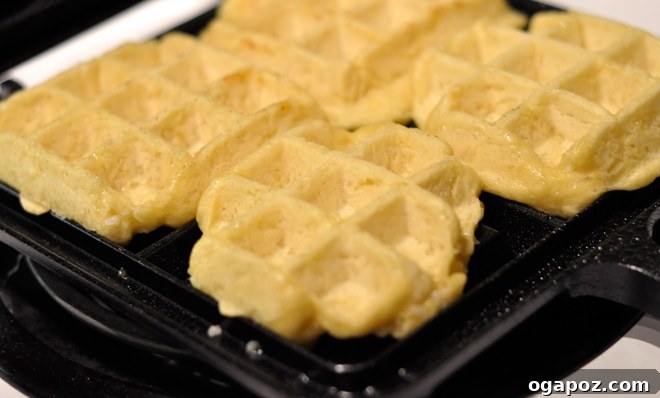
- Cook each dough ball in the preheated waffle iron until it reaches a pale golden brown color. Remove the waffles and allow them to cool completely on a wire rack. This initial cook helps set the structure.
- For the second cook, return the cooled waffles to the hot waffle iron. Cook them again until they are deep golden brown and beautifully caramelized. This two-stage cooking process ensures the perfect crispy exterior and allows the pearl sugar to achieve optimal caramelization.
Notes
Waffles may be reheated in a warm oven (around 250°F / 120°C for 5-10 minutes) or briefly in a toaster for crispness. They also freeze beautifully. To freeze, let them cool completely, then store in an airtight container or freezer bag for up to 3 months. Reheat from frozen.
Nutrition Information (per serving)
Calories: 315kcal | Carbohydrates: 48g | Protein: 5g | Fat: 12g | Saturated Fat: 7g | Polyunsaturated Fat: 1g | Monounsaturated Fat: 3g | Trans Fat: 0.4g | Cholesterol: 49mg | Sodium: 97mg | Potassium: 74mg | Fiber: 2g | Sugar: 23g | Vitamin A: 366IU | Vitamin C: 0.01mg | Calcium: 12mg | Iron: 2mg
Nutrition information is automatically calculated and should only be used as an approximation.
Serving Suggestions: Elevate Your Liege Waffle Experience
While an authentic Liege waffle is undeniably perfect on its own, hot off the iron with its caramelized crust and chewy interior, there are many ways to enjoy and enhance this Belgian delight. Traditionally, they are served simply, perhaps with just a light dusting of powdered sugar. However, for those looking to add a little extra flair, consider these serving suggestions:
- Classic Simplicity: A light dusting of powdered sugar or a smear of unsalted butter is often all that’s needed to appreciate the waffle’s inherent richness and the crunch of the pearl sugar.
- Fresh Fruit: Complement the sweetness with fresh berries like strawberries, raspberries, or blueberries. A spoonful of fruit compote also works wonderfully.
- Whipped Cream: A dollop of freshly whipped cream adds a luxurious, creamy contrast to the dense waffle.
- Chocolate Drizzle: For chocolate lovers, a light drizzle of melted dark, milk, or white chocolate can turn your waffle into an decadent dessert.
- Ice Cream: Serve warm Liege waffles with a scoop of vanilla bean ice cream for a delightful hot and cold contrast.
- Maple Syrup or Honey: While not traditionally Belgian, a touch of pure maple syrup or local honey can add another layer of sweetness. Be mindful not to overdo it, as the waffles are already quite sweet.
- Savory Twist: For an adventurous palate, try serving a Liege waffle with crispy bacon and a fried egg – a unique sweet and savory breakfast fusion!
No matter how you choose to enjoy them, these authentic Liege waffles are sure to transport your taste buds straight to the charming streets of Belgium.
Troubleshooting Your Liege Waffles
Even with the most authentic recipe, sometimes things don’t go exactly as planned. Here are some common issues and how to troubleshoot them:
- Dough Not Rising: Ensure your water is warm (not hot!) enough to activate the yeast. If the water is too hot, it can kill the yeast. Also, check the expiration date of your yeast. Your rising environment should be consistently warm and free of drafts.
- Waffles Sticking: Your waffle iron might not be hot enough, or it might need a bit more greasing. Ensure your iron is fully preheated before adding the dough. Some older irons might benefit from a light brush of neutral oil between waffles.
- Pearl Sugar Not Caramelizing: This is often due to an insufficiently hot waffle iron or not cooking long enough on the second pass. Ensure your iron is at a good medium-high heat and don’t rush the second cooking stage. The pearl sugar needs significant heat to achieve that beautiful, crunchy caramelization.
- Waffles Too Pale: Again, heat is key. Increase your waffle iron temperature slightly or extend the cooking time. The golden-brown exterior is part of the authentic Liege waffle experience.
- Waffles Too Soft/Not Chewy: The dough’s richness (butter, eggs) contributes to the chewiness, but over-mixing the dough can develop too much gluten, making it tough. Follow the kneading times carefully. Also, ensure the dough had adequate time to rise, as proper fermentation affects texture.
Tried this recipe? Share your experience!
Leave a comment below and let us know how your Liege waffles turned out.