

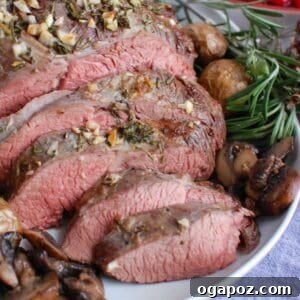
Prepare to impress your guests this holiday season or at any special gathering with what we confidently call The Ultimate Herb-Crusted Roast Beef Recipe. This exquisite dish features a succulent beef roast enveloped in a vibrant, aromatic crust made from a blend of olive oil, freshly chopped rosemary, thyme, parsley, and garlic. The result is an incredibly flavorful and tender roast that serves as an unforgettable centerpiece.
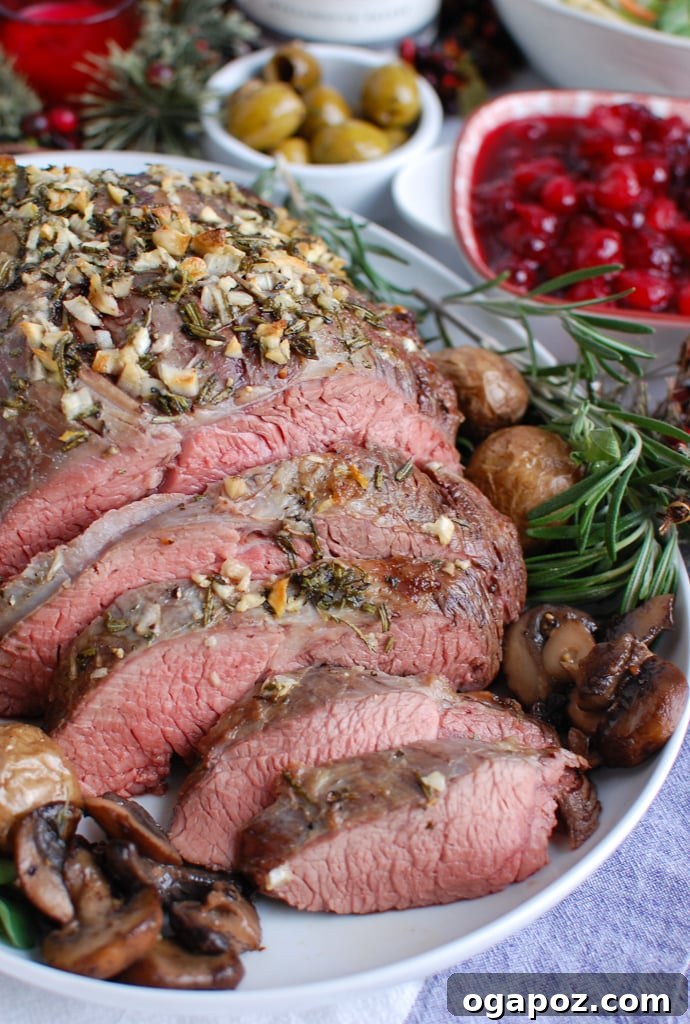
The Ultimate Herb-Crusted Roast Beef: A Holiday Masterpiece
Beef roasts are more than just a meal; they’re a timeless tradition, a symbol of gathering, and an ideal choice for feeding a crowd. Whether you’re planning an extravagant Christmas feast, a cozy Sunday dinner, or an elegant celebration, this roast beef recipe is my absolute go-to, consistently delivering exceptional results that never fail to impress. Its rich flavors and tender texture make it a standout choice for any special occasion.
If you’re a fan of impressive beef dishes, you might also enjoy exploring options like this Slow Cooker Mexican Beef Brisket, a comforting Greek Beef Stew with Orzo, or this vibrant Lebanese Greens with Beef. Each offers a unique culinary journey, but for sheer elegance and ease, this herb-crusted roast beef remains unparalleled.
During busy holiday seasons, I constantly seek dishes that are both crowd-pleasing and virtually foolproof. This recipe perfectly fits the bill. It utilizes a lean yet flavorful top round sirloin roast, generously coated in a robust mixture of extra virgin olive oil, minced garlic, fresh rosemary, fragrant parsley, and earthy thyme. This savory herb crust not only infuses the beef with incredible flavor but also helps to create a beautiful, golden-brown exterior.
The secret to its remarkable tenderness and juiciness lies in a carefully managed slow roasting process. This method ensures the beef cooks evenly, retaining its moisture and developing a melt-in-your-mouth texture. As a centerpiece, it stands out with its impressive presentation and versatility, pairing harmoniously with an array of classic side dishes. An added bonus? It cooks efficiently in the oven, allowing you ample time to prepare the rest of your meal without feeling rushed. The use of fresh herbs truly elevates this roast, transforming it from a simple cut of meat into a dazzling culinary experience.
Serving Suggestions & Perfect Pairings
A magnificent roast beef deserves equally magnificent accompaniments. I love to serve this herb-crusted roast beef alongside rich and creamy mashed potatoes, providing a comforting contrast to the savory meat. For vegetables, try pairing it with tender roasted balsamic mushrooms, a delightful scalloped sweet potato recipe, and vibrant green beans with toasted almonds for a complete and balanced meal. Don’t forget a rich, homemade gravy made from the pan drippings to enhance every bite with an extra layer of flavor. And for the perfect beverage pairing, a full-bodied Cabernet Sauvignon complements the robust flavors of the beef beautifully.
One of the best parts of making a roast beef is the anticipation of delicious leftovers. Transform any remaining slices into gourmet roast beef sandwiches, savory tacos, or incorporate them into a hearty hash for brunch. The possibilities are endless, ensuring that no morsel goes to waste.
Essential Ingredients for a Flavorful Roast
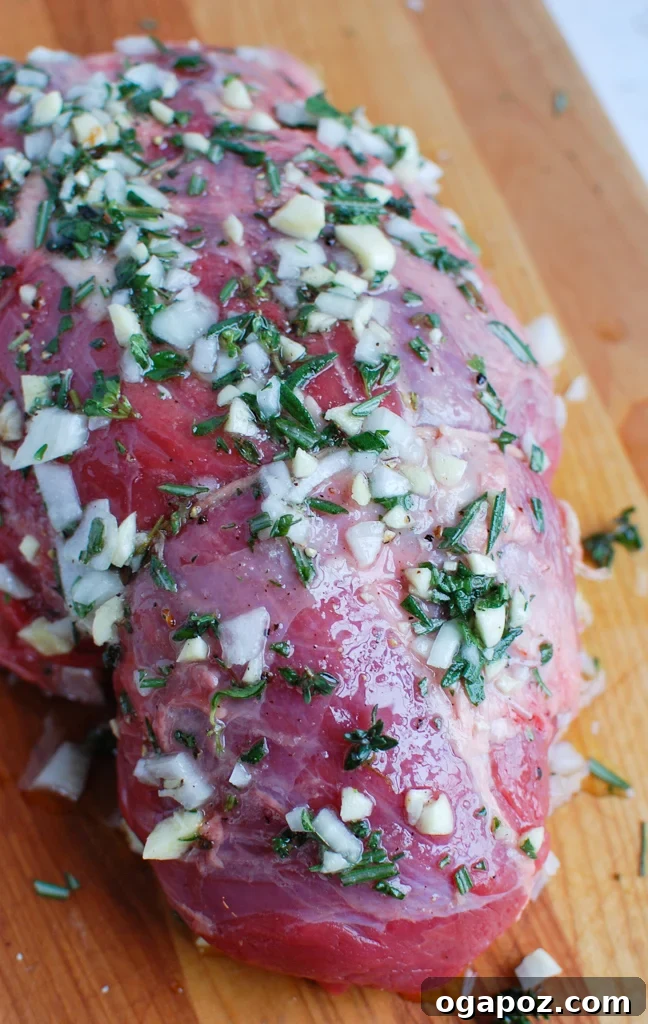
Crafting the perfect herb-crusted roast beef starts with selecting high-quality ingredients. Below is an overview of the simple yet powerful components we’ll be using. For precise measurements and printable instructions, please refer to the detailed recipe card at the end of this article.
- Beef (Top Round Roast): This recipe specifically calls for a top round beef roast, a lean and wonderfully flavorful cut of meat. It’s an excellent choice for roasting, known for its ability to become incredibly tender when cooked properly, making it ideal for feeding a crowd. Its robust flavor stands up well to the herb crust, promising a satisfying dining experience.
- Extra-Virgin Olive Oil: More than just a binder, the olive oil plays a crucial role. It not only helps the aromatic herb and garlic mixture adhere seamlessly to the beef, creating an even coating, but also contributes to the formation of that coveted golden, flavorful crust during roasting. Opt for a good quality extra-virgin olive oil for the best results.
- Garlic (Fresh or Powder): Minced fresh garlic is paramount for imparting a bold, savory depth of flavor that penetrates the beef. We highly recommend using fresh garlic for its superior aromatic qualities. However, if fresh garlic isn’t readily available, garlic powder can serve as a convenient and effective substitute for the seasoning mixture, still offering a wonderful savory note.
- Fresh Herbs (Rosemary, Thyme, Oregano, Parsley): The combination of fresh herbs is where this roast truly shines.
- Rosemary: Its piney, slightly peppery notes are classic with beef.
- Thyme: Adds a delicate, earthy, and slightly floral aroma.
- Oregano: Contributes a robust, slightly bitter, and peppery flavor.
- Parsley: Brings a fresh, clean, and herbaceous brightness to the overall profile.
Together, these fresh herbs infuse the beef with earthy, bright, and intensely aromatic flavors, forming the signature herb crust that makes this dish so special.
- Kosher Salt & Black Pepper: Essential seasonings that draw out the natural flavors of the beef and enhance the herb crust. Kosher salt provides a clean, briny flavor without being overly harsh, while freshly ground black pepper adds a subtle kick.
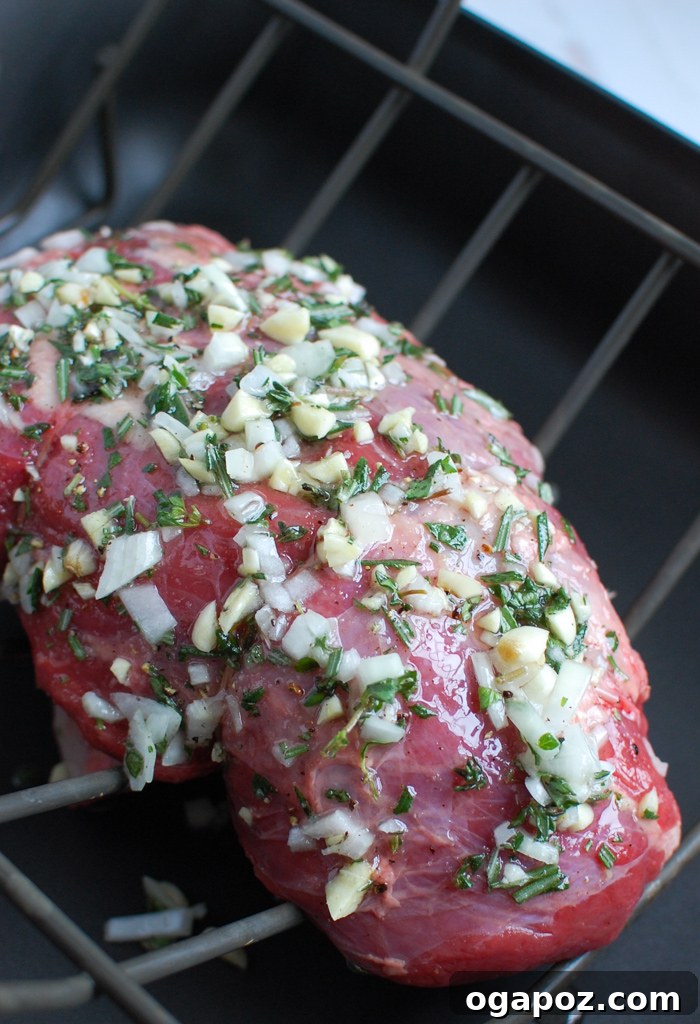
Step-by-Step Guide: Crafting Your Herb-Crusted Roast Beef
Creating this magnificent roast beef is simpler than you might imagine, yielding impressive results with minimal effort. Follow these detailed steps to ensure a perfectly cooked, juicy, and flavorful roast every time.
Step 1: Prepare the Beef for Roasting
Begin by removing your beef top round roast from the refrigerator approximately 30 minutes to 1 hour before you plan to cook it. Allowing the beef to come to room temperature ensures more even cooking throughout the roast. While the beef rests, preheat your oven to a high temperature of 450°F (232°C). This initial high heat will create a beautiful sear and lock in the juices.
Step 2: Create the Aromatic Herb & Garlic Mixture
In a small bowl, combine all the freshly chopped herbs (rosemary, thyme, oregano, and parsley) with the minced garlic, olive oil, kosher salt, and black pepper. Mix these ingredients thoroughly until they form a fragrant paste. This is your flavorful crust that will impart incredible aroma and taste to the beef.
Step 3: Coat and Season the Roast
Generously coat the entire surface of the beef roast with the herb and garlic mixture, making sure to spread it evenly on all sides. Don’t be shy – a good coating will ensure a rich crust. Place the seasoned roast on a wire rack set inside a shallow baking dish or a dedicated roasting pan. This setup allows for even air circulation around the roast, promoting consistent cooking and browning. If desired, sprinkle a little extra salt and pepper over the beef just before roasting.
Step 4: Roast to Perfection
Place the roasting pan with the beef into your preheated 450°F (232°C) oven. Roast for an initial 15 minutes. This high-heat searing phase helps to develop that irresistible crust. After 15 minutes, reduce the oven temperature to 325°F (160°C) without opening the oven door. Continue to roast for an additional 1 hour to 1 hour and 5 minutes, or until the beef reaches your desired doneness. For medium-rare, aim for an internal temperature of 125-130°F (52-54°C) when measured at the thickest part of the roast with an instant-read thermometer.
Step 5: Rest, Slice, and Serve
Once the roast reaches the desired internal temperature, carefully remove it from the oven. Transfer the beef to a carving board and loosely tent it with aluminum foil. This crucial resting period of 15-20 minutes allows the juices to redistribute throughout the meat, resulting in an incredibly tender and succulent roast. Skipping this step can lead to a dry roast. After resting, slice the roast into thin pieces against the grain. Garnish with fresh parsley, and serve immediately alongside sautéed mushrooms, your favorite side dishes, and perhaps a refreshing Lemon Arugula Salad.
Expert Tips for Roasting Beef to Perfection
Achieving a perfectly cooked, tender, and juicy roast beef is a culinary delight, and a few expert tips can make all the difference. Follow these guidelines to elevate your roasting game and ensure a spectacular outcome every time.
- Proper Roast Placement: Before placing your roast in the oven, ensure it’s positioned correctly. Always place the roast fat side up on a wire rack within a shallow roasting pan. The only exception is a rib roast, where the ribs naturally act as a rack. This upright positioning allows the fat to baste the meat as it cooks, promoting even cooking, self-basting, and a tender, flavorful result.
- Embrace Oven Roasting: Oven roasting is particularly ideal for holidays and large gatherings due to its “set it and forget it” approach. By using consistent, low heat over a longer duration after an initial sear, you can achieve perfectly cooked roast beef with a beautiful crust and a tender interior. This method provides predictability and frees you up to attend to other aspects of your meal preparation.
- The Indispensable Meat Thermometer: For larger cuts of beef, an oven-safe meat thermometer that stays in the roast throughout the cooking process is an invaluable tool. It allows you to monitor the internal temperature without frequently opening the oven door, which can cause heat fluctuations and prolong cooking time. More importantly, it prevents you from repeatedly piercing the meat, which can lead to precious moisture loss. Insert the thermometer into the thickest part of the roast, avoiding bone, for the most accurate reading.
- The Golden Rule of Resting: After roasting, transfer the beef to a carving board and loosely tent it with aluminum foil. Let it rest for a minimum of 15–20 minutes. This resting period is critical; it allows the muscle fibers to relax and the internal juices to redistribute evenly throughout the meat. Cutting into the roast too soon will cause the juices to escape, resulting in a drier, less flavorful slice. Use this valuable resting time to create a flavorful au jus from the pan drippings, adding another layer of deliciousness to your meal.
- Achieving Desired Doneness: Knowing your target internal temperatures is key for perfect roast beef.
- Rare: 120-125°F (49-52°C)
- Medium-Rare: 130-135°F (54-57°C) (Our recommended target for this recipe!)
- Medium: 135-140°F (57-60°C)
- Medium-Well: 140-145°F (60-63°C)
- Well-Done: 150°F (66°C) and above
Remember that the temperature will rise by 5-10 degrees while the meat rests.
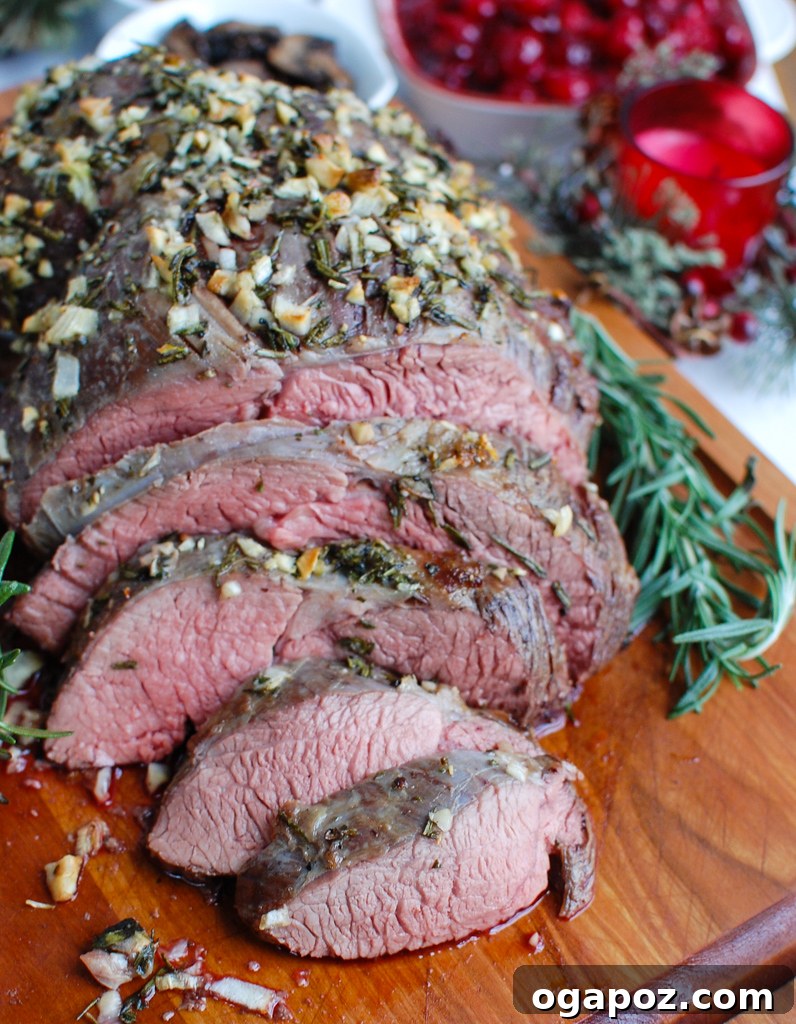
Storage & Leftover Ideas
Properly storing your leftover roast beef ensures its freshness and allows you to enjoy its deliciousness for days to come. Here’s how to handle storage and some creative ideas for repurposing leftovers:
Refrigeration
Once cooled, transfer any remaining roast beef to an airtight container or wrap it tightly in aluminum foil. Stored in the refrigerator, it will remain fresh and delicious for up to 5 days. This makes it perfect for meal prepping throughout the week.
Freezing
For longer storage, roast beef freezes beautifully. To freeze, slice the beef into individual portions or in larger chunks, then double-wrap it tightly in aluminum foil or plastic wrap. Place the wrapped beef into a freezer-safe zip-top bag, pressing out any excess air, or an airtight freezer container. Properly frozen, it can maintain its quality for up to 3 months. Thaw overnight in the refrigerator before reheating.
Creative Leftover Transformations
Don’t let leftover roast beef go to waste! Its versatility makes it ideal for a variety of quick and delicious meals:
- Gourmet Sandwiches: Layer thinly sliced roast beef with provolone cheese, caramelized onions, and horseradish sauce on a crusty baguette for an elevated sandwich experience.
- Hearty Salads: Add cold, sliced roast beef to a fresh green salad with your favorite dressing for a protein-packed lunch.
- Beef & Veggie Stir-Fry: Quickly sauté sliced beef with your favorite vegetables and a savory sauce for a fast weeknight dinner.
- Roast Beef Hash: Dice the beef and combine it with cooked potatoes, onions, and bell peppers, then pan-fry until crispy. Top with a fried egg for a superb breakfast or brunch.
- French Dip Sandwiches: Reheat the beef gently in a little broth and serve on rolls with a side of au jus for dipping.
Frequently Asked Questions About Roast Beef
For a top sirloin roast cooked using this low and slow oven method, a general guideline is approximately 20-25 minutes per pound of meat for medium-rare doneness. However, several factors influence the exact cooking time, including the initial temperature of the roast (it should be brought to room temperature), the thickness of the cut, and your specific oven’s calibration. The most accurate way to ensure perfect doneness is to use an instant-read meat thermometer. Begin checking the internal temperature after about an hour of cooking, and continue until it reaches your desired level of doneness (e.g., 130°F for medium-rare before resting).
The best method for tender roast beef involves an initial high-heat sear followed by a low and slow roast. Starting with a high temperature (like 450°F) for 15 minutes creates a beautiful brown crust and locks in juices. Then, immediately reducing the temperature to a lower heat (325°F) for the remainder of the cooking time allows the meat to cook gently and evenly, preventing it from becoming tough and ensuring it remains incredibly tender and juicy. Always remember to rest the beef for 15-20 minutes after cooking to allow the juices to redistribute.
Navigating the butcher’s counter can be daunting with so many beef choices. For roast beef, the “best” cut often depends on your budget and the occasion. For an impressive presentation and melt-in-your-mouth tenderness for a special group of guests, consider premium cuts like Prime Rib, Ribeye Roast, or Beef Tenderloin (Filet Mignon). These cuts are generally more expensive but offer unparalleled flavor and texture. If you’re looking for more economical yet still excellent options, try a Top Round Roast (as used in this recipe), Sirloin Tip Roast, Bottom Round Roast, or a Rump Roast. These leaner cuts benefit greatly from proper preparation and the low-and-slow roasting method to achieve tenderness.
Absolutely, and you should! The pan drippings from your roast beef are packed with incredible flavor. After removing the roast to rest, place the roasting pan directly over a burner on medium heat (or scrape drippings into a saucepan). Stir in a tablespoon or two of flour or cornstarch to create a roux, cooking for a minute or two. Then, gradually whisk in beef broth or red wine, scraping up any browned bits from the bottom of the pan. Simmer until thickened to your desired consistency, season to taste, and strain if you prefer a smoother gravy. This homemade gravy is the perfect accompaniment to your succulent roast.
A “spoon roast” is another name for a Top Round Roast, particularly when it’s cooked to such tenderness that it can be easily cut with a spoon rather than a knife. This term emphasizes the desired outcome of a well-prepared roast – incredibly tender, juicy, and falling apart in the best possible way. This recipe, with its slow roasting method, aims to achieve exactly that “spoon roast” perfection.
More Delicious Beef Recipes to Explore
Beef
Mediterranean Beef Kabobs
Beef
Beef Tenderloin Steaks with Creamy Blue Cheese Sauce
Beef
Beef Kafta Meatballs
Beef
Grilled Beef Kofta Kebabs
The Ultimate Herb-Crusted Roast Beef
By Julia Jolliff
This is the ultimate herb-crusted roast beef recipe that will dazzle guests this holiday season or at any special occasion. Olive oil is mixed with a medley of freshly chopped rosemary, thyme, parsley, and garlic to create an irresistible, flavorful crust that locks in juiciness. Pair this spectacular centerpiece with a robust cabernet sauvignon and your favorite comforting side dishes for an unforgettable meal.
Ingredients
- 4 pound Beef Top Round Roast
- 2 teaspoon fresh oregano, chopped
- 2 teaspoons fresh rosemary, chopped
- 1 teaspoon fresh thyme, chopped
- 3 teaspoons fresh parsley, chopped
- 2 tablespoons olive oil
- 4 garlic cloves, minced
- 2 teaspoons kosher salt
- 1/4 teaspoon black pepper
Instructions
- Remove your beef roast from the fridge and allow it to come to room temperature on the counter for about 30 minutes to 1 hour.
- Preheat your oven to 450°F (232°C).
- In a small bowl, combine all the chopped fresh herbs, minced garlic, olive oil, kosher salt, and black pepper. Mix well to create a fragrant paste.
- Generously coat the beef roast on all sides with the herb and garlic mixture, pressing it firmly to adhere.
- Place the seasoned roast on a wire rack inside a shallow baking dish or roasting pan.
- Roast for 15 minutes at 450°F (232°C). This high heat will sear the exterior and begin to form the crust.
- Reduce the oven temperature to 325°F (160°C). Continue roasting for an additional 1 hour to 1 hour and 5 minutes, or until an instant-read thermometer inserted into the thickest part of the roast registers 125-130°F (52-54°C) for medium-rare doneness.
- Remove the roast from the oven and transfer it to a carving board. Loosely tent it with aluminum foil and let it rest for 15-20 minutes. This resting period is crucial for the juices to redistribute, ensuring a tender and juicy roast.
- Slice the roast into thin pieces against the grain. Serve immediately with fresh parsley, sautéed mushrooms, and any additional favorite side dishes.
Notes
- A top sirloin roast cooked using this low and slow method will typically take approximately 20-25 minutes per pound for medium-rare.
- Cooking times can vary based on the thickness of your roast, its initial temperature, and your oven’s accuracy. Always use a meat thermometer and begin checking the internal temperature after the first hour of cooking to achieve your desired doneness.
- Consider making a rich gravy from the pan drippings while the roast rests for an extra layer of flavor.
Nutrition Information (Approximate)
Serving: 6g, Calories: 585kcal, Carbohydrates: 1g, Protein: 87g, Fat: 24g, Saturated Fat: 9g, Polyunsaturated Fat: 2g, Monounsaturated Fat: 14g, Trans Fat: 1g, Cholesterol: 245mg, Sodium: 981mg, Potassium: 1145mg, Fiber: 0.4g, Sugar: 0.05g, Vitamin A: 45IU, Vitamin C: 1mg, Calcium: 53mg, Iron: 9mg
Nutrition information is automatically calculated and should only be used as an approximation.
Share your creation! Mention @acedarspoon or tag #acedarspoon on social media!