
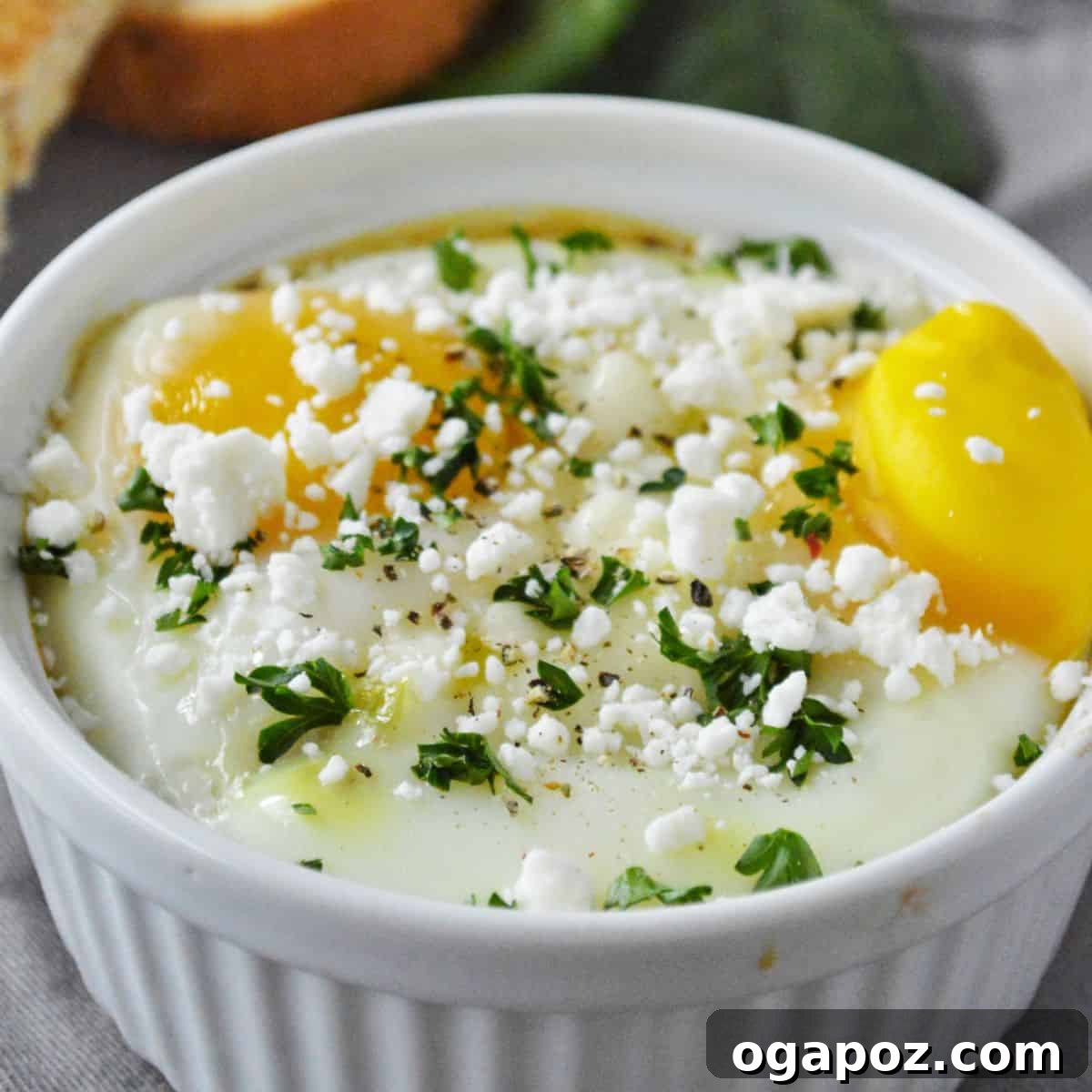
Greek Baked Eggs offer a delightful fusion of wholesome ingredients, marrying the rich simplicity of eggs with the vibrant flavors of the Mediterranean. This easy-to-prepare dish brings together nutrient-dense eggs with savory feta, crisp red onion, fresh spinach, and tender artichoke hearts, creating a breakfast, brunch, lunch, or light dinner option that’s both satisfying and incredibly quick to make. With its adaptable nature, you can effortlessly tailor the ingredients to suit your personal preferences or what you have on hand, making it the perfect customizable meal for one, or easily scaled up for a crowd.
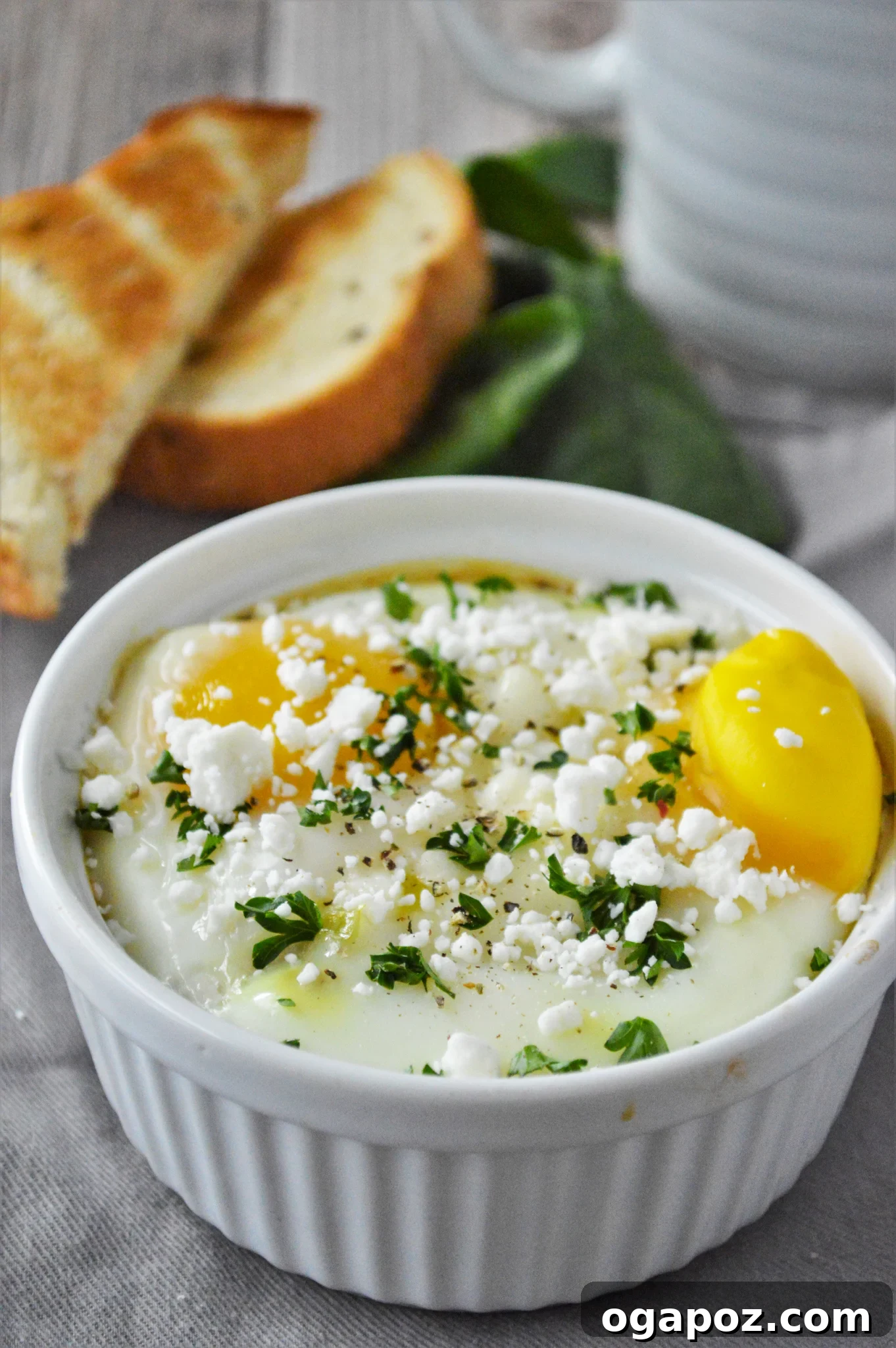
Discover the Irresistible Charm of Greek Baked Eggs
There’s something truly magical about baked eggs. They emerge from the oven with perfectly set whites and yolks that can range from gloriously runny to softly firm, ready to be enjoyed with a piece of crusty bread. When you infuse this classic preparation method with the bold and fresh flavors of Greek cuisine, you get a dish that is not only visually appealing but also bursting with taste. Our Greek Baked Eggs recipe transforms a simple egg dish into a culinary experience with a distinct Mediterranean twist, making it a beloved staple in our family.
Eggs are a powerhouse ingredient, celebrated for their versatility and nutritional benefits. Whether served on their own or paired with a medley of complementary flavors, as we’ve done here with a blend of salty feta, aromatic red onion, verdant spinach, and tangy artichoke, they consistently deliver. This recipe highlights how harmoniously eggs integrate with a rich array of fresh produce and savory cheese, offering a meal that feels both wholesome and indulgent. Ideal for a quick lunch or a lighter dinner, these Greek-style baked eggs are a testament to how simple ingredients can create profound flavors.
One of the greatest advantages of this recipe is its incredible adaptability. It’s a fantastic solution for utilizing leftover roasted vegetables or making the most of greens that are nearing their prime in the refrigerator. The baking time is efficiently short, typically 12-15 minutes in a small ramekin, which means a delicious, hot meal is never far off. And for those moments when you’re feeding more than just yourself, the recipe can be effortlessly doubled or even tripled without compromising on flavor or ease of preparation.
If you’re as passionate about eggs as we are, you might also enjoy exploring other egg-centric recipes that bring diverse flavors to your table. Our Southwestern Greek Yogurt Deviled Eggs offer a creamy, zesty twist, while the Cheesy Black Bean Salsa Verde Egg Bake delivers a hearty, spicy kick. For a more traditional yet equally flavorful option, try our Mediterranean Vegetable Frittata or a quick Mediterranean Egg Scramble. Each offers a unique way to enjoy this incredible superfood.
Essential Ingredients for Your Greek Baked Eggs
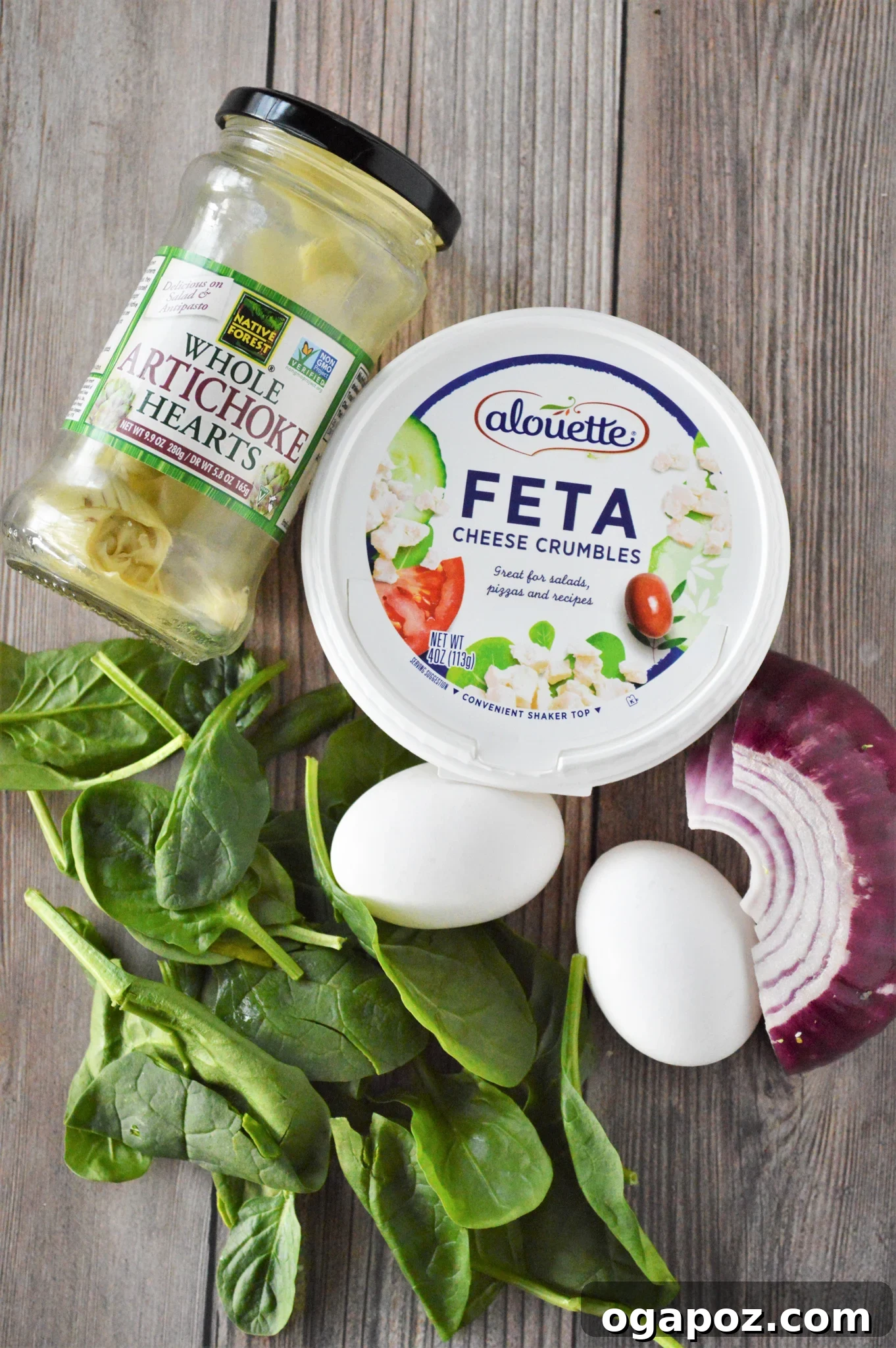
Crafting the perfect Greek Baked Eggs starts with selecting quality ingredients that bring out the best in this Mediterranean-inspired dish. Here’s a closer look at what you’ll need and why each component is vital, along with some suggested substitutions to keep things flexible. For precise measurements and detailed instructions, please refer to the full recipe card below.
- Eggs: The star of the show! We recommend using two large, fresh, free-range eggs per serving for the best flavor and texture. Eggs are a complete protein source, packed with essential vitamins and minerals. Their versatility allows them to be the canvas for endless flavor combinations. Feel free to adjust the number of eggs if you’re making a larger batch or prefer a heartier portion.
- Red Onion: Finely chopped red onion adds a subtle sweetness and a touch of savory depth without overpowering the delicate flavors of the eggs and other ingredients. When sautéed, it becomes wonderfully tender and aromatic. If red onion isn’t available, sweet onion, leeks, or even finely diced shallots make excellent substitutes. For a milder flavor and a pop of color, you can garnish with fresh green onions at the end.
- Spinach: We opt for baby spinach for its tender leaves and quick wilting time, which integrates seamlessly into the dish. Spinach is a nutritional powerhouse, rich in iron and vitamins. If baby spinach isn’t on hand, regular spinach works just as well; simply chop it roughly. For an adventurous twist, consider swapping in Swiss chard or kale, both of which will add a robust, earthy flavor and a boost of nutrients.
- Artichoke Hearts: Three chopped artichoke hearts lend a unique tangy and slightly briny flavor that is distinctly Mediterranean. We typically use canned or jarred artichoke hearts, packed in water or oil, drained and chopped. Their tender texture provides a lovely contrast to the other ingredients. If artichokes aren’t to your liking, or you don’t have them, they can be easily omitted without compromising the core integrity of the dish.
- Feta Cheese: The quintessential Greek cheese! Crumbled feta cheese is crucial for its wonderfully salty, tangy, and slightly crumbly texture. It melts beautifully into the eggs and vegetables, providing bursts of intense flavor. If you’re looking for an alternative, other crumbly cheeses like goat cheese or even a sprinkle of grated Parmesan can offer a similar savory profile, though feta truly brings that authentic Greek character.
- Extra Virgin Olive Oil: A foundational ingredient in Mediterranean cooking. A tablespoon of good quality extra virgin olive oil is used to sauté the vegetables, imparting a rich, fruity aroma and healthy fats to the dish.
- Optional Garnishes: Fresh parsley adds a burst of freshness and a vibrant green color, while a pinch of crushed red pepper flakes can introduce a subtle warmth for those who enjoy a hint of spice.
Crafting Your Delicious Greek Style Eggs: A Step-by-Step Guide
Making these Greek Baked Eggs is remarkably straightforward, requiring minimal effort for maximum flavor. Follow these simple steps to create a perfect single-serving meal, or easily adjust for more portions.
-
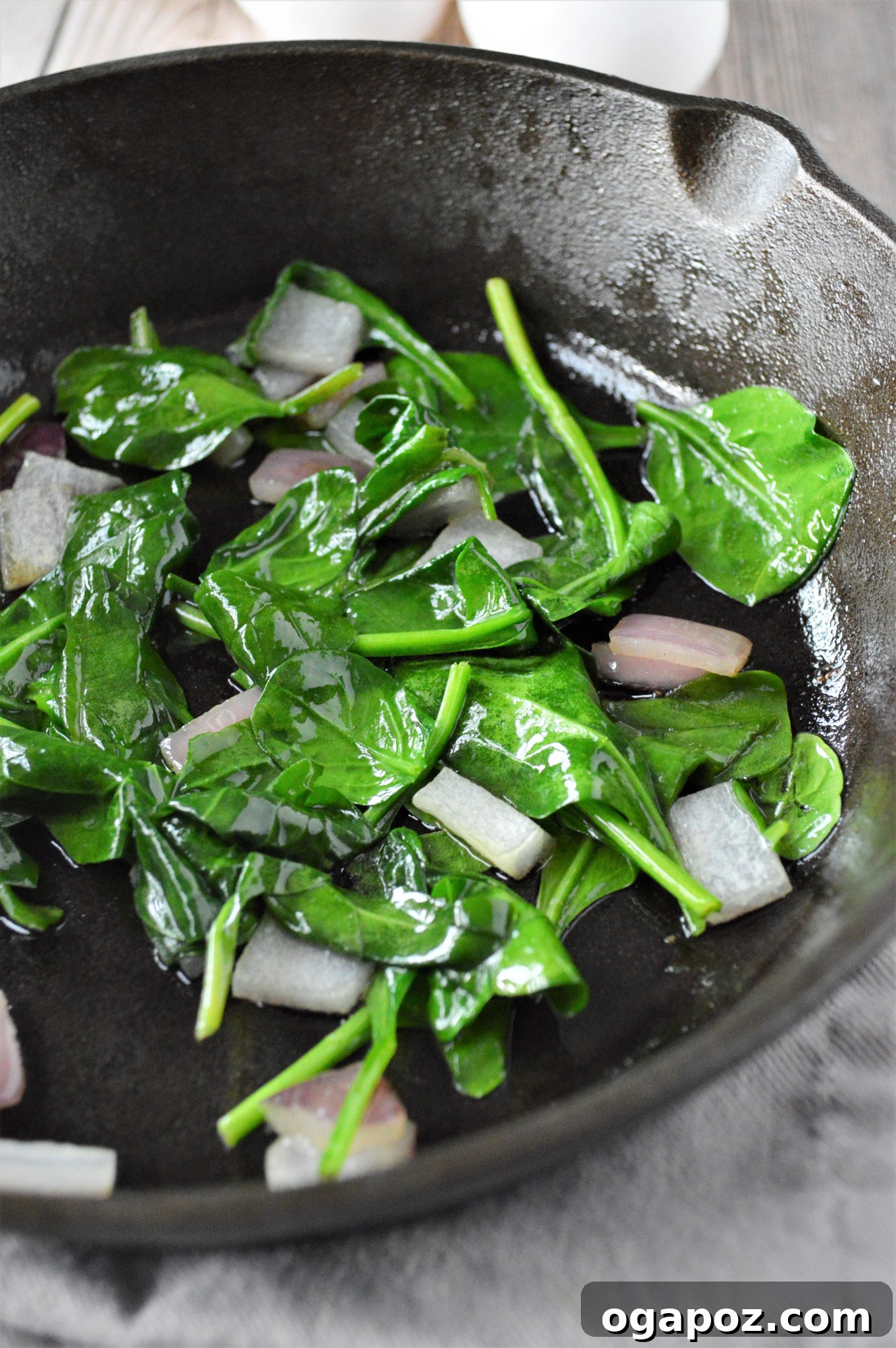
Step 1: Prepare Your Oven and Sauté the Vegetables. Begin by preheating your oven to 375 degrees Fahrenheit (190 degrees Celsius). While the oven heats, warm the olive oil in a small or medium skillet over medium heat. Add the finely chopped red onion to the skillet and sauté gently until it softens and becomes translucent, usually about 3-5 minutes. Next, stir in the baby spinach and cook until it wilts completely, which should only take a minute or two. This step is crucial for building the flavor base and ensuring the vegetables are tender before baking.

Sautéing the vegetables softens them and enhances their flavor. -
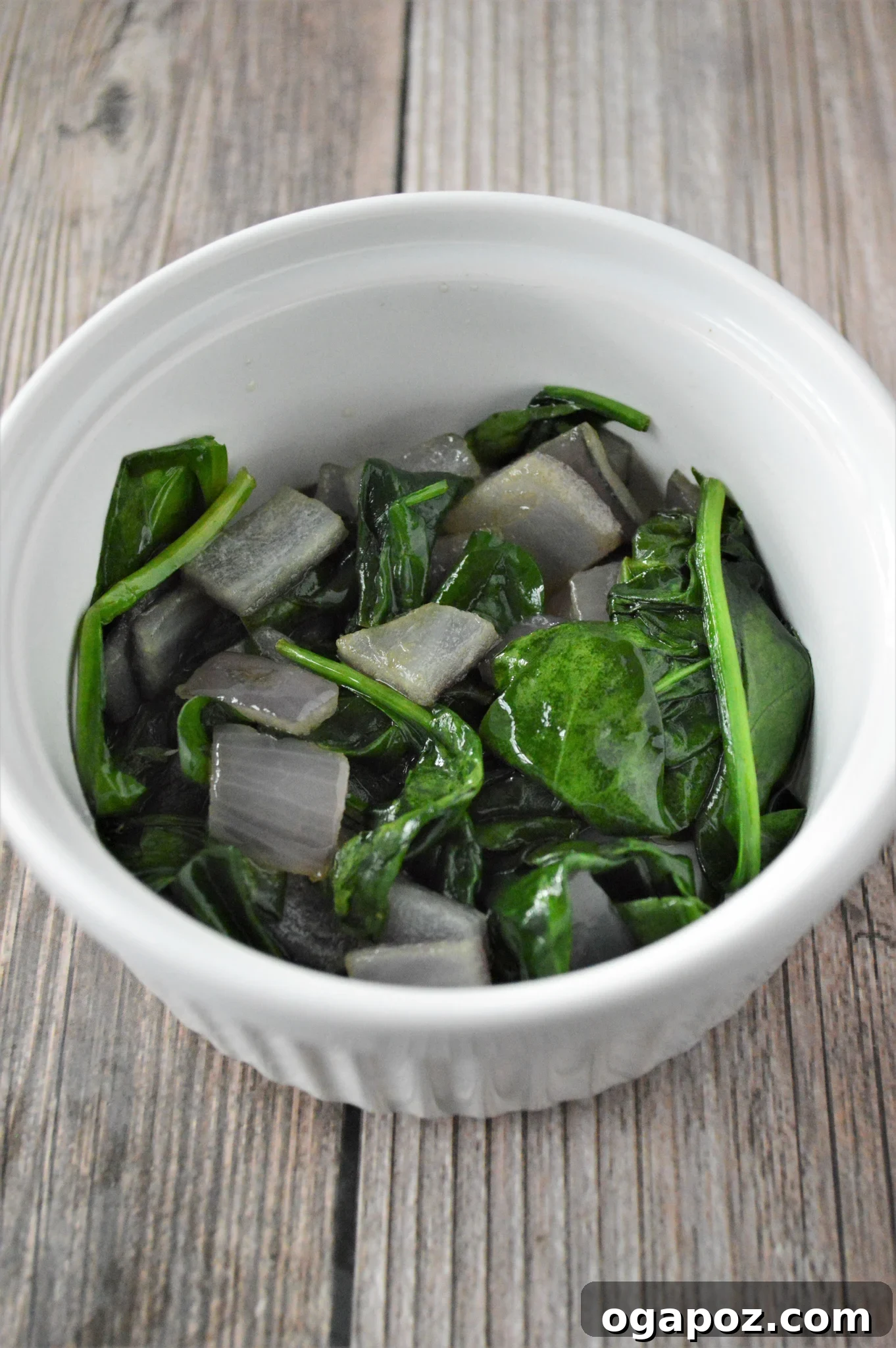
Step 2: Layer the Base. Once the vegetables are cooked, remove the skillet from the heat. Carefully transfer the sautéed onion and spinach mixture and spread it evenly across the bottom of a small, oven-safe ramekin (typically an 8-ounce size). This forms a savory bed for the eggs.
A delicious vegetable base awaits the next layers. -
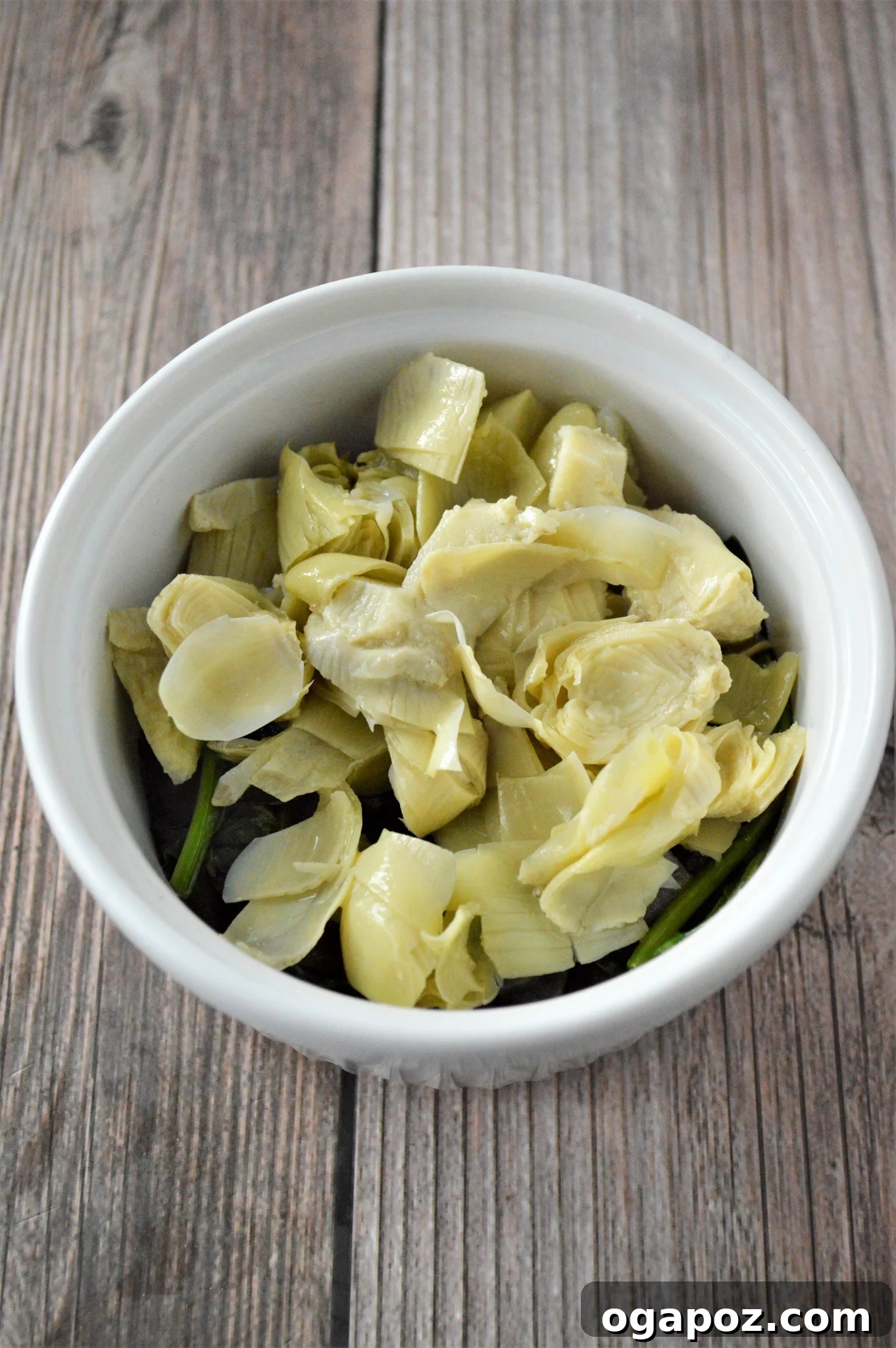
Step 3: Add Artichoke Hearts. Next, scatter the chopped artichoke hearts over the onion and spinach layer. Their tangy flavor will perfectly complement the other ingredients.
Artichoke hearts add a distinct Mediterranean tang. -
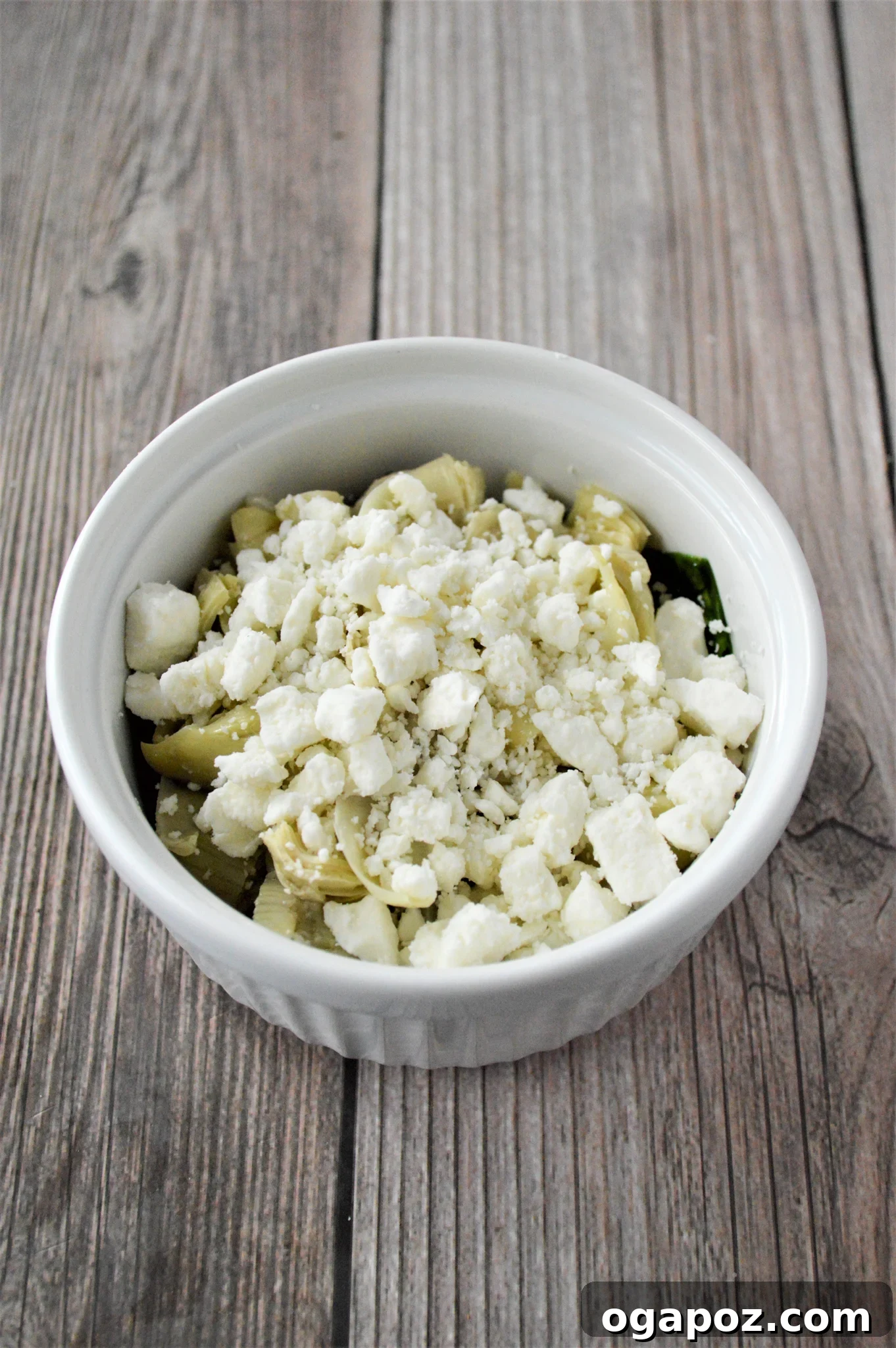
Step 4: Sprinkle with Feta. Generously sprinkle the crumbled feta cheese on top of the artichoke layer. The feta will melt slightly during baking, creating pockets of creamy, salty goodness.
Feta cheese provides that signature Greek saltiness and creaminess. -
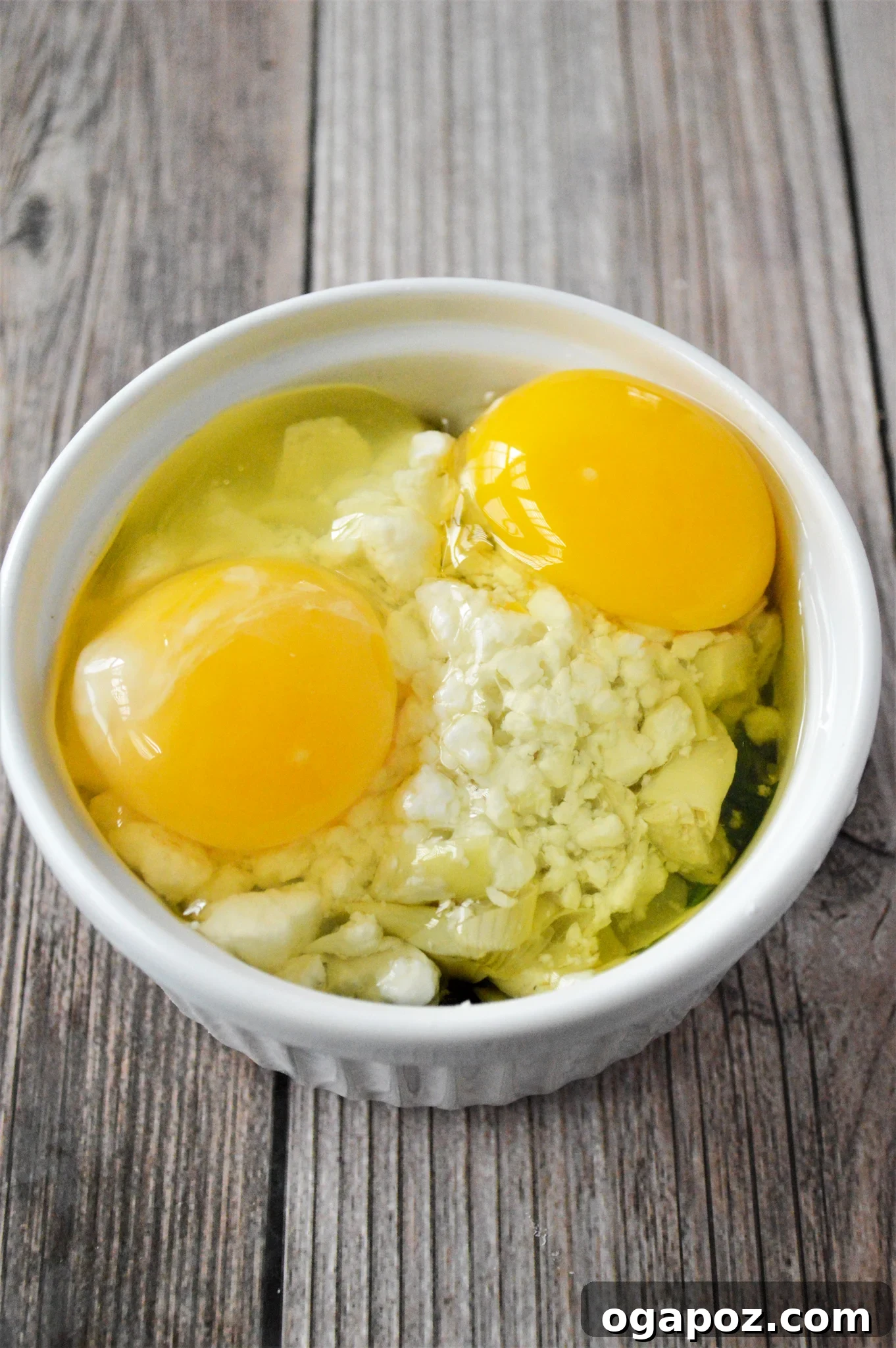
Step 5: Crack the Eggs. Carefully crack two eggs directly on top of the feta cheese, taking care not to break the yolks. The aim is to have beautiful, intact yolks that can be gloriously runny when served, perfect for dipping.
Gently crack the eggs, preserving the yolks for a perfect runny center. - Step 6: Bake to Perfection. Place the filled ramekin into your preheated oven. Bake for approximately 12-15 minutes, or until the egg whites are set and the yolks reach your desired level of doneness. For a perfectly soft, dippable yolk, keep a close eye on them during the last few minutes.
-
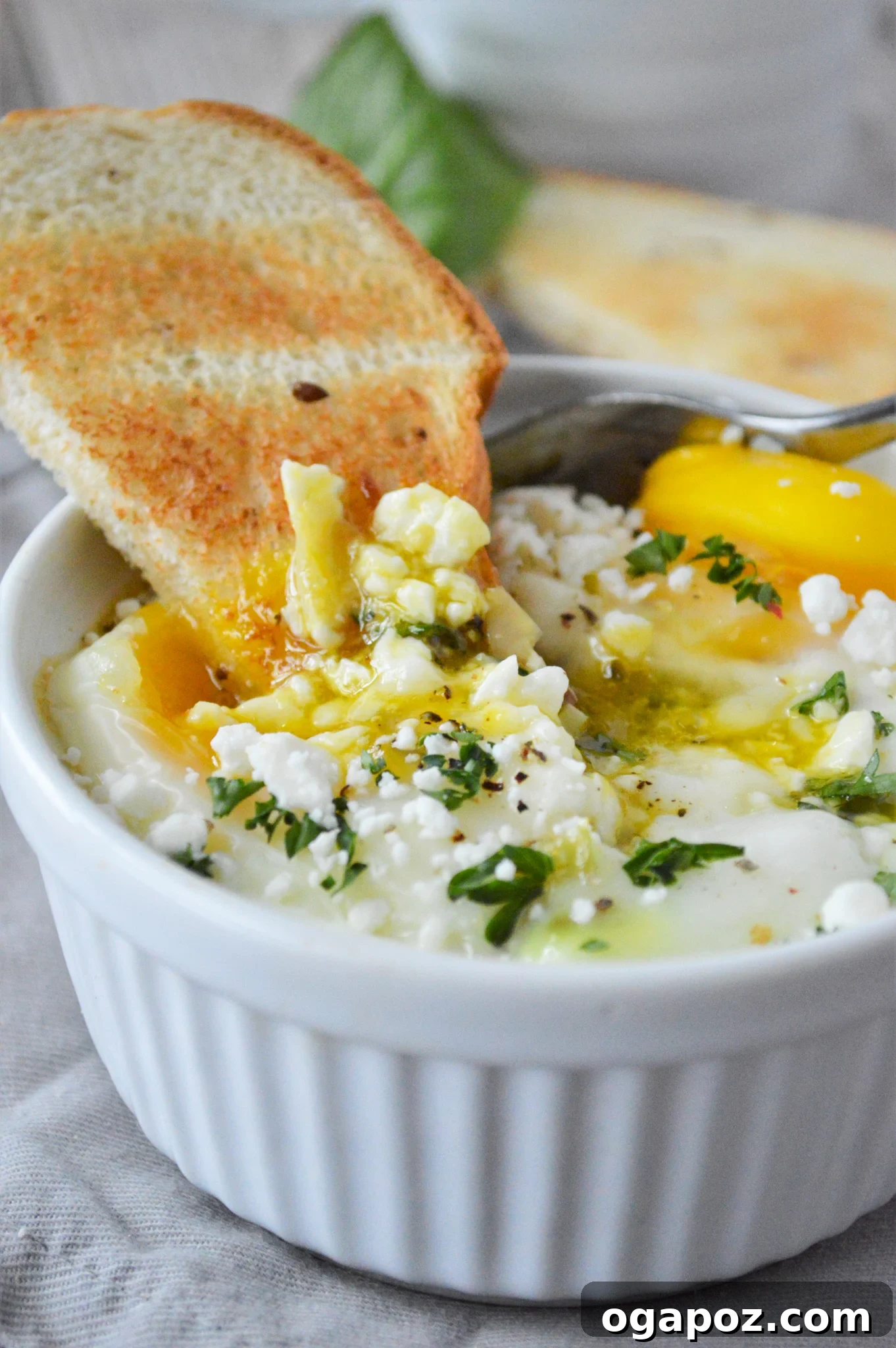
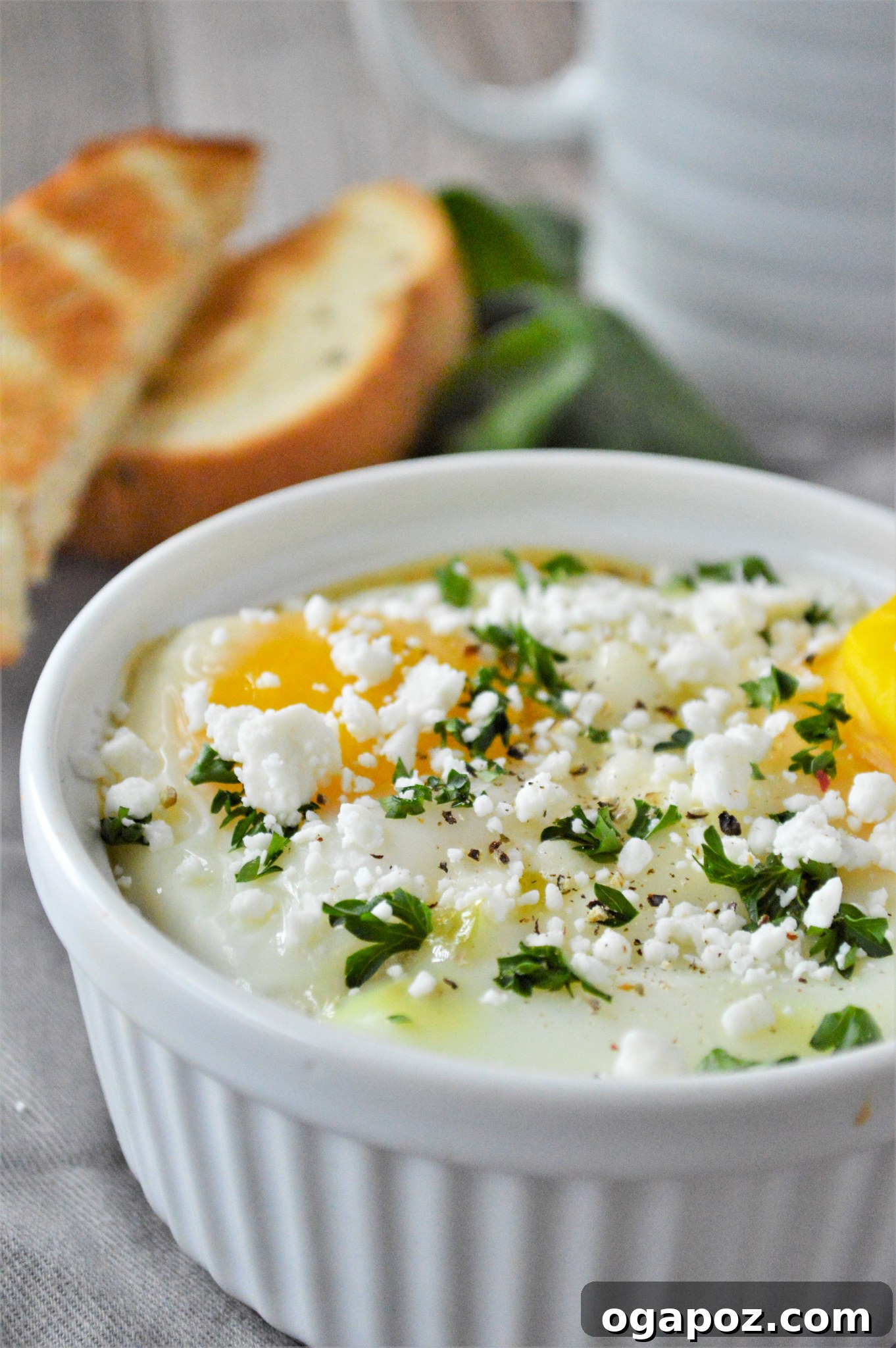
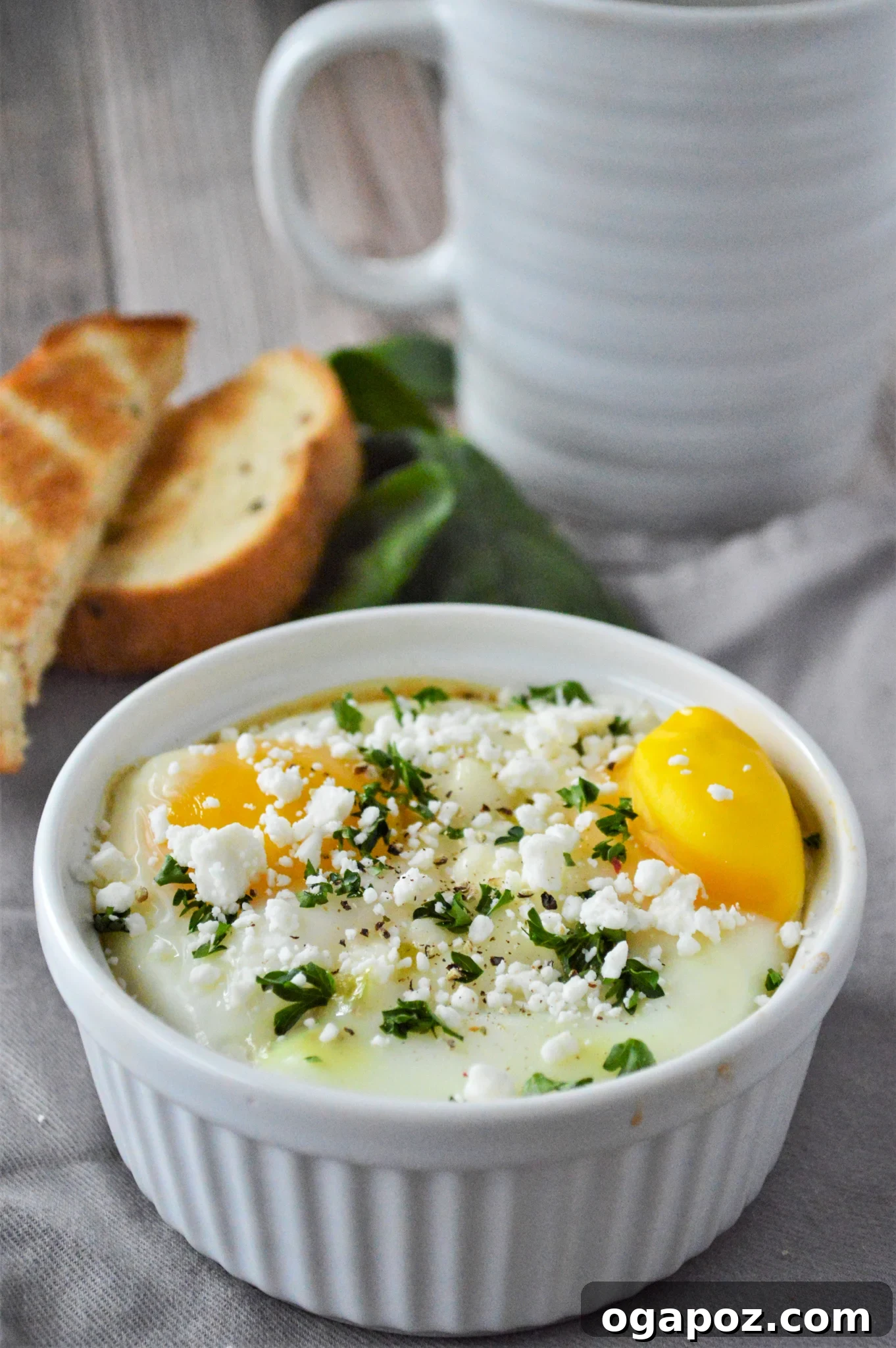
Step 7: Serve Immediately. Once baked, carefully remove the ramekin from the oven. Garnish with fresh chopped parsley and, if desired, a little extra crumbled feta cheese and a pinch of crushed red pepper flakes for an added touch of color and spice. Serve hot and enjoy!
Fresh parsley adds a vibrant finish to the baked eggs.
The Art of Baking Eggs: Achieving Your Perfect Yolk Consistency
The baking time for eggs is often a matter of personal preference, and with Greek Baked Eggs, you have full control over the yolk’s consistency. We typically recommend baking these eggs in the oven for 12-15 minutes at 375 degrees F (190 C). This timeframe usually results in a beautifully soft-set yolk, which is truly glorious for dipping warm pita bread, crusty baguette, or even a piece of sourdough toast. The whites will be firm and opaque, while the yolk retains a luscious, liquid center.
However, if you prefer a firmer yolk – perhaps closer to a jammy consistency or even fully set – simply extend the baking time by an additional 3-5 minutes. Keep in mind that oven temperatures can vary, so it’s always a good idea to monitor your eggs closely, especially towards the end of the cooking process. Look for the whites to be fully set and opaque, then gently jiggle the ramekin to gauge the firmness of the yolk. Removing them just as they reach your preferred doneness is key to avoiding overcooked, rubbery eggs.
Endless Possibilities: Ways to Customize Your Greek Baked Eggs
One of the most exciting aspects of this Greek Baked Eggs recipe is its incredible versatility. While the core combination of feta, spinach, and artichoke is undeniably delicious, don’t hesitate to get creative and make it your own. Here are numerous ways you can modify this dish to suit your taste, use up leftovers, or simply explore new flavor profiles:
- Vibrant Veggie Swaps: The base vegetables can be easily interchanged with a variety of other fresh produce you enjoy or have on hand. Consider adding roasted bell peppers (red, yellow, or orange), tender broccoli florets, sliced zucchini, juicy cherry tomatoes, sautéed mushrooms, or even asparagus spears. Ensure heartier vegetables are pre-cooked or chopped finely to ensure they soften adequately during the short baking time. Sun-dried tomatoes (oil-packed and chopped) are also a fantastic addition for a concentrated, tangy flavor.
- Aromatic Herb Infusion: Elevate the fresh profile with a burst of additional herbs. Beyond parsley, fresh oregano, basil, thyme, or dill would all be excellent choices. Finely chop and stir them into the sautéed vegetables or sprinkle them on top with the feta for a fragrant finish. Mint can also offer a refreshing, unexpected twist.
- Creamy Greek Yogurt: For an extra layer of creaminess and a subtle tang, add a spoonful of thick, plain Greek yogurt to the sautéed vegetables before cracking the eggs over them. It will melt beautifully into the base, enriching the texture and flavor.
- Spicy Kick or Earthy Warmth: If you appreciate a bit of heat, sprinkle some red pepper flakes into the olive oil when you’re sautéing the onion. A pinch of chili powder or smoked paprika can also introduce a wonderful smoky depth. For a more traditional Greek touch, a dash of dried oregano or za’atar blended with the vegetables works wonders.
- Boost with More Protein: To make this dish even more substantial, incorporate additional cooked protein. Think crumbled cooked sausage (pork, chicken, or turkey), crispy bacon bits, shredded cooked chicken, or even a handful of chickpeas for a vegetarian protein boost.
- Alternative Cheeses: While feta is key to the “Greek” profile, don’t be afraid to experiment with other cheeses. Crumbled goat cheese offers a milder tang and creaminess, shredded mozzarella or cheddar will give a classic gooey texture, or finely grated Parmesan for a salty, umami kick. For something truly unique, try adding slices of grilled halloumi cheese alongside the feta.
- Mediterranean Enhancements: Further lean into the Mediterranean theme by adding chopped Kalamata olives (pitted), capers, or even a drizzle of good quality balsamic glaze after baking.
Pro Tips for the Best Greek Baked Eggs
Achieving perfect Greek Baked Eggs every time is easy with a few simple tips. These suggestions will help you maximize flavor, ensure ideal texture, and make the cooking process even smoother.
- Scale Up Effortlessly: While this recipe is designed for a single serving, it’s incredibly simple to double, treble, or even quadruple the ingredients to feed more people. Simply use larger ramekins or an oven-safe baking dish for a family-style presentation. Adjust baking time slightly for larger dishes.
- Handle Eggs with Care: The beauty of baked eggs often lies in that irresistible runny yolk. To achieve this, crack your eggs gently into the ramekin. Avoid breaking the yolk, as this can lead to a more scrambled texture rather than a distinct, dippable yolk. The joy of dipping fresh bread into a perfectly molten yolk is unmatched!
- Prevent Rubbery Eggs: Overcooking is the enemy of baked eggs. To avoid a rubbery texture, do not walk away from the oven during the last few minutes of baking. Instead, keep a watchful eye on the eggs. Remove them promptly when the whites are set and opaque, but the yolk still has that desired softness and slight wobble. Every oven is different, so trust your eyes over strict timings.
- Serve Fresh and Hot: Baked eggs are truly at their best when served immediately, straight from the oven. The textures are perfect, and the flavors are most vibrant. Reheating baked eggs often results in overcooked yolks and a less desirable texture, so planning to enjoy them fresh is highly recommended.
- Ramekin Alternatives: Don’t have ramekins? No problem! Any small, individual oven-proof dish will work equally well. Small ceramic bowls, oven-safe mugs, or even a mini cast-iron skillet can be excellent substitutes. Just ensure they can withstand oven temperatures.
- Seasoning Smart: Remember that feta cheese is quite salty. It’s often best to season with salt and pepper after the eggs are baked, allowing you to taste and adjust according to the saltiness of your feta and personal preference. This prevents the dish from becoming overly salty.
Storage and Reheating Advice
While Greek Baked Eggs are undeniably best enjoyed fresh, if you happen to have any leftovers, they can be stored. Place them in an airtight container and refrigerate for up to 2 days. When you’re ready to reheat, a microwave can be used, though be aware that the yolk will likely become firmer and lose its runny quality upon reheating. For best results, gently warm in the microwave on a lower power setting to prevent the eggs from becoming tough.
More Delicious Egg Recipes to Explore
Beef
Southwestern Taco Egg Muffins
Vegetarian
Breakfast Egg Muffins
Appetizers
Southwestern Greek Yogurt Deviled Eggs
Breakfast
Vegetarian Breakfast Egg Burritos
Tried this recipe? Share your experience and leave a comment below! Stay updated with new recipes by following us on
Facebook,
Instagram, or
Pinterest.
Greek Baked Eggs
Julia Jolliff

10 mins
12 mins
22 mins
1
Ingredients
- 2 eggs
- 1/4 cup red onion, finely chopped (can substitute sweet onion, leeks or shallots)
- 1 cup baby spinach (can substitute Swiss chard or kale)
- 1 tablespoon extra virgin olive oil
- 3 artichoke hearts, chopped
- 1/4 cup feta cheese, crumbled (extra for garnish)
- Crushed red pepper for garnish, optional
- Fresh parsley for garnish
Instructions
- Preheat the oven to 375 degrees F (190 C).
- In a medium skillet, heat the olive oil over medium heat. Sauté the red onion until tender, then stir in baby spinach and sauté until wilted. Remove from heat.
- Place the spinach and onion mixture into the base of a small ramekin.
- Top with chopped artichoke hearts, then sprinkle with feta cheese.
- Carefully crack two eggs on top, trying not to break the yolks.
- Bake at 375 degrees F for approximately 12-15 minutes (or until eggs are cooked to your preference).
- Remove from the oven and top with fresh parsley and additional feta cheese. Serve immediately.
Notes
- This recipe serves one, but can be easily doubled or tripled to feed larger numbers.
- Break the eggs gently into the ramekin to avoid breaking the yolk; otherwise, you risk it becoming a bit scrambled. The joy of baked eggs is dipping some fresh bread into the runny yolk.
- To avoid rubbery eggs, do not overcook. Keep an eye on the egg as it bakes and remove it from the oven when the yolk is still runny.
- This is a dish best served fresh, as reheating will only result in overcooked eggs. Serve it warm, straight from the oven.
- If you don’t have ramekins, use a small oven-proof dish instead.
Nutrition
Calories: 373kcal, Carbohydrates: 7g, Protein: 18g, Fat: 31g, Saturated Fat: 10g, Polyunsaturated Fat: 3g, Monounsaturated Fat: 15g, Trans Fat: 0.03g, Cholesterol: 361mg, Sodium: 589mg, Potassium: 371mg, Fiber: 1g, Sugar: 2g, Vitamin A: 3447IU, Vitamin C: 11mg, Calcium: 273mg, Iron: 3mg
Nutrition information is automatically calculated, so should only be used as an approximation.
Mention @acedarspoon or tag #acedarspoon!