
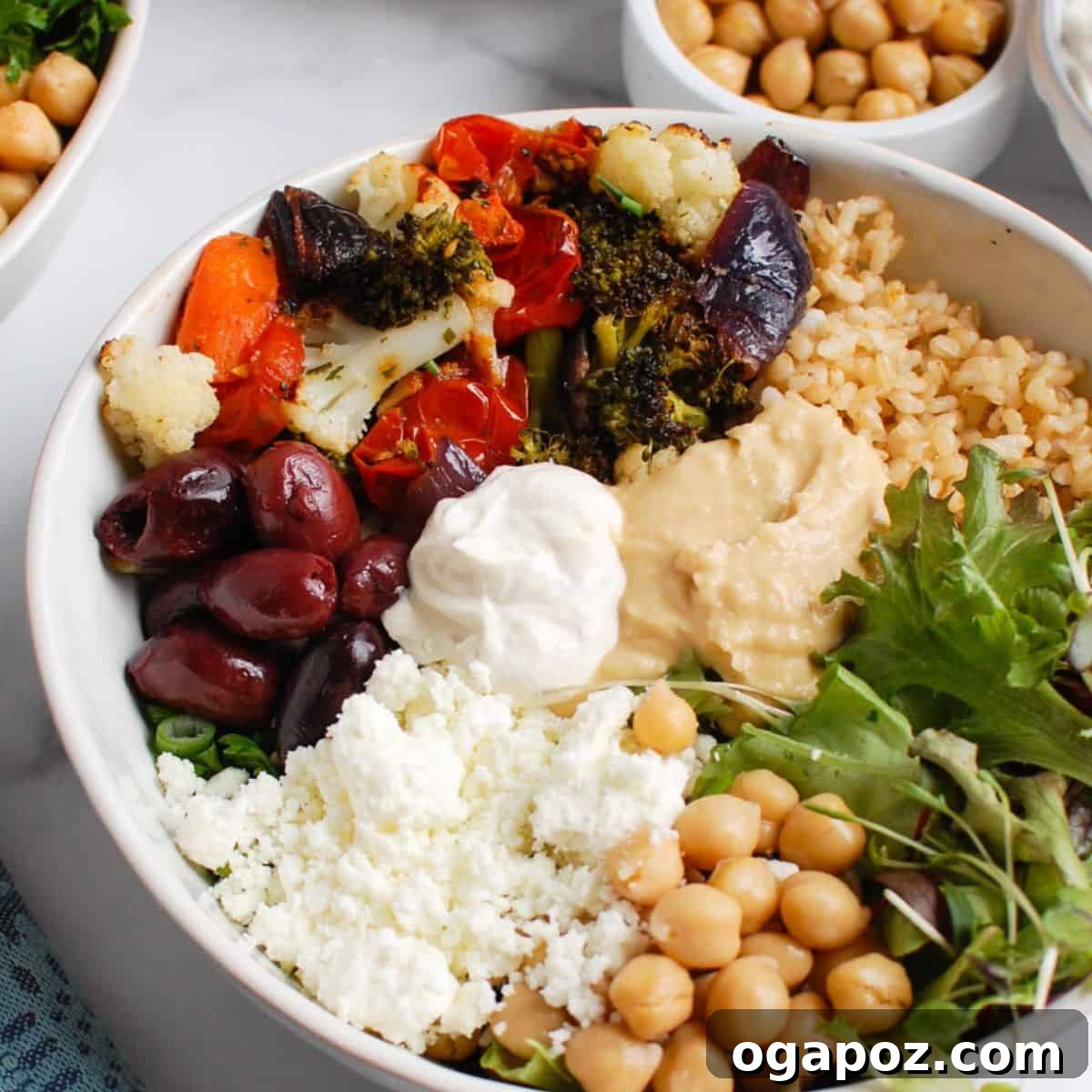
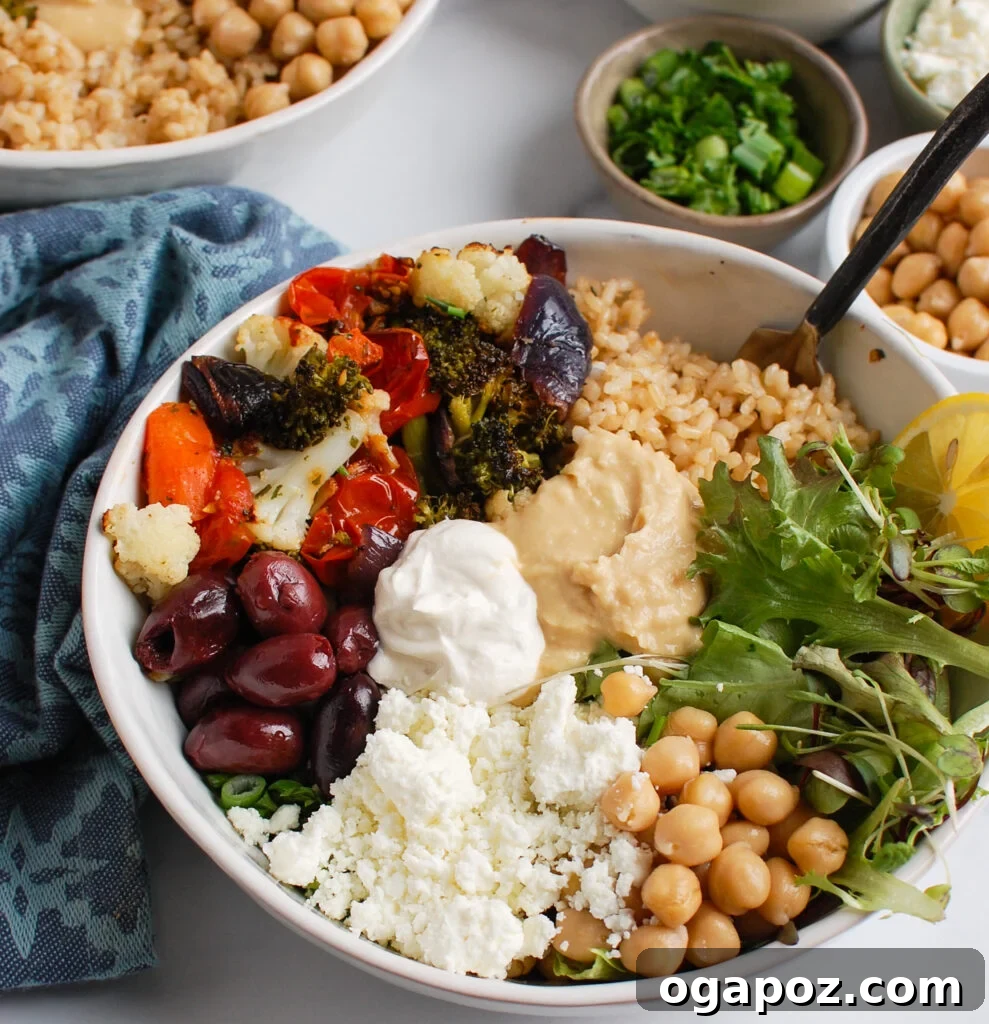
Embark on a culinary journey to the Mediterranean with this incredibly vibrant and satisfying Mediterranean Buddha Bowl. Packed with wholesome ingredients like fluffy brown rice, creamy hummus, tangy Greek yogurt, savory feta cheese, protein-rich chickpeas, perfectly roasted vegetables, and crisp greens, these bowls are not just a meal – they’re an experience. Highly customizable and wonderfully nutritious, they serve as an ideal solution for healthy lunches or dinners for your entire family, bringing the fresh flavors of the Mediterranean straight to your table.
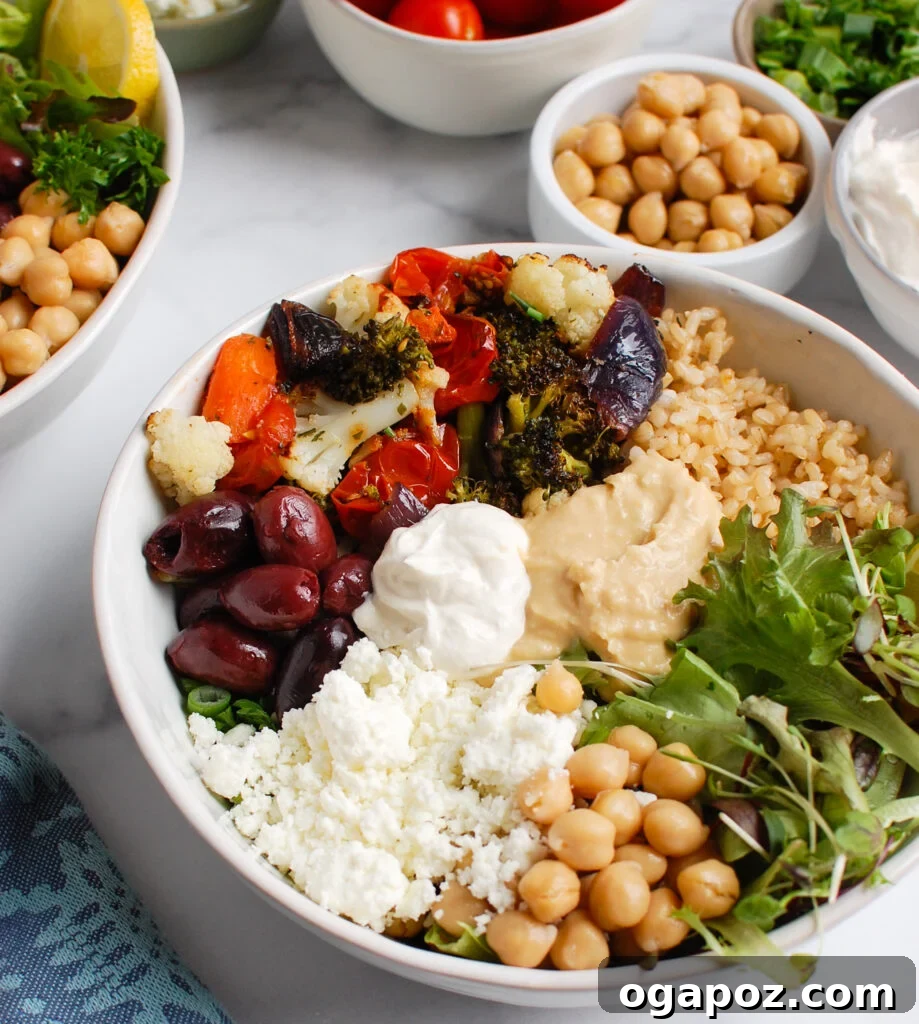
Understanding the Mediterranean Buddha Bowl Phenomenon
You might be hearing a lot about “Buddha bowls” and “grain bowls” these days, and for good reason! They’ve become a staple in many health-conscious homes, including mine, where I frequently combine nutritious grains like rice or quinoa with a variety of fresh components. But what exactly is a Buddha bowl, and how does it differ from a regular salad or grain dish?
At its heart, a Buddha bowl is a simple yet elegant concept: a nourishing, one-bowl meal that typically features a base of grains or greens, a source of protein, an assortment of vegetables (raw, roasted, or steamed), a healthy fat, and a flavorful dressing or sauce. The name itself is often attributed to the bowls’ overflowing, rounded appearance, reminiscent of a Buddha’s belly. This particular Mediterranean Buddha Bowl recipe takes this concept and infuses it with the characteristic flavors and health benefits of the Mediterranean diet, offering a balanced and delicious meal that’s easy to build and even easier to enjoy.
Why You’ll Love This Mediterranean Buddha Bowl Recipe
This recipe isn’t just another meal; it’s a testament to simple, wholesome eating. Here’s why it’s destined to become a favorite:
- Unbeatable Flavor Profile: Combining the creamy richness of hummus and Greek yogurt with the savory depth of roasted Mediterranean vegetables, salty olives, and tangy feta creates an explosion of flavors and textures in every bite.
- Incredibly Versatile: One of the greatest strengths of a Buddha bowl is its adaptability. This guide will show you how to customize it with ingredients you already have, ensuring no two bowls are exactly alike unless you want them to be!
- Health-Focused & Nutritious: Rooted in the principles of the Mediterranean diet, this bowl is rich in fiber, lean protein, and healthy fats. It’s perfect for those seeking more plant-based meals, offering sustained energy and essential nutrients.
- Perfect for Meal Prep: All components can be prepared in advance, making it a fantastic option for busy weekdays. Assemble your bowls when you’re ready to eat, or keep ingredients separate for fresh, on-demand meals.
I frequently turn to bowls like this for their convenience and nutritional value. Other favorites in my rotation include the Mediterranean Salmon Bowl, the Easy Mediterranean Hummus Bowl, Slow Cooker Shredded Beef Hummus Bowls, and the ever-popular Chicken Shawarma Bowl. Each offers a unique spin on the bowl concept, proving that healthy eating can be both diverse and exciting.
Key Ingredients for Your Perfect Buddha Bowl
Crafting an exceptional Buddha bowl starts with selecting high-quality, fresh ingredients. Here’s a detailed look at the simple components we’ll be using, along with versatile substitution ideas to inspire your creativity and utilize what you already have. For exact measurements and printable instructions, refer to the full recipe card below.
- The Grains (Base): While brown rice offers a wonderfully nutty flavor and chewy texture, feel free to experiment with other whole grains. Options like farro, bulgur, barley, or quinoa are all excellent choices, each bringing its own unique nutritional profile and mouthfeel to the bowl.
- The Vegetables (Vibrancy & Nutrients): This is where you can truly let your imagination—and your fridge—guide you!
- Raw Options: Crisp carrots, refreshing cucumbers, juicy cherry tomatoes, and colorful bell peppers add a delightful crunch and immediate freshness.
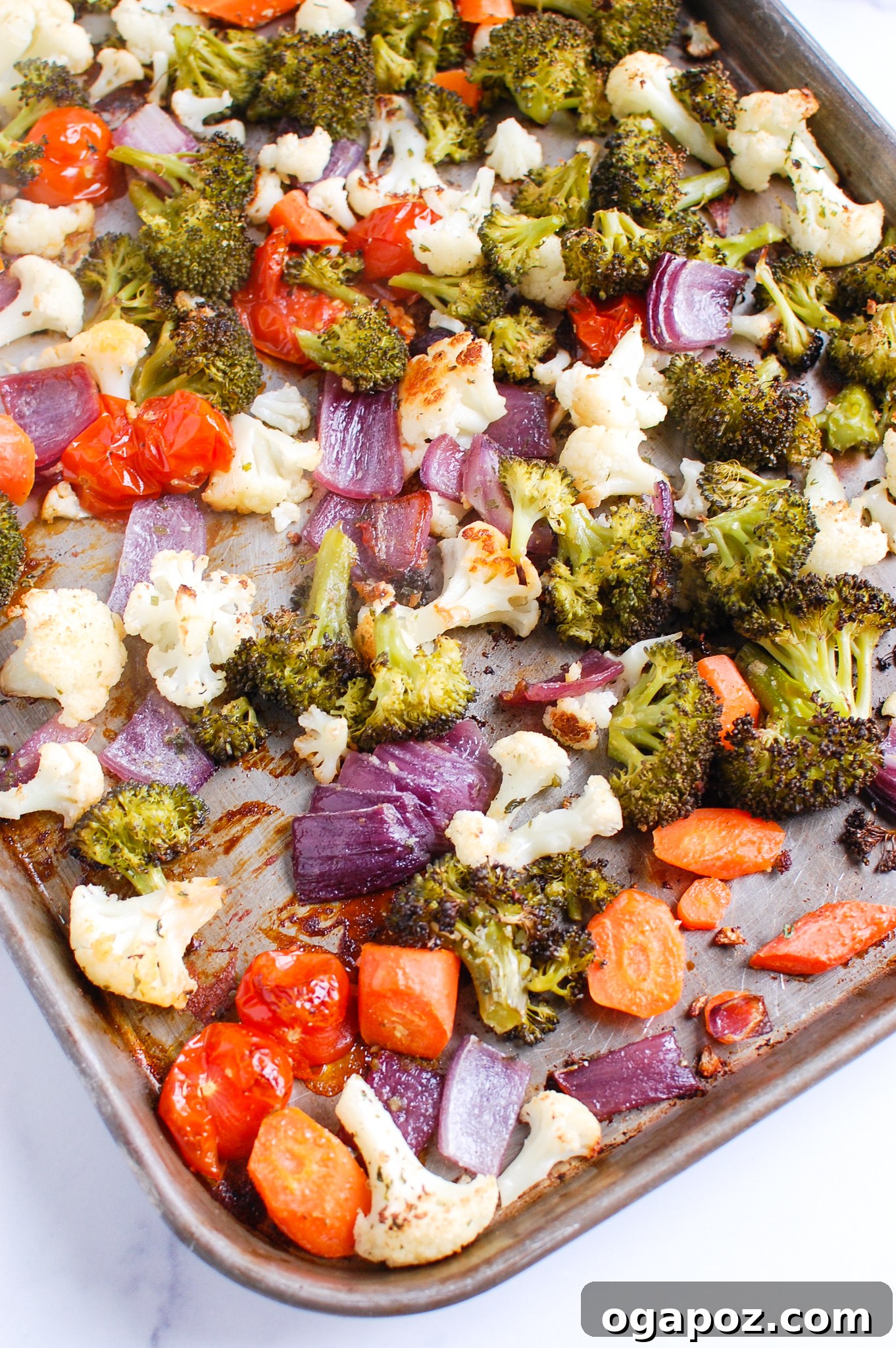
- Roasted Options: For deeper flavor and a tender texture, try roasting zucchini, eggplant, red onion, bell peppers, or even broccoli florets. Our Mediterranean Roasted Vegetables recipe is a perfect companion, infused with aromatic herbs.
- Pickled Options: Quick-pickled onions or cucumbers can add a fantastic tangy kick, cutting through the richness of other ingredients.
- The Protein (Fuel & Satiety): A robust protein source is essential for a satisfying Buddha bowl.
- Plant-Based: Chickpeas (garbanzo beans) are a classic choice for their texture and protein content. Lentils, black beans, edamame, or even baked tofu and tempeh make superb vegetarian and vegan additions.
- Animal Protein: If you prefer meat or fish, consider adding flavorful options like Mediterranean Salmon, succulent Tandoori Grilled Chicken, or a perfectly seasoned Easy Grilled Flank Steak with Chimichurri Sauce.
- The Cheese (Richness & Flavor): A sprinkle of cheese can elevate the flavor profile significantly. Feta cheese is a Mediterranean staple, offering a salty, briny kick. Other fantastic choices include creamy goat cheese, mild Gouda, or sharp Parmesan, depending on your preference.
- The Dressing/Sauce (The Unifier): The dressing ties all the components together, adding moisture, flavor, and sometimes a creamy element.
- Creamy & Tangy: I often create a quick dressing using Greek yogurt as a base. Try a 4-Ingredient Creamy Dill Salad Dressing or a zesty Tahini Yogurt Dressing.
- Simple & Fresh: A simple drizzle of extra virgin olive oil and a squeeze of fresh lemon juice can be incredibly effective.
- Dips & Spreads: A generous dollop of hummus (my Lebanese Hummus recipe is fantastic!) or Greek yogurt can also double as a creamy, flavorful dressing.
- Healthy Fats (Essential Nutrients): Beyond the dressing, incorporating healthy fats is crucial. Olives are a Mediterranean classic, but avocado slices, a sprinkle of nuts (like walnuts or almonds), or seeds (such as sesame or sunflower seeds) provide satisfying texture and beneficial fats.
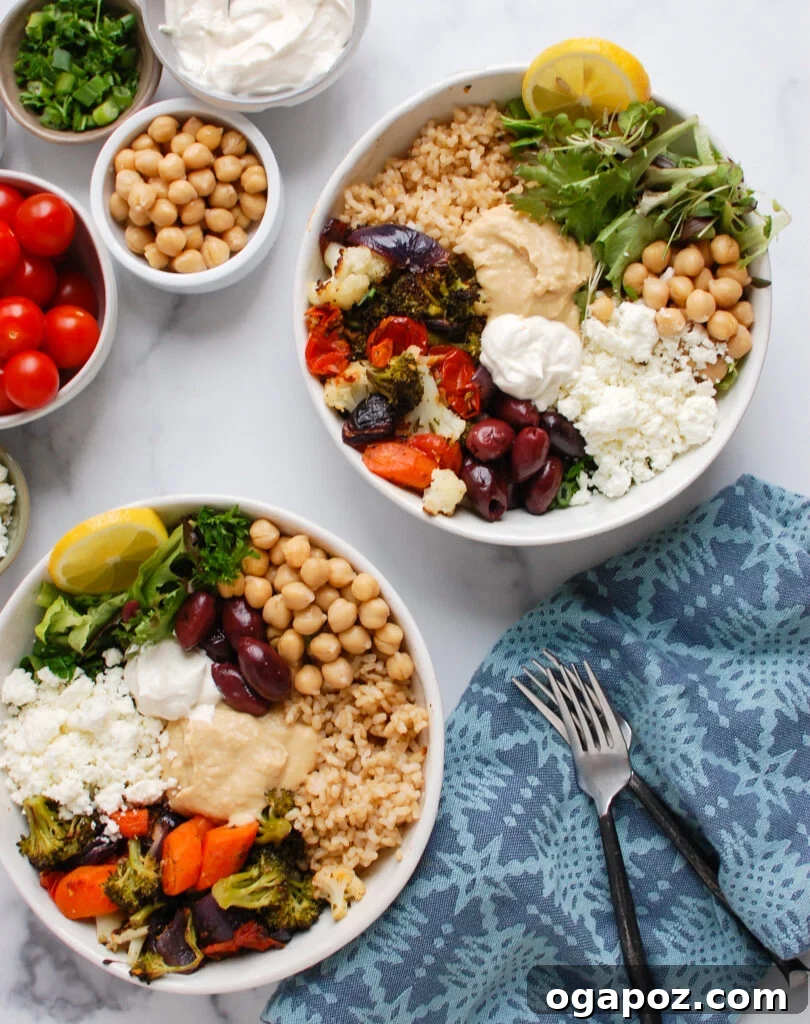
How to Master the Art of Building a Buddha Bowl: A Step-by-Step Guide
Creating a Buddha bowl is more of an art than a science, allowing for boundless creativity and personalization. Follow these simple steps to construct a perfectly balanced and visually appealing Mediterranean masterpiece:
Step 1: Choose Your Base – The Foundation of Flavor
Begin by laying down a generous foundation in your bowl. This can be a hearty whole grain or a refreshing bed of greens. Popular choices include:
- Grains: Brown rice, quinoa, farro, bulgur, or barley. Cooked according to package directions, these provide complex carbohydrates and a satisfying texture.
- Greens: Mixed greens, fresh spinach, peppery arugula, crisp romaine, or nutrient-dense kale. These add freshness and a lighter touch. Feel free to combine both for the best of both worlds!
Step 2: Add Your Protein – The Powerhouse of the Bowl
Next, introduce your chosen protein. This element ensures your bowl is truly satisfying and provides sustained energy. Think about balancing textures and flavors with your base.
- Plant-Based: Roasted chickpeas, black lentils, edamame, crumbled tofu, or tempeh are excellent options.
- Animal Protein: Grilled chicken (like Greek grilled chicken), baked salmon, Greek shrimp skewers, or thinly sliced beef are also wonderful additions.
Step 3: Load Up on Veggies – The Color & Nutrient Boost
This is where your bowl truly comes alive! Incorporate a diverse range of vegetables for maximum flavor, nutrients, and visual appeal. Variety is key!
- Raw: Sliced cucumbers, cherry tomatoes, shredded carrots, bell peppers, or radishes for crunch and freshness.
- Roasted/Grilled: Soft, caramelized vegetables like zucchini, eggplant, sweet potatoes, or onions (our Mediterranean Roasted Vegetables are perfect).
- Steamed: Broccoli or green beans for a tender, vibrant addition.
- Pickled: Tangy quick-pickled vegetables for a zesty contrast.
Step 4: Incorporate Healthy Fats – For Satiety & Richness
Healthy fats are crucial for nutrient absorption and keeping you full and satisfied. Don’t skip this vital component!
- Creamy avocado slices or cubes.
- Briny kalamata or green olives.
- A dollop of rich hummus or tahini.
- A sprinkle of healthy nuts (almonds, walnuts) or seeds (sesame, pumpkin).
Step 5: Finish with a Flavorful Dressing or Sauce – The Unifying Element
The dressing is the grand finale, bringing all the different elements into a harmonious whole. Don’t be afraid to be generous!
- A drizzle of Tahini Sauce or a light lemon vinaigrette.
- A creamy Tahini yogurt-based sauce or a refreshing Creamy Dill Sauce.
- Sometimes, a simple splash of high-quality olive oil and a squeeze of fresh lemon juice is all you need.
Expert Meal-Prep Tips for Busy Weeks
One of the best aspects of Mediterranean Buddha Bowls is how perfectly they lend themselves to meal preparation. By dedicating a little time on the weekend, you can enjoy healthy, delicious meals all week long without the fuss. Here’s how to efficiently meal prep your bowls:
- Cook Grains Ahead: Prepare a large batch of your chosen grain (brown rice, quinoa, farro) and store it in an airtight container in the refrigerator. It will stay fresh for up to 4-5 days.
- Chop & Roast Vegetables: Wash, chop, and roast a variety of vegetables in advance. Once cooled, store them separately from raw ingredients to maintain texture. Roasted veggies are fantastic both warm and cold.
- Prepare Proteins: Cook any animal or plant-based proteins you plan to use, such as grilled chicken, baked salmon, or a large batch of roasted chickpeas or lentils. Cool completely before storing.
- Mix Dressings: Whisk together your favorite dressing or sauce and keep it in a separate jar or container. This prevents greens and other ingredients from getting soggy.
- Individual Portioning: For ultimate convenience, portion out all the individual components into separate compartments of meal prep containers. Then, when it’s time to eat, simply combine and add dressing. This keeps everything fresh until you’re ready to assemble your bowl.
- Fresh Additions Last: Save highly perishable items like avocado or certain fresh herbs for the day you plan to eat the bowl to ensure maximum freshness.
With these meal prep strategies, you’ll have wholesome, flavor-packed Mediterranean Buddha Bowls ready to go, making healthy eating effortless even on your busiest days.
Customization & Flavor Variations
The beauty of the Buddha bowl lies in its endless possibilities. Don’t be afraid to experiment with different combinations to suit your taste and whatever ingredients you have on hand:
- Spice It Up: Add a pinch of red pepper flakes to your roasted vegetables or dressing for a subtle heat.
- Different Herbs: Beyond parsley, try fresh mint, cilantro, or oregano for varied aromatic notes.
- Nut & Seed Crunch: Sprinkle toasted pine nuts, almonds, or sunflower seeds for extra texture and healthy fats.
- Alternative Dips: Instead of hummus, consider baba ghanoush (roasted eggplant dip) or a spicy harissa paste.
- Seasonal Produce: Always prioritize seasonal vegetables for the best flavor and nutritional value. Asparagus in spring, corn in summer, butternut squash in fall – let the seasons guide your choices!
- Global Inspiration: While this is a Mediterranean bowl, don’t hesitate to draw inspiration from other cuisines. A drizzle of soy-ginger dressing or a sprinkle of kimchi can transform your bowl into something entirely new.
Frequently Asked Questions About Buddha Bowls
Q: Can I make Buddha bowls vegetarian or vegan?
Absolutely! This Mediterranean Buddha Bowl is incredibly versatile and easily adapted for vegetarian or vegan diets. For a vegetarian version, keep the feta and Greek yogurt. For a fully vegan bowl, simply omit the feta and Greek yogurt, and ensure your hummus is dairy-free. There are plenty of fantastic plant-based protein options like chickpeas, lentils, tofu, tempeh, and a wide array of vegetables to keep your bowl flavorful and satisfying.
Q: How long do Mediterranean Buddha bowls last in the fridge?
When stored properly, the individual components of your Buddha bowl can last 3-5 days in the refrigerator. Cooked grains, roasted vegetables, and cooked proteins should be stored in airtight containers. Dressings should also be kept separate to prevent other ingredients from becoming soggy. Assemble your bowl fresh just before eating for the best texture and taste.
Q: Are Buddha bowls good for weight loss?
Yes, Buddha bowls can be an excellent tool for weight management! They are typically packed with fiber from whole grains and vegetables, lean protein, and healthy fats, which all contribute to satiety and balanced energy levels. By controlling portion sizes and focusing on nutrient-dense ingredients, you can create a low-calorie yet highly satisfying meal that supports your health goals.
Q: What kind of bowl should I use?
While the name “Buddha bowl” refers to its overflowing nature, any large, wide, and shallow bowl will work perfectly. The idea is to have enough surface area to artfully arrange all your colorful ingredients, making your meal as appealing to the eyes as it is to the palate.
More Delicious Mediterranean Recipes to Explore
If you’re loving the flavors of this Mediterranean Buddha Bowl, you’ll surely want to explore more culinary delights from the region. Here are a few hand-picked recipes that celebrate the fresh and wholesome ingredients of the Mediterranean diet:
Mediterranean
Mediterranean Flatbread
A quick and easy flatbread topped with vibrant Mediterranean ingredients, perfect for a light meal or appetizer.
Vegetarian
Mediterranean Hummus Toast with Za’atar
A simple yet sophisticated breakfast or snack, featuring creamy hummus, fragrant za’atar, and fresh toppings on crispy toast.
Mediterranean
Mediterranean Quinoa Salad
A light, refreshing, and protein-packed quinoa salad brimming with Mediterranean vegetables and a zesty dressing.
Mediterranean
Mediterranean Naan Bread Pizza
Transform simple naan bread into a gourmet Mediterranean pizza with fresh toppings and savory flavors in minutes.
Tried this recipe? Leave a star rating and comment below! Subscribe to my newsletter or follow me on
Facebook,
Instagram, or
Pinterest for the latest.
Mediterranean Buddha Bowl
Ingredients
- 1 – 15 ounce can of chickpeas, drained and rinsed
- 1 1/4 cup brown rice, rinsed and cooked according to the package
- 2 cups hummus
- 2 cups of feta cheese, crumbled
- 1 cup of kalamata olives, pitted
- 3 cups of greens of your choice, try arugula, spinach, romaine or swiss chard
- 2 cups of Greek Yogurt
- Vegetables of your choice or try these Mediterranean Roasted Vegetables (e.g., zucchini, bell peppers, red onion, eggplant)
- 1 lemon, cut into chunks
- 1/2 cup fresh parsley, chopped
Instructions
- If you are making roasted vegetables, preheat your oven to 425 degrees F (220 degrees C).
- Cut all of your chosen vegetables into bite-sized pieces, ensuring they are roughly the same size for even roasting. Place them in a large mixing bowl.
- In a small mixing bowl or a mason jar, combine olive oil, minced garlic, dried thyme, dried oregano, a pinch of za’atar or sumac, a squeeze of lemon juice, and a generous amount of salt and pepper. Stir or shake well to combine. Pour this aromatic mixture over the vegetables in the large bowl and toss until evenly coated.
- Spread the seasoned vegetables out in a single, even layer on a baking sheet. Avoid crowding the vegetables; if necessary, use two baking sheets to ensure they roast rather than steam.
- Roast the vegetables for approximately 30 to 35 minutes, or until they are tender-crisp and show slight charring on the edges. Remember to stir the vegetables halfway through the roasting time (around the 15-minute mark) for even cooking.
- Meanwhile, bring a large pot of water (about 4 quarts) to a rolling boil. Once boiling, add the rinsed brown rice and continue to boil for about 25 minutes, or precisely according to the package instructions. Drain thoroughly once cooked.
- When you are ready to assemble your Buddha bowls, start by dividing the cooked brown rice or your chosen grain evenly among four individual serving bowls.
- Next, artfully arrange each of the remaining ingredients – chickpeas, roasted vegetables, fresh greens, kalamata olives, and crumbled feta cheese – dividing them among the four bowls. I like to add the creamy components like hummus and Greek yogurt last, often placing them in separate sections of the bowl. Garnish each bowl generously with fresh chopped parsley and a lemon wedge for an added burst of freshness and tang.
Notes
- Remember, Buddha bowls are all about customization! Feel free to adjust the quantities of each ingredient based on your personal preferences. Don’t hesitate to substitute ingredients with whatever fresh produce or pantry staples you have on hand.
- For an extra zing, drizzle a little extra virgin olive oil over the finished bowl before serving.
Nutrition
Calories: 755kcal,
Carbohydrates: 76g,
Protein: 37g,
Fat: 35g,
Saturated Fat: 13g,
Polyunsaturated Fat: 6g,
Monounsaturated Fat: 13g,
Trans Fat: 0.01g,
Cholesterol: 72mg,
Sodium: 1909mg,
Potassium: 866mg,
Fiber: 13g,
Sugar: 5g,
Vitamin A: 3240IU,
Vitamin C: 31mg,
Calcium: 608mg,
Iron: 6mg
Nutrition information is automatically calculated, so should only be used as an approximation.
This post was originally sponsored by the American Dairy Association Mideast. All opinions are 100% my own and reflect my genuine love for Mediterranean-inspired dishes.