
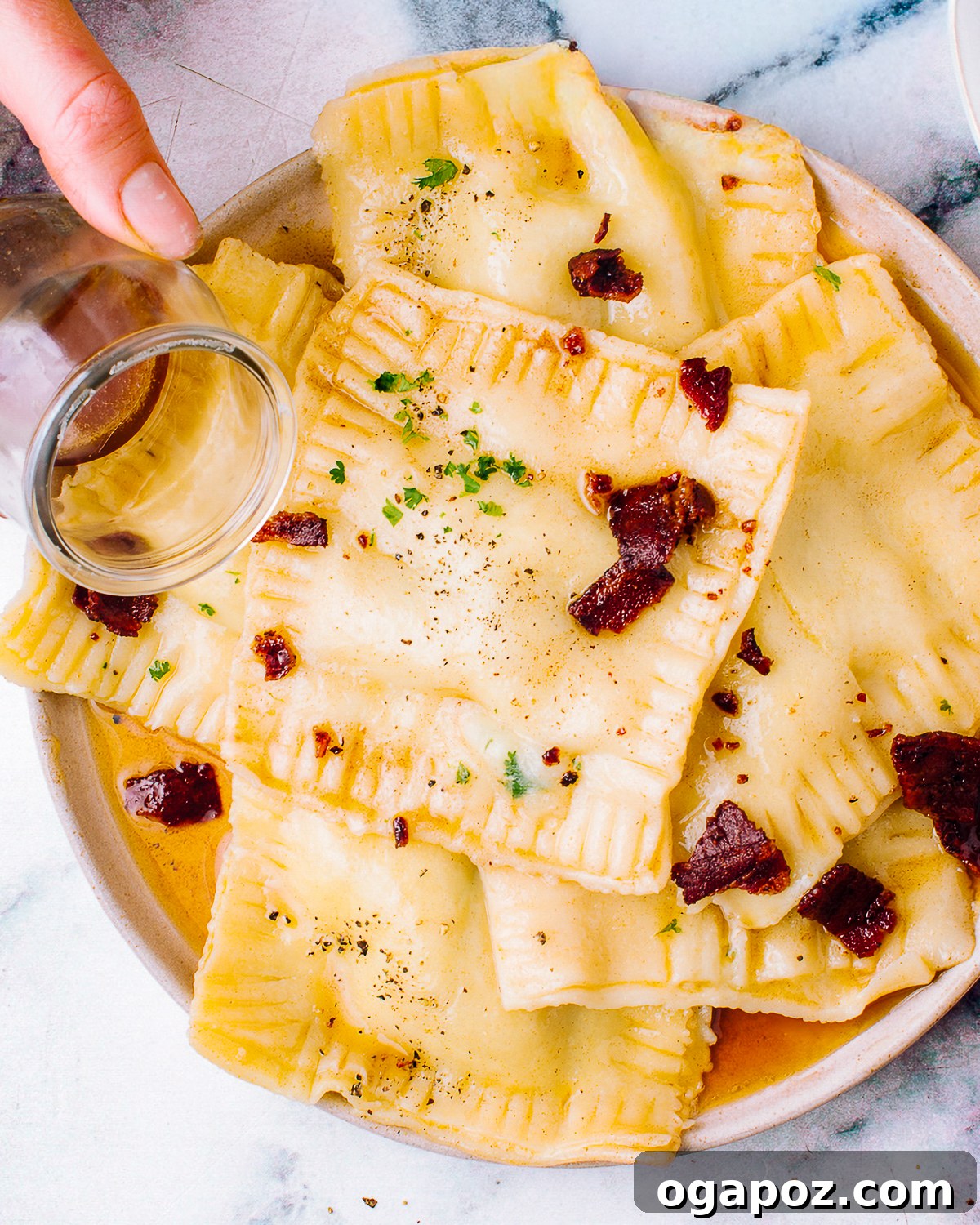
Butternut Squash Ravioli Sauce — a simple brown butter and crisp sage sauce that takes about the same time as the ravioli to cook. This three-ingredient, five-minute sauce is my go-to for butternut squash ravioli, whether homemade or store-bought.
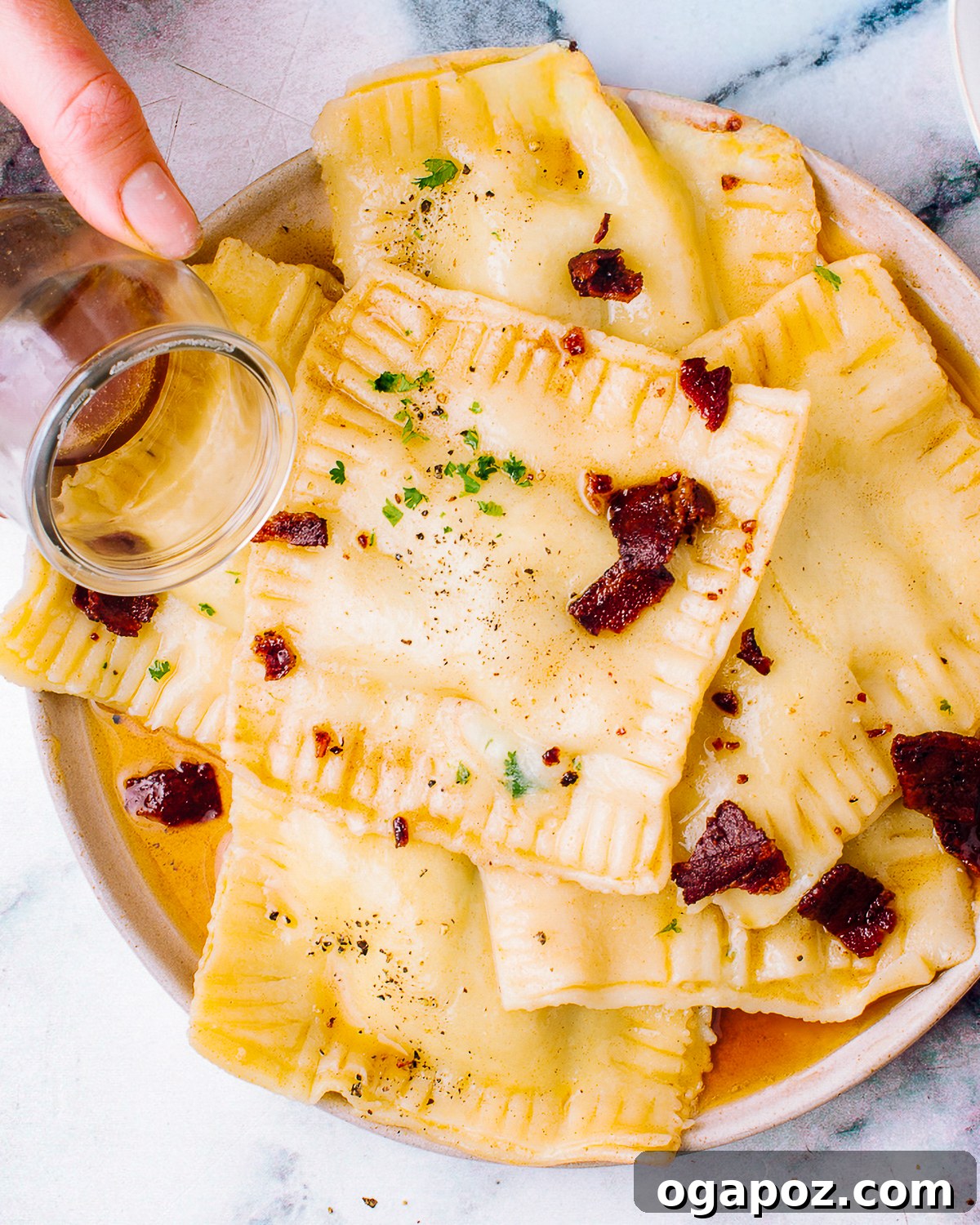
Butternut Squash Ravioli Sauce Ingredients
This sauce is intentionally simple: just butter, fresh sage, and lemon, plus salt and pepper to taste and the ravioli you’ll be serving. It works beautifully over homemade butternut squash and mascarpone ravioli or a 16-ounce package from the store.
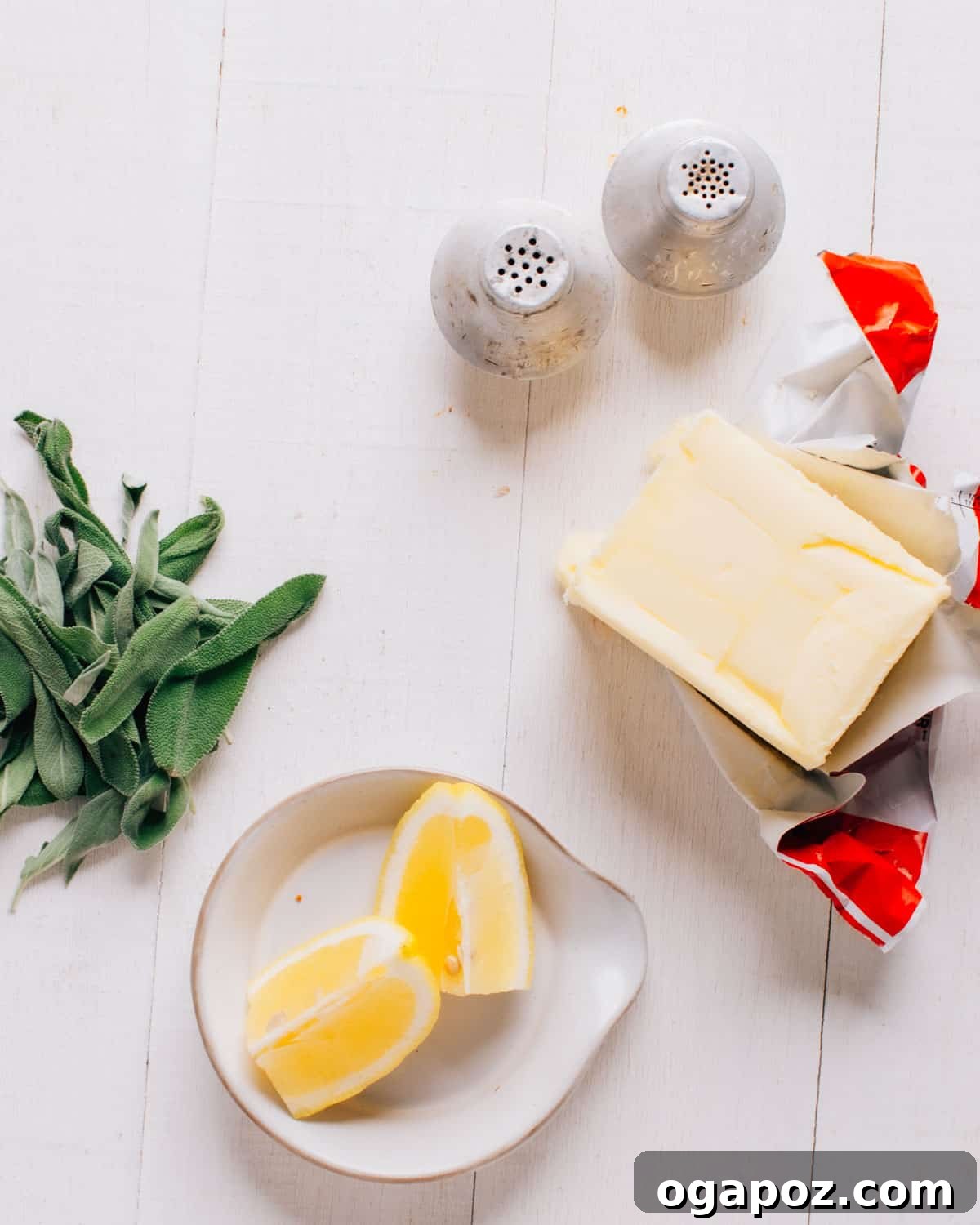
- 1/2 cup salted butter: The browned milk solids are the flavor base, so real butter is essential. Salted butter usually provides enough seasoning.
- 1/3 cup fresh sage leaves, packed: Use fresh leaves so they crisp in the hot butter and add savory contrast to a sweet squash filling.
- 2 tsp lemon juice: Added off the heat, the lemon brightens the sauce and prevents the butter from tasting heavy.
- Salt and pepper to taste: Often just freshly cracked black pepper is enough when using salted butter.
- Bacon, optional: Crumbled cooked bacon adds savory, salty richness and texture that pairs nicely with sweeter fillings like squash or pumpkin.
Variations and Substitutions
- Toasted hazelnuts: Fold in 1/4 cup chopped toasted hazelnuts at the end for crunch—this is lovely with homemade ravioli.
- Unsalted butter: If you prefer unsalted, add about 1/4 teaspoon kosher salt with the sage, then adjust to taste.
- Pasta water: Stir in 1–2 tablespoons of reserved starchy cooking water to loosen the sauce and help it cling to the pasta.
- Parmigiano-Reggiano: Grate fresh Parmesan over the plated dish rather than into the hot pan so it doesn’t clump in the butter.
Grab These Tools
- A light-colored pan: Stainless or pale enamel lets you see the butter’s color change, which is your cue for doneness.
- A slotted spoon or tongs: Use these to lift crisp sage leaves from the butter before they turn bitter.
- A wide, shallow bowl: Toss ravioli gently in a shallow dish so they don’t break while coating them with sauce.
How to Make Butternut Squash Ravioli Sauce: An Easy Guide
Start the sauce when the ravioli go into boiling water so both finish at the same time.
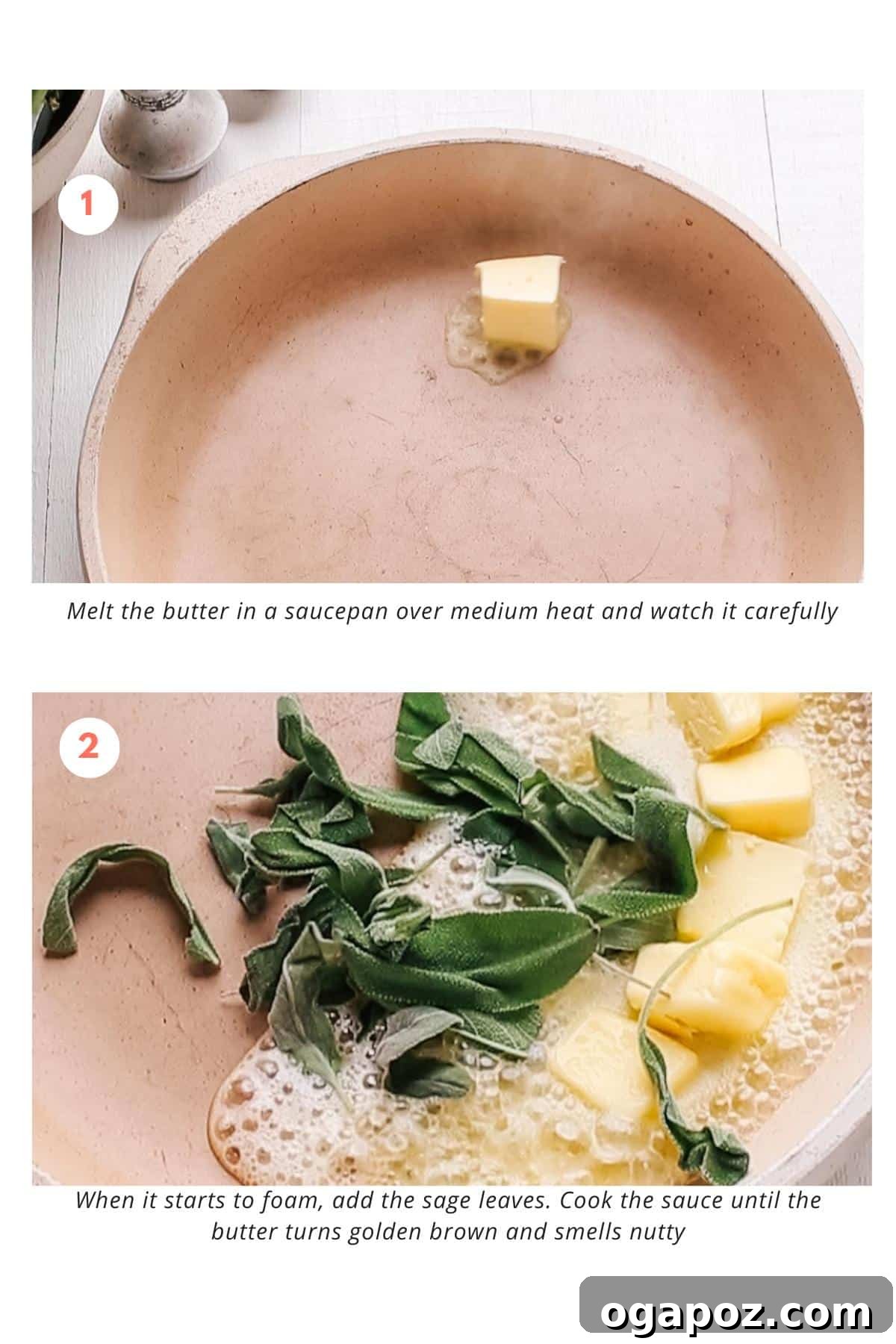
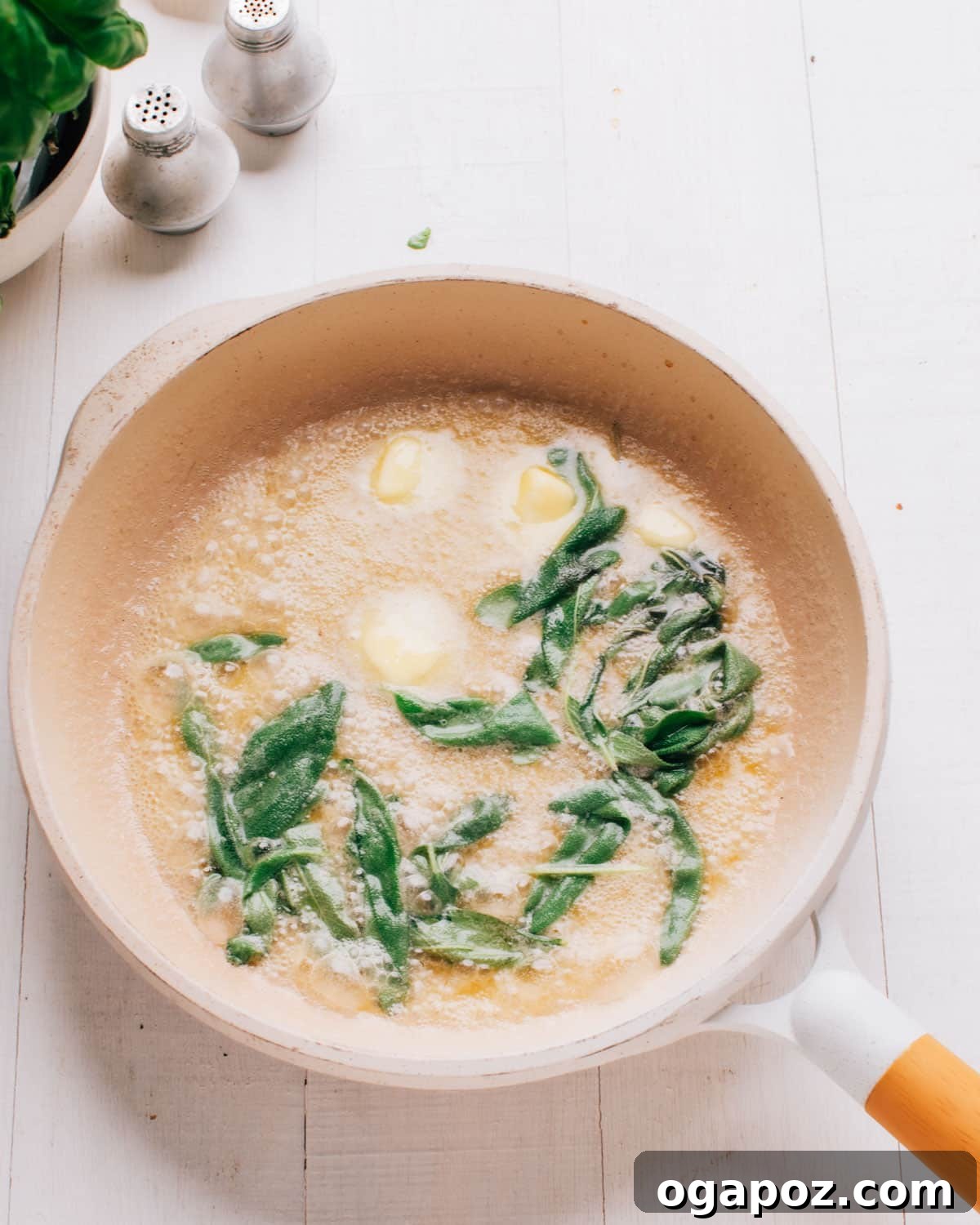
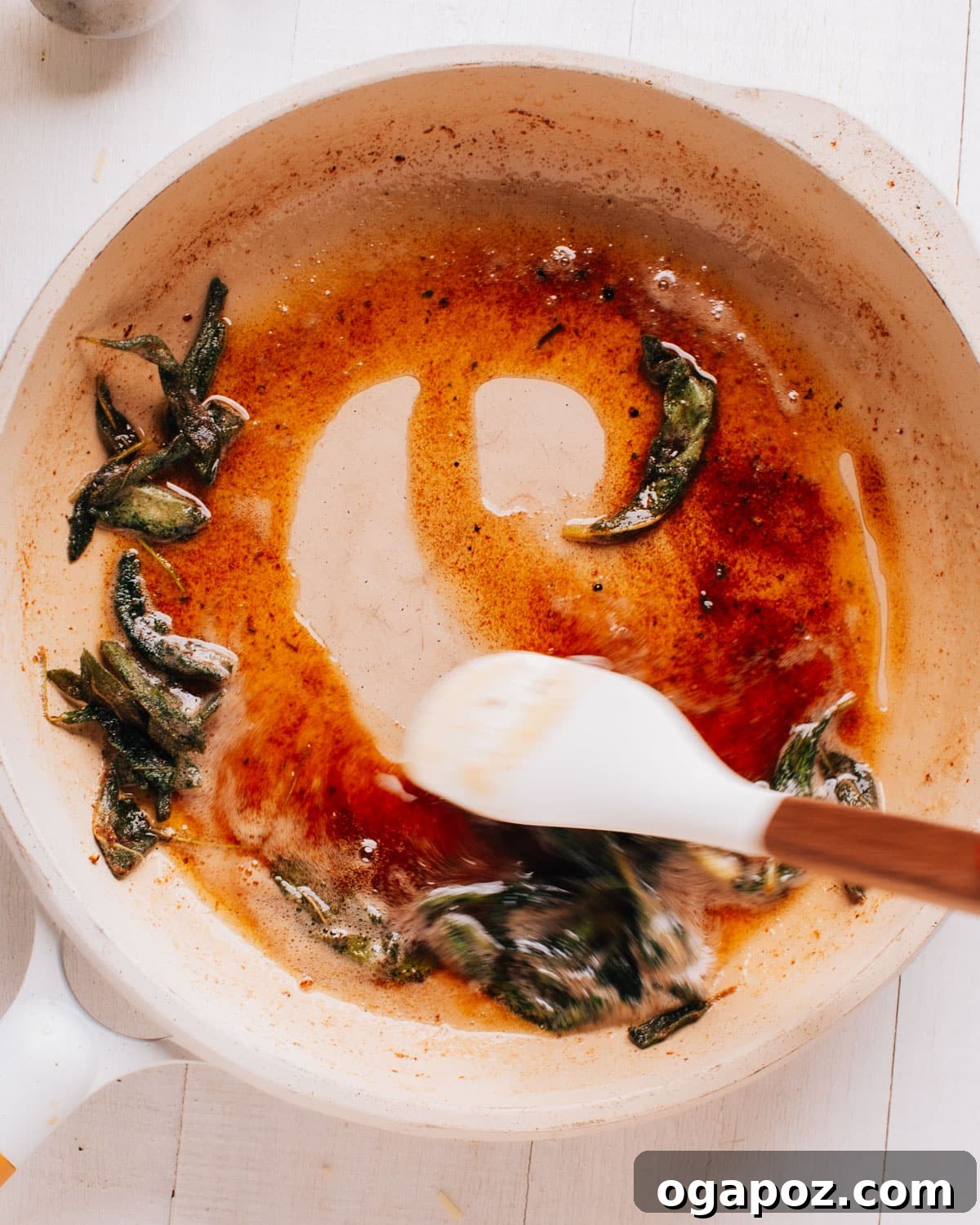
- Melt the butter: Place butter in a light-colored saucepan over medium heat and watch it carefully.
- Add the sage when it foams: When the foam forms, add the sage leaves. Continue cooking until the foam quiets, the butter turns a nutty amber, and the aroma is toasted—about 3 to 5 minutes.
- Finish off the heat: Remove the pan from the burner, stir in the lemon juice, add freshly ground black pepper, and taste before adding any extra salt.
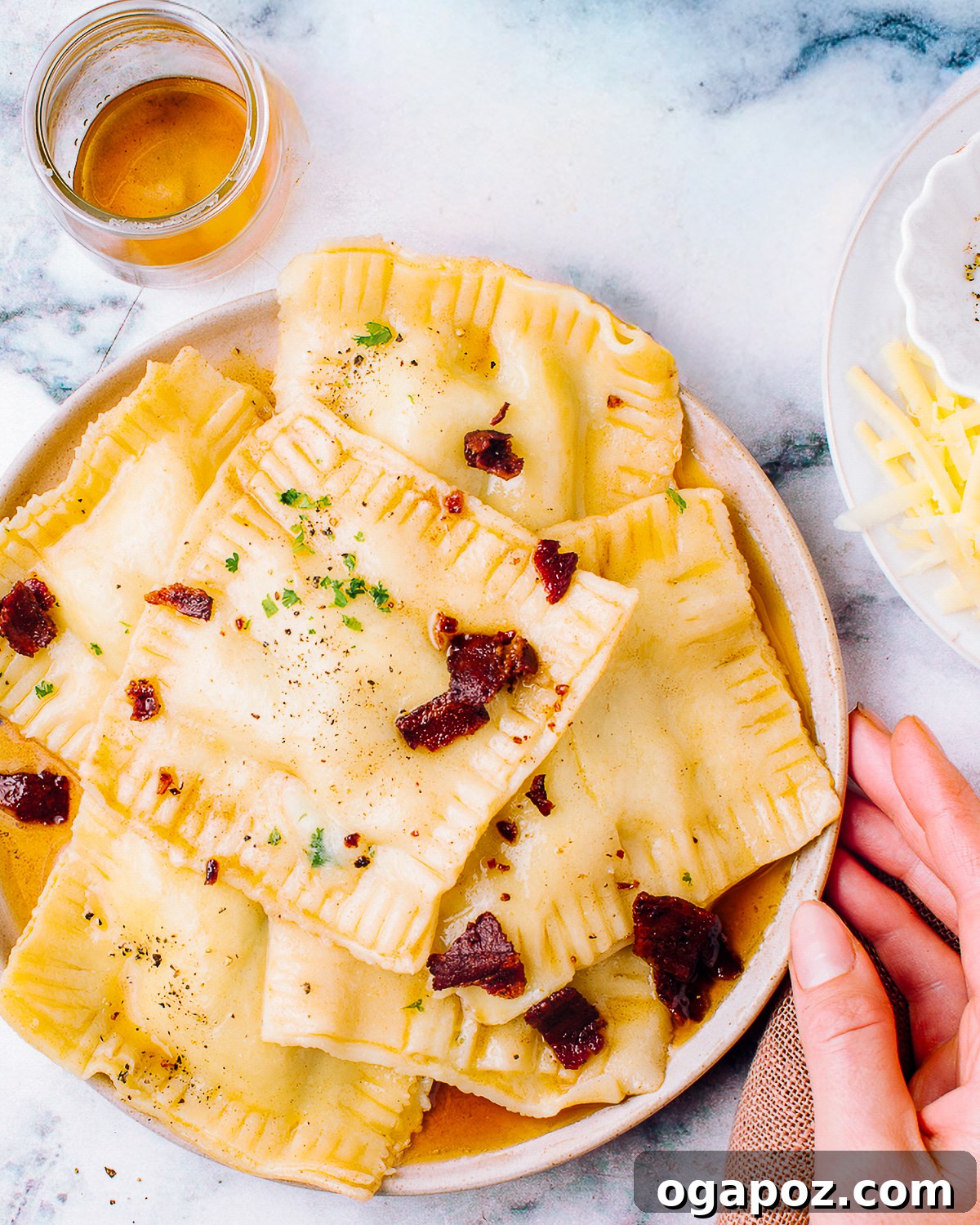
Use tongs to lift the crisp sage leaves onto a paper towel so they stay crunchy. Toss the cooked ravioli gently in the warm sauce and scatter the crisp leaves on top. If you like, finish with crumbled bacon or grated Parmigiano-Reggiano on the plated portions.
5 Common Mistakes to Avoid
- Walking away: Butter can go from golden to burned in under a minute; stay attentive.
- Using a dark skillet: You won’t see the color change until it’s too late; choose a light pan.
- Wet sage leaves: Water in hot butter splatters; pat leaves dry first.
- Adding lemon on the heat: Acid can dull if cooked; add lemon off the burner to preserve brightness.
- Overcooking the sage: Remove leaves once they’re crisp or they will turn bitter and affect the sauce.
Make Ahead and Storage
You can prepare the sauce ahead of time. Cook it fully, let it cool to room temperature, then transfer to an airtight container and refrigerate.
The sauce keeps for 3 to 4 days in the fridge; seal it well because butter absorbs refrigerator odors. Reheat gently over low heat, stirring occasionally—do not boil. The sage will lose its crispness, so add fresh leaves when serving if you want the crunchy garnish.
What to Serve with This Sauce
This recipe yields enough sauce for 16 ounces of filled ravioli. Filled pastas are denser than dry pasta, so portion weights differ.
- Butternut squash ravioli: Fresh, frozen, homemade, or store-bought—just cook according to package directions and handle gently to avoid splitting.
- A bright green salad: A salad dressed with lemon or vinegar cuts through the richness of the butter and refreshes the plate.
Tips for the Best Brown Butter Sauce
- Listen to the pan: When loud sizzling quiets, the water has mostly evaporated and browning is close.
- Look for flecks: Small toasted brown specks are the browned milk solids and carry the nutty flavor.
- Pull early: The pan retains heat and the butter continues to brown after you remove it from the burner.
- Serve warm: Warm bowls help keep the butter sauce fluid; rinse and dry bowls with hot water before plating if needed.
Frequently Asked Questions
Below are concise answers to common questions about this sauce.
Brown butter and sage is the classic pairing: the nutty toasted butter and savory fried sage balance the sweet filling. Cream-based sauces or a garlic butter can also work, but brown butter is a simple favorite.
One batch of this sauce covers about 16 ounces of filled ravioli or gnocchi. For 8 ounces of dry pasta, the same amount is sufficient.
Dried sage can be used in a pinch but won’t crisp. Use about 1 tablespoon added in the last minute of browning; you’ll miss the texture of fried fresh leaves.
It’s done when the foaming subsides, the liquid is amber, and toasted specks appear on the bottom. It should smell nutty rather than creamy.
Yes. Refrigerate for 3–4 days and reheat gently. The fried sage will soften in storage; add fresh leaves when serving if you want them crisp.
Other Butternut Squash Recipes You’ll Love
- Butternut Squash and Mascarpone Ravioli with Hazelnut Brown Butter
- Butternut Squash Alfredo
- Butternut Squash Macaroni and Cheese
- Crispy Baked Butternut Squash Fries
- Creamy Lemon Lobster Ravioli Sauce
- Homemade Fresh Pasta
If you prefer pumpkin filling, the same browned butter and crisp fried sage is an excellent sauce for pumpkin ravioli as well.
5-Minute Butternut Squash Ravioli Sauce
Ingredients
- 1/2 cup salted butter
- 1/3 cup fresh sage leaves, packed
- 2 tsp lemon juice
- Salt and pepper to taste
For Serving
- 16 oz butternut squash ravioli, cooked
- 2 slices cooked bacon, crumbled (optional)
Instructions
- Melt butter in a light-colored saucepan over medium heat so you can watch the color change.
- When the butter foams, add the sage leaves. Continue cooking until the foam quiets, the butter turns amber, and the aroma is nutty, about 3–5 minutes.
- Remove the pan from the heat. Stir in the lemon juice, grind in black pepper, and taste before adding salt.
- Toss the cooked ravioli gently in the warm sauce and top with crisp sage and optional crumbled bacon.
Notes
This amount of sauce covers 16 oz of filled ravioli or gnocchi. Serve with freshly grated Parmesan if desired. If using unsalted butter, add 1/4 teaspoon kosher salt and adjust to taste.
Nutrition
Calories: 209 kcal | Carbohydrates: 0.5 g | Protein: 0.3 g | Fat: 23 g | Saturated Fat: 15 g | Sodium: 185 mg
Nutrition information is an approximation.