
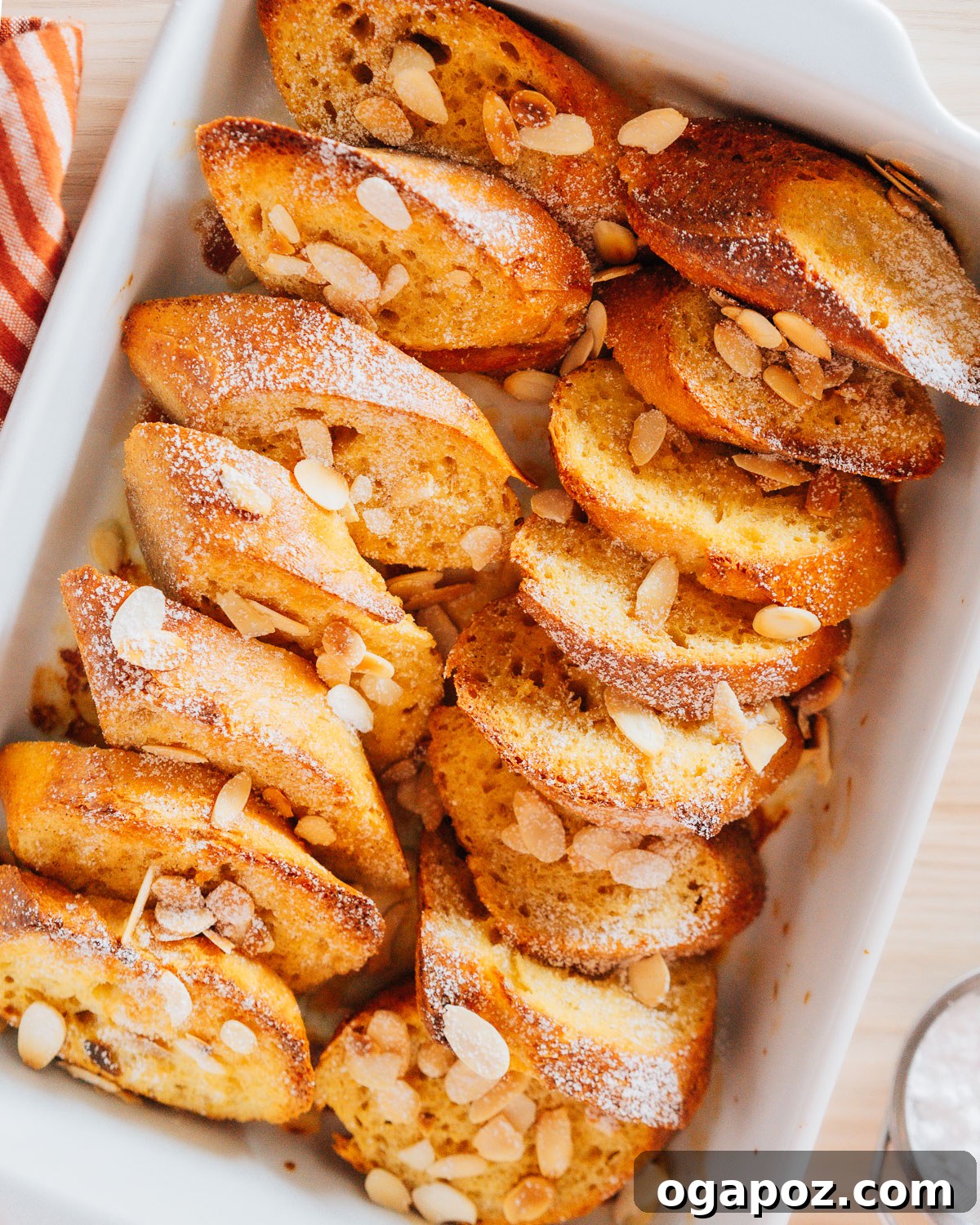
Transform your morning routine and elevate your brunch game with the incredible ease of a **French Toast Bake**. This ingenious, hands-off method delivers perfectly golden, exquisitely fluffy French toast with minimal effort. Imagine a delightful casserole where bread slices are layered and oven-baked to achieve a wonderfully crisp, caramelized top that gives way to a tender, custardy middle. It’s the ideal solution for feeding a crowd or simply enjoying a luxurious breakfast without the constant attention of traditional stovetop flipping.
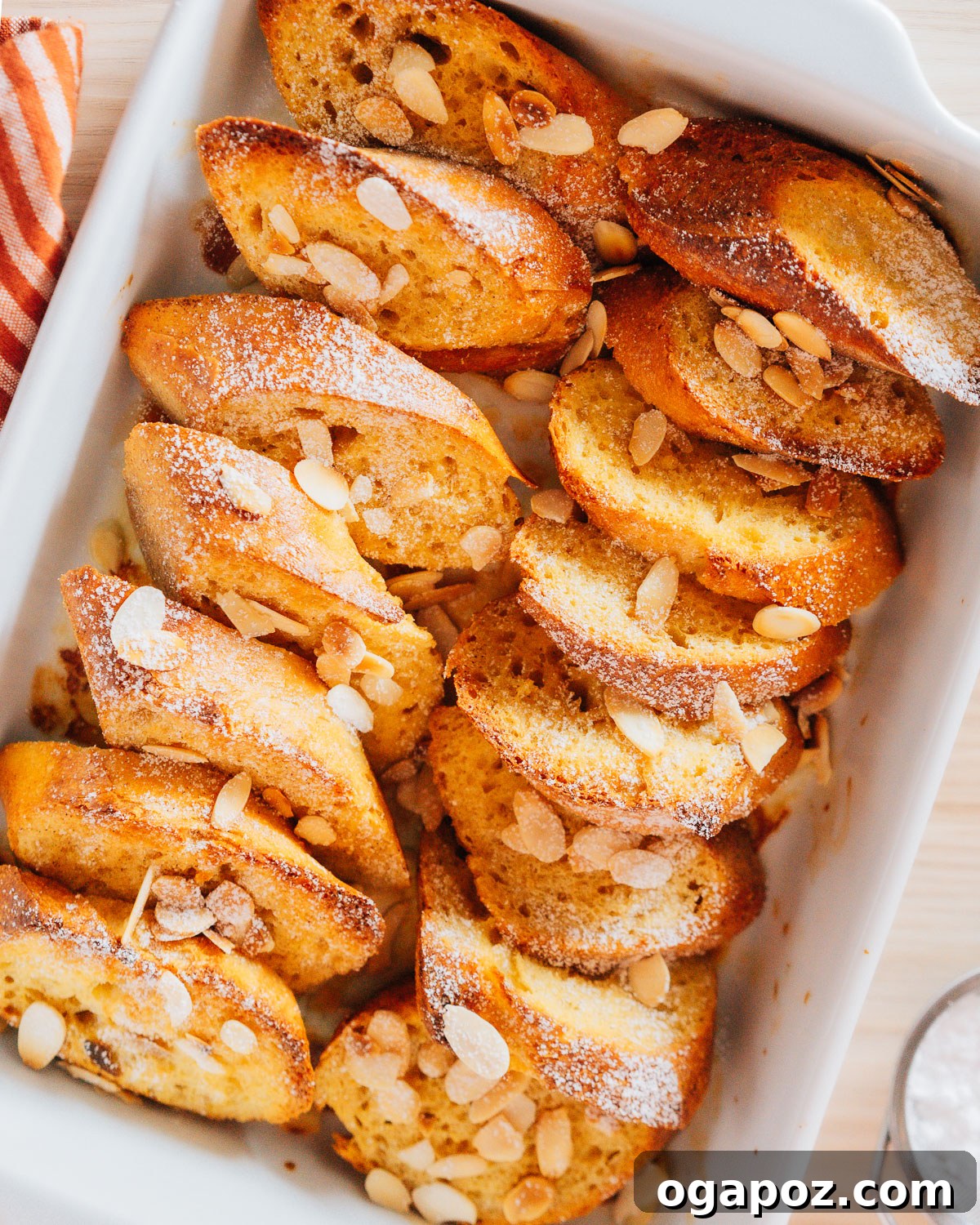
Say farewell to the days of standing over a hot pan, flipping individual slices of French toast. This **French Toast Bake** allows you to prepare the best French Toast for a lively brunch gathering, ensuring every single bite is saturated with rich, sweet custard. The beauty of this recipe lies in its simplicity and efficiency, making it a perfect quick-prep or make-ahead option that promises a memorable meal without the usual fuss. It’s a true game-changer for anyone looking to serve an impressive breakfast or brunch with maximum flavor and minimal stress.
While this recipe focuses on whole slices for a classic presentation, if you’re a fan of a heartier, more scoopable casserole featuring bread cubes, you might also love my dedicated French Toast Casserole. Both variations offer a delightful baked French toast experience, but this particular bake is optimized for that signature crisp top and tender, distinct slices.
Essential Ingredients for Your Perfect French Toast Bake
The foundation of an exceptional French Toast Bake lies in carefully selected, high-quality ingredients. The magic truly unfolds with the combination of thick-cut bread and a simple, yet exquisitely rich custard. This method shines because each bread slice receives just the right amount of moisture, guaranteeing a fluffy, tender interior that’s never soggy.
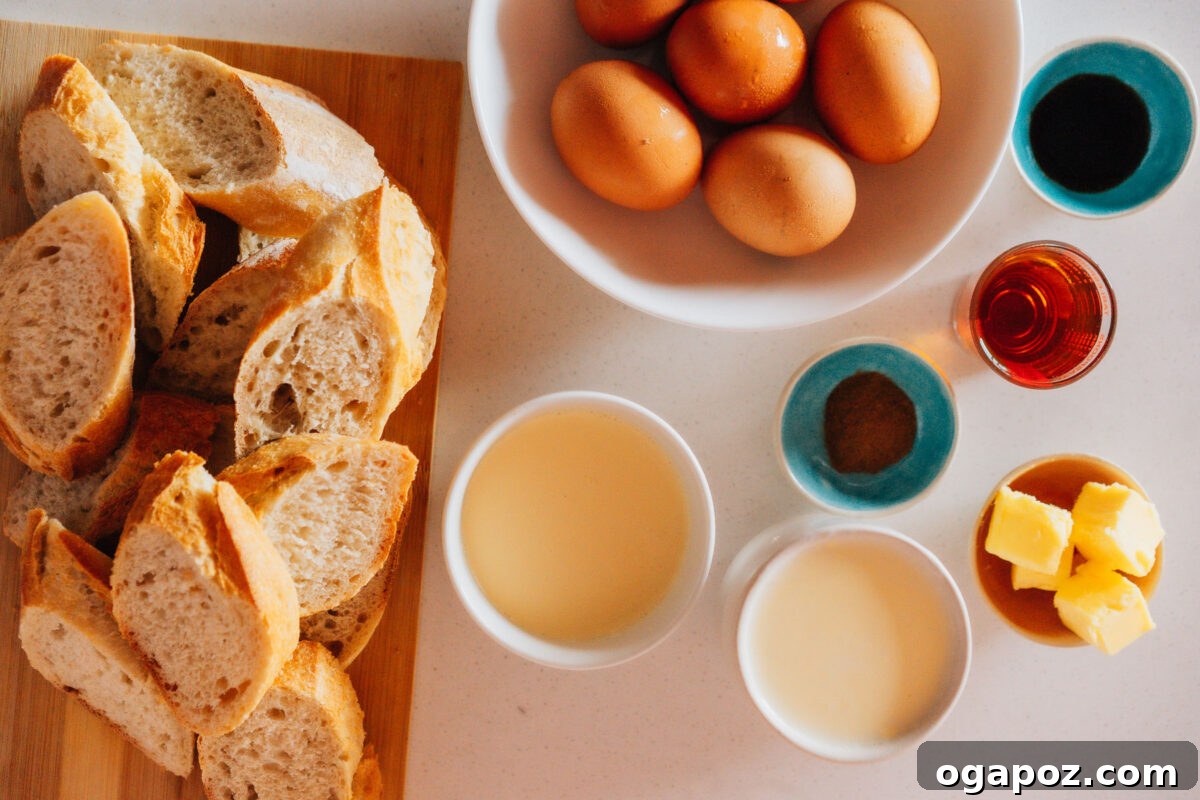
- Thick-Cut, Day-Old Bread Slices: This is arguably the most crucial component. Opt for substantial slices (about ¾ to 1 inch thick) of day-old bread. Varieties like brioche, challah, classic French bread, Texas toast, or even a robust **sourdough** work exceptionally well. Day-old bread is slightly drier, which is advantageous as it acts like a sponge, perfectly absorbing the custard without becoming mushy. If your bread is too fresh, a simple trick is to dry the slices in a 300ºF (150ºC) oven for 8–10 minutes before dipping; this enhances their absorption capacity significantly.
- Large Eggs: The heart of the custard. Eggs provide the richness, structure, and binding properties that transform the milk mixture into a creamy, golden custard as it bakes.
- Whole Milk (or Creamier Alternatives): Whole milk contributes a lush, full-bodied richness to the custard. For an even more decadent experience, consider substituting a portion of the milk with heavy cream or half-and-half. Dairy-free alternatives like unsweetened almond, oat, or soy milk can also be used effectively, ensuring a creamy texture.
- Granulated Sugar or Pure Maple Syrup: These sweeteners provide the classic sweetness of French toast. Granulated sugar offers a clean sweetness, while pure maple syrup imparts a distinctive warm, caramelized flavor and also aids in creating that beautiful golden-brown crust. Choose based on your preference.
- Pure Vanilla Extract: An indispensable flavor enhancer. Good quality vanilla extract adds a deep, aromatic warmth that is fundamental to the comforting taste of French toast.
- Ground Cinnamon and a Pinch of Nutmeg: These warm spices are the soul of French toast. Ground cinnamon infuses the custard with its signature comforting aroma and taste, while a small pinch of **nutmeg** (freshly grated if possible) elevates the cozy, autumnal flavor profile. They add a layer of inviting complexity.
- Unsalted Butter: Used to generously grease your baking pan, preventing the bread from sticking and contributing to the formation of a lovely, slightly crisp bottom crust. Melted butter is also drizzled over the top before baking to promote superior browning and crispness.
- Pinch of Kosher Salt: A small amount of salt is vital. It doesn’t make the dish salty but rather balances the sweetness of the syrup and spices, enhancing all the other flavors in the custard and preventing it from tasting flat.
- Optional Toppings: A final flourish can include a delicate dusting of confectioners’ sugar (powdered sugar), an extra pour of pure maple syrup, or a sprinkle of toasted almond slices for a pleasant textural contrast.
For the exact quantities required for this recipe, please refer to the comprehensive recipe card conveniently located at the end of this article.
Essential Tools for Baking Success
Having the right kitchen tools not only simplifies the preparation of your French Toast Bake but also ensures consistently perfect results every single time:
- 8×11 or 9×9 Inch Baking Dish: This size is critical. It allows the thick bread slices to fit snugly, promoting even absorption of the custard and ensuring they bake together into a cohesive yet tender casserole without drying out prematurely.
- Large Mixing Bowl and Whisk: You’ll need a spacious bowl to comfortably whisk all the custard ingredients until smooth and thoroughly combined. Ensure the bowl is wide enough to easily dip your bread slices without spillage or mess.
- Instant-Read Thermometer: This is your ultimate secret weapon for achieving perfect doneness. It allows you to precisely measure the internal temperature of the custard, ensuring it’s fully set (between 175–185°F / 79-85°C) without becoming overbaked or rubbery, leaving you with a wonderfully creamy center.
- Microwave (Optional): While not strictly essential, a microwave can be a handy tool for quickly melting butter or gently warming milk to help dissolve sugar more rapidly into the custard mixture.
Exciting Variations & Creative Substitutions
One of the many delightful aspects of French Toast Bake is its incredible adaptability. Don’t hesitate to personalize this recipe with these creative variations and smart substitutions, catering it perfectly to your taste or what you have on hand:
- Explore Diverse Bread Options: While brioche and challah are celebrated for their rich, buttery texture, don’t limit yourself! **Sourdough** introduces a delightful tangy note and robust structure, preventing sogginess. French bread offers a classic, hearty base, and Texas toast, with its extra thickness, provides an excellent foundation. Experiment with different artisan breads to find your favorite.
- Amplify Warm Spices: Beyond the standard cinnamon, a generous pinch of nutmeg truly enhances the “cozy” factor. Consider adding a hint of ground ginger, allspice, or a touch of cardamom for an exotic twist. A light sprinkle of spices over the top before baking will also create a beautiful aroma.
- Sweetness Swaps & Flavor Boosts: Instead of maple syrup, brown sugar can be used in the custard for a deeper, molasses-like sweetness. Start with 1-2 tablespoons and whisk until fully dissolved. For a bright, zesty contrast, grate in some orange or lemon zest into the custard; it pairs beautifully with the warm spices. A tablespoon of orange liqueur (like Grand Marnier) can also add sophistication.
- Turn It Savory for a Hearty Meal: For those who prefer a savory breakfast or brunch, this bake is surprisingly versatile. Layer cooked, crumbled breakfast sausage (pork, chicken, or turkey), crispy bacon bits, caramelized onions, or even sautéed mushrooms between the bread slices. A sprinkle of sharp cheddar or gruyere cheese could also be delicious. If savory casseroles are your preference, you absolutely must try my Tater Tot Breakfast Casserole recipe for another incredible option.
- Dairy-Free or Lighter Dairy Alternatives: Easily adjust the dairy content. For a richer custard, use all half-and-half or a blend of milk and heavy cream. For dairy-free versions, unsweetened almond milk, oat milk, or soy milk work wonderfully as direct substitutions for whole milk.
- Prep for Overnight Convenience: While this recipe excels as a quick-bake, it can be adapted for an overnight soak. Simply assemble the French Toast Bake completely, cover the dish tightly with plastic wrap, and refrigerate overnight. On baking day, add an extra 5–7 minutes to the bake time, allowing it to heat through and set perfectly. This makes holiday mornings incredibly effortless.
For a particularly festive and vibrant take on this breakfast staple, especially wonderful during the holiday season, don’t miss out on my delightful Orange Cream French Toast Casserole, bursting with bright citrus flavors.
How to Make French Toast Bake: The Fast & Effortless Method (No Overnight Soak Required!)
Achieving a truly spectacular French Toast Bake does not always demand hours of anticipation. This streamlined, quick-bake method ensures a consistently delicious result without the need for an overnight soak, making it the perfect choice for spontaneous brunches, unexpected guests, or simply a less rushed weekend breakfast. Follow these clear and straightforward steps to create a breakfast masterpiece in under an hour:
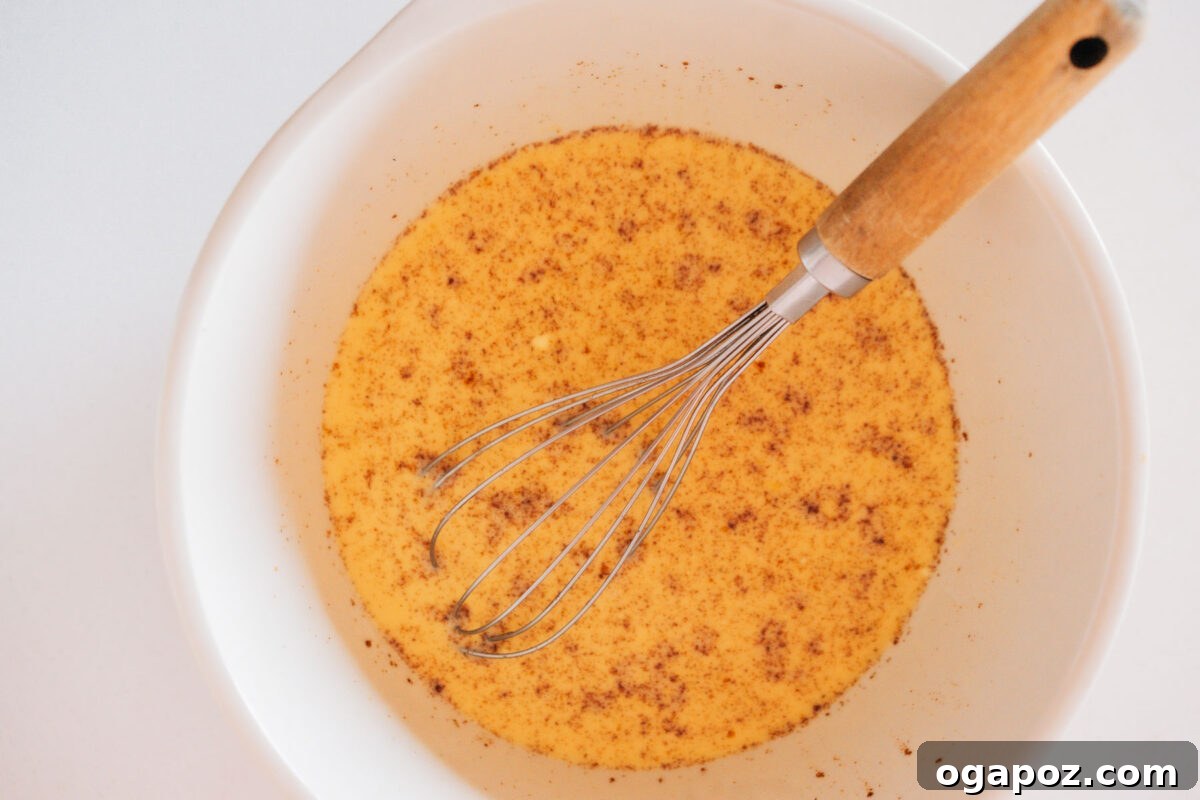
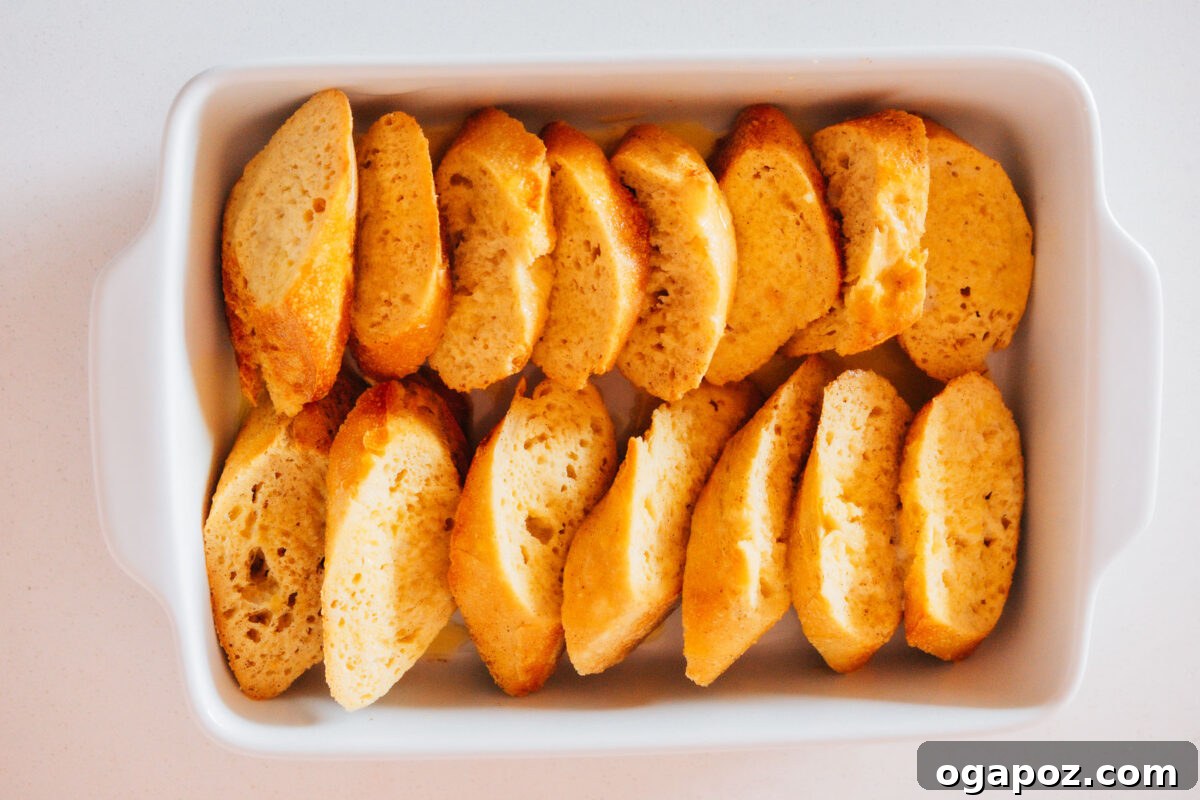
Step 1: Whisk the Custard to Smooth Perfection
Begin by gathering all your custard ingredients. In a large mixing bowl (or a medium bowl with ample width for easy dipping), crack the eggs. Add the whole milk (or your chosen milk/cream combination), granulated sugar or pure maple syrup, pure vanilla extract, ground cinnamon, and that essential pinch of kosher salt. Using a sturdy whisk, vigorously combine these ingredients until the mixture is completely smooth, homogenous, and free of any streaks of egg white. This well-whisked custard is the key to an even and flavorful soak, ensuring every part of your French toast is infused with deliciousness. Make sure your bowl is wide enough to allow for effortless dipping of each bread slice.
Step 2: Layer and Briefly Soak for Optimal Absorption
Prepare your baking dish by generously buttering the bottom and sides (an 8×11 or 9×9 inch dish is ideal). This step not only prevents sticking but also contributes a lovely, buttery crust to the edges of your bake. Next, take each thick-cut slice of day-old bread and dip it into the prepared egg custard. Allow each side to soak for a few seconds – just enough to moisten the surface thoroughly without letting the bread become overly saturated or fall apart. Arrange these soaked slices in the buttered baking dish, slightly overlapping them in a “shingled” pattern. This tight arrangement helps the bread absorb any remaining custard more effectively and creates a beautiful, cohesive presentation. Once all slices are in place, pour any leftover custard mixture evenly over the top of the arranged bread. Drizzle the melted butter over the entire surface. Allow the assembled French Toast Bake to stand on your counter for a crucial **10–15 minutes** while your oven finishes preheating. This short resting period is vital for the bread to begin absorbing the liquid, setting the stage for a tender interior.
Step 3: Bake Hot for a Golden, Crisp Top
Preheat your oven to a robust **375°F (190°C)**. This slightly higher temperature is fundamental to achieving that desirable golden-brown, beautifully crisp top layer while ensuring the interior bakes through perfectly without becoming dry. Carefully place your baking dish into the preheated oven and bake for approximately **28–35 minutes**. Baking times can vary depending on your oven’s calibration and the specific thickness of your bread, so visual cues are important. The French Toast Bake should appear puffed, with the top and edges gloriously golden brown. For absolute certainty of doneness, use an instant-read thermometer. The center of the bake should register between **175–185°F (79-85°C)**. This temperature range guarantees that the eggs in the custard are fully set and safe to consume, while maintaining a wonderfully creamy and luscious texture in the middle.
For that ultimate, shatteringly crisp crust, consider a brief final step: carefully place the French Toast Bake under a preheated broiler for an additional **30–60 seconds**. Exercise extreme caution and do not walk away, as broilers can quickly turn golden perfection into char. Remove from the oven and allow the French Toast Bake to rest for approximately 5 minutes before slicing and serving. This resting period allows the custard to firm up further, making the slices easier to cut and ensuring they hold their shape beautifully.
The Science Behind This Speedy (No-Overnight) French Toast Bake
You might wonder how this French Toast Bake achieves such perfect results – a gloriously crisp top and a tender, custardy interior – all without the conventional overnight soak that many recipes demand. The answer lies in a few intelligent techniques designed to maximize flavor and ideal texture in minimal time:
- Strategic Individual Dipping of Slices: The key difference from a cubed casserole that soaks for hours is the individual dipping of each bread slice. This method allows you to control the hydration precisely. Each piece absorbs just the right amount of custard to become thoroughly moistened, but crucially, it avoids becoming waterlogged or dense. This quick, controlled saturation helps the bread maintain its inherent airy structure, resulting in a delightfully fluffy texture throughout the bake, rather than a heavy, compacted one.
- Optimal Hot Oven Temperature (375°F / 190°C): Baking at a slightly higher temperature than some traditional casseroles is not accidental. This hotter oven environment fosters rapid cooking and encourages superior caramelization on the surface of the French toast. This is what creates that desirable golden-brown, invitingly crisp top crust. Simultaneously, it cooks the custard through efficiently from all sides, preventing any potential sogginess at the bottom while ensuring the center is thoroughly and perfectly set.
- Precision Doneness with an Instant-Read Thermometer (175–185°F / 79-85°C): Eliminating guesswork is vital for custard-based dishes. Relying on an instant-read thermometer to confirm an internal temperature between 175–185°F (79-85°C) is the ultimate assurance of custard perfection. Within this precise range, the eggs are fully cooked and safe, yet the custard retains a sumptuously creamy, luscious consistency in the center. This prevents both an unpleasantly gooey, undercooked middle and a dry, rubbery, overbaked texture.
- The Effectiveness of a Short, Targeted Soak: While an overnight soak is common, a brief 10–15 minute soak on the counter (while your oven preheats) is surprisingly effective for this particular method. This short, targeted absorption period allows the outer layers of the bread to take in sufficient custard without becoming overly saturated. It’s just enough moisture to imbue the bread with rich flavor and a tender crumb, but not so much that it compromises the bread’s structure, leading to a soggy or mushy final product. This brilliantly balances speed with truly delicious, ideal textural results.
Make Ahead, Store & Reheat Your French Toast Bake
Even though this French Toast Bake recipe is celebrated for its instant gratification, understanding how to prepare it in advance, store leftovers, and reheat it effectively adds another layer of convenience. This knowledge ensures you can enjoy its deliciousness on your terms, whether for planned brunches or spontaneous cravings.
Planning Ahead: If You Need to Prep Ahead
This particular version of French Toast Bake is ingeniously crafted for immediate baking, delivering a fresh-from-the-oven experience with minimal delay. It’s designed to be assembled and baked right away. However, if your schedule truly demands a prep-ahead option, you do have some flexibility. You can assemble the entire dish up to a few hours in advance, ensuring it’s covered tightly with plastic wrap to prevent the bread from drying out. Keep it refrigerated until about 15-20 minutes before you plan to bake, allowing it to come closer to room temperature. Be mindful that longer refrigeration may lead to slightly more liquid absorption, potentially requiring an extra 5-7 minutes of baking time to ensure the custard sets fully. For a recipe specifically optimized for an extended, true overnight soak, I highly recommend exploring my dedicated Overnight French Toast Casserole.
Leftovers: Storing and Reheating with Ease
If you’re fortunate enough to have any scrumptious leftovers from your French Toast Bake, proper storage ensures they remain delicious for future enjoyment:
- Refrigerate: Always allow any leftover French Toast Bake to cool completely to room temperature before storing. Once cooled, you can either cover the entire baking dish tightly with plastic wrap or aluminum foil, or transfer individual slices into an airtight container. Stored this way, it will maintain its quality and deliciousness in the refrigerator for up to 3 days.
- Reheat for Best Results: To bring your French Toast Bake back to life, preserving its delightful crisp top and tender interior, reheating in the oven is generally the superior method. Preheat your oven to a moderate 300–325°F (150-160°C). Place the covered baking dish (or individual slices wrapped in aluminum foil) into the oven and warm until heated through, which typically takes 15-20 minutes for single slices, or longer for a larger portion. For maximum crispness, remove the foil cover during the last few minutes of reheating. If time is of the essence and you prefer a softer texture, the microwave can be used; heat in 30-second intervals until warmed through, but be aware that it will not retain the crispness achieved in the oven.
Elevate Your French Toast Bake: Toppings & Perfect Sides
A truly unforgettable French Toast Bake experience is beautifully completed with the right accompaniments. Whether you crave a touch of extra sweetness, a delightful crunch, or a savory counterpoint, these suggestions will help you craft a breakfast or brunch spread that is both impressive and utterly delicious.
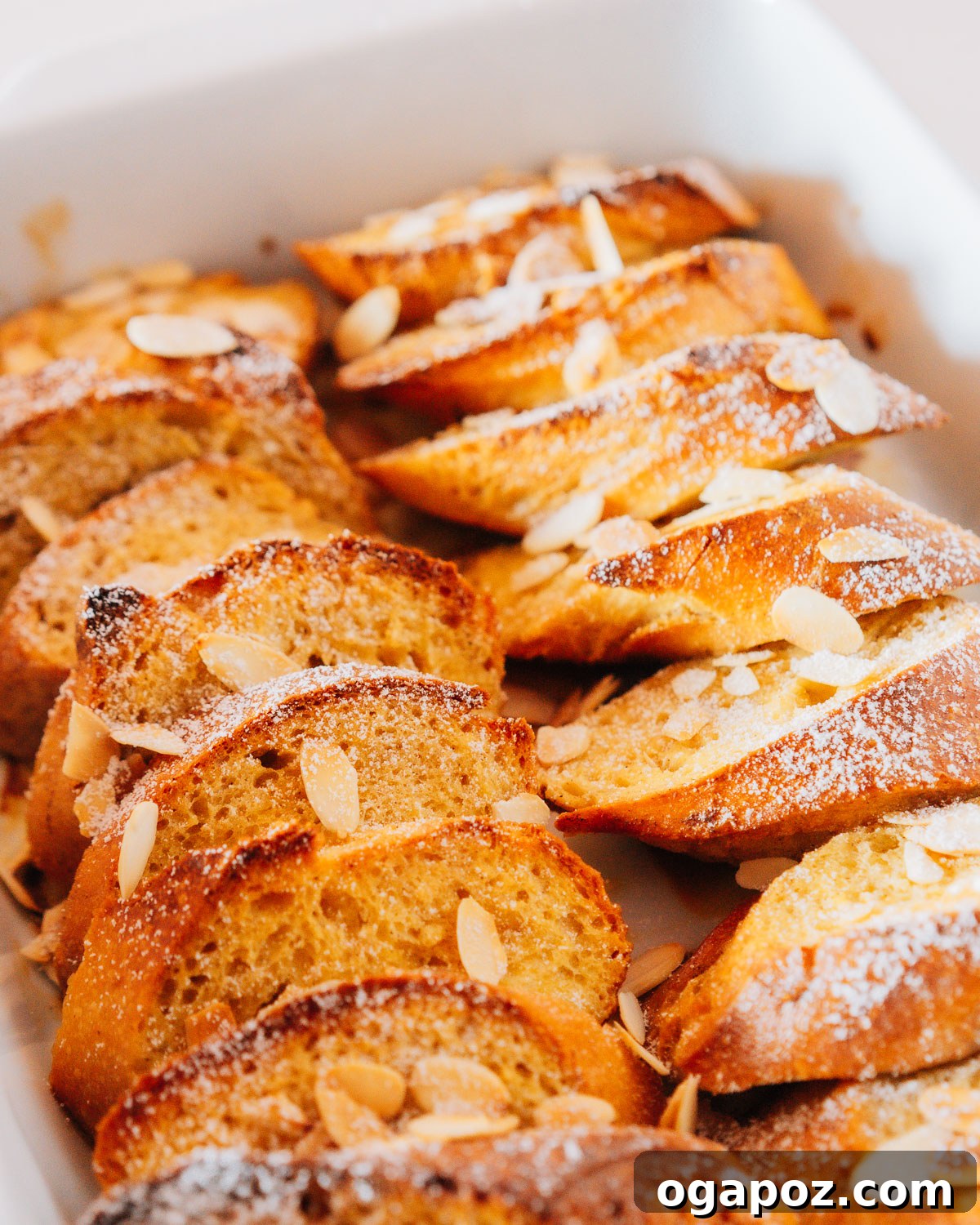
Delectable Toppings to Crown Your Bake
Transform your French Toast Bake into a masterpiece with these delicious finishing touches:
- Confectioners’ Sugar (Powdered Sugar): A classic and elegant choice. A delicate dusting adds a final touch of sweetness and a beautiful visual appeal.
- Pure Maple Syrup: The quintessential partner for French toast. Serve a warm pitcher of high-quality pure maple syrup at the table, allowing guests to drizzle generously over their slices.
- Fresh Whipped Cream or Mascarpone: A dollop of light, airy whipped cream or a spoonful of rich mascarpone cheese adds a luxurious, velvety texture that contrasts exquisitely with the crisp exterior and tender interior.
- Toasted Nuts: For a delightful crunch and nutty depth, sprinkle toasted sliced almonds, chopped pecans, or walnuts over the top just before serving. The warmth from the bake will further enhance their flavor.
- Fresh Berries: A vibrant and refreshing addition. A colorful medley of fresh blueberries, sliced strawberries, raspberries, or blackberries provides a burst of natural sweetness and a welcome tartness, cutting through the richness of the French toast.
- Seasonal Zest & Festive Accents: For a truly special and visually stunning presentation, particularly around Christmas or other holidays, consider garnishing your French Toast Bake with bright orange zest, delicate pistachio slivers, and jewel-toned pomegranate arils. This combination is not only incredibly pretty and festive but also introduces wonderful complementary flavors.
- Fruit Compotes or Warm Sauces: Elevate the experience with homemade berry compotes (strawberry, mixed berry), a spiced apple cinnamon sauce, or even a luscious lemon curd.
Perfect Sides to Complete the Meal
A balanced and satisfying brunch includes a variety of textures and flavors. Here are some ideal savory and fresh sides to pair with your sweet French Toast Bake:
- Crispy Bacon: The ultimate sweet-and-savory combination. The salty, smoky crunch of perfectly cooked bacon is an unrivaled complement to the sweet, custardy French toast.
- Breakfast Sausage: Whether you prefer savory breakfast sausage patties or links, they add a hearty, protein-rich element that balances the sweetness of the bake. For more ideas on how to incorporate these, explore my collection of breakfast recipes with egg and sausage.
- Fresh Fruit Salad: A light and refreshing counterpoint. A vibrant bowl of mixed seasonal fruits – melon, grapes, oranges, and an assortment of berries – offers a palate cleanser and a healthy element.
- Greek Yogurt Parfait: Layered with granola and additional fruit, a creamy, tangy Greek yogurt parfait provides a lovely contrast in texture and flavor, adding probiotics to your meal.
- Fluffy Scrambled Eggs or Omelets: For a more substantial brunch spread, a simple side of perfectly fluffy scrambled eggs or custom-made omelets can round out the meal beautifully, offering another protein source.
Pro Tips for Achieving an Irresistibly Crisp French Toast Bake Top
The hallmark of an truly outstanding French Toast Bake is its exquisite play of textures: a sumptuously creamy, tender interior juxtaposed with a gloriously golden, satisfyingly crisp top. Mastering this delicate balance is key to elevating your bake from good to unforgettable. Here are some professional tips to help you achieve that coveted crispness every single time:
- Press Gently, Don’t Mash When Soaking: When you’re dipping and arranging your bread slices in the baking dish, the goal is to encourage optimal custard absorption without compromising the bread’s structure. Press the slices gently into the custard and snugly against each other. This allows the liquid to wick up efficiently into the bread’s fibers, ensuring thorough hydration. However, avoid squishing or mashing the slices, as this can compress the bread, leading to a dense and heavy texture rather than the desired light and fluffy interior. Gentle handling is paramount for aeration.
- Choose the Right-Sized Pan for Optimal Height and Baking: The dimensions of your baking dish are far more critical than you might think for achieving the perfect texture. An 8×11 or 9×9 inch pan is ideal for this recipe. These sizes allow the thick bread slices to stand relatively tall and fit snugly together, creating a good depth for the custard to cook evenly. This arrangement also ensures that the top surfaces of the bread are adequately exposed to the oven’s heat, promoting beautiful crispness. If the pan is too large, the slices will lay flatter and spread out, resulting in a thinner bake that is prone to drying out quickly and losing its luscious, custardy interior.
- Monitor the Finish Temperature for a Perfectly Creamy Custard: The secret to a perfectly set yet wonderfully creamy custard lies in precise internal temperature control. Invest in an instant-read thermometer – it’s a game-changer for baked goods. Aim to remove your French Toast Bake from the oven when its internal temperature, measured at the very center of the dish, registers between 175–185°F (79-85°C). At this precise temperature range, the eggs in the custard are fully cooked and safe to eat, but the custard has not over-solidified, thus retaining its delightful, velvety consistency. Anything lower might result in a loose, unset center; anything higher risks a dry, rubbery, or grainy texture.
- Broil Briefly for Shattering Crispness: For that ultimate, irresistibly shattering crispness on the very top of your French Toast Bake, a quick stint under the broiler is your most effective tool. Once the bake is otherwise cooked through and golden, carefully transfer it to a preheated broiler. Broil for just **30–60 seconds**. This brief, intense burst of heat will rapidly caramelize the sugars on the surface, creating that coveted, beautiful, glass-like crust. It is absolutely crucial to stay vigilant and **do not walk away from the oven during this step**, as broilers can turn perfection into charcoal in a matter of seconds. Watch it intently until it achieves your desired level of golden-brown crispness.
Frequently Asked Questions: French Toast Bake (No Overnight Soak)
Here are answers to some of the most common questions about preparing this quick and easy French Toast Bake, designed to help you achieve perfect, delicious results every time:
Yes, absolutely! This recipe is specifically optimized and designed for immediate baking. Once you’ve assembled the dish and allowed it a brief 10–15 minute counter soak (which you can do while your oven preheats), it’s ready to go straight into the oven. Gently pressing the bread slices into the custard helps ensure they hydrate quickly and efficiently during this short resting period, allowing for a fast and delicious outcome.
For the most optimal results, we highly recommend using thick slices of bread, ideally ranging from ¾ to 1 inch (approximately 2-2.5 cm) in thickness. This substantial cut is crucial because it allows the bread to maintain its structural integrity beautifully even after soaking in the rich custard and baking. Thicker slices prevent the bread from collapsing or becoming overly mushy, ensuring a satisfying contrast between the crisp exterior and the tender, custardy interior.
Achieving a perfectly crisp top is a key highlight of this recipe. Several factors contribute: firstly, bake your French Toast Bake at a relatively high temperature of 375°F (190°C). Secondly, avoid overfilling your baking dish with excessive custard; the bread should be moist but not swimming in liquid. Lastly, for that ultimate, shattering crisp finish, consider placing the bake under a preheated broiler for a very brief period of 30–60 seconds at the very end of the baking process. Remember to watch it continuously during this step to prevent burning!
Certainly! You can easily double this French Toast Bake recipe to cater to a larger gathering or for meal prepping. When doubling, simply use a larger 9×13 inch (23×33 cm) baking dish to accommodate the increased volume. Please be aware that doubling the recipe will naturally extend the overall baking time. Always use an instant-read thermometer to check the internal temperature in the center of the bake, aiming for 175–185°F (79-85°C) to ensure it is thoroughly cooked and beautifully set.
While this recipe is expertly optimized for quick baking, it can still be adapted for make-ahead convenience. You can assemble the dish the night before, cover it tightly with plastic wrap, and refrigerate it overnight. When you’re ready to bake, simply add an extra 5-10 minutes to the recommended baking time, allowing it to heat through and set completely. Alternatively, for a recipe specifically designed and thoroughly optimized for an extended overnight soak, I highly recommend exploring my dedicated Overnight French Toast Casserole recipe for guaranteed overnight success.

Perfect French Toast Bake (Easy & Quick Recipe!)
Jennifer Pallian BSc, RD
5 minutes
30-35 minutes
5
Ingredients
- 6 large eggs
- ¾ cup whole milk
- ¾ cup heavy cream or half and half
- ¼ cup pure maple syrup
- 1 tsp pure vanilla extract
- 1 tsp ground cinnamon
- ¼ tsp kosher salt
- 10 thick slices day-old brioche French bread, or challah (about ¾-1 inch thick)
- 4 tbsp unsalted butter melted
Instructions
-
Preheat your oven to 375ºF (190°C). Lightly grease (or line with parchment paper for easier cleanup) an 8×11 or 9×9 inch baking dish. If doubling, use a 9×13 inch dish.
-
In a large mixing bowl, whisk together the eggs, whole milk, heavy cream (or half and half), pure maple syrup, vanilla extract, ground cinnamon, and kosher salt until the mixture is completely smooth and well combined.
-
Dip each thick slice of day-old bread into the prepared custard, ensuring both sides are moistened but not overly saturated. Arrange the soaked slices in the prepared baking dish, slightly overlapping them in a “shingled” pattern.
Pour any remaining custard mixture evenly over the top of the arranged bread slices.
-
Evenly drizzle the melted unsalted butter over the top of the bread in the baking dish. Let the assembled French Toast Bake stand at room temperature for 10-15 minutes while the oven finishes preheating. This brief soak allows the bread to begin absorbing more custard.
-
Bake in the preheated oven for approximately 30-35 minutes. The French toast should be puffed, with golden and crisp edges, and the center set. Use an instant-read thermometer to check the internal temperature at the center, aiming for about 175ºF (79°C). For an extra crisp top, broil for 30-60 seconds, watching very closely to prevent burning.
-
Remove from the oven and let stand for 5 minutes before slicing and serving warm with your favorite toppings such as powdered sugar, maple syrup, and fresh berries.
Notes
For perfect doneness: Using an instant-read thermometer is key. Target an internal temperature of 175–180ºF (79–82ºC) in the center of the bake. At this range, the eggs in the custard are fully set, but the middle remains wonderfully creamy and moist. If the temperature reads under 170ºF (77ºC), the custard will be too loose and won’t hold its structure properly once cooled.
Overnight option: For ultimate convenience, you can easily assemble this French Toast Bake, cover it tightly with plastic wrap, and refrigerate it overnight. When ready to bake the next day, place it directly into the preheated 375ºF (190°C) oven and bake for about 35-40 minutes, or until it’s golden and set, checking with a thermometer for ideal doneness. Allow it to stand for 5 minutes before slicing and serving.
Nutrition Information (Approximate per Serving)
Carbohydrates: 16g |
Protein: 9g |
Fat: 25g |
Saturated Fat: 14g |
Polyunsaturated Fat: 2g |
Monounsaturated Fat: 7g |
Trans Fat: 0.4g |
Cholesterol: 257mg |
Sodium: 229mg |
Potassium: 212mg |
Fiber: 0.2g |
Sugar: 13g |
Vitamin A: 1018IU |
Vitamin C: 0.2mg |
Calcium: 132mg |
Iron: 1mg
Nutrition information is automatically calculated and should be used as an approximation. Actual values may vary based on specific ingredients, portion sizes, and preparation methods.