
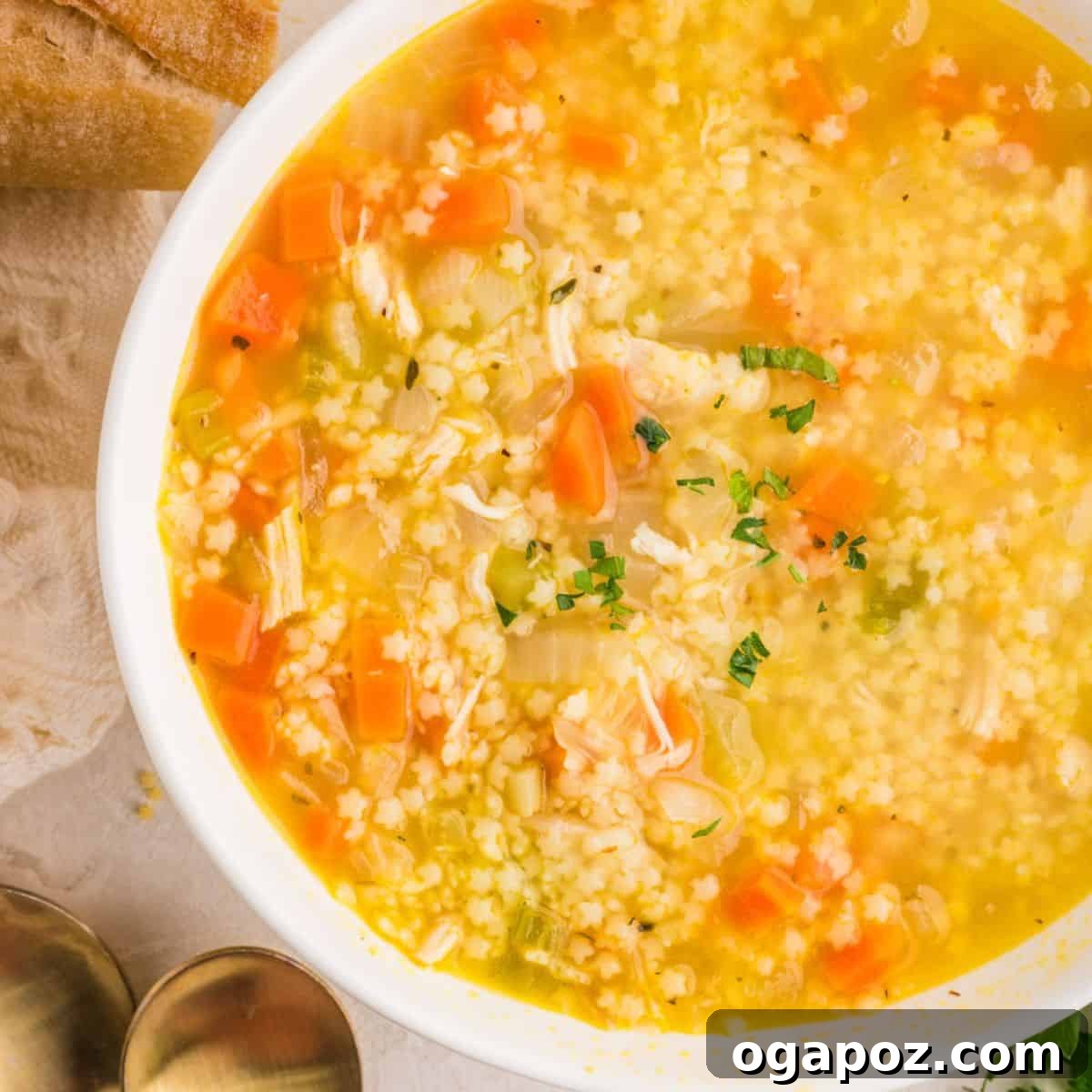
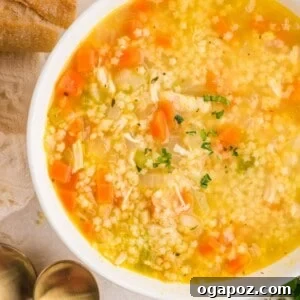
This Chicken Pastina Soup is the kind of Italian comfort food nonnas have made for generations. Often called “penicillin soup” because it feels so soothing when you’re under the weather, it combines tiny pastina pasta with tender shredded chicken simmered in a clear, savory broth. Sweet, soft vegetables round out the pot and a bright squeeze of lemon at the end lifts the flavors. It comes together in under 45 minutes with pantry-friendly ingredients and straightforward steps.
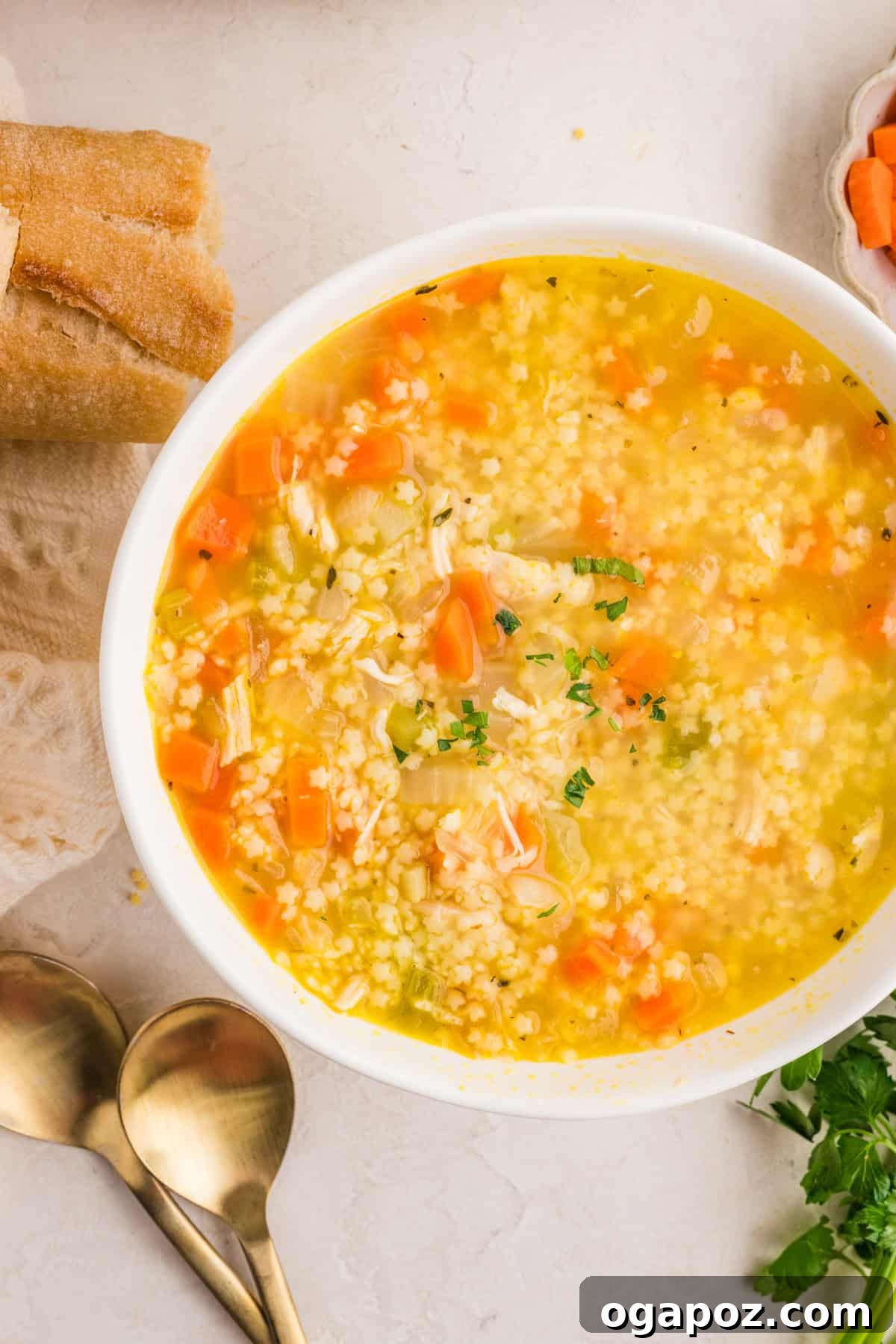
There’s a reason this soup has simmered on Italian stovetops for so long: it’s simple, fast, and dependable. The pastina softens quickly and takes on the flavors of the broth, creating a silky, soothing texture that makes this soup feel like a warm hug. The classic soffritto of onion, celery, and carrot cooked until tender gives the broth sweet depth, while shredded chicken adds protein without extra work. A splash of lemon off the heat keeps the final bowl bright instead of flat.
This version is forgiving and adaptable, ready in about 40 minutes from start to finish. Use rotisserie chicken to speed things up, stir in a splash of cream for a richer finish, or add a handful of spinach or peas for color and nutrients. One key tip: pastina absorbs liquid even after cooking, so follow the storage tips below if you want leftovers that still feel like soup rather than porridge.
Why This Soup Works

• Pastina does double duty. It cooks quickly and soaks up the broth, giving the soup a soft, nearly silky mouthfeel that feels more comforting than larger noodles.
• Soffritto builds real flavor. Gently cooking onion, celery, and carrot until tender before adding broth creates a sweet, rounded base instead of a thin, undeveloped stock.
• Lemon at the end brightens everything. Stirring fresh lemon juice in off the heat lifts the flavors and prevents the broth from tasting flat.

Ingredients You’ll Need
For exact ingredient amounts and step-by-step instructions, see the recipe card below. These are the components that make this soup balanced and flavorful.
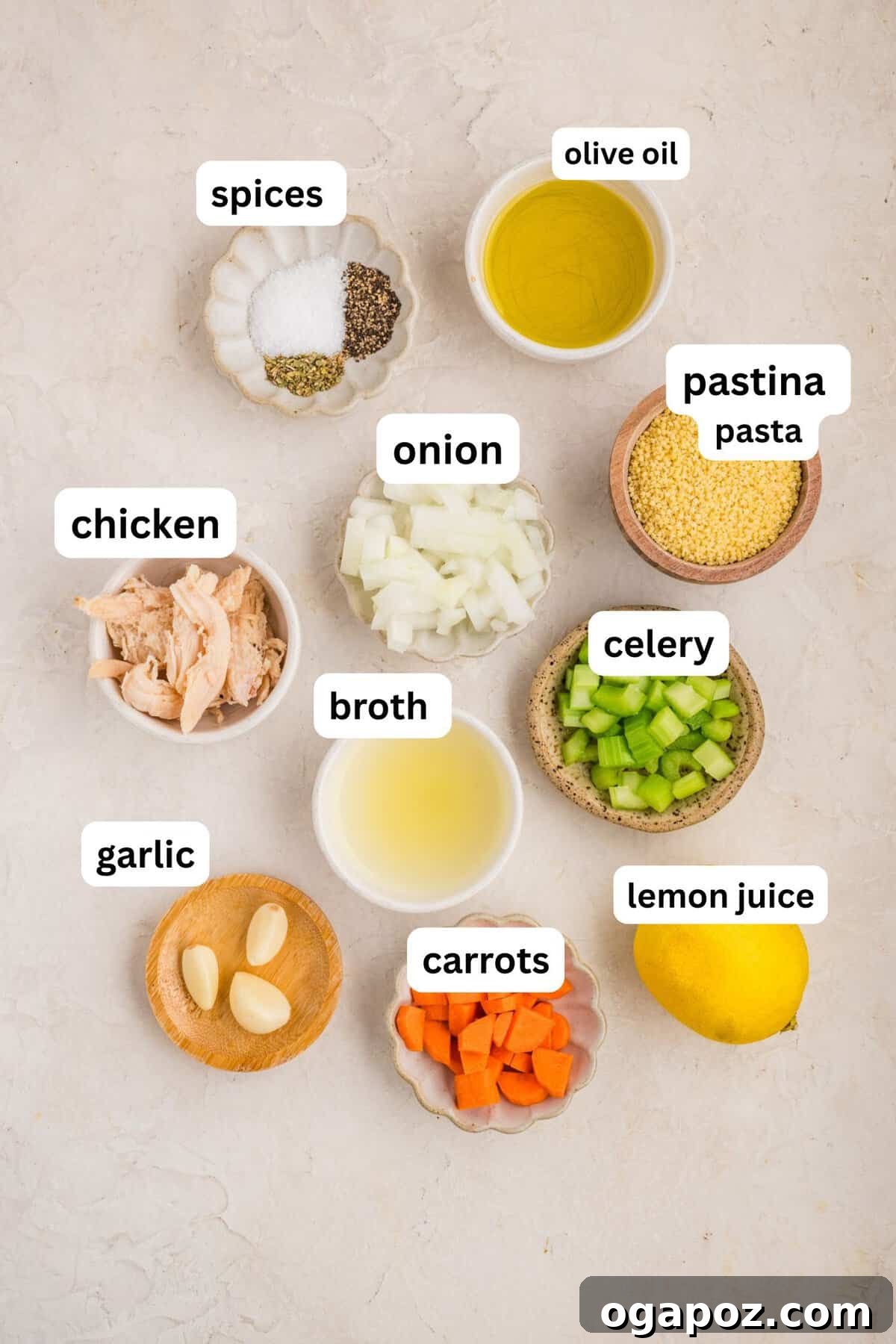
- Yellow onion, celery, and carrot: The classic aromatic trio. Dice to similar sizes so they cook evenly.
- Garlic: Added after the vegetables so it softens without burning.
- Chicken broth: The base of the soup; low-sodium broth lets you control the salt.
- Kosher salt, Italian seasoning, and pepper: Simple seasonings that enhance without masking the broth and chicken.
- Pastina: Tiny pasta that cooks fast and gives the soup its signature texture.
- Shredded chicken: Already-cooked chicken is stirred in at the end just to warm through; rotisserie or leftover chicken work well.
- Fresh lemon juice: Stirred in off the heat to brighten the finished soup.
Ways to Customize This Soup
- Make it creamy: Stir in about 1/4 cup heavy cream at the end for a richer broth.
- Make it smooth: Use an immersion blender to puree the vegetables after they’re soft, then add the pasta and chicken for a thicker, velvety soup.
- Watch sodium: If you’re using regular broth, hold off on salt until after tasting the finished soup.
- Swap the pasta: Orzo, ditalini, or small broken-shaped pastas can substitute for pastina if needed.
- Add vegetables: A handful of spinach or frozen peas stirred in at the end adds color and nutrients without changing the core flavor.
- Boost protein: For an egg-drop style addition, stir a lightly beaten egg into the hot soup off the heat for delicate ribbons of cooked egg.
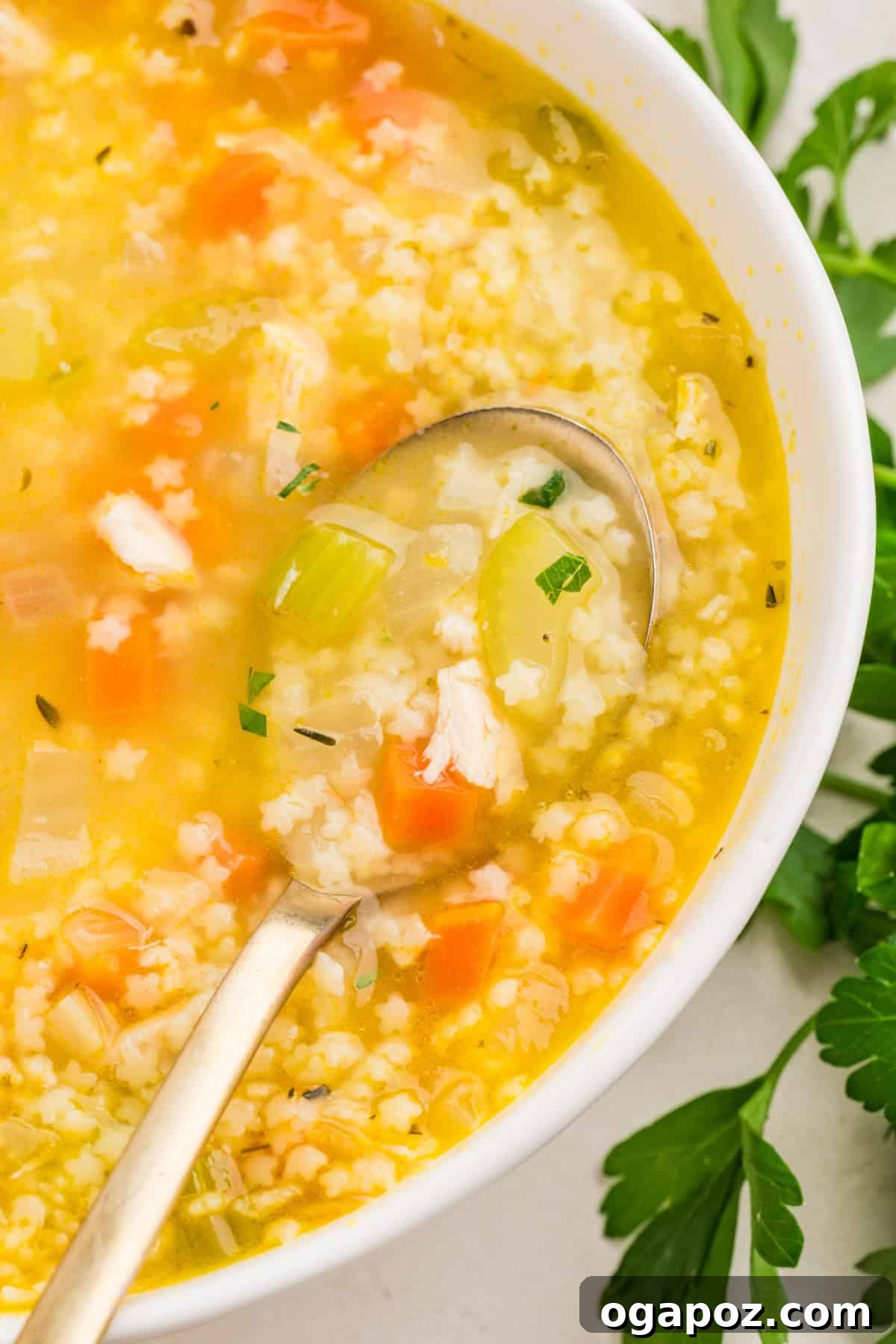
How to Make Chicken Pastina Soup
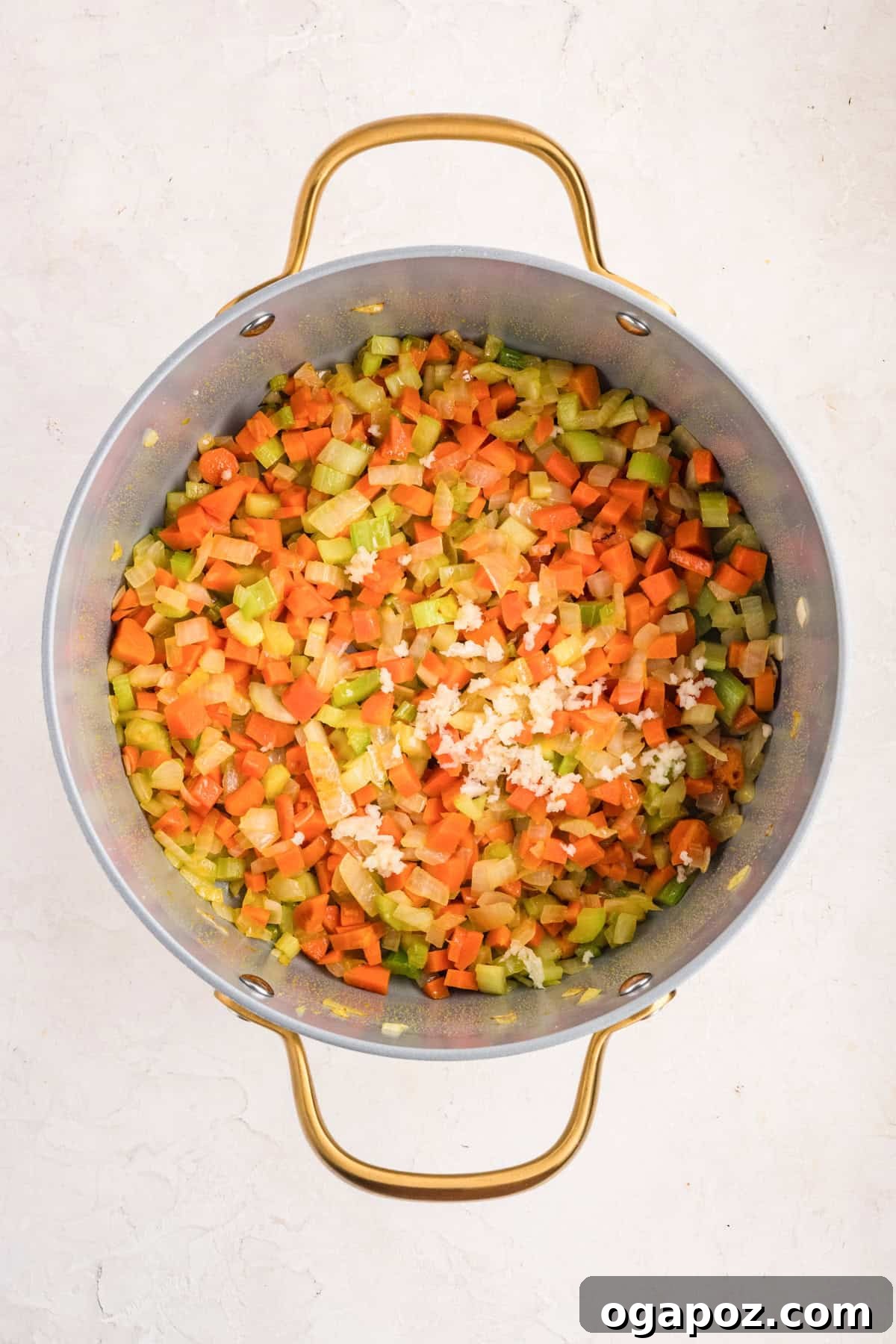
Step 1: Soften the vegetables. Heat olive oil in a large soup pot over medium-high heat. Add the onion, celery, and carrot. Cook until tender and translucent at the edges, about 6 to 8 minutes. Tip: Don’t rush this step — well-softened vegetables make a sweeter, more developed broth.
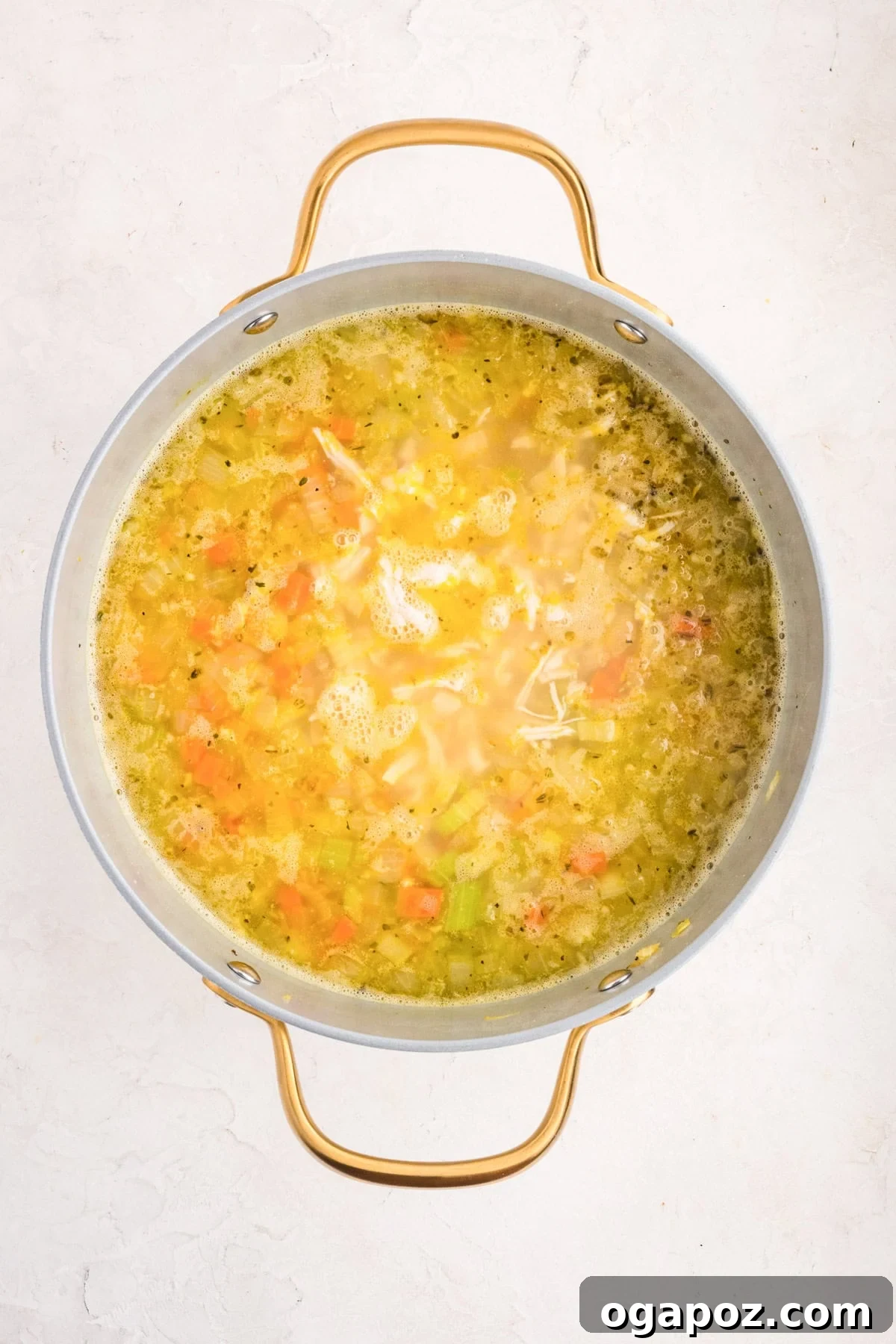
Step 2: Add the garlic and broth. Reduce heat to medium and stir in the garlic. Cook about one minute until fragrant, then add the chicken broth and season with salt, Italian seasoning, and pepper.
Step 3: Cook the pasta and chicken. Bring the soup to a boil, then add the pastina and shredded chicken. Simmer until the pasta is tender, about 7 to 10 minutes, stirring occasionally so nothing sticks. Tip: Start checking at six minutes — pastina goes from tender to mush quickly.
Step 4: Finish and serve. Remove from heat and stir in fresh lemon juice. Taste and adjust salt if needed. Serve hot, garnished with chopped parsley and grated Parmesan if you like.
Make it smooth: For a silky texture with the vegetables blended into the broth, use an immersion blender after the vegetables are soft and before adding the pasta and chicken.
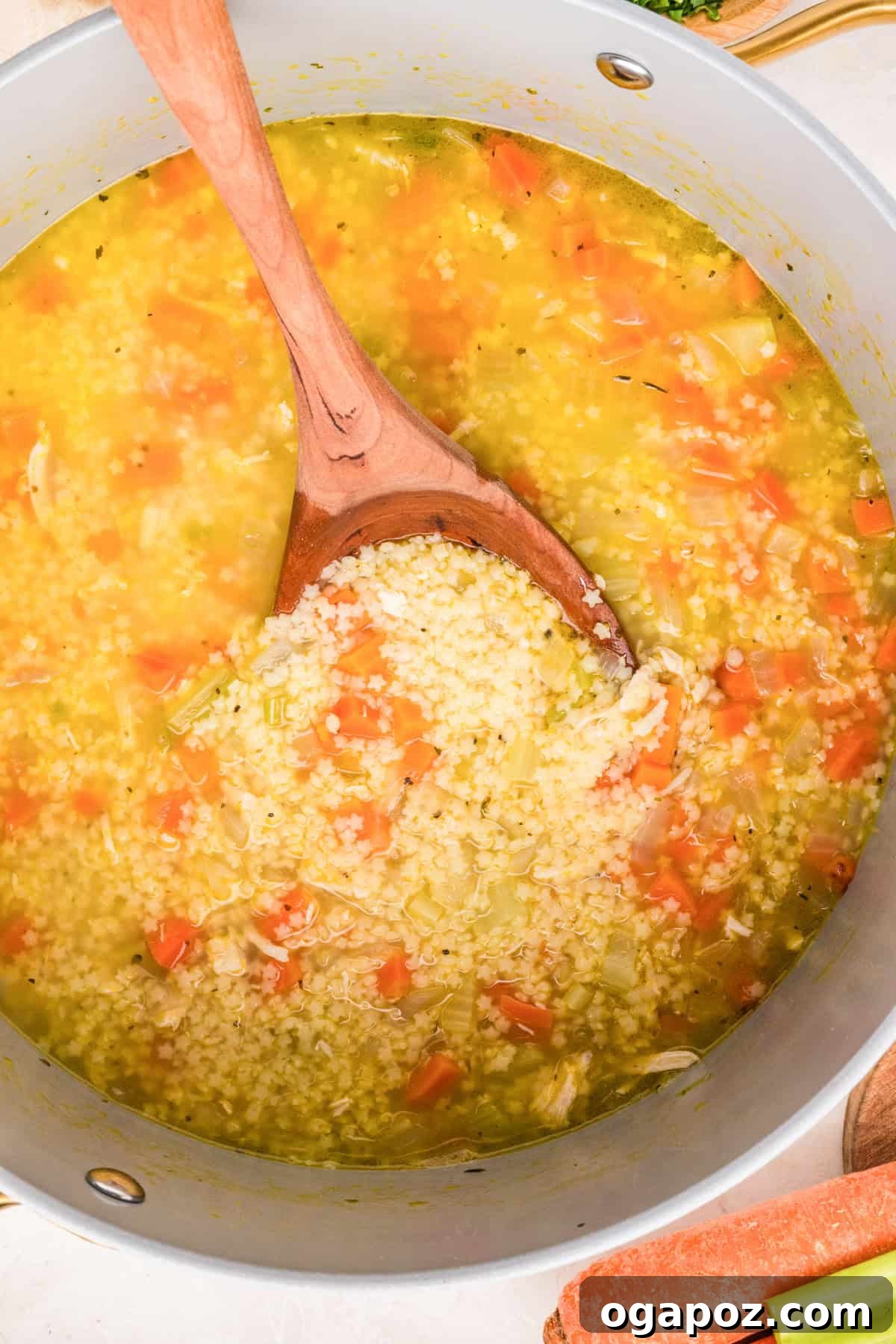
How to Keep the Pasta From Turning to Mush
Pastina continues to absorb broth after cooking, so a soup that is perfectly brothy when served can thicken overnight. Here are reliable ways to avoid gummy leftovers:
- Pull it early. Remove the pot from the heat while the pastina still has a slight bite; residual heat will finish it.
- Cook pasta separately for meal prep. Boil the pastina on its own, then add a measured portion to each bowl and ladle hot broth and chicken over it when serving.
- Thin when reheating. If leftovers thicken, add a splash of broth or water and rewarm gently until the desired consistency returns.
Recipe Tips
- Dice evenly: Cut vegetables similar in size so everything softens at the same rate.
- Don’t skip softening the vegetables: Cook them until truly tender to develop a sweeter, more flavorful base.
- Watch the pasta: Start checking a couple minutes early; pastina cooks fast and continues to absorb liquid.
- Add lemon last: Stir it in off the heat for the brightest flavor.
- Use precooked chicken: Rotisserie or leftover shredded chicken keeps the recipe quick and easy.
- Taste before salting: If your broth isn’t low-sodium, hold off on adding salt until the end.
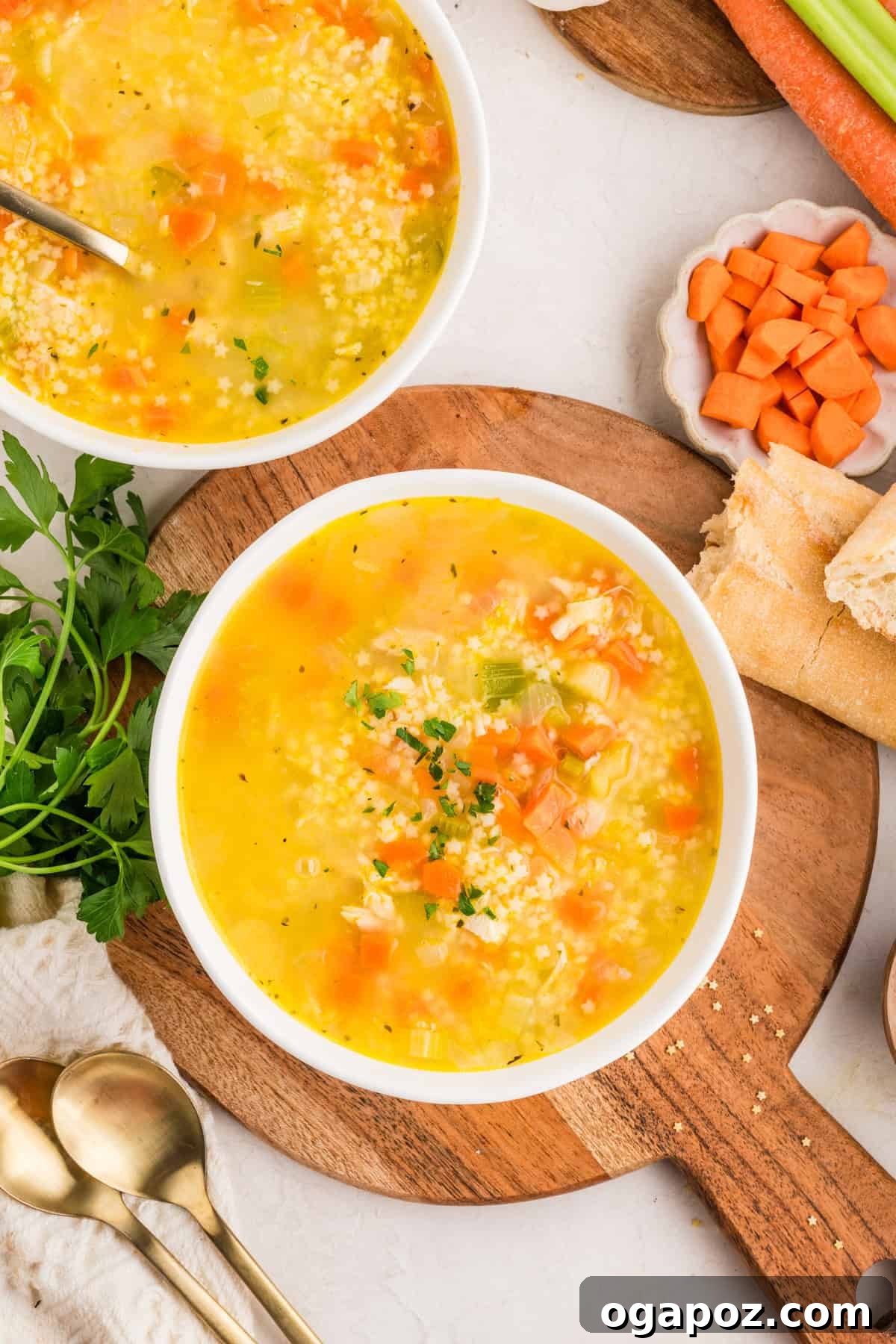
What to Serve With It
- Warm bread: A crusty roll or soft flatbread is perfect for dipping into the broth.
- Light salad: A lemony arugula or mixed greens salad balances the warm, rich soup.
- Simple sandwiches: A Mediterranean vegetable or grilled cheese sandwich turns the bowl into a fuller meal.
Make Ahead, Storage, and Freezing
This soup is best fresh, but leftovers can be handled properly for good second-day results.
- Refrigerator: Keep in an airtight container for up to 4 days. Expect thickening; add broth when reheating.
- Freezer: Freeze the broth and cooked chicken without the pastina for best texture. Cook fresh pastina when ready to eat and combine.
- Reheating: Warm gently on the stovetop over medium-low heat, stirring and adding liquid as needed.
Recipe FAQ
Yes. Add raw chicken breasts or thighs to the simmering broth and cook until fully done, about 15 to 20 minutes depending on the size. Remove, shred, and return the shredded meat to the pot before adding the pasta.
Pastina means “tiny pasta” in Italian and is sold in many grocery stores in small shapes like stars, dots, or tiny tubes. It’s commonly found near other pasta varieties.
Pastina continues to absorb broth as it sits, so the soup will thicken in storage. Stir in a little extra broth or water while reheating to return it to soup consistency.
Chicken Pastina Soup
Ingredients
- 2 tablespoons olive oil
- 1 large yellow onion, diced
- 3 celery stalks, diced
- 3 cloves garlic, minced
- 8 cups chicken broth, low sodium
- 1 1/2 teaspoons kosher salt, plus more to taste
- 1/4 teaspoon Italian seasoning
- 1/4 teaspoon coarse ground pepper
- 1 cup pastina pasta
- 1 cup finely shredded chicken, cooked
- 1 tablespoon fresh squeezed lemon juice
- Fresh parsley and grated Parmesan for serving, optional
Instructions
- In a large soup pot, heat the olive oil over medium-high heat. Add the onion, celery, and carrots and cook until the vegetables are tender, about 6–8 minutes.
- Reduce heat to medium and add the garlic. Sauté for another minute, then pour in the broth and add salt, Italian seasoning, and pepper.
- Bring the soup to a boil, then stir in the pastina and shredded chicken.
- Cook until the pasta is tender, about 7–10 minutes, stirring occasionally.
- Remove from heat and stir in the lemon juice. Serve hot with parsley and Parmesan if desired.
Notes
- Broth matters: Use low-sodium broth so you can control salt levels. If using regular broth, wait to add salt until the end.
- Adjust for table salt: If you use table or sea salt instead of kosher, use about half the amount.
- Leftovers thicken: Pastina absorbs liquid as it sits. Pull the soup from heat while the pasta has a slight bite, and add liquid when reheating.
- Storage: Refrigerate in an airtight container up to 4 days.
- Make it creamy: Add 1/4 cup heavy cream at the end for a silkier broth.
Nutrition
Nutrition information is automatically calculated and should be used as an approximation.