
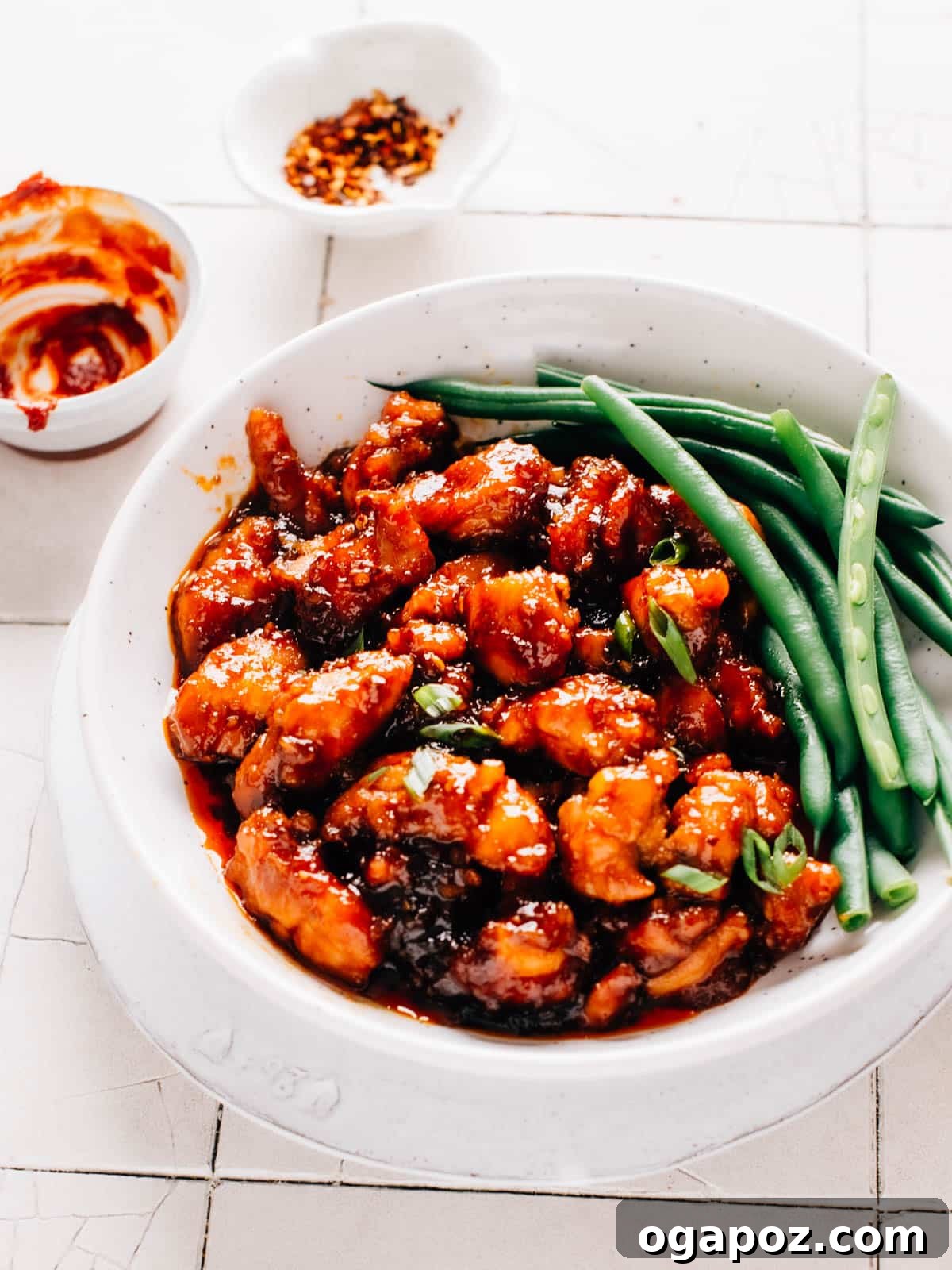
Gochujang Chicken: Your New Favorite Spicy & Sticky Dinner
Get ready to elevate your weeknight dinner routine with this sensational Gochujang Chicken recipe. Featuring perfectly crispy, tender, and succulent bite-sized chicken pieces, each morsel is seared to golden perfection in a hot skillet before being generously tossed in a glossy, spicy, and utterly irresistible Gochujang paste sauce. This dish is not just a meal; it’s an experience that delivers bold, authentic Korean flavors straight to your plate, making it an absolute must-try for anyone who loves vibrant, comforting food.
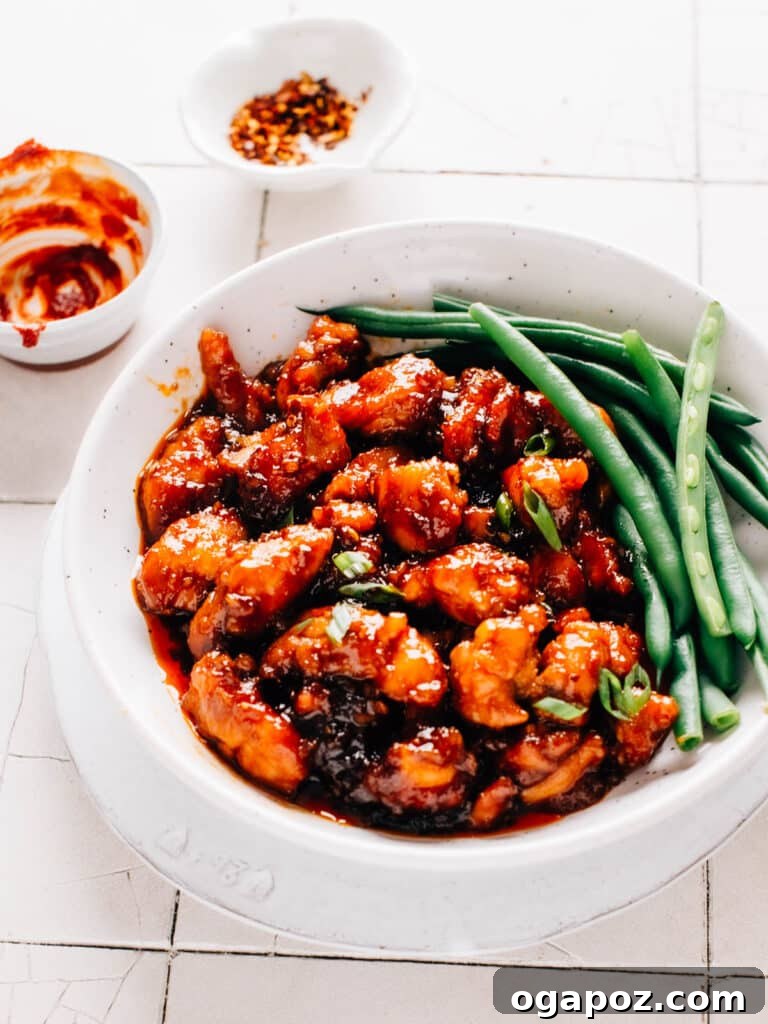
This Gochujang chicken recipe has quickly become one of my absolute go-to healthy chicken recipes. It’s a remarkably easy weeknight dinner that the entire family consistently adores, thanks to its delightful blend of spicy, sweet, and savory notes. If you’ve ever found yourself craving the incredible flavors of Korean Fried Chicken, prepare to be utterly obsessed with this homemade version. It offers all the sticky, flavorful satisfaction without the deep-frying fuss, making it a healthier and quicker alternative for a satisfying meal.
Essential Gochujang Chicken Ingredients
Gathering these simple ingredients is the first step towards whipping up this incredibly fast and flavorful dish. Many of these are pantry staples, ensuring that a delicious Korean-inspired meal is always within reach.
- Skinless Chicken Thighs or Chicken Breast: Cut into uniform bite-sized pieces. Thighs are recommended for their tenderness and juicy texture, but breast works well if careful not to overcook.
- Cornstarch: This is your secret weapon for achieving that coveted crispy exterior on the chicken, which helps the sauce cling beautifully.
- Neutral Oil: Such as avocado, canola, or vegetable oil, ideal for high-heat searing without imparting unwanted flavors.
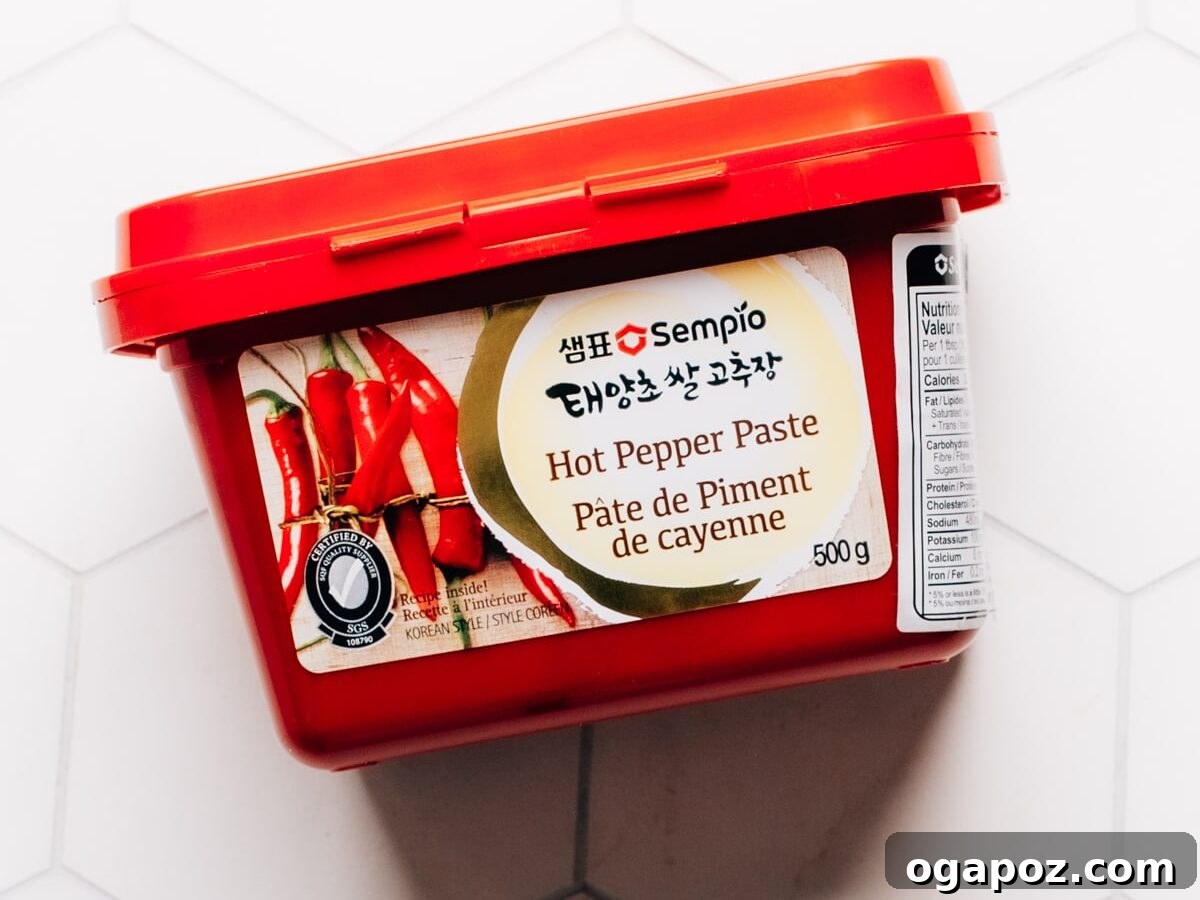
- Gochujang Paste: The star of the show! This fermented Korean chili paste provides the signature sweet, savory, and spicy kick. If you can’t find it, consider trying my easy gochujang substitute.
- Low-Sodium Soy Sauce: To add essential umami and a salty depth without making the dish overly salty.
- Honey: Balances the spice of the Gochujang with its natural sweetness, contributing to the sauce’s glossy finish.
- Garlic and Ginger: Freshly minced garlic and grated ginger are crucial for adding aromatic depth and authentic Asian flavor. You might also love my Garlic Ginger Chicken recipe!
- Red Pepper Flakes (optional): For those who desire an extra layer of heat and a subtle fiery kick.
- Green Onions or Scallions: Sliced thinly, these add a fresh, pungent garnish and a pop of color.
- Sesame Seeds: A classic finishing touch that provides a nutty flavor and appealing texture.
Full recipe quantities and detailed instructions are meticulously listed in the comprehensive recipe card conveniently located at the bottom of this article.
Flavorful Variations and Smart Substitutions
This Gochujang chicken recipe is wonderfully versatile, allowing for creative adjustments to suit your preferences or what you have on hand:
- Protein Power Swap: Don’t limit yourself to chicken! This glorious sauce is equally delicious with shrimp, firm tofu cubes, or even boneless chicken tenders. For a party-pleasing option, try making wings using my acclaimed Korean chicken wings recipe.
- Crank Up the Heat: For those who crave more intense spice, simply add an extra tablespoon of Gochujang paste or increase the amount of red pepper flakes to achieve your desired level of fiery deliciousness in the Gochujang sauce.
- Your Pan, Your Choice: While a wok is fantastic for quick, high-heat searing due to its unique shape, a large, heavy-bottomed skillet or cast-iron pan will yield equally excellent results. Just ensure you cook the chicken in batches to avoid overcrowding and ensure proper browning.
Essential Kitchen Tools for Success
Having the right equipment makes preparing this dish even smoother and more enjoyable:
- Large Skillet or Wok: Crucial for achieving that perfect, fast sear on your chicken pieces.
- Small Mixing Bowl: Ideal for whisking together the vibrant Gochujang sauce ingredients.
- Tongs and Spatula: Indispensable for stirring, flipping chicken, and ensuring every piece is evenly coated.
- Sharp Knife and Paper Towels: For precise trimming and cutting of chicken, and for patting it thoroughly dry.
- Instant-Read Thermometer: A vital tool to confidently check the internal temperature of the chicken, ensuring it’s cooked through to 165°F (74°C) without becoming dry.
If you’re a connoisseur of chicken dishes with a fantastic sticky sauce, you’ll undoubtedly adore my healthier honey garlic chicken recipe and the ever-popular honey mustard chicken, too! These recipes share a similar commitment to flavor and ease, making them perfect additions to your culinary repertoire.
How to Master Gochujang Chicken: An Effortless Step-by-Step Guide
My philosophy for this recipe is simplicity and maximum flavor. The process is straightforward: sear the chicken until golden, quickly whisk together the dynamic sauce, and then simmer everything to achieve that signature glossy, rich coating. You’ll be amazed at how quickly this comes together, with dinner ready in just 5–10 minutes of active cooking once your pan is hot and ready.
Step 1: Achieve the Perfect Sear on Your Chicken
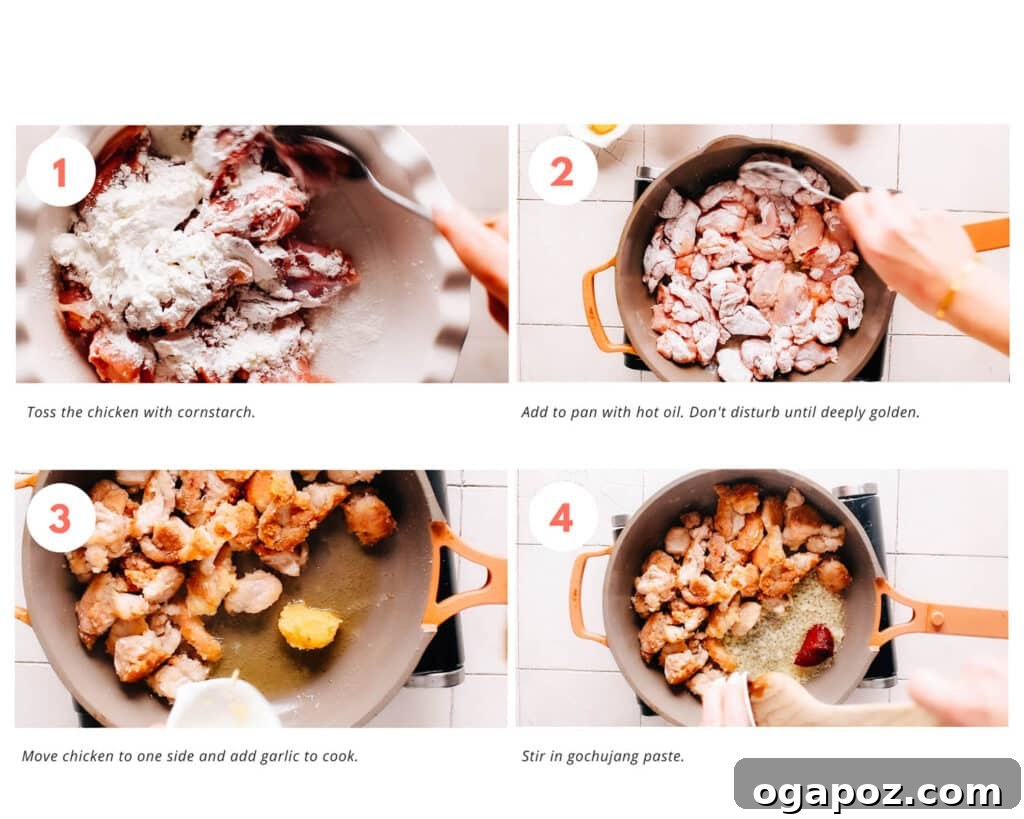
Begin by thoroughly patting your chicken pieces dry with paper towels. This crucial step removes excess moisture, which is essential for developing a beautiful, crispy crust. Next, toss the chicken with cornstarch and a pinch of kosher salt until each piece is evenly coated. Heat your chosen neutral oil in a large skillet or wok over medium-high heat until it shimmers, indicating it’s hot enough. Carefully add the chicken in a single layer, ensuring not to overcrowd the pan. Cook undisturbed until a deeply golden-brown crust forms on the bottom, then flip and cook for another 2 minutes. Don’t worry about cooking it all the way through at this stage; we’re focused on texture. Transfer the seared chicken to a clean plate to keep it crisp while you prepare the glorious sauce.
Step 2: Whisk Together the Dynamic Spicy Sauce
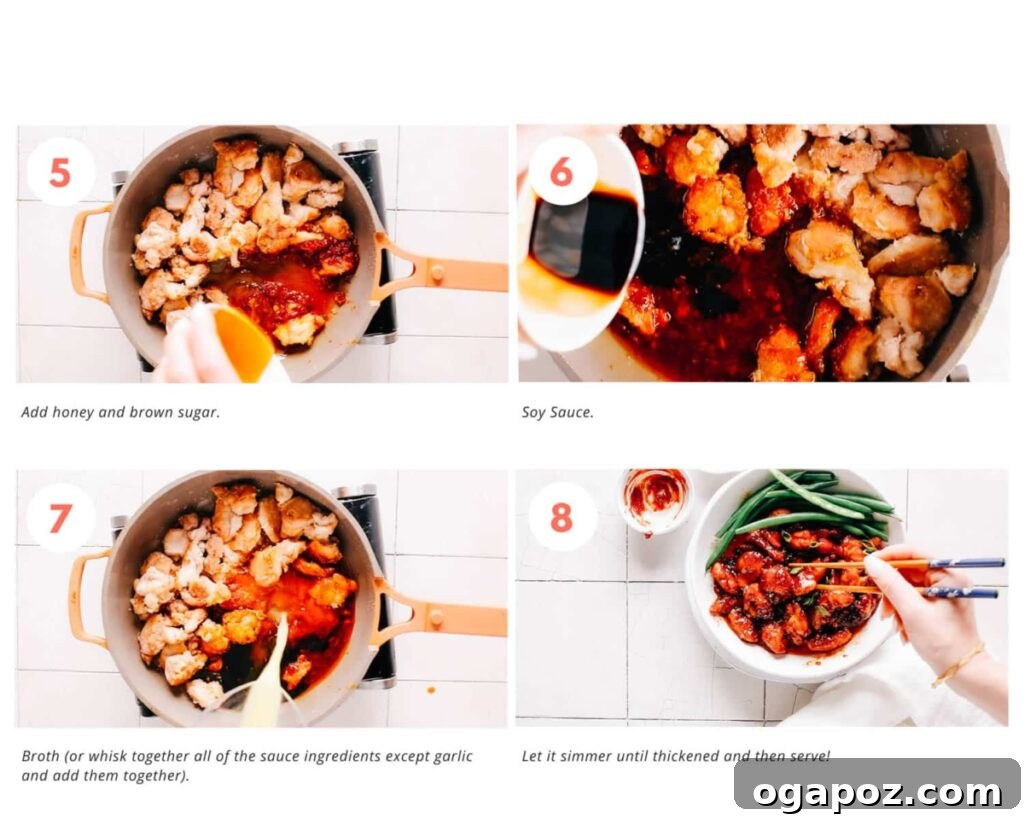
While your chicken rests, in a small bowl, combine the vibrant Gochujang paste, low-sodium soy sauce for umami, a generous drizzle of honey for sweetness, finely minced garlic, and freshly grated ginger. Whisk these ingredients together until completely smooth and well-incorporated. This is also the moment to add a pinch of red pepper flakes if you’re aiming for that extra fiery kick. The aroma alone will have your mouth watering!
Step 3: Glaze and Garnish to Perfection
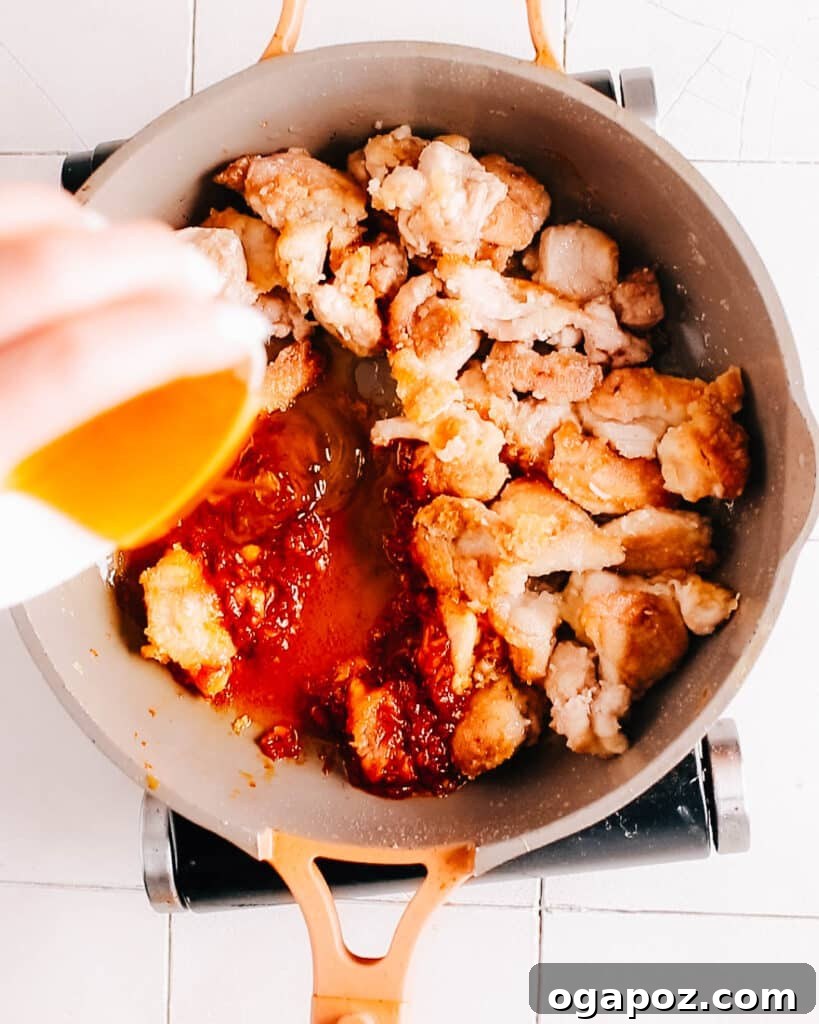
Return the perfectly seared chicken back into the skillet. Pour in the prepared Gochujang sauce and stir continuously, ensuring every piece of chicken is thoroughly coated. Allow the sauce to come to a gentle simmer and cook for just 2-3 minutes, stirring occasionally, until it beautifully thickens and clings to the chicken, creating a magnificent glossy glaze. At this point, the internal temperature of the chicken should reach 165°F (74°C). If you’re incorporating quick-cooking vegetables like green beans or bell peppers, fold them in now and cook until they are tender-crisp. Finish this delightful dish with a generous sprinkle of toasted sesame seeds and freshly sliced green onions or scallions. Serve immediately over a bed of hot white rice, allowing the extra sauce to meld with every grain for maximum happiness.
Craving more fantastic Korean-inspired dishes? You’ll absolutely adore my Korean short ribs recipe, which offers another incredible journey into the heart of Korean cuisine!
Avoid These 5 Common Mistakes for Perfect Gochujang Chicken
Even simple recipes can have pitfalls. Here are the most frequent mix-ups home cooks encounter when making this dish, along with tips to ensure your Gochujang chicken turns out flawless every time:
- Wet Chicken is the Enemy of Crispy: Moisture is the biggest blocker to achieving that desirable golden-brown crust. Always pat your chicken pieces thoroughly dry with paper towels before coating them with cornstarch and searing. This ensures maximum browning and crispiness.
- Crowding the Pan Leads to Steaming: Resist the urge to dump all the chicken into the skillet at once. Overcrowding significantly drops the pan’s temperature, causing the chicken to steam instead of sear. Cook in batches, leaving enough space between pieces for beautiful crisp edges and rich color development.
- Low Heat Equals Lackluster Results: Medium-high heat is absolutely crucial for this recipe. It’s the key to quickly locking in the chicken’s juices, developing a flavorful crust, and speeding up the caramelization of the cornstarch coating. Don’t be afraid to let your pan get hot!
- Over-Reducing the Sauce: The goal for the Gochujang sauce is a glossy, thick consistency that generously clings to every piece of chicken, not a stiff or overly reduced glaze. Pull the skillet from the heat once the sauce has visibly thickened and coats the chicken beautifully. If it becomes too thick, a splash of water or broth can help loosen it.
- Skipping the Garnish: While seemingly minor, the garnish of sesame seeds and fresh green onions is essential. They don’t just add visual appeal; they provide a much-needed textural contrast, a burst of fresh flavor, and a vibrant pop of color that elevates the entire dish.
Make Ahead and Storage Tips for Gochujang Chicken
One of the many joys of this Gochujang chicken recipe is how well it keeps, allowing you to cook once and enjoy delicious leftovers for effortless lunches or quick dinners throughout the week.
Storing Leftovers Safely
- Refrigerate: Once your Gochujang chicken has cooled completely, transfer it to an airtight container. It will keep beautifully in the refrigerator for up to 3–4 days, maintaining its delicious flavor.
- Keep Rice Separate: For the best possible texture and to prevent it from becoming mushy, always store cooked white rice in a separate airtight container from the chicken.
- Vegetable Note: If you’ve added vegetables to your dish, note that they might soften slightly upon reheating. For optimal crunch, consider adding fresh, quickly cooked vegetables (like steamed broccoli or stir-fried bell peppers) when reheating leftovers.
Freezing for Future Feasts
- Freeze Cooked Chicken: Both the rich Gochujang sauce and the cooked chicken freeze exceptionally well. Store them in a freezer-safe, airtight container or heavy-duty freezer bag for up to 2 months.
- Thaw Overnight: For even thawing and best results, always transfer the frozen chicken to the refrigerator and allow it to thaw overnight before reheating.
Reheating Gochujang Chicken
- Skillet Method: For the best texture, rewarm your Gochujang chicken in a skillet over medium heat. Add a splash of water or chicken broth to help loosen the sauce and bring it back to a luscious, saucy consistency. Stir occasionally until heated through.
- Microwave Method: If you’re short on time, the microwave works too. Heat in short bursts, stirring frequently between intervals. This helps to distribute the heat evenly and keeps the glorious glaze shiny and appealing.
Serving Your Gochujang Chicken: Perfect Pairings
This Gochujang chicken is incredibly versatile and shines when served simply. For an authentic and satisfying meal, pile it high over a bed of steamy white rice. Don’t forget to spoon plenty of that delectable extra sauce over the rice – it’s a non-negotiable step for maximum happiness and flavor! A simple green side dish will complete your plate.
Beyond the Basics: Toppings and Creative Add-Ins
- Classic Garnishes: Enhance the presentation and flavor with additional sesame seeds, thinly sliced scallions, or even a tiny drizzle of extra honey for added sweetness and balance.
- Crunchy Delights: Introduce a textural contrast and refreshing element with quick pickles, or fresh, crisp vegetables like julienned cucumber or thinly sliced radish.
- Integrated Vegetables: For a one-pan meal, stir-fried vegetables such as crisp green beans, vibrant snap peas, tender carrots, or colorful bell peppers can be added to the skillet towards the end of cooking until they are tender-crisp.
Complementary Side Dishes for Gochujang Chicken
- Broccoli Bliss: Craving that classic “chicken and broccoli” vibe? Simply add a side of perfectly steamed broccoli florets. The freshness of the broccoli beautifully complements the rich, spicy chicken.
- Noodle Nirvana: Serve your Gochujang chicken with a generous portion of chow mein noodles or a light, crisp Asian-inspired salad for a different textural experience.
- More Takeout Inspiration: If this dish satisfies your craving for restaurant-quality meals at home, be sure to explore my other incredible takeout-style recipes for endless delicious possibilities.
Frequently Asked Questions About Gochujang Chicken
Gochujang’s spice level is often misunderstood; it’s a warm, nuanced heat rather than an explosive one. This unique fermented paste delivers a complex flavor profile encompassing chili heat, balanced sweetness, and a profound umami depth, making the overall flavor feel incredibly well-rounded. If you desire a spicier dish, simply increase the amount of red pepper flakes or add a bit more Gochujang paste to the sauce, then balance the increased heat with a touch more honey for perfect harmony.
Absolutely, using chicken breast is a perfectly acceptable substitution. To ensure the best results, cut the chicken breast into even, bite-sized pieces to promote uniform cooking. The key is to avoid overcooking, as chicken breast tends to dry out more quickly than thighs. A quick sear over medium-high heat works best; remove the chicken from the heat once it’s just cooked through, allowing the gentle simmering in the sauce to finish it without losing precious juices.
A variety of vegetables pair wonderfully with Gochujang chicken, adding crunch, vibrant color, and essential nutrients like dietary fiber and Vitamin C. Excellent choices include crisp green beans, sweet carrots, tender broccoli florets, and colorful bell peppers. To maintain their bright appearance and crisp texture, stir them into the dish towards the very end of the cooking process, or steam them separately and serve them alongside for a refreshing contrast.
When searing, it’s best to use a high-heat cooking oil. Avocado oil, which is predominantly monounsaturated fat, or canola oil, with its higher polyunsaturated fat content, are both excellent choices as they can withstand high temperatures without smoking or breaking down easily. For an extra layer of aromatic depth, a small drizzle of toasted sesame oil can be added at the very end of cooking, ensuring its delicate flavor isn’t lost or burnt by high heat.
Yes, absolutely no wok is required to achieve fantastic results! A wide, heavy-bottomed skillet or a sturdy cast-iron pan will perform beautifully. The most important factor is cooking the chicken in batches. This technique prevents overcrowding, allowing each piece to brown properly and develop a delightful crust, rather than steaming and becoming soggy. Ensure there is ample space between chicken pieces and resist the urge to stir until a deep golden-brown forms on the underside.
To ensure your Gochujang sauce remains beautifully glossy and perfectly coating, simmer it only until it visibly thickens and clings to the chicken. Constant stirring is key. If you notice the sauce tightening too much or becoming gummy, simply splash in a small amount of water or chicken broth to loosen it to the desired consistency. Remove it from the heat once it achieves that perfect shiny, cohesive glaze.
The ideal accompaniment for this flavorful dish is a generous serving of steamy white rice, which acts as a perfect canvas to absorb all that delicious, spicy Gochujang sauce. To add contrast and a refreshing element, consider pairing it with a crisp green salad or some quick homemade pickles. A final flourish of toasted sesame seeds and thinly sliced scallions not only adds visual appeal but also enhances both texture and flavor.
The beauty of this Gochujang chicken recipe lies in its incredibly fast active cooking time. Once your oil is hot, searing the chicken typically takes around 5–10 minutes, depending on the size of your chicken pieces and whether you cook in batches. The sauce itself thickens rapidly, usually in just a minute or two. For an even quicker dinner, you can prep all your ingredients (chop chicken, mince garlic, grate ginger, whisk sauce) in advance, making mealtime a breeze.
Other Irresistible Spicy Asian Recipes You’ll Love
If you’ve fallen in love with the vibrant flavors of this Gochujang chicken, you’re sure to enjoy these other fantastic spicy Asian-inspired recipes:
- Chili Oil Ramen: A comforting and spicy noodle dish perfect for any day.
- Thai Satay: Flavorful skewers with a rich peanut sauce, a true crowd-pleaser.
- Slow Cooker Korean Short Ribs: Tender, fall-off-the-bone ribs with deep, savory Korean flavors, effortlessly made in your slow cooker.
Gochujang Chicken
Jennifer Pallian BSc, RD
10 minutes
15 minutes
4
Ingredients
- 1 lb chicken thighs cut into bite-sized pieces
- 4 tbsp cornstarch
- ⅓ tsp kosher salt
- 4 tbsp avocado oil or other cooking oil
- ⅓ cup unsalted chicken broth
- 4 tbsp brown sugar
- 2 tbsp honey
- 2 tbsp gochujang
- 2 tbsp soy sauce
- 1 tbsp minced garlic
- ½ tsp crushed red pepper flakes optional
- 2 green onions sliced
Instructions
-
Toss chicken pieces with cornstarch and salt to evenly coat. Heat oil in a large skillet over medium heat until shimmering hot. Add chicken in a single layer and cook, undisturbed, until deeply golden on the bottom. Flip and cook another 2 minutes (don’t worry about cooking it through yet).
-
Meanwhile, whisk together broth, brown sugar, honey, gochujang and soy sauce and set aside.
-
Push chicken to one side of the skillet. Cook garlic in the empty part of the skillet until soft, about 2 minutes. Add sauce mixture and red pepper flakes, if using. Stir through chicken to coat. Let it come to a simmer and cook until thickened, 2-3 minutes more. Chicken should reach 165ºF inside. Top with green onions.
Notes
- Best Chicken to Use: For the most tender and succulent results, use skinless, boneless chicken thighs. Chicken breasts are prone to drying out quickly if not cooked carefully.
- Critical Cooking Tip: Always ensure your pan is well preheated and the cooking oil is shimmering hot before adding the chicken. This high heat is essential for developing that desirable golden-brown crust and preventing the chicken from sticking.
- Adjusting the Heat: If you desire a spicier dish, increase the spice level by adding an additional 1/2 teaspoon of red pepper flakes (or more to taste). Without them, this recipe offers a mild-to-medium heat. Feel free to taste the finished sauce and stir in red pepper flakes at the end if you’re unsure of your spice preference.
- Gochujang Substitute: If Gochujang is unavailable, for every tablespoon called for in the recipe, you can substitute it with a mixture of 1/2 tablespoon of miso paste, 1/2 tablespoon of sriracha, plus 1/2 teaspoon of sugar. Alternatively, you can use just sriracha, but use half the quantity as it is generally spicier than Gochujang.
Nutrition
Carbohydrates: 33g |
Protein: 20g |
Fat: 33g |
Saturated Fat: 7g |
Polyunsaturated Fat: 6g |
Monounsaturated Fat: 18g |
Trans Fat: 0.1g |
Cholesterol: 112mg |
Sodium: 824mg |
Potassium: 354mg |
Fiber: 0.5g |
Sugar: 22g |
Vitamin A: 239IU |
Vitamin C: 3mg |
Calcium: 33mg |
Iron: 1mg
Nutrition information is automatically calculated and should be used as an approximation.