
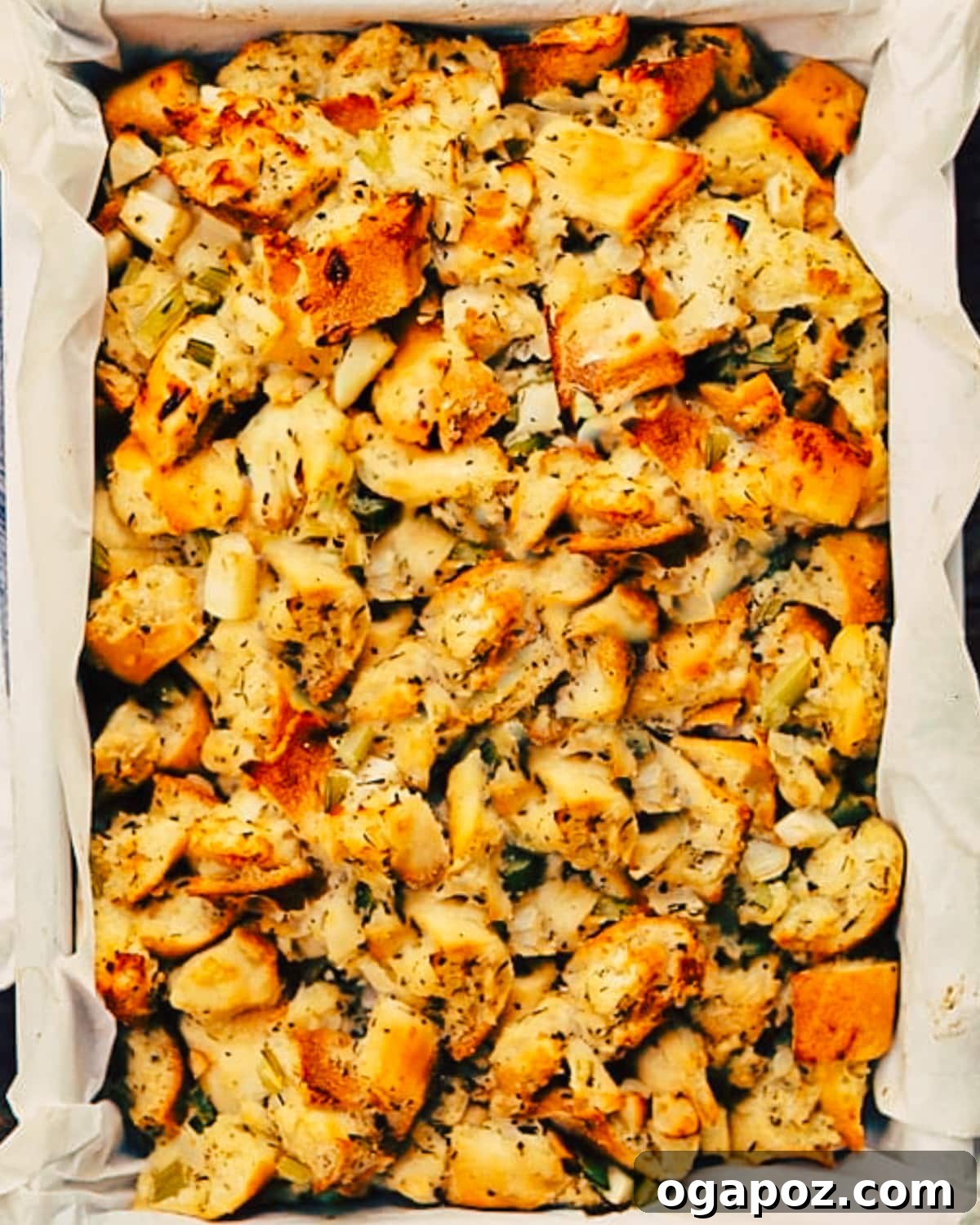
Welcome to the ultimate guide for crafting the most delectable **Turkey Stuffing with Apples and Herbs**! This isn’t just a side dish; it’s a golden, aromatic masterpiece that brings comfort and joy to every holiday table. Imagine perfectly baked stuffing, crispy on top, moist and tender within, bursting with the sweet tang of apples and the earthy fragrance of fresh herbs. It’s an essential component of any Thanksgiving dinner, and this recipe makes it effortlessly delicious, easy to prepare in advance, and guaranteed to be a crowd-pleaser.
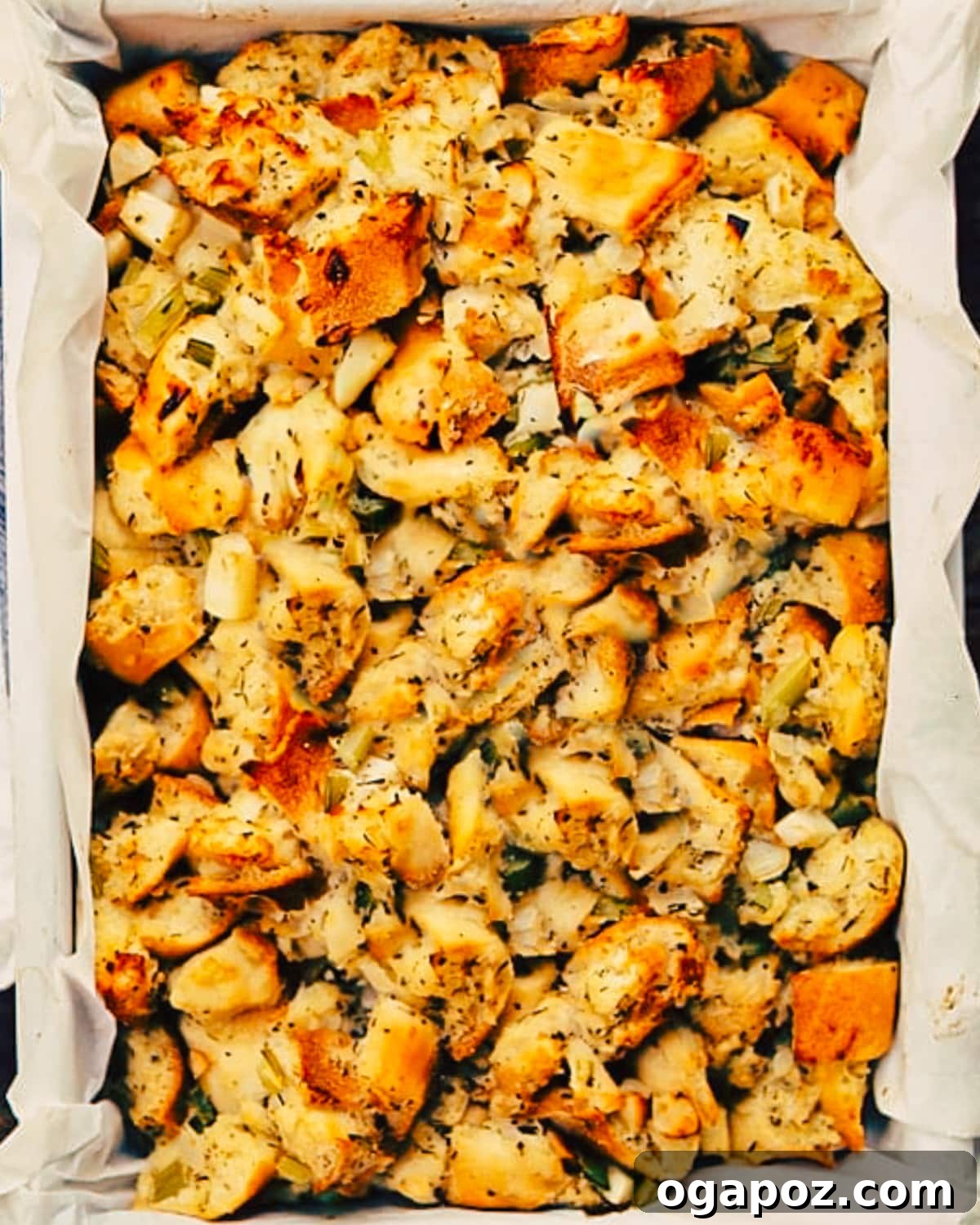
Mastering Thanksgiving Stuffing: Expert Tips for Success
Achieving that perfect balance of texture, moisture, and profound flavor in your stuffing is simpler than you think. Follow these tried-and-true tips to elevate your apple and herb stuffing from good to absolutely unforgettable.
- Embrace Stale Bread: The Foundation of Fluffy Stuffing. The secret to stuffing that’s both moist and structurally sound lies in using stale bread. Fresh bread tends to absorb liquids unevenly, leading to a mushy texture. Stale bread, however, soaks up broth beautifully and consistently, maintaining its shape and creating those delightful pockets of flavor. If you only have fresh bread on hand, simply cut it into cubes and dry it out in a low oven (around 300ºF / 150ºC) for about 15-20 minutes until the edges are slightly firm.
- Season Generously Before Adding Eggs. Seasoning is paramount for a flavorful stuffing. Always taste and adjust your seasoning before incorporating the eggs. This allows you to truly gauge the saltiness and depth of flavor. Different breads and broths vary significantly in their sodium content, so start with a conservative amount and gradually add more until the mixture tastes rich and balanced, almost like a savory potato chip.
- Patience Pays Off: Don’t Rush the Sauté. The initial sautéing of onions, celery, and apples is a crucial step for building a deep flavor base. Cook these aromatics slowly over medium heat until they are perfectly softened and lightly golden. This process allows their natural sugars to caramelize, intensifying their sweetness and creating a complex, savory foundation for your stuffing. Rushing this step will result in less flavorful vegetables and ultimately, a less impactful stuffing.
- Allow it to Rest for Perfect Scoops. Just like a roast chicken or a steak, stuffing benefits from a short resting period after baking. Letting it rest for a few minutes allows the center to set and firm up, ensuring that when you scoop it out, it holds its shape beautifully and comes away cleanly from the dish. This also helps redistribute moisture, resulting in a more uniform texture.
- Bake Outside the Bird for Safety and Superior Texture. While traditionally stuffing might be cooked inside the turkey, baking it separately offers significant advantages. Firstly, it’s a food safety imperative: stuffing needs to reach an internal temperature of 165ºF (74ºC) to be safe, which often means overcooking the turkey breast if it’s inside the bird. Baking it in a separate dish ensures it cooks evenly and safely without compromising the succulence of your turkey meat. Moreover, baking it uncovered in a casserole dish allows for a delightful crispy top, a texture often missed when cooked inside the bird. For more details, see: How to Cook a Turkey.
- Utilize Focaccia for Unmatched Richness and Moisture. When stuffing is cooked outside the bird, it misses out on those precious turkey drippings that traditionally add richness and moisture. This recipe cleverly compensates for that by using focaccia bread and eggs. Focaccia, with its naturally oily and airy texture, absorbs the broth exceptionally well and contributes a wonderful, luxurious mouthfeel. The eggs act as a binder, helping the stuffing set and adding another layer of richness and moisture, ensuring your “unstuffed” stuffing is anything but dry.
Essential Ingredients for Flavorful Herb and Apple Stuffing
This easy Thanksgiving stuffing recipe relies on a harmonious blend of simple, wholesome ingredients to create its incredible depth of flavor. Each component plays a vital role in crafting a truly memorable dish.
- Bread Cubes: The Ultimate Texture Base. Stale focaccia is highly recommended for its excellent absorption qualities and light, airy texture, which prevents sogginess. However, any stale bread variety, such as sourdough, challah, or even day-old white bread, will work wonderfully after being dried in the oven. The key is staleness for optimal broth absorption and a desirable texture.
- Veggies: Aromatic Foundation. Finely chopped onions and celery are slow-cooked in butter until tender and sweet. This foundational step unlocks their aromatic compounds and creates a savory base that permeates every bite of the stuffing.
- Your Favorite Sweet Apple: A Burst of Freshness. Sweet-tart apples like Honeycrisp, Braeburn, or Gala are ideal choices. They retain their shape beautifully during baking, offering delightful pockets of juicy sweetness and a slight textural contrast that brightens the entire dish.
- Fresh Herbs: The Heart of Holiday Flavor. A classic combination of fresh parsley, thyme, and sage imparts that unmistakable, comforting aroma and taste associated with traditional Thanksgiving stuffing. Using fresh herbs intensifies the flavor significantly compared to dried versions.
- Spices: Enhancing Natural Flavors. A careful measure of kosher salt and freshly ground black pepper is essential to balance the sweetness of the apples and the savory notes of the broth and vegetables. Proper seasoning is key to making the flavors pop.
- Chicken or Vegetable Broth: The Unifying Liquid. Broth provides the necessary moisture to hydrate the bread, binding all the ingredients together into a cohesive and succulent stuffing. For a vegetarian option, simply opt for vegetable broth.
- Eggs: The Perfect Binder. Lightly beaten eggs act as a natural binder, helping the stuffing set into a cohesive structure that slices cleanly and holds its shape after baking. They also contribute to the overall richness and moisture of the dish.
You’ll find the precise ingredient amounts conveniently listed in the comprehensive recipe card at the bottom of this page.
Optional Add-Ins for Enhanced Flavor
While delicious on its own, this stuffing recipe is also incredibly versatile. Consider these additions to customize your dish and add an extra layer of savory depth or festive flair:
- Breakfast Sausage: For a heartier, more savory stuffing, brown some breakfast sausage in a large skillet before sautéing the vegetables. Its rich, spiced flavor complements the apples and herbs beautifully.
- Mushrooms: Sauté sliced mushrooms (cremini or button work well) until deeply browned to unlock their umami potential. They add a wonderful earthy dimension to the stuffing.
- Poultry Seasoning: If you desire an extra punch of classic holiday flavor, a small pinch of poultry seasoning can be added alongside the fresh herbs. Ensure it complements, rather than overpowers, the fresh ingredients.
- Cranberries: For a delightful tart counterpoint and festive color, stir in a couple of handfuls of fresh or dried cranberries with the apples during the sautéing stage. They burst with flavor as they cook.
How to Make Apple Herb Stuffing: A Simple Step-by-Step Guide
Crafting this flavorful apple and herb stuffing is a straightforward process, combining simple techniques to achieve maximum taste. You’ll start by building flavor in a large pot or Dutch oven, then transfer it to a casserole dish for its final golden bake. Each step is designed for ease and exceptional results.
1. Sauté the Vegetables to Develop Depth
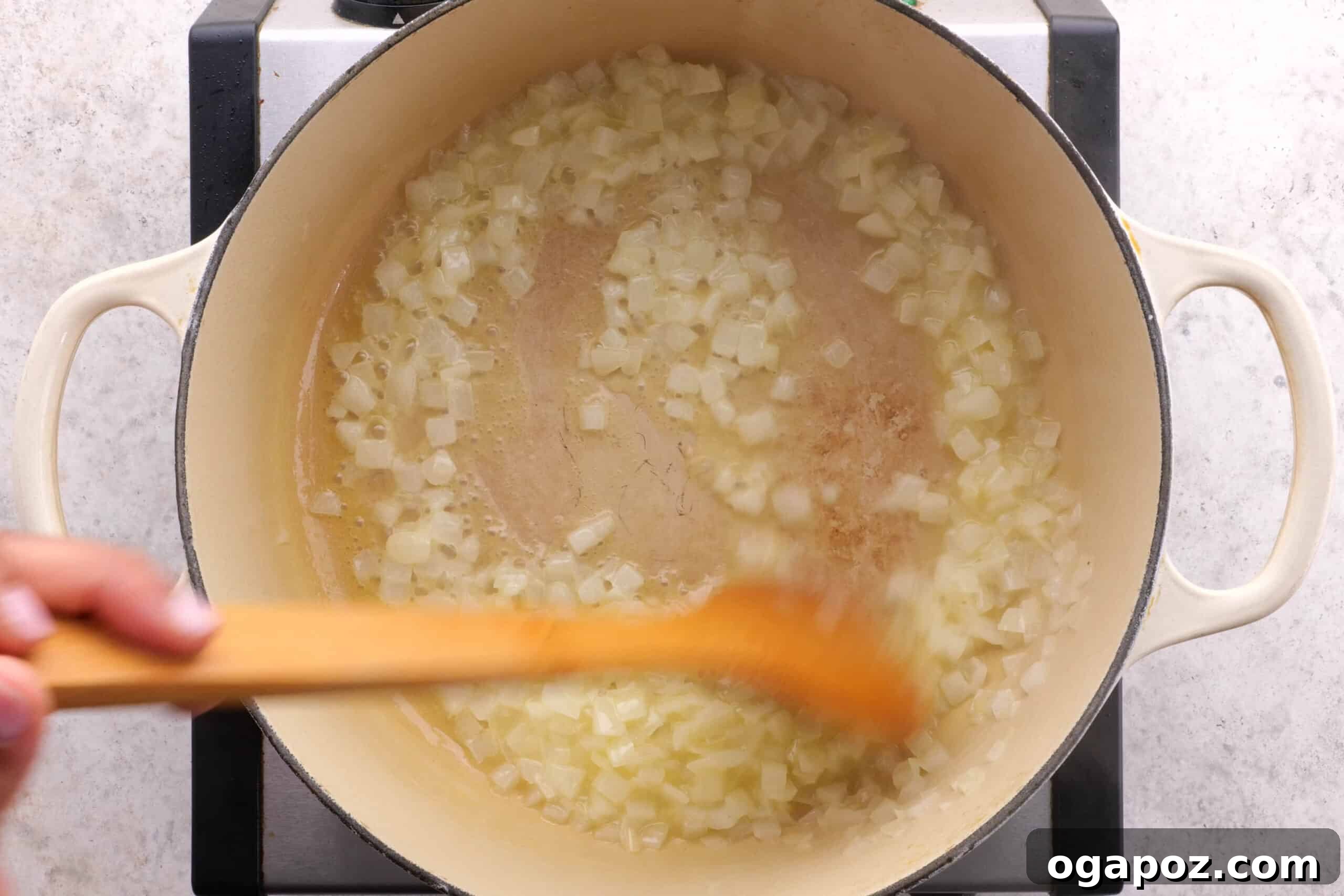
Begin by melting unsalted butter in a large Dutch oven or heavy-bottomed stockpot over medium-high heat. Once the butter is shimmering, add your finely chopped onions, celery, and apples, along with an initial seasoning of kosher salt. Stir well to coat. Reduce the heat to medium-low and cook gently for about 10-15 minutes, stirring occasionally. The goal here is to soften the vegetables until they are translucent and sweet, with the apples becoming tender but still holding their shape. Avoid browning them too quickly; if they start to get too dark, reduce the heat further. This slow sauté concentrates their natural flavors and creates the aromatic backbone of your stuffing.
2. Combine Bread Cubes, Herbs, and Broth
Once your vegetables are perfectly softened and fragrant, it’s time to integrate the dry ingredients. Add the fresh herbs (sage, thyme, and parsley), the remaining kosher salt, and freshly ground black pepper to the pot, stirring them in briefly until fragrant. Then, gently fold in the stale bread cubes. Pour the chicken or vegetable broth over the mixture slowly and evenly. Stir carefully to ensure the bread cubes absorb the liquid without becoming soggy or breaking apart. The ideal bread for this step, like focaccia, retains small air pockets even after moistening, contributing to a light and tender stuffing. The mixture should be moist but not swimming in liquid. Taste the mixture at this stage to adjust seasoning as needed – remember, you want it to taste rich and flavorful.
3. Stir In Eggs and Bake to Golden Perfection
Before adding the eggs, allow the stuffing mixture to cool slightly for about 5-10 minutes. This prevents the eggs from scrambling when they hit the warm mixture. Once slightly cooled, stir in the lightly beaten eggs until they are fully incorporated. The eggs will act as a binder, helping the stuffing set beautifully. Transfer the entire mixture into a buttered 9×13-inch baking dish. Spread it evenly, but don’t compact it too much, as this can lead to a dense texture. Bake uncovered in your preheated oven at 350ºF (175ºC) for approximately 40-50 minutes, or until the top is gloriously golden brown and the center feels set and firm to the touch. The edges will crisp up wonderfully during baking, creating a delightful contrast to the tender interior. Let it rest for a few minutes after baking before serving.
Make Ahead and Storage Tips for Convenience
This apple and herb stuffing is an excellent candidate for make-ahead preparation, saving you valuable time on busy holiday cooking days. Proper storage ensures its deliciousness for days to come.
Storing Leftover Stuffing
- Refrigerator Storage: After baking, allow the stuffing to cool completely at room temperature. Once cool, transfer it to an airtight container. It will keep fresh and delicious in the refrigerator for up to 4 days.
- Microwave Reheating: For quick individual servings, reheat portions in the microwave. Use short bursts (30-60 seconds) and stir occasionally until heated through to prevent it from drying out. A splash of broth can help retain moisture.
- Oven Reheating: To reheat a larger portion or to restore some crispness, cover the stuffing with foil and warm it in the oven at 325°F (160°C). For added moisture, sprinkle a tablespoon or two of chicken or vegetable broth over the top before covering. Remove the foil for the last 10-15 minutes if you desire a crispier top.
Freezing Stuffing
- Freezing Baked Stuffing: Cooked stuffing freezes exceptionally well. Once fully cooled, portion the stuffing into freezer-safe containers or heavy-duty freezer bags. It can be frozen for up to 2 months without significant loss of quality. Label clearly with the date.
- Thawing Instructions: For best results, thaw frozen stuffing overnight in the refrigerator. Once thawed, reheat using the oven or microwave methods described above. You may need to add a little extra broth when reheating after freezing to combat any dryness.
Serving Ideas and Perfect Pairings
While this apple and herb stuffing is a quintessential Thanksgiving side, its versatility extends far beyond the holiday table. Its savory-sweet profile makes it a superb accompaniment to a variety of main courses and a star in its own right.
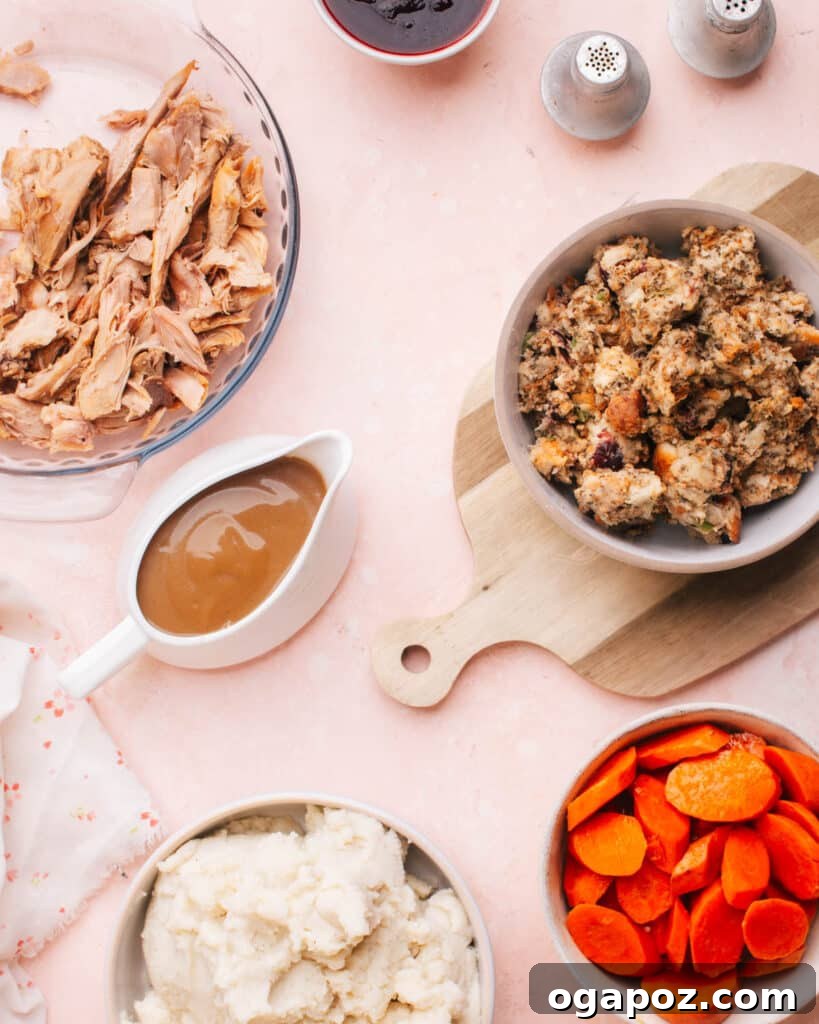
Naturally, this stuffing shines brightest alongside my easy roast turkey or a perfectly prepared spatchcock turkey. However, don’t limit its potential to just poultry. It also pairs wonderfully with a succulent roast pork loin, offering a delightful contrast to the pork’s richness, or with a tender and juicy eye of round roast beef, where its herbaceous notes provide an excellent complement.
Complete your holiday feast by serving it with a luxurious brown pepper gravy or my special turkey gravy made from neck and giblets (without drippings). Creamy mashed potatoes and other classic holiday sides will round out your meal beautifully, creating a harmonious and comforting dining experience.
And for those delightful leftovers? Get creative! Crisp up leftover stuffing in a skillet with a little butter for a savory next-day breakfast hash, or for a truly unique treat, try pressing it into a waffle iron for crispy, golden stuffing waffles – perfect with a fried egg!
Other Popular Turkey Dinner Recipes to Complete Your Feast:
- Creamy Cornbread Casserole
- Candied Brussels Sprouts with Maple and Bacon
- Maple Five Spice Roasted Butternut Squash
- Perfectly Glazed Carrots
- Super Easy Pumpkin Pie
- Classic Green Bean Casserole with Crispy Onions
FAQs About Apple Herb Stuffing
Absolutely! To make this stuffing vegetarian, simply substitute chicken broth with an equal amount of good quality vegetable broth. No other changes are necessary, and the stuffing will still be incredibly flavorful and satisfying.
For stuffing, you want apples that offer a good balance of sweetness and tartness, and importantly, ones that hold their shape well during baking. Honeycrisp, Braeburn, and Gala are excellent choices as they remain slightly firm and juicy, providing delightful bursts of apple flavor and texture without turning mushy.
Stale focaccia is often considered ideal due to its rich flavor, slightly oily texture, and ability to absorb broth evenly while maintaining a light, airy crumb. However, any stale bread cubes work well. If using fresh bread, ensure you dry it out in a low oven for 15-20 minutes before cubing to prevent soggy stuffing.
Yes, adding sausage is a fantastic way to enhance the savory depth of this stuffing. Brown about 1 pound of breakfast sausage in a large skillet until cooked through, then drain any excess fat. Stir the cooked sausage into the stuffing mixture before transferring it to the baking dish.
Preventing soggy stuffing comes down to a few key factors: use stale or dried bread cubes for optimal absorption, add broth gradually to control moisture levels, and bake the stuffing uncovered to allow the top and edges to crisp up beautifully. Avoid over-saturating the bread.
Once your stuffing has completely cooled to room temperature, transfer it to an airtight container. Store it in the refrigerator for up to 4 days. For reheating, you can use either the microwave for individual portions or the oven for larger quantities, adding a splash of broth to maintain moisture.
Absolutely! You can assemble the entire stuffing mixture (without baking) up to one day in advance. Cover it tightly and refrigerate. On the day of serving, bring it to room temperature for about 30 minutes before baking as directed. This makes holiday meal prep significantly easier.
While fresh herbs offer the best flavor, you can substitute with dried herbs if necessary. As a general rule, use one-third the amount of dried herbs for fresh. So, for this recipe, you would use 1 teaspoon dried parsley, 1 teaspoon dried thyme, and 1 tablespoon dried sage. Remember to crush dried herbs slightly in your palm to release their oils before adding them.
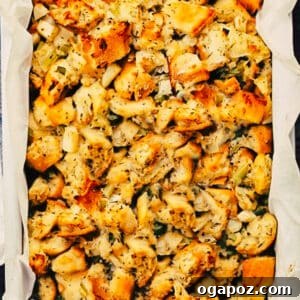
Turkey Stuffing with Apples and Herbs
This Turkey Stuffing with Apples and Herbs bakes up golden and full of flavor. It’s a perfect Thanksgiving dinner side dish that’s easy to make ahead and SO tasty.
Ingredients
- 2 lbs stale focaccia bread, cubed (*see note below)
- ½ cup unsalted butter, plus more to grease dish if not using parchment
- 2 medium onions, finely chopped
- 2 large ribs celery, finely chopped
- 2 apples, peeled, cored, finely chopped (e.g., Honeycrisp, Braeburn, Gala)
- 2 ½ to 3 tsp kosher salt, divided use
- 1 tbsp dried sage or 3 tbsp minced fresh sage
- 2 tsp dried thyme or 2 tbsp minced fresh thyme
- ¼ cup minced fresh parsley
- 4 cups chicken or vegetable broth
- ½ tsp ground black pepper
- 2 large eggs, lightly beaten
Instructions
- Preheat your oven to 350ºF (175ºC). Melt ½ cup unsalted butter over medium heat in a large stockpot or Dutch oven. Add the finely chopped onions, celery, and apples, along with 1 teaspoon of the kosher salt. Cook this mixture until the vegetables are soft and translucent, about 10-12 minutes, reducing the heat slightly if you notice any browning. This slow sauté develops deep flavor.
- Stir in the cubed stale bread, dried sage (or fresh), dried thyme (or fresh), minced fresh parsley, 3 ½ cups of chicken or vegetable broth, the remaining 1 ½ tsp of kosher salt, and the ground black pepper. Stir gently until the bread is evenly moistened but not mushy. Taste the mixture at this point and add the optional remaining ½ tsp of salt if needed (the exact amount will depend on the salt content of your bread and broth).
- Allow the stuffing mixture to cool slightly for about 5-10 minutes. Then, stir in the 2 lightly beaten large eggs until they are fully incorporated. This helps bind the stuffing together.
- Transfer the prepared stuffing mixture to a buttered or parchment-lined 9×13-inch baking dish. Spread it evenly.
- Bake the stuffing uncovered for 40-50 minutes, or until the top is beautifully golden brown and the center is set and firm. The edges should be delightfully crisp.
- Remove from the oven and let the stuffing rest for a few minutes before serving. This allows it to set completely for easier scooping.
Notes
Bread Choice: While fresh focaccia can be used, stale bread is always preferred for stuffing as it absorbs the broth more evenly and maintains a better texture, preventing sogginess. If you only have fresh focaccia or other fresh bread, cube it and dry it in a low oven (around 300°F / 150°C) for about 15-20 minutes until the edges feel slightly firm and dried out. This pre-drying step is crucial for the best stuffing texture.
Seasoning is Key: Store-bought bread and broth can vary significantly in their salt content. This recipe instructs you to season the mixture before adding the eggs so you can safely taste and adjust the seasoning. Start with the smaller amount of salt specified, then taste. The stuffing should have a rich, balanced flavor—if it tastes a bit flat, it likely needs a little more salt (sometimes even beyond the suggested range). Aim for a flavor profile that is well-seasoned, similar to a delicious potato chip.
Nutrition
Calories: 387 kcal | Carbohydrates: 54g | Protein: 10g | Fat: 15g | Saturated Fat: 6g | Polyunsaturated Fat: 1g | Monounsaturated Fat: 3g | Trans Fat: 0.4g | Cholesterol: 59mg | Sodium: 1367mg | Potassium: 138mg | Fiber: 3g | Sugar: 7g | Vitamin A: 541 IU | Vitamin C: 6mg | Calcium: 32mg | Iron: 1mg
Nutrition information is automatically calculated and should only be used as an approximation.