

Juicy Skillet Pork Chops with Apples and Savory Pan Sauce: An Easy Recipe
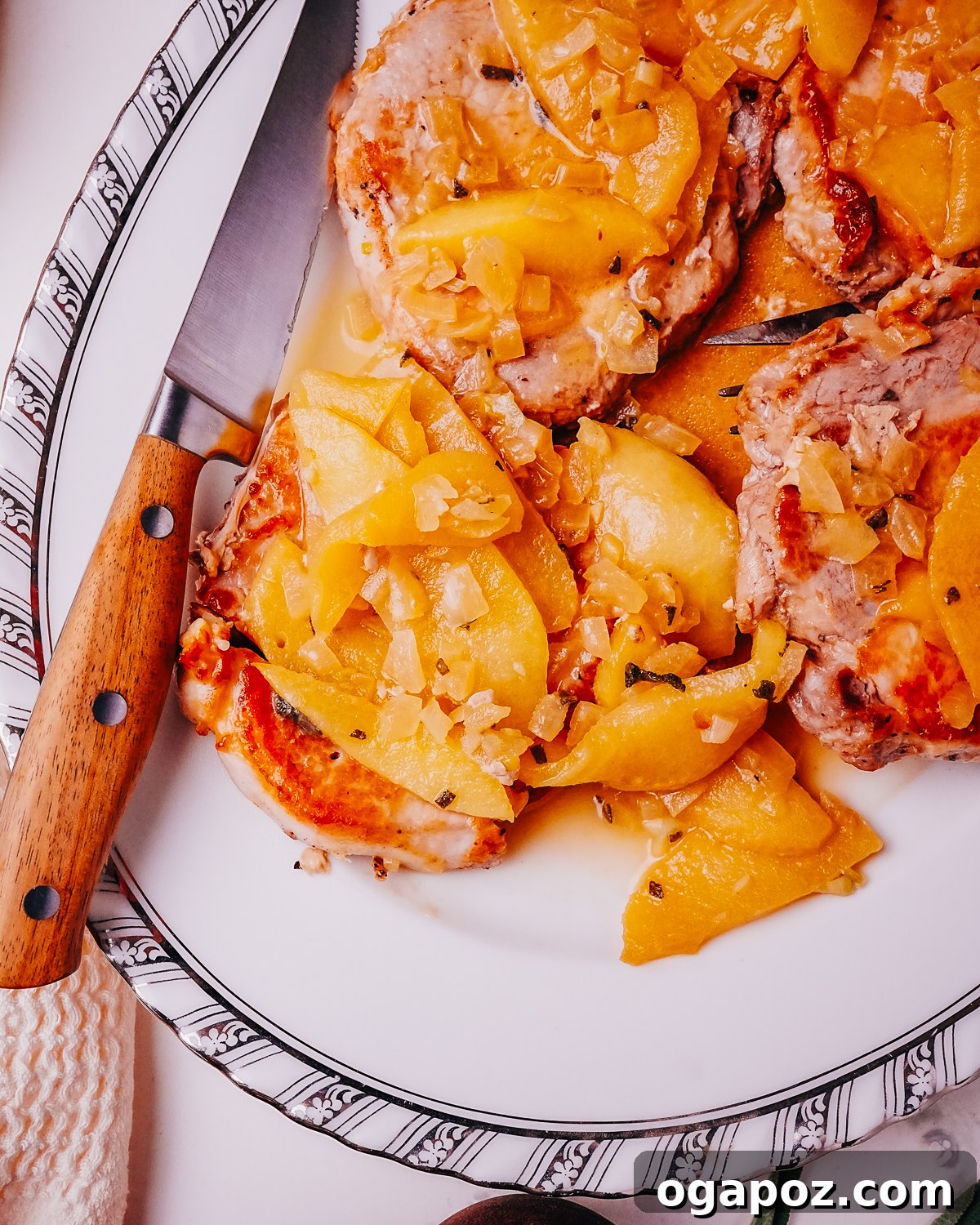
Prepare to elevate your weeknight dinner with this incredible Skillet Pork Chops with Apples recipe! This easy, one-pan meal delivers perfectly tender pork chops bathed in a luscious pan sauce, complemented by soft, caramelized apples. It’s a dish that tastes wonderfully sophisticated yet comes together effortlessly with simple, accessible ingredients. The secret lies in a delightful pan sauce, crafted with apple cider, rich butter, and a hint of Dijon mustard, creating an unforgettable blend of sweet and savory flavors that will have everyone asking for seconds.
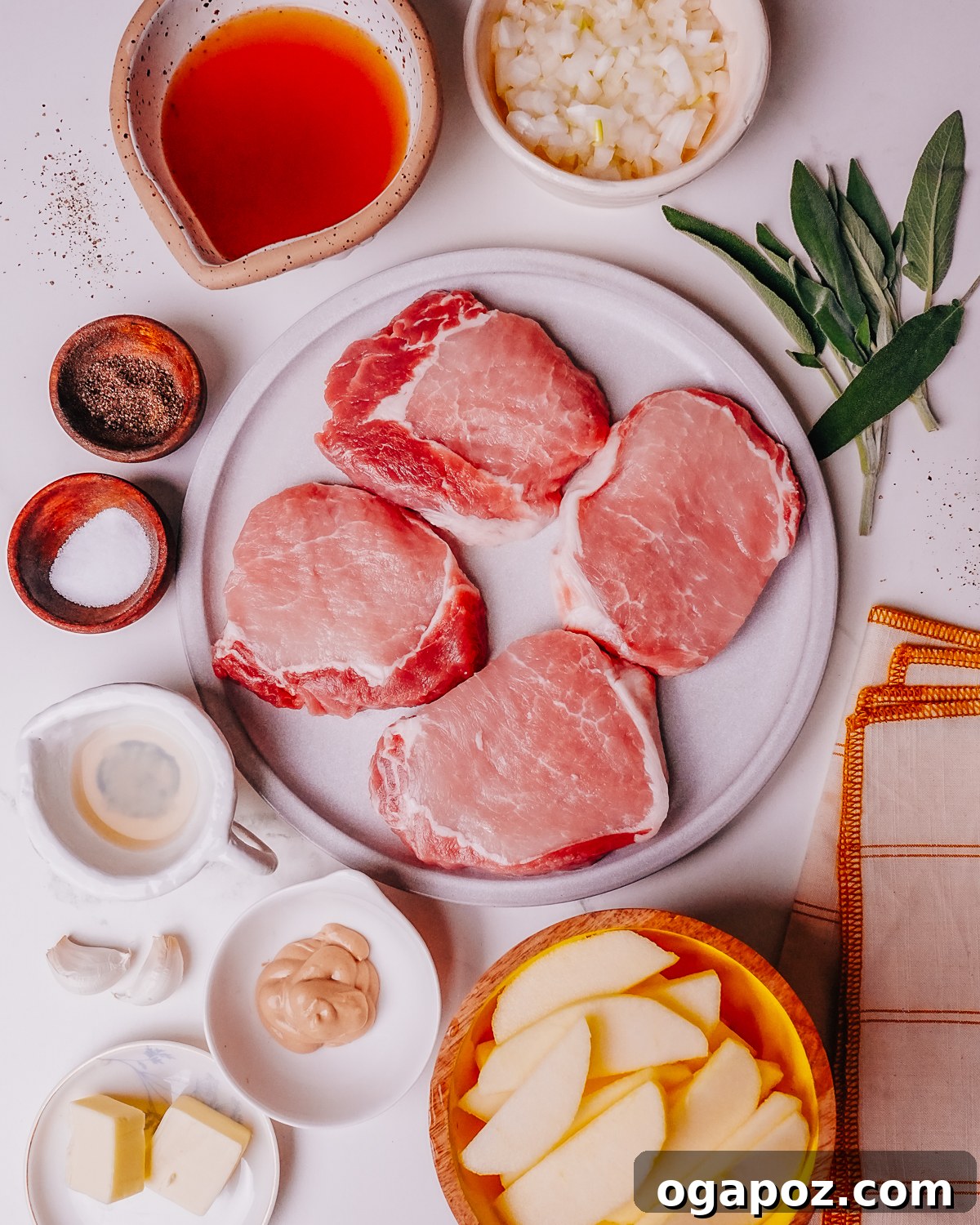
Mastering Skillet Pork Chops with Apples: Essential Ingredients for a Flavorful Meal
This recipe is truly one of the best single-pan meals you’ll ever make. It brings a touch of elegance to your table without complicated steps or the need for oven-baked pork chops. The magic happens right on your stovetop, utilizing a thoughtful selection of fresh ingredients that build layers of incredible flavor. Here’s a detailed look at what you’ll need to create this easy apple pork chops dinner.
To Sear Chops
- Pork chops: For the best results, opt for boneless pork chops that are approximately 1 inch thick. This thickness is ideal because it allows the chops to develop a beautiful golden-brown crust while remaining incredibly juicy and tender on the inside. Thinner cuts tend to dry out more easily. If you prefer, bone-in pork chops can be used, but you may need to add a few extra minutes to the cooking time to ensure they are thoroughly cooked.
- Kosher salt: Essential for seasoning the pork chops, drawing out moisture and enhancing their natural flavor, ensuring a crispy crust.
- Black pepper: Freshly ground black pepper adds a pungent, spicy note that complements the richness of the pork.
- Olive oil: Used for searing the pork chops, providing a high smoke point and a delicate flavor that supports the searing process without overpowering the dish.
For the Apples
- Unsalted butter: Butter is key for caramelizing the apples and onions, adding a rich, nutty flavor that forms the foundation of the sauce. Unsalted butter allows you to control the overall sodium content of the dish.
- Apples: The choice of apple significantly impacts the texture and flavor. Honeycrisp or Granny Smith apples are highly recommended because they are firm and hold their shape beautifully during cooking, preventing them from turning mushy. Honeycrisp offers a sweet-tart balance, while Granny Smith provides a more pronounced tartness that cuts through the richness of the pork. Remember to remove and discard the peels before slicing.
- Onion: Half a medium onion, finely chopped, adds a savory sweetness and aromatic depth when sautéed with the apples. It creates a robust flavor base for the sauce.
- Kosher salt: A small amount of salt helps draw moisture from the apples and onions, aiding in their caramelization and seasoning them perfectly.
- Garlic: Minced garlic provides an aromatic foundation, contributing a warm, pungent flavor that is classic in savory sauces.
- Fresh sage or ground sage: Sage is a traditional pairing with pork and apples, offering an earthy, slightly peppery, and piney aroma. Fresh herbs always provide the boldest and most vibrant flavor, but ground sage works perfectly well if fresh is unavailable.
For the Pan Sauce
- Apple cider: The star of the pan sauce, apple cider introduces a wonderful sweet-tart depth and acts as the liquid for deglazing the pan. Its fruitiness beautifully ties together the flavors of the pork and apples. If you don’t have apple cider, white wine or unsalted chicken broth can be excellent alternatives, each contributing a slightly different, yet equally delicious, character to the sauce.
- Dijon mustard: A spoonful of Dijon mustard is a game-changer for the sauce, providing a tangy, slightly spicy kick and acting as an emulsifier to create a smoother, richer consistency.
- Apple cider vinegar or balsamic vinegar: A splash of vinegar brightens the sauce, adding a crucial acidic balance that cuts through the richness of the pork and butter. Apple cider vinegar echoes the apple theme, while balsamic offers a deeper, more complex sweetness.
- Unsalted butter: A final tablespoon of unsalted butter swirled into the finished sauce adds a luxurious, velvety texture and glossy sheen, enhancing its overall richness and mouthfeel.
Exact ingredient quantities are provided in the comprehensive recipe card below.
Customizing Your Meal: Delicious Variations and Substitutions
This pork chops and apples recipe is incredibly versatile, allowing for easy swaps and additions to suit your taste preferences or whatever ingredients you have on hand. Don’t hesitate to get creative and make this dish uniquely yours!
- Apple cider alternatives: If apple cider isn’t readily available, you have several excellent options. Sweet apple juice will give a slightly sweeter sauce. Dry white wine, such as a Pinot Grigio or Chardonnay, will add a more complex, acidic note. For a non-alcoholic and equally flavorful choice, unsalted chicken broth works perfectly, providing a savory depth to the pan sauce.
- Pears instead of apples: For a milder sweetness and a slightly different flavor profile, consider using firm pears like Bosc or Anjou instead of apples. Pears cook similarly to apples and will retain their shape well, adding a delicate fruitiness to the dish.
- Herb swap (Thyme or rosemary): While sage is a classic pairing, fresh thyme or rosemary can be fantastic alternatives. Thyme offers a subtle, earthy, and slightly floral flavor, while rosemary brings a bolder, piney aroma. Feel free to use either in place of sage, or even a combination, to customize the herb profile to your liking.
- Heavy cream for richness: For an extra decadent and creamy sauce, stir in about 2 tablespoons of heavy cream at the very end of cooking, just before serving. This will create a luxurious, silky sauce that beautifully coats the pork chops and apples.
- Maple syrup for sweetness: If you prefer a touch more sweetness, especially if using tart Granny Smith apples or a savory broth, add 1 teaspoon of pure maple syrup to the pan sauce. It complements the apple and pork flavors wonderfully, adding a lovely depth of sweetness.
Eager for more simple yet satisfying pork recipes? Explore my juicy pork tenderloin, flavorful pork fried rice, and perfectly crispy breaded pork chops for more culinary inspiration!
Essential Kitchen Tools for Skillet Pork Chops with Apples
One of the beauties of this recipe is that it requires only a few basic kitchen tools, making cleanup a breeze and cooking accessible to everyone. Here’s what you’ll need to gather:
- Large skillet: A 12-inch skillet is highly recommended. Its generous size provides ample room to sear the pork chops without overcrowding the pan, which is crucial for achieving a beautiful, even brown crust. A cast iron skillet is particularly excellent for this, as it retains heat exceptionally well, ensuring consistent searing temperatures.
- Paper towels: Indispensable for patting the pork chops thoroughly dry before seasoning and searing. Removing excess moisture is key to achieving that desirable golden-brown crust.
- Tongs: Essential for safely and easily flipping the pork chops in the hot pan, allowing for even cooking and searing on both sides.
- Wooden spoon: Perfect for stirring the apples and onions, and especially for scraping up the flavorful browned bits (fond) from the bottom of the pan when you deglaze with apple cider. This “fond” is packed with savory flavor and is vital for a rich sauce.
- Instant-read thermometer: While optional, an instant-read thermometer is your best friend for ensuring perfectly cooked, juicy pork chops every time. It eliminates guesswork, allowing you to pull the chops from the heat at precisely the right moment (140-145°F).
- Serving platter: A platter or plate is needed for transferring the cooked pork chops to rest. Resting is a critical step that allows the juices to redistribute, resulting in incredibly tender and moist meat.
Step-by-Step Guide: How to Cook Perfect Pork Chops with Apples in One Skillet
This remarkable dish is designed for simplicity and maximum flavor, all coming together in a single skillet. The process begins by searing the pork chops to lock in their juices and develop a delicious crust, followed by building the savory-sweet pan sauce in the very same pan. The entire cooking process is efficient and quick, taking approximately 30 minutes from start to finish, making it an ideal choice for a busy weeknight.

Sear the Pork Chops
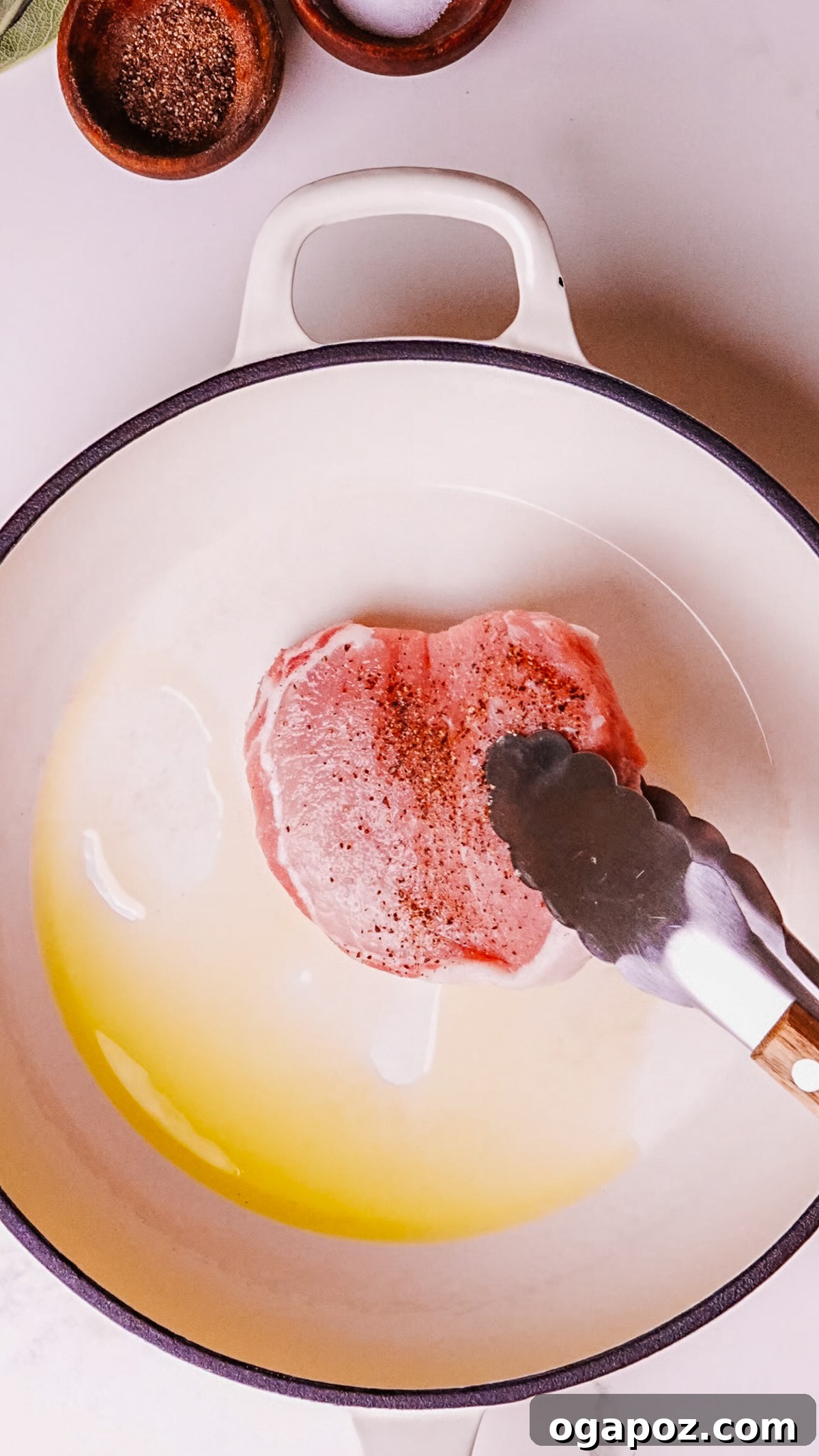
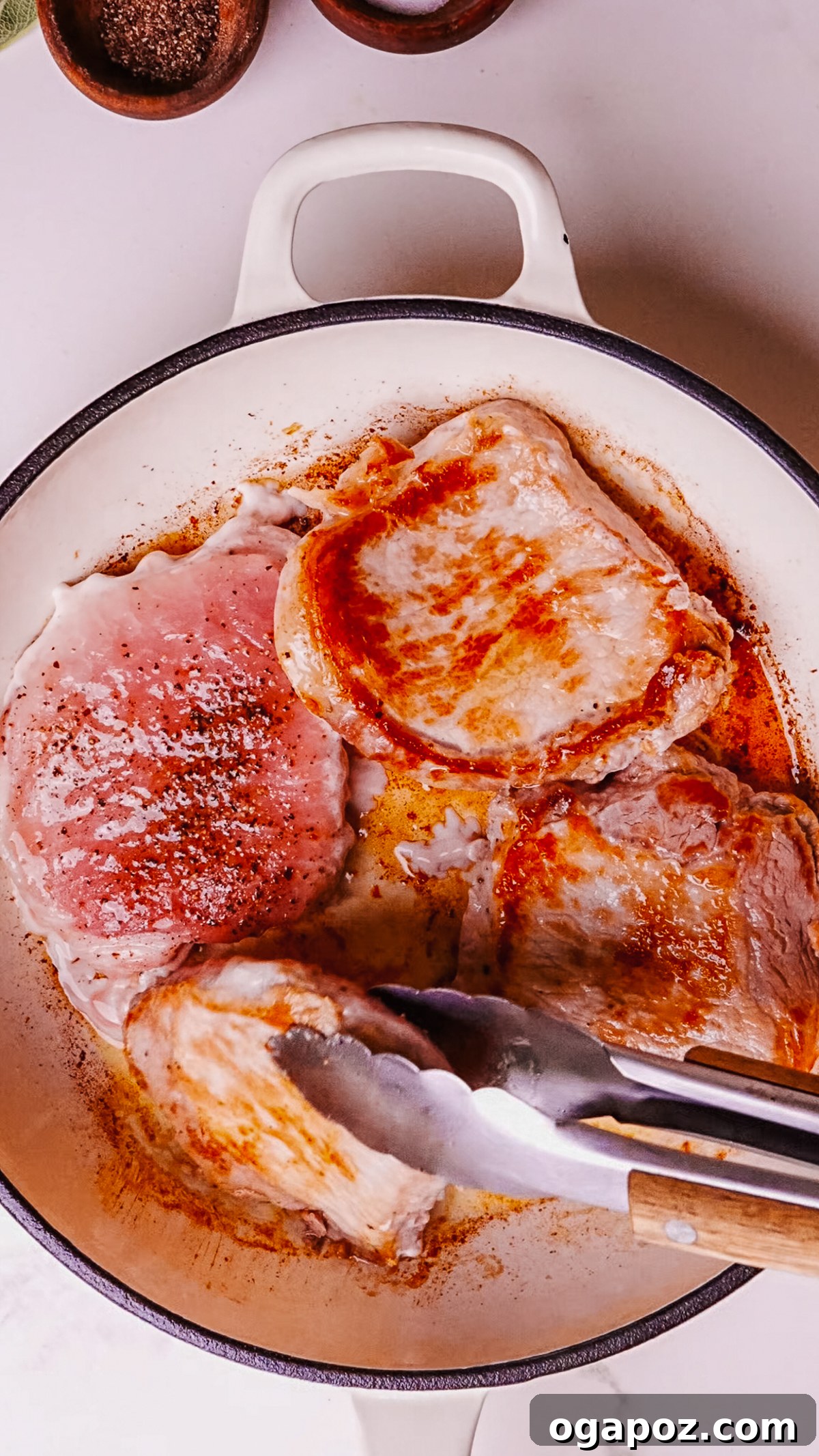
Begin by patting your pork chops thoroughly dry with paper towels. This step is crucial for achieving a beautiful, crisp sear. Season both sides generously with kosher salt and black pepper. If your chops have a thick white fat cap around the edge, trim most of it off to prevent a chewy texture. Heat the olive oil in a large skillet over medium-high heat. Once the oil begins to shimmer, carefully add the seasoned chops to the hot pan. Sear them for 2 to 3 minutes per side, aiming for a rich, golden-brown crust. Once seared, transfer the chops to a plate; they will finish cooking later in the flavorful sauce.
Cook the Apples and Onions
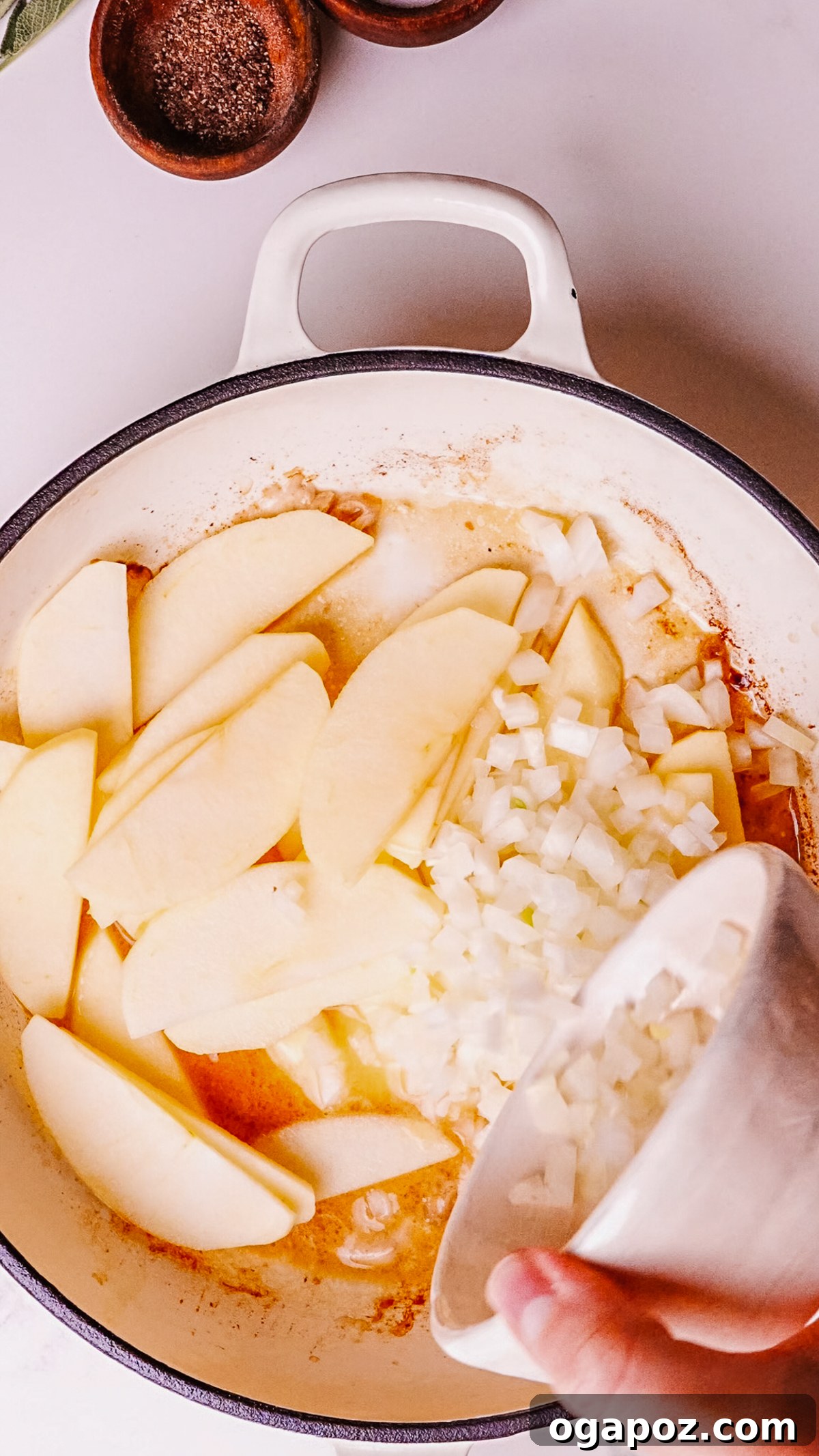
Reduce the heat to medium. Add the tablespoon of butter to the same skillet, allowing it to melt and coat the bottom of the pan. Add the sliced apples and finely chopped onions, along with ¼ teaspoon of salt. Sauté them for approximately 5 to 6 minutes, stirring occasionally. The apples and onions should soften beautifully and develop golden-brown spots, indicating delicious caramelization. Stir in the minced garlic and fresh or ground sage, and cook for another 30 seconds, just until the aromatics become fragrant and their flavors bloom.
Make the Pan Sauce
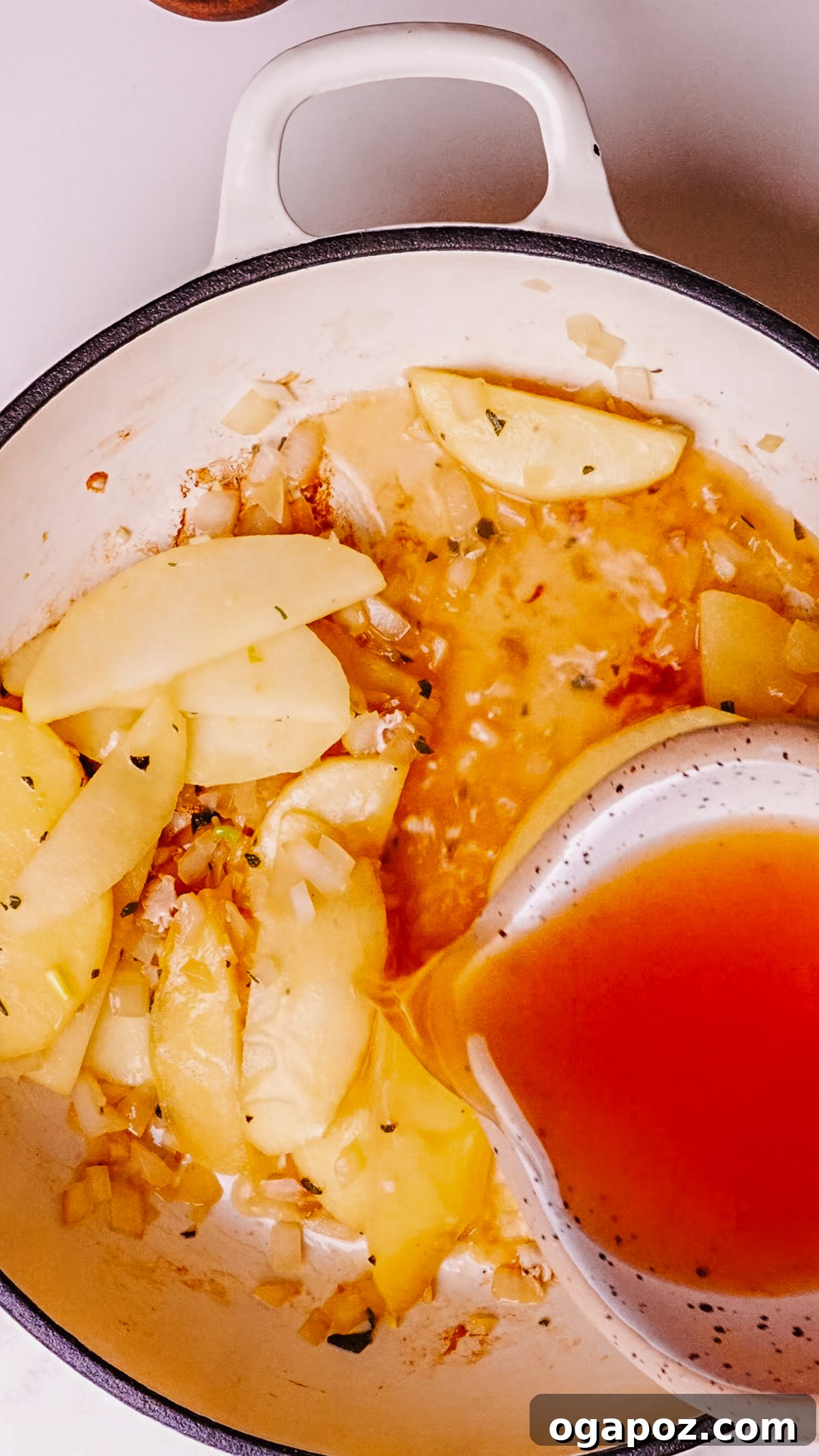
Pour the apple cider into the skillet, bringing it to a gentle simmer. Immediately use a wooden spoon to scrape up all the flavorful browned bits (known as “fond”) from the bottom of the pan. These bits are concentrated flavor and will greatly enrich your sauce. Stir in the Dijon mustard and apple cider vinegar (or balsamic vinegar) until well combined. This combination creates a balanced, tangy, and slightly sweet base for your dish.
Finish the Dish
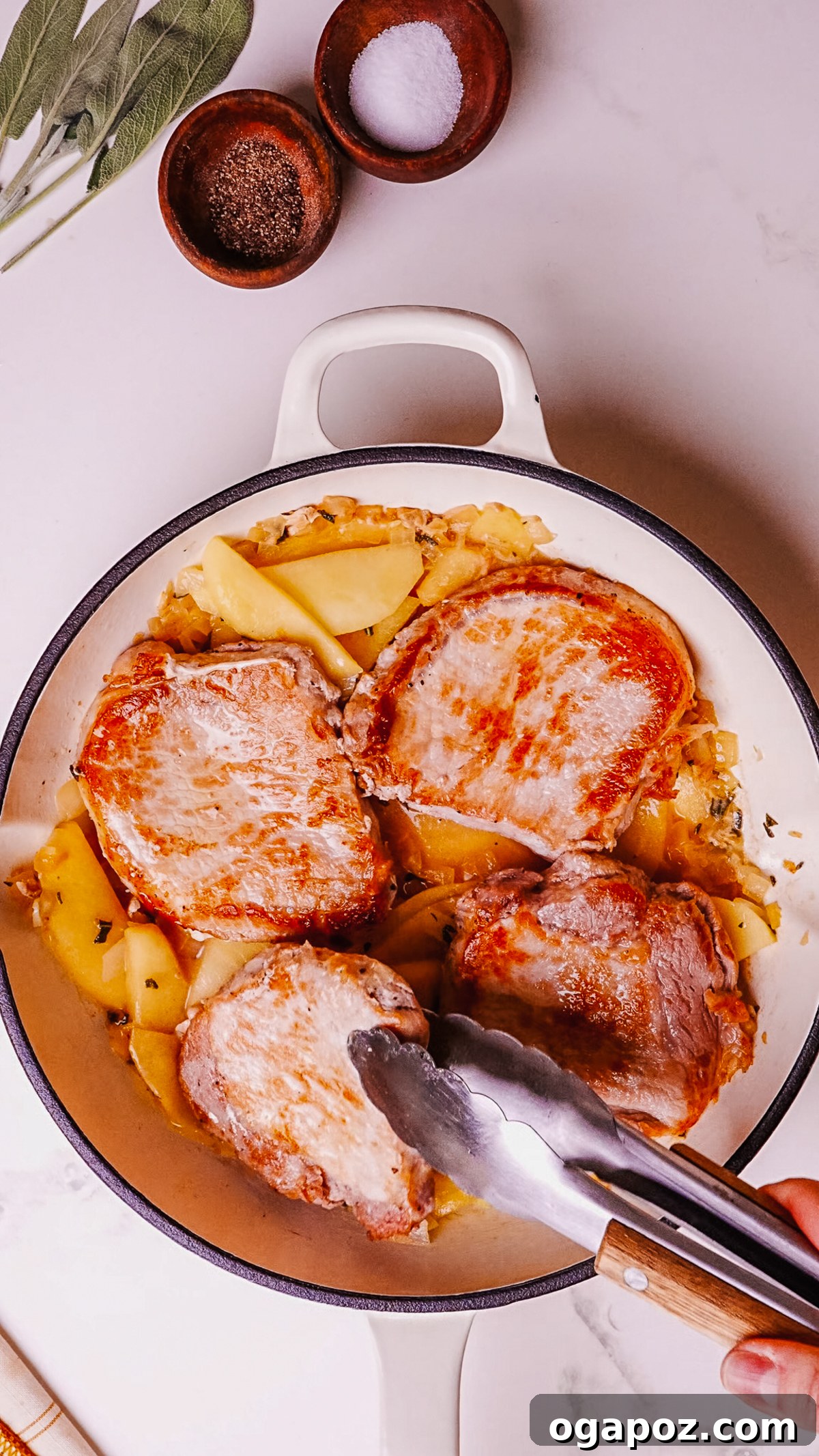
Carefully return the seared pork chops to the pan, nestling them into the simmering apple and onion sauce. Be sure to pour in any accumulated juices from the resting plate—these juices are packed with flavor! Cover the skillet and allow the chops to simmer over low heat for 6 to 10 minutes, flipping them once or twice to ensure even cooking and absorption of the sauce. The pork chops are done when their internal temperature reaches 140 to 145°F when measured with an instant-read thermometer in the thickest part of the meat. Once cooked, transfer the chops to a clean serving platter and let them rest for 5 minutes. While the chops rest, stir the remaining tablespoon of butter into the apples and sauce in the pan. Swirl until the butter melts, which will slightly thicken the pan sauce and give it a beautiful glossy finish. Spoon the irresistible sauce and caramelized apples generously over the rested pork chops before serving.

Avoid These Pitfalls: 5 Common Mistakes When Making Pork Chops with Apples
Even seasoned home cooks can sometimes make errors that prevent their pork chops from reaching their full potential. Here are the most frequent missteps to be aware of and avoid when preparing delicious pork chops, especially with apples:
- Skipping or rushing the sear: A proper sear is not just for aesthetics; it’s fundamental for locking in juices and building deep, caramelized flavor. If you don’t adequately sear the pork chops, they will lack that rich, savory crust and can taste bland. Always ensure your skillet is well-heated, the oil is shimmering, and only then add the meat. Give each side enough time (2-3 minutes) to develop a beautiful golden-brown crust.
- Overcooking the chops: This is perhaps the most common mistake with pork. Overcooked pork chops quickly become dry, tough, and unappetizing. The key to juicy pork is to pull them from the heat when they reach an internal temperature of 140 to 145°F. They will continue to cook slightly as they rest (carryover cooking), bringing them to the perfect doneness. A meat thermometer is your best friend here.
- Using mushy apples: Not all apples are created equal when it comes to cooking. Soft apple varieties, such as McIntosh or Red Delicious, break down too easily and will turn into a mealy apple sauce consistency in your skillet. For this recipe, you want apples that hold their shape and provide a pleasant texture. Always choose firm varieties like Honeycrisp or Granny Smith to ensure your apple slices remain distinct and appealing.
- Crowding the pan: When you add too many pork chops to the skillet at once, the temperature of the pan drops significantly. Instead of searing, the meat will steam, preventing the formation of that desirable browned crust. If your skillet isn’t large enough to accommodate all the chops with adequate space between them, sear them in batches. This ensures each chop gets proper contact with the hot surface and develops maximum flavor.
- Forgetting to rest the meat: Patience is a virtue, especially after cooking meat. If you cut into pork chops immediately after they come off the heat, all those delicious, concentrated juices will run out onto your cutting board, leaving you with dry meat. Resting the chops for at least 5 minutes allows the muscle fibers to relax and the juices to redistribute evenly throughout the meat, resulting in a much juicier and more tender bite. Don’t skip this crucial step!
Make Ahead and Storage Tips: Enjoying Your Pork Chops with Apples Later
While this dish is undeniably at its best when served fresh, there are certainly ways to prep components ahead of time or store leftovers to enjoy later. Here’s how to manage your delicious pork chops with apples:
Storing Leftovers
- Refrigerate: If you have any remaining pork chops and apple sauce, ensure they cool down completely before storing. Transfer them to an airtight container and place it in the refrigerator. Properly stored, the leftovers will maintain their quality and flavor for up to 3 days.
Freezing
- Freeze: Unfortunately, freezing is not recommended for this particular dish. The apples, once cooked and then frozen and thawed, tend to lose their desirable texture and can become mushy. This compromises the overall quality of the meal. It’s best to enjoy this dish fresh or from the refrigerator within a few days.
Reheating Pork Chops
- Stovetop: To reheat, place the pork chops and apples in a skillet over low heat. Add a splash of water or chicken broth to create some steam and prevent drying. Cover the skillet and heat gently until warmed through. This method helps the chops retain moisture and tenderness.
- Microwave: If you’re in a hurry, you can reheat individual portions in the microwave. Place the pork chops and apples in a microwave-safe dish, cover it, and heat in 30-second intervals. Stirring occasionally helps distribute the heat evenly and prevents the chops from drying out.
Perfect Pairings: How to Serve This Delicious Pork Chops with Apples Recipe
This savory pork chops with apples dish is wonderfully flavorful on its own, but it truly shines when paired with the right accompaniments. The rich, sweet-and-tangy pan sauce is so delightful that you’ll definitely want something on your plate to soak up every last drop. Here are some of my favorite serving suggestions:
For a classic and comforting meal, serve these pork chops with creamy mashed potatoes. The smooth potatoes provide a perfect canvas for the luscious pan sauce. Alternatively, light and fluffy basmati rice is an excellent choice, soaking up the flavors beautifully. If you’re looking for something lighter, a simple green salad with a vinaigrette dressing offers a refreshing contrast to the richness of the main course. The acidity of the dressing would cut through the richness of the meat and sauce.
Delicious Side Dishes for Pork Chops
- Pan-fried asparagus: A quick and healthy green vegetable that offers a slight crunch and vibrant flavor.
- Glazed Carrots: Sweet and tender, glazed carrots complement the apples beautifully and add a pop of color.
- Candied Brussels sprouts with bacon: For a more indulgent side, the savory, slightly bitter Brussels sprouts combined with crispy bacon and a hint of sweetness would be a phenomenal match.
- Green bean casserole: A comforting and hearty option, especially popular during cooler months, offering creamy texture and savory flavors.
- Roasted root vegetables: Think roasted sweet potatoes, parsnips, or carrots, which caramelize beautifully and add earthy sweetness.
- Creamy polenta: A comforting and smooth alternative to mashed potatoes, offering a different texture.
Chef’s Secrets for the Best Pork Chops with Apples Every Time
Achieving restaurant-quality pork chops with apples at home is easier than you think, especially when you keep these crucial tips in mind. These small details can make a significant difference in the final taste and texture of your dish:
- Dry the chops thoroughly: This might seem like a minor step, but it’s absolutely critical. Moisture on the surface of the pork chops prevents proper searing. A well-dried chop will develop a beautiful, deep golden-brown crust, which is packed with flavor and helps seal in the juices.
- Use a meat thermometer: Take the guesswork out of cooking pork. An instant-read meat thermometer is the most reliable tool for ensuring your pork chops are perfectly cooked – juicy and tender, never dry. Aim for an internal temperature of 140 to 145°F when you remove them from the heat. Remember, they will continue to cook slightly as they rest.
- Don’t skip the browned bits (fond): After searing the pork chops, you’ll notice browned, caramelized bits stuck to the bottom of your skillet. These are culinary gold, known as “fond.” They are intensely flavorful. When you add the apple cider, be sure to use a wooden spoon to vigorously scrape them up. This process, called deglazing, incorporates all that delicious flavor into your pan sauce.
- Finish with butter: That final tablespoon of unsalted butter stirred into the pan sauce at the very end is not just for flavor; it’s for texture and sheen. It emulsifies with the sauce, making it silky smooth, rich, and beautifully glossy, elevating the entire dish.
- Let them rest: This tip cannot be stressed enough. After cooking, always transfer the pork chops to a platter and let them rest for at least 5 minutes before slicing and serving. This allows the juices, which have migrated to the center of the meat during cooking, to redistribute throughout the entire chop. The result is incredibly juicy, tender, and flavorful meat. Cutting too soon will cause all those precious juices to run out, leading to a dry chop.
Frequently Asked Questions About Pork Chops with Apples
Just quickly scanning through? Here are some rapid-fire answers to the most commonly asked questions about making delicious pork chops with apples, designed to give you quick insights and ensure your cooking success.
What’s the best apple for pork chops?
For pork chops, the best apples are firm varieties that maintain their structure during cooking and offer a good balance of flavor. Honeycrisp and Granny Smith are top choices. Honeycrisp provides a delightful sweetness and crisp texture, while Granny Smith offers a tart contrast that beautifully cuts through the richness of the pork. Avoid softer, mushy apples like Red Delicious or Golden Delicious, as they tend to break down too much in the pan.
How do I know when pork chops are done?
Pork chops are perfectly cooked when they reach an internal temperature of 140 to 145°F (60-63°C). The most accurate way to check this is by inserting an instant-read thermometer into the thickest part of the chop, avoiding the bone. At this temperature, the meat will be slightly pink in the center, and the juices should run clear. Remember that pork will continue to cook slightly as it rests, so pulling it at 140-145°F will ensure it remains juicy and tender.
Can I make this without apple cider?
Absolutely! While apple cider adds a unique depth, you can easily substitute it with other liquids. Apple juice is a great alternative if you want to maintain a fruity sweetness (though it might make the sauce a bit sweeter). Dry white wine, such as Chardonnay or Pinot Grigio, offers a sophisticated, acidic note. For a non-alcoholic option, unsalted chicken broth works wonderfully, providing a savory foundation for the pan sauce. The dish will still be incredibly flavorful with any of these substitutions.
Can I add cream to the sauce?
Yes, you certainly can add cream for an extra touch of richness! For a luxurious, velvety sauce, stir in about 2 tablespoons of heavy cream at the very end of cooking, just before you remove the pan from the heat. This addition will make the sauce exceptionally smooth and decadent, coating the pork chops beautifully. It’s an excellent variation for special occasions or when you’re craving an even creamier consistency.
How thick should the pork chops be?
For this recipe, boneless pork chops that are about 1 inch thick are ideal. This thickness allows for a perfect balance: they’re thick enough to develop a delicious, deep sear on the exterior without overcooking and drying out the interior. Thinner chops cook too quickly and are more prone to becoming dry. If you use thicker chops (1.5 inches or more), you may need to increase the simmering time slightly to ensure they reach the proper internal temperature.
Should I trim the fat from pork chops?
It’s generally recommended to trim off any thick white fat caps from the edges of pork chops before cooking. Thick fat won’t have enough time to render down and become crispy during a quick pan-sear, which can result in a chewy, rubbery texture. If the fat layer is already thin or has been mostly trimmed by the butcher, you can certainly leave it on, as it can contribute to flavor and moisture. Focus on removing any excessively thick, unrendered fat.
Other Delicious Pork Recipes You’ll Love
- Roast pork loin recipe
- Slow cooker pork loin
- Instant Pot pulled pork
- Air fryer pork chops
- Air fryer pork tenderloin

Rating: 5 out of 5 stars (1 rating)
Skillet Pork Chops with Apples (+ Tasty Pan Sauce!)
Jennifer Pallian BSc, RD
This classic skillet dinner features tender pork chops seared to golden perfection and finished in a savory-sweet pan sauce with caramelized apples and onions. The sage and Dijon mustard add depth, while apple cider creates a rich glaze that ties everything together. It’s an elegant yet easy weeknight meal that tastes like it came from a restaurant.
10 minutes
20 minutes
4
Ingredients
To Sear Chops
- 4 (1-inch thick) pork chops (2 lbs total)
- 1 ¼ tsp kosher salt
- ½ tsp black pepper
- 1 tbsp olive oil
For the Apples
- 1 tbsp unsalted butter
- 2 apples, peeled and sliced ¼ inch thick (Honeycrisp or Granny Smith work well)
- ½ cup finely chopped onion (about ½ a medium onion)
- ¼ tsp kosher salt
- 1 tsp minced garlic (about 1 large clove)
- 1½ tsp minced fresh sage or ½ tsp ground sage
For the Pan Sauce
- ½ cup apple cider (or white wine/unsalted chicken broth)
- 1 tsp Dijon mustard
- 1 tsp apple cider vinegar (or balsamic vinegar)
- 1 tbsp unsalted butter
Instructions
Sear the Pork
- Pat the pork chops dry with paper towel and season both sides with salt and pepper. If there’s a thick white fat cap on the edge, trim most of it off and discard it (see notes).
- Heat the olive oil in a large skillet over medium-high heat. When the oil is shimmering, add the chops and sear for 2 to 3 minutes per side until golden brown. Transfer them to a plate (they’ll finish cooking in the sauce).
Cook the Apples and Onions
- Lower the heat to medium and add the butter to the same pan. Sauté the apples and onions with the ¼ tsp salt for about 5 to 6 minutes, until softened and golden in spots.
- Stir in the garlic and sage and cook for another 30 seconds, just until fragrant.
Make the Pan Sauce
- Pour in the apple cider and use a wooden spoon to scrape up any browned bits from the bottom of the pan. Stir in the Dijon mustard and vinegar.
Finish the Dish
- Nestle the pork chops and any accumulated juices back into the pan. Cover and simmer on low heat for 6-10 minutes, flipping once or twice, until the internal temperature of the chops reaches 140 to 145°F.
- Transfer the chops to a clean serving platter and let the chops rest for 5 minutes.
- Stir the remaining tablespoon of butter into the apples and swirl to melt and thicken the pan sauce.
- Spoon the sauce and apples over the pork chops before serving.
Notes
I recommend trimming the fat cap from the pork chops if it’s thick. Since it won’t have time to render during a quick pan sear, it tends to stay chewy and rubbery. If it’s thin or already trimmed, you can leave it on.
Use firm apples so they don’t fall apart.
Great with mashed potatoes, rice, and/or a simple salad.
Nutrition
Calories: 361 kcal
Carbohydrates: 18g
Protein: 30g
Fat: 19g
Saturated Fat: 7g
Polyunsaturated Fat: 2g
Monounsaturated Fat: 8g
Trans Fat: 0.3g
Cholesterol: 105mg
Sodium: 954mg
Potassium: 667mg
Fiber: 3g
Sugar: 13g
Vitamin A: 232IU
Vitamin C: 6mg
Calcium: 27mg
Iron: 1mg
Nutrition information is automatically calculated, so should only be used as an approximation.