
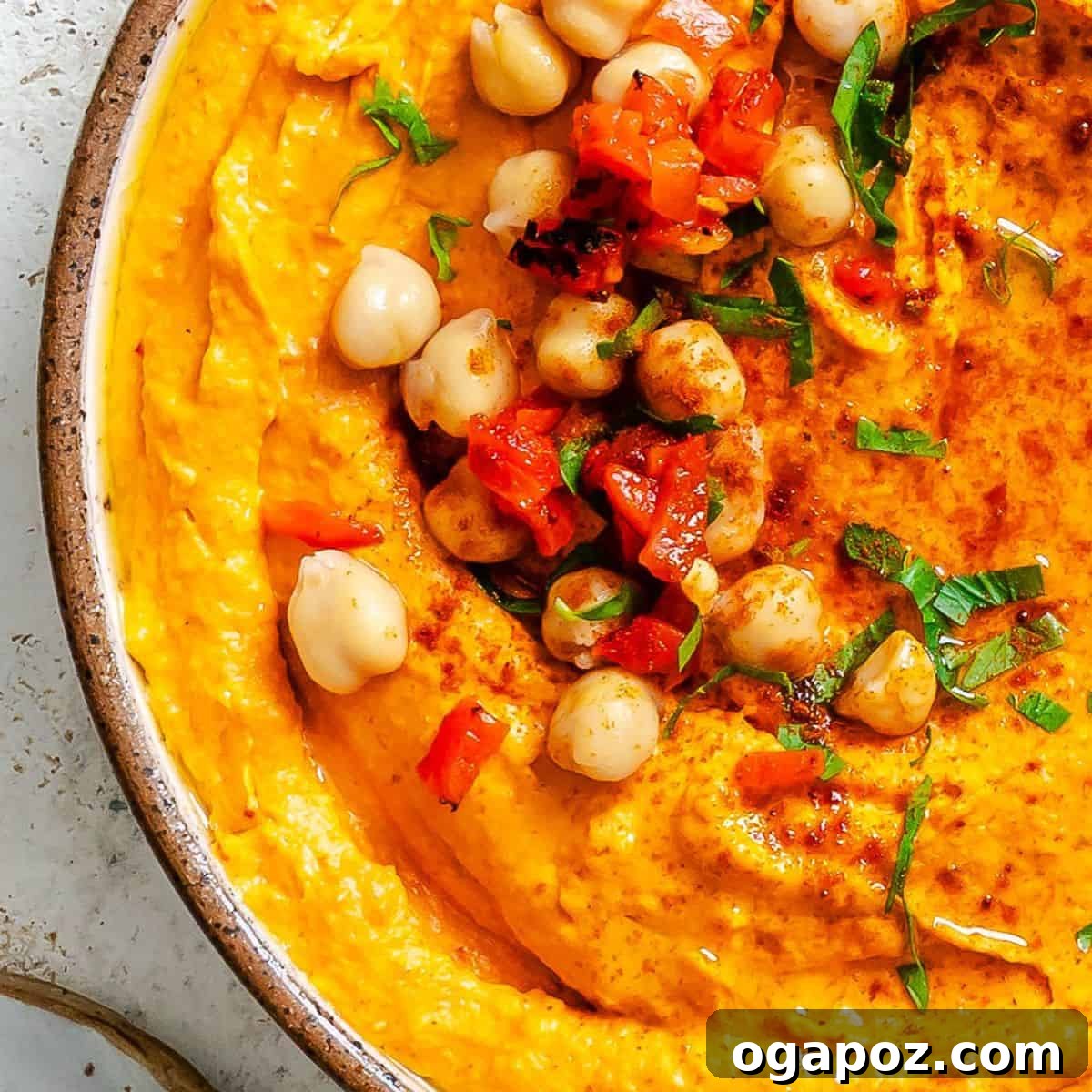
Unlock the Flavor: The Ultimate Homemade Roasted Red Pepper Hummus
There’s nothing quite like the vibrant, smoky sweetness of roasted red peppers to elevate a classic dish, and this Roasted Red Pepper Hummus recipe is no exception. It transforms traditional hummus into an extraordinary dip that’s as easy to make as it is incredibly delicious. Perfect for spreading generously on wraps, serving as an irresistible dip with fresh pita and vegetables, or building a nourishing hummus bowl, this recipe promises a burst of Mediterranean flavor in every bite.
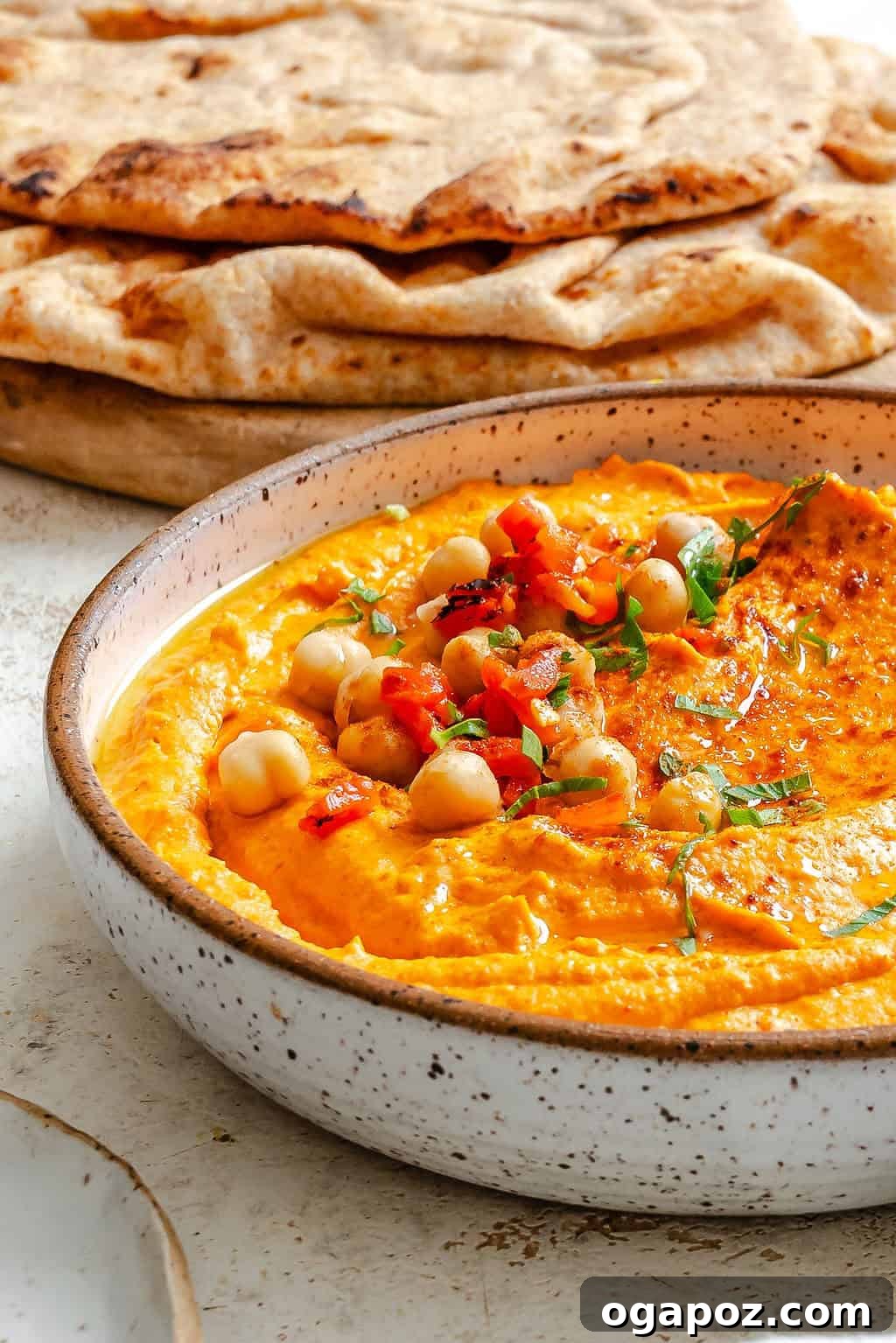
This particular Roasted Red Pepper Hummus recipe holds a special place in my heart, stirring fond memories of my childhood. I grew up in a Lebanese family, where the kitchen table was always the heart of our home—a place for animated conversations, laughter, and, most importantly, sharing incredible food. When asked about my family’s Lebanese customs, food and cooking are always at the top of my list. And when you talk about Lebanese cooking, you simply must talk about hummus.
For us, hummus isn’t just a dish; it’s a staple, a tradition, and a symbol of hospitality. It was, and still is, a constant presence at family gatherings, holiday celebrations, and everyday meals. The communal act of dipping pita bread into a shared bowl of creamy hummus symbolizes connection and nourishment, embodying the warmth of family bonds. This recipe brings back those cherished moments, allowing me to share a piece of my heritage with you.
We consistently choose homemade hummus over store-bought varieties, and for good reason. Crafting it from scratch provides complete control over the ingredients, ensuring freshness and allowing for modifications to suit any palate or dietary preference. You avoid preservatives, artificial flavors, and excessive sodium often found in commercial versions. The result is a dip that’s not only healthier but also far superior in taste and texture.
Hummus is incredibly versatile, making it our go-to snack, a vibrant appetizer for entertaining, a flavorful side dish, or even the star of a light main meal when paired with grilled chicken, kibbeh, or fresh vegetables. It also makes an excellent, healthy spread for sandwiches and wraps, adding a layer of creamy, tangy, and savory goodness that transforms an ordinary meal into something special.
If you’re a hummus enthusiast, be sure to explore more of our delightful variations, each offering a unique twist on this beloved classic. Try our Easy Beet Hummus for a vibrant, earthy flavor, our traditional Easy Lebanese Hummus for an authentic taste, create an impressive Hummus Platter for your next gathering, or spice things up with our Spicy Hummus.
Essential Ingredients for Your Roasted Red Pepper Hummus
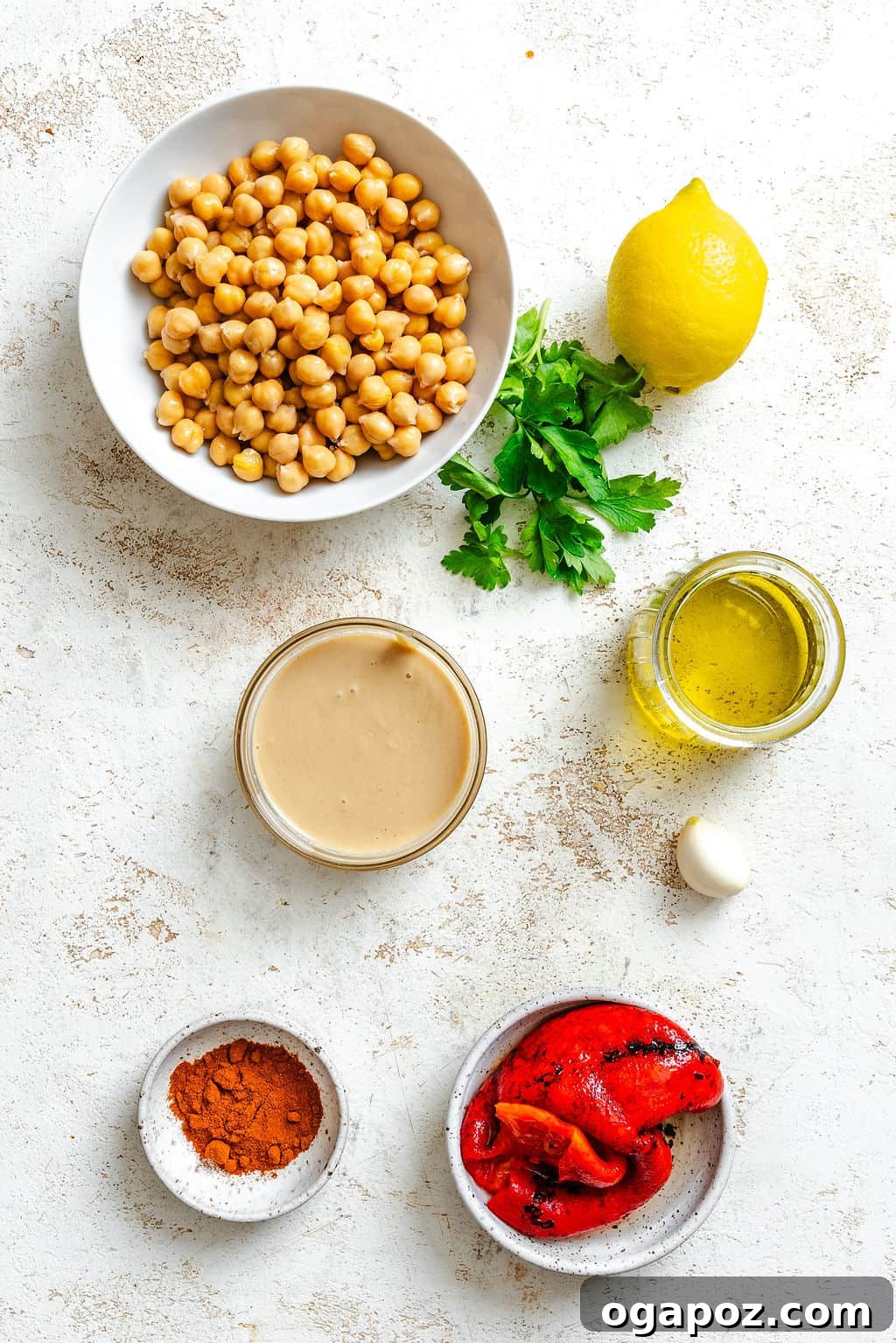
Creating extraordinary hummus starts with a selection of high-quality, simple ingredients. Here’s a detailed look at what you’ll need to craft this rich and creamy Roasted Red Pepper Hummus. For precise measurements, please refer to the comprehensive recipe card located further down.
- Chickpeas (Garbanzo Beans): The foundation of any great hummus. We use canned chickpeas for convenience, ensuring they are thoroughly drained and rinsed to remove excess sodium and improve flavor. A pro tip for extra creamy hummus is to save a small amount of the chickpea liquid (aquafaba) from the can; it’s perfect for thinning your hummus to the ideal consistency without diluting the flavor. For an ultra-smooth texture, you can also gently rub the skins off the chickpeas before blending, though this step is optional.
- Roasted Red Peppers: These are the star ingredient, infusing our hummus with a beautifully smoky, sweet, and slightly tangy flavor profile. Using jarred roasted red peppers is incredibly convenient and yields consistent results. Look for ones packed in water or oil, and drain them well before adding them to your food processor. If you prefer, you can roast your own fresh red bell peppers for an even deeper, personalized smoky note.
- Fresh Lemon Juice & Zest: Bright, zesty lemon is crucial for balancing the richness of the tahini and the sweetness of the peppers. Freshly squeezed lemon juice provides a vibrant acidity that makes the hummus truly sing, while a touch of lemon zest can amplify that citrusy aroma and taste. Always opt for fresh lemons over bottled juice for the best flavor.
- Tahini: This creamy paste, made from ground sesame seeds, is indispensable for authentic hummus. Tahini contributes a distinct nutty, earthy depth and a luxurious, smooth, and buttery consistency, much like a gourmet peanut butter but with a unique, slightly bitter edge. You’ll typically find high-quality tahini in the Middle Eastern or international foods section of your local grocery store. Good quality tahini makes a significant difference in the final texture and taste.
- Fresh Garlic Cloves: Garlic adds a pungent, aromatic kick that complements the other ingredients beautifully. While not strictly mandatory for flavor balance, fresh garlic cloves provide an irreplaceable depth and warmth that elevates the hummus from good to exceptional. Adjust the quantity according to your personal preference for garlic intensity.
- Extra Virgin Olive Oil (EVOO): A generous drizzle of good quality extra virgin olive oil not only enhances the flavor but also contributes to the hummus’s silken texture and rich mouthfeel. EVOO is highly recommended for its robust flavor, but a regular olive oil or even avocado oil can be used as alternatives. We often reserve some for drizzling over the finished hummus, adding both visual appeal and an extra layer of flavor.
Customize Your Hummus: Endless Possibilities
One of the joys of homemade hummus is its adaptability. Feel free to get creative and tailor this Roasted Red Pepper Hummus to your personal taste with these delicious modifications:
- Elevate with Spices: Beyond the basic seasoning, consider adding smoked paprika for an extra layer of smoky depth, ground cumin for an earthy warmth, or a pinch of Greek seasoning blend for a Mediterranean twist. A dash of Aleppo pepper can also provide subtle heat and fruity notes.
- Infuse with Fresh Herbs: Incorporate a handful of fresh herbs directly into the food processor for a burst of vibrant flavor. Fresh parsley, dill, or mint can add a refreshing aromatic quality. For a more adventurous palate, try cilantro or basil.
- Turn up the Heat: If you crave a spicy kick, there are many ways to add heat. Blend in a spoonful of fiery harissa paste, a pinch of crushed red pepper flakes, a dash of cayenne pepper, or even a few slices of fresh jalapeño (seeds removed for less intensity) for a delightful warmth.
- Creative Garnishes & Toppings: Transform your hummus into a culinary masterpiece with imaginative garnishes. Beyond the classic chickpeas and parsley, try finely chopped roasted cauliflower, diced celery or carrots for crunch, toasted pine nuts for a rich texture, crumbled feta cheese, kalamata olives, or even sun-dried tomatoes. For a tangy element, add our homemade pickled red onions or pickled vegetables.
- Nutty Swaps (if omitting tahini): While tahini is classic, if you have an allergy or prefer a different flavor, you can experiment with substitutes like a dollop of thick Greek yogurt for creaminess, or a small amount of unsweetened almond butter or cashew butter for a different nutty undertone.
Effortlessly Crafting Your Roasted Red Pepper Hummus
Making this incredible hummus is surprisingly simple, requiring just a few minutes of active preparation. Follow these straightforward steps to achieve a perfectly smooth and flavorful dip:
Step 1: Puree All Ingredients to Perfection
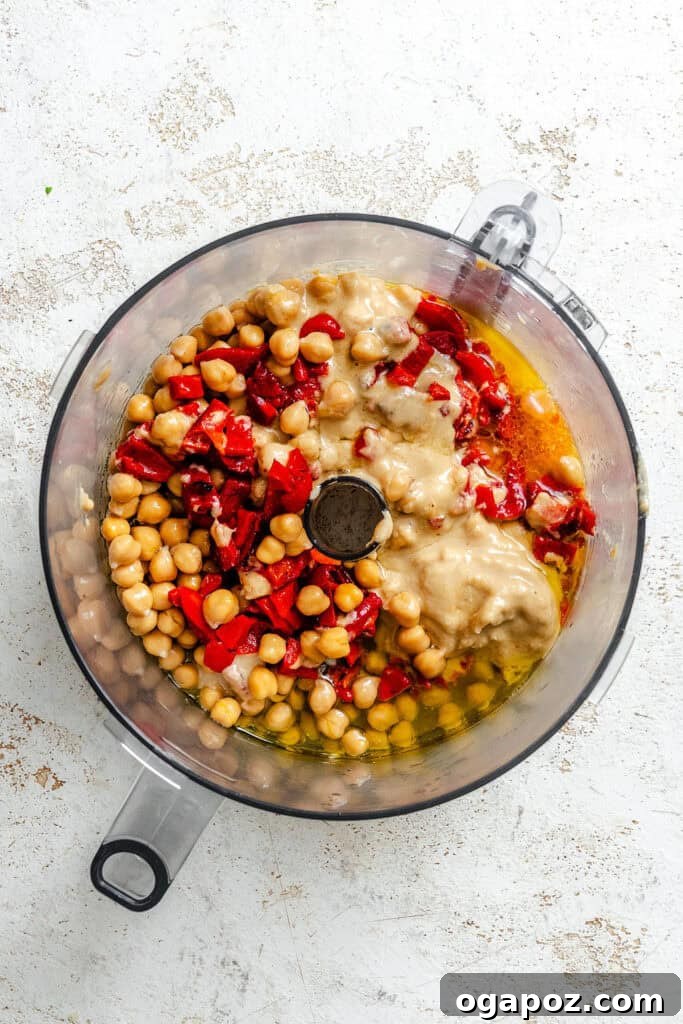
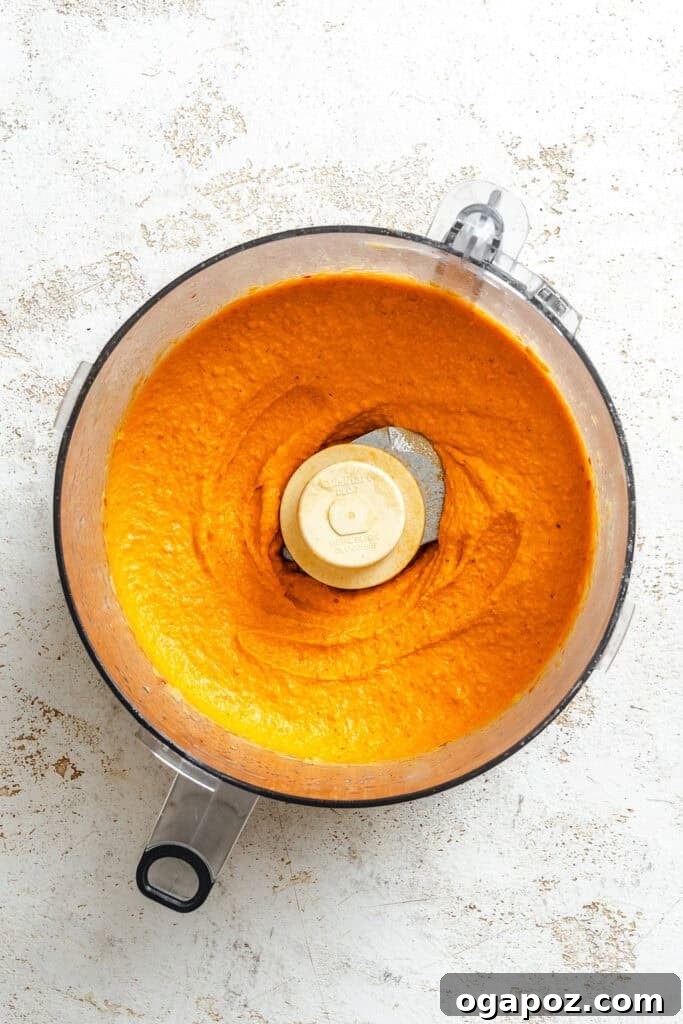
Begin by combining all your prepped ingredients—the drained chickpeas, roasted red peppers, fresh lemon juice, tahini, garlic, and initial olive oil—into the bowl of a powerful food processor. Process the mixture for approximately 60 to 90 seconds. For optimal creaminess, pause halfway through blending to scrape down the sides of the bowl with a spatula. This ensures all ingredients are thoroughly incorporated and prevents any chunks from being left behind.
After the initial blend, taste the hummus and adjust the seasonings as needed. You might want more lemon for brightness, an extra pinch of salt, or a dash more garlic. If the hummus appears too thick or coarse for your liking, turn the food processor back on and gradually add small amounts of the reserved chickpea liquid or cold water, one tablespoon at a time, until you achieve your desired silky-smooth consistency. Continue blending until it’s incredibly light and airy.
Step 2: Present and Serve with Style
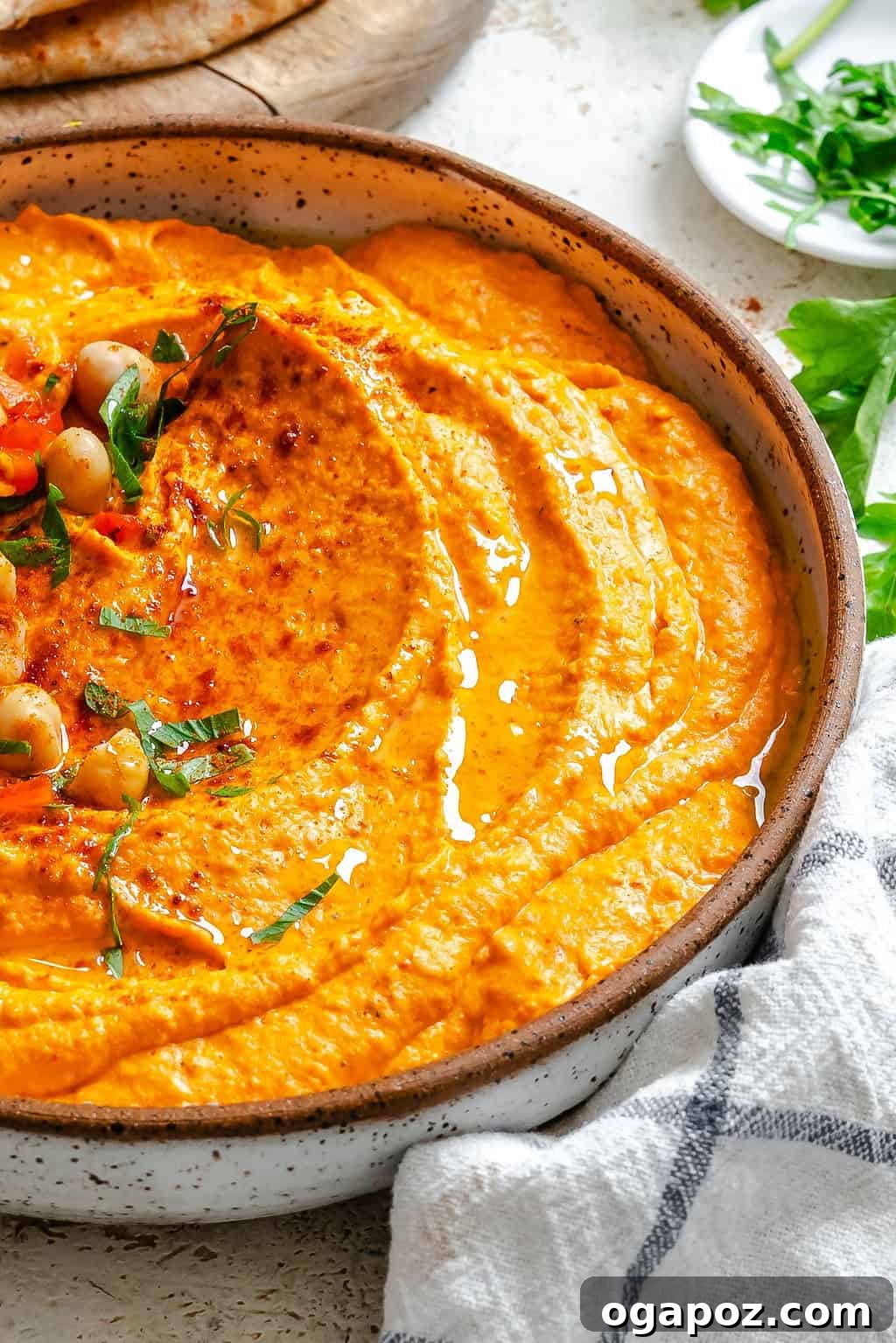
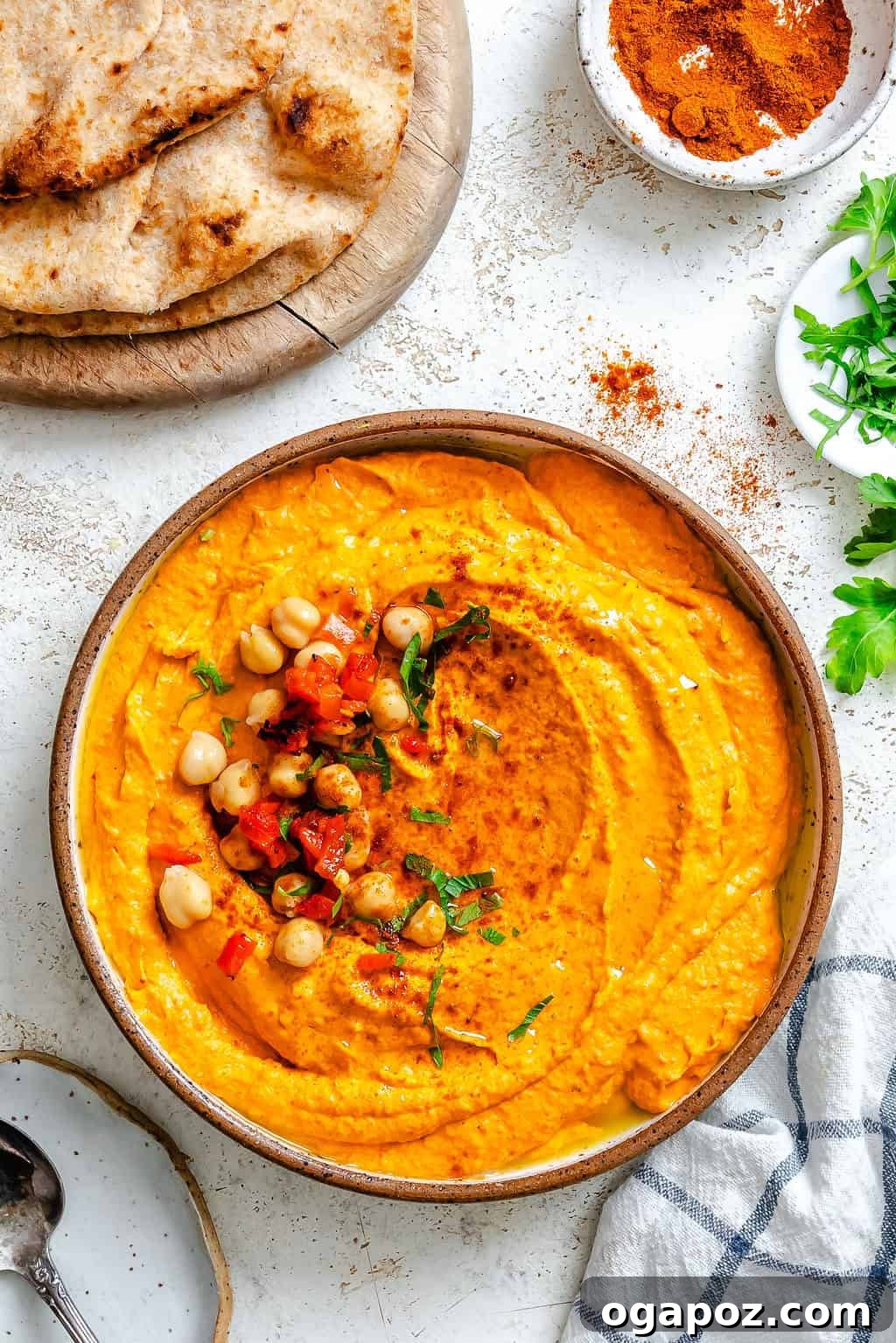
Once your hummus reaches that perfect consistency and flavor, use a spatula to gracefully scrape it into a shallow serving bowl or a decorative dish. Create a small swirl or well in the center of the hummus. Drizzle a generous amount of high-quality extra virgin olive oil over the top—this not only adds flavor but also prevents the hummus from drying out and creates an appealing sheen. Finally, garnish with a sprinkle of freshly chopped parsley and a few extra pieces of chopped roasted red peppers for a beautiful presentation that hints at the deliciousness within.
Serve your freshly made hummus immediately with warm pita bread, an assortment of crisp raw vegetables like cucumber slices, carrot sticks, and bell pepper strips, or your favorite crackers. If you’re not serving it right away, ensure it’s stored properly in an airtight container in the refrigerator for up to 7 days to maintain its freshness and flavor.
Storage and Freezing for Lasting Enjoyment
Proper storage is key to enjoying your homemade Roasted Red Pepper Hummus for as long as possible. Here’s how to keep it fresh and delicious:
Refrigeration: Transfer any leftover hummus to an airtight container. If you lightly drizzle the top with a thin layer of olive oil before sealing, it helps to create a barrier that keeps the hummus fresh, prevents discoloration, and locks in moisture. Stored this way, your hummus will remain fresh and flavorful in the fridge for up to 5 days, making it perfect for meal prepping throughout the week.
Freezing: Yes, you can freeze hummus! This is a fantastic option for making larger batches or for ensuring you always have some on hand for last-minute gatherings. Spoon the hummus into a freezer-safe, airtight container, leaving about an inch of headspace at the top to allow for expansion as it freezes. It can be stored in the freezer for up to 3 months without significant loss of quality. When ready to enjoy, simply thaw the hummus overnight in the refrigerator. Before serving, give it a good stir, and if needed, add a splash of cold water or a bit more olive oil and re-blend briefly to restore its original creamy texture.
Frequently Asked Questions About Hummus
Achieving that coveted silky-smooth hummus texture is a common goal for many home cooks. One of the most effective methods is removing the skins from the chickpeas. You can do this by rubbing cooked chickpeas between a kitchen towel, or for canned chickpeas, simmer them in water with a small amount of baking soda for 10-15 minutes. This extra softening helps the skins slip off easily and creates a much smoother blend. Additionally, I highly recommend drizzling in small amounts of ice water while blending the hummus. The cold water helps to emulsify the ingredients beautifully, making the hummus incredibly light and smooth. Finally, be patient with your food processor or blender; allow it to run for several minutes, stopping to scrape down the sides, to fully emulsify and aerate the hummus.
While tahini is a hallmark ingredient for traditional hummus, lending its distinctive nutty flavor and creamy texture, it is possible to make a version without it. However, it will not have the same authentic taste and mouthfeel you are accustomed to. If you need a substitute due to an allergy or preference, you can try incorporating a dollop of thick Greek yogurt for creaminess, or a small amount of mild nut butter such as almond butter or cashew butter. These alternatives will provide some richness and body, but the flavor profile will certainly shift.
If your hummus turns out thicker than you’d prefer, don’t worry, it’s an easy fix! While your food processor or blender is running, gradually add small quantities of cold water, additional fresh lemon juice, or a bit more extra virgin olive oil. Start with a tablespoon at a time and blend until fully incorporated, checking the consistency after each addition. This allows you to slowly reach your desired creaminess and spreadability without over-thinning the mixture. Remember, it’s easier to add more liquid than to remove it.
Absolutely! Using freshly roasted red peppers will provide an even deeper, more complex smoky and sweet flavor to your hummus. To roast them, simply cut bell peppers in half, remove seeds, lightly brush with olive oil, and roast in an oven (around 400°F/200°C) or under a broiler until the skins are charred and blistered. Place them in a bowl and cover with plastic wrap for about 10-15 minutes to steam, which makes peeling the skins much easier. Once cooled, peel and remove the stems, then they are ready to be added to your food processor.
Roasted Red Pepper Hummus is incredibly versatile! It’s fantastic with warm pita bread, pita chips, or an assortment of fresh crudités like cucumber slices, carrot sticks, bell pepper strips, and celery. For a heartier option, spread it inside wraps or sandwiches, use it as a base for vibrant grain bowls, or serve it alongside grilled chicken, falafel, or even scrambled eggs. Don’t forget to drizzle with extra olive oil and sprinkle with paprika or sumac for an authentic touch!
Discover More Irresistible Hummus Recipes
If you’ve fallen in love with this Roasted Red Pepper Hummus, you’re in for a treat! Explore our diverse collection of hummus creations, each offering a unique flavor journey. From traditional preparations to creative twists, there’s a hummus recipe for every taste and occasion. Dive in and find your next favorite dip!
Appetizers
Lebanese Style Hummus
Appetizers
Cucumber Hummus Bites
Beef
Hummus with Spiced Beef and Toasted Pine Nuts
Vegetarian
Mediterranean Hummus Toast with Za’atar
Tried this recipe? Leave a comment below! Subscribe to our newsletter or follow us on
Facebook,
Instagram, or
Pinterest for the latest recipes and culinary inspiration.
Roasted Red Pepper Hummus

Print Recipe
Ingredients
- 1 -15 ounce can of chickpeas, drained and thoroughly rinsed (reserve a few tablespoons of liquid)
- Juice of 1 large lemon
- 1/3 cup tahini
- 1 or 2 cloves fresh garlic (adjust to your preference for garlic intensity)
- 3 tablespoons extra virgin olive oil (plus more for drizzling)
- 3/4 cup chopped jarred roasted red peppers, thoroughly drained
- Fresh parsley and a pinch of paprika to garnish
- Salt and freshly ground black pepper to taste
Instructions
-
Into the bowl of your food processor, add the drained chickpeas, chopped roasted red peppers, fresh lemon juice, tahini, garlic cloves, and 3 tablespoons of extra virgin olive oil. Process for 30 seconds to 1 minute, stopping to scrape down the sides of the bowl once or twice to ensure all ingredients are fully incorporated. Continue blending until the mixture is smooth and creamy. For an even lighter, airier texture, blend for an additional minute or two, allowing the machine to work its magic.
-
Taste the hummus and adjust seasonings as needed. Add salt and pepper to taste. If you find the hummus too thick for your preference, gradually add a small amount of the reserved chickpea liquid or a splash of cold water (1 tablespoon at a time) while the food processor is running. Continue blending until you achieve the desired creamy, spreadable consistency.
-
Transfer the finished hummus into a shallow serving bowl. Create a gentle swirl on top, then drizzle generously with additional extra virgin olive oil. Garnish with a sprinkle of fresh chopped parsley and a dusting of paprika for color and aroma. Serve immediately with warm pita bread, an assortment of fresh vegetables, or your favorite crackers. Alternatively, cover tightly and refrigerate until ready to serve.
Notes
- Storage in the Fridge: Your homemade hummus can be stored in an airtight container in the refrigerator for up to 5 days. A thin layer of olive oil drizzled on top before sealing helps to preserve its freshness and prevent surface drying.
- Freezing Instructions: For longer storage, hummus freezes beautifully. Place it in an airtight, freezer-safe container, leaving some space at the top for expansion. It can be kept in the freezer for up to 3 months. To serve, thaw it in the refrigerator overnight, then give it a good stir and add a touch of water or olive oil if needed to restore its perfect consistency.
- Achieving Ultimate Creaminess: For the silkiest hummus, consider peeling the skins off the chickpeas. This can be done by gently rubbing them between a kitchen towel or simmering canned chickpeas with a pinch of baking soda for 10-15 minutes to soften them further. Adding ice water (a tablespoon at a time) while blending also helps create an incredibly light and smooth texture. Ensure your food processor runs for several minutes to fully emulsify all ingredients.
Nutrition
Nutrition information is automatically calculated, so should only be used as an approximation. Exact nutritional values can vary based on specific ingredient brands and preparation methods.