
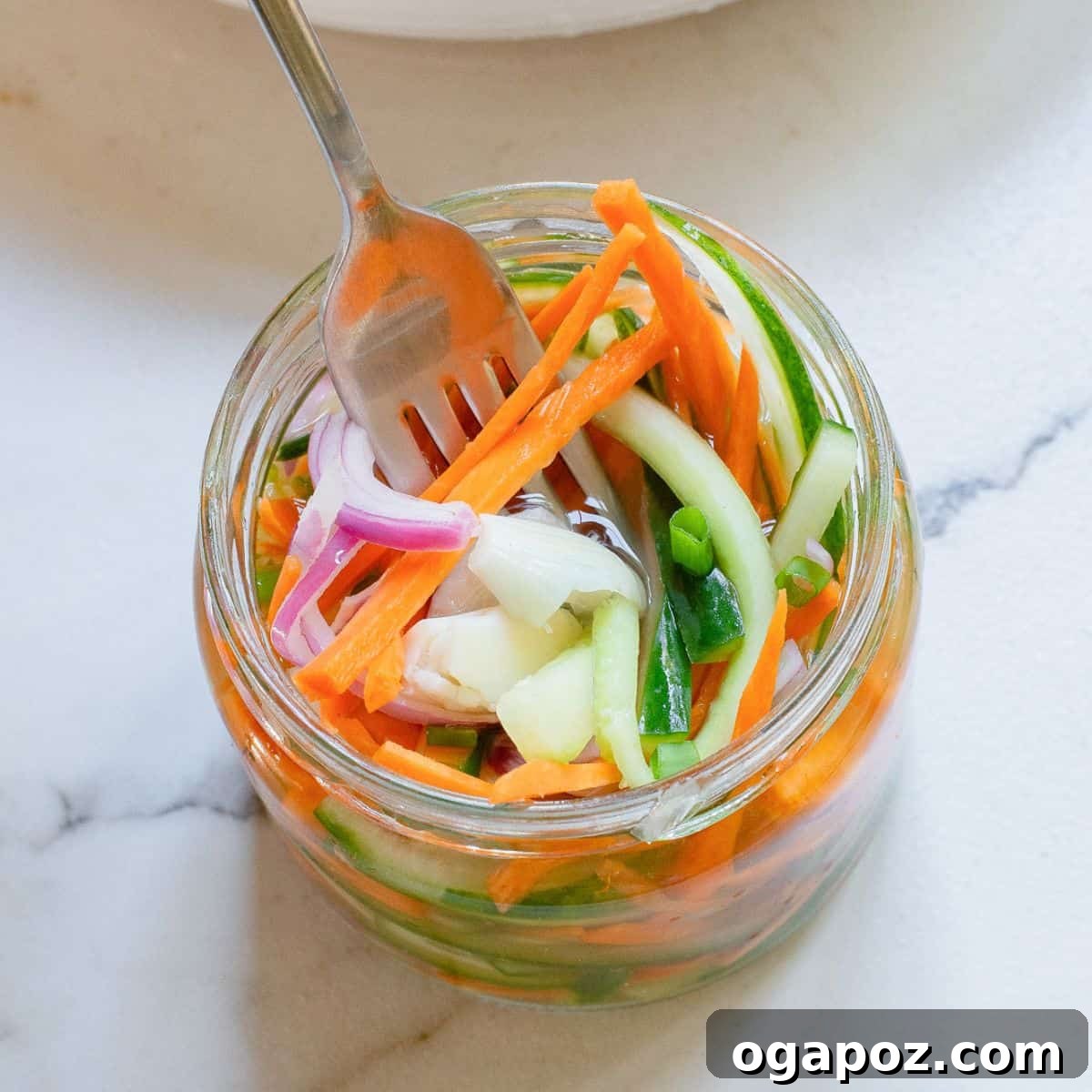
Quick Pickled Vegetables offer a fantastic and straightforward method for preserving your garden’s bounty or those extra veggies lingering in your refrigerator. These vibrant, tangy refrigerator pickles infuse incredible flavor into an array of dishes, from crisp salads and savory tacos to wholesome rice bowls and hearty wraps. Best of all, they can be stored in your fridge for up to two weeks, making them a convenient and versatile staple. You can easily adapt this recipe to whatever fresh vegetables you have on hand, transforming simple produce into a gourmet condiment.
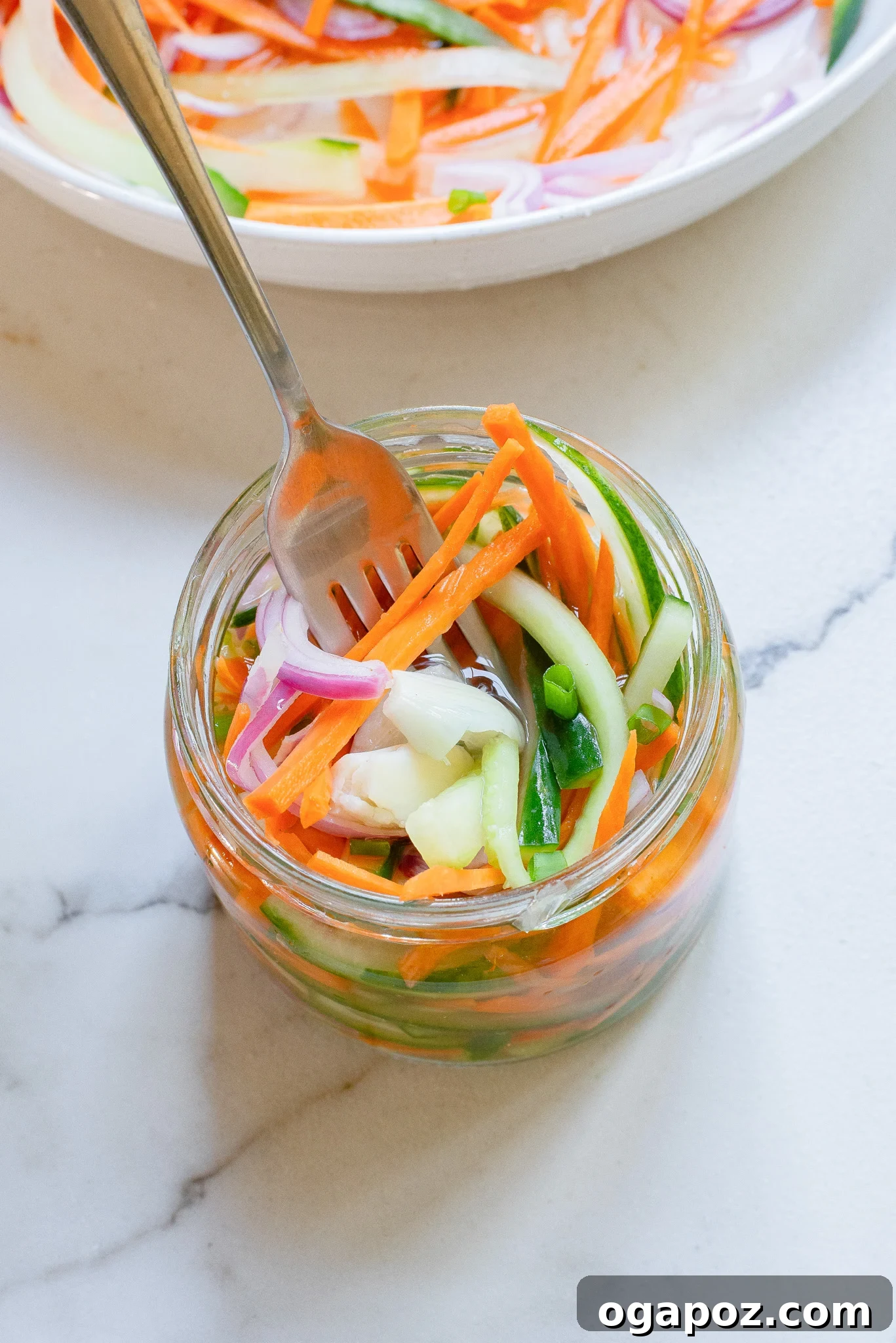
I must confess, I have a deep-seated love for pickles and, really, any kind of pickled vegetable. My culinary journey recently led me to a company selling spicy pickled carrots, and I was instantly hooked. This discovery reaffirmed a valuable lesson: homemade pickled vegetables are incredibly simple to prepare without the demanding process of traditional canning. Our Quick Pickled Vegetables recipe today exemplifies this ease, offering endless customization possibilities with various fresh vegetables, aromatic spices, and fragrant herbs. This recipe often reminds me of my popular Easy Curtido Recipe, and if you enjoy tangy additions, you might also appreciate these Quick Pickled Red Onions.
This recipe becomes my go-to whenever I find myself with an abundance of vegetables from my garden or a surplus from the local farmers market. It’s also perfect for using up fresh produce in the fridge before it spoils, minimizing food waste and maximizing flavor. You might be wondering about the key distinction between quick pickling and traditional canning. Quick pickling, often referred to as refrigerator pickling or cold pickling, is a rapid and straightforward method of preserving vegetables by immersing them in a flavorful brine solution. Crucially, it bypasses the complex heat processing and airtight sealing required for traditional canning or fermentation.
Unlike traditional methods that rely on high heat to create a shelf-stable product, quick pickling involves simply soaking vegetables in a vinegar-based brine and then storing them in the refrigerator. This allows the vegetables to develop a delightful tangy flavor and a crisp texture in a relatively short amount of time, typically a few hours to overnight. If you’re a fan of fresh and vibrant vegetable dishes, you might also enjoy these other recipes: Balsamic Roasted Mushrooms, an Easy Bok Choy Recipe, a flavorful Bok Choy Stir Fry, or these wonderfully sweet and savory Balsamic Roasted Carrots. Each offers a unique way to enjoy fresh produce with minimal effort.
Why You’ll Adore These Quick Pickled Vegetables

These pickled veggies are incredibly simple to prepare and offer a world of culinary benefits. Here’s why they’re a must-have in your kitchen:
- Elevate Every Dish with a Burst of Flavor: Quick pickled vegetables are a secret weapon for adding a bright, tangy, and zesty kick to countless meals. Imagine them piled high on your favorite rice bowls, lending a refreshing crunch to savory tacos, wrapped in soft tortillas, or tucked into sandwiches and burgers. The beauty is in their versatility; you can easily tailor the type of vegetables you pickle to complement the specific cuisine you’re preparing, ensuring a perfect flavor pairing every time.
- Effortlessly Quick to Create: One of the most compelling reasons to embrace quick pickling is its incredible speed and simplicity. Unlike traditional canning, which is a time-consuming process requiring special equipment and adherence to strict safety protocols, this refrigerator pickling method is astonishingly fast. While the vegetables do benefit from sitting in the fridge overnight to fully absorb the brine’s complex flavors, you can certainly enjoy them within just a few hours of preparation. This makes them ideal for last-minute meal enhancements or when you need a flavorful addition in a hurry.
- A Smart Solution for Leftover Produce: This recipe shines when you have an abundance of fresh vegetables. Whether you’ve harvested a generous yield from your garden, brought home too much from the farmers market, or simply need to use up produce nearing its prime in the fridge, quick pickling is the perfect solution. It’s an effective and delicious way to prevent food waste, transforming expiring ingredients into a vibrant, ready-to-eat condiment that extends their shelf life and brings new life to your culinary creations.

Essential Recipe Ingredients
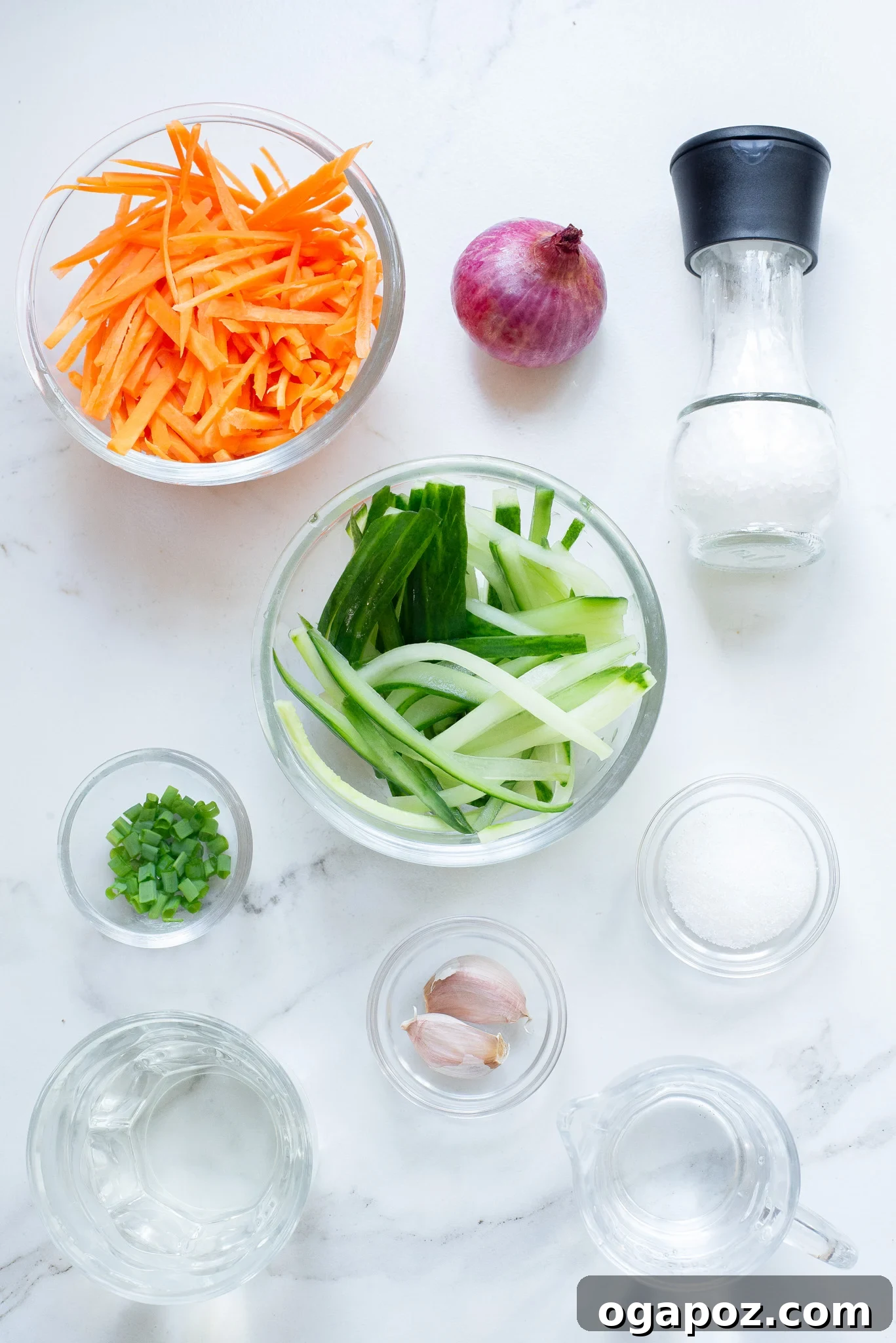
You’ll truly appreciate the simplicity and fresh ingredients used in this quick pickled vegetable recipe. It’s a definite favorite!
- Fresh Vegetables: While this recipe specifically highlights carrots, cucumber, and red onion, the beauty of quick pickling lies in its adaptability. Feel free to use any firm vegetables you have on hand that can withstand a tangy brine.
- White Vinegar: This is the essential pickling agent that gives the vegetables their characteristic tangy flavor and helps preserve them. Its sharp acidity is crucial for the pickling process.
- Garlic Cloves: Fresh garlic cloves are a must, infusing the pickling liquid and vegetables with a robust, aromatic depth that complements the tanginess perfectly.
- Whole Spices: For the most vibrant and authentic flavor, aim for fresh, whole spices. This recipe includes whole peppercorns, coriander seeds, and mustard seeds, which release their oils and aromas slowly, building layers of savory and slightly pungent notes.
- Water: Water is combined with vinegar to create the ideal brine consistency, mellowing the vinegar’s intensity slightly while still allowing it to perform its preserving function.
- White Sugar: A touch of white sugar balances the acidity of the vinegar, rounding out the flavor profile and preventing the pickles from being overly sour.
- Sea Salt: Salt is vital for flavor and also plays a role in drawing out moisture from the vegetables, contributing to their crisp texture and helping with preservation.
Creative Recipe Modifications & Customization Tips
One of the most exciting aspects of quick pickling is the endless potential for customization. Don’t hesitate to get creative and tailor the flavors to your preference!
- Experiment with Spices and Herbs: The right blend of spices and herbs can elevate your quick pickles from good to extraordinary. Beyond the suggested peppercorns, coriander, and mustard seeds, consider adding fennel seeds for a hint of licorice, juniper berries for a woodsy note, anise seed for a subtle sweetness, or dill seed for a classic pickle flavor. Allspice, whole cloves, and cumin seeds can also introduce warm, earthy tones. For those who love a bit of heat, crushed red pepper flakes are an excellent addition, providing a gentle warmth that builds over time.
- Incorporate Fresh Herbs: Fresh herbs introduce a brighter, more vibrant dimension to your pickled vegetables. Dill is a timeless choice, offering a fresh, grassy aroma. Parsley and oregano contribute Mediterranean notes, while basil adds a sweet, peppery touch. Bay leaves offer a subtle herbal background, and chives, rosemary, or sage can provide more complex, savory undertones, especially when pickling root vegetables.
- Add a Zesty Citrus Twist: Citrus can significantly brighten the flavor profile of your brine, adding both zest and a delicate sweetness. Try adding strips of orange, lemon, or lime zest to the jar, allowing their essential oils to infuse the pickling liquid. This creates a beautifully aromatic and refreshingly tangy pickle.
- Choose the Right Vinegar for Your Desired Flavor: While versatile white vinegar and apple cider vinegar are popular choices, different types of vinegar offer distinct flavor profiles that can dramatically alter your pickles. Rice vinegar, for instance, is milder and slightly sweeter, perfect for Asian-inspired pickles. White wine vinegar offers a delicate, fruity tang, while red wine vinegar provides a bolder, richer flavor, ideal for heartier vegetables. Exploring different vinegars allows you to craft unique pickle variations.
- Adjust Sweetness and Saltiness to Taste: The balance of sugar and salt in your brine is crucial. The amount can be easily adjusted to suit your personal taste preferences, whether you prefer a sweeter pickle, a saltier one, or something perfectly balanced. However, always ensure a sufficient amount of salt is present, as it plays a role in the preservation and crispness of the vegetables. Taste the brine before pouring it over the vegetables and adjust as needed.
This straightforward method allows your vegetables to develop their signature tangy flavor and delightful crisp texture in a relatively short timeframe. Remember, quick pickled veggies are not shelf-stable and must be stored in the refrigerator. For optimal taste and texture, I recommend consuming them within two weeks. They are exceptionally delicious in a chicken shawarma bowl or adding a bright counterpoint to a shredded beef hummus bowl!
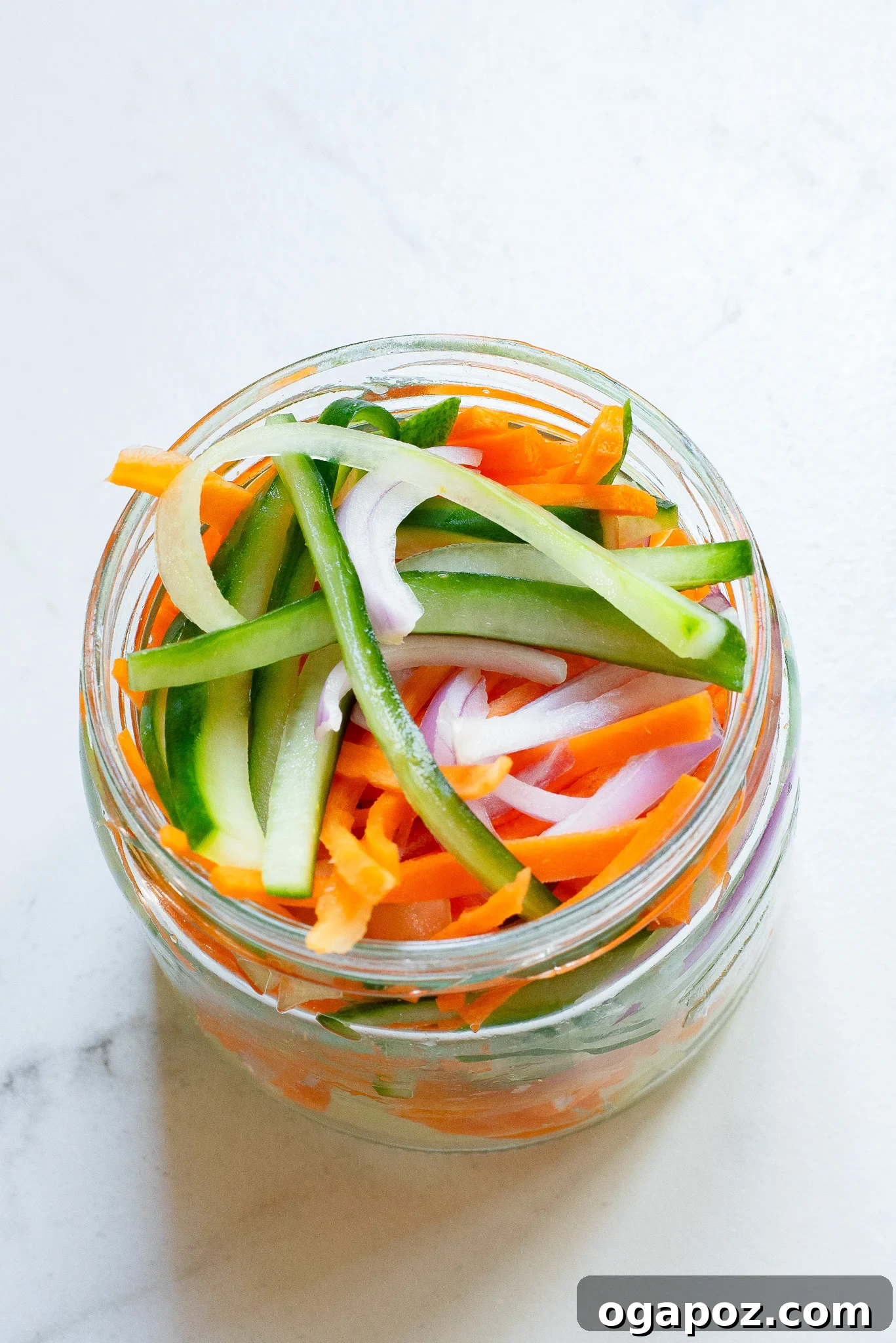
Simple Steps to Make Quick Pickled Vegetables
Creating your own batch of flavorful quick pickled vegetables is a breeze. Just follow these easy steps:
Step 1. Prepare Your Mason Jar: Start by ensuring you have a clean, sterilized mason jar. This is crucial for food safety and optimal storage. A pint or quart-sized jar typically works well, depending on the quantity of vegetables you plan to pickle.
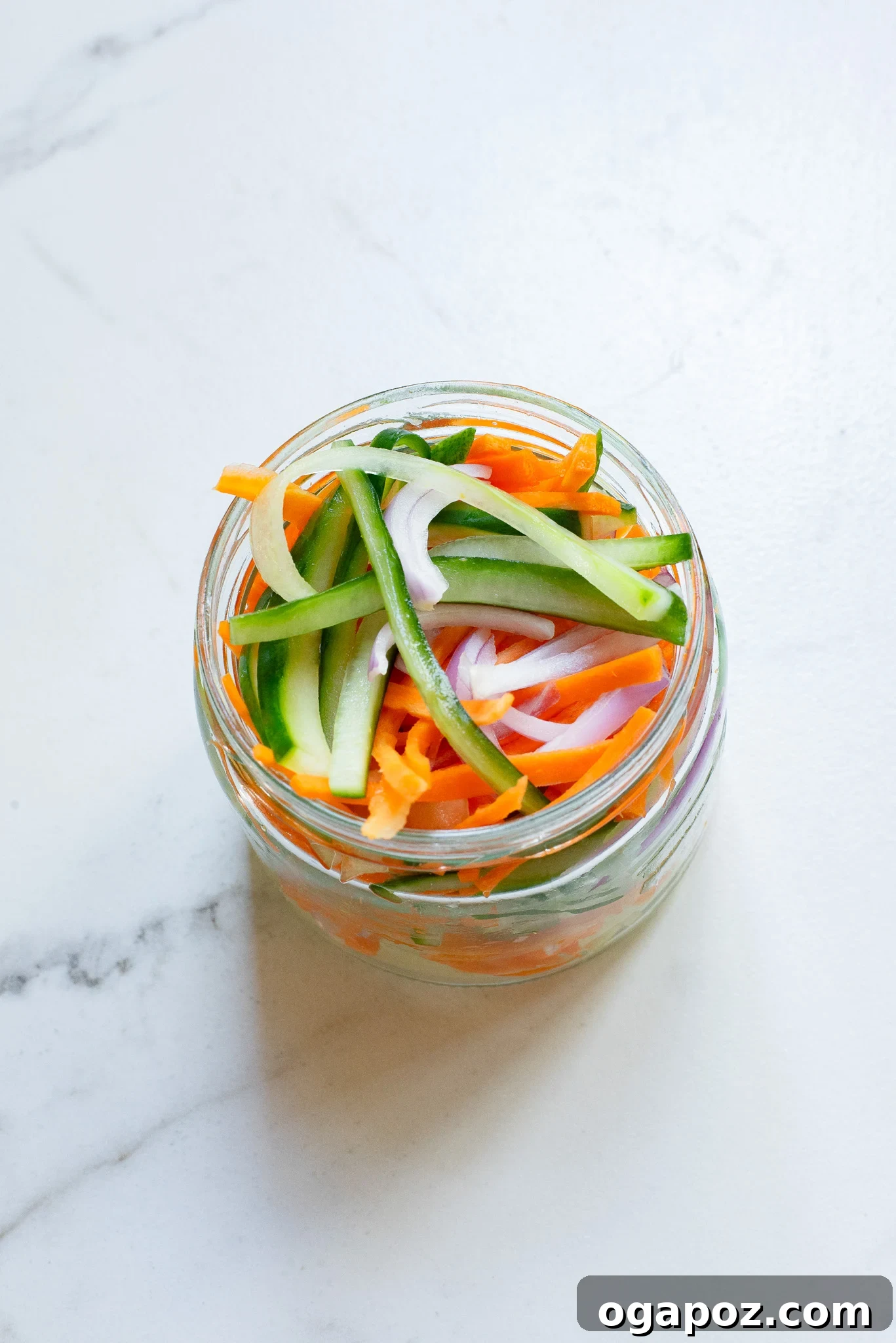
Step 2. Load Vegetables into the Jar: Carefully arrange your prepared vegetables, such as julienned carrots, sliced English cucumber, and thinly sliced red onion, into the mason jar. Pack them somewhat snugly but leave enough room for the brine to circulate and cover them completely.
Step 3. Craft the Flavorful Brine Mixture: In a medium saucepan, combine the white vinegar, water, white sugar, crushed garlic cloves, and sea salt. Bring this mixture to a gentle boil over medium heat, stirring continuously until both the sugar and salt are fully dissolved. Once dissolved, remove the saucepan from the heat and allow the brine to cool down slightly until it is warm to the touch. This prevents the vegetables from becoming overly soft.
Step 4. Pour Brine Over Vegetables: Carefully pour the warm pickling liquid mixture directly over the vegetables in the mason jar. Ensure that all the vegetables are fully submerged in the brine, leaving about a half-inch of headspace from the top of the jar to the lid.
Step 5. Infuse with Spices and Herbs: Now is the time to add your chosen aromatic elements. Introduce the whole spices – such as whole peppercorns, coriander seeds, and mustard seeds – along with a few sprigs of fresh dill or other herbs like parsley or oregano. If you desire a touch of heat, a pinch of crushed red pepper flakes can be added. Finally, sprinkle in the chopped green onion for an extra layer of freshness. Allow the jar to cool completely to room temperature for approximately two hours. Once cool, securely seal the mason jar with its lid and give it a gentle shake to distribute the flavors evenly.
Step 6. Refrigerate for Optimal Flavor: Transfer the sealed jar of pickled veggies to the refrigerator. For the best flavor development and crisp texture, allow them to refrigerate for at least 10 hours before you begin to enjoy them. This crucial chilling period permits the vegetables to properly pickle and fully soak in all the delightful flavors of the brine.
Store your homemade quick pickled vegetables in the refrigerator for up to 2 weeks. It’s important to remember that these are refrigerator pickles and are not processed for long-term, shelf-stable storage; they must always be kept refrigerated to maintain their freshness and safety.
Pro-tip for Crispness: While pouring hot brine over your vegetables can help initiate the pickling process, letting the brine cool for a few minutes until it’s just warm before pouring it into the jars can prevent your vegetables from becoming overly cooked or losing their desired crisp texture. This slight cooling helps maintain their crunch.
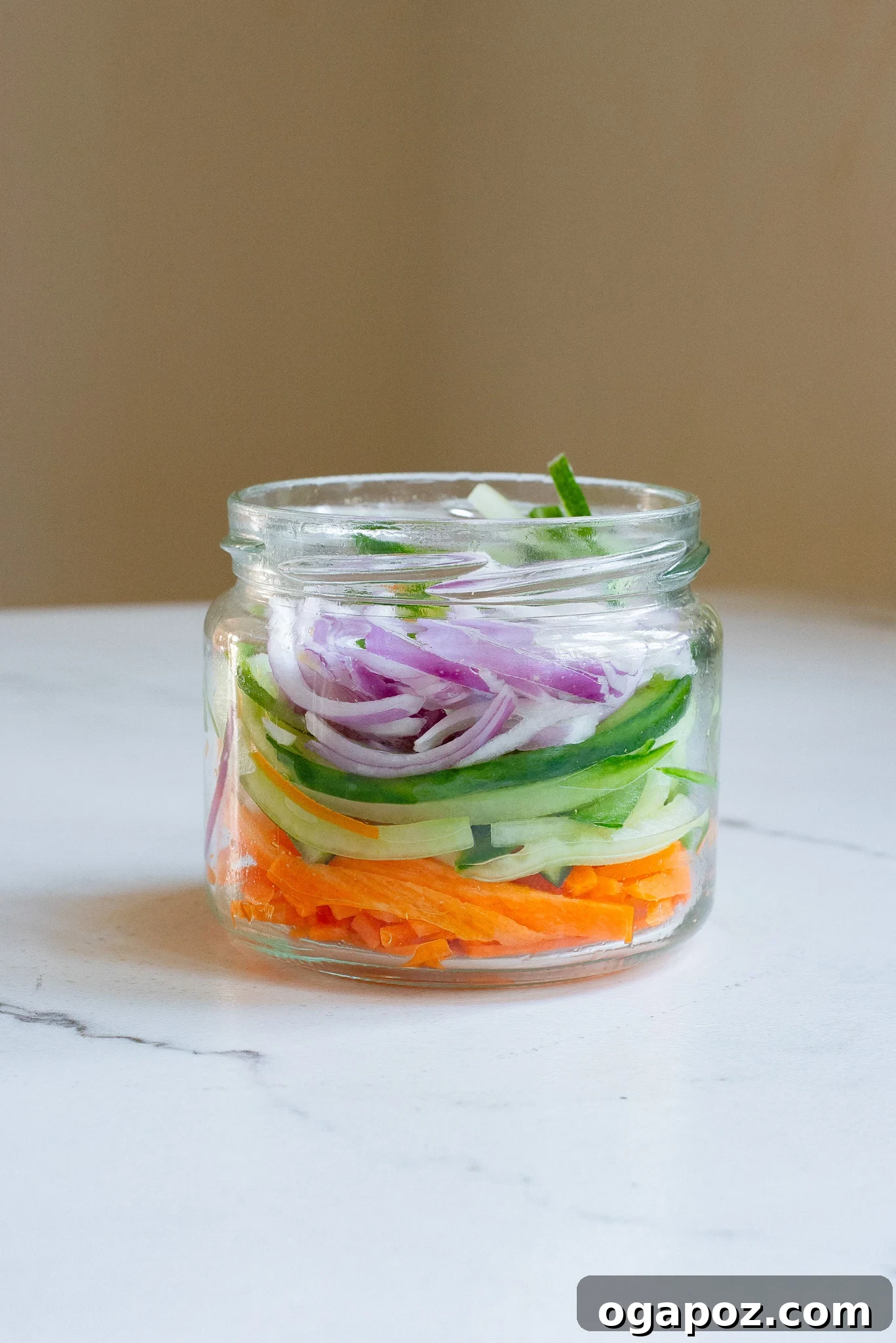
An Array of Vegetables Perfect for Quick Pickling
The wonderful news is that almost any firm vegetable can be transformed through quick pickling! The process enhances their natural flavors and adds a fantastic tang and crunch. Here are just some ideas to inspire your next batch:
- Cucumbers: The quintessential pickling vegetable, cucumbers are a classic for a reason. Their crisp texture readily absorbs the brine, creating the beloved pickle flavor. For a dedicated recipe, check out my refrigerator dill pickles here; they’re always a hit!
- Radishes: Pickled radishes are a feast for both the eyes and the palate. Their vibrant color and peppery, zesty crunch make them an excellent addition to Mexican and Southwest-inspired dishes, providing a refreshing bite.
- Jalapeños: If you crave a spicy kick, pickled jalapeños are your answer. They bring a delightful heat and tang to a variety of dishes, including tacos, burritos, and rice bowls, offering a perfect contrast to richer flavors.
- Bell Peppers: Pickled bell peppers, especially sweet red bell peppers, are superb in sandwiches and wraps. They offer a mild sweetness balanced with tanginess and a pleasing crispness, adding both color and flavor.
- Beets: Pickled beets boast a unique earthy sweetness paired with a vibrant tangy flavor. They are a delightful addition to salads, offering a striking color and a tender yet firm texture.
- Zucchini and Summer Squash: When sliced, zucchini or other summer squash varieties can be quickly pickled to create a surprisingly delicious and refreshing side dish. They absorb the brine beautifully, becoming tender-crisp.
- Okra: A Southern delicacy, pickled okra is celebrated for its distinctive crisp texture and bright tangy flavor. It’s a versatile ingredient that can be enjoyed straight from the jar or as part of a larger meal.
- Turnips: Pickled turnips are a staple in many Mediterranean and Middle Eastern cuisines. Their slightly bitter edge is softened by the brine, making them a fantastic crunchy accompaniment to hummus bowls, savory wraps, fresh salads, and rice dishes.
- Cauliflower and Broccoli Florets: These cruciferous vegetables take on a whole new dimension when pickled. They retain a satisfying crunch and become wonderfully tangy, perfect for snacking or as a side.
- Green Beans: Dilly beans, anyone? Pickled green beans are incredibly popular for their crisp texture and ability to absorb herbaceous brine flavors, making them a refreshing snack or garnish.
- Asparagus: A gourmet option, pickled asparagus spears are tender-crisp and imbued with a zesty flavor, excellent as an appetizer or complement to charcuterie boards.
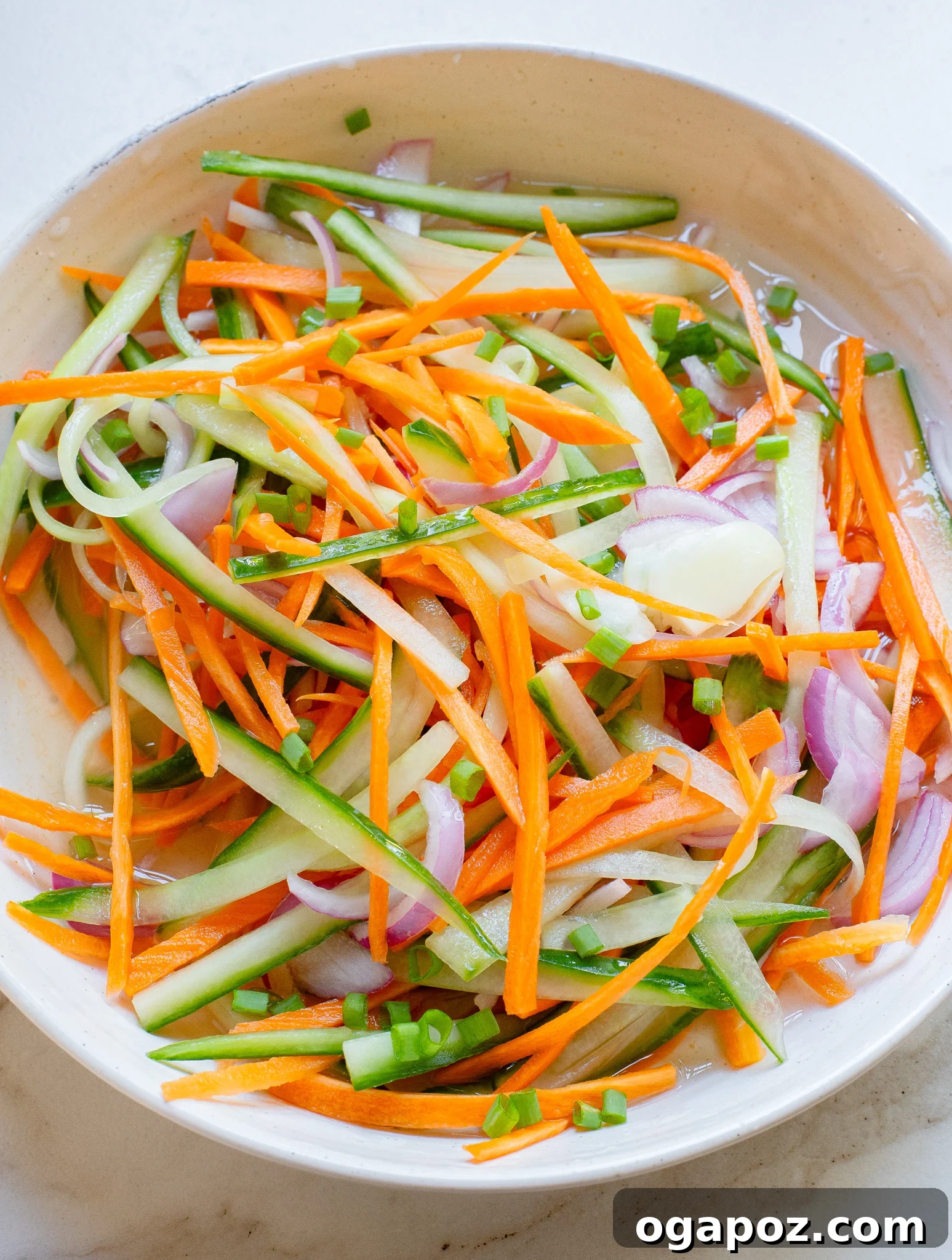
Essential Storage Tips for Your Quick Pickles
Proper storage is key to enjoying your homemade quick pickled vegetables at their best. Always remember these important guidelines:
Store your jar of quick pickled vegetables in the refrigerator immediately after they have cooled to room temperature. These are refrigerator pickles, meaning they are not processed or sealed for long-term, shelf-stable pantry storage. They rely solely on the cool temperatures of your fridge to maintain their freshness and safety. For optimal flavor and crispness, I recommend consuming them within two weeks. Beyond this period, while still safe, their texture may soften slightly, and their vibrant flavor might begin to diminish.
Explore More Delicious Vegetable Recipes
Sides
Easy Bok Choy Recipe
Vegetarian
Instant Pot Lebanese Green Beans
Vegetarian
Balsamic Roasted Carrots
Vegetarian
Za’atar Roasted Carrots
Tried this recipe? Leave a star rating and comment below! Subscribe to my newsletter or follow me on
Facebook,
Instagram, or
Pinterest for the latest.
Quick Pickled Vegetables
Julia Jolliff
5
5
10
2 cups
Ingredients
- 1 small carrot, peeled, cut in julienne
- 1/3 English cucumber, cut in julienne
- 1 medium red onion, sliced thinly
- 1 cup white vinegar
- 1/2 cup water
- 1 tablespoon white sugar
- 4 cloves garlic , crushed
- 1/2 teaspoon sea salt
- 2 teaspoon whole peppercorns, optional
- 1 tablespoon coriander seeds, optional
- 2 teaspoon mustard seeds, optional
- fresh dill, optional
- Pinch crushed red pepper flakes, optional
- 1 tablespoon green onion, chopped
Instructions
-
Prepare a clean mason jar for the vegetables.
-
Add carrot, cucumber and red onion to the mason jar.
-
Bring the vinegar, water, sugar, garlic and salt to boil in a saucepan. Stir to dissolve the sugar and salt. Remove from the heat and let it cool down until slightly warm. Pour the liquid mixture into the mason jar of vegetables.
-
Add the whole peppercorns, coriander seeds, mustard seeds.
-
Add a few sprigs of fresh dill or other herbs like parsley or oregano, a pinch of crushed red pepper flakes and the green onion. Let cool to room temperature for two hours then seal shut the mason jar and give it a shake.
-
Refrigerate the pickled veggies for 10 hours before you use them. This helps them pickle and soak in the flavors.
-
Store in the refrigerator for up to 2 weeks (these are not canned for long-term storage – please make sure you keep them refrigerated).
Notes
- You will want to make sure the liquid covers all of the vegetables but also leave about a half-inch of room from the top of the jar/lid.
- You can use whatever veggies you have on hand. Just make sure to cut them to the appropriate size to fit the mason jar.
- Please remember these are not canned for long-term storage – they should be kept refrigerated.
Nutrition
Carbohydrates: 28g,
Protein: 4g,
Fat: 4g,
Saturated Fat: 0.3g,
Polyunsaturated Fat: 1g,
Monounsaturated Fat: 2g,
Sodium: 510mg,
Potassium: 477mg,
Fiber: 7g,
Sugar: 12g,
Vitamin A: 4333IU,
Vitamin C: 12mg,
Calcium: 142mg,
Iron: 3mg
Nutrition information is automatically calculated, so should only be used as an approximation.
Tried this recipe?
Mention @acedarspoon or tag #acedarspoon!