
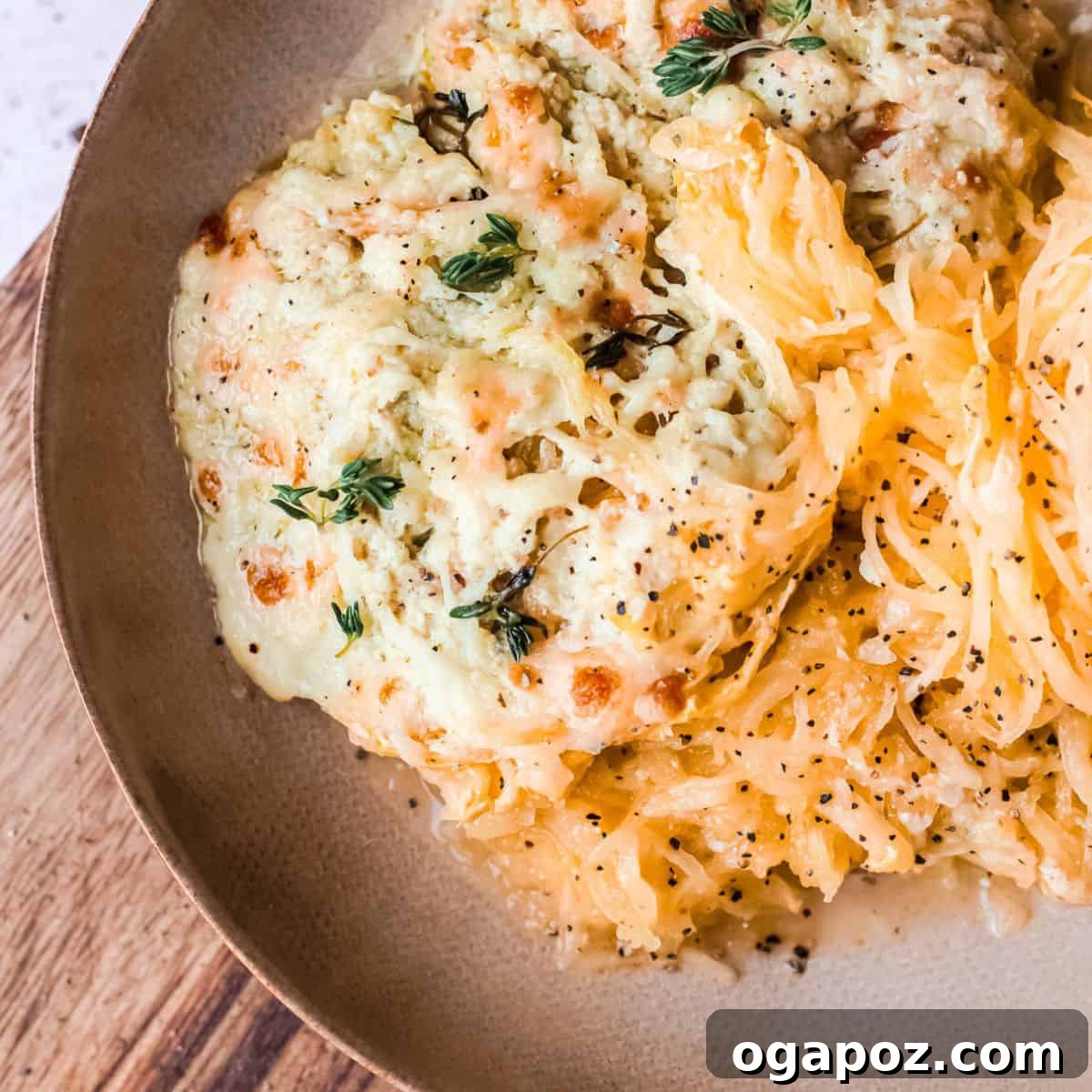
Embrace the cozy flavors of fall and winter with this incredible Baked Cheesy Spaghetti Squash Recipe. It’s more than just a meal; it’s a comforting experience that brings warmth and deliciousness to your table. If you’re searching for a healthy, low-carb, and naturally gluten-free alternative to traditional pasta, look no further. This recipe transforms humble spaghetti squash into tender, pasta-like strands, perfectly cradling a rich, creamy, and irresistibly cheesy sauce. Get ready to discover your new favorite seasonal dish!
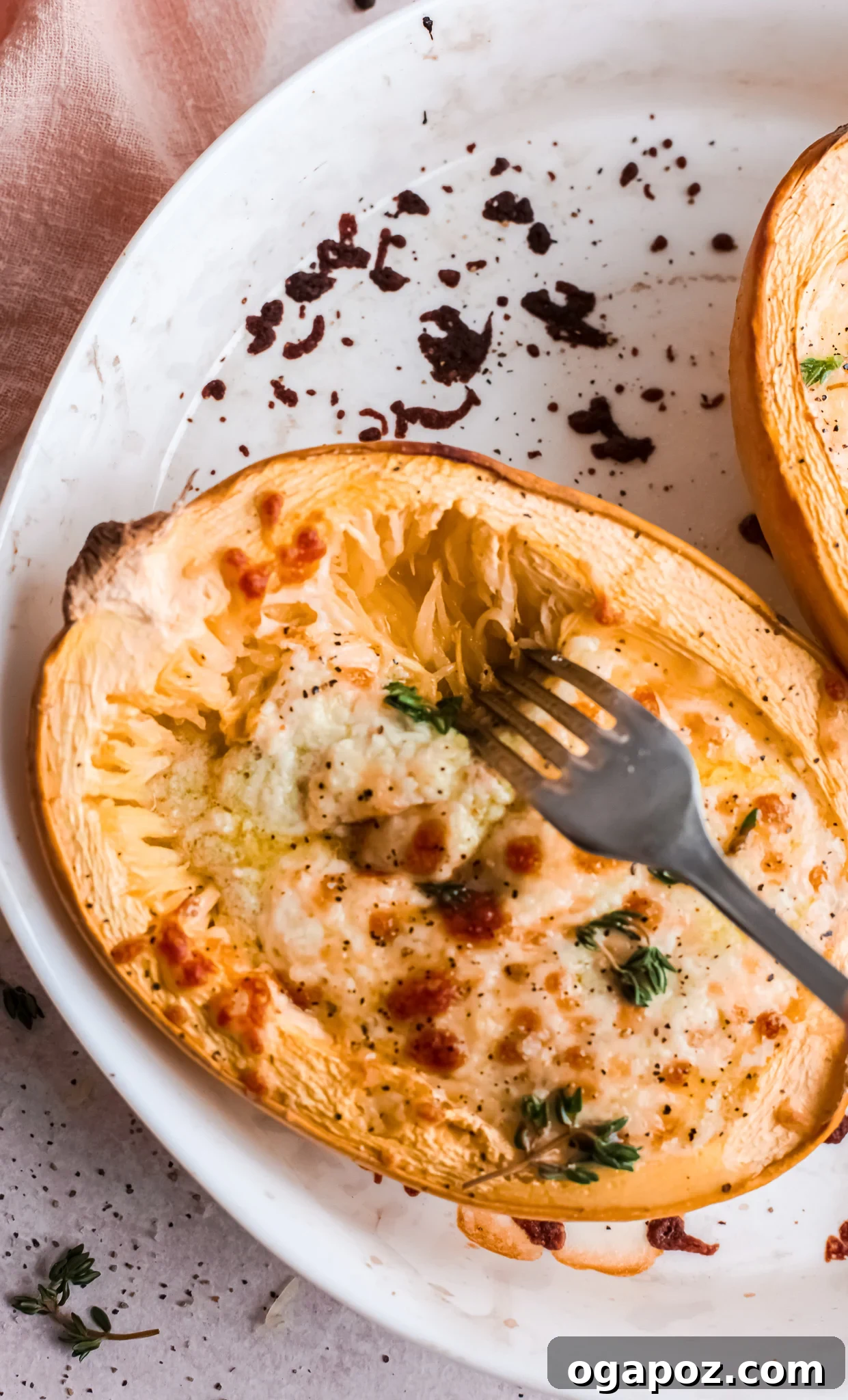
While nothing can truly replicate the classic taste and texture of traditional pasta for everyone, spaghetti squash comes remarkably close as a delightful and nutritious substitute. This ingenious technique of creating low-carb “noodles” from squash has gained immense popularity, and for good reason. Once baked, the flesh of the spaghetti squash easily scrapes into long, delicate strands that mimic spaghetti, offering a fantastic base for a myriad of flavors.
In this recipe, we elevate the spaghetti squash noodles with a decadent cheesy sauce, transforming them into a hearty and satisfying baked dish. However, the versatility of spaghetti squash extends far beyond this. You can pair it with vibrant pesto for a fresh twist, toss it with simple butter and fragrant herbs, or drizzle it with high-quality extra virgin olive oil and a sprinkle of your favorite spices. Once you master the art of baking spaghetti squash, you’ll find yourself incorporating it into your cooking routine time and time again. The cooler months are particularly special for enjoying the abundance of hearty winter squashes available, and spaghetti squash is certainly a star among them.
If you’re a fan of comforting squash dishes during the colder seasons, you might also love these other favorites: Parmesan Delicata Squash, a flavorful Mediterranean Stuffed Acorn Squash, or a sweet and savory Butternut Squash Apple Bake.
There are several methods for cooking spaghetti squash, including microwaving, using a slow cooker, an Instant Pot, or roasting it in the oven. After experimenting with various techniques, I’ve found that roasting consistently yields the best results. Roasting not only deepens the squash’s flavor but also produces perfectly tender yet firm spaghetti-like strands that maintain their integrity, avoiding any mushiness often associated with other cooking methods. This ensures a delightful texture that truly makes this dish shine.
Why Choose Spaghetti Squash? The Healthy Pasta Alternative
Spaghetti squash isn’t just a clever pasta substitute; it’s a nutritional powerhouse. It’s packed with vitamins, minerals, and dietary fiber, making it an excellent choice for a health-conscious meal. Compared to traditional wheat pasta, spaghetti squash is significantly lower in calories and carbohydrates, and it’s naturally gluten-free, catering to various dietary needs. Its mild, slightly sweet flavor and unique texture make it an incredibly versatile vegetable, capable of absorbing and enhancing the flavors of whatever sauce or seasoning you pair it with. Choosing spaghetti squash means enjoying a satisfying meal without the heavy feeling, offering a lighter yet equally delicious experience.
How to Select and Prepare the Perfect Spaghetti Squash
The success of any spaghetti squash dish begins with selecting the right squash and preparing it properly. When choosing a spaghetti squash, look for one that is firm, heavy for its size, and has a vibrant, golden-yellow color. Avoid squashes with soft spots, blemishes, or a pale, greenish hue, as these may indicate it’s not fully ripe. A ripe squash will also have a hard, thick skin that resists indentation when you try to poke it with your fingernail.
Cutting Spaghetti Squash Safely: Spaghetti squash can be quite hard, so safety is paramount when cutting it. Use a sharp, sturdy chef’s knife. You can try these methods:
- Longitudinal Cut: Carefully slice the squash lengthwise from stem to end. This creates two “boats” perfect for stuffing and serving. If it’s too difficult, score the squash first, then gently tap the knife with a rubber mallet, or microwave it for 2-3 minutes to slightly soften the skin before cutting.
- Horizontal Cut: Some prefer cutting the squash crosswise into rings. This method can sometimes yield longer “strands” as you scrape, as the fibers run around the circumference.
Once halved, use a spoon to scoop out the seeds and fibrous membranes from the center. A grapefruit spoon works particularly well for this task. Don’t worry about getting every tiny seed; a few won’t hurt, but removing the bulk ensures clean strands.
Essential Ingredients for Your Cheesy Spaghetti Squash
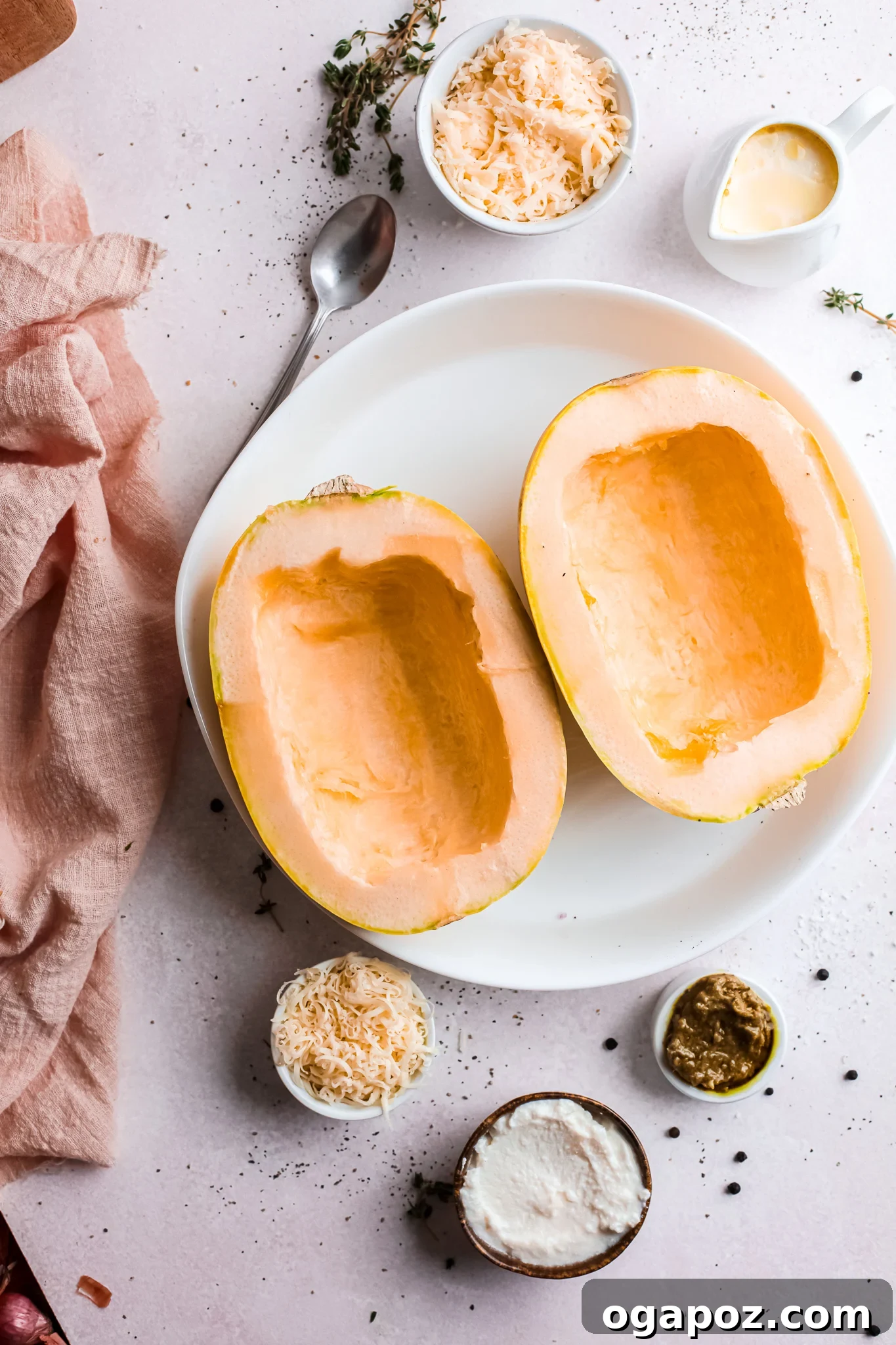
This recipe truly highlights the beauty of simple, quality ingredients coming together to create something extraordinary. You’ll adore how easy it is to assemble and the rich flavors it delivers. Here’s a closer look at what you’ll need:
- Spaghetti Squash: The star of our show! As discussed, this magical vegetable transforms into long, stringy, pasta-like strands when cooked, forming the savory and delicious base for our meal. Its mild flavor provides a perfect canvas for the cheesy sauce.
- Pesto: Pesto adds a vibrant burst of herbaceous flavor and a lovely richness to the cheese mixture. You have the flexibility to use a fresh homemade pesto for an unparalleled taste, or opt for your favorite high-quality store-bought variety for convenience. Classic basil pesto is always a winner, but don’t hesitate to experiment with other types like sun-dried tomato or kale pesto for different flavor profiles.
- Cheese Medley: The heart of our “cheesy” dish lies in this delightful combination of cheeses. We use:
- Ricotta Cheese: Provides a creamy, luscious texture and a subtle sweetness that balances the other strong flavors. It helps create a smooth, rich sauce.
- Mozzarella Cheese: Known for its incredible meltability and mild, milky flavor, mozzarella creates that irresistible gooey factor and a beautiful golden crust when baked.
- Parmesan Cheese: Adds a sharp, salty, and umami depth that elevates the entire dish. Its robust flavor is crucial for that classic Italian-inspired taste.
You’ll use a portion of mozzarella within the sauce and the remainder for a glorious topping.
- Milk (or Cream): A splash of milk (or cream for an even richer sauce) helps to thin out the cheese mixture slightly, ensuring it coats the spaghetti squash strands perfectly and creates a cohesive, smooth consistency.
- Salt and Pepper: Essential for seasoning to taste and bringing out all the wonderful flavors.
- Fresh Herbs (for Garnish): Fresh thyme and parsley not only add a pop of color but also contribute a wonderful aromatic freshness to the finished dish. While optional, they truly elevate the presentation and overall experience.
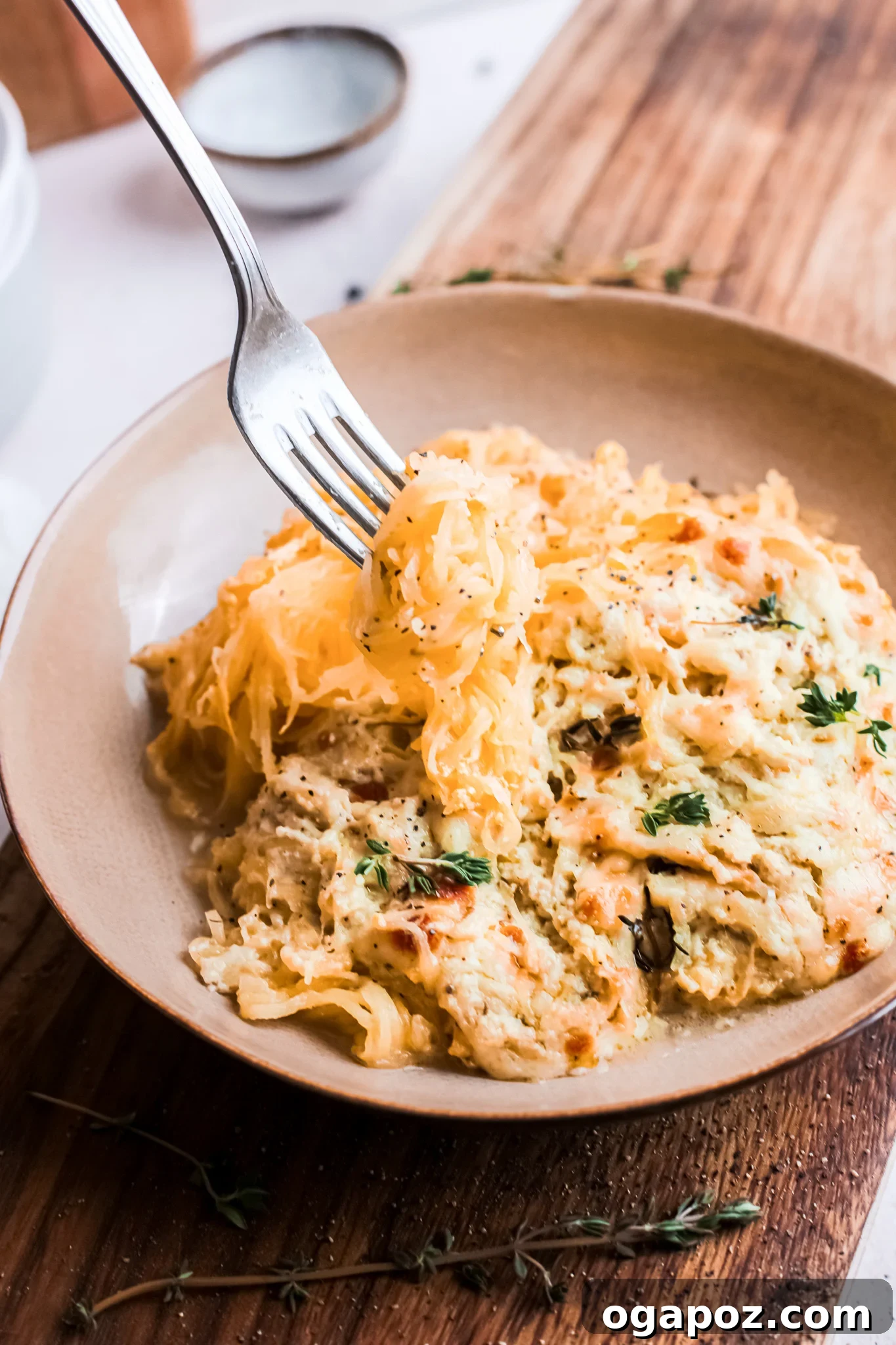
How to Make This Baked Cheesy Spaghetti Squash: Step-by-Step
Creating this delicious and satisfying meal is surprisingly straightforward. Follow these steps for a perfectly baked and cheesy spaghetti squash:
- Preheat Oven & Prepare Squash: Begin by preheating your oven to 400°F (200°C). Carefully cut the spaghetti squash in half lengthwise and scoop out the seeds and fibrous strands. For best results, sprinkle the cut sides of the squash with a generous amount of coarse salt. Let it sit for about 15 minutes. This simple step helps to draw out excess moisture, ensuring your squash noodles are firm and not watery after baking.
- Roast the Squash: After the squash has rested, lightly rub 1 teaspoon of olive oil over the cut surfaces of both squash halves. Place the squash, cut side down, onto a parchment-lined baking sheet. Roasting on parchment paper prevents sticking and makes cleanup a breeze. Bake for approximately 20-30 minutes, or until the squash is slightly soft to the touch when gently pressed. The exact baking time will depend on the size of your squash; smaller squashes will cook faster. Remove from the oven but keep the oven on.
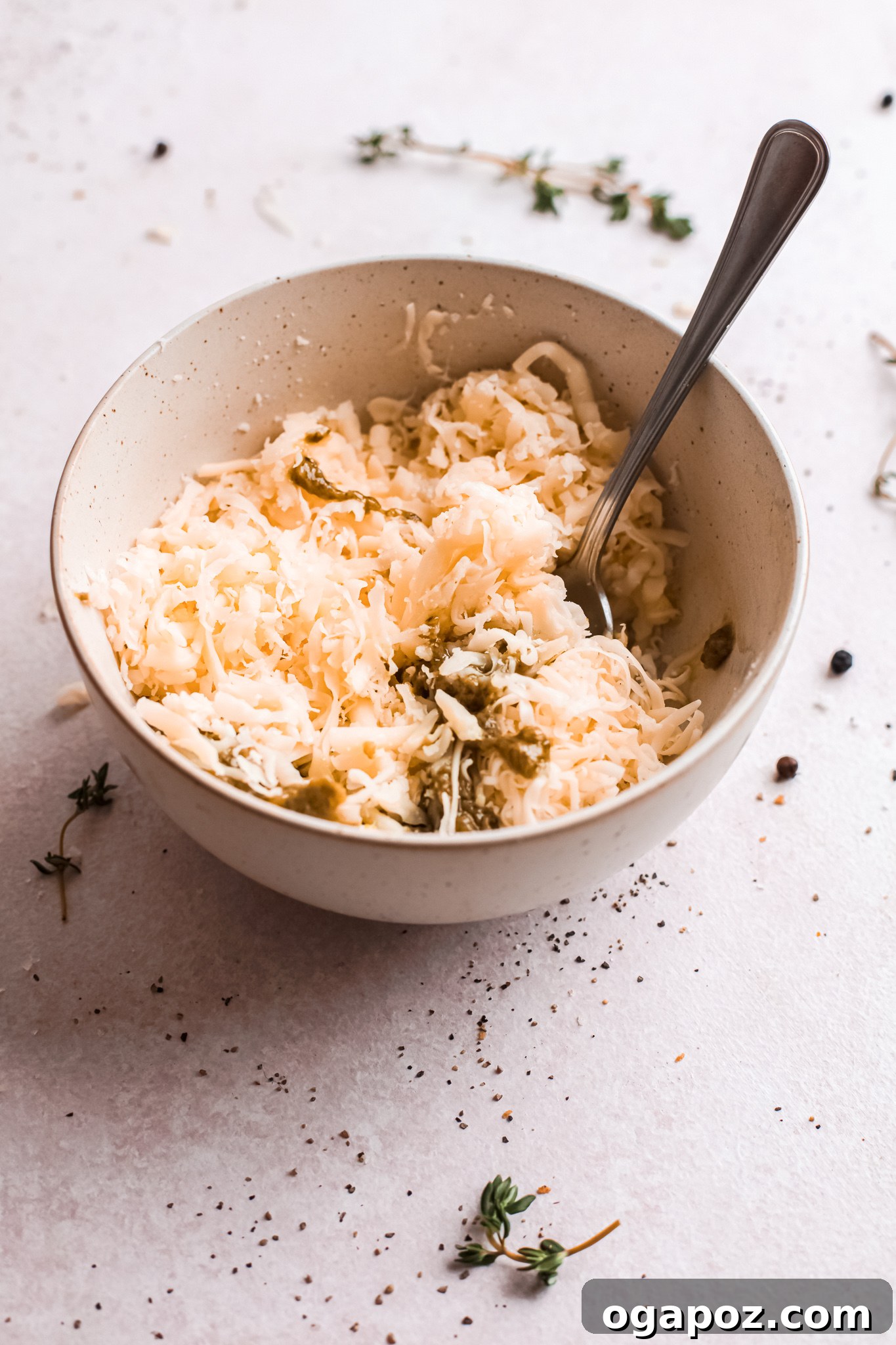
- Prepare the Cheesy Sauce: While the squash is roasting, prepare the decadent cheese sauce. In a medium-sized bowl, combine the fresh or store-bought pesto with the creamy ricotta cheese, 3/4 cup of the shredded mozzarella, and the grated Parmesan cheese. Pour in the milk (or cream for extra richness) and stir thoroughly until all ingredients are well combined and the sauce is smooth. Season the mixture with salt and freshly ground black pepper to taste.
- Fill and Bake: Once the squash is slightly cooled (enough to handle), use a fork to gently scrape some of the spaghetti squash strands from the edges, creating a cavity in each half. Leave a good amount of squash in the “shell” to mix with the sauce. Carefully spoon the prepared cheesy sauce mixture into the squash “boats,” ensuring an even distribution. Cover the filled squash halves with aluminum foil to prevent the cheese from browning too quickly and to allow the flavors to meld beautifully. Return to the oven and bake for another 20 minutes.
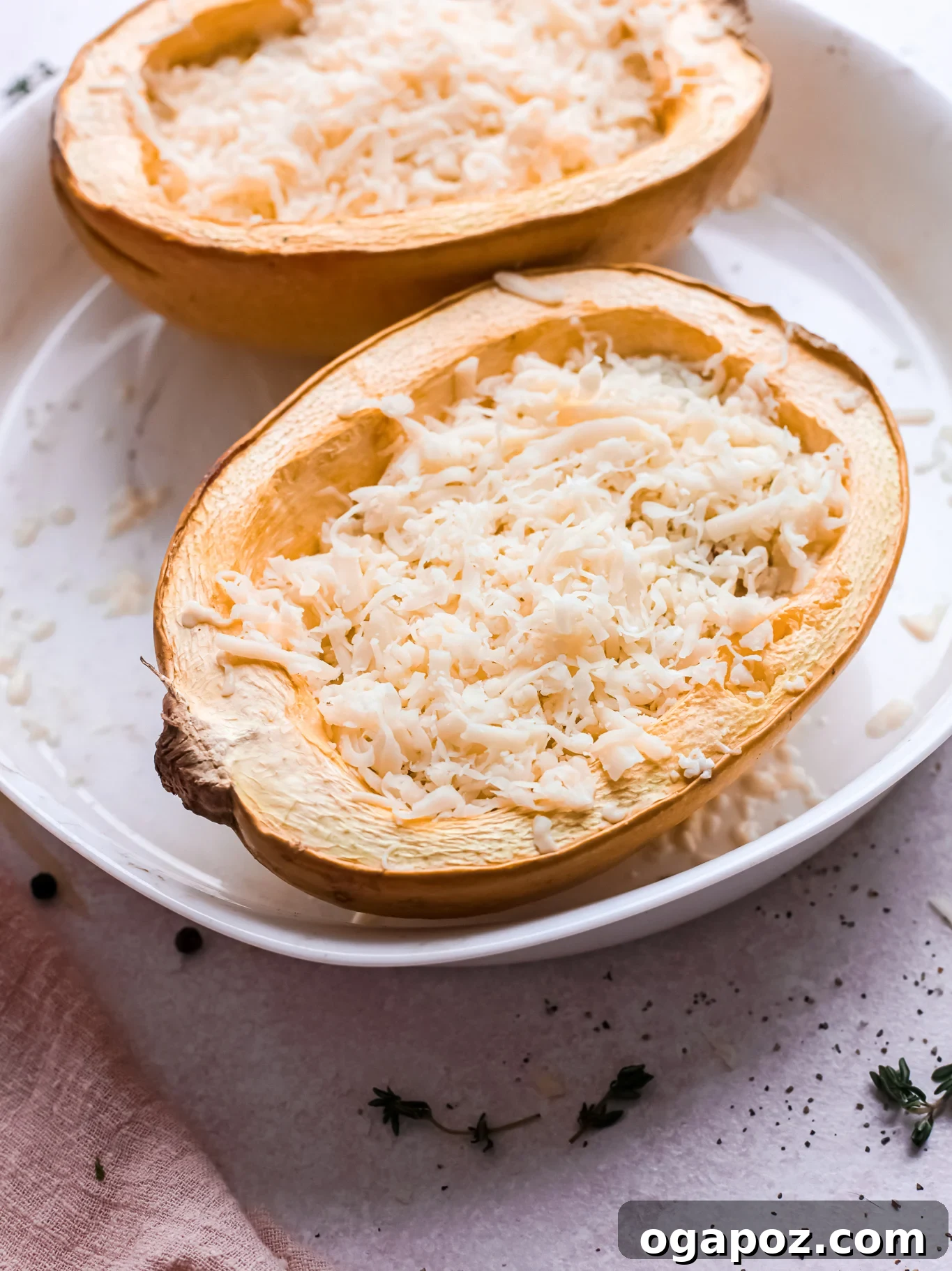
- Final Bake & Garnish: Remove the aluminum foil from the squash. Sprinkle the remaining 1/4 cup of mozzarella cheese evenly over the top of each squash half. Return the squash to the oven, uncovered, and bake for an additional 5-10 minutes, or until the cheese is beautifully golden brown and bubbly, indicating it’s perfectly melted and slightly caramelized.
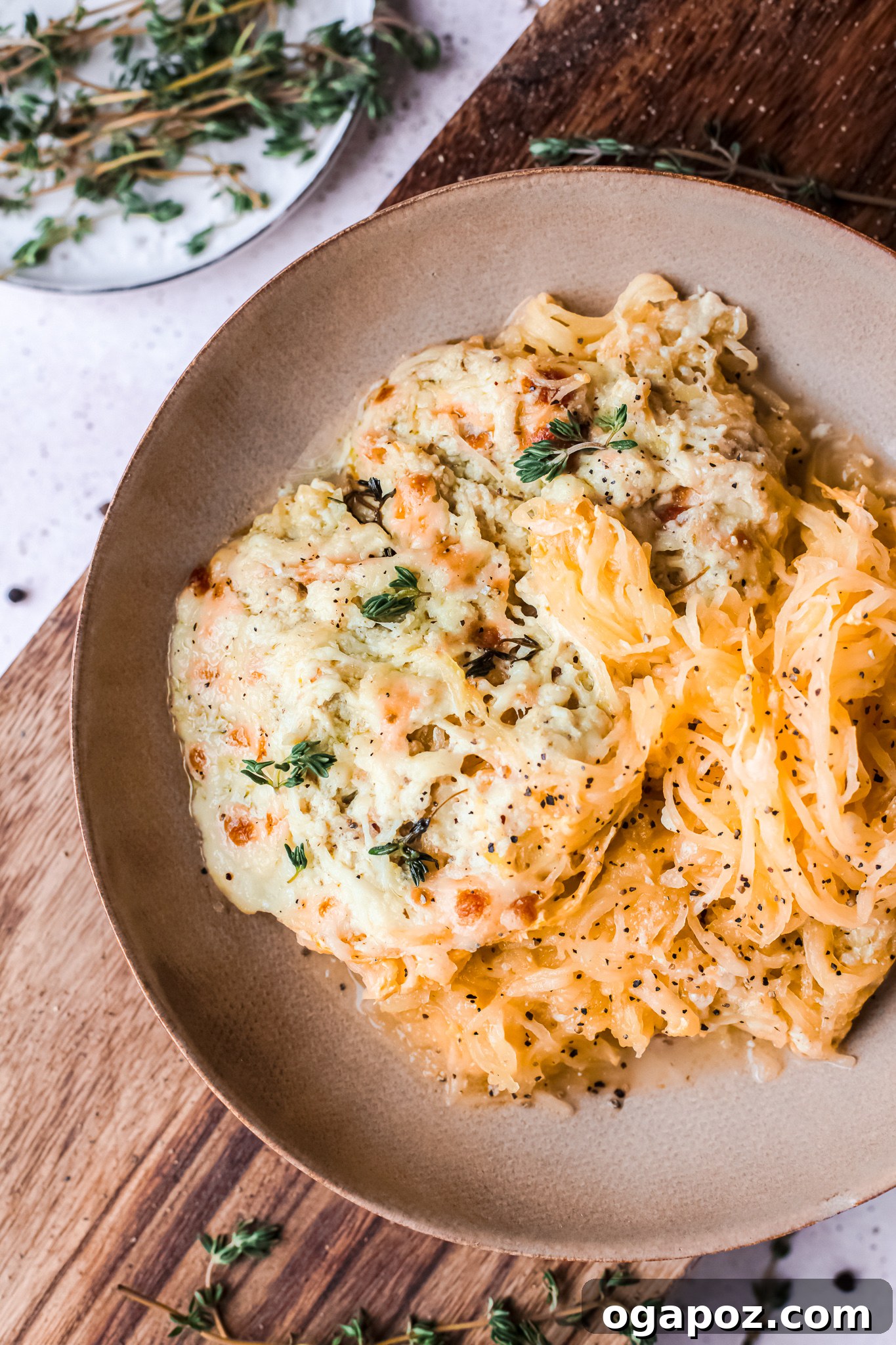
- Serve & Enjoy: Carefully take the baked cheesy spaghetti squash out of the oven. With the help of a fork, gently scrape the cooked spaghetti squash strands from the sides, mixing them thoroughly with the warm, cheesy sauce right in their natural bowls. This combines all the flavors and textures. Garnish generously with fresh thyme and parsley for a burst of color and herbaceous aroma. Serve warm and savor every comforting bite!
How to Serve This Versatile Squash: Meal Pairing Suggestions
Beyond the cheesy creamy sauce highlighted in this recipe, roasted spaghetti squash offers a world of culinary possibilities. It’s incredibly adaptable and can be enjoyed in numerous ways as a main course or a hearty side. Here are some fantastic ideas to inspire you:
- Classic Pesto Infusion: A simple yet sensational way to enjoy spaghetti squash noodles is by mixing them directly with pesto. The vibrant, herbaceous notes of basil pesto perfectly complement the mild squash. For an extra touch, try making this homemade pesto. You can also experiment with other pesto varieties like spinach or arugula pesto for different flavor profiles.
- Your Favorite Pasta Sauce: Treat spaghetti squash just as you would regular pasta! It pairs beautifully with almost any pasta sauce. Consider topping it with a rich marinara sauce, a creamy Alfredo, or a hearty mushroom ragu. My personal favorite is adding a generous dollop of slow cooker spaghetti sauce to mine for a truly comforting meal.
- Boost with Protein: To transform spaghetti squash into a complete and satisfying meal, incorporate your favorite protein. It’s excellent with various options:
- Chicken: Serve it topped with slices of Baked Chicken Parmesan or grilled chicken breast.
- Meatballs: Classic meatballs, whether Mediterranean Turkey Meatballs or savory Pork Meatballs, are a perfect pairing.
- Seafood: Sautéed shrimp or scallops can add a touch of elegance.
- Vegetarian Options: For plant-based eaters, consider topping with roasted chickpeas, black beans, or a lentil ragu.
- Simple Olive Oil and Herbs: Sometimes, less is more. For a light and fresh approach, I often serve my spaghetti squash with a drizzle of high-quality extra virgin olive oil and a sprinkle of fresh herbs like rosemary, oregano, or chives. You can also elevate the flavor with a dash of unique spices such as za’atar, Italian seasoning, or a pinch of crushed red pepper flakes for a subtle kick.
- Crunchy Breadcrumb Topping: For an added layer of texture and a beautiful golden crust, sprinkle regular breadcrumbs or panko breadcrumbs over the cheese during the last few minutes of baking. They crisp up beautifully, providing a delightful contrast to the soft squash and gooey cheese.
- Pair with Side Dishes: Serve your cheesy spaghetti squash alongside a crisp green salad with a light vinaigrette, or with a slice of warm, crusty garlic bread to complete the meal.
Storage and Meal Prep Tips
Planning ahead or dealing with leftovers is easy with this spaghetti squash recipe. Here are some helpful tips to keep your dish fresh and delicious:
- Reheating: The best way to reheat cheesy spaghetti squash is in a skillet over medium heat. Add a splash of broth or water if it seems dry, and gently stir until warmed through. You can also reheat individual portions in the microwave, though the texture might be slightly softer.
- Refrigerator Storage: Leftover baked cheesy spaghetti squash can be stored in an airtight container in the refrigerator for up to 5 days. This makes it an excellent option for healthy meal prepping throughout the week.
- Freezer Considerations: While cooked spaghetti squash can be frozen, I generally do not recommend freezing this particular cheesy baked version. The dairy components in the sauce (especially ricotta and mozzarella) tend to separate and become grainy upon thawing and reheating, leading to a less desirable texture. The squash itself can also become overly watery and mushy when frozen and thawed. If you wish to meal prep for the freezer, consider roasting the spaghetti squash separately and freezing the strands, then preparing the cheese sauce fresh when ready to serve.
Recipe FAQ: Frequently Asked Questions
Overcooking is a common pitfall with spaghetti squash. To avoid mushiness, always place the squash cut side down on the baking sheet. For a typical 2-pound squash, I find about 40 minutes of total roasting time (including the initial bake) is usually perfect. If you have a smaller squash, start checking it after about 30 minutes. To test for doneness, flip one half over and use a fork to gently run down the top edge of the squash. If it easily scrapes into distinct, firm strands, it’s ready. If it’s still hard, continue baking in 5-10 minute increments.
A ripe spaghetti squash will have a deep golden yellow or a rich dark yellowish color. The skin should be hard, thick, and feel smooth. Avoid squashes with green patches, which indicate immaturity. A simple test is to try to pierce the skin with your fingernail; if your nail doesn’t easily penetrate, the squash is ripe and ready for cooking.
Yes, with a few substitutions! You can replace the dairy ricotta, mozzarella, and Parmesan with plant-based alternatives available in most grocery stores. Use unsweetened almond milk or oat milk instead of regular milk. Ensure your pesto is also dairy-free (some contain Parmesan). The texture and flavor will be slightly different but still delicious.
A medium-sized spaghetti squash, typically weighing between 2 to 3 pounds, is ideal for this recipe, yielding enough “noodles” for 2-4 servings. Larger squashes will require longer baking times. Adjust cooking times accordingly based on the size of your squash.
Absolutely! Spaghetti squash is a fantastic canvas for adding more vegetables. Consider sautéing some spinach, mushrooms, bell peppers, or zucchini and stirring them into the cheesy mixture before filling the squash halves. This is a great way to boost the nutritional content and add more flavor and texture.
More Delicious Squash Recipes to Explore
Vegetarian
Butternut Squash Apple Bake
Sides
Parmesan Delicata Squash
Pasta
Creamy Butternut Squash Pasta with Sausage
Vegetarian
Za’atar Roasted Delicata Squash
Baked Cheesy Spaghetti Squash Recipe
By Julia Jolliff
This Baked Cheesy Spaghetti Squash Recipe is an easy, low-carb, and incredibly comforting meal, perfect for a cozy fall or winter evening. Learn how to effortlessly bake a spaghetti squash and transform its delicate strands into a delicious base for a rich, cheesy pesto sauce. You’re going to love this healthy comfort food!
Prep Time: 10 mins
Cook Time: 1 hour
Total Time: 1 hr 10 mins
Yields: 2 servings
Ingredients
- 1 Spaghetti squash, halved and deseeded
- 1 teaspoon olive oil (for roasting squash)
- Coarse salt and black pepper, to taste
- 3 tablespoons pesto (homemade or store-bought)
- 1/3 cup ricotta cheese
- 1 cup mozzarella cheese, shredded (divided into 3/4 cup and 1/4 cup)
- 1/2 cup parmesan cheese, grated
- 3/4 cup milk (or cream for richer sauce)
- Fresh thyme, for garnish (optional)
- Fresh parsley, for garnish (optional)
Instructions
- Start by preheating your oven to 400°F (200°C). Carefully cut the spaghetti squash in half lengthwise and scoop out the seeds and fibrous strands. Sprinkle the cut sides of the squash with coarse salt and let sit for 15 minutes to draw out moisture.
- Rub the 1 teaspoon of olive oil over the two halves of the spaghetti squash. Place the squash cut side down on a parchment-lined baking sheet.
- Bake for 20-30 minutes, or until the squash is slightly soft to the touch. Remove from the oven but keep the oven on.
- Meanwhile, prepare the cheese sauce. In a bowl, combine the pesto with the ricotta cheese, 3/4 cup of the mozzarella, and the Parmesan cheese.
- Add the milk and stir well to combine until smooth. Season with salt and pepper to taste.
- Once the squash is cool enough to handle, gently scrape some of the strands from the edges to create a cavity in each half. Fill the spaghetti squash “boats” with the cheesy sauce. Cover with aluminum foil and bake for another 20 minutes.
- Remove the foil, sprinkle with the remaining 1/4 cup mozzarella cheese, and bake for an additional 5-10 minutes, or until the cheese is slightly golden and bubbly.
- Take out of the oven and, with the help of a fork, scrape the squash into strands, combining them with the sauce right in their shells. Garnish with fresh thyme and parsley, and enjoy warm!
Notes
- I love to add some fresh thyme on top to give it a fresh, herby flavor, but it’s entirely optional. Fresh parsley also works wonderfully!
- For extra richness, use heavy cream instead of milk in the cheese sauce.
- Adjust salt and pepper to your preference throughout the recipe. Remember Parmesan and pesto can be salty.
Nutrition Information (Approximate per serving)
Calories: 630kcal, Carbohydrates: 43g, Protein: 33g, Fat: 38g, Saturated Fat: 19g, Polyunsaturated Fat: 2g, Monounsaturated Fat: 8g, Cholesterol: 95mg, Sodium: 1114mg, Potassium: 768mg, Fiber: 8g, Sugar: 19g, Vitamin A: 1939IU, Vitamin C: 10mg, Calcium: 924mg, Iron: 2mg
Nutrition information is automatically calculated and should only be used as an approximation.
Tried this recipe?
We’d love to see your creations! Mention @acedarspoon or tag #acedarspoon on social media!
Don’t forget to leave a star rating and comment below. Subscribe to my newsletter or follow me on Facebook, Instagram, or Pinterest for the latest recipes and culinary inspiration.