
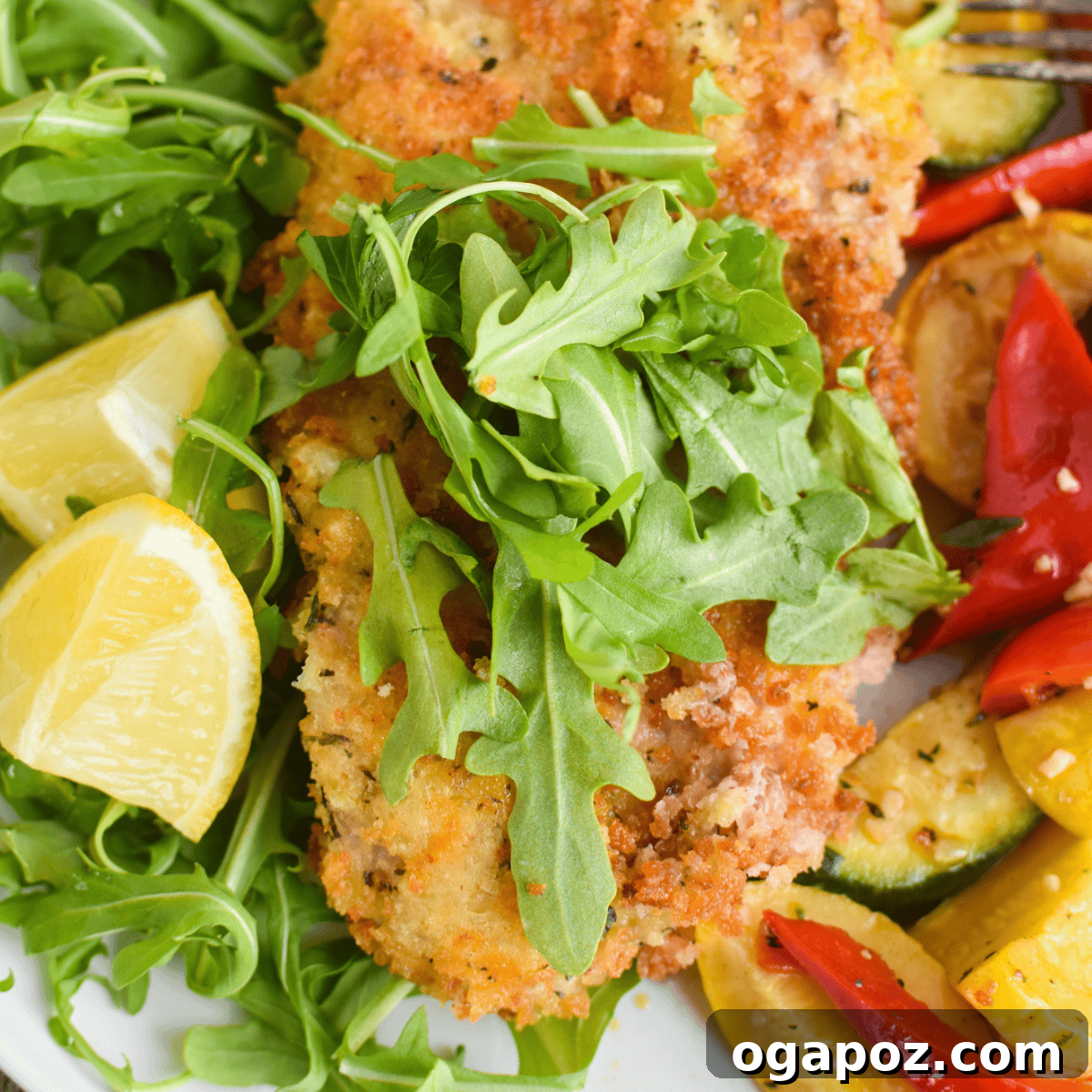
Discover how to create the ultimate Easy Veal Milanese Recipe right in your own kitchen. This classic Italian dish transforms delicate veal scaloppine into a culinary masterpiece, featuring a perfectly crisp, golden-brown crust and a tender, succulent interior. Our recipe simplifies the process, guiding you through breading the veal with a savory blend of egg, flour, breadcrumbs, aromatic spices, and a touch of Parmesan cheese, followed by a quick sauté that locks in flavor and texture. Prepare to impress your family and friends with this restaurant-quality dish that’s surprisingly straightforward to make!
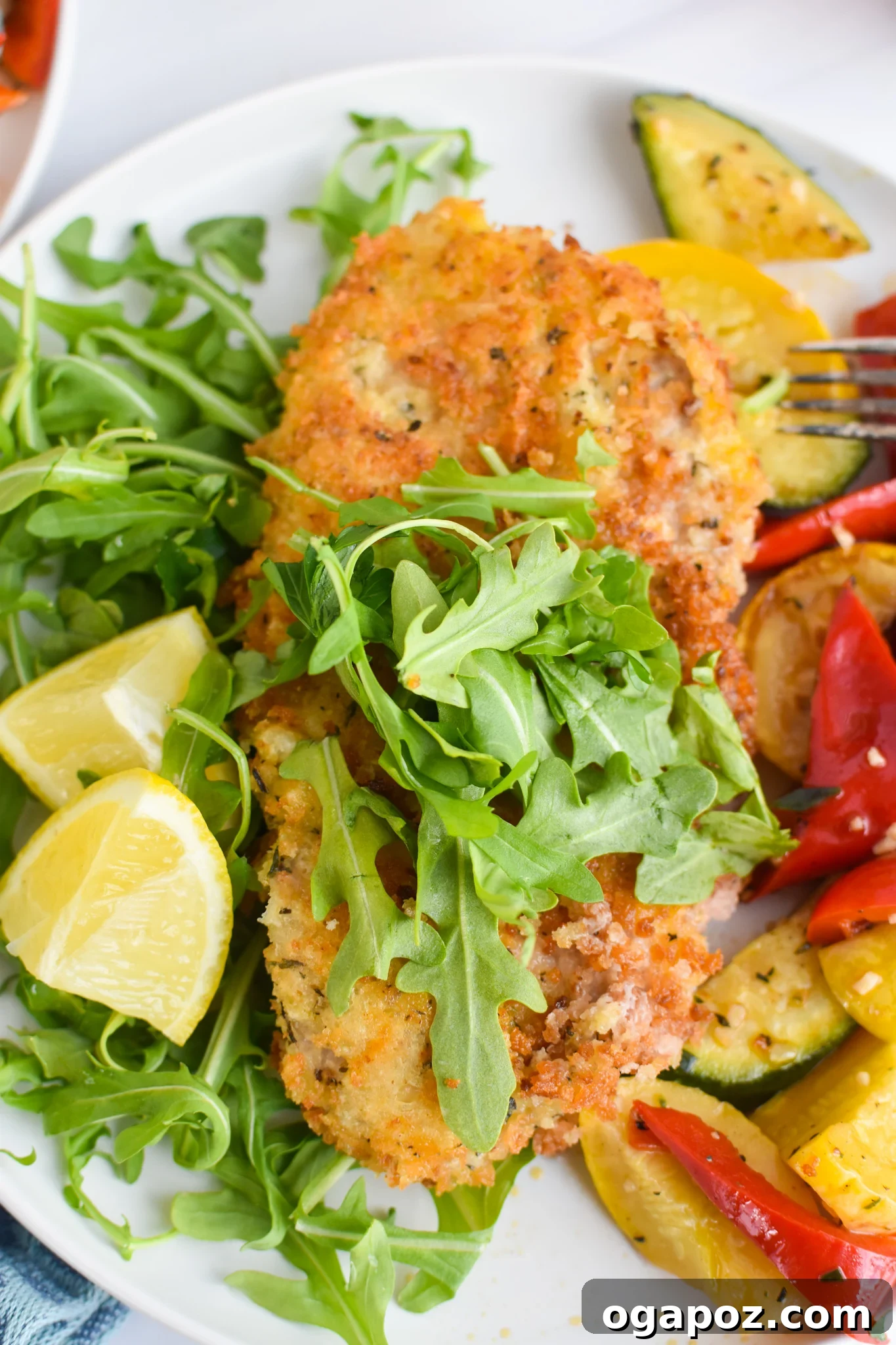
Today, we are thrilled to share an incredibly simple yet authentic Veal Milanese recipe using readily available veal scaloppine. This dish promises to elevate your home cooking, making you feel as though you’ve brought a piece of a fine Italian restaurant right to your dining table.
What is Veal Milanese? A Classic Italian Delight
For those new to this exquisite dish, you might be asking, “What exactly is Veal Milanese?” Also known as Cotoletta alla Milanese, it’s a quintessential Italian preparation method that involves thinly pounded cuts of meat, traditionally veal, which are breaded and then pan-fried until golden and crispy. This technique transforms humble meat into a delightful culinary experience, celebrated for its satisfying crunch and juicy texture. While veal is the classic choice, the “Milanese” style can be applied to various meats, making it a versatile and beloved cooking method worldwide.
Many of you have already enjoyed our other popular veal recipes, such as our vibrant Veal Piccata, the succulent Easy Italian Veal Chops, and our comforting Slow Cooker Veal Meatballs. This Veal Milanese recipe continues that tradition, offering another fantastic way to savor the delicate flavor and tender texture of veal.
Recipe Ingredients: Building the Perfect Veal Milanese
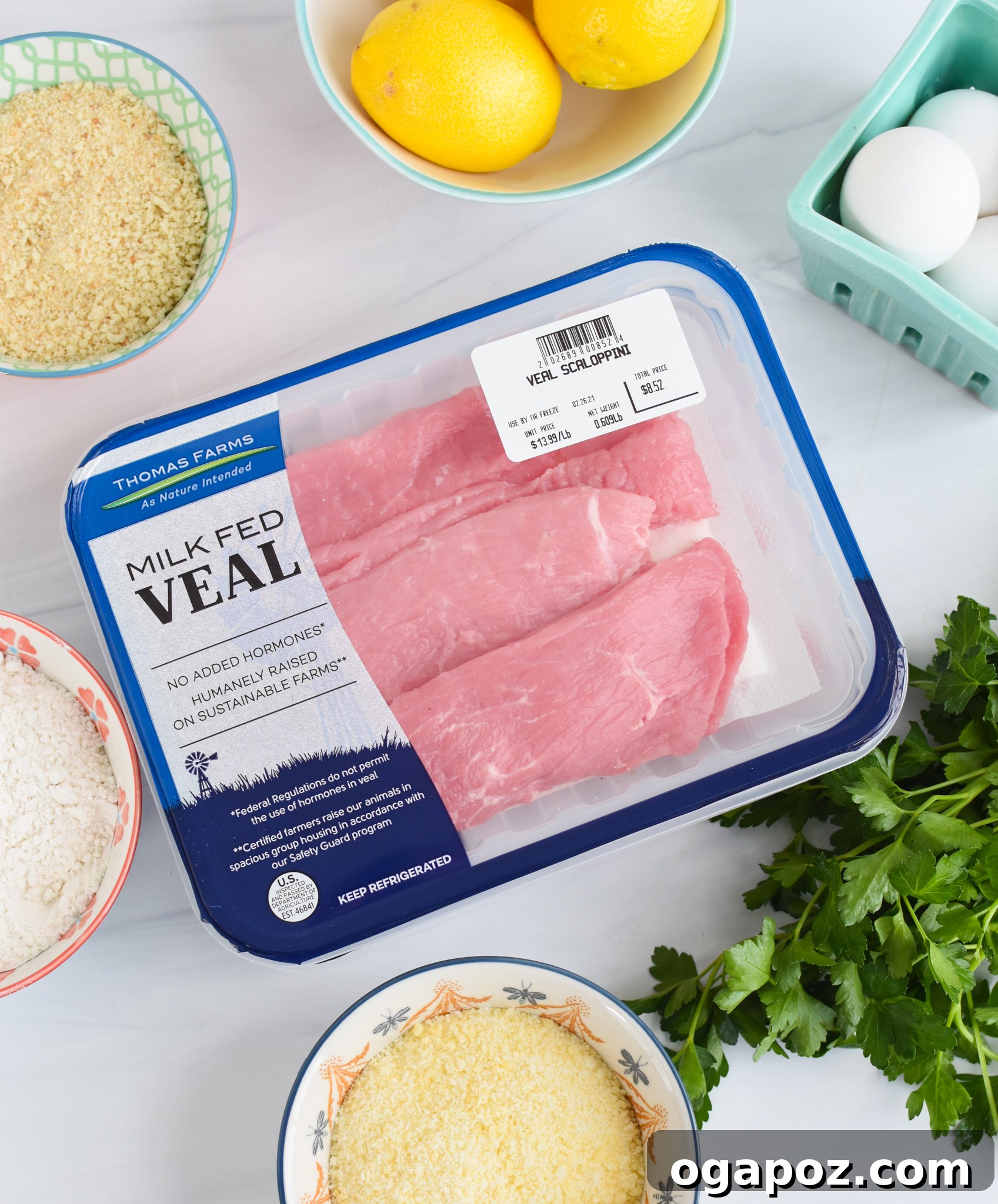
Crafting exceptional Veal Milanese begins with selecting the right ingredients. Below, we’ve detailed each component, offering tips and potential substitutions to ensure your dish is nothing short of perfect. Please refer to the recipe card at the bottom for precise measurements.
- Veal Scaloppine: The Star of the Show
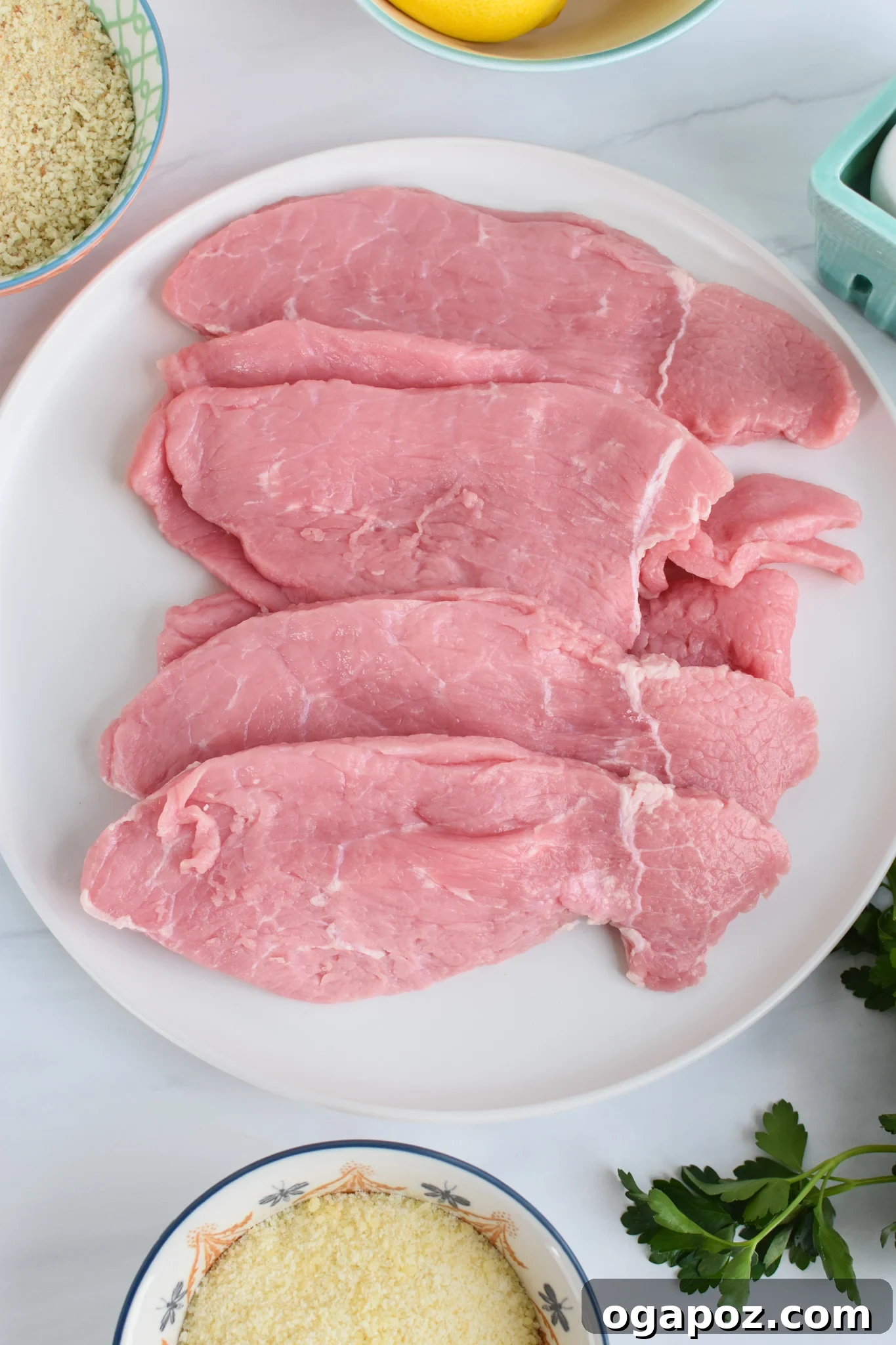
Our recipe calls for 2 pounds of thinly sliced veal scaloppine. Scaloppine refers to thin, boneless cuts of meat, typically pounded even thinner. If scaloppine isn’t available, thinly sliced veal cutlets are an excellent alternative. It’s crucial that the veal is very thin, ideally about 1/4 inch thick, to ensure quick and even cooking and that signature tender texture. You can easily achieve this by placing the veal between two sheets of plastic wrap and pounding it gently with a meat mallet or a heavy pan. - Large Eggs: The Binders
Four large eggs are essential for creating the binding mixture that helps the flour and breadcrumbs adhere to the veal. The egg wash forms a crucial layer that ensures a thick, even, and crispy crust. Be sure to beat them thoroughly to achieve a consistent coating. - All-Purpose Flour: The First Coat
We use 1 1/2 cups of all-purpose flour for the initial dredging. This light coating helps the egg wash cling better to the veal. For a slightly different texture or dietary preference, you could experiment with whole wheat flour or even a gluten-free all-purpose flour blend. - Plain Dry Bread Crumbs: The Crispy Foundation
Two cups of plain dry breadcrumbs form the primary component of our crispy crust. While plain breadcrumbs work wonderfully, feel free to use Panko breadcrumbs for an extra crunchy texture, or pre-seasoned breadcrumbs if you prefer a simpler spice blend. Homemade breadcrumbs from stale bread can also provide superior flavor and texture. - Shredded Parmesan Cheese: The Savory Twist (Optional, but Recommended)
Adding 1/2 cup of shredded Parmesan cheese to the breadcrumb mixture introduces a delightful salty, umami note that complements the veal beautifully. While traditional Veal Milanese often omits cheese, we find it enhances the flavor profile significantly. Feel free to skip this step if you prefer a strictly classic preparation. - Aromatic Spices: The Flavor Boost
A blend of 1 teaspoon dried basil, 1 teaspoon oregano, and 1 teaspoon dried thyme infuses the breading with an authentic Italian aroma. These herbs add depth and warmth to the dish. For variations, consider Italian seasoning, a pinch of paprika for color, or a touch of dried rosemary. - Lemon Zest: A Bright, Citrusy Hint (Optional)
Two teaspoons of lemon zest, added to the breadcrumb mixture, provide a wonderfully bright, fresh aroma and subtle citrusy flavor that cuts through the richness of the fried veal. It’s a small addition that makes a big impact, highly recommended for a truly vibrant dish. - Salt and Black Pepper: Essential Seasoning
1/2 teaspoon of salt and 1/8 teaspoon of black pepper are used both in the egg wash and directly on the veal to enhance its natural flavors and season the crust. Adjust to your taste. - Vegetable Oil: For Frying
Approximately 2 cups of vegetable oil (or olive oil) are needed for pan-frying. Choose an oil with a high smoke point to ensure the veal cooks to a beautiful golden brown without burning. - Arugula and Lemon Wedges: The Perfect Garnish
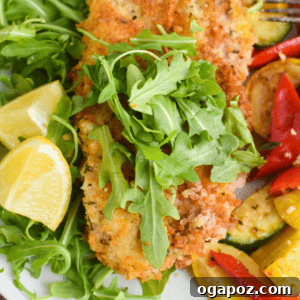
Fresh arugula and lemon wedges are not just garnishes; they are integral to the Veal Milanese experience. The peppery bite of arugula and the bright acidity of fresh lemon juice provide a refreshing counterpoint to the rich, fried veal, balancing the flavors perfectly.
How to Make Easy Veal Milanese: Step-by-Step Guide
Creating this delicious Veal Milanese is a straightforward process, relying on proper preparation and careful frying. Follow these steps for perfect results every time:
- Prepare Your Breading Stations: Gather three shallow dishes or wide, shallow bowls. In the first dish, add the all-purpose flour. In the second, beat the eggs thoroughly with a whisk, then season with salt and pepper to create your egg wash. In the third dish, combine the plain bread crumbs, shredded Parmesan cheese (if using), lemon zest (if using), basil, oregano, and thyme, mixing well to ensure the spices are evenly distributed.
- Prepare the Veal: Pat each piece of veal scaloppine thoroughly dry with paper towels. This crucial step helps the breading adhere better and promotes a crispier crust. Season both sides of the veal lightly with additional salt and pepper.
- Set Up Your Assembly Line: Arrange the three shallow dishes in a logical order for breading: flour first, then the egg mixture, and finally the seasoned breadcrumbs. Place a large plate or baking sheet at the end of the line to hold the breaded veal cutlets.
- Dredge in Flour: Take one piece of veal and dip it into the flour, ensuring both sides are completely covered. Gently shake off any excess flour; a thin, even coat is all you need.
- Coat in Egg Wash: Transfer the floured veal to the egg mixture. Make sure it is fully submerged and coated on both sides. Allow any excess egg to drip off before moving to the next step.
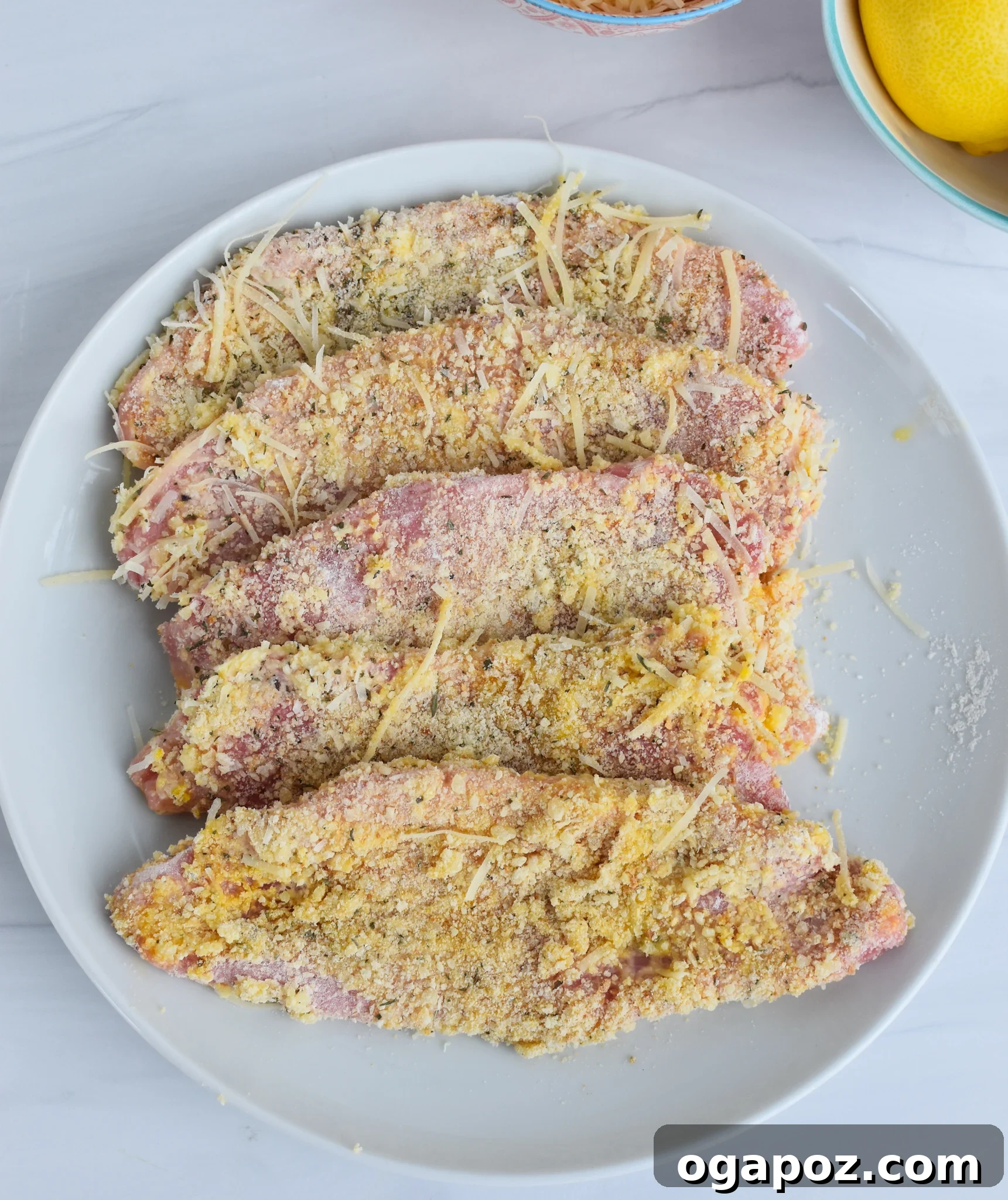
- Press into Breadcrumbs: Finally, place the egg-coated veal into the seasoned breadcrumb mixture. Press the breadcrumbs gently onto both sides of the veal, ensuring a thick and even layer. This pressing action helps the crumbs stick firmly, preventing them from falling off during cooking.
- Repeat and Rest: Set the fully breaded piece of veal aside on your prepared large plate. Continue this breading process with the remaining veal scaloppine. Once all pieces are breaded, it’s beneficial to let them rest for 10-15 minutes in the refrigerator. This allows the breading to set, further ensuring it stays intact during frying.
- Heat the Oil: Add the vegetable oil or olive oil to a large, heavy-bottomed frying pan or skillet over medium-high heat. Heat the oil until it shimmers and reaches about 350-375°F (175-190°C). You can test if the oil is ready by dropping a tiny pinch of breadcrumbs into it; if they sizzle immediately, it’s hot enough.
- Fry the Veal in Batches: Carefully add one piece of breaded veal to the hot oil. Avoid overcrowding the pan, as this can lower the oil temperature and lead to soggy veal. Cook for about 1 to 2 minutes on the first side, or until it’s beautifully golden brown and crispy.
- Flip and Finish: Using tongs, gently turn the veal over and cook for another 1 to 2 minutes on the second side, until it matches the golden-brown color of the first side. The quick cooking time is essential for keeping the veal tender and juicy.
- Check Doneness and Drain: Remove the cooked veal from the skillet and place it on a plate lined with paper towels to absorb any excess oil. The internal temperature of the veal should reach 145°F (63°C) for optimal flavor and doneness. Sprinkle a little extra salt over the hot veal as soon as it comes out of the pan.
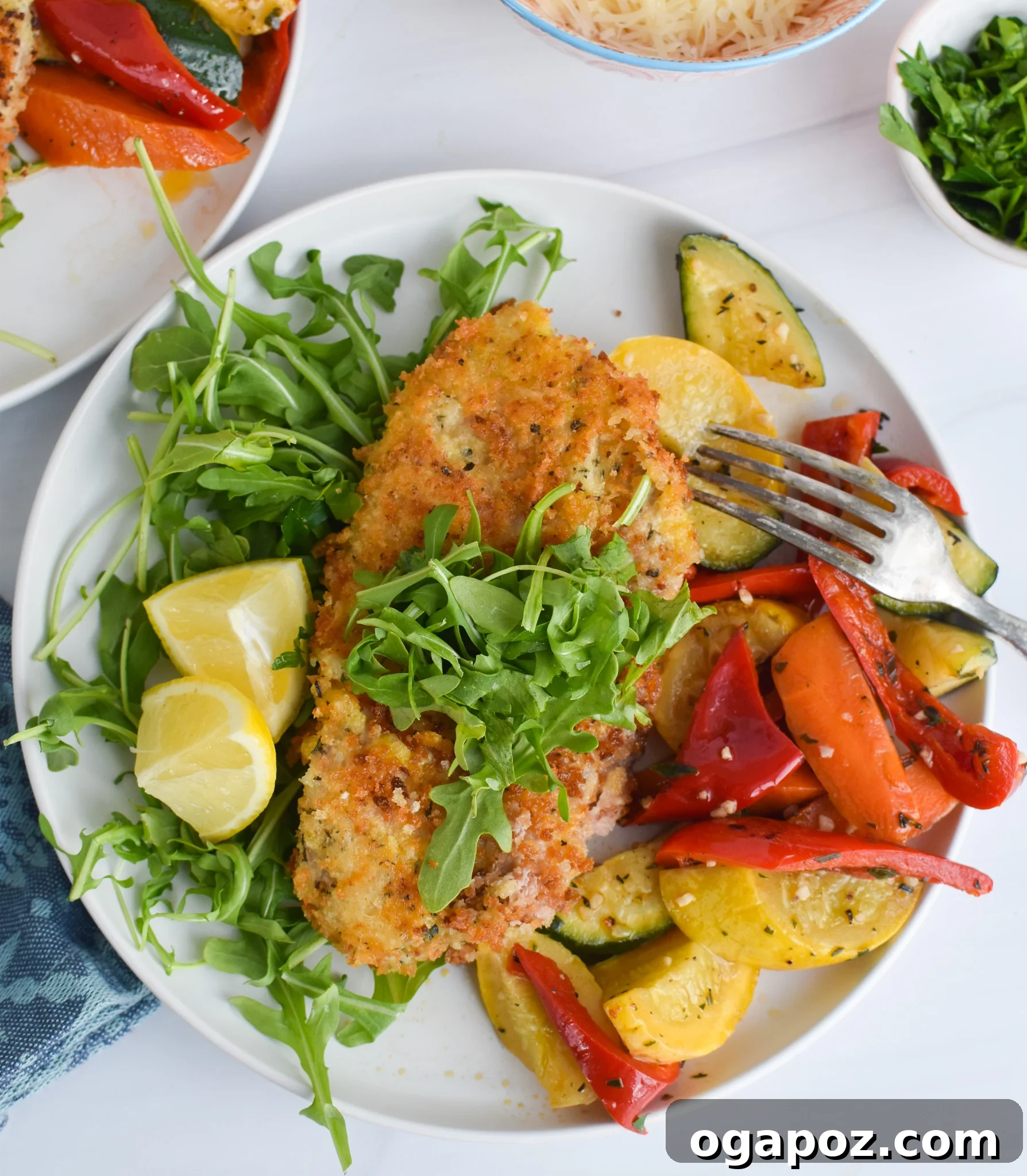
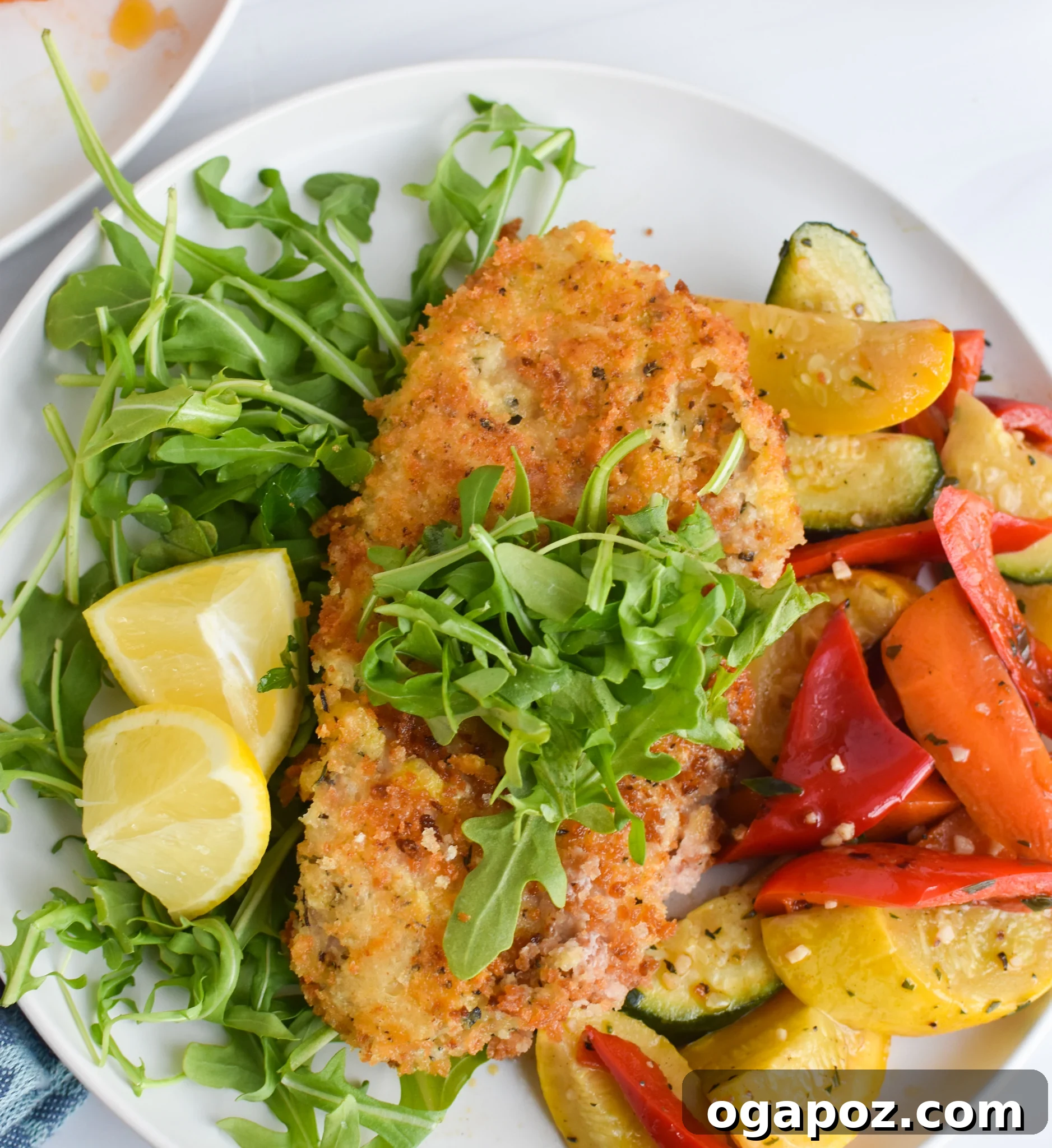
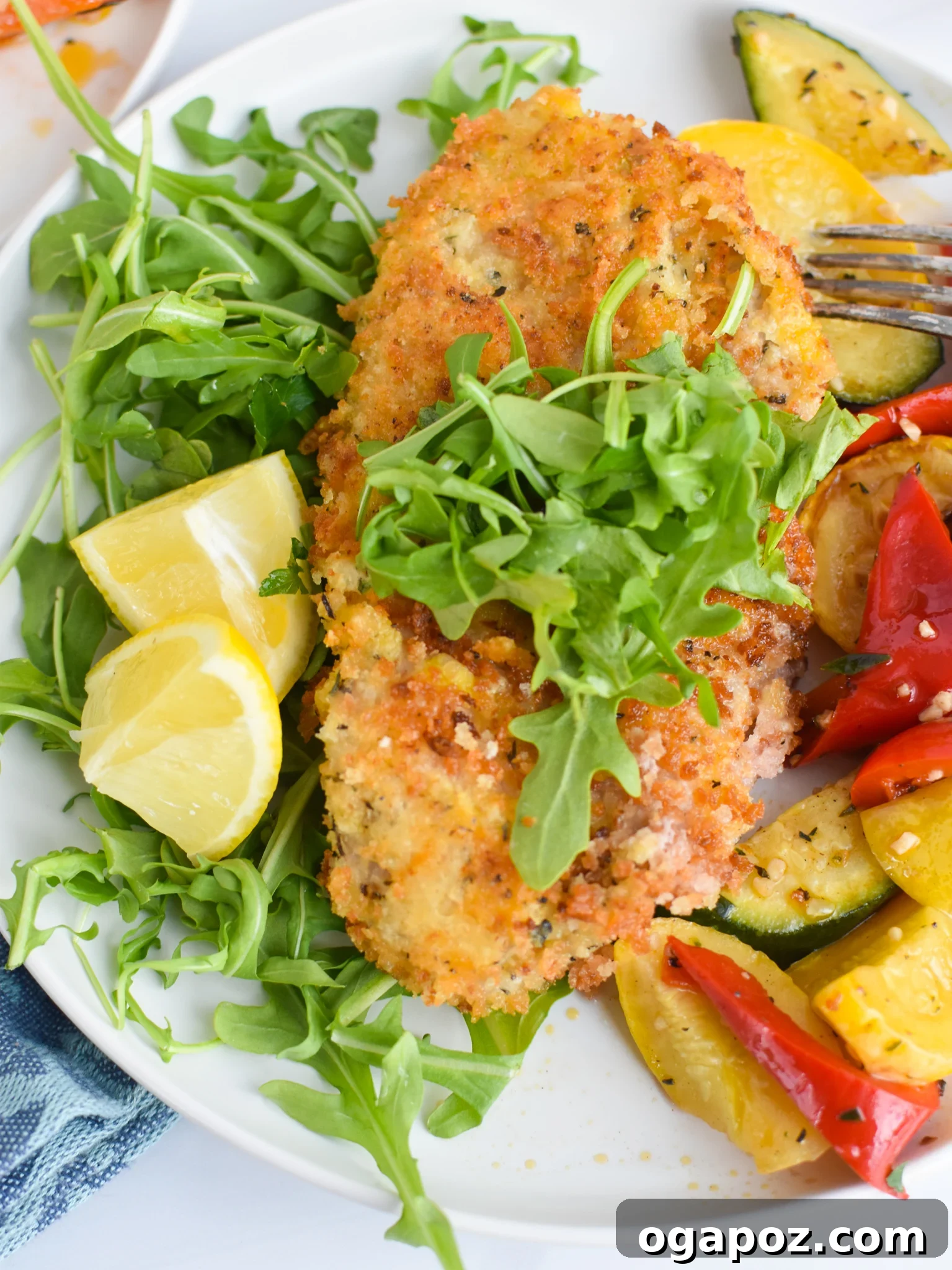
- Serve Immediately: Serve your freshly fried, breaded veal cutlets with a generous side of fresh arugula salad, perhaps dressed simply with lemon juice and a drizzle of olive oil. Garnish each serving with lemon wedges and, if desired, a sprinkle of extra Parmesan cheese. The acidity of the lemon and the peppery arugula beautifully complement the rich, crispy veal.
Recipe Tips for a Flawless Veal Milanese
Achieving restaurant-quality Veal Milanese is easier than you think with these expert tips:
- Pound it Thin for Tenderness: The thinner the veal, the more tender and quicker it will cook. Aim for a uniform 1/4-inch thickness. This also ensures an ideal meat-to-breading ratio for maximum crispness.
- Ensure Even Breading: Patting the veal dry is crucial for the flour to stick. When pressing the breadcrumbs, be firm but gentle to create an even, secure coating. This prevents the breading from falling off during frying.
- Optimal Oil Temperature: Maintaining the correct oil temperature (around 350-375°F or 175-190°C) is key. If the oil isn’t hot enough, the veal will absorb too much oil and become greasy. If it’s too hot, the breading will burn before the veal cooks through. Use a kitchen thermometer or the breadcrumb test mentioned in the instructions.
- Don’t Overcrowd the Pan: Fry the veal in batches to maintain the oil’s temperature and allow each piece to cook evenly and crisp up properly. Overcrowding leads to steaming instead of frying, resulting in a soggy crust.
- Cook to Perfection: For optimal flavor, juiciness, and tenderness, cook veal to an internal temperature of 145°F (63°C). Overcooking will dry out the delicate veal. The most accurate way to check doneness is with an instant-read meat thermometer inserted into the thickest part of the cutlet.
- Rest the Meat: After frying, allow the cooked veal to rest for a minute or two on a paper-towel-lined plate. This helps redistribute the juices, ensuring the meat remains tender. The paper towels also absorb excess oil, keeping the crust crisp.
- Savor the Flavor with Marinades: For an extra layer of flavor and juiciness, veal chops, roasts, and steaks can be marinated in the refrigerator for up to five days. Use mixtures of oils, herbs, and acidic ingredients such as lemon juice, vinegar, or wine. For scaloppine, a shorter 30-minute marinade can also be effective.
- Enhance with Dry Rubs or Sauces: Beyond breading, consider applying a dry rub for a different flavor profile, or serving with a light pan sauce (like a lemon-butter sauce) to complement the fried texture. Garlic, fresh or dried herbs (like rosemary or sage), and black pepper are excellent additions.
- Trim Fat After Cooking: To preserve the natural juiciness and create incredibly tender meat, leave a thin layer of fat on larger cuts like roasts, chops, and thicker steaks during cooking. You can trim it off before serving if desired. For scaloppine, excess fat is usually minimal.
- Reheating Leftovers: While best enjoyed fresh, leftover Veal Milanese can be gently reheated. For best results, use an air fryer or oven at 350°F (175°C) for about 10-15 minutes until warmed through and crispy again. Avoid the microwave, which can make it soggy.
Serving Suggestions for Your Veal Milanese
While a simple arugula salad with lemon is the classic accompaniment, Veal Milanese pairs beautifully with a variety of side dishes. Here are some ideas to complete your meal:
- Simple Pasta: A light pasta dish, such as spaghetti aglio e olio (garlic and oil) or pasta with a fresh tomato sauce, makes a satisfying Italian pairing.
- Roasted Vegetables: Asparagus, green beans, or broccoli roasted with garlic and olive oil offer a healthy and flavorful side.
- Mashed Potatoes or Polenta: For a more comforting meal, creamy mashed potatoes or soft polenta provide a wonderful contrast to the crispy veal.
- Risotto: A delicate lemon risotto or a simple Parmesan risotto can elevate the meal to a special occasion dish.
- Crusty Bread: Don’t forget a good crusty bread to soak up any delicious juices!
Variations and Customizations
The beauty of the Milanese style is its adaptability. Feel free to get creative with these variations:
- Chicken or Pork Milanese: Not a fan of veal or looking for an alternative? This recipe works exceptionally well with thinly pounded chicken breasts or pork cutlets.
- Herb and Spice Blends: Experiment with different herbs. A blend of fresh parsley, rosemary, and sage can offer a more robust flavor. For a kick, add a pinch of red pepper flakes to your breadcrumbs.
- Cheese Alternatives: Instead of Parmesan, try Pecorino Romano for a sharper, saltier flavor, or even a blend of Italian cheeses.
- Nutty Crust: For a unique twist, finely ground nuts like almonds or pistachios can be added to the breadcrumb mixture for an extra layer of flavor and texture.
Frequently Asked Questions About Veal Milanese
- What does “Milanese” mean in cooking?
- The term “Milanese” or “alla Milanese” refers to a style of preparation originating from Milan, Italy. It typically involves coating a thin cut of meat (often veal) in egg and breadcrumbs, then pan-frying it until golden and crispy.
- Is Veal Milanese the same as Wiener Schnitzel?
- They are very similar! Both involve thinly pounded, breaded, and fried meat. Wiener Schnitzel traditionally uses veal (specifically from Austria), while Veal Milanese is Italian. The key difference lies in the specific breading and sometimes the fat used for frying (Wiener Schnitzel often uses clarified butter, while Milanese might use butter or oil). Our recipe provides an accessible and delicious take on this classic style.
- How do I prevent my breading from becoming soggy?
- Several factors contribute to a crispy crust: ensure your veal is thoroughly patted dry before breading, press the breadcrumbs firmly to create a secure coating, and maintain a consistent oil temperature during frying. Most importantly, avoid overcrowding the pan, as this lowers the oil temperature and can lead to steaming, resulting in a soggy breading.
- Can I bake or air fry Veal Milanese instead of pan-frying?
- While pan-frying yields the most authentic and crispy results, you can adapt this recipe for baking or air frying. To bake, preheat your oven to 400°F (200°C), lightly oil a baking sheet, and bake for 10-15 minutes, flipping halfway, until golden and cooked through. For air frying, preheat to 375°F (190°C), lightly spray the veal with oil, and air fry for 8-12 minutes, flipping halfway, until crispy and cooked. Note that the texture may not be quite as rich as pan-fried.
Explore More Delicious Beef and Veal Recipes
If you loved this Veal Milanese, you’ll surely enjoy our other beef and veal creations. Expand your culinary repertoire with these fantastic dishes:
Beef
Lebanese Beef and Green Beans
Beef
Slow Cooker Italian Beef Sandwiches
Beef
Slow Cooker Mediterranean Beef Meatballs
Beef
Slow Cooker Mexican Beef Brisket (Tender + Flavorful)
Loved this recipe? Share your experience below! Stay updated with new recipes by following us on
Facebook,
Instagram, or
Pinterest.
Easy Veal Milanese Recipe
Julia Jolliff
15 minutes
20 minutes
35 minutes
4
Ingredients
- 2 pounds thinly sliced veal scaloppine
- 4 large eggs
- 1 1/2 cups all-purpose flour
- 2 cups plain dry bread crumbs
- 1/2 cup shredded Parmesan cheese
- 2 teaspoons lemon zest {optional}
- 1 teaspoon dried basil
- 1 teaspoon oregano
- 1 teaspoon dried thyme
- 1/2 teaspoon salt
- 1/8 teaspoon black pepper
- 2 cups vegetable oil
- Arugula
- Lemon wedges
Instructions
-
Set out three shallow dishes for your breading station.
-
In the first shallow dish, beat the eggs thoroughly with salt and pepper to create the egg wash. Add the flour into the second shallow dish.
-
In the third shallow dish, mix together the bread crumbs, Parmesan cheese (if using), lemon zest (if using), basil, oregano, and thyme until well combined.
-
Pat the veal scaloppine completely dry with paper towels. Season both sides of the veal lightly with salt and pepper.
-
Arrange the three bowls in the following order for breading: flour, then eggs, and finally the seasoned breadcrumbs. Place a large plate at the end to hold the breaded veal.
-
Take one piece of veal and first dip it into the flour, coating both sides. Gently shake off any excess flour.
-
Next, place the floured veal into the beaten eggs, ensuring both sides are completely coated. Allow any excess egg to drip off.
-
Lastly, transfer the veal to the bread crumb mixture. Press the crumbs firmly into the veal on both sides to create a thick, even coating. Set the breaded piece of veal aside on the large plate and continue this process with the remaining veal.
-
Add the vegetable oil to a large skillet or frying pan over medium-high heat. Heat the oil until it shimmers and reaches approximately 350-375°F (175-190°C).
-
Carefully add one piece of breaded veal to the hot oil. Cook for about 1-2 minutes on the first side, until deeply golden brown and crispy. Use tongs to carefully turn the veal over and cook until the second side is also golden brown, about another 1-2 minutes.
-
Add more oil as needed between batches. Work in batches to avoid overcrowding the skillet, ensuring each piece fries properly. Remove the cooked veal when its internal temperature reaches 145°F (63°C) and place it on a paper-towel-lined plate to drain excess oil. Sprinkle a little salt over the finished veal and serve immediately, topped with fresh arugula. Garnish with lemon wedges and a side of extra Parmesan cheese, if desired.
Notes
- The addition of Parmesan cheese is optional. While more traditional Milanese preparations might omit it, we find it adds a wonderful depth of flavor to the crust.
- If veal scaloppine is unavailable, you can use thinly sliced veal cutlets. Ensure they are pounded very thin, around 1/4 inch thick, for best results.
Nutrition
Carbohydrates: 76g,
Protein: 66g,
Fat: 128g,
Saturated Fat: 23g,
Polyunsaturated Fat: 66g,
Monounsaturated Fat: 31g,
Trans Fat: 1g,
Cholesterol: 342mg,
Sodium: 1141mg,
Potassium: 958mg,
Fiber: 4g,
Sugar: 4g,
Vitamin A: 356IU,
Vitamin C: 1mg,
Calcium: 344mg,
Iron: 8mg
Nutrition information is automatically calculated and should be used as an approximation.
Tried this recipe?
Mention @acedarspoon or tag #acedarspoon!