
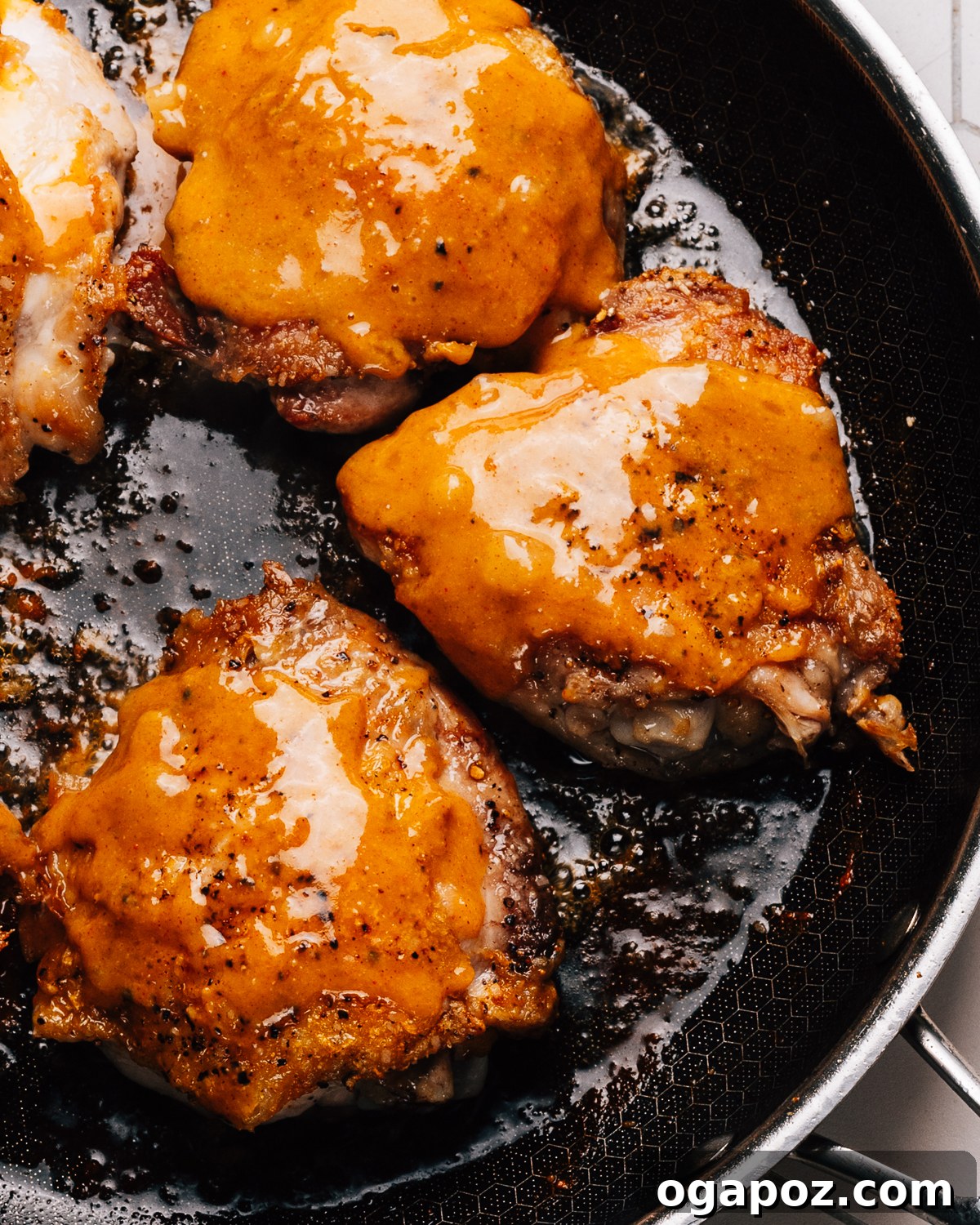
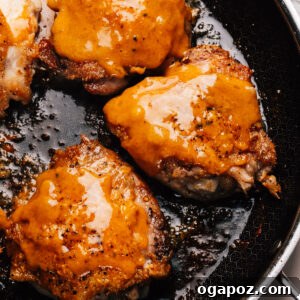
Welcome to your new favorite way to enjoy chicken: my absolute best Honey Mustard Chicken recipe! Imagine perfectly seared chicken thighs, boasting irresistibly crispy edges and wonderfully juicy meat, all coated in a luscious, well-glazed, sweet-and-savory honey mustard sauce. This dish is not just incredibly tasty, but it’s also surprisingly simple to prepare, moving effortlessly from your stovetop skillet to the oven for a flawless finish. Forget dry, bland chicken – this recipe guarantees tender, flavorful results every single time, making it an instant hit for weeknight dinners and special occasions alike.
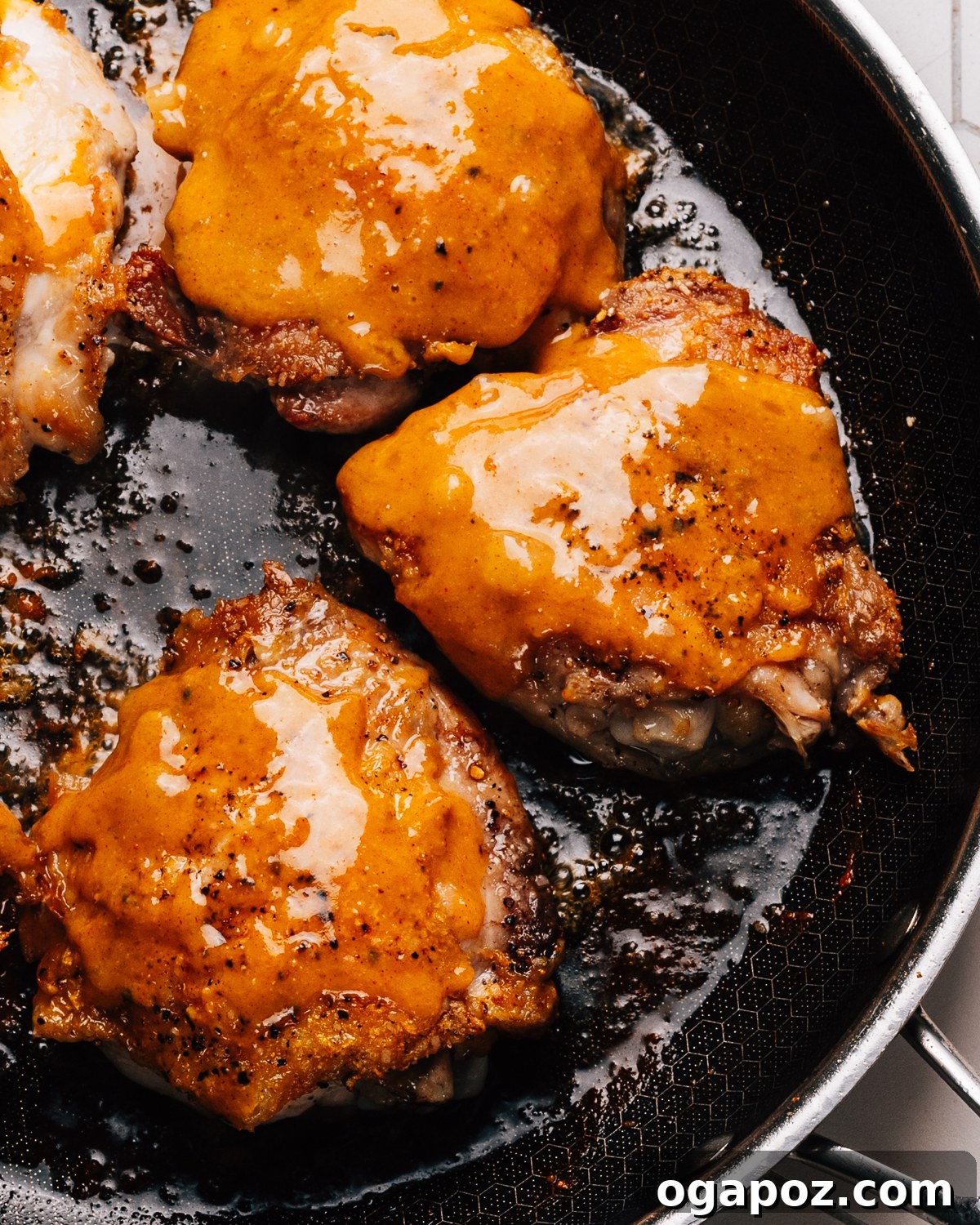
Why This Honey Mustard Chicken is a Must-Try
This recipe isn’t just another chicken dish; it’s a culinary experience designed for maximum flavor and minimal fuss. Here’s why you’ll want to add it to your regular rotation:
- Unrivaled Crispiness: By searing the chicken skin-side down in a hot skillet before baking, we achieve an incredible, golden-brown crust that adds a delightful texture contrast to the succulent meat.
- Juicy Perfection: Bone-in, skin-on chicken thighs are naturally more forgiving and retain moisture exceptionally well. Finishing them in the oven ensures they cook through evenly without drying out.
- Irresistible Sweet & Savory Glaze: The honey mustard sauce strikes a perfect balance between tangy Dijon, sweet honey, bright apple cider vinegar, and aromatic garlic. It caramelizes beautifully in the oven, creating a sticky, glossy coating.
- One-Pan Convenience: Starting and largely finishing this dish in an oven-safe skillet means fewer dishes and easier cleanup – a win-win for busy cooks!
- Versatile Pairing: This chicken pairs wonderfully with a wide array of side dishes, from simple rice and roasted vegetables to fresh salads, making it a flexible meal for any season.
Honey Mustard Chicken Ingredients: A Closer Look
To embark on your journey to the best honey mustard chicken, gather these essential ingredients. Each component plays a vital role in achieving the dish’s signature flavor and texture.
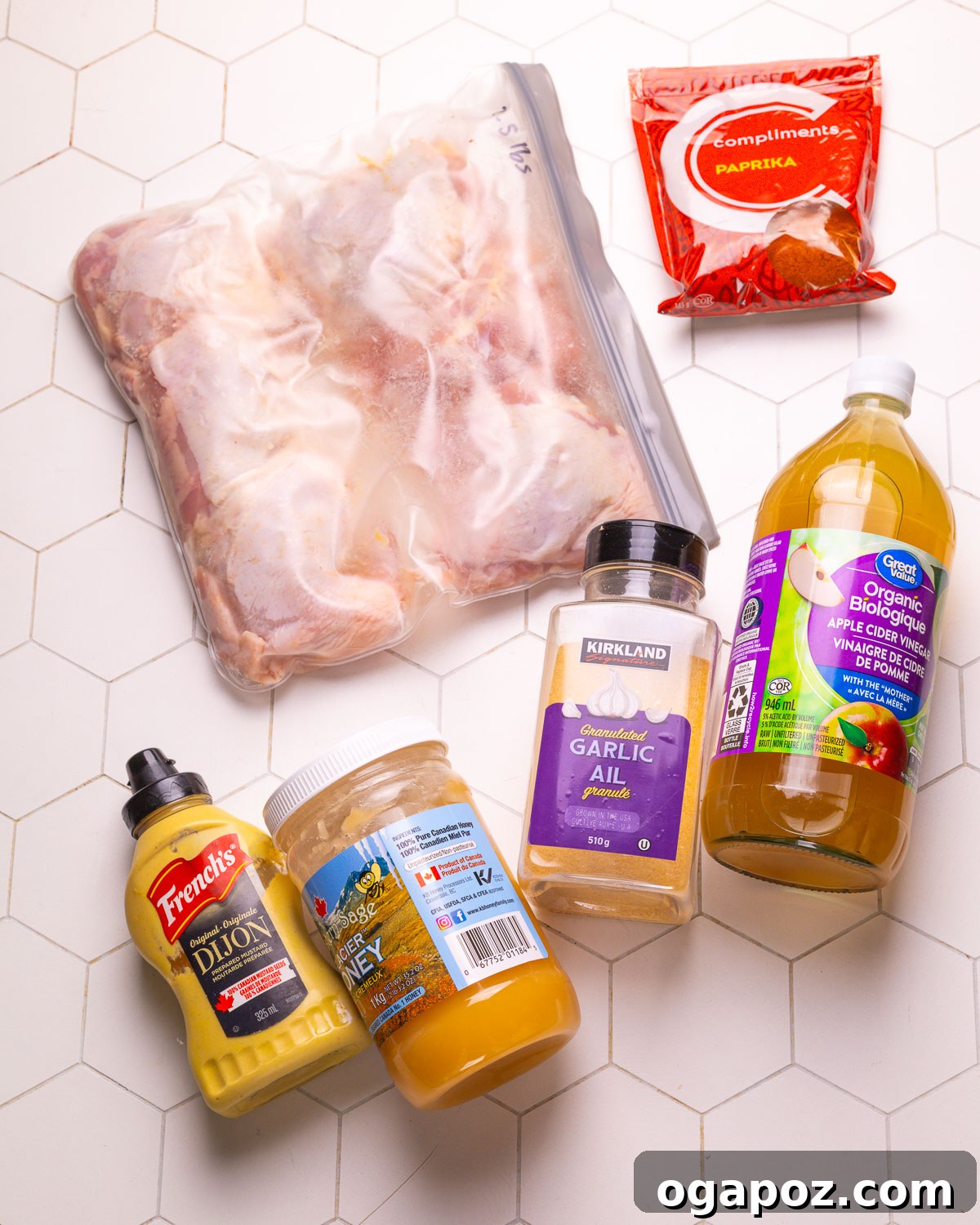
- Bone-in, Skin-on Chicken Thighs: These are the star! The bone helps conduct heat slowly, ensuring the meat stays incredibly tender and flavorful. The skin is crucial for developing that coveted crispy texture and rich savory fat that renders into the pan. Aim for approximately 2.5 lbs, which is usually about 6 large thighs.
- Kosher Salt and Black Pepper: Simple yet essential seasonings that enhance the natural taste of the chicken and contribute to a well-rounded flavor profile. Don’t be shy with the salt, as it’s key for drawing out moisture and promoting crispiness.
- Neutral Oil (Avocado or Canola): A high smoke point oil is critical for searing the chicken without burning. Avocado oil is a fantastic choice for its mild flavor and stability at high temperatures, while canola oil is a readily available and effective alternative.
Honey Mustard Sauce Ingredients
The magic of this dish truly comes alive with its perfectly balanced glaze. Here’s what you’ll need:
- Dijon Mustard: This provides the classic tangy, slightly pungent base for our sauce. Its sharp flavor cuts through the richness of the chicken and sweetness of the honey.
- Honey: The natural sweetener that brings balance and helps create that beautiful, caramelized glaze. Its viscosity also contributes to the sauce’s wonderful clinginess.
- Apple Cider Vinegar: A splash of apple cider vinegar introduces a bright, fruity acidity that balances the sweetness of the honey and the richness of the chicken, preventing the sauce from becoming cloying.
- Garlic Powder: For savory depth without the risk of burning that fresh minced garlic might pose during high-heat cooking. It disperses evenly throughout the glaze, offering consistent flavor.
- Paprika or Cayenne: Paprika adds a lovely subtle warmth and a beautiful reddish hue to the glaze, enhancing its visual appeal. If you prefer a touch of heat, a pinch of cayenne pepper will give it a gentle kick without overpowering the other flavors.
Full recipe quantities and detailed instructions are listed in the comprehensive recipe card at the bottom of this article.
Variations and Substitutions to Suit Your Taste
Flexibility is key in the kitchen! This honey mustard chicken recipe is incredibly adaptable, allowing you to swap ingredients based on what you have on hand or what your dietary preferences dictate. Don’t be afraid to experiment to make it truly your own.
- Chicken Cuts: While bone-in, skin-on thighs are recommended for optimal flavor and juiciness, you can certainly use other cuts.
- Chicken Breast: For a leaner option, boneless, skinless chicken breasts work well. You’ll need to significantly adjust the cooking time, searing for about 4-5 minutes per side and roasting for 10-15 minutes, or until an internal temperature of 165°F (74°C) is reached. Be mindful not to overcook.
- Boneless Thighs: Boneless, skinless chicken thighs will cook faster than bone-in. Sear for 5-7 minutes per side and roast for about 10-12 minutes, or until 175-185°F (79-85°C) internally.
- Wings or Drumsticks: These smaller cuts also take well to the honey mustard glaze. Adjust cooking times accordingly.
- Oil Alternatives: If avocado or canola oil aren’t available, other neutral oils with a high smoke point will stand in fine. Good options include olive oil (though it has a slightly lower smoke point, it can work if you don’t overheat), grapeseed oil, or sunflower oil. Avoid extra virgin olive oil for high-heat searing, as its flavor can burn.
- Mustard Choices: The type of mustard you use can subtly change the flavor and texture of your glaze.
- Whole Grain Mustard: For a textural element and a more rustic appearance, try whole grain mustard. Its seeds burst with flavor and add a pleasant pop.
- Yellow Mustard: If you prefer a milder, tangier profile, classic yellow mustard can be used, though it will result in a less complex flavor than Dijon.
- Spicy Brown Mustard: For a spicier kick, spicy brown mustard can elevate the heat of the glaze.
- Additions for Flavor: Consider a pinch of dried thyme or rosemary for an earthy note, or a dash of smoked paprika for a deeper, more complex smoky flavor. A tiny bit of ginger powder can also add an interesting aromatic dimension.
For a fantastic grilled rendition, don’t miss my grilled honey mustard chicken thighs. They incorporate yogurt in the marinade for extra tenderness and a spectacular taste that’s perfect for BBQ season.
Essential Kitchen Tools for Success
Having the right tools can make all the difference in the cooking process, ensuring smooth execution and excellent results. Here’s everything I recommend for this honey mustard chicken recipe:
- Oven-Safe Skillet (Cast Iron or Stainless Steel): This is arguably the most crucial tool. A well-seasoned cast iron skillet or a high-quality stainless steel skillet allows you to sear the chicken on the stovetop and then transfer it directly to the oven, capturing all those delicious pan juices and flavors. If you don’t have one, you can sear in any skillet and then transfer the chicken to a baking dish to finish in the oven, though you’ll miss some of the fond (browned bits) that develop in the skillet.
- Paper Towels: Absolutely essential for thoroughly drying the chicken. This step is critical for achieving that coveted crispy skin.
- Measuring Spoons and Cups: For accurately measuring the ingredients for your honey mustard glaze, ensuring a balanced flavor every time.
- Small Bowl + Whisk: To quickly and thoroughly mix the glaze ingredients until smooth and well combined.
- Tongs or Spatula: For safely flipping the chicken during searing and transferring it in and out of the oven.
- Meat Thermometer: Your best friend for ensuring perfectly cooked, juicy chicken that is safe to eat. Aim for an internal temperature of 175–185°F (79-85°C) for thighs.
- Oven Mitts: To safely handle the hot skillet.
- Serving Spoon: For spooning those incredible pan juices over the finished chicken just before serving, adding an extra layer of gloss and flavor.
If you’re a fan of the glorious sweet and savory chicken combination, you’ll also adore my healthy honey garlic chicken and the incredibly sticky gochujang chicken for more flavorful adventures!
How to Make Honey Mustard Chicken: An Easy Guide to Perfection
Crafting this delightful honey mustard chicken is simpler than you might think. The process is designed for maximum crispiness, shine, and flavor with straightforward steps: sear, glaze, roast, and finish hot. Follow this easy guide for outstanding results.
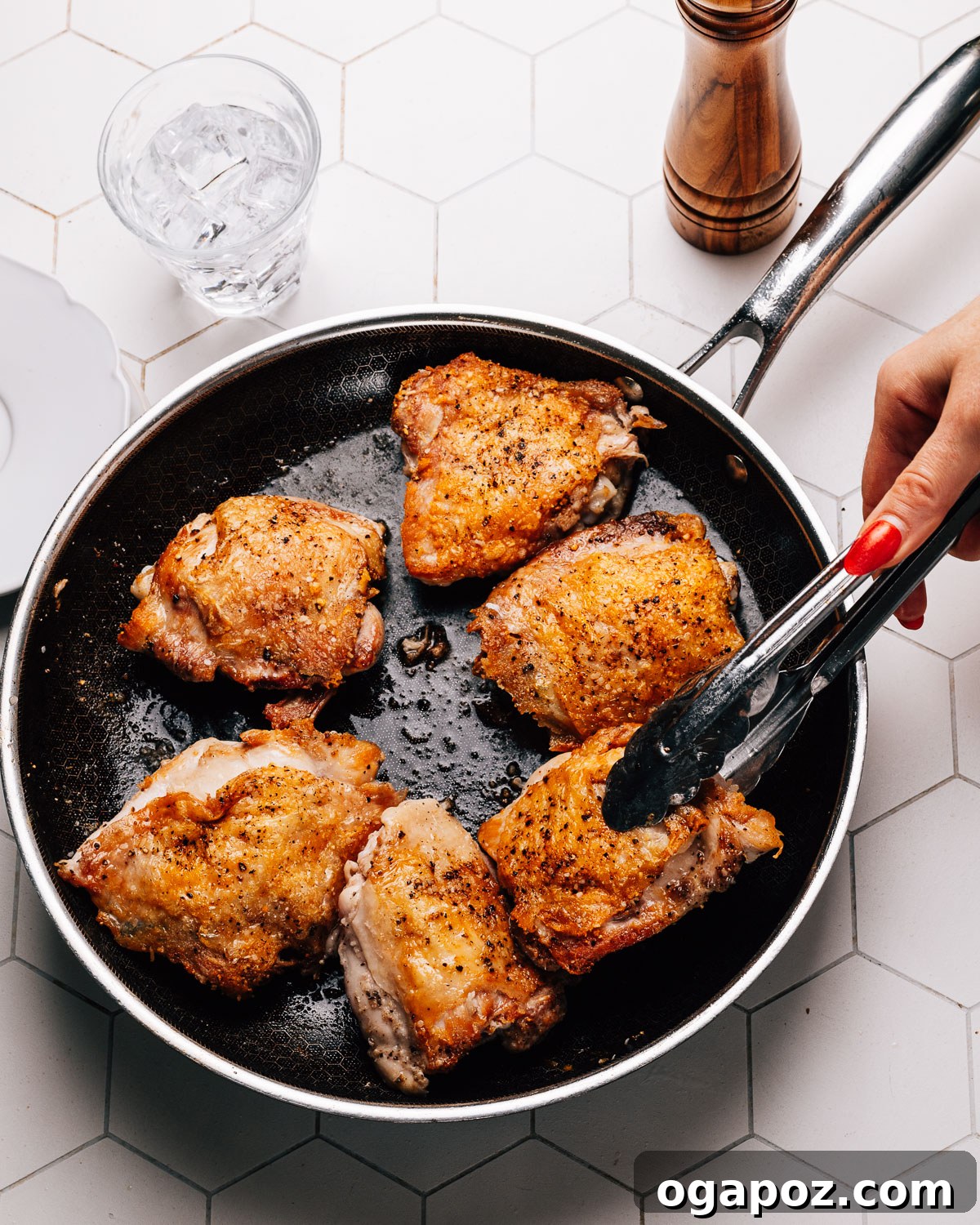
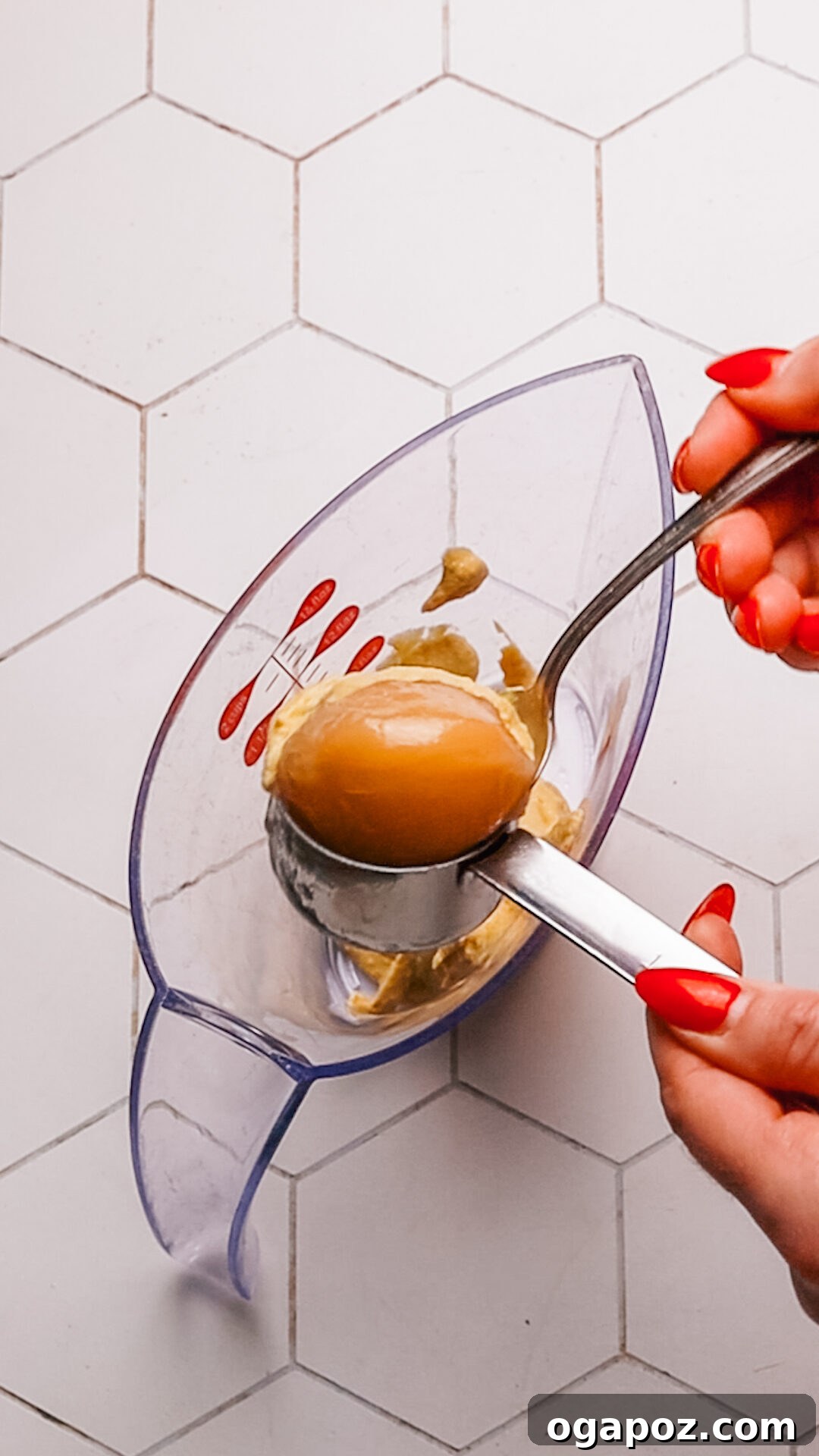
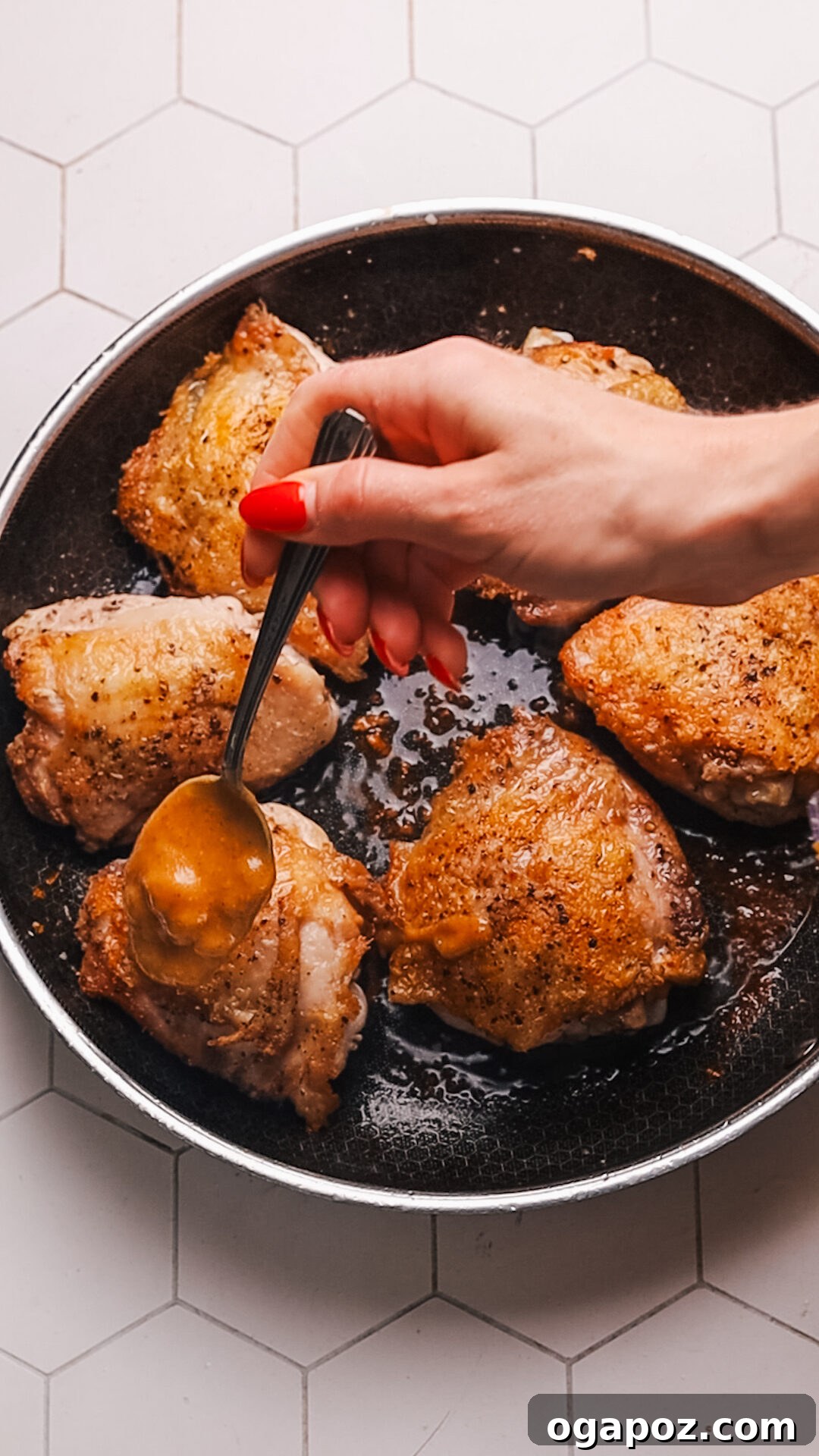
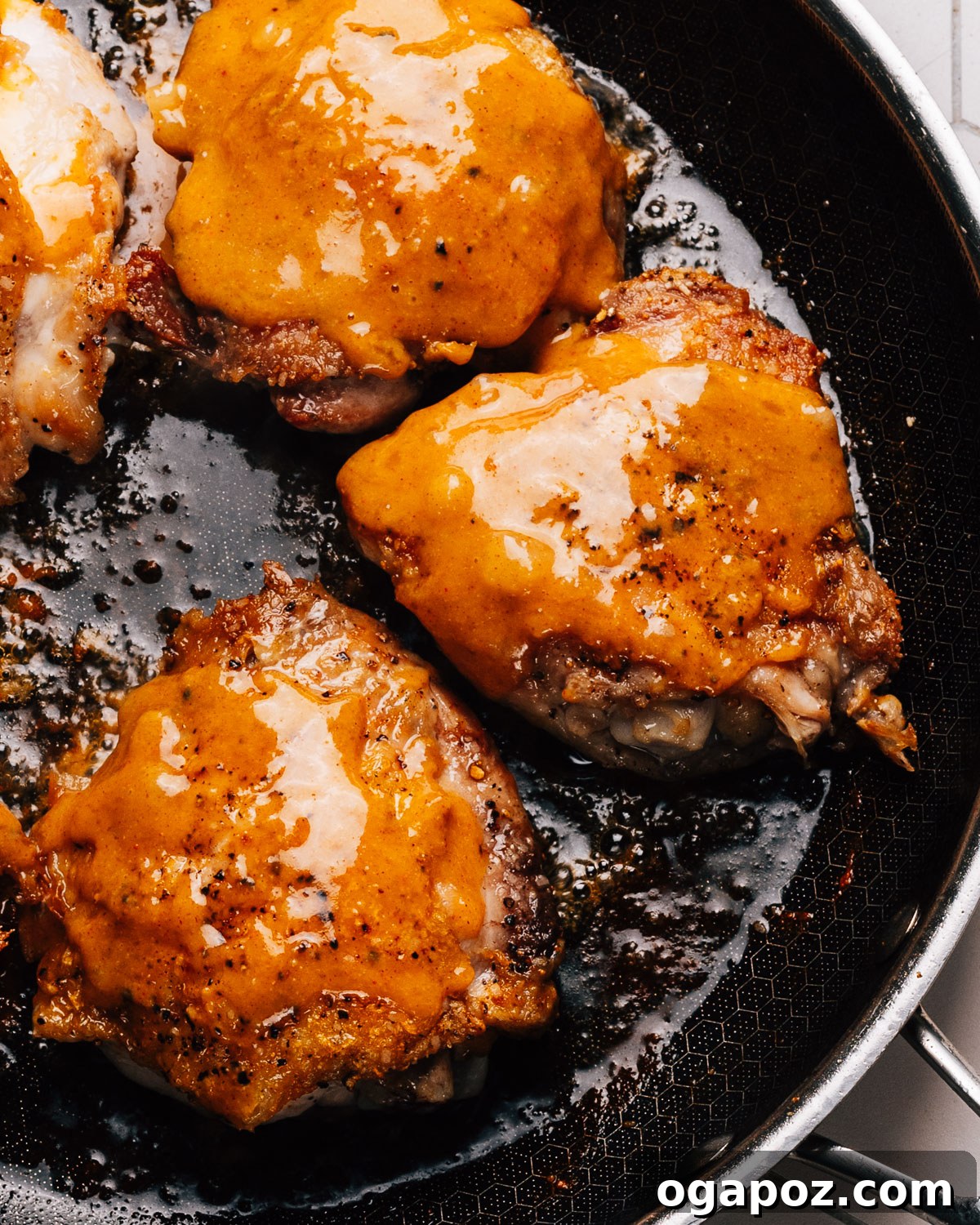
1. Prep the Chicken for Optimal Crispiness
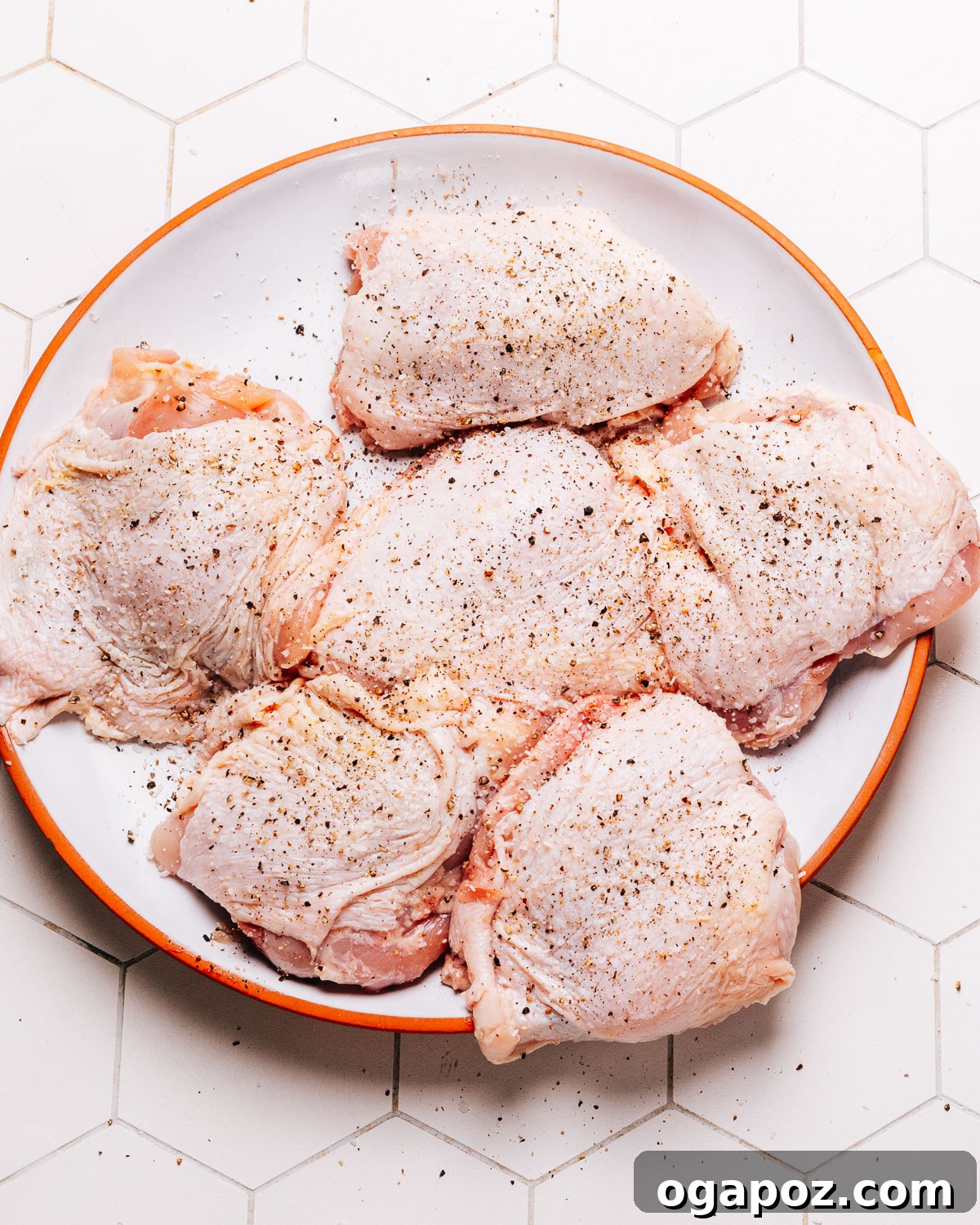
Begin by preheating your oven to 375°F (190°C). This ensures it’s ready for roasting once your chicken is seared. Next, and this step is crucial for crispy skin, thoroughly pat your chicken thighs very dry with paper towels. Any moisture on the skin will steam rather than sear, preventing that desirable golden crisp. Once dry, generously season both sides of the chicken with kosher salt and black pepper. The seasoning will not only flavor the meat but also aid in moisture extraction for an even crispier result.
2. Sear for Unforgettable Crisp Skin
Heat 1 tablespoon of neutral oil (like avocado or canola) in a 12-inch oven-safe skillet over medium heat until it’s shimmering. The oil should be hot enough that a drop of water sizzles immediately. Carefully place the seasoned chicken thighs, skin-side down, into the hot skillet. Now, the key is patience: sear for 7–9 minutes without moving the chicken. This undisturbed contact with the hot pan allows the skin to render its fat and develop a deeply golden, incredibly crispy crust through the Maillard reaction. Once golden, flip the chicken and cook for just 2 minutes more on the flesh side. This brief sear helps to cook the chicken partially and develop flavor.
3. Whisk Together the Flavorful Glaze
While the chicken is searing or resting briefly, prepare your honey mustard glaze. In a small bowl, whisk together the Dijon mustard, honey, apple cider vinegar, garlic powder, and paprika (or cayenne for a little heat). Whisk until all ingredients are thoroughly combined and the mixture is smooth. This glaze is a powerhouse of flavor, ready to transform your chicken.
4. Roast, Glaze, and Repeat for Perfect Caramelization
Before proceeding, carefully drain any excess fat from the skillet. Arrange the chicken thighs skin-side up in the skillet. Spoon about half of the prepared honey mustard glaze evenly over the chicken. Transfer the skillet to your preheated oven and bake for 15 minutes at 375°F (190°C). After 15 minutes, remove the skillet from the oven. Brush the chicken with the remaining glaze. Crucially, raise the oven temperature to 425°F (220°C). Return the skillet to the hotter oven and roast for an additional 10–15 minutes, or until the chicken is deeply golden, the glaze is beautifully caramelized, and the internal temperature of the thickest part of the chicken thigh reaches 175–185°F (79-85°C) using a meat thermometer. Cooking chicken thighs to this temperature ensures they are incredibly tender and juicy.
5. Rest and Serve for Maximum Juiciness
Once the chicken is cooked through and perfectly glazed, remove the skillet from the oven and let the chicken rest for 5 minutes. This resting period is vital, allowing the juices to redistribute throughout the meat, ensuring every bite is moist and tender. Before serving, spoon the delicious pan juices and any leftover glaze from the skillet over the chicken for an extra boost of flavor and a gorgeous, glossy finish. Serve hot and enjoy your perfectly crafted Honey Mustard Chicken!
5 Common Mistakes to Avoid for Perfect Honey Mustard Chicken
Even simple recipes can have pitfalls. Knowing the most frequent errors when making honey mustard chicken can help you avoid them, ensuring your dish is a resounding success every time. Here’s how to sidestep common mix-ups:
- Skipping the Dry-Off Step: This is perhaps the most critical error. If your chicken skin is damp, it won’t crisp up; instead, it will steam, resulting in rubbery, unappetizing skin.
- Solution: Invest a few extra minutes to thoroughly pat the chicken thighs dry with paper towels on all sides before seasoning. For even better results, you can even leave the seasoned chicken uncovered in the refrigerator for an hour or two (or overnight) to further dry out the skin.
- Fidgeting During the Sear: It’s tempting to move the chicken around in the pan, but resisting this urge is crucial for developing a proper crust.
- Solution: Once the chicken is placed skin-side down in the hot oil, leave it undisturbed for the full 7-9 minutes. This allows sufficient contact time with the hot surface for the Maillard reaction to occur, creating a deep golden-brown, crispy layer.
- Adding All the Glaze Too Soon: Honey is sugar, and sugar burns quickly at high temperatures. Applying the entire glaze at the beginning of the roasting process will result in a scorched, bitter sauce.
- Solution: Follow the recipe’s two-stage glazing method. Apply half the glaze initially, allowing it to begin caramelizing. Then, add the remaining glaze during the final, higher-heat roasting stage to build a beautiful, sticky, and perfectly caramelized coating without burning.
- Not Using an Oven-Safe Skillet: If you sear in a regular skillet and then transfer to a separate baking dish, you’ll leave behind all the delicious browned bits (fond) and rendered fat in the original pan, which are essential for flavor.
- Solution: Always use an oven-safe skillet (cast iron or stainless steel) for this recipe. This allows you to go directly from stovetop to oven, preserving all those flavorful pan drippings that contribute to the final glaze and overall taste.
- Forgetting a Meat Thermometer: Guessing if chicken is done can lead to either undercooked, unsafe meat or dry, overcooked meat.
- Solution: Always use a reliable meat thermometer. For chicken thighs, aim for an internal temperature of 175–185°F (79-85°C) in the thickest part, avoiding the bone. Thighs are more forgiving than breasts and are delightfully juicy at this slightly higher temperature.
Make Ahead and Storage Tips for Convenience
This honey mustard chicken is fantastic fresh, but it also holds up beautifully as leftovers, making it an excellent candidate for meal prep. Planning ahead can save you time on busy nights.
Storing Leftovers
- Refrigerate: Once cooled to room temperature, transfer any leftover honey mustard chicken to an airtight container. It will keep well in the refrigerator for 3–4 days. If possible, store any extra glaze or pan juices separately to spoon over the chicken when reheating.
- Pan Juices: Don’t discard those precious pan juices! They are packed with flavor and moisture. Save them in the container with your chicken or separately to spoon over when reheating, preventing your chicken from drying out.
Freezing
- Freeze Cooked Chicken: Cooked honey mustard chicken freezes wonderfully. Allow it to cool completely, then place individual pieces in a freezer-safe bag or an airtight container. For best quality, use within 2 months. You might want to remove the skin before freezing if you prefer to retain moisture, as crispy skin can become soggy when thawed.
- Thaw Safely: For optimal texture and safety, thaw frozen chicken overnight in the refrigerator. Avoid thawing at room temperature.
Reheating Honey Mustard Chicken
- Oven Method (Recommended for Best Texture): Preheat your oven to 325°F (160°C). Place the chicken in an oven-safe dish, loosely covered with foil to prevent drying. Reheat for 15-20 minutes, or until warmed through, basting with any reserved pan juices or a little fresh glaze if desired. This method helps the skin regain some crispness.
- Microwave Method (Quick Option): If you’re in a hurry, the microwave works, but the skin won’t be crispy. Heat on medium power in short bursts (30-60 seconds), rotating or flipping the chicken for even heating. Be careful not to overheat, which can make the chicken tough. Spoon over pan juices to restore moisture.
How to Serve This Honey Mustard Chicken Recipe: Perfect Pairings
This honey mustard chicken is a versatile main dish that shines alongside a variety of sides. Its balance of sweet, savory, and tangy notes means it pairs beautifully with everything from fresh salads and simple starches to quick and easy vegetables. Here are some of my favorite easy side dishes that perfectly complement this flavorful chicken:
Inspired Side Dishes for Your Honey Mustard Chicken
- Air Fryer Eggplant: For a crisp, speedy, and healthy vegetable side. The slight char and tender interior of air-fried eggplant offer a wonderful contrast to the chicken’s rich glaze.
- Lemon Couscous Salad: A light and refreshing grain salad with bright lemon dressing will perfectly balance the sweet and savory chicken, adding a zesty counterpoint.
- Fluffy Basmati Rice: A classic choice, plain fluffy basmati rice is ideal for soaking up every last drop of those delicious pan juices and glaze, creating a complete and satisfying meal.
- Instant Pot Rice: When you need a hands-off starch option, your Instant Pot delivers perfectly cooked rice without any fuss, leaving you free to focus on the chicken.
- Creamy Potato Salad: For a comforting, picnic-style plate, a classic creamy potato salad with egg offers a delightful richness and texture that complements the chicken beautifully.
- Cucumber Yogurt Salad: A cool, refreshing cucumber yogurt salad (like raita) provides a crisp texture and a cooling effect, making it a fantastic palate cleanser alongside the rich chicken.
- Simple Steamed or Roasted Green Beans: Tossed with a squeeze of fresh lemon juice, steamed or roasted green beans are a quick, healthy, and vibrant green side that adds freshness.
- Pan-Fried Asparagus: A tender-crisp asparagus is a sophisticated yet easy vegetable side that complements the honey mustard flavors well.
Final Notes, Pro Tips + Science-Based Secrets for Excellence
To truly master your honey mustard chicken and consistently achieve restaurant-quality results, keep these expert tips and science-backed insights in mind. They’re the keys to unlocking the full potential of this delicious dish:
- Dry = Crisp: This cannot be overstated. Moisture is the archenemy of browning and crispiness. The less moisture on the chicken skin, the quicker and more effectively the Maillard reaction (the chemical process responsible for browning and developing complex flavors) can occur. Blotting thoroughly with paper towels and even air-drying in the fridge are your best friends here.
- Undisturbed Contact Time: When searing, do not nudge or move the chicken. The continuous, direct contact between the chicken skin and the hot skillet is essential for rendering fat and building a thick, golden, crispy crust. Breaking this contact too soon interrupts the browning process.
- Strategic Sugar Management: Honey, being a sugar, can burn easily at high temperatures. Applying all the glaze at once would lead to a bitter, scorched sauce. By staging the glaze application – half initially, then the rest later – you allow the sugars to gradually caramelize, developing deep, rich flavors and a beautiful, sticky coating without risking a burnt mess.
- High-Heat Finish for Visual Appeal: That final blast of higher heat in the oven is not just for cooking; it’s also crucial for achieving the perfect golden color and a gorgeous, glossy shine on your glaze. It helps to set the caramelized sugars and crisps up any remaining parts of the skin.
- Rest Matters for Juiciness: Resting the chicken after it comes out of the oven is a non-negotiable step for truly juicy meat. As the chicken cooks, its muscle fibers contract, pushing juices towards the center. Allowing it to rest for 5-10 minutes gives these juices time to redistribute throughout the entire piece of meat. Cutting into it too soon will cause all those precious juices to run out, leaving you with drier chicken.
Other Chicken Thigh Recipes You’ll Love
If you’ve fallen in love with the versatility and flavor of chicken thighs, here are a few more fantastic recipes to add to your repertoire:
- Air Fryer Boneless Chicken Thighs: Quick, healthy, and incredibly crispy without much oil.
- Garlic Ginger Chicken: A fragrant and savory dish with aromatic Asian-inspired flavors.
- Teriyaki Marinated Chicken: Perfectly sweet and savory, ideal for grilling or baking.
- Honey Hot Chicken Sandwich: A spicy and sweet delight perfect for a hearty sandwich.
- Honey Garlic Lemon Pepper Chicken Thighs: Another fantastic sweet and savory chicken thigh recipe with a zesty twist.
Honey Mustard Chicken Recipe
My best Honey Mustard Chicken recipe! It’s crispy-edged, juicy, well-glazed and just SO tasty. Made in a skillet and finished in the oven.
Ingredients
- 2 ½ lbs bone-in skin-on chicken thighs (approx. 6 large thighs)
- 2 tsp kosher salt
- ½ tsp black pepper
- 1 tbsp neutral oil like avocado or canola
Honey Mustard Glaze:
- ⅓ cup Dijon mustard
- ¼ cup honey
- 2 tsp apple cider vinegar
- 1 tsp garlic powder
- ½ tsp paprika or 1/4 tsp cayenne
Instructions
- Heat oven to 375°F (190°C). Pat chicken very dry with paper towels and season all over with salt and pepper.
- Heat oil in a 12-inch oven-safe skillet over medium heat until shimmering. Place chicken skin-side down and sear 7–9 minutes without moving, until golden and crisp. Flip and cook 2 minutes more on the other side.
- In a small bowl, whisk all glaze ingredients until smooth and well combined.
- Carefully drain any excess fat from the skillet. Arrange chicken skin-side up. Spoon about half of the glaze evenly over the chicken. Bake for 15 minutes in the 375°F (190°C) oven.
- After 15 minutes, remove the skillet from the oven. Brush the chicken with the remaining glaze. Increase oven temperature to 425°F (220°C) and roast for 10–15 minutes more, or until deeply golden, the glaze is caramelized, and the internal temperature reaches 175–185°F (79-85°C) in the thickest part of the thigh (avoiding the bone).
- Rest the chicken for 5 minutes before serving. Spoon the flavorful pan juices over the chicken for extra gloss and moisture. Serve hot.
Notes
- Patting the chicken dry is crucial for achieving crispy skin.
- Use an oven-safe skillet to seamlessly transfer from stove to oven and capture all pan flavors.
- Apply the glaze in stages to prevent the honey from burning at high heat.
- Chicken thighs are perfectly cooked and juicy when they reach an internal temperature of 175–185°F (79-85°C). Always use a meat thermometer.
- Resting the chicken for 5 minutes before serving allows the juices to redistribute, ensuring tender and moist meat.
- Store leftovers in an airtight container in the fridge for 3–4 days or freeze for up to 2 months.
Nutrition Information (Approximate per serving)
Carbohydrates: 20g |
Protein: 40g |
Fat: 44g |
Saturated Fat: 11g |
Polyunsaturated Fat: 10g |
Monounsaturated Fat: 19g |
Trans Fat: 0.2g |
Cholesterol: 236mg |
Sodium: 1581mg |
Potassium: 557mg |
Fiber: 1g |
Sugar: 18g |
Vitamin A: 327 IU |
Vitamin C: 0.2mg |
Calcium: 37mg |
Iron: 2mg
Nutrition information is automatically calculated and should be used as an approximation only.