
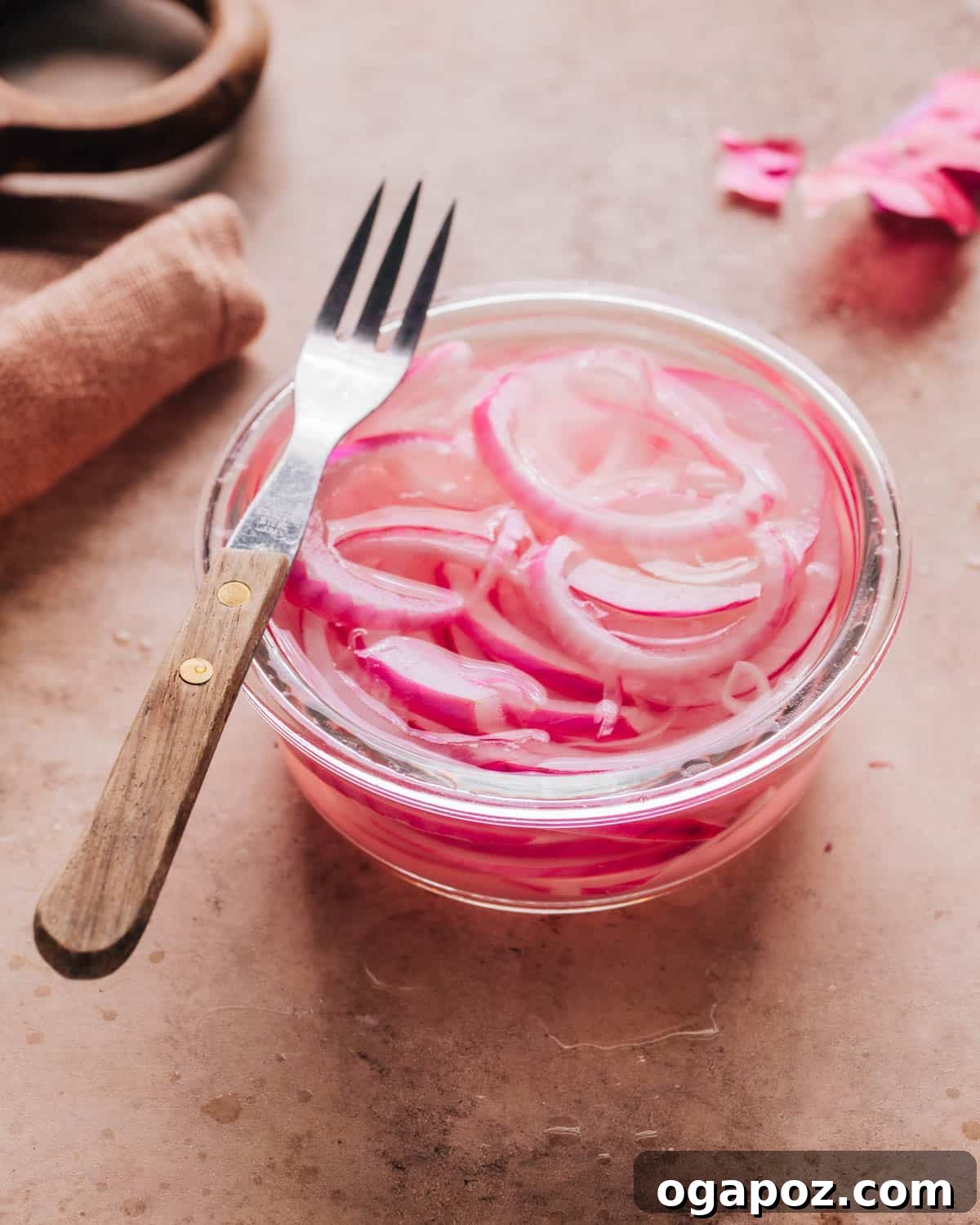
Prepare to fall in love with this incredibly simple yet irresistibly delicious quick pickled red onion recipe. It’s a game-changer that transforms humble red onions into a beautiful, vibrant, and astonishingly flavorful garnish. If you’ve ever thought pickling was complicated, this easy method will prove you wrong, making you want to whip up batches of these tangy delights all the time. Say goodbye to bland meals and hello to a burst of zesty flavor!
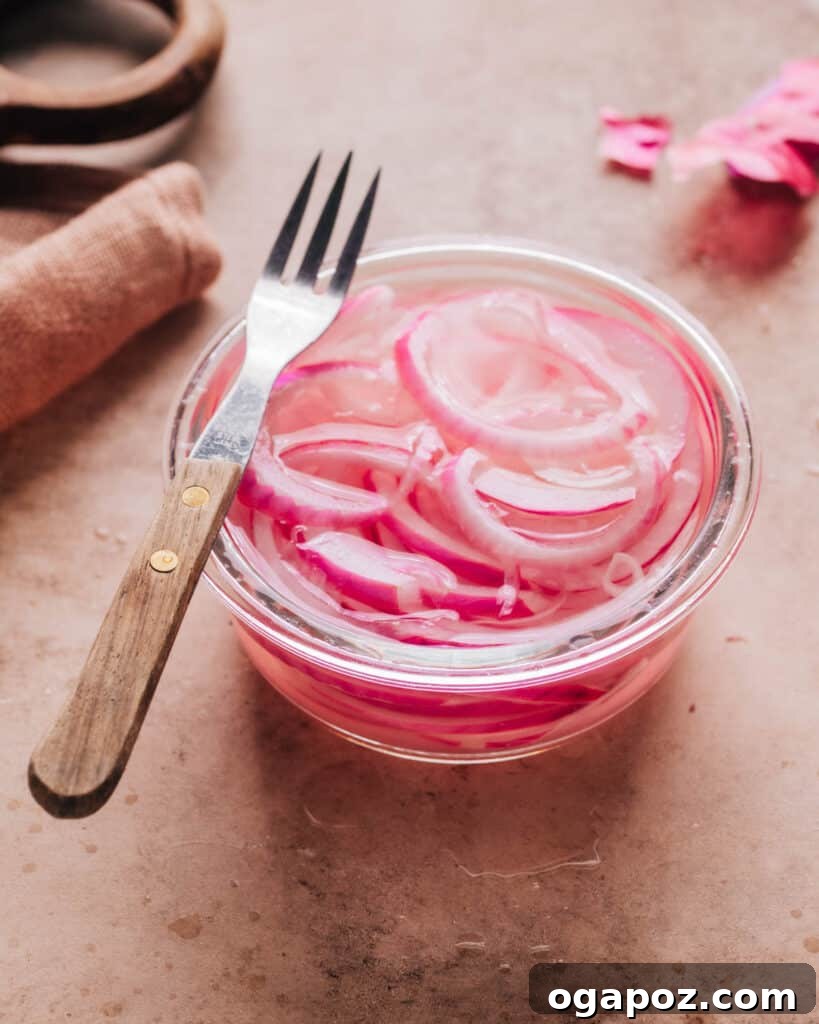
Why Are Pickled Onions So Irresistibly Delicious?
The magic behind the delightful taste of pickled onions lies in a fascinating interplay of culinary science and balanced flavors. It’s more than just onions and vinegar; it’s a symphony for your taste buds, making them an indispensable condiment in kitchens worldwide.
- Acidity & Brightness: The primary element in pickling brine is vinegar, which contributes a significant level of acidity. This acidity doesn’t just provide a tangy kick; it actively stimulates your taste buds, awakening them and making other flavors more pronounced. Pickled onions excel at cutting through rich, heavy, or fatty dishes, offering a refreshing contrast that cleanses the palate and brightens the overall meal experience. This is why they pair so wonderfully with hearty meats or creamy cheeses.
- Perfect Sweet & Salty Balance: A well-crafted pickling brine includes a careful ratio of sugar and salt. This combination creates a harmonious balance that our taste buds are naturally drawn to. The sugar mellows the sharpness of the vinegar and raw onion, adding a subtle sweetness, while the salt enhances all the flavors and plays a crucial role in the pickling process itself. This sweet-and-salty dynamic ensures the pickled onions are not just sour, but wonderfully complex and moreish.
- Satisfying Crunchy Texture: One of the standout features of perfectly pickled onions is their delightful crunch. The pickling process, when executed correctly, helps to preserve and even enhance the crispness of the raw onion. This textural contrast is invaluable, providing an exciting element that complements softer dishes like pulled pork, mashed avocado, or creamy dips, adding another layer of sensory enjoyment to every bite.
- Natural Umami Enhancement: Onions inherently contain glutamates, which are compounds responsible for the savory “umami” taste. While pickling isn’t a fermentation process (which would create more umami), the combination of acidity, sugar, and salt can effectively enhance the natural savory notes present in red onions. This deepens their flavor profile, making them even more satisfying and addictive.
- Remarkable Flavor Contrast: A significant part of why quick pickled red onions taste so good is their ability to act as a brilliant counterpoint to other foods. They provide a tangy, acidic, and slightly sweet foil that balances the richness of fatty foods, the heartiness of meats, and the density of many staple dishes. This contrast elevates the entire culinary experience, turning simple ingredients into extraordinary meals.
In essence, homemade pickled onions are a culinary marvel, demonstrating how a few basic ingredients and a straightforward process can converge to create a condiment that excites multiple senses simultaneously, making every dish it touches sing with flavor.
Essential Ingredients for Your Easy Pickled Onion Recipe
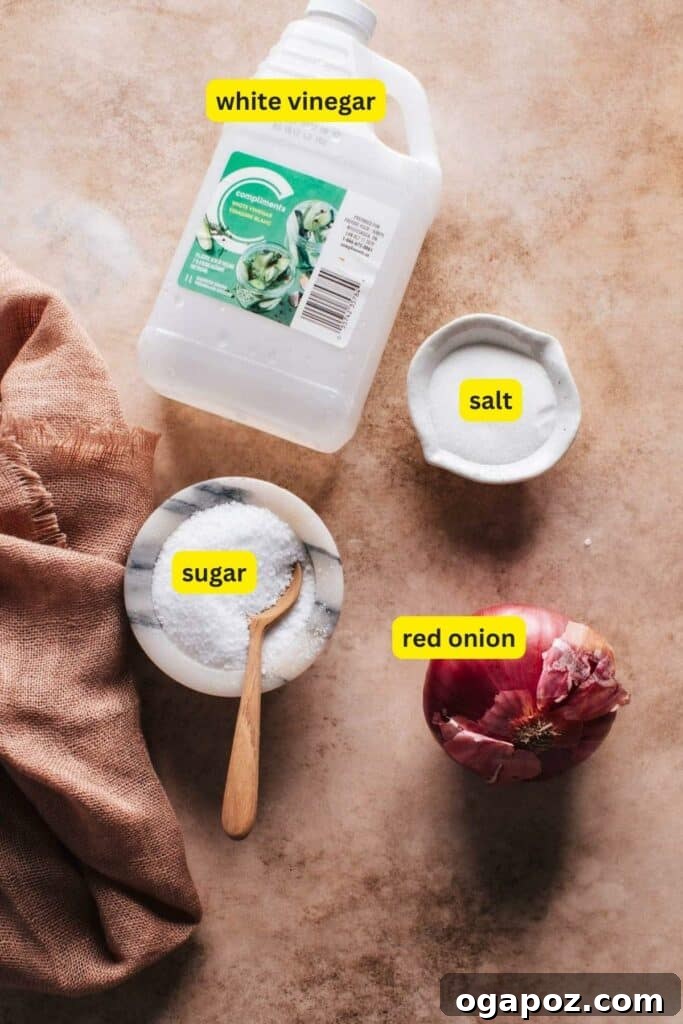
Embarking on your journey to create these fabulous pickled red onions requires only a handful of pantry staples. The beauty of this recipe lies in its simplicity, proving that extraordinary flavor doesn’t demand exotic ingredients. Let’s explore the key components that bring this quick pickle to life:
- Red Onion: The undisputed star of our recipe! Red onions are favored for their beautiful purplish-red hue, which transforms into a vibrant pink when pickled, adding aesthetic appeal to your dishes. They also offer a slightly milder, sweeter flavor profile than yellow or white onions, making them ideal for raw or lightly pickled applications. Their natural crispness holds up wonderfully in the brine, delivering that satisfying crunch.
- White Vinegar: This is the backbone of our pickling liquid, providing the sharp, classic acidic tang that defines quick pickles. White vinegar is neutral in flavor, allowing the natural taste of the onion and any added aromatics to shine through. For those who prefer a more mellow, slightly fruity undertone, apple cider vinegar makes an excellent substitution, imparting a softer, nuanced flavor. You can also experiment with white wine vinegar or rice vinegar for different culinary applications.
- Water: Essential for diluting the vinegar. Using vinegar straight would result in an overpowering and overly sour pickle. Water helps to balance the acidity, ensuring the onions are pleasantly tangy without being harsh, making them more enjoyable to eat.
- Sugar: Crucial for balancing the sharp acidity of the vinegar and the pungent notes of the raw onion. Sugar introduces a hint of sweetness that rounds out the flavor profile, creating a more complex and palatable pickle. It doesn’t make the onions overtly sweet, but rather harmonizes the tartness into a delightful symphony.
- Salt: A dual-purpose ingredient. Salt is vital for enhancing the overall flavors of the pickled onions, making them pop. More importantly, it plays a critical role in the preservation process and contributes to the onion’s crisp texture by drawing out excess moisture through osmosis. Standard table salt, kosher salt, or sea salt can be used, but ensure it’s non-iodized if you want to avoid a cloudy brine.
Creative Variations and Flavorful Substitutions
One of the joys of making quick pickled red onions at home is the endless potential for customization. This basic recipe is a fantastic canvas, allowing you to tailor the flavors to your specific palate or to complement a particular dish. Don’t be afraid to experiment and make these quick pickles truly your own!
- Elevate the Heat: For those who crave a little kick, infusing your pickled onions with spice is incredibly easy and rewarding. Add a few thin slices of fresh jalapeño or serrano pepper directly into the jar with your onions for a vibrant, fiery crunch. Alternatively, a pinch or two of dried red pepper flakes can provide a more even distribution of heat throughout the brine. Whole garlic cloves (smashed or thinly sliced) also add a wonderful savory depth.
- Aromatic Additions: Beyond heat, a variety of whole spices and fresh herbs can dramatically alter the flavor profile. Consider adding a teaspoon of mustard seeds, black peppercorns, or coriander seeds to the pickling liquid for a classic deli-style pickle flavor. Dried or fresh herbs like a bay leaf, a sprig of oregano, or a few sprigs of thyme can introduce an herbaceous complexity that pairs beautifully with certain cuisines.
- Sweetener Swaps: While granulated sugar is our standard, it’s not your only option. Honey or maple syrup can be substituted for sugar to introduce a more nuanced, rich sweetness. Honey will lend a floral note, while maple syrup offers a deeper, earthy sweetness that can be particularly delightful in autumn-inspired dishes. Adjust amounts to taste, as these can be sweeter than granulated sugar.
- Zesty Citrus Flair: To introduce an extra layer of brightness and tang, consider adding a strip or two of citrus zest to your pickling liquid. Lemon zest provides a sharp, clean zing, while orange zest offers a sweeter, more aromatic undertone. Ensure you only use the colored part of the peel, avoiding the bitter white pith.
- Alternate Onion Varieties: While red onions are prized for their color and mildness, this pickling method works beautifully with other onion types. Swap the red onion for white onion for a sharper, more pungent pickle, or use yellow onions for a balanced, all-purpose pickled onion. You can even try shallots for a more delicate, gourmet version.
- Other Vegetables: Don’t limit yourself to just onions! This quick pickling brine is perfect for other thinly sliced vegetables like cucumbers, carrots, radishes, or even bell peppers. Create a colorful medley of pickled veggies for an even more exciting garnish.
Essential Tools for Easy Pickled Onion Preparation
Making a batch of these quick pickled red onions is incredibly straightforward, requiring minimal equipment that you likely already have in your kitchen. Having the right tools, however, can make the process even smoother and more efficient, ensuring professional-looking results every time.
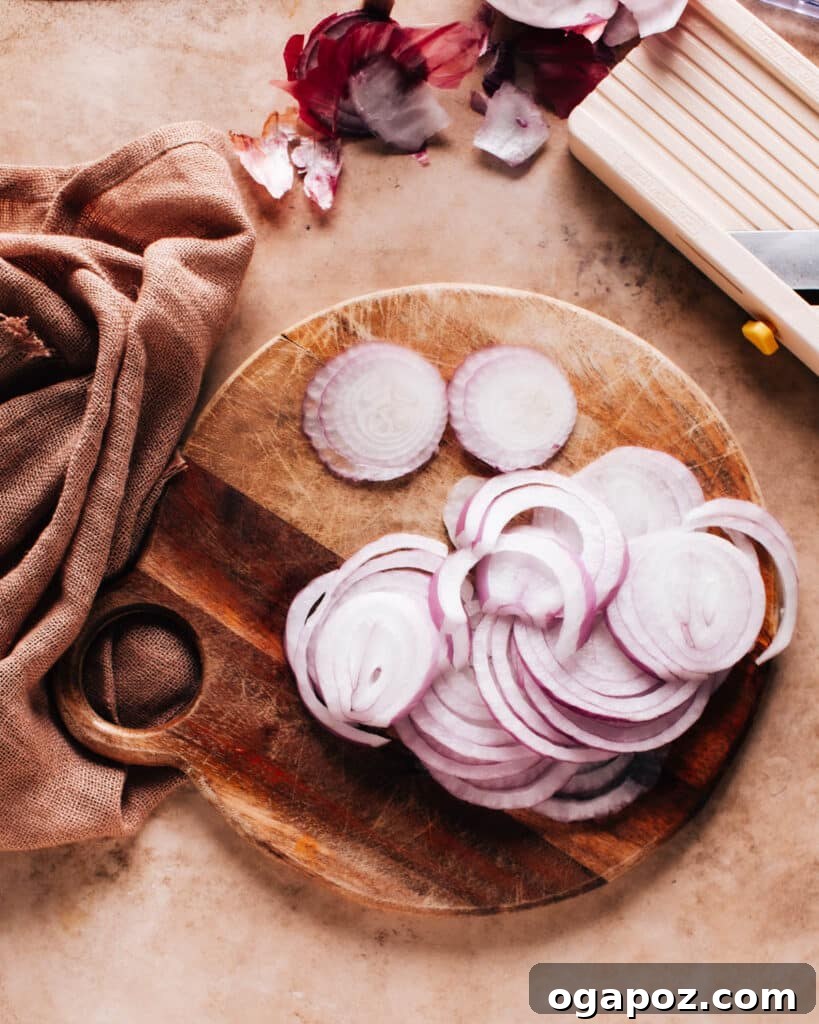
- Mandoline Slicer: For achieving perfectly thin, uniform onion slices, a mandoline slicer is your best friend. Consistency in thickness is key for even pickling and a pleasant texture. If you don’t have a mandoline, don’t fret! A sharp chef’s knife and a steady hand will also work beautifully, just aim for slices as thin and even as possible.
- Small Saucepan: This is essential for heating your pickling liquid. It allows you to quickly and efficiently dissolve the sugar and salt into the vinegar and water mixture, ensuring a homogenous brine that penetrates the onions evenly and effectively.
- Airtight Mason Jar or Container: Once pickled, your onions need a proper home. An airtight container, such as a glass mason jar, is ideal for storing the pickled onions. Glass jars are non-reactive, easy to clean, and allow you to admire the beautiful pink color of your pickles. Whatever you choose, ensure it has a tight-fitting lid to prevent air exposure and keep unwanted fridge odors at bay, maintaining the freshness and flavor of your batch.
- Measuring Cups and Spoons: Accuracy in measurements, especially for the vinegar, water, sugar, and salt, is important for a balanced brine.
- Cutting Board: A stable surface for slicing your onions safely and efficiently.
How to Make Quick Pickled Red Onions: Easy Step-By-Step Directions
Transforming a humble red onion into a vibrant, zesty, and utterly delicious accompaniment is incredibly simple with this fool-proof method. Follow these easy steps to create your own batch of homemade pickled onions that will elevate any meal.
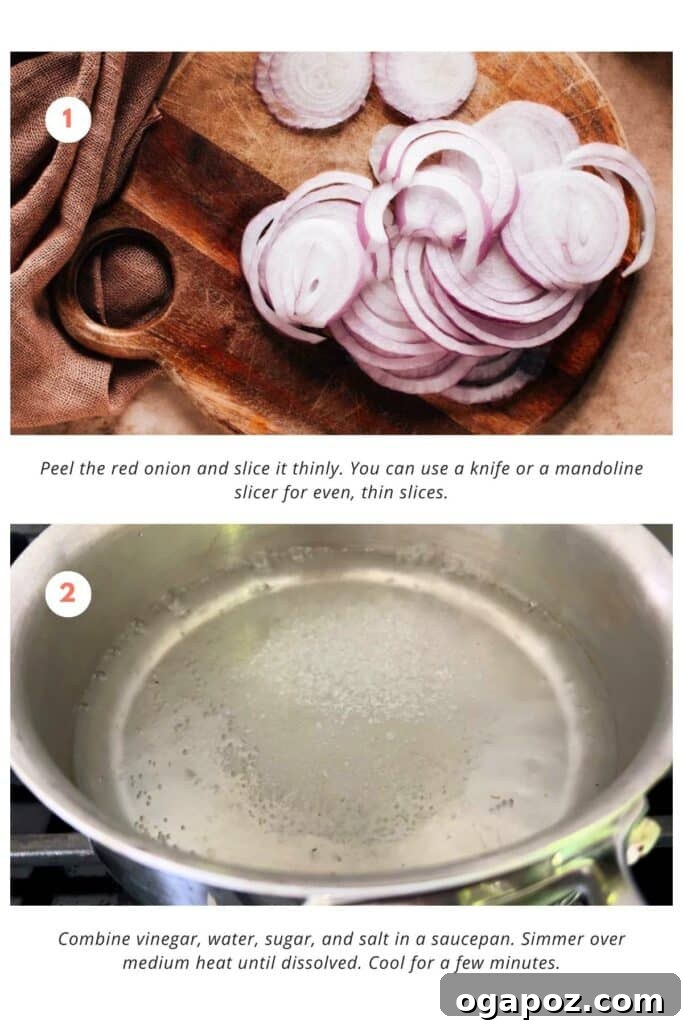
- Step 1: Prepare the Red Onions: Start by peeling your red onion. Then, using a mandoline slicer or a very sharp knife, slice the onion as thinly and evenly as possible. Aim for slices that are almost translucent; this thinness is crucial for a quick pickling process and ensures every bite is tender yet crisp.
- Step 2: Create the Flavorful Brine: In a small saucepan, combine the white vinegar (or apple cider vinegar for a milder taste), water, sugar, and salt. Place the saucepan over medium heat and bring the mixture to a gentle simmer. Stir continuously until both the sugar and salt are completely dissolved into the liquid. Once dissolved, remove the pan from the heat and allow the mixture to cool for just a few minutes, so it’s warm but not scalding hot.
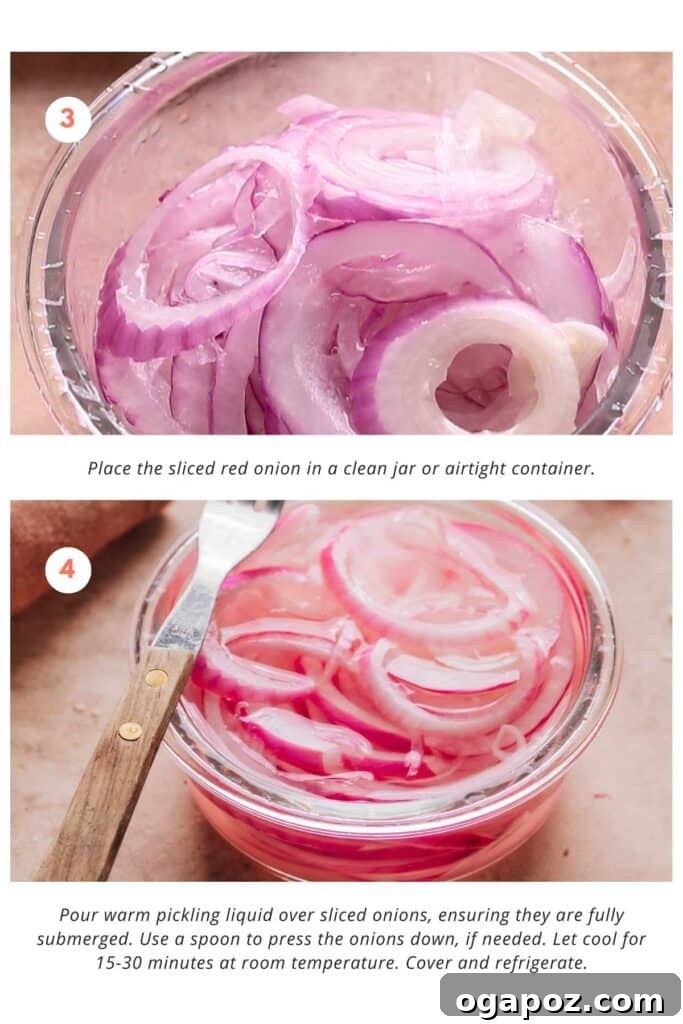
- Step 3: Jar the Sliced Onions: Carefully transfer your thinly sliced red onions into a clean, heat-proof glass jar or an airtight container. Pack them in snugly, but avoid compressing them too much.
- Step 4: Pour in the Pickling Liquid: Gently pour the just-warm vinegar mixture over the sliced onions in the jar. Ensure that all the onion slices are fully submerged in the liquid. If any pieces float to the top, use a clean spoon or a small piece of parchment paper to press them down, ensuring they remain immersed for even pickling.
- Step 5: Cool and Refrigerate: Allow the jar of pickled onions to cool down completely at room temperature for about 15-30 minutes. Once it has reached room temperature, secure the lid tightly and transfer the jar to the refrigerator.
- Step 6: Patience for Peak Flavor: While you can certainly enjoy your quick pickled red onions after just one hour in the fridge, their flavors truly begin to deepen and meld overnight. For the most vibrant color, tender-crisp texture, and ultimate flavor punch, let them marinate in the refrigerator for at least 8-12 hours, or even a full day. Your patience will be richly rewarded!
Make Ahead and Storage Tips for Your Pickled Onions
Preparing quick pickled red onions is not only incredibly easy but also perfect for meal prepping. With just a little planning, you can have a batch ready to enhance your meals throughout the week. Follow these guidelines to keep your homemade pickled onions in peak condition, ensuring they retain their delightful crunch and vibrant flavor.
- Cooling is Crucial: Always ensure your pickling liquid has cooled down to at least warm (not boiling hot) before pouring it over the thinly sliced onions. Pouring extremely hot liquid directly onto the onions can sometimes cook them slightly, leading to a softer, less desirable texture. A warm brine, however, helps the flavors penetrate more effectively without compromising crispness.
- The Longer, the Better (Up to a Point): While your quick pickled onions are certainly delicious after just an hour of marinating, their flavor profile deepens and becomes more complex with time. For optimal taste and a more pronounced tangy sweetness, allow them to sit in the refrigerator for at least 24 to 48 hours before consuming. This extended marination period allows the onions to fully absorb the brine’s flavors and achieve their beautiful pink color.
- Airtight Storage is Essential: To maintain freshness and prevent your pickled onions from absorbing or imparting unwanted odors in your refrigerator, always store them in an airtight glass jar or container with a tight-sealing lid. This also helps to prevent spoilage and keeps the onions submerged in the pickling liquid.
- Ensure Submergence: It’s important that the onions remain fully submerged in the pickling liquid throughout their storage. Any onion pieces exposed to air can become discolored, lose their crispness, and potentially spoil faster. If necessary, use a small food-safe weight or a piece of parchment paper pressed down over the onions to keep them under the brine.
- Optimal Shelf Life: When stored correctly in an airtight container in the refrigerator, your homemade quick pickled red onions will last for approximately 2 to 3 weeks. Always use clean utensils when removing onions from the jar to avoid introducing bacteria that could shorten their shelf life.
- Signs of Spoilage: Pay attention to any changes in smell, color, or texture. If the brine becomes cloudy (beyond normal mineral cloudiness), develops an off-odor, or if the onions appear mushy or discolored (beyond their vibrant pink), it’s best to discard them.
Final Notes, Expert Tips, and Food Science Secrets
Delving deeper into the science behind quick pickling can truly elevate your homemade pickled onions from good to extraordinary. Understanding these principles will empower you to consistently create perfectly crisp, flavorful quick pickles every single time.
- Osmosis in Action: The Secret to Crunchiness: The salt in your pickling solution is not just for flavor; it’s a critical player in maintaining the onion’s desirable crunch. Through a process called osmosis, the salt draws out excess moisture from the onion cells. This reduction in water content makes the cell walls firmer and more resilient, thereby enhancing and preserving the onion’s crisp texture, preventing them from becoming mushy.
- Vinegar’s Dual Role: Flavor & Preservation: The acidity of vinegar is the cornerstone of pickling. Firstly, it infuses the onions with that characteristic tangy flavor we adore. Secondly, and equally important, vinegar creates a highly acidic environment (low pH) where most harmful bacteria, yeasts, and molds cannot thrive. This natural antimicrobial action is what effectively preserves the onions, extending their shelf life without the need for refrigeration until opened, although for quick pickles, refrigeration is recommended to maintain quality and safety.
- Why Thin Slices Matter Immensely: The thickness of your onion slices directly impacts the speed and uniformity of the pickling process. Thinly sliced onions offer a larger surface area relative to their volume, allowing the pickling liquid to penetrate them much more quickly and evenly. This results in a faster pickling time and ensures that every piece is consistently tangy and tender-crisp. A mandoline slicer is truly the best tool for achieving these ultra-thin, uniform slices, but a very sharp knife and careful technique can also do the trick.
- The Art of Balancing Flavors: If, after tasting, you find your pickling solution to be too tart or aggressively sour, resist the urge to add more water, as this can dilute the preservative qualities of the brine. Instead, balance the tartness with a bit more sugar. Sugar doesn’t merely sweeten; it masterfully complements and counterbalances the sharp acidity of the vinegar, rounding out the flavors and making the pickled onions more palatable and complex. Start with small additions and taste as you go.
- Avoid Reactive Metals: When preparing and storing your pickled onions, it’s crucial to use non-reactive utensils and containers. Glass, ceramic, or food-grade plastic are ideal. Avoiding contact with reactive metals like aluminum, copper, or cast iron is important because the acidity of the vinegar can react with these metals, potentially leaching metallic flavors into your pickles and even causing discoloration.
- The Red Onion Color Transformation: Witnessing the vivid transformation of red onions from deep purple to a beautiful bright pink is a fascinating aspect of this recipe. This color change is due to anthocyanins, the natural pigments in red onions. These pigments react with the acid in the vinegar, altering their pH and causing them to shift to a brighter, more vibrant red-pink hue. It’s a natural indicator that the pickling process is well underway!
How to Serve These Quick Pickled Red Onions
Once you’ve made a batch of these glorious quick pickled red onions, you’ll find countless ways to incorporate them into your meals. Their bright, tangy, and slightly sweet flavor, coupled with a satisfying crunch, makes them an incredibly versatile condiment that can elevate almost any savory dish. Here are some of my favorite ways to enjoy them:
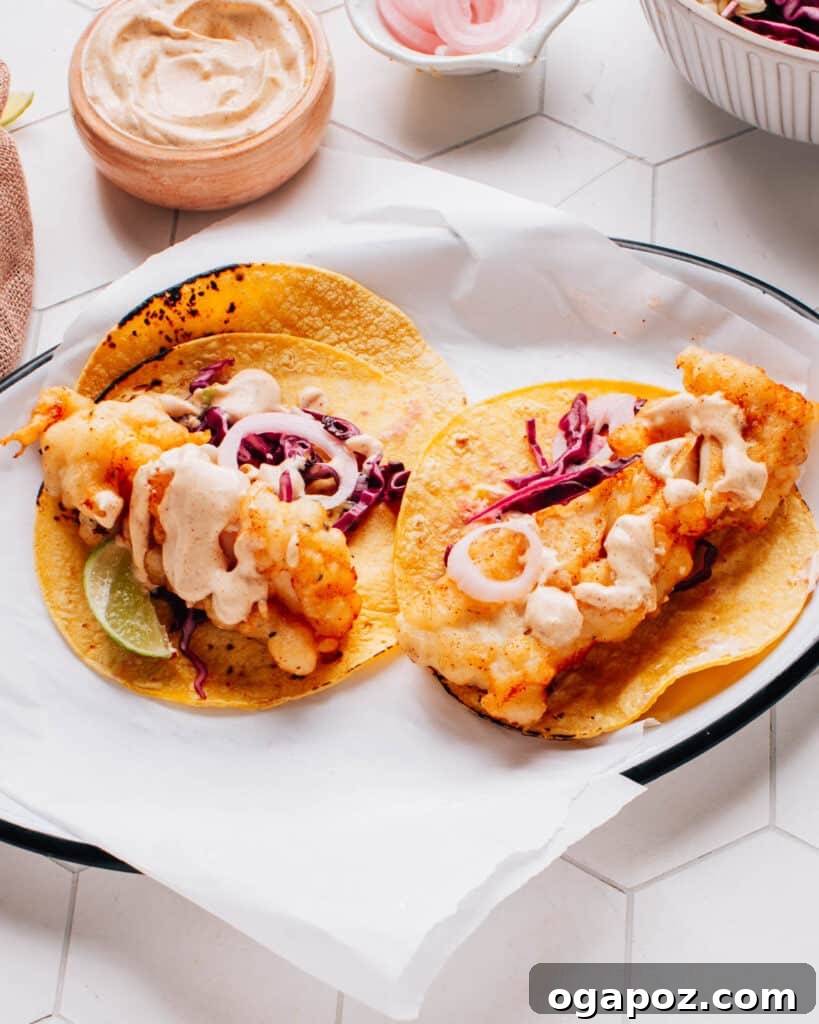
- The Ultimate Mexican Topper: No taco night is complete without a generous sprinkle of these zesty pickled onions! They provide a refreshing contrast to rich meats and creamy sauces. I absolutely adore them with Baja fish tacos, chicken street tacos, or especially with spicy fish tacos with cabbage slaw and lime crema. Beyond tacos, they’re equally delicious on other Mexican-inspired dishes like tostadas, cheesy quesadillas, hearty chili con carne, and even a fun walking taco casserole.
- Burger and Sandwich Booster: Elevate your everyday burgers and sandwiches with an added layer of flavor and a delightful crunch. Layer them on your favorite beef burger, turkey sandwich, or my ultra-juicy ground chicken burgers. They cut through the richness of the patty and cheese, bringing a welcome brightness.
- Vibrant Salad Enhancer: Toss quick pickled red onions into any salad to introduce a tangy, zesty element and a beautiful pop of color. They pair particularly well with green salads, grain bowls, and even potato or pasta salads, adding complexity and a refreshing bite.
- Avocado Toast Twist: Transform your morning (or anytime) avocado toast into a gourmet experience. Top your mashed avocado on toast with a perfectly microwave-boiled egg, a sprinkle of everything bagel seasoning, and a generous scattering of quick pickled red onions. The tanginess perfectly complements the creamy avocado.
- Cheeseboard Champion: These tangy pickles are a fantastic addition to any charcuterie or cheeseboard. They provide a brilliant palate-cleansing counterpoint to rich, strong cheeses like blue cheese, aged cheddar, or salty feta, and balance out cured meats. They add both visual appeal and a refreshing bite to your spread.
- Alongside Grilled Meats and Seafood: Whether it’s grilled chicken, steak, pork chops, or flaky white fish, a dollop of pickled onions can brighten and balance the rich flavors of grilled proteins.
- As a Side for Eggs: Serve them alongside scrambled eggs, omelets, or fried eggs for a tangy breakfast or brunch addition.
- Pizza Topping Perfection: Sprinkle them over your favorite pizza after it comes out of the oven for a fresh, zesty finish.
Frequently Asked Questions About Pickled Onions
Got more questions about these delightful quick pickled red onions? Don’t worry, we’ve got you covered with answers to some common queries!
Quick pickled onions are typically made from thinly sliced raw onions that are rapidly marinated in a simple, heated brine consisting of vinegar (often white or apple cider), water, sugar, and salt. This process quickly infuses them with a tangy, slightly sweet, and vibrant flavor.
Absolutely! While red onions are a popular choice due to their beautiful color and slightly milder flavor profile, you can certainly use white or yellow onions. White onions will yield a sharper, more pungent pickle, while yellow onions offer a good balance. The taste will differ slightly, but they will still be delicious and incredibly versatile.
Certainly! The type of vinegar you choose can significantly impact the final flavor. While white vinegar provides a classic, sharp tang, apple cider vinegar offers a milder, fruitier note. You can also experiment with white wine vinegar for a slightly sophisticated touch, red wine vinegar for a deeper color and bolder flavor, or rice vinegar for a softer, slightly sweet Asian-inspired pickle.
A cloudy pickling solution is often a harmless occurrence caused by the minerals present in your tap water reacting with the vinegar, or sometimes from the natural compounds released by the onions. It is generally safe to eat. If you prefer a crystal-clear brine for aesthetic reasons, consider using distilled water for your recipe.
Pickled onions are an incredibly versatile condiment that adds a burst of tangy, sweet, and savory flavor to countless dishes. They are perfect as a topping for burgers, sandwiches, hot dogs, and particularly tacos. They also make an excellent addition to green salads, grain bowls, charcuterie boards, and can brighten up grilled meats and seafood.
No, typically this quick pickling method, which relies on vinegar, does not produce probiotic benefits. The acidity of the vinegar creates an environment that inhibits the growth of most bacteria, including beneficial probiotics. For probiotic-rich onions, you would need to use a fermentation method involving a saltwater brine (lacto-fermentation) without vinegar.
When stored properly in an airtight container and kept submerged in the pickling liquid in the refrigerator, your homemade quick pickled red onions can last for 2 to 3 weeks. Always ensure the lid is tightly sealed and use clean utensils to maintain freshness.
Save this recipe for later!
Pin this recipe!
Print this recipe!
Easy Quick Pickled Red Onion (5-Minute Recipe)
Jennifer Pallian BSc, RD
1 hour 5 minutes (includes marinating time)
5 minutes
8 servings
Recipe Video
Watch how easy it is to make these quick pickled red onions!
Equipment
- Measuring Cups and Spoons
- Sharp Knife (or Mandoline Slicer)
- Small Saucepan
- Mixing Bowl (optional, for slicing)
- Wooden Spoon or Whisk
- Airtight Glass Jar or Container (e.g., Mason Jar)
Ingredients
- 1 medium red onion, peeled and thinly sliced
- ½ cup white vinegar (or apple cider vinegar for a milder flavor)
- ½ cup water
- 1 tablespoon granulated sugar
- 1 teaspoon salt (non-iodized is preferred)
- Optional additions: A few black peppercorns, a bay leaf, a pinch of red pepper flakes, or a smashed garlic clove for extra flavor.
Instructions
- Prepare the Onion: Peel the red onion and slice it as thinly and uniformly as possible. A mandoline slicer is ideal for this, but a sharp knife works too. Place the sliced onions into a clean, heat-proof jar or airtight container.
- Make the Brine: In a small saucepan, combine the white vinegar, water, sugar, and salt. Bring this mixture to a gentle simmer over medium heat, stirring continuously until the sugar and salt are completely dissolved. Remove the pan from the heat and let the mixture cool for about 5-10 minutes, so it’s warm but not boiling.
- Combine: Pour the warm pickling liquid over the sliced red onions in the jar. Ensure that all the onion slices are fully submerged. If needed, gently press the onions down with a spoon or a small piece of parchment paper to keep them under the liquid.
- Cool and Store: Allow the jar of pickled onions to cool completely at room temperature for approximately 15-30 minutes. Once cooled, secure the lid tightly and transfer the jar to the refrigerator.
- Marinate for Flavor: For the best flavor, allow the pickled onions to marinate in the refrigerator for at least 1 hour. However, for a deeper flavor and more vibrant color, it is highly recommended to let them sit overnight, or for at least 8-12 hours.
Notes
They are a highly versatile condiment that adds a tangy, zesty, and flavorful punch to a wide array of dishes, including sandwiches, salads, tacos, burgers, and much more. Enjoy your homemade creation!
Nutrition Information (Approximate per serving)
Carbohydrates: 4g |
Protein: 0.2g |
Fat: 0.03g |
Saturated Fat: 0.01g |
Polyunsaturated Fat: 0.01g |
Monounsaturated Fat: 0.01g |
Sodium: 292mg |
Potassium: 31mg |
Fiber: 0.3g |
Sugar: 3g |
Vitamin A: 55 IU |
Vitamin C: 2mg |
Calcium: 5mg |
Iron: 0.1mg
Nutrition information is automatically calculated and should only be used as an approximation. Actual values may vary based on ingredients and preparation methods.
Tried this recipe? Share your thoughts and leave a comment below!