
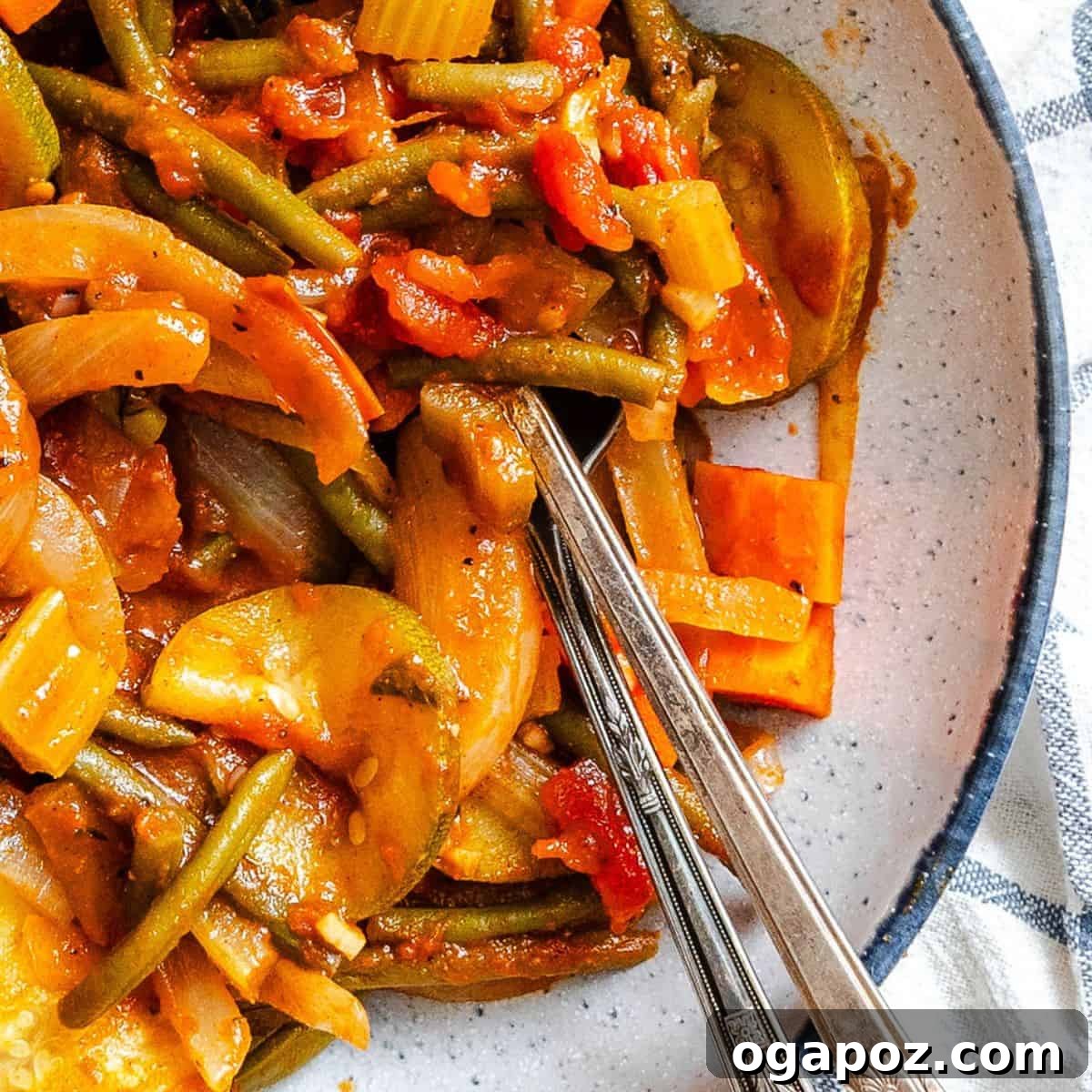
These Lebanese Vegetables, known locally as Loubieh bi Zeit, are a true celebration of vibrant flavors and wholesome ingredients. Slow-simmered to perfection with aromatic cinnamon and earthy cumin, this dish transforms simple vegetables into a side that the whole family will adore. It’s incredibly versatile, perfect for simmering on the stove while you prepare your main course, and it tastes even better the next day as leftovers.
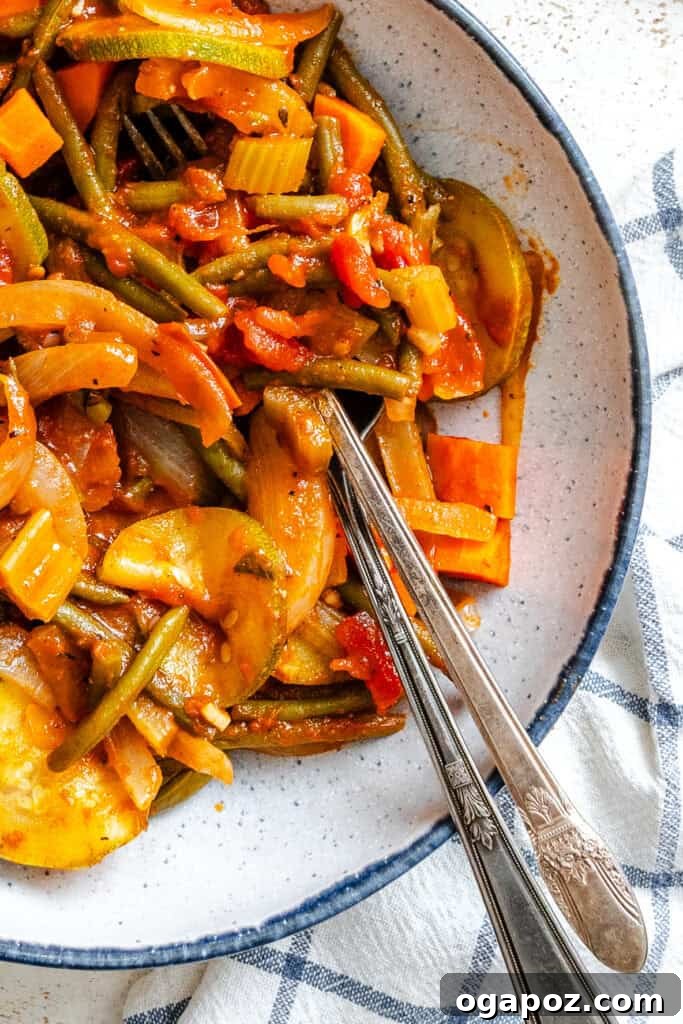
Growing up, my home was always filled with the comforting aromas of Lebanese cuisine. I developed a deep appreciation for the warm spices and the freshness of locally sourced vegetables. Today’s recipe for Lebanese Vegetables, or Loubieh bi Zeit, is a classic vegan dish from Lebanon, traditionally made with fresh green beans and a delightful medley of other vegetables. These are gently stewed with onions, garlic, ripe tomatoes, and a signature blend of warm, inviting spices.
Loubieh bi Zeit is typically enjoyed cold or at room temperature, making it an excellent addition to a traditional mezze spread or as a refreshing side dish. It’s a staple in many Lebanese households, and its rich history and simple preparation make it a beloved recipe passed down through generations. My own memories are filled with the scent of Lebanese Green Beans simmering at my Grandma’s house, and this recipe captures that same nostalgic warmth and flavor.
The Essence of Loubieh bi Zeit: A Culinary Journey
Loubieh bi Zeit literally translates to “green beans in oil,” which highlights the humble yet central role of olive oil in this dish and Lebanese cooking in general. It’s more than just a side; it’s a reflection of the Mediterranean diet’s emphasis on fresh, seasonal produce, healthy fats, and aromatic seasonings. This particular rendition combines tender zucchini, crisp green beans, diced tomatoes, sweet onion, carrots, and celery, all infused with the distinct flavors of cumin and cinnamon. The slow simmering process is crucial, allowing the vegetables to soften beautifully and the spices to meld into a complex, satisfying taste.
One of the beauties of this recipe lies in its adaptability. You can easily customize it to your personal preferences or what’s available in your kitchen. If zucchini isn’t your favorite, feel free to swap it out for cauliflower, yellow squash, or even tender eggplant. This flexibility ensures that the dish is always a hit, regardless of dietary preferences or seasonal availability.
For those looking to explore more Mediterranean flavors, my Mediterranean Roasted Vegetables offer another fantastic option. These Lebanese Vegetables also pair wonderfully with hearty main courses. I particularly love serving them alongside savory Shish Tawook or as a vibrant accompaniment to Hummus with Spiced Beef and Toasted Pine Nuts. The earthy notes of the vegetables complement rich proteins beautifully, creating a balanced and unforgettable meal.
Essential Recipe Ingredients for Loubieh bi Zeit
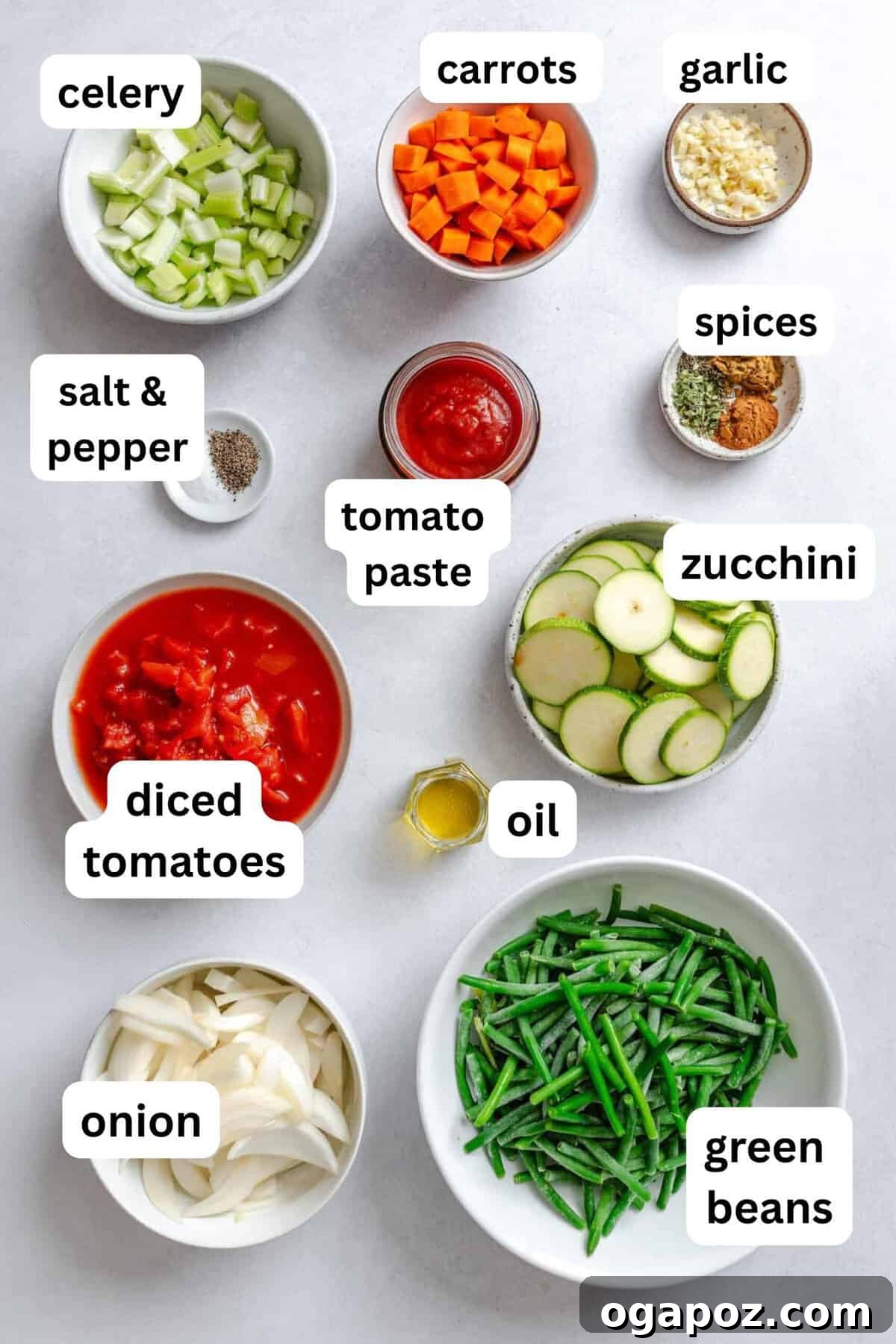
This recipe calls for simple, fresh ingredients that come together to create a complex and satisfying flavor profile. Below is an overview of what you’ll need. For precise measurements, please refer to the complete recipe card at the end of this article.
- Assorted Vegetables: The core of this dish features celery, carrots, sweet onion, tender zucchini, and frozen green beans. This combination offers a wonderful balance of textures and natural sweetness that pairs perfectly with the warm spices. The selection of vegetables provides a rich source of vitamins, minerals, and dietary fiber, making this a truly nourishing dish.
- Garlic: Freshly minced garlic is highly recommended for its pungent, aromatic qualities that are essential to Lebanese cooking. If fresh garlic isn’t available, garlic powder can be used in a pinch, or you may omit it, though it will subtly alter the flavor depth.
- Tomatoes: We use both diced tomatoes and tomato sauce to create a rich, savory base for the stew. Diced tomatoes provide texture, while the sauce ensures a smooth, integrated flavor. For an extra layer of complexity and a hint of smoky flavor, consider using fire-roasted diced tomatoes.
- Signature Spices: The heart of this Lebanese dish lies in its warm and inviting spice blend. Cumin adds an earthy depth, while cinnamon contributes a unique sweet-spicy note that is characteristic of Middle Eastern cuisine. Thyme and oregano enhance the herbaceous undertones, rounding out the flavor profile beautifully. This combination not only tastes incredible but also offers various health benefits, including anti-inflammatory properties.
Recipe Modifications & Creative Variations
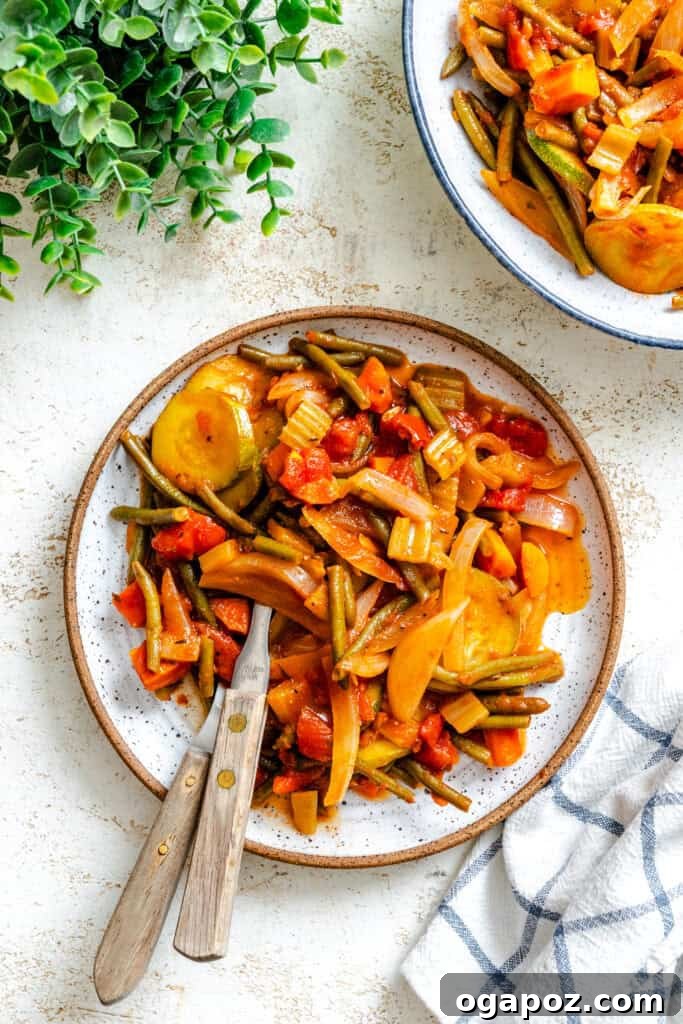
One of the many wonderful aspects of Loubieh bi Zeit is its inherent flexibility. Don’t hesitate to get creative with your ingredients and adapt the recipe to suit your preferences or what you have on hand. Here are some ideas to inspire your culinary exploration:
- Expanding Your Vegetable Medley: Beyond the core ingredients, a wide array of other vegetables can be incorporated. Consider adding cubes of eggplant for a silky texture, colorful bell peppers for sweetness, or nutrient-rich peas for a burst of green. Yellow squash, broccoli florets, or even chopped turnips can also make excellent additions, each contributing its own unique flavor and texture to the stew. Fresh spinach, Swiss chard, or kale can be stirred in during the last few minutes of cooking for an extra boost of greens.
- Enhancing the Spice Profile: While the traditional spice blend is perfect, you can certainly experiment with other seasonings. A pinch of paprika or smoked paprika can add a vibrant color and a deeper, smoky undertone. For a bit of heat, a touch of chili powder can introduce a subtle kick. Italian seasoning, though not traditional, can surprisingly complement the existing herbs, offering a slightly different aromatic dimension. Don’t forget a squeeze of fresh lemon juice at the end to brighten all the flavors.
- Boosting with Beans & Protein: To transform this side dish into a more substantial, protein-packed meal, consider adding cooked beans. White beans (cannellini or great northern), chickpeas, or even black beans would integrate beautifully, adding fiber and texture. If you’re not strictly vegan, ground beef or ground lamb can be browned with the onions and garlic at the beginning of the cooking process. This creates a heartier, more filling stew that still retains its authentic Lebanese essence.
- Other Flavorful Additions: To further elevate the dish, consider adding sliced mushrooms for an umami depth. A scattering of pickled red onions on top before serving can offer a delightful tangy crunch. Fresh parsley or cilantro, chopped and sprinkled over the finished dish, adds a burst of freshness and color that is both appealing and flavorful.

How to Prepare Authentic Lebanese Vegetables (Loubieh bi Zeit)
Crafting this flavorful Lebanese vegetable stew is straightforward and rewarding. The key is in the slow simmering, which allows the individual flavors to meld beautifully and the vegetables to reach perfect tenderness. Follow these simple steps to bring a taste of Lebanon to your table:
Step 1: Sauté the Aromatic Base
Begin by heating the olive oil in a large, heavy-bottomed pot or Dutch oven over medium heat. Once shimmering, add the chopped onion, carrots, and celery. Sauté these vegetables gently, stirring occasionally, until they become soft and translucent, typically for about 5-7 minutes. This step is crucial for building a foundational layer of flavor, as the natural sugars in the vegetables caramelize slightly. Next, add the minced garlic and continue to sauté for another two minutes. Be careful not to burn the garlic, as this can impart a bitter taste to the dish; you’re looking for a fragrant aroma to develop.
Step 2: Combine and Simmer to Perfection
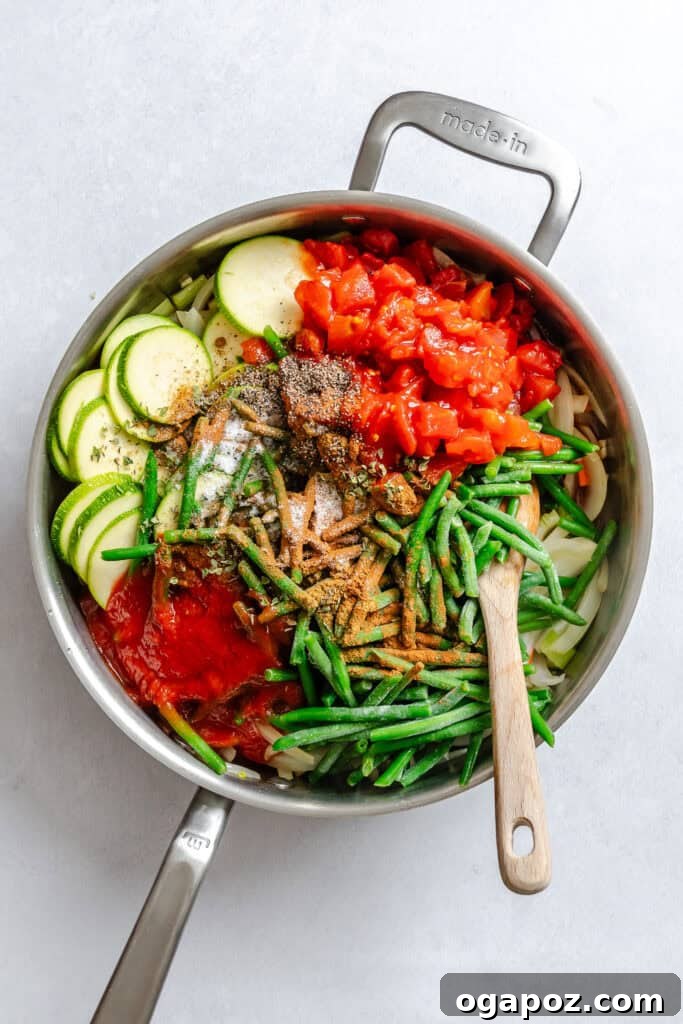
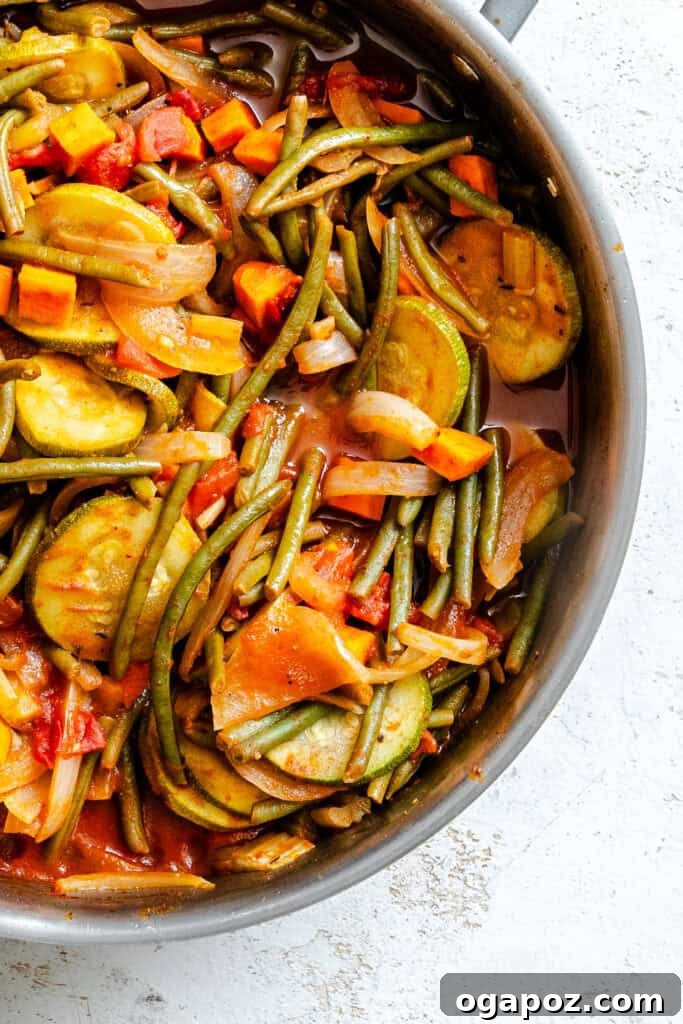
Once your aromatic base is ready, add all the remaining ingredients to the pot: the zucchini, frozen green beans, diced tomatoes, tomato sauce, cumin, cinnamon, thyme, and oregano. Stir everything together thoroughly to ensure the spices are evenly distributed and all vegetables are coated. Reduce the heat to low, then cover the pot with a lid, leaving it slightly ajar or tilted. This small gap allows steam to escape gradually, preventing the stew from becoming too watery while still allowing the flavors to concentrate and the vegetables to tenderize slowly. Let the dish simmer for approximately 40 minutes, stirring occasionally to prevent sticking and ensure even cooking. During this time, the vegetables will soften, and the spices will infuse the entire dish with their wonderful aroma. Towards the end of the simmering time, taste the stew and season generously with salt and pepper to your preference. Serve warm as a delightful side dish, or spoon it generously over a bed of fluffy rice for a complete and satisfying meal.
Storage and Reheating Tips for Lebanese Vegetables
Loubieh bi Zeit is an excellent make-ahead dish, perfect for meal prepping or enjoying as flavorful leftovers. Proper storage ensures its taste and texture remain optimal:
- Cooling: Always allow the cooked Lebanese vegetables to cool completely to room temperature before transferring them to storage containers. This typically takes about 1-2 hours. Cooling prevents condensation from forming inside the container, which can lead to sogginess and affect the texture of the vegetables.
- Refrigeration: Store the cooled vegetables in an airtight container in the refrigerator for up to 4-5 days. The flavors often deepen and meld even more beautifully after a day or two, making this an ideal dish for preparing in advance.
- Freezing: For longer storage, Lebanese vegetables freeze exceptionally well. Transfer the completely cooled stew into freezer-safe containers or heavy-duty freezer bags. It can be frozen for up to 3 months. Thaw overnight in the refrigerator before reheating.
- Reheating: To reheat, simply warm the vegetables gently on the stovetop over medium-low heat, stirring occasionally, until heated through. You can also reheat individual portions in the microwave. If the stew seems a bit thick after reheating, you can add a tablespoon or two of vegetable broth or water to achieve your desired consistency.
Frequently Asked Questions About Loubieh bi Zeit
Absolutely! Fresh tomatoes are a fantastic choice, especially when they are in season from your garden or a local farmers market. Just make sure to dice them properly and you might want to slightly increase the simmering time if they are very firm, to allow them to break down fully and release their juices. Using fresh tomatoes can add an even brighter, more vibrant flavor to the stew.
Traditionally, Loubieh bi Zeit is served at room temperature or even cold, as it’s often part of a larger mezze spread. However, it is equally delicious served warm as a side dish, especially during cooler months. The beauty of this recipe is its versatility; you can enjoy it in whichever way you prefer, depending on your meal and personal taste!
While the classic version of Loubieh bi Zeit is a vegan and vegetarian-friendly dish, it’s certainly possible to add meat for a protein-rich meal. Ground beef or ground lamb are popular choices in variations of this stew. You would typically brown the ground meat with the onions and garlic at the beginning of the cooking process, before adding the other vegetables and liquids. This creates a heartier, more filling dish while still retaining the authentic Lebanese flavors.
While frozen green beans are convenient and work perfectly, fresh green beans are also an excellent choice, especially when they are in season. Look for tender, vibrant green beans that snap easily. If using fresh, you might need to trim the ends and potentially simmer them for a few extra minutes to ensure they reach the desired tenderness. Both options yield delicious results, so choose what’s best for you!
Absolutely! Loubieh bi Zeit is an ideal dish for entertaining because its flavors actually improve as it sits. You can prepare it a day or two in advance and store it in the refrigerator. Before serving, bring it to room temperature or gently warm it on the stovetop. This makes meal planning much easier, allowing you to focus on your guests.
Explore More Authentic Lebanese Recipes
Beef
Lebanese Beef and Green Beans
Vegetarian
Instant Pot Lebanese Green Beans
Mediterranean
Lebanese Lentil Soup
Mediterranean
Easy Lebanese Salad
Tried this recipe? Leave a star rating and comment below! Subscribe to our newsletter or follow us on
Facebook,
Instagram, or
Pinterest for the latest recipes.
Lebanese Vegetables (Loubieh bi Zeit)
Ingredients
- 2 tablespoons olive oil
- 4 garlic cloves, minced
- 2 large celery stalks, chopped
- 2 large carrots, peeled and chopped
- 1 sweet onion, chopped into medium slices
- 1 large zucchini, cut in slices
- 1 (10.8 ounce) bag of frozen green beans (or fresh)
- 1 (14.5 ounce) can of diced tomatoes
- 1 (8 ounce) can of tomato sauce
- 1 tablespoon cumin
- 1 teaspoon cinnamon
- 1/2 teaspoon thyme
- 1 teaspoon oregano
- Salt and pepper to taste
Instructions
-
In a large pot or Dutch oven, heat the olive oil over medium heat. Add the chopped onion, carrots, and celery and sauté until soft and translucent, about 5-7 minutes. Stir in the minced garlic and continue to sauté for another two minutes until fragrant.
-
Add the zucchini, green beans, diced tomatoes, tomato sauce, cumin, cinnamon, thyme, and oregano to the pot. Stir well to combine all ingredients.
-
Reduce the heat to low. Cover the pot with the lid slightly tilted (or ajar) to allow steam to escape. Simmer for 40 minutes, stirring occasionally, until the vegetables are tender and the flavors have melded.
-
Taste and season with salt and pepper as needed.
-
Serve warm as a flavorful side dish or over rice. This dish can also be enjoyed at room temperature or chilled as part of a mezze spread.
Notes
- Feel free to customize this dish with your favorite vegetables. Great additions include yellow squash, cauliflower, broccoli, or turnips.
- This versatile vegetable stew pairs wonderfully over rice, as a standalone side dish, or alongside roasted chicken or turkey.
- For a richer flavor, let the dish sit for a few hours or overnight in the refrigerator; the flavors tend to deepen beautifully.
Nutrition Information
Calories: 79kcal,
Carbohydrates: 8g,
Protein: 2g,
Fat: 5g,
Saturated Fat: 1g,
Polyunsaturated Fat: 1g,
Monounsaturated Fat: 4g,
Sodium: 42mg,
Potassium: 333mg,
Fiber: 2g,
Sugar: 4g,
Vitamin A: 4243IU,
Vitamin C: 14mg,
Calcium: 52mg,
Iron: 1mg
Nutrition information is automatically calculated, so it should only be used as an approximation.
Tried this recipe?Mention @acedarspoon or tag #acedarspoon!