
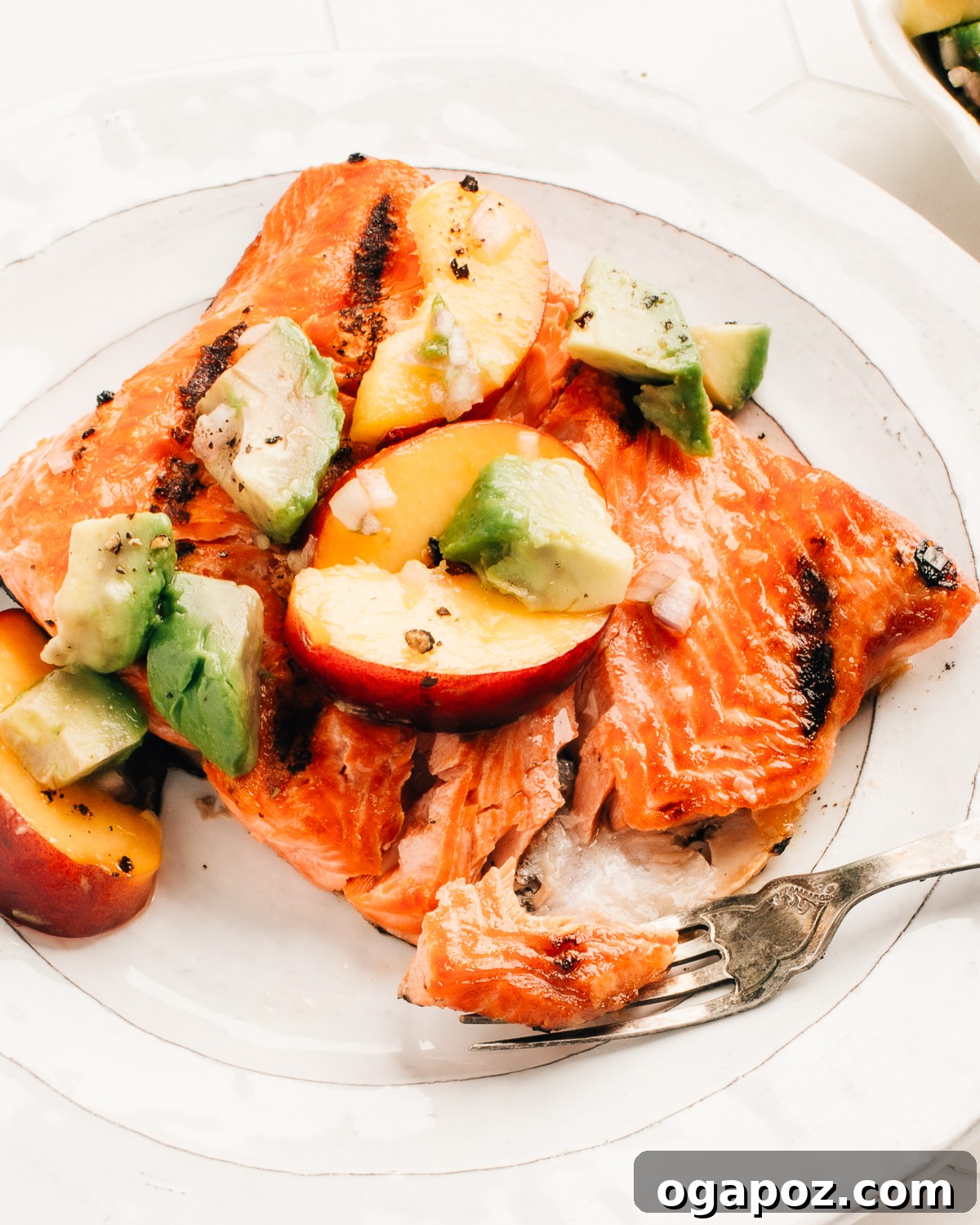
Unlock the secrets to grilling salmon perfection! This easy Grilled Salmon recipe promises perfectly moist and flaky fish, adorned with impressive grill marks, all achieved in under 10 minutes. We leverage simple food science principles to make this recipe absolutely foolproof, ensuring a delicious outcome every single time.
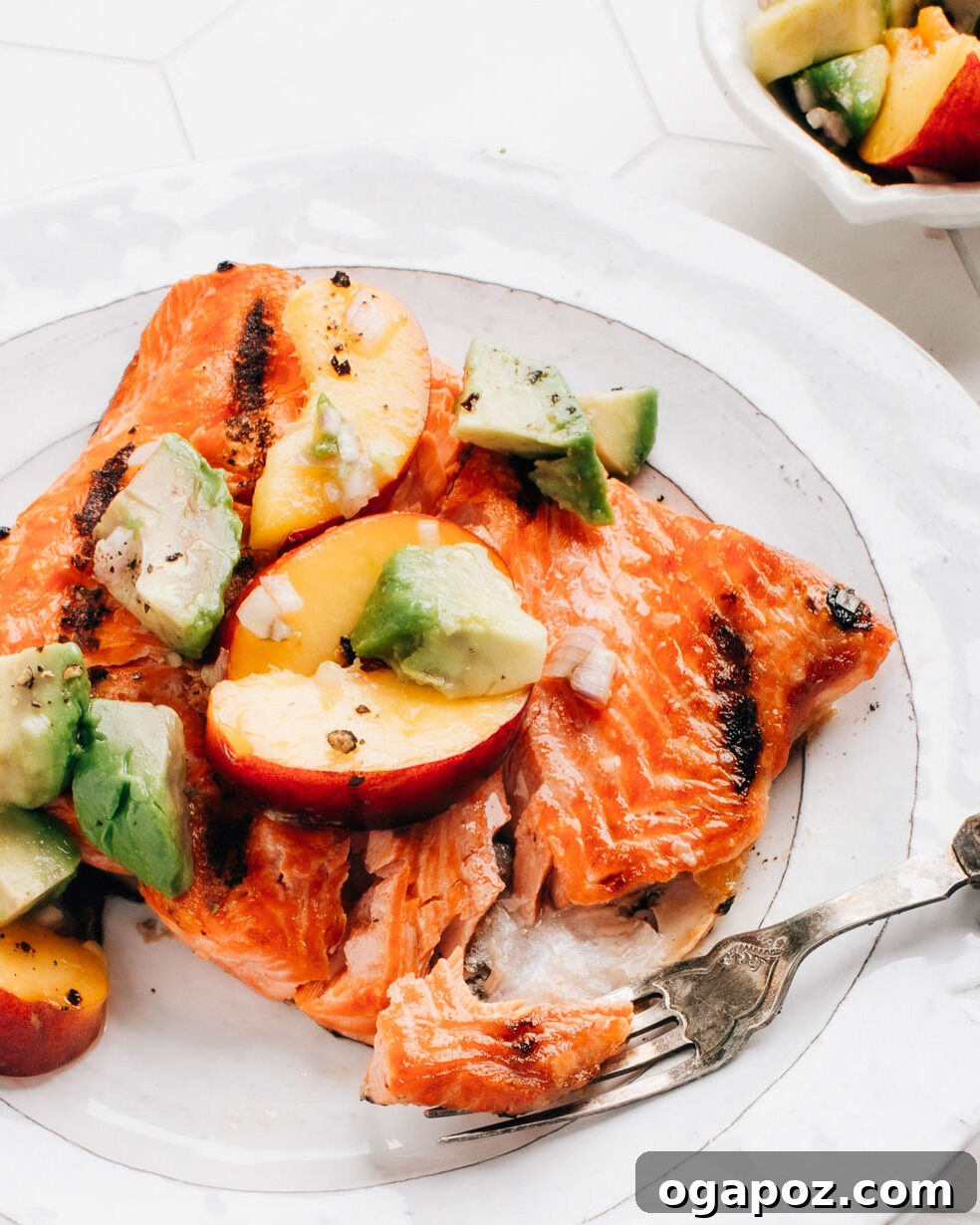
As a seasoned food scientist, I intimately understand the challenges that can arise when grilling salmon. It’s a delicate dance between achieving doneness without venturing into the realm of overcooked, dry fish. The tendency for salmon to stubbornly cling to grill grates is another common hurdle that can quickly turn an anticipated meal into a frustrating experience. But fear not, for I’ve mastered the art and science of grilled salmon, and I’m here to share my expertise with you.
In this comprehensive guide, I’ll reveal all my tried-and-true tricks and techniques. My goal is to eliminate any guesswork from your grilling process, empowering you to consistently deliver perfectly grilled salmon that is wonderfully moist, incredibly flaky, and bursting with flavor. Get ready to impress your family and friends with your newfound grilling prowess!
Essential Ingredients for the Best Grilled Salmon
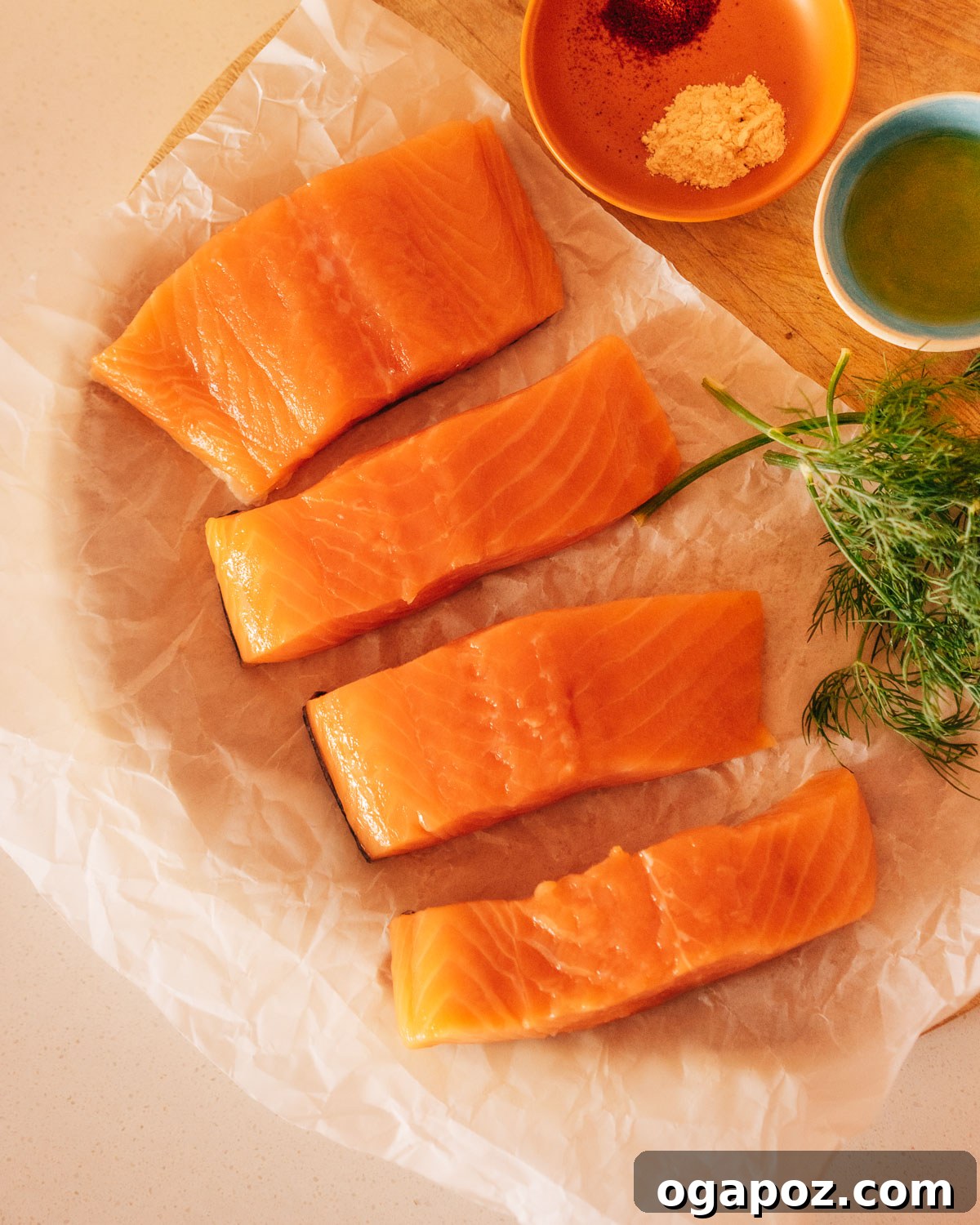
Crafting foolproof grilled salmon requires a surprisingly short list of ingredients, yet each plays a vital role in achieving that perfect taste and texture. Here’s a closer look at what you’ll need for this simple yet exquisite dish:
For the Salmon Fillets
- Salmon fillets: Plan for four portions, each weighing between 5 to 6 ounces. You can choose skin-on or skin-off, though skin-on fillets are generally recommended for grilling. The skin acts as a protective layer, making the fish easier to handle on the grill and helping to lock in moisture for a juicier result.
- Olive oil: A good quality olive oil serves multiple purposes here. It acts as a binder, helping the seasoning adhere evenly to the fish. More importantly, it creates a barrier that prevents the delicate salmon from drying out under the grill’s intense heat, contributing to its moist texture.
- Kosher salt: The cornerstone of flavor. Kosher salt’s larger crystal size allows for better control during seasoning and dissolves beautifully, penetrating the fish to enhance its natural taste without making it overly salty.
- Black pepper: Freshly ground black pepper adds a subtle kick and aromatic complexity. A little goes a long way in complementing the rich flavor of salmon.
- Garlic powder: This savory powerhouse adds a deep, umami note that pairs exceptionally well with fish. Its finely ground texture ensures even distribution, and it helps promote a beautiful golden-brown crust, especially crucial with a short grilling time.
- Smoked paprika: To truly elevate the grilling experience, smoked paprika introduces a wonderful, subtle smokiness. This spice not only adds depth of flavor but also enhances the visual appeal, mimicking the char and aroma of authentic outdoor grilling.
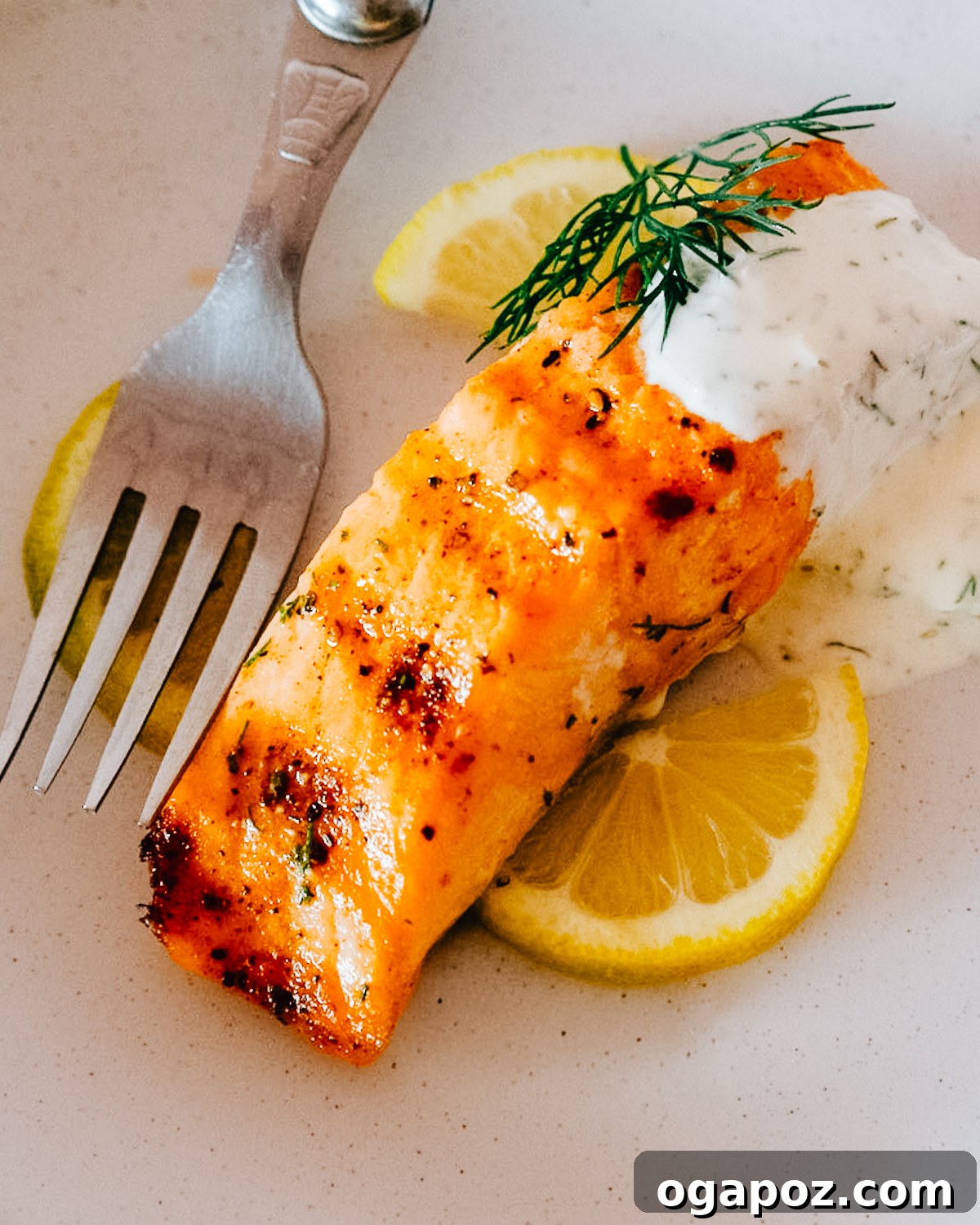
While a simple and elegant herb drizzle is provided in the recipe card below, the versatility of this grilled salmon means you can pair it with a multitude of accompaniments. Consider serving it with my refreshing avocado melon cucumber salsa, as showcased in the appetizing photo above, for a vibrant, summery touch. Alternatively, a creamy dill sauce for salmon, pictured in the photos below, offers a classic and comforting pairing. The possibilities are truly endless!
You’ll find the complete list of ingredient quantities and precise measurements conveniently located in the detailed recipe card at the very bottom of this article.
Flavorful Variations and Simple Substitutions for Grilled Salmon
One of the beauties of this grilled salmon recipe is its adaptability. Here are some effortless ways to customize the flavors, allowing you to create a different culinary experience each time you make it:
- Cajun style: For a zesty, spicy kick, simply swap the garlic powder and smoked paprika in the rub for a generous amount of your favorite Cajun seasoning blend. This instantly transports your salmon to the Louisiana bayou, much like in my popular Cajun Honey Butter Salmon recipe.
- Asian twist: For an umami-rich and slightly sweet profile, skip the initial spice rub entirely. Instead, during the final minute of cooking, brush the salmon generously with my homemade teriyaki sauce recipe. The quick sear will caramelize the sauce beautifully.
- Mediterranean delight: Serve your freshly grilled salmon with a dollop of cooling tzatziki sauce, a refreshing cucumber and yogurt dip. Alternatively, my vibrant Indian yogurt sauce offers a unique and aromatic Mediterranean-inspired pairing.
- Herb butter decadence: Elevate your grilled salmon with a luxurious finish. Immediately after removing the hot salmon from the grill, top each fillet with a pat of compound butter. This butter, pre-mixed with finely minced garlic, fresh herbs like parsley or chives, and a squeeze of lemon, will melt into the fish, infusing it with incredible flavor and richness.
If you’re as passionate about salmon as I am, be sure to explore my comprehensive roundup of moist salmon recipes. Each recipe is accompanied by my trusted food science tips, guaranteeing perfectly cooked fish every single time, whether you’re grilling, baking, or pan-searing!
Tools for Grilling Salmon Like a Pro
You likely already possess most, if not all, of the tools required for this recipe, making it even more accessible. Having the right equipment can make a significant difference in ease and outcome:
- Outdoor grill or grill pan: Essential for achieving those beautiful, distinct grill marks and imparting that desirable smoky flavor. Whether you’re using a gas, charcoal, or indoor cast-iron grill pan, proper preheating is key. (Find more delicious grilling recipes here!)
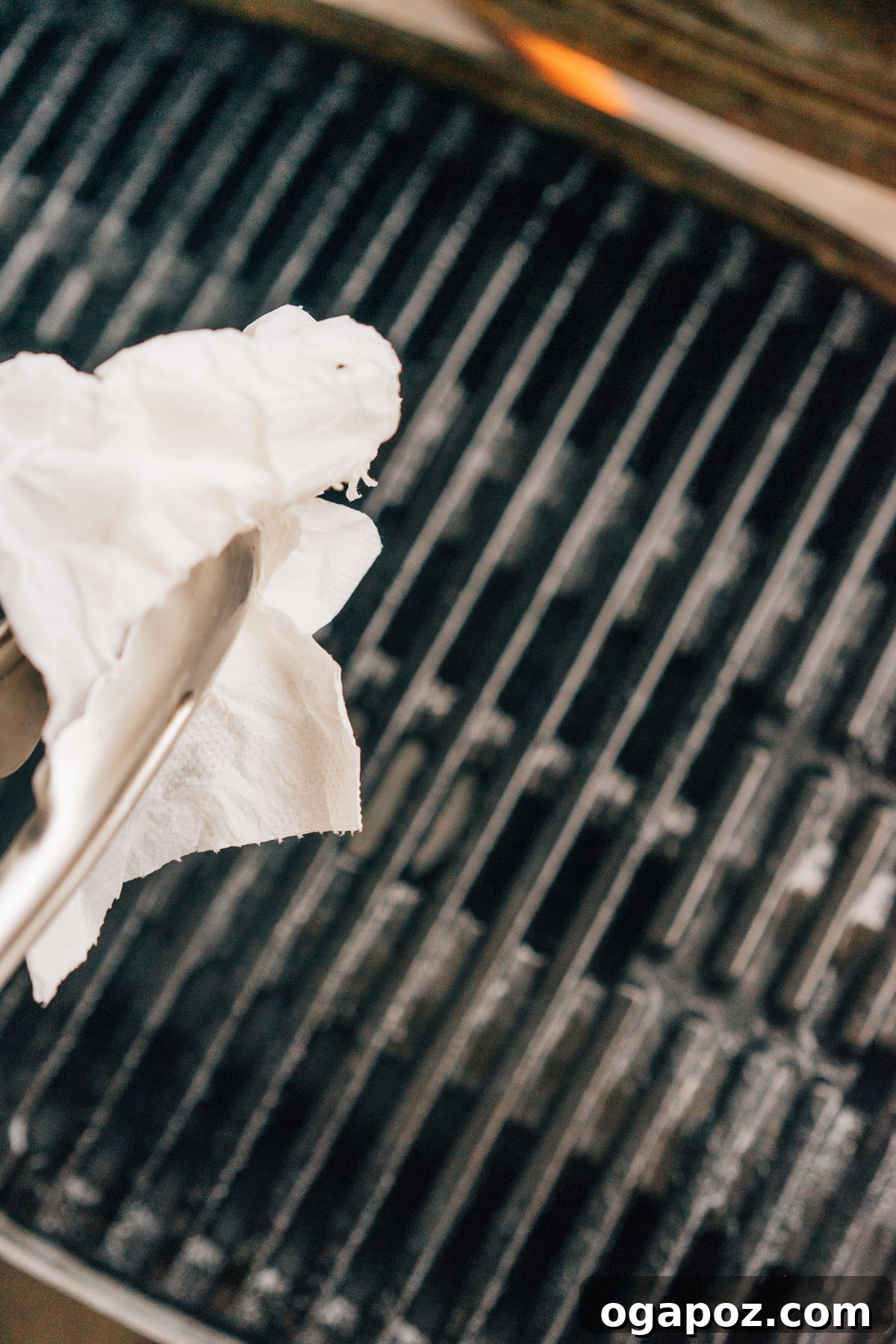
- Long-handled tongs and paper towels: These are crucial for safely and effectively oiling your grill grates without risking burns. The long handle keeps your hands away from the heat, while the paper towel allows for an even oil application.
- Pastry brush: A dedicated pastry brush makes applying olive oil to your salmon fillets a clean and efficient process, ensuring even coverage for seasoning adhesion and moisture retention.
- Small bowl: Perfect for combining your dry spice rub ingredients, as well as whisking together the optional herb drizzle.
- Instant-read thermometer: While optional, an instant-read thermometer is arguably the most valuable tool for eliminating guesswork. It provides precise internal temperature readings, ensuring your salmon is cooked to perfection – never underdone, never overcooked.
- Fish spatula: A thin, wide, and flexible fish spatula is designed specifically for delicate foods like fish. Its gentle edge allows for easy lifting and turning (if required) without damaging the flaky fillets, preventing them from breaking apart.
How to Make Foolproof Grilled Salmon: A Step-by-Step Guide
You’ll be pleasantly surprised at how hands-off this recipe is once the salmon hits the grill. Most of the critical preparation work happens upfront, ensuring a smooth and successful grilling process.
Step 1: Preheat and Prepare Your Grill for Optimal Results
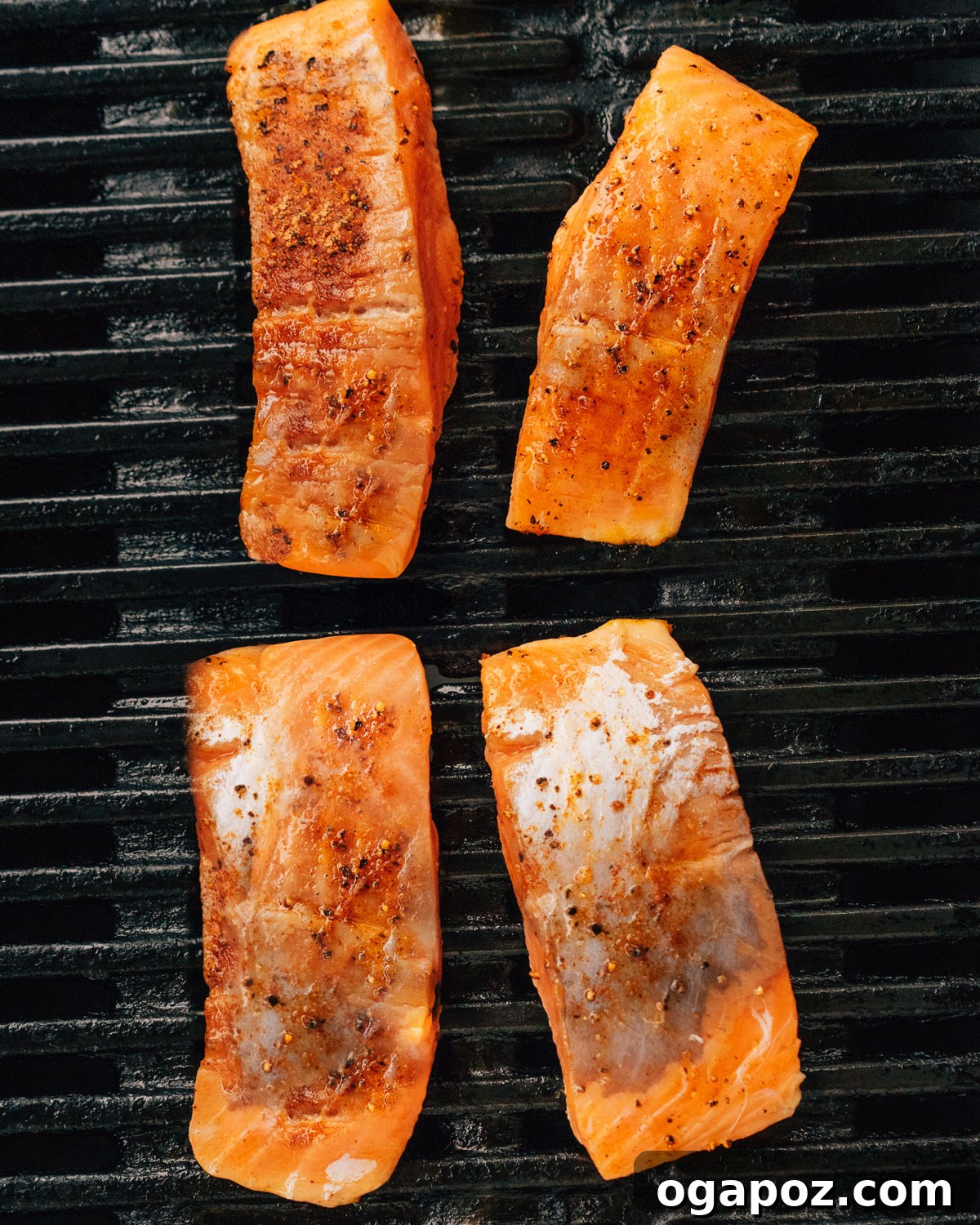
The foundation of non-stick, perfectly seared salmon lies in a properly prepared grill. Begin by preheating your grill or grill pan to a consistent medium-high heat. It’s absolutely essential to allow a full 10 to 15 minutes for the grates to reach their ideal temperature. This extended preheating period is KEY to preventing the delicate fish from sticking and helps create those desirable, beautifully defined grill marks. Once hot, use a sturdy grill brush to meticulously clean the grates, removing any charred bits from previous cooks. A clean surface ensures even cooking and flavor. Finally, using long-handled tongs and a tightly folded paper towel dipped in a high-smoke-point oil (like grapeseed or avocado oil), thoroughly grease the grates. This creates a critical non-stick barrier.
Step 2: Season the Salmon for Maximum Flavor
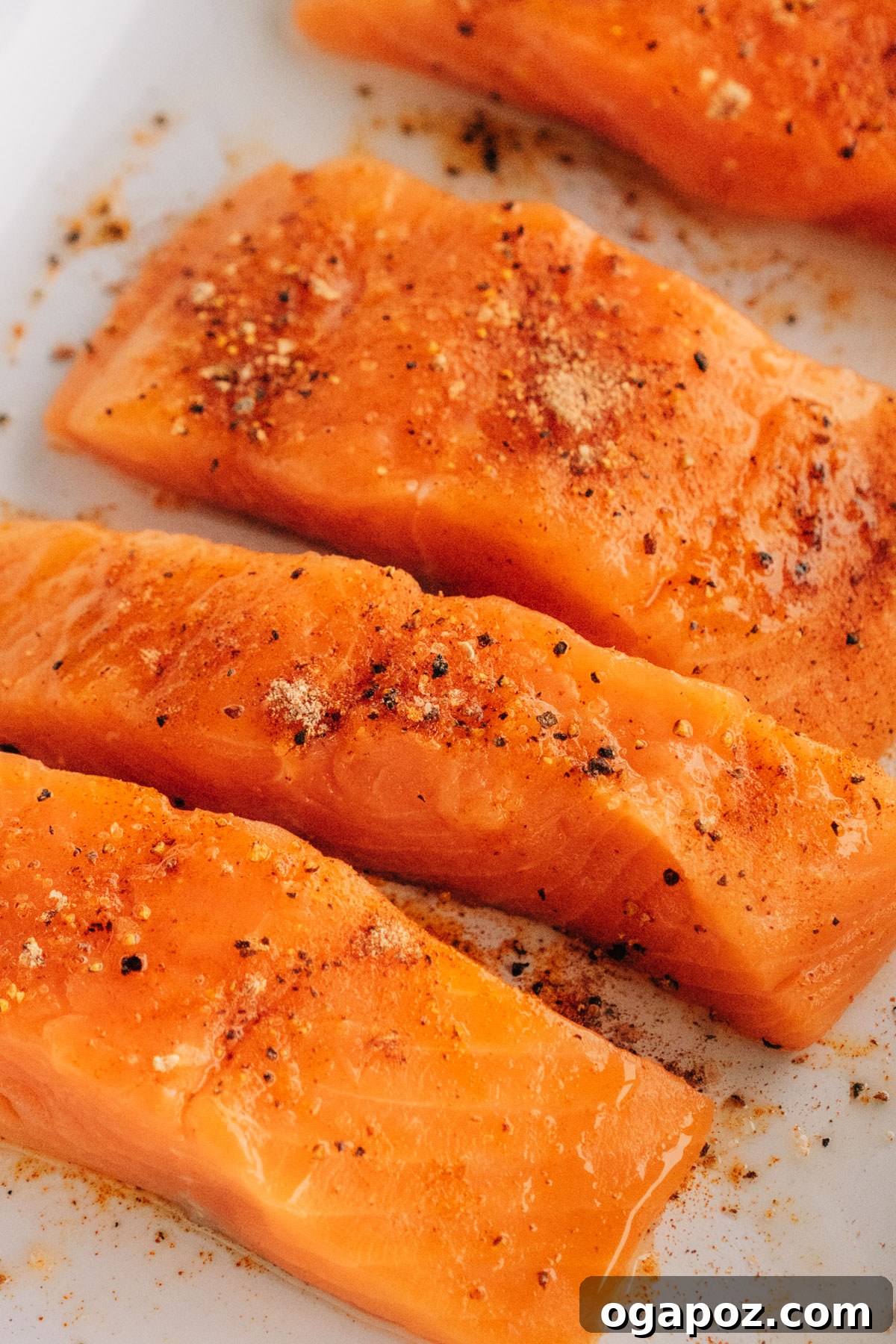
Preparation of the salmon itself is equally important. Start by patting each salmon fillet completely dry using paper towels. Excess moisture on the surface creates steam, which hinders browning and crisping. A dry surface is crucial for developing a beautiful sear. Next, brush all sides of the salmon generously with olive oil; this helps the spices adhere and adds a layer of protection. In a small bowl, combine your kosher salt, black pepper, garlic powder, and smoked paprika. Sprinkle this aromatic spice mixture evenly over each fillet, gently pressing it to ensure it sticks. This simple rub creates a harmonious blend of savory, peppery, and smoky notes that perfectly complements the rich flavor of the salmon.
Step 3: Grill Without Flipping for Flawless Skin-On Salmon
Now, for the magic moment. Carefully place the seasoned salmon fillets, skin-side down, directly onto the hot, oiled grill grates. Close the grill lid immediately. For skin-on fillets, the key is to cook the salmon almost entirely on one side without flipping. The skin acts as a natural protective barrier, insulating the delicate flesh from the direct heat, preventing it from drying out, and virtually eliminating sticking. Cook the salmon for approximately 6 to 8 minutes. Don’t be tempted to peek or flip too early! The fish is ready when the thickest part reaches an internal temperature of 125 to 130°F (52-54°C) using an instant-read thermometer, and the flesh easily flakes with a fork. The edges will appear opaque, while the center should still be slightly translucent and moist.
Step 4: Rest Before Serving for Optimal Juiciness
Once cooked, transfer the grilled salmon fillets carefully to a clean plate. Allow them to rest undisturbed for 2 minutes. This resting period is critical for juicy, tender fish. As the salmon rests, the internal temperature will continue to rise by a few degrees (known as carryover cooking), and the muscle fibers will relax, allowing the juices to redistribute evenly throughout the fillet. Skipping this step can result in drier fish as the juices escape when you cut into it too soon.
Step 5: Finish with an Optional, Bright Herb Drizzle
For an extra layer of freshness and flavor, consider making a vibrant herb drizzle. In a small bowl, whisk together extra virgin olive oil, fresh lemon juice, fragrant lemon zest, and a pinch of salt. Stir in your finely chopped fresh herbs – dill and/or parsley work beautifully here, adding a burst of color and herbaceousness. Just before serving, generously drizzle this bright, zesty sauce over the warm, rested grilled salmon. It provides a perfect counterpoint to the rich fish. (Or, as an alternative, try my delightful easy dill sauce for salmon, as beautifully captured in the image below!).
5 Common Mistakes to Avoid for Perfect Grilled Salmon
Even with the best intentions, grilling salmon can go awry if certain fundamental steps are overlooked. Here are the most frequent missteps home cooks make and how to expertly avoid them, ensuring your grilled salmon is consistently delicious:
- Not preheating the grill long enough: This is perhaps the most critical error. A cool or insufficiently hot grill is the primary culprit behind sticking. When the grates aren’t hot enough, the fish doesn’t immediately sear and release. **Solution:** Always preheat your grill to medium-high for a minimum of 10-15 minutes. This allows the metal to properly heat up and expand, creating a less adhesive surface for your fish.
- Skipping the oil on the grates: Even a perfectly preheated grill needs a little extra help to ensure a flawless release. Without sufficient lubrication, delicate fish like salmon can still cling. **Solution:** Right before placing the salmon, use a paper towel dipped in a high-smoke-point oil (like grapeseed or avocado) and tongs to thoroughly grease the clean, hot grates. This creates an immediate non-stick layer.
- Flipping too soon or too often: Patience is a virtue when grilling salmon, especially with skin-on fillets. Premature or excessive flipping disrupts the searing process and can cause the fish to break apart. **Solution:** For skin-on fillets, aim to cook almost entirely on the skin-side, eliminating the need to flip at all. If grilling skinless and you attempt to move the fish and it resists, it simply means it hasn’t developed a sufficient crust to release naturally. Give it another 30-60 seconds and try again; it will tell you when it’s ready.
- Overcooking the salmon: Salmon, like all fish, cooks quickly and continues to cook after being removed from the heat (carryover cooking). Overcooked salmon turns dry, tough, and loses its delicate flavor. **Solution:** Employ an instant-read thermometer and pull the salmon off the grill when its internal temperature reaches 125-130°F (52-54°C) in the thickest part. The residual heat during resting will gently bring it up to its perfect, moist, and flaky doneness.
- Not patting the fish dry before seasoning: Surface moisture is the enemy of a good sear. Water creates steam, which prevents the fish from browning properly and forming that delicious crust. **Solution:** Always pat your salmon fillets completely dry with paper towels before applying any oil or seasoning. A dry surface ensures better contact with the hot grill, leading to superior browning, enhanced flavor, and a beautifully flaky texture.
Make Ahead and Storage Tips for Grilled Salmon
While grilled salmon is undeniably at its peak when served fresh off the grill, understanding how to properly store and reheat leftovers can extend your enjoyment and minimize food waste. Here’s a guide to managing your delicious grilled salmon:
Storing Leftovers
- Refrigerate cooked salmon: Any leftover grilled salmon should be stored promptly. Place it in an airtight container and refrigerate for up to 3 days. This ensures its freshness and prevents any undesirable odors from permeating other foods in your fridge. For more detailed guidance, consult my comprehensive guide on how long salmon lasts in the fridge.
- Keep the drizzle separate: If you prepared the optional herb drizzle, it’s best to store it separately from the salmon. Transfer the sauce to a sealed jar or container and keep it in the refrigerator for up to 5 days. This maintains its vibrant freshness and prevents the herbs from wilting or losing their potency.
Freezing Grilled Salmon
- Cooked salmon: For longer storage, cooked grilled salmon freezes remarkably well. Wrap individual fillets tightly in plastic wrap, then place them in a freezer-safe bag or container. It can be frozen for up to 2 months. When you’re ready to enjoy it again, simply thaw the salmon overnight in the refrigerator.
Reheating Grilled Salmon
The goal when reheating salmon is to warm it gently without drying it out. Here are the best methods:
- Oven method: This is generally the best way to reheat grilled salmon while preserving its moisture and texture. Preheat your oven to a low temperature, around 275°F (135°C). Place the salmon on a baking sheet, cover it loosely with aluminum foil to trap moisture, and warm for 10 to 15 minutes, or until just heated through. Avoid high heat, which can quickly dry out the fish.
- Enjoy it cold: Don’t underestimate the versatility of cold leftover grilled salmon! It’s fantastic when flaked and added to fresh salads, incorporated into hearty grain bowls for a nutritious lunch, or even mixed into a light salmon salad sandwich.
For even more in-depth advice on storing and extending the life of your salmon, be sure to check out my full guide on how long salmon lasts in the fridge. It covers everything you need to know to safely store your fish.
How to Serve This Delicious Grilled Salmon Recipe
The beauty of this perfectly grilled salmon lies not only in its simple deliciousness but also in its incredible versatility. While I personally adore it with the bright herb drizzle and a generous squeeze of fresh lemon, there are countless ways to round out your meal and create a truly memorable dining experience. Here are some inspiring ideas:
Grilled Salmon Toppings and Sauces
- The vibrant lemon herb drizzle detailed in this very recipe is a fantastic, fresh choice.
- A light and summery avocado melon cucumber salsa provides a refreshing, fruity contrast that’s perfect for warm weather.
- For an exotic flair, a rich and savory peanut sauce, similar to the one I use with my popular grilled salmon skewers, adds depth and creamy texture.
- A dollop of my creamy Asian dressing can introduce a delightful blend of sweet, tangy, and savory notes.
- Sometimes, simplicity is best: just a few fresh lemon wedges and a sprinkle of chopped fresh herbs like parsley or chives can beautifully highlight the salmon’s natural flavor.
Perfect Side Dishes for Grilled Salmon
- Easy basmati rice is a timeless and comforting pairing, soaking up any delicious juices or sauces.
- A refreshing couscous salad with lemon dressing adds brightness and a delightful textural contrast.
- Crisp, tender pan-fried asparagus is a simple yet elegant vegetable accompaniment that cooks quickly.
- For a taste of summer, a vibrant Mexican street corn salad brings smoky, sweet, and zesty flavors to the plate.
- A sweet and savory strawberry spinach salad offers a fresh, fruity counterpoint to the rich salmon.
- For those craving ultimate comfort, creamy mashed potatoes provide a smooth, satisfying base.
For an even wider array of culinary inspiration, be sure to explore my full roundup of delicious side dishes for salmon, offering endless possibilities to complete your meal!
Final Notes, Pro Tips, and Science-Based Secrets for Grilled Salmon Success
To truly master the art of grilling salmon and ensure perfect, restaurant-quality results every single time, keep these expert tips and food science insights in mind. These are the details that elevate a good grilled salmon to an unforgettable one:
- Embrace skin-on fillets: Whenever possible, opt for salmon fillets with the skin intact. From a food science perspective, the skin acts as an invaluable protective barrier. It shields the delicate flesh from the direct, intense heat of the grill, preventing both sticking and premature drying. Furthermore, the fat in the skin crisps up beautifully, adding a desirable texture and flavor.
- Bring salmon to room temperature: Resist the urge to grill salmon straight from the refrigerator. Cold fish cooks unevenly – by the time the center is done, the outer layers can be overcooked. **Science Insight:** Allowing the fillets to sit at room temperature for 15 to 20 minutes before grilling helps them cook more uniformly from edge to center, resulting in a consistently moist texture.
- Target 125°F internal temperature: This is the golden rule for moist, flaky salmon. Use an instant-read thermometer inserted into the thickest part of the fillet. **Science Insight:** Proteins in fish begin to denature and firm up around 125°F. Removing the fish at this temperature accounts for “carryover cooking,” where residual heat continues to cook the fish for a few more degrees as it rests, bringing it to the ideal range of 130-135°F. This preserves moisture and tenderness.
- Never walk away from the grill: Fish cooks notoriously fast, especially thin fillets. A minute too long can turn tender, flaky salmon into dry, tough shoe leather. **Pro Tip:** Stay vigilant and attentive to your grill. Begin checking for doneness a minute or two earlier than the recipe suggests, especially if you’re unfamiliar with your grill’s heat output.
- Adapting for skinless fillets: If you only have skinless salmon, don’t despair, but adjust your technique. Reduce the grill heat to medium instead of medium-high to prevent scorching. Generously oil the fish on both sides before grilling. Plan to flip the fillets once, cooking for approximately 3 to 4 minutes per side, until the desired internal temperature is reached. A fish basket or a high-quality grill mat can also be excellent aids for skinless salmon to prevent sticking and ensure easy handling.
- Patience is key if it sticks: This is a crucial “release” mechanism. When salmon is properly seared, a delicious crust forms, and it will naturally release from the grill grates on its own. If you attempt to lift or move the fillet and it resists or tears, it simply isn’t ready. **Science Insight:** The Maillard reaction (browning) needs time to fully develop, creating a non-stick surface. Give it another 30 seconds to a minute and try again; it will come away cleanly when it’s ready.
Frequently Asked Questions (FAQs) About Grilled Salmon
Just skimming through? Here are some quick and concise answers to the most commonly asked questions about grilling salmon, covering everything from technique to doneness:
For best results and to prevent sticking, always grill salmon skin-side down first. With skin-on fillets, you generally don’t need to flip it at all. The skin acts as a protective barrier, preventing the delicate flesh from overcooking and ensuring it stays moist. If your salmon is skinless, use medium heat and plan to flip it once halfway through the cooking process for even searing.
Grilled salmon is perfectly done when it reaches an internal temperature of 125 to 130°F (52-54°C) in its thickest part, measured with an instant-read thermometer. Visually, the flesh should appear opaque throughout, but still moist and easily flake with a fork. Remember, it will continue to cook slightly as it rests off the heat.
For salmon fillets approximately 1 inch thick, grilling typically takes about 6 to 8 minutes on a preheated grill set to medium-high heat. Thinner fillets will cook faster, so start checking for doneness around the 5-minute mark. Using an instant-read thermometer is the most reliable way to ensure precise cooking and avoid overcooking.
Salmon commonly sticks to the grill for two main reasons: the grill grates weren’t hot enough, or they weren’t adequately oiled. Ensure your grill is preheated for at least 10-15 minutes to medium-high heat, then clean the grates thoroughly. Right before placing the fish, oil the hot grates well with a high-smoke-point oil. Also, make sure the salmon itself is patted very dry and lightly brushed with oil before seasoning.
Yes, absolutely! You can successfully grill skinless salmon, though some adjustments are recommended. Use a slightly lower heat setting (medium instead of medium-high) and generously oil both sides of the fillets. Cook for 3 to 4 minutes per side, flipping only once. For added ease and to minimize sticking, consider using a fish grilling basket or a non-stick grill mat.
For skin-on salmon, set your grill to medium-high heat, aiming for a surface temperature of around 400 to 450°F (205-230°C). This intense heat creates a beautiful sear and helps prevent sticking without burning the outside before the inside is cooked. If you’re grilling skinless fillets, a slightly lower medium heat, around 375°F (190°C), is often preferable.
If you are using skin-on salmon fillets, it is generally not necessary to flip them. The skin protects the fish from the direct heat and helps it cook through without needing to be turned. For skinless salmon, you should flip the fillet once, about halfway through the cooking time, to ensure even browning and doneness on both sides.
It is always best to fully thaw salmon before grilling to ensure even cooking and prevent a rubbery texture. You can thaw it overnight in the refrigerator or more quickly in a sealed bag submerged in a bowl of cold water for about an hour. Once thawed, pat the salmon very dry before seasoning and placing it on the grill. If you’re short on time and need to cook from frozen, I recommend my excellent recipe for Air Fryer Frozen Salmon, which is specifically designed for convenience without thawing.
Other Delicious Salmon Recipes You’ll Love
If you’ve enjoyed this grilled salmon recipe and are looking for more ways to incorporate this incredibly healthy and versatile fish into your diet, explore these other fantastic salmon dishes from my collection. Each offers a unique flavor profile and cooking method to inspire your next meal:
- Cajun Honey Butter Salmon: A savory, sweet, and spicy delight with a rich, buttery finish.
- Honey Teriyaki Glazed Salmon: A perfect balance of sweet and umami, with a glossy, irresistible glaze.
- Baked Salmon with Mayonnaise: A surprisingly simple method that yields incredibly moist and tender baked salmon every time.
- Spicy Salmon Rice Muffins: A creative and flavorful way to enjoy salmon, perfect for meal prep or appetizers.
- Moist and Flaky Salmon Burgers: A healthier and equally delicious alternative to traditional burgers, packed with flavor.
For even more culinary inspiration featuring your favorite fish, be sure to check out all my incredible salmon recipes here! There’s a salmon dish for every occasion and every craving.
Saved
Pin
Foolproof Grilled Salmon (Moist + Flaky!)
Jennifer Pallian BSc, RD
2 minutes
8 minutes
4
Ingredients
For the Salmon
- 4 salmon fillets 5 to 6 oz each, skin on or off
- 1½ tbsp olive oil
- 1¼ tsp kosher salt
- ¼ tsp black pepper
- ½ tsp garlic powder
- ½ tsp smoked paprika
Optional Herb Drizzle
- 3 tbsp extra virgin olive oil
- 1 tbsp lemon juice
- 1 tsp lemon zest
- 2 tbsp finely chopped fresh dill and/or parsley
- ⅛ tsp kosher salt
Instructions
-
Preheat grill to medium-high heat for 10-15 minutes. Clean the grates well with a grill brush, then oil them thoroughly using tongs and a paper towel dipped in high-smoke-point oil.
-
Pat salmon fillets completely dry with paper towels. Brush all sides with olive oil. In a small bowl, combine salt, pepper, garlic powder, and paprika, then sprinkle this spice mixture evenly over each fillet.
For Skin-On Fillets (Recommended)
-
Place fillets skin-side down on the preheated, oiled grill grates. Close the lid and cook for 6 to 8 minutes without flipping. The salmon is done when the thickest part reaches 125 to 130°F (52-54°C) with an instant-read thermometer and flakes easily with a fork.
For Skinless Fillets
-
Reduce grill to medium heat (around 375°F / 190°C) instead of medium-high. Generously brush the fillets with oil on both sides (over the spices). Cook for 3 to 4 minutes per side, flipping once, until the thickest part reaches 125 to 130°F (52-54°C) and flakes easily.
Once cooked, transfer the salmon to a plate and let it rest for 2 minutes before serving. This allows the juices to redistribute and the temperature to rise slightly.
Make the Herb Drizzle (Optional)
-
In a small bowl, whisk together extra virgin olive oil, lemon juice, lemon zest, and a pinch of kosher salt. Stir in the finely chopped fresh dill and/or parsley. Drizzle this vibrant sauce over the grilled salmon just before serving for an extra burst of freshness.
Notes
Target Temperature: For beautifully moist, tender, and flaky salmon, aim for an internal temperature of 125 to 130°F (52-54°C) in the thickest part. Remember that the fish will continue to cook a few more degrees as it rests.
Don’t Force It: If you try to lift or move the salmon and it feels stuck to the grill, resist the urge to force it. This means the crust hasn’t fully formed. Give it another 30 to 60 seconds; it will release easily when it’s truly ready.
Storage: Store any leftover grilled salmon in an airtight container in the refrigerator. It will remain fresh and delicious for up to 3 days.
Nutrition
Carbohydrates: 1g |
Protein: 34g |
Fat: 27g |
Saturated Fat: 4g |
Polyunsaturated Fat: 6g |
Monounsaturated Fat: 15g |
Cholesterol: 94mg |
Sodium: 875mg |
Potassium: 850mg |
Fiber: 0.2g |
Sugar: 0.1g |
Vitamin A: 192IU |
Vitamin C: 2mg |
Calcium: 23mg |
Iron: 2mg
Nutrition information is automatically calculated, so should only be used as an approximation.
Tried this recipe? Leave a comment!