
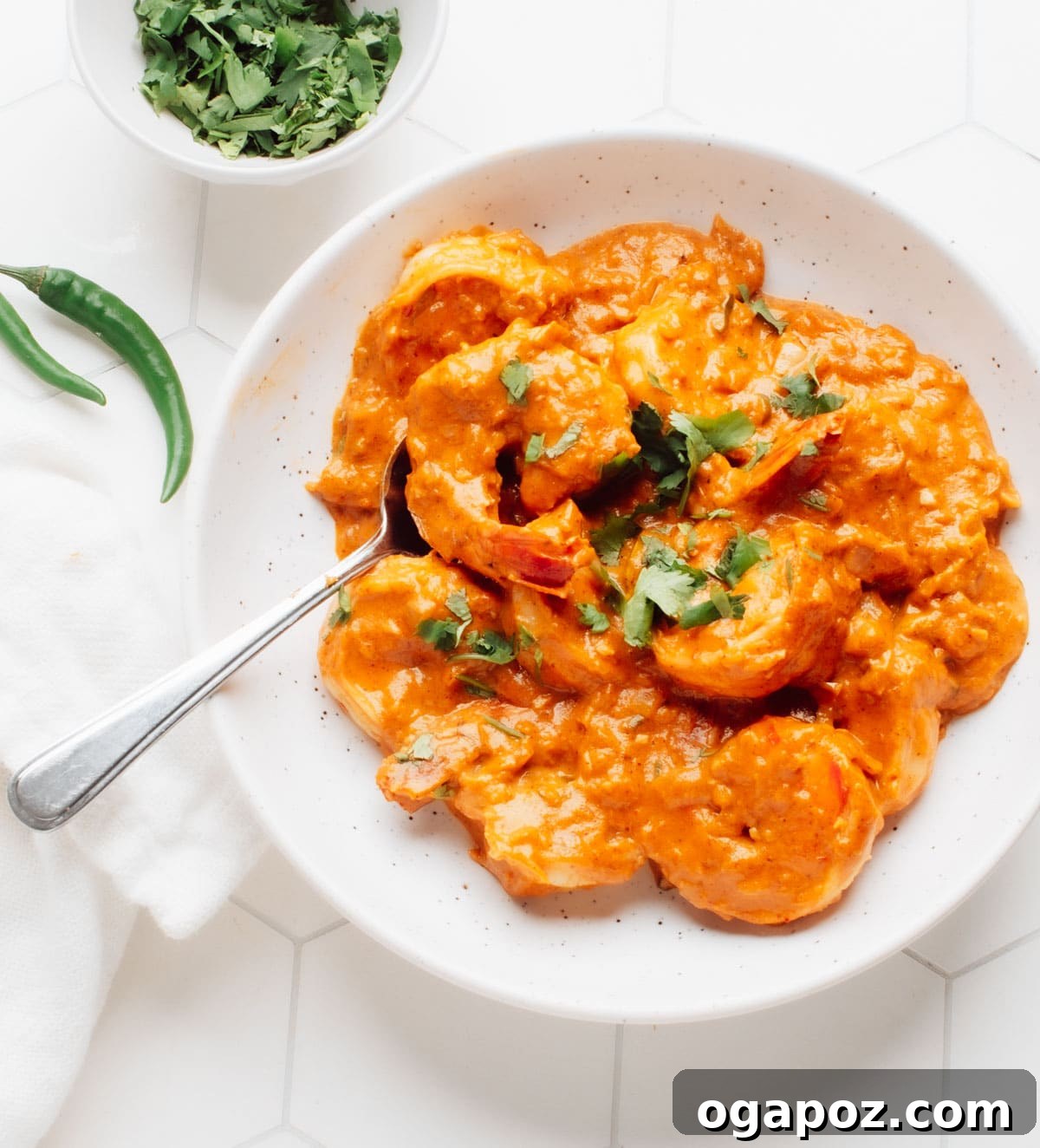
Authentic Indian Shrimp Korma: A Creamy & Flavorful Seafood Delight
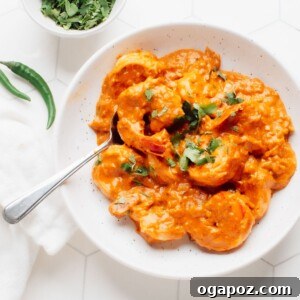
Embark on a delightful culinary journey to India with this truly authentic Shrimp Korma recipe, also widely known as Prawn Korma. This exquisite Indian seafood curry is a symphony of flavors, featuring succulent shrimp or prawns bathed in a rich, velvety sauce. Crafted from a harmonious blend of ripe tomatoes, wholesome yogurt, luscious cream, an array of finely ground nuts, and a meticulously balanced medley of warming, aromatic spices, this dish promises both comforting familiarity and a burst of exotic taste. It’s an instant family favorite that perfectly marries richness with a delicate balance of flavors.
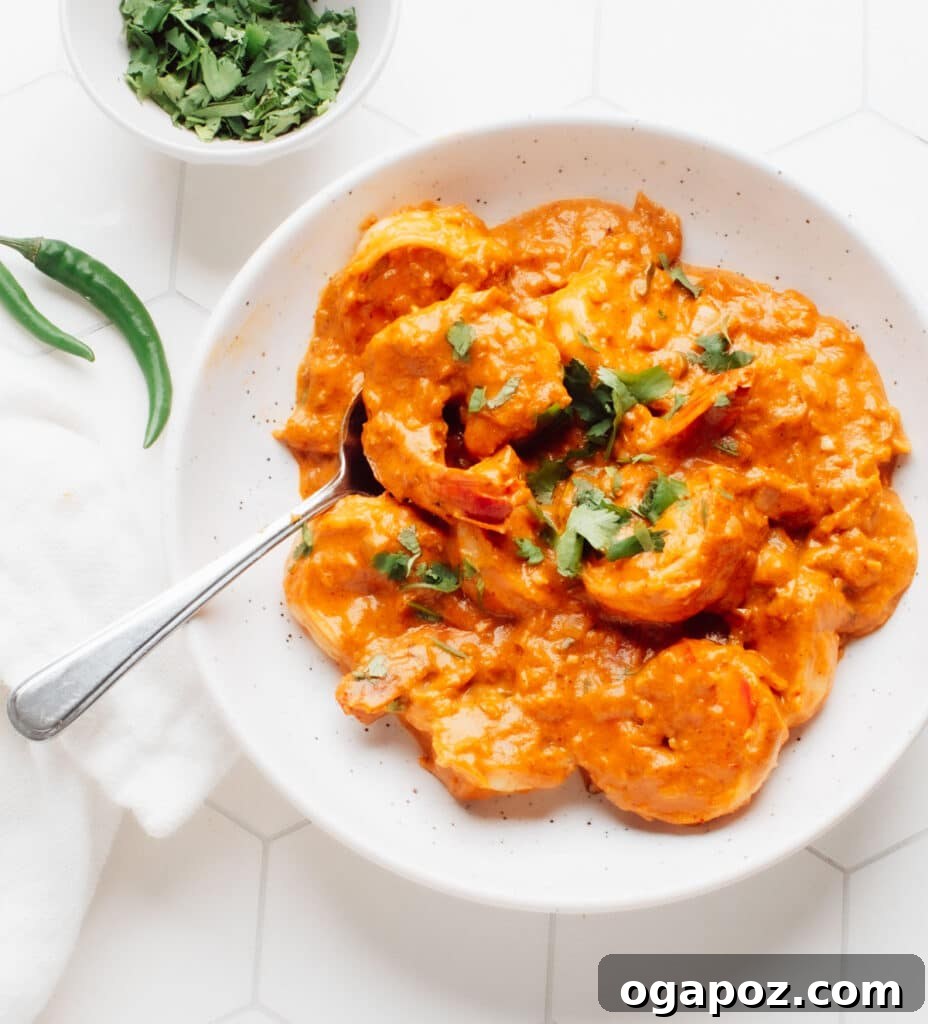
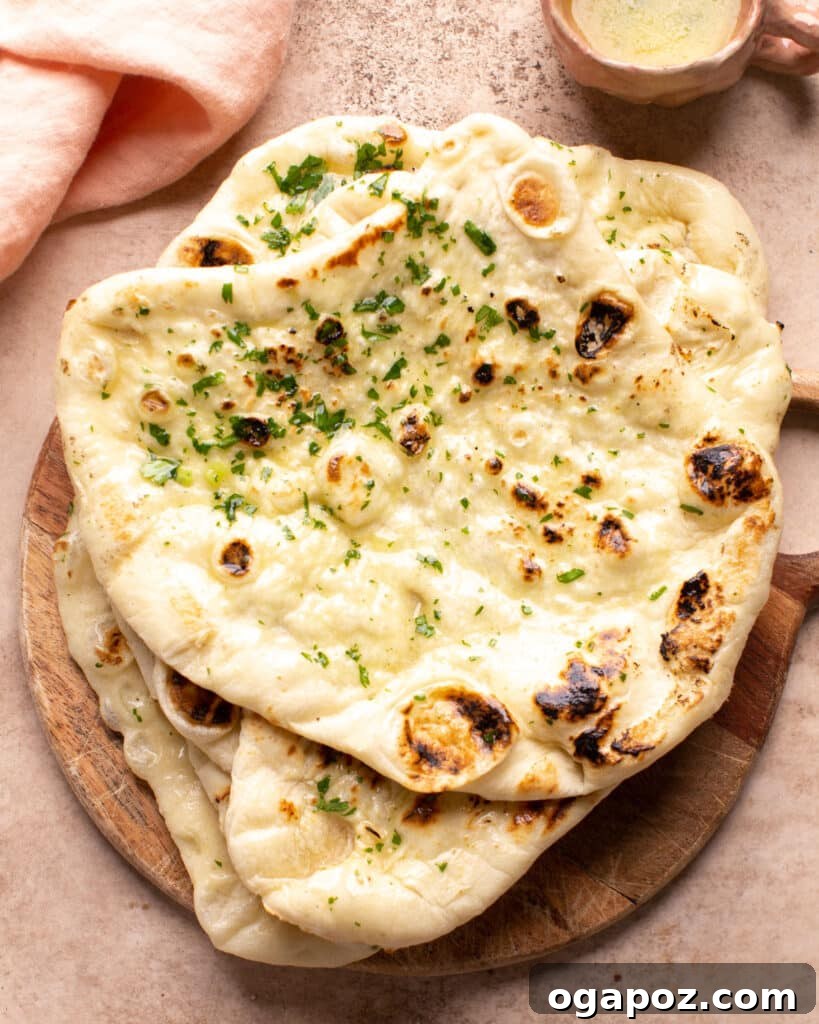
Despite its luxurious taste and appearance, this fabulous seafood recipe is surprisingly simple to prepare, coming together efficiently in just under 30 minutes of active cooking time. It’s the perfect solution for busy weeknights when you crave something extraordinary without the extensive prep. For a truly unforgettable and complete Indian meal, serve this vibrant curry alongside a warm pile of fluffy basmati rice or my incredibly popular, Instagram-viral soft homemade Butter Naan. Get ready to impress your taste buds and loved ones with this accessible yet deeply authentic taste of India!
What is Shrimp Korma Curry? Unveiling a Royal Indian Dish
Shrimp Korma, or Prawn Korma, stands as a testament to the rich culinary heritage of India. Unlike many fiery Indian curries that are known for their intense heat, Korma is celebrated for its mild, subtly sweet, and incredibly creamy profile. It traces its origins back to the opulent Mughal kitchens, where the cuisine was characterized by its richness, aromatic spices, and often a preference for less piquant dishes. The word “Korma” itself is derived from the Urdu word “qorma,” which traditionally refers to a cooking technique involving braising meat (or in this modern adaptation, seafood) in yogurt, cream, or ground nuts to achieve a remarkably tender texture and a velvety, full-bodied sauce.
The essence of a truly great Korma lies in its meticulously crafted sauce, which is the heart and soul of the dish. This luscious base is typically formed by patiently caramelizing onions to a deep golden hue, which imparts a natural sweetness. These are then blended with fresh garlic and ginger, followed by a harmonious medley of carefully selected ground spices such as earthy coriander, warm cumin, vibrant turmeric, and the signature fragrant garam masala. Tomatoes are often introduced to add a touch of tang and a lovely reddish hue, while the hallmark creaminess is generously contributed by yogurt, heavy cream (or rich coconut milk for a dairy-free alternative), and a secret weapon: finely ground nuts or smooth nut butters like almond or cashew. These ingredients are simmered gently, allowing their individual flavors to meld and deepen into a smooth, aromatic, and truly indulgent curry that coats every piece of shrimp with exquisite taste.
Shrimp Korma holds a special place, particularly in the coastal regions of India where fresh seafood is abundant, offering a delightful and lighter twist on more traditional meat-based kormas. It’s a wonderfully versatile dish that pairs exquisitely with various Indian breads like flaky parathas, soft rotis, or pillowy naan bread, as well as fragrant steamed basmati rice. Its universal appeal makes it a popular dish not just within India, but also among Indian cuisine enthusiasts around the globe.
Why You’ll Adore This Easy & Authentic Indian Prawn Korma Recipe
This isn’t just another curry recipe; it’s an invitation to experience the magic and depth of authentic Indian flavors with remarkable ease and speed. Here’s why this authentic Indian Prawn Korma recipe is destined to become a cherished and frequently revisited part of your culinary repertoire:
- Effortless Elegance for Any Occasion: Forget the misconception that Indian cooking is complicated. This recipe is specifically designed to be straightforward and approachable, requiring minimal advanced cooking skills and utilizing readily available pantry staples. It’s perfect for both novice cooks eager to explore Indian cuisine and seasoned home chefs seeking a quick yet profoundly impressive meal during busy weeknights.
- Unforgettable & Balanced Flavor Profile: The creamy Korma sauce is a true masterpiece of balance. It achieves a rich, luxurious texture without feeling overly heavy, offers a subtle natural sweetness from deeply caramelized onions, and is profoundly aromatic from perfectly toasted spices. The mild warmth from the chilies and cayenne beautifully complements the delicate, inherent sweetness of the shrimp, creating a harmonious and utterly delicious experience that will undoubtedly have everyone reaching for another helping.
- Nutritious & Wholesome Meal: Beyond its incredible taste, this Korma offers a well-rounded and wholesome meal. Shrimp provides an excellent source of lean, high-quality protein, while the nuts and dairy (or coconut milk) contribute healthy fats and a satisfying richness. It’s a dish that skillfully nourishes the body while simultaneously delighting all the senses.
- Incredibly Versatile for Customization: This Prawn Korma proves to be a culinary chameleon, adapting seamlessly to various preferences, dietary needs, and meal accompaniments. Serve it with hot, fluffy basmati rice to ensure every last drop of the exquisite sauce is savored, or pair it with freshly baked, warm, and buttery homemade naan bread for an authentic and satisfying Indian feast. For a lighter, whole-grain option that is a cherished staple in many Indian homes, including ours, this soft Chapathi recipe is an excellent and healthy choice.
- Guaranteed to Impress: Whether you’re hosting an intimate dinner party, preparing a special meal for your family, or simply treating yourself, this Shrimp Korma consistently delivers a gourmet restaurant-quality experience that beautifully belies its simple and quick preparation. Its vibrant color, enticing aroma, and sophisticated flavor profile are sure to garner enthusiastic compliments and leave a lasting impression on anyone who tastes it.
Essential Ingredients for Your Perfect Shrimp or Prawn Korma
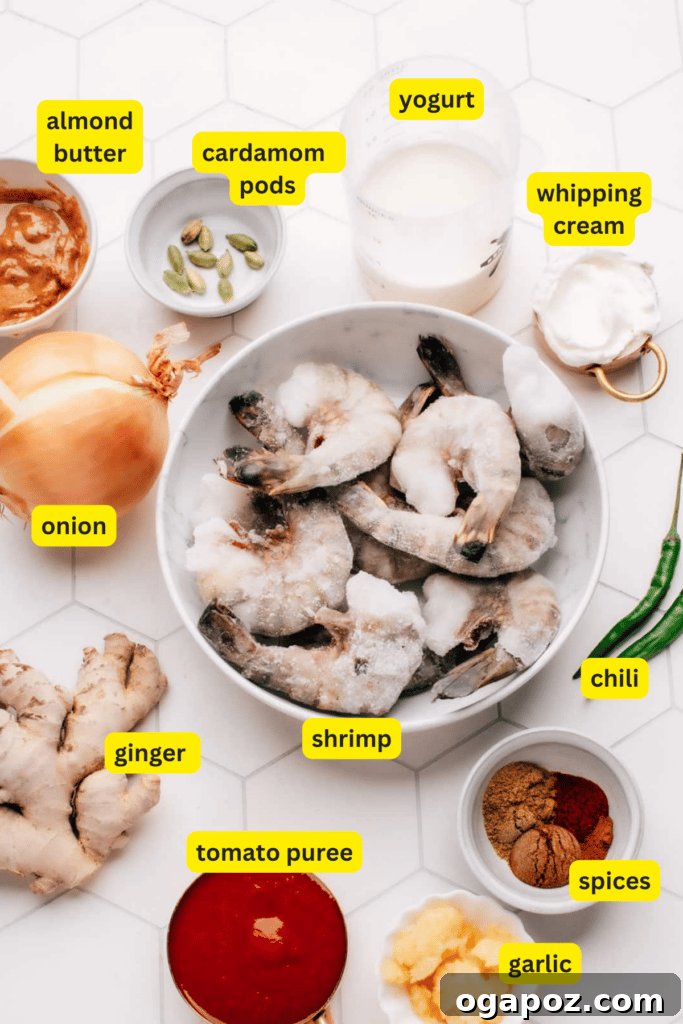
Crafting an outstanding Shrimp Korma begins with the careful selection of each ingredient, as every component plays a vital role in building the complex, comforting, and authentic flavors of this beloved Indian dish:
- Ghee or Oil: For the most authentic and intensely richer flavor, Indian ghee (clarified butter) is highly recommended, as it imparts a unique nutty depth. If ghee isn’t readily available, a neutral-flavored oil with a high smoke point, such as avocado oil, canola oil, or even coconut oil, will work effectively to beautifully cook down the spices and aromatics.
- Onion: A standard white or yellow onion is perfectly suitable and ideal for this recipe. Its ability to slowly caramelize over medium heat provides a foundational sweetness and a crucial depth of umami flavor that is absolutely essential for a truly great Korma. While red onions can be used, white onions typically yield a more classic Korma sweetness.
- Shrimp or Prawns: For the best results and a more satisfying eating experience, always opt for the largest, plumpest shrimp or prawns you can find. Larger pieces not only retain their succulence better but also stand out beautifully within the rich sauce. Avoid very small shrimp, as they can easily get overcooked and become lost in the curry’s creamy texture. Frozen shrimp are perfectly acceptable and convenient; simply thaw them completely in a bowl of lukewarm water while you prepare the other ingredients. Ensure they are thoroughly peeled and deveined, though keeping the tails on is entirely optional and often done for presentation.
- Fresh Ginger: Look for firm, fresh ginger root with smooth, taut skin, ideally with a slightly green shoot, which is often an indicator of freshness. Its bright, pungent, and subtly spicy notes are indispensable for lifting and invigorating the curry’s overall flavor profile, providing a zesty contrast to the richness.
- Garlic: Freshly minced garlic or a good quality, aromatic garlic paste is paramount for this dish. It adds a sharp, foundational aromatic base that is characteristic of authentic Indian cooking. Never underestimate its importance in building layers of flavor.
- Green Chillies: These provide a fresh, vibrant kick of heat. You have full control over the spice level: adjust the quantity according to your preference, or for a milder curry, you can remove the seeds before mincing, or omit them entirely if you are highly sensitive to heat.
- Coriander Powder: This ground spice is absolutely non-negotiable for Korma. It offers a distinctive citrusy, earthy, and slightly sweet flavor that masterfully ties all the other elements of the dish together, creating a cohesive and complex taste.
- Cayenne Powder: Contributes a warm, gentle heat to the curry. If you prefer a very mild curry or wish to reduce the spice, you can easily lessen the amount or substitute it with sweet paprika, which will add lovely color without the significant heat.
- Cinnamon: Earthy, warmly sweet, and incredibly aromatic, cinnamon beautifully grounds the creamy components of the Korma, adding a layer of sophisticated fragrance and depth that makes the curry truly comforting.
- Cardamom Pods: Always seek out bright green cardamom pods, as their color is a reliable sign of freshness and potent aroma. Gently smashing the pods before adding them to the oil helps to release their intensely aromatic, floral, and slightly sweet essence into the curry. While whole pods are preferred for depth, ground cardamom can be used as an alternative (approximately ¼ tsp ground per 2-3 pods).
- Tomato Puree: Adds a gentle tang, a hint of acidity, and a beautiful depth of color to the sauce, balancing the richness of the cream and nuts. You can easily substitute with well-blended canned diced tomatoes or smooth bottled passata for convenience.
- Almond Butter: This is a crucial ingredient for achieving the signature silky-smooth texture and a delightful, subtle nutty flavor that is characteristic of Korma. Do not skip this; it contributes significantly to the luxurious mouthfeel. Smooth cashew butter is an excellent and equally delicious alternative. For those desiring more texture, you could finely chop and blend soaked whole almonds or cashews instead.
- Yogurt: Choose plain, full-fat dairy yogurt (such as Greek yogurt) for the best richness and creaminess. For a dairy-free or vegan option, unsweetened, full-fat coconut yogurt can be a fantastic alternative, adding a subtle tropical note.
- Whipping Cream: Also known as heavy cream (with 35% milkfat or higher), this provides the luxurious richness, velvety mouthfeel, and classic indulgence synonymous with a traditional Korma. It’s important to avoid low-fat creams, as they may curdle under heat or not provide the desired thickness and richness. Full-fat coconut milk is an excellent and popular dairy-free substitute that works wonderfully.
- Cilantro: Freshly minced cilantro (also widely known as dhania or fresh coriander leaves) is typically used as a vibrant garnish. It provides a burst of fresh, herbaceous, and slightly citrusy flavor that beautifully brightens and finishes the entire dish, adding both aroma and visual appeal.
What exactly is the difference between shrimp and prawns?
While the terms “shrimp” and “prawns” are often used interchangeably in many culinary contexts, particularly in North America, there are indeed subtle biological distinctions between them. Both are delicious crustaceans, but understanding their differences can be quite interesting:
- Anatomy: Shrimp typically have claws on two of their five pairs of legs, with one pair often being noticeably larger. Prawns, conversely, possess claws on three of their five pairs of legs, and these claws tend to be more uniform in size. Another key difference is how their body segments overlap; shrimp have their second segment overlapping the first and third, while prawn segments overlap tile-like from front to back.
- Gills: Shrimp have plate-like gills, which are different from the branching gills found in prawns. This is a biological distinction that is not visible when they are prepared for cooking.
- Body Structure: When cooked, shrimp tend to curl into a tight “C” shape, which is often how we recognize them. Prawns, on the other hand, tend to maintain a straighter, more elongated body even after cooking.
- Size: Generally speaking, prawns tend to grow larger than most common shrimp varieties, often reaching lengths of 6 to 8 inches or more, while common shrimp varieties typically range from 3 to 6 inches. However, it’s important to note there are exceptions, with some very large shrimp varieties surpassing smaller prawns in size.
- Flavor: Many discerning palates suggest that prawns often possess a slightly sweeter and more delicate flavor compared to shrimp, which can have a slightly stronger, sometimes brinier taste. However, this can vary based on species and preparation.
- Texture: Prawns are frequently described as having a firmer, meatier texture, which holds up well in rich sauces. Shrimp, in contrast, are often softer and more tender, though the final texture is heavily influenced by cooking method and size.
- Habitat: Prawns typically thrive in freshwater or brackish water environments, often found in rivers or estuaries. Shrimp are predominantly found in saltwater, inhabiting oceans and seas, though some species do live in freshwater.
Despite these differences, both shrimp and prawns are excellent and perfectly interchangeable choices for this delicious Indian Korma curry. Their quick-cooking nature and remarkable ability to absorb the rich flavors of the sauce make them ideal for this dish, so feel free to use whichever is most accessible, appealing, and fresh for you!
Crafting Your Creamy Shrimp Korma: Step-by-Step Guide for Perfection
Follow these detailed steps carefully to create a show-stopping Shrimp Korma that’s bursting with authentic Indian flavor and boasts an irresistibly smooth, creamy texture. Precision in each stage will yield the best results:
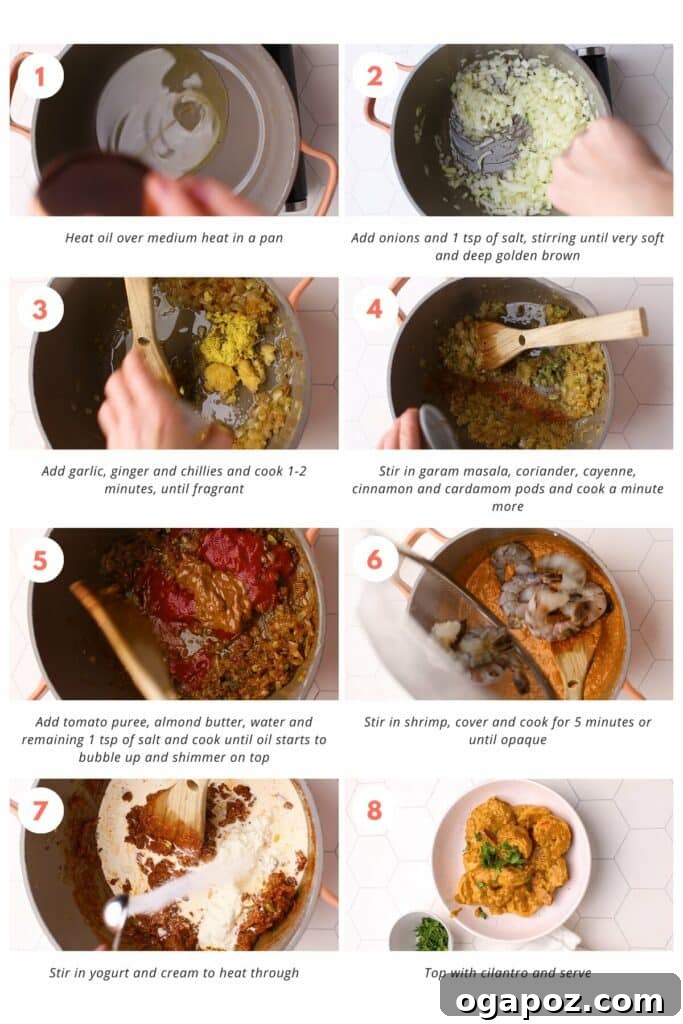
- Slowly Caramelize Onions to Golden Perfection: Begin by heating the ghee or chosen oil in a large, heavy-bottomed pot or Dutch oven over medium heat. Add the finely chopped onions along with one teaspoon of kosher salt. Cook the onions, stirring frequently (but gently) to ensure even cooking, until they become incredibly soft, translucent, and finally achieve a beautiful, deep golden-brown color. This initial stage is crucial and typically takes approximately 20-25 minutes. It’s vital not to rush this process; the slow, patient caramelization of the onions is the absolute secret to developing the Korma’s foundational sweetness and its profound depth of flavor. Patience here truly pays off immensely.
- Briefly Sauté Aromatics Until Fragrant: Once your onions have reached that perfect caramelized stage, stir in the minced fresh garlic, minced fresh ginger, and the green chillies (if using). Continue to cook for just 1-2 minutes, stirring constantly, until the aromatics become intensely fragrant and their raw edge disappears. Be vigilant to ensure the garlic does not burn, as this can impart a bitter taste to the curry.
- Bloom the Spices to Release Full Flavor: Now, add the dry ground spices: garam masala, coriander powder, cayenne powder, cinnamon, and the gently smashed whole cardamom pods. Stir these spices thoroughly into the onion-aromatic mixture and cook for another minute. This crucial “blooming” step in the hot oil helps to lightly toast the spices, activating and releasing their full aromatic potential and intensifying their impact on the curry’s overall flavor profile.
- Build the Rich Sauce Base: Pour in the tomato puree, the almond butter, and one cup of water, along with the remaining teaspoon of kosher salt. Mix all the ingredients thoroughly until well combined. Bring the mixture to a gentle simmer and cook, stirring occasionally to prevent sticking, until the oil begins to bubble up and visibly shimmer on the surface. This indicates that the sauce has cooked down sufficiently, the raw flavors have mellowed, and the spices have properly melded into a cohesive base.
- Quickly Cook Shrimp and Finish with Creaminess: Gently add the peeled and deveined large shrimp or prawns to the simmering sauce. Cover the pot and cook for approximately 5 minutes, or until the shrimp turn opaque, pink, and are just cooked through. It’s critical not to overcook shrimp, as they can quickly become tough and rubbery; keep a close eye on them. Finally, stir in the plain yogurt and the whipping cream (or coconut milk) and allow the entire curry to heat through gently for just another minute or two, being careful not to bring it to a rolling boil after the dairy is added, to maintain its smooth, creamy texture. Garnish generously with freshly minced cilantro before serving immediately.
Serving Suggestions: What to Pair With This Exquisite Shrimp Korma
A glorious and authentic Shrimp Korma deserves equally impressive and complementary accompaniments to create a truly memorable meal. Elevate your dining experience with these delightful pairing suggestions, designed to soak up every drop of that rich, creamy sauce:
- Classic Indian Breads: The Essential Scoopers
- Butter Naan: For a truly special and indulgent dinner, you’ll definitely want to whip up a batch of my renowned, Instagram-viral Butter Naan. Its soft, pillowy texture, slightly charred bubbles, and irresistible buttery finish are absolutely perfect for scooping up and savoring every last bit of that rich Korma sauce.
- Keema Naan: If you’re feeling a bit more adventurous or desire a heartier appetizer, Keema Naan, which is fluffy naan bread generously stuffed with a spiced minced meat filling, offers an incredible flavor and texture contrast that’s deeply satisfying.
- Chapathi / Roti: For a lighter, healthier, and more traditional Indian bread option, or a staple in many Indian homes, serve your Korma with soft, homemade chapathi (whole wheat flatbreads) or simple roti. Their understated flavor allows the Korma to truly shine.
- Fluffy Rice: The Perfect Base
- Basmati Rice: Fragrant, long-grain basmati rice is the quintessential and arguably best companion to any Indian curry. Its delicate aroma and fluffy, separate grains provide a neutral canvas that beautifully absorbs the Korma’s rich flavors. For perfectly cooked, non-sticky grains every single time, try the foolproof rice cooking method my mother-in-law taught me – a technique so effective, it went viral on Instagram!
- Appetizers & Refreshing Drinks: To Start Your Feast
- If you’re hosting friends or simply want to elevate your meal, I highly recommend starting your culinary journey with a comforting pot of steaming authentic Indian Chai.
- Complement your meal with a batch of crispy, golden, and flavorful samosas. You could either choose these incredible potato samosas for a classic vegetarian option or my personal favorite chicken samosas for a complete and satisfying appetizer spread.
- Fresh Accompaniments: Balancing Richness
- A simple side of cooling raita (yogurt with finely grated cucumber, a hint of mint, and cumin) or a fresh, crisp green salad can provide a refreshing and tangy contrast to the richness and warmth of the Korma, cleansing the palate beautifully.
Make-Ahead & Storage Tips for Convenience
This Shrimp Korma recipe is wonderfully accommodating if you like to plan your meals ahead or wish to enjoy delicious leftovers. Here’s how to manage it for maximum flavor, convenience, and freshness:
- Make-Ahead Instructions: To significantly streamline your cooking process and save valuable time on the day you plan to serve, you can expertly prepare the entire Korma sauce in advance, right up to the critical point of adding the shrimp. Simply cook the onions, aromatics, bloom the spices, add the tomato puree, almond butter, water, yogurt, and cream. Once the sauce is complete, allow it to cool completely to room temperature, then transfer it to an airtight container. It can be safely stored in the refrigerator for up to 2-3 days. When you’re ready to enjoy, gently reheat the sauce on the stove over medium-low heat until it’s simmering, then add your fresh or thawed shrimp and cook until opaque, precisely following the recipe instructions. This method ensures perfectly cooked, tender shrimp without any compromise on the rich, developed flavor of the sauce.
- Storage Instructions for Leftovers: Any leftover Shrimp Korma can be stored safely and effectively in the fridge for up to 2-3 days. It is essential to always ensure the curry has cooled completely to room temperature before transferring it to an airtight container. This critical step helps to prevent bacterial growth and effectively maintain its quality and taste. Reheat gently on the stovetop or in the microwave until thoroughly warm.
- Freezing Leftovers: You can certainly freeze any remaining Korma to enjoy at a later date. Place it in a freezer-safe, airtight container or heavy-duty freezer bag for up to 2-3 months. Be mindful that upon thawing and reheating, the creamy sauce might experience a slight change in texture, potentially becoming a little grainy or separating slightly due to the dairy components. A quick, vigorous whisk during reheating can often help to restore some of its original smoothness, though it may not be as silky as freshly made.
Creative Variations for Your Shrimp or Prawn Korma Curry
While this recipe provides an authentic and delicious foundation for Shrimp Korma, don’t hesitate to experiment and customize your curry to perfectly suit your personal taste preferences or specific dietary requirements. Indian cuisine thrives on adaptation!
- Veggie Korma: A Vegetarian Delight: Easily transform this seafood dish into a vibrant vegetarian or even vegan delight by swapping out the shrimp for a colorful array of fresh vegetables and plant-based proteins. Excellent choices include sweet peas, sliced carrots, hearty mushrooms, cubes of sweet potato, tender chickpeas, vibrant bell peppers, fresh spinach, or florets of cauliflower. Add these vegetables with the tomato puree and simmer until they are cooked tender-crisp. For a completely vegan version, ensure you use full-fat coconut milk instead of dairy cream and a plain, unsweetened plant-based yogurt.
- Chicken Korma: A Poultry Classic: If you’re a fan of poultry, this Korma recipe can be wonderfully adapted for chicken. Simply replace the shrimp with bite-sized pieces of chicken breast or thigh. For a dedicated, comprehensive guide and specific instructions on how to prepare the perfect chicken version, be sure to check out my ultimate chicken korma recipe.
- Whole Nuts for Enhanced Texture: For an added layer of texture and an even richer flavor profile, consider incorporating whole blanched almonds or raw cashew nuts into the sauce. Add them with the tomato puree and allow them to simmer and soften alongside the other ingredients. Toasting the nuts lightly in a dry pan beforehand can significantly enhance their nutty aroma and flavor before adding them to the curry.
- Spice Exploration: Broaden Your Palate: Feel completely free to play around with other traditional Indian spices to fine-tune and personalize the flavor profile of your Korma. Consider adding a pinch of turmeric powder for extra golden color and earthy notes, a touch of curry powder for a more complex and traditional blend of spices, or a hint of cumin powder for additional warmth and depth.
- Spicier Version: For the Heat Seekers: For those who crave a more pronounced kick of heat, it’s simple to enhance the spice level. Increase the quantity of chopped green chillies, or for a vibrant red color and moderate, pleasant heat, stir in a teaspoon or more of Kashmiri chili powder. This will give your Korma a beautiful color without overwhelming the palate with excessive pungency.
- Sweetness Adjustment: If you prefer a slightly sweeter Korma, you can add a pinch of sugar or jaggery along with the tomato puree. Conversely, if you find it too sweet, a squeeze of fresh lemon juice at the end can brighten the flavors and cut through the richness.
Frequently Asked Questions About Shrimp Korma
Korma sauce is a luxurious, creamy, and aromatic curry base typically crafted from a blend of patiently caramelized onions, fresh ginger, garlic, and a medley of warming Indian spices (such as garam masala, coriander powder, and cardamom). Its signature richness comes from essential ingredients like ground nuts (commonly almond or cashew), plain yogurt, and heavy cream or full-fat coconut milk. Tomatoes are often included to provide a subtle tang and depth of color, balancing the richness beautifully.
The primary differences between Korma and Tikka Masala lie in their distinct flavor profiles, base ingredients, and cooking approaches. Tikka Masala is generally characterized by a rich, robust, and often spicier tomato-based sauce, frequently enhanced with cream and a smoky flavor from tandoor-grilled meats (like chicken tikka). Korma, on the other hand, is known for its milder, subtly sweeter, and significantly creamier sauce, which relies heavily on yogurt, cream, and finely ground nuts, resulting in a more delicate, aromatic, and less piquant flavor profile.
Traditional Korma often possesses a subtle, natural sweetness derived primarily from the slow and thorough caramelization of onions, and sometimes from the addition of specific nuts or dried fruits. This sweetness is carefully balanced by the savory spices and richness, creating a harmonious and comforting flavor rather than an overtly sugary taste. While there are some lighter, white korma varieties with minimal spice that are distinctly sweet, this tomato-based Korma offers a more complex and balanced sweetness, which enhances the overall flavor dimension without being cloying or dessert-like.
Absolutely! Frozen shrimp are perfectly suitable and work wonderfully for this Korma recipe, offering great convenience. To ensure the best texture and integration into the curry, simply thaw them completely before cooking. You can do this by placing them in a bowl of lukewarm water for about 15-20 minutes while you prepare the other ingredients. Once thawed, pat them thoroughly dry with paper towels to remove any excess moisture, which could otherwise thin the sauce.
If your Korma sauce appears too thick after cooking the shrimp, you can easily adjust its consistency by gradually adding a splash of warm water or vegetable broth, stirring until it reaches your desired creaminess. Conversely, if the sauce is too thin, you can thicken it by simmering it uncovered for a few extra minutes to allow some of the liquid to evaporate. Alternatively, mix a teaspoon of cornstarch with a tablespoon of cold water to form a slurry, then stir it into the simmering sauce and cook for another minute until it thickens to your preference.
Expert Tips for a Restaurant-Quality Shrimp Korma
Achieve Korma perfection and elevate your homemade curry to a restaurant-quality dish with these invaluable insights and practical techniques:
- The sauce mixture will initially appear quite thick before you introduce the shrimp. Do not be alarmed by this; it is perfectly normal. Shrimp release a significant amount of moisture as they cook, which will naturally thin the sauce to its ideal, luscious consistency. Resist the urge to add too much water prematurely, as doing so can dilute the rich, concentrated flavors that you’ve worked hard to build. If, after the shrimp are fully cooked, the sauce is still thicker than your desired preference, then you may add a splash or two of warm water, tasting and adjusting for salt as needed.
- Make sure the spices have ample time to “bloom” in the hot ghee or oil before you incorporate any liquid ingredients. This crucial step gently toasts the ground spices, intensifying their aromatic compounds and deepening their overall flavor, which will make a profound and noticeable difference in the final taste and complexity of your curry. Skipping this step can result in a curry with less depth.
- Always choose a bag of large, plump shrimp or prawns for the absolute best results. Smaller shrimp can easily get overcooked and become tough, or simply get lost within the voluminous, creamy sauce. Larger, more substantial pieces will retain their succulence and become the delightful star of the dish, providing a more satisfying bite.
- Patience with the onions is paramount. The secret to Korma’s signature subtly sweet, deeply savory, and complex flavor lies in slowly and meticulously caramelizing the onions until they are a rich, deep golden brown. Rushing this step will result in a less flavorful, potentially sharp, or even slightly bitter-tasting curry. Allocate the necessary time for this foundational step.
- When adding delicate dairy components like yogurt and cream, ensure your heat is reduced to low and stir them in gently. It is very important to avoid bringing the curry to a rolling boil after these ingredients are incorporated, as high heat can sometimes cause the dairy, particularly the yogurt, to curdle, resulting in a less smooth sauce.
- Taste and Adjust: Always make it a practice to taste your Korma before serving and adjust the seasoning as needed. You might find it benefits from a tiny touch more salt, a squeeze of fresh lemon juice for brightness and to cut through the richness, or a pinch more cayenne powder if you desire an extra kick of heat.
Explore More Indian Culinary Delights
If you’ve fallen deeply in love with the creamy comfort and aromatic complexity of this Shrimp Korma, then you’re in for a continued culinary treat! Discover even more flavor-packed, fan-favorite Indian recipes that promise to tantalize your taste buds and expand your home-cooking repertoire:
- Madras Lentils: A hearty, robust, and aromatic lentil dish, perfect for a wholesome and satisfying vegetarian meal, rich in protein and fiber.
- Vindaloo Lamb or Pork Curry: For those who crave bold, tangy flavors and a spirited, fiery kick, these recipes deliver an unforgettable experience.
- Saag Paneer or Palak Paneer: Two classic and beloved vegetarian dishes, featuring tender spinach cooked with cubes of fresh Indian cheese (paneer) in a fragrant, spiced sauce.
- Adarsh’s Chicken 65 Curry: A vibrant, spicy, and incredibly flavorful dry chicken dish, perfect as an appetizer or a memorable main course.
- Butter Chicken or Butter Paneer: Indulge in these globally popular, rich, tomato-based creamy curries, featuring tender chicken or paneer, renowned for their mild yet intensely flavorful sauces.
- Malai Kofta: A truly indulgent dish featuring delicious deep-fried vegetable and paneer balls (koftas) simmered in a rich, velvety, and subtly sweet creamy sauce.
★★★★★ (5 from 4 votes)
Shrimp Korma (Indian Prawn Korma) Recipe
By: Jennifer Pallian BSc, RD
This authentic Shrimp Korma recipe is a scrumptious Indian curry with nuts, yogurt, spices, and shrimp or prawns. Packed with flavor and done in 30 minutes.
Prep Time: 10 minutes
Cook Time: 30 minutes
Total Time: 40 minutes
Servings: 6
Units: US Customary (Metric conversion available on original source)
Adjust servings: 1x, 2x, 3x (functionality on original source)
Video
A video tutorial for this recipe is available on the original blog post, showing the cooking process for this delicious Shrimp Korma.
Ingredients
- ¼ cup ghee or vegetable oil
- 2 ½ cups finely chopped onion
- 2 tsp kosher salt
- 2 tbsp minced garlic
- 2 tbsp minced ginger
- 2 green chillies (optional, adjust to taste)
- 1 tsp garam masala
- 1 tsp coriander powder
- ½ tsp cayenne powder (optional, adjust to taste)
- ¼ tsp cinnamon
- 10 whole green cardamom pods (smashed with flat side of knife)
- ½ cup tomato puree
- ¼ cup almond butter
- 1 cup water
- ¼ cup yogurt
- ¾ cup whipping cream or full-fat coconut milk
- 1 ½ lbs large shrimp or prawns (peeled and deveined, tail on is ok)
- 1 tbsp finely minced cilantro
Instructions
- Heat oil over medium heat and cook onions with 1 tsp salt until very soft and deep golden brown, about 20-25 minutes (don’t rush this step, it’s important for the flavor development).
- Add garlic, ginger and chillies and cook 1-2 minutes, until fragrant.
- Stir in garam masala, coriander, cayenne, cinnamon and cardamom pods and cook a minute more.
- Add tomato puree, almond butter and water plus remaining 1 tsp salt; cook until oil starts to bubble up and shimmer on top. Stir in shrimp; cook, covered, about 5 minutes or until opaque, then stir in the yogurt and cream to heat through. Top with cilantro.
Notes
- Choose large, plump prawns or shrimp for the best eating experience possible. They hold up well in the sauce.
- If the sauce looks a bit thick at first, give the prawns time to release their moisture as they cook down a little, before jumping in and adding more water to the sauce. You don’t want to dilute that yummy, concentrated flavor!
- Instead of tomato puree, you can use: diced fresh tomato (blended smooth) or use jarred passata for convenience.
Nutrition
Calories: 378kcal | Carbohydrates: 17g | Protein: 20g | Fat: 26g | Saturated Fat: 13g | Polyunsaturated Fat: 2g | Monounsaturated Fat: 9g | Trans Fat: 0.01g | Cholesterol: 198mg | Sodium: 1493mg | Potassium: 505mg | Fiber: 4g | Sugar: 8g | Vitamin A: 993IU | Vitamin C: 13mg | Calcium: 160mg | Iron: 1mg
Nutrition information is automatically calculated and should only be used as an approximation.
Tried this recipe? Share your experience! We would absolutely love to hear how your Authentic Indian Shrimp Korma turned out. Leave a comment below and let us know your thoughts and any personal twists you added. Your feedback is truly appreciated!