
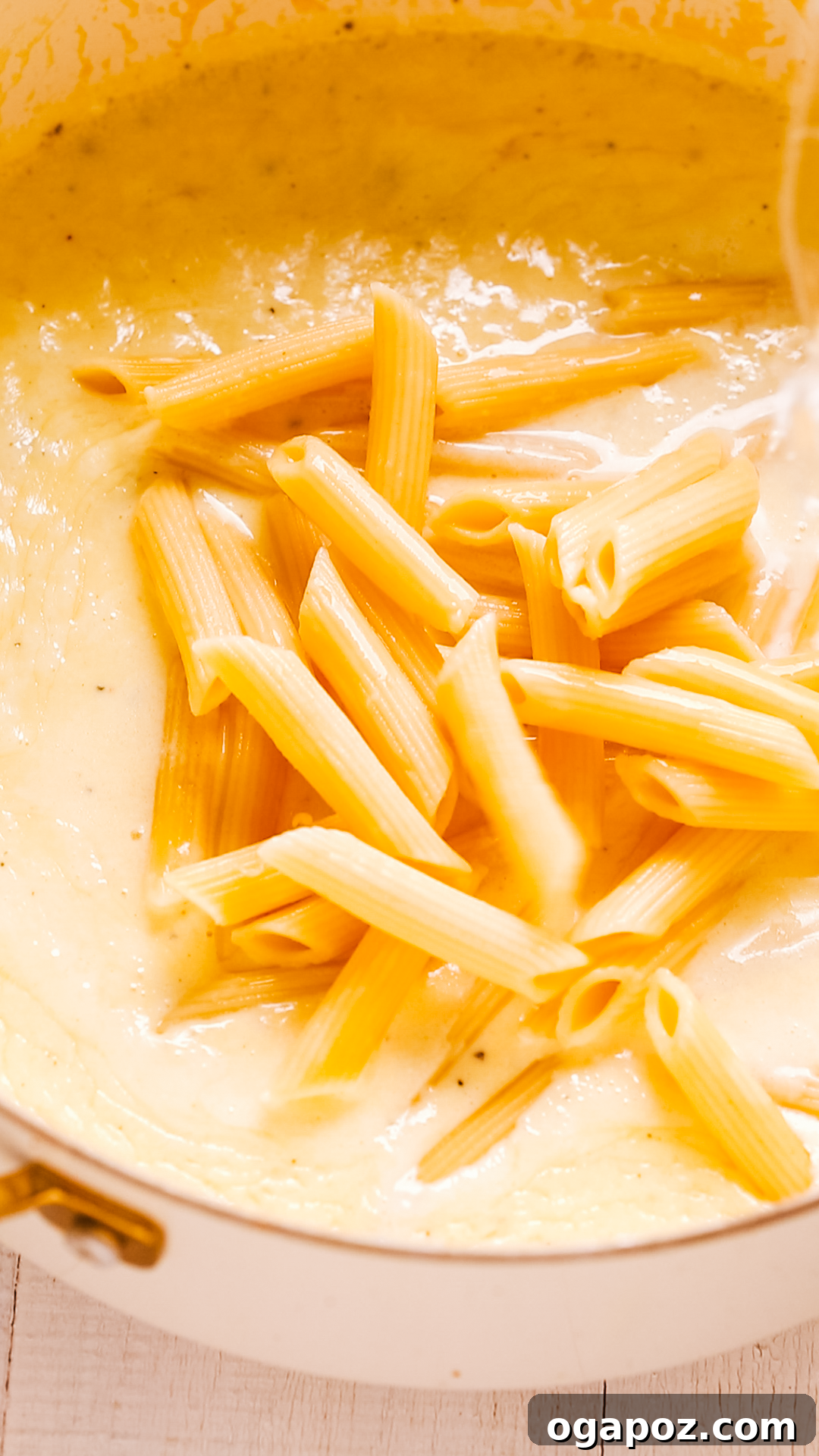
Instant Pot Pasta is nothing short of a culinary revolution for anyone seeking incredibly easy, hands-off meals without sacrificing quality. Imagine perfectly cooked pasta, every single time, with no constant stirring, no worrying about boiling water overflowing, and absolutely no draining required. This method truly changes the game, making delicious pasta accessible even on the busiest weeknights.
Discovering the Instant Pot method for cooking pasta has transformed my approach to weeknight dinners. Here’s a deeper look into why this technique has become my absolute favorite for preparing pasta:
- No More Sticking: Unlike stovetop cooking where pasta can notoriously cling to the bottom of the pot, the Instant Pot’s pressure cooking environment significantly reduces this issue. The consistent heat and contained liquid ensure a smooth cook, resulting in beautifully separated pasta strands or shapes.
- Lightning Fast & Truly Hands-Off: Say goodbye to standing over a pot, waiting for water to boil, and constant stirring. With the Instant Pot, you simply add your ingredients, set the timer, and walk away. It’s the ultimate “set it and forget it” convenience for busy individuals and families.
- Consistently Perfect Al Dente Texture: Achieving that ideal al dente bite can be tricky on the stovetop, often requiring precise timing and quick draining. The Instant Pot, when timed correctly using our simple formula, consistently delivers pasta with the perfect chew—never mushy, always delightful. It eliminates the guesswork, guaranteeing restaurant-quality texture with minimal effort.
- Minimal Cleanup: With just one pot to clean, the Instant Pot method drastically cuts down on post-meal chores. No colander to wash, no overflowing starch-water mess on your stovetop. It’s a win for both your meal and your kitchen.
Eager for more Instant Pot culinary magic? Don’t miss my fantastic Mexican Rice recipe in the Instant Pot for another simple and flavorful meal solution!
Essential Ingredients and Tools for Instant Pot Pasta
Preparing delicious Instant Pot pasta is surprisingly simple, requiring only a handful of pantry staples and your trusty pressure cooker. Gather these basics, and you’ll be enjoying a comforting meal in no time.
Key Ingredients for Instant Pot Pasta
The beauty of this recipe lies in its simplicity and versatility. Grab your favorite pasta and a few other essential items for your Instant Pot:
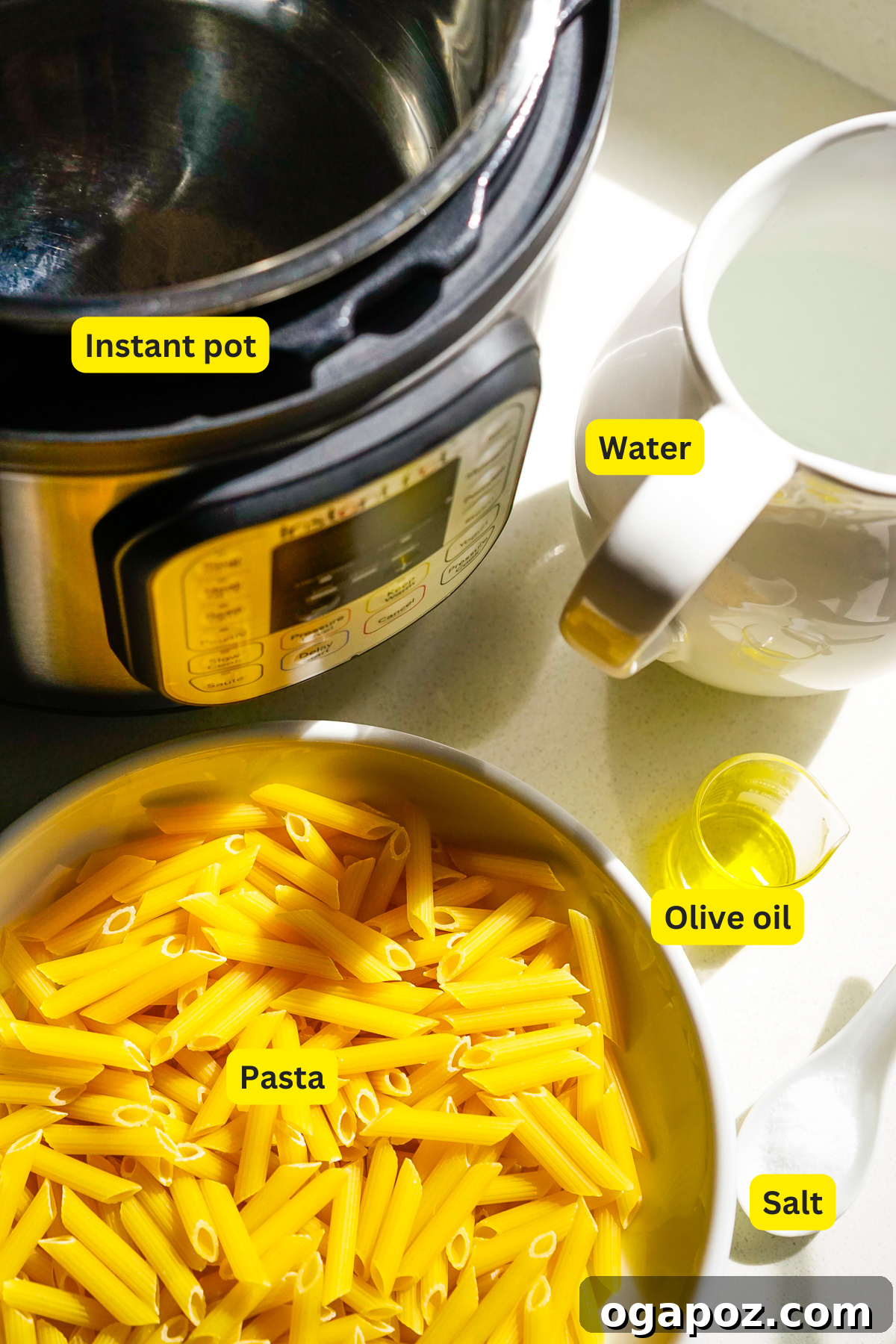
- Pasta: The world of pasta is your oyster! This method works beautifully with a wide array of pasta shapes.
- Short Pasta: Ideal choices include penne, rigatoni, rotini, cavatappi, orecchiette, or classic elbow macaroni. Their compact size cooks evenly under pressure.
- Long Pasta: Spaghetti, fettuccine, or linguine can also be used. For best results and to ensure they fit properly, simply break them in half before adding them to the pot. This prevents them from sticking together in one large clump during cooking.
- Whole Wheat Pasta: For a fiber-rich alternative, whole wheat pasta performs excellently in the Instant Pot. Adjust cooking time slightly if your specific brand has a different recommended stovetop cooking duration.
- Gluten-Free Pasta: Absolutely! Gluten-free pasta varieties are also suitable, though they might require a minor adjustment to cooking time, often needing a minute or two less than traditional pasta.
- Water or Broth: This is your cooking liquid. While water is perfectly fine, using vegetable or chicken broth can infuse your pasta with an extra layer of savory flavor, making it delicious even when served plain. The precise quantity is crucial for perfect results, ensuring the pasta is just covered.
- Salt: Seasoning is not just about adding flavor; it’s fundamental to the pasta’s taste. Adding salt to the cooking water or broth allows the pasta to absorb flavor as it cooks, preventing blandness. Think of it as seasoning the pasta from the inside out.
- Butter or Olive Oil: A tablespoon of butter or olive oil is your secret weapon. This small addition serves two vital purposes:
- Prevents Foaming: Pasta, especially when pressure cooked, can create a starchy foam. The fat helps to suppress this, preventing potential issues with your Instant Pot’s vent.
- Minimizes Sticking: It also aids in preventing the pasta from clumping together, ensuring each piece is beautifully separate and ready for your favorite sauce. For a vegan option, always opt for olive oil or another plant-based oil.
For precise ingredient quantities, please refer to the comprehensive recipe card located at the bottom of this article.
Substitutions and Creative Variations
One of the many joys of cooking Instant Pot pasta is its adaptability. Feel free to customize this recipe to suit your dietary needs or flavor preferences:
- Pasta Type Flexibility:
- Gluten-Free Pasta: If you’re avoiding gluten, rest assured that gluten-free pasta works wonderfully in the Instant Pot. Just be mindful that it often cooks faster than traditional wheat pasta, so you might need to shave off a minute or two from the calculated cooking time to achieve the perfect al dente texture.
- Whole-Wheat Pasta: Looking for a healthier, high-fiber alternative? Whole-wheat pasta is an excellent choice. It performs similarly to regular pasta in the Instant Pot, offering a wholesome base for your meals.
- Butter vs. Olive Oil (and Vegan Options):
- The choice between butter and olive oil depends on your preference and dietary needs. Both effectively prevent foaming and sticking.
- For a completely vegan-friendly option, simply swap butter for a dairy-free oil such as olive oil, coconut oil, or avocado oil. These plant-based fats will provide the same crucial benefits without any dairy.
- Flavorful Liquids: Instead of plain water, consider using vegetable broth, chicken broth, or even a diluted tomato sauce (ensure it’s mostly liquid to achieve pressure) as your cooking liquid. This will infuse the pasta with a richer, more complex flavor profile right from the start.
Essential Tools for Instant Pot Pasta
The beauty of this method lies in its minimal equipment requirements. You’ll just need a couple of items to get started:
- Instant Pot or Pressure Cooker: This is the star of the show. Any model of electric pressure cooker will work perfectly.
- Tongs or a Large Spoon: Essential for stirring the pasta after cooking and serving it up.
- Measuring Cups and Spoons: For accurately measuring your pasta, liquid, and seasonings, ensuring consistent results every time.
How to Make Instant Pot Pasta: Your Foolproof Guide
Forget the traditional stovetop methods; preparing pasta in your Instant Pot is a game-changer for speed, convenience, and perfect texture. Follow these simple, step-by-step instructions to achieve flawless Instant Pot pasta every single time:
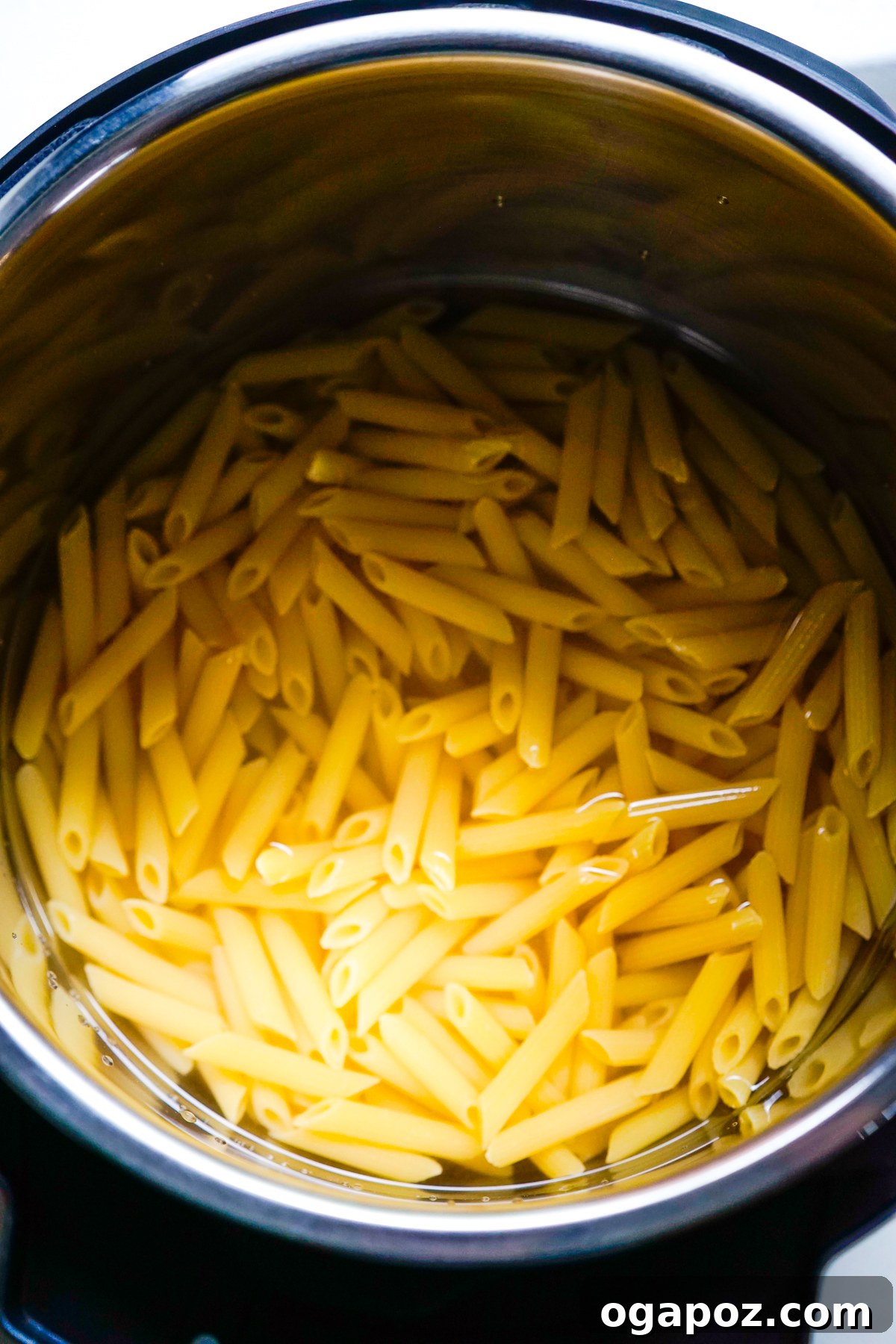
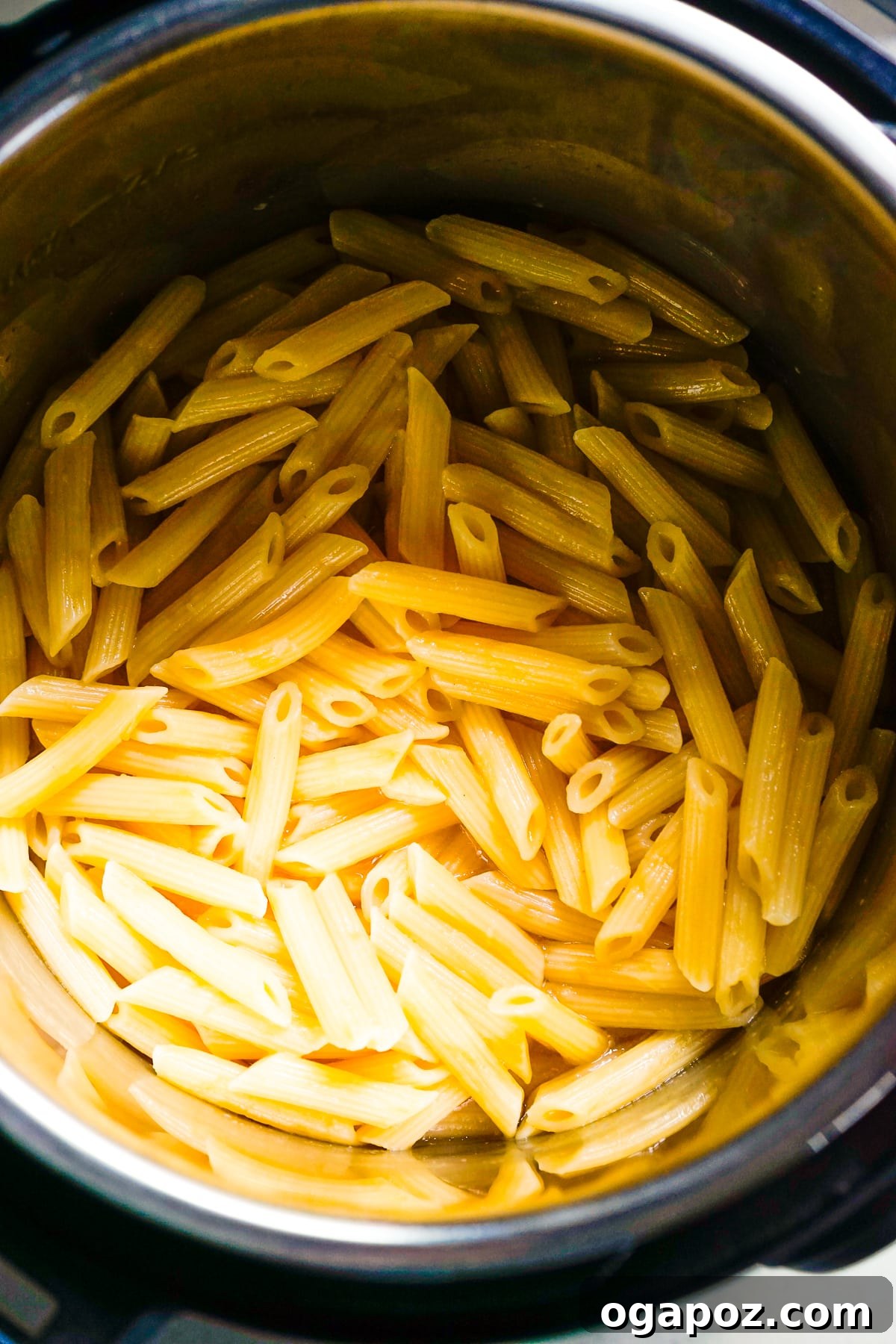
Step 1: Add Pasta and Liquid
Begin by placing your chosen pasta into the inner pot of your Instant Pot. The key here is to arrange it in an even layer. For short pasta, simply pour it in. If you’re using long noodles like spaghetti, break them in half and crisscross them in layers to prevent them from sticking together during cooking.
Next, add your liquid (water or broth). The general rule of thumb is to add just enough liquid to *barely* cover the pasta. This precise liquid-to-pasta ratio is crucial for achieving perfect texture and ensuring all the liquid is absorbed, eliminating the need for draining. For a standard pound of pasta, approximately 4 cups of liquid is a good starting point, but always adjust based on the pasta shape and how densely packed it is.
Step 2: Season and Prevent Foaming
Now it’s time to season and prepare for pressure cooking. Add a teaspoon of salt (or to taste) to the pot. This is essential for flavoring the pasta from the inside out. Then, stir in a tablespoon of butter or olive oil. This crucial step serves two purposes: it helps to reduce the starchy foam that can build up during pressure cooking, preventing your Instant Pot’s vent from getting clogged, and it significantly helps in keeping the pasta from sticking together, ensuring a beautifully smooth texture.
Step 3: Set Pressure Cooking Time
This is where the magic happens and where many Instant Pot pasta recipes go wrong. Our foolproof timing method ensures al dente perfection every time:
- Standard Pasta Rule: Locate the recommended stovetop cooking time on your pasta package. Take this number, divide it by two, and then subtract one minute. For example, if the package suggests 10 minutes, your Instant Pot cook time will be (10 / 2) – 1 = 4 minutes. This calculation accounts for the time the pot takes to come to pressure and release, ensuring the pasta cooks thoroughly without becoming overcooked.
- Delicate Pasta: For very thin or delicate pasta shapes, such as angel hair, a shorter cooking time is necessary. A mere 1-2 minutes under high pressure is typically sufficient to achieve the perfect texture. Always err on the side of caution with delicate pasta to prevent mushiness.
Step 4: Pressure Cook and Quick Release
Once your ingredients are in and the time is set, close the lid of your Instant Pot, ensuring it’s securely locked. Rotate the steam release valve to the “Sealing” position. Select the “Pressure Cook” (or “Manual”) setting and set it to High Pressure for the calculated time (e.g., 4 minutes). The Instant Pot will take a few minutes to build pressure, then the timer will begin counting down.
As soon as the cooking time is complete, immediately perform a Quick Release (QR). Carefully turn the steam release valve to the “Venting” position to rapidly release the pressure. This is a critical step to prevent the pasta from continuing to cook in the residual heat, which can lead to overcooked, mushy pasta. Stand clear of the steam as it releases!
Step 5: Stir and Adjust
Once the pressure has fully released and the float valve drops, carefully open the lid. At this point, you might notice a small amount of excess liquid at the bottom of the pot. Don’t worry! Give the pasta a good stir with your tongs or spoon. Often, the pasta will absorb any remaining liquid within a minute or two as it rests and cools slightly.
If there’s still a significant amount of water remaining after stirring and resting for a minute, you can easily evaporate it. Simply turn on the “Sauté” mode on your Instant Pot and stir the pasta for 1-2 minutes. This gentle heat will quickly reduce any lingering liquid, leaving you with perfectly textured pasta, ready to be served or mixed with your favorite sauce.
5 Common Mistakes When Making Instant Pot Pasta (and How to Avoid Them)
While Instant Pot pasta is incredibly straightforward, a few common missteps can hinder your quest for perfect results. Being aware of these typical trip-ups can save you from culinary disappointment and ensure consistent success:
- Overfilling the Instant Pot: This is perhaps the most critical mistake, especially when cooking starchy foods like pasta. When pasta cooks under pressure, it can create a significant amount of foam. If your pot is filled past the halfway mark (or two-thirds for thinner liquids), this foam can clog the pressure release valve, potentially causing steam to escape or leading to safety issues. Always ensure the pasta and liquid do not exceed the halfway mark for pasta to prevent foaming and ensure proper cooking and pressure regulation.
- Using Too Much Liquid: The beauty of Instant Pot pasta is that it absorbs almost all the cooking liquid, eliminating the need for draining. Adding too much water or broth will result in soggy, watery pasta that lacks flavor and texture. Aim for just enough liquid to *barely* cover the pasta. Adjust the amount based on the pasta shape—smaller, denser shapes might need slightly less, while larger, longer shapes might need a touch more to be fully submerged.
- Skipping the Quick Release: After the cooking cycle finishes, it’s tempting to let the Instant Pot naturally release pressure. However, for pasta, this is a recipe for disaster. Natural Pressure Release (NPR) allows the pasta to continue cooking in the residual heat, leading to overcooked, gummy, and clumpy results. Always perform a Quick Release (QR) immediately after the cooking time is up. This stops the cooking process promptly, preserving that ideal al dente bite.
- Not Stirring in Butter or Oil Before Cooking (or After): Forgetting this small but mighty step can lead to a sticky situation. Adding a tablespoon of butter or olive oil *before* sealing the pot helps prevent the pasta from clumping together and significantly reduces starchy foam. Additionally, a quick stir *after* cooking can help separate any pieces that might have stuck and aid in absorbing any remaining liquid.
- Cooking Pasta for Too Long: Overcooking is the quickest way to turn pasta into a sad, mushy mess. Stick to the precise timing rule: take the package’s stovetop cook time, divide by two, and then subtract one minute. This formula reliably yields al dente pasta. If you’re unsure, always err on the side of undercooking by 30 seconds to a minute, as you can always use the Sauté function briefly to finish it off if needed, but you can’t reverse mushy pasta.
Make Ahead and Storage Solutions for Instant Pot Pasta
One of the many conveniences of Instant Pot pasta is how well it lends itself to meal prep and future meals. Whether you’re cooking for a busy week or simply have leftovers, storing your pasta correctly ensures it remains delicious and maintains its texture.
- Refrigeration: Cooked Instant Pot pasta can be prepared ahead of time and stored in the refrigerator for up to 3-4 days in an airtight container. This makes it perfect for quick lunches or easy dinners throughout the week.
- Reheating Leftovers: When reheating, pasta can sometimes dry out or absorb too much liquid. To restore its moisture and texture, add a splash of water, milk, or broth (about 1-2 tablespoons per serving) before microwaving or reheating gently on the stovetop. This extra liquid helps to rehydrate the pasta and prevents it from becoming gummy or stiff.
- Preventing Dryness: If you plan to store your pasta without sauce, a light drizzle of olive oil before storage can help prevent it from sticking together and drying out. When reheating, if the pasta has absorbed too much liquid during storage and appears dry, simply incorporate a little more water, broth, or your preferred sauce to bring it back to life.
- Freezing (Optional): While best enjoyed fresh or refrigerated, Instant Pot pasta can be frozen for longer storage, though the texture might change slightly upon thawing. If freezing, cool the pasta completely, then transfer it to freezer-safe bags or containers. Thaw in the refrigerator overnight before reheating with a splash of liquid.
Proper storage ensures your Instant Pot pasta remains a versatile and convenient component of your meal plan, ready to be transformed into various delicious dishes.
How to Serve Your Instant Pot Pasta: Versatile Pairing Ideas
The beauty of perfectly cooked Instant Pot pasta lies in its incredible versatility. It serves as an ideal canvas for an endless array of flavors, whether you need a simple side dish or the star of a hearty main course. Here are some inspiring ways to serve your Instant Pot pasta:
- Classic Sauce Pairings: This basic Instant Pot pasta is designed to be paired with your favorite pasta sauces. Think rich marinara sauce, creamy Alfredo, vibrant pesto, or even a robust meat sauce. It’s also fantastic with a good quality store-bought sauce for ultimate convenience.
- Transform it into a gourmet experience with my unique Beet Pasta Sauce.
- Indulge in comfort with my luscious Easy Alfredo Sauce, a recipe you’ll want to make on repeat.
- Hearty Weeknight Dinners:
- Whip up a quick and satisfying meat sauce by browning a pound of ground beef or turkey and simmering it with your favorite tomato sauce. Combine with the Instant Pot pasta for an incredibly easy and filling dinner.
- Top Instant Pot spaghetti with generous servings of freshly grated Parmesan cheese, a sprinkle of fresh herbs like basil or parsley, and a drizzle of good quality olive oil for a simple yet elegant meal.
- Complete Meal Additions: Elevate your pasta to a complete and balanced meal by incorporating proteins and vegetables:
- Protein Boost: Add grilled chicken, sautéed shrimp, Italian sausage, or even plant-based protein like chickpeas or lentils for a more substantial dish.
- Veggie Power: Stir in roasted vegetables (tossed with Italian seasoning), steamed broccoli, sautéed spinach, sun-dried tomatoes, or fresh cherry tomatoes for added nutrition, color, and flavor.
- Side Dish Star: Serve this plain, perfectly cooked pasta as a versatile side alongside grilled chicken, baked fish, or a hearty stew. It’s a neutral base that complements almost any main course.
- Cold Pasta Salads: Once cooled, your Instant Pot pasta can also be the foundation for delicious pasta salads. Toss it with fresh vegetables, a vibrant dressing, and cheese for a refreshing side or light lunch. My Healthy Greek Pasta Salad with Creamy Feta Dressing is a fantastic option.
For more inspiration on what to pair with your pasta, dive into my comprehensive article all about the best sides to go with pasta. No matter your preference, Instant Pot pasta makes creating a delicious meal incredibly simple.
Final Notes, Pro Tips, and Science-Based Secrets for Perfect Instant Pot Pasta
Mastering Instant Pot pasta goes beyond just following the steps; understanding the ‘why’ behind the ‘how’ can elevate your results from good to consistently outstanding. The Instant Pot’s pressure-cooking feature is a true culinary marvel, allowing pasta to cook quickly and evenly by trapping steam, which creates a high-pressure environment. This ensures the pasta is perfectly tender throughout, without the risk of boiling over or developing a sticky, gummy exterior often associated with stovetop methods.
- The Science of Pressure Cooking Pasta: Pressure cooking significantly raises the boiling point of water inside the sealed pot. This means the pasta cooks at a higher temperature than it would on the stovetop, reducing cooking time dramatically. The consistent pressure also forces water into the pasta quickly and evenly, ensuring uniform hydration and preventing hard spots, especially with thicker pasta shapes. The quick release is vital to stop this rapid cooking process precisely when the pasta reaches al dente.
- Heat the Sauce Separately for Best Results: While one-pot pasta recipes are popular, if you’re aiming for the absolute best texture and flavor, it’s generally better to cook your pasta separately in the Instant Pot and then mix it with your warmed sauce. Cooking sauce under pressure with pasta can sometimes lead to a sauce that’s too thick, overly reduced, or sticky, as the starches released from the pasta interact with the sauce. Prepare your sauce in a separate pot while the pasta cooks, or gently heat it in the Instant Pot using the Sauté function after the pasta is done.
- Stir Before Cooking (and After!): Before securely closing the Instant Pot lid, take a moment to give the pasta a gentle stir, especially if you’ve added butter or oil. This ensures that the pasta is well-distributed and coated, further preventing strands or pieces from sticking together as they begin to cook and expand under pressure. A final stir after cooking helps to release any remaining starch and evenly distribute moisture.
- Doubling or Tripling the Recipe for Larger Groups: Feeding a crowd? This Instant Pot pasta recipe can easily be scaled up. You can double or even triple the quantities of pasta and liquid. However, always remember the crucial safety rule: never exceed the two-thirds full line of your Instant Pot’s capacity (and ideally stick to the halfway mark for starchy foods like pasta, as discussed earlier). This ensures there’s enough space for the pressure to build safely and for the pasta to cook evenly without becoming overly dense or undercooked in the center. Adjust liquid proportional to pasta, always aiming to just cover the pasta.
- Consider Adding Aromatics: For an extra layer of flavor, consider adding a clove or two of minced garlic, a pinch of onion powder, or a bay leaf to the pot along with the pasta and liquid. These aromatics will infuse the pasta with subtle, savory notes as it cooks, enhancing its overall taste even before sauce is added.
By keeping these pro tips and scientific insights in mind, you’re not just cooking pasta; you’re mastering an efficient and delicious technique that will serve you well in countless meals to come.
Frequently Asked Questions About Instant Pot Pasta
Got a quick question about making pasta in your Instant Pot? Here are some common queries I receive, answered concisely:
Yes, absolutely! Gluten-free pasta works very well in the Instant Pot. However, be cautious as it tends to cook faster than traditional wheat pasta. You might need to reduce the cooking time by 1-2 minutes compared to the calculated time for regular pasta to achieve an ideal al dente texture.
While this recipe is specifically optimized for the Instant Pot’s pressure cooking function to offer speed and convenience, you can certainly cook pasta on the stovetop following package directions. However, you’ll miss out on the hands-off ease and consistent al dente results that the Instant Pot provides.
Achieving al dente pasta is straightforward with our formula: take the package’s stovetop cook time, divide it by two, and then subtract one minute. The most crucial step after cooking is to perform an immediate Quick Release (QR) of the pressure. This rapidly stops the cooking process, preventing the pasta from becoming overcooked and mushy due to residual heat.
While it is possible to cook pasta with sauce, it’s generally recommended to cook the pasta separately and mix it with a pre-heated sauce afterward. This helps maintain the best texture for the pasta and prevents the sauce from becoming too thick or sticky due to the pasta’s starch. If you do cook them together, ensure the sauce is thin enough and you have enough liquid.
The general rule is to use just enough water or broth to barely cover the pasta. For most 1-pound packages of short pasta, about 4 cups of liquid is sufficient. Adjust slightly based on the pasta shape and how tightly it’s packed in the pot. The pasta will absorb almost all of this liquid, eliminating the need for draining.
Other Irresistible Pasta Recipes You’ll Love
If your love for pasta knows no bounds, explore these other delightful pasta creations from our kitchen. Each recipe offers unique flavors and techniques to keep your meal rotation exciting:
- Tuscan Chicken Pasta – A rich and creamy dish brimming with sun-dried tomatoes, spinach, and tender chicken. Nothing beats its comforting flavors for a hearty dinner.
- Shrimp Pasta – Featuring succulent shrimp bathed in the easiest, most flavorful creamy sauce. This elegant dish comes together surprisingly quickly, perfect for a special meal or a quick indulgence.
- One-Pot Creamy Pasta and Greens – Experience the magic of a complete meal cooked in a single pot. This creamy coconut linguine is packed with healthy greens and is incredibly adaptable; feel free to add other vegetables like peas, zucchini, or asparagus for extra freshness.
- Greek Pasta Salad with Creamy Feta Dressing – A vibrant and refreshing pasta salad loaded with classic Greek flavors. The creamy feta dressing takes this salad to the next level, making it perfect for picnics, potlucks, or a light summer lunch.
Instant Pot Pasta (Easy, Foolproof Method!)
Jennifer Pallian BSc, RD
5 minutes
7 minutes
12 minutes
4
Ingredients
- 1 lb pasta any short shape or spaghetti broken in half
- 4 cups water or broth
- 1 tsp salt
- 1 tbsp butter or olive oil optional, helps prevent foaming and sticking
Instructions
Add Pasta & Liquid
-
Place the pasta in the Instant Pot in an even layer. If using long pasta like spaghetti, break it in half and crisscross it.
-
Add water or broth. The liquid should just barely cover the pasta—adjust as needed (approximately 4 cups for 1 lb pasta).
Season & Prevent Foaming
-
Add salt.
-
Stir in butter or oil to reduce foaming and prevent the pasta from sticking.
Set Pressure Cooking Time
-
To calculate cook time: take the pasta package’s stovetop cook time, divide by 2, then subtract 1 minute (e.g., if the box says 10 minutes, set the Instant Pot for 4 minutes).
-
For very delicate pasta like angel hair, just 1-2 minutes under pressure is enough.
Pressure Cook & Quick Release
-
Close the lid, set the valve to “Sealing,” and select High Pressure for the calculated time.
-
Once the time is up, immediately do a manual Quick Release (carefully turn the valve to “Venting”).
Stir & Adjust
-
If there’s excess liquid, let the pasta sit for a minute—it will absorb some liquid as it cools and releases remaining pressure. Stir gently.
-
If needed, turn on Sauté mode and stir for 1-2 minutes until any remaining water evaporates. Serve immediately with your favorite sauce.
Notes
- Avoid Overfilling – Never fill the Instant Pot past the halfway mark when cooking pasta (it foams as it cooks), especially when using standard liquids.
- Prevent Sticking – If cooking long pasta, crisscross it in layers instead of stacking in a single direction to minimize sticking.
- For Al Dente – The Quick Release (QR) is essential to stop cooking immediately and preserve the al dente texture.
Nutrition Information (per serving)
Carbohydrates: 85g |
Protein: 15g |
Fat: 5g |
Saturated Fat: 2g |
Polyunsaturated Fat: 1g |
Monounsaturated Fat: 1g |
Trans Fat: 0.1g |
Cholesterol: 8mg |
Sodium: 623mg |
Potassium: 254mg |
Fiber: 4g |
Sugar: 3g |
Vitamin A: 87IU |
Calcium: 32mg |
Iron: 1mg
Nutrition information is automatically calculated, so should only be used as an approximation.