
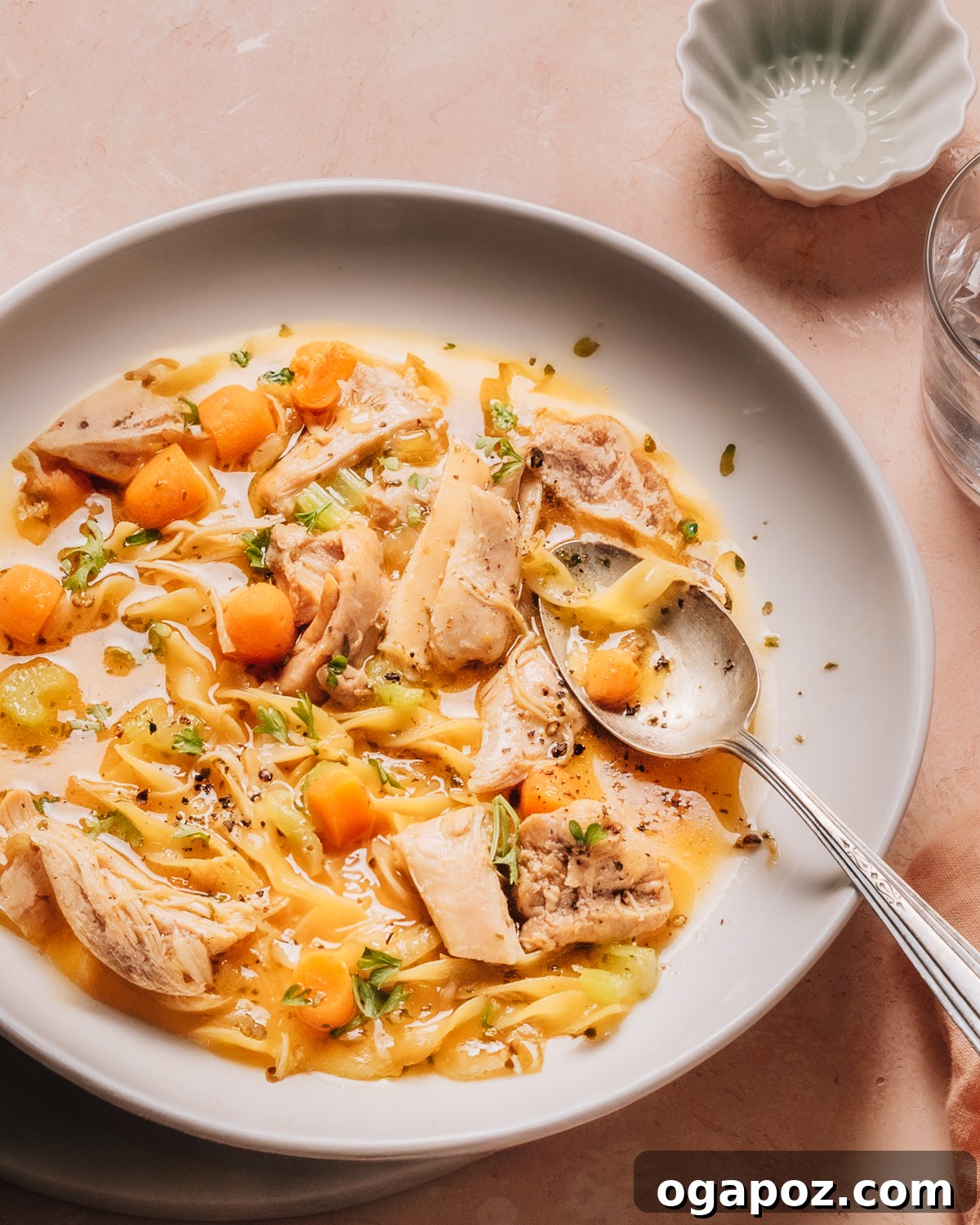
The Ultimate Homemade Chicken Noodle Soup: A Food Scientist’s Guide to Rich Broth & Tender Noodles
As a Food Scientist, I’ve dedicated countless hours to understanding the intricacies of flavor, texture, and cooking methods. This expertise has led me to crack the code on what I confidently proclaim is the BEST Homemade Chicken Noodle Soup. My foolproof recipe isn’t just a set of instructions; it’s a meticulously developed guide, brimming with science-backed tips for achieving an incredibly rich broth and perfectly tender noodles, all with an astonishingly minimal 15 minutes of hands-on prep time.
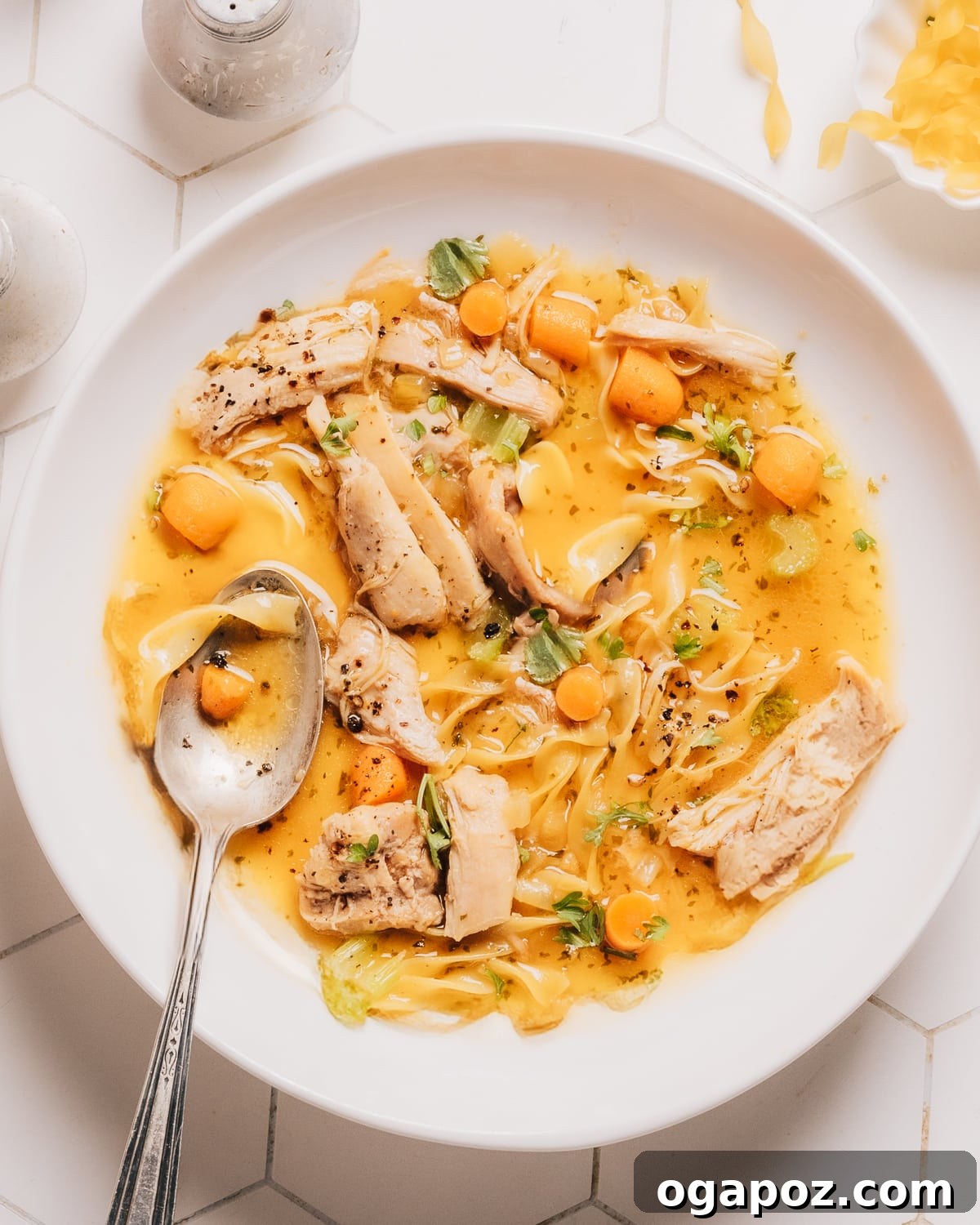
Crafted with a select few high-quality ingredients and streamlined steps, this particular recipe has become my absolute go-to homemade chicken noodle soup recipe for very compelling reasons:
- It consistently receives rave reviews from my entire family, making it a guaranteed crowd-pleaser.
- It embodies the very essence of ultimate comfort food, warming both body and soul with every spoonful.
- It’s profoundly flavorful – you’ll never encounter a watery or bland spoonful here – and remarkably easy to bring together, even on the busiest weeknights.
P.s. If you love the convenience of slow cooking, you must also try my Crockpot Chicken Noodle Soup and for speed, my Instant Pot Chicken Noodle Soup recipes!
Unlocking the Flavor: Essential Ingredients for Your Best Chicken Noodle Soup
Creating an exceptional homemade chicken noodle soup starts with selecting the right ingredients. Here’s a detailed look at what you’ll need to whip up this satisfying dish, ensuring every component contributes to its irresistible flavor profile.
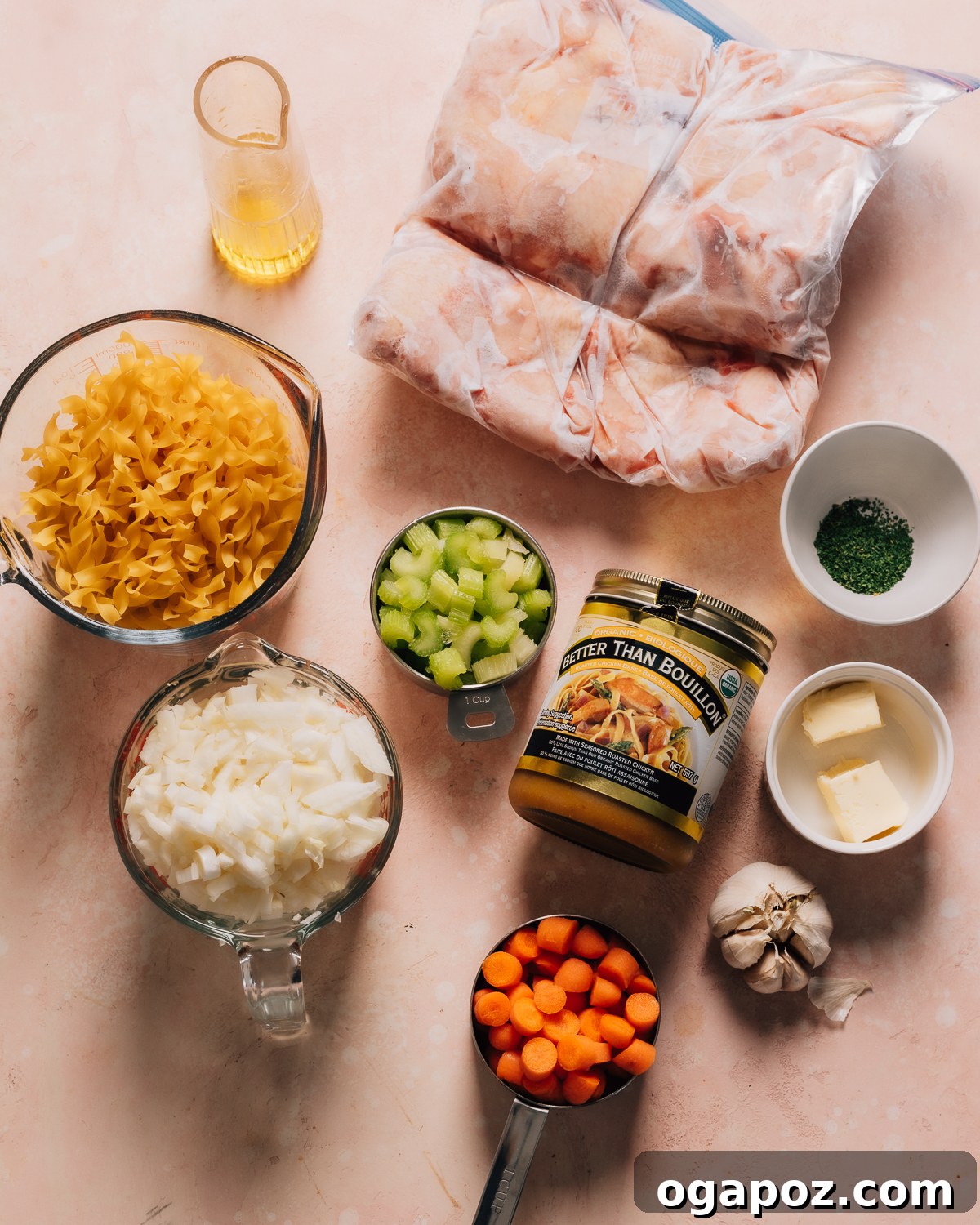
Quality Ingredients Make a Difference
Gather these key ingredients to craft your perfectly cozy bowl of soup:
- Olive Oil: Essential for sautéing our aromatic vegetables, olive oil helps to gently soften them and coax out their natural sugars, forming the foundational layer of flavor for our broth.
- Onion, Carrot, Garlic, and Celery: This classic quartet, often referred to as a “mirepoix” (with garlic added), forms the aromatic flavor base that is synonymous with hearty chicken soup. Sautéing these vegetables properly is crucial for developing a deep, complex taste. Hot Tip: Save prep time by keeping a bag of pre-cut celery stalks in your freezer, ready for soups and stews!
- Chicken Broth: The quality of your broth can make or break your soup. I highly recommend a concentrated broth like “Better than Bouillon” because it offers a significantly richer, more robust flavor compared to many boxed or canned varieties, which can sometimes taste thin or artificial. Opt for a low-sodium option to control the overall saltiness.
- Dried Parsley: While simple, dried parsley adds a classic herbaceous note and a touch of color that enhances the soup’s overall appeal without overpowering other flavors.
- Butter: A modest amount of unsalted butter swirled in at the end provides a luxurious body and an incredibly rich, velvety flavor to the broth, elevating it from good to truly exceptional.
- Egg Noodles: These tender, flat noodles are my top choice because they absorb the flavorful broth beautifully, ensuring each bite is moist, savory, and incredibly satisfying. They hold their shape well and provide that quintessential chicken noodle soup texture.
- Bone-in Chicken Thighs or Legs: This is a crucial “food scientist” secret for a superior broth and succulent chicken. Bone-in cuts slowly release their natural gelatin, marrow, and juices as they simmer, creating an incredibly rich, full-bodied broth and chicken meat that is tender, flavorful, and truly “slurp-worthy.”
- Soy Sauce: Don’t skip this secret ingredient! A small splash of soy sauce provides a profound savory depth and a powerful umami boost that can transform a good broth into a spectacular one. It perfectly balances and enhances the existing flavors without making the soup taste like soy sauce. It’s one of my favorite flavor enhancers in savory dishes.
You’ll find precise quantities for all ingredients in the recipe card at the bottom of this article. 👇
Customize Your Comfort: Substitutions & Variations
This classic homemade chicken noodle soup recipe is not just delicious on its own; it also serves as a fantastic base for culinary experimentation. Feel free to make a few clever swaps to tailor your chicken soup recipe to your personal preferences or what you have on hand.
Adapting the Aromatic Base
- Celery Alternatives: For a slightly unexpected yet delightful twist, substitute celery with fennel, which will impart a subtle anise flavor. Alternatively, you can add chopped bell peppers (any color) for a different kind of sweetness and crunch.
- Carrot Swaps: Parsnips offer an earthier sweetness and a similar texture to carrots, making them an excellent substitute. For a richer color and nutritional boost, consider adding diced sweet potatoes.
- Garlic Options: If fresh garlic isn’t available, a dash of garlic powder can work in a pinch (about ¼ teaspoon per clove). For a more mellow and nuanced flavor, roasted garlic is an outstanding choice, adding a sweet, caramelized depth.
Broth & Protein Swaps
- Broth Choices: While chicken broth is traditional, vegetable broth makes a wonderful vegetarian or vegan-friendly swap. For an even richer, more nutrient-dense soup, consider using bone broth, which adds extra body and protein.
- Chicken Alternatives: For a leaner option, boneless chicken breasts can be used, though be mindful not to overcook them to maintain tenderness. To drastically cut down on cooking time, shredded rotisserie chicken is a fantastic shortcut – simply add it in the final stages of cooking to warm through.
Noodle & Grain Options
- Noodle Substitutes: If egg noodles aren’t preferred or available, gluten-free noodles are a great option for dietary needs. For different textures and heartiness, try swapping with rice (white or brown), quinoa, or smaller pasta shapes like orzo or ditalini pasta.
Exciting Flavor Twists
- Lemon Herb Brightness: Elevate the soup with a vibrant, fresh note by squeezing the juice of one lemon into the broth at the very end. For an aromatic boost, swap dried parsley with fresh thyme sprigs, rosemary, and a bay leaf, simmering them with the broth and removing before serving. Stir in a handful of fresh spinach or kale at the end of cooking for added greens and nutrients.
- Hearty Chicken and Wild Rice Soup: For a more substantial meal, replace egg noodles with wild rice or brown rice. These grains add a delightful nutty flavor and a chewier texture. After the rice is cooked, stir in 1 cup of milk or cream to create an incredibly creamy and comforting soup. You can also include a handful of sliced mushrooms sautéed with the initial vegetables for an earthy dimension.
- Creamy Chicken Noodle Soup: If you crave an even richer, creamier broth, combine 1/2 cup of heavy cream with 1 tablespoon of cornstarch (or flour) in a small bowl until smooth. Stir this mixture into the soup toward the end of cooking and simmer gently until it thickens to your desired consistency.
Your Kitchen Arsenal: Tools for Soup Success
Having the right tools at hand makes the cooking process smoother and more enjoyable. Here are the essential pieces of equipment you’ll want to gather to make your homemade chicken noodle soup effortlessly:
- Large Pot or Dutch Oven: This is your primary cooking vessel. A substantial pot or a heavy-bottomed Dutch oven is ideal because it allows for even heat distribution, preventing scorching and ensuring a steady simmer for the broth and chicken. It also needs to be large enough to hold all your ingredients comfortably.
- Cutting Board: A sturdy cutting board is indispensable for safely and efficiently chopping your vegetables and preparing the chicken.
- Chef’s Knife: A sharp chef’s knife is key for precision cutting of the onion, celery, carrots, garlic, and any other ingredients you decide to add. A good knife makes prep work quick and easy.
- Two Forks: This simple duo is perfect for shredding the tender cooked chicken directly in the pot or on a separate plate, making quick work of the task.
- Ladle: Essential for gracefully serving up generous portions of your delicious, steaming soup.
Crafting the Perfect Bowl: Step-by-Step Homemade Chicken Noodle Soup
Making this hearty and flavorful chicken noodle soup is a straightforward process, achievable in just a few easy steps. This stove-top method ensures a delicious meal comes together efficiently, even on busy days:
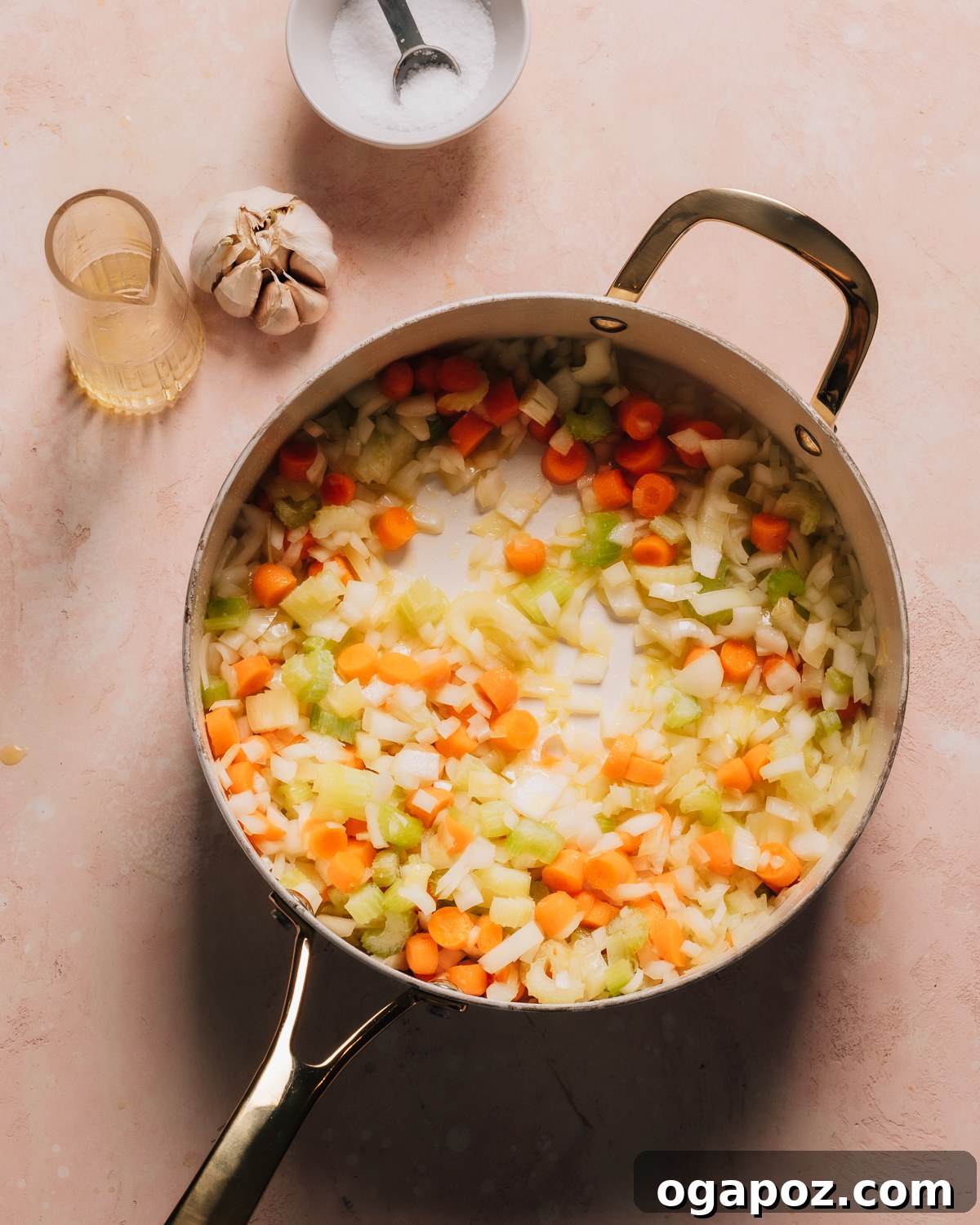
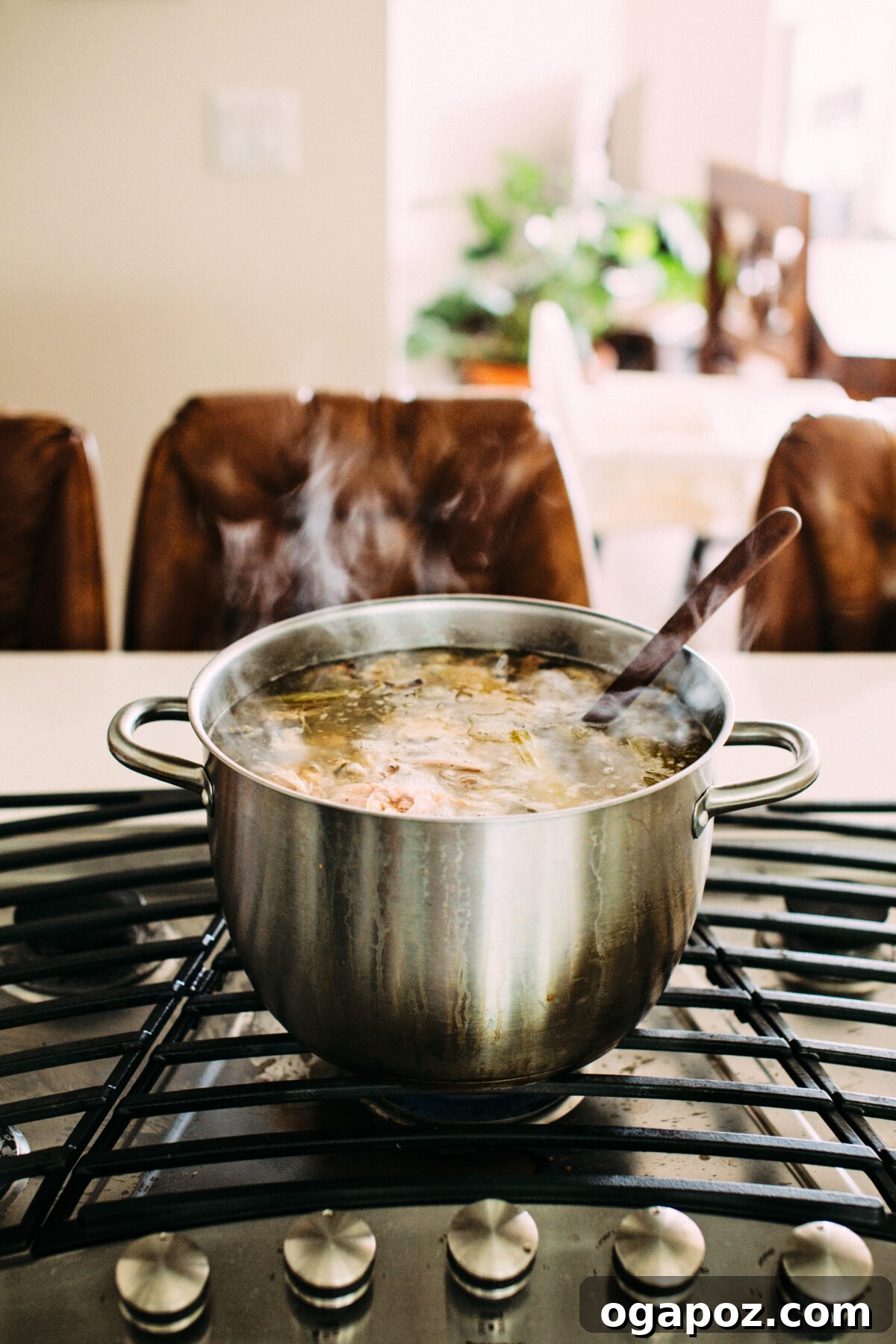
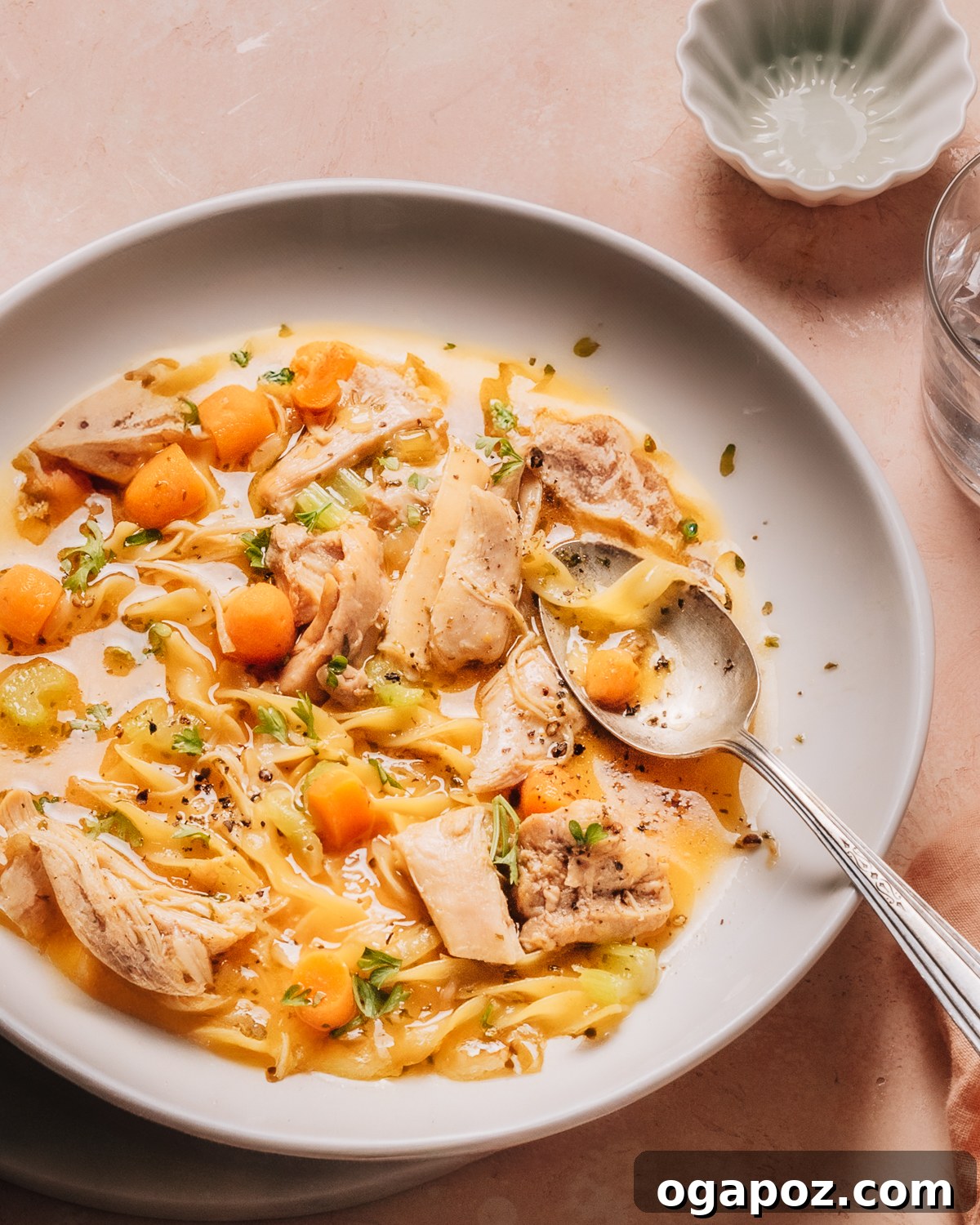
- Cook the Vegetables: Begin by heating the olive oil in your large pot or Dutch oven over medium heat. Add the finely chopped onion, sliced celery, and diced carrots, along with 1 teaspoon of kosher salt. Sauté these vegetables for 5-6 minutes, stirring occasionally, until they begin to soften and their natural sweetness starts to develop. Then, add the minced garlic and cook for just 1 minute more until it becomes wonderfully fragrant. Be careful not to burn the garlic.
- Add Chicken and Broth: Pour in the chicken broth and the soy sauce (if using). Carefully add the raw bone-in chicken thighs or legs to the pot. Sprinkle in the dried parsley and the remaining kosher salt. Increase the heat to bring the soup to a rolling boil. Once boiling, reduce the heat to a gentle simmer, cover the pot partially (leaving a small gap for steam to escape), and let it cook for 45-55 minutes. The chicken should be fully tender and easily pulled from the bone. This slow simmer allows the chicken to release its deep flavors into the broth.
- Shred the Chicken: Carefully remove the cooked chicken pieces from the pot and transfer them to a plate to cool slightly. Once cool enough to handle, use two forks to shred the tender meat, discarding any bones and skin. Return the shredded chicken meat to the simmering soup.
- Cook the Noodles: Stir in the egg noodles. Continue to cook the soup for 10-12 minutes, or until the noodles are perfectly tender yet still retain a slight bite (al dente). Keep an eye on them to prevent overcooking, which can lead to mushy noodles and a thick broth.
- Finish the Soup: Finally, stir in the unsalted butter until it has completely melted, adding that extra layer of richness and a silky texture to the broth. Taste the soup and adjust the seasoning as needed. This is the stage to add a splash more soy sauce for umami, or additional salt and black pepper to taste. You might also consider a squeeze of lemon juice for brightness, as suggested in our variations.
Avoid These Pitfalls: Common Mistakes in Chicken Noodle Soup Making
Even a seemingly simple dish like chicken noodle soup has its common trip-ups. By being aware of these frequent mistakes, you can easily avoid them and ensure your homemade soup is always a resounding success:
- Skipping the Sauté Step for Vegetables: One of the biggest errors is not properly sautéing the onions, celery, and carrots at the beginning. Skipping this initial step means you miss out on the rich, caramelized flavors that develop as their natural sugars release and gently brown. This foundation of flavor is essential for a truly deep and complex broth; without it, your soup can taste flat and underdeveloped. Always take those extra few minutes to soften and sweeten your aromatic vegetables.
- Using Boneless, Skinless Chicken Breasts Only: While convenient, boneless, skinless chicken breasts tend to lack the depth of flavor that bone-in cuts provide. They also have a higher tendency to dry out quickly during the simmering process, resulting in tough, less flavorful chicken. For a truly rich broth and succulent meat, always opt for bone-in chicken thighs or legs. The bones and skin contribute natural gelatin and fat, which are crucial for creating a full-bodied broth and keeping the meat incredibly tender and juicy. You can easily remove the bones and skin after cooking for easy shredding.
- Overcooking the Noodles: Noodles that simmer in the broth for too long will become soggy, mushy, and absorb an excessive amount of liquid. This not only ruins the texture of the noodles but also leaves you with a soup that is overly thick and gloopy rather than beautifully brothy. To prevent this, add the noodles only toward the very end of the cooking process, and cook them just until they are tender yet still have a slight bite (al dente).
- Using Low-Quality Broth: The broth is the heart of your chicken noodle soup, so its quality is paramount. A bland, watery, or overly salty broth will result in a soup that lacks flavor or tastes artificial. Invest in a high-quality, low-sodium chicken broth, or, if time permits, consider making your own from scratch. A rich, authentic base provides the perfect canvas for all the other ingredients to shine. Using a concentrated broth like Better than Bouillon is also an excellent way to guarantee depth.
- Neglecting to Taste and Adjust Seasonings: Many home cooks add salt and pepper at the beginning and forget about it. However, the flavors of soup evolve during cooking. It’s crucial to taste the soup periodically and, especially, at the very end. Salt, herbs, and pepper need to be balanced precisely. Don’t be afraid to add a final touch of soy sauce for umami, a squeeze of lemon juice for brightness, or extra salt to truly bring all the flavors into harmony. Think savory, salty, and a hint of acidity for a perfectly rounded taste.
Plan Ahead: Make-Ahead & Storage Tips
This delicious chicken noodle soup is perfect for meal prepping and can be made in advance, making busy days so much easier! When you’re ready to serve, simply reheat the soup gently on the stovetop or quickly in the microwave.
Refrigeration for Freshness
- Before storing, allow the soup to cool completely to room temperature. This prevents condensation and keeps it fresh longer.
- For the best texture, I highly recommend storing the broth and vegetables separately from the cooked noodles. This crucial step prevents the noodles from absorbing too much liquid and becoming overly soft or mushy. Place the broth and veggies in one airtight container and the cooled noodles in another.
- When stored properly in the refrigerator, your homemade chicken noodle soup (or its components) will keep fresh for up to four days.
Freezing for Future Comfort
For longer-term storage, freezing your soup is an excellent option. However, it’s best to freeze the soup without the noodles.
- Allow the soup (broth, chicken, and vegetables) to cool completely. Transfer it to a freezer-safe container, leaving about an inch of headspace to allow for expansion as it freezes.
- The soup will keep beautifully in the freezer for up to 3 months.
- When you’re ready to enjoy, thaw the frozen soup overnight in the refrigerator, or use the defrost setting on your microwave.
- Gently warm the thawed soup on the stovetop over medium heat, stirring occasionally. Once it’s simmering and heated through, cook fresh noodles separately and add them to individual bowls just before serving. This ensures perfect noodle texture every time!
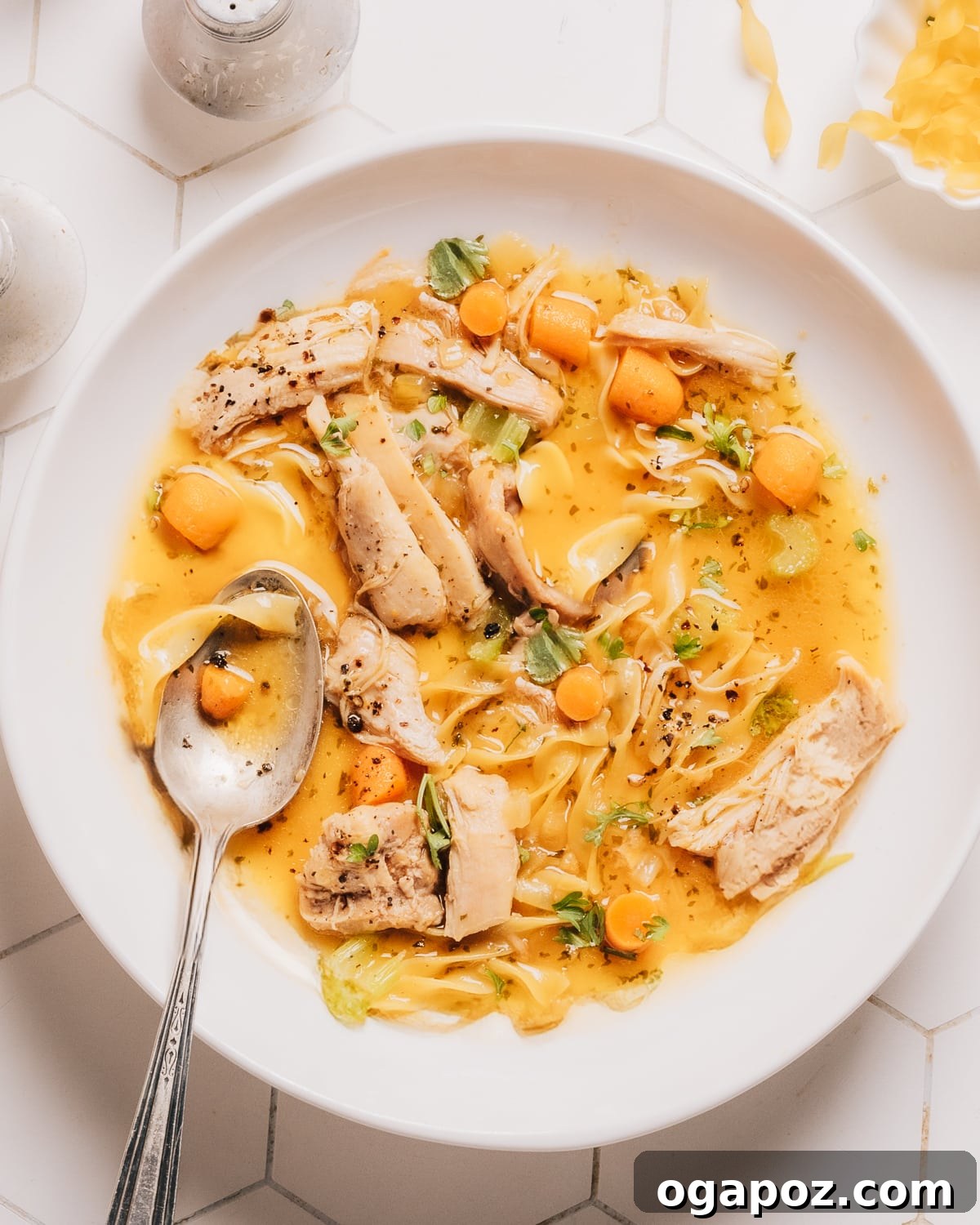
How to Serve this Homemade Chicken Noodle Soup Recipe
There’s nothing quite as comforting as a steaming bowl of homemade chicken noodle soup. Serve it hot in your favorite bowls, perhaps with a sprinkle of freshly ground black pepper and a generous scattering of fresh parsley or any other fresh herbs you prefer for a vibrant garnish. The aroma alone is enough to bring everyone to the table!
I absolutely love pairing this soup with a thick slice of warm, crusty bread slathered with butter. For an unexpected but delightful combination, try it with my sweet and tender zucchini bread. It’s also incredibly delicious alongside a fresh, crisp side salad, like this refreshing strawberry and spinach salad with almonds and goat cheese, which provides a lovely contrast to the warmth of the soup.
The Food Scientist’s Edge: Pro Tips + Science-Based Secrets
While this homemade chicken noodle soup recipe is wonderfully simple, a few expert tips and a sprinkle of food science knowledge can elevate your soup from good to truly extraordinary. Here are my top secrets for an exceptional bowl:
- Cook Noodles Separately (Especially for Make-Ahead): This is a game-changer for leftovers. Cooking noodles directly in the soup means they continue to absorb liquid and expand, leading to mushy noodles and a much thicker broth over time. For the best texture, cook your noodles separately to al dente, then add them to individual bowls just before serving. This preserves both the broth’s consistency and the noodles’ integrity.
- Season in Layers: Don’t just season once at the beginning. Add salt and other seasonings at different stages of cooking – when sautéing vegetables, after adding broth, and critically, at the very end. This layered approach ensures that each ingredient is seasoned appropriately, allowing flavors to build and integrate harmoniously, resulting in a perfectly balanced and vibrant soup.
- Boost Flavor with Umami: Umami, often called the “fifth taste,” adds a savory depth that makes food incredibly satisfying. A splash of soy sauce (as in this recipe), a dash of Worcestershire sauce, or even a tiny bit of miso paste can provide an incredible umami punch that rounds out the soup’s flavor profile without being overtly noticeable. It’s the secret ingredient that makes people wonder why your soup tastes so good!
- Powerful Aromatics for Infusion: Adding aromatics like garlic, onions, and herbs early in the cooking process, and allowing them to gently sauté, enables their volatile flavor compounds and essential oils to slowly infuse into the cooking fats and then into the broth. This creates a deeply aromatic and flavorful soup from the very start, even without extremely prolonged simmering.
- The Maillard Reaction for Depth: While not heavily emphasized in this particular recipe (as it’s often for browning meat), understanding the Maillard reaction (the chemical reaction between amino acids and reducing sugars that gives browned food its distinctive flavor) can further enhance flavor. Sautéing your vegetables until they just begin to caramelize slightly is a mild form of this, adding layers of savory, sweet, and complex notes to your broth.
Your Questions Answered: FAQs About Homemade Chicken Noodle Soup
Just scrolling through or have a quick question? Here are a few common queries you don’t want to miss regarding homemade chicken noodle soup:
There isn’t just one single “secret ingredient” in great soup. Rather, the secret to an outstanding homemade chicken noodle soup lies in a combination of factors: the quality of your ingredients, the intentional layering of flavors through proper seasoning and aromatic sautéing, and allowing sufficient simmering time for all components to meld. Using bone-in chicken and a splash of umami-rich soy sauce are key elements that definitely elevate the final taste.
Egg noodles are classic, but you have many alternatives! You can use other small pasta shapes like orzo, ditalini, or even broken spaghetti. For a heartier soup, rice (white, brown, or wild rice) or quinoa works wonderfully. For low-carb options, consider adding zucchini noodles or riced cauliflower toward the very end of cooking to prevent them from becoming too soft.
Absolutely! Using pre-cooked rotisserie chicken is a fantastic shortcut, especially when you’re short on time. If you opt for rotisserie chicken, simply skip the initial step of cooking raw chicken in the broth. Instead, shred the rotisserie chicken and add it to the soup during the last few minutes of cooking, just enough time for it to warm through. Keep in mind that using raw, bone-in chicken adds more depth to the broth.
It’s incredibly easy to adapt this recipe to be gluten-free! The primary ingredient you’ll need to swap is the egg noodles for gluten-free noodles, rice, or quinoa. Additionally, always double-check the label of your chicken broth to ensure it is certified gluten-free, as some commercial brands may contain hidden gluten-derived ingredients.
To make your broth richer, use bone-in chicken (as suggested in this recipe), as the bones release collagen and flavor during simmering. Opt for a high-quality, concentrated broth like Better than Bouillon. Simmering for the full recommended time allows flavors to deepen. Lastly, don’t underestimate the power of butter added at the end, and the umami boost from soy sauce.
Dried herbs are typically added earlier to allow their flavors to infuse. Fresh delicate herbs like parsley or dill are best stirred in during the last 5-10 minutes of cooking, or even as a garnish right before serving. This preserves their vibrant color, fresh flavor, and delicate aroma. Hardier fresh herbs like rosemary or thyme can be added earlier in the simmering process.
More Cozy Recipes from My Kitchen
If you’re a soup lover, you’ll want to explore these easy soup recipes that I turn to time and time again for comfort and flavor:
- My Old-Fashioned Beef Vegetable Soup is a hearty, nostalgic classic that’s simply irresistible.
- This Ham and Bean Soup is the epitome of ultra-comforting and incredibly satisfying, perfect for a chilly day.
- Prepare yourself for truly the Best Ever Tomato Soup of your life – creamy, rich, and bursting with fresh tomato flavor!
- This Ground Turkey Soup is a wholesome, savory, and incredibly flavorful option that’s both hearty and light.
- My Chicken and Dumpling Soup is one of my all-time favorites, featuring fluffy dumplings in a rich chicken broth.
- You’ll adore my Tortellini Soup – it’s so cozy, deliciously cheesy, and comes together quickly.
- For a fantastic vegetarian option, this Vegetable Orzo Soup is super wholesome, light, and packed with fresh flavors.

Homemade Chicken Noodle Soup
Jennifer Pallian BSc, RD
This Homemade Chicken Noodle Soup is cozy, flavorful, and ridiculously easy to make. My foolproof recipe is packed with tips for rich broth and tender noodles—with just 15 minutes of prep! 🥣
15 minutes
55 minutes
1 hour 10 minutes
6
Ingredients
- ⅓ cup olive oil
- 2 ½ cups finely-chopped onion
- 1 cup sliced celery
- 1 cup diced carrot
- 2 tsp kosher salt divided
- 2 tsp minced garlic
- 8 cups chicken broth
- 4 tsp soy sauce or 1 tsp more kosher salt
- 1 tsp dried parsley
- 4 oz egg noodles
- 2 tbsp unsalted butter
- 2 lbs bone-in chicken thighs or legs
Instructions
-
Cook the veggies: Heat olive oil in a large pot over medium heat. Add the onion, celery, and carrots with 1 tsp kosher salt. Sauté for 5-6 minutes until softened. Add garlic and cook for 1 minute more until fragrant.
-
Add chicken and broth: Pour in the chicken broth and soy sauce, and add the raw chicken thighs or legs. Stir in dried parsley and the remaining 1 tsp kosher salt (or 2 tsp if you aren’t using soy sauce). Bring to a boil, then reduce the heat to low. Cover partially and simmer for 45-55 minutes, until the chicken is fully cooked and tender.
-
Shred the chicken: Remove the chicken from the pot and let it rest for a few minutes. Shred it with two forks, discarding the bones and skin. Return the shredded chicken to the pot.
-
Cook the noodles: Stir in the egg noodles and let them cook for 10-12 minutes, or until tender.
-
Finish the soup: Stir in the butter until melted. Taste and adjust seasoning with a splash of soy sauce or additional salt, if needed.
Notes
Chicken Substitutes: Boneless chicken thighs or breasts can be used for a leaner option, but keep a close eye on their cooking time to ensure they remain tender and don’t dry out. Bone-in cuts generally yield a richer broth.
Soy Sauce: Adding soy sauce is a small but powerful secret ingredient. It imparts a rich umami flavor to the broth, enhancing its savory notes and contributing a lovely golden color to the soup.
Carrots: To save on prep time, you can opt for pre-cut baby carrots instead of peeling and chopping whole carrots. They work just as well in terms of flavor and texture.
Noodles: Egg noodles are known for absorbing a significant amount of liquid. If you prefer a soup with plenty of broth, resist the urge to add more noodles than the recipe specifies. For make-ahead soup, consider cooking noodles separately and adding just before serving to prevent them from becoming mushy.
Nutrition
Calories: 554kcal
|
Carbohydrates: 24g
|
Protein: 27g
|
Fat: 39g
|
Saturated Fat: 10g
|
Polyunsaturated Fat: 6g
|
Monounsaturated Fat: 19g
|
Trans Fat: 0.3g
|
Cholesterol: 158mg
|
Sodium: 2090mg
|
Potassium: 585mg
|
Fiber: 3g
|
Sugar: 6g
|
Vitamin A: 3929IU
|
Vitamin C: 7mg
|
Calcium: 63mg
|
Iron: 2mg
Nutrition information is automatically calculated, so should only be used as an approximation.
Tried this recipe? Leave a comment!