
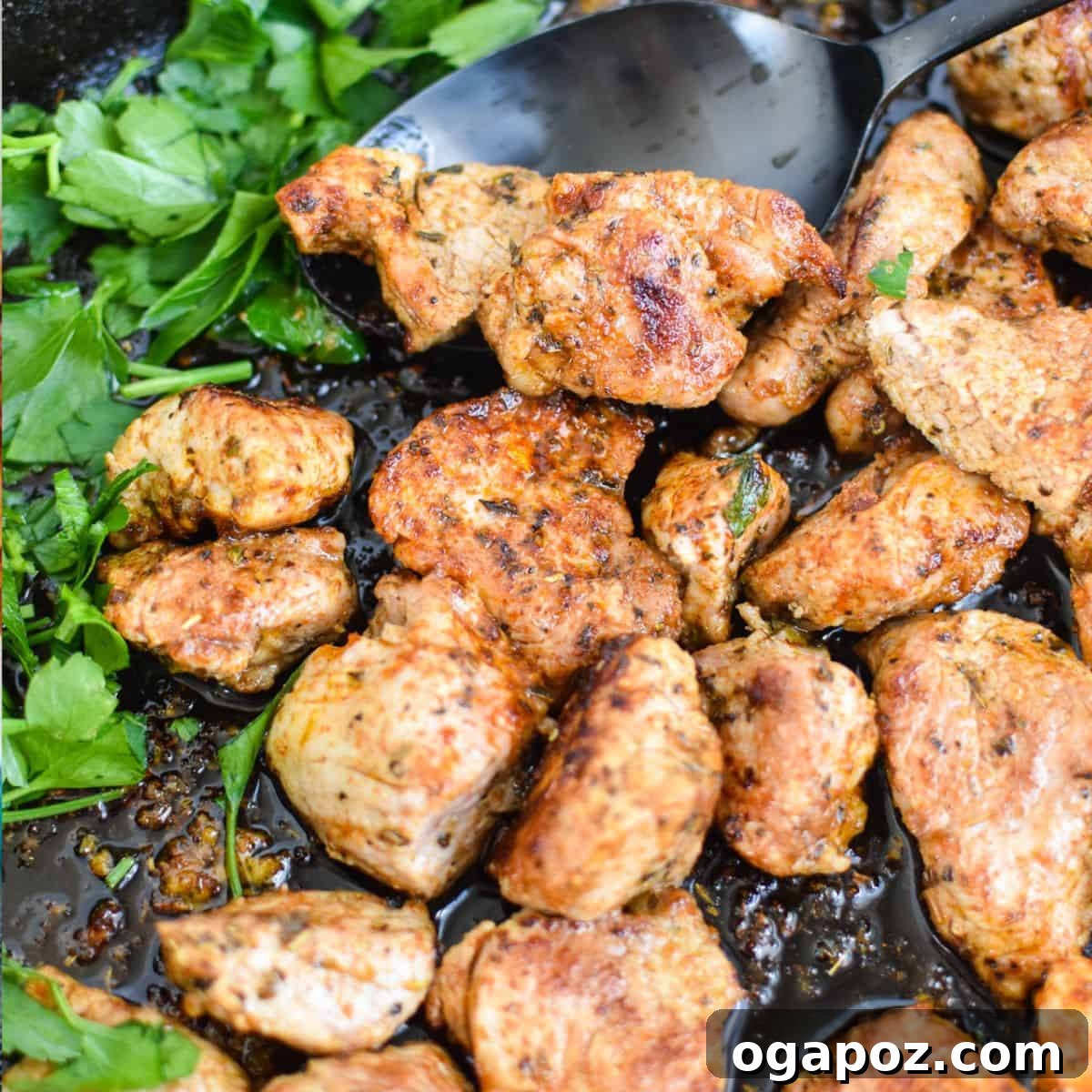
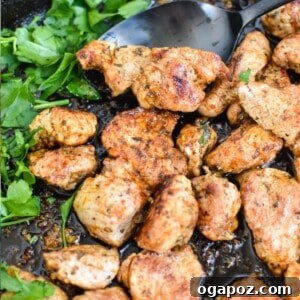
Cast Iron Pork Tenderloin offers a delightful blend of speed, incredible flavor, and succulent tenderness, making it an ideal choice for busy weeknights and special occasions alike. Cooked to perfection with a beautiful sear directly on the stovetop in a trusty cast iron skillet, this recipe transforms simple pork tenderloin cubes into a culinary masterpiece. Each bite is infused with aromatic Italian seasoning, vibrant paprika, and a luscious drizzle of golden honey, creating a harmonious balance of sweet and savory notes. For a truly complete and refreshing meal, pair this juicy pork with a light, fresh orzo salad—a versatile combination that shines in any season, particularly during the vibrant days of spring.
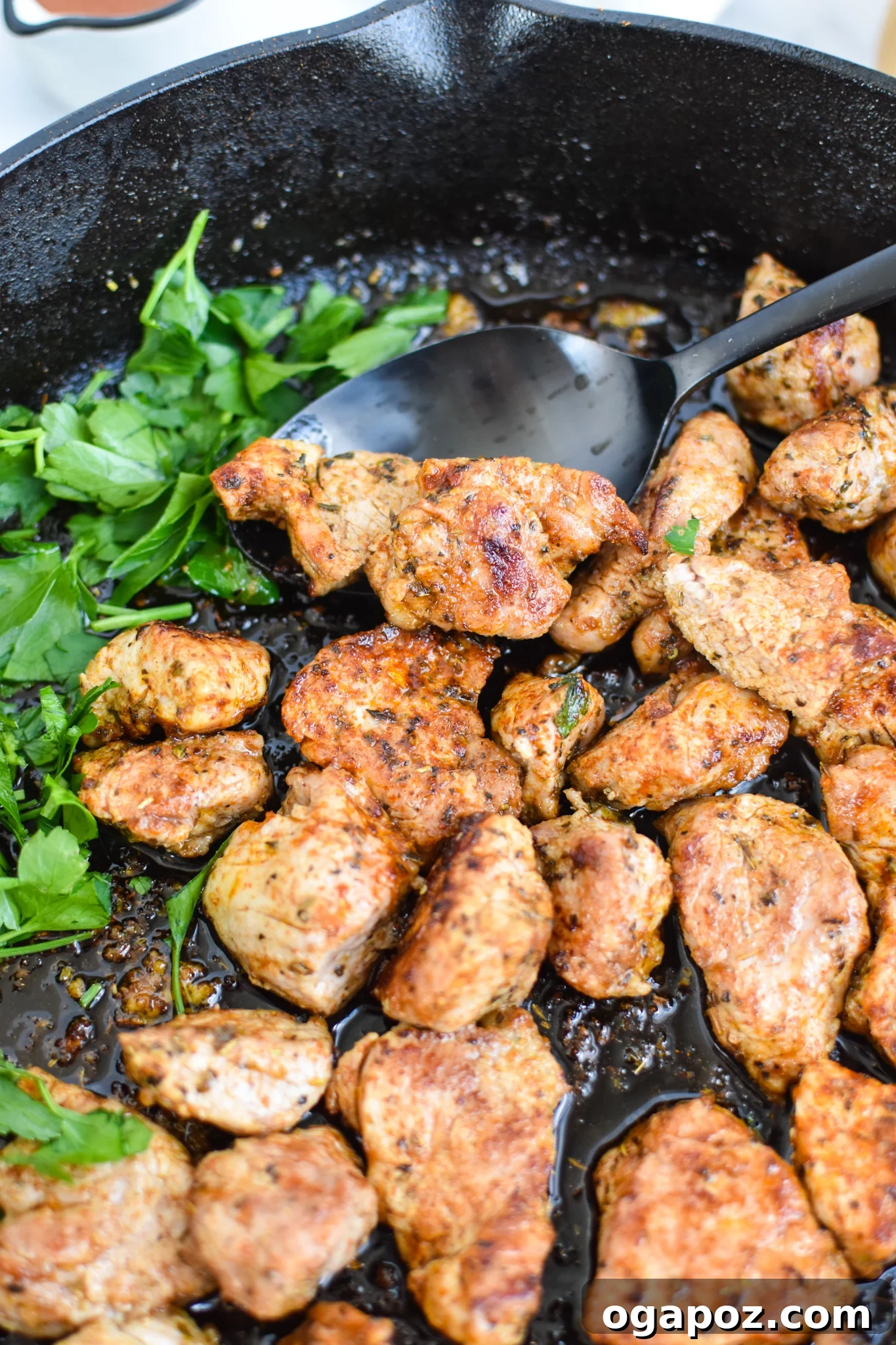
This Cast Iron Pork Tenderloin recipe is a true lifesaver for those hectic evenings when you crave a homemade meal without spending hours in the kitchen. It promises a truly satisfying and delicious dinner on your table in under 20 minutes of active cooking time. If your culinary preferences lean towards a deep, golden-brown sear that expertly locks in moisture and ensures an exceptionally juicy interior, then preparing pork tenderloin using this cast iron method is undoubtedly the superior approach. The irresistible crust that forms effortlessly on the exterior of the pork, a hallmark of cast iron cooking, provides a delightful textural contrast that enhances every single mouthful, making this dish incredibly addictive.
You will undoubtedly be captivated by the incredible sweet and savory flavor profile that emerges from the brilliant fusion of fragrant paprika and rich honey. This combination isn’t merely a seasoning; it acts as a powerful flavor enhancer that elevates the natural taste of the pork tenderloin to extraordinary new heights. My absolute favorite aspect of this entire recipe lies in the distinct depth of flavor and the consistently perfect, crispy crust that develops only when you cook pork in a well-seasoned cast iron skillet. It is this unique and remarkable characteristic of cast iron that consistently ensures each piece of pork is exceptionally tender, incredibly juicy, and bursting with flavor every single time.
For those who love exploring a diverse array of pork dishes and are seeking more inspiration, you might also enjoy some of our other cherished recipes. These include a simple yet delicious Slow Cooker Pork Tenderloin, a hearty and comforting Easy Pork Chili, and our wonderfully tender Slow Cooker Pork Shoulder Roast. Each offers a unique way to enjoy this versatile protein.
Why Choose Cast Iron for Pork Tenderloin: The Secret to Perfection
Cooking pork tenderloin in a cast iron skillet isn’t just a traditional method; it’s a culinary technique that consistently yields superior results, making it the preferred choice for many chefs and home cooks. Cast iron is celebrated for two primary reasons: its exceptional heat retention and its ability to distribute heat incredibly evenly across its surface. This means that when you place your delicate pork into a properly preheated cast iron pan, it instantly creates a beautiful, deep, and caramelized crust—a phenomenon scientifically known as the Maillard reaction. This reaction is absolutely crucial for developing those rich, complex, savory flavors and the appealing, slightly crispy texture on the exterior of the meat that we all love.
Unlike many other types of cookware that can experience a significant drop in temperature when cold food is added, a cast iron skillet impressively maintains its high temperature. This unwavering heat ensures a consistent and even sear across all surfaces of the pork, leading to uniformly browned pieces. This intense initial heat also plays a vital role in sealing in the natural juices of the meat, effectively preventing it from drying out and guaranteeing that every piece remains incredibly tender, moist, and succulent. The robust, heavy-duty nature of cast iron further adds to its versatility, allowing it to transition seamlessly from stovetop searing to oven baking. While this particular recipe is designed for maximum speed and keeps the cooking entirely on the stovetop, the inherent oven-safe capability of cast iron simply adds to its reputation as an indispensable and enduring kitchen workhorse.
Furthermore, cooking regularly with a well-maintained cast iron skillet can impart a subtle, unique depth of flavor to your food over time, thanks to its seasoned surface. This natural, non-stick patina, developed through consistent use and proper care, contributes significantly to the overall ease of cooking and simplifies the cleaning process. For a dish like pork tenderloin, where achieving a perfect, flavorful crust and preserving an exquisitely juicy interior are of paramount importance, a high-quality cast iron skillet is truly an irreplaceable tool in any culinary arsenal. It’s an investment that pays dividends in flavor and cooking pleasure.
Key Ingredients for Your Savory-Sweet Cast Iron Pork Tenderloin
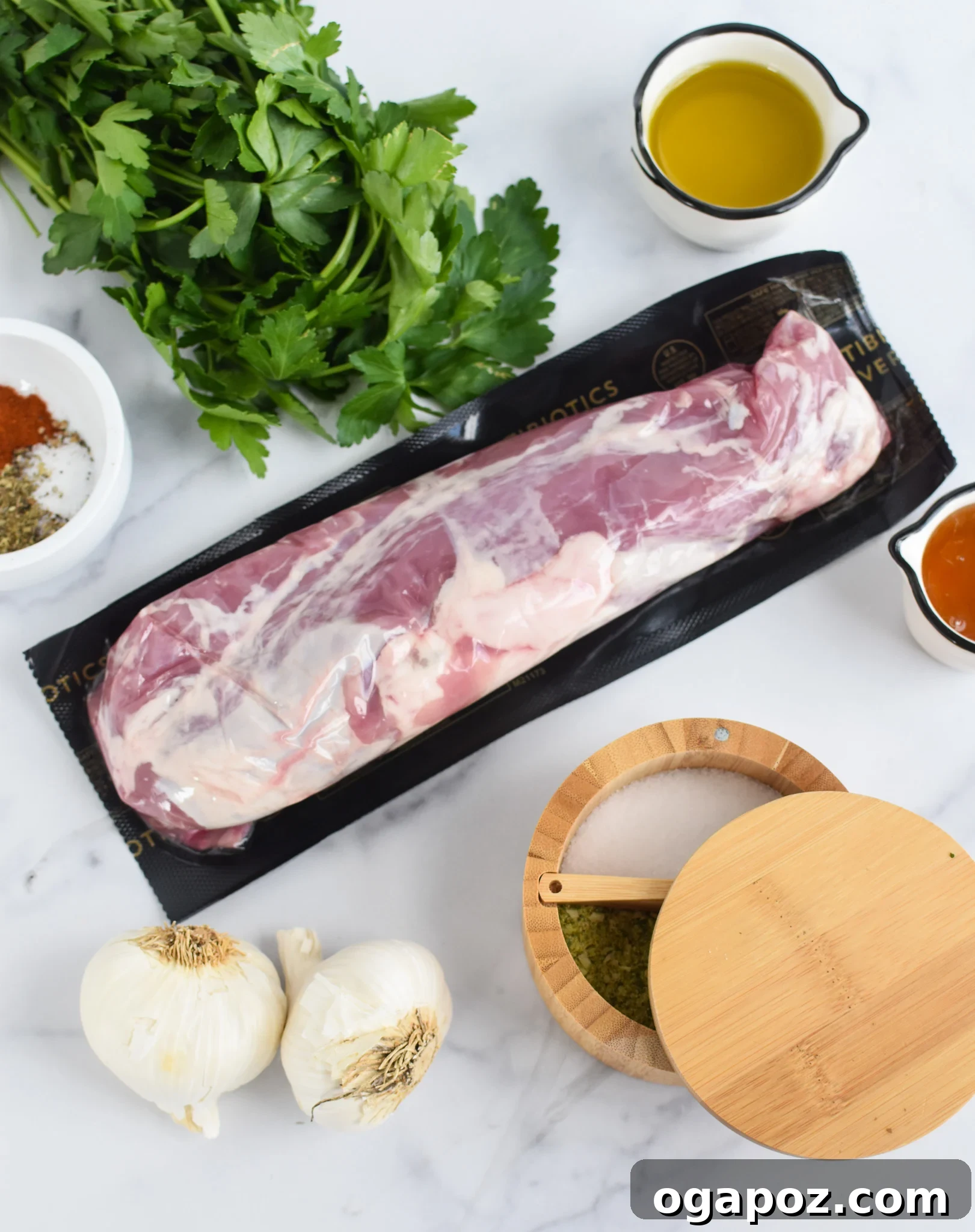
To craft this incredibly flavorful and straightforward Cast Iron Pork Tenderloin, you’ll need a selection of simple yet remarkably impactful ingredients. For the most precise measurements and detailed, step-by-step instructions, please be sure to refer to the comprehensive recipe card located further down this page.
- Pork Tenderloin: The undeniable star of our dish! We recommend using a 2 to 2 1/2 pound pork tenderloin. Before proceeding, it is crucial to meticulously trim any visible silver skin. This thin, connective membrane does not tenderize during cooking and can result in a tough texture, so its removal is essential for achieving optimal tenderness. Once trimmed, uniformly cut the pork into 1-inch cubes to ensure even cooking.
- Olive Oil: An indispensable component for searing the pork to a golden crisp and preventing it from adhering to the robust cast iron skillet. A high-quality extra virgin olive oil also contributes a subtle yet rich depth to the overall flavor profile of the dish.
- Aromatic Spices: The foundation of our delectable savory rub is a thoughtfully blended mixture of Italian seasoning and paprika. Italian seasoning typically comprises a classic medley of dried oregano, basil, thyme, rosemary, and marjoram, providing a wonderfully herbaceous aroma. Paprika, on the other hand, contributes a gentle sweetness, a nuanced hint of pepperiness, and a beautiful reddish hue to the pork, enhancing its visual appeal. Feel empowered to experiment with alternative spice blends—a smoky and robust BBQ rub or a bright, zesty lemon-herb mix would also complement the pork beautifully. Remember to include adequate salt and freshly ground black pepper, as these basic seasonings are vital for enhancing and bringing out all the complex flavors.
- Honey: This ingredient is absolutely pivotal to achieving the delightful “sweet” dimension of our signature sweet and savory flavor profile. Drizzled generously over the pork just before cooking, honey not only imparts a natural, mellow sweetness but also actively aids in creating that highly desirable caramelized crust, which exquisitely complements the robust flavors of the pork and spices.
- Garlic: Freshly minced garlic is an indispensable addition, providing a pungent, deeply aromatic depth that perfectly rounds out the pork’s flavors. Its sharp, savory notes marry exquisitely with the chosen herbs and spices, rendering the tenderloin even more irresistible and complex.
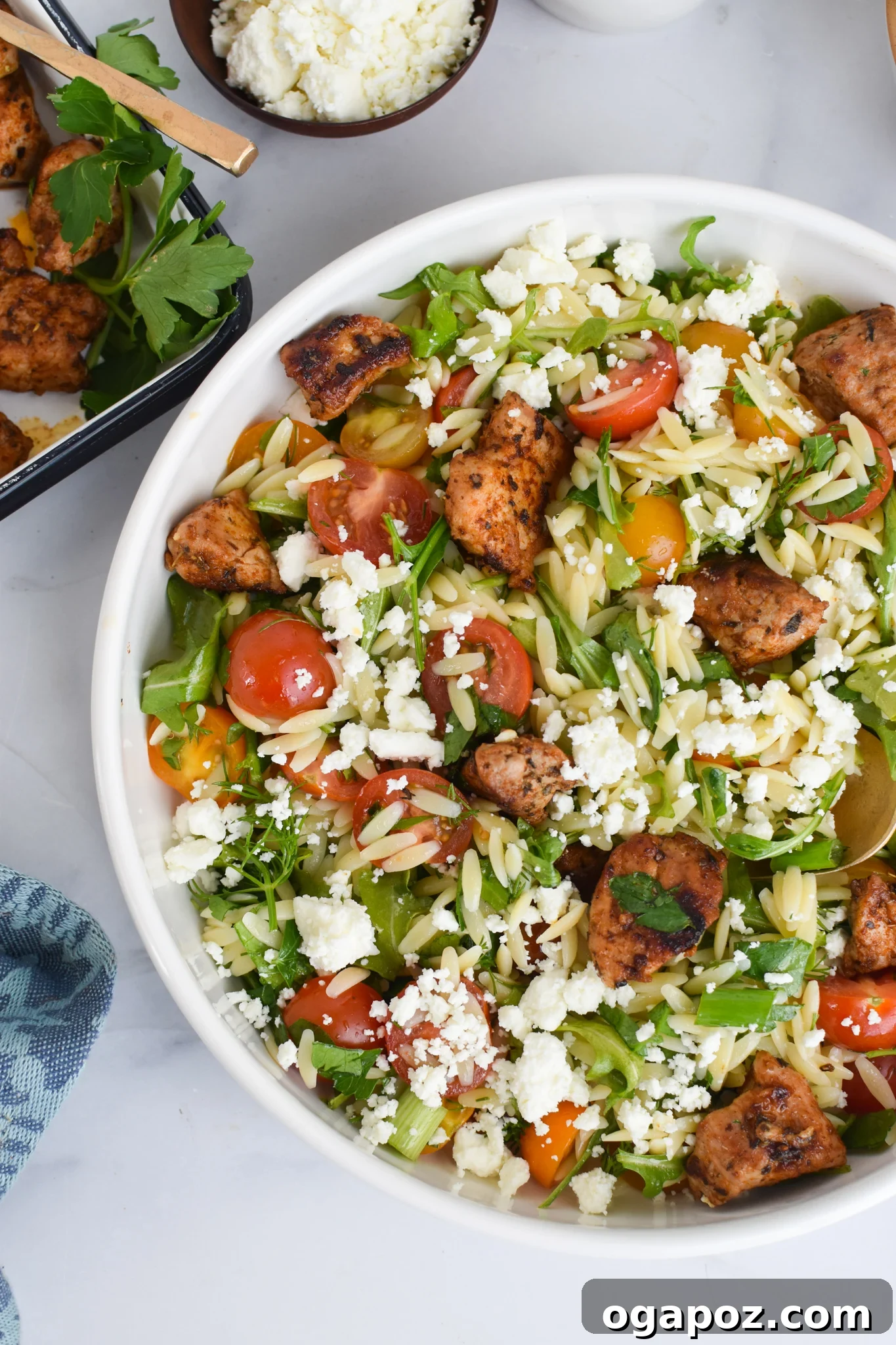
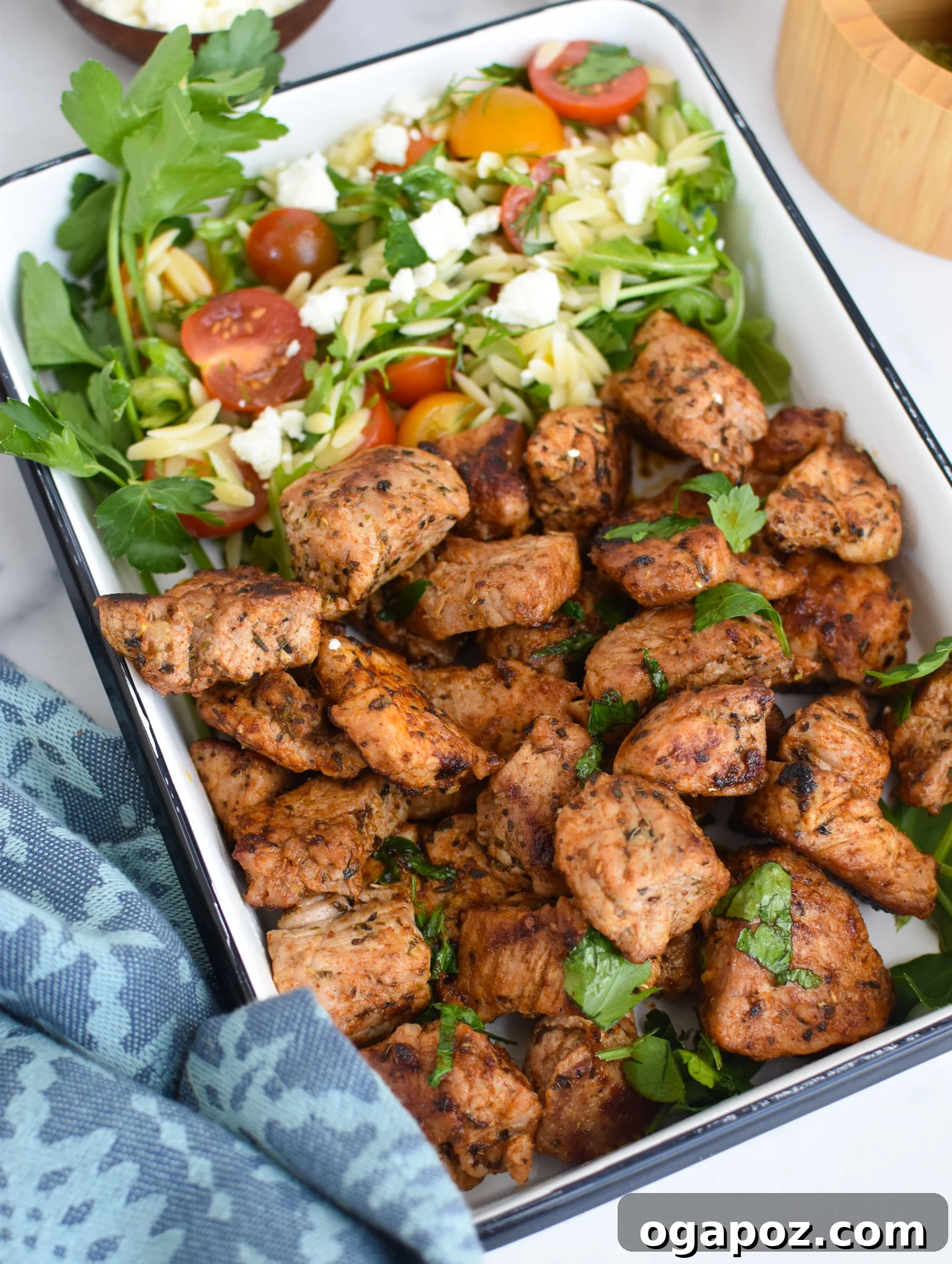
- Orzo Pasta: While entirely optional, serving this savory pork alongside a vibrant orzo salad elevates the meal, creating a perfectly balanced and refreshingly light accompaniment. Orzo, a small, rice-shaped pasta, is renowned for its delicate texture and remarkable versatility. Our specially crafted herbed orzo salad recipe, detailed below, is specifically designed to pair exceptionally well with the rich, seared pork. You have the flexibility to serve the pork cubes neatly alongside the salad or, for an integrated dish, gently toss the cooked pork directly into the cooled orzo salad.
- Fresh Vegetables for Orzo Salad: Bright, juicy cherry tomatoes and crisp English cucumber are incorporated to add essential freshness, a delightful crunch, and vibrant visual appeal to the orzo salad, ensuring a lively contrast.
- Feta Cheese: Crumbled feta cheese introduces a wonderfully salty, tangy, and subtly creamy element to the salad, expertly balancing the other flavors and adding a Mediterranean touch.
- Fresh Herbs for Orzo Salad: A generous medley of fresh basil, mint, parsley, and dill are absolutely crucial for developing the bright, intensely aromatic, and truly herbaceous profile of the orzo salad, making it invigorating and profoundly flavorful.
- Salad Dressing Ingredients: A simple yet powerfully zesty vinaigrette is crafted from red wine vinegar, freshly squeezed lemon juice, an additional touch of honey for balance, olive oil, salt, and pepper. This dressing ties all the vibrant flavors of the orzo salad together seamlessly.
Recipe Variations and Flavor Boosters to Elevate Your Dish
One of the greatest joys of home cooking is the inherent ability to customize and adapt dishes to perfectly suit your personal taste preferences. This Cast Iron Pork Tenderloin recipe is exceptionally versatile, readily accommodating numerous exciting variations that can keep your meal rotation fresh and full of delightful surprises:
- Pre-Marinating the Pork: For an even deeper layer of flavor infusion and enhanced tenderness, seriously consider marinating your pork tenderloin for some time before cooking. A beautifully simple marinade, consisting of good quality olive oil, finely minced garlic, a refreshing squeeze of lemon juice, and a pinch of your favorite herbs (such as fragrant rosemary or earthy thyme), can work absolute wonders. For those desiring a bolder, more exotic twist, explore a marinade featuring savory soy sauce, pungent ginger, and aromatic sesame oil, or perhaps a spirited, spicy concoction boasting fiery crushed red pepper flakes and a warming touch of cayenne pepper.
- Delightful Fruit-Based Glazes: Introduce an irresistibly delightful sweet-tart element to your pork by generously glazing it with a variety of fruit-based sauces. A piquant mango chutney, a delicately sweet apple cider glaze, or a bright, citrusy honey-orange sauce can all impart incredible depth, a glossy finish, and a burst of unique flavor to your pork tenderloin. For the best results, apply these glazes during the final few minutes of the cooking process to prevent them from burning and to allow their flavors to meld beautifully.
- Tangy Mustard Coating: The pairing of robust mustard with succulent pork is a timeless classic for a very good reason. Before you begin searing, spread a thin, even layer of tangy Dijon mustard or hearty whole-grain mustard over the pork cubes. This not only introduces a pungent, zesty flavor but also plays a crucial role in locking in moisture, ultimately contributing to an astonishingly tender and flavorful result.
- Herb or Crusted Exterior: Create an aromatic and textural marvel by pressing a finely prepared mixture of crunchy breadcrumbs, grated Parmesan cheese, and exquisitely chopped fresh herbs (such as fragrant rosemary, savory thyme, or earthy sage) onto the surfaces of the pork tenderloin pieces just before you sear them. This technique crafts a wonderfully crispy, intensely flavorful exterior that adds captivating textural interest to every bite. For a different kind of satisfying crunch, a crushed nut crust (perhaps using buttery pistachios or rich pecans) can also be an incredibly delicious and sophisticated option.
- Introduce a Spicy Kick: If your palate truly enjoys a hint of heat and excitement, consider adding a generous pinch of red pepper flakes directly to your spice mix, or incorporate a daring dash of your favorite hot sauce into the honey drizzle.
- Zesty Citrus Zest: A little finely grated lemon or orange zest, rubbed diligently into the pork alongside the primary spices, can remarkably brighten the entire flavor profile, adding a refreshing and invigorating dimension.
How to Make Cast Iron Pork Tenderloin: A Detailed Step-by-Step Guide
Creating this incredibly delicious and impressive Cast Iron Pork Tenderloin is surprisingly simple, even for novice cooks. Follow these clear, detailed steps for a perfect and consistently flavorful result every single time you cook it:
Step 1: Prepare the Pork Tenderloin for Cooking
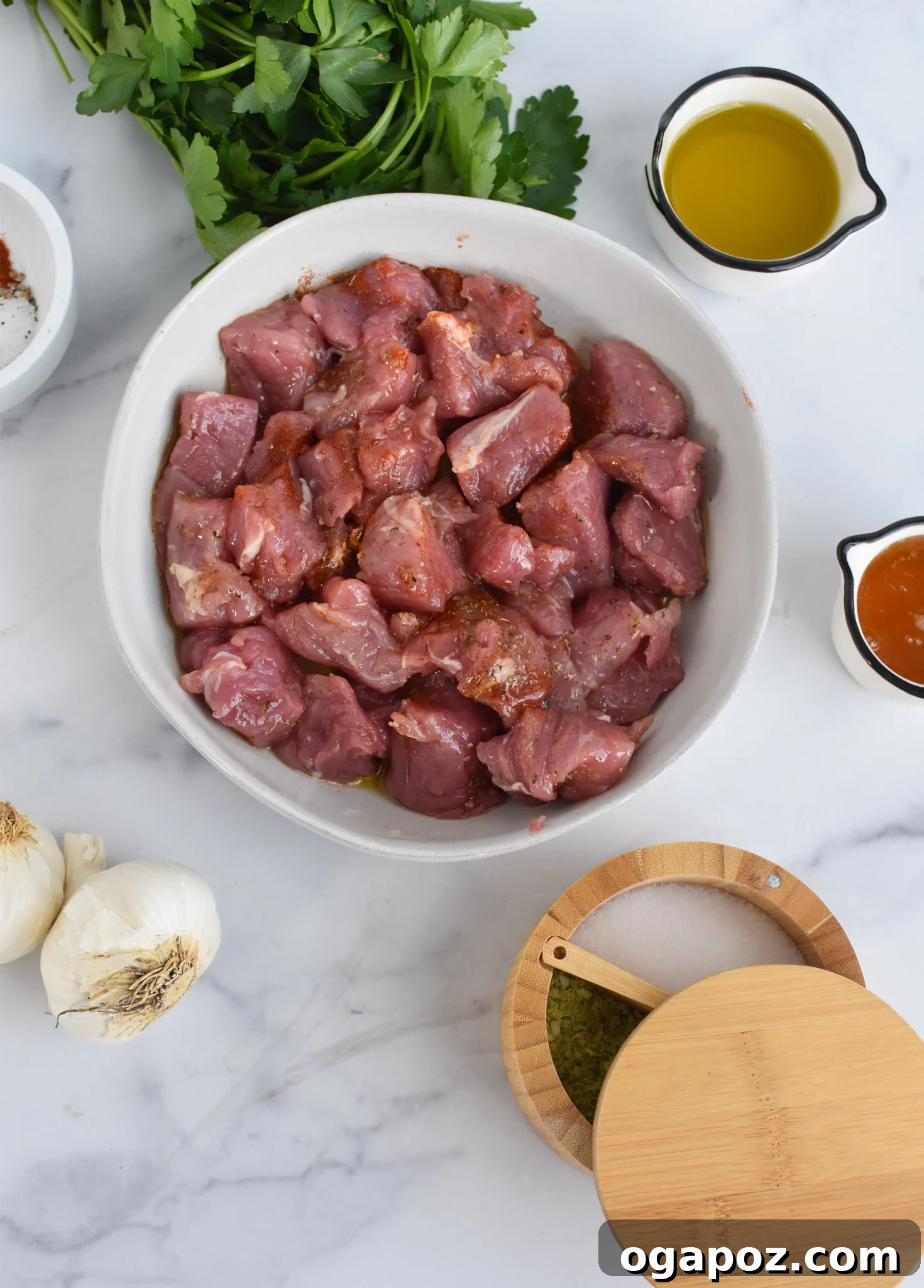
Begin by carefully placing the pork tenderloin on a clean, sturdy cutting board. Your first crucial step is to meticulously remove any visible silver skin. This thin, tough, silvery membrane is a connective tissue that, unfortunately, does not break down or become tender during the cooking process; its presence can make the pork unpleasantly chewy. Therefore, trimming it off is absolutely essential for achieving optimal tenderness. Once you have successfully removed the silver skin, proceed to cut the pork tenderloin into uniform 1-inch cubes. Strive for consistency in size, as this will ensure that all the pieces cook evenly and reach the desired doneness simultaneously.
Step 2: Season the Pork Cubes to Perfection
In a small, clean bowl, combine your fragrant Italian seasoning, vibrant paprika, precisely measured salt, and freshly ground black pepper. Mix these dry ingredients thoroughly to create a uniform and well-balanced spice blend. Next, generously sprinkle this aromatic mixture over all the pork cubes, taking care to ensure that all surfaces are adequately coated. Following this, drizzle the golden honey evenly over the seasoned pork. Finally, add the freshly minced garlic and toss everything together thoroughly. Use your hands or a spoon to mix the ingredients, ensuring that every single piece of pork is uniformly coated with the irresistible blend of honey, spices, and garlic. This meticulous coating guarantees that every bite will be bursting with an incredible depth of flavor.
Step 3: Expertly Sear the Pork in Cast Iron
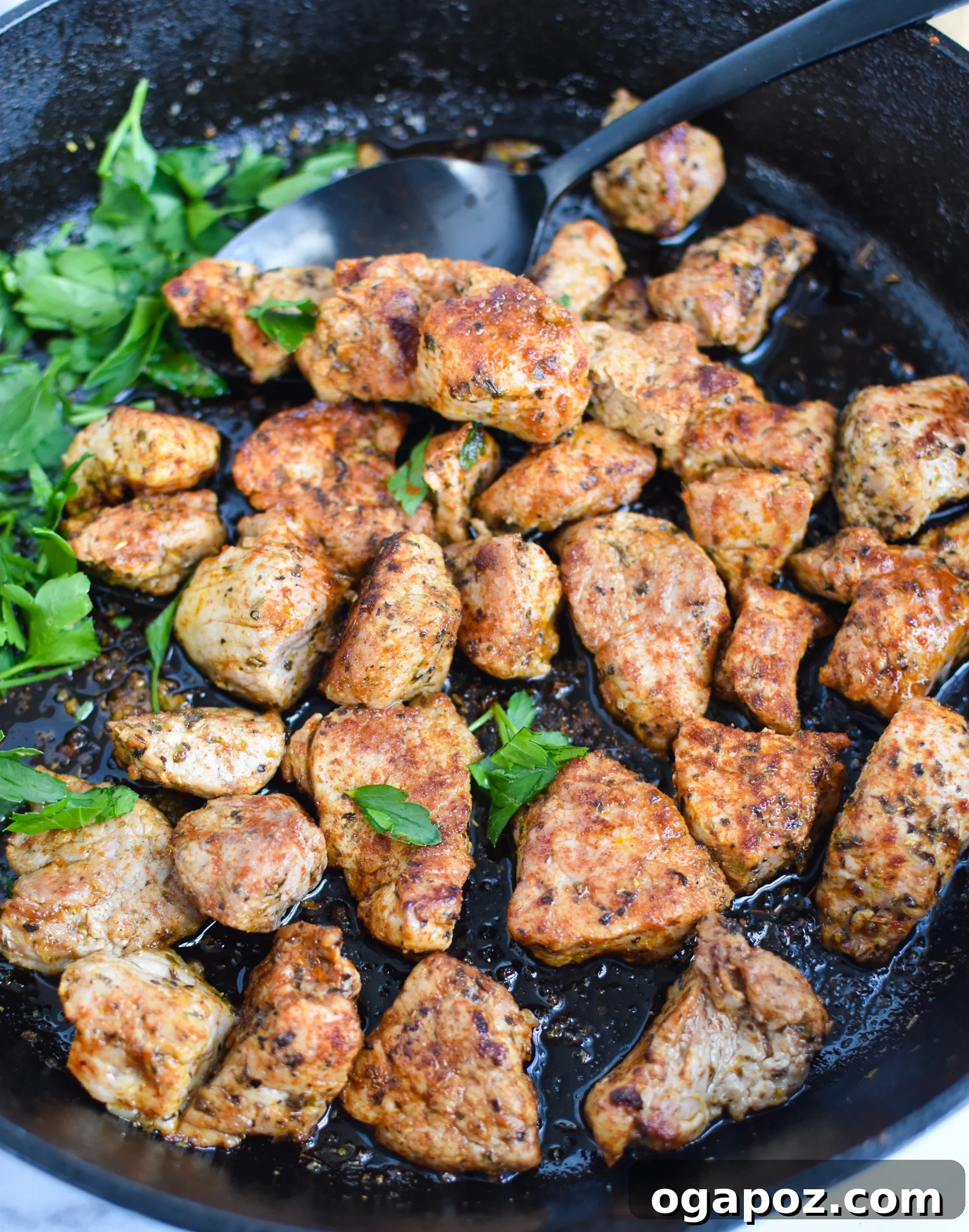
Heat the olive oil in a large, heavy cast-iron skillet (or a high-quality, heavy-bottomed non-stick skillet if a cast iron is not available) over medium-high heat. It is absolutely crucial for the skillet to be thoroughly hot, but not smoking excessively, before you add the pork. Once the oil begins to shimmer noticeably, carefully add the seasoned pork cubes to the pan, arranging them in a single, even layer. It is vital to avoid overcrowding the pan, as this will significantly lower the skillet’s temperature and prevent the pork from achieving a proper, desirable sear; if necessary, cook the pork in two or more batches to ensure optimal browning. Cook the pork for approximately 10-12 minutes in total, stirring occasionally and diligently flipping the pieces to ensure all sides develop that beautiful, enticing golden-brown crust. The pork is fully cooked and safe to consume when it reaches an internal temperature of 145 degrees F, as accurately measured with an instant-read meat thermometer inserted into the thickest part of a cube.
Step 4: Rest and Prepare for Serving
Once the pork has reached its desired internal temperature and boasts a fantastic, perfectly caramelized crust, immediately remove it from the heat source. Transfer the expertly cooked pork to a clean plate or cutting board and allow it to rest undisturbed for a crucial 5 minutes. This vital resting period is not to be skipped, as it allows the internal juices to redistribute evenly throughout the entire meat, resulting in pork that is unbelievably tender, moist, and succulent. After this essential resting phase, the pork is now ready to be enjoyed! It can be served immediately alongside your favorite complementary side dishes, or once cooled slightly, it can be gently stirred into the fresh orzo pasta salad for a complete and integrated meal. This delectable dish pairs wonderfully with roasted baby potatoes, creamy mashed potatoes, or even wholesome sweet potatoes for a heartier, more satisfying meal. Any remaining leftovers should be stored promptly in an airtight container in the refrigerator for up to 3-4 days to maintain freshness and safety.
What is the Ideal Internal Temperature for Pork Tenderloin: Ensuring Safety and Tenderness
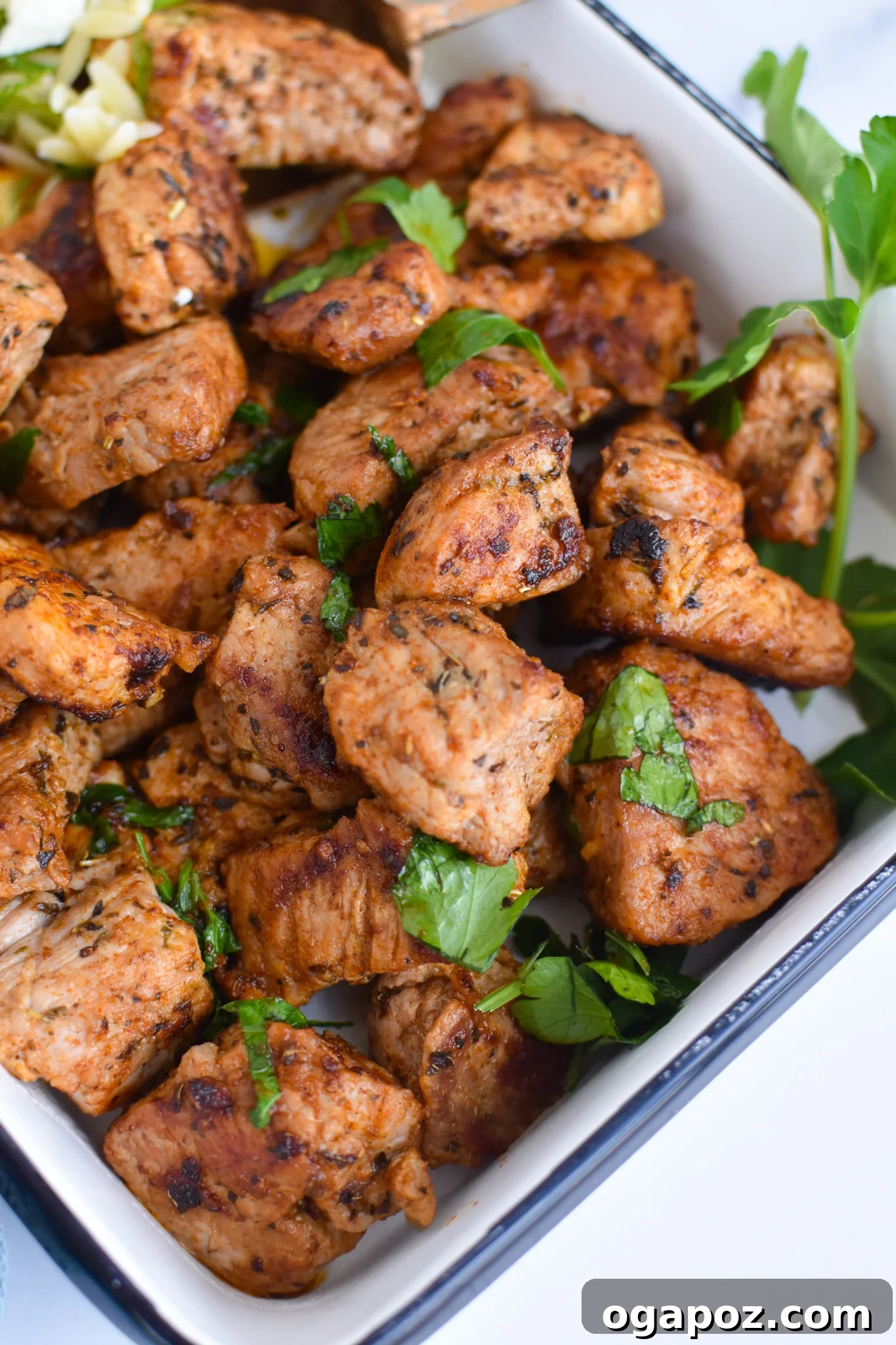
Achieving the perfect doneness for pork tenderloin is an essential aspect of cooking, vital for ensuring it is both safe to eat and delightfully tender. The United States Department of Agriculture (USDA) explicitly recommends cooking whole cuts of pork, which emphatically includes pork tenderloin, to a minimum internal temperature of 145 degrees Fahrenheit (equivalent to 63 degrees Celsius). When cooked to this precise temperature, the pork will characteristically exhibit a slight, appealing blush of pink in its very center. This subtle pink hue is not only perfectly safe to consume according to current guidelines but is also a clear indicator of a juicy, exceptionally tender, and flavorful result.
It is important to note that many individuals still mistakenly cling to the outdated belief that pork absolutely must be cooked until all traces of pink are completely gone, often out of an unfounded fear of undercooked meat. However, thanks to significant advancements in modern farming practices, pork is now considerably safer than in previous decades. Consequently, overcooking it to a dry, grayish state will inevitably diminish its natural flavor, compromise its desirable texture, and result in a less enjoyable eating experience. Always, without exception, utilize an instant-read meat thermometer, inserting it into the thickest part of the meat (avoiding any bone if present) to accurately gauge its internal temperature. Furthermore, an often-overlooked but crucial step is to allow the pork to rest for at least 3-5 minutes after it has been removed from the heat source. During this brief resting period, the internal temperature may subtly rise by a few additional degrees (a phenomenon known as carryover cooking), and more importantly, the invaluable juices will redistribute throughout the meat, rendering the pork even more succulent and tender.
Pork Loin vs. Pork Tenderloin: Understanding the Key Differences
While their names may sound strikingly similar, pork loin and pork tenderloin are, in fact, distinct cuts of meat that originate from different anatomical parts of the pig and are best suited for different culinary applications. Grasping these fundamental differences is absolutely crucial for selecting the appropriate cut for your specific recipe and, subsequently, achieving the most optimal and satisfying results in your cooking.
- Pork Tenderloin: This particular cut is characterized by its long, slender, and distinctly cylindrical shape, found along the pig’s backbone. It is exceptionally lean, boasts remarkable tenderness, and cooks notably quickly. Individual tenderloins typically weigh between 1 to 2 pounds. Due to its inherent leanness and delicate structure, it greatly benefits from rapid cooking methods such as searing, grilling, or roasting at relatively high temperatures, as expertly demonstrated in this cast iron recipe. These quick cooking techniques are essential to prevent it from becoming dry and tough.
- Pork Loin: In stark contrast, the pork loin (which is also commonly referred to as a loin roast or a center-cut pork roast) is a significantly larger, wider, and considerably thicker cut of meat. It is most frequently sold as a boneless roast but can also be purchased bone-in. A single pork loin can easily weigh anywhere from 2 to 5 pounds or even more. This cut typically features a more substantial fat cap on one side and can be noticeably less tender than the tenderloin if it is not cooked correctly. Pork loin is therefore much better suited for slower, more deliberate cooking methods such as traditional roasting, gentle slow cooking, or moist braising. These prolonged cooking processes effectively help to break down its connective tissues and render its fat, ultimately leading to a consistently moist, incredibly flavorful, and tender result.
Visually, the tenderloin is easily identifiable by its long, narrow, and somewhat uniform shape, whereas the loin is wide, much thicker, and often resembles a larger, more robust roast. Always take a moment to carefully double-check the label when purchasing pork to ensure you have procured the precise cut required for your recipe. Substituting one for the other without making significant adjustments to cooking times, temperatures, and methods can regrettably lead to disappointing and less-than-ideal culinary outcomes.
Explore more delightful pork creations from our kitchen, including our flavorful Pork Souvlaki Marinade, deliciously crispy BBQ Baked Pork Chops, the sweet and savory Easy Pineapple Pork Chops, rich French Onion Pork Chops, hearty Slow Cooker Pork Shoulder Roast, or the exotic Slow Cooker Pineapple Pork Loin.
Storage and Reheating Tips for Maximizing Flavor and Safety
Proper storage and diligent reheating practices are absolutely essential to maintaining both the delightful quality and the critical safety of your leftover Cast Iron Pork Tenderloin. Adhere to these comprehensive guidelines to ensure you can safely and deliciously enjoy your flavorful meal for several days to come:
- Optimal Storage: It is paramount to allow the cooked pork to cool completely to room temperature before transferring it to an airtight container. This cooling process should ideally take no more than two hours to prevent the growth of harmful bacteria. Once cooled and sealed, store the container securely in the refrigerator for a period of up to 3-4 days. If you have already combined the pork with the accompanying orzo salad, ensure that the entire salad is also stored in an airtight container and consumed within the same recommended timeframe. For more extended preservation, you have the option to freeze cooked pork tenderloin cubes for up to 2-3 months. To do so, place them in a freezer-safe bag or an appropriate freezer-safe container, ensuring minimal air exposure. When ready to enjoy, simply thaw the frozen pork overnight in the refrigerator before proceeding with reheating.
- Effective Reheating Methods:
- Microwave: For the quickest and most convenient reheating option, place the pork in a microwave-safe dish. Heat on medium power in short 30-second intervals, stirring the pork occasionally between each interval, until it is thoroughly warmed through. Exercise caution to avoid overcooking, as this can easily lead to the pork drying out.
- Stovetop: To expertly restore some of that delectable, crispy crust, reheat the pork in a clean skillet over medium heat. Add a tiny amount of olive oil or a splash of broth to the pan. Stir the pork frequently until it is heated through to your satisfaction.
- Oven: For reheating larger quantities or to more effectively prevent the pork from drying out, preheat your oven to a moderate 300°F (150°C). Place the pork in an oven-safe dish, add a tablespoon or two of broth or water to help maintain moisture, cover the dish securely with aluminum foil, and heat for approximately 10-15 minutes, or until the pork is thoroughly warmed through to the center.
Recipe Frequently Asked Questions: Essential Answers for Your Cast Iron Pork Tenderloin
- Why is using cast iron recommended for cooking pork tenderloin?
- Cast iron skillets are truly exceptional for cooking pork tenderloin because they possess an unparalleled ability to retain and distribute heat incredibly evenly across their entire surface. This crucial characteristic allows for the development of a superior, deep sear on the exterior of the pork, creating that coveted caramelized crust, while simultaneously ensuring that the inside remains wonderfully juicy and exquisitely tender. The cast iron’s consistent high heat effectively locks in both the natural flavors and the vital moisture, playing a significant role in preventing the meat from drying out during the cooking process.
- Is it necessary to marinate the pork for this recipe?
- Absolutely! While this particular recipe is specifically designed for rapid preparation, marinating the pork tenderloin is, without a doubt, an excellent strategy to infuse even more profound flavor and to further tenderize the meat. You have the flexibility to marinate it for as little as 30 minutes if you’re short on time, or for a more intense flavor development, you can extend the marinating period up to 4 hours in the refrigerator. A straightforward yet effective marinade, consisting of good quality olive oil, fresh lemon juice, minced garlic, and your favorite selection of herbs, works wonderfully, or you can certainly explore one of the creative variations suggested in the section above.
- What are the best techniques to prevent pork tenderloin from drying out?
- Several key factors contribute significantly to ensuring your pork tenderloin remains deliciously juicy: Firstly, and most importantly, avoid overcooking it! Always utilize a reliable instant-read meat thermometer to confirm that the pork reaches precisely 145°F (63°C) and no higher. Secondly, an often-underestimated but vital step is to allow the cooked pork to rest for a minimum of 5 minutes after it’s removed from the heat; this crucial resting period enables the internal juices to effectively redistribute throughout the meat. Thirdly, make a conscious effort to avoid piercing the meat with a fork during the cooking process, as this action can cause valuable, flavorful juices to escape. Finally, ensure your cast iron skillet is adequately and uniformly hot before you add the pork to achieve a rapid, effective sear that expertly seals in the moisture.
- What if I do not possess a cast iron skillet?
- While a robust cast iron skillet is undeniably ideal for achieving the perfect, crispy sear and consistent results, you can certainly still prepare this delicious recipe successfully in a heavy-bottomed stainless steel skillet or a high-quality non-stick skillet. The key is to ensure that your chosen pan is thoroughly heated before adding the pork. You may find that you need to subtly adjust the cooking times to achieve a similar level of browning and crust development as you would with cast iron, but delicious results are still very much attainable.
- Can I substitute other cuts of pork in this recipe?
- This specific recipe is meticulously designed and optimized for pork tenderloin, a cut that cooks quickly due to its inherent leanness and relatively small, uniform size. Other cuts of pork, such as thicker pork chops or a larger pork loin, would necessitate significantly different cooking times, temperatures, and potentially entirely different methods to achieve their optimal tenderness and proper doneness. While the aromatic seasoning blend might complement other pork cuts, it is important to anticipate distinct differences in texture and overall cooking duration if you choose to make a substitution.
More Pork Recipes to Explore and Enjoy
Pork
Easy Thai Pork Stir-Fry
Mediterranean
Pork Souvlaki with Tzatziki
Pork
How to Cook Pork Loin in the Slow Cooker
Pork
How to Bake Pork Chops in the Oven
Tried this recipe? We’d love to hear from you! Please leave a star rating and a comment below with your feedback. Don’t forget to subscribe to our newsletter for exclusive recipes and updates, or follow us on Facebook, Instagram, or Pinterest for the latest culinary inspirations.
Tap to rate the recipe
★★★★☆
(Based on 4.75 from 4 votes)
Cast Iron Pork Tenderloin Recipe
By Julia Jolliff
A quick and delicious Cast Iron Pork Tenderloin recipe cooked in a skillet on the stovetop, perfect for a flavorful meal.
Print Recipe
Prep Time: 15 mins
Cook Time: 20 mins
Total Time: 35 mins
Servings: 6
Ingredients
For the Pork:
- 2 to 2 1/2 pounds pork tenderloin, silver skin trimmed, cut into 1-inch cubes
- 2 tablespoons olive oil
- 1 teaspoon Italian seasoning
- 1 teaspoon paprika
- 3/4 teaspoon salt
- 1/4 teaspoon black pepper
- 2 teaspoons honey
- 3 garlic cloves, minced
For the Orzo Salad:
- 8 ounces orzo pasta (consider whole wheat for a healthier option), cooked according to package directions
- 2 cups cherry tomatoes, halved
- 1/2 English cucumber, diced
- 1/2 cup crumbled feta cheese
- 1 cup of fresh arugula
- 1/2 cup fresh basil leaves, chopped
- 1/4 cup fresh mint leaves, chopped
- 1/4 cup fresh parsley, chopped
- 2 tablespoons fresh dill, chopped
For the Orzo Salad Dressing:
- 1/3 cup red wine vinegar
- Juice of 1 large lemon
- 1 teaspoon honey
- 1/2 teaspoon salt
- 1/8 teaspoon freshly ground black pepper
- 2/3 cup extra-virgin olive oil
Instructions
For the Pork:
- Prepare Pork: Place the pork tenderloin on a clean cutting board. Carefully remove any silver skin, then cut the pork into uniform 1-inch cubes.
- Season Pork: In a small bowl, combine Italian seasoning, paprika, 3/4 teaspoon salt, and 1/4 teaspoon black pepper. Sprinkle this mixture evenly over the pork cubes. Drizzle 2 teaspoons of honey over the pork and then mix in the minced garlic, ensuring all pieces are well-coated.
- Heat Skillet: Heat 2 tablespoons of olive oil in a large cast-iron or heavy non-stick skillet over medium-high heat until the oil is shimmering.
- Sear Pork: Add the seasoned pork cubes to the hot skillet in a single layer. Cook for 10-12 minutes, stirring occasionally and flipping the pork over, until it reaches an internal temperature of 145 degrees F with an instant-read thermometer and develops a beautiful crust on all sides. Cook in batches if necessary to avoid overcrowding the pan.
- Rest Pork: Once the pork is cooked, remove it from the skillet and let it rest on a plate for 5 minutes. This allows the juices to redistribute, resulting in tender and succulent pork.
- Serve: Once the pork has cooled slightly, you can stir it into the prepared orzo pasta salad and serve immediately, or alongside your preferred side dishes.
For the Orzo Salad:
- Cook Orzo: Cook the orzo pasta according to its package directions. Once cooked, drain the pasta and rinse it under cold water until it is completely cooled.
- Combine Salad Ingredients: In a large mixing bowl, combine the cooled orzo, halved cherry tomatoes, diced English cucumber, crumbled feta cheese, and fresh arugula. Gently stir these ingredients together to combine them evenly.
- Prepare Dressing: In a mason jar or a small bowl, thoroughly whisk together the red wine vinegar, fresh lemon juice, 1 teaspoon of honey, 1/2 teaspoon of salt, 1/8 teaspoon of freshly ground black pepper, and 2/3 cup of extra-virgin olive oil until the mixture is well emulsified.
- Dress Salad: Pour approximately half of the prepared dressing over the orzo and vegetable mixture, and gently toss to coat everything evenly. Add the chopped fresh basil, mint, dill, and parsley to the salad and toss again to distribute the herbs throughout.
- Serve or Store: Taste the salad and add more dressing if you find it needs it. If you are serving immediately, incorporate the rested pork cubes into the salad. If you are preparing the salad ahead of time, refrigerate the remaining half of the dressing separately and add it just before serving for optimal freshness and vibrant flavor. Store the salad and pork, if possible, in separate airtight containers in the refrigerator for up to 3-4 days.
Nutrition Information
Nutrition information is automatically calculated and should only be used as an approximation. Values may vary based on specific ingredients and preparation methods.
- Calories: 693 kcal
- Carbohydrates: 38 g
- Protein: 47 g
- Fat: 39 g
- Saturated Fat: 8 g
- Polyunsaturated Fat: 4 g
- Monounsaturated Fat: 24 g
- Trans Fat: 0.1 g
- Cholesterol: 134 mg
- Sodium: 739 mg
- Potassium: 1075 mg
- Fiber: 3 g
- Sugar: 6 g
- Vitamin A: 985 IU
- Vitamin C: 27 mg
- Calcium: 123 mg
- Iron: 4 mg
Tried this delicious recipe? We’d love to see your creations! Mention @acedarspoon or tag #acedarspoon on social media!