
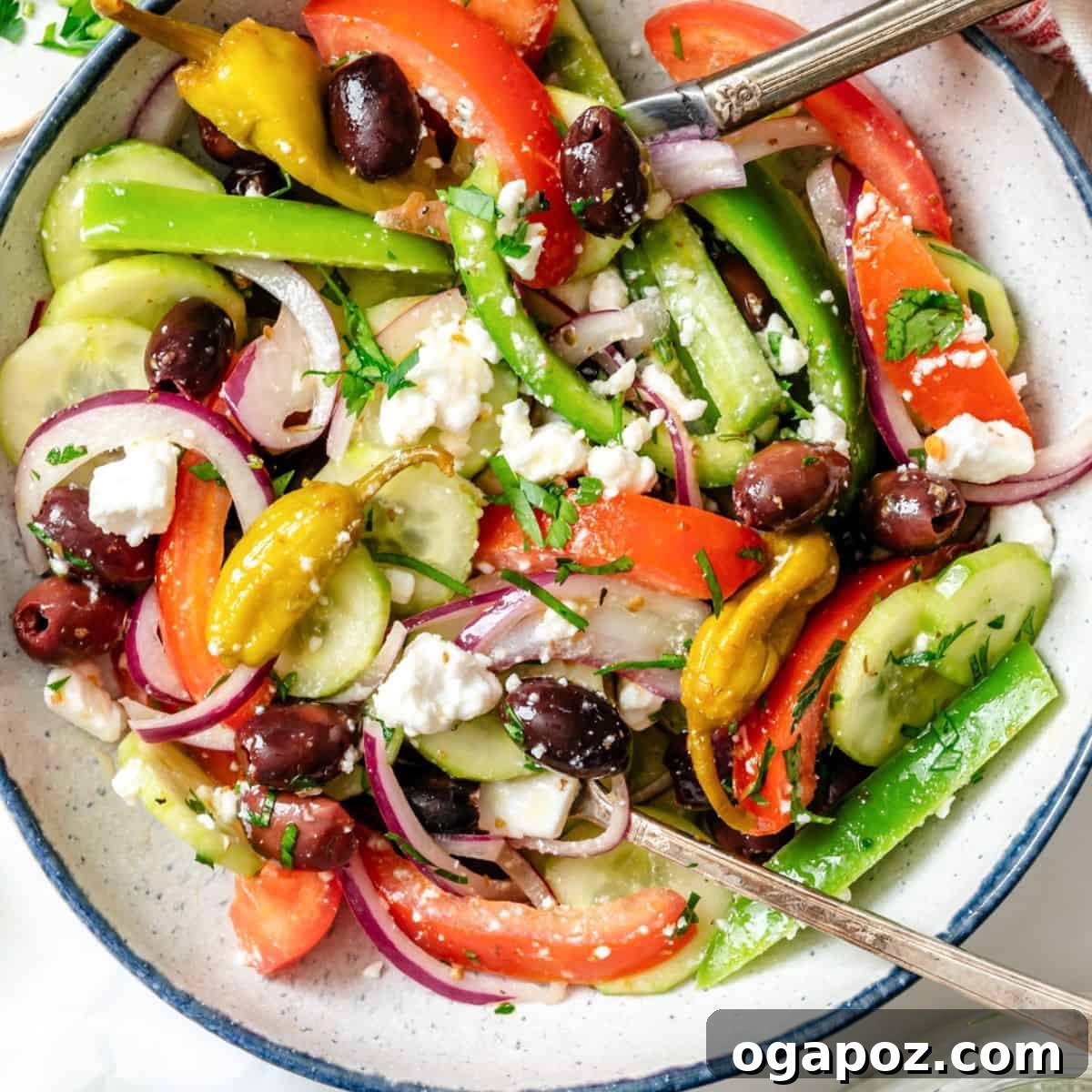
Embark on a culinary journey to the sun-drenched shores of Greece with this effortlessly delicious and vibrantly fresh **Greek Village Salad**, traditionally known as Horiatiki Salata. This isn’t just a side dish; it’s an experience, a celebration of simple, wholesome ingredients coming together in perfect harmony. Imagine crisp cucumbers, juicy ripe tomatoes, pungent red onion, vibrant green bell peppers, briny Kalamata olives, and a generous block of creamy feta cheese, all bathed in a light, zesty Greek-style dressing. It’s a taste of the Mediterranean, a staple that embodies healthy eating and the joy of sharing good food.
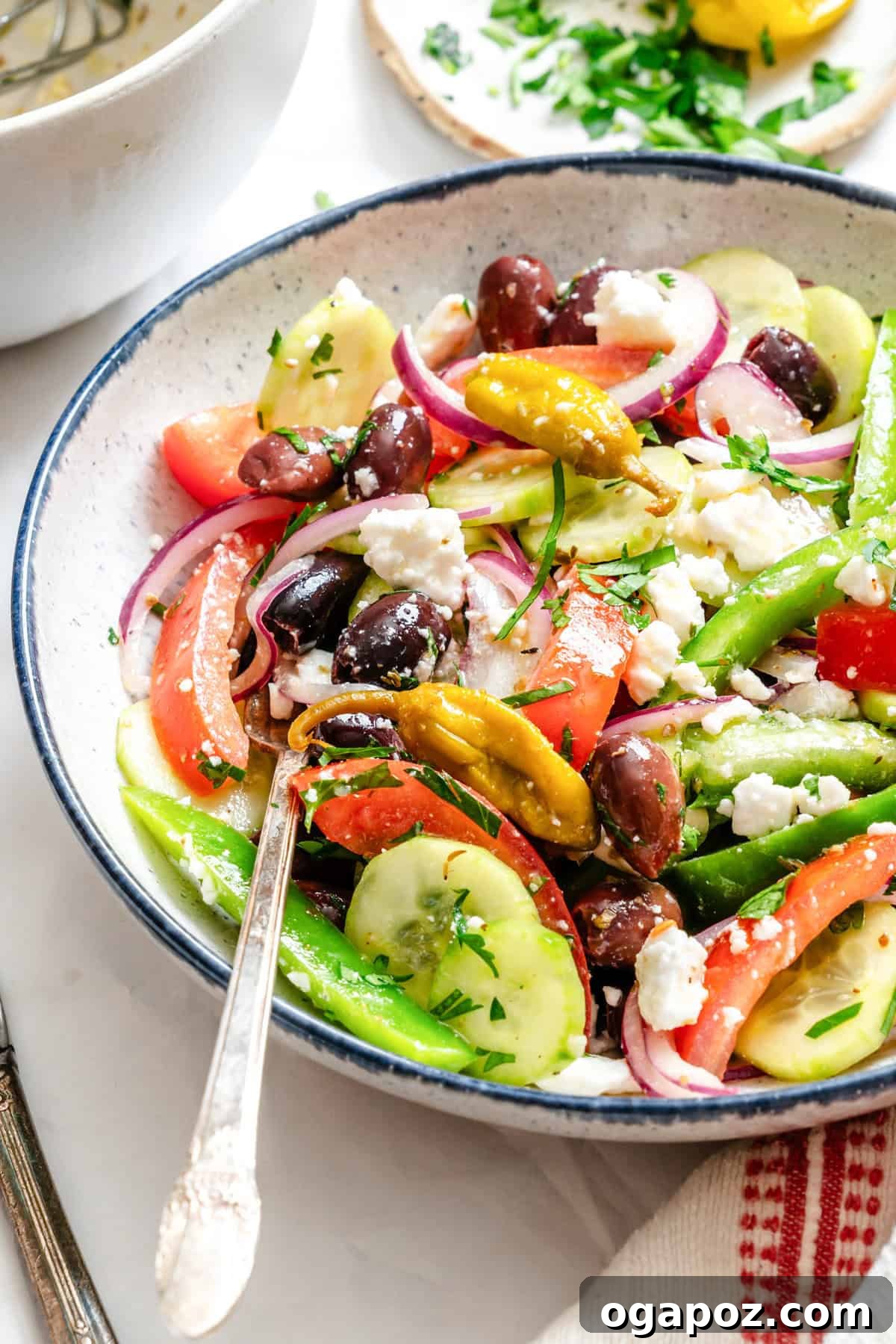
For those who appreciate the fresh, vibrant flavors of Mediterranean cuisine, this authentic Greek salad will quickly become a favorite. A few years ago, during a memorable trip to Greece, my partner Mike and I discovered the unparalleled charm of the Horiatiki salad. It quickly became our go-to dish, appearing on nearly every table we dined at. More than just its exquisite taste, what truly captivated us was the underlying philosophy of Greek hospitality – Philoxenia – where sharing abundant meals with loved ones is deeply cherished. This salad, often passed around family-style, perfectly encapsulates that spirit of connection and generosity.
The magic of this salad lies in its simplicity and the quality of its components. Each bite offers a delightful contrast: the refreshing crunch of vegetables like sweet tomatoes and crisp cucumbers, the rich tang of authentic feta cheese, and the salty burst of Kalamata olives and subtly spicy pepperoncinis. It’s a symphony of textures and flavors that awakens the palate, making it an ideal companion to grilled meats or a satisfying light meal on its own when topped with protein like grilled chicken or shrimp.
The dressing for this traditional Greek village salad is remarkably easy to prepare and incredibly versatile, elevating not just this dish but almost any other salad it graces. Made with high-quality extra virgin olive oil, which imparts a distinct grassy, nutty, and fresh character, it’s perfectly balanced with bright lemon juice, aromatic dried oregano, and fresh parsley. This vibrant dressing truly is the perfect finishing touch, weaving all the fresh flavors together. Feel free to prepare a larger batch and store it in your refrigerator to effortlessly enhance other meals throughout the week.
My passion for Greek-style food extends beyond salads. If you’re looking to explore more delicious Mediterranean recipes, I highly recommend trying some of my other favorites, such as Greek Baked Tilapia, Pan Seared Greek Salmon, Greek Lemon Chicken, Greek Marinated Chicken with Tzatziki Sauce, and these flavorful Greek Meatballs. Each recipe brings a piece of Greek culinary tradition into your home.
Why You’ll Fall in Love with This Greek Village Salad
This simple Greek Village Salad isn’t just a recipe; it’s a testament to the beauty of fresh, wholesome ingredients. Here’s why it consistently earns rave reviews and becomes a household favorite:
- Effortless Preparation: Forget about complex cooking techniques or lengthy ingredient lists. This salad is a breeze to assemble, requiring no cooking whatsoever. In mere minutes, you can transform fresh, garden-picked or farmer’s market vegetables into a vibrant, gourmet-quality meal. It’s the perfect solution for busy weeknights or impromptu gatherings when you crave something nutritious and delicious without the fuss.
- Incredible Versatility: Whether you’re planning a light lunch, a refreshing dinner, or a vibrant side dish for a larger feast, this authentic Greek salad adapts beautifully. It pairs wonderfully with grilled seafood, chicken, lamb, or a simple side of warm pita bread. Its refreshing qualities make it particularly ideal for warm summer months, bringing a burst of coolness and flavor to any table.
- Easily Adaptable to Your Taste: One of the best aspects of this recipe is its flexibility. Don’t like a particular ingredient? Simply leave it out! Want to add something extra? Go for it! This salad encourages creativity, allowing you to tailor it to your personal preferences or dietary needs. It’s a forgiving recipe that always turns out delicious, making it perfect for experimenting with different additions.
- Health Benefits Galore: Rich in fresh vegetables, healthy fats from olive oil, and protein from feta, this salad is a powerhouse of nutrients. It aligns perfectly with the principles of the Mediterranean diet, known for promoting heart health, longevity, and overall well-being. Eating deliciously has never been so good for you!
- A True Taste of Greece: Beyond its ingredients, this salad embodies the essence of Greek culinary tradition. It’s rustic, honest, and brimming with the flavors that define Greek cuisine – fresh herbs, tangy cheese, and sun-ripened produce. Each forkful transports you to a seaside taverna, making it an authentic and memorable dish.

Essential Ingredients for Your Authentic Greek Village Salad
Crafting the perfect Greek Village Salad starts with selecting the freshest, highest-quality ingredients. The beauty of this dish lies in its simplicity, allowing each component to shine. Below is a detailed guide to the key ingredients you’ll need, along with tips for selection and potential substitutions.
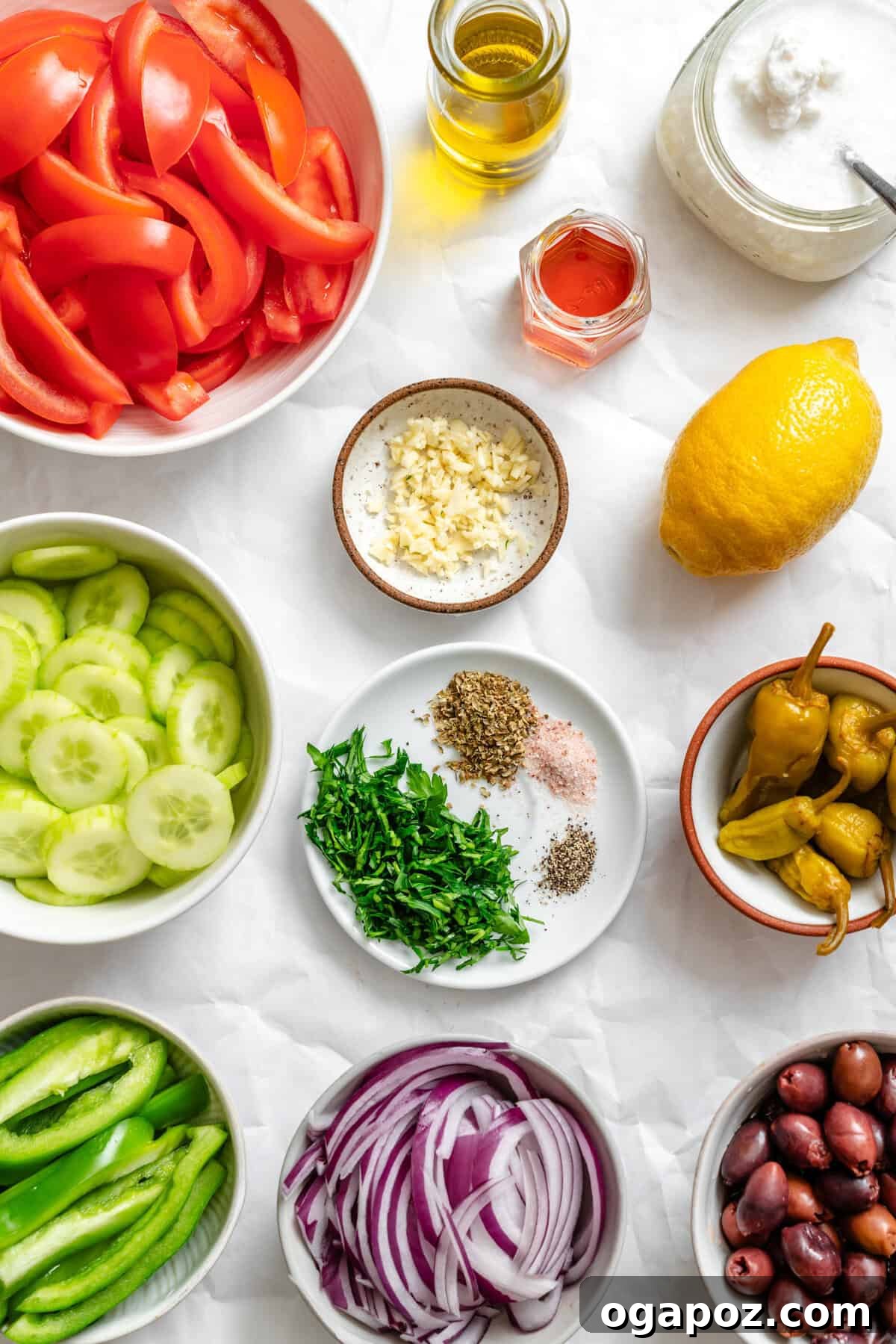
For precise measurements and detailed instructions, please refer to the comprehensive recipe card provided at the end of this article.
For the Vibrant Salad:
- Cucumber: I highly recommend using crisp English cucumbers for their firm texture and minimal seeds, which make them ideal for salads. If English cucumbers aren’t available, a regular garden cucumber will work beautifully after peeling and deseeding. Look for firm, bright green cucumbers without soft spots.
- Tomatoes: The star of any Greek salad! Choose four large, ripe, vine-ripened tomatoes and cut them into hearty wedges. Their natural sweetness and juiciness are paramount. If cherry or grape tomatoes are in season, they make an excellent alternative, simply halved for bite-sized bursts of flavor.
- Red Onion: A thinly sliced red onion adds a mild, piquant flavor that complements the other ingredients without overpowering them. For an even milder onion flavor, consider using finely sliced shallots. To reduce any harshness, you can soak the sliced red onion in cold water for 10-15 minutes before adding to the salad.
- Bell Pepper: Traditionally, a green bell pepper is used in Horiatiki for its slightly bitter, fresh crunch. However, feel free to swap this for any color bell pepper you prefer. A red bell pepper, for instance, will lend a sweeter note and a vibrant splash of color.
- Olives: Kalamata olives are non-negotiable for an authentic Greek flavor profile. Their rich, fruity, and briny taste is incomparable. Always opt for pitted Kalamata olives for ease of eating. While other olives like green olives can be substituted, they won’t quite capture the same depth of flavor.
- Feta Cheese: For the ultimate creamy and salty experience, seek out feta cheese sold in brine. Brands like the one found at Trader Joe’s are excellent. Feta in brine retains its moisture and authentic crumbly texture better than pre-crumbled varieties. When possible, look for genuine Greek feta cheese, which offers the best flavor and texture. Nothing elevates a Greek salad quite like a generous portion of salty, tangy feta!
- Pepperoncinis: These pickled mild chili peppers add a wonderful tang and a subtle hint of heat that brightens the entire salad. You can buy them whole or pre-sliced, depending on your preference. Their slightly sweet and acidic profile provides a fantastic counterpoint to the rich feta and olives.
For the Zesty Greek Salad Dressing:
The dressing ties all the wonderful flavors together. It’s simple, yet impactful.
- Lemon: Freshly squeezed lemon juice is paramount for the brightest, most vibrant flavor in your dressing. While bottled lemon juice can be used in a pinch, fresh is always superior for its aromatic qualities and natural tang.
- Extra Virgin Olive Oil: This is the backbone of any good Greek dressing. Always opt for high-quality extra virgin olive oil. Its deep, fruity, and sometimes peppery notes add richness and authentic Mediterranean character. A good olive oil makes all the difference!
- Vinegar: Red wine vinegar is the traditional choice, offering a robust and slightly sweet acidity. However, white wine vinegar or sherry vinegar can be excellent alternatives, each contributing its own subtle complexity.
- Garlic: Freshly minced garlic cloves are essential for infusing the dressing with a pungent, aromatic kick. Avoid garlic powder if possible, as fresh garlic provides a much more vibrant and authentic taste.
- Herbs: Dried oregano (preferably Greek oregano for its potent flavor) is a must-have, lending its earthy, aromatic essence. Fresh parsley, finely chopped, adds a burst of freshness and a beautiful green hue. These herbs are key to the salad’s distinctive Mediterranean profile.
- Salt & Pepper: Simple sea salt and freshly ground black pepper are used to season the dressing to perfection, enhancing all the other flavors.
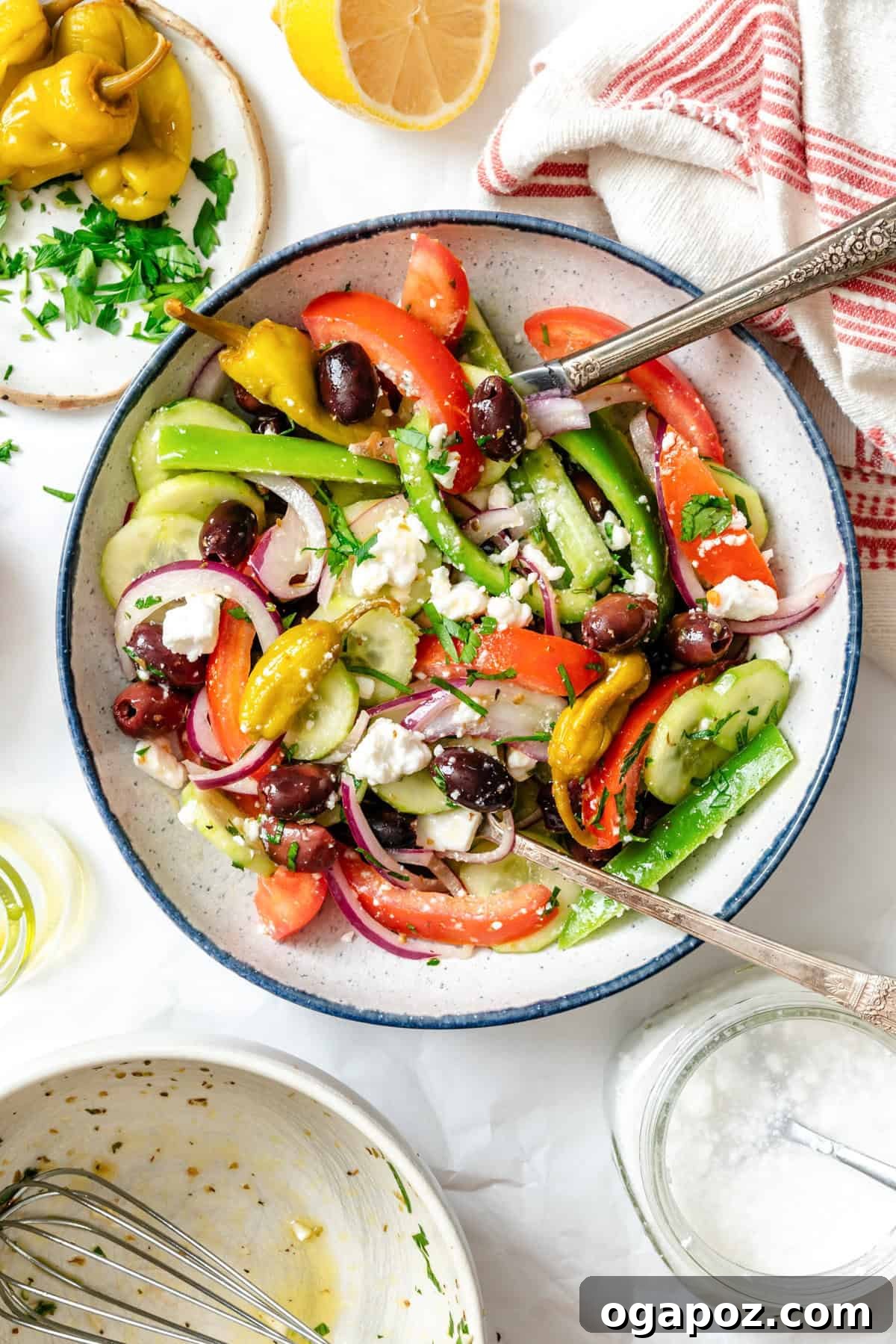
Exciting Recipe Variations to Customize Your Greek Salad
While the classic Greek Village Salad is perfect as is, it’s also wonderfully adaptable. Don’t hesitate to personalize it with these delicious additions and substitutions:
- Add Crunch with Nuts & Seeds: For an extra layer of texture and nutty flavor, sprinkle in some toasted pine nuts, slivered almonds, sunflower seeds, or pumpkin seeds just before serving. These additions provide a delightful contrast to the soft vegetables and creamy feta.
- Experiment with Olives: While Kalamata olives are traditional, you can certainly experiment with other varieties. A mix of different black and green olives can add complexity and visual appeal. Just ensure they are pitted for convenience.
- Boost Fresh Herb Flavor: For an intense burst of fresh aroma, generously scatter extra freshly chopped parsley, fragrant fresh dill, or cooling fresh mint over the salad just before serving. These herbs elevate the overall freshness and bright character of the dish.
- Introduce Protein with Pulses: Transform this salad into a more substantial meal by adding cooked chickpeas (garbanzo beans) or cannellini (white) beans. They provide excellent plant-based protein and fiber, making the salad even more filling and nutritious.
- Hearty Meat Additions: Turn your Greek salad into a robust main course by topping it with your favorite grilled meats. Slices of perfectly grilled chicken breast, tender lamb skewers, savory pork tenderloin, or even thinly sliced beef work wonderfully. The smoky flavor from the grill beautifully complements the fresh salad.
- Delicious Seafood Options: For a lighter but equally satisfying protein boost, consider adding pan-fried shrimp, perfectly seared tuna steak, or flaky grilled salmon. Even a can of high-quality drained tuna, flaked over the top, can create a quick and tasty meal.
- Add Avocado: For an extra creamy texture and healthy fats, diced avocado can be a fantastic addition, especially if you’re looking to make the salad more substantial.
- Spice it Up: If you enjoy a bit more heat, a pinch of red pepper flakes in the dressing or a few extra thinly sliced chili peppers can add an exciting kick.
- Roasted Vegetables: While not traditional, adding some cooled roasted vegetables like zucchini, eggplant, or cherry tomatoes can introduce a different depth of flavor and texture.
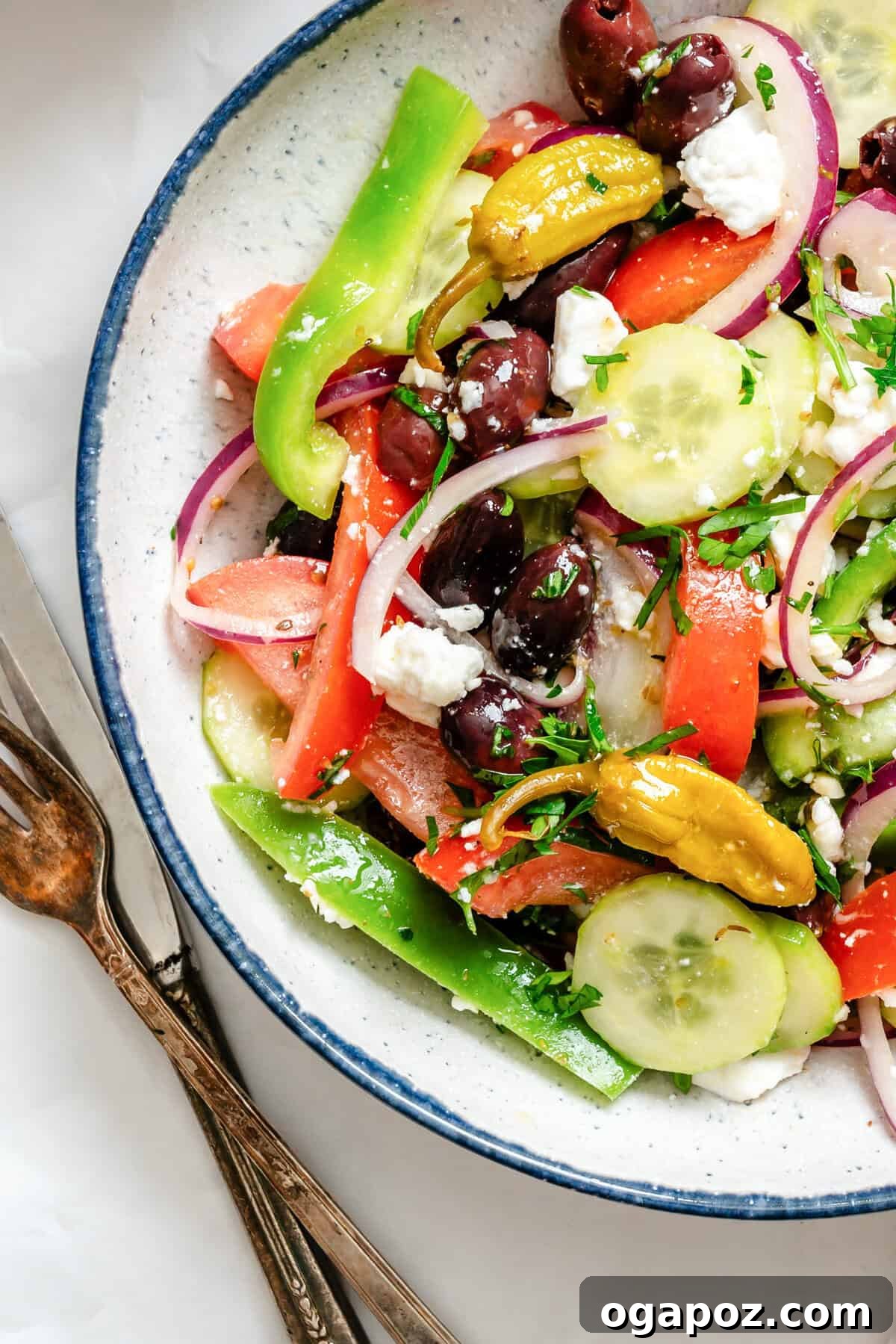
How to Prepare Your Perfect Greek Village Salad
Creating this delicious Greek Village Salad is straightforward and quick, making it an ideal choice for any meal. Follow these simple steps for a refreshing and flavorful experience.
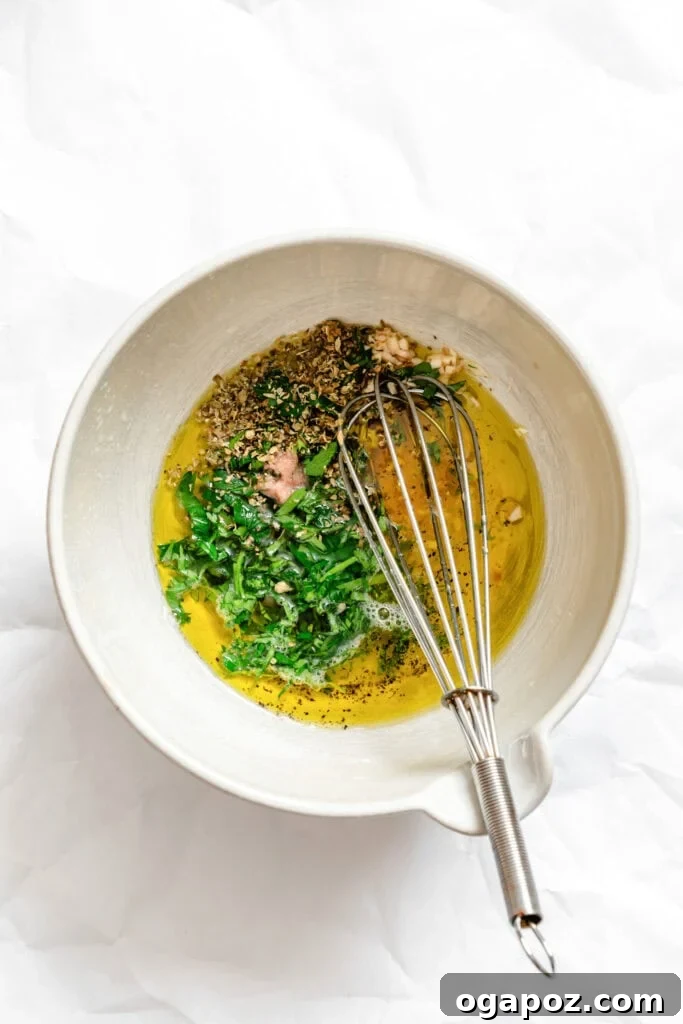
Step 1: Whisk Together the Zesty Dressing
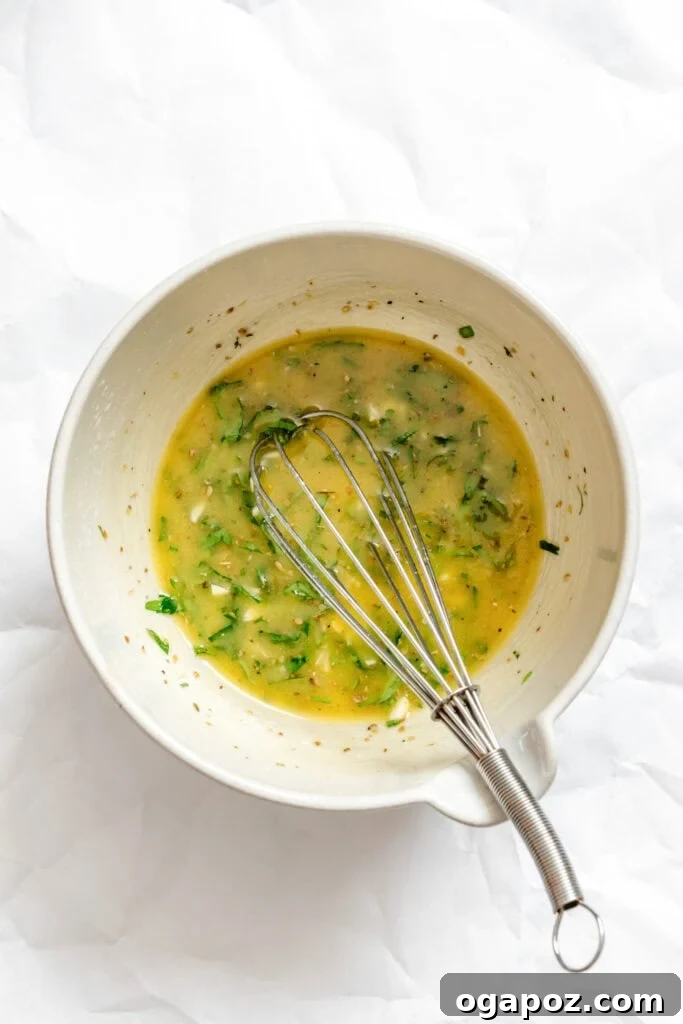
Begin by preparing the vibrant dressing that will infuse your salad with authentic Greek flavors. In a medium-sized mixing bowl, or conveniently in a large mason jar for easy shaking, combine the freshly squeezed lemon juice, rich extra virgin olive oil, tangy red wine vinegar, finely minced garlic, earthy dried oregano, and fresh chopped parsley. Whisk vigorously or shake well until all ingredients are thoroughly combined and emulsified. Taste and season generously with salt and freshly ground black pepper to your preference. Set the dressing aside, allowing the flavors to meld while you prepare the salad components.
Step 2: Assemble the Fresh Salad Components
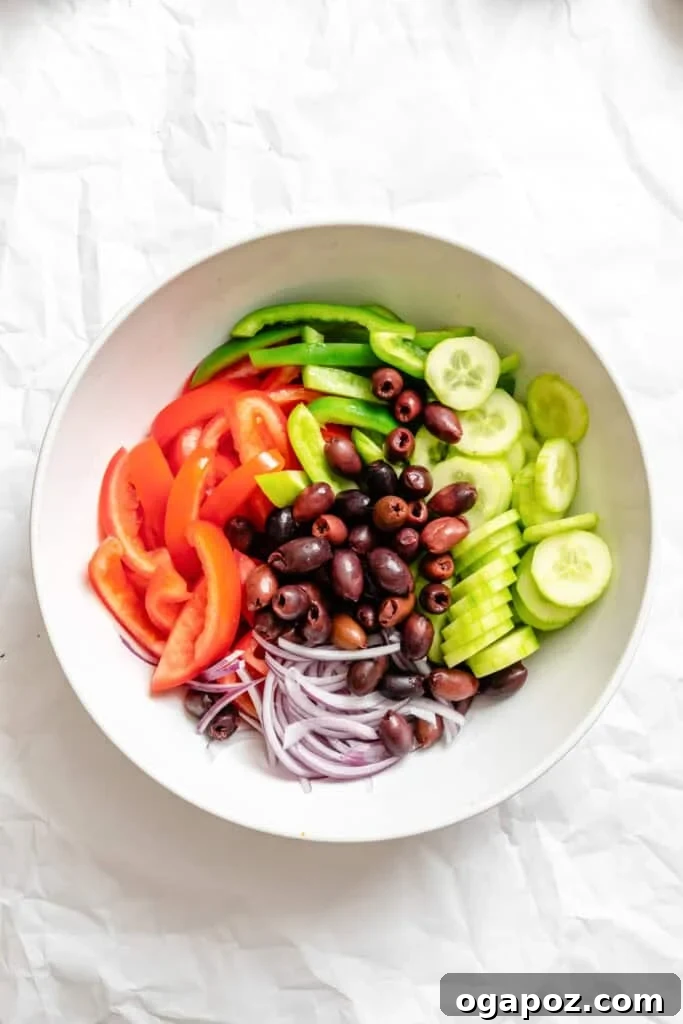
Next, gather your freshly prepared vegetables. In a large mixing bowl, combine the sliced crisp cucumber, juicy tomato wedges, thinly sliced red onion, vibrant green bell pepper strips, and the briny Kalamata olives. Gently toss these colorful ingredients together to ensure an even distribution. The goal here is to keep the vegetables chunky and rustic, true to the “village” style of this salad.
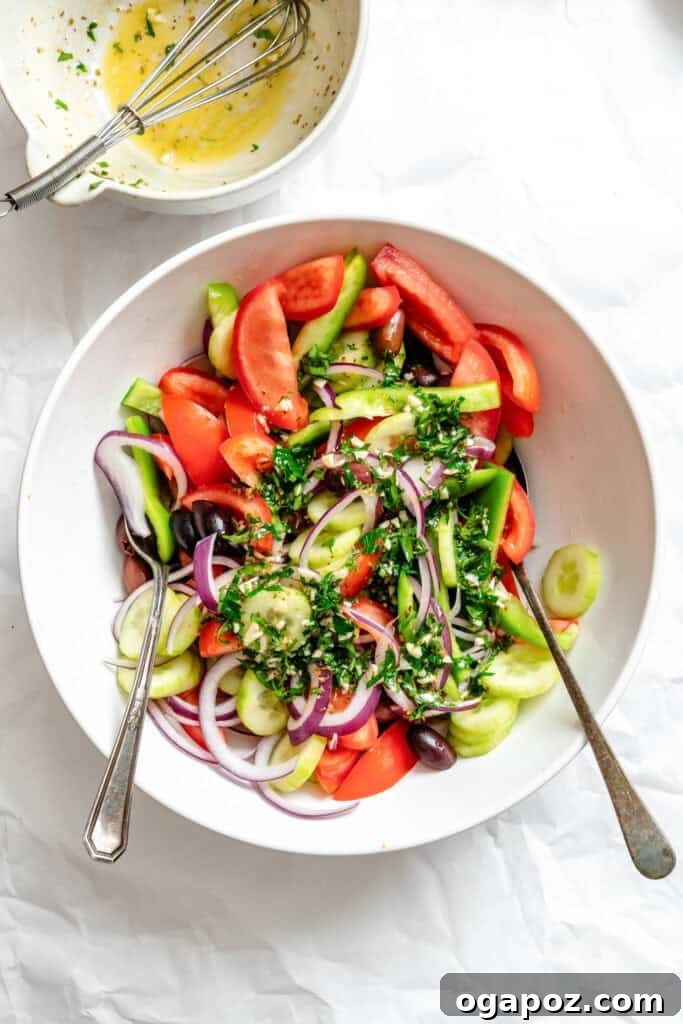
Step 3: Dress, Garnish, and Serve Immediately
Now, it’s time to bring everything together. Gently drizzle the prepared Greek dressing over the assembled vegetables. Toss lightly to ensure all the fresh components are beautifully coated with the flavorful dressing. This step is about integrating the flavors without over-mixing. Finally, crown your salad with generous crumbles or a whole block of authentic feta cheese and scatter the tangy pepperoncinis over the top. Serve your magnificent Greek Village Salad immediately to enjoy its peak freshness and vibrant flavors. If not serving right away, you can refrigerate it in an airtight container for up to 4 days, though the vegetables are best when served fresh.
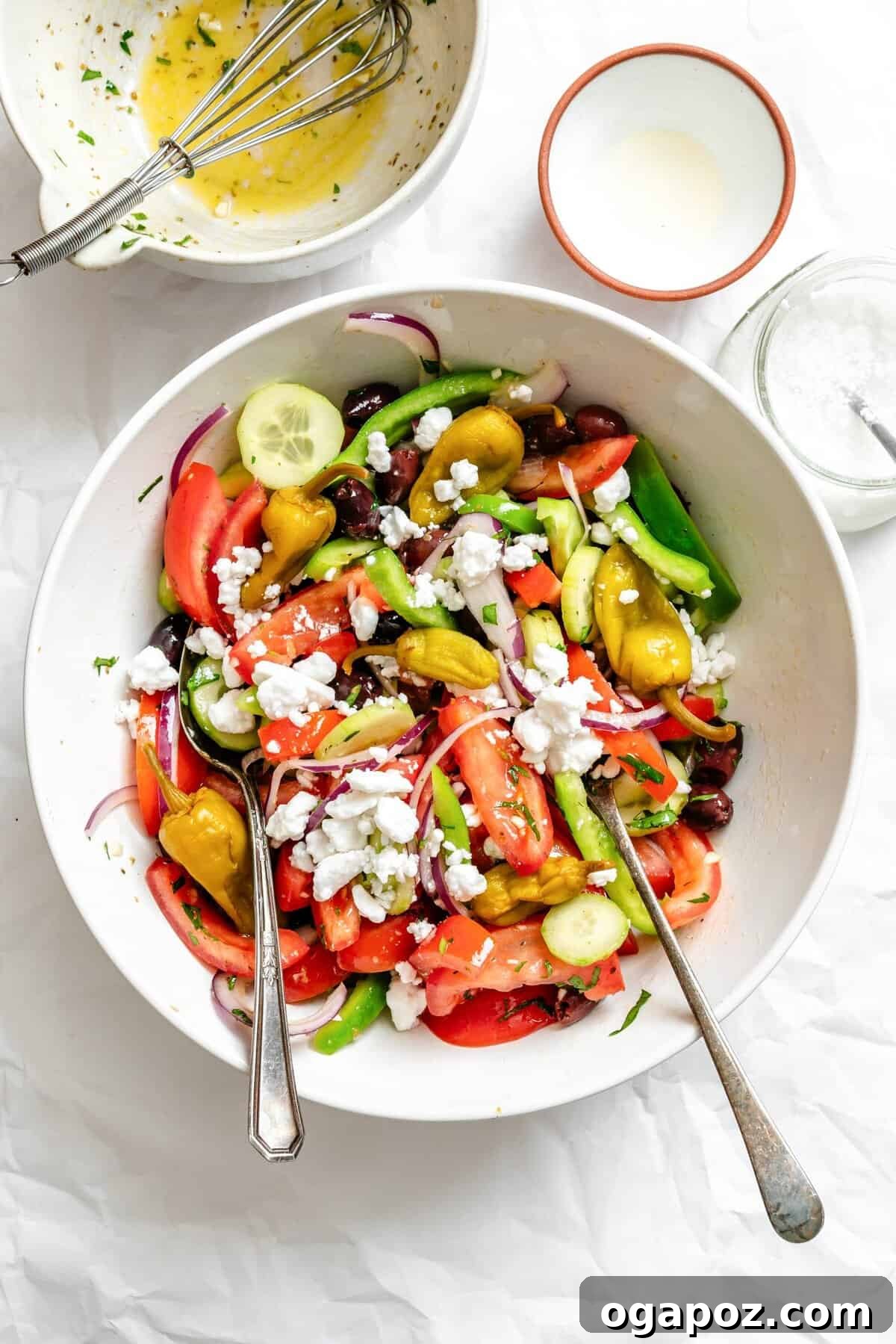
Expert Storage Tips for Your Greek Village Salad
To keep your Greek Village Salad fresh and delicious for as long as possible, proper storage is key. Once dressed, the salad is best enjoyed immediately to preserve the crispness of the vegetables. However, if you have leftovers or are preparing ahead, here are some tips:
- Refrigeration: Store any leftover salad in an airtight container in the refrigerator for up to 4 days. While the vegetables may soften slightly over time, the flavors will continue to meld beautifully.
- Redistribute Dressing: Before serving refrigerated salad, give it a gentle stir to redistribute the dressing, which may have settled at the bottom. This ensures every bite is equally flavorful.
- Meal Prep Tip: For optimal freshness, if you plan to make the salad ahead for meal prep, store the dressing separately. Combine the dressing with the vegetables just before serving to maintain the best texture.
- Feta Preservation: If using a block of feta, you can add it just before serving to prevent it from soaking up too much dressing and becoming overly soft.
Frequently Asked Questions About Greek Village Salad
A truly traditional Greek Village Salad, or Horiatiki, is a celebration of fresh, rustic ingredients. It typically features chunky pieces of ripe cucumber, sweet tomatoes (often cut into large wedges), thinly sliced red onion, vibrant green bell pepper, briny Kalamata olives, and a generous block of authentic feta cheese placed on top, rather than crumbled throughout. It is dressed simply with good quality extra virgin olive oil and a splash of red wine vinegar, seasoned with dried oregano, salt, and black pepper. Notably, it does not include lettuce, a common misconception for non-traditional “Greek” salads found outside of Greece.
The dressing for an authentic Greek salad is minimalist yet incredibly flavorful, focusing on high-quality ingredients. It usually consists of superior extra virgin olive oil, freshly squeezed lemon juice (or red wine vinegar), finely minced garlic, and dried oregano. Salt and freshly ground black pepper are used to taste. Sometimes, a touch of fresh parsley or even a hint of mint can be added for extra aromatic depth, creating a simple yet powerful vinaigrette that perfectly complements the fresh vegetables and cheese.
The Greek village salad, or horiatiki (χωριάτικη σαλάτα), is a dish deeply rooted in Greek culinary tradition and a symbol of the country’s agricultural heritage. Its history reflects the simplicity of rural life and the Mediterranean region’s emphasis on fresh, seasonal ingredients. It was originally a practical and hearty meal for farmers and villagers, made with whatever fresh produce was readily available from their gardens during the warm summer months, along with pantry staples like olives and feta. The absence of lettuce is key, as lettuce was not a common garden crop in traditional Greek villages. It speaks to a time when food was simple, wholesome, and directly from the land, embodying the essence of Greek peasant cuisine.
Absolutely! The Greek Village Salad is a cornerstone of the renowned Mediterranean diet, widely regarded as one of the healthiest eating patterns in the world. It is packed with nutrient-dense fresh vegetables, providing essential vitamins, minerals, and fiber. The extra virgin olive oil contributes healthy monounsaturated fats, beneficial for heart health. Feta cheese offers protein and calcium. When enjoyed as part of a balanced diet, it supports overall well-being, helps with weight management, and can reduce the risk of chronic diseases.
Yes, you can easily adapt this Greek Village Salad to be vegan. The primary non-vegan ingredient is the feta cheese. Simply omit the feta, or substitute it with a high-quality plant-based feta alternative. The rest of the ingredients – fresh vegetables, olives, and the olive oil-based dressing – are naturally vegan-friendly, ensuring a delicious and satisfying plant-based meal.
Discover More Greek-Inspired Recipes
Salads
Greek Chickpea Salad
Mediterranean
Maroulosalata (Greek Lettuce Salad)
Vegetarian
Greek Orzo Pasta Salad
Mediterranean
Greek Quinoa Salad
Tried this recipe? Share your thoughts by leaving a comment below! Stay connected for new recipes by subscribing to our newsletter or following us on
Facebook,
Instagram, or
Pinterest for the latest updates.
Authentic Greek Village Salad
Escape to Greece with an easy vegetable-packed Greek Village Salad, blending fresh, crisp vegetables with creamy feta cheese, briny Kalamata olives, and tangy pepperoncinis, all finished with a light Greek dressing.
Print Recipe
Ingredients
For the salad:
- 1 English cucumber, peeled, sliced
- 4 large, ripe tomatoes, cut into wedges
- 1/2 medium red onion, thinly sliced
- 1 green bell pepper, seeds removed, sliced
- 1 cup Kalamata olives, pitted
- 8 ounces feta in brine, drained, chopped
- 1/4 cup pepperoncinis
For the dressing:
- 1 lemon, juiced (about 2 Tablespoons)
- 3 tablespoons Extra Virgin Olive Oil
- 1 tablespoon red wine vinegar
- 3 garlic cloves, minced
- 1 teaspoon dried oregano
- 2 teaspoons fresh parsley, chopped
- 1/4 teaspoon salt
- 1/8 teaspoon black pepper
Instructions
- In a medium mixing bowl or large mason jar, combine the lemon juice, extra virgin olive oil, red wine vinegar, garlic, oregano, and parsley. Whisk or shake vigorously to combine. Add salt and pepper to taste, then set aside.
- In a large mixing bowl, combine the sliced cucumber, tomato wedges, thinly sliced red onion, bell pepper, and Kalamata olives. Toss gently to ensure all ingredients are well mixed.
- Gently drizzle the prepared dressing over the salad and toss lightly to coat all the components evenly. Sprinkle the chopped feta cheese and pepperoncinis over the top of the salad.
- Serve immediately for best freshness. If not serving right away, refrigerate in an airtight container for up to 4 days.
Notes
- Chickpeas or white beans can be a wonderful addition to this salad, adding extra protein and making it a more substantial meal.
- For the best flavor and texture, I highly recommend using feta cheese stored in brine. It maintains its creaminess and authentic salty taste better than pre-crumbled varieties. Look for it in the specialty cheese section of your grocery store or at places like Trader Joe’s.
- English cucumbers are preferred for their crispness and fewer seeds, but a regular cucumber will also work well after peeling and deseeding.
- If you have cherry tomatoes on hand, they make an excellent substitute for large tomatoes. Simply halve them before adding to the salad for a burst of sweetness.
Nutrition Information
Nutrition information is automatically calculated, so should only be used as an approximation.
Calories: 352kcal
Carbohydrates: 18g
Protein: 11g
Fat: 28g
Saturated Fat: 10g
Polyunsaturated Fat: 2g
Monounsaturated Fat: 14g
Cholesterol: 50mg
Sodium: 1330mg
Potassium: 598mg
Fiber: 5g
Sugar: 7g
Vitamin A: 1631IU
Vitamin C: 65mg
Calcium: 348mg
Iron: 2mg
Tried this recipe?
Mention @acedarspoon or tag #acedarspoon!