
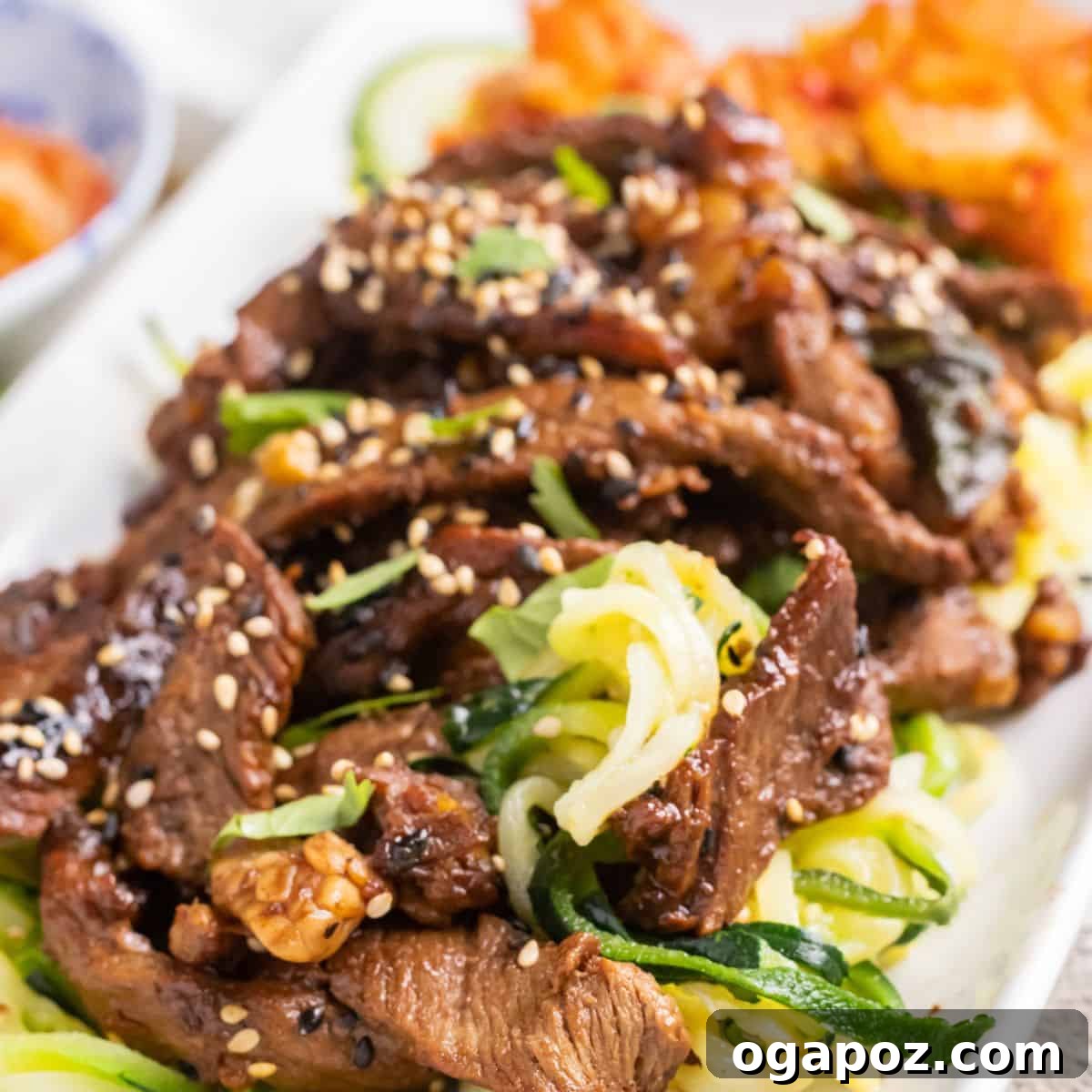
Beef Bulgogi with Zucchini Noodles offers a delightful culinary journey into the heart of Korean cuisine. This exquisite dish features thinly sliced beef, meticulously marinated in a rich, sweet, and savory sauce, then quickly cooked to achieve melt-in-your-mouth tenderness. Traditionally grilled over an open flame, the beef develops a beautiful char and deep flavor that is utterly irresistible. For a modern, health-conscious twist, we serve this incredible Korean BBQ beef over fresh, vibrant zucchini noodles, perfectly complemented by garnishes of crisp green onions, nutty sesame seeds, and fragrant cilantro. Prepare to fall in love with this authentic and easy-to-make Korean BBQ beef recipe.
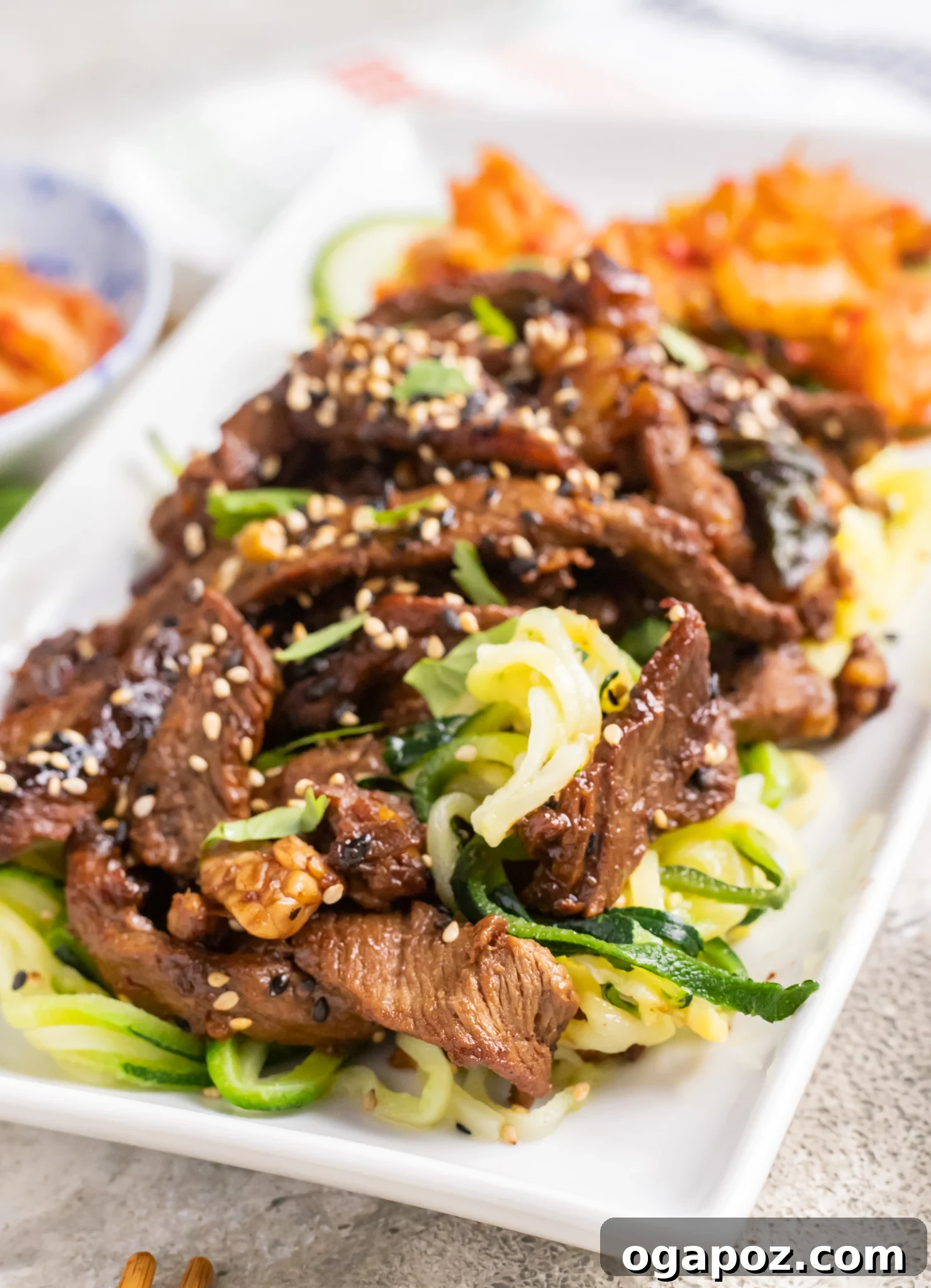
If your palate craves the exquisite balance of sweet and savory, then today’s recipe for Beef Bulgogi with Zucchini Noodles is tailor-made for you! Imagine succulent, thinly sliced beef, steeped in an aromatic marinade, then expertly grilled until it achieves that perfect caramelized edge and incredible tenderness. Every bite is an explosion of flavor, making this a truly mouthwatering experience.
My journey with Korean cuisine began during my time in Chicago, a city renowned for its incredible diversity of ethnic restaurants. My partner and I often explored the culinary landscapes of Thai, Lebanese, Chinese, Spanish, and, of course, Korean eateries. These experiences ignited a deep appreciation for global flavors and introduced me to many dishes that have since become cherished favorites. The vibrant food scene of Chicago truly expanded my culinary horizons.
While I eagerly anticipate the day I can travel to Korea to savor these dishes firsthand, in the meantime, I find immense joy in recreating authentic Korean flavors right in my own kitchen. One dish that truly captured my heart from my first taste in Chicago was Beef Bulgogi – it quickly rose to the top of my list of favorite Korean meals. The bulgogi sauce, in particular, is a masterpiece of flavor, so rich and complex, making the entire dish undeniably addictive!
Today’s recipe focuses on Beef Bulgogi served with crisp Zucchini Noodles, offering a lighter, low-carb, and gluten-free alternative that doesn’t compromise on flavor. However, the versatility of this dish is one of its many charms. It’s equally fantastic served over fluffy white rice, wrapped in fresh lettuce leaves for a crunchy bite, or enjoyed simply on its own. For an authentic Korean dining experience, pair it with traditional side dishes like spicy kimchi, which adds a wonderful fermented tang and spice, or refreshing pickled cucumbers.
Should you be a fellow enthusiast of delicious beef recipes, you might also enjoy exploring other savory options such as this flavorful Beef Shawarma, the Mediterranean delight of Beef Souvlaki, these convenient Easy Beef Gyros, or the aromatic Beef Kafta Meatballs. Each offers a unique taste adventure, perfect for expanding your home cooking repertoire!
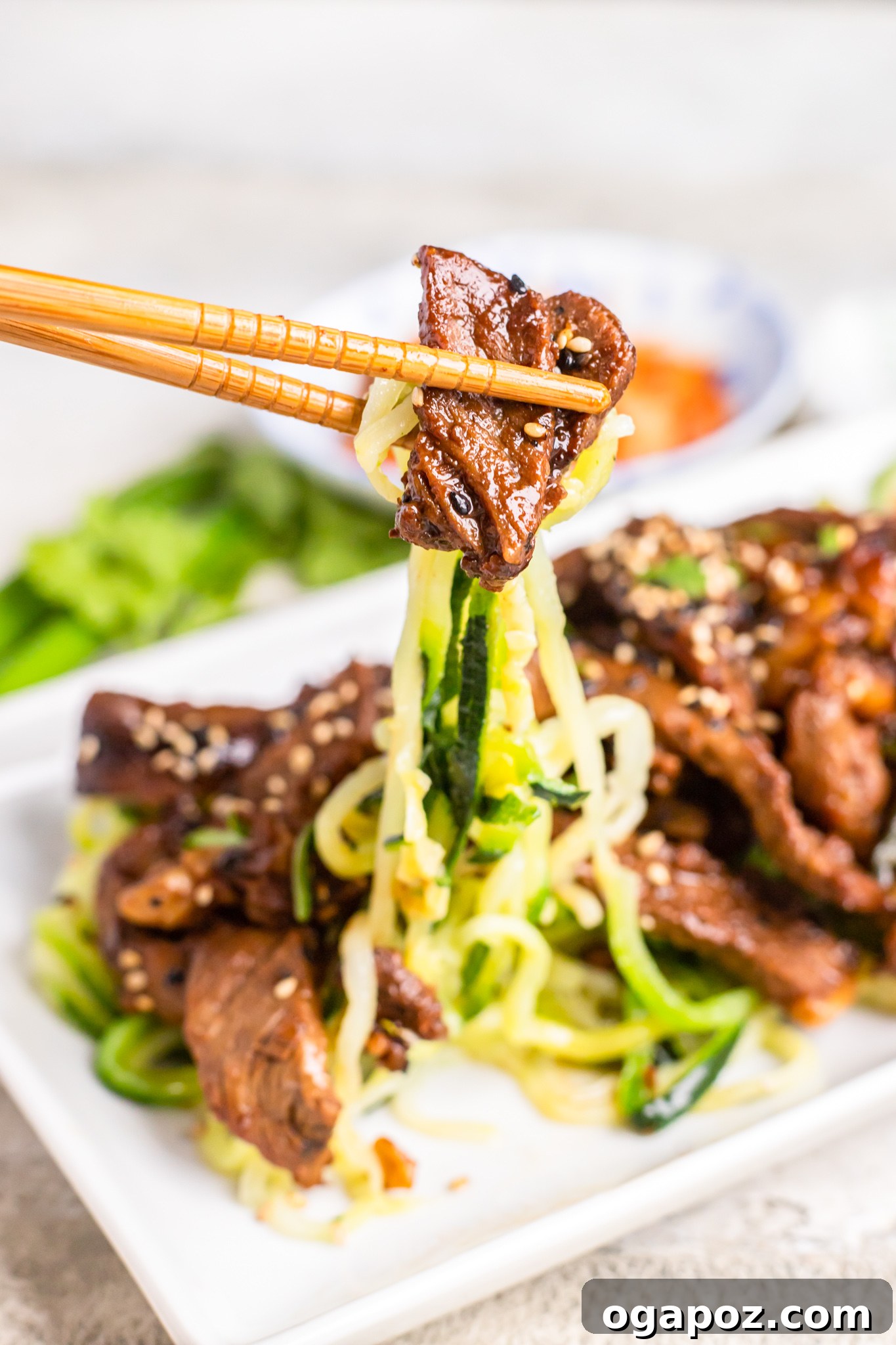
What is Bulgogi? Exploring Korean BBQ “Fire Meat”
Bulgogi, literally translating to “fire meat” (from Bul, meaning “fire,” and gogi, meaning “meat”), is one of Korea’s most iconic and beloved dishes. It typically consists of thin, marinated slices of beef or pork, grilled over an open flame barbecue or pan-fried on a stovetop griddle. The magic of Bulgogi lies in its distinctive marinade, which delivers a harmonious blend of sweet, savory, and umami flavors, creating an incredibly tender and flavorful meat that melts in your mouth.
Tracing its origins back to Korea’s ancient Goguryeo era (1st century BCE to 7th century CE), Bulgogi has evolved over centuries to become the globally recognized delicacy it is today. Historically, it was a dish reserved for royalty and nobility, slowly transitioning to a popular meal enjoyed by all. It’s deeply ingrained in South Korean culture, appearing everywhere from high-end restaurants to convenient pan-ready kits available in local supermarkets. Its universal appeal stems from its comforting yet exciting flavor profile, making it a staple at family gatherings, celebrations, and casual weeknight dinners.
The characteristic sweetness in Bulgogi often comes from fruit purées like Asian pear or apple, which also act as natural tenderizers, breaking down meat fibers for that signature melt-in-your-mouth texture. This, combined with soy sauce, minced garlic, sesame oil, and other aromatics, creates a marinade that infuses every strand of beef with an unforgettable taste. Whether you’re a connoisseur of Korean cuisine or new to its delights, Bulgogi offers an accessible and incredibly satisfying experience.
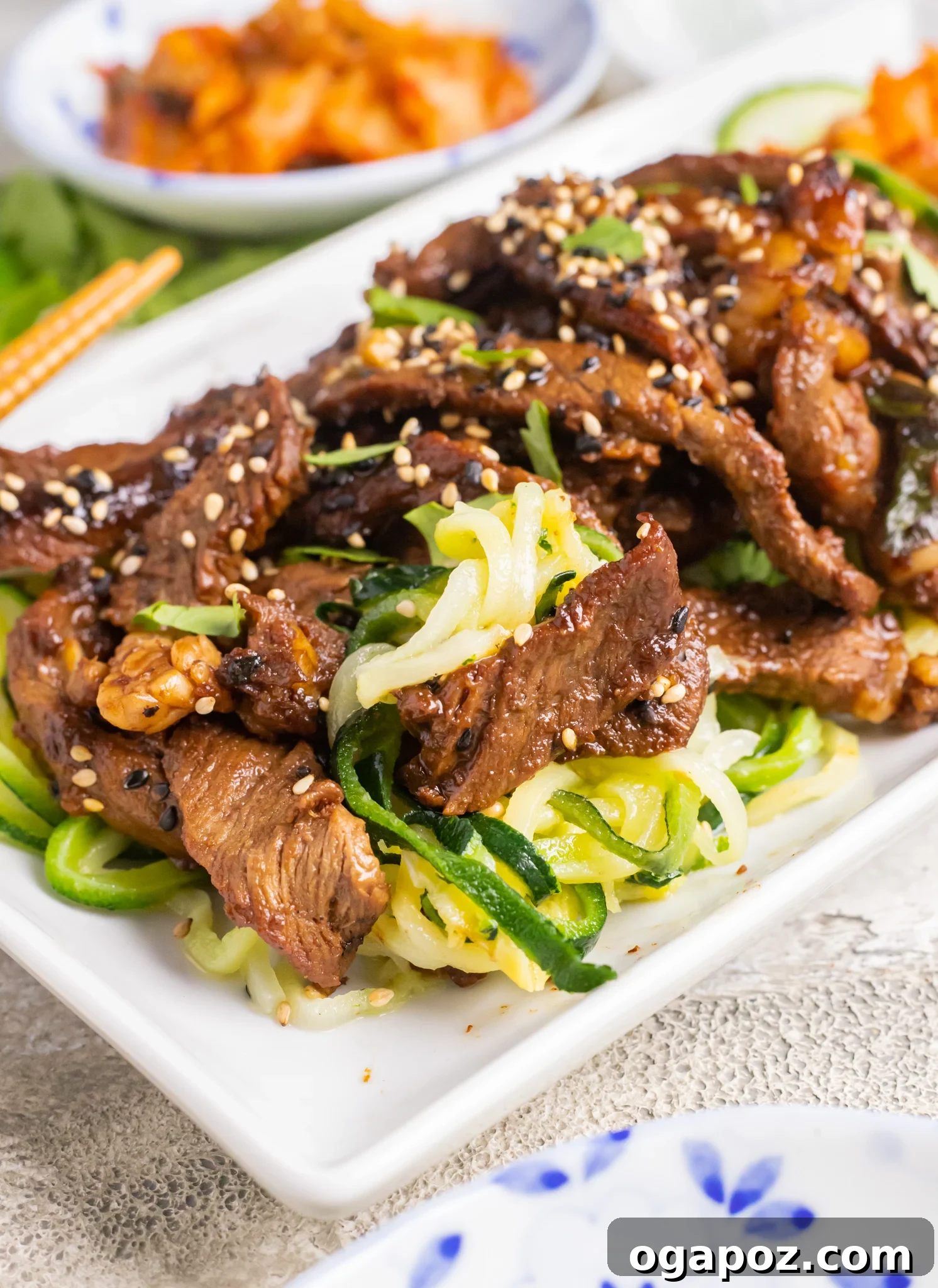
Choosing the Best Steak for Your Bulgogi: Secrets to Tender Meat
The cut of beef you choose plays a significant role in the texture and overall success of your Bulgogi. For that truly authentic, tender experience, thinly sliced ribeye steak is often considered the gold standard. Its marbling of fat melts beautifully during quick cooking, infusing the meat with incredible juiciness and allowing it to absorb the marinade’s complex flavors exceptionally well. This results in the most succulent and tender bites, characteristic of traditional Korean BBQ.
Beyond ribeye, two other excellent choices for their tenderness and flavor absorption are tenderloin and sirloin. These cuts are naturally quite tender, making them ideal for quick-cooking methods characteristic of Bulgogi. When sliced thin, they become wonderfully tender without requiring extensive marination time, ensuring a delicious meal even on a busy weeknight.
If you prefer cuts like flank steak or skirt steak, which are generally more fibrous, they can certainly be used but will benefit immensely from a longer marination period. Aim for at least 2 to 4 hours, or even overnight, to allow the marinade’s tenderizing agents (like the fruit enzymes from pear) to work their magic. This extra time ensures these cuts become as tender and flavorful as possible, yielding delicious results that rival the more expensive cuts.
Tips for Thinly Slicing Beef
Achieving uniform, thin slices is crucial for authentic Bulgogi, as it ensures quick and even cooking. A great trick is to partially freeze your steak for about 30 to 60 minutes before slicing. This firms up the meat, making it much easier to cut against the grain into consistent 1/8-inch slices. Use a sharp knife for clean cuts. If using pre-frozen steaks, thaw them just enough so they are still firm but sliceable. Alternatively, for ultimate convenience, many Asian grocery stores, especially Korean ones like H-Mart, offer pre-sliced beef specifically prepared for Bulgogi, saving you prep time and ensuring perfect thickness every time.
Exploring Other Protein Options
While beef is traditional, the Bulgogi marinade is incredibly versatile and works wonderfully with other proteins. Thinly sliced chicken thighs absorb the flavors beautifully and cook quickly, making for a lean yet flavorful option. For pork bulgogi, thinly sliced pork shoulder or, for an even richer taste, pork belly (known as samgyeopsal in Korean) are popular choices. Pork belly, like ribeye, boasts a good fat-to-meat ratio, contributing to a robust flavor and incredibly tender texture. Regardless of the meat you choose, proper marination is key to infusing flavors and achieving optimal tenderness, guaranteeing a delightful meal for everyone.
Essential Ingredients for the Perfect Bulgogi Marinade
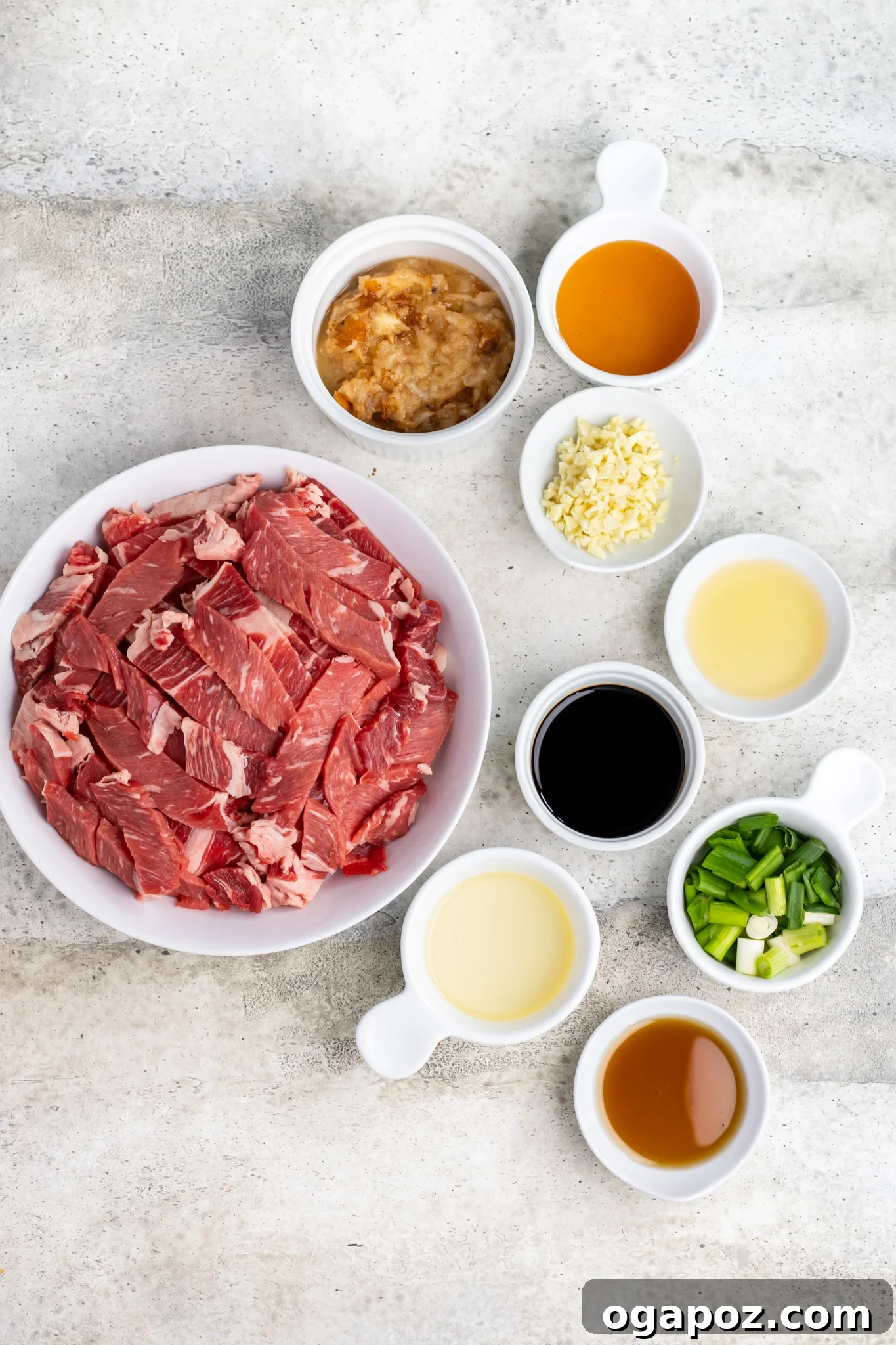
Crafting the perfect Bulgogi marinade is an art form, balancing sweet, savory, and aromatic elements to create that signature depth of flavor. Each ingredient plays a crucial role in transforming simple beef into an unforgettable Korean BBQ experience. Here’s a closer look at the key components that make this dish shine:
- Beef: As discussed, thinly sliced ribeye is my top recommendation for its inherent tenderness and beautiful fat marbling, which ensures a juicy and flavorful result. However, tenderloin or sirloin are excellent lean alternatives. For more economical or fibrous cuts like skirt steak or flank steak, remember to allow at least two hours (or more, up to overnight) of marination to effectively tenderize the meat and infuse maximum flavor. While this specific recipe focuses on thinly sliced beef for quick cooking, the versatile marinade is also fantastic for short ribs, though they would require a longer cooking time and a different preparation method due to their thickness.
- Pear: This fruit is a secret weapon in many traditional Korean marinades! I typically use a Bosc pear, grated, for its subtle sweetness and, more importantly, its natural enzymes. These enzymes (bromelain, found in pineapple, or papain, found in papaya, are similar) help to gently break down the tough muscle fibers in the beef, resulting in incredibly tender meat that cooks quickly. If you can find an Asian pear or Korean pear, they are even more traditional and work wonderfully, adding a distinct, crisp sweetness and a pleasant aroma to the marinade.
- Soy Sauce: A cornerstone of the marinade, soy sauce provides the essential salty, umami base that is characteristic of East Asian cuisine. I recommend using a good quality dark soy sauce for a richer color and a deeper, more complex flavor. If you’re mindful of sodium intake, feel free to opt for a low-sodium variety without sacrificing too much of the fundamental savory taste.
- Sesame Oil: This ingredient adds a distinctive nutty aroma and depth that is indispensable in Korean cuisine. A small amount goes a long way, imparting a rich, toasted flavor that ties all the other ingredients together beautifully and gives the Bulgogi its authentic fragrant finish.
- Mirin: A sweet Japanese rice wine, Mirin is very similar to sake but with a notably higher sugar content and a lower alcohol percentage. It contributes essential sweetness, depth, and a beautiful glossy sheen to the cooked meat, enhancing its visual appeal. If Mirin isn’t readily available in your local grocery store, suitable substitutes include Japanese sake or Korean shochu, which offer similar flavor profiles to maintain the integrity of the marinade. You can learn more about Mirin and its substitutes here.
- Garlic: Freshly minced garlic is vital for its pungent, aromatic contribution, providing a foundational layer of bold flavor that is characteristic of almost all Korean dishes. Do not skimp on the garlic!
- Green Onions: Sliced green onions (also known as scallions) add a fresh, slightly pungent, and mild oniony flavor to the marinade. They also serve as a beautiful, fresh garnish for the finished dish, enhancing both taste and presentation with their vibrant green color.
- Honey: Alongside the pear, honey contributes to the signature sweetness of Bulgogi. Its natural sugars help the beef caramelize beautifully during the grilling process, developing those coveted browned edges and adding a delicate, complex sweetness that balances the savory notes.
- Rice Vinegar (or Apple Cider Vinegar): A touch of mild vinegar subtly brightens the marinade, cutting through the richness and balancing the sweetness. It adds a delicate tang that elevates the overall flavor profile, preventing the dish from tasting too heavy or one-dimensional.
- Sesame Seeds: Primarily used as a garnish, toasted sesame seeds add a pleasant crunch and a complementary nutty flavor, completing the authentic Bulgogi experience with both texture and taste.
Each of these thoughtfully selected ingredients plays a crucial role in creating the layered, unforgettable flavor profile of Beef Bulgogi, ensuring a truly authentic and delicious meal that will transport your taste buds straight to Korea.
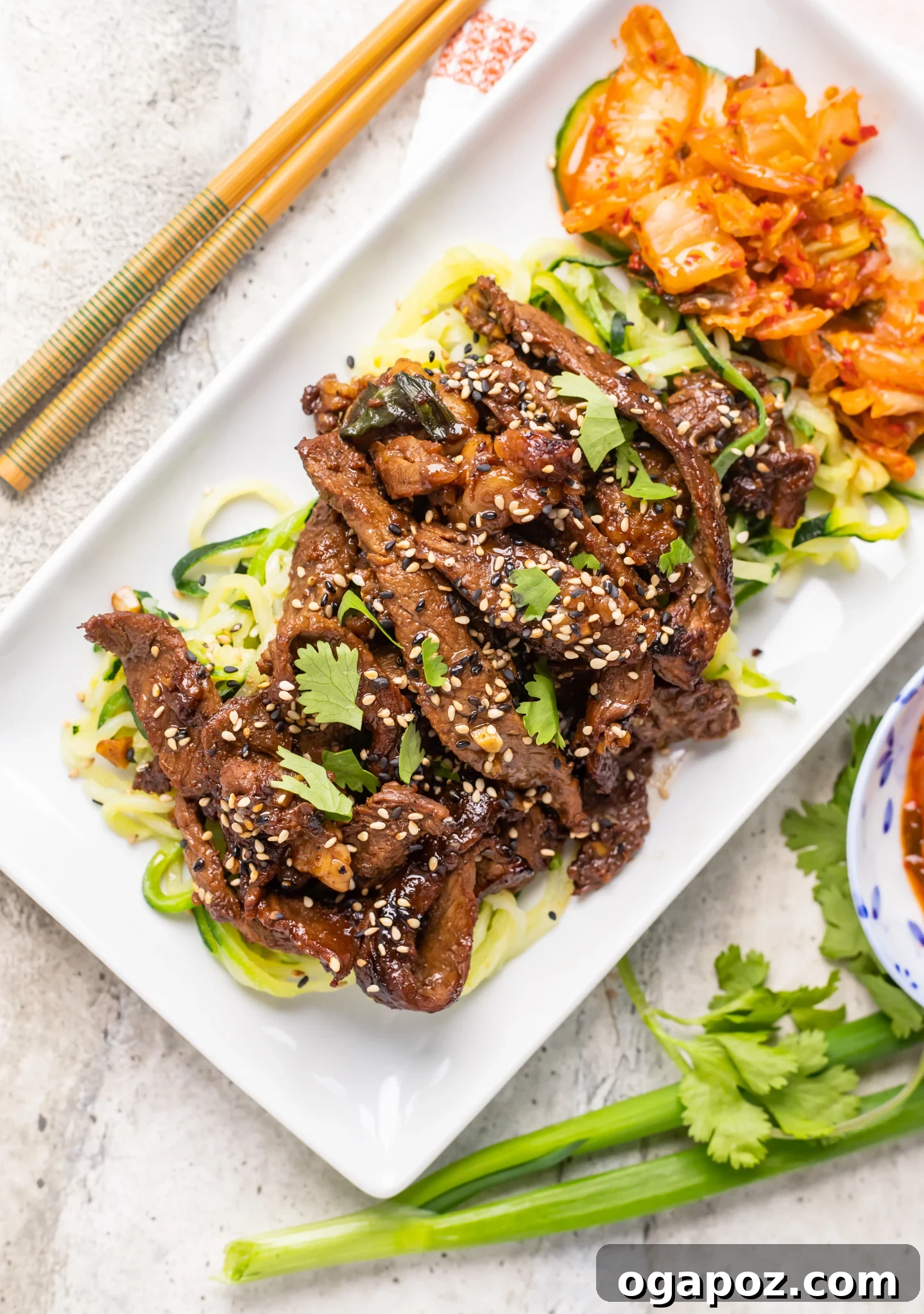
How to Make The Best Beef Bulgogi: A Step-by-Step Guide
Creating delicious Beef Bulgogi at home is simpler than you might think, especially with these straightforward steps designed to maximize flavor and tenderness. Follow along to prepare your own authentic Korean BBQ masterpiece:
Step 1: Prepare and Marinate the Beef for Flavor Infusion
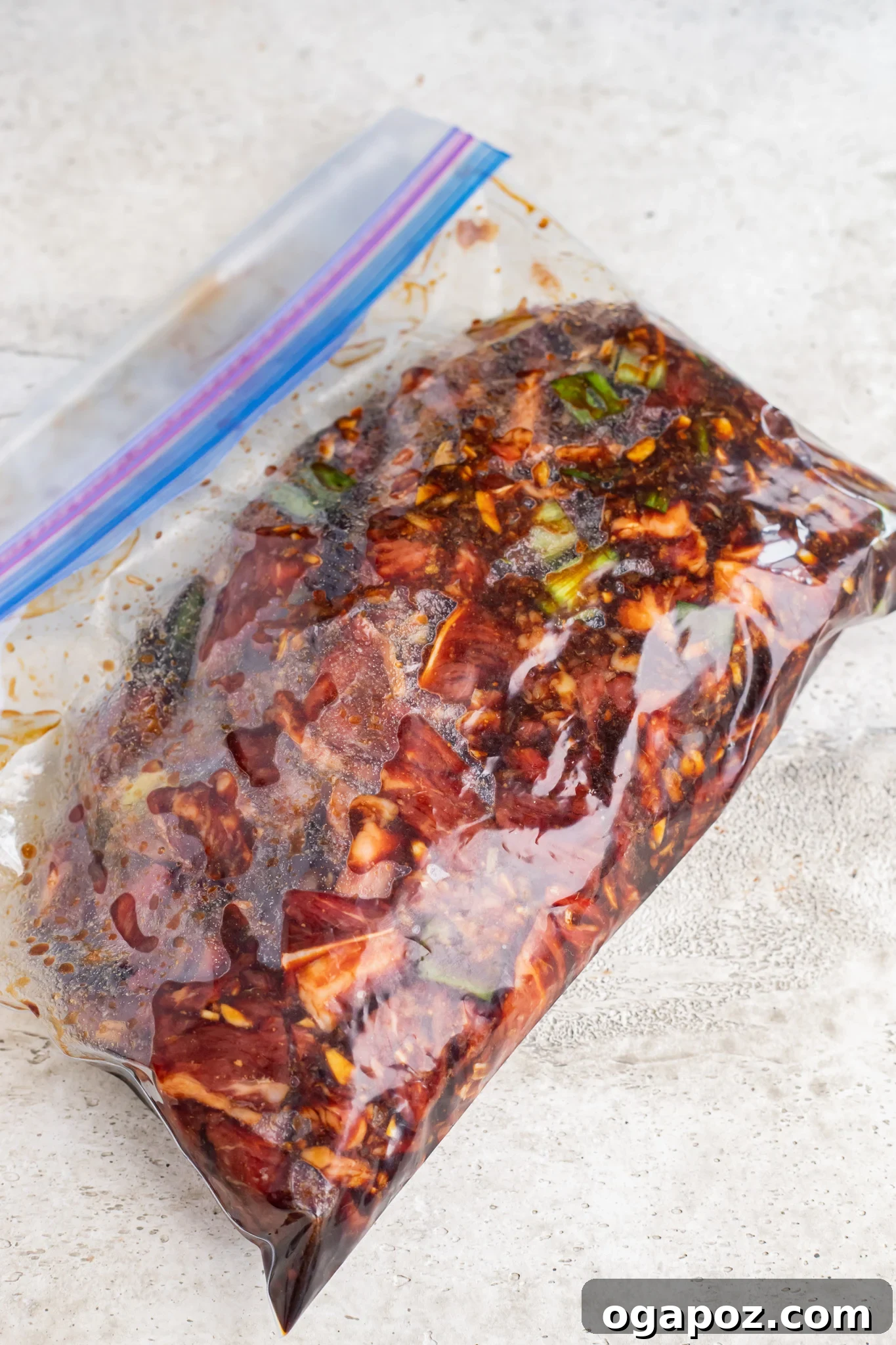
Begin by combining all your marinade ingredients—grated pear, minced garlic, sliced green onions, dark soy sauce, sesame oil, mirin, rice vinegar, and honey—in a bowl, mixing them thoroughly to ensure a cohesive and well-blended sauce. Next, carefully place your thinly sliced steak into a sturdy, heavy-duty ziplock bag or a non-reactive dish. Pour the rich, aromatic marinade over the beef, ensuring every single slice is generously coated. Seal the bag tightly (or cover the dish) and gently massage the marinade into the steak with your hands. This crucial step ensures even flavor distribution and allows the tenderizing agents within the marinade to begin their work. While a minimum of 30 minutes at room temperature will suffice for a quick meal, for optimal tenderness and a more profound, complex flavor, I highly recommend marinating for 1 to 2 hours. This extended period allows the beef to fully absorb all the sweet, savory, and aromatic notes, transforming it into truly succulent “fire meat” that will impress your taste buds.
Step 2: Grill or Pan-Sear to Perfection
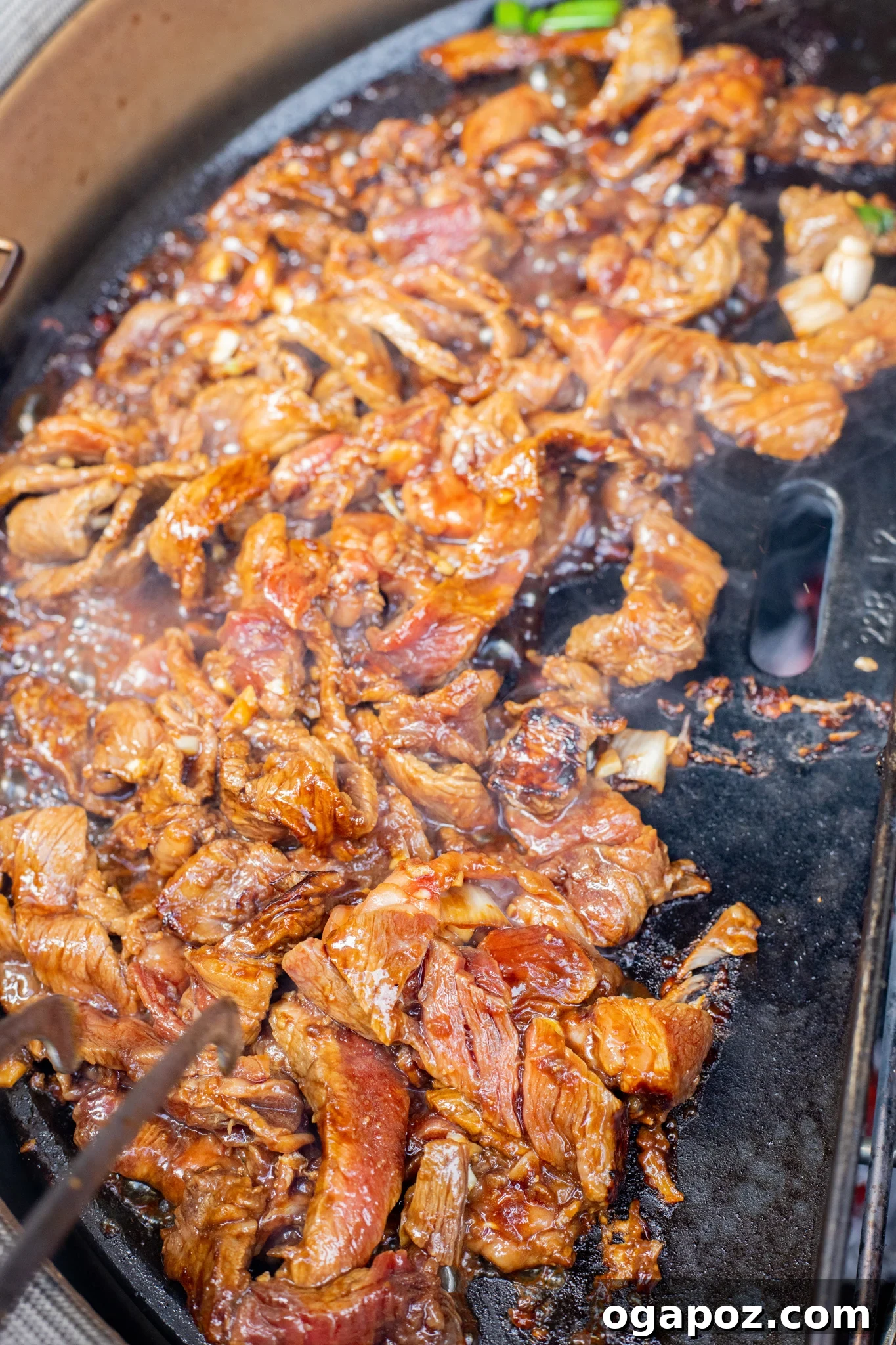
The beauty of Bulgogi lies in its remarkably quick cooking time, making it an excellent option for a fast yet flavorful meal. Preheat your BBQ grill to a medium-high heat, or if cooking indoors, place a cast iron pan or heavy-bottomed skillet on your stovetop over medium-high heat. Add a touch of neutral cooking oil to the pan if not using a grill to prevent sticking. Once the cooking surface is hot, carefully place the marinated steak slices in a single layer, being extremely careful not to overcrowd the cooking surface. Overcrowding will lower the temperature and cause the meat to steam rather than sear, preventing those delicious caramelized edges. Since the beef slices are very thin, they will cook remarkably fast – typically about 20 seconds per side. Look for beautiful browning and appealing caramelized edges, which indicate fantastic flavor development. Once cooked to your desired doneness, transfer the tender beef to a platter or a cooler section of the grill to keep warm. Repeat this process with the remaining meat until all slices are perfectly grilled. The key here is high heat and fast cooking to achieve that desirable sear and tender interior without overcooking the delicate thin slices.
Step 3: Garnish and Serve Your Korean BBQ Masterpiece
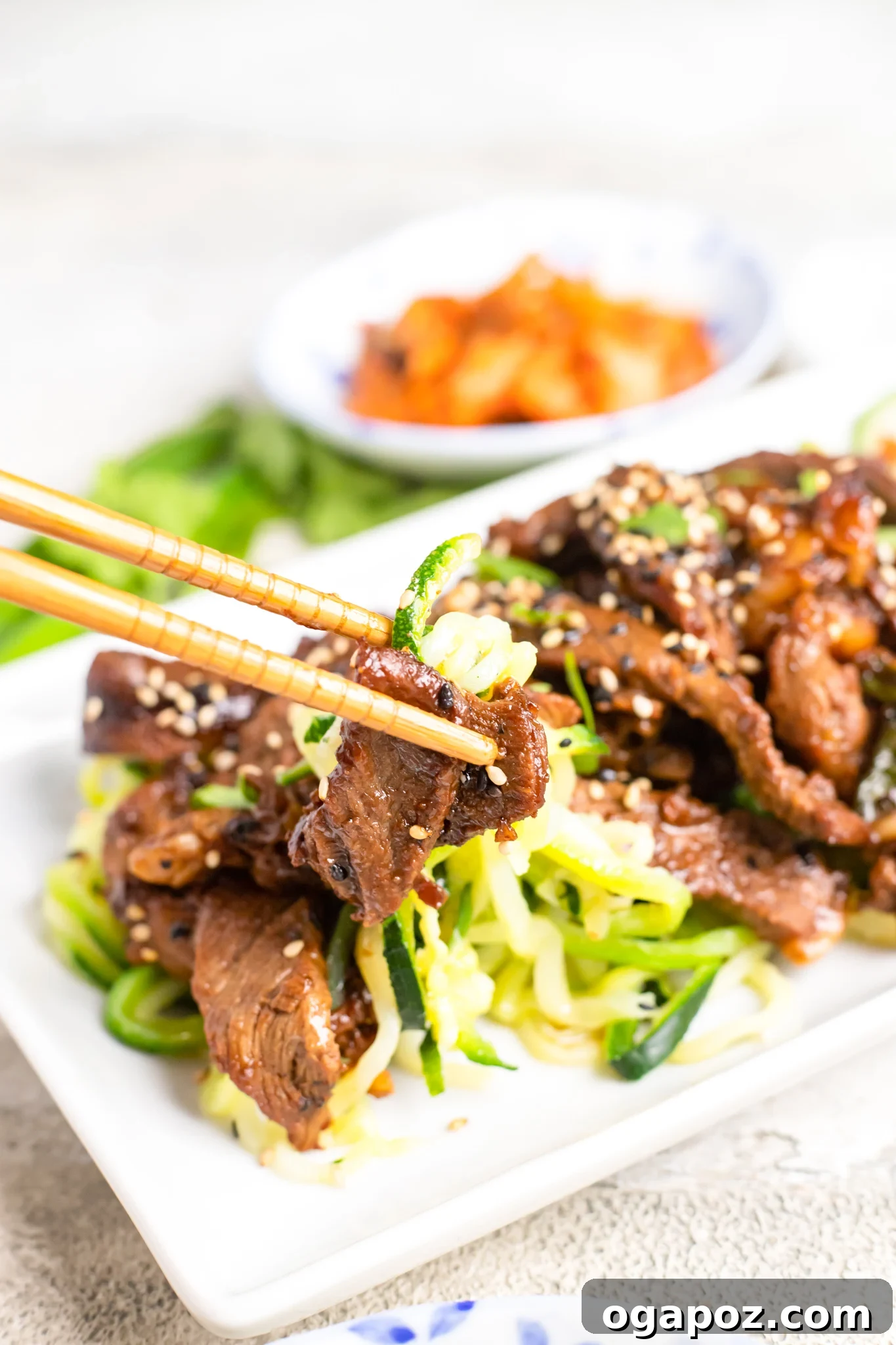
Once all the beef is cooked to perfection, it’s time to assemble your delicious and visually appealing meal. Arrange the tender, caramelized Beef Bulgogi generously over a bed of fresh, crisp spiralized zucchini noodles. This combination offers a healthy, low-carb, and naturally gluten-free meal option that is bursting with flavor. Just before serving, elevate the dish with generous garnishes: sprinkle toasted sesame seeds for added crunch and a nutty aroma, along with a scattering of freshly chopped green onions and a handful of vibrant cilantro (if using) for a burst of freshness, color, and herbaceous notes. This dish is wonderful on its own, satisfying and complete, but for a truly authentic Korean dining experience, serve it alongside traditional Korean side dishes. Popular pairings include spicy fermented kimchi, refreshing pickled cucumbers (oi muchim), or even a simple bowl of fluffy steamed white rice if you desire a more traditional accompaniment. Enjoy this delightful and easy-to-make Korean BBQ creation, perfect for any occasion!
Pro Tips for Perfect Beef Bulgogi Every Time
Achieving restaurant-quality Bulgogi at home is entirely possible with a few expert tips and tricks. These insights will help you master the technique and elevate your Korean BBQ experience:
- Mastering Thin Slices: The secret to perfectly cooked, tender Bulgogi lies in uniformly thin slices of beef. If you’re slicing fresh steaks yourself, a fantastic technique is to place them in the freezer for about 1 to 2 hours. This partial freezing firms up the meat, making it much easier to slice against the grain into consistent 1/8-inch thickness. A very sharp knife is essential for this task. For frozen steaks, thaw them just until they reach a firm-but-sliceable consistency, avoiding complete thawing that makes them too soft to slice thinly.
- Pre-Sliced Meat Convenience: For ultimate convenience and guaranteed thinness, consider purchasing pre-sliced meat from an Asian grocery store. Many of these stores, especially Korean markets like H-Mart, specifically stock thinly sliced beef (non-marinated/seasoned) labeled explicitly for Bulgogi. This saves significant preparation time and ensures you have the ideal cut for the recipe without the fuss of slicing at home.
- Understanding Mirin: Mirin is a sweet Japanese cooking wine, a culinary staple in many Asian pantries. It’s similar to sake but with a notably higher sugar content and a lower alcohol percentage. Mirin contributes a distinctive sweetness and a beautiful glossy sheen to the marinade, enhancing both the flavor and visual appeal of the cooked meat. If you can’t find Mirin, don’t fret! Japanese sake or Korean shochu can be used as effective substitutes, providing a similar depth of flavor to maintain the integrity of the marinade.
- Don’t Overcrowd the Pan: When cooking the beef, whether on a grill or in a pan, it’s crucial to cook in batches. Overcrowding the cooking surface will drastically lower the temperature, causing the meat to stew or steam rather than sear. This prevents those delicious caramelized edges from forming and results in less flavorful, tougher meat. Give the beef ample room to breathe for the best possible results.
- Let the Cooked Meat Rest: While Bulgogi cooks quickly, allowing the cooked beef to rest for a minute or two on a platter before serving helps the juices redistribute throughout the meat. This ensures every bite remains incredibly succulent and flavorful, preventing the meat from drying out.
- Customize Your Sweetness: The sweetness level in Bulgogi can be adjusted to your personal preference. If you like it sweeter, feel free to add a touch more honey or grated pear to the marinade. For a less sweet profile, slightly reduce these ingredients, always tasting and adjusting as you go.
- Zucchini Noodles Prep: If you’re making your own zucchini noodles, ensure they are relatively dry before serving. Zucchini contains a lot of water, which can make your dish watery. You can pat them with paper towels or lightly sauté them in a separate pan for just a minute or two to evaporate excess moisture, ensuring your Bulgogi remains perfectly balanced.
With these comprehensive tips, you’re well on your way to preparing a memorable and truly authentic Beef Bulgogi with Zucchini Noodles that will be a hit with family and friends alike.
More Delicious Beef Recipes to Explore
Beef
Lebanese Beef and Green Beans
Beef
Slow Cooker Mediterranean Beef Meatballs
Beef
Beef Enchilada Casserole
Beef
Hummus with Spiced Beef and Toasted Pine Nuts
Tried this recipe? Share your experience! Tag @acedarspoon on Instagram or use #acedarspoon! Follow us on
Facebook and
Pinterest for more delicious recipes.
Beef Bulgogi with Zucchini Noodles Recipe
Julia Jolliff
Beef Bulgogi with Zucchini Noodles features thinly sliced beef marinated in a sweet and savory sauce, quickly cooked for tenderness, and served over fresh zucchini noodles for a healthy, low-carb meal.
Pin Recipe
Print Recipe
10 mins
5 mins
15 mins
4 servings
Ingredients
- 1 pound rib eye steak, sliced thinly 1/8” thick (see notes for tip on slicing)
- 1/2 pear (Bosc variety recommended), grated
- 2 tablespoons garlic, minced
- 2 green onions, sliced roughly ½” long
- 5 tablespoons dark soy sauce (or low-sodium)
- 2 tablespoons sesame oil
- 3 tablespoons mirin (or Japanese sake / Korean shochu)
- 1 tablespoon rice vinegar (or apple cider vinegar)
- 2 tablespoons honey
- Sesame seeds, for garnish (optional)
- Zucchini, spiralized (homemade or store-bought), for serving
Instructions
- Prepare Marinade: In a bowl, combine the grated pear, minced garlic, sliced green onions, dark soy sauce, sesame oil, mirin, rice vinegar, and honey. Mix well to create the marinade.
- Marinate Beef: Place the thinly sliced steak in a heavy-duty ziplock bag or a non-reactive container. Pour the prepared marinade over the beef, ensuring all slices are thoroughly coated. Seal the bag (or cover the container) and gently massage the marinade into the meat. Allow the beef to marinate at room temperature for at least 30 minutes, with 1-2 hours recommended for best flavor and tenderness.
- Cook the Beef: Preheat your BBQ grill to medium-high heat, or heat a cast iron pan over medium-high heat on your stovetop. If using a pan, add a small amount of cooking oil. Place steak slices in a single layer on the hot cooking surface, being careful not to overcrowd.
- Sear Quickly: Due to their thinness, the steak slices will cook very quickly. Cook for approximately 20 seconds per side until thoroughly browned with appealing caramelized edges.
- Continue Cooking: Once cooked, transfer the beef to a clean platter or a cooler area of the grill to keep warm. Repeat the cooking process with the remaining marinated meat until all slices are cooked.
- Garnish and Serve: Arrange the cooked Beef Bulgogi over a bed of fresh spiralized zucchini noodles. Just before serving, sprinkle generously with sesame seeds and additional chopped green onions. Enjoy this healthy, low-carb meal with traditional Korean side dishes like kimchi or pickled cucumbers, or a simple bowl of steamed rice.
Notes
- Slicing Tip: To achieve perfectly thin beef slices, place fresh steaks in the freezer for 1-2 hours until slightly firm but still sliceable. This makes cutting against the grain much easier. If using frozen steaks, thaw partially until they reach this consistency.
- Convenience Option: Many Asian grocery stores (especially Korean ones) sell thinly sliced beef specifically for Bulgogi, often labeled “Bulgogi meat.” This is a great time-saver.
- Mirin Substitute: Mirin is a sweet Japanese cooking wine. If unavailable, Japanese sake or Korean shochu can be used as alternatives.
- Cooking in Batches: To ensure proper searing and avoid steaming, cook the beef in small batches, allowing enough space between slices on the grill or pan.
- Zucchini Noodles: For best results, ensure your spiralized zucchini noodles are relatively dry before serving. You can pat them with paper towels or lightly sauté them for 1-2 minutes to remove excess moisture.
Nutrition Information (Approximate per serving)
- Calories: 396 kcal
- Carbohydrates: 23g
- Protein: 26g
- Fat: 23g
- Saturated Fat: 8g
- Polyunsaturated Fat: 4g
- Monounsaturated Fat: 10g
- Cholesterol: 69mg
- Sodium: 1416mg
- Potassium: 420mg
- Fiber: 1g
- Sugar: 14g
- Vitamin A: 83 IU
- Vitamin C: 3mg
- Calcium: 28mg
- Iron: 3mg
Nutrition information is automatically calculated and should be used as an approximation. It may vary based on ingredients used and preparation methods.
Tried this recipe?
Mention @acedarspoon or tag #acedarspoon!