
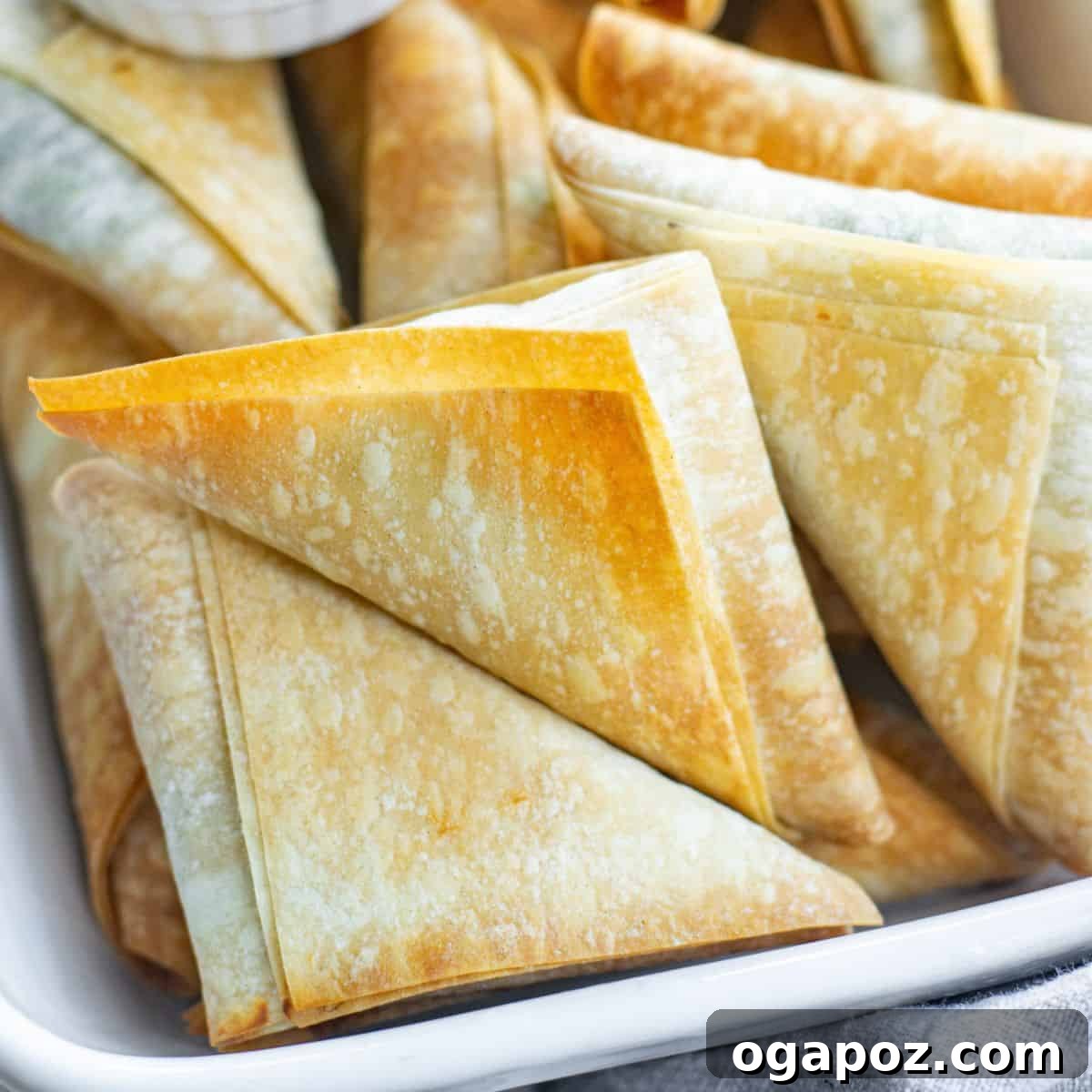
Spanakopita Triangles are a quintessential Greek delicacy, celebrated for their flaky, golden phyllo pastry and a rich, savory filling of spinach, creamy feta cheese, aromatic garlic, fresh herbs, and a hint of zesty lemon. These delightful vegetarian appetizers are a staple in Greek and Mediterranean cuisines, perfect for entertaining guests or enjoying as a light and flavorful meal. With this comprehensive guide, you’ll master the art of making these iconic triangles right in your own kitchen, impressing everyone with their irresistible crunch and incredible taste.
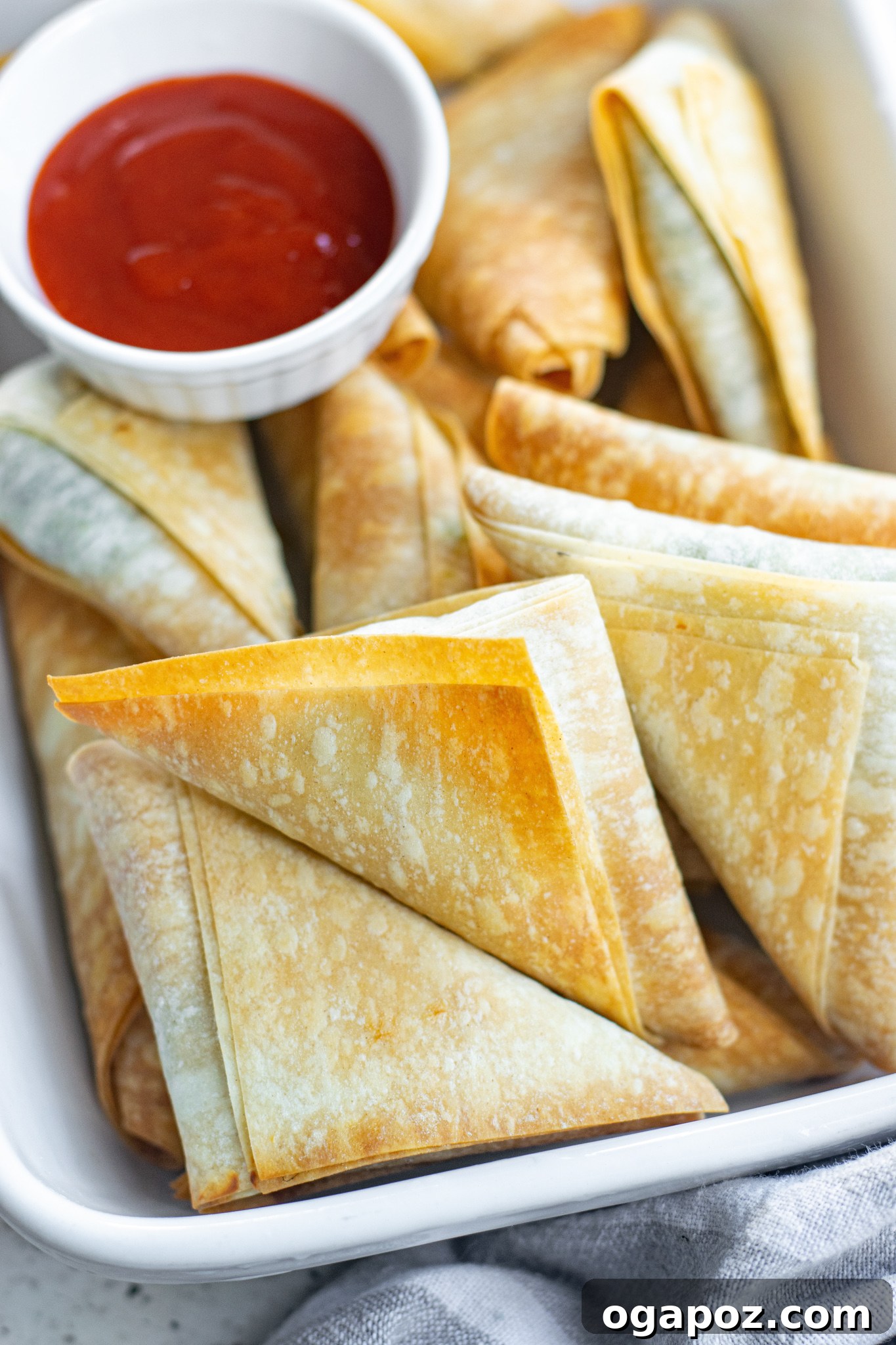
My love affair with Spanakopita began long before my travels, but it deepened immensely during a memorable trip to Greece. There, amidst ancient ruins and azure seas, I indulged in countless batches of these traditional Greek spanakopita triangles. Each bite, a symphony of textures and flavors, was a reminder of the simple yet profound joy of authentic Mediterranean cooking. This recipe aims to capture that very essence, bringing the flavors of Greece directly to your table. If you’ve never experienced the magic of homemade spanakopita, prepare to discover a new favorite!
These versatile triangles excel as a delicious appetizer, a satisfying side dish, or even a light main course. They are an absolute must-have addition to any Mediterranean appetizer platter or mezze spread, alongside classics like creamy hummus, briny olives, tender stuffed grape leaves, and crunchy roasted chickpeas. While many home cooks might feel intimidated by the idea of working with delicate phyllo dough, I promise you, making spanakopita is far more straightforward than it appears. Think of them as a cousin to Spinach Fatayer, but with the unique, airy crispness that only flaky phyllo pastry can provide, setting them apart from traditional dough-based pastries.
Essential Ingredients for Perfect Spanakopita Triangles
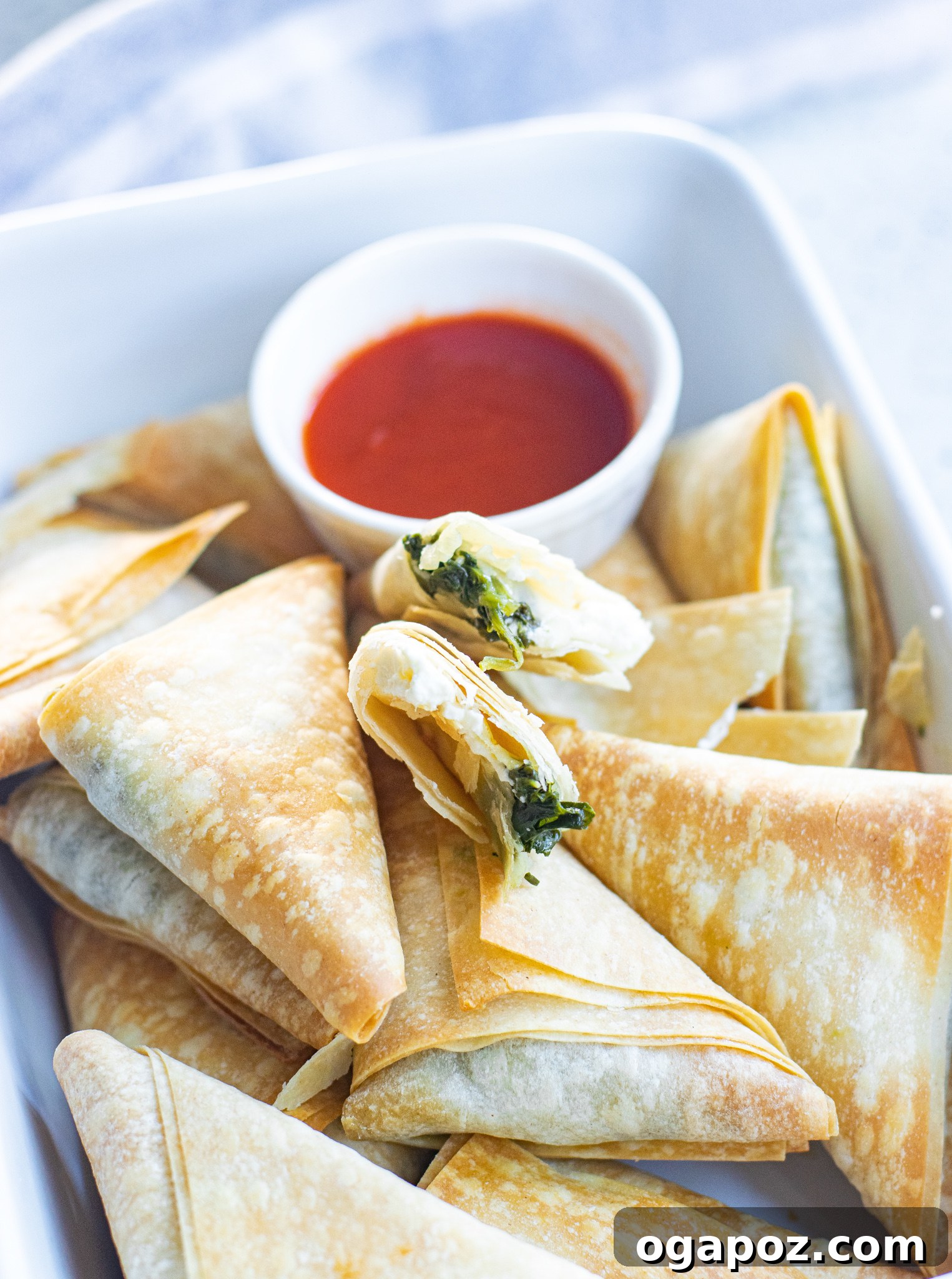
Crafting exquisite spanakopita begins with selecting the right ingredients. Each component plays a vital role in achieving that perfect balance of flavor and texture:
- Spinach: This recipe utilizes frozen spinach, which is incredibly convenient. The absolute key here is to meticulously squeeze out *all* excess water after defrosting. Failing to do so will result in a soggy filling and a less-than-crispy pastry, compromising the signature texture of spanakopita.
- Garlic: Freshly minced garlic is paramount, infusing the spinach filling with a pungent, aromatic depth that is fundamental to Greek cuisine. While garlic powder can be a substitute in a pinch, fresh garlic truly elevates the flavor profile.
- Lemon Zest: The bright, citrusy notes from lemon zest cut through the richness of the cheese and spinach, adding an essential layer of freshness and subtle sweetness. Don’t skip this, as it brightens the entire dish.
- Herbs & Spices: A harmonious blend of dried oregano, dill, and fresh parsley creates the classic Mediterranean flavor that defines spanakopita. These herbs are not just for aroma; they are integral to the dish’s authentic taste.
- Feta Cheese: The star of the filling, authentic feta cheese (preferably from sheep’s or goat’s milk) offers a salty, tangy, and slightly crumbly texture that pairs magnificently with the spinach. Opt for freshly crumbled feta whenever possible for superior flavor and texture.
- Phyllo Dough: Also known as filo pastry, this paper-thin dough is what gives spanakopita its signature light, incredibly flaky, and crispy exterior. Working with phyllo requires a gentle touch and some specific techniques, but it’s much easier than you might think.
- Olive Oil & Butter: A good quality olive oil for sautéing the spinach mixture and melted butter for brushing the phyllo layers are crucial for both flavor and the desired golden, crisp texture.
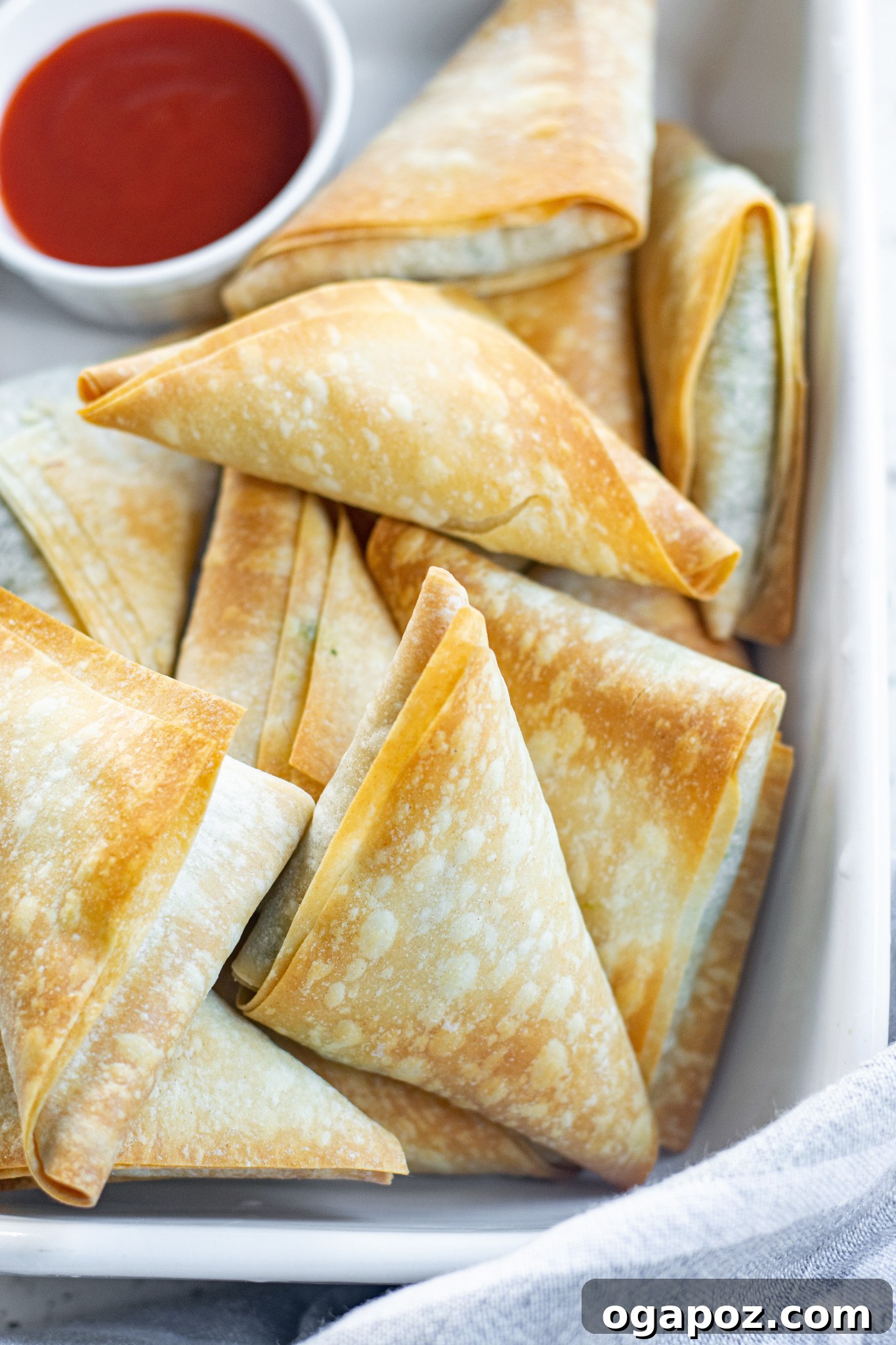
How to Prepare Delicious Spanakopita Triangles
Creating these delightful Greek spinach and feta pastries is a rewarding culinary experience. Follow these simple steps for perfect spanakopita every time:
Step 1: Prepare the Spinach (Crucial Step!)
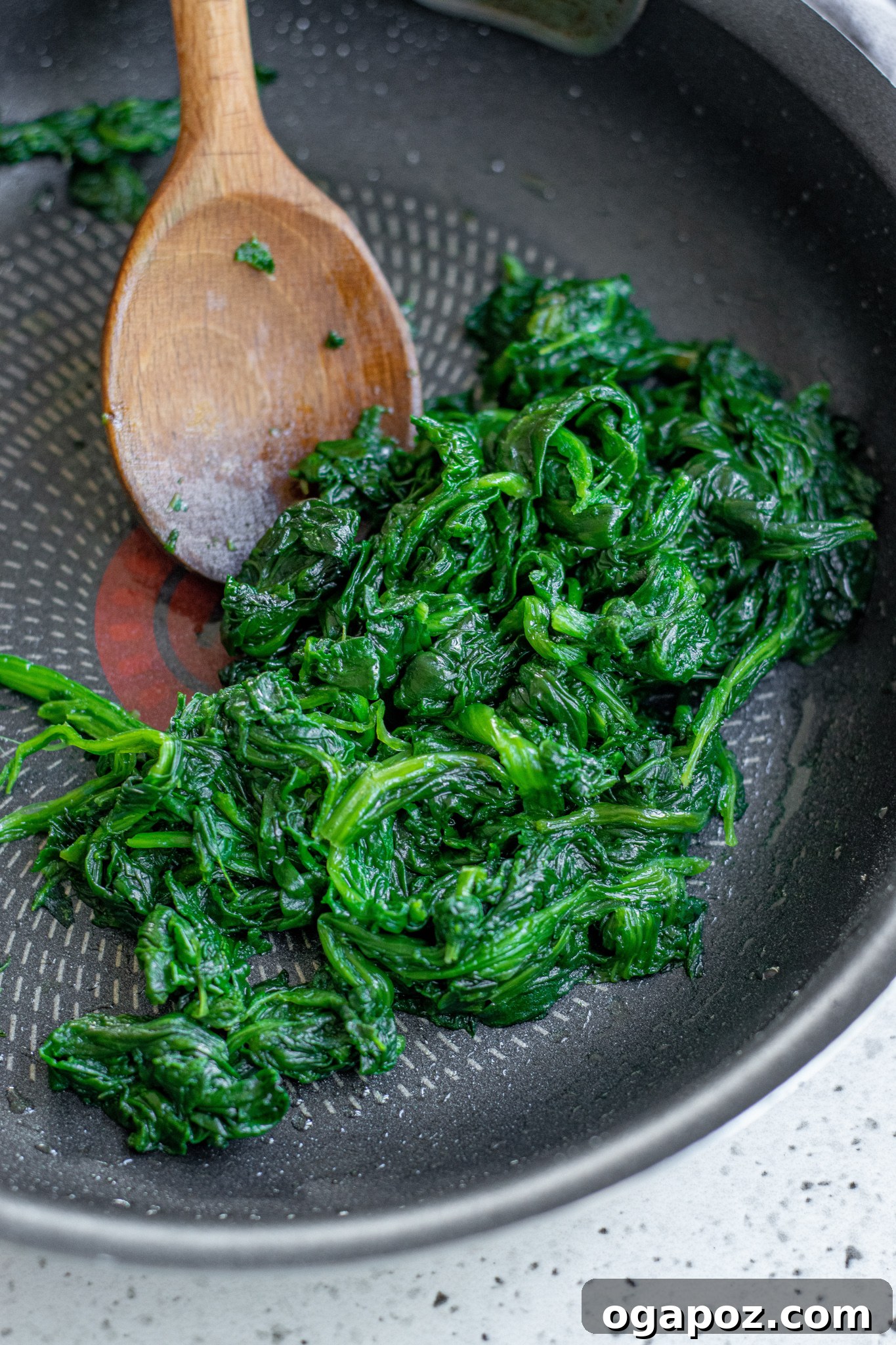
Begin by ensuring your frozen spinach is completely defrosted. Place the defrosted spinach in a clean kitchen towel or several layers of paper towels and firmly squeeze out every drop of excess liquid. This step is absolutely critical; failure to remove enough water will lead to a watery filling and a soggy pastry, preventing that coveted crispy texture.
Step 2: Sauté the Flavorful Filling
In a large skillet, heat a tablespoon of olive oil over medium heat. Add the well-drained spinach, minced garlic, dried oregano, dried dill, and chopped fresh parsley. Sauté the mixture for approximately 1 minute, just until the flavors meld and the garlic is fragrant. Remove the skillet from the heat and allow the mixture to cool slightly. Once cooled, stir in the fresh lemon zest. This vibrant, aromatic filling is now ready to be combined with the feta.
Step 3: Prepare Your Workstation and Phyllo Dough
Preheat your oven to 400°F (200°C) and line a large baking sheet with parchment paper. This will prevent sticking and ensure even baking. Carefully unroll your phyllo dough sheets onto a large, clean cutting board or spacious countertop. Using a sharp knife or pizza cutter, gently cut the entire stack of phyllo sheets into strips approximately 2.5 inches wide. To prevent the delicate phyllo from drying out and becoming brittle while you work, immediately cover the unused strips with a slightly damp kitchen towel.
Step 4: Butter the Phyllo Layers
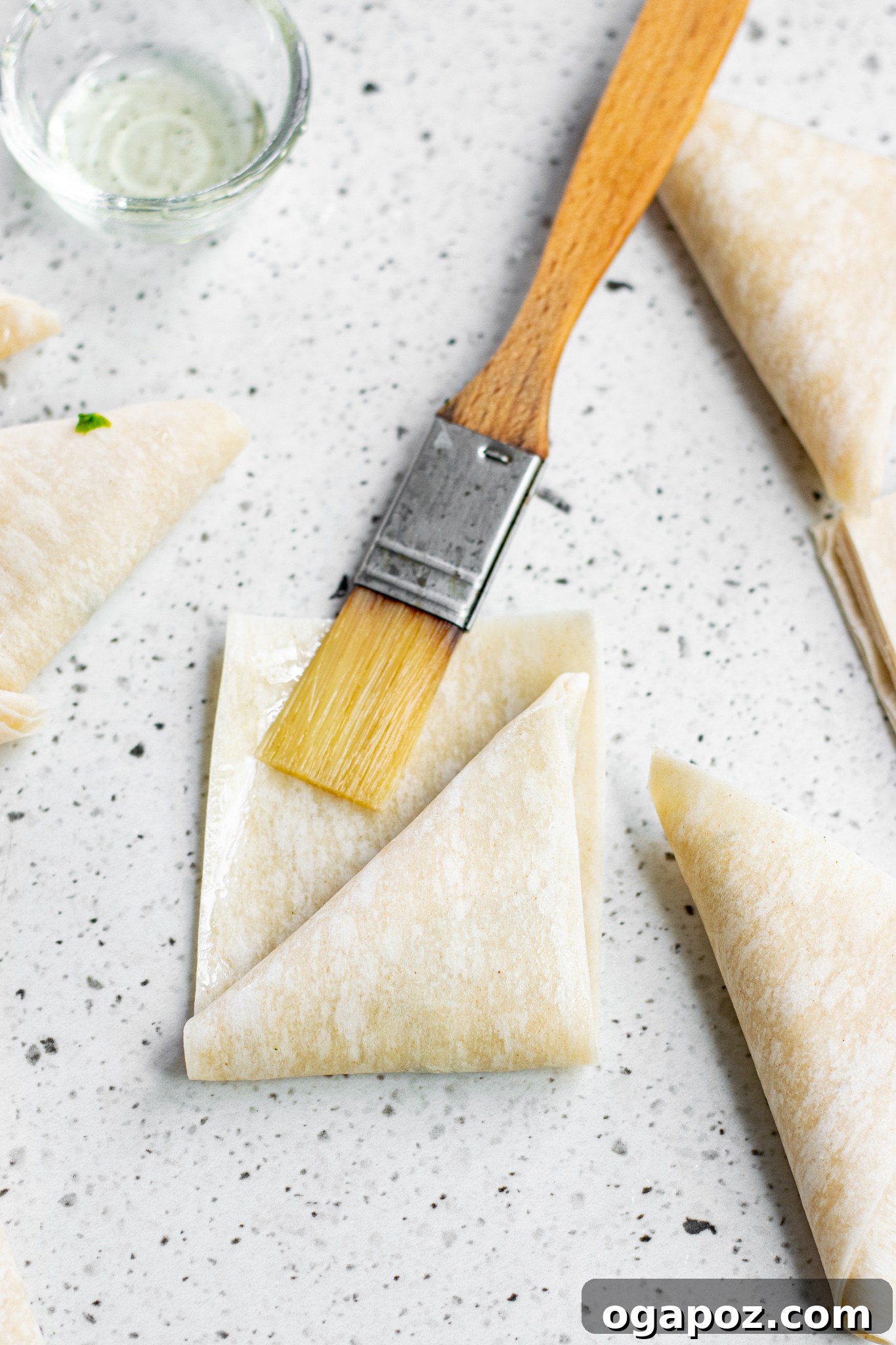
Take one strip of phyllo dough. Using a pastry brush, lightly and evenly brush the entire surface with melted butter. The butter not only adds flavor but also helps create those incredible flaky layers. Place a second phyllo strip directly on top of the first buttered strip and brush it with melted butter as well. Using two layers per triangle adds robustness and helps prevent the filling from tearing through.
Step 5: Fill and Fold the Triangles
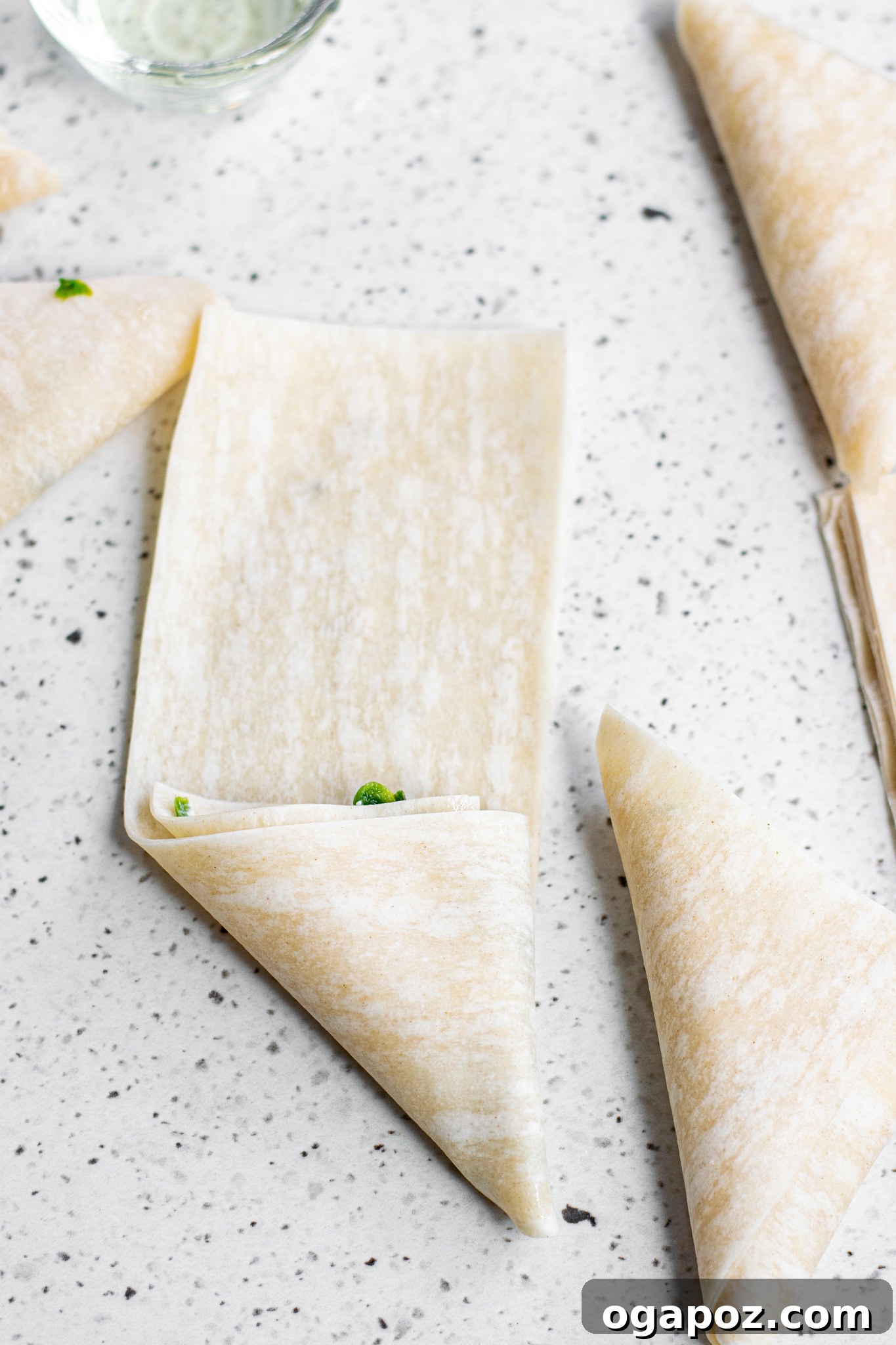
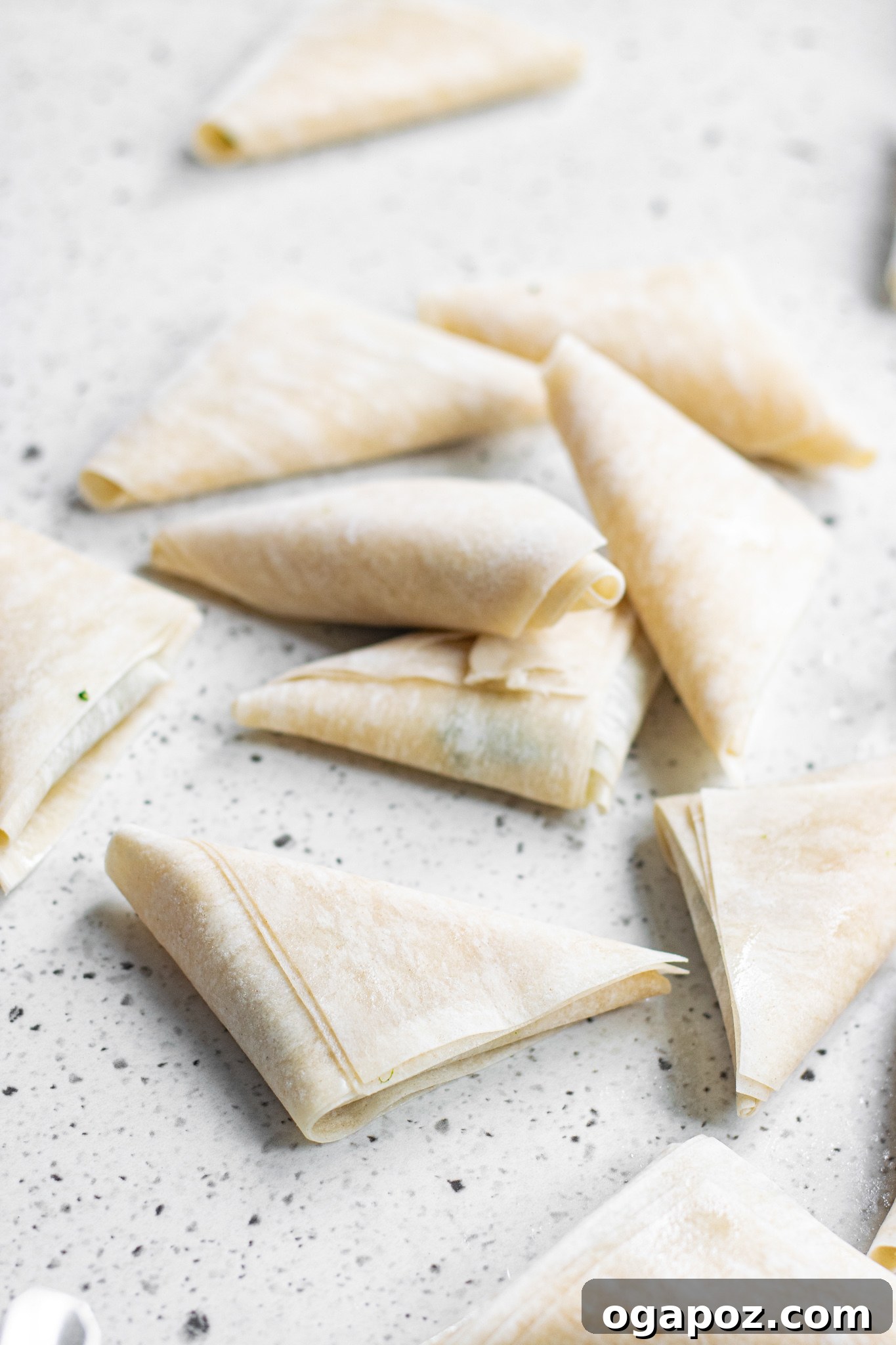
Place about one tablespoon of the cooled spinach and herb mixture onto the lower corner of the buttered phyllo strip. Crumble approximately half a tablespoon of feta cheese directly over the spinach filling. Now, gently take the bottom corner of the strip and fold it upwards to create a triangle shape, aligning the bottom edge with the side edge. Continue folding the triangle over itself, maintaining the triangular shape, much like folding a flag. Ensure the filling remains neatly enclosed within each fold.
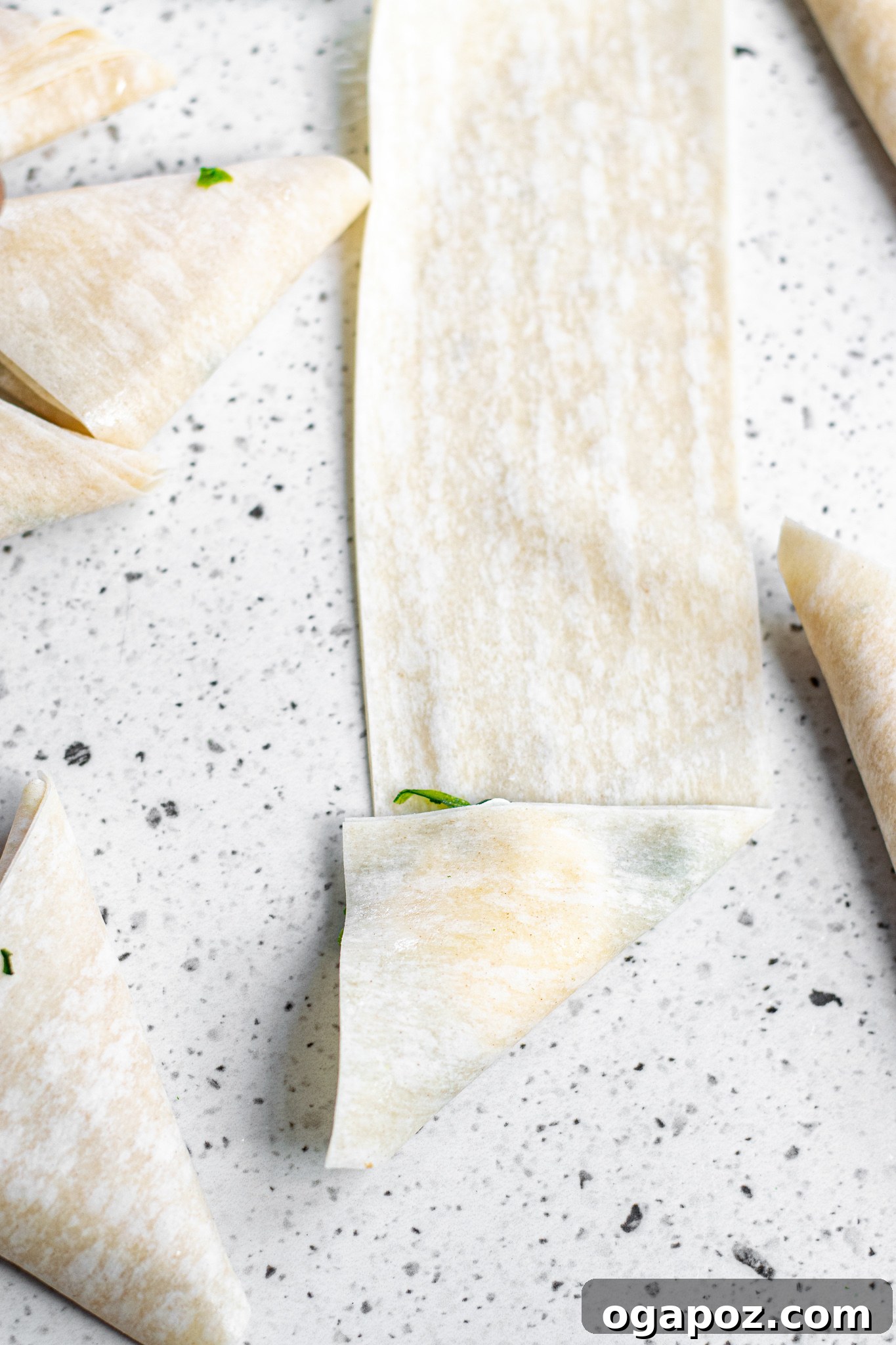
As you approach the final fold of each triangle, lightly brush the very end of the phyllo strip with a tiny bit of water. This acts as a natural sealant, ensuring your triangles remain perfectly shaped during baking. Continue this folding process until all the delicious spinach and feta filling has been used, carefully placing each completed triangle on your prepared baking sheet.
Step 6: Bake to Golden Perfection
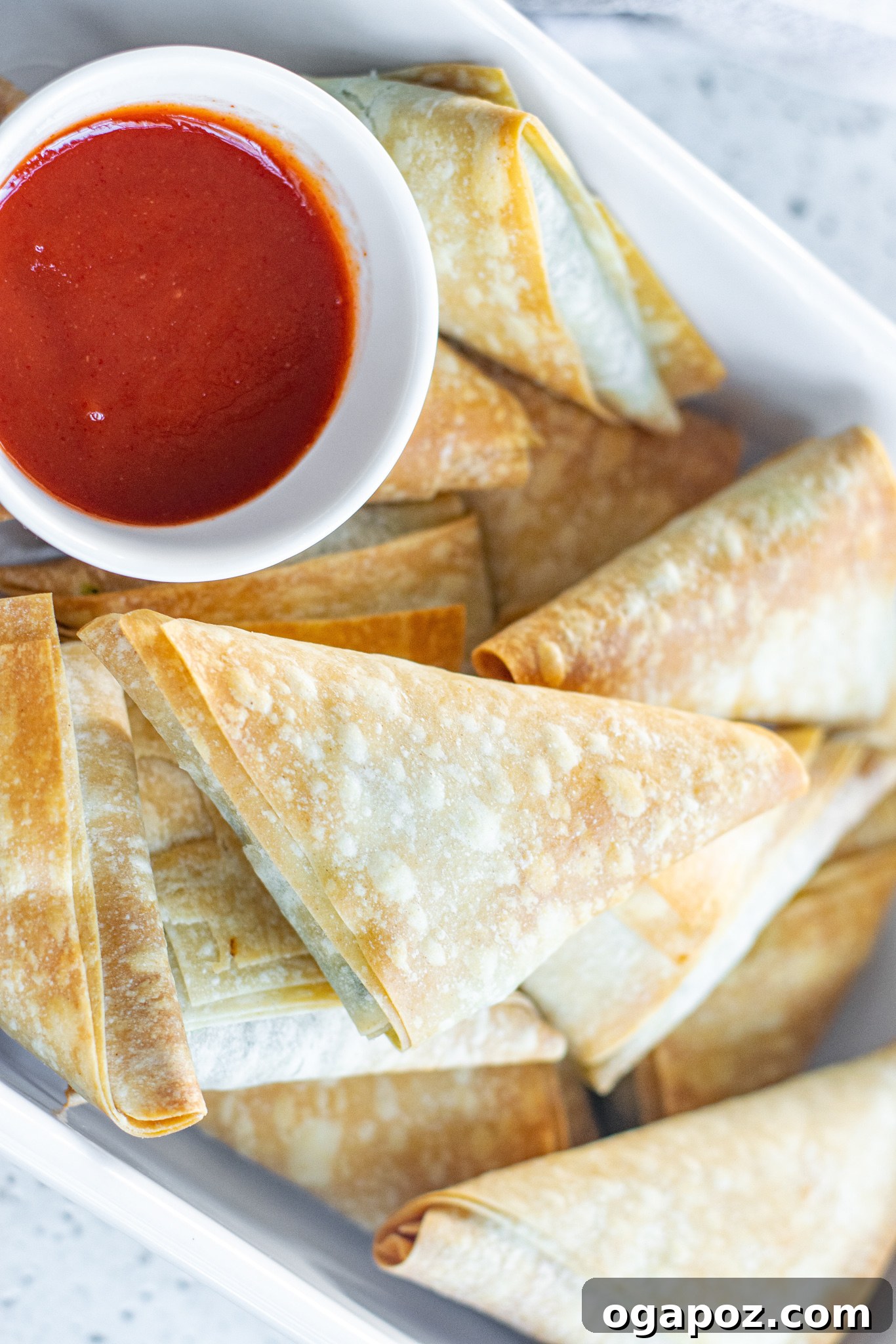
Arrange your prepared spanakopita triangles on the parchment-lined baking sheet, leaving a small space between each one to ensure even cooking. Bake for 25-30 minutes, or until the phyllo pastry turns a beautiful golden brown and becomes incredibly crisp. Once baked, remove the triangles from the oven and let them cool on the baking sheet for about 5 minutes before serving. This brief cooling period allows them to set and become even crispier. Serve these irresistible triangles warm with your favorite Greek dips, such as a cool Greek yogurt dip, classic hummus, or a refreshing tzatziki sauce.
Creative Variations and Customizations
One of the joys of cooking is the ability to adapt recipes to suit your personal taste or what you have on hand. Spanakopita is incredibly versatile, offering many delicious ways to modify the classic recipe:
- Cheese Adventures: While feta is the traditional choice, feel free to experiment with other cheeses. Ricotta cheese can add a creamy, mild counterpoint, mozzarella offers a delightful stretchiness, and goat cheese introduces a distinct tangy and earthy flavor. A blend of cheeses can also create a more complex filling.
- Nutty Additions: For an extra layer of texture and richness, consider adding toasted nuts to your spinach mixture. Pine nuts are a classic Mediterranean pairing, offering a subtle buttery crunch. Walnuts provide a heartier texture and earthy note, while thinly sliced almonds add a delicate crispness. Toasting them lightly beforehand enhances their flavor.
- Spice It Up: Elevate the flavor profile with additional spices. Sumac or za’atar can introduce an authentic Middle Eastern twist with their tangy, earthy, and herbaceous notes. A pinch of smoked paprika will impart a warm, smoky depth, while Italian seasoning offers a familiar and comforting blend of herbs. Don’t be afraid to explore!
- Fresh Herb Boost: Beyond parsley, incorporating other fresh herbs can dramatically change the aroma and taste. Finely chopped chives or spring onions (green onions) provide a mild oniony flavor. Fresh dill is a common addition in Greek cooking, lending a bright, almost anise-like freshness. Fresh mint offers a cool, invigorating twist, and thyme adds an earthy, savory aroma.
- A Touch of Heat: If you enjoy a bit of spice, a pinch of red pepper flakes or a dash of cayenne pepper mixed into the filling will add a pleasant warmth without overpowering the other flavors.
- Sweet & Savory Twists: For an unexpected and delightful sweet-savory dynamic, try incorporating a small amount of dried fruit. Raisins or dried cranberries, finely chopped, can add a subtle sweetness and chewy texture that beautifully complements the salty feta and earthy spinach.
- Vegetable Enhancements: Finely chopped leeks or sautéed onions can be added to the spinach mixture for extra flavor and moisture.
Storage and Freezing Tips for Spanakopita
Spanakopita triangles are fantastic for making ahead or enjoying later. Here’s how to store them effectively:
- Storing Leftovers: Cooked spanakopita triangles can be stored in an airtight container in the refrigerator for up to 5 days. To restore their crispiness, I highly recommend reheating them in an air fryer or in a conventional oven rather than a microwave.
- How to Freeze (Uncooked): If you wish to prepare them in advance, you can freeze spanakopita triangles before baking. Lay the uncooked triangles in a single layer on a baking sheet lined with parchment paper. Place them in the freezer for about 1 hour, or until solid. Once frozen, transfer them to a freezer-safe ziplock bag or airtight container. This method helps prevent them from sticking together. They can be stored for up to 1 month. When ready to bake, you can bake them from frozen (adding a few extra minutes to the baking time) or allow them to thaw first.
- How to Freeze (Cooked): You can also freeze already baked phyllo triangles, though they might lose some of their initial crispiness and can sometimes accumulate a little moisture inside. For best results, wrap each individual triangle tightly in plastic wrap before placing them all in a freezer-safe bag or container. Store for up to 1 month.
- Reheating: To reheat thawed or refrigerated spanakopita, use an oven preheated to 350°F (175°C) or an air fryer until they are thoroughly warmed through and crispy again. If reheating from frozen (uncooked), allow them to defrost partially on the counter for about 20-30 minutes before baking to help ensure even cooking. If reheating frozen (cooked) triangles, allow them to thaw completely first, then reheat as you would refrigerated leftovers.
Frequently Asked Questions About Spanakopita
While puff pastry can technically be used as a substitute, it’s important to understand that the result will be quite different from traditional spanakopita. Phyllo dough is a very thin, dried dough that bakes up incredibly crisp and flaky in distinct layers. Puff pastry, on the other hand, is a laminated dough containing a significant amount of fat (like butter), which creates a much richer, softer, and more “puffy” texture. If you’re looking for the authentic light and crisp spanakopita experience, stick with phyllo.
You absolutely can use fresh spinach! If opting for fresh, you’ll need a much larger quantity as it cooks down significantly. Typically, about 1 to 1.5 pounds (450-680g) of fresh spinach will yield roughly the same amount as 10 ounces (280g) of frozen. Make sure to wash and thoroughly dry the fresh spinach, then sauté it in the skillet until it’s completely wilted and any excess moisture has evaporated before mixing it with the other filling ingredients.
Don’t worry, phyllo is very delicate and tearing is common! Since you’re using multiple layers (two per triangle in this recipe), minor tears are usually not an issue as they’ll be covered by subsequent layers. Just try to mend larger tears by overlapping pieces or use a different strip if a tear is too large to work with. Remember to always keep unused phyllo covered with a damp towel to prevent it from drying out.
Yes, the spinach and feta filling can be prepared a day in advance. Store it in an airtight container in the refrigerator. Just make sure it’s completely cooled before you begin assembling the triangles, as a warm filling can make the phyllo soggy.
The key to crispiness is proper drainage of the spinach and generous brushing of butter between phyllo layers. After baking, allow them to cool slightly on a wire rack to prevent steam from building up underneath, which can make them soggy. When reheating, always use an oven or air fryer to bring back that delightful crunch.
Explore More Delicious Appetizer Recipes
Vegetarian
Zesty Lemon Hummus
Appetizers
Authentic Baba Ghanoush
Mediterranean
Sweet Honey Goat Cheese Balls
Vegetarian
Goat Cheese and Roasted Tomato Dip
Tried this recipe? Share your experience below! For more delicious recipes and cooking inspiration, subscribe to our newsletter or follow us on
Facebook,
Instagram, or
Pinterest.
Spanakopita Triangles Recipe
Print Recipe
Ingredients
- 1 tablespoon olive oil
- 10 ounces frozen spinach, fully defrosted and squeezed dry
- 4 garlic cloves, finely minced
- 1 teaspoon lemon zest
- 1 teaspoon dried oregano
- 1/2 teaspoon dried dill
- 2 tablespoons fresh parsley, chopped
- 6 ounces feta cheese, crumbled
- 4 tablespoons butter, melted
- 15 phyllo sheets (approximately 2.5 inches wide per strip)
Instructions
- Begin by thoroughly defrosting the spinach. Once defrosted, use your hands or a clean kitchen towel to squeeze out as much excess liquid as possible. This is crucial for crispy spanakopita.
- In a medium-sized skillet, heat the olive oil over medium heat. Add the drained spinach, minced garlic, oregano, dill, and chopped parsley. Sauté for about 1 minute until fragrant. Remove from heat and let it cool down slightly. Once cooled, stir in the lemon zest. Set this flavorful filling aside.
- Preheat your oven to 400°F (200°C) and prepare a large baking sheet by lining it with parchment paper.
- Unroll the phyllo dough onto a large cutting board or a clean working surface. Using a sharp knife or pizza cutter, cut the phyllo sheets into strips approximately 2.5 inches wide. Immediately cover the unused phyllo strips with a lightly damp kitchen towel to prevent them from drying out and becoming brittle.
- Take one strip of phyllo dough and lightly brush it with melted butter using a pastry brush. Place a second phyllo strip directly on top of the first and brush it with melted butter as well.
- Place about 1 tablespoon of the spinach filling (with about 1/2 tablespoon of crumbled feta cheese) onto the lower corner of the buttered phyllo strip. Begin folding the strip upwards into a triangle shape, much like folding a flag. Continue folding the triangle over itself, maintaining the shape, until you reach the end of the strip.
- Before making the very last fold of the triangle, lightly brush the tip of the phyllo strip with a little water. This will help seal the triangle securely. Complete the final fold. Repeat this entire process for the remaining phyllo strips and filling until all are used.
- Place the completed spanakopita triangles onto your prepared baking sheet, ensuring there is a small space between each one.
- Bake for 20-25 minutes, or until the phyllo is beautifully golden brown and visibly crispy.
- Remove the triangles from the oven and allow them to cool on the baking sheet for about 5 minutes before serving. Serve immediately with your favorite dip, such as traditional hummus or a refreshing tzatziki sauce. Enjoy!
Recipe Notes
- While puff pastry can replace phyllo, the texture will be different; phyllo provides a much crisper, drier flake.
- Other cheese options for the filling include mozzarella, ricotta, or goat cheese for varied flavors and textures.
- Store leftover baked spanakopita in an airtight container in the fridge for up to 5 days. Reheat in an oven or air fryer for best results.
- Freezing Instructions: Uncooked spanakopita triangles can be frozen individually on a baking sheet until solid, then transferred to a freezer bag for up to 1 month. Baked triangles can also be frozen in the same way, but wrapping each in plastic wrap first helps preserve their quality; they may lose some crispiness upon thawing and reheating.
- Reheating Frozen: Allow frozen triangles to defrost before reheating in the oven or air fryer until warm and crispy.
Nutrition Information (per serving)
Carbohydrates: 151g,
Protein: 23g,
Fat: 24g,
Saturated Fat: 8g,
Polyunsaturated Fat: 3g,
Monounsaturated Fat: 11g,
Trans Fat: 0.1g,
Cholesterol: 18mg,
Sodium: 1535mg,
Potassium: 292mg,
Fiber: 6g,
Sugar: 1g,
Vitamin A: 2407IU,
Vitamin C: 2mg,
Calcium: 117mg,
Iron: 10mg
Nutrition information is automatically calculated and should only be used as an approximation.
Tried this recipe?
Mention @acedarspoon or tag #acedarspoon!