
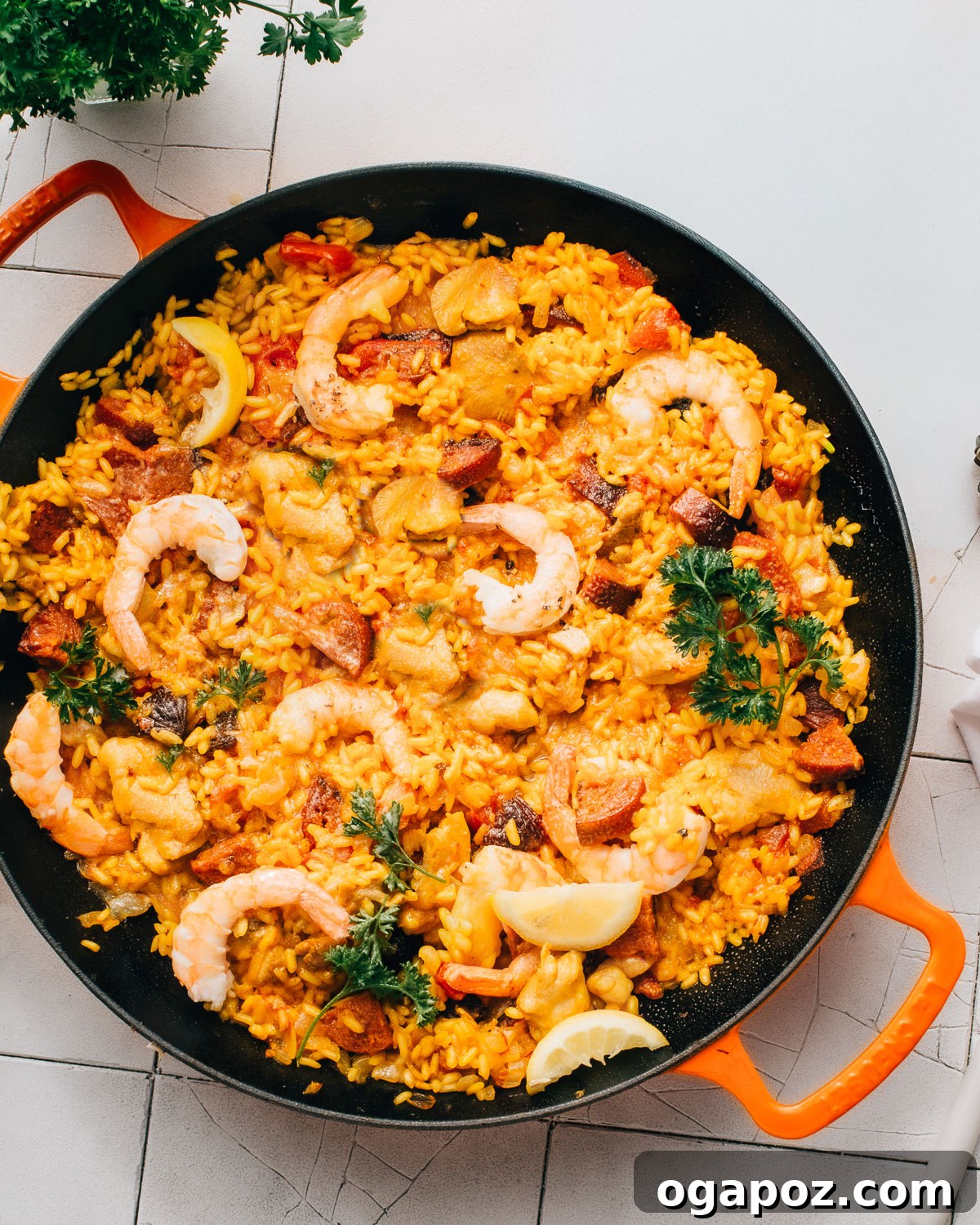
Chorizo Paella with Shrimp and Chicken: Your Ultimate One-Pan Spanish Feast
Embark on a culinary journey to Spain right from your kitchen with this incredible Chorizo Paella, generously packed with succulent shrimp, tender chicken, and vibrant, authentic Spanish flavors. This stunning, single-pan paella transcends the ordinary, offering a delicious and surprisingly simple recipe that’s fast enough for weeknights yet elegant enough for entertaining. With the intoxicating aroma of saffron, the smoky depth of paprika, and the bright zest of fresh lemon, every spoonful brings together a symphony of tastes that will transport you to the sun-drenched coasts of Valencia.
Paella is more than just a dish; it’s a celebration of Spanish culture and cuisine. While often perceived as complex, our simplified approach ensures you can achieve a truly authentic taste and texture, including the coveted *socarrat* (the crispy rice bottom), without the need for extensive culinary experience. Get ready to impress your family and friends with a hearty, flavorful meal that embodies the spirit of Spain.
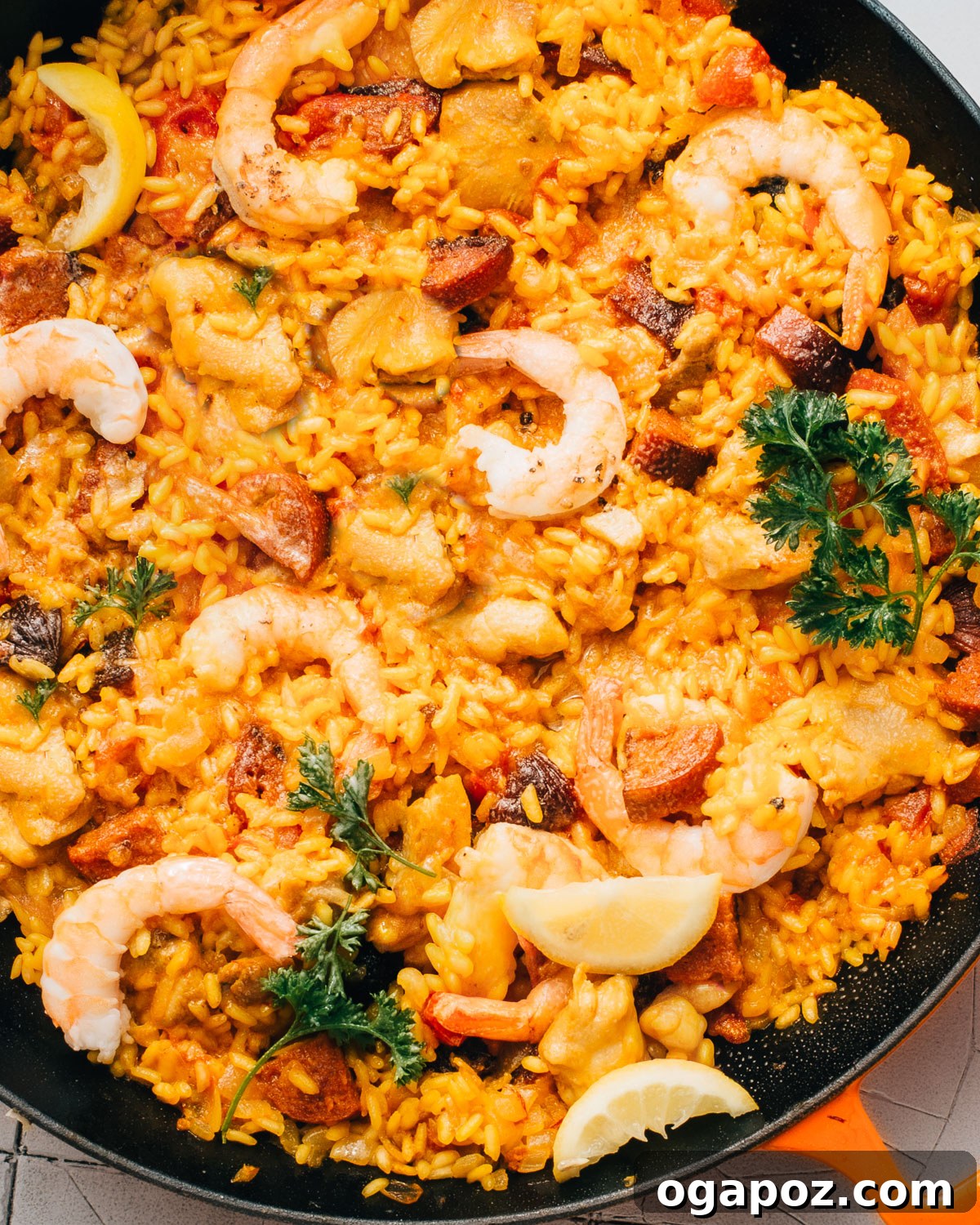
As a passionate advocate for one-pan chicken and rice recipes, I can confidently say this paella stands out. The beauty of a one-pan dish lies in its efficiency – minimal cleanup, maximum flavor infusion. For this Spanish paella feast, you won’t even need to preheat your oven! Everything comes together harmoniously on the stovetop, making it an ideal choice for busy evenings when you crave something special without the fuss.
Key Ingredients for an Authentic Paella & Their Role
Creating an authentic and flavorful paella relies on selecting the right ingredients. Each component plays a vital role in building the layered tastes and textures that make this dish so irresistible. Here’s a breakdown of what you’ll need and why they are essential:
- Olive Oil (or a neutral oil): Essential for achieving a hot, even sear on your proteins and vegetables. We recommend a standard olive oil over extra-virgin for cooking at higher temperatures, as extra-virgin olive oil has a lower smoke point and can burn, imparting a bitter taste. A neutral oil like canola or grapeseed can also be used.
- Large Peeled Shrimp: These become the tender, juicy “jewels” of our seafood paella, adding a sweet, briny counterpoint to the richer meats. Using peeled and deveined shrimp saves prep time and ensures a pleasant eating experience.
- Cured Spanish Chorizo: This is a non-negotiable ingredient for its incredible flavor contribution. Unlike fresh chorizo sausages, cured Spanish chorizo is firm and hard, rendering a rich, flavorful, and vibrant red oil as it cooks. This oil then infuses the entire dish, deepening its complexity. Look for Spanish chorizo, not Mexican chorizo, which is typically fresh and requires different cooking methods.
- Boneless Skinless Chicken Thighs: Chosen for their superior ability to stay tender and moist during the simmering process, chicken thighs are ideal for one-pot dishes. They absorb flavors beautifully, adding a robust, savory depth to the paella. While chicken breast can be used, thighs are preferred for their texture. Cut them into bite-sized pieces for even cooking.
- Yellow Onion & Fresh Garlic: These form the aromatic backbone of the paella, creating a classic and essential flavor base. They are sautéed until soft and fragrant, releasing their sweetness and pungency to meld with the other ingredients. For an added layer of flavor and color, consider sautéing in 1-2 small diced red bell peppers alongside the onion.
- Smoked Paprika (Pimentón Ahumado): This spice is the true heart and soul of paella, imparting that unmistakable, earthy, and smoky aroma and flavor. It’s what gives paella its characteristic reddish hue and deep, complex taste. Do not substitute with regular paprika; the smoked variety is crucial here.
- Diced Tomatoes: Roma tomatoes are my personal favorite for their meaty flesh and lower seed content, which contribute to a rich, concentrated tomato base without excess moisture. They add a touch of acidity and sweetness, balancing the other robust flavors.
- Saffron Threads: The signature note of authentic paella, saffron provides a delicate floral aroma, a subtle earthy sweetness, and a beautiful golden color to the rice. While optional due to its cost, it elevates the dish to another level of authenticity and luxury. Soaking the threads in a small amount of warm water before adding them helps release their full flavor and color.
- Chicken Broth + Dry White Wine: This liquid combination creates a balanced richness and acidity. The chicken broth provides a savory foundation, while dry white wine (such as a Sauvignon Blanc or Pinot Grigio) adds a subtle tang and complexity. If you prefer to omit alcohol, simply use more chicken broth and a squeeze of fresh lemon juice for a similar acidic lift.
- Bomba Rice (Spanish Rice) or Arborio Rice: For the most authentic paella, bomba rice is traditionally used. It’s a short-grain rice that absorbs liquids exceptionally well while maintaining its structure and not becoming mushy. However, arborio rice, a more readily available short-grain rice commonly used for risotto, makes an excellent and easy-to-find stand-in, offering a similar desirable texture. Avoid long-grain rice as it will not achieve the desired creaminess or *socarrat*.
- Fresh Parsley & Lemon Slices: These are vital for a bright, fresh finish. Minced fresh parsley adds a herbaceous note and a pop of color, while lemon slices or wedges served at the table allow each diner to add a squeeze of bright acidity, cutting through the richness and enhancing all the flavors. You could also stir in about 1 cup of green peas at the very end of cooking, just to heat through, for an additional touch of sweetness and color.
Pro Tip for the Perfect Paella: A dedicated paella pan, with its wide, shallow design, is excellent for maximizing the surface area of the rice. This increased exposure to heat is key to achieving that desirable crispy, caramelized layer of rice at the bottom, known as socarrat. However, don’t let the lack of a special pan deter you! A large cast-iron skillet or any wide, heavy-bottomed nonstick pan will also work beautifully, helping you achieve a fantastic paella with some careful heat management.
Step-by-Step Guide: Crafting Your Chicken, Shrimp, and Chorizo Paella
This recipe breaks down the traditional paella-making process into simple, manageable steps, ensuring a delicious result every time. Follow these instructions carefully to achieve a flavorful, perfectly cooked paella:
- Prepare and Sear the Shrimp: Begin by heating 1 tablespoon of olive oil in your paella pan or large skillet over medium-high heat. Pat your peeled and deveined shrimp thoroughly dry with paper towels; this helps them sear better and develop a nice crust. Sprinkle the shrimp with 1/4 teaspoon of kosher salt. Arrange the shrimp in a single layer in the hot pan and cook for about 1-2 minutes per side, or until they turn golden underneath and are just opaque. Be careful not to overcook them, as they will finish cooking later in the paella. Transfer the cooked shrimp immediately to a clean plate and set aside.
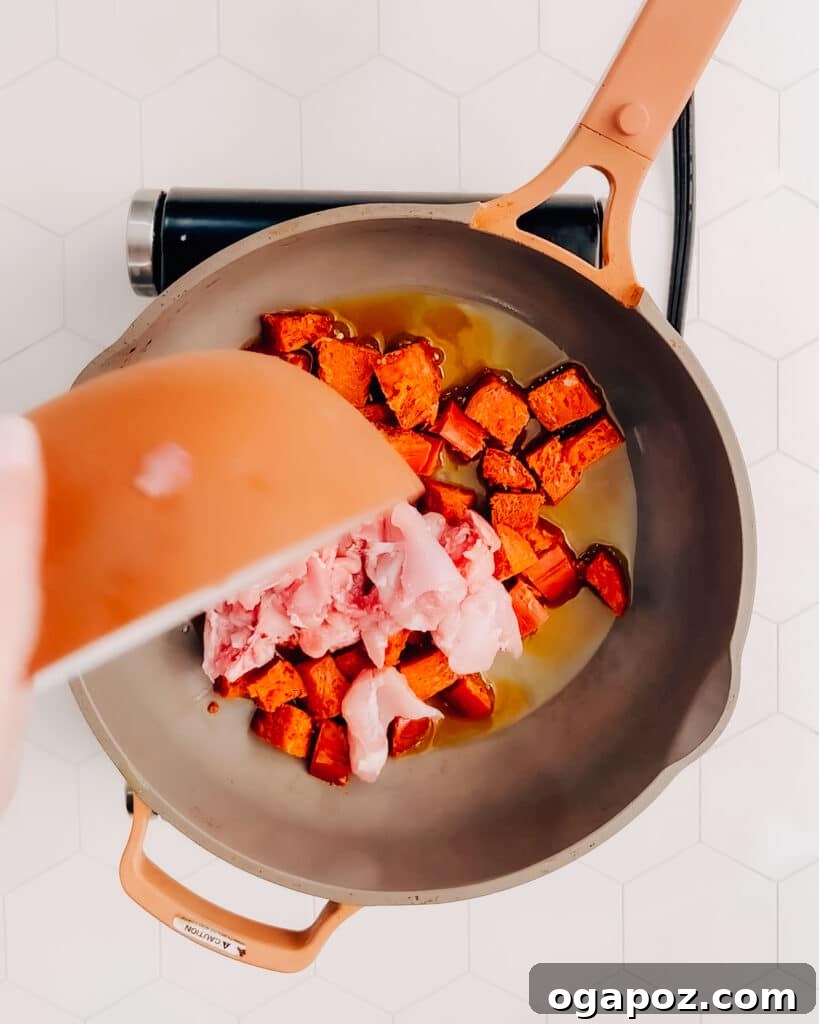
- Brown Chorizo and Chicken, Build Flavor Base: Add the remaining olive oil to the same pan. Add your bite-sized pieces of cured Spanish chorizo and chicken thighs. Season the chicken with 1/2 teaspoon of kosher salt. Cook, stirring occasionally, until the chorizo is browned and has rendered its flavorful oil, and the chicken thighs are nicely browned on all sides. Next, add the minced yellow onion along with an additional pinch of salt. Sauté until the onion softens and becomes translucent, about 5-7 minutes. Finally, stir in the minced garlic and smoked paprika. Cook for another 2 minutes, stirring constantly, allowing the spices to become fragrant and their flavors to deepen, but be careful not to burn the garlic.
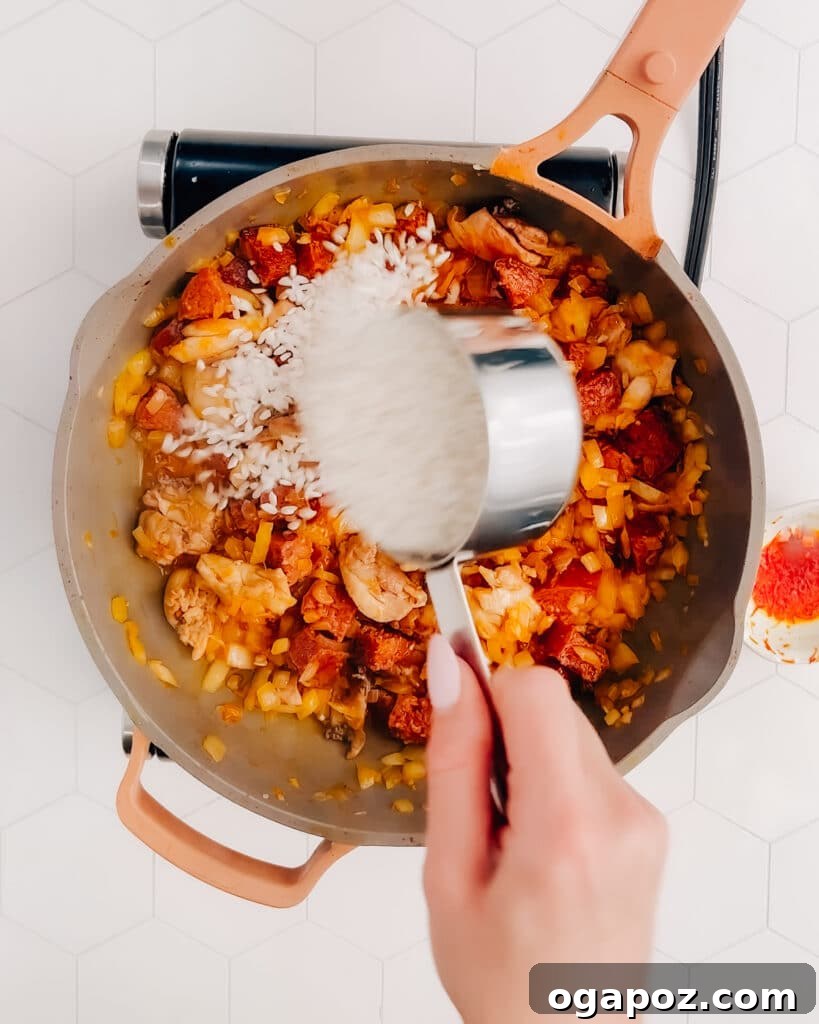
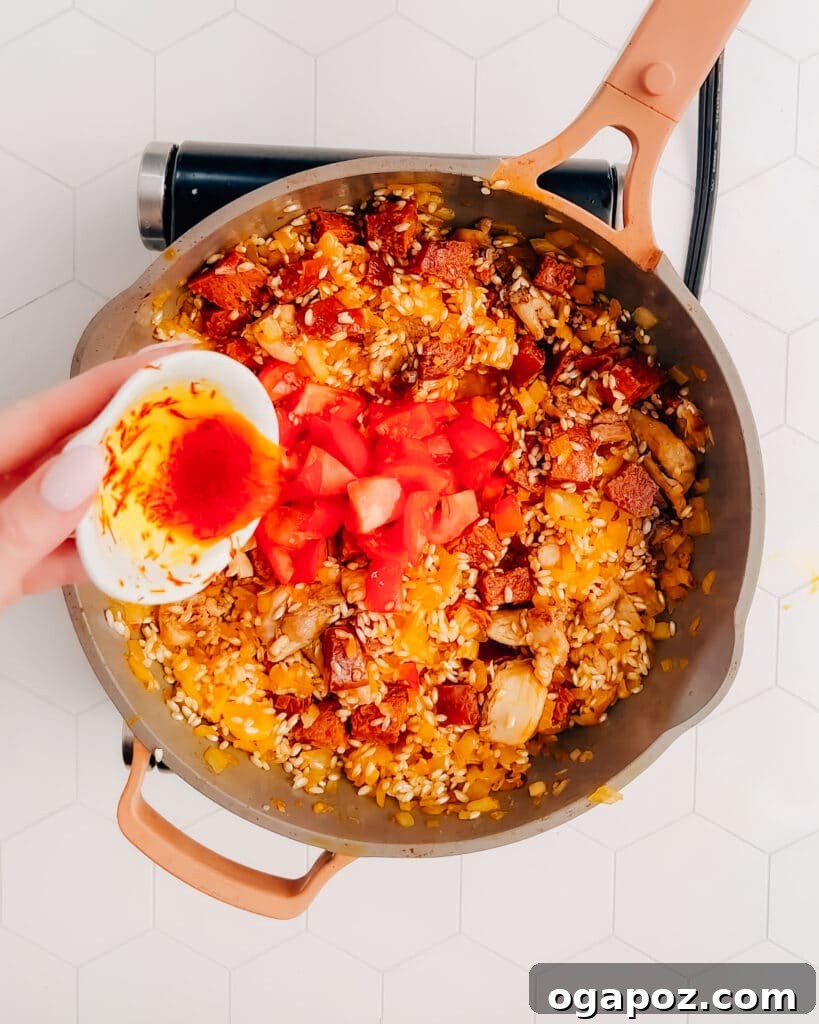
- Incorporate Liquids and Rice: Add the diced Roma tomato, saffron (including the water it was soaked in), chicken broth, dry white wine (or extra broth and lemon juice), an additional 3/4 teaspoon of salt, and the black pepper to the pan. Bring the mixture to a gentle boil. Once boiling, stir in the arborio (or bomba) rice, distributing it evenly across the bottom of the pan. Reduce the heat to low, cover the pan tightly, and let it simmer undisturbed. It’s crucial to resist the urge to stir the rice during this stage, as stirring can release starch and prevent the formation of the desirable *socarrat*. Allow it to cook for about 15-20 minutes, or until most of the liquid has been absorbed by the rice. The rice should still be slightly al-dente.
- Finish and Serve: Once the rice has absorbed most of the liquid, uncover the pan. Arrange the pre-cooked shrimp evenly on top of the paella. Remove the pan from the heat and let it rest for a minute or two, allowing the residual heat to gently warm the shrimp and for the flavors to meld. Garnish generously with freshly minced parsley. Serve the paella directly from the pan, accompanied by a small bowl of fresh lemon slices for squeezing over individual portions. Enjoy your vibrant and flavorful Spanish paella!
Enhance Your Paella Experience: This rich and aromatic rice dish pairs beautifully with a variety of simple yet complementary sides. Consider serving it with a crisp green salad tossed with a zesty homemade Italian dressing, perfectly pan-cooked asparagus with a hint of garlic, or warm, crusty homemade garlic bread to soak up all the delicious juices. For a more elaborate meal, especially when entertaining a larger crowd, freshly steamed mussels make an impressive and delightful second protein, adding another layer of seafood goodness to your Spanish feast.
Make-Ahead Tips & Storage Solutions
Paella is best enjoyed fresh, but leftovers are certainly delicious and can be stored for later enjoyment. Here’s how to manage your paella for maximum flavor and freshness:
- Fridge Storage: To store leftover paella, allow it to cool completely at room temperature for no more than two hours. Once cooled, transfer it to an airtight container. It will keep well in the refrigerator for up to 3 days. Reheat gently on the stovetop over low heat, adding a splash of chicken broth or water if the rice seems dry, or in the microwave until just warmed through. Be careful not to overcook the shrimp during reheating.
- Freezer Storage: Paella can be frozen for longer storage, though the texture of the rice and seafood may change slightly upon thawing. Cool the paella completely and transfer it to a freezer-safe, airtight container or heavy-duty freezer bags. It can be stored in the freezer for up to 2–3 months. When ready to enjoy, thaw the paella gently in the refrigerator overnight. Rewarm on the stovetop over low heat, adding a splash of broth or water as needed to restore moisture.
-
Exciting Variations to Explore:
- Vegetarian Paella: Easily adapt this recipe by omitting the meats and seafood. Load it with colorful vegetables such as artichoke hearts, green beans, bell peppers (red, yellow, or orange for sweetness), asparagus spears, and sweet green peas. Use a high-quality vegetable broth as the liquid base to ensure a rich, savory flavor.
- Seafood-Only Paella (Paella de Mariscos): For a true taste of the ocean, skip the chicken and chorizo. Focus on an array of fresh seafood like mussels, clams, firm white fish (such as cod or snapper), and tender calamari or squid. Add the mussels and clams during the last 5-7 minutes of simmering until they open, discarding any that don’t.
- Squid-Ink Paella (Paella Negra): For a dramatic and intensely flavorful variation, try adding squid ink to your seafood paella. It imparts a deep, briny flavor and a striking black color, offering a unique and sophisticated twist on the classic.
- Spicy Paella: For those who love a bit of heat, consider adding a pinch of red pepper flakes with the smoked paprika, or a finely diced jalapeño or serrano pepper when sautéing the onions.
Frequently Asked Questions About Paella
The true secret ingredient that imparts paella’s signature flavor and beautiful golden hue is saffron. These delicate threads contribute a subtly sweet, earthy, and floral aroma that is irreplaceable. While saffron can be a bit pricey, it’s optional if your budget is tight—your paella will still be incredibly delicious thanks to the smoked paprika and other robust ingredients. However, for an authentic experience, saffron is highly recommended.
The most authentic and traditional rice for paella is Bomba rice, also known as Spanish paella rice. It’s a short-grain variety renowned for its ability to absorb a large amount of liquid without becoming mushy, while maintaining its individual grain structure. If bomba rice is not readily available, Arborio rice, a short-grain rice commonly used in Italian risotto, serves as an excellent and accessible swap. It behaves similarly to bomba, ensuring your paella has the perfect texture. Avoid long-grain rice, as it won’t achieve the desired consistency.
Absolutely not! While many popular paella versions feature a combination of meats and seafood, paella is incredibly versatile. You can easily make a delicious seafood-only paella, loaded with mussels, clams, shrimp, and fish, or a vibrant vegetarian paella, utilizing a rich vegetable broth and an assortment of fresh seasonal vegetables like artichokes, green beans, and bell peppers. The core technique remains the same; only the main proteins change.
A wide, shallow, heavy-bottomed pan is ideal for paella. A dedicated paella pan is designed to maximize the surface area of the rice, which is crucial for even cooking and for developing the prized *socarrat* – the crispy, caramelized crust that forms at the bottom. If you don’t have a specific paella pan, a large cast-iron skillet or any wide, heavy nonstick skillet will work effectively. The key is a pan that allows the rice to spread out in a relatively thin layer, rather than pile up.
For paella, you should always opt for cured Spanish chorizo. This type of chorizo is already cooked and firm, similar to a salami, and when heated, it browns beautifully without drying out. More importantly, it renders a wonderfully flavorful, reddish-orange oil that infuses the entire paella with its rich, smoky, and spicy notes. Avoid fresh chorizo, which is raw and typically fattier, as it behaves differently during cooking and won’t contribute the same depth of flavor or texture to the finished dish.
The *socarrat* is the crispy, slightly caramelized crust of rice that forms at the bottom of the paella pan, and it’s highly prized. To achieve it, once the liquid has been mostly absorbed by the rice (after about 15-20 minutes of simmering), increase the heat slightly to medium-high for the last 5-10 minutes of cooking. Listen for a crackling sound, and you might even catch a whiff of toasted rice. Resist the urge to stir! You can carefully peek with a spoon to check the bottom, but don’t disrupt the crust. The *socarrat* signifies a perfectly cooked paella, where every grain of rice has contributed to the flavor and texture.
Other Irresistible Seafood Recipes You’ll Love
If you’ve enjoyed the delightful flavors of this Chorizo Paella, you’re in for a treat with these other fantastic seafood creations:
- Bright and Zesty Shrimp, Corn & Avocado Ceviche
- Creamy and Spicy Coconut Laksa with Shrimp
- Easy Masala Tuna Fish Cakes (Indian Style) – Foodess.com
Pin
Chorizo Paella with Shrimp and Chicken
Jennifer Pallian BSc, RD
10 minutes
30 minutes
6
Video Guide
Ingredients
- 4 tbsp olive oil divided use
- ½ lb shrimp peeled and deveined
- 6 oz chorizo use cured, not fresh chorizo, cut into bite-sized pieces
- 3 chicken thighs boneless, skinless, cut into bite-sized pieces
- 1 large onion minced
- kosher salt to taste, divided
- 2 cloves garlic minced
- 1 tsp smoked paprika
- 1 large roma tomato diced
- ⅛ tsp saffron soaked in 2 tbsp warm water
- 1 ½ cups unsalted chicken broth
- ¼ cup dry white wine or more broth
- ½ tsp black pepper
- 1 cup arborio rice (or Bomba rice)
- 1 tbsp minced fresh parsley for garnish
- Lemon slices or wedges for serving
Instructions
-
1. Sear the Shrimp: Heat 1 tablespoon of olive oil in a paella pan or large, wide skillet over medium-high heat. Pat the shrimp dry and season with 1/4 tsp salt. Arrange in a single layer and sear until golden underneath and just opaque, about 1-2 minutes per side. Transfer the cooked shrimp to a plate and set aside.
-
2. Cook Chorizo & Chicken: Add the remaining 3 tablespoons of olive oil, chorizo pieces, and chicken thighs to the same pan. Season the chicken with 1/2 tsp salt. Cook over medium-high heat, stirring occasionally, until the chorizo is browned and crispy, and the chicken is nicely seared. Stir in the minced onion and an additional 1/4 tsp salt; cook until the onion softens, about 5-7 minutes. Add the minced garlic and smoked paprika, cooking for another 2 minutes until fragrant, being careful not to burn the garlic.
-
3. Add Liquids & Rice: Stir in the diced Roma tomato, saffron (including its soaking water), chicken broth, dry white wine (or more broth), 3/4 tsp salt, and pepper. Bring the mixture to a boil. Add the arborio rice, spreading it evenly across the pan. Reduce heat to low, cover the pan, and simmer undisturbed for about 15-20 minutes, or until most of the liquid has been absorbed and the rice is tender-crisp. Avoid stirring to allow a crispy bottom (*socarrat*) to form.
-
4. Finish & Serve: Uncover the paella. Arrange the reserved cooked shrimp on top of the rice. Remove from heat and let it rest for 1-2 minutes to allow flavors to meld. Garnish generously with minced fresh parsley and serve immediately with lemon slices or wedges for squeezing.
Chef’s Notes & Tips
- While not strictly necessary, a true paella pan offers a large surface area that really helps in developing the crispy bottom layer of rice, known as socarrat. My personal favorite is this one from Le Creuset for its excellent heat distribution.
- For an even quicker shortcut, you can use thawed pre-cooked shrimp. Simply stir them into the paella during the last minute of cooking, just enough to heat them through, to prevent them from becoming tough.
- Always use cured Spanish chorizo for this recipe. Fresh chorizo will not render the same amount of flavorful oil and tends to dry out with the longer cooking time required for paella. The cured variety is key for that authentic, rich flavor.
- Saffron threads, while traditional and wonderful for color and unique flavor, can be pricey. If you prefer to omit it, your paella will still be incredibly flavorful thanks to the smoked paprika and other ingredients.
- For an extra layer of flavor, consider adding a cup of frozen green peas during the last 5 minutes of cooking. They add a touch of sweetness and vibrant color.
- Don’t stir the rice after adding the liquid and covering the pan. This is crucial for allowing the *socarrat* to form at the bottom of the pan and for the rice to cook evenly without becoming gummy.
Nutrition Information (per serving)
Calories: 476kcal
|
Carbohydrates: 32g
|
Protein: 23g
|
Fat: 27g
|
Saturated Fat: 7g
|
Polyunsaturated Fat: 3g
|
Monounsaturated Fat: 11g
|
Trans Fat: 0.1g
|
Cholesterol: 123mg
|
Sodium: 348mg
|
Potassium: 314mg
|
Fiber: 1g
|
Sugar: 2g
|
Vitamin A: 358IU
|
Vitamin C: 4mg
|
Calcium: 37mg
|
Iron: 3mg
Nutrition information is automatically calculated and should only be used as an approximation.
Tried this recipe? Leave a comment below and share your experience!