

Unlock the secret to crafting the most irresistible Curry Chickpeas that will have everyone reaching for seconds and praising your culinary skills. This remarkably quick and easy recipe, inspired by the rich and comforting flavors of Indian cuisine, is a true crowd-pleaser and a personal favorite in my Indian household!

It’s impossible to resist the allure of a generously filled bowl of these creamy, perfectly spiced curry chickpeas. The depth of flavor in this dish evokes the comforting warmth of traditional Indian curries, reminiscent of the beloved butter chicken, yet it’s entirely plant-based. Each spoonful delivers a symphony of warm spices intertwined with a luscious, velvety sauce, beautifully brightened by the delicate richness of full-fat coconut milk. This recipe effortlessly achieves a harmonious balance of flavors and textures, creating a profoundly satisfying vegan meal that delights both meat-eaters and vegetarians alike.
Why You’ll Fall in Love with This Easy Curry Chickpea Recipe
While traditional Indian dishes like Chana Masala are undeniably delicious, they often demand a longer cooking time and more elaborate preparation. This recipe, however, offers a streamlined approach without compromising on authentic taste or hearty satisfaction. Here’s why these Curry Chickpeas are destined to become a staple in your kitchen:
- Effortless One-Pot Wonder: Say goodbye to mountains of dirty dishes! This entire dish comes together beautifully in a single pot, making clean-up a breeze and rendering it the ideal solution for busy weeknights when time is of the essence. Minimal prep, maximum flavor – perfect for a quick and satisfying dinner.
- Pantry Powerhouse & Budget-Friendly: Utilizing readily available pantry staples like canned chickpeas and creamy coconut milk, this recipe is incredibly convenient. You likely have most of the ingredients on hand, making impromptu curry cravings a reality. Plus, using inexpensive plant-based ingredients makes this a very budget-friendly meal, perfect for feeding families or meal prepping.
- Unforgettable Creamy & Rich Flavor: The star of this dish is undoubtedly its incredible sauce. It’s wonderfully creamy, richly spiced, and boasts a profound depth of flavor that some describe as a “butter chicken” experience, but without any dairy or meat. It’s a testament to how vibrant and satisfying plant-based cooking can be, offering a luxurious mouthfeel that truly comforts the soul.
- Wholesome & Nutrient-Packed: Chickpeas are a fantastic source of plant-based protein, dietary fiber, and essential minerals, making this curry a nutritious and filling option that keeps you satiated for hours. It’s naturally vegan and gluten-free (when using appropriate oil), catering to various dietary needs without sacrificing taste.
- Customizable & Versatile: This recipe serves as an excellent base for experimentation. Feel free to add your favorite seasonal vegetables, adjust the spice level to your preference, or explore different aromatics to create your signature version tailored perfectly to your family’s tastes. It’s a recipe that encourages creativity!
- Fantastic for Meal Prep: Curry chickpeas taste even better the next day as the flavors have more time to meld and deepen. This makes it an excellent candidate for meal prepping, providing delicious and healthy lunches or dinners throughout the week.
Essential Ingredients for Your Perfect Chickpea Curry
Prepare to elevate your weeknight dinner rotation with this incredibly flavorful vegan curry. Gathering your ingredients is the first step, and chances are, many of these aromatic spices and staples are already nestled in your pantry, especially if you’re a connoisseur of Indian cuisine. Here’s what you’ll need to create this culinary masterpiece:

The Foundation of Flavor
- Oil or Ghee: The starting point for building a rich flavor base. Ghee (clarified butter) offers a distinct nutty, buttery depth characteristic of Indian cooking. For a strictly vegan dish, vegetable oil, sunflower oil, or coconut oil are excellent alternatives, with coconut oil subtly enhancing the tropical notes of the curry.
- Onions, Garlic, and Ginger: The aromatic cornerstone of countless Indian dishes. Freshly chopped onions, along with finely minced garlic and ginger, are patiently sautéed to create a fragrant, sweet, and pungent base that defines the curry’s character. Their freshness is key to a vibrant flavor profile.
- Garam Masala or Curry Powder: These essential spice blends are the heart of the curry’s signature taste. Garam masala provides a warm, sweet, and complex aromatic profile, often used as a finishing spice, while curry powder offers a more robust and earthy flavor, ideal for building the initial spice base. Both work wonderfully, bringing layered depth to the sauce.
- Paprika: Contributes a gentle, earthy sweetness and a beautiful, inviting red hue to the curry, enriching its visual appeal without adding excessive heat.
- Ground Cumin: An indispensable spice in Indian cooking, ground cumin delivers a warm, earthy, and slightly smoky flavor that complements the other spices and adds significant depth to the overall dish.
- Cayenne Pepper: For those who enjoy a touch of heat, cayenne pepper delivers a subtle, pleasing kick. The quantity can be easily adjusted to match your preferred spice level, or omitted entirely for a milder, family-friendly curry.
- Diced Tomatoes: Whether using canned diced tomatoes for convenience or fresh, finely chopped ones, they provide essential acidity and a natural sweetness that beautifully balances the richness of the coconut milk and spices. They also contribute to the body and texture of the sauce.
- Coconut Milk: The true hero behind the curry’s irresistible creaminess and lush texture. Full-fat coconut milk is highly recommended for its luxurious consistency and rich mouthfeel, creating a truly decadent sauce base. While light coconut milk can be used, expect a less pronounced creaminess.
- Chickpeas: The star protein and textural anchor of this dish. Canned chickpeas offer unparalleled convenience – simply drain, rinse thoroughly, and add. For a more traditional, slightly firmer texture, you can cook dried chickpeas until tender. They are fantastic at absorbing the rich, complex flavors of the curry, making every bite satisfying and wholesome.
- Salt: A fundamental ingredient that brings all the flavors together, making them pop and preventing the dish from tasting flat. Adjust to taste throughout the cooking process, especially considering the varied salt content of canned ingredients.
Customizing Your Curry: Delicious Substitutions and Versatile Variations
One of the true joys of home cooking, especially with a versatile recipe like this chickpea curry, is the ability to adapt it to your pantry, palate, and dietary preferences. This recipe is incredibly forgiving and encourages experimentation, allowing you to create countless delicious adjustments. Here are some ideas to inspire your next culinary creation:
Explore Flavor Possibilities
- Alternative Cooking Fats: If ghee isn’t available or if you’re keeping it strictly vegan, opt for neutral vegetable oil, sunflower oil, or olive oil. Coconut oil is another excellent choice that will enhance the tropical notes of the coconut milk, adding another layer of flavor.
- Onion Varieties: While yellow onions are the standard, feel free to experiment with red onions for a slightly sharper, bolder flavor, or milder shallots for a more delicate sweetness and faster cooking time.
- Garlic and Ginger Convenience: For the most robust and authentic flavor, fresh garlic and ginger are always recommended. However, for sheer convenience in a pinch, pre-minced garlic and ginger from a jar, or even powdered versions, can be used. If using powdered, remember they are more concentrated – use approximately 1/3 to 1/2 the amount of fresh.
- Paprika Play: Smoked paprika introduces a wonderful depth and earthy, smoky undertone that can truly transform the flavor profile of your curry. For a milder curry, you can reduce the amount of paprika or omit it entirely without compromising the dish.
- Heat Adjustments: For those who crave more spice, simply increase the amount of cayenne pepper. Alternatively, you can add a pinch of red pepper flakes with the spices, or finely chopped fresh green chilies (like serrano or jalapeño) when you add the garlic and ginger for a vibrant, fresh kick.
- Boost with More Veggies: Elevate the nutritional content and textural complexity by incorporating a variety of your favorite vegetables.
- Leafy Greens: Stir in fresh baby spinach, chopped kale, or Swiss chard during the last 5-10 minutes of simmering. They will wilt beautifully into the sauce.
- Hearty Vegetables: Add cauliflower florets, sliced carrots, bell peppers (any color), or cubes of sweet potato along with the tomatoes or chickpeas. Allow them to simmer for 15-20 minutes until they are tender-crisp and have absorbed the rich curry flavors.
- Root Vegetables: Diced potatoes or butternut squash can also be wonderful additions, contributing a comforting starchiness and body to the curry.
- Lentil Love: For an even heartier and more protein-packed stew, consider adding a handful of red lentils (rinsed) along with the chickpeas. They will break down slightly during cooking and contribute to the sauce’s natural thickness and creaminess.
- Acidic Brightness: A final squeeze of fresh lemon or lime juice just before serving can brighten the entire dish, cutting through the richness and awakening all the intricate flavors. A tablespoon of apple cider vinegar can also work if you don’t have fresh citrus.
Essential Tools for a Smooth Cooking Experience
One of the many charms of this curry chickpea recipe is its simplicity, requiring only a few basic kitchen tools. Embracing its “one-pot wonder” nature means less clean-up and a more enjoyable, stress-free cooking process:
- Large Pot or Dutch Oven: A sturdy, heavy-bottomed pot or Dutch oven is ideal for this recipe. Its ample size provides enough space for sautéing all the aromatics and allowing the curry to simmer gently, ensuring even cooking and preventing overcrowding. The heavy bottom also helps distribute heat evenly, preventing sticking and burning.
- Sharp Knife and Cutting Board: These are indispensable for efficiently prepping your aromatics – onions, garlic, and ginger – ensuring they are finely chopped. Precision in chopping helps them cook evenly and release their flavors optimally into the curry base.
- Immersion Blender (Optional but Recommended): For those who prefer an ultra-smooth and velvety curry sauce, an immersion blender is a fantastic, convenient tool. It allows you to blend the sauce directly in the pot, achieving a restaurant-quality consistency without the hassle of transferring hot liquids to a traditional blender. If you don’t have one, you can skip this step or carefully blend a portion of the sauce in a regular blender, then return it to the pot.
- Measuring Cups and Spoons: Essential for accurate ingredient proportions, especially with the spices. Precise measurements ensure a balanced and consistent flavor profile every time you make the curry.
- Wooden Spoon or Heat-Resistant Spatula: Necessary for stirring the ingredients, scraping the bottom of the pot to prevent sticking, and ensuring all components are thoroughly combined and cooked evenly.
How to Make Creamy Curry Chickpeas: A Simple Step-by-Step Guide
Creating this rich and aromatic chickpea curry is a straightforward process, making it accessible even for novice cooks. Follow these clear, easy-to-understand steps to bring a bowl of comforting vegan goodness to your table in under an hour:
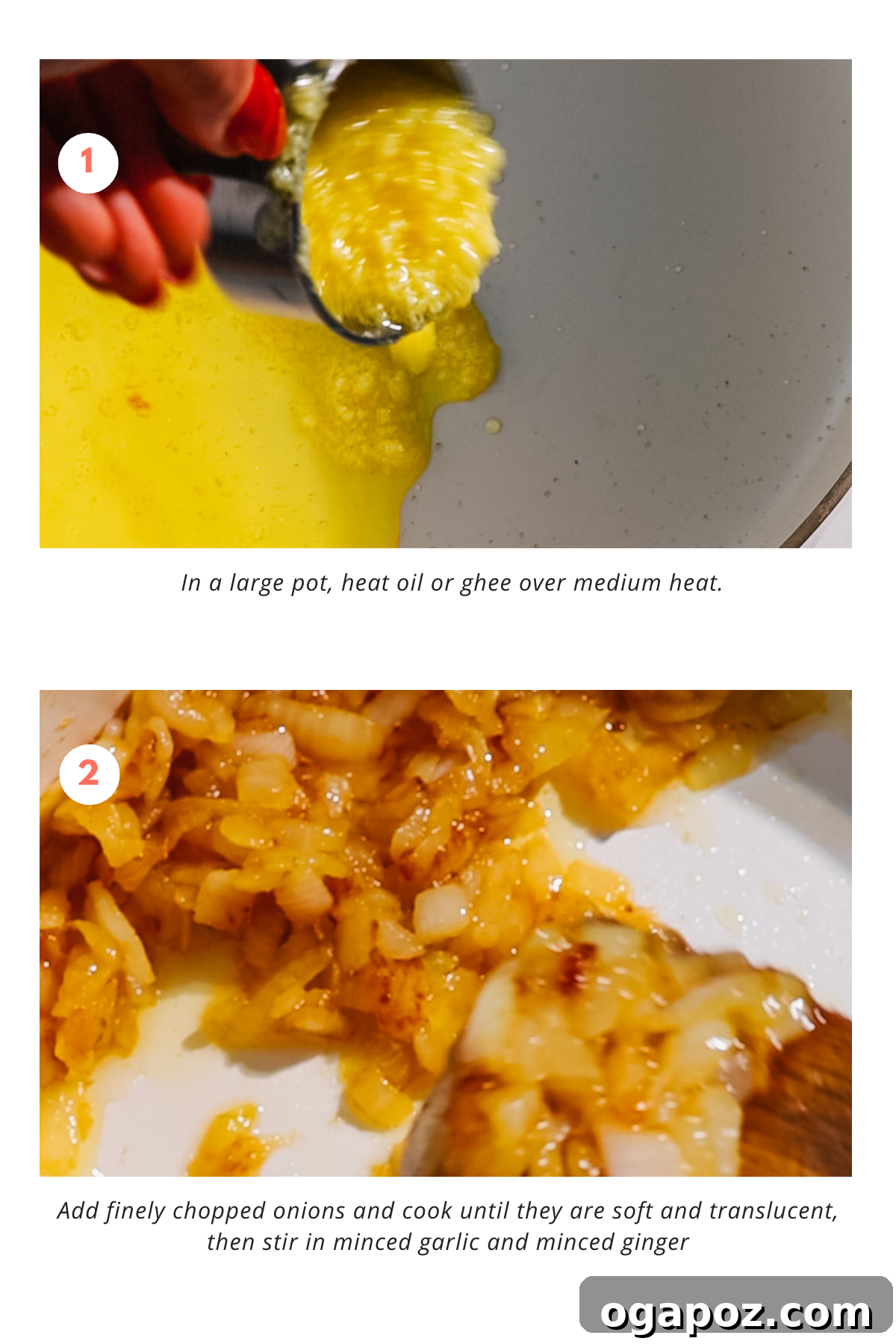
1. Build the Aromatic Base
In your large pot or Dutch oven, heat the oil or ghee over medium heat. Once the fat shimmers, add the finely chopped onions. Sauté patiently for 5-7 minutes, stirring frequently, until they become soft, translucent, and slightly golden. This crucial step is vital for developing a sweet, deep flavor base for your curry. Next, stir in the minced garlic and ginger. Continue to cook for another 2-3 minutes until they become wonderfully fragrant, being careful not to let them brown or burn, which can turn bitter.
2. Bloom the Spices for Depth
Now, it’s time to awaken the full potential of your spices. Add the garam masala (or curry powder), paprika, ground cumin, cayenne pepper, and 2 teaspoons of salt to the pot. Stir vigorously to ensure the onions, garlic, and ginger are thoroughly coated with the spices. Cook for about 1 minute, stirring constantly. This brief toasting in the hot oil helps to ‘bloom’ the spices, releasing their aromatic essential oils and significantly intensifying their flavors, which will be infused throughout the curry.
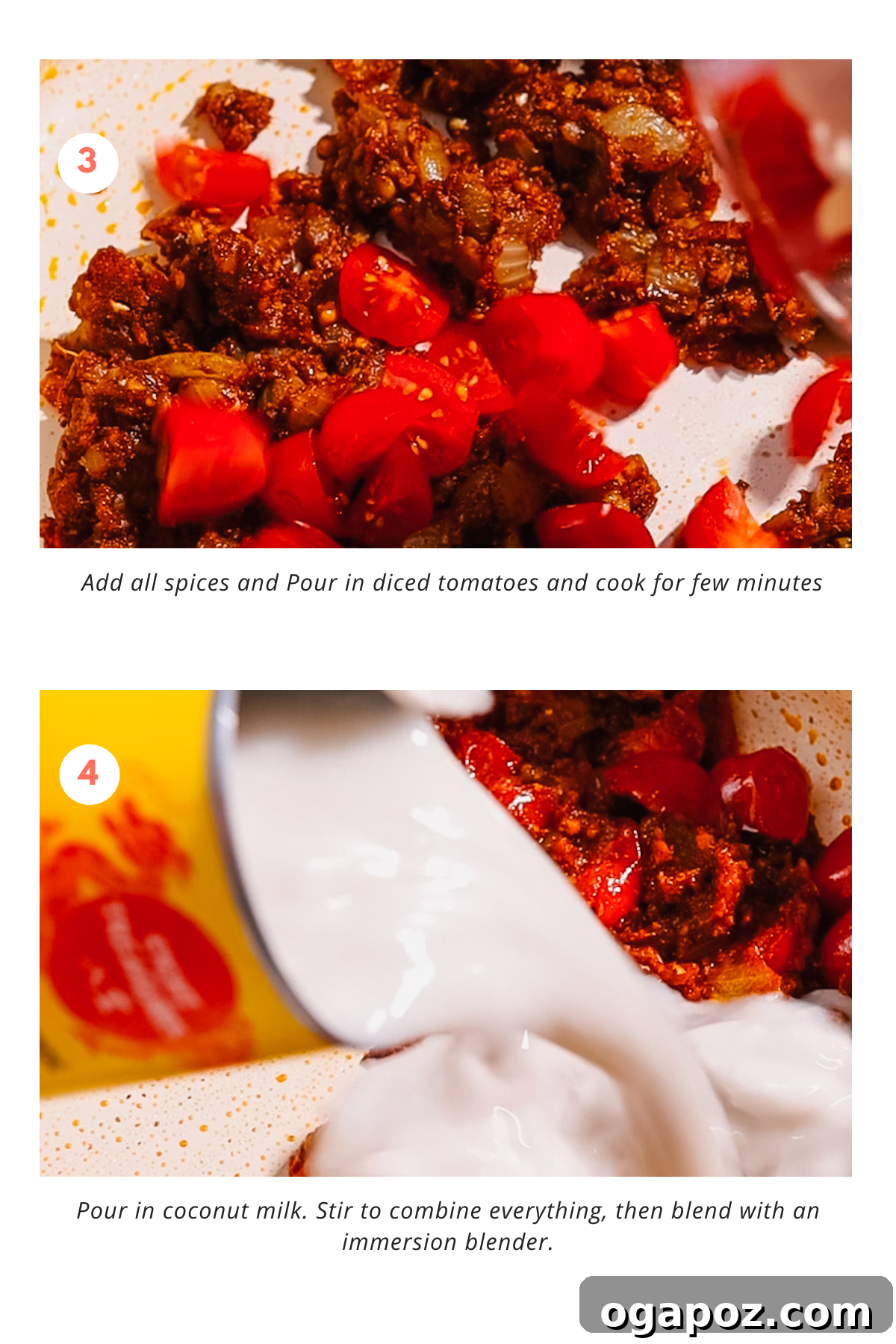
3. Integrate the Tomatoes
Pour in the diced tomatoes (whether fresh or canned). Stir well to combine them with the richly spiced aromatics. Allow the mixture to cook for approximately 5 minutes, stirring occasionally. During this time, the tomatoes will begin to break down and release their juices, creating a robust, cohesive base that adds both sweetness and essential acidity to your sauce.
4. Introduce Coconut Creaminess
Stir in the full-fat coconut milk. Mix thoroughly to incorporate all the ingredients, ensuring everything is well combined. For an exceptionally smooth and velvety curry sauce, use an immersion blender at this stage to blend the mixture directly in the pot until it reaches your desired consistency. This step is optional but significantly enhances the luxurious mouthfeel of the curry.
5. Add Chickpeas and Simmer to Perfection
Finally, add the drained and thoroughly rinsed chickpeas to the pot. Stir them gently but thoroughly to ensure they are completely enveloped by the rich, aromatic sauce. Reduce the heat to low, partially cover the pot, and let the curry gently simmer for 20-30 minutes. This crucial simmering time allows the flavors to meld beautifully, deepen, and fully infuse the chickpeas, transforming the individual ingredients into a harmonious and comforting dish. Stir occasionally to prevent any sticking to the bottom of the pot.
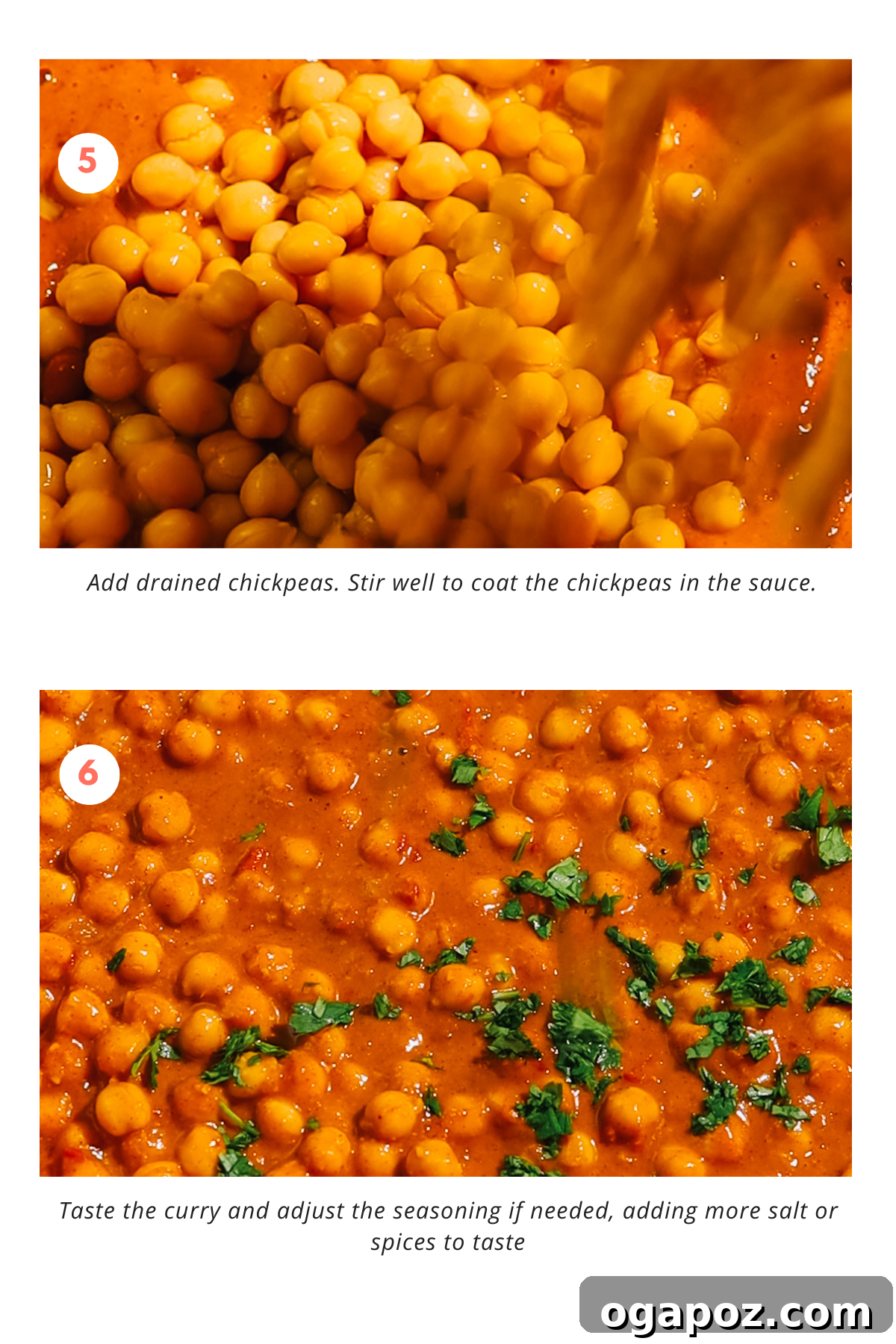
6. Final Seasoning and Serve
Before removing the pot from the heat and serving, take a moment to taste the curry and adjust the seasoning as needed. You might find it needs a touch more salt to make the flavors pop, a hint of additional spice for more warmth, or even a squeeze of fresh lime juice to brighten the overall profile. Serve your warm, aromatic curry chickpeas immediately over fluffy basmati rice, with warm naan bread, or alongside your favorite Indian sides for a truly satisfying meal.
5 Common Mistakes to Avoid When Making Curry Chickpeas
Even the simplest and most comforting recipes can have common pitfalls. Being aware of these typical errors can help you achieve a perfectly flavored and textured chickpea curry every single time. Steer clear of these missteps for an unbeatable, restaurant-quality result:
- Overcooking or Burning the Onions: Sautéing onions too aggressively or for an excessive duration can lead to them burning, which unfortunately imparts a bitter, unpleasant taste to your entire curry base. The ideal goal is to achieve a soft, translucent, and slightly golden hue, not a dark brown or crispy texture. Patient cooking over medium heat, with occasional stirring, is crucial for developing their natural sweetness.
- Skipping the Spice Toasting (Blooming): A common oversight is adding liquid ingredients like tomatoes or coconut milk directly after introducing dry spices, without a brief sauté. This often results in a less vibrant and underdeveloped flavor profile. Toasting the spices in hot oil with the aromatics for about 30 seconds to a minute before adding liquids helps to ‘bloom’ them, releasing their fragrant essential oils and significantly deepening their overall taste.
- Not Balancing the Seasoning Adequately: It’s incredibly easy to either under-season or inadvertently over-season a curry, which can drastically affect the final taste. Spices and salt are crucial for bringing out the best in your dish. Make it a habit to taste and adjust your seasoning gradually as you cook, particularly after the simmering phase. Remember that the salt content of canned chickpeas and tomatoes can vary, so always taste before adding more. If the curry tastes “flat” or dull, it likely needs a bit more salt; if it seems too sweet, a touch more spice or acid (like lime juice) can restore balance.
- Neglecting Sufficient Simmer Time: Rushing the simmering process is a mistake that often leads to a thin, watery sauce and a less integrated flavor profile. The recommended 20-30 minutes of gentle simmering is not merely a suggestion; it’s a crucial step that allows all the flavors to meld beautifully, the spices to fully infuse the chickpeas, and the sauce to naturally thicken to a rich, velvety consistency. Patience here is profoundly rewarded with depth and complexity.
- Using Light Coconut Milk for a Rich Curry: While light coconut milk might appear to be a healthier alternative, it significantly compromises the luxurious creaminess and rich body that defines a truly satisfying and decadent curry chickpea dish. For the absolute best texture and an authentic, rich flavor, always opt for full-fat coconut milk. If you’re concerned about calories, you can slightly reduce the overall quantity, but prioritizing the full-fat version will yield vastly superior results in terms of mouthfeel and flavor.
Make Ahead & Storage: Enjoying Your Curry Chickpeas Anytime
This curry chickpea recipe is not only delicious freshly made but also fantastic for meal prepping, as its flavors tend to deepen and improve significantly with time. Prepare a larger batch and enjoy it throughout the week, or save some for a convenient, flavorful future meal whenever a craving strikes.
Leftovers: Refrigeration
Once your curry has cooled completely to room temperature, transfer any leftover portions to an airtight container. It will keep beautifully in the refrigerator for up to 3-4 days. Many enthusiastic eaters find that the curry tastes even better on the second or third day, as the spices have more time to meld and develop into a more harmonious and profound flavor profile.
Freezing for Later:
For longer-term storage, chickpea curry freezes exceptionally well, making it perfect for future meal solutions. Ensure the curry is completely cooled before transferring it to freezer-safe containers or heavy-duty zip-top bags. If using bags, squeeze out as much air as possible to prevent freezer burn. It can be stored in the freezer for up to 3 months without significant loss of quality. Don’t forget to label the containers with the date for easy tracking and rotation.
Reheating Your Curry:
To reheat frozen curry, it’s best practice to thaw it overnight in the refrigerator for optimal results. Once thawed (or directly from frozen, though reheating time will be longer), gently reheat the curry on the stovetop over medium-low heat, stirring occasionally, until it is thoroughly heated through. If you prefer, you can also reheat individual portions in the microwave, stirring halfway through to ensure even heating. If the curry has thickened too much after freezing and reheating, add a splash of water or a little extra coconut milk to achieve your desired consistency and bring back its creamy texture.
Important Note: To maintain the best quality and prevent any sogginess, always store the curry separately from any cooked rice, naan bread, or other side dishes. Combine them only when you are absolutely ready to serve your meal.
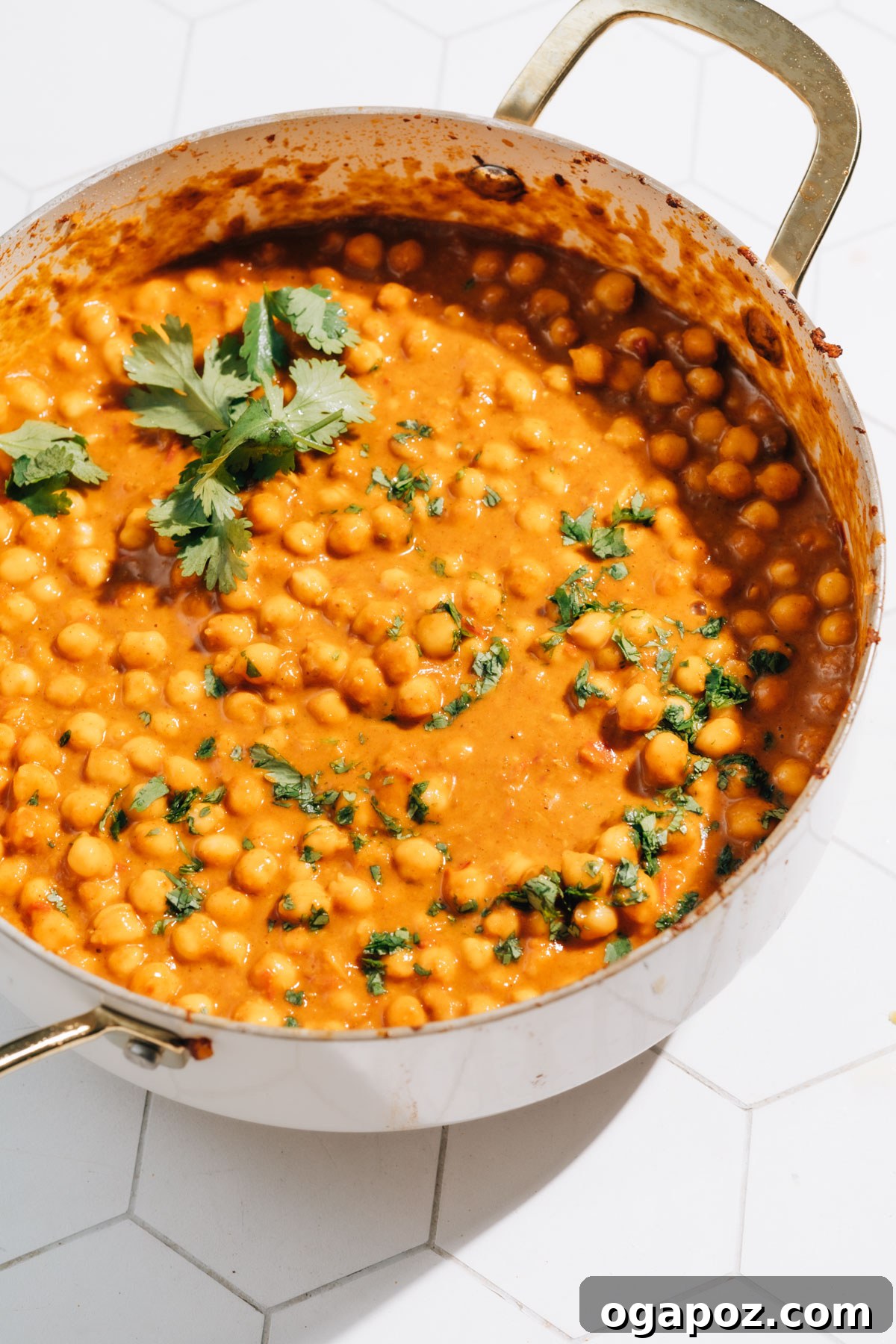
How to Serve This Delicious Curry Chickpeas Recipe
This versatile curry chickpea dish pairs wonderfully with a myriad of accompaniments, transforming a simple meal into a delightful and wholesome feast. Here are some of our favorite ways to enjoy it, ensuring every bite is a culinary pleasure:
- Classic Rice Companions:
- Steamed Basmati Rice: The fragrant, long-grain basmati rice is the quintessential accompaniment, with its fluffy texture and delicate aroma perfectly suited for soaking up every drop of the rich curry sauce.
- Brown Rice or Quinoa: For a healthier, whole-grain option that adds more fiber and nutrients, brown rice or quinoa also make excellent, hearty bases for your curry.
- Lemon Rice or Coconut Rice: Elevate your meal with flavored rice like a bright lemon rice or creamy coconut rice for an extra layer of taste.
- Fresh Garnishes & Zesty Finish:
- Fresh Cilantro: A generous sprinkle of freshly chopped cilantro adds a burst of vibrant color and a fresh, herbaceous note that beautifully complements the warm spices of the curry. It’s a non-negotiable for many!
- Lime or Lemon Wedge: Don’t underestimate the power of a squeeze of fresh citrus juice! A chubby lime or lemon wedge served on the side allows you to add a bright, zesty tang that cuts through the richness and awakens all the intricate flavors of the dish, creating a more dynamic eating experience.
- Yogurt Raita: A cool and creamy cucumber yogurt salad (raita) provides a refreshing contrast to the warmth and spice of the curry, soothing the palate between bites.
- Chopped Red Onion or Tomatoes: For an extra fresh crunch and acidity, a small bowl of finely chopped raw red onion or tomatoes can be a delightful addition.
- Authentic Indian Flatbreads: These are absolutely perfect for scooping up the savory sauce and tender chickpeas, ensuring no flavor is left behind.
- Butter Naan: Soft, pillowy, chewy, and rich, ideal for soaking up the luxurious sauce.
- Garlic Naan: Infused with aromatic garlic, offering an extra layer of pungent flavor that pairs wonderfully with the curry.
- Roti or Chapati: Wholesome, thin whole wheat flatbreads, perfect for a lighter, everyday option.
- Aloo Naan: Naan bread generously stuffed with spiced mashed potatoes, providing a comforting and filling element.
- Paratha: A flaky, layered flatbread that offers a delightful textural contrast and richness.
- Complementary Vegetable Sides:
- Indian Coconut Green Beans (Poriyal): A fresh and vibrant stir-fry with coconut, adding a touch of green and subtle sweetness that harmonizes with the curry.
- Fresh Green Salad: A simple, crisp green salad with a light vinaigrette can provide a refreshing, palate-cleansing element to balance the richness of the curry.
- Sautéed Okra or Bhindi Masala: For another authentic Indian vegetable side, a quick stir-fry of okra with spices can be a delightful addition.
- Traditional Indian Beverages: Pair your comforting meal with a refreshing or soothing drink to complete the experience.
- Chai Tea, Chai Coffee, or Karak Chai: Warm, spiced beverages perfect for cooler weather or a soothing, aromatic end to the meal.
- Mango Lassi: A sweet, creamy, and cooling yogurt drink that provides a delightful, fruity contrast to the savory and spicy curry, especially on a warm day.
- Sweet Endings: After such a flavorful meal, explore a range of Indian Dessert Recipes or Indian Sweet Recipes to complete your culinary journey with a flourish.
Frequently Asked Questions About Curry Chickpeas
For those quick queries or helpful tips, here are some common questions about making and enjoying this delicious and easy chickpea curry:
Absolutely! Using dried chickpeas can offer a slightly firmer texture and a more “from-scratch” feel to your curry. Just remember to soak them overnight (or use a quick-soak method) and then cook them until they are tender before adding them to the curry base. Approximately 1 ½ cups of dried chickpeas will yield about 5 cups of cooked chickpeas, which is the equivalent of three standard 14-oz cans.
This recipe is naturally and wonderfully vegan! As long as you choose oil (such as vegetable, sunflower, or coconut oil) instead of ghee (clarified butter) for cooking, it adheres perfectly to a strict vegan diet. It’s a fantastic, flavorful plant-based option that doesn’t compromise on taste or satisfaction.
If you crave a fiery kick, there are several straightforward ways to increase the heat. You can simply add more cayenne pepper than recommended in the recipe. Alternatively, incorporate a pinch of red pepper flakes with the other dry spices, or finely chop fresh green chilies (like serrano or Thai chilies) and add them alongside the garlic and ginger for a vibrant, fresh heat. Always add gradually and taste as you go to achieve your desired spice level without overpowering the dish’s other flavors.
While coconut milk is fundamental to this curry’s creamy texture and distinctive flavor profile, you can explore alternatives if necessary. Almond milk, cashew cream (made by blending soaked cashews with water), or even a thick oat milk can offer a dairy-free creaminess, though they will subtly alter the curry’s characteristic taste. For a non-vegan option, regular dairy cream or half-and-half can be used, but note that this will significantly change the flavor and richness of what is typically a coconut-based curry.
Absolutely! Adding more vegetables is a wonderful way to enhance the nutrition, flavor, and textural variety of the curry. Bell peppers (any color), fresh baby spinach, tender cauliflower florets, diced sweet potatoes, or even zucchini are all excellent choices. For heartier vegetables like cauliflower or sweet potato, incorporate them during the last 15-20 minutes of simmering. Delicate greens like spinach should be stirred in during the final 5 minutes, allowing them to wilt perfectly without overcooking.
If you find your curry is too thin after simmering, you have a few effective options. The simplest method is to continue simmering it uncovered for a bit longer, allowing the liquid to naturally reduce and concentrate. Alternatively, you can use an immersion blender to blend a portion of the curry (specifically some of the chickpeas and sauce) directly into the pot, which will add natural thickness and creaminess. For a quick fix, mix a tablespoon of cornstarch or all-purpose flour with a small amount of cold water to create a smooth slurry, then stir it into the simmering curry and cook for a few minutes until it thickens to your desired consistency.
If your curry turns out unexpectedly too salty, don’t despair! There are ways to balance the flavors. You can add a small amount of sugar (or a natural sweetener like maple syrup), a splash of additional unsalted coconut milk, or even a generous squeeze of fresh lime juice to help cut through the saltiness. Adding more unsalted cooked chickpeas or other mild vegetables to the pot can also help absorb some of the excess salt. If all else fails, serving it with plain, unsalted rice or naan bread can help mellow the overall saltiness of the meal.
More Cozy Indian Vegetarian Recipes to Explore
If you enjoyed making and savoring this creamy chickpea curry, you’ll love diving into these other comforting and profoundly flavorful Indian vegetarian dishes that are perfect for any occasion:
- Creamy Madras Lentils (the ultimate vegetarian comfort food, rich, hearty, and incredibly satisfying)
- Amma’s special Masoor Dal recipe (a classic, quick-cooking red lentil stew that’s simple yet profoundly flavorful and nutritious)
- Indian Chickpea Salad (a refreshing and zesty twist on chickpeas, perfect for lighter meals, picnics, or as a side dish)
- Malai Kofta (delicious paneer and potato dumplings served in a rich, creamy, and mildly spiced sauce – a true indulgence)
- Saag Paneer and Palak Paneer (two beloved spinach and paneer cheese curries, vibrant, wholesome, and packed with flavor)
And for a complete culinary journey through the diverse world of Indian plant-based cooking, don’t miss all my other Indian Vegetarian Dinner Recipes for endless inspiration and delicious meal ideas.
Coconut Curry Chickpeas (Quick & Easy Recipe!)
By: Jennifer Pallian BSc, RD
Learn how to make the tastiest Curry Chickpeas that’ll have everyone licking the plate. My Indian husband LOVES this quick, easy recipe!

Ingredients
- ¼ cup oil or ghee
- 2 large onions, finely chopped
- 2 tbsp minced garlic
- 2 tbsp minced ginger
- 3 tbsp garam masala or curry powder
- 1 tbsp paprika
- 1 tsp ground cumin
- ¼ tsp cayenne pepper
- 3-4 tsp kosher salt (adjust to taste)
- 1 ¼ cup diced tomatoes (fresh or canned)
- 1 (14-oz) can full-fat coconut milk
- 3 (14-oz) cans chickpeas, drained and rinsed (or 1 ½ cups dried chickpeas, cooked to yield 5 cups)
Instructions
- Heat the Oil: In a large pot or Dutch oven, heat oil or ghee over medium heat.
- Cook the Onions: Add the finely chopped onions and sauté for 5-7 minutes, stirring occasionally, until they are soft, translucent, and slightly golden.
- Add Garlic and Ginger: Stir in the minced garlic and minced ginger. Cook for another 2-3 minutes until fragrant, being careful not to burn.
- Add Spices: Mix in the garam masala (or curry powder), paprika, ground cumin, cayenne pepper, and 2 tsp of the kosher salt. Stir well to coat the aromatics with the spices and cook for about 1 minute until fragrant, allowing the spices to bloom.
- Add Tomatoes: Pour in the diced tomatoes. Cook for 5 minutes, stirring occasionally, until the tomatoes break down and the mixture is well combined, forming a rich base.
- Add Coconut Milk: Pour in the full-fat coconut milk. Stir to combine everything. For an extra smooth and creamy sauce, use an immersion blender at this stage to blend the mixture directly in the pot until desired consistency is reached (optional).
- Add Chickpeas: Add the drained and rinsed chickpeas. Stir well to ensure they are fully coated in the aromatic sauce.
- Simmer: Reduce the heat to low, partially cover the pot, and let the curry simmer gently for 20-30 minutes. Stir occasionally to prevent sticking and allow the flavors to deepen and meld beautifully.
- Adjust Seasoning: Taste the curry and adjust seasoning as needed, adding more salt, spices, or a squeeze of fresh lime juice to taste. Serve hot with your favorite accompaniments.
Notes
Salt Quantity: The final amount of salt required will depend on the inherent salt content of your canned chickpeas and tomatoes, as well as how much liquid evaporates from your sauce during simmering. If using fresh tomatoes (which are unsalted) and low-sodium canned chickpeas, you may need the full 4 tsp of kosher salt. Always taste and adjust gradually throughout the cooking process. If the sauce tastes a bit “flat” or overly sweet, it often benefits from a little more salt to bring out the depth of flavors.
Nutrition (Approximate per serving)
- Calories: 316 kcal
- Carbohydrates: 26g
- Protein: 8g
- Fat: 22g
- Saturated Fat: 12g
- Polyunsaturated Fat: 3g
- Monounsaturated Fat: 5g
- Trans Fat: 0.03g
- Sodium: 892mg
- Potassium: 468mg
- Fiber: 7g
- Sugar: 7g
- Vitamin A: 522 IU
- Vitamin C: 9mg
- Calcium: 65mg
- Iron: 3mg
Nutrition information is automatically calculated and should be used as an approximation.