
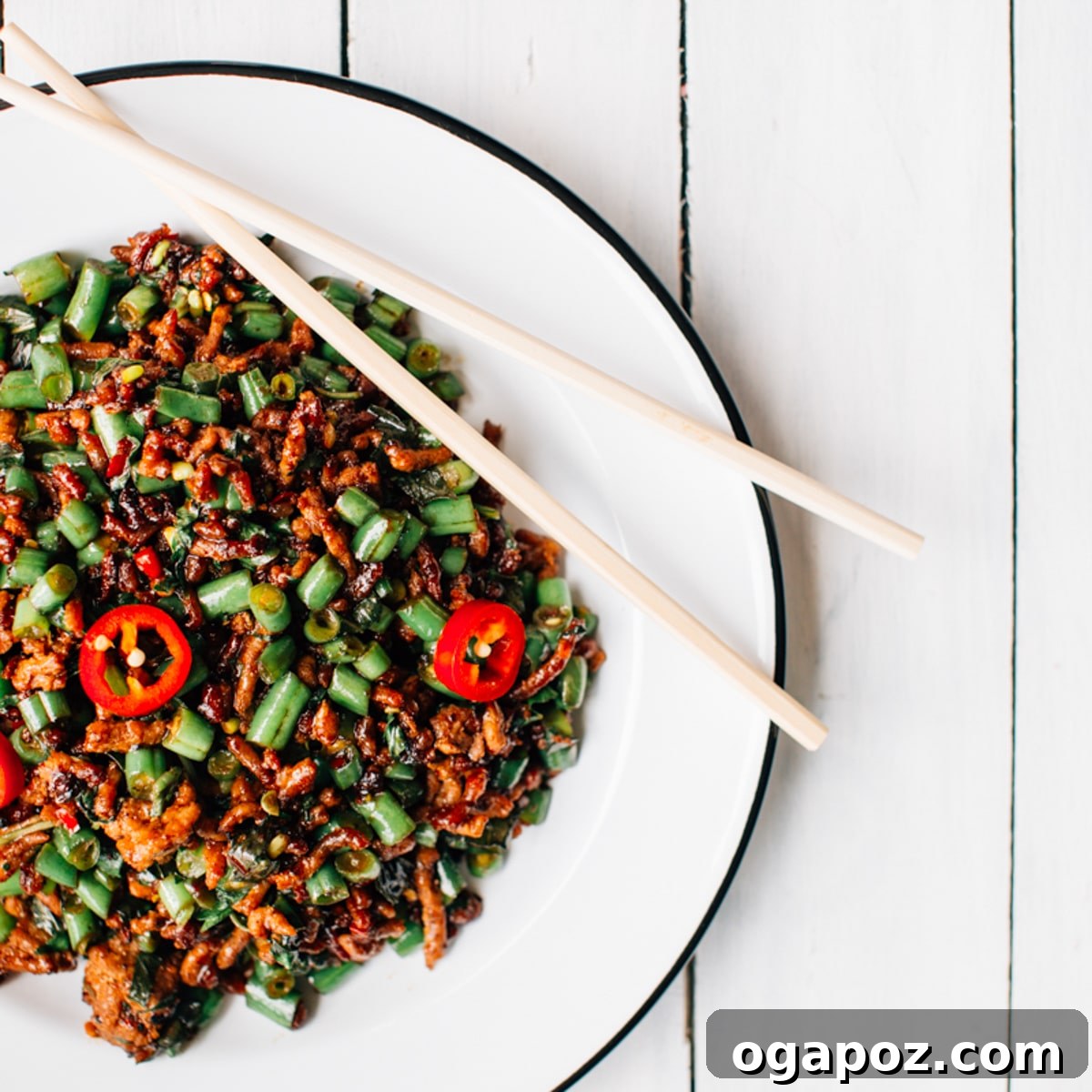
Transport your taste buds straight to the bustling streets of Thailand with this incredible Thai Basil Pork recipe. Known locally as Pad Krapow Moo, this iconic dish is a vibrant explosion of garlicky, spicy, and savory flavors, perfectly balanced with the aromatic freshness of basil and the satisfying crunch of green beans. It’s a lightning-fast stir-fry that promises to satisfy your deepest takeout cravings, delivering authentic Thai deliciousness right to your dinner table in under 30 minutes.
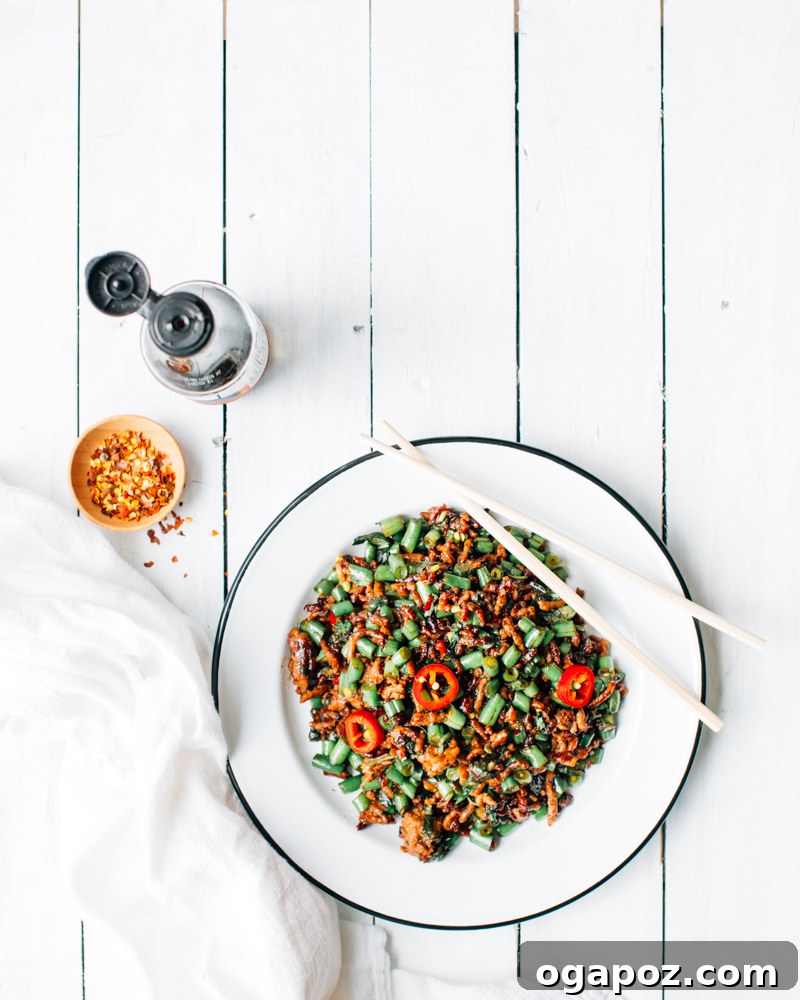
What is Thai Basil Pork (Pad Krapow Moo)?
Thai Basil Pork, or Pad Krapow Moo (ผัดกะเพราหมู), is one of Thailand’s most beloved and widely consumed street food dishes. The name itself offers a hint: “Pad” means stir-fried, “Krapow” refers to holy basil, and “Moo” means pork. This classic stir-fry typically features ground or thinly sliced pork cooked at high heat with a robust blend of fresh garlic, fiery bird’s eye chilies, and the distinct, peppery aroma of Thai holy basil leaves.
What sets Pad Krapow Moo apart is its incredible depth of flavor. A simple yet powerful sauce, usually a combination of soy sauce, fish sauce, and a touch of sugar, coats every ingredient, creating an irresistible umami profile with savory, sweet, and salty notes. Traditionally, this flavorful stir-fry is served over a bed of steaming jasmine rice, often crowned with a perfectly fried egg (kai dao) whose runny yolk adds an extra layer of richness to the dish. It’s a dish celebrated for its aromatic complexity, satisfying spiciness, and the unique, slightly licorice-like taste that only Thai holy basil can provide. Whether you’re in Thailand or a Thai restaurant anywhere in the world, Pad Krapow Moo is a guaranteed crowd-pleaser.
The Irresistible Appeal of This Classic Thai Dish
- Bursting with Authentic Thai Flavors: Our recipe captures the true essence of Pad Krapow Moo. The harmonious blend of savory soy sauce, umami-rich fish sauce, and a hint of brown sugar creates a deeply satisfying base, amplified by the fragrant fresh basil and the exhilarating heat from the chiles. Each bite is a journey through authentic Thai cuisine.
- A Perfectly Balanced Dish: While the star is undoubtedly the savory, spicy pork, the inclusion of crisp green beans is key. They add a refreshing, crunchy texture and a subtle sweetness that beautifully contrasts and balances the rich pork and intense sauces, ensuring a well-rounded and delightful eating experience.
- Versatile Serving Options: This incredible stir-fry is wonderfully adaptable. While traditionally served over steamed rice, it’s equally delicious spooned over a bed of noodles, making it an excellent and flexible addition to your regular dinner rotation, catering to different preferences and cravings.
Why You’re Going to Love This Easy Thai Basil Pork Recipe
If you’ve been yearning for an authentic taste of Thailand, your search ends here. This Thai Basil Pork recipe isn’t just a meal; it’s an experience that delivers immense flavor with remarkable simplicity. We combine succulent ground pork with finely chopped green beans, vibrant chiles, and a generous heap of fresh basil to create a dish that’s both comforting and exciting. The magic lies in the easy-to-make sauce – a perfectly balanced symphony of savory soy sauce, pungent fish sauce, and a touch of brown sugar to temper the heat and add depth.
My initial attempt at perfecting this recipe left me genuinely thrilled; the flavors were spot-on from the very first try. This means you can recreate that incredible restaurant-quality taste in your own kitchen without any guesswork. It’s truly a testament to the power of fresh ingredients and a well-proportioned sauce.
Key Benefits That Make This Recipe a Winner
- Quick and Effortless Weeknight Dinner: From the moment you start prepping to the moment you serve it, this dish is ready in less than 30 minutes. It’s the ultimate midweek meal solution, often coming together faster than ordering and waiting for takeout. Plus, making it at home gives you full control, allowing you to tailor it to be healthier – think more nutrient-rich green beans, less oil, and a more moderate portion of rice or noodles.
- Packed with High-Quality Protein: Lean ground pork serves as an excellent source of high-quality protein, making this meal incredibly satisfying and great for keeping you full and energized throughout the evening. It’s a robust foundation for a flavorful and fulfilling dinner.
- Customizable Heat Level: One of the best aspects of cooking Thai Basil Pork at home is the ability to adjust the spice to your exact preference. Whether you prefer a mild warmth or a fiery kick, you can easily control the heat by adding more or fewer chiles. We personally enjoy a good level of spice, but I’ve designed this recipe to start at a medium heat, with the option to stir in extra crushed red chiles at the end, allowing you to dial up the intensity to your liking.
If you adore Thai cuisine as much as I do, you absolutely must explore some of my other popular Thai-inspired creations: Pad Woon Sen (Thai Glass Noodle Stir-Fry), Thai Curry Fish, Peanut Sweet Potato Soup, Sweet Chili Noodle Salad, Thai Scallops with Corn Relish, Thai Pork Meatballs in Sweet Chili Sauce, and of course, my classic Pad Thai recipe.
Essential Kitchen Tools for Your Thai Basil Pork
Before you embark on this culinary adventure, ensure your kitchen is prepped with the right equipment. Having these basic tools ready will make the stir-frying process smooth, efficient, and enjoyable:
- Large Skillet or Wok: This is the cornerstone of any great stir-fry. A large skillet or, ideally, a wok, allows for high heat cooking and provides ample surface area for ingredients to cook evenly and quickly. This ensures that your pork gets perfectly caramelized and your vegetables retain their crisp-tender texture, crucial for maximum flavor infusion.
- Chopping Board and Sharp Knife: Precision in chopping is key for stir-fries. A sturdy chopping board and a sharp knife are essential for finely mincing your onion, garlic, and chiles, and for thinly slicing the green beans. Consistent cuts ensure even cooking and a cohesive texture throughout the dish.
- Whisk: A simple whisk is all you need to effortlessly combine your soy sauce, fish sauce, and brown sugar into a uniform, savory sauce. This ensures that the flavors are perfectly blended before they hit the hot wok, guaranteeing a well-coated and delicious stir-fry.
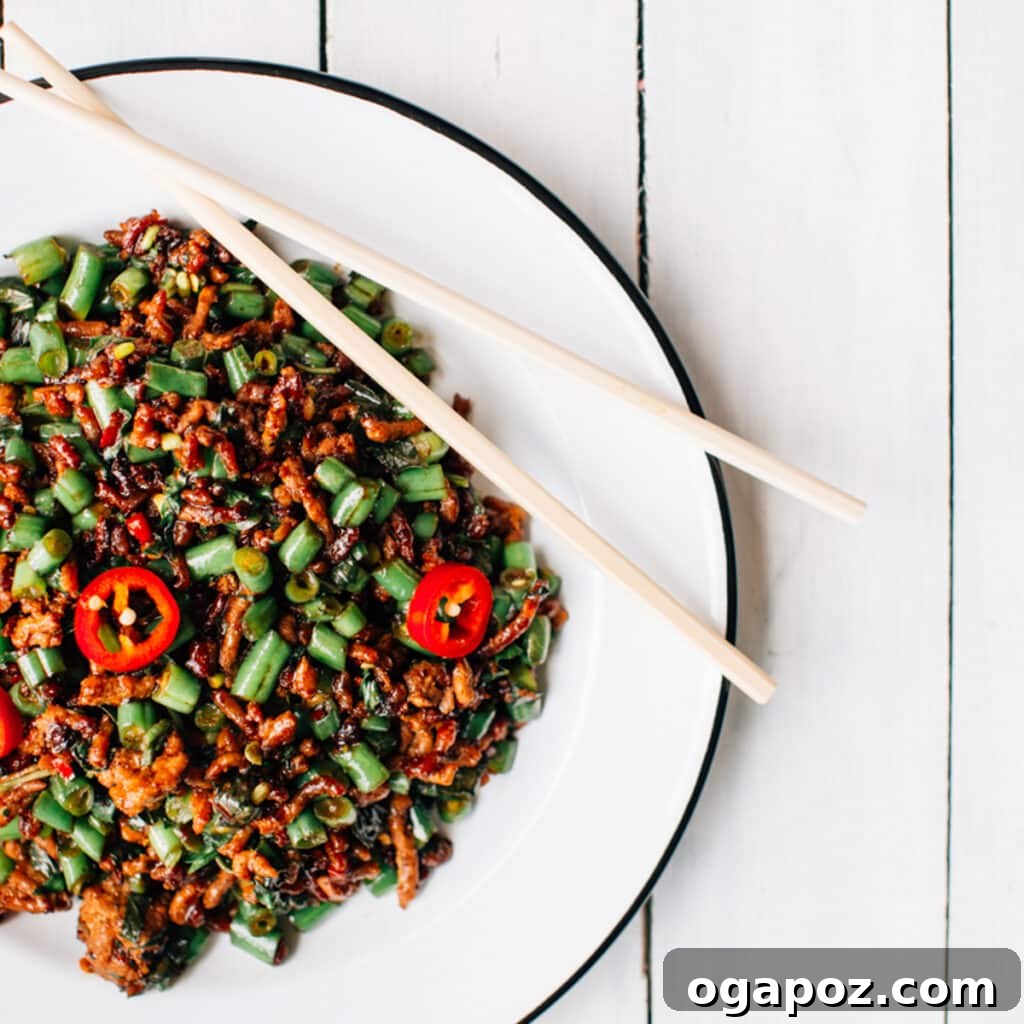
How to Make Thai Basil Pork: Easy Step-by-Step Directions
Making authentic Thai Basil Pork is simpler than you might think. Follow these straightforward steps to create a wonderfully flavorful and satisfying meal:
- Heat the Oil to Sizzling: Begin by heating your vegetable oil in a large skillet or wok over medium-high heat until it shimmers. A properly hot pan is essential for achieving that characteristic stir-fry sizzle and quick cooking.
- Sauté the Aromatics: Add the finely chopped onion, minced garlic, and sliced chiles to the hot oil. Sauté them for about a minute, stirring constantly, until they become incredibly fragrant. This step releases their powerful flavors, forming a aromatic foundation for your dish.
- Cook the Ground Pork: Introduce the lean ground pork and a pinch of kosher salt to the pan. Break up the pork with a spoon as it cooks. Continue to stir-fry until the pork is no longer pink inside and begins to crisp and caramelize at the edges. These deliciously browned bits add incredible depth of flavor.
- Stir-Fry the Green Beans: Add the thinly sliced green beans to the pan. Cook them, stirring frequently, for approximately 2 minutes. The goal is for them to become crisp-tender and retain their vibrant green color. I particularly love how thinly slicing green beans crosswise gives them a fresh identity, making them similar in size to the ground pork and adding a great texture without overwhelming the dish.
- Mix and Add the Savory Sauce: In a small bowl, whisk together the soy sauce, fish sauce, and brown sugar until well combined. Pour this delicious sauce over the pork and green beans in the pan. Stir quickly to ensure all ingredients are thoroughly coated, allowing the flavors to meld beautifully. Taste the dish and, if you desire more heat, now is the time to add a pinch of crushed dried red chiles.
- Stir in the Fresh Basil: Finally, remove the pan from the heat and stir in the packed basil leaves. The residual heat will gently wilt the basil, releasing its wonderful fragrant aroma and adding a final pop of fresh color to the dish. Serving immediately ensures the basil’s freshness shines through.
Creative Ways to Serve Your Thai Basil Pork
Thai Basil Pork is incredibly versatile, making it easy to adapt to your meal preferences. Here are some fantastic ways to serve this flavorful stir-fry:
- Over Noodles for a Comforting Twist: For a deliciously comforting meal, serve your Thai Basil Pork over a bed of your favorite noodles, such as rice noodles, egg noodles, or even spaghetti. The noodles will readily soak up all the rich, savory sauce, creating a hearty and satisfying dish that’s perfect for a cozy night in.
- With Steamed Rice for a Classic Thai Experience: The most traditional and popular way to enjoy Pad Krapow Moo is over a generous portion of steaming hot jasmine rice. The fluffy rice provides a perfect canvas for the intense flavors of the stir-fry, and don’t forget the essential fried egg on top with its runny yolk for an authentic finish!
- Alongside a Refreshing Side Salad: To add a refreshing contrast and a burst of freshness, serve your Thai Basil Pork with a simple side salad. A crisp green salad with a light vinaigrette or a classic Thai cucumber salad (Ajaad) can cut through the richness and spice, offering a delightful balance to your meal.
- As Part of a Thai Feast: Elevate your dining experience by making Thai Basil Pork one component of a larger Thai feast. Pair it with other dishes like Tom Yum soup, spring rolls, or a light curry for a truly immersive culinary journey.
Make Ahead and Storage Tips for Convenience
This Thai Basil Pork recipe is fantastic for meal prep, allowing you to enjoy authentic Thai flavors even on your busiest days. Here’s how to manage it efficiently:
- Smart Prep Ahead: To significantly speed up your cooking process on a weeknight, you can chop all your vegetables (onion, garlic, chiles, green beans) and whisk together your sauce ingredients ahead of time. Store the chopped vegetables in airtight containers in the refrigerator, and the sauce in a separate sealed jar, for up to 2-3 days. This means when dinner time rolls around, all you’ll need to do is the quick stir-frying.
- Storing Leftovers Properly: If you have any delicious leftovers, allow the dish to cool completely before transferring it to an airtight container. Store it in the refrigerator, where it will remain fresh and flavorful for up to 3 days. This makes it perfect for packed lunches or quick reheated dinners.
- Reheat and Revitalize: To reheat, transfer the desired portion to a skillet or wok over medium heat. Add a splash of water or chicken broth if it seems a bit dry, and stir occasionally until it’s heated through. For a renewed aroma and fresh burst of flavor, I highly recommend stirring in a handful of fresh basil leaves just before serving. This simple trick brings the dish back to life as if it were freshly made.
Versatile Variations and Creative Substitutions
One of the beauties of Thai Basil Pork is its adaptability. Feel free to experiment with these variations and substitutions to tailor the dish to your dietary needs or taste preferences:
- Embrace a Vegetarian Option: Easily transform this dish into a delightful vegetarian meal by substituting the pork with firm tofu, tempeh, or your favorite plant-based meat alternative. Ensure your chosen protein is pressed and cubed (for tofu/tempeh) or prepared according to package directions, then stir-fried until golden before adding the aromatics and sauce.
- Explore Different Proteins: While ground pork is traditional, this recipe is equally delicious with other ground meats. Try it with ground chicken, turkey, or beef for a different flavor profile. For an extra boost of protein and richness, topping the finished stir-fry with a fried egg (kai dao) is a classic and highly recommended addition, regardless of your chosen meat.
- Boost with Extra Veggies: This stir-fry welcomes additional vegetables. Bell peppers (red, yellow, or orange), sliced mushrooms, bamboo shoots, baby corn, or snap peas are all excellent choices that cook quickly and absorb the flavorful sauce beautifully. Add them along with or just after the green beans, ensuring they cook through but remain crisp.
- Thai Basil Substitutes: The authentic taste comes from Thai holy basil (Ocimum tenuiflorum), which has a peppery, slightly spicy, and anise-like flavor. If you can find it at an Asian market, it’s highly recommended. However, if Thai holy basil is unavailable, Thai sweet basil (Ocimum basilicum var. thyrsiflora) is a fantastic substitute, offering a slightly sweeter, licorice-like aroma. In a pinch, regular Italian sweet basil can also be used, though the flavor profile will be milder and less authentic.
Expert Tips for a Perfect Thai Basil Pork Stir-Fry
Achieving a truly outstanding Thai Basil Pork stir-fry is all about technique and fresh ingredients. Here are some expert tips to ensure your dish is nothing short of spectacular:
- Prioritize Fresh, Quality Ingredients: The foundation of any great dish lies in its ingredients. Using freshly minced garlic, finely chopped onions, and, most importantly, vibrant, fresh basil will profoundly elevate the flavor and aroma of your stir-fry. Avoid dried herbs for this recipe, as fresh basil is irreplaceable for its distinct taste and fragrance.
- Master the Heat: Stir-fries thrive on high heat. Ensure your wok or skillet is piping hot before adding any ingredients. This allows the pork to brown beautifully and the vegetables to cook quickly while retaining their crisp texture, preventing them from steaming.
- Adjust Heat to Your Palate: Thai cuisine is known for its spice, but personal preference varies. Tailor the heat level of your dish precisely to your liking by altering the quantity of fresh Thai bird chiles you use. Start with a smaller amount and add more crushed red chiles at the end if you prefer a spicier kick.
- Add the Basil Last for Maximum Impact: This is a crucial step for preserving the integrity of the basil. Stir in the fresh basil leaves right at the very end of the cooking process, just before serving. The residual heat from the wok will gently wilt the leaves, allowing them to release their fresh, aromatic oils without overcooking or turning brown, thus maintaining their vibrant green color and potent flavor.
- Don’t Overcrowd the Pan: When cooking the pork and green beans, ensure you don’t overcrowd your skillet or wok. Cooking in batches if necessary allows for proper browning and even cooking, rather than steaming the ingredients. This is key to developing those delicious caramelized flavors and textures.
- Taste and Adjust the Sauce: Before adding the sauce to the pan, always taste it. Adjust the balance of sweet, salty, and savory by adding a little more brown sugar, fish sauce, or soy sauce until it suits your preference. The sauce is the heart of the dish, so make sure it’s perfect!
Get your wok sizzling and prepare to cook this incredibly delicious Thai Basil Pork dish – it’s guaranteed to become a beloved staple in your dinner rotation! (P.S. if you love quick, easy Asian takeout-inspired recipes, you must also try my Pad Woon Sen, Gochujang Chicken, Thai Basil Pork, Chili Oil Ramen, Orange Chicken, and Honey Garlic Chicken recipes.)
This yummy new stir-fry is a fantastic addition to any weekly meal plan! What great new weeknight meals have you discovered lately?
Frequently Asked Questions About Thai Basil Pork
Thai basil is an incredibly versatile herb known for its unique flavor profile, combining notes of anise, licorice, and a hint of spiciness. It’s used in numerous ways to elevate Thai dishes:
- Stir-fries: Most famously used in dishes like Pad Krapow (Thai basil pork, chicken, or tofu), it’s typically added at the very end of cooking to preserve its vibrant flavor and aroma.
- Curries: Thai basil leaves are often added to green, red, or yellow curries just after the heat is turned off, allowing them to wilt slightly from the residual warmth and infuse the curry with their distinct fragrance.
- Soups: Fresh leaves are commonly added to hot and sour soups like Tom Yum or creamy coconut soups like Tom Kha Gai, either during the final stages of cooking or as a fresh garnish just before serving.
- Salads: Its strong flavor makes it an excellent addition to vibrant Thai salads such as Larb (minced meat salad), Yum Woon Sen (glass noodle salad), or Som Tum (papaya salad) for an extra layer of freshness and herbaceousness.
- Marinades: Chopped Thai basil can be incorporated into marinades for meats, poultry, or seafood, allowing its unique flavor to subtly infuse into the protein over time.
- Wraps and Rolls: Fresh Thai basil leaves are a fantastic addition to fresh spring rolls, lettuce wraps, or rice paper rolls, providing a burst of aromatic flavor with every bite.
- Garnish: It serves as a beautiful and flavorful garnish for noodle dishes like Pho, Pad Thai, or Drunken Noodles, adding both visual appeal and an aromatic finish.
Remember to thoroughly wash Thai basil leaves before use and remove them from their tougher stems. Due to its stronger flavor compared to sweet basil, adjust the quantity according to your personal taste preferences.
Typically, it is the fragrant leaves of Thai basil that are primarily used in cooking, as they hold the concentrated flavor and aroma of the herb. While the tender parts of the smaller, younger stalks can sometimes be finely chopped and used to infuse flavor, especially in longer-simmering dishes like certain soups or stews, it’s generally best to avoid using the tougher, woody parts of the stalks. These can be fibrous, difficult to chew, and may not offer the same delicate flavor as the leaves. For most stir-fries and fresh applications, stick to just the leaves.
Authentic Thai Basil Pork (Pad Krapow Moo)
By: Jennifer Pallian BSc, RD
Thai Basil Pork is a savory Thai stir-fry featuring garlicky-spicy ground pork, fresh holy basil, and crisp green beans, all coated in a rich, delicious sauce. It’s a quick, easy, and satisfying meal that perfectly balances umami, sweetness, and heat, ideal for serving over noodles or steamed rice.
10 minutes
15 minutes
25 minutes
4
Ingredients
- 3 tbsp vegetable oil
- ¼ cup finely chopped onion
- 4 cloves garlic, minced
- 2 Thai bird chiles, thinly sliced (or more/less to taste)
- 1 lb lean ground pork
- ½ tsp kosher salt
- 9 oz green beans, thinly sliced crosswise (yields about 2 cups)
- ¼ cup soy sauce
- 2 tbsp fish sauce
- 1 tsp brown sugar
- 1 cup packed basil leaves, thinly sliced (preferably Thai holy basil or Thai sweet basil)
- Crushed dried red chiles, to taste (optional, for extra heat)
- Noodles or rice, for serving
Instructions
- Heat the vegetable oil in a large skillet or wok over medium-high heat until shimmering.
- Add the chopped onion, minced garlic, and sliced chiles to the hot pan. Sauté, stirring frequently, for about 1 minute until fragrant.
- Add the ground pork and kosher salt to the pan. Cook, breaking up the pork with a spoon, until it is no longer pink inside and begins to crisp and brown at the edges.
- Stir in the thinly sliced green beans. Cook for approximately 2 minutes, stirring frequently, until they are crisp-tender and still vibrant green.
- Meanwhile, in a small bowl, whisk together the soy sauce, fish sauce, and brown sugar until the sugar is dissolved. Pour this sauce mixture into the pan and stir well to coat the pork and green beans. Taste and add a pinch of crushed dried red chiles now if you desire more heat.
- Remove the pan from the heat and stir in the fresh basil leaves. The residual heat will gently wilt the basil. Serve immediately over noodles or steamed rice.
Nutrition Information (Approximate Per Serving)
Calories: 432kcal
|
Carbohydrates: 9g
|
Protein: 23g
|
Fat: 34g
|
Saturated Fat: 11g
|
Polyunsaturated Fat: 8g
|
Monounsaturated Fat: 13g
|
Trans Fat: 0.1g
|
Cholesterol: 82mg
|
Sodium: 1887mg
|
Potassium: 545mg
|
Fiber: 2g
|
Sugar: 4g
|
Vitamin A: 450IU
|
Vitamin C: 10mg
|
Calcium: 55mg
|
Iron: 2mg
Nutrition information is automatically calculated, so should only be used as an approximation.