
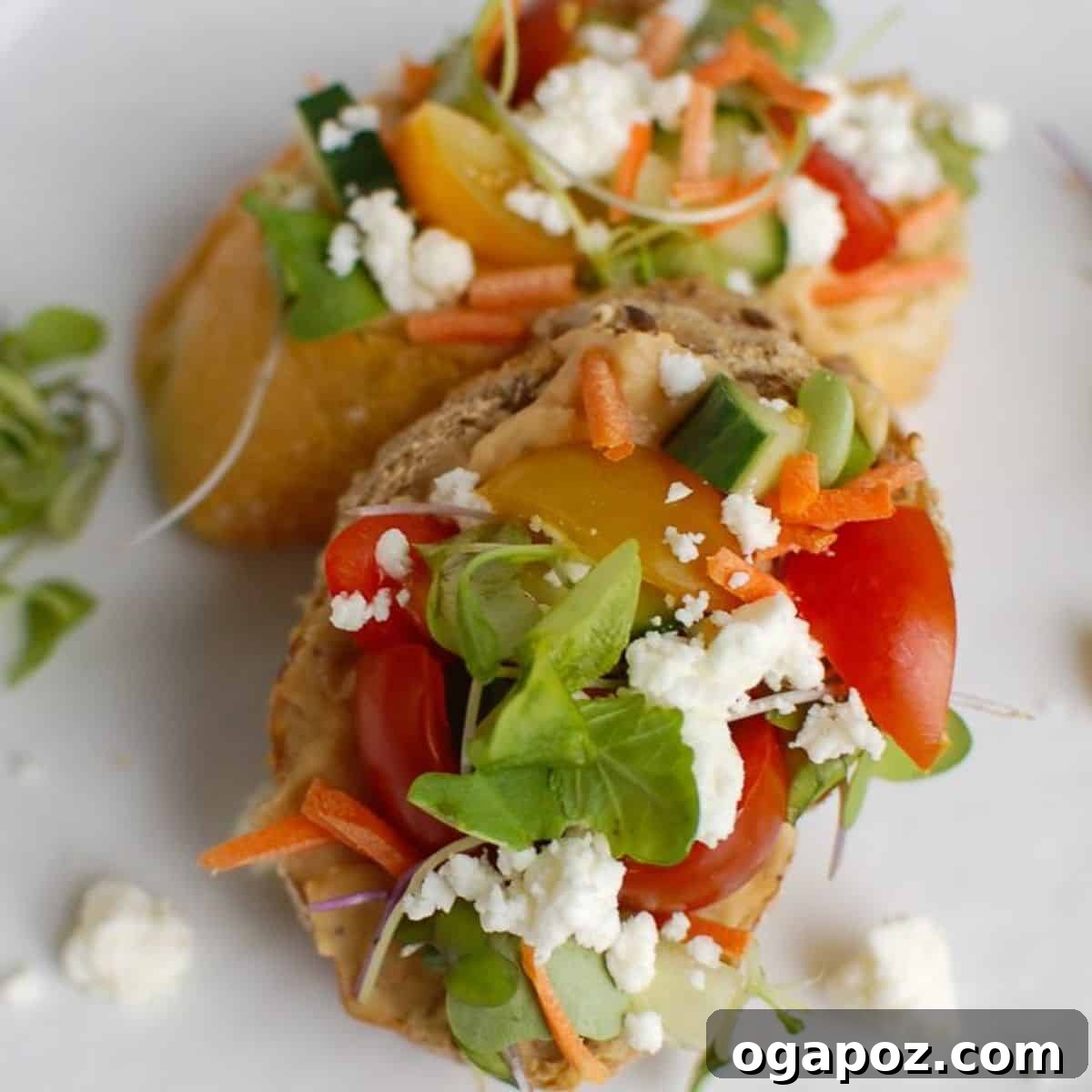
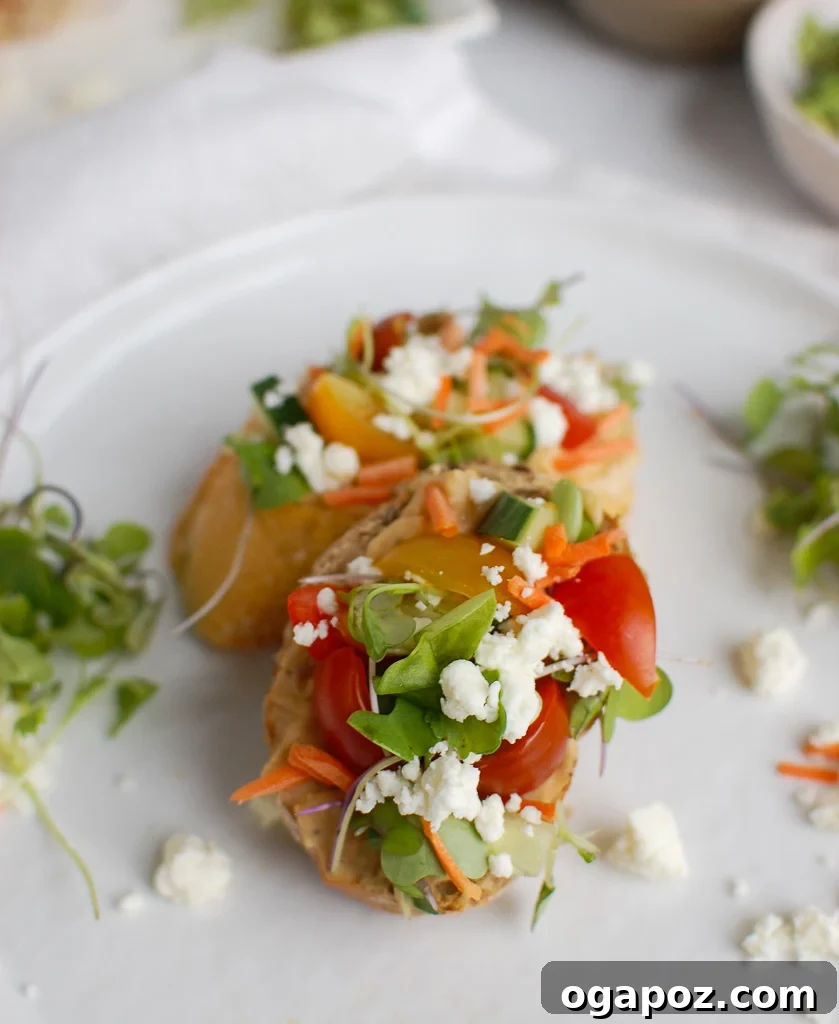
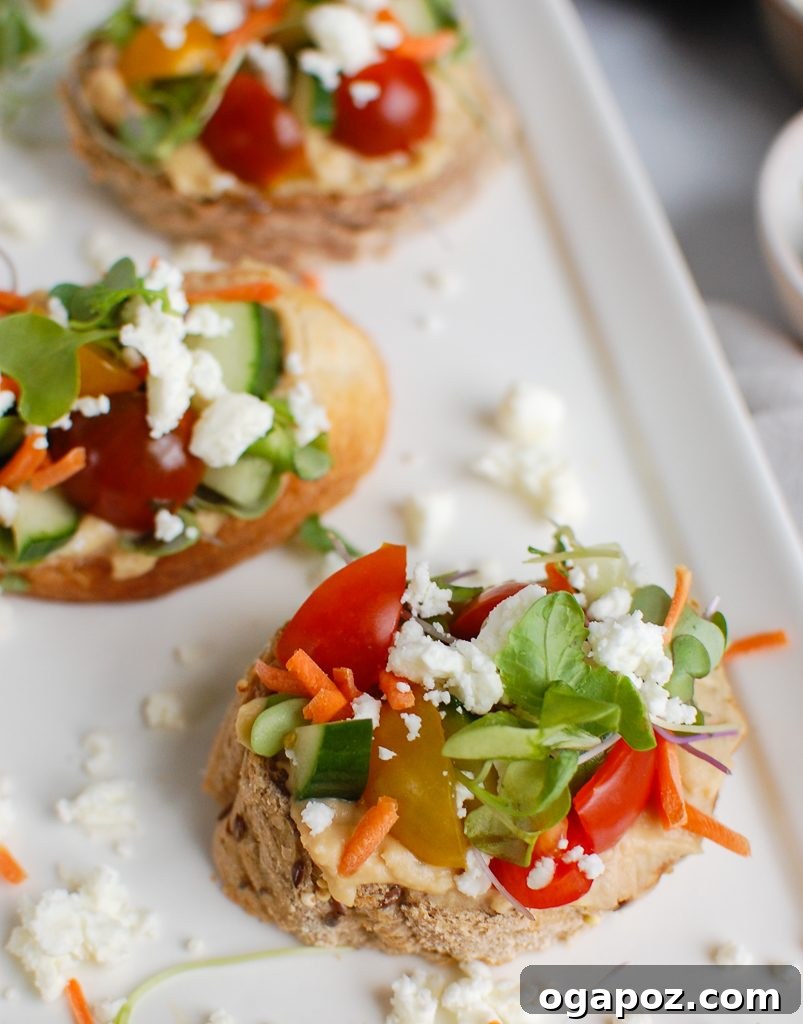
Mediterranean Crostini offers a vibrant, flavorful, and incredibly versatile appetizer or light snack that truly embodies the essence of healthy eating. Imagine perfectly toasted slices of crisp baguette bread, generously spread with your favorite creamy hummus, then piled high with an abundance of finely chopped, colorful vegetables like sun-kissed tomatoes, crunchy carrots, and refreshing cucumbers. A sprinkle of rich, tangy feta cheese and delicate microgreens adds the final touch, creating a dish that’s as beautiful to look at as it is delightful to eat.
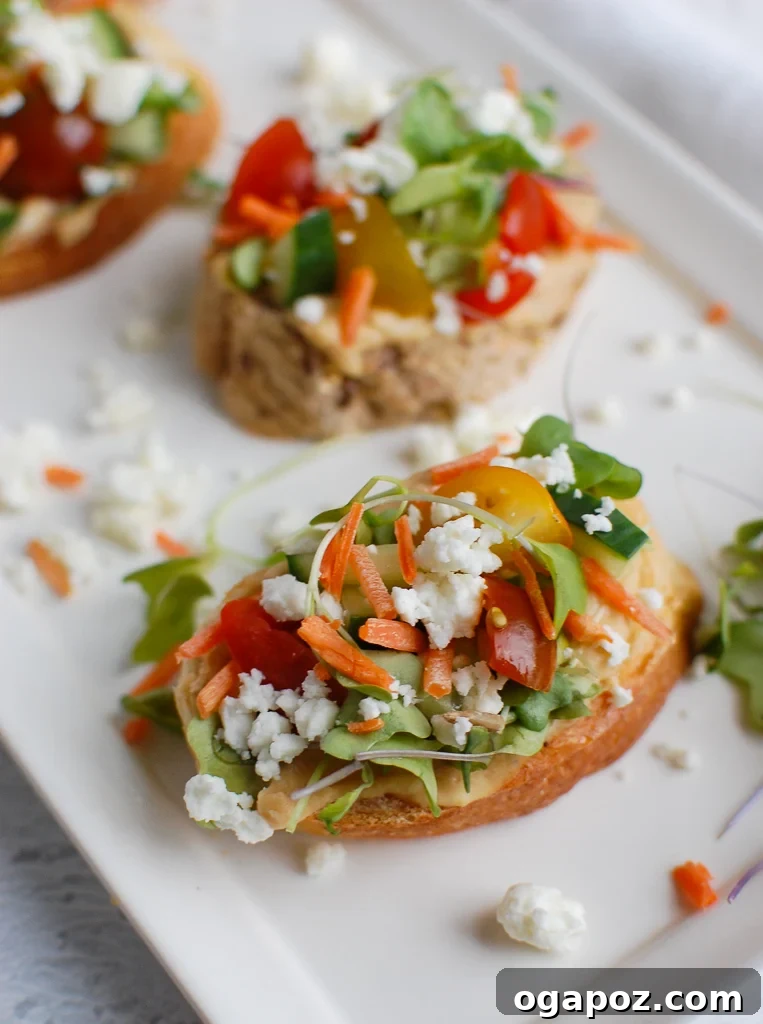
For those who frequently follow my culinary adventures, my passion for Mediterranean-inspired cuisine is no secret. The ingredients characteristic of the Mediterranean region are not only renowned for their incredible health benefits but also for their profound and delicious flavors. This Mediterranean crostini recipe beautifully showcases how these simple, wholesome ingredients harmoniously combine to create something truly special and effortlessly elegant. It’s a testament to the power of fresh produce, quality olive oil, and vibrant seasonings.
The combination of smooth hummus, crisp fresh vegetables, and salty, creamy feta cheese is a culinary triumph, especially when served atop a sturdy piece of toasted bread. For this particular easy appetizer, I opted for my beloved homemade Classic Hummus, which provides the perfect creamy foundation and a hint of garlic and lemon that complements the other toppings exquisitely. However, store-bought hummus works perfectly if you’re short on time.
Whether you’re hosting a grand get-together for a large group or simply need an easy snack to impress your guests, this Mediterranean Crostini is an ideal choice. Its straightforward preparation makes it a stress-free option for entertaining, allowing you to spend more time enjoying your company and less time in the kitchen. It’s also a fantastic way to introduce vibrant flavors and healthy options to your party spread, ensuring there’s something everyone will love.
If you’re a connoisseur of easy-to-handle appetizers that pack a punch of flavor, you might also enjoy exploring some of my other popular recipes. Consider trying my Beef Crostini with Caramelized Onion for a savory delight, the wholesome Southwestern Roasted Sweet Potato Rounds, the indulgent Guacamole Stuffed Potato Skins, the delightful Honey Goat Cheese Balls, or the spicy kick of Jalapeno Poppers with Bacon. Each offers a unique and satisfying experience for any gathering.
Why You’ll Love This Mediterranean Crostini Recipe
This Mediterranean Crostini isn’t just another appetizer; it’s a celebration of fresh flavors, effortless preparation, and remarkable versatility. Here’s why this recipe deserves a prime spot in your culinary repertoire:
- Embraces Seasonal Ingredients: One of the greatest joys of Mediterranean cooking is its focus on fresh, seasonal produce. This recipe is a fantastic way to utilize the bounty of your garden or the vibrant offerings from your local farmers market. Ripe summer tomatoes, crisp cucumbers, and earthy carrots truly shine, providing optimal flavor and nutritional value. By using ingredients at their peak, you ensure every bite is bursting with freshness and vitality.
- Offers Easy & Quick Preparation: Life is busy, and sometimes you need an appetizer that looks impressive without demanding hours in the kitchen. This crostini recipe fits the bill perfectly. With minimal cooking involved – essentially just toasting bread and chopping vegetables – it’s incredibly straightforward. Even better, many components can be prepared in advance, allowing you to simply assemble them moments before serving. This makes it an ideal option for last-minute guests or when you want to minimize stress during party prep.
- Remarkably Versatile: The beauty of this recipe lies in its adaptability. While I provide a classic combination of toppings, feel free to unleash your creativity! You can easily swap out hummus flavors to suit your preference, experiment with an array of fresh vegetables, or even choose different cheeses. This flexibility ensures that you can tailor the crostini to specific dietary needs, seasonal availability, or simply your personal taste, making it a recipe you’ll return to again and again.
Key Ingredients for the Perfect Mediterranean Crostini
Crafting these delightful crostini starts with selecting the finest ingredients. For precise measurements and step-by-step instructions, please refer to the comprehensive recipe card located further down the page.
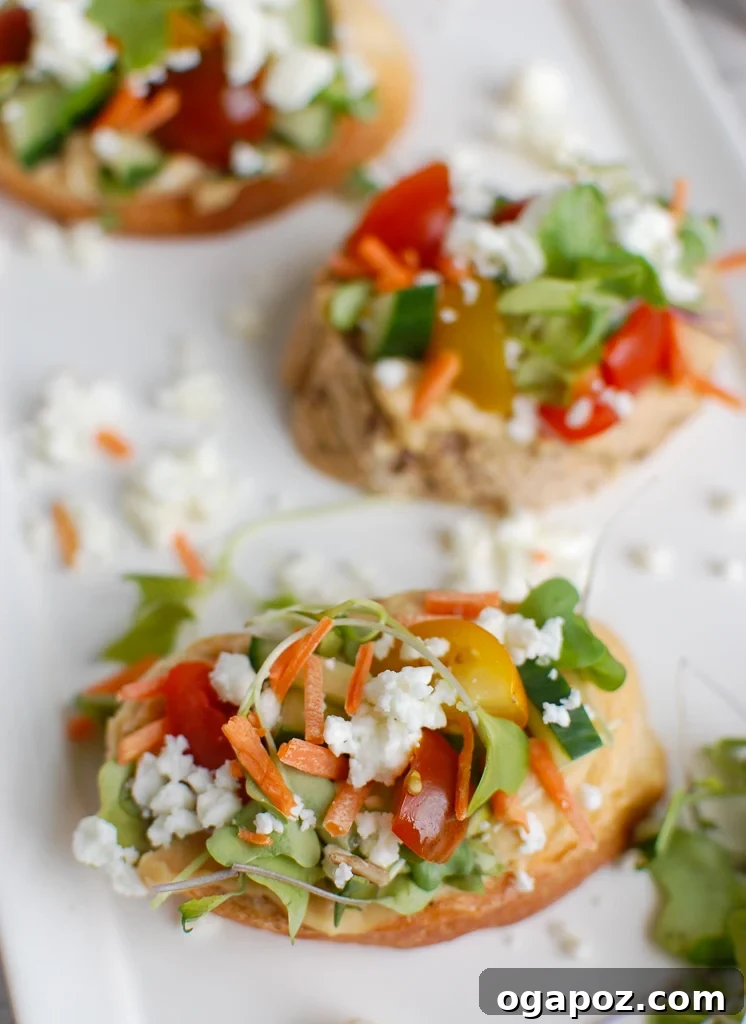
- Baguette Bread: The foundation of any great crostini! I recommend using a fresh, crusty baguette loaf, sliced evenly into 1/4-inch thick rounds. This thickness is crucial – it provides a sturdy base without being too dense, ensuring each bite is perfectly crisp yet manageable. One standard loaf typically yields enough slices to serve 6-8 people generously, making it an excellent option for sharing.
- Seasoning: A simple touch of high-quality sea salt and freshly ground black pepper is all that’s needed to enhance the natural flavors of the bread and olive oil. This subtle seasoning prepares the palate for the vibrant toppings to come, ensuring a balanced taste profile from the very first layer.
- Hummus: While my homemade classic hummus is always my top choice for its unparalleled freshness and flavor, any variety of hummus will work wonderfully here. Feel free to use your favorite store-bought brand for convenience, or experiment with different homemade flavors to add your unique twist to the crostini. The creamy texture of hummus is essential for binding the toppings.
- Fresh Vegetables: For a classic Mediterranean profile, I typically opt for a colorful trio of sweet grape tomatoes (halved or quartered), crisp English cucumber (diced finely), and crunchy matchstick carrots. These vegetables provide a refreshing contrast to the rich hummus and offer a burst of flavor and texture. Their small dice ensures they stay neatly on the crostini.
- Feta Cheese: The quintessential Mediterranean cheese, crumbled feta adds a delightful salty, tangy creaminess that elevates the entire appetizer. Its distinctive flavor pairs perfectly with the fresh vegetables and savory hummus, making it an indispensable topping. Always opt for good quality feta for the best results.
- Microgreens and Fresh Parsley: To complete the presentation and add an extra layer of freshness, a delicate garnish of microgreens and finely chopped fresh parsley is perfect. Microgreens, with their tender texture and concentrated flavor, are ideal for small bites like crostini. They provide a final aesthetic appeal and a subtle herbaceous note.
Creative Recipe Variations to Explore
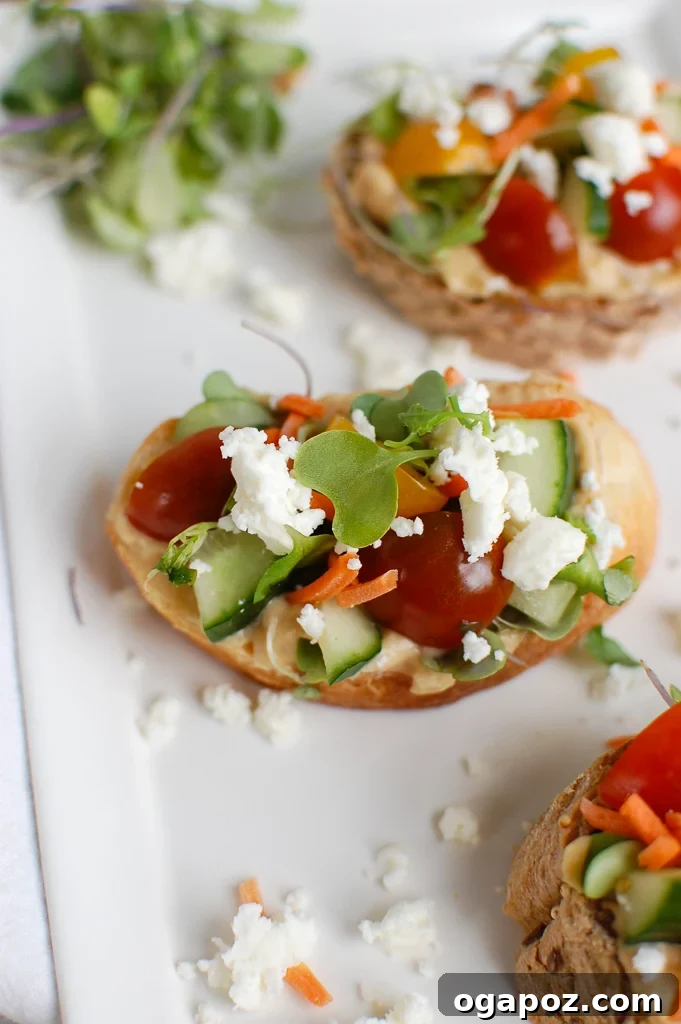
The beauty of Mediterranean Crostini lies in its incredible adaptability. While the classic combination is always a winner, don’t hesitate to experiment with these exciting variations to tailor the recipe to your taste preferences or whatever ingredients you have on hand.
- Hummus Flavors Galore: While my homemade Classic Hummus offers a timeless base, the world of hummus is vast and delicious! Consider swapping it for a vibrant Roasted Red Pepper Hummus for a smoky, sweet twist, or a bright Lemon Hummus to enhance the fresh, zesty notes. Spicy hummus, garlic hummus, or even a beet hummus can add unexpected color and flavor dimensions.
- Alternative Spreads: Beyond hummus, a variety of other creamy spreads can make an excellent base for your crostini. A rich White Bean Artichoke Dip offers a hearty, savory option, while my light and airy Lemon Whipped Feta Dip provides a tangy, refreshing counterpoint to the fresh vegetables. Other great choices include tzatziki, baba ghanoush, or even a simple cream cheese spread seasoned with herbs.
- An Abundance of Fresh Vegetables: The Mediterranean Crostini is a perfect canvas for showcasing a rainbow of fresh produce. Instead of, or in addition to, the suggested tomatoes, cucumber, and carrots, feel free to add your favorite diced vegetables. Consider finely chopped bell peppers (red, yellow, or orange for color), thinly sliced red onion for a slight bite, quartered artichoke hearts, Kalamata olives for a briny touch, or even lightly sautéed mushrooms or zucchini for an earthy depth. The key is to dice them small enough to fit easily on the crostini.
- Cheese Choices Beyond Feta: Feta is undoubtedly a Mediterranean star, but it’s not the only cheese that can grace your crostini. For a milder flavor and creamier texture, try a soft goat cheese, which pairs beautifully with many vegetables. Shredded Parmesan or a delicate sprinkle of fresh mozzarella can also work well. For a sharper profile, crumbled blue cheese could add an exciting punginess, or even a dash of halloumi for a unique salty, squeaky texture after a quick grill.
- Enhance with Greens: Microgreens are excellent for garnish due to their delicate size and concentrated flavor. However, you can also finely chop heartier greens like fresh kale, spinach, or arugula and mix them with the other toppings or sprinkle them on top. These greens not only add nutritional value but also introduce a pleasant peppery or earthy undertone.
- A Swirl of Pesto: For an extra burst of herby, garlicky goodness, a small swirl of homemade or store-bought pesto over the hummus before adding the vegetables can truly elevate the flavor profile. Basil pesto is a classic, but sun-dried tomato pesto or even a cilantro-lime pesto could offer intriguing variations.
- Protein Boost: For a more substantial snack, consider adding a lean protein. A small amount of shredded grilled chicken, thinly sliced smoked salmon, or crumbled cooked chickpeas seasoned with Mediterranean spices can transform these crostini into a mini-meal.
How to Make Mediterranean Crostini: A Simple Guide
Creating these delightful Mediterranean Crostini is surprisingly simple and requires just a few easy steps. Follow this guide for a perfect batch every time:
- Step 1: Prepare and Toast the Bread: Begin by preheating your oven to 350 degrees F (175 degrees C). Take your baguette and slice it into uniform 1/4-inch thick rounds. Even slices are key for consistent toasting. Arrange these bread slices in a single layer on a large baking sheet, ensuring they don’t overlap. Lightly brush both sides of each bread slice with extra virgin olive oil, then season sparingly with a dash of sea salt and freshly ground black pepper. This initial seasoning infuses flavor into the bread itself.
- Step 2: Bake Until Golden: Carefully place the baking sheets into your preheated oven. Bake the baguette slices for approximately 10-15 minutes, or until they turn a beautiful golden brown and achieve a slightly crispy texture. Keep a close eye on them, as oven temperatures can vary and you want them lightly toasted, not burnt. The goal is a crunch exterior with a tender interior.
- Step 3: Cool and Assemble: Once toasted to perfection, remove the crostini from the oven and allow them to cool on the baking sheet for about 5 minutes. This cooling period helps them firm up and become perfectly crisp. While the crostini cool, you can begin preparing your toppings if you haven’t already.
- Step 4: Top and Garnish: Now for the fun part! Take each cooled crostini and spread a thin, even layer of your chosen hummus over the top. Follow this with a generous scattering of your prepared chopped vegetables – the diced tomatoes, cucumber, and matchstick carrots. Finally, crumble some fresh feta cheese over the vegetables. For an added touch of freshness and visual appeal, garnish each crostini with delicate microgreens and a sprinkle of fresh chopped parsley before serving.
Expert Tips for Perfect Mediterranean Crostini
Achieving the perfect Mediterranean Crostini is all about attention to a few key details. These expert tips will help ensure your appetizers are consistently delicious and impressive:
- Precision in Slicing the Bread: The thickness of your baguette slices is crucial. Aim for approximately 1/4 inch thick. This ensures the bread is thin enough to offer a delicate crunch without being overly hard, and robust enough to support all your delicious toppings without falling apart. A serrated knife works best for clean, even slices.
- Mindful Toasting is Key: When toasting your crostini, exercise caution to avoid overcooking. The ideal crostini should be lightly golden and crispy on the outside, offering a satisfying crunch, while still retaining a slight tenderness in the center. Over-toasting can make the bread excessively hard and difficult to bite into, detracting from the overall enjoyment. Keep a close watch on them, especially during the last few minutes of baking.
- Quality Olive Oil Makes a Difference: Since olive oil is one of the few ingredients directly on the bread, using a good quality extra virgin olive oil can significantly elevate the flavor of your crostini. Its fruity, peppery notes will shine through, enhancing the overall Mediterranean experience.
- Balance of Flavors and Textures: When assembling, think about balance. The creamy hummus, crunchy vegetables, and salty feta each contribute a distinct texture and flavor. Don’t overload the crostini; aim for a harmonious blend where each component can be tasted and appreciated.
- Chill Your Hummus and Veggies: Ensure your hummus and chopped vegetables are well-chilled before assembly. This keeps the crostini refreshing and crisp, especially if you’re serving them at a warmer event.
- Consider a Drizzle of Balsamic Glaze: For an extra layer of gourmet flavor, a light drizzle of balsamic glaze just before serving can add a wonderful sweet and tangy contrast to the savory toppings.
Make-Ahead and Storage Tips for Convenience
One of the many benefits of Mediterranean Crostini is how well it adapts to advanced preparation, allowing you to enjoy more of your event and less time in the kitchen. Here are some smart make-ahead and storage strategies:
- Assembled Crostini – Short Term Storage: While crostini can be assembled a little ahead of time and stored in the refrigerator, it’s important to be mindful of the timing. The toasted bread will inevitably begin to absorb moisture from the hummus and fresh vegetables, causing it to soften and potentially become soggy if left to sit for too long. For optimal crunch, aim to assemble these no more than 1-2 hours before serving if refrigerating.
- The Best Make-Ahead Method – Separate Storage: For truly crispy crostini, the best approach for getting ahead is to prepare and store the components separately.
- Toasted Bread: Bake and cool the baguette slices as directed. Once completely cool, store them in an airtight container at room temperature for up to 2-3 days. This ensures they remain perfectly crisp.
- Hummus: Prepare your homemade hummus or have your store-bought hummus ready. Store it in an airtight container in the refrigerator for up to 5-7 days.
- Chopped Vegetables: Dice your tomatoes, cucumbers, carrots, and any other desired vegetables. Store each type of vegetable in its own individual airtight container in the refrigerator. This can be done up to 1-2 days in advance, depending on the vegetable (tomatoes are best chopped closer to assembly).
- Feta and Microgreens: Have your feta crumbled and your microgreens/parsley washed and dried. Store them separately in the refrigerator.
When you’re ready to serve, all that’s left to do is quickly assemble the crostini, and you’ll have fresh, crispy appetizers in minutes!
Recipe FAQs: Your Mediterranean Crostini Questions Answered
The primary distinction between crostini and bruschetta lies in the type of bread used and their preparation. Bruschetta typically features larger, thicker slices of rustic Italian bread, often grilled or toasted, then traditionally rubbed with a raw garlic clove before being topped. Crostini, on the other hand, refers to “little toasts” and is usually made with smaller, neater slices of a slender baguette or similar bread, which are baked or grilled until crisp. This smaller size makes crostini incredibly easy to pick up and enjoy as a bite-sized appetizer, whereas bruschetta can sometimes be a more substantial bite.
The ideal crostini should strike a perfect balance: crispy and golden on the outside, providing a satisfying crunch, but still retaining a slight softness or tenderness in the interior. It should not be overly hard or dry to the point where it becomes difficult to chew or could scratch the roof of your mouth. Mindful toasting ensures this delightful texture contrast, making it pleasant to eat and a perfect vehicle for the toppings.
Absolutely! To make Mediterranean Crostini gluten-free, simply substitute the traditional baguette with your favorite gluten-free baguette or a similar rustic gluten-free bread. Ensure it’s sturdy enough to toast and hold the toppings. The rest of the ingredients – hummus, fresh vegetables, and feta – are naturally gluten-free.
Microgreens are young vegetable greens that are typically harvested just after the first true leaves have developed. They are prized for their intense flavor, vibrant color, and delicate texture, often packing a nutritional punch much greater than their mature counterparts. In crostini, microgreens are ideal because their small size fits perfectly on the small bread slices, adding a fresh, slightly peppery, or earthy flavor burst and an elegant visual appeal without overpowering the other ingredients.
Other Delicious Mediterranean Recipes to Explore:
Beef
Hummus with Spiced Beef and Toasted Pine Nuts
Vegetarian
Mediterranean Hummus Toast with Za’atar
Appetizers
Baba Ghanoush
Mediterranean
Mediterranean Flatbread
Tried this recipe? Leave a star rating and comment below! Subscribe to my newsletter or follow me on
Facebook,
Instagram, or
Pinterest for the latest.
Mediterranean Crostini

Ingredients
- 1 loaf baguette bread, sliced 1/4 inch thick
- 1/4 cup extra virgin olive oil
- sea salt & black pepper , to taste
- 1/2 cup hummus, homemade or store bought, any flavor
- 1 cup grape tomatoes, cut into quarters
- 1 English cucumber, diced, around 1 1/2 to 2 cups
- 1/4 cup carrots, cut into matchsticks
- 1/2 cup feta cheese, crumbled
- microgreens and parsley, to garnish
Instructions
-
Preheat the oven to 350 degrees F (175 C). Slice the baguette into 1/4 inch thick slices. Arrange the slices on baking sheets and brush both sides of the bread with olive oil and a dash of salt and pepper.
-
Bake in the oven for 10-15 minutes, or until the bread begins to turn golden and becomes slightly crispy.
-
Remove from the oven and let cool for 5 minutes.
-
Spread a thin layer of hummus on each crostini, followed by the chopped tomatoes, cucumber, matchstick carrots, and crumbled feta cheese.
-
Garnish with microgreens and fresh parsley before serving.
Notes
- When cutting the bread, aim for 1/4 inch thick slices – they should be thin enough for easy eating but thick enough to support all the delicious toppings.
- Be careful not to overcook the crostini when toasting. You want the bread to be lightly golden and crisp on the outside, yet still soft on the inside, not so hard that it’s difficult to eat.
- While assembled crostini can be stored in the refrigerator for a short period (1-2 hours), they are best enjoyed fresh to maintain their crispness.
- For optimal make-ahead convenience, toast the bread and store it in an airtight container at room temperature. Prepare the vegetables and store them in separate airtight containers in the refrigerator. Assemble just before serving.
Nutrition
Calories: 202kcal,
Carbohydrates: 20g,
Protein: 6g,
Fat: 11g,
Saturated Fat: 3g,
Polyunsaturated Fat: 2g,
Monounsaturated Fat: 6g,
Cholesterol: 8mg,
Sodium: 654mg,
Potassium: 192mg,
Fiber: 2g,
Sugar: 3g,
Vitamin A: 907IU,
Vitamin C: 4mg,
Calcium: 94mg,
Iron: 2mg
Nutrition information is automatically calculated, so should only be used as an approximation.