
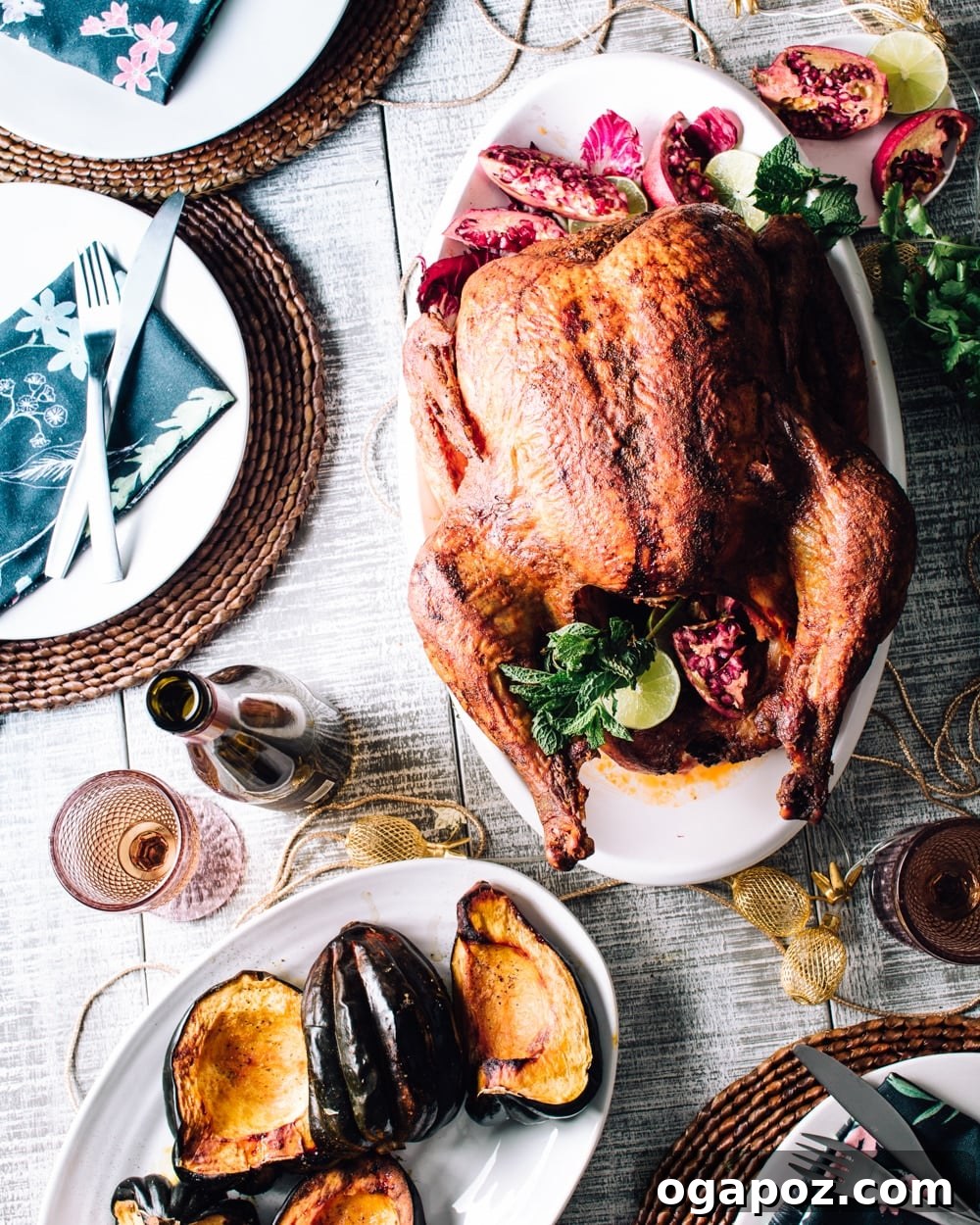
Experience a remarkable culinary journey with this Tandoori Turkey recipe, offering a deliciously spiced twist on your traditional holiday roast. Featuring an exceptionally scrumptious gravy, this dish is perfect when served alongside creamy mashed potatoes and vibrant roasted vegetables.
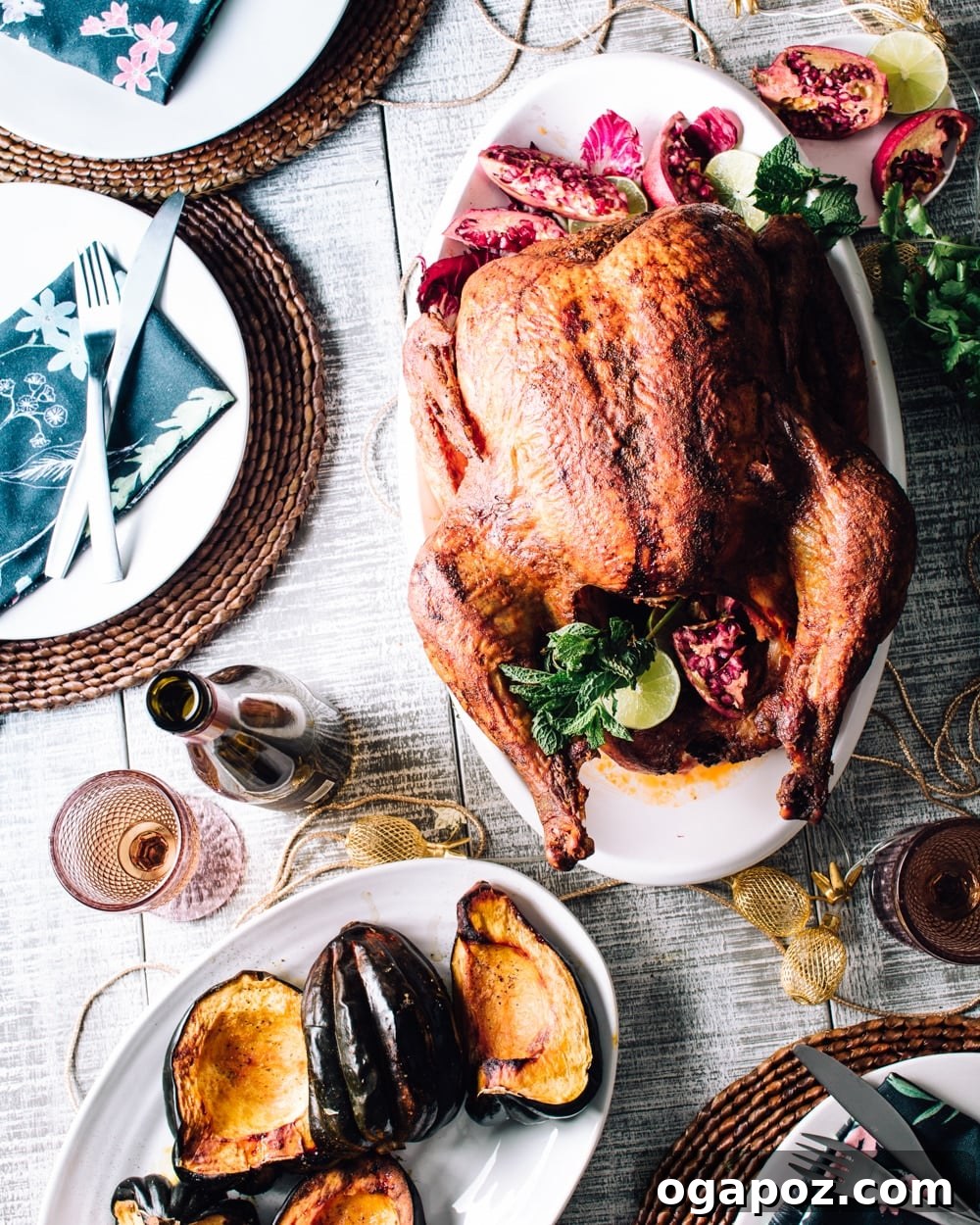
The Ultimate Tandoori Turkey: A Flavorful Holiday Centerpiece
Prepare to impress your guests with a show-stopping Tandoori Turkey, a mouth-watering spin on the classic holiday bird. While its crispy, deeply spiced skin and aromatic marinade offer a delightful departure from a conventional Thanksgiving roast, the essence of the meal—a tender, juicy turkey at the heart of your festive gathering—remains wonderfully intact. We firmly believe these new, exotic flavors don’t just change the dish; they enhance it, adding an exciting dimension that even turkey purists will find irresistibly delicious.
This recipe invites you to explore the rich, complex flavors of Indian cuisine applied to a beloved Western staple. The result is a turkey that boasts an incredible depth of flavor, unparalleled tenderness, and a captivating aroma that will fill your kitchen. Say goodbye to dry, bland turkey and hello to a culinary masterpiece that promises to be a talking point at your next celebration. Whether you’re hosting a grand Thanksgiving feast, a festive Christmas dinner, or simply looking for an adventurous Sunday roast, this Tandoori Turkey recipe offers a fresh perspective on poultry preparation, making your meal truly unforgettable.
Crafting the Perfect Tandoori Turkey Marinade
The secret to our Tandoori Turkey’s exceptional flavor and succulent texture lies in its vibrant, yogurt-based marinade. Don’t be intimidated by the name; the ingredients are surprisingly accessible and likely already reside in your well-stocked North American pantry. We’re talking about simple yet powerful components like creamy full-fat yogurt, a generous squeeze of fresh lemon juice, and a thoughtfully curated blend of aromatic spices. There’s no need to hunt down exotic ingredients at specialty grocery stores; convenience and incredible flavor go hand-in-hand here, proving that extraordinary meals can be made with everyday items.
Key Marinade Ingredients and Their Role:
- Full-Fat Yogurt: This is the cornerstone of the tandoori marinade. Yogurt acts as a fantastic natural tenderizer due to its lactic acid, which gently breaks down turkey muscle fibers without making the meat mushy. It also provides a thick base that helps the spices adhere beautifully to the turkey, ensuring an even coating and deep flavor penetration into every part of the bird, leading to a truly moist and flavorful result.
- Fresh Lemon Juice: Adding a bright, zesty counterpoint to the rich spices, lemon juice also contributes significantly to the tenderizing process. Its acidity helps to “cook” the surface of the meat slightly, allowing spices to infuse more effectively. It also cuts through the richness of the turkey and yogurt, brightening the overall taste profile and preventing the flavors from becoming heavy.
- Aromatic Spices: Our blend is a symphony of flavors, typically including sweet paprika (for vibrant color and mild sweetness), pungent minced garlic and fresh grated ginger (the aromatic backbone of many Indian dishes), warming cumin and coriander, a touch of fiery cayenne (which can be adjusted to your preferred level of heat), and fragrant cinnamon and cloves. These spices are carefully balanced to create the characteristic robust, earthy, and slightly smoky flavor profile synonymous with authentic tandoori cuisine.
- Oil & Salt: A good quality oil (like vegetable or canola) helps carry the fat-soluble flavors from the spices and forms a protective layer that keeps the marinade from drying out. Kosher salt is essential not only for seasoning but also for its ability to draw moisture into the meat through osmosis, ensuring enhanced juiciness and a more tender final product.
Marination Magic: Time-Saving Tips for Flavor Infusion
While some marinades demand an overnight soak for optimal flavor, this Tandoori Turkey recipe is surprisingly efficient. An hour at room temperature is genuinely sufficient to infuse the turkey with its signature flavors. This shorter marination time has an added, significant benefit: it allows the turkey to come to room temperature before it enters the oven. A cold turkey, straight from the refrigerator, tends to cook unevenly – the outside might be perfectly done, or even overcooked, while the inside struggles to reach the target temperature. Bringing it to room temperature ensures a more consistent and even cook throughout the bird, resulting in uniformly tender and juicy meat from edge to center, minimizing the risk of dry spots.
For those with extra time and a desire for even deeper flavor penetration, marinating for 2-4 hours (or even up to 6 hours) in the refrigerator can further deepen the flavors. However, if refrigerating, remember the crucial step: always take the turkey out of the refrigerator an hour before roasting to let it warm up. This simple step is vital for achieving that perfect, succulent texture and ensuring your magnificent Tandoori Turkey cooks flawlessly.
Mastering the Roast: The Low and Slow Method for a Flawless Tandoori Turkey
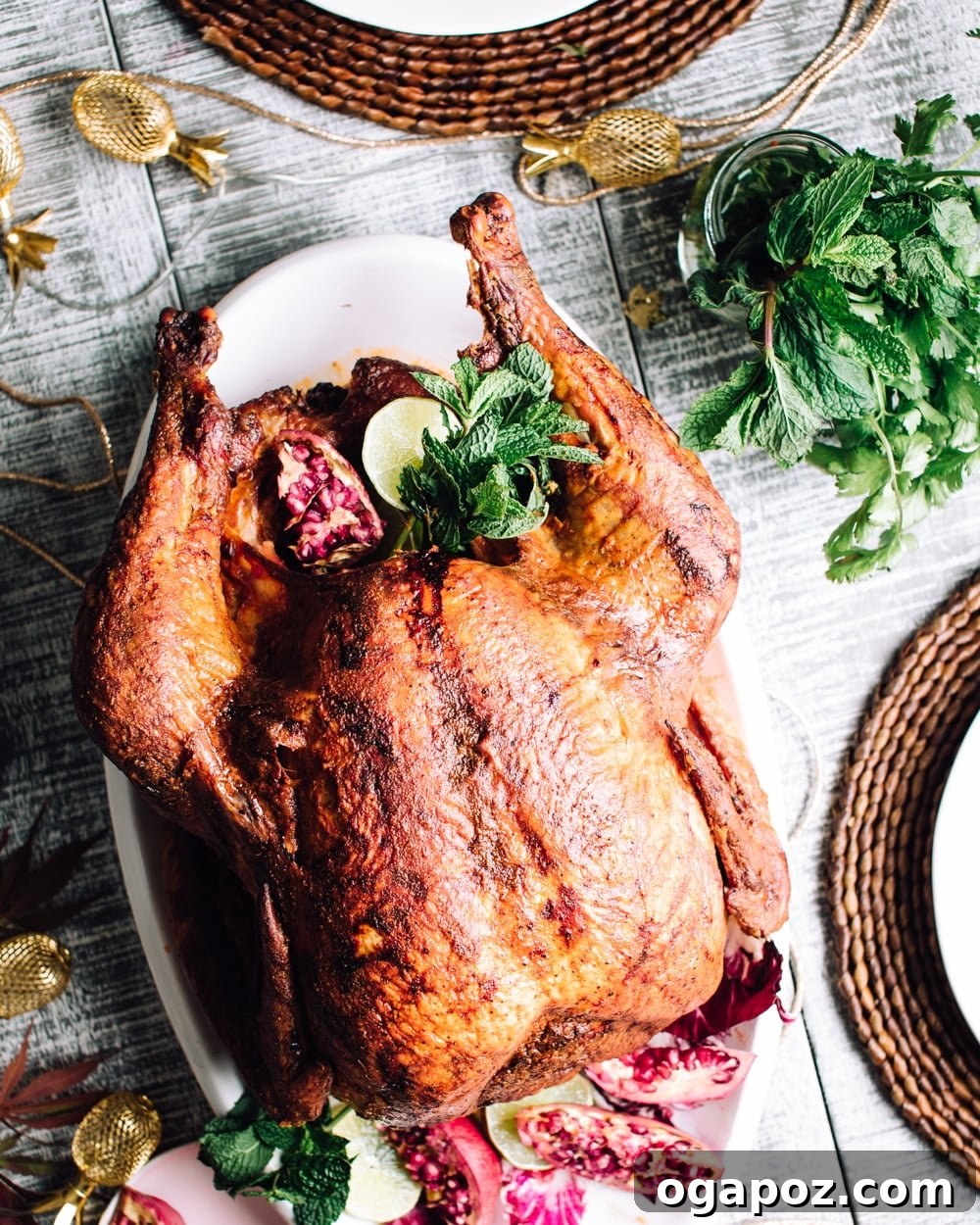
Achieving a perfectly roasted turkey – one that is incredibly juicy on the inside with a beautifully crisped, deeply spiced skin – is an art, and the “low and slow” method is our chosen technique for this Tandoori Turkey. Roasting at a lower temperature for a longer duration allows the marinade more time to penetrate the meat, intensifying its flavors and ensuring supreme tenderness. This gentle cooking process also helps prevent the delicate breast meat from drying out while allowing the dark meat, which requires more time, to cook through thoroughly and become wonderfully succulent.
Essential Roasting Tips for Success:
- Your Meat Thermometer is Your Best Friend: This cannot be stressed enough. An accurate, reliable meat thermometer is your most valuable ally in the kitchen, taking all the guesswork out of turkey roasting. Insert it into the thickest part of the thigh, making sure it doesn’t touch any bone, which could give a misleading reading. You’re aiming for an internal temperature of 160ºF (approximately 71ºC) for the thigh. Remember, the turkey’s temperature will continue to rise by several degrees during the resting period after it comes out of the oven.
- Resist the Urge to Baste Frequently: While traditional wisdom often calls for frequent basting to keep the turkey moist, we advise against opening the oven door repeatedly. Each time you open the oven, you release a significant amount of heat, extending the overall cooking time and potentially drying out the turkey. The rich yogurt marinade helps keep the turkey exceptionally moist from within, rendering external basting largely unnecessary and counterproductive.
- Strategic Tenting with Foil: Keep a close eye on the turkey’s skin, especially towards the latter half of the cooking process. If it starts to get too dark or appears to be burning before the internal temperature is reached, gently tent it with aluminum foil. This acts as a shield, protecting the skin from excessive browning while allowing the turkey to continue cooking evenly and thoroughly underneath.
- The Crucial Resting Period: Once your turkey reaches the target internal temperature, resist the immediate urge to carve. Instead, carefully transfer the roasted bird to a large cutting board and let it rest, uncovered, for as long as you possibly can. An hour is truly ideal, but a minimum of 20-30 minutes will suffice. This resting period is absolutely critical: it allows the muscle fibers to relax and the juices within the meat to redistribute throughout the entire bird. If you slice into the turkey too soon, those precious, flavorful juices will simply run out onto the cutting board, leaving you with noticeably less flavorful and drier meat. Patience here is generously rewarded with an incredibly moist, tender, and succulent Tandoori Turkey that will be the highlight of your meal.
Making the Exquisite Tandoori Turkey Gravy
No holiday turkey is complete without a rich, flavorful gravy, and our Tandoori Turkey Gravy is nothing short of exceptional. It skillfully utilizes all the delicious pan drippings and flavorful browned bits left behind in the roasting pan, creating a foundation of unparalleled depth and savory goodness. Combined with a touch of all-purpose flour for thickening, robust unsalted chicken broth for body, and a generous lump of butter for added richness and a silky finish, this gravy truly elevates the entire meal, complementing the turkey beautifully.
The spice profile in this gravy is wonderfully subtle and harmonious, designed to enhance rather than overpower. Unlike a bold, assertively spiced sauce such as a butter chicken, our gravy features warm, aromatic notes that thoughtfully echo the spices in the tandoori marinade without being overly intense. Imagine your favorite traditional turkey gravy, but with an intriguing, nuanced whisper of cumin, coriander, and a hint of cinnamon. It’s a familiar comfort with an excitingly exotic twist, providing a delightful culinary experience. Trust us, once you try this gravy, it will become an indispensable part of your Tandoori Turkey tradition.
Tips for a Silky Smooth and Flavorful Gravy:
- Deglaze the Pan: After removing the turkey to rest, place the roasting pan (with all its flavorful drippings and browned bits) on the stovetop over medium heat. If there’s an excessive amount of fat, carefully spoon out some, leaving a few tablespoons for flavor. Add a splash of chicken broth or water to the pan and use a wooden spoon to scrape up all those flavorful fond bits stuck to the bottom – this is where much of the magic and deepest flavor for your gravy resides!
- Create a Smooth Slurry: In a separate bowl, whisk the all-purpose flour with 1 cup of cold chicken broth until the mixture is absolutely smooth and lump-free. Using cold broth helps prevent lumps from forming when the flour is added.
- Gradual Addition and Constant Whisking: Gradually whisk this flour slurry into the simmering pan juices on the stovetop. Then, slowly add the remaining chicken broth and the butter, whisking continuously to ensure everything is well combined and to prevent any lumps from forming.
- Simmer and Thicken: Allow the gravy to come to a gentle boil, then reduce the heat to a low simmer and continue to cook, whisking occasionally, until it thickens to your desired consistency. Be patient, as this can take a few minutes.
- Taste and Adjust Seasoning: Always taste your gravy before serving. Adjust the seasoning with additional salt and freshly-ground black pepper as needed to achieve the perfect balance of flavors.
- Strain for Perfection: For an exceptionally smooth and restaurant-quality gravy, consider straining it through a fine-mesh sieve into a clean serving bowl before serving. This removes any small solids or un-dissolved bits, resulting in a luxurious texture.
What to Pair with Your Tandoori Turkey
The versatility of Tandoori Turkey allows for a delightful array of side dishes, offering ample opportunity for both traditionalists and adventurers at your holiday table. While it shines brightly alongside uniquely flavored options like Samosa Potatoes, it’s equally magnificent and comforting when paired with classic, familiar sides. Don’t feel pressured to completely reinvent your entire menu; simple accompaniments often provide the best textural and flavor contrast to the turkey’s rich, aromatic profile.
Inspiring Side Dish Ideas to Complement Your Tandoori Turkey:
- Classic Mashed Potatoes: The creamy, buttery simplicity of mashed potatoes provides a perfect, comforting canvas for soaking up that incredible tandoori gravy. It’s a timeless pairing that always satisfies and offers a grounding element to the exotic flavors.
- Roasted Root Vegetables: An effortless, nutritious, and visually appealing choice. Roasting root vegetables like carrots, parsnips, sweet potatoes, and regular potatoes on a sheet pan alongside the turkey (or in a separate oven if needed) makes for an easy and delicious side. A simple drizzle of olive oil, salt, and pepper is often all they need to become tender and slightly caramelized, adding natural sweetness.
- Slow-Roasted Acorn Squash: As a personal favorite, thick wedges of slow-roasted acorn squash offer a naturally sweet and earthy complement that beautifully balances the savory spices of the turkey. Simply drizzle with a good quality oil and sprinkle generously with salt and pepper before roasting until tender and caramelized, creating a simple yet elegant side.
- Green Bean Almondine: A fresh, crisp green vegetable side with toasted slivered almonds can add a wonderful textural contrast, a nutty flavor, and much-needed freshness to a rich holiday meal.
- Cranberry Chutney or Relish: While not traditionally Indian, a homemade cranberry chutney with a hint of ginger, orange zest, or even a touch of star anise can bridge the gap between classic holiday flavors and the new, vibrant profile of the tandoori turkey, adding a sweet-tart counterpoint.
- Fragrant Rice Pilaf or Warm Naan Bread: To fully embrace the Indian inspiration, consider serving a fragrant basmati rice pilaf (perhaps with toasted cashews or raisins) as a delightful starchy accompaniment. Alternatively, warm naan bread is perfect for scooping up every last drop of that exquisite gravy and marinade.
- Cooling Cucumber Raita: For a refreshing balance to the spices, a simple cucumber raita (yogurt with grated cucumber and a hint of mint) can be a fantastic, palate-cleansing addition, providing a cool contrast to the warmth of the tandoori flavors.
Choosing Your Turkey and Calculating Cooking Time
This Tandoori Turkey recipe was originally developed in collaboration with Butterball, a trusted name in poultry, highlighting their fantastic products and providing reliable guidance. For precise details on selecting the right size turkey for your gathering and determining its optimal cooking time, Butterball’s turkey calculator is an invaluable resource. It takes the guesswork out of planning, ensuring you pick the perfect bird for the number of servings you desire and provides accurate cooking duration based on its weight, oven type, and whether it’s stuffed or unstuffed.
As a general guide when shopping, allow approximately 1.5 pounds (0.7 kg) of turkey per person for a generous serving with some delicious leftovers. If you prefer substantial leftovers for sandwiches, soups, or another meal, increase that to 2 pounds (0.9 kg) per person. Always ensure your turkey is fully thawed before marinating and roasting. A good rule of thumb for safely thawing a frozen turkey in the refrigerator is 24 hours for every 4-5 pounds (1.8-2.3 kg) of weight. This slow, steady thaw is crucial for food safety and ensures the turkey thaws evenly, preparing it perfectly for its flavorful tandoori marinade.
For the Traditionalists: A Classic Roast Turkey Option
We completely understand and deeply respect the desire for a classic holiday meal that evokes cherished memories and familiar flavors. If, after all this talk of vibrant spices and exciting culinary twists, your heart still yearns for the comforting familiarity of a traditional roast turkey, we absolutely have you covered. Culinary exploration is wonderful, but sometimes, the classics simply can’t be beaten. Here’s our tried-and-true, no-drama, no-fail recipe and method for roasting a traditional turkey, guaranteed to deliver succulent breast meat and perfectly cooked legs every single time, ensuring a delicious and stress-free centerpiece for your gathering.
Recipe: Tandoori Turkey
Tandoori Turkey
By: Jennifer Pallian BSc, RD
A deliciously spiced twist on traditional turkey, this tandoori turkey has an especially scrumptious gravy. Perfect with mashed potatoes & roasted veggies.
20 minutes
4 hours
4 hours 20 minutes
Approx. 12-16 servings (for a 20lb turkey)
Ingredients
For the Turkey Marinade:
- 1 cup plain full-fat yogurt
- Juice of 1 large lemon
- 3 tbsp oil
- 8 cloves garlic, minced or crushed
- 1 (2-oz) piece fresh ginger, grated or finely minced
- 3 tbsp sweet paprika (ensure it is not hot paprika for this recipe)
- 2 tbsp kosher salt
- 2 tsp ground cayenne (adjust to your desired spice preference; omit for mild)
- 2 tsp ground coriander
- 2 tsp ground cumin
- 1 ½ tsp ground cinnamon
- 1 tsp ground cloves
- 1 (9 kg / 20 lb) fresh whole turkey (thawed, if using frozen)
- Freshly-ground black pepper, to taste
- 1 medium onion, halved (for the turkey cavity)
For the Gravy:
- ⅓ cup all-purpose flour (or more, as needed for desired thickness)
- 1 litre unsalted chicken broth (cold or room temperature)
- 3 tbsp butter
Instructions
- Prepare the Marinade: In a food processor or blender, combine the plain full-fat yogurt, fresh lemon juice, oil, minced garlic, grated ginger, sweet paprika, kosher salt, ground cayenne, ground coriander, ground cumin, ground cinnamon, and ground cloves. Process until the mixture is completely smooth and all ingredients are thoroughly combined.
- Marinate the Turkey: Remove the fresh turkey from its packaging. Take out the neck from the body cavity and the giblets from the neck cavity; discard or save for stock. Pat the turkey thoroughly dry inside and out with paper towels. Place the turkey, breast-side up, on a rack set in a shallow (approximately 3-inch deep) roasting pan. Generously slather the prepared yogurt-spice rub all over the turkey, ensuring an even coating across the skin and into any crevices. Sprinkle with freshly-ground black pepper. Let the turkey stand at room temperature for 1 hour to absorb flavors and ensure more even cooking. Place the halved onion into the turkey cavity.
- Roast the Turkey: Preheat your oven to 325ºF (160ºC). Position the turkey on the center oven rack and roast until a meat thermometer inserted into the thickest part of the thigh (making sure it does not touch any bone) reads an internal temperature of 160ºF (approximately 71ºC). For a 20 lb turkey, this will typically take about 4 hours, but cooking times can vary significantly based on oven calibration, turkey size, and whether the turkey is stuffed.
- Monitor and Rest: Around halfway through the cooking time, check the turkey’s skin. If it starts to darken too much before the internal temperature is reached, loosely tent the turkey with aluminum foil to prevent burning while allowing it to continue cooking. Once the turkey reaches the target internal temperature, carefully transfer it to a large cutting board. Allow it to rest, uncovered, for at least 20 minutes, and ideally up to an hour, before carving. This crucial resting period allows the juices to redistribute throughout the meat, resulting in an incredibly tender and moist turkey.
- Prepare the Gravy Base: While the turkey rests, place the roasting pan (with all the flavorful pan drippings and turkey bits) on the stovetop over medium heat. If there’s an excessive amount of fat in the pan, carefully spoon some out, leaving approximately 2-3 tablespoons for flavor. In a separate medium-sized bowl, slowly drizzle 1 cup of the cold chicken broth into the all-purpose flour, whisking constantly until a smooth, lump-free slurry forms.
- Thicken and Finish Gravy: Gradually whisk this flour-broth mixture into the simmering pan juices on the stovetop. Then, add the remaining chicken broth and the butter, whisking continuously to incorporate thoroughly. Bring the gravy to a boil, then reduce the heat to a low simmer and continue to cook, whisking occasionally, until it thickens to your desired consistency. Taste the gravy and adjust the seasoning with salt and pepper as needed to enhance the flavor. For an extra-smooth gravy, strain it through a fine-mesh sieve into a serving bowl before serving alongside your carved Tandoori Turkey.
Tried this recipe? We’d love to hear about your experience! Share your thoughts in the comments below.
You might also enjoy:
- The Authentic Chai Tea Recipe That Might Change Your Life