
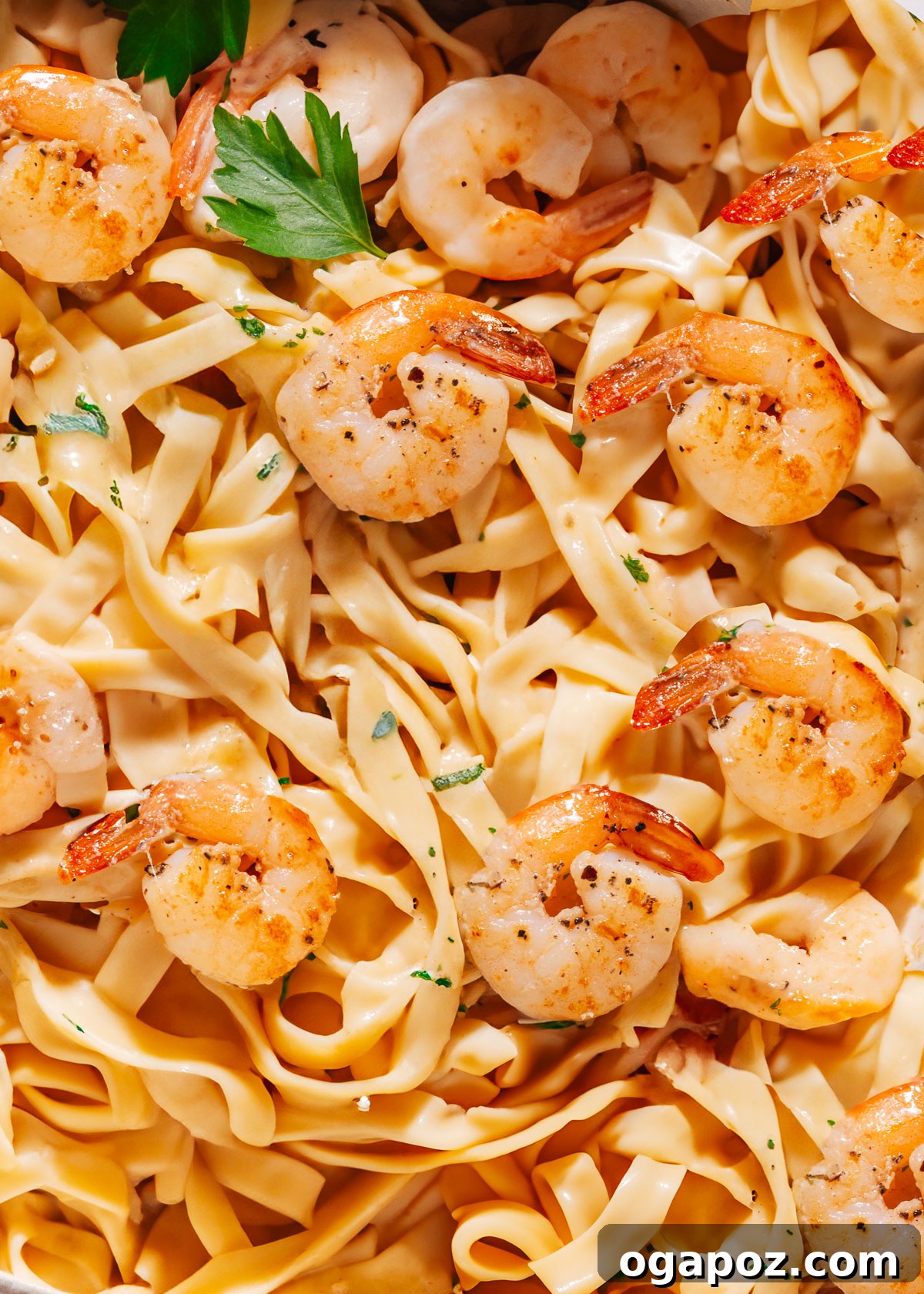
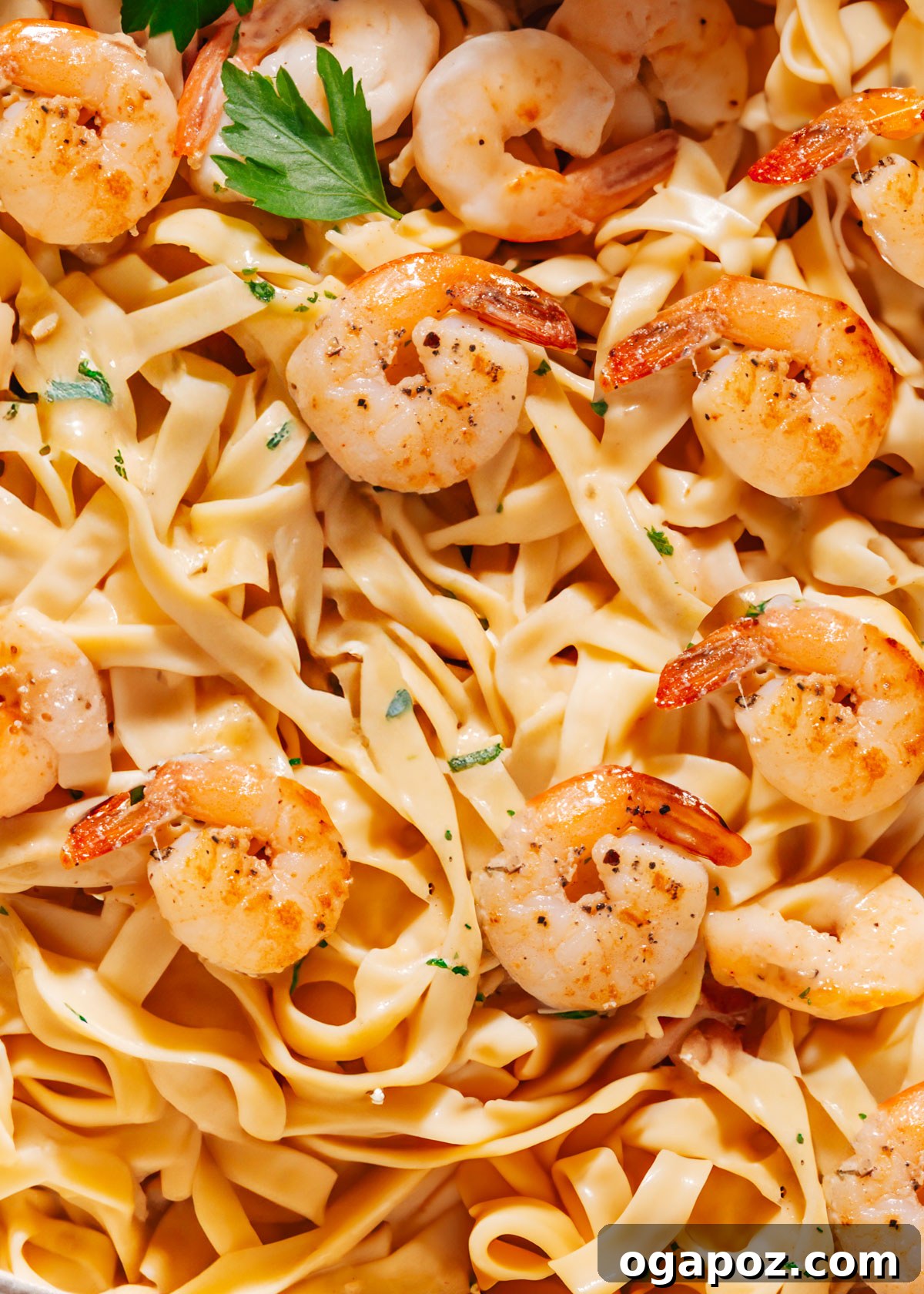
Prepare to elevate your dinner game with this incredibly delicious and easy **Creamy Lemon Garlic Shrimp Pasta**. Forget the wait and expense of your favorite Italian spot; this recipe brings restaurant-quality flavors right to your kitchen in under 40 minutes. Featuring plump, perfectly seared shrimp and tender pasta enveloped in a luxurious, rich, and velvety lemon cream sauce, it’s a dish that truly impresses with minimal effort, making it ideal for both busy weeknights and special occasions alike.
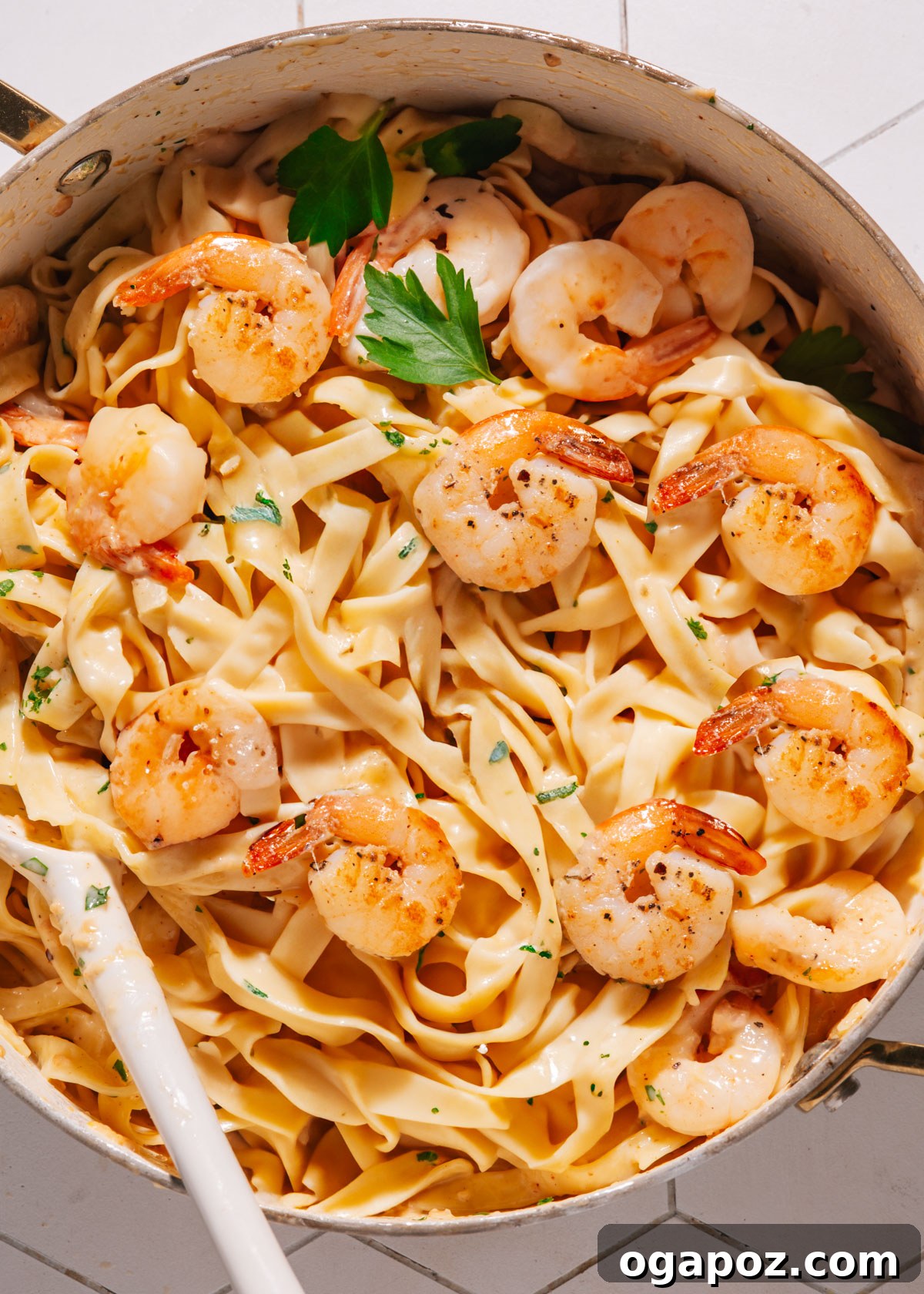
What makes this shrimp pasta recipe truly stand out is its harmonious blend of bright, zesty lemon and deeply aromatic garlic. These key ingredients create a sauce that’s both refreshing and indulgently creamy, perfectly complementing the succulent shrimp. This isn’t just another pasta dish; it’s a culinary experience designed to be straightforward yet spectacular. Its vibrant flavors, appealing presentation, and speedy preparation ensure it will quickly become a cherished favorite in your recipe collection.
Essential Ingredients for Your Perfect Shrimp Pasta
Creating this irresistible creamy shrimp pasta starts with gathering fresh, high-quality ingredients. Each component plays a vital role in achieving that sought-after restaurant-quality taste and texture. Here’s a detailed look at what you’ll need, along with tips for selecting the best for your dish:
Key Ingredients You’ll Need
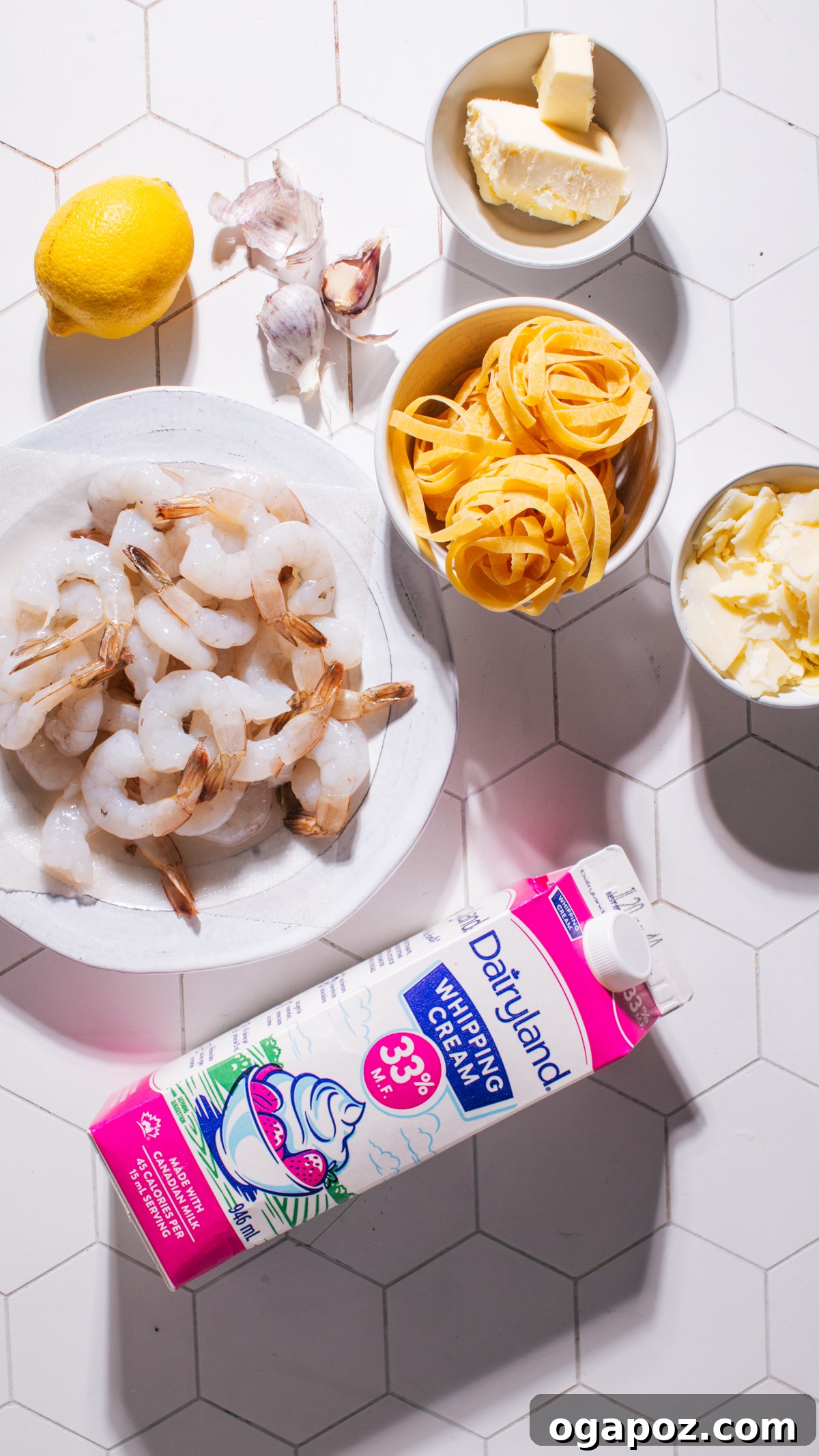
To craft this easy yet elegant shrimp pasta, assemble these pantry staples and fresh selections, focusing on quality for the best results:
- Pasta: You’ll need about 12 ounces of pasta. Long strands like spaghetti, fettuccine, tagliatelle, or linguine are highly recommended because their broad surface area or twisted shape expertly cradles the rich, creamy sauce. Choose a high-quality brand for superior texture.
- Shrimp: Gather 12 ounces of fresh (or fully thawed frozen) shrimp, peeled and deveined. For a truly satisfying bite and impressive presentation, opt for large, plump shrimp (e.g., 21/25 count). Always pat them thoroughly dry before cooking to ensure a beautiful sear.
- Kosher Salt and Black Pepper: These are your fundamental flavor architects. Proper seasoning at every stage—from generously salting the pasta water to seasoning the shrimp and the sauce—is critical for balancing and enhancing all the delicious elements. Taste as you go!
- Olive Oil: A tablespoon of good quality extra virgin olive oil is used for sautéing the shrimp. It not only aids in cooking but also imparts a delicate, fruity undertone that complements the seafood.
- Butter: Four tablespoons of unsalted butter are essential for adding richness, a luxurious mouthfeel, and a velvety smooth texture to your cream sauce. It’s a cornerstone for achieving that desired restaurant-quality indulgence.
- Garlic: Three cloves of freshly minced garlic are absolutely paramount. Resist the temptation to use pre-minced jarred garlic, as fresh garlic provides an incomparable pungent aroma and vibrant flavor that is central to this dish’s appeal.
- Heavy Cream: Also known as whipping cream or 35% m.f. cream, ¾ cup of this rich dairy product forms the luscious, thick, and utterly satisfying base of your pasta sauce. Its high fat content is key to a stable, silky, and non-splitting sauce.
- Lemon Zest and Juice: The dynamic duo of 1½ teaspoons of lemon zest and 1 tablespoon of fresh lemon juice is what elevates this dish from merely creamy to brilliantly vibrant. The zest provides aromatic oils, while the juice adds a tangy acidity that cuts through the cream’s richness, ensuring a balanced and bright flavor.
- Parmesan Cheese: Half a cup of finely-grated Parmesan cheese (ideally Parmigiano-Reggiano) is stirred into the sauce. It contributes a salty, nutty, and umami depth that melts beautifully, enriching the sauce’s flavor and texture. Freshly grated cheese melts much better than pre-shredded.
- Chives or Parsley: Freshly minced chives or parsley, used as a garnish, provide a vital pop of vibrant green color and a fresh, herbaceous counterpoint. These final touches enhance both the visual appeal and the overall aromatic profile of the dish.
Substitutions and Creative Variations for Your Shrimp Pasta
This creamy shrimp pasta recipe is wonderfully adaptable, allowing you to tailor it to your dietary preferences, ingredient availability, or simply your creative whims. Don’t hesitate to experiment with these thoughtful variations:
- Protein Swaps:
- Chicken: For a delightful alternative, replace the shrimp with bite-sized pieces of chicken breast or thighs. Cook them until golden brown and cooked through before proceeding with the sauce.
- Scallops: If you’re looking for a slightly sweeter and more delicate seafood experience, sear large sea scallops until beautifully caramelized and tender.
- Mixed Seafood: Elevate the dish further by adding cooked lobster meat, crab, or a medley of mussels and clams. Adjust their cooking times to ensure they’re heated through without becoming rubbery.
- Vegetarian Options: For a completely plant-based version, omit the shrimp and significantly increase the quantity of vegetables like sautéed mushrooms, wilted spinach, or sun-dried tomatoes to maintain a hearty and flavorful profile.
- Pasta Choices:
- Long Pasta: As previously highlighted, spaghetti, fettuccine, tagliatelle, or linguine are excellent choices that excel at capturing and holding the rich, creamy sauce. For more insight into these types, explore resources like fettuccine vs linguine vs tagliatelle.
- Shorter Shapes: Other pasta varieties such as penne, rigatoni, or even farfalle (bow-tie pasta) can also work beautifully, offering a different textural experience while still carrying the sauce effectively.
- Whole Wheat Pasta: For added fiber and a slightly nuttier flavor, whole wheat pasta is a healthy substitute. Be mindful that its cooking time and final texture can differ from traditional white pasta.
- Gluten-Free Pasta: If you adhere to a gluten-free diet, numerous high-quality gluten-free pasta options are available. Simply follow the package instructions meticulously, as their cooking characteristics may vary.
- Flavor Add-ins:
- Spice Kick: Introduce a pinch of red pepper flakes when sautéing the garlic to infuse a subtle warmth and gentle heat into the sauce.
- Umami Depth: Stir in a tablespoon of finely chopped, oil-packed sun-dried tomatoes (drained) along with the garlic for a concentrated burst of savory, intense flavor.
- Deglazing with Wine: After cooking the garlic, deglaze the pan with a splash of dry white wine (like Sauvignon Blanc or Pinot Grigio). Let it reduce by half before adding the heavy cream to introduce an extra layer of sophisticated depth.
- Fresh Herbs: Beyond chives and parsley, fresh basil, oregano, or dill can offer wonderful aromatic variations, added at the very end.
- Vegetable Boost: Enhance the dish with extra nutrition and color by sautéing fresh spinach until wilted, adding halved cherry tomatoes, or incorporating thinly sliced asparagus spears or mushrooms along with the garlic or directly into the sauce.
- Cheese Variations:
- Pecorino Romano: This Italian sheep’s milk cheese provides a sharper, saltier, and more robust flavor than Parmesan, lending a bolder character to your creamy sauce.
- Asiago: A semi-hard Italian cheese that can offer a slightly nuttier and milder alternative, contributing a different dimension of cheesy goodness.
- Dairy-Free Options: For those with dairy sensitivities, certain plant-based creams can substitute heavy cream, and nutritional yeast can effectively mimic a cheesy flavor, though textural adjustments may be needed.
Essential Tools for Making Shrimp Pasta
You don’t need a gourmet kitchen full of specialized gadgets to create this incredible, perfectly simple creamy shrimp pasta. Just a few basic tools will get the job done efficiently and ensure a smooth cooking process:
- Large Pasta Pot: This is essential for cooking your pasta. Ensure it’s large enough to hold at least 4-6 quarts of water, allowing the pasta to cook evenly and prevent clumping. Proper pasta cooking begins here.
- Large Skillet (12-inch or larger): This will be your primary pan for the entire recipe. A spacious skillet is crucial for searing the shrimp in a single layer without overcrowding (which can lead to steaming instead of browning) and later for building and finishing the creamy sauce. Cast iron or stainless steel skillets are excellent for achieving a good sear.
- Whisk: An indispensable tool for this recipe, a whisk ensures that when you incorporate the heavy cream and especially the Parmesan cheese into your sauce, it becomes perfectly smooth, lump-free, and velvety. It helps emulsify the sauce to perfection.
- Tongs: Very helpful for easily handling and flipping the shrimp in the hot skillet, and later for efficiently tossing the cooked pasta with the creamy sauce to ensure every piece is thoroughly coated.
- Microplane or Fine Grater: Ideal for zesting your lemon to get those flavorful aromatic oils from the peel without any bitter white pith. Also great for finely grating Parmesan cheese, which melts more smoothly into the sauce.
- Colander: For efficiently draining your cooked pasta, ensuring it’s ready to be combined with the sauce.
How to Make Creamy Lemon Garlic Shrimp Pasta: A Step-by-Step Guide
Embark on a culinary journey to create this surprisingly easy yet elegantly flavorful creamy shrimp pasta. Follow these detailed steps carefully, and you’ll achieve a dish that tastes like it came straight from a gourmet restaurant, impressing everyone at your table:
Step 1: Cook the Pasta to Al Dente Perfection
Begin by bringing a large pot of water to a vigorous, rolling boil. Season the water generously with kosher salt – it should taste noticeably salty, like seawater, as this is your only opportunity to infuse flavor into the pasta from within. Add your chosen pasta (long strands like spaghetti, fettuccine, or linguine are ideal) and cook according to the package directions until it’s perfectly *al dente* – tender yet still firm and slightly resistant to the bite. Before draining, remember to reserve about ½ to 1 cup of the starchy pasta water; this “liquid gold” is a secret ingredient that will help emulsify and thin your sauce later if needed, ensuring a silky consistency. Drain the pasta in a colander and set it aside.
Step 2: Perfectly Sear the Succulent Shrimp
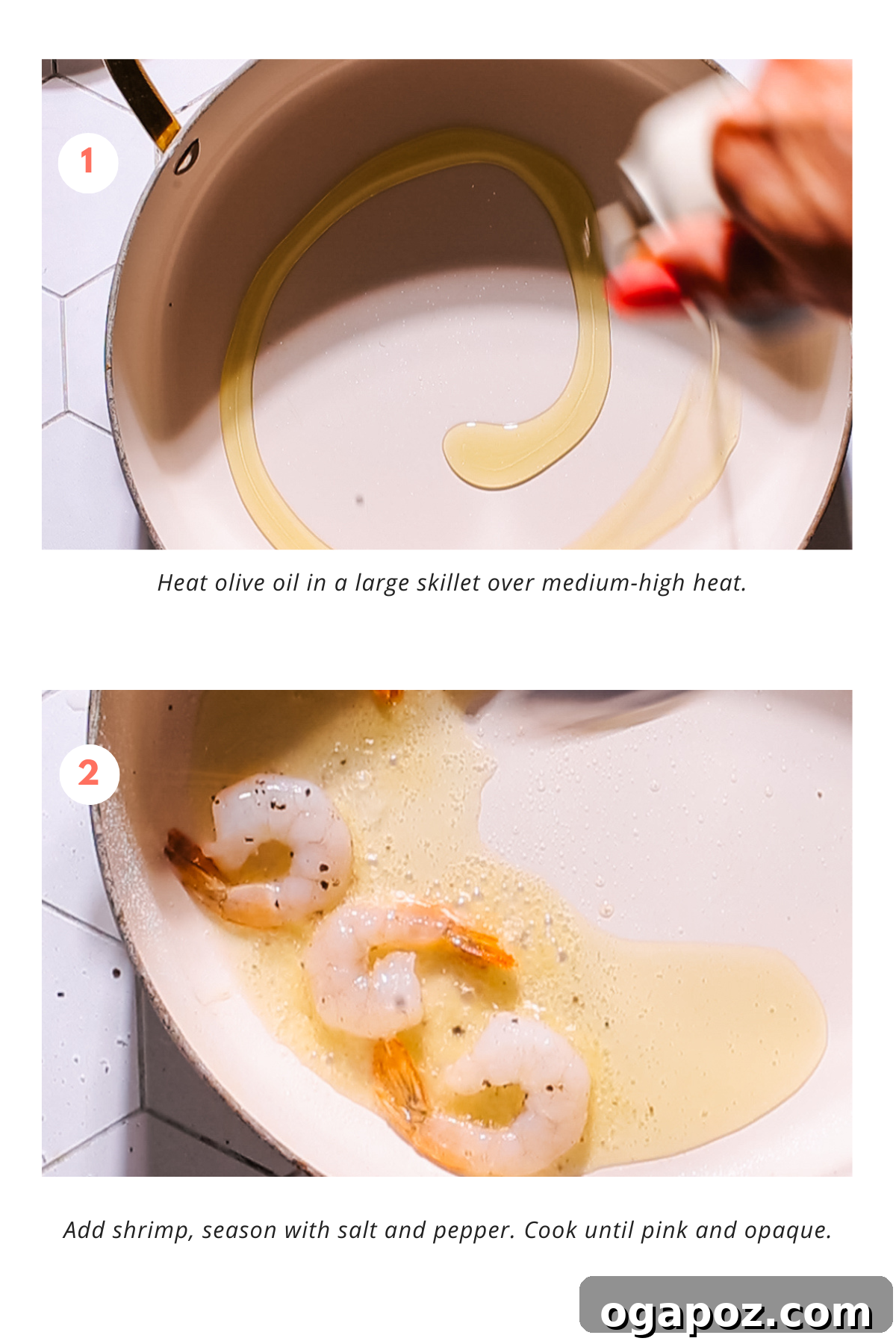
While your pasta is cooking, heat 1 tablespoon of olive oil in a large skillet (ideally 12-inch or larger) over medium-high heat until it is shimmering and just beginning to smoke slightly. This high heat is crucial for a good sear. Ensure your shrimp are thoroughly patted dry with paper towels; any residual moisture will cause them to steam rather than sear, preventing that beautiful golden-brown crust. Add the shrimp to the hot skillet in a single layer, being careful not to overcrowd the pan (cook in two batches if necessary). Season generously with kosher salt and freshly ground black pepper. Cook for only 2-3 minutes per side, or just until they turn pink, opaque, and develop a lovely sear. Overcooking shrimp quickly leads to a tough, rubbery texture. Once cooked, immediately remove the shrimp from the skillet and set them aside. **Do not wipe out the pan**; those flavorful browned bits (fond) stuck to the bottom are packed with deliciousness for your sauce.
Step 3: Build the Aromatic Cream Sauce Base
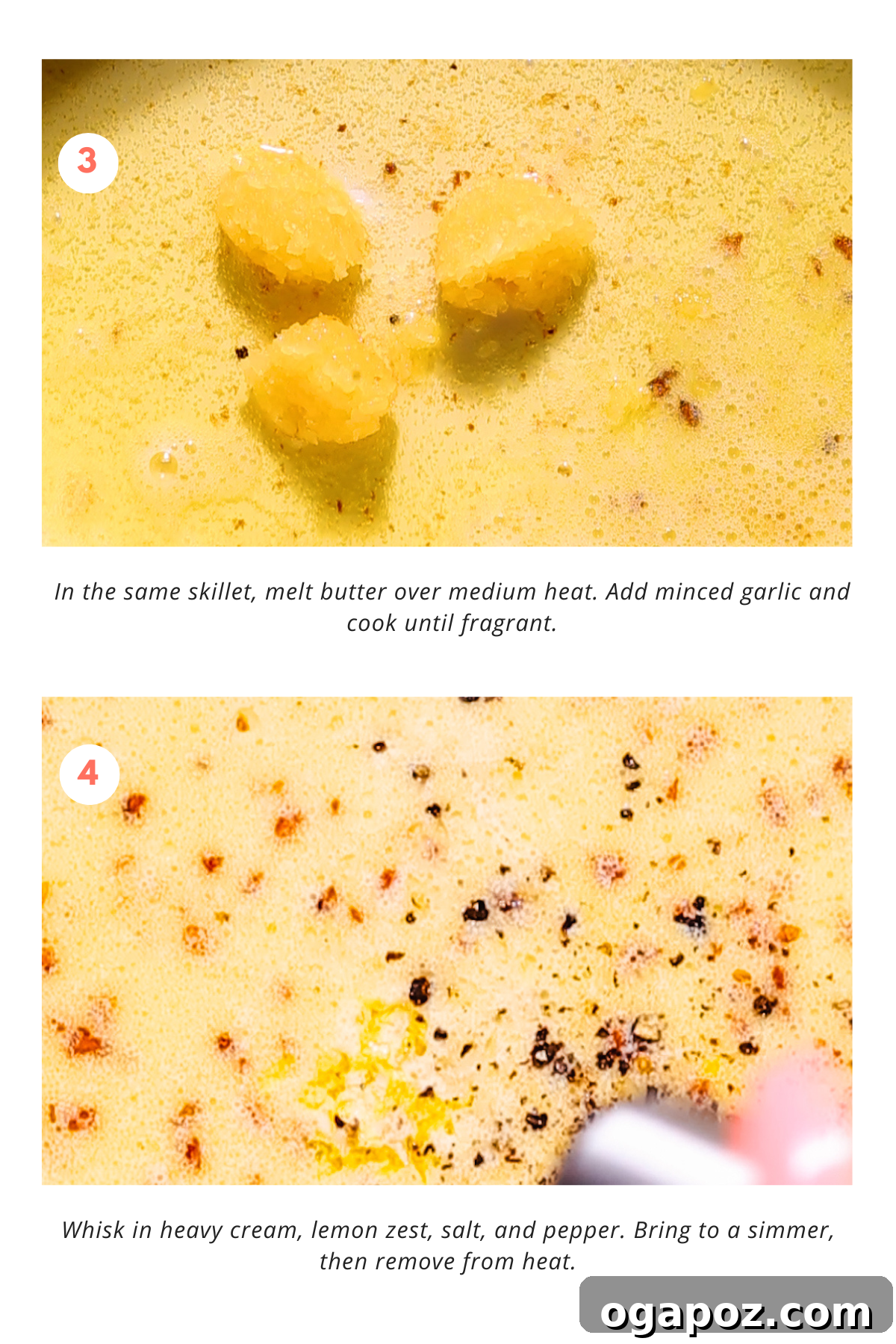
Using the same skillet where you seared the shrimp (and all those delicious fond bits), reduce the heat to medium. Add 4 tablespoons of unsalted butter and allow it to melt completely, coating the bottom of the pan. Once melted, add the 3 cloves of freshly minced garlic. Sauté the garlic for about 1 minute, stirring constantly, until it becomes wonderfully fragrant. It’s vital to be vigilant here; garlic burns quickly, and burnt garlic will impart a bitter taste to your sauce. As you stir, gently scrape up any flavorful browned bits from the bottom of the pan with a wooden spoon – this process, called deglazing, adds immense depth to your sauce.
Next, whisk in ¾ cup of heavy cream (ideally at room temperature to prevent cooling the pan too rapidly) and 1½ teaspoons of fresh lemon zest. Season the sauce base with an additional ½ teaspoon of kosher salt and a few cracks of freshly ground black pepper. Bring the mixture to a gentle simmer, just until small bubbles begin to appear around the edges. Immediately remove the skillet from the heat to prevent the cream from over-reducing, scorching, or splitting, which can happen with excessive heat.
Step 4: Finish the Velvety Sauce
With the skillet still off the direct heat (this is crucial for a smooth sauce), add ½ cup of finely-grated Parmesan cheese. Whisk vigorously and continuously until the cheese is completely melted and thoroughly incorporated into the sauce, resulting in a perfectly smooth, velvety, and lump-free consistency. Adding cheese off the heat prevents it from clumping or causing the sauce to separate. Finally, stir in 1 tablespoon of fresh lemon juice. Taste the sauce and adjust the seasonings as needed; you might find it needs a touch more salt, pepper, or lemon juice to achieve your perfect balance of rich, savory, and bright flavors.
Step 5: Combine and Serve Immediately
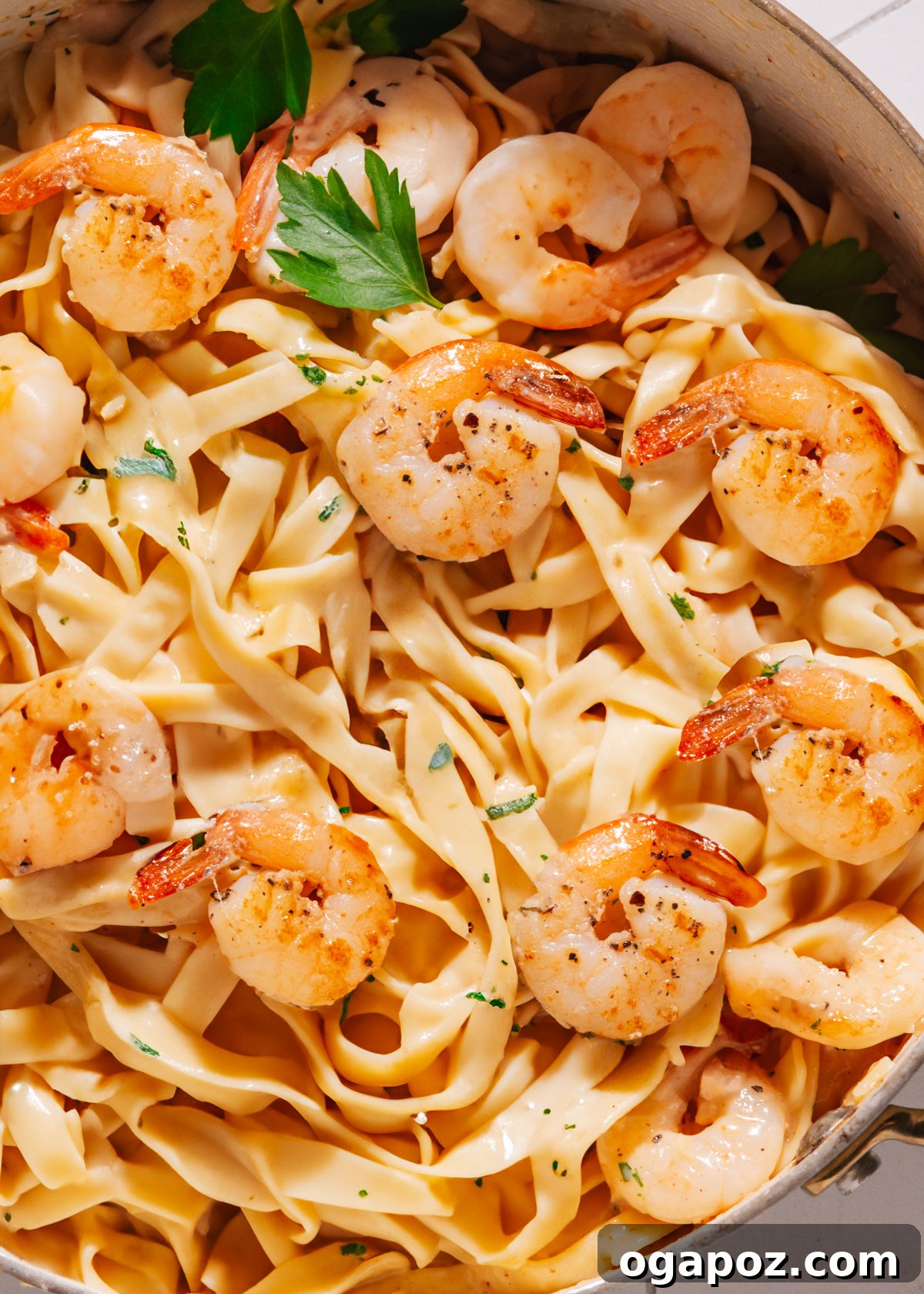
Return the cooked al dente pasta and the perfectly seared shrimp to the skillet with the luscious creamy lemon garlic sauce. Using tongs, gently and thoroughly toss everything together to ensure every strand of pasta and every succulent shrimp is beautifully coated in the rich sauce. If the sauce appears too thick for your liking, add a splash of the reserved pasta water, one tablespoon at a time, continuing to toss until it reaches your desired consistency. The starchy pasta water helps bind the sauce beautifully. Serve this incredible creamy shrimp pasta immediately, garnished generously with minced fresh chives or parsley for a final burst of color, aroma, and freshness. Enjoy this restaurant-quality dish that’s surprisingly easy to create right in your own kitchen!
Common Mistakes to Avoid for Perfect Creamy Shrimp Pasta
As a food scientist, I’ve observed that even simple recipes can have common pitfalls that detract from an otherwise stellar dish. Understanding these typical trip-ups will help you master your creamy shrimp pasta and achieve professional, delicious results every single time. Here’s what to look out for and how to prevent them:
- Missing the Perfect Shrimp Sear:
One of the biggest mistakes is not getting a good, golden-brown sear on your shrimp. This crust is vital for adding a deep, savory flavor and an appealing texture. To achieve it:
- Pat Dry: Always start with shrimp that are thoroughly patted dry with paper towels. Any surface moisture will cause the shrimp to steam in the pan rather than brown, preventing the Maillard reaction (the chemical process responsible for that rich, complex flavor and color).
- Preheat the Pan: Ensure your skillet is heated over medium-high heat for several minutes *before* adding the olive oil and then the shrimp. A very hot pan is essential for instant browning upon contact.
- Don’t Overcrowd: Cook shrimp in a single layer, ensuring there’s space between each piece. If you add too many at once, the pan’s temperature will drop, leading to steaming instead of searing. Cook in two or three batches if necessary.
- Hands Off: Resist the urge to move the shrimp too early. Let them cook undisturbed on the first side until they naturally release from the pan and are beautifully browned underneath. Most of their cooking will occur on this initial side.
- Overcooking the Shrimp:
Shrimp cook incredibly quickly, often in just 2-3 minutes per side for large shrimp. Even a minute too long can transform them from succulent and tender to tough and rubbery. Cook them just until they turn pink, opaque, and curl slightly. Remove them from the heat immediately when they reach this point to preserve their delicate texture.
- Not Seasoning the Dish Properly at Each Stage:
A bland dish is often a result of insufficient or poorly timed seasoning. Flavor needs to be built in layers throughout the cooking process:
- Pasta Water: Generously salt your pasta water; the pasta absorbs this flavor as it cooks.
- Shrimp: Season the shrimp directly with salt and pepper before searing to enhance their natural sweetness.
- Sauce: Taste and adjust the seasoning of your cream sauce as you go. Remember that Parmesan cheese adds a significant amount of saltiness, so factor that in when seasoning the sauce base. This layering ensures a cohesive and deeply flavorful final product.
- Allowing the Cream Sauce to Separate or Break:
Achieving a silky, smooth cream sauce is paramount for this dish. Here’s how to maintain its integrity and prevent it from becoming grainy or separated:
- Gentle Simmer: After adding the heavy cream, bring the sauce to a *gentle* simmer, not a vigorous boil. High, rapid heat can cause the fat and water in the cream to separate and the sauce to split.
- Off-Heat Cheese Incorporation: Always remove the skillet from the heat *before* whisking in the Parmesan cheese. The residual heat is sufficient to melt the cheese smoothly without shocking the cream, which can cause the proteins to clump and the sauce to break.
- Avoid Re-Boiling: Once the cheese is incorporated, avoid bringing the sauce back to a hard boil. Gently reheat if necessary.
- Using Cold Ingredients for the Sauce:
Adding ice-cold heavy cream or cold Parmesan cheese directly to a hot pan can cause the sauce to cool down rapidly and make it challenging for the cheese to melt smoothly. This can lead to a grainy texture or, in some cases, cause the sauce to separate. For best results, allow cream to come to room temperature, or gently warm it slightly before adding to the pan.
- Forgetting the Lemon Zest AND Juice:
The lemon component is critical for balancing the richness of this dish. Lemon zest provides essential aromatic oils that give a brighter, more complex citrus flavor, while lemon juice adds acidity that cuts through the creaminess, preventing the dish from tasting too heavy. Using only one or none will result in a less vibrant and potentially cloying sauce. Use both for optimal flavor!
Make Ahead and Storage Tips for Shrimp Pasta
While this creamy shrimp pasta is undeniably at its best when served fresh, there are several convenient ways to prepare components ahead of time, and proper storage ensures you can enjoy delicious leftovers without compromising quality:
- Cooked Pasta: You can prepare the pasta up to 1 day in advance. After draining, toss it with a small amount of olive oil to prevent the strands from sticking together. Store it in an airtight container in the refrigerator. When you’re ready to use it, you can quickly refresh it by dipping it in boiling water for 30 seconds or by adding it directly to the warm sauce to heat through.
- Shrimp: Cook the shrimp ahead of time and store them in a separate airtight container in the refrigerator for up to 1 day. This is a great time-saver on a busy cooking day.
- Sauce: The creamy lemon garlic sauce can be made in advance and stored in an airtight container in the refrigerator for up to 2 days. When it’s time to combine everything, gently reheat the sauce over low heat on the stovetop, whisking constantly. You may need to add a splash of reserved pasta water, heavy cream, or milk to restore its smooth, flowing consistency.
Storage for Leftovers:
Store any leftover creamy shrimp pasta in an airtight container in the refrigerator for up to 3 days. Be aware that the pasta will continue to absorb more of the sauce over time, and the shrimp might become a bit firmer upon cooling.
Freezing is Not Recommended: I strongly advise against freezing this dish. The delicate texture of the shrimp tends to become rubbery and unappealing when thawed and reheated. Furthermore, cream-based sauces are prone to separating or becoming grainy after freezing and thawing, which would significantly compromise the luxurious quality of the dish.
Reheating Leftovers: Reheat leftovers gently on the stove over low heat. Add a splash of heavy cream, milk, or even a little chicken or vegetable broth if the sauce has thickened too much, stirring until warmed through and loosened to your desired consistency. Avoid microwaving if possible, as the high, uneven heat can easily overcook the shrimp, making them tough, and can also increase the likelihood of the cream sauce breaking.
Serving Suggestions for Your Creamy Shrimp Pasta
This creamy lemon garlic shrimp pasta is a complete and satisfying meal on its own, but it pairs beautifully with light, fresh side dishes that complement its rich flavors without overwhelming them. Here are some ideas to complete your dining experience and truly make it feel like a restaurant meal:
- Fresh Side Salads: A crisp, vibrant salad is the perfect counterpoint to the richness of the pasta. Consider a simple green salad dressed with a bright vinaigrette, or something more creative and seasonal like an easy Peach Caprese Salad for a delightful sweet and savory contrast. A summery Watermelon, Goat’s Cheese, and Mint Salad also offers a uniquely refreshing twist that cuts through the creamy sauce.
- Garlic Bread or Crusty Baguette: No rich pasta dish is truly complete without something delicious to sop up every last bit of that amazing creamy sauce. Warm garlic bread, soft focaccia, or a crusty baguette are ideal for this purpose, adding a delightful textural element.
- Lightly Roasted Vegetables: For added nutrition and a different texture, serve alongside lightly roasted asparagus spears, tender broccoli florets, or burst cherry tomatoes. These can be simply seasoned with olive oil, salt, and pepper.
- Wine Pairing: For an exquisite culinary experience, pair your shrimp pasta with a crisp, dry white wine. Excellent choices include Sauvignon Blanc, Pinot Grigio, or a lightly oaked Chardonnay. The acidity in these wines beautifully cuts through the richness of the cream sauce, enhancing both the seafood and citrus notes.
- Garnish: Don’t forget the final touch! A sprinkle of freshly grated Parmesan cheese and extra minced chives or parsley not only adds to the visual appeal but also enhances the fresh flavors.
Discover More: What to Serve with Pasta
Hungry for even more ideas to complement your pasta meals? I’ve curated a comprehensive list of the best sides for pasta, ranging from popular pairings to unique inspirations and delightful recipes, ensuring you can elevate any pasta dish. Explore them all and find your next favorite!
Frequently Asked Questions About Creamy Shrimp Pasta
To ensure your creamy shrimp pasta turns out perfectly every time and to answer common curiosities, here are answers to some frequently asked questions:
Absolutely! Frozen shrimp are a perfectly acceptable and often more convenient alternative to fresh. For the best results, thaw them overnight in the refrigerator or quickly under cold running water. The crucial step is to pat them thoroughly dry with paper towels before cooking to remove any excess moisture, which helps achieve that desirable sear and prevents the shrimp from steaming in the pan.
If Parmesan cheese isn’t available or preferred, you have several excellent alternatives. Pecorino Romano offers a sharper, saltier, and more robust flavor profile, while Asiago provides a nuttier and slightly milder taste. For a dairy-free option, nutritional yeast can impart a similar savory, cheesy flavor when blended into the sauce.
Incorporating more vegetables is a fantastic way to boost the nutrition and flavor. You can sauté fresh spinach until wilted and stir it into the sauce at the end, or add halved cherry tomatoes or thinly sliced bell peppers along with the garlic for a burst of color and sweetness. Asparagus spears or small broccoli florets can also be lightly steamed or roasted and then tossed in with the pasta.
While this recipe focuses on a luscious lemon cream sauce, you can certainly adapt it to your preferences. A tomato-based sauce (like a light marinara) or a vibrant white wine garlic sauce would also pair wonderfully with shrimp. Just remember to adjust the seasoning and cooking times for the shrimp and pasta to suit your chosen sauce base.
Long pasta shapes like spaghetti, fettuccine, tagliatelle, or linguine are generally recommended for creamy shrimp pasta. Their long strands are excellent at clinging to the rich sauce, ensuring every bite is flavorful. However, medium-sized short pasta like penne or rigatoni can also work well if you prefer a different texture, as their ridges and tubes can trap the sauce beautifully.
To maintain a smooth, cohesive cream sauce, always bring it to a gentle simmer, not a vigorous boil. When adding Parmesan cheese, remove the skillet from direct heat and whisk it in gradually. The residual heat is sufficient to melt the cheese without shocking the cream. Also, ensure your cream and cheese are not ice-cold when added, as extreme temperature differences can sometimes cause separation.
Craving more incredible seafood pasta recipes in creamy sauces? You’re in luck! Dive into my indulgent Lobster Ravioli with Cream Sauce, explore this delightful Shrimp Alfredo with Chard and Zucchini for a veggie boost, or savor the luxurious flavors of this stunning Lobster Pasta. Each recipe promises that rich, satisfying creamy seafood experience you love!
Other Pasta Recipes You’ll Love
For all my fellow pasta enthusiasts, here are a few more must-try recipes that are sure to become new favorites in your culinary repertoire:
- Beet Pasta with the Perfect Pink Sauce!
- Creamy Pumpkin and Sage Pasta
- One-Pot Pasta with Sage, Spinach, and Ricotta Cheese
- Penne Alfredo Pasta (an easy, repeatable classic!)
- Rich Mushroom Pappardelle
Pin Recipe
Print Recipe
Shrimp Pasta (Easy + Delicious Creamy Recipe!)
Jennifer Pallian BSc, RD
15 minutes
24 minutes
39 minutes
4
Ingredients
-
12 oz long pasta -
12 oz fresh large shrimp peeled and deveined, patted dry -
Kosher salt to taste, for pasta water, shrimp, and sauce -
Freshly ground black pepper to taste -
1 tbsp olive oil -
4 tbsp unsalted butter -
3 cloves fresh garlic minced -
¾ cup heavy cream whipping cream or 35% m.f. cream, at room temperature -
1½ tsp fresh lemon zest -
1 tbsp fresh lemon juice -
½ cup finely-grated Parmesan cheese plus more for serving -
Minced fresh chives or parsley for garnish -
½ to 1 cup reserved pasta water for adjusting sauce consistency
Instructions
-
1. Cook Pasta: Bring a large pot of water to a rolling boil and salt it well. Add your chosen pasta (like spaghetti, fettuccine, or linguine) and cook until al dente, following package instructions. Before draining, reserve ½ to 1 cup of the starchy pasta water. Drain the pasta in a colander and set aside.
-
2. Sear Shrimp: While the pasta cooks, heat 1 tbsp olive oil in a large skillet over medium-high heat until shimmering. Ensure shrimp are thoroughly patted dry. Add shrimp to the hot skillet in a single layer (cook in batches if necessary). Season with ½ tsp kosher salt and freshly ground black pepper. Cook for 2-3 minutes per side until they turn pink and opaque. Remove shrimp and set aside; do not wipe out the pan.
-
3. Sauté Aromatics: In the same skillet, reduce heat to medium. Add 4 tbsp unsalted butter and melt. Stir in 3 cloves of minced garlic and cook for about 1 minute until fragrant, scraping up any browned bits from the bottom of the pan. Be careful not to burn the garlic.
-
4. Build Cream Sauce: Whisk in ¾ cup heavy cream and 1½ tsp lemon zest. Season with an additional ½ tsp kosher salt and a few cracks of black pepper. Bring the sauce to a gentle simmer, then immediately remove the skillet from the heat to prevent it from splitting.
-
5. Finish Sauce: Off the heat, whisk in ½ cup finely-grated Parmesan cheese until the sauce is smooth and velvety. Stir in 1 tbsp fresh lemon juice. Taste and adjust seasonings as desired.
-
6. Combine & Serve: Add the cooked pasta and seared shrimp to the skillet with the sauce. Toss gently with tongs to coat everything evenly. If the sauce is too thick, add reserved pasta water, 1 tbsp at a time, until it reaches your preferred consistency. Serve immediately, garnished with minced fresh chives or parsley.
Notes
If using pre-cooked shrimp, add them to the sauce only at the very end to heat through for a minute or two, avoiding overcooking.
Substitute Parmesan with Pecorino Romano for a sharper, more intense flavor, or Asiago for a nuttier, milder taste.
Store leftovers in an airtight container in the refrigerator for up to 3 days. Reheat gently on the stovetop over low heat, adding a splash of cream or milk to loosen the sauce if needed.
For an appealing presentation, reserve a few of the beautifully browned shrimp to place atop individual portions just before serving.
Nutrition
Calories: 727kcal
|
Carbohydrates: 66g
|
Protein: 34g
|
Fat: 36g
|
Saturated Fat: 20g
|
Polyunsaturated Fat: 2g
|
Monounsaturated Fat: 11g
|
Trans Fat: 0.5g
|
Cholesterol: 227mg
|
Sodium: 412mg
|
Potassium: 486mg
|
Fiber: 3g
|
Sugar: 4g
|
Vitamin A: 1115IU
|
Vitamin C: 3mg
|
Calcium: 261mg
|
Iron: 2mg
Nutrition information is automatically calculated, so should only be used as an approximation.
Tried this recipe? Leave a comment!